acceptance etiketine sahip kayıtlar gösteriliyor. Tüm kayıtları göster

16 Aralık 2016 Cuma

A moment that changed me: a teacher’s acceptance of my silence | Phoebe-Jane Boyd

Selective mutism wasn’t a diagnosis in common usage among teachers back in the 1980s when I started school; at least, no one ever used the phrase around me. I didn’t hear it until I was an adult, when suddenly it gave a name to “the thing that stopped me speaking for around 25 years of my life”.


It certainly doesn’t feel selective if you’re stuck in it. As described on the website ispeak, selective mutism (SM) is “a severe situational anxiety disorder … [which] generally starts in early childhood but can, if not treated early enough, continue into adulthood. Children and adults with SM are often fully capable of speaking … but cannot speak in certain situations because they are phobic of initiating speech.”


I was just a quiet kid at first – very shy, very jumpy – and I can’t remember exactly why that turned into just not talking any more. There often isn’t a specific reason SM children stop talking; it just happens. I stopped on one of my first days at school, when I mimed colouring a finished picture with a crayon for about an hour, because I couldn’t make myself speak to the teacher. The pretense continued until she realised that no child takes that long to perfect a daffodil.


Physically, I was able to talk. I was fine speaking to my family at home, as soon as the front door closed, but life away from those safe spaces became almost silent, and silent kids who stare wide-eyed at the floor just creep people out after a while. Especially teachers. “She’s very shy” turned into “She won’t answer me”. “She’ll certainly never go to university” in year 2 became “She frequently has a pained expression and does not communicate” in year 5.
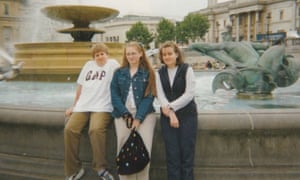


Phoebe-Jane Boyd with her family.

‘Selective mutism a lot like being frightened all the time and waiting for the next bad thing to happen that you won’t be able to stop.’ Phoebe-Jane Boyd (centre) with her brother David and sister Tammy.

The problem was, as one of those kids that cared deeply about what adults thought of them, and genuinely valued good behaviour, not speaking was an Ironman challenge of self-destruction. Whenever a new adult with a wavering smile waited expectantly for me to answer them, I’d be torturing myself: “I need to answer her now – I have to, because she’s so uncomfortable, she’s worried. Stay still and she’ll leave.”


It’s difficult to explain the feeling of selective mutism to someone who’s never been trapped in it. It’s a lot like being frightened all the time and waiting for the next bad thing to happen that you won’t be able to stop. It’s not being able to force a decent voice out, even when you desperately try – a tiny whisper will emerge instead, and it hurts. For the kids at school it meant they could press their forearm against my throat in a hallway between classes if they were having a bad day, and it would be OK; they knew I’d just freeze and wait it out. Yelling, punching, stealing, touching – I’d hear my name being whispered as I went to classes, contorting me into a seven-hour school day cringe, adrenaline always raging.


Teacher after teacher would take me aside to gently ask if there were problems at home, did I get on with my parents, had anything changed recently? I’d fume, inside: “You just watched the class dipshit bounce my head off a wall because he doesn’t understand what you’re teaching him, and you’re asking me if the problem is at home?” What would struggle out was a hoarse “No” and I’d mentally file the teacher away as an idiot. Every year, every subject: “Phoebe works hard but never asks for help”, “Must try to discuss ideas more freely”, “If she were not so shy … ”


On a year 10 parent night schedule, I angrily scrawled this note for my mum: “I hate oral work, tell him to be more gentle on me when we do it! Tell him what we did with The Merchant of Venice was stupid and pointless! I get really upset and worried about performing in front of the class! Please tell him!” But teachers are there to prepare you for the world, not protect you by letting you skip reciting Shylock when it’s your turn. The message they’d instilled in me about what would happen outside, after school, had sunk in deep: I was not OK. Until I received a different message, at 17, from my English literature teacher, Mr Pearman.


He had a blank face that showed no concern about whether his classes were taking in the lesson or not. He’d calmly insult kids he didn’t like with words he knew they wouldn’t understand, and enjoy the confused look he’d get back. He told us, while turning on the overhead projector and leaving it empty, about a fun game he liked to play of turning the projector on with nothing on it to see how long the class would stare stupidly at the wall.


“I hear your other teachers saying you don’t talk,” he told me one day, after I’d been in his class a few weeks. “It’s not a problem. I’ve read your work – it’s good. So, it doesn’t matter to me what you say or don’t. You don’t worry me.” He shrugged, and calmly gazed at me; quiet.


Thank you. “Thank you, thank you,” I whispered quickly, mind whirring: “How can I sum everything up to him – he knows already though, doesn’t he? But I want to tell him. I can’t, but I want to do that for him.”


I couldn’t yet. But that was the start.


A moment that changed me: a teacher’s acceptance of my silence | Phoebe-Jane Boyd

6 Temmuz 2014 Pazar

Online Dining And Tele-Restaurants Obtain Acceptance

Ken Gordon, a 26 12 months old personnel recruiter, works in a large mid-western city and his three very best friends are scattered across each coasts. But, thanks to the rapidly maturing Tele-Restaurant market, never currently being in the identical place doesn’t stop them from possessing dinner together at least as soon as a week.


“It’s distinct, for sure. I imply there is no foods, just a bunch of pixels that appear like food. But I like it far better sometime,” he mentioned. He and his 3 close friends book reservations via Table 4-four 4U, a foremost on the internet restaurant portal. When it is time to “eat” their on-line maître d’ calls or texts every single of them to allow them know their “table is prepared.” Then all four, wherever they are, gather close to their personal screen for a unique culinary expertise.


“We’re very proud of the operate we’re doing. A person working in Florida can nevertheless share that special Brooklyn gastro-pub encounter with family in Seatlle,” mentioned Chet Brewer, founder of Table four-four 4U.


Screen shot of a table for four from Table 4-4 4U

Display shot of a table for 4 from Table 4-four 4U


You can decide on every thing in between a substantial-end Michelin star-rated 9-course tasting menu and a fast meals buffet where you and your dinner companions can share the enjoyable of going through the line with each other.


It should be no shock to discover there is a enormous demand for Tele-Restaurant reservations. Gloria Juarez, spokesperson for the American Tele-Restaurant Association, reported 700% growth in the very first year,


“Of course,” she mentioned, “a Tele-Restaurant is not the ideal option if you are actually hungry and need to eat something.” But that is not stopping big numbers of talented chefs from opening an on the web place. As on-line chef Jeff Whisk explained, “Eating actual meals is only a tiny element of the restaurant encounter. We can give you the rest.”


And there is no arguing with accomplishment. “It was like, omg, we truly loved the meal. It was the very best ever” explained Ashley Jones, a 34 yr old lawyer who travels usually but continues to build her adore of shared high-finish dining with law college buddies scattered across the nation. And she extra, “it assists us lose excess weight as well … speak about win-win!”


As Ms. Juarez described, “Why need to so numerous therapists develop rewarding online practices and depart all the chefs behind? The American Tele-Restaurant Association is going to make certain that doesn’t come about.”


For updates on “Managing Mental Wealth” and connected news and links follow me on Twitter. To make contact with me click the mail icon over.


Online Dining And Tele-Restaurants Obtain Acceptance

28 Mart 2014 Cuma

Chief health care officer criticises media acceptance of currently being overweight

Sugar

Dame Sally Davies has outlined the value of reducing sugar consumption across the United kingdom. Photograph: Nick Ansell/PA


England’s chief medical officer has criticised outfits companies and the media for assisting to make individuals consider that getting obese is normal.


Dame Sally Davies accepted that the typical man and woman had been overweight and stated the public need to be given a sound knowing of how to alter their diet and steer clear of soft drinks with additional sugar.


“I have extended been concerned about the presentation of underweight as an best fat, particularly in the trend sector,” Davies mentioned in her yearly report.


“Nevertheless I am increasingly concerned that society could be normalising overweight. For illustration: bigger mannequins are being launched into clothes stores “dimension inflation” indicates that garments with the very same size label have turn into bigger in latest decades and news stories about obese often characteristic images of severely obese folks, which are unrepresentative of the vast majority of the overweight population.”


Davies, concerned that two-thirds of adults and 1 third of kids between two and 15 are obese or obese, mentioned that in England the typical man weighed 84kg (13st 3lb) and was 175cm tall (practically 5ft 9in). The common female weighed 70kg (just more than 11st) and was 162cm (practically 5ft 4in) tall. NHS guidance, not cited in her report, suggests a wholesome man of regular height must weigh in between 58kg and 75kg and a girl of regular height must weigh between 49kg and 73kg. She also explained that if meals makers failed to supply on guarantees to minimize added sugar then “we, as a society, may want to consider the public wellness benefits that could be derived from a regulation such as a sugar tax.”


Though she welcomed progress by the foods sector to lessen the quantity of salt in meals, there was far even more to go, she stated. She also referred to as for investigations into anecdotal proof that rapidly-food shops have been opening close to colleges to serve schoolchildren performing lunch hrs and backed Public Well being England’s briefing for regional authorities on how councils could regulate their development.


Davies, the principal healthcare adviser for the Uk government, also condemned the “unacceptably high” relative danger related with walking or cycling, saying the danger of death per kilometres was 17 instances greater for these kinds of energetic travel than going the identical distance by vehicle.


Her report, laden with political challenges, indicates disappointment at ministers’ shelving final summer season of minimum unit pricing for alcohol in England. A strategy for it to be launched by the Scottish government is currently being legally challenged by the drinks business.


Davies, concerned by a possibly massive enhance in deaths from liver ailment, welcomed the government’s move to stop alcohol currently being sold beneath the cost of duty plus VAT from next week, that means an ordinary 440ml can of beer or lager can’t be sold under 50p, although there are “floor rates” for other drinks. But she extra: “I note that modelled information suggests that charging a minimum of 45p per unit of alcohol ought to be far more powerful in lowering premature deaths.”


She said: “Retailers continue to promote alcohol employing techniques which I take into account to be irresponsible. I deplore the methods merchants use to entice buyers to obtain ever higher quantities of alcohol.”


These incorporated multi-purchase offers, offering alcohol at beneath price value and the redefining of “small glasses of wine” by bars and eating places, which had been omitting from menus the 125ml measure they have been legally obliged to provide. The substantial degree of alcohol marketing around football matches broadcast on Television was also especially regarding due to the fact of the variety of youngsters who observe, explained Davies.


Chief health care officer criticises media acceptance of currently being overweight

1 Mart 2014 Cumartesi

There is a culture of acceptance about mental wellness concerns in academia

It is all also widespread to see PhD college students operate themselves to the stage of physical and mental illness in buy to complete their studies. It is significantly less typical to see PhD college students who really feel that they are beneath such strain that the only alternative is suicide. But it does happen. There is a culture of acceptance all around psychological well being troubles in academia – and this wants to modify.


Following the completion of my PhD and a brief stint as a postdoc, I have lately taken up a new job as a researcher advancement officer at a research-intensive university. Teams like ours are relatively common in universities, thanks to funding supplied following the publication of the Roberts Report in 2002.


The team I operate on gives individual and expert growth possibilities to the researchers at the university including the PhD college students, postdocs, and lecturers. Like most researcher growth teams, the majority of our coaching focuses on the postgraduate college students. We run an yearly programme of training sessions and workshops developed to aid college students transition to the life of a researcher, make it by means of the official (and unofficial) milestones of their PhD, and emerge as effectively-rounded, employable folks with a selection of job alternatives.


When the circumstance calls for it, we are shoulders to cry on.


Yes, I now get paid to relive the worst encounter of my life, and hope that I can use that experience to support other individuals. On a daily basis, I meet PhD students who truly feel underequipped in one way or another.


Ideal case scenario: they are doing properly in their PhD, and have come to the researcher improvement programme for guidance about the following steps in their lives and careers. They come to us for some advice about volunteering, turning into a mentor, acquiring operate knowledge, generating use of their present networks, what it really is like to have a job outdoors academia and so on.


Much more frequently than we’d like, they arrive for a session about “developing and preserving an successful relationship with your supervisor” with puffy red eyes, lack the self-confidence to participate in the session, and depart at the finish without having obtaining uttered a single word.


Worst situation scenario: we in no way meet them at all. Or one day, they quietly depart the university with out their qualification.


Last weekend, there was a funeral. Two of the parishioners from my family’s nearby church neighborhood suffered the loss of their son, we’ll contact him J.


J had suffered with mental health problems all through his daily life, and had lastly taken his personal lifestyle. He was studying for a PhD at the time. From what I recognize, J was a brilliant pupil who did exceptionally properly at undergraduate level. Hence, getting accepted to do a PhD.


Once at the new university, J struggled to keep on track with his postgraduate scientific studies. He took a couple of breaks from research to attempt to recover his psychological health. Sadly, he committed suicide before he finished his PhD.


I are not able to say that it was the pressure of his studies that drove J to that decision following all, I did not know him. But I do know what performing a PhD is like.


I have skilled the effects on my psychological wellness, and I have witnessed the culture of acceptance surrounding this problem.


Amongst the men and women I do know who have completed PhDs, I have witnessed depression, sleep problems, consuming issues, alcoholism, self-harming, and suicide attempts. I have noticed how troubles with mental well being can go on to have an effect on physical overall health. During my PhD I noticed changes to my skin, and changes in my menstrual cycle which persist to this day.


Let us not overlook that in the bulk of cases, all this comes at a time when you are probably to be struggling from monetary instability, or are forced to make uncomfortable modifications to your personalized circumstances to accommodate your research.


We have all joked about seeing the sleeping bag tucked underneath the lab bench. These concerns are common. Shockingly, they are also commonly accepted.


Several PhD college students consider the see that if you’re not performing overnight experiments, missing meals, or binge drinking, you are not doing it correct.


“Some individuals select to have a social daily life whilst they are carrying out their PhD. And that is Ok. But I’m not,” a single of my fellow PhD students tells me.


Who else is supposed to aid you? Your supervisor? “A blemish on my career,” is how one academic referred to their expertise of supervising a pupil who produced mental overall health issues for the duration of their scientific studies.


Psychological wellness issues are typically not perceived to be something to do with supervisory inadequacies. It is critical to bear in mind that academics who are PhD supervisors did not make it to their current rank due to the fact of their outstanding supervising skill. They acquired to that place by being an exceptional researcher, and winning some funds.


Plainly, you can not spending budget for empathy. Nowadays, I say that we ought to not accept this.


It is not Okay for PhD students to turn out to be so impacted by their studies that they destroy themselves.
It is not Okay for PhD students to maintain the culture of operating oneself to the point of sickness.
It is not Ok for academics to wash their hands of the situation.


In my new role, I have noticed students asking:


“How do I tell myself that it truly is Ok to get time for me?”
“Have I worked so difficult that sickness has turn out to be normal?”
“How can I recover my relationships with my pals and family?”


In spite of this, I see college students and academics who view the researcher advancement services as unnecesary. I see college students who think about using our solutions as an “admission of defeat”. To come to us, is to announce that you are not a perfect researcher. I see college students ashamed to admit to their peers that they had come to any of our sessions, allow alone found them useful.


I see students forcibly eliminated from our sessions by their supervisors. I see major academics decline to promote our services, for concern that men and women will use them. I see students who truly feel like it is not Okay to admit that they are not Okay. And this is not Ok.


I watched my family try out their ideal to assistance J’s household when they got the news, and attempt to help 1 another when we have been alone. They reminisced about the bright young boy they had watched growing up, and wondered what had took place to him.


On the day of his funeral, automobiles lined the streets of the sleepy village the place he and his loved ones had lived, to the level in which visitors was interrupted. The church was overflowing. Men and women had come in their hundreds, from miles close to, to spend their respects to the young guy, and mourn his early passing.


What will you do to end scenarios like this from occurring once again?


If you have been affected by any of the issues mentioned in this piece, make contact with Samaritans or Nightline.


This content is brought to you by Guardian Skilled. Searching for your following university function? Browse Guardian jobs for hundreds of the most current academic, administrative and research posts.


There is a culture of acceptance about mental wellness concerns in academia