thought etiketine sahip kayıtlar gösteriliyor. Tüm kayıtları göster

30 Mart 2017 Perşembe

I thought my career as a doctor was over. It was the arts that saved me

[unable to retrieve full-text content]


I used to ignore my creative side, but after I was signed off work with depression and anxiety, I made space for the things I loved


As a hospital doctor I am used to working under pressure, and had always felt I thrived on it. But when I took time out of clinical training to pursue a PhD, I found I was intensely unhappy. I suffered a range of physical symptoms: palpitations, early morning waking, nausea, severe headaches, poor appetite, diarrhoea, dizziness, breathlessness and tremors.


My day was constantly interrupted by intrusive negative thoughts; I once walked for 30 minutes with “I hate my life, I hate my life” on a loop of internal monologue that I feared had no end. I listened to podcasts and audiobooks fanatically but could not drown out these thoughts, and no rationalisation of all the wonderful things I had in my life could make them stop.


Continue reading…


I thought my career as a doctor was over. It was the arts that saved me

28 Mart 2017 Salı

New technology allows tetraplegic man to move hand with thought

A man who was paralysed from below the neck after crashing his bike into a truck can once again drink a cup of coffee and eat mashed potato with a fork, after a world-first procedure to allow him to control his hand with the power of thought.


Bill Kochevar, 53, has had electrical implants in the motor cortex of his brain and sensors inserted in his forearm, which allow the muscles of his arm and hand to be stimulated in response to signals from his brain, decoded by computer. After eight years, he is able to drink and feed himself without assistance.


“I think about what I want to do and the system does it for me,” Kochevar told the Guardian. “It’s not a lot of thinking about it. When I want to do something, my brain does what it does.”


The experimental technology, pioneered by the Case Western Reserve University in Cleveland, Ohio, is the first in the world to restore brain-controlled reaching and grasping in a person with complete paralysis.


For now, the process is relatively slow, but the scientists behind the breakthrough say this is proof of concept and that they hope to streamline the technology until it becomes a routine treatment for people with paralysis. In the future, they say, it will also be wireless and the electrical arrays and sensors will all be implanted under the skin and invisible.


“Our research is at an early stage, but we believe that this neuroprosthesis could offer individuals with paralysis the possibility of regaining arm and hand functions to perform day-to-day activities, offering them greater independence,” said Dr Bolu Ajiboye, lead author of a paper detailing the research in the Lancet medical journal.


“So far it has helped a man with tetraplegia to reach and grasp, meaning he could feed himself and drink. With further development, we believe the technology could give more accurate control, allowing a wider range of actions, which could begin to transform the lives of people living with paralysis.”


Functional electrical stimulation (FES) of the muscles and nerves has been tried before in patients with paralysis, but they have had to use whatever movements they have left, such as shoulder shrugs or head nods, to trigger it. Kochevar, however, only has to think about what he wants to do.


He underwent brain surgery to implant sensors in the motor cortex area responsible for hand movement, linked to a computer. Kochevar went through four months of training, thinking about the turn of the wrist or grip of the fingers that he needed in order to bring about the movement of a virtual reality arm, so that the computer could recognise the necessary signals from the motor cortex.


Then he had 36 muscle-stimulating electrodes implanted into his upper and lower arm, including four that helped restore finger and thumb, wrist, elbow and shoulder movements. These were switched on 17 days after the procedure, and began stimulating the muscles for eight hours a week over 18 weeks to improve strength, movement and reduce muscle fatigue.


Then the whole system was connected up, so that signals from the brain were translated via a decoder into electrical impulses to trigger movement in the muscles and nerves in his arm.


“It was wow – I can do that now!” he said. “In the future I will be able any time I want to take a drink of something or feed myself.”


Graphic of technology process

Kochevar lost all power of movement after an accident during a charity bike ride in Cleveland for the MS Society. He was riding behind a mail truck, he said, when it stopped suddenly. “I went head first into it,” he said.


Ajiboye said he wanted Kochevar to be able to move his arm easily. “That is the goal – to make the technology seamless to him, in the sense of he thinks about him moving his arm and it moves,” he said.


The limitation for now was the number of muscles that could be stimulated and the wires that extrude. The slowness of the movement was not something that bothered patients, he said. “If you ask the users what their primary goal is, it is function not speed.”


There is no question of curing paralysis through this technology – it circumvents the injury instead.


“The goal is futuristic: a paralysed individual thinks about moving her arm as if her brain and muscles were not disconnected, and implanted technology seamlessly executes the desired movement … this study is groundbreaking as the first report of a person executing functional, multi-joint movements of a paralysed limb with a motor neuroprosthesis,” said Dr Steve Perlmutter from the University of Washington, in a linked comment in the Lancet.


“However, this treatment is not nearly ready for use outside the lab. The movements were rough and slow and required continuous visual feedback, as is the case for most available brain–machine interfaces, and had restricted range due to the use of a motorised device to assist shoulder movements … Thus, the study is a proof-of-principle demonstration of what is possible, rather than a fundamental advance in neuroprosthetic concepts or technology. But it is an exciting demonstration nonetheless, and the future of motor neuroprosthetics to overcome paralysis is brighter.”


New technology allows tetraplegic man to move hand with thought

20 Mart 2017 Pazartesi

"I thought cancer was a disease for the elderly": tackling Nigeria"s 80% mortality rate

After a long day’s work at a law firm in Nigeria’s capital, Abuja, 35-year-old Comfort Daniel returned to her apartment one cold evening in December 2014 and began to undress for a bath. She was halfway done when she felt a lump on her left breast. A pang of apprehension surged through her. She ran her hand over her breast and the lump became more visible.


But Daniel didn’t go to hospital for screening immediately. Instead she consulted a South African-based physician who visited her church after Sunday service. The physician gave her some drugs for 17,000 naira (£44) and told her that she would have a discharge from her nipple then she would be healed.


Trusting the physician’s assurance, Daniel didn’t visit the hospital for screening. Two weeks after the treatment, a brownish discharge came from her nipple, but she became more uncomfortable. Shortly afterwards she was watching TV when a health programme came on and a doctor advised women to go for screenings whenever they noticed any abnormalities on their breasts. “That was all I needed to go to a hospital in downtown Abuja,” she says.


After several months of travelling between a private clinic and the national hospital in Abuja, and after spending most of her savings on appointments, Daniel finally learned she had cancer in March 2015. “God forbid,” she recalls yelling at the doctors. “Nobody has cancer in my family.”


Daniel was astonished. “I thought cancer was a disease for elderly, more mature people,” she says. “But all of that changed after the doctors told me I had stage two breast cancer. In fact, they even said I’d had the lump on my breast for more than a year.”


Daniel underwent a mastectomy shortly after getting her diagnosis and is now having chemotherapy. She says the healthcare system was inadequate for her needs. “When I wanted to receive initial treatment, I had to visit many hospitals … doctors were either on strike or there was no electricity to power the machines, or they weren’t responding properly. This whole process can be frustrating.”


March against cancer in Nigeria, 2016 organised by Project Pink Blue


Project Pink Blue organised a march against cancer in Nigeria last year. Photograph: Wahabi Oluwafemi

Daniel’s experience of trying alternative treatments before approaching doctors is common in Nigeria. Professor Tajudeen Olasinde is a consultant radiation and clinical oncologist at the Ahmadu Bello University Teaching Hospital in Zaria. He says late presentation is a widespread problem. “Around 85% of cancer patients present at advanced stages of their diseases in Nigeria due to poor awareness.”


Even when people do seek treatment, the equipment and facilities needed to treat cancer are not available everywhere. “Most diagnostic and treatment equipment are available in only tertiary health institutions, which are far away from most rural dwellers,” Olasinde says. “Where only one or two radiation treatment mega-voltage machines are functioning optimally at any time, [this] is unacceptable and a national disgrace for a country of 180 million people. At least, the country needs 180 functioning machines.”


Nigeria has less than 40 trained radiation oncologists and most of the nine comprehensive cancer treatment centres in Nigeria are, according to Olasinde, either “obsolete or non-functional”.


While cancer is more prevalent in wealthier countries – rates actually rise with increasing levels of income – the mortality rate is much higher in poorer countries such as Nigeria. The World Health Organisation estimates that more than 100,000 Nigerians are diagnosed with cancer each year, and 80,000 die from the disease. In the UK, where more people develop cancer, the rate of survival is 50%.


Campaigners and politicians across Nigeria are pushing to promote the kind of cancer care seen in wealthier countries, with an emphasis on prevention, early diagnosis and screening and survivor support.


NGOs such as the Abuja-based Health and Psychological Trust Centre – known as Project Pink Blue – are bringing best practice in cancer care to the city.


Having built up an awareness-raising programme that travels to rural areas to explain the signs of cancer and tell people how to prevent it, the centre has just begun Nigeria’s first breast cancer support group, made up of nine cancer survivors.


“Until we begin to change the way our people think about cancer we cannot change late detection of cancer,” says Runcie Chidebe, executive director of the centre.


Chidebe says that many people are unaware of behavioural and dietary risks that trigger cancer, including high body mass index, low fruit and vegetable intake, lack of physical activity, tobacco use and alcohol intake.


“The only way we can change the narrative of cancer being a death sentence is to get strong voices against cancer,” he says. “Strong voices against cancer cannot even be the doctors, neither can they be me nor the media. Strong voices of cancer are strong champions – the cancer survivors themselves. We have nine survivors right now, and we are mobilising more.”


Besides awareness campaigns, the group supports cancer patients through fundraising. It was through one such fundraising event that the NGO raised around 5.5m naira (£14,000) in cash and 9m naira in drug support to enable Daniel to have her chemotherapy when her savings ran out.


“I used up all the money I saved for my schooling for treatment, and when it finished I stayed away from treatment for more than a year until Mr Runcie came to my rescue,” Daniel says.


Politicians want to capitalise on the growing understanding of how to treat cancer. Muhammadu Usman is a lawmaker in the lower chamber of Nigeria’s legislature. With colleagues, he is sponsoring a bill calling for the establishment of national agency on cancer control. The bill has passed first and second readings and is due for a public hearing soon.


“Until we establish an agency that will handle cancer there is no way Nigeria can make any process,” he says. “When you have an agency, you will able to appropriate money, you will be able to recruit staff, the agency will be given certain responsibilities on mobilisation, treatment and prevention or seek international support.”


Usman notes that none of the country’s hospitals are properly equipped to provide the necessary medication to cancer patients. Citing recommendations from the International Atomic Energy Agency, he says South Africa has 18 functional machines for cancer treatment, Japan has 611 and China has 453.


Nigeria is supposed to have around 800 machines to treat cancer, such as an external beam radiotherapy machine, but none are working properly.


For Comfort Daniel, the new ways of supporting cancer patients are as important as working machinery. “After I was diagnosed with cancer, for three days I was unable to sleep. This is why the Abuja breast cancer support group is important. Nobody can understand the pains of the patient like a survivor,” she says. “There was a day I visited the hospital and came across an elderly woman who had breast cancer and was looking so sad. She refused to eat. But after speaking to her, she cheered up and took her food. Nobody can understand the pains we pass through, not even doctors.”


Join our community of development professionals and humanitarians. Follow @GuardianGDP on Twitter.


"I thought cancer was a disease for the elderly": tackling Nigeria"s 80% mortality rate

20 Ocak 2017 Cuma

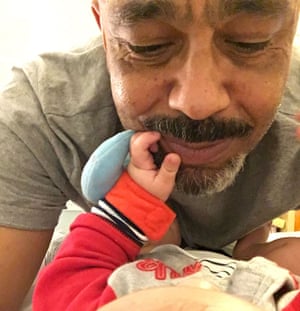
A moment that changed me: holding the newborn baby I never thought I’d have | David Akinsanya

I never thought I would become a father. I grew up in care and as far back as I can remember I had issues with my sexuality. By the time I was in my 20s I had accepted that I was gay, even though I’d had a couple of heterosexual flings. Over the years, through my work as a mentor and as a foster carer, I met a number of youngsters whom I took care of and some of whom called me Dad. But I’d always wanted to have my own child too.


I met the mother of my child through work. I was delivering health and well-being workshops, and she wanted to talk about the possibility of fostering. We became friends: unbeknown to me pretty early on she decided that I was the ideal candidate to father her child. P was a heterosexual, professional woman in her early 30s. She had always wanted to have a child with a gay man – and someone who really wanted to be a father.


We went ahead without professional advice, gleaning what we could from the internet. For the initial few attempts I produced sperm in east London and took it over to west London. Soon we decided it was best to be in the same place. It was embarrassing to do this in someone else’s home but she blasted a TV programme while I got on with it, which helped. Then a simple syringe was used to insert the sperm.


It took only two attempts like this before we conceived. I remember exactly where I was when I got the news. I was driving, and picked up my phone on hands-free when P told me to pull over. She was pregnant. Sadly, at the 12-week scan we discovered the baby had died. This was one of the saddest days I’d had – to get this far, and for it to end so suddenly. I was comforted by friends who’d had miscarriages and I did consider that maybe it wasn’t to be. The miscarriage wasn’t straightforward, and all I could do was empathise with P. She decided she wanted to try again as soon as possible so we did, and the second attempt was successful.


After the miscarriage it was difficult to accept we were pregnant and there was a lot of worry all the way through the pregnancy. Pregnancy can be an odd thing for men to get their heads around, and it was even stranger for me as I was not in a relationship with the mother. I didn’t see her every day and it was hard for me to be emotionally supportive just through the odd phone call and weekly meet-up.


David Akinsanya with his son


‘I’d never felt like this about anyone before – even myself.’ Photograph: David Akinsanya

We did have a minor hiccup during pregnancy where we spent a few days not talking. It was my fault: I was angry about some of the pregnancy purchases and treatments, which I thought were unnecessary and costly. P suggested counselling, so we went to eight sessions, learning how to express our concerns, how to listen to really hear each other and say what we mean.


But none of this really felt real to me until the day my son was placed on to my bare chest by his mother’s birthing partner. I was unable to be in the room during the birth as had been arranged in advance. P was supported by her friend who acted as her birthing partner and had three children of her own. Yes, I felt guilty and lots of my mates who were fathers told me how amazing it was to be present. But I am extremely squeamish and hate blood, pain and hearing people struggle. As it happened, our son was eventually delivered by caesarean section so P was in surgery while I spent my first moments with this child we had made.


It was such an emotional experience for me that I couldn’t stop crying. I was crying for the younger me who was abandoned by my parents into the care system; I was crying for every time I was rejected by foster parents as a child needing a family home; I was crying for all the young people I know who had failed because of a lack of love in their lives. Thankfully, P understood and allowed me to just sit with our little man with tears streaming down my face. These were good tears, healing tears. It felt like my brain was rewiring to allow me to love my son unconditionally.


As I sat alone with my son, this brand new little life in my arms, my life changed. That’s why I cried. I thought about whether I had loved anyone unconditionally before him and the answer was no. I’d never felt like this about anyone before – even myself. I felt an overwhelming sense that this person needed me and will love me back if I do things correctly.


I used to have a cavalier attitude to life. I’d let my career slip as I wasn’t that bothered about taking care of myself after my father died. Now I had someone to work for, someone to impress, someone to think about all the time. After all the rejection and hurt of my past, through my son I finally felt like I had a family of my own.


A moment that changed me: holding the newborn baby I never thought I’d have | David Akinsanya

11 Ocak 2017 Çarşamba

Plans for seven-day GPs not thought out, says spending watchdog

Whitehall’s spending watchdog has criticised government plans to let patients see GPs every day of the week as poorly planned and likely to cost much more than weekday family doctor services.


In a new report, the National Audit Office said that Jeremy Hunt has set targets for rolling out the scheme – a key Conservative pledge – without evaluating the cost or working out where the money for it would come from.


Giving patients access to GPs from 8am to 8pm across the entire week by 2020 was championed by David Cameron while he was prime minister. Ministers also pledged to increase the number of GPs in England by 5,000 by 2020 – promises that have been backed by Hunt and Theresa May .


However, auditors who analysed the pledges found that the minimum additional capacity required by the new commitment equates to £230 per appointment hour at weekends and in the evening for every 1,000 registered patients. In GPs’ core contracted hours, from 8am to 6.30pm, the cost is just £154.


Hunt and the prime minister are under increasing pressure regarding serious problems within frontline services this winter. Ministers have been forced to deny claims by the Red Cross that the service is facing a “humanitarian disaster”.


Dr Chaand Nagpaul, BMA GP committee chair, said the government had been “irresponsible” in making uncosted pledges and must deliver extra investment to ensure patients could receive timely, safe care.


“Given that funding in general practice has failed to meet patient demand, NHS England and commissioners need to fully consider the consequences of their plans to extend access,” he said.


“To proceed without any sort of evaluation into the cost-effectiveness or the consequences of its objectives is irresponsible and could lead to much needed investment being spent on measures which don’t adequately meet patient needs,” he said.


The report, entitled Improving Patient Access, set out to evaluate how the Department of Health (DoH) and the NHS are tackling concerns around access to England’s 42,000 GPs in 7,600 GP practices.


The report found an apparent lack of knowledge within the DoH about the cost of extending GP surgery hours.


“We have not seen evidence that the department and NHS England fully understand the effect of this commitment to extend hours on continuity of care or other arrangements for providing general medical services outside of core hours,” it said.


Auditors, keen to establish the reality of extending opening hours, found that nearly half of all GP practices – 46% – close during core working hours, while 18% closed before 3pm one day a week.


Efforts to increase the workforce are at risk because GPs are leaving the service at a greater rate than they are entering it, thanks to shortfalls in recruitment, the report said.


Health Education England only filled 3,019 (93%) out of a target of 3,250 GP training places in 2016/17, according to auditors.


“The latest available data on part-time working in new GPs suggest there may be 1,900 fewer full-time equivalent GPs by 2020 than Health Education England had estimated there would be,” the report said.


The report sheds light on how patients registered with GP services open for fewer hours than average are more likely to attend accident and emergency departments. It found there were 22 more A&E attendances per 1,000 registered patients [8%] at practices open for 45 hours or less per week, after adjusting for differences in patients’ age and sex.


Meg Hillier MP, the chair of the public accounts committee, claimed that ministers were “trying to shoehorn in seven day access to general practice without a clear idea of the additional costs or benefits it will bring patients or taxpayers”.


Prof Helen Stokes-Lampard, chair of the Royal College of GPs, said the report “hits the nail on the head” by questioning the cost-effectiveness of forcing GP surgeries to deliver routine services seven days a week.


However, she went on to question why auditors failed to acknowledge the stresses that GPs are under or why surgeries may have to close temporarily during core hours for staff training, patient consultations or home visits.


“If general practice fails, the rest of the NHS collapses behind it. That’s why we urgently need NHS England to deliver in full on the pledges it has promised … swiftly and effectively, and for all governments in the UK to invest properly in the family doctor service, including more GPs,” she said.


The government claims that 17 million patients are already benefiting from evening and weekend appointments.


In response to the report, the health minister David Mowat said evidence shows that extended GP access is helping to relieve pressure on other parts of the health service such as A&E.


“We’re also relieving pressure on GPs by cutting red tape and investing an extra 2.4 bn to recruit 5,000 more doctors – in fact, fill rates for GP training this year were at a record level,” he said.


An NHS England spokesman criticised the NAO report for raising “the rather obvious fact” that it costs more to provide evening and weekend urgent primary care services than it does during Monday to Friday, nine to five.


“The alternative would be that patients simply head to A&E, with all the consequences that brings for more major cases.


“No one is suggesting each individual GP practice should offer this extended access, but there’s quite wide agreement that, as GP numbers expand, practices do need to club together to offer this service, a bit like the out-of-hours duty chemist rota.


“Across much of London, Manchester and a fifth of the country, GPs are already doing this, and more areas will follow next year,” he said.


Plans for seven-day GPs not thought out, says spending watchdog

11 Haziran 2014 Çarşamba

I in no way thought I was the type who would build diabetes

After the shock was above, I bought self-assist books from Amazon, uninteresting my family rigid with my discoveries. I’ve learnt that if a single of your mothers and fathers has variety 2 diabetes, you have a forty per cent possibility of developing the disease. If each have it, the threat rises to around 90 per cent. My mom had type two diabetes from the age of 45, but none of the medical doctors I met more than the years had ever spelled out the odds I was facing.


I read all about the glycaemic index (GI), of which I’d been only vaguely conscious prior to. This measures the volume of glucose in foods, with sugar rated at a hundred and veggies and fish, for example, at the zero finish of the scale. It offered hope of improvement without far more medicine, by prescribing meals that release glucose gradually, with no a sudden spike in insulin manufacturing.


I had always thought my diet regime was fairly healthier, but in reality I learnt it was the opposite. I ate mounds of toast, sandwiches and pasta. Baked potatoes – so practical and nutritious – turned out to be a hazard: a handsized baked potato is made up of the equivalent of sixteen sugar cubes.


Fruit is not all it’s cracked up to be, both, since it contains lots of fructose, which is basically sugar. The ripe bananas that I ate each and every day, pondering they were good for me, contained about 6 teaspoons of sugar. And fruit juice is far worse.


Offered all that, plus my passion for beer, adore of ice cream and inability to turn down a jam doughnut, is it any wonder I went from pre-diabetes to the real thing? I bet if the a single in 3 British grownups on the verge took a difficult look at their diets, they’d come to the exact same conclusion.


As the penny dropped, I cut out sugar and curbed the carbs – even though I preserved the buttered toast in the morning – and ate a lot of far more vegetables, beans and pulses. And I stepped up my swimming and fitness center sessions. The fat fell away my waist shrank to a size it’s not been considering that my mid-twenties.


And the true beauty of my wholesome diet, which has assisted get my blood sugar degree below seven per cent, is that I’ve not felt hungry once. I’m even 9 kilos trimmer. The only downside to downsizing is that I’m obtaining to replace all my outfits.


When I was diagnosed, I had felt a horrible sense of reduction, anxious that my favourite treats would be permanently out of spoon-attain. The 1st handful of occasions the dessert menu came round were heart-breaking.


Diabetes United kingdom urges sufferers to be relaxed about eating the occasional bit of sugar, though, and it is real that one pudding is not going to destroy me. However, the danger is that you really do not know how a lot of you can get away with with no prolonged-phrase harm and, as an ex-smoker, I know it is much safer not to have the first 1.


Fortunately, as the months have passed, it has received less difficult to stick to my diabetic diet program. My daughter has even stopped sending me Snapchats of her scoffing doughnuts. What’s a lot more, I attempted a spoonful of treacle pudding in a restaurant last week. To my shock, I did not get pleasure from it – it tasted far as well sweet.


Data: diabetes.org.united kingdom


Study MARTHA GILL ON HOW TO MAKE THE NATION Healthier


I in no way thought I was the type who would build diabetes

16 Nisan 2014 Çarşamba

Woman, 3, thought to be first healthy victim of frequent virus

She said she had not heard of any other cases involving healthful toddlers who have died from the virus, which causes respiratory issues resulting in red cheeks.


Tests revealed Tahlia’s windpipe was severely inflamed and there were infected cells in her brain, heart and liver, leading Dr Malone to conclude that on the stability of probabilities her sudden death on June 2 final 12 months was brought on by parvovirus.


“This is quite unusual. I have not seen a case before which caused such swelling to the brain,” she told the hearing in Chelmsford, Essex.


Essex Coroner Caroline Beasley-Murray recorded a verdict of natural leads to.


Soon after the inquest Mrs Glover mentioned: “Tahlia was my stunning blue-eyed angel, loved by absolutely everyone and will usually be my beautiful lady permanently.


“She did not go alone, component of my existence went with her the day the angels known as her residence.


“I miss you much more than words can say and if I had one particular want it would be to hold you in my arms once again.


“She was healthier prior to this. I have been informed it is quite typical in playschools and nurseries and we will not know why it killed her.”


Mrs Glover extra that if they had visited a medical doctor all they would have advisable was Calpol.


Parvovirus was discovered by chance in 1975 at a screening for hepatitis B of blood donors.


Signs consist of a facial rash, which can spread to the limbs, and flu-like illness. Up to thirty per cent of infections have no indications.


There is no vaccine for the virus as in most cases expert remedy is not needed and no Government suggestions on controlling the virus.


Official statistics display three children, 1 aged underneath one particular and two aged among a single and 4, died from parvovirus in between 2006 and 2012 in the Uk, but it is not identified if they had been wholesome.


Woman, 3, thought to be first healthy victim of frequent virus

26 Mart 2014 Çarşamba

Fluoride: Just when you thought it was secure to drink the water...

Yesterday, Public Health England (PHE) published a report purporting to demonstrate that fluoridation not only reduces tooth decay but also appears to have other useful results on overall health. In fluoridated regions, for instance, 45 per cent fewer youngsters aged a single to 4 were admitted to hospital. “These findings highlight the important contribution that water fluoridation tends to make,” stated PHE. Analysts also looked for indicators of harm, but discovered none – anti-fluoridation campaigners have advised that water fluoridation can improve the chance of some cancers, hip fractures and Down’s syndrome. The report said there was no proof of these results being much more prevalent in fluoridated places.


The upshot, said PHE, was that councils – which now have the last say, following the abolition of the Strategic Wellness Authorities – must seek advice from local men and women about introducing what would be the very first new fluoridation programmes for practically thirty many years.


Calcium fluoride is present naturally in nearly all water supplies, but most amounts fall effectively short of the optimum for dental wellness, which is a single portion per million. Proponents sustain that because fluoride appears to minimize the incidence of dental caries and there is no evidence that it is hazardous, why should anyone object to its becoming place in the water? Soon after all, we add chlorine in order to make it drinkable. What’s the difference?


Opponents, nonetheless, argue that what is added to water is sodium fluoride – which in big doses is hugely poisonous. The hazards of performing so, they say, are unknown, the science is questionable, and individuals studies that have been carried out have been equivocal in their conclusions about security. There is also a libertarian objection that inquiries whether any kind of medicine, useful or otherwise, must be extra to the water provide.


It is on these grounds that most European countries have rejected mass water fluoridation. Nevertheless, in countries exactly where it is widespread, such as the United States – in which 70 per cent of the population drinks fluoridated water – Australia and New Zealand, dental health is far superior to this country’s. On typical it final results in two fewer decayed, missing or filled teeth in every kid who drinks it. Nevertheless fluoridation remains controversial even in these nations that have embraced it. In America, it is not just extra to the water but to little one meals, infant juices and numerous other drinks. Campaigners in New York this week claimed that this was top to a better incidence of tooth discolouration recognized as dental fluorosis.


Then again, there appears little doubt that total dental standards are greater across the Atlantic than here. Moreover, as the PHE report has discovered, it is also much better in those parts of this country in which the water is taken care of compared with those in which it is not. Youngsters in Manchester, the place water is not fluoridated, are twice as very likely to have tooth decay as those in Birmingham, the place it is additional.


But the science is not as clear cut as it would seem. About 10 many years in the past, a assessment of the evidence by researchers at York University found that tooth decay in kids across Europe had fallen, irrespective of whether or not there was fluoride in the water. The countries showing the greatest lessen – Sweden, Netherlands, Finland and Denmark – do not fluoridate their supplies. “This trend has occurred regardless of the concentration of fluoride in water or the use of fluoridated salt, and it possibly displays use of fluoridated toothpastes and other elements, which includes perhaps nutrition,” stated the academics.


Writing in the British Healthcare Journal, they extra: “Evidence on the likely rewards and harms of incorporating fluoride to water is reasonably poor.”


Earlier this month, a paper in the Lancet explained fluoride had been newly categorised as a neurotoxin, a variety of chemical that has links to brain damage and IQ losses. It suggested that more analysis should be carried out concerning the chance of a website link amongst fluoride and neurological improvement.


In other phrases, the large problem for people pushing for fluoridation is that whilst there is a whole lot of research on this topic, none of it is conclusive – or not conclusive ample to convince these who think there are dangerous side-effects.


A formidable campaigning movement is cranked up and prepared to pounce on any try to lengthen fluoridation, in certain the National Pure Water Association (NPWA). Founded in 1960 and funded by members’ subscriptions, it opposes fluoridation “because it forces a healthcare intervention on an whole population, irrespective of individual choice”.


Councils emboldened by yesterday’s PHE report will have to seek advice from their local populations just before proceeding, though there is no absolute legal necessity for them to do so. But even if there is a majority voting in favour, that is not the finish of the story. Opponents are far more vociferous and organised than supporters.


Furthermore, campaigners can now tie up any authority pondering of introducing fluoridation not just in domestic law suits but European ones, also. Though proponents insist that due to the fact fluoride is preventative it is not medication, the NPWA argues that any scheme would contravene normally accepted concepts of health care ethics and violate the EU Convention on Human Rights and Biomedicine.


In evidence to the Commons wellness committee’s investigation into public health, the NPWA argued that fluoride is not an crucial nutrient and there is no higher-top quality scientific evidence to demonstrate that it is either effective or secure. The submission additional: “The Uk population is above-exposed to fluoride from all sources. Fluoridation is now witnessed to be an unscientific and outdated concept.”


But this is a policy that will not go away. It now appears that a fresh try is to be made to fluoridate the entire of England (Scotland decided not to pursue fluoridation ten many years in the past and there are no schemes in Wales and Northern Ireland). The battle lines are drawn once far more, just as they had been in sleepy Andover almost 60 many years in the past.


Fluoride: Just when you thought it was secure to drink the water...