virus etiketine sahip kayıtlar gösteriliyor. Tüm kayıtları göster

18 Ocak 2017 Çarşamba

Nipah: fearsome virus that caught the medical and scientific world off-guard

In 1998, with no explanation or signal of danger, a fearsome disease took off in Malaysia. Pigs died in large numbers and then men slaughtering infected animals also fell ill. They passed it to their families at home. Nearly half of those who got sick died.


It was not Ebola – it was a virus that became known as Nipah, after the Malaysian town of Kampung Sungai Nipah where it was first identified. But there are resemblances to Ebola in the way the disease suddenly emerged from the animal world and then spread between humans, causing a threat to life that caught the medical and scientific world off-guard.


The story of the outbreak of Nipah in Malaysia was told – and embellished – in the 2011 film Contagion, starring amongst others, Kate Winslet, Gwynneth Paltrow and Matt Damon. There, the disease became a global pandemic, killing 26 million people.


In reality, the death toll from Nipah in Malaysia and Singapore, where it had spread, was 105 out of 265 cases, but could have been much worse had it been more easily transmitted. It also caused the collapse of the $ 1bn pig industry. The disease seemed to come from nowhere, but as with other such viruses, the emergence and spread was caused by a cocktail of human behaviour and environmental change.


The virus is endemic in fruit bats – also known to carry Ebola virus. The bats were on the move, leaving rainforests where slash-and-burn logging was causing massive haze, shutting out sunlight and preventing the fruit they ate from growing. Drought caused by El Niño made things worse.


Large numbers of bats were later seen in the orchards around the pig farms of northwest Malaysia. The virus from their saliva was in the half-eaten fruit they dropped – which was devoured by the pigs.


The Malaysian outbreak was finally stopped by mass culling of pigs in May 1999. But since then there have been regular Nipah outbreaks in Bangladesh, where transmission occurs directly from fruit bats to humans.


“We know how it happens,” said Professor John Clemens, executive director of the International Centre for Diarrhoeal Disease Research, Bangladesh. “The fact that it has established itself as an endemic focus in Bangladesh with regular, albeit infrequent, transmission to man suggests that it could cause broader problems for humanity at large. I would add as well that similar to Ebola virus, people in intimate contact with Nipah patients can acquire the infection, human to human.


“I’m sure you see the parallels there with Ebola, except unlike Ebola, which has its traditional homeland in sub-Saharan Africa, Nipah is here in Asia.”


Nipah was at first misdiagnosed in Malaysia as Japanese encephalitis, because of the swelling of the brain that occurs.


“When it is transmitted to man, it can cause an extremely serious encephalitis, sometimes with pneumonia, and when people get sick with this, the case fatality rate is about 50%, with substantial serious neurological impairment of a fraction also who survive,” said Clemens.


In Bangladesh, the outbreaks occur because of the traditional drinking of palm wine, a delicacy made from date palm sap. Fruit bats like to hang upside down in the palm trees, with the result that their excretions – urine and saliva can find their way into the sap.


There should be ways to avoid this route of transmission – if not through persuading people to avoid palm wine, then by putting skirts on the trees to keep the bats away, said Clemens.


But that would not end the hidden risk. Changes in people’s behaviour or alterations we make to our environment can precipitate a small outbreak – perhaps with a different and unexpected route of transmission – that becomes something far more dangerous. It happened with Ebola, which spread from rural villages into the cities, where large numbers of people lived close together and were easily infected. That is also the danger with other zoonotic diseases, including Nipah, said Clemens.


Nipah: fearsome virus that caught the medical and scientific world off-guard

22 Aralık 2016 Perşembe

Half of adult women in Brazil put off pregnancy by Zika virus – survey

More than half of adult women of reproductive age in Brazil have actively tried to avoid pregnancy because of the Zika virus epidemic, according to a survey carried out there.


Brazil has confirmed far more malformations of the brain in babies born to mothers who were infected with Zika than any other country.


So far, there have been 1,845 confirmed cases of what is now being called congenital Zika syndrome; a further 7,246 cases are suspected but the link to the virus has not yet been firmly established.


The survey carried out in June, led by academics in Brazil, shows that 56% of women who responded have tried to avoid becoming pregnant as a result. The numbers are no different among those who describe themselves as having religious beliefs – 58% of Catholics and 55% of Evangelicals in the survey said they were avoiding pregnancy.


In a letter to the Journal of Family Planning and Reproductive Healthcare, Dr Debora Diniz from the University of Brasilia and colleagues say there is an urgent need for Brazil to reconsider its policies on family planning and abortion, to help women who want to avoid the risk of having a baby with brain malformation.


“As indicated by the high proportion of women who avoided pregnancy because of Zika, the Brazilian government must place reproductive health concerns at the centre of its response, including reviewing its continued criminalisation of abortion,” they write.


The government should ensure better access to contraceptive methods and information, they say, arguing for a wider range of methods to be made available. Long-lasting reversible contraception such as intrauterine devices are scarce, they say, and hormonal implants are unavailable through the public services.


Women’s groups are attempting to challenge Brazil’s abortion restrictions through the courts, arguing that those infected by the Zika virus should be permitted a termination.


The team conducted a face-to-face survey of more than 2,000 women, who are literate and between the ages of 18 and 38, which corresponds to 83% of the female population.


They found that 27% had not tried to avoid pregnancy and 16% were not planning to become pregnant anyway, regardless of the Zika epidemic.


The response reflects the geographical impact of the epidemic, with a higher proportion of women from the hard-hit north-eastern region (66%) trying to avoid pregnancy than in the south (46%).


“Black (64%) and brown (56%) women were more likely to report avoiding pregnancy than white women (51%), which also likely reflects the disproportionate impact of the epidemic among the most vulnerable racial groups,” they write.


An estimated 174,000 Brazilians are said by the ministry of health to have been infected with the Zika virus, although the last updated figure was in early July.


Half of adult women in Brazil put off pregnancy by Zika virus – survey

9 Aralık 2016 Cuma

Is Zika Virus Linked to Brain Diseases?

Zika virus isn’t showing signs of slowing down, and although it’s widespread, little is known about all its effects on human organism. At first; it was assumed that microcephaly was the most severe consequence of Zika, but new studies keep emerging, and they show that the virus has a multitude of implications. For example, there’s solid evidence that zika is also linked to some brain diseases. In order to find out more about this subject and consequences associated with the virus, keep reading this article.


Zika overview


Zika virus has been detected for the first time in 1947 in Africa. It is transmitted by Aedes mosquitoes which also carry yellow fever, chikungunya fever, and dengue fever. The cure hasnt been found yet. The virus is not easy to diagnose. According to a report in the Clinical Microbiology Reviews symptoms of this disease can be very similar to other conditions so doctors may have trouble finding out the real cause. Zika affects our brain functions, and a lot of scientists believe that it might be connected to multiple brain disorders.


The main problem is that people cant differentiate these mosquitoes from regular mosquitoes or they dont protect themselves from mosquitos adequately. In zika-affected areas, people can catch the virus and spread it to someone else. The virus can also be spread through sex from an infected partner to another. Another shocking fact is that virus can also be transmitted from pregnant woman to her fetus. Zika virus has a great potential to spread in the major cities and highly populated areas, so we have to take the disease seriously.


Zika virus and brain disorders


The implications of Zika are far more serious than previously thought. A study published in the journal Cell Stem Cell found that zika affects adults as well. Researchers at the Rockefeller University carried out a study on mice and discovered that certain adult brain cells might be vulnerable to the virus. Among these cells are also the ones that serve to replace damaged or lost neurons throughout adulthood.


These particular cells play a significant role in learning and memory. The study is important because it is the very first research which showed that Zika has harmful consequences on adults and their brains too and effects of Zika arent only limited to pregnant women and their babies.


Furthermore, research that appeared in the New England Journal of Medicine revealed that Zika virus causes deadly paralysis known as Guillain-Barré syndrome (GBS). This rare disorder affects our brain, and it makes our body attack our nervous system. The real cause of this unusual disease is not yet determined, but scientists believe that it might be connected to Zika virus. Symptoms are similar, and they include weakness in arms and legs, pain in the whole body, heart rate increase, breathing difficulties and much more.


Scientists discovered that during the outbreak in French Polynesia, 42 patients with Zika had this syndrome which is a significant increase if we take into consideration that only five cases of GBS were detected annually during the previous four years.


The story of zika and its impact on the body, particularly brain, doesnt stop there. Scientists in Brazil have discovered a new brain disorder associated with Zika infection in adults. It is acute disseminated encephalomyelitis (ADEM), an autoimmune syndrome that attacks the brain and spinal cord. The research, presented at the American Academy of Neurology annual meeting in Vancouver, showed that 151 adults visited the hospital between December 2014 and June 2015 and were infected by arboviruses, the family of viruses that includes Zika. Six patients developed autoimmune disorders; four had GBS while two had ADEM. Scientists discovered that in both ADEM cases brain scans displayed damage to the white matter. This brain disorder is, in fact, brain swelling which lasts up to six months.


Brain nutrition


Our brain, like the rest of our body, needs quality food and nutrients to function properly; which is why its highly recommended to consume nutrient-dense diet. Foods that are rich in fatty acids are the best brain foods, like fish and nuts and they can be highly beneficial for our cognitive functions. A growing body of evidence showed that omega 3-fatty acids could improve our brain power and increase our brain abilities.


Folic acid can also be beneficial for our brain. Our liver produces folic acid after consumption of vitamin B. This is why we need to consume foods that offer us a lot of vitamin B like beef, salmon, chicken and many others that are considered to be best brain foods. Vitamin B12 is especially important since it protects our brain from diseases and different brain conditions.


Conclusion


Zika virus is something we still have to deal with. Scientists and researchers are still trying to find a connection between this virus and other brain disorders, but it is perfectly clear that zika is dangerous not only for pregnant women and babies but for other adults as well. Its recommended to avoid traveling to locations known for zika outbreaks or take necessary measures to protect yourself from mosquitos. Remember, Aedes mosquitos are active throughout the day and night.


Is Zika Virus Linked to Brain Diseases?

27 Kasım 2016 Pazar

HIV vaccine test hopes for breakthrough in combat against the virus

The first new trial of a potential vaccine against HIV in seven years has begun in South Africa, raising hopes that it will help bring about the end of the epidemic.


Although fewer people are now dying from Aids because 18.2 million are on drug treatment for life to suppress the virus, efforts to prevent people from becoming infected have not been very successful. The infection rate has continued to rise and experts do not believe the epidemic will be ended without a vaccine.


The vaccine being tested is a modified version of the only one to have shown a positive effect, out of many that have gone into trials. Seven years ago, the vaccine known as RV144 showed a modest benefit of about 31% in a trial in Thailand.


That trial was controversial because the vaccine was a combination of two, called AidsVax and ALVAC, which were already 15 years old when it began. One of them, AidsVax, had failed in a trial on its own. The RV144 trial was very large – more than 16,400 Thai men and women without HIV took part, randomly assigned to receive either the combined vaccine or a placebo injection. At the end of the three-year trial, 125 people had become infected – 51 who had received the vaccine and 74 who had not.


But researchers chasing the holy grail of a vaccine think they could have better success in South Africa, because of a number of modifications. The new trial, called HVTN 702, has just begun to enrol the first of 5,400 men and women aged 18-35.


“HIV has taken a devastating toll in South Africa, but now we begin a scientific exploration that could hold great promise for our country. If an HIV vaccine were found to work in South Africa, it could dramatically alter the course of the pandemic,” said Dr Glenda Gray, chief executive of the South African Medical Research Council, which is involved in the study.


“It’s an important trial to do. I’m very pleased that we were able to get it off the ground,” said Dr Anthony Fauci, director of the National Institute of Allergy and Infectious Diseases in the US that is co-funding the trial.


The Thai trial’s modest success was in people at low risk of HIV infection. “We have always said that if a vaccine is going to be ultimately effective, it is going to have to prove itself in a relatively high-risk group. So we always had the intention of extending and extrapolating the principle of the RV144 study to a setting such as southern Africa,” said Fauci.


The aspiration is to push the effectiveness up from 31% to between 50% and 60%, he said. “Obviously we’d like it to be 90% but that is probably asking too much given the complexity of HIV and the body’s immune response to it,” he said. If they could get a vaccine of at least 50% efficacy for use in combination with other prevention tools, such as condoms, antiretroviral drugs and circumcision, “that will be a major, major advance”, he said.


The modified vaccine uses an isolate of the virus that circulates in southern Africa, called the C clade. There will be more booster shots of the vaccine and the use of an adjuvant to enhance the response of the immune system. Volunteers will get five shots of the vaccine and three boosters – a schedule that the researchers will look to slim down for use in the real world if it is successful.


Prof Linda-Gail Bekker, of the University of Cape Town and president of the International AIDS Society, who is also involved in the study, said the result from the Thai trial, although only 31% “made those of us in the HIV vaccine world quite excited”. For the first time, it looked as though a vaccine was possible.


“Pretty soon after the trial, the world started to galvanise to decide what we needed to do,” she said. The epidemic in Thailand was abating, so with a low rate of new infections, it was not the best place to study the vaccine further. “We recognised we had to come to southern Africa to do the trial, so we had to modify the vaccine product.”


The aim of the new trial is to produce evidence for the regulators and obtain a licence for a vaccine. “Probably the magic number is 50% at three years,” she said. “I think nobody will be very interested in a vaccine that is less than 50%.” A vaccine with lower efficacy could be a problem if people assume they are protected and take no further precautions against HIV. But a vaccine with 50% efficacy could make a big impact, she said.


At least two-thirds of the participants will be women, who are more likely to get infected at that age than men. “The toolbox is in desperate need of something like this. We remain very optimistic,” said Bekker. “We are constantly aware of the desperate need and very excited that we are finally getting on and trying something again now.


“We’ve never treated our way out of an epidemic. There’s no doubt we have to have primary prevention alongside treatment in order to get HIV control, but we are not going to get HIV eradication without a vaccine. That is very clear.”


HIV vaccine test hopes for breakthrough in combat against the virus

18 Kasım 2016 Cuma

Zika virus is no longer a global health emergency, UN health agency says

The United Nations health agency has declared that the Zika virus and related neurological complications no longer constitute an international emergency and said it is preparing a longer-term response to the mosquito-borne virus that can result in severe neurological defects in newborns whose mothers were infected.


World Health Organization officials were quick to note that the move does not mean the agency is downgrading the threat of the virus that has spread across Latin America, the Caribbean and elsewhere. Nearly 30 countries have reported birth defects linked to Zika, with 2,100 cases of nervous-system malformations reported in Brazil alone.


The officials also emphasized that the now-lifted “public health emergency of international concern” was declared in February, when Zika clusters were appearing and a sharp increase in research was needed and with the looming Rio Olympics in mind.


WHO said the emergency measures had led the world to an “urgent and coordinated response”, but the virus had continued to spread. It acknowledged that “many aspects of this disease and associated consequences still remain to be understood, but this can best be done through sustained research”.


“It is a significant and enduring public health challenge, but it no longer represents an emergency,” Dr David Heymann, who heads the WHO emergency committee on Zika, said after the panel met for the fifth time this year. “There was no downgrading of this.”


Heymann said recommendations made in recent months were now being “internalized” at the Geneva-based agency.


“If anything, this has been escalated in importance by becoming activities that will be continued in the long-term in the World Health Organization,” he said.


Zika is mainly spread by mosquitoes but also can be spread through sex. Most infected people don’t get sick. It can cause a mild illness, with fever, rash and joint pain.


It also causes microcephaly, or shrunken heads, in newborn children whose mothers were infected, leading to severe developmental problems and sowing grave concerns of would-be parents in countries hit by the virus.


Responding to the WHO announcement, the US Centers for Disease Control and Prevention reiterated its position that pregnant women should avoid traveling to areas with local transmission of Zika.


Dr Peter Salama, WHO’s director of emergencies, said the new phase of fighting the virus requires development donors “to step up to the plate and see this for what it is, which is a long-term problem that the world will have to deal with for many years to come”.


“We are sending the message that Zika is here to stay, and WHO’s response is here to stay in a very robust manner,” Salama said.


Zika virus is no longer a global health emergency, UN health agency says

26 Ekim 2016 Çarşamba

Mosquitos to be infected with bacteria in fight against Zika virus

Mosquitoes in two large areas of Brazil and Colombia are to be infected with bacteria that deprive them of the ability to transmit viruses, in an attempt to check the spread of Zika, which has been held responsible for brain damage in thousands of babies.


Funding the ambitious plan are two philanthropic foundations – the Wellcome Trust and the Bill and Melinda Gates Foundation – together with the Brazilian, UK and US governments. The scheme will cost $ 18m (£14.7m) and is supported by the World Health Organisation (WHO).


Wolbachia bacteria are carried by around 60% of the world’s insect species, but not by the Aedes aegypti mosquito, which transmits Zika, dengue, yellow fever and chikungunya viruses to humans.


Researchers at Australia’s Monash University have been working for the past decade to infect mosquitoes with Wolbachia in an effort specifically to eliminate dengue, but the Zika crisis in Latin America has focused attention and now major funding on their work.


Following successful trials in Australia, Indonesia and Vietnam, including small-scale projects last year in Latin America, Wolbachia-infected mosquitoes will be released across two large urban areas – in Rio de Janeiro in Brazil and in Antioquia in Colombia, starting next year. The infected mosquitoes breed with local mosquitoes and pass the Wolbachia bacteria on to their offspring, so the project is self-sustaining. In those areas where trials have been done so far, transmission of the viruses has stopped.


“Wolbachia could be a revolutionary form of protection against mosquito-borne disease. It’s affordable, sustainable, and appears to provide protection against Zika, dengue, and a host of other viruses. We’re eager to study its impact and how it can help countries,” said Dr Trevor Mundel, president of the global health division of the Bill and Melinda Gates Foundation.


The World Health Organisation earlier this year called for large-scale pilot studies of the Wolbachia mosquito-control method and the Pan-American Health Organisation offered technical support in countries affected by Zika.


The idea emerged from the Grand Challenges programme backed by the Gates Foundation, which each year calls for scientists to bid for funds with creative new ideas to solve some of the world’s most pressing health problems. Prof Scott O’Neill’s team from Monash University proposed Wolbachia infection of mosquitoes to stop dengue transmission in 2005.


Jeremy Farrar, director of the Wellcome Trust, told the Guardian it was vital for the scientists to ensure they had local support for what will still be a trial. “Community involvement is absolutely fundamental,” he said. A huge amount of work, over years, had gone on to explain the project to people living in areas where earlier trials had taken place. “Get that sort of community intervention wrong and you never recover from that,” he said.


There are great hopes for Wolbachia but it is too soon to suppose this is the answer to the Zika and dengue epidemics. Farrar said he would wait to see whether it worked. “I’m in equipoise. I really hope it will, but I’d like to see the evidence at scale.”


Sue Desmond-Hellman, chief executive of the Bill and Melinda Gates Foundation, in London with Farrar for the latest Grand Challenges meeting where new projects are presented and funding awarded, said she agreed.


“What I feel most confident about is that it is safe,” she said. “We know that Wolbachia is already found in 60% of the world’s insects. Everyone in this room has probably been bitten by something with Wolbachia.”


Aedes aegyti mosquitoes are found across large areas of the world, including the southern part of the United States, parts of Asia and Africa. Methods to control the populations or limit the damage they can do in transmitting viral infections are urgently needed. The director of the US Centers for Disease Control and Prevention said on Tuesday that there was not yet a way to contain the spread of infections.


“Zika and other diseases spread by [the Aedes aegypti mosquito] are really not controllable with current technologies,” said Thomas Frieden. “We will see this become endemic in the hemisphere.”


More than 50 countries have experienced an outbreak of Zika virus infections since 2015, according to WHO data, and there have been nearly 2,200 cases of microcephaly – babies with brain damage – associated with Zika, 28 of which have been reported in the US. The vast majority – 2,033 – were reported in Brazil.


Mosquitos to be infected with bacteria in fight against Zika virus

6 Ekim 2016 Perşembe

Ebola nurse Pauline Cafferkey tests negative for virus

Pauline Cafferkey has tested negative for the Ebola virus, NHS authorities have said, after she was rushed to hospital for a fourth time since her return from Sierra Leone in 2014.


The 40-year-old nurse underwent further tests under the care of the infectious diseases team at Queen Elizabeth University hospital, Glasgow, where she was taken under police escort on Thursday morning.


A spokesperson for the hospital said: “Following a detailed assessment we can provide reassurance that there is no risk to the public.”


Police Scotland confirmed that they had provided an escort “as a matter of course” for the ambulance taking Cafferkey from her home in South Lanarkshire at 9.30am.


Nicola Sturgeon (@NicolaSturgeon)

Sending my very best wishes to Pauline Cafferkey. She has already suffered way too much – & all for trying to help others. Thoughts with her


October 6, 2016


Cafferkey, 40, first became ill from the Ebola virus on her return from Sierra Leone in late December 2014. She flew on from Heathrow to her home in Glasgow, where she was admitted to hospital with a fever later confirmed as Ebola infection. She was flown to London’s Royal Free hospital, which has a specialist isolation unit for Ebola patients.


She nearly died, but when she was pronounced out of danger in January 2015, it was thought the virus had been cleared from her system. That October, however, she became critically ill again and was readmitted to the Royal Free. Her case astonished experts, as the first in which the virus had lurked in her brain or spinal cord undetected and then attacked again, causing near-fatal meningitis.


She has had long-term problems as a result of the second attack, including muscle weakness in one leg, which has meant she is unable to run as she used to do.


Nurse Pauline Cafferkey relieved to be cleared of misconduct over Ebola virus – video

A third admission to the Royal Free turned out to be a false alarm, but the experts have no idea whether the Ebola virus is still lying undetected in her body because too little is known about the virus and the disease.


Three weeks ago, Cafferkey was cleared by her regulatory body, the Nursing and Midwifery Council, which had investigated allegations that she concealed her high temperature at Heathrow on her return from Sierra Leone.


The NMC, which could have struck her off the nursing register, said Cafferkey’s judgment had been compromised by her developing illness, and so she could not be held responsible for putting the public in danger. Cafferkey said she reported her high temperature, but was allowed to fly on to Glasgow.


Ebola nurse Pauline Cafferkey tests negative for virus

23 Ağustos 2016 Salı

Puerto Rico officials struggle to translate Zika virus fears into action

Every time it rains in San Juan, Dr Brenda Rivera-Garcia walks around her home emptying containers of standing water, likely wearing long sleeves, and almost certainly wearing mosquito repellant. Rivera-Garcia is the state epidemiologist in Puerto Rico, a woman tasked with tracking every single Zika-infected pregnant woman in the US territory.


Less than two weeks after the US health and human services administration declared the spread of Zika on the island an epidemic, Rivera-Garcia said it’s not frustration or anger that overtakes her when she adds a new woman’s name to a list of roughly 700 confirmed to be infected with the disease.


It’s sadness.


“Every time I have to add a pregnant woman to that list, I just think of what’s going to be of this pregnancy,” she said, her eyes visibly wet. “What’s going to be of this child later on, and, it’s, it’s – it breaks my heart.”


As much as 25% of the island’s population could have the disease by the end of mosquito season, the Centers for Disease Control and Prevention estimates, and up to 50 pregnant women each day are infected on the island.


A recent study projected as many as 270 babies could be born with the debilitating birth defect microcephaly, between now and mid-2017. In a normal year, doctors expect 16.


The defect causes infants of mothers infected with the virus to be born with abnormally small heads, and suffer life-long developmental disorders. Some will have trouble walking. Others may have hearing or vision loss, trouble swallowing or seizures. Many are likely to have shortened life expectancy.


But health officials have had difficulty translating those projections into urgency among many Puerto Rico residents, who have been dogged in the past by tropical diseases with more apparent symptoms, such as Dengue and Chikungunya. Indeed, the government’s efforts to control the virus seem hampered at every turn, thwarted by apathy, lack of trust, misinformation, insecticide resistance and even architecture.


“The system doesn’t work so of course people are going to be skeptical,” said Joe Torra, 40, a professional driver in San Juan.


Referencing colonialism, Torra said: “The best way to control minds is to control bodies.”


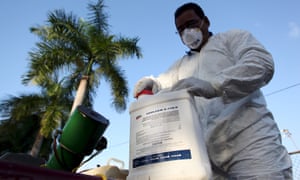
A health worker prepares insecticide before fumigating a neighborhood in San Juan on 27 January 2016.


A health worker prepares insecticide before fumigating a neighborhood in San Juan on 27 January 2016. Photograph: Alvin Baez / Reuters/Reuters

‘False alarms’


Denisse Velazquez, 36, stood under the shade of a tree in Old San Juan, one of the hardest hit municipalities, as she said that the government “created false alarms”.


Juan Martinez, 43, said that with “all these diseases we have seen, it’s something normal”, referring to periodic outbreaks of Dengue the island has struggled with since the 1980s, and the recent Chikungunya outbreak. “In the Caribbean there has always been mosquitoes.”


Even tourism officials have reinforced the view that Zika risk has been overblown.


“From the very beginning the numbers that were given were based on projections. The reality is that as of today, less than half of 1% of the population has the virus,” Clarisa Jimenez, CEO of the Puerto Rico Hotel and Tourism Association, told CNBC’s Squakbox. “The only issue here is if you’re pregnant.”


Jimenez focused on the roughly 10,600 Puerto Ricans who had, at the time, been diagnosed with Zika by the CDC. The figure is an underestimate, because four out five infected people have no symptoms and likely do not know they are ill.


Now, near the end of August, the health department of Puerto Rico and the CDC have diagnosed 12,800 Zika infections, including more than 670 in pregnant women, believed to represent only a fraction of actual infections.


So far, only one child has been born with microcephaly. But experts expect that number to increase dramatically in coming months, particularly from September to December.


Health professionals believe the most dangerous time for a pregnant woman to be infected is in her first trimester, though more research is needed. Those pregnancies are expected to begin coming to term this fall.


“Right now, most of the births we have seen are among second and third trimester infections,” said Rivera-Garcia. “For us, it’s not just a number. There’s a family behind that number.” Doctors suspect that even these cases, which are less dramatic in appearance, could result in problems that won’t manifest until much later.


The island’s timetable of epidemic infection is about one year behind Brazil’s. In December 2015, as cases of microcephaly began to surge in Brazil, cases of locally acquired infections were just beginning to show up in Puerto Rico.


“When you’re involved in major epidemics, and particularly this one for some reason, I’ve been unable to disconnect,” said Dr Francisco Alvarado-Ramy, a senior CDC official and native Puerto Rican who helps lead the federal government’s response to the epidemic. He is stationed at the Dengue Branch, an outpost in San Juan established to combat another virus spread by the same mosquito as Zika, the aggressive Aedes aegypti.


“The moment that I go to the sleep to the moment that I wake up, my mind seems to be around Zika all the time, trying to think if there’s any other thing we can do,” he said.


“When something goes wrong, it’s also a very fast way down, downstairs in terms of your emotional well-being. We’re trying to prepare our staff, as well, if we start seeing a lot of people with bad outcomes how to handle that emotionally.”


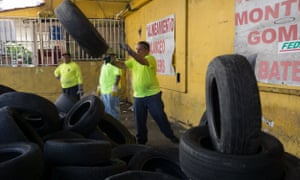
Employees with the municipal government collect used tires on 7 August 2016 in the Rio Piedras section of San Juan, Puerto Rico.


Employees with the municipal government collect used tires on 7 August 2016 in the Rio Piedras section of San Juan, Puerto Rico. Photograph: Angel Valentin/Getty Images

Cat, Dog, Mosquito


“We have in Puerto Rico a dog, a cat and a mosquito,” said Carmen Deseda, the former state epidemiologist who battled several epidemics of Dengue, a hemorrhagic fever that can incapacitate a person for weeks. “The problem is not the mosquito, it’s the virus.”


Deseda expressed a view common among Puerto Ricans: the mosquito is here to stay, fumigating won’t work, so the government better find some other way to deal with this.


She was among many prominent opponents of fumigating the island with an insecticide called Naled, a solution proposed by the CDC and used on about 6m acres of land each year in Florida. Many residents were outraged that the federal government would, in their view without permission, spray chemicals over the island.


“When they said that I was very upset,” said Miguel Pellot, 48, the owner of a smoothie stand called Fruta Fruit in San Juan. “¿Como se dice, una falta de respeta?” he said, asking how to express lack of respect in English.


“For people here, this is nothing new. We’ve had mosquitoes here since we were born,” Deseda said. “They don’t feel threatened by the mosquito, because it’s been always with them.”


Deseda said government fumigation encourages apathy among the population. “The government is doing something so they don’t have to anything.”


Ceda Velez, a 36-year-old woman working a juice stand near San Juan’s cruise ship ports said she was in favor of government fumigation.


“We use repellant, but at least it would help with where the mosquitoes breed, to kill the mosquitoes,” she said in Spanish. “I worry.”


Puerto Rico won’t fumigate with Naled from planes, as Florida does. And even if Puerto Rican authorities decided to fumigate street-side from trucks, only about 12 on the island are outfitted to spray for mosquitoes. Regional resistance to insecticides has also confounded eradication efforts.


Some residents believe the island was a guinea pig for past federal government experiments, that Zika was mild and posed no risk, that they weren’t going to stop “living”, or were simply misinformed about how to prevent exposure.


“I had, yes, but I drink Tylenol, y ya,” said Naara Nieves, 39, who stood outside at noon in San Juan proselytizing, a gregarious evangelist of Jehovah’s Witness. “I think the women who are pregnant, is bad, but for me, no.”


Marylin Vigo, who was visiting her sister on the island from Brooklyn, New York, said her relatives called her “paranoid” for even slathering on mosquito repellent.


“She goes, ‘Ugh! That doesn’t mean you’re going to get Zika, because of mosquito bites,’” Vigo said, describing her sister’s reaction. This is despite her sister’s belief that Vigo’s 29-year-old nephew just contracted the virus.


A cultural gulf


One of the most cited differences between Puerto Rico and the mainland is the lack of screened windows and air conditioning, which hamper mosquito-borne diseases spread in places like Texas.


Tropical breezes course uninhibited through flung open doors, patios and unscreened louvre window shades. The open roofs of Spanish-influenced architecture let in rain drained away by a floor grate.


“If you go to the communities, people love to sit out on their patio, play dominoes, play music, have a barbecue, and that’s difficult to do in a screened in porch, or take advantage of the Caribbean leeward breezes,” said Rivera-Garcia. “It certainly changes your way of life.”


So the Puerto Rico Department of Health is focused on behavioral and cultural change.


River-Garcia said past epidemics of diseases with severe symptoms like Chikungunya have not driven people to engage in practices like wearing repellant and investing in screened windows.


“That’s why we – from the get-go in January – we said, ‘OK, we need behavioral science studies. We need to understand what will be that one driver, or the drivers, to effect behavior change.”


Even for those who might want screens, it could be a real burden.


Nearly half the population, 46%, lives in poverty. The average per capita income is just $ 19,600, making an air conditioned bedroom unattainable.


A raft of other science conducted on the island is looking at other solutions. Children of Zika-infected mothers will be followed until they are three years old. Alvarado and his team collect blood and placenta samples from Zika-infected women who give birth and miscarry.


Traps are being reengineered at the Dengue branch, including the promising, pesticide-free innovation of a bucket that uses fermenting hay and water to trap mosquitoes.


“It drives me to keep trying and see where can we improve, what else can we do,” said Rivera-Garcia. “I think for all the responders both local and stateside with many Puerto Ricans in various areas of expertise – they’re coming back, donating their time, or asking for deployments in Puerto Rico.”


Puerto Rico officials struggle to translate Zika virus fears into action

4 Ağustos 2016 Perşembe

Scientists edge closer to creating effective Zika virus vaccine

Scientists have edged closer to an effective Zika virus vaccine after demonstrating that three different formulations can protect monkeys from the disease.


The results suggest that the virus can be repelled by even low levels of immunity and have boosted confidence that a viable vaccine for humans is on the horizon.


Tests on 16 animals found that all three experimental vaccines offered complete protection against Zika infection one month later, though how long the protection could last for remains an urgent question for longer-term trials.


“We don’t want to overstate it, but we hope for protection that is long-lasting,” said Dan Barouch, who co-led the studies at Beth Israel Deaconess Medical Center in Boston. “Ideally we’d have protection induced by a single shot vaccine or a two shot vaccine and for that to last for years.”


When vaccinated, the animals churned out antibodies that were more than sufficient to overwhelm the virus.


The Zika virus has swept through Latin America and left behind a trail of birth defects, such as microcephaly, which causes children to be born with small heads. This week, Florida reported the first US cases of local transmission of Zika virus. All previous cases were in people who had travelled to affected regions.


Of the three vaccines tested by Barouch and others, the most conventional and ready for development is a whole, killed Zika virus, which is being pursued by the Walter Reed Army Institute of Research in Maryland.


The other two vaccines are more novel. In one, a single and harmless Zika virus gene is stitched into a loop of DNA. When injected into the body, cells take up the DNA loop and from it produce Zika proteins that trigger an immune response against them.


The third and final vaccine adds the Zika virus gene to a harmless adenovirus. This behaves like a Trojan horse and smuggles the DNA into cells, which then produce antibodies to wipe out the whole virus.


No DNA or adenovirus vaccines have been approved for use in humans before, but clinical trials are underway. The vaccine based on the whole, killed virus will go into human trials this autumn.


Barouch said the findings increase optimism that a safe and effective human vaccine against Zika virus might be successful. “Our data encourage the development of these vaccines in clinical trials as quickly as possible,” he said. Details are reported in the journal Science.


Gavin Screaton, an immunologist at Imperial College London, said the results were “positive early steps”, but whether the vaccines will work in humans and offer long term protection against Zika must still be determined. “A human response will need to last years to be useful,” he said.


Despite the encouraging progress, the path to a viable vaccine in humans may not be straightforward. Recent work by Screaton’s group found that previous exposure to dengue virus could potentially make Zika infections more serious. If the opposite holds too, as some researchers suspect, a vaccine that floods the body with antibodies against Zika virus could make common dengue infections life-threatening.


The problem arises because Zika and dengue, which both belong to a group called flaviviruses, are so similar at the genetic level. This can confuse the immune system. Should a person catch dengue and later catch Zika virus, their body may attempt to fight off Zika with “old” antibodies raised against dengue. Rather than overwhelming the Zika virus, the antibodies might simply draw them into cells and cause the infection to take hold more quickly. Known as cross-reactivity, this raises a second potential hurdle: a person who has fought off dengue or similar flavivirus infections may have antibodies that destroy the Zika vaccine before it has had time to work.


Another issue scientists face comes from the natural immunity people will acquire to Zika as the infection spreads through the population. When people are already immune to a virus, it can be very hard to tell whether a vaccine on trial is helping to protect them.


“Whilst these vaccine studies are promising there are some really important questions that need to be addressed,” said Jonathan Ball, professor of molecular virology at the University of Nottingham.


Scientists edge closer to creating effective Zika virus vaccine

29 Temmuz 2016 Cuma

Fifty-three cases of Zika virus confirmed in UK, says health agency

Fifty-three people have been confirmed with Zika virus in the UK, Public Health England has said.


In the most recent cases, a hospital trust said three people had been treated for the virus in Yorkshire.


The Calderdale and Huddersfield NHS Trust said the three had returned from overseas have tested positive for the Zika virus. The condition of the patients is unknown, but the infection itself is mild – some people do not even know they have it – and does not require hospital treatment.


Two cases have been confirmed in Ireland.


An infection control report submitted to the Calderdale and Huddersfield hospitals’ trust board on Thursday said: “Three patients have tested positive for Zika virus following return from foreign travel.”


Dr Gavin Boyd, infection control lead at the trust, said: “There is no specific treatment for Zika and it usually wears off naturally after two to seven days.


“There is extremely low risk of contracting Zika virus in the UK as the mosquito that transmits the infection is not present in the UK, however it can be spread by sexual transmission.”


Zika virus is widespread across Latin America and particularly in Brazil, which is about to host the Olympics. However, the mosquito-breeding season is now over and the danger of transmission of the virus is low.


On Friday, four patients in Florida became the first of 1,650 to be infected by the virus in the United States whose illness is not linked to foreign travel. Florida’s governor said the state had concluded that the infections probably came from mosquitoes in the Miami area.


The virus has caused Guillain-Barre syndrome in a small number of people in Latin America. The syndrome can be triggered by viral attacks on the immune system and results in muscle weakness and sometimes patients are unable to stand without support. Most get better over time, however.


But the biggest concern is the link between zika infection in pregnant women and brain damage in their babies, which is now known to take forms other than just microcephaly (an under-developed head). Fourteen countries have reported microcephaly cases. The first baby born in Europe with microcephaly was reported in Spain this week. The mother had contracted both dengue fever and Zika virus while travelling in Latin America.


Zika virus is predominantly transmitted by the Aedes Egypti mosquito which cannot live in the cooler climate of the UK. There is a very small risk, however, of sexual infection.


The World Health Organisation and PHE are warning those intending to take part in the Olympics or go to Rio to protect themselves against bites while there and take precautions when they return. Some competitors, including golfer Rory McIlroy, have pulled out, even though the WHO says the risk of contracting Zika at the Olympics is very low.


PHE says men and women should use condoms for eight weeks after returning from an area where there is Zika virus and for six months if they experience any symptoms themselves.


Prof Paul Cosford, medical director of PHE, said in a statement: “We expect to see small numbers of Zika virus infections in travellers returning to the UK, but the risk to the wider population is very low as the mosquito that spreads the Zika virus is not found in the UK. As of 27 July 2016, over 50 cases have been diagnosed in UK travellers since January 2016. Public Health England is monitoring the international situation closely and the risk to the UK remains unchanged.


“If you have recently returned from an area where Zika virus transmissions are currently reported and have a fever or flu-like illness, seek medical attention without delay to exclude malaria and mention your recent travel.”


Fifty-three cases of Zika virus confirmed in UK, says health agency

2 Ağustos 2014 Cumartesi

A Frequent Virus Is Consuming Your Gut Bacteria

The only time you are fully human is prior to you’re born. For the rest of your daily life, microbes from the setting colonize the ecosystems all around the physique, outnumbering your 37 trillion human cells by about 10 to one.


Above the past decade, scientists have been exploring how microbes residing on and inside the body influence our well being. Why do some make us sick whilst other folks defend against pathogens? Rather than making an attempt to increase each and every and every species in the lab then studying its sequence of DNA letters to make a single genome, researchers are utilizing an cost-effective approach: acquire samples from one particular spot (such as the gut), chop-up all the DNA, then read the short fragments. The outcome is a ‘metagenome’, the collected genetic materials from an entire microbial community.


Metagenomes make a large volume of information at fairly minimal value. For $ 170m, the 1st phase of the Human Microbiome Task catalogued the microbes at 5 sites – mouth, nose, skin, urogenital and gastrointestinal tracts – in 242 American adults. As properly as revealing the secrets of recognized species, info in the depths of metagenomes can also be mined to uncover microbes we never knew we had, such as a newly-discovered virus referred to as crAssphage.


T4-bacteriophageA bacteriophage virus (CC BY-NC-SA 2. / original by origamiwolf: https://flic.kr/p/oDCK1)

A bacteriophage virus (CC BY-NC-SA two. / original by origamiwolf: https://flic.kr/p/oDCK1)


The crAssphage virus is a bacteriophage, or ‘eater of bacteria’. It infects species of Bacteroides, a group that helps make up the bulk of cells in the human gut and behaves as both great and poor bacteria. Most of the time our relationship is mutually beneficial: we give a residence, they support digest our meals. But they can also be hazardous, connected with well being problems such as weight problems, and one strain, enterotoxigenic Bacteroides fragilis, is linked to colorectal cancer. By preying on Bacteroides, crAssphage probably helps to preserve us healthful.


The virus was found by Dr Bas Dutilh, a bioinformatician at Radboud University Health care Centre in the Netherlands, who rebuilt its genome from DNA fragments in faeces. In programming, it’s normal to mix phrases and capitalize the first letter, and the personal computer instrument that Dutilh developed to assemble the viral genome is called crAss (for ‘cross Assembly’). He tells Forbes that the virus’s name wasn’t inspired by the place it was collected.


“Initially we did not give it any identify, it was just called ‘the new virus’,” says Dutilh, adding that one particular of the scientists reviewing his study paper advised providing the virus a name. “Then I was like, Oh okay, perhaps I can use this chance to market my computer tool. And fundamentally that’s how it received the name crAssphage.”


Reconstructing crAssphage’s genome was no indicate feat, as each metagenome contains DNA fragments from an complete community of microbes. Imagine a metagenome as a box total of pieces from hundreds of diverse puzzles. The genome of a identified organism can be assembled utilizing a associated species as a guide, like searching at the picture on the front of the box, but how do you locate something that you really don’t even know exists?


Dutilh’s laptop instrument pieces a genome collectively by detecting DNA fragments that are equally abundant within the exact same metagenome. Say you uncover puzzle pieces with the very same distinctive form in various boxes, except that box A includes 10 copies of each piece even though box B has 100 copies. Because the distinctive pieces are ‘co-abundant’ inside a box, they’re possibly components of the same puzzle.


Doing work with collaborators at San Diego State University, Dutilh utilized his crAss software to analyze faecal metagenomes from 12 folks. This unveiled a set of distinctive DNA fragments that could be assembled into a genome. DNA tests on a single of the 12 stool samples confirmed that crAssphage was there.


The researchers then searched public DNA databases and detected the virus in 73% of 466 faecal metagenomes from the US, Europe and South Korea. This broad distribution implies that crAssphage occurs in up to 3-quarters of individuals around the planet, and signifies trillions of viruses are possibly living in your gut correct now.


Not a lot is acknowledged about crAssphage. It is also little to be seen under a light microscope, but will no doubt have the angular head, tail and ‘legs’ normal of bacteriophages. Its genome is 97,000 letters long and patterns in its DNA indicate the virus has 80 genes, only half of which are comparable to known genetic sequences. Some encode structural proteins and molecules that manipulate its host’s DNA-creating machinery, and a number of genes are predicted to encode proteins that attach to Bacteroides.


Bacteroides fragilisBacteroides fragilis (source: http://phil.cdc.gov)

Bacteroides fragilis (supply: http://phil.cdc.gov)


Dutilh and his collaborators offered numerous lines of evidence that crAssphage infects Bacteroides. Parasites want hosts, so you would count on a relationship among numbers of bacteriophages and bacteria. Without a doubt, when the abundance of crAssphage DNA was in contrast against the bacterial strains in 151 metagenomes from the Human Microbiome Task, there was a clear correlation among the quantity of crAssphage and Bacteroides DNA. When the virus was utilised to search a database of 3000 bacterial genomes for CRISPR sequences – patterns in a bacterium’s immune method that record encounters with viral DNA (like antibodies matching antigens) – Bacteroides was the leading search outcome.


As properly as controlling gut bacteria in healthier people, crAssphage may a single day be utilised to fight disease. For instance, you could isolate a virus that specifically targets pathogenic strains of Bacteroides fragilis. A genetically-engineered crAssphage could also serve as a therapeutic vector for delivering medicines or vitamins.


So far, metagenome analysis has centered on bacteria. Viruses have been neglected, partly due to the fact it’s assumed their DNA evolves as well rapidly to detect. But as the discovery of crAssphage displays, they can be extremely abundant inside a microbial neighborhood.


“Our intestinal bacteria are 1 large ecosystem,” says Dutilh. “But to recognize that ecosystem, you need to have to understand the viruses as properly.”


A Frequent Virus Is Consuming Your Gut Bacteria

29 Temmuz 2014 Salı

Could Ebola Virus Become A Threat In The U.S?

As the Ebola virus continues to spread throughout West Africa, with increasing concern between each health officials and the public alike, latest media reviews about a death of a guy who traveled to Lagos, Nigeria possessing been in an area rife with Ebola Virus, lately caught the world’s attention–and for excellent reason.


As we reside in an interconnected world–and not just by the web- we have to come to grips with the reality that hopping on a plane could possibly spread any virus–not just Ebola–to one more nation.


Therefore, the importance of enforcing correct infectious screening procedures of people who program to board an aircraft in an endemic location this kind of as West Africa becomes vital to containing the spread of the Ebola virus. Enforcing a “Do Not Board List” would be essential to preventing any spread of such a virus.


Whilst the Ebola virus could potentially be transported by vacationers to another country by a plane trip, in accordance to officials at the CDC, the real possibility of this creating in a significant public overall health danger to those residing in the US is modest.


One of the principal causes, officials believe, that the virus has a lower public well being risk is connected to the conditions which would be favorable to allow spread of the virus.  Bad and crowded living conditions, along with improper sanitation seem to be an essential element that contribute to the spread of the virus.  Such are not the living situations, in general, throughout most modernized nations in the Western planet


English: Transmission Electron Micrograph of t...

English: Transmission Electron Micrograph of the Ebola Virus. Hemorrhagic Fever, RNA Virus. Français : Virus Ebola. Italiano: Fotografia al microscopio elettronico della trasmissione del virus Ebola. Русский: Изображение вируса Эбола полученное с помощью просвечивающей электронной микроскопии. 中文: 電子顯微鏡下的伊波拉病毒結構. Türkçe: Ebola virüsü. Føroyskt: Ebola virus, eitt (-)ssRNA virus, undir elektronmikroskopi. (Photograph credit: Wikipedia)


Ebola, comprised of 5 strains, was initial identified in 1976 in the Western Democratic Congo along the Ebola river.  4 of the strains can be spread to humans. The fifth resides only in primates. The fruit bat, deemed a delicacy in West Africa, is usually regarded a normal reservoir of the Ebola virus.


Ebola is spread straight, human-to-human, by secretions this kind of as saliva, sweat, but also by blood and feces.  It can be spread directly by a break in the skin or mucous membranes or indirectly after touching your nose, mouth or eyes right after obtaining get in touch with with the virus.   It is not transmitting by coughing or sneezing (droplet spread)- as would be the situation for a person with influenza or measles.


Ebola virus, a member of the loved ones of  filoviruses, is one of the most deadly viruses recognized to guy, owing to its ability to continually undergo adjustments or mutations in its viral proteins. Signs commence suddenly–often with an extreme headache and fatigue, sore throat and chills–followed by vomiting, and diarrhea with onset of a hemorrhagic rash in the upper roof of the mouth and the skin that appears to be blister-like.  The virus attacks the immune method, releasing inflammatory mediators, which lead to collapse of the coagulation pathway, ending in massive external and inner bleeding.


Although the virus incubates from two-21 days, its critical to know that only those who are symptomatic–generally right after 8-9 days–having fever along with diarrhea, vomiting and possibly a hemorrhagic rash can transmit the virus to other people.


As a outcome, if somebody on a plane with energetic symptoms–including vomiting and diarrhea –soils a restroom, another man or woman who is not mindful could theoretically touch a contaminated region, and then acquire the virus.


That stated, its crucial to know that the vast majority of these who have turn out to be infected with the Ebola virus have been primarily healthcare staff in shut make contact with with patients as properly as family members members caring for sick loved ones members.  In addition, the threat of transmission from family members touching an infected corpse prior to burial represents an additional possible mode of transmission.


As a caveat, its also critical to know that early on its  program, persons with Ebola might have symptoms that are nonspecific (headache, chills fever) generating identification of the virus practically impossible. It could be effortlessly be mistaken for other illnesses like malaria, cholera or even typhoid fever. Only numerous days into the illness–after the onset of profuse vomiting and diarrhea–will a patient exhibit the telltale indicators of Ebola with bleeding from the mouth and nose along with rectal bleeding concurrent with shock, liver and renal failure, followed by [entity show="DIC" variety="organization" subtype="organization" energetic="correct" important="dic" exchange="Tokyo" organic_id="fred/company/1218"]DIC[/entity] and fulminant cardiovascular collapse.


As a end result, a heightened awareness, proper education,  and a latest travel background from West Africa are essential for for healthcare companies who are on the front lines.


The public need to be assured that medical providers in all US emergency departments are on higher alert for individuals with active symptoms and who have a regarding travel historical past. Prompt isolation making use of universal precautions, (gown, gloves, mask, eye safety) by suppliers is important to stopping spread of the virus.


Long term Program?


Could Ebola Virus Become A Threat In The U.S?

21 Temmuz 2014 Pazartesi

HIV breakthrough reveals virus hidden in immune program cells

Danish researchers have used an anti-cancer medicine to to activate HIV hidden in the cells of patients taking anti-HIV medication, exposing the virus to the immune program and making it vulnerable to assault.


The final results uncovered on Tuesday have been hailed as a single of the key scientific breakthroughs to come from the Aids 2014 conference in Melbourne, as considerably of the language shifts away from obtaining a cure to focusing on breakthroughs in HIV treatment and prevention.


HIV hides in a state of hibernation in CD4 cells, an crucial element of the immune program. Nevertheless CD4 cells are unable to battle HIV themselves – that function lies with the immune system’s killer T-cells.


But simply because killer T-cells can’t detect the HIV hidden inside of CD4 cells, they are unable to attack and eradicate it from the entire body. Whilst HIV patients on antiretroviral drug remedy usually go on to have undetectable levels of HIV in their system, it is in no way eliminated.


There is usually a reservoir left hiding in cells, undetectable to existing screening tools and ready to consider hold of the immune system again must sufferers quit their antiretroviral therapy.


But a investigation team led by Ole Søgaard at Aarhus University’s department of infectious ailments in Denmark has utilised the anti-cancer drug romidepsin to activate the virus and deliver it out of hiding.


In principle, this implies that the killer T-cells need to be ready to detect the virus, since it leaves a trace on the outside of CD4 cells as it is activated and moves in the direction of the bloodstream, Søgaard mentioned.


“Despite really powerful antiretroviral remedy, there is still this reservoir left of HIV cells that are infected but not producing the virus,” he mentioned.


“Once you activate them, these particles will go to the surface and signal to the immune method that this cell is contaminated and wants to be cleared from the entire body. So this is a two-phase program where we bring the cells to the surface, and then rely on the immune method to kill them.”


In the pilot examine, researchers gave 6 individuals 3 doses of romidepsin above three weeks.


Just before each dose, no viral particles have been detectable in the patients.


“But after the dose was provided we simply measured the virus becoming launched into the plasma in 5 of these six individuals,” Søgaard mentioned.


“We also saw the virus go back to undetectable levels following 7 days, so it came up, then hid away yet again, returning back to a non-energetic state until the subsequent dose of cancer drug was provided.”


Nonetheless, the researchers identified the immune technique did not appear to assault the virus following detecting it. Researchers located no considerable reduction in the variety of infected cells each and every time the cancer drug brought the virus out of hiding.


“This suggests when you do this reactivation, you also need to also target and activate the immune technique and educate it to recognise these cells and assault,” Søgaard mentioned.


“That’s what we’re undertaking following in this examine. We will teach and prime the immune program to recognise HIV ahead of we give individuals the cancer drug, and we hope there will be a better possibility the immune program can clear these cells when the HIV is reactivated.”


Søgaard emphasised it was unknown how a lot of the HIV reservoir the immune method would be able to clear even if it could be taught to recognise the virus and attack it. Virus left in just a single cell may be ample to permit HIV to thrive once again.


“We’re nonetheless understanding about this disease and the place it hides, and it is a truly, genuinely difficult condition to cure since it hides in so many locations in the body, it hides genuinely properly and can hide for an indefinite time period of time,” he explained.


The trouble of an HIV cure grew to become particularly apparent with the now popular situation of the Mississippi infant, born to an HIV-good mom.


The youngster was placed on a powerful program of antiretroviral drugs inside thirty hours of birth. She continued the therapy for 18 months and when she stopped taking these drugs, she had no detectable virus in her system. It gave hope other infants taken care of early might be cured.


But 27 months later on, the virus was detected and she was placed on antiretroviral medication once again.


In a equivalent situation, two Boston patients acquired bone marrow transplants that appeared to rid them totally of HIV. They also relapsed, and are now back on antiretroviral remedy.


These instances have been referred to regularly throughout the AIDS 2014 conference, at times brandished as setbacks. But the cases reveal how far HIV therapy has come.


Attaining much more than two years with no antiretroviral therapy in an infant is unprecedented, especially because the Mississippi little one had no existing immunity to HIV. It has given researchers a new emphasis on exactly where to battle HIV, as they now know it requires just a small amount of dormant virus for HIV to become energetic once more.


The circumstances have shown that doing work out precisely in which dormant HIV virus resides in the body, and being in a position to measure it, will be essential to future research.


The development of HIV into lethal Aids was after regarded inevitable, and much less than thirty years following the epidemic started – not a extended period in medical science – individuals residing with HIV are able to lead prolonged and healthier lives.


But that all depends on entry to treatment, which has the extra advantage of safeguarding towards the transmission of HIV throughout unprotected sex by up to 96%.


The president of the International Aids Society, Françoise Barré-Sinoussi, won a Nobel prize for her function in discovering HIV and mentioned she would not be drawn into talk about how far away a remedy for HIV/Aids may possibly be.


“I bear in mind in 1984 a person mentioned we would have a vaccine inside of two years, and we are now 30 many years later,” she explained.


“We should move on from this. We will need to have to collaborate and combine distinct approaches to HIV – work on cures as effectively as therapies, prevention and vaccines – and strengthen the relationship among researchers to carry on to make progress in tackling HIV.”


HIV breakthrough reveals virus hidden in immune program cells

11 Temmuz 2014 Cuma

Inquiry into US government labs finds flu virus cross-contamination

Senior US science officials have shut down two government laboratories that were the subject of “serious and troubling” safety lapses, and suspended some transfers of potentially dangerous germs.


Dr Tom Frieden, director of the Centers for Disease Control, revealed on Friday that in addition to the exposure of anthrax and the discovery of insecure smallpox vials, which had already been disclosed, inquiries had discovered the cross-contamination of flu viruses.


Frieden said the discoveries raised “serious and troubling questions” in announcing the new safety measures on Friday. “Fundamentally, what they revealed was totally unacceptable behavior,” said Frieden. “These events should never have happened.”


Frieden said he was disturbed to learn of the influenza virus cross-contamination in the last 48 hours, the incident was not previously known.


In June, news first broke that CDC bioterrorism scientists may have accidentally exposed 84 of their colleagues to live anthrax by deviating from a protocol meant to kill the bacteria and spores. Just a few days ago, 16 vials labeled “variola”, or smallpox, from 1954 were discovered in a storage room by a scientist at the Maryland campus of the National Institutes of Health.


Two of those vials were found be viable, or potentially infectious. Frieden said it does not appear that workers or the public were exposed to the dangerous pathogens in either incident.


Just two days ago, Frieden said he found out that a cross contamination in one of the CDC’s influenza laboratories led to a highly pathogenic strain of “bird flu”, or H5N1, to be accidentally shipped to a Department of Agriculture lab that was expecting a safer strain.


It does not appear anyone was exposed in that incident


Frieden said bioterrorism researchers who nearly exposed their colleagues to anthrax broke lab protocol, had a “lack of scientific knowledge in this laboratory about anthrax”, and should have known a method used to kill anthrax bacteria could leave small amounts of spores viable.


“The root cause, fundamentally, was that the scientists failed to follow a scientifically derived and ensured protocol that ensured that anthrax was deactivated,” said Frieden. There is a “lack of standard operating procedure, [and] lack of adequate laboratory oversight,” that allowed the incidents to happen, he said.


Frieden said he found the cross-contamination of influenza the most disturbing of the three incidents.


“It’s most distressing not because it’s most dangerous,” he said. “What’s distressing about it is that our influenza laboratory is a superb laboratory … So, to me, the fact that something like this could happen in such a superb laboratory is unsettling.” Frieden said it was also disturbing that the incident took about six weeks for scientists to report to superiors.


In response to the incidents, a moratorium on the transfer of biological materials from high-security CDC laboratories is being immediately issued, and will not be lifted until a lab-by-lab review is conducted.


The influenza laboratory is closed pending an investigation, and the laboratory that improperly handled anthrax is suspending work with that and other dangerous pathogens. Employees will be disciplined where appropriate, Frieden said.


New laboratory safety initiatives include naming Dr Michael Bell, currently the deputy director of health care quality promotion, as director of laboratory safety. Bell previously worked in the CDC’s infectious disease control division.


Current lab protocols for transferring and deactivating biological material, such as the flu, will be reviewed and updated. An external advisory committee has been established, as well as a working group headed by Bell.


Frieden said any lessons the CDC learns through its review could be absorbed into its function regulating labs around the country, such as private or university labs.


A 23-page report issued by the director comes before his hearing before the House energy and commerce committee next week. Frieden has headed the CDC since 2009, and previously headed the New York City department of health.


Inquiry into US government labs finds flu virus cross-contamination

HIV professionals take stock soon after virus reappears in "cured" girl

A laboratory technician examines blood samples for HIV/Aids

The lady treated in Mississippi appeared to be living evidence that it was achievable to outwit HIV. Photograph: Eliseo Fernandez/Reuters/Corbis


The brave hopes of HIV scientists that they were on the path in the direction of a remedy for Aids have received a substantial blow with the news from the US that, soon after appearing to have been completely cleared from the entire body of one particular small woman, the virus has been detected once more.


The Mississippi infant was the poster little one of the “hunt for a remedy”, which is the mantra scientists and campaigners have adopted given that more widely accessible medicines stemmed the rise in the Aids pandemic and lowered the sense of emergency. We have in no way known her title, but the little one treated in the Jackson Memorial Hospital in Mississippi appeared to be residing proof that it was possible to outwit the virus. Research have been planned to test the treatment method she acquired in other infants. Now there will have to be a rethink. During the HIV local community, there will be genuine dismay.


Pregnant ladies with HIV are put on antiretroviral medication to suppress the virus in their blood, for their own overall health and to protect their child. In North America and Europe, the vast bulk of babies with HIV-optimistic mothers are born free of charge of the virus as a outcome. The Mississippi baby’s mom, however, had never ever attended an antenatal clinic. Dr Hannah Gay, a paediatric HIV consultant at the hospital, took the choice to place the child on a specifically strong course of antiretroviral drugs inside of thirty hrs of the birth, just before she even had any HIV test outcomes. This was an unusual procedure, but confident sufficient, when the test outcomes came back, they confirmed HIV in the baby.


The youngster continued to be offered antiretroviral drugs for 18 months, when doctors lost contact with her. Ten months later, mom and daughter reappeared. When tests have been done, there was no indicator of the virus anywhere in the girl’s body. A buzz of amazement and excitement went all around the planet. But now, at nearly 4 many years old, the typical tests to which the child has been subjected have shown traces of the virus after once more. She is no longer in remission and has been place back on remedy.


HIV has proved a formidable opponent for scientists striving to develop vaccines as well as drugs simply because of its ability to hide in the body. Medicines can suppress the virus till it is almost undetectable, but after they are stopped, the virus rebounds.


The events in Mississippi might nevertheless educate scientists a great deal. It does appear that treatment method hit the virus harder in this child’s situation than any person has managed to do prior to. Other medical doctors have been keen to consider the method. In March it was exposed that a second infant, in Los Angeles, had been treated with a equivalent sturdy cocktail of drugs inside just 4 hrs of her birth. Tests could not find the virus afterwards, but that child is even now on treatment method and now probably to continue to be so.


There have been strategies in the US to carry out a federally funded review of early aggressive treatment in newborn infants with HIV. If there was no signal of HIV after two years, medical professionals would end the medication. No matter whether such a examine can now be ethically done will be in question.


“We’re going to get a good tough appear at the review and see if it requirements any modifications,” mentioned Dr Anthony Fauci, director of the National Institute of Allergy and Infectious Conditions. At a minimal, consent types to join the research would have to be revised, he stated. He added that scientists remained committed to obtaining a cure for HIV.


Jeffrey Safrit, analysis chief at the Elizabeth Glaser Pediatric AIDS Foundation, was one of these to supply an upbeat view. “What we have learned from this situation is really very wonderful,” he said. “They were able to suppress the virus for a extremely lengthy time with no treatment. We need to have to take the good aspects of this case and find out from them to move forward [with the federal examine]“.


Hopes have been raised before. Like the Mississippi little one, the “Berlin patient” appeared to offer a blueprint for a cure when his story emerged in 2008. The patient was an American, Timothy Ray Brown, who obtained a bone marrow stem cell transplant in Germany to deal with his cancer, acute myeloid leukaemia. His doctors managed to get the donation from a man who is a single of the tiny minority who have organic immunity to HIV. Brown’s HIV has not recurred. Stem cell transplants from donors have considering that been provided to other individuals with HIV, but the virus has constantly produced a comeback.


At the International Aids Conference, which opens in Melbourne at the finish of next week, the promise of babies freed from HIV was anticipated to be a single of the greatest and most hopeful themes. Now there will be a lot of stoical talk from HIV specialists about what can be discovered from the setback. They have been right here ahead of and will be right here yet again ahead of HIV is, hopefully, last but not least conquered.


HIV professionals take stock soon after virus reappears in "cured" girl

9 Temmuz 2014 Çarşamba

Destroying the final samples of smallpox virus could show short-sighted

I confess that, even though I am a middle-aged mom in a pretty normal household, I am not the world’s ideal housekeeper. It is not uncommon, in a unusual turning of sofa cushions, for me to locate a number of leaky biros and a modest fortune in pocket change. I am quite sure I have discovered total mutant foods groups while defrosting my freezer.


So I felt some sympathy when it was announced that last week staff at the Nationwide Institutes for Health in Bethesda, Maryland, had identified some vials of variola from the 1950s in an unused element of an previous retailer room. It truly is easily done.


The only issue with this generational episode of forgetfulness is that variola is otherwise recognized as smallpox, the notoriously lethal illness that was declared in 1980 to have been eradicated in the wild. The NIH immediately contacted the Centers for Disease Manage and Prevention, and the vials have been securely transported to the CDC secure facility in Atlanta for testing on Monday.


It has because been confirmed that the vials do without a doubt incorporate smallpox DNA, but it will get an additional two weeks ahead of analysts discover regardless of whether the virus within is even now viable. The vials will then be destroyed in the presence of officials from the Globe Wellness Organisation.


The CDC assures in its press release that employees had been highly unlikely to have been exposed, but the discovery will be a fear to anybody concerned about the risk of biological terrorism. And although in this case the vials do not seem to have posed any risk to workers, in the previous scientists have died as a outcome of smallpox stored in laboratories for the purposes of scientific analysis.


A medical photographer at the University of Birmingham, Janet Parker, was killed by anthrax in 1978. It is thought the virus travelled through air ducts from a smallpox laboratory to her darkroom on the floor over. Her mother also contracted the ailment, but survived.


This week’s announcement will no doubt embarrass the CDC which, just three weeks ago, had to admit that 75 scientists in three laboratories had been accidentally exposed to dwell, rather than inactivated, anthrax samples sent out from its Atlanta facility.


The WHO programme to eradicate smallpox was a brilliant instance of steadfastness, surveillance and human ingenuity. It has been estimated that 300 million folks died of smallpox in the 20th century alone. By means of the late 1960s and early 1970s, an global team of wellness employees – underneath the advice of the brilliant American physiologist and epidemiologist Donald Ainslie Henderson – adopted a method that could only be described as “good old-fashioned shoe leather detective work”.


They travelled the planet and visited local communities asking people if they had witnessed cases of smallpox, and when they located 1 working a system of ring vaccination (vaccinating absolutely everyone who had contact with the situation) to avoid the virus from spreading.


Extremely, they succeeded. The final naturally acquired case of smallpox was in a Somalian cook named Ali Maow Maalin in October 1977. The group waited for new cases to seem. And waited. But none came. Smallpox was officially declared eradicated three years later. Maalin survived, but died last yr after dedicating the remainder of his daily life to the eradication of another major killer – polio.


Which is not to say that the smallpox virus has been wiped from the face of the planet, even enabling for likelihood finds like last week’s. There are two safe facilities that still hold samples of the virus – the aforementioned CDC facility in Atlanta, and one particular at the Russian State Research Centre for Virology and Biotechnology in Koltsovo (an intriguing reflection of the cold war nonetheless raging when the virus was declared eradicated). These samples had been scheduled to be destroyed in 1993 but they nevertheless exist and there is some debate about what must take place to them.


Numerous created nations, led by the USA, argue that there is nonetheless a lot study to be accomplished and that the current vaccine needs to be refined to operate better in people with compromised immune methods (this kind of as those with HIV). Nevertheless developing nations, with so a lot far more to lose from a new outbreak, argue that the risk outweighs the advantage.


The guy who did so considerably to destroy smallpox, Donald Henderson, has stated that he thinks it is time for the virus to be destroyed and that all productive investigation on it has been completed. We sequenced the smallpox genome in 1994 and if we need to, the argument runs, we can carry it back for more investigation.


But there can be no doubt that recreating the virus from scratch would be hugely controversial – scientists at the University of Wisconsin-Madison not too long ago provoked a storm of criticism when they recreated the deadly Spanish influenza virus that killed millions in the aftermath of the very first world war, utilizing fragments of avian flu viruses discovered in wild ducks. The researchers claimed the virus could inform influenza vaccine advancement.


The query will often be “does the danger of accidental release outweigh the rewards of analysis, or the other way around?” And, as with so several decisions in healthcare investigation, the solution is not clearcut.


But although we wonder what on earth to do with the official stocks of smallpox, maybe we must also wonder what the following workplace move or clearout of an old laboratory room will carry. Final week’s incident displays that smallpox could even now pop up from time to time. And if we cannot ensure it has been wiped out elsewhere, why wipe out our own extremely secure, managed supply?


Any (rare) accidents at managed amenities could be ringfenced right away and their impact minimised. If something, the destruction of the vials identified on one July will be evidence that we truly are quite risk-free from one more epidemic.


The greatest growth in the world of infectious illnesses considering that the eradication of smallpox has been the physical appearance of HIV, a totally new kind of human immune deficiency, and we don’t know what else could be close to the corner. So destroying the smallpox virus for excellent – effectively closing down a entire avenue of vaccine investigation – could be a terrible notion.


In the meantime, I have a freezer to defrost.


Destroying the final samples of smallpox virus could show short-sighted