Growing up is tough enough for any young person approaching puberty. But for Aimee Challenor the challenges she faced as a 10-year-old were much harder: “It struck me when I was about 10 or 11 that I was a girl. I couldn’t put my finger on it but something wasn’t right. I was in year 6 and I left my parents a letter on their bed before I went to school one morning. When we talked about it later they were very supportive, but no one knew what trans was. So I went back into the closet.”
During the next six years Challenor, now 19, felt anxious, isolated, lonely and depressed. “I spent my time at secondary school feeling pressured by society to be somebody that I was not. I wasn’t able to be myself; there was always that nagging feeling at the back of my head, so I didn’t take opportunities and grab them. I didn’t reach my potential and my education suffered as a result.”
It wasn’t until her school graduation prom that she decided to come out as trans: “It was then that articles about trans started to appear and I discovered that there was a word for it. I found the trans guide published by the Tavistock and Portman NHS foundation trust and decided to come out at my prom – it was the day before I was due to leave school.”
Her mum helped her with her dress and one of her school’s teachers did her makeup on the night: “Some of the staff were very supportive, but they were not in the school leadership team. Generally, I didn’t get any support from my school – it wasn’t up to speed on the Equality Act and they wouldn’t let me wear a dress to the prom because they thought it was unnecessary attention seeking; they said it made the school look stupid. But I dug my heels in. I was incredibly nervous on the night, but it felt so positive – for me it reinforced what was right.”
Challenor is in the process of transitioning from male to female but feels “in limbo” as she waits to continue adult gender identity services: “I’ve been out now for three years and publicly present as female, but I wish I could have come out younger and not have had to wait until I completed puberty.”
Today Challenor speaks on LGBTIQ (lesbian, gay, bisexual, transgender, intersex and questioning) issues for the Green Party in England and Wales and also contributed to charity Stonewall’s Vision for Change report, published in April, which spells out what still needs to be done to deliver equality for the UK’s trans community. Challenor says: “I speak to schools about trans issues and I am the first openly trans person to work for a political party. I think trans [people] need to show that you can be trans and reach your potential.”
Powerful and potentially addictive opiate painkillers are being handed out too readily, leading doctors have warned after it emerged that the number of times the drugs are being prescribed in the UK has doubled in the past decade.
The Faculty of Pain Medicine and the Royal Pharmaceutical Society said they were worried about the high and growing use of opioid drugs such as codeine and tramadol – while other experts warn that hundreds of thousands of patients could be addicted to them.
Dr Barry Miller, dean of the Faculty of Pain Medicine, said that the increase in the prescription rates of painkillers in the UK should be “met with concern”, adding: “While some of the increase can be attributed to an improved understanding of the effectiveness of these medications by medical professionals, we are concerned by reports of unnecessary prescription.”
NHS Digital figures released last week showed that prescriptions of opioids have doubled in the past decade, with the number of prescriptions issued rising from 12m in 2006 to 24m in 2016. One of the highest increases in prescriptions was for oxycodone, which shot up from 387,591 to 1.5m – a 287% rise – over that period. There was a 236% increase in prescriptions for morphine sulphate and a 143% rise for fentanyl.
“Our greater understanding of these medications can improve the quality of life for tens of thousands of patients in the UK living with complex pain. However, all NHS staff prescribing these medications need to ensure they are not doing more harm than good,” said Miller, whose organisation represents anaesthetists who specialise in the relief of acute, chronic and cancer pain.
rising rates of pain killer prescriptions
Doctors have warned about the numbers of people in Britain who may be addicted to these drugs as a result, with recent estimates suggesting over 192,000 could be dependent, partly because some medics prescribe them too readily.
In the US, since 1999 the number of overdose deaths involving opioids such as oxycodone, hydrocodone and methadone has more than quadrupled. The number of prescriptions of these drugs rose dramatically – from 76m to 219m a year between 1991 and 2011. This comes despite the fact there has been no change in the amount of pain Americans report.
Harry Shapiro of the DrugWise information service warned of the growing risks of addiction in the UK and said the growing prescription of painkillers was leading to a “public health disaster hidden in plain sight”. He is calling for more dedicated specialist centres to help people with painkiller addiction and also to help track the scale of the problem.
“People are not staggering around the streets and buying dodgy drugs off dealers, they are getting painkillers. It’s a problem hidden in plain sight – a problem in every GP surgery and pain specialist clinic,” he said.
Martin Johnson, clinical lead for chronic pain at the Royal College of General Practitioners, raised concern about the number of people who may be on repeat prescriptions. He said those with other conditions such as diabetes were monitored while on medication, but it doesn’t always happen for people with chronic pain. He called for an annual review, potentially conducted by pharmacists, to check in on those given these drugs. “So many say painkillers don’t do anything, but they keep getting prescribed them,” he said.
Many patients also reportedly use these drugs recreationally, obtaining them non-prescriptively after being introduced to them by their doctors. In Britain, there is less recreational use and most people are given opioids by their doctor for chronic pain.
Opioids act on different parts the brain and nervous system, including the spinal cord. The latter receives sensations from the body before sending them to the brain. Opioids work on this area to decrease feelings of pain, even after injury. One of the risks with the drugs is that they are addictive, with users complaining of withdrawal symptoms when they stop taking them.
But doctors say that while medications such as codeine can be effective for cancer patients and for tissue damage, they do not always help the growing number of patients now taking them for long-term pain. These drugs also have side effects such as severe constipation and dangerous sedation.
Dr Jane Quinlan, consultant in anaesthesia and pain management at Oxford University Hospitals NHS foundation trust, said: “For the majority of patients with chronic pain opioids don’t reduce their pain, but the side effects can significantly worsen their quality of life. Over time opioids can actually make people more sensitive to pain, she added.
One former user, who asked to remain anonymous, said: “I was prescribed tramadol for about three years for my ongoing back condition. I was addicted to them after a few months, it got to the stage where it became part of my routine. I suffered awful withdrawal when I stopped taking them. Without them my pain was overwhelming.”
Yasir Abbasi, a psychiatrist with Mersey Care NHS trust, said: “Being dependent or addicted to prescribed painkillers can lead towards a slippery slope of illicit behaviour, which can pave the way for hardcore drugs. There are not enough non-pharmacological interventions available to reduce our reliance on opioid medication.”
Cathryn Kemp, 45, from Hastings: ‘I ended up in rehab after taking 60 fentanyl lozenges a day’
Cathryn Kemp: ‘In the morning I would wake up, crawl to the bathroom and take six lozenges.’ Photograph: Andrew Hasson for the Guardian
I was working as a journalist when, after a period of illness, I was finally diagnosed with a disorder of the sphincter. I had lots of scary procedures to make me better. I was very ill and eventually discharged with a repeat prescription for fentanyl lozenges. I’ve since been told that fentanyl is 100 times stronger than heroin.
At the time, I was told to take a maximum of eight lozenges a day. I was also on fentanyl transdermal patches – 100mg ones, the strongest. That shows the level of pain I was in. Then one day I took an extra lozenge and after that my use of the drug spiralled.
Two years later I ended up in rehab after taking 60 lozenges a day – all of them on prescription from my GP. I kept thinking I was in loads of pain and needed more.
I felt like I was taking control of things, which is completely insane. I hid the problem brilliantly from my family and friends. I used to hide lozenges around the cottage where I lived, putting them in tampon boxes so no one would know how many I was taking. Taking fentanyl would make me woozy and then about an hour or two between doses I would go to withdrawal – vomiting, shaking and hallucinating.
In the morning I would wake up, crawl to the bathroom and take six lozenges. This would stop me shaking. I would then be well enough to get a cup of tea and then have to take six more. This would go on all day. The tiny bit of me that was still myself at this point knew I was abusing drugs, but I was afraid to stop as I feared living in pain again.
At this stage I was dangerously dependent. My GP said he would write me my last fentanyl prescription and I was forced to borrow lots of money from my parents and sell my cottage in order to pay for private rehab. My GP applied for NHS detox for me, but I was told that I was refused it because I wasn’t homeless and I wasn’t offending.
By then I knew going to die if I carried on so I did whatever it took to get help. Coming off it I had to go through a pain barrier. The body stops producing endorphins, the body’s natural painkillers, because it is receiving opiates instead.
I lost everything. I had to leave work because I was so ill. I lost my relationship, my career and my home – I lost everything I had built up over my writing career. I nearly lost my life.
I now run a charity dedicated to helping people cope with painkiller addiction. I haven’t come across anyone who has had such a complete breakdown like me. But I hear from lots of people, mainly women, who say they have kids to sort out and they cannot stop to have a pain condition. They think they have to keep going and so become trapped by the drugs they are taking.
What I am really hearing is the fact in the medical community there is still no support for dealing with these cases – no specific or very few specific resources to refer people too, so many are left hanging. We really need to engage NHS England in accepting that we need proper treatment services to deal with chronic pain as well as the addiction side.
It’s heartbreaking because it’s everyday people who are affected. We look at America and are horrified that opioid deaths are higher than deaths caused by car crashes. We do have a different system here, but estimates suggest hundreds of thousands of patients in the UK today are addicted to prescribed painkillers.
Millions of Britons could have their access to free health insurance taken away after Brexit, a parliamentary report has said.
MPs on the health select committee urged the government to offer more guarantees for Britons visiting the continent after hearing evidence that without the right to receive treatment in countries that are part of the European Economic Area, people with cancer could find it too expensive to go to Europe.
In a strongly worded report on the effect of Brexit on health and social care, the committee said the challenges created by losing reciprocal health arrangements should not be underestimated.
British travellers can currently use the European health insurance card, which guarantees access to healthcare free or at a reduced cost in Europe. The EU member state providing treatment is able to claim back costs from the patient’s home country. Some estimates suggest that up to 27 million Britons have the cards.
The inquiry heard evidence that losing this agreement could create challenges for many travellers, including disabled people and those with mental or physical health conditions. Prof Martin McKee of the London School of Hygiene and Tropical Medicine said a week’s full private health insurance for a holiday in France for someone with diabetes or mild depression would cost between £800 and £2,500.
The report also noted that hundreds of thousands of expats living abroad could lose reciprocal healthcare rights, leaving some facing hardship. McKee, a professor of European public health, said many Britons in Spain have properties that are now worth little. “Many will come back in a state of poverty because they bought properties in Andalusia and other places … They will be throwing themselves on the mercy of the state when they come back,” he said.
Christopher Chantery, a British resident in France, told the committee many pensioners moved to the country “in good faith on the implicit promise that these arrangements would continue. Suddenly, something happens that brings those arrangements to an end. It is absolutely terrible for many people”.
British nationals living abroad have to get an S1 form, which gives them health cover, paid for by the UK, within Europe.
The committee, which includes Labour and Conservative MPs, called on the government to preserve the existing system as opposed to seeking a new arrangement. What was currently in place offered taxpayers good value for money, it said.
In the same report, the committee warned that the Brexit vote could lead to a brain drain, with morale among EU nationals in the NHS low due to uncertainty about their future. It called for more reassurances and said the government should continue to be able to recruit the “brightest and best from all parts of the globe” after Britain leaves the EU.
The Department of Health could not comment due to general election purdah rules. But when asked about reciprocal healthcare at the start of the year, the health secretary, Jeremy Hunt, said it was one of the rights of those who retired to Spain or France and he wanted to secure it early on in negotiations, but could not guarantee this.
Speaking to the Guardian, Prof Jean McHale, the director of the Centre for Health Law, Science and Policy at the University of Birmingham, said: “If questions of healthcare provision and patient mobility are not included in the negotiations, if there is not a transitional period and we move to hard Brexit, there will be major practical questions. What happens at midnight on Brexit D day to the person in hospital in another EU member state who has been in a car accident?”
The most important part of every night shift is matching your scrub top to your bottoms. Odd shades, bad luck. Match for the best chance of success.
I’m full of superstition because fate doesn’t follow conventional rules. I sit, cross-legged comparing until I’m satisfied with my choice. I pull my clothes off and my blue scrubs on. Stethoscope, badge and water bottle. Downstairs, grab phone and rush to handover, hoping I’ve remembered my pen.
Back of house, but this is no theatre production. A list of jobs to mop up from the day. Twelve wards, the nurse practitioner and me, “Let’s hope they all behave tonight”.
First up, fluids. Ward 50 needs a cannula, or two, or three – while I’m there. A couple of bags of normal saline go up and it’s time for me to go down to ward 20 where a lovely woman has slipped off the commode. She’s ever so embarrassed. A check from head to toe, some reassuring words and an offer of a gingernut. Then back to the desk to scribble down the story.
The phone rings, again and again, sore foot, chest pain – blood pressures through the floor and in the clouds. A woman sobers up and wants to leave – listening, persuading, assessing and eventually letting her sign the papers to walk out the door, no doubt next week we’ll meet again for the same dance.
A warm hand on my shoulder and cup of tea beside my hand. “Do you want some cake doc?” – I want nothing more. The 3am slump is here and sugar is my drug of choice. I sit, and chat – and melt into the ward for a few minutes.
An unfamiliar sound from round my neck – I answer, crash call. I drop everything and run. Down two flights of stairs, along the corridor. Turn right. I see a set of anaesthetic greens in front of me. “Bay four, bed six” a voice shouts, we pile in.
A man lies on the floor, breathing hard. Oxygen on. Pulse felt. No response to voice, grumbling to pain. Eyes deviating to the left. I grab the notes and start piecing together the history. Mild upper body weakness, query stroke, a head scan showed nothing much. Back to airway, gurgling noises from his throat. A tube down the nose to help get air into the lungs. We take an arm each, one for arterial blood and one for venous. My hands don’t shake.
Stabilised, we need imaging and fast. I ring the radiologist, ready to plead my case. “Send him down” she says. The ease of the phonecall doesn’t fill me with hope. My senior house officer grabs the emergency drugs from the crash trolley and a fresh faced nurse clutches the oxygen ready to transport. They follow him down. The ward becomes quiet.
I flick through a thin set of notes to try and build a picture. Lives with a loving wife. Walks his dog every day. Gave up smoking years ago – drinks a couple of pints on a Friday. Not too bad for a man in his 70s. Children and grandchildren.
A bed slides through the doors and he returns, the report is back. Large bleed. Blood pushing the brain against the skull. Neurosurgical opinion advised. My registrar arrives, talking fast to someone. I hear “grave”, I hear “imminent”. The bleed is too big and his brain is crushed. There is nothing we can do. Keep him conscious, keep him comfortable, next of kin.
The newly qualified nurse goes white. The notes are in my hand. “I’ll call,” the words leave my mouth before my lips move. A 4am phonecall to a telephone number. A quiet voice answers. She only left at 11pm, the nurses say. “I’m calling from the ward, about your husband, things have changed and I think you need to be here”. She’ll be here as soon as she can. Panic seeps through the phone and into my hand. “Will I make it?” her voice cracks. “Will I see him before he dies?”.
“Call me as soon as she arrives” my registrar says. I nod. She leaves. I stay, breathe in, walk around the corner, shut myself in the clean utility and put two hands up to my wet face. These aren’t my tears to cry but they still come. I push them all back in. Professional.
Years of training do not prepare you for this. Nothing prepares you for your role in someone else’s tragedy. I will leave the hospital in four hours and his wife will still be clinging to his hand. I will come back in 16 hours and they will both be gone. A new name earmarked for his bed. Another story that might end a different way.
The phone rings, and someone needs something. A temperature, a catheter and some laxatives. I glance down at my trousers. They were a perfect match.
Some details have been changed to protect patient confidentiality.
If you would like to contribute to our Blood, sweat and tears series about memorable moments in a healthcare career, read our guidelines and get in touch by emailing sarah.johnson@theguardian.com.
Join the Healthcare Professionals Network to read more pieces like this. And follow us on Twitter (@GdnHealthcare) to keep up with the latest healthcare news and views.
While experts are right to congratulate Prince Harry (Harry praised for telling of ‘chaos’ over Diana’s death, 18 April), and call for more spending on mental health, there is an elephant in the room. Mental health services are dominated by an outdated, simplistic medical model of distress that is rather at odds with the prince’s views. While he makes the obvious link between painful life events and mental health difficulties, our services are still telling distressed people that they have illnesses, like major depressive disorder, caused by chemical imbalances – an unsubstantiated drug company creation – and by inferior genes that make them more vulnerable than others to depression, anxiety, psychosis etc.
Unlike Harry’s psychosocial approach, this socially blind bio-genetic model actually increases prejudice, by using stigmatising labels and exaggerating differences. It has also led to over 62m prescriptions of antidepressants annually in England, at a cost of about £800m a day to the NHS. Our children too are being labelled and drugged at an equally alarming rate. Time for psychiatric services to move on from the failed diagnose-and-medicate approach and start asking us what happened to us, and what we actually need. Professor John Read University of East London
• Is bereavement a mental illness? Does grief require medical treatment? It is a profound mistake to treat such essential aspects of the human condition, and our responses to them, as purely personal “in-the-mind” medical crises, evidence of “ill-health”.
It is the overwhelming assault of our culture on our sense of personal space, time to be, not just to do; that generates much of the distress. The shame and stigma won’t be removed from this distress until we realise that it is not simply an individual, personal illness – though sometimes it becomes that – but a social, cultural malaise that will be deepened, not alleviated, by pills or sometimes misdirected talk therapies. Keith Farman St Albans, Hertfordshire
• Although Prince Harry’s revelations have rightly been praised by mental health experts, it would be helpful to focus on the particular issues surrounding those of us who have been bereaved in childhood.
First, the adults around us do not know how to approach us; second, we are commonly isolated in terms of the experience within our peer group; third, we have not yet developed the means to express our feelings effectively to the adult world around us. Add to that the “scorched earth of English repression”, as Richard Beard so brilliantly described it (Family, 8 April), and the fact that you miss out on natural processes in relationships that are part of growing into adulthood, and you may well finish up with a toxic foundation of anger within you.
Those bereaved in childhood have been widely misunderstood and ignored; the prince’s remarks allow us at least to start a debate as to how we should treat this most vulnerable group. Alison Sesi Billericay, Essex
• Suzanne Moore writes (Harry got help. Many others deserve it too, 18 April) that no one touched the two young princes during their mother’s funeral service. But why would anyone want to display public emotion, knowing that columnists were looking down on them? The family she saw that day was no different to other families who do not show their emotions at a funeral. Many people, frozen in grief, cognitive processing and exhaustion, are paralysed when it comes to being on display while they deconstruct and reconstruct what is in the coffin in front of them.
One message of the royals’ Heads Together campaign is not to judge other people, because you don’t know their circumstances. Miriam Fitzpatrick Dublin, Ireland
• Prince Harry is fortunate to have had what is increasingly being called “real therapy”, meaning in-depth and enjoying a trusted relationship with the “shrink” (to use his word). This kind of private practice therapy has almost completely vanished from the NHS and the public sector because all funding is being sucked up by the Improving Access to Psychological Therapies scheme. In this manualised and medicalised state therapy system, with economic rather than psychological goals, it takes a long time and much judgmental evaluation before a few get even cognitive behavioural therapy. We can be pretty sure that CBT is not what was offered to the prince.
It is time for the Department of Health to acknowledge that the old-style psychotherapy and counselling did a lot of good, and that it is still possible to restore it. Professor Andrew Samuels Centre for Psychoanalytic Studies, University of Essex
Non-contact boxing can help people with mental health issues, says Martin Bisp. Photograph: VisitBritain/Getty Images
• I read, with interest and admiration, Prince Harry’s comments regarding how boxing helped him (Report, 18 April). This is something we, at Empire Fighting Chance, already know. We have had massive success with our own non-contact boxing programme for people with mental health issues, often engaging those that traditional services fail.
My co-founder and I have spoken at numerous all-party parliamentary groups about how it is possible to help those most in need by offering something different. However, there seems a real reluctance to invest in and integrate credible, community-based programmes.
Yet everyone can benefit from a community intervention: treatments are not class, race or postcode dependent. Deprivation is a huge factor for poor mental health and the poorer you are the less likely you are to know about or access services. Having something based in your community, provided by a name you know and trust, works. People are not embarrassed to attend – in our case they are proud to say they are going to the boxing gym. Once in it, they train like everyone else, they are not “on display” in some sterile leisure centre, so we get better results.
Finally in a time where funding is hard to come by, budgets are stretched and the health service is under tremendous pressure, we must recognise the role within that sports-led community projects can offer and look to innovate delivery. Resourcing them adequately appears to make sense from a business and, much more importantly, human angle. Martin Bisp Chief executive officer, Empire Fighting Chance
• Today’s underfunded NHS is unlikely to increase access to the support needed by those processing emotional trauma. I and many others, in UK and internationally, have found help from co-counselling, a peer-support system that, after a 40-hour training course, gives access to lifelong listening support that is comfortable with emotions. Pills and professionals have their place, but, as Harry said, listening is more helpful than advice for working through emotional issues that are an inherent part of being human. Jean Brant Birmingham
• Join the debate – email guardian.letters@theguardian.com
• Read more Guardian letters – click here to visit gu.com/letters
Scientists have reversed memory and learning problems in aged mice with infusions of a protein found in human umbilical cord blood.
The striking results have raised hopes for a treatment that staves off mental decline in old age, but researchers stressed that more studies, including human trials, are needed before the therapy can be considered for clinical use.
Tests on frail rodents found that the protein therapy rejuvenated an area of the brain called the hippocampus, which is crucial for memory formation, and one of the first and most important regions to deteriorate in old age.
Older mice that received the treatment reacted like younger animals in a series of behavioural tests, according to researchers at Stanford University in California. They escaped from a maze faster than before, had better memories, and started building nests again, a skill the animals tend to lose in old age.
Researchers led by Tony Wyss-Coray made the discovery after they noticed that human umbilical cord blood had unusually high levels of a protein called TIMP2 when compared with blood from older people. When injected into mice, the protein ramped up the activity of a group of genes that revitalised the hippocampus, and made it more able to adapt to new information. Details of the study are reported in Nature.
The work is the latest in a string of studies that suggest molecules found in young blood may be able to rejuvenate old brains and other tissues. If the therapies are effective in humans, they could become a potent weapon against the cognitive decline that comes with old age, and also neurodegenerative diseases such as Alzheimer’s.
But until the treatment has proved itself in humans, scientists are roundly cautious of the work. The lesson from Alzheimer’s research on mice is that almost everything works in the animals, and so far nothing works in humans, said Rob Howard, professor of old age psychiatry at University College London. “Having taken that on on board, this is a really interesting way to understand how we might help people who are aged or in the early stages of the disease,” he said. The protein therapy might not reverse brain ageing, or halt Alzheimer’s, but it might boost what remains of the healthy brain to at least offset some of the decline that accompanies old age.
Jennifer Wild, a clinical psychologist at Oxford University, said that while the results were interesting, it was too early to consider it as a therapy for humans. “It’s exciting for mice who have cognitive ageing, but it’s way too early to start extrapolating that to say we can help humans,”, she said.
In medicine, the private one-to-one consultation is sacrosanct.
Yet shared medical appointments have been used successfully for years at the Cleveland Clinic in the US. Patients appreciate them. They compare experiences with other patients, learn from their questions, gain more advice than they might otherwise, and improve their understanding of their symptoms.
For the hospital, the gains are seen in improved outcomes, higher patient satisfaction, dramatically reduced waiting times and lower costs.
Here, then, is an innovation that could help the NHS, caught between rising demand and squeezed budgets, which is leading to longer waiting lists and growing discontent. By sharing appointments, more patients could be treated more quickly, reducing waiting times, saving costs, yet raising standards of care.
They have been tried by GPs in Edinburgh, Sheffield and Newcastle, following the lead of doctors in the US and Australia. As a surgeon, I can see the potential benefits in bringing together patients undergoing the same procedure for pre- and post-surgical care.
Shared appointments are not appropriate for all patients or all conditions. They should always be offered, never imposed, and patients would always retain the option of a one-to-one consultation, if that was what they preferred. There might, however, be trade offs. Patients might be offered a one-to-one consultation in four weeks or a shared appointment in 48 hours.
They can yield real benefits in the routine care of chronic illnesses such as asthma, diabetes and heart disease, where patients can learn from and motivate each other. We already know the secret of Weight Watchers’ success lies in creating peer pressure among group members who compete to see who can shed most pounds. Alcoholics Anonymous similarly allows people to share a problem and begin to tackle it together. There are websites such as PatientsLikeMe which connect people to others with similar conditions.
However, shared medical appointments work differently from self-help groups. Each patient is examined by the doctor, diagnosed and prescribed treatment in exactly the same way as they would be in a one-to-one consultation. The benefit for the patients comes from observing how the other patients are managed, or manage themselves. In one example, a patient with heart disease was persuaded to get on an exercise bike by hearing about a teenager with a heart condition who had a passion for basketball.
The doctors are spared having to repeat the same information a dozen times a day, saving time and costs. Whereas a heart patient might require a half-hour appointment for a routine follow-up visit, with a shared appointment six or seven patients could be seen in 90 minutes.
In certain cases, only part of the appointment might be shared. For example, in a typical shared appointment for female patients at the Cleveland Clinic, the doctor performs breast and pelvic examinations and discusses test results in private, while the remainder of the appointment includes the other patients.
Given these benefits, it is surprising that shared appointments have not been taken up more widely. In an article in the New England Journal of Medicine, Professor Kamalini Ramdas of London Business School and I suggest there are four principal reasons: the lack of rigorous scientific evidence of their value, the absence of easy ways to pilot them, missing incentives and lack of awareness among both patients and clinicians.
There is another reason. Innovations in healthcare typically take 17 years to spread, from proof of principle to widespread uptake. And this is an average – some take decades.
We need smart ideas – and disruptive innovators to implement them – if we are to improve the outlook for patients and for the NHS. Shared appointments is an idea worth pursuing.
Lord Darzi is a surgeon and director of the Institute of Global Health Innovation at Imperial College London. He was a Labour health minister from 2007–09.
Join the Healthcare Professionals Network to read more pieces like this. And follow us on Twitter (@GdnHealthcare) to keep up with the latest healthcare news and views.
In a small laboratory, not far from southern California’s Pacific coastline, Dmitri Lapotko is using lasers to conduct on-demand explosions on a scale almost infinitely small. These explosions are carefully designed to obliterate cancer cells at a nanoscale, with a level of efficiency and safety which far outmatches the current treatments of choice. The technology, pioneered by the company Masimo, is about to undergo clinical trials for both the diagnosis and treatment of cancer in the next few years. But the story of how the idea was first conceived originates from one of most defining moments of the 20th century.
In the late 1980s, Lapotko was a laser weapons physicist for the Soviet Union, living and working in what is now Belarus. His particular expertise was in using airborn ultrasound to steer the laser beam of a weapon in the upper atmosphere, as the Soviets tried to match the threat of Ronald Reagan’s Strategic Defense Initiative, nicknamed ‘Star Wars.’
But with the end of the Berlin Wall and the subsequent disintegration of the Soviet Union, many weapons scientists found themselves left out in the cold, surplus to requirements and with few career prospects.
“This was a bitter time for many Soviet physicists,” Lapotko remembers. “We realised our work was not about science or the future, but politics.”
However just as many of the scientists involved in the Manhattan Project 40 years earlier subsequently turned to biomedical research, Lapotko decided to try and apply his knowledge of lasers to treat diseases at the cell level, and the biggest challenge of all, developing a novel means of detecting and treating cancer, initially in Belarus and then in the US.
“One of the biggest problems in cancer treatment is that we cannot detect micro tumours at the earliest stage and we often would not be able to remove them surgically without damaging nearby important cells and organs,” Lapotko says. “Currently, the minimal detectable tumours are already several millimetres big and by then the disease has developed.”
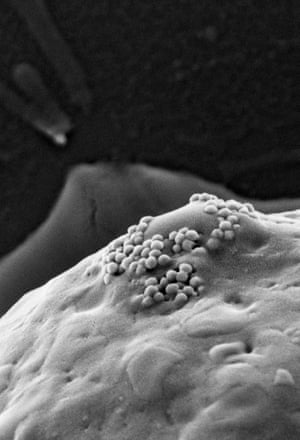
Nanoparticles: cancer cell surface. Photograph: Dmitri Lapotko
Chemotherapy and radiation therapy are not always effective because cancer cells continuously mutate and so rapidly develop resistance, requiring therapeutic doses which harm the patient in order to destroy them. “You can have an excellent drug today, but tomorrow it doesn’t work,” Lapotko says. “So I decided to base my approach on a way to detect and explode the cancer cell mechanically, something it cannot resist through its biological tricks. If you do this, there’s no biological way it can reassemble, revive or metastasise.”
Over the past two decades, researchers have sought to use nanoparticles, of sizes a thousand times smaller than a cancer cell, to deliver chemotherapy drugs specifically to the rogue cells themselves. This is done by exploiting some of the natural properties of tumours. Nanoparticles are injected into the bloodstream, attached with antibodies to recognise the cancer cell. Because aggressive cancer cells actively “eat” nanoparticles through the mechanism known as endocytosis, they end up self-assembling internal clusters of nanoparticles. This improves the toxicity problems of chemotherapy because large quantities of a drug can be delivered directly to the cancer without much harm to the surrounding healthy tissue. Gold nanoparticles are being used in this way in several ongoing clinical trials. However, even these therapeutic strategies still come up against the inevitable problem of cancers developing biological resistance to drugs.
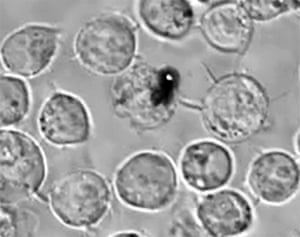
Instead, Lapotko’s idea has been to combine biology and physics in an entirely new way. Once gold nanoparticle clusters are inside a cancer cell, they are exposed to a short laser pulse which the nanoparticles convert to heat, forming a vapour bubble which expands and collapses in nanoseconds, called a ‘plasmonic nanobubble.’ The mechanical impact of this nanobubble tears the cancer cell apart in an instantaneous explosion.
“The nature of this explosion is intracellular so the surrounding healthy cells or important organs are not damaged,” Lapotko says. “A cell residue is left but this cannot reassemble into new cancer cells. It’s very safe as the energy of the laser pulse required is a million times lower than the laser energy used in some surgeries.”
Cancer cell explosion. Photograph: Dmitri Lapotko
One of the common problems in cancer treatment is that when surgeons remove a tumour, they may leave residual tumours behind. “In many instances the cancer is in a part of the body where doctors are afraid to remove more than they think that have to,” says Masimo’s chief executive and founder Joe Kiani who is looking to bring Lapotko’s technology from academia to the clinic. “And when you leave some behind it metastasises. Recurrence and metastases are the main causes of death.”
But Lapotko’s technology can also be used to diagnose and eliminate before such remaining cells can grow into a far more dangerous and resistant recurrent tumour.
“We can administer nanoparticles one day prior to the surgery and after the surgeon removes the tumour, we apply the endoscope to the surgical bed,” Lapotko says. “If there are even single cancer cells left in the surgical margins, plasmonic nanobubbles are generated which produce a pressure pulse or acoustic pop which we can detect immediately in real-time with an ultrasound detector. And then we can use the mechanical impact of the same nanobubbles to destroy them.”
So far the technology has been tested on tumours in mice in a series of studies published by Nature Medicine and Nature Nanotechnology, with a dramatic improvement in survival rate and safety compared to existing treatments. The only limitation is for cancers deeper in the body where it is difficult to generate lethal plasmonic nanobubbles due to poor laser penetration into the deep tissue.
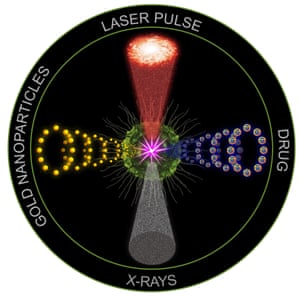
In these cases, Lapotko believes he can use the technology to improve the efficacy of the mainstream cancer therapy techniques. Radiotherapy works by disrupting the DNA helix in cancer cells, but by creating even small nanobubbles inside these cells beforehand, the DNA structure is already weakened, presensitising them so a far lower radiation dose can be administered to achieve the desired effect.
The first preclinical study of the anti-cancer technology ‘quadrapeutics’ found it to be 17 times more efficient than conventional chemoradiation therapy against aggressive, drug-resistant head and neck tumors. Photograph: Dimitri Lapotko/Rice University
Lapotko is well aware of some of the disappointment among clinicians regarding nanomedicine after many years of promise, but still no broadly available treatments for patients. “There are two main reasons why not much has reached the clinic yet,” he says. “A lot of the time nanoparticles are initially developed for non-medical use, for example the energy industry or the oil industry and then people start thinking about medical applications. So perhaps they’re not so effective as they’re not initially designed with cancer in mind. And then within nanomedicine, the mainstream ideas aim to improve drugs, either by making nanoparticles which are drugs by themselves or making nanoparticles to carry drugs. So in cancer, nanomedicine did not replace chemotherapy, it has just created an additional chemotherapy, and because of that it faces the same regulatory challenges as any other drug.”
It typically takes 10-25 years and a lot of investment for anything to pass from academic research to drug use in the clinic, a passage referred to by scientists as the ‘Valley of Death.’ But with no pharmaceutical involved, Masimo are hoping to fast-track the process. They have obtained a grant from the National Institute of Health for further testing and intend to pursue phase I and II clinical trials within the next few years, likely to be held in Europe.
“A lot of the time what is done in the world of medicine on a mouse, doesn’t work on a monkey never mind a human but the early results look great,” Kiani says. “If it all works, we’re probably four years away from a product. But if it all works, it could be a game changer.”
I was broken when I came to you. My life felt futile, my existence pointless. I had been crying for days. I was always tired and never hungry. My body weight was down by 15lbs. I’d been suffering anxiety attacks, both day and night, for several weeks. Muscles in my arms and legs were twitching uncontrollably. I’d been to the hospital’s emergency department twice with thoughts of suicide. I was trying to hide it, but I know I looked sick. I didn’t want to admit my mental illness to anyone, but I couldn’t go on hiding my depression. So I came to you.
My brain had turned against me, but you joined my side of the battle
Depression is like a magnet for negative thoughts, so I expected the worst. Fearful of stigma, I told you a softened version of what was happening to me. You saw right through me. You saw how serious it was. You listened, didn’t rush me, and were kinder than I could have expected. At that time nothing was capable of making me happy, but my meeting with you created a spark of hope. Hope that I would get through this, that others might understand.
My brain turned against me during my depression, but you instantly joined my side of the battle. You reassured me. You told me you had noticed something was wrong and had been wondering how to approach it with me. You said I was good at my job and that I was clearly unwell. You told me that I would get better, that I needed rest, and that you would do everything in your power to help that happen – which you did.
You immediately helped me take time off from work. Following your instruction, I went home after that very same meeting. You helped me navigate the work procedures for dropping to half-time work. You were prepared to accept full-time sick leave, but understood my reluctance of being home alone all day.
Half-days were more difficult for you to organise, yet you made it happen. You rallied my work team together and developed a plan for reducing my stress and workload. You treated my mental illness the same way you would have treated any other serious illness – with complete and total kindness.
You never rushed me to return to work. You encouraged me to take my time. You told me of the importance of being fully well to avoid relapse. You spoke to me with such kind understanding that every time I left your office I felt better.
You dealt with a lot of stuff. You and my work team made some stressful decisions without letting me know – without me having to feel any of the pressure. You all took on extra work so I could do less. You never complained about it and you never sought thanks for what you did.
Depression convinces the sufferer that they should deal with it all on their own. I’m glad that I didn’t. I credit a few people with getting me through my depression: my wife, my psychiatrist, and you. Thank you for helping to save my life. I will never forget the way you treated me. I will always remember your kindness.
I don’t know where your empathy comes from – personal experience, experiences of a family member or friend – or just having a kind heart. Wherever it comes from, I am glad that when I went through the worst experience of my life, I was working for you.
A new immigration skills charge which comes into force on Thursday could take “desperately needed money” from the health service for years to come due to the service’s continuing reliance on foreign staff.
Employers will have to pay a £1,000 annual charge for skilled workers from outside the European Economic Area newly applying for the two main categories of Tier 2 visas. There were more than 6,000 such applications for non-EEA doctors and nurses in 2015 alone.
Smaller businesses and charities will pay a reduced charge of £364 per employee per year. The charge is on top of the fees already in place.
The employers of Tier 2 skilled visa holders who are already in the UK and those currently outside the UK who were assigned a certificate of sponsorship before today will not have to pay the charge.
The British Medical Association and Royal College of Nursing have raised concerns that the £1,000 annual charge could have a “damaging impact” on health and social care funding.
They jointly wrote to the home secretary in March expressing concern that the charges would take millions out of the NHS budget each year. However, their call that the NHS and the wider health and social care system be exempted from the charge has not led to a reversal in the government’s position.
BMA council chair Dr Mark Porter said it was “unthinkable” that trusts should be penalised for trying to fill staff shortages from overseas who it requires to maintain safe staffing levels and safe patient care.
“The government’s poor workforce planning has left it struggling to cope with huge and predictable staff shortages,” he said. “The introduction of this charge could take desperately needed money from an already under-funded health service, worsen the current staffing issues, and impact the level of care that hospitals are able to provide to patients.”
The chief executive of NHS Employers, Danny Mortimer said the immigration skills charge meant recruiting new non-EEA staff in future will become more expensive.
“Because of the workforce shortfalls faced by the NHS, and the time it takes to train new clinical staff, we anticipate employers will still need to recruit more non-EEA staff in the short to medium term,” he said.
Current exemptions only apply to PhD-level occupations and specific categories of trainee graduates and those switching from student visas to skilled work visas.
Detailed figures provided by the Home Office under the Freedom of Information Act show there were 87,280 applications for Tier 2 visas for non-EEA workers in the UK in 2015, an increase of 52% compared to 2011.
Among that figure there were 3,702 applications made on behalf of doctors, including consultants, specialists, GPs and surgeons. The highest number of these were Indian (820) and Pakistani (795) nationals.
3,702 doctors, including consultants, specialists, GPs and surgeons, applied for skilled visas in 2015
There were 2,535 applications for skilled visas for nurses in the same year, the majority of them from either the Philippines or India. A further 130 Croatian nationals also appear on the list of nationalities recruited as nurses due to restrictions on Croatian nationals’ access to the UK labour market.
There were 2,535 applications for skilled visas for nurses in the same year, the majority of them from either the Philippines or India.
Health is not the only industry that will be affected by the charge. The IT industry uses skilled visas more than any other: almost 35,000 tech professionals applied for Tier 2 visas in 2015, 40% of applications.
The vast majority of those who applied for positions in IT in 2015 were Indian citizens, almost 30,000 in total, followed by US citizens.
34,835 IT workers applied for skilled visas in the UK in 2015, up 71% on 2011
Programmers and developers are in highest demand with more than 12,300 applications for skilled visas while business analysts, architects and systems designers accounted for almost 10,500 applications within the sector.
Charlotte Holloway, policy director with techUK says that, while larger companies will be able to absorb the cost and additional bureaucracy the charge will bring, that the new charge was an extra burden on business which would disproportionately affect SMEs.
The business, research and administration sector also relies heavily on the visa scheme, making up 11% of skilled visa applications in 2015, most commonly for management consultants and business analysts and accountants.
In the same year almost 5,000 engineers applied for the skilled visa programme making it the third most reliant industry on non-EEA labour.
Other smaller industries such as speciality restaurants may also see an impact. There have been repeated warnings in recent years of a curry house crisis with the industry warning that a third of curry houses are at risk due to rising costs many of them connected to changes to immigration rules.
This is borne out in the figures provided by the Home Office. The number of non-EEA chefs and cooks applying for visas fell from 1,860 in 2013 to 745 in 2015.
Chart showing that the number of applications for non-EEA chefs and cooks fell from 1,860 in 2013 to 745 in 2015
A government spokesperson said income raised from the new immigration skills charge will be used to address skills gaps in the UK workforce.
“For too long there has been an under-investment in training for UK workers but this government is committed to building homegrown skills and wants to encourage employers to do the same.
“The introduction of the immigration skills charge will help encourage employers to invest in training so that UK workers have the right skills to fill jobs.”
The overuse of antibiotics could increase a person’s risk of developing bowel cancer, the findings of a US study suggest.
Research published in medical journal Gut found extended use of antibiotics significantly increased the chance of polyp formation in the colon, a precursor of bowel cancer.
The findings add weight to emerging evidence that the type and diversity of bacteria in the gut may have a key role in the development of cancer, according to the authors of the study.
An Australian bowel cancer expert, Associate Professor Graham Newstead, the head of the colorectal unit at the Prince of Wales private hospital and director of Bowel Cancer Australia, said the research had “credence”.
“We know already that if you take antibiotics you frequently get diarrhoea,” Newstead said.
This happened because the antibiotic killed some of the normal bacteria, leading to an overgrowth of the abnormal bacteria in the gut.
But Newstead said the study did not look at the effect of antibiotics on the colon and caution must be taken.
US researchers monitored the health of more than 120,000 nurses, aged between 30 and 55, who were part of the the Nurses Health Study launched in 1976.
Between 2004 and 2010, 1,194 abnormal growths in the colon and rectum were diagnosed.
Those who had taken antibiotics for two months or more between the ages of 20 and 39 were 36% more likely to be diagnosed with an adenoma, or polyp, compared with those who had not taken antibiotics for any extended period in their 20s and 30s.
Similarly, women who had taken antibiotics for two months or more during their 40s and 50s were 69% more likely to be diagnosed with an adenoma.
And those who had taken these drugs for 15 days or more between the ages of 20 and 39, and between the ages of 40 and 59, were 73% more likely to be diagnosed with an adenoma.
“It does seem to indicate that people who have too many antibiotics might be at more risk of of getting polyps than people who have less of them,” Newstead said.
“And, remembering that not all polyps turn to cancer but the cancer comes from the polyps. If you have more polyps or tendency to get polyps then maybe you are slightly more at risk of getting cancer.”
The message to be taken from the study was not to use antibiotics for a “tickle” in the throat or a cold, Newstead said.
The NHS plan for the next two years represents a perceptible contraction of the health service’s offer to the public.
The proposals in Next steps on the NHS Five Year Forward View, published on Friday, are shaped by shortages of money and staff.
Simon Stevens, the NHS England chief executive, has burned through much of his political capital in disputing government claims about whether the NHS has been given all the money it asked for, so this was not an opportunity to push for further cash.
So in the face of the unrelenting pressure of the government’s austerity programme and barely controlled hospital debt, he is gambling that politicians and the public will stomach longer waits for routine surgery if the health service can deliver better performance on cancer treatment, A&E waits, mental health services and GP appointments.
In the wake of slipping cancer treatment times and the recent outcry over the death of a child waiting for urgent surgery, this is probably the right choice. But the price could be high.
Allowing elective surgery times to slide over many years was what led to hundreds of thousands of patients waiting months for operations by the time New Labour came to power in 1997, elected partly on its pledge to slash waiting lists. It would be a serious blow if the NHS returned to the days of people dying while waiting months for heart surgery, and many more forced to endure avoidable pain and disability.
Access to some of the latest approved drugs is also to be delayed – in breach of a commitment in the last Conservative manifesto to speed up access.
Stevens is anxious to reassure the public that performance will not slide back to that of the 1990s, but it is difficult to see how growing waiting times will be arrested and reversed in the coming years.
The plan makes some brave assumptions about the ability of the NHS to expand its workforce, including 4,000 more nurses through improving staff retention – turning round a recent trend – and up to 2,000 more nurses returning to practice.
There is yet another pledge to increase the number of GPs substantially, despite little discernible progress. However, concerns are growing that staff shortages will be exacerbated by EU staff heading back to the continent in the wake of the Brexit vote.
More promisingly, the plan may well mark the beginning of the end of the internal market. It names nine areas being considered as pioneering “accountable care systems”, with NHS organisations and local authorities working together as an integrated health system.
These areas will have considerably more control over how they deliver their healthcare, and will be effectively freed from the endless focus on contracts rather than patients imposed by the purchaser/provider split.
However, doing so will require ever greater legal contortions to simultaneously stay within the law while circumventing it. This is a necessary bodge, as it will be years before anyone attempts another NHS reform bill, but these workarounds cannot be sustained indefinitely.
Everyone will now be working in Sustainability and Transformation Partnerships, and NHS England makes clear that anyone who fails in their duty to collaborate can expect to be handled roughly.
In the absence of more money, the alternative to Stevens’ plan would be a steady atrophying of performance across the entire health service. Instead, NHS England is pushing forward on the key priorities of emergency care, cancer treatment, mental health and primary care, and allowing routine surgery to pay the price.
But many of its promises look optimistic, and there is a danger that the slide in surgical performance will eventually reverse years of progress.
For the time being this can be portrayed as a tactical move, but with austerity set to last well into the next decade, there is a risk that the NHS will cease to be a comprehensive service.
Join the Healthcare Professionals Network to read more pieces like this. And follow us on Twitter (@GdnHealthcare) to keep up with the latest healthcare news and views.
A vaccine capable of enduring scorching temperatures for months at a time could strike a decisive blow in the fight against rotavirus, preventing nearly half a million children around the world from dying of diarrhoea each year.
Médecins Sans Frontières (MSF) has hailed successful trials of the BRV-PV vaccine in Niger as a “game changer” in tackling rotavirus infection, which is the leading cause of severe diarrhoea globally and claims the lives of an estimated 1,300 children daily, most of them in sub-Saharan Africa.
According to results published in the New England Journal of Medicine, the vaccine has proven as effective as those currently used to treat severe gastroenteritis. Trials in Niger’s Maradi region successfully treated 4,000 children under the age of two.
Unlike existing vaccines, the BRV-PV vaccine does not require refrigeration and can remain stable for up to one year at 37C or six months at 40C. It is particularly effective against the strains of rotavirus found in sub-Saharan Africa, as well as affordable: at only $ 2.50 (£2), the vaccine could potentially be rolled out quickly in routine immunisation programmes.
“This is a game-changer,” said Dr Micaela Serafini, MSF’s medical director. “We believe that the new vaccine can bring protection against rotavirus to the children who need it most.”
Diarrhoea is the second largest cause of death in infants and children worldwide, primarily in low-income countries where access to clean water and sanitation is limited. Rotavirus is highly contagious, particularly among babies and young children, and can be spread by contaminated hands, objects such as toys and surfaces, and water and food.
Children in the world’s poorest countries account for 82% of rotavirus deaths, but vaccines make a significant difference. In Mexico, diarrhoeal deaths among children under five declined by as much as 50% after rotavirus vaccines were introduced.
The trials in Niger – the first of their kind to be approved in an African country – were conducted by MSF’s research and epidemiology branch Epicentre, in collaboration with Niger’s ministry of health, the Cincinnati children’s hospital and the makers of the vaccine, the Serum Institute of India. According to MSF, the results demonstrated no safety concerns and as a result the vaccine is hoped to fill the current supply gaps of the existing rotavirus vaccines, RotaTeq and Rotarix, both of which require refrigeration.
The World Health Organization recommends that rotavirus vaccines should be included in all national immunisation programmes, and considered a priority in south and south-east Asia and sub-Saharan Africa. The BRV-PV vaccine is awaiting pre-qualification from the WHO before it can be rolled out.
Licensing the product could take up to 18 months, said Anna-Lea Kahn, a WHO technical officer looking at innovations for facilitating vaccine supply and delivery. During that period, WHO scientists evaluate data supporting the vaccine’s quality and safety, drawing on independent specialist help when needed.
Most difficulties with vaccine delivery tend to arise during the “last mile” of the vaccine supply chain, said Kahn. “That’s where it goes wrong the most: where being able to maintain the cold chain is hardest; where constraints are most pronounced, be it due to lack of electricity or lack of resources, or inability to maintain a cold fridge. There may be geographical barriers, too, presenting a logistical challenge.
“In these scenarios, not having to depend on the cold chain … can make a valuable difference in getting vaccines to those who otherwise might not receive it.”
Serafini said: “The success of this trial shows that research and development into vaccines that are specifically adapted for use in low-income countries yields results.”
A spokesperson for Gavi, the international vaccine alliance, said BRV-PV’s results were encouraging.
“Adding more flexibility to the cold chain could allow more vaccines to reach the hardest-to-reach locations, boosting coverage and giving many more children access to lifesaving vaccines,” the spokesperson said. “However, it is anticipated that an important consideration for the countries will be the final recommendations on temperature control conditions of the vaccine, which could be different than the conditions used during the clinical trial.”
Men may soon be able to measure their own sperm count and quality at home, using a smartphone app developed by scientists.
In early tests the gadget, designed to clip onto a smartphone, detected abnormal sperm samples with an accuracy of 98%.
In more than 40% of cases where couples struggle to conceive, the underlying fertility issue is linked to sperm abnormalities, but the researchers said that social stigma and lack of access to testing meant than many men never seek evaluation.
Hadi Shafiee, who led the work at Brigham and Women’s Hospital in Boston, US, said: “We wanted to come up with a solution to make male infertility testing as simple and affordable as home pregnancy tests.”
The team put the device together using spare parts from DVD and CD drives at a total cost of $ 4.45. Using the device simply involves drawing semen into a disposable holder that is plugged into one side of the phone attachment, in a similar way to a USB. In seconds, results of the analysis are displayed on the phone’s screen.
In the study, published in the journal Science Translational Medicine, the research team recruited 10 volunteers with no formal training, including administrative assistants employed at a Boston fertility clinic. They correctly classified more than 100 semen samples using the app.
The test is an inexpensive smartphone attachment that quickly and accurately evaluates semen samples for fertility testing. Photograph: [Credit: M.K. Kanakasabapathy et al., Science Translational Medicine (2017)]
Overall, the scientists examined 350 clinic samples and were able to identify those with low sperm counts and inactive or poorly motile sperm with 98% accuracy.
John Petrozza, director of the Massachusetts General Hospital Fertility Center and a co-author, described the device as a “true game-changer”. “Men have to provide semen samples in these rooms at a hospital, a situation in which they often experience stress, embarrassment, pessimism and disappointment,” he said.
“Current clinical tests are lab-based, time-consuming and subjective. This test is low-cost, quantitative, highly accurate and can analyse a video of an undiluted, unwashed semen sample in less than five seconds.”
Allan Pacey, professor of andrology at the University of Sheffield, who was not involved in the research, said that the techniques used for sperm quality assessment have not changed significantly since the 1950s, and that even when carried out at specialist centres can be prone to errors if the laboratory worker has not had sufficient training.
“As such, the development of an easy, cheap and accurate method to evaluate the sperm present in a sample of semen would be very welcome, particularly if it could be carried out by someone without specific training and in any location,” he said.
However, he added that the smartphone device could not replicate all the tests carried out in a specialist lab and did not analyse morphology – sperm size and shape.
“For a small number of men whose sperm are badly made, and have poor morphology, it would be important to get this diagnosed correctly,” he said. “So any man who struggles with infertility for a significant length of time, say more than 12 months, should consider getting their test repeated in a specialist laboratory, regardless of what the phone app might have concluded.”
The team behind the device are planning to perform additional testing and will file for approval from the FDA, the US regulator.