Team etiketine sahip kayıtlar gösteriliyor. Tüm kayıtları göster

1 Mart 2017 Çarşamba

Premature baby saved by groundbreaking NHS surgical team

A “miracle” baby girl has spent her first two nights at home after becoming what her doctors believe is the world’s youngest patient to survive major abdominal surgery.


Abiageal Peters is expected to lead a normal healthy life after being saved in pioneering operation her parents and doctors say was only possible under the NHS.


“She is always going to be our little miracle,” her mother, Louise Peters, said from her home near Esher, Surrey, with the sound of Abiageal gurgling in the background.


Abiageal was born in October 2016 at St Peter’s hospital, Chertsey. She was three months premature, after a gestation of only 23 weeks. Peters was warned her baby had little chance of overcoming a severe gut condition known as perforated necrotising enterocolitis. Her intestine was torn in three places and her stomach had started turning black.


An operation at a specialist neonatal unit at St George’s hospital, London, was Abiageal’s only hope, despite the risk of surgery on such a young and small baby. She weighed just 609g (1lb 5oz).


“She would have been dead without the surgery,” Peters said. “She was deteriorating so badly at that point. She was struggling to breathe and her skin was turning black. We knew she had a day or two left if that, if they didn’t operate.”


Consultant Zahid Mukhtar, who led the operation, said it was extraordinary that Abiageal managed to pull through surgery. “We have trawled the literature and couldn’t find anyone who has been operated on at that early an age and survived. Her story and her recovery has been really remarkable.”


Speaking to the Guardian, he said: “She was smaller than my hand when we operated on her. But it was her prematurity that was so unusual – her organs were so fragile and jelly-like that as soon as you started operating, even with our small instruments, everything started to bleed or fall apart.”


He spoke of the team’s pride in saving Abigail. “It is beyond the craft of surgery, something more has to come into it, to push boundaries like this. It is an amazing achievement for our team, so we are really proud. The fact that four months later she is a really healthy child, with a good brain, is amazing considering how premature she was.”


Peters, a financial analyst who grew up in South Africa, said: “We can’t thank the doctors enough. I don’t know if she could have survived outside the NHS. Some countries don’t even think about helping babies who are less than 25 or 26 weeks. She would have had very little chance.”


“I come from a country where you have to pay for every cent of your medical aid. This country has been phenomenal. I think the NHS is absolutely wonderful.”


Peters and her British husband, David, also have a two-year old daughter, Tara. “My first daughter was such an easy pregnancy that I just took it for granted that my next baby would be as easy,” she said.


Peters added: “The beginning was especially stressful, but my baby is a fighter. Then it was four months of waiting for her come off breathing support and sort out her feeding. There have been lot of hurdles, infections, blood transfusions along the way.


“Other mothers who have this happen to them, should know there is a chance – don’t give up, these little babies are so strong.”


She added: “It has been wonderful to have her home, but there are all the usual niggles of getting a new born to sleep.”


Mukhtar said the success of the operation demonstrated the NHS at its best.


“Despite the financial pressures and morale challenges, the staff working in the NHS are amongst the best in the world,” he said. “They are really pushing the boundaries. Any patient that comes into our system gets the best we can do for them. It is mindset that is different from other places in the world where I have worked. It is a real honour for me to me working in this system.


“Outside the NHS there is no chance she would have survived. Any child in a private hospital born this prematurely would have been transferred to the NHS immediately.”


Mukhtar, who was born in mountain village in Pakistan, said he wanted to become a doctor after his three-year-old sister died from diarrhoea. “From a simple thing like that she died, because there was so little help for sick kids. From then I have tried to never give up on a child and do whatever is possible.”


He added: “I was a village kid with uneducated parents and yet this country gave me the opportunity to follow my dream and now I am able to give back that education and possibility to affect people’s lives so profoundly. It is a real shame that people are so suspicious of people coming here from other countries.”


Premature baby saved by groundbreaking NHS surgical team

28 Eylül 2016 Çarşamba

Linda turned up at A&E twice a day. A dedicated team now stops that

In a desperate effort to get relief for excruciating pain caused by osteoarthritis, curvature of the spine, and abdominal discomfort following surgery, Linda Douglas went to A&E twice a day.


The chronically ill 48-year-old, who lives near Sunderland, was “at the end of [her] rope” because of the constant pain and frequent hospital visits, and felt life “was not worth living”. That was until a new team of health and social care professionals took over her case and improved her quality of life from “six to 99%” in early 2016.


The team comprising her GP, consultant, community matron, social worker and paramedic worked together to come up with a care plan tailored to her needs. Now, she can largely avoid hospital and live a much more normal life, mainly because John, her husband and carer, has been trained to administer her daily medication. She says: “My life was driven by fear. I was terrified of being unwell and not being able to get the care I needed to control my pain. I don’t need to worry any more. It’s like a weight has been lifted.”


Douglas was helped thanks to the All Together Better partnership, part of NHS England’s Vanguard programme that was ushered in last year via chief executive, Simon Stevens’s Five Year Forward View blueprint policy. This same programme, which was expected to champion ways of providing better, more efficient care for heavy users of NHS services, has not been given as much money as originally hoped. According to Kerry McQuade, head of vanguard delivery in Sunderland, the £4.8m the partnership received in 2016/17 did not match the initial bid, although it received more than similar projects in other parts of the country.


Sunderland is one of the most deprived cities in England. On average, people born there start having health problems more than 10 years before those born in wealthier parts of the country, and die more than six years sooner.


The NHS is a big part of many lives there, but a small minority of long term sick, vulnerable or frail elderly locals account for a large proportion of health and social care resources. Six per cent of the population – those with long-term, multiple illnesses – are responsible for half of the city’s health spend. With the pressure on from NHS England to reduce costs by nearly £1bn by 2021 in the Northumberland, Tyne and Wear region as central funding is squeezed, the focus on the most needy patients makes sense.


Local GP Dr Fadi Khalil describes Sunderland’s scheme – one of 14 across England – as “massive” in scale. Covering nearly 300,000 patients at 50 GP practices across the city, it is focused on reducing hospital admissions via a series of initiatives designed to offer care that aim to keep patients well and cared for where they live.


In the past, despite the “best intentions in the world”, the most needy patients weren’t getting the best care because of a disjointed and fragmented set of services, says Khalil. Patients had to undergo repeat visits to A&E, repeat crisis admissions to hospital, and had to repeat their stories to a string of frontline primary, community, acute and social care staff.


This was not only bad for them but a tremendous waste of precious resources. Finally, under the vanguard programme, local authority and health commissioners and providers are being encouraged to work together with patients.


“In the past when someone [got] a chest infection, they would end up in hospital. Now we’ve got things in place that keep them at home where they’re safer and more familiar with their environment,” Khalil says. Such patients, who have been identified by their GPs as at risk of rapid onset of health problems, have access to their GP, and a nurse or paramedic out of hours who can visit them at home, and who make regular check-ups to prevent urgent, unplanned visits to hospital.


Five teams, created late last year, are at the core of Sunderland’s scheme, with community matrons, district nurses and social workers all were moved into the same office.


It was a shock to the system at first and “initially quite daunting”, according to adult social care team manager Rachel Daurat, particularly to the social workers who had to move out of their dedicated offices at Sunderland city council.


She says health and social care have traditionally worked to entirely different agendas. However, working together on a patient case has meant they have been able to learn from each other’s perspectives and ensure different providers are working in harmony to improve circumstances for those receiving their care.


Sue Hughes, a district nurse taking part in the initiative agrees: “We are just a team now,” she says. “We understand the pressures we each face day to day and we support each other. It’s hard to ever imagine us going back – and I don’t think it could work.”


Join the Healthcare Professionals Network to read more pieces like this. And follow us on Twitter (@GdnHealthcare) to keep up with the latest healthcare news and views.


Linda turned up at A&E twice a day. A dedicated team now stops that

1 Eylül 2016 Perşembe

Team GB"s cycling heroes call for "legacy of everyday cycling"

A group of Britain’s medal-winning cyclists from the Rio Olympics have written to Theresa May to tell her the best way to honour their achievements would be for the government to invest heavily in everyday bike-riding.


The signatories, including Laura Trott, Jason Kenny, Mark Cavendish, Joanna Rowsell Shand and Becky James, as well as Sir Chris Hoy, jointly with Kenny the country’s most successful Olympian, told May: “You were widely reported in the media as saying that there will be ‘no limits’ on the honours that could be bestowed on our medal winners.”


They continued: “But the best way to honour the achievements of our athletes would be a legacy of everyday cycling in this country – a place where cycling is the choice form of transport for people to get around in their daily lives.”


The letter was organised by British Cycling, which as well as being a sporting body also campaigns for better everyday bike provision. It pointed out the disparity between Britain’s vast success in sports cycling and the relatively tiny numbers who use bikes for transport, arguing cycling should be treated as consistently and seriously by government as the roads, rail or aviation.


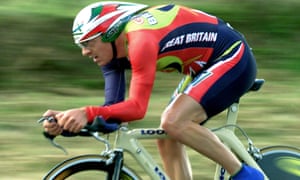
Chris Boardman at the Cycling World Championships in France, 2000.


Chris Boardman at the Cycling World Championships in France, 2000. He has asked to meet Theresa May. Photograph: Franck Prevel/AP

Britain won six golds and 12 medals overall at cycling in Rio, topping the medals table in the sport for the third successive Olympics. Yet the proportion of trips made by bike has remained constant at about 2%, with relatively little investment in bike lanes outside London and a handful of other places.


While David Cameron famously said he hoped to see a “cycling revolution”, an eventual walking and cycling strategy, released earlier this year, was written off by cycle campaigners as worthless, with the money committed around £1 per person per year, against a figure of about £28 in the Netherlands.


The Olympians’ letter urged May to “set out a timeline to address the chronic underfunding and lack of leadership which is keeping cycling for transport in the slow lane”. It added: “Only networks of segregated cycle lanes in towns and cities across the country can achieve and influence growth.”


With a chronically sedentary nation and around one in three children overweight or obese, investment in cycling would pay enormous health dividends, the letter argued, as well as boosting businesses along the routes, and making towns and cities less congested and more liveable.


“There is huge latent demand for cycling,” they wrote. “Two thirds of people would cycle more if they felt safer on the roads.” The letter asks the government to commit 5% of its transport spend to cycling, and to improve law enforcement to better protect cyclists.


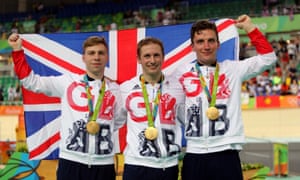
Philip Hindes, Jason Kenny and Callum Skinner with their gold medals following the Rio 2016 men’s team sprint final.


Philip Hindes, Jason Kenny and Callum Skinner with their gold medals following the Rio 2016 men’s team sprint final. Photograph: David Davies/PA

“Investment in cycling as a form of transport isn’t purely an investment in cycle lanes,” the letter concluded. “It is an investment that will pay off for the nation’s health, wealth, transport infrastructure and the vibrancy of our towns and cities. It has the added benefit of just making it easier for ordinary families to get to work and get to school.


“Our athletes have inspired the country and now we urge the government to take cycling seriously as a transport option for everyone.”


The signatories are asking May to meet Chris Boardman, whose cycling gold at the 1992 Olympics heralded Britain’s success in the sport, and who is now British Cycling’s policy adviser.


Boardman said he hoped for a fresh start after the lack of action from Cameron’s “cycling revolution” and the cycling and walking investment strategy.


“It was quite a step, so we were all pretty gutted when we saw it will amount over this parliament to less than a pound a head, which just beggars belief,” he said.


Boardman said he hoped the letter would “put some moral pressure on the prime minister to have to say either what we’re going to do, or why we’re not going to do it”.


He said: “Even in these austere times it’s such a good economic investment, it’s such an efficient spend of cash. It’s exactly what they should be doing. So what we deserve is an answer.”


At the moment, Boardman said, the government was officially committed to doubling the numbers of cyclists by 2025, but had no real means to achieve this. He said: “The question I would like to ask is, you want to double the amount of cycling, to get from 2% to 4%. Do you think less than £1 a head will achieve that target? I don’t think anybody could look you in the eye and say, yes.”


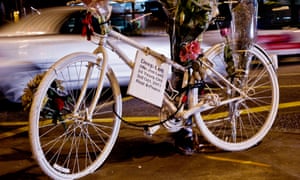
A cycle left as a protest by Bikes Alive at King’s Cross, London.


A cycle left as a protest by Bikes Alive at King’s Cross, London. Photograph: Sarah Lee for the Guardian

A Department for Transport spokesman said government investment in cycling had tripled since 2010. He said: “We are spending £300m on cycling funding and a further £500m for infrastructure in local communities which will include benefits for cyclists.


“The number of people choosing to get about by bike has grown over recent years and, following the success of our Rio Olympians, we want to see this trend continue.”


The letter to Theresa May


Dear Prime Minister,


The Great Britain cycling team athletes topped the cycling medal table for the third Olympic Games in a row at Rio 2016. It was a truly outstanding performance and enhances Britain’s status as the world’s leading elite cycling nation.


You were widely reported in the media as saying that there will be “no limits” on the honours that could be bestowed on our medal winners. But the best way to honour the achievements of our athletes would be a legacy of every-day cycling in this country – a place where cycling is the choice form of transport for people to get around in their daily lives.


Your predecessor called for a “cycling revolution” and your government’s manifesto sets out a target to “double” the number of journeys cycled. While some steps have been made, cycling is still a transport mode which does not enjoy the government investment or political leadership given to roads, rail or aviation.


The government is now considering feedback on the draft Cycling and Walking Investment Strategy (CWIS). We urge the government to publish this and set out a timeline to address the chronic underfunding and lack of leadership which is keeping cycling for transport in the slow lane. Only networks of segregated cycle lanes in towns and cities across the country can achieve and influence growth.


The success of the CWIS will be felt not only across government but in all areas of the nation’s life.


The government’s sports strategy seeks to extend the number of people living physically active lives and could be truly transformative. Active travel – walking and cycling – is the easiest way for people of all ages to fit physical activity into their lives. Currently, only one in five people achieve the recommended levels of physical activity.


Around one in three children is overweight or obese. The government’s childhood obesity strategy recognises the value of physical activity and the importance of walking and cycling to school. I am sure you know that this will seem a fanciful idea for most parents without the convenient walking and cycling routes which would give them the confidence that their children will be safe getting to school. Yet we know it can be achieved – in the Netherlands, 50% of education-age children cycle to school.


As cities like Copenhagen and New York have shown, cycling also creates better places to live and work. More cycling cuts congestion, reduces noise pollution and fuels local economies. Small businesses in New York have seen a 49% increase in business where cycle lanes have been installed.


There is huge latent demand for cycling. Two thirds of people would cycle more if they felt safer on the roads. The government’s road safety statement reiterates the manifesto commitment to reduce the number of cyclists killed or injured. The CWIS needs to set targets to improve road maintenance, enhance enforcement of the laws, and update the rules of the road to better consider the needs of cyclists.


To make this happen, we need 5% of the government’s transport spend allocated to cycling. This is the only way that cycling will be integrated into transport strategy and given the priority it deserves.


Investment in cycling as a form of transport isn’t purely an investment in cycle lanes. It is an investment that will pay off for the nation’s health, wealth, transport infrastructure and the vibrancy of our towns and cities. It has the added benefit of just making it easier for ordinary families to get to work and get to school.


Our athletes have inspired the country and now we urge the government to take cycling seriously as a transport option for everyone.


British Cycling’s policy adviser Chris Boardman would welcome a meeting to discuss this further. We look forward to hearing from you.


Yours sincerely,


Chris Boardman, policy adviser, British Cycling and Olympic gold medalist


Sir Chris Hoy, six-time Olympic gold medallist, joint most successful British Olympian


Laura Trott, four-time Olympic gold medallist and Britain’s most successful female Olympian


Jason Kenny, six-time Olympic gold medallist, joint most successful British Olympian


Mark Cavendish, Olympic silver medallist


Joanna Rowsell Shand, double Olympic gold medallist


Elinor Barker, Olympic gold medallist


Owain Doull, Olympic gold medallist


Becky James, double Olympic silver medallist


Katy Marchant, bronze medallist


Team GB"s cycling heroes call for "legacy of everyday cycling"

7 Ağustos 2016 Pazar

British Olympic chiefs criticised for Strongbow sponsorship of Team GB

British Olympic chiefs have been accused of encouraging underage drinking following their decision to allow the cider brand Strongbow to sponsor Team GB at the Rio Games.


Doctors, public health experts and alcohol groups are warning that Strongbow’s high-profile association with the exploits of British athletes in Brazil could lead to teenagers starting to drink and increase the amount of alcohol-related harm.


In a letter to the Guardian, members of the Alcohol Health Alliance (AHA)say that the sponsorship of Team GB by a cider brand will “promote the idea of drinking to our young people”.


The signatories include Dr Clifford Mann, the president of the Royal College of Emergency Medicine, which represents A&E doctors, Sarah Toule of the World Cancer Research Fund and experts in liver health. They say: “We are concerned that children will be encouraged to drink as a result. There is strong evidence that exposure to alcohol marketing leads young people to drink at an earlier age.


“We know from the research that exposure to alcohol messages increases the likelihood that non-drinking young people will start to drink, and increases the likelihood that existing young drinkers will drink more alcohol, and in a more risky fashion. This exposure also leads to more positive beliefs among young people about alcohol.”


Under the deal, Strongbow is featuring official Team GB branding on its products and spending several million pounds promoting its “supporting the supporters” campaign aimed at sports fans in Britain.


Heineken, the drinks multinational which makes Strongbow, has not disclosed how much it is paying the British Olympic Association (BOA), which did not have an alcohol sponsor when the Games was held in London four years ago.


But Strongbow rejected the AHA’s concerns and said its tie-up with Team GB and promotional campaign was aimed entirely at adults and would not involve any individual British competitor endorsing the drink.


“Our partnership is exclusively focussed on the adult fans who will be cheering on Team GB over the next two weeks. Strongbow will not be sold or promoted at Games venues, feature in TV coverage, or be linked to any individual member of Team GB,” said a spokesman.


The AHA letter adds: “A study of school children aged 13-14 from four EU countries found exposure to alcohol sports sponsorship through viewing a major football tournament was linked to a 70% increased chance of underage drinking.


“The later we can delay the uptake of drinking among young people, the better. We know that the younger people start to drink, the more chance there is that they will become dependent drinkers, with all the harm that causes to individuals, their families and society.”


When the sponsorship deal was agreed in April, Bill Sweeney, the BOA’s chief executive, said:“The fans made the difference in 2012 and with the team competing some 6,000 miles away in Rio we want to make sure they know they have the whole nation behind them all over again. Strongbow’s commitment to supporting the supporters and celebrating success is a great way of embracing that passion for our Olympians.”


The Portman Group, the alcohol industry trade body, defended the deal. “Alcohol sponsorship makes a significant contribution to the economy, supports major sporting events and provides essential investment for grassroots programmes. In the UK marketing alcohol to children is prohibited and alcohol sponsorship is strictly controlled. The strict rules are supported by all major sports organisations, alcohol producers and have been welcomed by the UK governments,” said a spokesman.


British Olympic chiefs criticised for Strongbow sponsorship of Team GB

29 Mayıs 2014 Perşembe

$1.8 Billion For The L.A. Clippers? That"s 3.27 Occasions A lot more Than Any Other NBA Team, And 120 Times The Team"s Working Revenue

Two swift ideas on the rumor that ex-Microsoft CEO Steve Ballmer is ready to pay up to $ one.8 Billion to get the Clippers.


1st, the NBA is a shared monopoly, which permits group crew owners to charge unusually large charges for the sale of their franchises as prolonged as no other crew owner is looking to promote at the exact same time.


Second, no other NBA proprietor is actively seeking to sell his staff correct now, which gives Donald Sterling a true monopoly in excess of the marketplace for buying an NBA franchise.


Based mostly on these variables, the stars purportedly have aligned for Donald Sterling to have obtained an offer you for the Clippers that is too great for even Montgomery Burns to have refused.


Presuming today’s rumors are correct, let’s put these numbers in viewpoint.


Sterling’s sale to Steve Ballmer would pay out him 3.27 times more for his franchise than the earlier NBA substantial of $ 550 million — paid for the Milwaukee Bucks back in April.  This is not a slight premium over previous NBA staff income.  It turns all previous valuations on their head.


In addition, the rumored $ 1.8 Billion sale price tag for the Clippers represents a worth of 14.06 times the team’s annual revenues and 120 times the team’s working revenue primarily based on values presented in a most recent FORBES report about NBA teams (the report that listed the Clippers’ revenues at $ 128. million and their operating earnings at $ 15. million).


This kind of ratios are astounding not only for a lot of conventional companies, but also for most sports franchise income.


Steve Ballmer.

Steve Ballmer. (Photo credit score: Wikipedia)


While territory rights to the Los Angeles market would on one hand appear to make the Clippers uniquely useful, the fact that the Clippers shares these NBA territory rights with the Lakers as effectively as competes to limited extent towards the NHL’s L.A. Kings would have seemed to have offset some of the market place benefits.


In addition, one would have expected the “goodwill” related with the buy of the Clippers to have been tiny if any.  Shedding methods and purportedly racist speech do not normally increase of business’s brand equity.


Prior to Sterling’s racist rant, 1 could have reasonably expected the Clippers franchise to have fetched Donald Sterling amongst $ 500 and $ 800 Million in an average sellers industry.


$ one.eight Billion?  Perhaps, V. Stiviano actually is the best salesperson of all time.


________________________________


Marc Edelman is an Associate Professor of Law at the City University of New York’s Baruch University, Zicklin School of Enterprise, where he has published a lot more than 25 law overview articles on sports activities law issues.  His latest articles or blog posts include “A Short Treatise on Amateurism and Antitrust Law” and “Are Commissioner Suspensions Actually Any Various from Illegal Group Boycotts.”


en: Steve Ballmer, CEO of Microsoft. Camera: N...

Steve Ballmer is rumored to have manufactured $ 1.8 Billion bid to get the L.A. Clippers (Photo credit: Wikipedia)


$1.8 Billion For The L.A. Clippers? That"s 3.27 Occasions A lot more Than Any Other NBA Team, And 120 Times The Team"s Working Revenue