Working etiketine sahip kayıtlar gösteriliyor. Tüm kayıtları göster

15 Mayıs 2017 Pazartesi

Ransomware attacks: 29,000 infections in China as working week begins - live updates

[unable to retrieve full-text content]


Businesses and NHS brace for fresh impact as minister blames Labour for UK’s cyber-security failings


  • Did you pay money as a victim of ransomware?


Russia had nothing to do with a massive global cyberattack, President Vladimir Putin said Monday, criticising the US intelligence community for creating the original software, AFP reports.


“As for the source of these threats, Microsoft’s leadership stated this directly, they said the source of the virus was the special services of the United States,” Putin said.


Three hospitals in Ireland have been targeted by the cyber attack.


Health chiefs blocked external communication to servers until Wednesday to stop the spread of the “ransomware” virus as officials confirmed that up to 20 computers had been affected.


The health secretary, Jeremy Hunt, has broken his silence on the cyber- attacks after pressure to comment.


He said there has not been a second wave of cyber attacks after the NHS was struck by ransomware attacks on Friday, PA reports.


Thousands of NHS computers were still using the old Windows XP operating system, the government has revealed, though a Number 10 spokesman insisted other Windows’ systems were also affected.


The prime minister’s spokesman said the NHS had updated the vast majority of its systems but just under 5% were still operating Windows XP.


Health trusts across England were sent details of an IT security patch that would have protected them from the crippling ransomware attack, NHS Digital said.


NHS Digital, the arms-length body of the Department of Health that provides information, data and IT systems for the NHS, said it had made health trusts aware last month of IT protection that could have prevented the attack.


The French government cyber security agency ANSII knows of “fewer than 10” French companies that have fallen victim to a global hacking attack that hit car factories, hospitals and other organisations in about 100 countries, an ANSII spokesman said on Monday.


The Prime Minister’s official spokesman has defended health secretary Jeremy Hunt’s lack of public statements or appearances since the cyberattack on Friday.


“This is an international cyber crime, committed on an unprecedented scale.


Theresa May has rejected claims the government ignored warnings the NHS was vulnerable to a possible cyber security attack.


The Prime Minister said warnings had been given to hospital trusts.


If you paid money as a victim of ransomware we’d like to hear from you. How much were you asked to pay? Why did you decide to pay the ransom? What happened afterwards? We’d also like to hear the experiences of those who paid in other recent attacks.
You can share your stories with us – anonymously if you wish – by filling in our form here.


Few major problems have been reported in India with the hea of the government response team saying “everything seems to be normal, so far”, AP reports.


Experts estimated 5% of affected computers were in India, with the Computer Emergency Response Team of India issuing a red-colored “critical alert”.


Microsoft’s top lawyer has called on governments around the world to treat the international cyber attack as a “wake-up call” as he laid part of the blame at the door of the US administration, PA reports.


Brad Smith, the technology firm’s president and chief legal officer, criticised US intelligence agencies the CIA and the National Security Agency (NSA) for “stockpiling” software code which could be exploited by hackers.


“Hundreds of thousands” of Chinese computers at nearly 30,000 institutions including government agencies have been hit by the global ransomware attack, a leading Chinese security-software provider has said.


The enterprise-security division of Qihoo 360, one of China’s leading suppliers of anti-virus software, said 29,372 institutions ranging from government offices to universities, ATMs and hospitals had been “infected” by the outbreak as of late Saturday, AFP reports.


Blackpool Teaching Hospitals NHS Foundation Trust, NHS Blackpool Clinical Commissioning Group (CCG) and NHS Fylde and Wyre CCG are still experiencing some IT problems.


They said services are open and operating “as best as possible” but asked patients only to attend A&E in life-threatening and urgent cases.


The Royal Liverpool and Broadgreen University Hospitals Trust reported their IT system had not been attacked and was operating normally.


Likewise the Pennine Acute Hospitals NHS Trust, which runs hospitals in Manchester, Oldham and Rochdale, said they had not been affected by the attack but had taken precautionary measures to protect their IT systems.


The Southport and Ormskirk Hospital NHS Trust said patient safety is being “maintained” but difficulties are continuing.


Patients scheduled to have operations today have been asked not to attend hospital unless they have been contacted directly.


European governments and companies appeared early Monday to have avoided further fallout from a crippling global cyberattack, the police agency Europol said.


“The number of victims appears not to have gone up and so far the situation seems stable in Europe, which is a success,” senior spokesman for Europol, Jan Op Gen Oorth told AFP.


No patient data has been lost in the ransomware attack on Scottish NHS computer systems, Nicola Sturgeon has said.


Eleven health boards as well as NHS National Services and the Scottish Ambulance Service were affected Friday’s attack, PA reports.


Foreign Secretary Boris Johnson, arriving in Brussels for a meeting of EU foreign ministers, said the cyber-threat was not on the agenda.


He said: “Cyber-security is a huge issue for all of us in all our countries.


Three days on from the initial outbreak, fewer than a hundred victims of the WeCry malware appear to have given in and paid the ransom, according to analysis of the two bitcoin addresses to which the software demanded payment.


In order to restore encrypted files, the malware demands a payment of $ 300 in the cryptocurrency, sent to one of two addresses hardcoded into the software. Yet the contents of the addresses, which like all bitcoin wallets are publicly viewable, shows just under 14 bitcoin has been sent to them in total. At current exchange rates, that is worth slightly under $ 25,000, suggesting just 82 victims have paid the ransom.


Jeremy Hunt was warned last summer that the NHS was failing to prioritise cybersecurity and continued to use obsolete computer systems, the Times reported.


The Care Quality Commission and Dame Fiona Caldicott, the national data guardian, wrote to the health secretary to point out a worrying “lack of understanding of security issues” and that “the external cyberthreat is becoming a bigger consideration”.


York Teaching Hospital NHS Foundation Trust, which was hit by the attack on Friday, said some out-patient appointments had been cancelled on Monday – especially at Selby War Memorial Hospital – but most were not affected.


The trust said bone scan appoints had been cancelled in Scarborough and in Selby: “All outpatient appointments are cancelled except blood-taking and MSK physiotherapy.”


The British cybersecurity researcher described as an “accidental hero” for halting the global spread of the ransomware attack has spoken of his fears for his safety after a number of media outlets revealed his identity.


The 22-year-old, who tweets as @malwaretechblog, told the MailOnline: “In future someone might want to retaliate – they could find my identity within seconds.


Meanwhile in Japan, AP reports the ransomware attack hit computers at 600 locations but appeared to cause no major problems as Japanese started their workday Monday even as the attack caused chaos elsewhere.


Nissan Motor Co. confirmed some units had been targeted, but there was no major impact on its business.


As the UK wakes up on Monday braced for fresh impact as NHS returns to work, Chinese state media say more than 29,000 institutions across China have been infected by the global “ransomware” cyberattack, AP reports.


Xinhua News Agency reports that by Saturday evening, 29,372 institutions had been infected along with hundreds of thousands of devices. It cited the Threat Intelligence Center of Qihoo 360, a Chinese internet security services company.


Welcome to live coverage of the fallout from last Friday’s ransomware attack.


Ben Wallace, UK security minister has been on BBC Radio 4’s Today programme defending its record on investment in cyber-security.


Continue reading…


Ransomware attacks: 29,000 infections in China as working week begins - live updates

21 Nisan 2017 Cuma

We"re working with children in care to improve mental health | Tony Hunter

It’s good news that mental health in general, and children’s mental health in particular, is being given increasing attention by the media and greater consideration by policymakers. Yet the mental health and wellbeing of children in care is too often marginalised in these debates. More than 70% of children in care have been diagnosed with mental health problems. Perhaps you just assume that it goes with the territory and there’s not much that can be done about it. This is absolutely not the case.


The Social Care Institute for Excellence (Scie) has started a new project, commissioned by the departments of health and education, to ensure that children in care have access to high-quality services, based on a clear assessment of need, from a range of professionals working across different agencies. The project is likely to suggest significant changes to the way assessments are conducted for children in care, which could have a big impact on up to 70,000 care-experienced children and young people.


As part of the project, we have put together an expert group that combines knowledge of experienced professionals across the health, social care, academic and voluntary sectors. Crucially, young people who use these services are being given equal billing.


One of the most exciting things about our project is the involvement of children and young people in care, as well as those who have recently left care, in our consultation process. In total we will hear from more than 100 young people and 400 other service users to ensure the working group’s recommendations will be founded on the evidence of those with first-hand experience of the system.


This means we’re speaking to people like Matt Langsford, who was in care until recently and was as keen as healthcare professionals in the group to point out that attending to children’s mental health and wellbeing shouldn’t just mean dealing with crisis situations. “If you get a slapdash service at an early stage,” he says, “it won’t be more than a few months before you’re back in a crisis situation.”


The causes of mental ill health for children in care are complex. These young people have often experienced trauma, maltreatment and perhaps exposure to drugs and alcohol. This is rarely a one-off occurrence. It is a daily reality for these children and at Scie we believe that no one is better placed than the children themselves to highlight where mental health services are working to help with this and identify where they need improving.


The expert group’s professionals are learning much from our experts-by-experience and vice versa. One foster carer reports that every young person who has come to him has had a tough experience and believes that support services are not doing enough to help them. A clinical psychologist has talked about too many “messy systems” that don’t communicate with each other, leaving the child in care confused and feeling that their voice isn’t being heard.


The experts-by-experience, meanwhile, are helping the group to establish practical outcomes and identify concrete milestones. We don’t want our project to produce just another dust-gathering policy document. We want to reach commissioners, professionals, providers and advocates, as well as policymakers.


By October 2017, the group will report its final recommendations, which will include clearer guidance for professionals working with children in care and better information for children and young people themselves. What makes this project unique is the pooling of expertise that will enable real insight and transformation in the way we approach mental health services for children in care.


Tony Hunter is chief executive of the Social Care Institute for Excellence


Join the Social Care Network to read more pieces like this. Follow us on Twitter (@GdnSocialCare) and like us on Facebook to keep up with the latest social care news and views.


We"re working with children in care to improve mental health | Tony Hunter

30 Mart 2017 Perşembe

7 Signs That Your Detox Plan is Actually Working

Record number of EU citizens quit working in NHS last year

A record number of EU nationals left the NHS last year, renewing fears that Brexit could exacerbate a staffing crisis.


The figures, compiled by NHS Digital, prompted medical leaders to call for more reassurances to European workers about their future in the UK. A total of 17,197 staff, including nurses and doctors, left their posts in 2016, compared with 13,321 in 2015 and 11,222 for 11 months in 2014.


Even though EU staff numbers rose across the period analysed, experts fear the number of people leaving is the more significant trend.


As Britain embarks on fraught Brexit negotiations, the Royal College of Physicians (RCP) and the British Medical Association (BMA) blamed the increase in departures on the prime minister’s lack of assurances about the position of EU nationals resident in the UK. Theresa May has said such a pledge would weaken her ability to negotiate a good deal for Britain as it prepares to leave the trade bloc.


Prof Jane Dacre, the RCP president, said: “These figures confirm our fears that EU doctors are feeling unsettled and, at worst, leaving or planning to leave the UK. We need the government to provide reassurance that we will be able to keep our European colleagues, in the NHS and research, as we will not be able to replace them with homegrown doctors for many years to come.”


The BMA’s council chair, Dr Mark Porter, said: “Following the EU referendum, thousands of EEA [European Economic Area] nationals working in the NHS and wider health and social care system have been left feeling uncertain as to whether they and their families will have the right to live and work here.


“Worryingly, one in four EEA doctors working in the UK have told the BMA that they are considering leaving following the referendum, with many feeling substantially less appreciated by the government. These are people who have dedicated years of service to healthcare, staffing our hospitals, GP surgeries and leading medical research.”


Analysis by the Guardian shows 2,348 doctors from the 27 other EU states left NHS England between July and September 2016 compared with 1,281 in the same period in 2015. That is a rise of 83% year on year. The figures mirror concerns raised about the growing numbers of nurses leaving the health service and the falling number EU nationals registering as nurses in England, which dropped by 92% since the Brexit vote last June.


Number of EU doctors who left NHS England each month between February 2014 and November 2016

The NHS Digital data also shows an increase in other members of NHS staff leaving the health service. In total, 6,391 EU workers quit in the three months after the EU referendum, compared with 4,125 in the same period in 2015 – a 55% increase. The increase in the number of EU staff employed by NHS England in the same period was 15%.


A number of NHS staff told the Guardian they knew colleagues who were considering leaving. One health worker from London, who asked to be anonymous, said: “I am worried. I work in operating theatres and I walk into some of them and they are all EU staffed.


“Every theatre in London has a European citizen in it. Heaven help us if they leave. A few of my colleagues have already left – the good ones.”


A midwife from Worcester, an EU national, said: “I do know of quite a few of my colleagues who are considering leaving. Also junior doctors who aren’t eligible for permanent residency because they don’t meet the criteria. It’s a total disaster.”


Jonathan Ashworth, the Labour party health spokesman, said: “Safeguarding the future of these staff should be an absolute priority in the Brexit negotiations. Theresa May and Jeremy Hunt [the health secretary] have been totally negligent in failing to guarantee a future for these staff before article 50 was triggered.”


Concern has also been raised about a slowdown in EU nationals joining the NHS since the referendum. Figures from the Nursing and Midwifery Council show a 90% drop in the number of nurses from EU states registering to join in December.


Barry Pactor, the managing director of TTM Healthcare, an international recruitment company, said: “Since Brexit TTM Healthcare has seen a marked difference in UK perception among EU healthcare professionals.


“Overwhelmingly concern centres on a lack of clarity around their status and not knowing whether they should plan a long-term future in the UK. With such concerns it is unavoidable that EU specialists will choose alternative countries to continue their careers.”


Some were more cautious about linking the departures with the Brexit vote. Jackie Smith, registrar and chief executive of the Nursing and Midwifery Council, said: “This is the first sign of a change and it is too early to say definitively that changes in this area are due to any one reason.”‎


The Department of Health sought to downplay fears of a staffing crisis. “As the secretary of state has repeatedly made clear, overseas workers form a crucial part of our NHS and we value their contribution immensely,” a spokesperson said.


“We are continuing to invest in the frontline: there are over 34,800 more professionally qualified clinical staff, including over 11,600 more doctors and over 13,400 more nurses on our wards since May 2010. Furthermore, there are 30,000 students training to be doctors and over 52,000 training to be nurses.”


Record number of EU citizens quit working in NHS last year

29 Mart 2017 Çarşamba

Joanna Cannon vows to keep working in NHS after £300,000 book deal

A bestselling debut novelist who wrote her book in a hospital car park as stress release from her job as a psychiatrist is to return to the NHS. Her decision comes despite a £300,000 deal for her second book and a contract for two more novels.


Joanna Cannon, whose first book The Trouble With Goats and Sheep has now sold more than 100,000 copies in paperback in the UK and has been optioned for film by the makers of the Amy Winehouse documentary Amy, said she was returning to the health service because she missed her patients.


“I am hoping to go back in a voluntary capacity, helping patients understand their own narrative,” she said. Cannon will work with Arts for Health, a programme run by South Staffordshire Healthcare Foundation, which brings the arts into hospital for patients.


“I made the choice to do this over the last few months after talking with consultants,” the author added. “The most valuable time I had working in wards was spent with patients, and because you can’t work part-time as a [hospital] psychiatrist, this is the perfect solution.”


Cannon’s decision emerged as it was announced that she had signed a deal for two further books with her publisher, the Borough Press, part of HarperCollins. Although she said it was “too early” to discuss books three and four, she revealed that her second would be called Three Things About Elsie. Published in January 2018, it will be about growing old and how elderly people are treated in society.


Cannon will help NHS patients ‘understand their own narrative’


Real voices … Cannon will help NHS patients ‘understand their own narrative’. Photograph: Peter Byrne/PA

The author began her first novel after finding work on the wards stressful. Having left school at 15 with one GCSE, she went to university in her 30s and qualified as a doctor in her 40s. Inspiration for The Trouble With Goats and Sheep came from the way she saw society treat patients, as well as the case of Christopher Jefferies, a Bristol landlord who was hounded by the press and falsely implicated in the murder of his tenant Joanna Yeates in 2010.


“Working in psychiatry you meet a lot of patients who live at the edge of society, who are not listened to or even noticed unless something goes wrong,” the author said. “There is that prejudice about how people appear, and I wanted to say we are all a little bit different; it’s just that most of us are very good at hiding it.”


The writer, who lives in the Peak District, became a sensation in 2016 after she entered an X Factor-style writing competition at York festival that led to offers of representation by seven agents and a lucrative book deal for her debut.


The decision to divide her time between writing and working in the NHS was motivated, she said, by her love of the service and because she felt it would provide a balance to the “insularity” of the book world. “Anyone who writes needs to get out there and hear real voices,” she added.


While dealing with her newfound literary fame, Cannon admitted she had found it “distressing” to be away from the wards. “Someone said to me at an event that I used to write to relieve the stress of work,” she added. “Now that writing books brings its own stress, I need to go back to the wards.”


Joanna Cannon vows to keep working in NHS after £300,000 book deal

14 Şubat 2017 Salı

Social care staff, what is your experience of working with the NHS?

Integration between health and social care has long been touted as an answer to the gargantuan problems faced by both sectors.


But now a scathing report by the National Audit Office (pdf) has revealed that integration is not working and that barriers preventing it remain intact. In a piece about the report, Richard Vize, former editor of the Health Service Journal, wrote: “The failure to break down these barriers leads to the crazy situation where health and care staff can only succeed in working more closely together if they fight the very system that employs them.”


Health and social care leaders regularly debate how integration could – and should – work. We want to know what those on the ground think about the obstacles to closer working with the NHS and how they can be overcome.


Are you a social care professional with experience of working with the NHS? Do you feel the current set-up is conducive to working together? Do you have any experiences that highlight how things are not working? What are relationships between health and social care professionals like?


We also want to hear success stories. Do you work in an area of the country where integration is working well? Tell us about it.


To share your thoughts and experiences, please fill in the form below. A selection of responses will be used in our reporting. You may remain anonymous if you wish.


Social care staff, what is your experience of working with the NHS?

16 Ocak 2017 Pazartesi

The Guardian view on shorter working hours: not just for the rich | Editorial

Philip Hammond threatened in his interview with the German newspaper Welt am Sonntag to turn Britain into a low-tax offshore sweatshop, although he expressed a personal preference for a European model of social organisation. Just how distant his preference is from his threats is clear from some recent developments in Europe: the French have passed a law limiting the use of email out of hours; the Dutch and Finns are thinking about a universal basic income, and in Sweden the city of Gothenburg is evaluating an experiment that allowed care workers in an old people’s home to work six-hour shifts instead of eight-hour ones for the same full-time pay and benefits.


The idea has been tried on a small scale elsewhere in Sweden many times over the last 10 years, but almost always at “creative” or desk-based jobs. Dedicated physical work, as is involved in a care home, seems an entirely different category. Successive scandals at Amazon, Sports Direct, and similar places have accustomed us to the idea that a modern economy is distinguished by the most sophisticated possible exploitation of the workers who actually move things (or even humans) around by those who manipulate algorithms and exhort the rest of us to productivity.


The Swedish experiments suggest that there is a better way, and a better perspective to think about this than simply productivity, narrowly considered. They represent more than a victory for unionised labour and its allies in the endless struggle against capital. At the moment the experiment is justified on the grounds that the workers who had to work less felt less stressed and reported sick less often. They would, wouldn’t they? It still cost their employers extra money to replace them, and it’s not clear that there is the political will, in Sweden or elsewhere, for taxpayers to contribute further to the wellbeing of council employees. But there are other ways to look at the matter, starting with asking: what is the purpose of work?


The question worth asking is not whether shorter hours made the workers feel better, but whether it caused them to do their jobs better. In the case of creative industries, the answer is obvious, and to some extent measurable: there really is a limit to the amount of time that can productively be spent on sustained intellectual effort every day. Once that is exceeded, more work produces less worthwhile product. Some of the things necessary to fill a long working day, like meetings and email, actually erode the capacity to produce anything valuable. This isn’t surprising. Professional athletes have to be careful not to overtrain. Why not professional athletes of the mind and the imagination? Teachers and social workers burn out. There need be no shame in this: people are not machines, and work that demands inner resources demands also that they be given time to be replenished.


But care work, too, makes demands on the intellect, the emotions, and the capacity for attentiveness, which are hard to measure but go far beyond the physical. Anyone who has looked after small children understands this and knows that it would be almost impossible to keep up periods of intense engagement for as much as eight hours. Old people are not less demanding, deserving, or less in need of attention. If they are propped up in front of a television screen and left to vegetate for hours this isn’t productivity but institutionalised meanness and indifference.


In practice, and by long, bad tradition, every kind of health work is associated with crushingly long hours. The doctor on call and the A&E nurse can both work to the point of impaired judgment far beyond exhaustion, sustained only by the knowledge that they are desperately needed. In this country, at the moment, we can hope for no more than a very slight amelioration of these conditions. But the European experiments suggest that there might be a radically different and better way in some other future far from Brexit Britain.


The Guardian view on shorter working hours: not just for the rich | Editorial

GPs working longer hours won’t ease the pressure on the NHS | Letters

Re your readers’ stories of the NHS (‘He stayed on that trolley in A&E for the next 12 hours’, 14 January), the government is putting out a spew of misinformation to cover the 2% reduction, as a percentage of GDP, it has imposed on funding of the NHS since 2010. The people on trolleys waiting for a bed are not the worried well who are accused of blocking up A&E departments. They are people who have already been assessed as needing beds. These beds are full not just because people cannot be moved out of hospital but because the number of hospital beds has been steadily reduced over the last 20 or more years, so that the UK now has 2.8 beds per 1,000 of population, compared with 8.6 in Germany and 6.2 in France. The forthcoming sustainability and transformation plans propose further cuts.


The government prefers to blame “bed blocking” because people are remaining in hospital “unnecessarily”. But people who are fit for medical discharge are waiting for social care packages and there has been a £4.6bn cut in social care funding since 2010. What is happening is an inevitable result of the deliberate and cavalier reductions in local government funding since 2010. The motion in parliament last Thursday, calling for extra funding for social care now and a new funding settlement for health and social care in the March budget, was rejected. Conservative MPs who have deplored the situation in their local press voted with the government. How do these MPs justify their refusal to vote to fund social care properly?


Care costs money. Whenever we in Save Our Hospital Services ask if people will pay more income tax to ensure the NHS is properly funded, there is an overwhelming “yes” in response. There is also huge anger among the public at what is being done to health and social care. The government will reap what it sows.
Ruth Funnell
Save Our Hospital Services


The illogicality of the prime minister’s response is breathtaking (Stay open seven days a week, May tells GPs, 14 January). Anyone who has been responsible for helping someone in their 80s or 90s get to the doctor will know that what is needed is a decent choice of appointments between about 10am and 5pm. Spreading appointments over extended hours will make these much harder to get, so leading to increasing numbers presenting at A&E.


It is blindingly obvious that taking the same number of doctors’ appointments and spreading them more thinly is no solution. Appointments at 7.45pm on Saturday or 8am on Sunday may suit those in work but they are not, by and large, the people arriving at A&E departments.
Jenny Boehm
London


The GPs have quite rightly pointed out that seven-day appointments will not work. However, it may be time for some patients to make more of an effort. To avoid an appointment interfering with my working day I can join the queue for our practice’s open access 8am surgery Monday to Friday. If I get there for 7.40am, I can be back on the street by 8.15am and get on with the rest of the day. If patients reckon that GP appointments clash with going to work, then going sick or booking half a day’s holiday may be appropriate options. If your healthcare matters to you, you have no need to slide into consumer mode.
Geoff Reid
Bradford


Is the Jeremy Hunt who stated that “We need to have an honest discussion about the purpose of A&E departments” (Hunt ditches target as A&E crisis deepens, 10 January) the same Jeremy Hunt who took his own child to A&E with a minor illness because he didn’t want to wait for a GP appointment?
Dr Clive Richards
Bristol


I am pleased that Theresa May and Jeremy Hunt are challenging the entitled approach of the medical profession. Our GPs earn double what their French counterparts do. If the BMA had not ruthlessly exploited the public esteem for doctors to access salaries and pensions beyond the dreams of other citizens, there could be many more GPs with the same personnel budget. The NHS cannot just consume our entire public expenditure – we do need to do other things with these resources.


Medical professionals need to understand that in the 21st century they are not the only people with education and skills, and that they must adjust their expectations to allow the NHS to live within its means. The public need to take the stars from their eyes and look hard at value for money in NHS spending. Aneurin Bevan said he had to stuff the mouths of doctors with gold to form the NHS – this is still true today. At last we have a government prepared to argue for realism and fairness, to allow our national spending priorities to come more into balance.
Name and address supplied


Amid all the debate about the current crises in NHS A&E departments, the role of employer policies has attracted little attention. The growth of zero-hours contracts and the so-called gig economy means many workers have uncertain working hours. In such circumstances, committing to GP appointments is potentially problematic. Walk-in A&E departments offer an obvious way of avoiding this difficulty.


Meanwhile, a significant proportion of the workforce faces the prospect of losing pay when absent for medical reasons as a consequence of the poor nature and coverage of occupational sick pay schemes. Once again, the 24-hour nature of A&E offers a means of avoiding this problem.
Professor Phil James
Middlesex University


Tucked away in the bottom right-hand corner of page 4 (Rates pain for hospitals, 12 January) is news that astonishes me. I had no idea that the NHS has to pay business rates. The estimated annual sum is £377m. More disturbing, however, is the news that private providers such as Nuffield Health enjoy an 80% rebate because they are registered as charities. Private providers enjoy a rebate as charities, while the NHS is classed as a business. Verily, “For he that hath, to him shall be given: and he that hath not, from him shall be taken even that which he hath” (Mark 4:25).
Joseph Cocker
Leominster, Herefordshire


I volunteer at a nursery school. This term the theme is “people who help us”, and in a corner a hospital has been created, complete with pictures of bones, a reception desk, waiting area and bed. The children have tiny uniforms and medical equipment. The staff and I decided that for complete authenticity we need a “waiting time approximately 5 hours” sign, and make all the children wait outside in the corridor.
Jean Austin
Crawley, West Sussex


Join the debate – email guardian.letters@theguardian.com


Read more Guardian letters – click here to visit gu.com/letters


GPs working longer hours won’t ease the pressure on the NHS | Letters

12 Aralık 2016 Pazartesi

Healthcare staff, tell us your experiences of working at Christmas

For many healthcare professionals, working over Christmas is a given. The thought of working at this time of year can be galling for many but, as Dr Jenny Hughes wrote, it can be the most uplifting time to work.


Teams of staff can pull together and bond over boxes of chocolates on the ward and canteen Christmas dinners. And the odd Christmas miracle may happen, be it the birth of a baby, saving someone’s life or even just being there to listen.


Are you a healthcare professional who has worked at Christmas? We want to hear about it. What have been your memorable moments? What’s the atmosphere like? How did you feel working over the festive season? Have you witnessed or been part of any Christmas miracles?


Please fill in the form below and tell us your experiences of working at Christmas. A selection of responses will be used in our reporting. You can remain anonymous if you wish.


Healthcare staff, tell us your experiences of working at Christmas

27 Kasım 2016 Pazar

The rise of encore careers: why over-50s are changing patterns of working life

Lucy Kellaway, associate editor of the Financial Times, has made news by announcing that, after three decades as a journalist, she is switching careers. Aged 57, she is to train to become a maths teacher. She also plans to work with a charity, Now Teach, to persuade others in midlife and older to follow her example and have what in the US is called an encore career.


“It’s one of the best jobs in the world but I’m not getting any better at it,” Kellaway said of her years in journalism. “I’m part of the lucky generation that’s paid off mortgages and has a pension. I can afford to do something that tangibly improves people’s lives.”


Not everyone, of course, is in what Kellaway describes as this “demographic sweet spot”: financially secure for life so they can make an occupational shift that may bring rich rewards but not pay the bills.


To be clear, an encore career is not the same as finding a job, any job, after redundancy, illness or “enforced retirement” – plights that have befallen 1.5 million people aged 50-69 in the UK in the last eight years, more than a million of whom would work if somebody would employ them. And it is different from having to work those extra years – to 70 for today’s twentysomethings, according to some predictions – to scrape together a pension.


In the US, Marc Freedman set up Encore.org, “second acts for the greater good”, 18 years ago to make use of the experience, wits and wisdom of older people. He defines these second (or third or more) careers in the second half of life, paid – on an often significantly reduced income – and unpaid, as combining “greater personal meaning and social impact to improve communities and the world”. Freedman was among the first to recognise what was unfolding demographically. The combination of longevity – many of today’s newborns will live to 100 – and retirements that already stretch to three and four decades, plus the sheer numbers of baby boomers reaching their 60s, 10,000 a day in the US, meant that volunteering required an overhaul and the entry requirements and training for jobs with social impact needed to adapt to admit recruits who already had 30 or 40 years of experience.


Freedman established a one-year training scheme, “a fellowship” so that a banker interested in, say, community regeneration or a doctor wanting to work in literacy, had accelerated instruction and a network of support. Then, 10 years ago, he launched a $ 100,000 Purpose prize for “exceptional individuals over 60 working to address critical social problems”, and innovation has flowed from the scheme. Among the winners of the prize are Vicki Thomas, a former executive in public relations, who via a charity, Purple Heart Homes, matches disabled members of the armed forces with repossessed homes donated by banks; and W Wilson Goode, a former mayor and retired academic, who runs a scheme mentoring the children of prisoners.


Inevitably, it’s not easy challenging the traditional pattern of working lives, as Kellaway has discovered. Men and women who have been teaching for years don’t take kindly to vintage amateurs, fortysomethings and older, arriving in the classroom. But, as she points out, an acute shortage of maths, science and language teachers has a negative impact on children and age may bring other benefits.


Recently, the government and Nesta, an organisation promoting innovation, announced grants of £4m to explore how charities and public services can tap into “the skills and experience of volunteers over 50 for the benefit of society”. But money alone can’t make a movement. It needs a man or a woman, such as Freedman, on a personal mission – and that, as yet, the UK lacks.


In the meantime, professors Lynda Gratton and Andrew Scott have been studying the issue of working lives in (much) later life and some of the stereotypes that hinder its acceptance. The co-authors of The 100-Year Life surveyed 10,000 people from across the world aged 24-80. The results, reported in the Harvard Business Review, indicate that it is not just the young who invest in new skills, who are excited about their work and who make an effort to keep fit. Those in their fifth, sixth and seventh decades do too. Again, while more than half those aged 46-60 want to “slow down”, fewer than 20% of those over 70 agree and more people under 45 (43%) than over (35%) said they were exhausted – with the least exhausted over 60. Leave aside the idea that rampant ageism might inhibit the 50-plus group from telling the whole truth.


Research says that retirement makes many of us happy. However, if you decide to delay it for a decade or so to take up a new career and “give something back”, that may also help to inject positivity into what is currently a highly negative narrative about our changing demographics and alleged inter-generational warfare. Encore careers offer a bonus not least in the power to shift ageing from a problem to part of a solution.


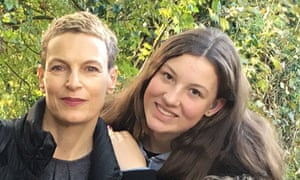
Laura Godfrey-Isaacs, left, and her daughter, Mirabelle.

Laura Godfrey-Isaacs, left, and her daughter, Mirabelle. Photograph: Courtesy Laura Godfrey-Isaacs

LAURA GODFREY-ISAACS


52, academic, producer, feminist activist, artist, director of her own company for 12 years, Home Live Art, qualified as a midwife in September 2016


“I began training at 47. It made internal sense to me. I felt I’d come to an end. I knew what I was doing in the arts and I wanted to work in a different way with people. I wanted to combine art and midwifery and in a more caring, direct, hands-on role.


“I’d been running my own company but in my midwifery training I enjoyed stepping away from the leadership role. I had experience but I had to show some humility and learn from people much younger than myself.


“I was the oldest in training but there were others in their 30s and 40s and I have good friends now in their 20s and that’s refreshing. I’m fortunate in that I could afford to take the financial risk, I have a supportive husband and my own business but other older students with me took a bigger financial hit and it will be tougher still with the removal of the bursary system [bursaries will be replaced with grants next year].


“I’ve been a mother for 20 years so now I feel very strongly about ‘mothering the mother’, looking after other women in childbirth. I see myself doing this part-time for 10 or 15 years. It’s not trying to forge a career; it’s for different reasons.”


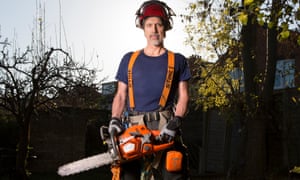
Kevin Curran swapped trade unionism for tree surgery.


Kevin Curran swapped trade unionism for tree surgery. Photograph: Richard Saker for the Observer

KEVIN CURRAN


62, welder, trade unionist and now tree surgeon


“I’ve had a lifelong interest in economic and social justice and woods and trees. I got my chainsaw qualification as a way of relaxing when I was a trade union organiser.


“At 53, I resigned from a job at the International Labour Organisation in Geneva. I wanted to come home and do something that meant I could give something back and work in a sustainable way. I did a two-week tree-climbing course and everybody else was a lot younger but I’m in good health and a long-distance runner.


“My brother Eamonn was 50 and a retired firefighter so we set up the tree surgery business together. As a volunteer I also manage a 63-acre wood. We also recycle by turning the wood we bring down into firewood.


“If I’d stayed full time as a trade unionist I’d probably be dead from a heart attack by now. When I was at school the careers advice person gave me a test and told me that my ideal occupation was farming or forestry. Now I feel so lucky. I love it up in the trees. When you’ve been climbing all day you know it but as long as my body holds out, I’ll keep going.”


Toni Lee says being a mature student can be financially crippling.


Toni Lee says being a mature student can be financially crippling. Photograph: Andy Hall for the Observer

TONI LEE


43, former carer


A mother of two sons, 18 and 23, Lee was a carer for 20 years after leaving school with GCSEs in English anda art. “It was the only thing I thought I could do.” Fourteen years ago, she began to care for John and Irene Leal, a former headmaster and his wife, both in their 80s. In 2012, with John’s encouragement, she began a BA fine arts degree. “He had been waiting for my results but he died, aged 95, the day before,” said Lee.


She received a first-class degree and won a scholarship to do an MA at the Royal College of Art in oil painting and photography, where she is now studying, in addition to working part-time in Sainsbury’s.


“I do oil paintings and the subjects are influenced by my passion about social issues, about poverty and unemployment and homelessness and the loneliness of older people. I visited South Africa in 2011 and it changed my whole way of thinking. I wanted to do work that meant something that could be a catalyst.


“I want to set up a gallery and a work space in a deprived community to teach young people and encourage local artists – to give them a chance of something better. As a student, financially it’s crippling – canvases can cost up to £200 – but I believe as long as you have passion you can accomplish anything.


“Half my sitting room is my studio. That’s where I make the magic happen. Being a mature student is challenging, delightful and sometimes it’s lonely, but I love the environment because I’m learning and it means, eventually, I can give something back.”


The rise of encore careers: why over-50s are changing patterns of working life

25 Kasım 2016 Cuma

What is your experience of working with child mental health services?

The health secretary, Jeremy Hunt, has described children and adolescent mental health services (Camhs) as the “biggest single area of weakness in NHS provision”.


Hunt told the Health Service Journal that too many families were being let down because of what he described as “big problems” in the capacity of services to support and treat children earlier in their lives.


Healthcare professionals are also painfully aware of the issues facing Camhs. Those working in and with the service admit failing to provide adequate care because of time pressures, a lack of staff and a shortage of beds. Teachers and social care professionals also feel the effects.


We want to hear from healthcare professionals, both those working in Camhs and in other areas of the health service, about what the situation is really like. What challenges are you faced with? How does it have an effect on you personally?


We’d also like to hear from teachers, social workers and any other professionals who have dealings with children or adolescents with mental health problems and/or with services. How is your job affected? Does it take a toll on you?


You can remain anonymous. If you prefer, you can email sarah.johnson@theguardian.com with your thoughts.


What is your experience of working with child mental health services?

14 Kasım 2016 Pazartesi

In NHS management being fired means you continue working for more money

When I had to leave my role as a senior NHS manager, I discovered that the health service has a well-used but little-known system for easing people out of top jobs. And I learned that it doesn’t work well for anyone: trusts, our healthcare system, managers, patients or the taxpayer.


It’s quite common for senior leaders to have to step down, even when there are no performance issues and their actions haven’t risked patient safety. Sometimes, as in any sector, people simply end up in jobs that aren’t right for them. And just as often, managers, keen to support NHS bodies through difficult change projects, take on tasks that prove impossible to accomplish.


My case is typical. Individual hospitals are being pushed to group together in larger organisations, centralising specialist care and closing some common services with overlapping coverage. And the timetables for these ambitious reforms are sometimes built around political cycles, rather than good medical care or change management. I ended up overseeing a major change programme – but the deadline was unrealistic, and staff shortages were so acute that we couldn’t recruit enough experienced medics. After a period we got things under control; but senior management made clear that they wanted a change of leadership, believing that it would draw a line in the sand and signal a fresh start.


In the private sector, I’d have been given a fat pay-off and sent on my way. But in UK public healthcare it’s not acceptable to spend taxpayers’ money that way, and departing managers have nowhere else to go: the NHS is the only game in town. So I was summoned to a meeting, and offered a sideways move into a national role at NHS Improvement: the agency responsible for improving practice across the health service.


I soon learned that most such roles at NHS Improvement are one-year contracts, where people do useful work that is rarely followed through into delivery. Working there, some people apply for other NHS jobs and eventually move into senior roles elsewhere in the system. But many, wounded by their treatment and unsure of their chances in the job market, instead use the role as a springboard into interim work; and the NHS is desperately short of skilled, experienced leaders, so it ends up paying them £1,000 a day to plug gaps in its management structures.


Many people offered a one-year job at NHS Improvement would instead be willing to take a less senior job with their current employer, if it meant a permanent job and the chance to stay in the locality. But few are offered this option, and there’s a stigma attached to dropping grades. It’s seen as a sign of personal failure, and there’s an expectation that careers only ever go upwards – which, in these days of long careers and merging organisations, isn’t realistic.


Political leaders and senior management need to recognise that, while not all appointments work out, these people still have skills the NHS needs. And they should understand that failing in an impossible job is a verdict on the job, not the person. After all, those jobs only become impossible because managers are trying to both keep their staff happy, and push through the systemic changes required by national policymakers. The NHS needs to reform, and ministers have a democratic mandate to reshape the system; but currently, the best way to protect your career is to keep your head down, build support among your staff, and resist risky reforms.


With budgets in decline, demand rising, a growing recruitment crisis, and an endless series of new policies and organisational changes, it’s easy for organisations to become over-stretched and leaders to fall out of favour. If the NHS wants people to be ambitious in these very difficult jobs, it shouldn’t push those who run into trouble into temporary non-jobs – and then into an interims market where the NHS must rent their skills back at exorbitant cost.


National leaders need to be more open about the difficulty of succeeding in these hugely challenging jobs, and do everything they can to retain good managers who’ve taken a step back – offering them permanent employment in less high-profile roles. Then people would be more willing to take on the most difficult jobs in NHS management, and there would be less gaps in management grades. That, in turn, would cut the interims bill and improve continuity in organisations that can ill afford excessive staff costs and unstable leadership.


The current system evolved to help protect NHS staff while facilitating necessary leadership changes, but it’s a huge waste of talent as well as money. Politicians and the Department of Health need to be more open, both about the flaws in redeployment processes, and about the pressures that brought us to this point. That would take courage; but if they’re ready to have that conversation, the benefits will be felt by patients and taxpayers as well as NHS managers and policymakers.


If you would like to write a blogpost for Views from the NHS frontline, read our guidelines and get in touch by emailing sarah.johnson@theguardian.com.


Join the Healthcare Professionals Network to read more pieces like this. And follow us on Twitter (@GdnHealthcare) to keep up with the latest healthcare news and views.


In NHS management being fired means you continue working for more money

3 Kasım 2016 Perşembe

Working for the NHS was miserable so I started dance classes on my ward

Things are not going well in the NHS right now. It is under sustained attack day after day; the media bad-mouths it, while the people who work for it are being asked to do more and more with fewer and fewer resources.


In my 15 years of study and training, I have watched cuts immiserate the services we can offer children and their parents all over the country. Fewer funded paediatric nurse training spots; local closures leading to clogged emergency departments; and £80bn slashed from mental health services resulting in ever more troubled young people occupying acute hospital beds, because there’s simply nowhere else for them to go.


Working in a health service under pressure – one that is low in finances, low in staff and low in morale – is hard. And things are only going to get worse. The current political climate actively pits health workers and patients against each other, the opposite of what caring relationships are supposed to look like. Under this kind of pressure, it’s not only the patients who need healing, it’s also the staff.


I felt this myself. I would see my colleagues, hungry and thirsty from lack of breaks with circles under their eyes, struggle to do their jobs. Being in hospital can be scary and alienating for sick children at the best of times – how much worse when the staff looking after them are too tired and busy even to smile?


I decided to do something about it. Barnet Bopping is a pilot project I developed with colleagues that brings dance to the paediatric ward of Barnet hospital, in north London. The aim is to help patients, parents and staff feel happier, healthier, less stressed and more connected by doing physical activity together that’s mood lifting and fun.


One morning, we gathered some of the kids and staff in the playroom and I asked a friend – who happens to be a nurse on the ward – to lead a hip-hop dance class. At first it felt a bit awkward; here we were, in the middle of the working day, my colleagues and I, swaying our hips with the consultant. And in front of the parents. But with every new move, and with every song, we all got more and more into it. Before long we forgot who we were, and even where we were. It didn’t matter whether we were a doctor, nurse, patient, parent or cleaner – all that mattered was the music. By the end, the atmosphere on the ward was really, well, happy.


I noticed how things changed after that. The boundaries between the nurses and doctors were gone. People smiled more. The team communicated better. It made us all wonder why we didn’t do things like that more often.


On its own this will not fix the NHS. But it is a way for us, in our local general hospital, to take matters back into our own hands, to resist the destruction of our health service and try to offer the best care we can to our patients.


Wellbeing should be for all of us. Health workers operate under huge stress, all while feeling as if we aren’t really doing justice to our patients. We need take care of each other – health workers and patients alike. Whether it’s standing up for patient safety or being creative at work, we stand with our patients. Cuts or no cuts, this is the kind of spirit that hasn’t yet been crushed in the NHS.


If you would like to contribute to our Blood, sweat and tears series which is about memorable moments in a healthcare career, please read our guidelines and get in touch by emailing sarah.johnson@theguardian.com.


Join the Healthcare Professionals Network to read more pieces like this. And follow us on Twitter (@GdnHealthcare) to keep up with the latest healthcare news and views.


Working for the NHS was miserable so I started dance classes on my ward

19 Ekim 2016 Çarşamba

Seven-day working for GPs costs more and doesn’t get results | Zara Aziz

My practice started offering Saturday morning GP appointments as well as weekday slots from 8am. Previously, our surgery opened Monday to Friday from 8.30am to 6.30pm with some evening appointments until 7.30pm. The Saturday slots are now offered as part of a group of local practices (on a rota basis) to all patients across the practices for routine pre-bookable appointments. There are many such pilots across the country – which started in 2013 as part of the then prime minister’s £50m challenge fund. Some, such as those in Greater Manchester, offered Saturday and Sunday urgent and routine appointments in addition to extended weekday access. Others, like ours, offer additional weekday and Saturday morning access for routine appointments only. The government has committed to another year of extended access despite dubious benefits of the first wave.


The health secretary, Jeremy Hunt, has cited lack of GP services as one of the reasons for A&E and acute admission pressures in hospitals. Indeed, studies have shown that seven-day GP access reduces attendances at A&E for minor illnesses but has little impact on emergency hospital attendances for serious medical conditions.


A recent study from Greater Manchester showed that providing extended seven-day GP access to patients across 56 practices reduced A&E attendances for minor ailments by 26% (in comparison to 469 practices that provided routine access). This equated to savings of £767,867 through reduced A&E visits – however, this extended GP access scheme cost around £3.1m, which included evening appointments until 9pm on weekdays and both Saturdays and Sundays (across a range of times). But hospital visits for minor ailments form only a proportion of total A&E visits – this study showed that extending GP access led to only a small reduction of 3.1% in total A&E visits. So overall, the scheme cost three times more than it made in savings.


There has also been further evaluation of the impact of seven-day access on medical admissions of elderly patients at weekends. In central London seven-day GP cover cut weekend A&E visits by 18% and weekend hospital admissions fell by 9.9% (mainly in elderly patients). But there have been many more disappointing outcomes from the extended access schemes with many areas discontinuing the pilots early or cutting their hours.


In areas where extended opening hours are only offering routine appointments, like ours, cost-savings through reduced A&E attendances or emergency admissions is even more questionable since we are not seeing urgent or acute problems – it is the latter group of patients who are more likely to go to out-of-hours services or to A&E.  


Nevertheless, NHS England has used some of this early data to extend the seven-day GP access services. In 2015-16, it invested £100m. At a time when both primary and secondary care is seeing unprecedented budget cuts and rationing of “unnecessary” or even routine services, it makes little sense to waste money on weekend opening .


The cost per total extended hour is up to £280, with practices needing to cover premises’ costs and reception, nurse and GP hours. Staffing these hours has been especially problematic for some areas that do not have enough GPs. Within my own practice, there is little appetite to work more. Until a few years ago I used to work GP out-of-hours sessions until it became difficult to manage these with a young family. As a partner in the hub of practices, I am doing the Saturday morning sessions. The 12 slots are booked by a mix of people, some of whom could come during the week.


Expensive extended access is not likely to be sustainable, and my concern is where is this money likely to be diverted from? And should we not put it to the public to decide whether they would like seven-day provision or improved access within existing GP hours?


Evidence suggests that improved access within existing, standard hours leads to a more effective way of reducing patients’ use of out-of-hours services than extending opening times. But this requires more GPs and more rooms to put them in. and better signposting so patients can see nurses, pharmacies and health care assistants rather than only a GP. It makes no sense to run services on a shoestring during the week, offering limited appointments to patients – because you are spreading staff thinly across the week. We should be offering more daytime appointments. This requires a commitment from the government to help primary care tackle its workload and funding crises, rather than persisting with its obsession of seven-day working.


Seven-day working for GPs costs more and doesn’t get results | Zara Aziz

2 Ekim 2016 Pazar

How periods really affect a woman’s working life

Many women won’t be surprised by the results of a BBC survey in which more than half of female workers said they’d experienced period pain that affected their ability to do their job.


But while some might report feeling drained of energy and motivation when their period is due, others find they actually perform better at mental and physical tasks at that time of the month.


This is because of variations in the way different women react to hormonal changes in their monthly cycle. While intellectual tasks, such as completing a logic puzzle or doing an IQ test, rely on electrical circuits in the brain, how well the neurons perform is subtly affected by the ‘hormonal soup’ which surrounds them.


The female sex hormones oestrogen and progesterone can alter the brain’s reward system, affecting motivation and how ‘sharp’ you feel, but when this takes place isn’t predictable – some women feel at their best a week after their period, while others do so just before.


Of course, severe pain can affect our mental agility too – another reason it might be a good idea for companies to introduce flexible ‘period leave’.


Dr Daniel Glaser is director of Science Gallery at King’s College London


How periods really affect a woman’s working life

19 Eylül 2016 Pazartesi

Hillary Clinton was wrong to keep working: presenteeism is damaging | Peter Cheese

Is coming into work when you’re so sick that you’re on the verge of collapse really something we should be praising, or encouraging? When Hillary Clinton announced last week that she was trying to work through a pneumonia diagnosis and continue her campaign schedule, her supporters were quick to use this as an opportunity to praise her strength of character. She was described as tough, determined, strong, gritty and other adjectives that suggest working through serious illness is to be admired.


It may well be viewed as heroic by some, but in reality it’s a sign of an increasingly pervasive culture that sets up work as more important than our wellbeing.


Clinton certainly isn’t the only person who has turned up sick for work recently. I suspect at one time or another we’ve all uttered the words “don’t worry, it’s nothing serious”, or struggled in only to be greeted by a concerned colleague who politely asked us to go home and stop sneezing on them.


Whether it’s guilt about letting down the team, concern your tasks won’t get covered or more likely some fear that it might be counted against you, the trend for employees to come into work or to work longer hours when they should be taking time off has been growing.


Research by Simplyhealth and the Chartered Institute of Personnel and Development (CIPD), where I work as chief executive, shows “presenteeism” is on the rise. Our 2015 survey showed that in the preceding 12 months, a third of firms reported a rise in employees working when they’re sick, and this has some pretty clear negative effects on employee wellbeing. Organisations that have noticed an increase in presenteeism are nearly twice as likely to report an increase in stress-related absence and more than twice as likely to report an increase in mental health problems among their staff too.


Hillary Clinton, back on the campaign trail: ‘I’m doing great’ – video

Greater uncertainty in the economy and regarding jobs in recent years, together with an increasingly “always on” working environment and the pressure to perform are all factors driving this trend. Many of the companies and employees we talk to cite job insecurity as a reason for increased presenteeism, with employees fearing that a competitive job market, and the growth of automation, will make them more replaceable.


But leaders and managers set the tone, and have a responsibility not just to their organisation but also to the wellbeing of their employees. As our research shows, increasing presenteeism leads to increased prevalence of stress, and there is a wealth of evidence, such as the Towers Watson 2014 Global Benefits Attitudes survey, which clearly shows that workplace stress leads to less productive employees.


So why, then, do more than half of all organisations admit that they aren’t doing anything to combat this growing problem? It may well be that they believe that promoting long-term employee wellbeing might come at the expense of the short-term success of an organisation, but it can also be a lack of awareness of the growth of a corporate culture that accepts or even encourages presenteeism.


To perform at our best, people need to be well both physically and mentally. If businesses want employees who are engaged and motivated, then employees need to feel that their organisation, their managers and bosses are supporting them, and not pressuring them to work when they are not properly fit.


How do we change this culture? It has to come from the top down. Employees won’t feel empowered to take time off when they’re sick if their manager’s behaviour runs counter to that. The second action businesses can take is to build a culture that emphasises healthy living.


Health should be promoted in the workplace, with people given the opportunity to learn more about their own health, to exercise and eat well within the workplace and beyond. At the CIPD, we host discounted zumba and yoga classes each week. TransferWise takes all its staff on annual company holidays, while the law firm Allen & Overy has GPs and dentists on site. Those are at the more expensive end of the scale, but even simple things like free fruit for staff, a perk offered by just 15% of employers, can help instil a healthier work culture.


Mental health and particularly the understanding of stress is equally important and is perhaps even more challenging. Much more needs to be done to educate managers in how to show understanding and ask the right questions, and how and where to find the right support. Leaders in this field, such as Google, have built good mental health into their culture by offering mindfulness classes to staff, while many large employers in the City, such as KPMG and Deloitte, have launched the City Mental Health Alliance, working with charities to end the stigma attached to mental health problems.


The message to business is clear; a workforce that is well, works well. Clinton may have wanted to preserve her image of strength, but she wasn’t being honest with herself. We need our leaders – in the workplace and beyond – to take responsibility for their own health and wellbeing first, to set the right example.


Only then does this damaging culture of presenteeism have any chance of changing.


Hillary Clinton was wrong to keep working: presenteeism is damaging | Peter Cheese

12 Eylül 2016 Pazartesi

I used to fear working NHS night shifts would kill me

A patient came to see me at my GP practice the other day. “I know you from the hospital,” he said. “It was you I saw on the night I went to A&E.” He paused, and then added: “You seemed tired”.


I couldn’t recall the event – it occurred during the A&E rotation of my GP training in 2014. At the time I felt that night work was killing me slowly. Driving home in the mornings I used to fear it might kill me quite suddenly. In that particular job I was obliged to alternate so frequently and jarringly between day and night work that after three months my life had blurred into a homogeneous grey fog in which I took pills to go to sleep and pills to wake up again. Driving was hazardous but working wasn’t straightforward either. On one occasion I fell asleep while phoning a patient’s relative in the middle of the afternoon. After three months I was struggling, my heart was skipping beats and I was so depressed that I started to think that maybe crashing my car wouldn’t be such a bad idea.


A&E was dreadful, but the doctors working there have one important benefit; they are generally guaranteed a break, of some sort. By contrast, the doctors working unsupported on the wards manage their own time and only take breaks if they reach the end of their jobs list. All too often that doesn’t happen, the bleep doesn’t stop bleeping.


The system is presently unsafe for doctors, I’d argue that it is unsafe for patients as well. A doctor who isn’t safe to drive isn’t safe to work. It’s hazardous, it has been for years but it’s a necessary evil and the prevailing attitude appears to be that we have to accept the risk.


There are plenty of factors maintaining the status quo, the availability of resources, both financial and human, and the expectations of other staff members, and patients to name a few. I would suggest there is another important but unspoken element to this that shouldn’t be overlooked. It involves the doctors themselves.


Doctors are a mixed bunch but there are common threads discernable in their psychological makeup. They are generally competitive high-achievers who are sensitive to social pressure. They often strive tirelessly to achieve the best outcomes for their patients, or to invert that subtly, to be the best doctor they can be.


This ideal best doctor character is a tower of strength, indefatigable and endlessly resourceful, no challenge too great, no demands too exhausting. It’s the ideal that society looks up to and praises, it is one that the average doctor is happy to embody. Unfortunately best doctor is indispensible, doesn’t need sleep and doesn’t leave work unfinished for colleagues to sweep up. Best doctor stands nobly in a proud tradition of colleagues who have undergone the same trials, nay, worse ones, as our forebears are ever eager to remind us.


Best doctor doesn’t moan about hardships, they are battle scars, a source of pride, evidence to show that this doctor stands shoulder to shoulder with the best of them.


The flawed diurnal human pulling the levers behind the facade is just going to have to cope. If they are too tired to drive their car and have to drink alcohol to make it all go away, well, that’s just the price that has to be paid.


Making night shifts safer would require substantial system changes to moderate demand, but alongside them an obligatory level of self-care for doctors. Anything less stringent will simply be ignored.


Unfortunately our chances of witnessing such changes are laughably remote. The current political will, with Health Secretary Jeremy Hunt as its hapless mouthpiece, is more geared towards exploiting these convenient character traits than compensating for them. As the system is placed under increasing strain I expect that the situation will only get worse.


If you would like to write a blogpost for Views from the NHS frontline, read our guidelines and get in touch by emailing sarah.johnson@theguardian.com.


Do you work in the NHS? Please take our survey and tell us whether bullying is a problem and how it affects your work


Join the Healthcare Professionals Network to read more pieces like this. And follow us on Twitter (@GdnHealthcare) to keep up with the latest healthcare news and views.


I used to fear working NHS night shifts would kill me

25 Ağustos 2016 Perşembe

EU nationals working for the NHS: how do you feel after the Brexit vote?

What does Brexit mean for the NHS? One risk, highlighted by a leading thinktank on Thursday, is the loss of 57,000 European workers. The Institute of Public Policy Research (IPPR) suggest in a report that British citizenship should be offered to EU nationals to avoid a collapse in the service.


Chris Murray, who compiled the report, said: “It is critical to public health that these workers do not seek jobs elsewhere. All EU nationals who work for the NHS, or as locums in the NHS system, should be eligible to apply for British citizenship. This offer should be organised by the regional NHS and mental health trusts, who would be responsible for writing to all NHS staff who are EU nationals to inform them of their eligibility.”


Are you an EU national working for the NHS? How do you feel, after the Brexit vote, and what are your plans? How vital are you to the health service? And how would you feel about being offered British citizenship? Tell us, using the form below.


EU nationals working for the NHS: how do you feel after the Brexit vote?

17 Ağustos 2016 Çarşamba

What working as an FGM counsellor taught me about female sexuality

I had the birds and the bees conversation with my daughter when she was around four years old. I told her that sex is an act that two consenting adults choose to do and I stressed that nobody should touch her body in any way that makes her uncomfortable.


We have revisited this conversation over the years. I told her that her genitals are called a vagina, not fanny, nunnie, minnie or down there. I was sick and tired of the pervading belief that women and girls can’t describe our body parts directly.


Now nearly 10 years after that conversation (she’s just turned 14) teenage hormones are in full swing, with eye rolling and tuning me out while listening to Rihanna. But I love the fact we have frank open conversations about most things and I truly treasure the times we don’t agree. I love that she has her own views about the world.


With that in mind, I want to share some thoughts about my work that made me think of my daughter and the pressure girls around the world face in relation to their sexuality.


Related: Feminism is breaking through the rigid patriarchy in Pakistan


As part of my work with the Dahlia Project, a counselling service I founded for women and girls who have undergone female genital mutilation (FGM), I run sessions for refugee women where I talk about the cultures they grew up in.


The discussion always leads to sex, and a recurring theme is virginity. Many of the women are educated and considered liberal in their way of thinking. They say their daughters are equal to their sons. However, they also say they want their daughters to remain virgins to protect them from harm and so that future husbands will respect them.


What interests me about these conversations is that the women openly talked about being cheated on or beaten by their so-called respectful husbands. I nudged the women to reflect. “Did remaining a virgin work for you?” I asked. “Did it prevent the violence and betrayal he had caused you?” Many were baffled by my questions. By our second session some of the women were starting to realise that cultural patriarchy was alive and well in their homes, and they were complicit in committing the oppression they had endured against their own daughters.


Society high-fives men with multiple sexual partners


Sadly I only had two sessions with these women, and they left me questioning this universal obsession with virginity. I remember newspaper articles about Kate Middleton, being slut-shamed in newspaper articles for not being a virgin before marriage and rumour has it Diana had to prove her virginity before marrying Prince Charles. If a woman is sexually free or has multiple partners, society shames her and makes her feel bad about herself.


While dating I’ve been asked how many men I’ve slept with. This idea of being judged based on the history of my vagina is absolutely ludicrous and another form of control of women’s sexuality. My brother and all the men in my life are never asked such questions yet alone judged on them. Society high-fives men with multiple sexual partners.


I had my first sexual experience at the age of 18 with my then husband (I’m currently happily divorced). I didn’t make the choice to stay a virgin. I did so for two reasons. Firstly, I wasn’t the girl boys were lining up to date. I was a super nerd who didn’t wear makeup or pluck her eyebrows. So, no temptation or struggle for me. Secondly, my mother told me sex was great and nothing to be ashamed about. As a teenager I wasn’t keen to try something my mother enjoyed (remember that trick, parents).


Related: Anti-FGM campaigner Leyla Hussein: the women who made me


I remind my daughter that whenever the day comes that she wants to lose her virginity (why is it something you lose, like a precious possession?), it is no one’s business but hers. If anyone tries to judge her based on her genitals, I tell her to just walk away.


I tell her that our vaginas are very special and powerful, we bleed and give birth from them, and it’s her right as a woman to enjoy sex one day. It’s a beautiful and enjoyable act. Patriarchy tried to prevent me and over 200 million FGM survivors from living as sexual beings, but through therapy and a loving supportive partner many of these women can and are enjoying sex. There is hope.


Dear world, women have sex and enjoy it, so get over the idea that virginity is something to protect.


Join our community of development professionals and humanitarians. Follow @GuardianGDP on Twitter. Join the conversation with the hashtag #SheMatters.


What working as an FGM counsellor taught me about female sexuality