Utilizing nanotechnology to improve the water quality is an innovative way of improving crop nutrition, improving our natural health.
Abrupt changes in the weather are only one of the many reasons why farming is getting more and more difficult. Crops produced are of lower quality with less nutritional value, and the volume harvested is significantly fewer. Ground-breaking technology has been developed in order to address the issue of low yield and low quality yields by ensuring that the nutrients are delivered to plants more effectively.
How does nanotechnology improve plant nutrition?
Nanotechnology is an innovative technology which protects the nutrients in the soil against impurities and reactive molecules, resulting in improved crop nutrition.
What is nano technology and how does it work?
“Nano” comes from the Greek word that stands for “dwarf.” It is now, however, used to refer to a scientific scale. Consequently, nanotechnology makes use of a very small scale of measurement, about one billionth of a meter. Manipulating matter at the nanoscale has profoundly influenced different industries including manufacturing, textile, medicine, computing, and cosmetics.
This new technology’s primary function is to remove impurities in the water; thus, improving crop nutrition. It works this way: Water is pumped into a lab and is carefully processed to remove any particles and impurities from it. In essence, the particles are crushed, reducing their size up to 100 times smaller. This water is then fed to the necessary crops, allowing them to absorb the nutrients more effectively.
What are the implications of using this technology?
With a more efficient delivery of nutrients to the roots and leaves of the crops, there is a higher vegetative and germination rate. Moreover, farmers can now maximize soil nutrient and reduce the volume of required fertilizer, increasing the yield’s quality and quantity per hectare.
The full impact of these scientific advancements on the global farming community have not been measured. If this technology is used as part of modern farming practices, farmers will be able to address issues such as the pH levels in the water, and they will be able to reduce the percentage of fertilizer used during the crop’s lifecycle. Finally, since it is a fairly new technology, there is scope for major improvements in the water purification process.
Final Words
This scientific know-how has successfully helped improve modern farming methods.
While this innovation makes use of the smallest measurement, there is no doubt that its impact on the farming industry will be tremendous. We live in a world where droughts, famines, and consequently, poor nutrition play a major role in starvation, deaths, and poor health of the people affected by the lack of proper nutrition. Therefore, any technological advancements that will improve the quality of the food produced, will go along way towards improving the quality of life for the impoverished.
Author bio: The article on improving crop nutrition has been written by Ignacio D. Pena who is a very active blogger and loves to write in the agriculture niche.
Many of us may already be struggling with our New Year’s resolutions, but at least we can take comfort in modern neuroscience. Forty years ago, we’d have been less hopeful.
Back then neuroscience would say that the brain was fixed after early childhood. One famous experiment in the 1960s showed that if kittens were placed in a visually deprived environment in the days and weeks after birth, their sight as older cats would be impaired.
Similar experiences later in life did not have this effect, which fitted with the idea that what happens in early childhood changes our brains fundamentally, but they’re fixed after that point.
However, since then, more evidence has been found for the growth of new nerve cells in adult brains. Knowing this may help us to break bad habits and make new ones. So neuroscience has caught up with common sense and accepts the idea that new brain circuits can form as a result of experience. And if you take one thing away from this column, it’s because something in the structure of your brain has changed.
Dr Daniel Glaser is director of the Science Gallery at King’s College London
Nestlé says it has found a way of slashing the amount of sugar in some of its chocolate bars by 40%, without compromising the taste.
The Swiss food company, whose products include Kit Kats, Aeros and Yorkies, said it has achieved the reduction by discovering a way “to structure sugar differently”. The new process is said to make sugar dissolve faster so that even when less is used, the tongue perceives an identical level of sweetness.
It plans to patent the process, discovered by its scientists, which it says will enable it to significantly decrease the total sugar in its confectionery products.
Sugar has been blamed for fuelling the obesity epidemic crippling the NHS in the UK and health campaigners have urged confectionery companies to cut unnecessary sugar from their products.
In 2104, Action on Sugar was launched with the goal of encouraging government and manufacturers to cut sugar in food by 30%.
In that context, Nestlé’s self-proclaimed breakthrough is likely to be welcomed, should it live up to its claims, and be potentially lucrative to the company.
It says it will begin to use the faster-dissolving sugar in its confectionery products from 2018.
A four-finger milk chocolate Kit Kat currently contains 23.8g of sugar, a plain (milk chocolate) Yorkie contains 26.9g and a medium peppermint Aero has 24.9g of sugar. If the amount of sugar in each of these products was cut by 40% the new amounts would be 14.3g, 16.1g and 14.9g respectively.
Dietary sugar should account for no more than 5% of daily calories consumed, which equates to 30g for those aged 11 and over, according to the UK’s official nutrition advisers.
Figures published in September showed that in 2012-14 the average was 13.4% for those aged between four and 10, 15.2% among 11- to 18-year-olds, 12.3% for adults under 65 and 11.1% for those aged 65 and over.
Nestlé’s chief technology officer, Stefan Catsicas, said: “This truly groundbreaking research is inspired by nature and has the potential to reduce total sugar by up to 40% in our confectionery.
“Our scientists have discovered a completely new way to use a traditional, natural ingredient.”
Lucy Kellaway, associate editor of the Financial Times, has made news by announcing that, after three decades as a journalist, she is switching careers. Aged 57, she is to train to become a maths teacher. She also plans to work with a charity, Now Teach, to persuade others in midlife and older to follow her example and have what in the US is called an encore career.
“It’s one of the best jobs in the world but I’m not getting any better at it,” Kellaway said of her years in journalism. “I’m part of the lucky generation that’s paid off mortgages and has a pension. I can afford to do something that tangibly improves people’s lives.”
Not everyone, of course, is in what Kellaway describes as this “demographic sweet spot”: financially secure for life so they can make an occupational shift that may bring rich rewards but not pay the bills.
To be clear, an encore career is not the same as finding a job, any job, after redundancy, illness or “enforced retirement” – plights that have befallen 1.5 million people aged 50-69 in the UK in the last eight years, more than a million of whom would work if somebody would employ them. And it is different from having to work those extra years – to 70 for today’s twentysomethings, according to some predictions – to scrape together a pension.
In the US, Marc Freedman set up Encore.org, “second acts for the greater good”, 18 years ago to make use of the experience, wits and wisdom of older people. He defines these second (or third or more) careers in the second half of life, paid – on an often significantly reduced income – and unpaid, as combining “greater personal meaning and social impact to improve communities and the world”. Freedman was among the first to recognise what was unfolding demographically. The combination of longevity – many of today’s newborns will live to 100 – and retirements that already stretch to three and four decades, plus the sheer numbers of baby boomers reaching their 60s, 10,000 a day in the US, meant that volunteering required an overhaul and the entry requirements and training for jobs with social impact needed to adapt to admit recruits who already had 30 or 40 years of experience.
Freedman established a one-year training scheme, “a fellowship” so that a banker interested in, say, community regeneration or a doctor wanting to work in literacy, had accelerated instruction and a network of support. Then, 10 years ago, he launched a $ 100,000 Purpose prize for “exceptional individuals over 60 working to address critical social problems”, and innovation has flowed from the scheme. Among the winners of the prize are Vicki Thomas, a former executive in public relations, who via a charity, Purple Heart Homes, matches disabled members of the armed forces with repossessed homes donated by banks; and W Wilson Goode, a former mayor and retired academic, who runs a scheme mentoring the children of prisoners.
Inevitably, it’s not easy challenging the traditional pattern of working lives, as Kellaway has discovered. Men and women who have been teaching for years don’t take kindly to vintage amateurs, fortysomethings and older, arriving in the classroom. But, as she points out, an acute shortage of maths, science and language teachers has a negative impact on children and age may bring other benefits.
Recently, the government and Nesta, an organisation promoting innovation, announced grants of £4m to explore how charities and public services can tap into “the skills and experience of volunteers over 50 for the benefit of society”. But money alone can’t make a movement. It needs a man or a woman, such as Freedman, on a personal mission – and that, as yet, the UK lacks.
In the meantime, professors Lynda Gratton and Andrew Scott have been studying the issue of working lives in (much) later life and some of the stereotypes that hinder its acceptance. The co-authors of The 100-Year Life surveyed 10,000 people from across the world aged 24-80. The results, reported in the Harvard Business Review, indicate that it is not just the young who invest in new skills, who are excited about their work and who make an effort to keep fit. Those in their fifth, sixth and seventh decades do too. Again, while more than half those aged 46-60 want to “slow down”, fewer than 20% of those over 70 agree and more people under 45 (43%) than over (35%) said they were exhausted – with the least exhausted over 60. Leave aside the idea that rampant ageism might inhibit the 50-plus group from telling the whole truth.
Research says that retirement makes many of us happy. However, if you decide to delay it for a decade or so to take up a new career and “give something back”, that may also help to inject positivity into what is currently a highly negative narrative about our changing demographics and alleged inter-generational warfare. Encore careers offer a bonus not least in the power to shift ageing from a problem to part of a solution.
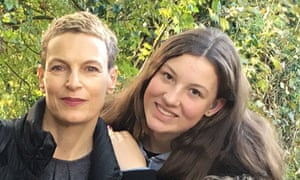
Laura Godfrey-Isaacs, left, and her daughter, Mirabelle. Photograph: Courtesy Laura Godfrey-Isaacs
LAURA GODFREY-ISAACS
52, academic, producer, feminist activist, artist, director of her own company for 12 years, Home Live Art, qualified as a midwife in September 2016
“I began training at 47. It made internal sense to me. I felt I’d come to an end. I knew what I was doing in the arts and I wanted to work in a different way with people. I wanted to combine art and midwifery and in a more caring, direct, hands-on role.
“I’d been running my own company but in my midwifery training I enjoyed stepping away from the leadership role. I had experience but I had to show some humility and learn from people much younger than myself.
“I was the oldest in training but there were others in their 30s and 40s and I have good friends now in their 20s and that’s refreshing. I’m fortunate in that I could afford to take the financial risk, I have a supportive husband and my own business but other older students with me took a bigger financial hit and it will be tougher still with the removal of the bursary system [bursaries will be replaced with grants next year].
“I’ve been a mother for 20 years so now I feel very strongly about ‘mothering the mother’, looking after other women in childbirth. I see myself doing this part-time for 10 or 15 years. It’s not trying to forge a career; it’s for different reasons.”
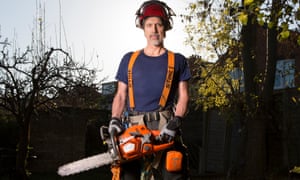
Kevin Curran swapped trade unionism for tree surgery. Photograph: Richard Saker for the Observer
KEVIN CURRAN
62, welder, trade unionist and now tree surgeon
“I’ve had a lifelong interest in economic and social justice and woods and trees. I got my chainsaw qualification as a way of relaxing when I was a trade union organiser.
“At 53, I resigned from a job at the International Labour Organisation in Geneva. I wanted to come home and do something that meant I could give something back and work in a sustainable way. I did a two-week tree-climbing course and everybody else was a lot younger but I’m in good health and a long-distance runner.
“My brother Eamonn was 50 and a retired firefighter so we set up the tree surgery business together. As a volunteer I also manage a 63-acre wood. We also recycle by turning the wood we bring down into firewood.
“If I’d stayed full time as a trade unionist I’d probably be dead from a heart attack by now. When I was at school the careers advice person gave me a test and told me that my ideal occupation was farming or forestry. Now I feel so lucky. I love it up in the trees. When you’ve been climbing all day you know it but as long as my body holds out, I’ll keep going.”
Toni Lee says being a mature student can be financially crippling. Photograph: Andy Hall for the Observer
TONI LEE
43, former carer
A mother of two sons, 18 and 23, Lee was a carer for 20 years after leaving school with GCSEs in English anda art. “It was the only thing I thought I could do.” Fourteen years ago, she began to care for John and Irene Leal, a former headmaster and his wife, both in their 80s. In 2012, with John’s encouragement, she began a BA fine arts degree. “He had been waiting for my results but he died, aged 95, the day before,” said Lee.
She received a first-class degree and won a scholarship to do an MA at the Royal College of Art in oil painting and photography, where she is now studying, in addition to working part-time in Sainsbury’s.
“I do oil paintings and the subjects are influenced by my passion about social issues, about poverty and unemployment and homelessness and the loneliness of older people. I visited South Africa in 2011 and it changed my whole way of thinking. I wanted to do work that meant something that could be a catalyst.
“I want to set up a gallery and a work space in a deprived community to teach young people and encourage local artists – to give them a chance of something better. As a student, financially it’s crippling – canvases can cost up to £200 – but I believe as long as you have passion you can accomplish anything.
“Half my sitting room is my studio. That’s where I make the magic happen. Being a mature student is challenging, delightful and sometimes it’s lonely, but I love the environment because I’m learning and it means, eventually, I can give something back.”
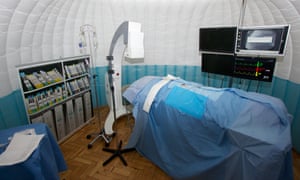
In a small operating theatre underneath University College London hospital, a team of cardiologists are in a race against time. They’re performing an angioplasty, a delicate and dextrous procedure where tiny wires are inserted into the heart to widen coronary arteries narrowed by plaque buildup. Things have gone badly wrong.
One of the wires has perforated the artery walls, causing a rapid leakage of blood. With fluid building up around the heart, the team must act quickly. A microscopic balloon has to be blown up inside the artery to stop further blood loss, before a drain is inserted through a tiny keyhole incision to remove the excess. This has to be done in less than five minutes to prevent the patient going into cardiac arrest.
While the mood is one of grim urgency, this time it isn’t quite life and death on the line. The patient is an actor and the damaged heart, a sophisticated robot. It’s all part of a highly immersive virtual simulation, the likes of which are rapidly changing the way surgeons, doctors and nurses are trained in the NHS.
Emmanuel Ako, a senior cardiologist, is leading the team performing the operation. Like almost all his colleagues, he learnt his trade, the equipment, communication, and the fine motor skills required for the job, through real life operations, chaperoned at all times by a consultant. “Your first puncture or procedure would literally be on a live patient,” he says.
[embedded content]
A virtual endoscopy procedure is performed using a robot programmed with haptic technology, so it feels as it would do in real life for the surgeon.
But the system is changing, and fast. Owing to greater patient awareness and involvement in healthcare, operations are increasingly being led and performed by senior consultants. Trainee surgeons can assist and observe but hands-on experience is harder to come by. “There’s more pressure from patients to have access to the best trained person available,” says Fernando Bello, a researcher in the department of surgery and cancer at Imperial College, London. “Of course this is positive in many ways but, along with reduction in working hours, it makes it harder for trainees to get the exposure they need.”
Over the past four years, hospitals across the UK have increasingly been turning to simulation and the virtual world for answers. Bello works at Imperial’s specialist centre for engagement and simulation science alongside Professor Roger Kneebone, who has pioneered the field over the past 15 years. Kneebone first began looking at ways to simulate various scenarios in clinical medicine for training purposes, based on his experiences first as a trauma surgeon and then as a GP.
For surgeons, he uses an array of theatrical techniques to recreate an operating theatre. The sights, sounds and lighting are exactly the same as the real thing, along with the staff. To increase the sense of immersion, trainee surgeons take part in the simulations along with anaesthetists, nurses and various technological and visual effects. For cardiologists performing angioplasty, the robot they’re operating on is draped with an actor sitting underneath it at the head end, to look like a patient lying down. The robot and operating tool are embedded with the latest haptic technology, so it feels exactly as if the tiny wires are being pushed through a real person.
“When you push a wire into an artery it’s not smooth,” Ako says. “There’s some resistance. And that’s programmed into the system, as is the slight resistance you feel when you make the initial puncture. In front of you they have real life x-rays to navigate, as you would use on an actual person, so you’re getting not only a visual feel, but also the tactile and haptic feel of the equipment. It’s very realistic, very high definition.”
To test the ability to react in real time to challenges, trainees can face any of a range of pre-programmed scenarios. For trainee cardiologists there are 52, ranging from the wrong drug being accidentally injected, to an artery perforation, to the patient having an allergic reaction to various dyes used to look at their arteries. In the latter case, monitors around the operating table start showing that blood pressure and heart rate are going down, and those running the simulation will instruct the actor via headphones to display difficulties in breathing.
In future there are plans to combine the existing robotics and haptic technology with Occulus Rift from the gaming world. Surgeons will conduct the simulated operation while wearing goggles, transporting them into a virtual environment containing larger, more complex equipment such as x-ray scanners.
Hospitals across the UK are increasingly turning to simulation and the virtual world for answers. Photograph: University College London
“There have been studies of surgeons during these immersive simulation and you see that they get a physical response,” Ako says. “So the heart rate’s racing, the adrenaline is up, it’s like an emergency is actually happening. And then in real life it just takes the stress away, you go into that mode and just do exactly what you’ve done in the simulation.”
The simulations also allow the often overlooked human side of surgery to be rehearsed and improved. With sometimes 10 or more people involved in an operation, Ako says that most of the time serious mistakes in theatre occur due to poor communication. With large operations increasingly being done on patients who are consciously awake and under local anaesthetic, surgeons are having to learn to communicate with those undergoing the operation.
Kneebone is also looking to use simulations to allow prospective patients who are waiting to undergo a procedure to experience the operation environment beforehand as a way of reducing anxiety. At St Mary’s hospital in London, a new patient experience hub allows them to experience what the operating theatre will look like and even what certain procedures, such as angioplasty, would feel like.
“The idea is that patients can experience the procedure first through simulation, to demystify it and get used to it,” Kneebone says. “And it allows us to assess things from reducing delays to reassuring patients, and look at how we might do them a bit better.”
There are now more than 20 specialist simulation centres across the UK using these techniques to train those across the medical profession, from surgeons to GPs. Kneebone says this is only going to increase. “There’s going to be big pressures on the educational system with many thousand more doctors coming into the system in the next few years,” he says. “I think simulation offers huge potential to help with that … it’s completely changing the way cardiologists and cardiothoracic surgeons work.”
Join the Healthcare Professionals Network to read more pieces like this. And follow us on Twitter (@GdnHealthcare) to keep up with the latest healthcare news and views.
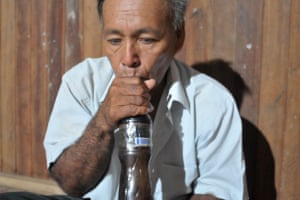
Ayahuasca, as it has come to be known internationally, is a plant medicine that has been used in the Amazon for centuries for healing and spiritual purposes. Renowned for the often extraordinary visions it induces – not to mention the deep vomiting – it is made from an Amazonian vine known to western science as Banisteriopsis caapi and usually at least one other plant.
Over the last 25 years or so ayahuasca has gone global, with many 1000s of people travelling to Peru and other South American countries to drink it, and expert healers – curanderos, shamans, ayahuasqueros, maestros – travelling abroad to hold ceremonies. Many drink ayahuasca because they’re looking for healing, some are just curious, some mistake it for a recreational “drug.”
One of ayahuasca’s pioneer scientific researchers is Dennis McKenna, a US ethnopharmacologist and younger brother of the legendary ethnobotanist and author Terence. Some years ago, in an article titled “Ayahuasca and Human Destiny” published in the Journal of Psychoactive Drugs, McKenna emphasised the contribution ayahuasca can make to physical and spiritual healing – “if it is ever afforded its rightful place in medical practice” – and addressing potential environmental catastrophe.
“[Ayahuasca is] the conduit to a body of profoundly ancient genetic and evolutionary wisdom that has long abided in the cosmologies of the indigenous peoples of the Amazon who have guarded and protected this knowledge for millennia, who learned long ago that the human role is not to be the master of nature, but its stewards,” McKenna wrote. “Our destiny, if we are to survive, is to nurture nature and to learn from it how to nurture ourselves and our fellow beings. This is the lesson that we can learn from ayahuasca, if only we pay attention.”
Below are edited excerpts from an interview between McKenna, in the US, and the Guardian, in Iquitos, a city in Peru’s Amazon which the scientist calls the “epicentre” of the “global ayahuasca movement”:
DM: What can [ayahuasca] do for the environmental movement? I think a lot of people, especially if they come to South America, come away with a really renewed appreciation for our connection to and the importance of nature. I think that ayahuasca is a catalytic influence in changing global environmental consciousness, which is something that’s got to happen if we’re going to get out of the mess we’re in. The main challenge we have as a species is – getting on the soap-box for a minute – we have forgotten our connection to nature. We’ve come to the conclusion that we own nature, it exists for us to exploit, and we’re busy doing that. We’re destroying it in the process. We’re destabilising all of these global mechanisms that keep the biosphere habitable by life. I think ayahuasca is waking up a lot of people and reminding them that, “No, that’s not the way it is. You monkeys are not running the show. The plants are running the show, by sustaining life on earth, if nothing else.” There needs to be a global shift of consciousness. People need to understand this before they can really begin to change, and so in that sense I think ayahuasca is an ambassador from the community of species. The message is basically, “Wake up, you monkeys! You’re wrecking the place!” It’s very important and interesting that so many people come away with this strong message that they’ve really been moved and touched by something that they feel is an intelligent entity – an intelligent representative of the natural world.
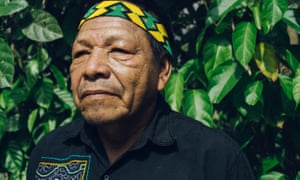
Sina Ramirez Rios, a Shipibo curandero singing to ayahuasca before a ceremony near Pucallpa in Peru’s Amazon. Photograph: Emilie Lescale
DH: Why is that? Why does it make clear to people our connection to nature? How does it do that? Because it teaches us that the plants and trees are alive, in a sense, and are intelligent and sentient?
DM: I don’t think there is a scientific answer. It’s more like a philosophical answer, or a spiritual answer. This is the challenge of our time: we have separated ourselves from nature and we really need to re-understand that relationship, and as part of the community of species, which we are – we may deny it, we may forget it, but we are part of the community of species. And I think that the community of species is concerned about this problematic primate that they have let loose on the planet. As a species, we are simultaneously the most dangerous thing that has appeared in the course of evolutionary time and we’re also the most promising. Indigenous people have this perspective that [ayahuasca and other plants] are teachers. They exist to give us guidance and wisdom – and I believe that, actually. [Indigenous people] have been the stewards of the plants, the stewards of this knowledge, but I think that now things are getting desperate on a global scale in terms of the environmental catastrophes that are looming. I think there’s a sense in the community of species we’ve got to step up the game and these are their tools to contact human beings and basically say, “Pay attention because you need to re-understand your relationship to nature”, and once that’s understood then you have to start making changes. I think one of the challenges of our species – one of our problems – is that we’re very, very clever. We can do amazing things with our big brains and our opposable thumbs and our ability to use and create technology. No doubt that we’re clever. The problem is we’re not wise – and that’s the whole thing. I think the message from ayahuasca and all these other teacher plants is, “Wise up.” Literally: “Get wise.” So that we can use the technologies we’ve invented in a way that supports and sustains life, rather than threatens life. That’s really the message. It’s a profound message, but it’s a simple one.
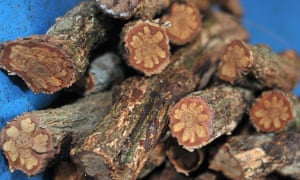
The Banisteriopsis caapi vine, the key ingredient to ayahuasca, known by numerous different names throughout the Amazon. Photograph: Emilie Lescale
DH: Do you feel Peru is the centre of what you call the “global ayahuasca movement”, or is it more Brazil?
DM: I think it’s Peru. In terms of its interfacing with the West, or Western culture, in Brazil, where you find it is through churches [like the Uniao do Vegetal], which have adopted ayahuasca as their sacrament. I don’t think there’s a big ayahuasca tourism industry in Brazil. It may be happening, but Iquitos is definitely the epicentre. People have been coming there regularly since about 1995 and it has grown a lot.
DH: Do you think more clinical studies [on ayahuasca] need to be done? That that would be positive for ayahuasca in general?
DM: I don’t need clinical studies to convince me ayahuasca is good medicine, that it’s helping people, but you can publish them [and it’s] a good way to convince skeptical colleagues in biomedicine, rather than just some guy raving about how great it is. . . This also grades over into some ethical issues. There are multiple ones. This is something that exists in the context of traditional medicine. It has already, in a certain way, been co-opted by the West through the ayahuasca tourism phenomenon and so on. Is it ethical to try and take a medicine like this and stuff it into a biomedical research structure? Is that the right way to approach it? I’m not saying that it is and I’m not saying that it isn’t. I just think that we have to be clear that there are aspects here of taking something out of its traditional context. Can it be used that effectively in biomedicine, or do you need the ceremonial ambience? It goes back to these hoary principles of setting. Which are very important. Does it have to be traditional? I don’t think so, but you could say, “Well, why not?” Because this is a Peruvian patrimony. Peru has declared ayahuasca a national patrimony, and you could say, “Well, if you’re going to develop therapeutic protocols and programs around ayahuasca, why not do them in Peru?” You’re not taking it away from anybody. You’re actually creating opportunities for Peruvian doctors, scientists and curanderos to work together to develop therapies that can help people – essentially taking a page out of the idea of medical tourism. Tourists are going to come to take ayahuasca for psycho-spiritual reasons. Why can’t they come and take it for medical reasons? That’s just an idea.
Miguel Ochavano Uquia, a Shipibo maestro working with ayahuasca at the Temple of the Way of Light near Iquitos in Peru’s Amazon. Photograph: Temple of the Way of Light
DH: “Medical tourism.” Have you heard that term used by anyone else [regarding ayahuasca]?
DM: Medical tourism is kind of a buzz word now, especially in the States because of the crazy cost structure of so many medical procedures. . . Ayahuasca therapy is not something you can get [here], at least, not legally, so if you want to access it you can go to South America. In that sense it’s medical tourism. . . I think the ayahuasca tourism thing is definitely a two-edged sword. It’s having a lot of negative impacts on indigenous communities, but at the same time it’s benefitting a lot of people and, in some ways, keeping the tradition alive. But it’s also changing that tradition, as people start to cater to Western tastes and needs. So what needs to develop, I think, is some kind of a fusion of traditional and medical practices that takes the best from both and creates some kind of new paradigm. I hope that’s where it goes.
DH: What you said there about negative impacts on indigenous communities. . . What kind of impacts?
DM: There are multiple ones, but a lot is related to economics: the foreign tourists come to a place like Iquitos with their pockets full of money and their values and their interests and it can completely skew the economic situation. . . [But] it can also be good. Economic influx in communities can be a good thing if it’s properly done. Another aspect is that most of the centres [offering ayahuasca] around Iquitos aren’t owned by Peruvians. They’re owned by foreigners. That’s fine. They’re the ones that have the resources to set these things up, but then there’s a temptation to not treat their people well, not compensate them well, and then there’s the issue that you get in any kind of cult-like situation where you have a very powerful medicine, you have people coming in to have these experiences, often they’re put in a vulnerable situation because the whole point of the exercise is to go to a place where you can open up and examine your deepest, darkest fears and secrets and so on. If you happen to be with a curandero who doesn’t necessarily have your best interests in mind – there are plenty of those – you can be mistreated. As you know, sexual abuse of foreign tourists in ayahuasca centres is not uncommon. Ayahuasca, like anything else, is a technology. It’s a tool. It really doesn’t have any inherent moral qualities. It can be used in really positive ways and really negative ways because the ethics of it originate in the people who use it and how they use it and what they use it for.
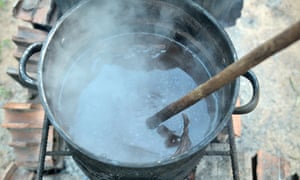
Ayahuasca being prepared near Pucallpa in Peru’s Amazon. Photograph: Emilie Lescale
DH: Just to pull back a second. If asked, “Are plants intelligent”, would your answer to that be, “Well, obviously, ayahuasca is a good example”?
DM: Yes, ayahuasca is intelligent. Yes, plants are intelligent. Not in the way that we are, but in some ways they’re much smarter than we are. It depends on how you want to define intelligence, right? If intelligence doesn’t require nervous systems, it it doesn’t require brains. . . if intelligence is when something reacts to their environment in a way that optimises its adaptation. Under that rubric plants are definitely intelligent – but not like we are. They don’t have brains and they work on different time-scales. This is part of a co-evolution we’re seeing. Co-evolution works on vast time-scales and ayahuasca has only been known to the West for less than 150 years. That’s a tiny slice of historical time. . . I think we’re only beginning to learn how to use ayahuasca, how we use it as a tool to wake up other people because, if you haven’t noticed, there’s a great deal of willful ignorance, at least, in the States, particularly with regard to environmental issues. Our politicians – at least, the Republican side of the equation – are proud of the fact they don’t know anything about climate science and they deny that it is even important. This is the attitude that needs to be changed. Stupidity is not going to solve our problems and yet they’re behaving as though it will. . . Are you familiar with the author Michael Pollan?
DH: Yes. Food Rules [the title of a book by Pollan].
DM: He wrote a wonderful article in The New Yorker. The Intelligent Plant. I think it really well summarises some of the issues right now that science is looking at, in terms of plant intelligence. I mean, a few years ago, you bring that up, you’d just be laughed at. Now, not so much. There’s really compelling evidence that plants are capable of planning, remembering, dealing with other plants and other things. . . Something else we’re learning about intelligence: you don’t have to have a brain. Brains are over-rated, you know. What you have to have is neural networks – very extensive networks of connections. If you look at eco-systems, if you look at forests, if you look at things on the macro-scale, these are tremendous, enormous neural networks. You can think of them from that perspective, like the connections between the roots of plants and the fungi in the soil. These are mycelial networks that can sometimes cover many miles. The biggest organisms in the world are actually mushrooms, believe it or not. Not psychedelic ones, as far as we know, but they’re mushrooms that grow in the forests in Oregon, places like this. They’re a cubic mile in extent. They’re 80,000 years old. Because the mushroom part is just the reproductive body. What’s really going on is the mycelial networks in the soil: the hyphae of the fungi is closely associated with the roots of plants, so it’s a very, very close symbiotic association. This is the intelligence of plants. This is the real thing. This is not just a romantic notion. This actually is real. It’s sometimes called the Gaia Hypothesis, originated by James Lovelock, a geophysicist and geochemist. . . His basic idea is that the entire biosphere is regulated, working together in such a way to keep it within these fairly narrow parameters that will support life.
DH: One more thing on plant intelligence. . . There was a book recently published, Brilliant Green, written by an Italian, Stefano Mancuso.
DM: He’s one of the leading researchers on this right now.
DH: I read the book by Mancuso, which really got me thinking. One of the things he doesn’t address is the idea that plants teach humans, that there is that kind of relationship.
DM: It’s a bit of a leap for him, but it is definitely where this is trending.
DH: Are you continuing with your scientific research into ayahuasca at the moment?
DM: Well, not so much, but I’m interested in moving in to the therapeutic area and I would like to do some structured chemical, clinical studies. But I want to do them in Peru. And I organize retreats in the Sacred Valley [in the Cusco region] at Willka T’ika.
DH: Can I just finish with one more question, Dennis? You say in “Human Destiny” [the article published in the Journal of Psychoactive Drugs] “You monkeys only think you’re running things.” And that’s quoted, as if someone else said it. Is that what your brother Terence said, or is that what you said at some point?
DM: It’s what the ayahuasca said.
DH: To who?
DM: Me.
DH: Ok. And what does it mean? Is the play on “You monkeys only think you’re running things?” or am I reading too much into it?
DM: When I took ayahuasca with the Uniao do Vegetal for the first time, in Sao Paulo in 1991, I had a very impactful ayahuasca experience in which I was shown photosynthesis at the molecular level. Being a plant biochemist I sort of understand these processes. It was extremely inspiring to me at the time. The take-home lesson was, “You monkeys only think you’re running the show.” It’s in my book [The Brotherhood of the Screaming Abyss].
Malaria tranmission peaks during and just after rainy season. Photograph: Paula Bronstein/Getty Photographs
Lode Schuerman, director of global healthcare affairs, GlaxoSmithKline (GSK), Rixensart, Belgium, @GSK
Governments ought to prepare for implementing vaccine programmes up coming yr: GSK and its partners have been operating for three decades to build a vaccine towards malaria. This year, GSK intends to submit a regulatory application to the European Medicines Agency for RTS,S – our malaria vaccine candidate. If the needed public overall health info, such as security and efficacy information from the phase III programme, is deemed satisfactory, WHO has indicated that a policy recommendation for the RTS,S malaria vaccine candidate is attainable as early as 2015, paving the way for selections by African nations with regards to huge-scale implementation of the vaccine by way of their nationwide immunisation programmes.
The vaccine needs to be accessible for totally free: When it comes to enabling entry to a malaria vaccine, we think that no child ought to be deprived of a malaria vaccine because their mothers and fathers can not afford it. If countries choose to employ the vaccine, it need to attain these who require it most: youngsters residing in malaria endemic areas in Africa.
Two issues want to happen so that cost will not be a barrier to access. 1st, in most African countries existing childhood vaccines are presented to children for totally free. We hope that this would also apply for a malaria vaccine. Second, funding mechanisms exist right now to guarantee that childhood vaccines are manufactured accessible to African communities, with restricted fiscal contributions from the countries, thanks to Gavi assistance. We hope that related mechanisms will be put in location for a malaria vaccine. Gavi has presently indicated that there is a reasonable situation to help the vaccine, presented it is approved by regulators, the WHO and individual nations.
Partnership is essential for tackling this arduous process: Malaria, HIV and TB are considered 3 of the most hard targets for vaccine improvement. Malaria vaccines also suffered from a lack of investment in product growth since the chance of failure is large and the economic returns are lower. This is why the PDP (product advancement partnership) model is so crucial assistance of organisations like the Gates Basis and engagement of partners like GSK is critical to our long term good results.
Rethink financing: The notion of money currently being manufactured offered primarily based on a long term return on investment, such as a reduce burden of condition and hence lowered healthcare costs, has been talked about, but this variety of mechanism is nevertheless extremely considerably in its infancy even in industrialised countries.
Do not overlook about Asia: Despite the fact that malaria incidence is still high in Africa, we cannot ignore the malaria endemic areas in Asia. A lot more than 70% of instances are asymptomatic and only possible to detect due to energetic surveillance. To move from handle to elimination methods even in lower endemic places in which there is large asymptomatic situations, vaccine is the only alternative for malaria eradication along with other present interventions
Barry Dyer, regional manager of medical data & analysis, Global SOS, London, Uk, @DrBazUK
Vaccines must be integrated into a nationwide campaign: Any candidate vaccine is going to have to be integrated into the national immunisation campaign so that the target population can be appropriately followed up, specifically for multi-dose regimens and booster doses. With a lot of malaria endemic countries facing serious limitations in the variety of health specialists, the communication of vaccine benefit to at-threat populations will no doubt rest on the shoulders of individuals presently delivering vaccines towards other infectious diseases. This is especially true for individuals in far more remote spots.
Mobile phones can spread the message: The prevalence of mobile phones in sub-Saharan Africa has currently been utilized to very good impact using SMS to talk the occasions and availability of vaccination stations in rural communities. I believe that GSK has partnered with Vodafone and other individuals in earlier programmes to improve vaccination uptake.
We never have the vaccine yet: I propose that if we had a malaria vaccine that displays 90-one hundred% protection, it would be launched globally in nations that are endemic for malaria. Lets not neglect that we do not have such a vaccine yet.
We can eradicate malaria, but we want investment: From a biomedical research point of view, it will be most important to uncover a malaria vaccine candidate that displays quite substantial efficacy towards malaria infection. This will avoid disease and death and also transmission. This kind of a vaccine is the most important instrument to eradicate malaria. History has shown that infectious ailments can be brought to extinction with vaccines (for example smallpox). Investment in research and advancement of a malaria vaccine stays critically important.
Read through the total Q&A here.
Go through a lot more stories like this:
• Melinda Gates on the 9 gamers shifting the vaccine game
• Vaccine growth: pondering out of the cold box
• DIY biotech: how to build oneself a low-price malaria detector
Join the local community of global development professionals and specialists. Turn into a GDPN member to get a lot more stories like this direct to your inbox