Day etiketine sahip kayıtlar gösteriliyor. Tüm kayıtları göster

30 Eylül 2016 Cuma

Suicide kills six men a day. Here are three strategies that can help stop it | Glen Poole

Suicide kills eight people a day in Australia, six of them men, and the latest figures released by the Australian Bureau of Statistics on Wednesday, revealed that male suicides have increased by 41% in the past decade, from 1,624 deaths a year in 2006 to 2,292 suicides in 2015.


Male suicide costs the economy an estimated $ 13.75bn a year. If we closed the gender suicide gap and reduced male suicide to the same level as female suicide, we could save the lives of more than 1,500 Australian men a year and save the economy an annual $ 9.3bn.


With stakes this high, why are we consistently failing to stop male suicide?


According to the American suicidologist, David Lester, all of the main strategies currently used to prevent suicide, are more effective at helping suicidal women. With two women a day dying by suicide, it’s vital we continue to develop our capacity to prevent female suicide and when three-quarters of Australians who kill themselves are men, we can and must more to stop male suicide.


Doing more doesn’t necessarily mean spending more. As Senator Penny Wong said in June, existing funding and resources are failing to reach men. Earlier this year, for example, the Black Dog Institute launched Lifespan, a $ 14.7m suicide prevention project which aims to reduce suicide by 21% with a range of strategies such as training GPs. Yet we all know that men make fewer GP visits on average and are less likely to benefit from such approaches. Even the most sophisticated suicide prevention initiatives, it seems, are failing to consider the gendered impact of their strategies.


It’s not that the suicide prevention sector is unwilling to think about gender. Lifeline’s CEO, Pete Shmigel, has spoken passionately about the need to tackle female suicide by understanding “what’s driving despair and what builds resilience so women are empowered in their emotional lives, as well as their political, social and economic lives”. Yet when it comes to talking about male suicide, he becomes oddly monosyllabic, saying things like “we have to do a better job, us blokes, of talking about our stuff”.


When it comes to suicide and gender, we’re great at pointing the finger at “blokes” for not talking, but don’t reflect on the irony that while many of us can talk freely and fluently about women’s issues, even smart, powerful men like Shmigel, appear to find talking about men’s issues a bit awkward and uncomfortable.


So what could we do differently? When writing the book, You Can Stop Male Suicide, I concluded that there are three simple, but by no means easy, strategies that can help us stop male suicide.


Firstly, we need to get better at tackling the social issues that men and boys face, rather than falling back on tired, ineffective stereotypes of stubborn, stoical blokes, who refuse to talk or get help.


Male suicide is a solution-based behaviour that some men turn to when dealing with problems they can neither fix, nor cope with. It is the product of a whole host of men’s issues we are collectively failing to solve, leaving too many distressed men viewing suicide as the best possible solution to the problems they face.


There are a number of social issues that affect men more profoundly in terms of suicide risk, including unemployment, relationship issues, being separated from their kids, being a victim of violence or abuse, alcohol and substance abuse, long-term illness, homelessness, social isolation and mental health disorders.


We also know that Aboriginal and Torres Strait Islander men and males who identify as gay, bisexual, transgender and intersex are at increased risk of suicide. Our failure to tackle men’s issues in general or consider how gender intersects with factors like culture and sexuality, is hindering our efforts to prevent male suicide.


Secondly, we need to get better at helping men. In Queensland, for example, the department for health has acknowledged that around one in four men who suicide, die within a week of receiving help from the health service. We need to stop saying “why are men so useless at getting help” and ask ourselves “why are we so useless at helping men”.


Finally, we need to shift the balance of suicide prevention work from generic approaches that are better at helping women and girls, to gendered approaches that are better at helping everyone, men and boys included.


Such a task requires progressive thinkers to look beyond the binary narrative of gender issues, that tells us that “women HAVE problems and men ARE problems”.


Every time we put the blame for male suicide on men not talking or getting help, we re-enforce unhelpful, macho beliefs that men should be strong, powerful and self-reliant.


A more evolved view of masculinity requires us to ask ourselves how we get better at helping men, how we get better at listening to men and how we get better at tackling the social issues that men and boys face, not least of which is the fact that suicide kills more than 2,000 Australian men a year.


  • Readers seeking support and information about suicide prevention can contact Lifeline on 13 11 14 or Suicide Call Back Service 1300 659 467.


Suicide kills six men a day. Here are three strategies that can help stop it | Glen Poole

28 Eylül 2016 Çarşamba

Linda turned up at A&E twice a day. A dedicated team now stops that

In a desperate effort to get relief for excruciating pain caused by osteoarthritis, curvature of the spine, and abdominal discomfort following surgery, Linda Douglas went to A&E twice a day.


The chronically ill 48-year-old, who lives near Sunderland, was “at the end of [her] rope” because of the constant pain and frequent hospital visits, and felt life “was not worth living”. That was until a new team of health and social care professionals took over her case and improved her quality of life from “six to 99%” in early 2016.


The team comprising her GP, consultant, community matron, social worker and paramedic worked together to come up with a care plan tailored to her needs. Now, she can largely avoid hospital and live a much more normal life, mainly because John, her husband and carer, has been trained to administer her daily medication. She says: “My life was driven by fear. I was terrified of being unwell and not being able to get the care I needed to control my pain. I don’t need to worry any more. It’s like a weight has been lifted.”


Douglas was helped thanks to the All Together Better partnership, part of NHS England’s Vanguard programme that was ushered in last year via chief executive, Simon Stevens’s Five Year Forward View blueprint policy. This same programme, which was expected to champion ways of providing better, more efficient care for heavy users of NHS services, has not been given as much money as originally hoped. According to Kerry McQuade, head of vanguard delivery in Sunderland, the £4.8m the partnership received in 2016/17 did not match the initial bid, although it received more than similar projects in other parts of the country.


Sunderland is one of the most deprived cities in England. On average, people born there start having health problems more than 10 years before those born in wealthier parts of the country, and die more than six years sooner.


The NHS is a big part of many lives there, but a small minority of long term sick, vulnerable or frail elderly locals account for a large proportion of health and social care resources. Six per cent of the population – those with long-term, multiple illnesses – are responsible for half of the city’s health spend. With the pressure on from NHS England to reduce costs by nearly £1bn by 2021 in the Northumberland, Tyne and Wear region as central funding is squeezed, the focus on the most needy patients makes sense.


Local GP Dr Fadi Khalil describes Sunderland’s scheme – one of 14 across England – as “massive” in scale. Covering nearly 300,000 patients at 50 GP practices across the city, it is focused on reducing hospital admissions via a series of initiatives designed to offer care that aim to keep patients well and cared for where they live.


In the past, despite the “best intentions in the world”, the most needy patients weren’t getting the best care because of a disjointed and fragmented set of services, says Khalil. Patients had to undergo repeat visits to A&E, repeat crisis admissions to hospital, and had to repeat their stories to a string of frontline primary, community, acute and social care staff.


This was not only bad for them but a tremendous waste of precious resources. Finally, under the vanguard programme, local authority and health commissioners and providers are being encouraged to work together with patients.


“In the past when someone [got] a chest infection, they would end up in hospital. Now we’ve got things in place that keep them at home where they’re safer and more familiar with their environment,” Khalil says. Such patients, who have been identified by their GPs as at risk of rapid onset of health problems, have access to their GP, and a nurse or paramedic out of hours who can visit them at home, and who make regular check-ups to prevent urgent, unplanned visits to hospital.


Five teams, created late last year, are at the core of Sunderland’s scheme, with community matrons, district nurses and social workers all were moved into the same office.


It was a shock to the system at first and “initially quite daunting”, according to adult social care team manager Rachel Daurat, particularly to the social workers who had to move out of their dedicated offices at Sunderland city council.


She says health and social care have traditionally worked to entirely different agendas. However, working together on a patient case has meant they have been able to learn from each other’s perspectives and ensure different providers are working in harmony to improve circumstances for those receiving their care.


Sue Hughes, a district nurse taking part in the initiative agrees: “We are just a team now,” she says. “We understand the pressures we each face day to day and we support each other. It’s hard to ever imagine us going back – and I don’t think it could work.”


Join the Healthcare Professionals Network to read more pieces like this. And follow us on Twitter (@GdnHealthcare) to keep up with the latest healthcare news and views.


Linda turned up at A&E twice a day. A dedicated team now stops that

29 Ağustos 2016 Pazartesi

Abortion in Ireland: ‘Silence is breaking 12 hearts a day’

Ireland’s abortion regime has been responsible for a litany of tragedies in recent years. The death of Savita Hallapanavar, denied a life-saving abortion during her miscarriage; the state-sponsored abuse of Miss Y, a suicidal teenage asylum seeker and rape victim, forced to carry her pregnancy to viability and deliver by C-section; a brain-dead woman kept alive, effectively as an incubator, against her family’s wishes. And there are plenty more mundane, yet nonetheless heartbreaking, stories of approximately 12 women a day who travel to the UK to access abortion services.


In the last year, something fundamental has shifted. The Irish pro-choice movement is getting loud. Actors and writers including Tara Flynn, Helen Linehan and Susan Cahill have publicly shared their abortion stories, bravely breaking taboos. An “abortion bus” flouted the law to tour Ireland distributing medication. Comedian Gráinne Maguire had us all tweeting details of our periods to the taoiseach, Enda Kenny. Activist Anna Cosgrave designed distinctive Repeal jumpers, so that on any given day in Dublin you will see supporters with their commitment to repealing the 1983 eighth amendment to the constitution emblazoned across their chests. That’s just the tip of the iceberg.


The last two weeks have seen some of the most extraordinary activism yet in the campaign to repeal the eighth amendment. Under the Twitter handle @twowomentravel, two friends live-tweeted their journey to England so that one of them could access an abortion, turning a personal crisis into a powerful political action. Answering my questions, on the condition that her anonymity was preserved, the companion explained that while planning the journey her friend decided she wanted something good to come from it for Irish women.


“What’s the alternative?” she asks, “Silence? Silence is breaking 12 Irish hearts a day. Silence is trapping migrant women in desperate situations, silence has the blood of Savita on its hands, silence is the shape of Miss Y’s devastation. Silence has devastated the women and girls of Ireland, but now it’s time to talk, and get real.”


They certainly got real. The pictures they shared were striking in their ordinariness: boarding an airplane in the cold grey of dawn; views from taxi windows; waiting rooms with magazines; a basic hotel. They tagged Kenny in each. The most controversial image is a lightly bloodstained sheet, which they felt was important to show: they were certainly not the first women to face a long trek home, bleeding and sore.


“The anti-choice brigade have been all over that photo,” the friend tells me. “The realities of women’s bodies have been glossed over for too long. We bleed, and we birth, and it’s not pretty, but that’s life, and that reality needs to be brought to the fore. There’s no realism in the philosophical focus of the anti-choice side. They can speculate until the cows come home about when life begins. In fact, they have speculated so loudly and for so long that real lives of women and girls have ended unnecessarily.”


When #twowomentravel returned, 48 hours later, they had tens of thousands of Twitter followers and were making international headlines. “We could never have expected the response we received. It was surreal. Where do you even begin thanking people for standing with you in that situation?”


They believe that Kenny saw their tweets: “He stopped posting updates on the Olympics, which he had been doing regularly,” she says. In her view, Kenny going offline speaks volumes. In any case, they are not surprised by his silence.


“He has no compassion, no interest in the lives of women. There are more than 100,000 women who went before us. He could have listened to any number of them, and he didn’t. He owes over 3,000 women a year a whole lot of money and remorse.”


The #twowomentravel hashtag was brimming with gratitude and solidarity. But there were also, inevitably, anti-choice pundits aggressively shaming the women. “We were showing photos of waiting rooms, taxis, flights. In response, we got bombarded by violent rhetoric accusing both of us of murder, bombarded with pictures of mutilated foetuses.”


Perhaps the strangest criticism came from detractors who refused to believe that the anonymous women existed. Seemingly, even though a dozen women a day make this journey, the notion that one of them would refuse to be shamed into silence defies all logic.


The friend I interview is scathing of such critiques: “Nobody has to believe us. Our dignity does not rely on that. But I will say this: if you are sceptical of an eloquent, salient, honest and cutting telling of the travesty that faces so many Irish women, you are a sexist. If you doubt the ability of women to tell their stories with ferocity and confidence, even in crisis, you are a sexist. If you doubt us because we have succeeded in defying you, you are a sexist. We are not meek, and we owe no explanations.”


Right now, the friends are processing everything that has happened – one healing and taking time out following her abortion, the other dealing with media. They intend to keep fighting. “We have to break the hold of silence. We can no longer whisper. We have been failed for too long. Now is the time to be loud.”


Abortion in Ireland: ‘Silence is breaking 12 hearts a day’

11 Ağustos 2016 Perşembe

"A few spots cast a cloud over my day": male teens on secret body worries

Although body image issues are thought to mainly affect young women, young men also worry about their looks – and more so than you might imagine. A new survey of 1,000 primary and secondary students in the UK found that 55% would consider changing their diet to look better, and 23% said they believed there was a “perfect male body”. It’s thought that pressure to look good comes from friends, celebrities, advertising and social media.


Related: Male teens and body image: what are your biggest fears and insecurities?


Below, four male teenagers and one young adult reveal their biggest body worries. Share your thoughts and comments (or indeed your own secret fears) below the line.


James, 19, Cornwall: ‘I don’t think I’ll ever be satisfied with my body’


I am most insecure about my skin and body. During my teenage years I spent hours looking in the mirror, thinking about what I hate and must improve on. I want to be more muscular, which requires eating more, but I’m also petrified of getting fat. Every bite becomes an existential matter, and I worry about being tipped over the edge into obesity (I’m 5ft8 and weigh roughly 138lbs). My skin is another root of my self-loathing. I’m constantly worried about bumps and spots and blackheads and obsess over the smallest of blemishes, washing my face sometimes more than 10 times a day. It really tears me apart.


I don’t think young men necessarily worry about their body image more than girls, but the problem is that we don’t talk about it. All my body worries really affect my mood. It sounds so dramatic but a grey cloud can be cast over my day because of a few spots.


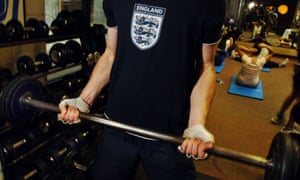
Boy lifting weights


‘I worry about making a fool of myself at the gym, so work out at home instead.’ Photograph: Linda Nylind for the Guardian

The past couple of months have been defined by diet and exercise and a will to get fit. But I also have a weird paranoia about joining a gym. I worry about making a fool of myself, so have gym equipment I use at home instead. Now, I work out pretty much every night. I’ve done hours of research on the best exercises and correct diet for muscle growth, but still don’t think I will ever be fully satisfied with the way my body looks.


William, 20, Essex: ‘Body image is a growing problem among young men’


Until my late teens I was overweight and although I am now (nominally) a normal weight for my height, I still feel fat and unattractive. I hate the way I look, whether I’m clothed or naked.


The ubiquity of internet porn has opened up a whole new world of insecurities around penis size


William


I think body image issues among young men are a growing problem. Advertising has made a big difference, for example the infamous Levi’s jeans ads that used a “perfect” male body to sell denim. Levi’s ads from the 1980s to me seem like a turning point, the first time that male sexuality and body image were used to sell us something (although practically any ad for men’s clothing or perfume now does this). These ads make me feel inadequate.


The ubiquity and extremity of internet porn has also opened up a whole new world of insecurities around penis size for men. Add that to an aggressively macho sports culture that worships strength and often denies men a chance to express their problems and you have the perfect storm for bottled-up anxiety, poor self-image and body dysphoria.


Craig, 17, Leicester: ‘Young men don’t talk about their own bodies in a negative way because they could get bullied’


I am sure a lot of men worry about their bodies, because we are expected to be muscular and some aren’t. Thinner men also think that they won’t get a date and some try to bulk up. During college years, young men always compare themselves to others and normally those who are classed as “fit” by girls.


I sometimes look at my own body and question whether it is good enough. I know I’m not as thin as I would like and I don’t have time to go to a gym (and wouldn’t because there are too many people there). I often feel embarrassed to take my top off, especially with friends because I don’t know what they will say, so I try to keep my tops a little baggy. Young men don’t talk about their own bodies in a negative way because they could get bullied, and younger men, especially, see their issues as weaknesses for others to exploit.


Mike, 19, Nottingham: ‘Young men are obsessed with body image’


I have always thought I was scrawny, that my shoulders are not broad enough and my upper arms not muscly enough. I could never go swimming or topless on a beach because I just don’t look good. I also worry that I’m not tall enough and that my skin is too pale.


Young men worry about body image every bit as much as young women do


Mike


Young men are obsessed with body image and worry about it every bit as much as young women do. Their worries can sometimes be more acute because there is so little debate about how images of “perfect” male bodies are used by the media. Whereas most girls are made aware that they are often unrealistic, there is no similar attempt to educate young men about body image. I am constantly anxious about the way I look in public: worries about being scrawny mean I can’t wear T-shirts or any close-fitting clothes. I feel uncomfortable without a jacket on to shield me, so I fear hot days when I have to leave the house without one. I also find it difficult to interact with girls without feeling like they are judging me. The way I appear feels like the most important thing in my life and one I can’t get right.


Tony, 18, Leicester: ‘My scrawny physique has led to me being called anorexic or compared to a heroin addict’


Boy staring out of window.


‘Comments about my body have made me insecure about ever taking my top off at the beach or poolside.’ Photograph: Noel Hendrickson/Getty Images

Everyone has always found great amusement at being able to form a ring around my wrists between their thumb and little finger. My scrawny physique has led to me being called anorexic, while others compare me to a heroin addict. All these comments have made me insecure about ever taking my top off at the beach or poolside. Worse still is that men often seem to size you up and then treat you accordingly. At times I feel like a non-entity. Everyone assumes that a two-seat sofa will fit three when I am one of the two already on it. Girls can be no different. They flock to the muscular men without ever giving boys my size a second glance. I am often told that it’s more a matter of confidence, but having a skinny physique means I don’t have any.


There seems to be a deficit of sensitivity in most male groups. It is always about banter and bravado. If one of us were to spontaneously open up there would be a tsunami of criticism and jokes.


  • Some names have been changed.


"A few spots cast a cloud over my day": male teens on secret body worries

26 Haziran 2014 Perşembe

Juice could no longer count towards "five a day"

Officials will publish their new recommendations early subsequent year.


Earlier this yr, Prof Susan Jebb, the Government’s chief weight problems advisor, explained she would assistance getting rid of fruit juices from “five a day” and encouraging folks to eat a piece of fruit as an alternative.


Investigations by the Telegraph have recognized some smoothies with at least 3 times the new advised limit, which equates to around six to 7 teaspoons of sugar for females, and seven to 8 teaspoons for men.


A lot of fruit juices sold by major manufacturers offer 6 to 7 teaspoons per serving – that means the day-to-day limits would be reached with no any other sugar in the diet program.


Health officials also pledged to get on a “supersize culture” which has seen portion sizes soar above the years.


Public Overall health England mentioned it would seek out modifications from companies so that smaller sized portions of chocolate bars and fizzy drinks turn out to be the “default” on provide, and will draw up measures to restrict promotion of unhealthy food items.


Officials are contemplating a raft of measures, like taxes on sugary food items, restrictions on advertising, like on the web, and bans on “upselling” of products – so that customers are asked regardless of whether they want to “supersize” their purchase, or add an extra item, this kind of as chocolate or cake.


Neighborhood authorities could introduce bans on vending machines selling unhealthy snacks in leisure centres, underneath the proposals.


Juice could no longer count towards "five a day"

22 Şubat 2014 Cumartesi

It really is Planet Encephalitis Day. But to survivors like me today is Look After Your Brain Day | Simon Hattenstone

human brain encephalitis

We give little imagined to hunting soon after the brain, despite spending much of life attending to the rest of the physique. Photograph: Sebastian Kaulitzki/Alamy


When I was a minor boy, I had a sense of adventure. Not a huge or dramatic sense, just in an daily way. My mother and father purchased me a mustard-coloured Chopper bike for my ninth birthday and I loved undertaking errands for them – delivering cakes to elderly aunts, popping into outlets, making myself valuable. I never deemed just what it took to complete this kind of simple chores – balance, sense of route, hearing, fitness, vision, memory. Like most of us, I took my brain for granted.


On I rode for the rest of that year, till I was stung by a bee and fell off my bike. I suffered a horrible lower to my knee when I was handled in hospital a stone was left in the wound, it went septic, and I contracted encephalitis. I did not ride that bike yet again for near on three many years.


Nowadays is Globe Encephalitis Day, the perfect time to think what it signifies to believe, and to thank your brain for all that it does for you with out a 2nd considered (so to talk). Encephalitis is inflammation of the brain caused by infection (generally viral) or by an inappropriate automobile-immune response to the brain. There are now 500,000 men and women impacted throughout the world each and every yr, like up to six,000 in England. In 2010, encephalitis induced an estimated 120,000 deaths.


Soon after falling off the bike and waking up one day with a large temperature, a stiff neck and a horrific discomfort drilling via my eyes, I did not go back to college for two years, and it was three years prior to I was back in a regular school. When not in hospital, I lay in bed in a dark area, curtains shut, windows closed, lights off, hermetically sealed from the planet. I did not see close friends, did not listen to music, did not observe Television.


I underwent an severe personality alter, wrote poems about the electrical soreness going through my brain, could not see straight, usually felt sick, grew to become anorexic, received pneumonia into the bargain since my immune program broke down, could not piss correctly, could not shit correctly, couldn’t quit hiccupping for months, grew to become angry and surly, had a continuous high temperature, developed this kind of a severe sore throat that it resulted in a hole in my palate, thought I had gone mad, was put on antidepressants, and sent to a psychiatrist who hated the globe with a passion. On best of this the medical doctor speculated that my mother was struggling from Munchausen by proxy, and that I was a victim of her issue.


I was one of the fortunate ones – I was left with mild depression and constant headaches for many years. The unlucky ones have been deaf, disabled, epileptic, amnesiac, aphasic or dead.


Encephalitis is this kind of a cruel condition because it is frequently misdiagnosed – even right now. And that delay in diagnosis can have fatal consequences. Once more, I was fortunate – when I was accurately diagnosed much more than a year after turning out to be sick, my brilliant brain surgeon stated I would created history – getting survived so extended with a minimal-grade edition of encephalitis with no popping my clogs. As for the medical doctor who informed me I was a malingerer and that it was all my mother’s fault – nicely, we decided it was time to appear for a new family members GP.


Forty years on, I appear at my encephalitis as enriching. Never get me wrong, I’m not thankful for it – that truly would be pushing it. But I do think that when I ultimately came out of it and returned to the planet, I did so as a entirely diverse individual. As soon as, a good friend read through my palm and was freaked out when she found I had two daily life lines – and that is how I felt, that I would had two lives for the price tag of 1. There was me before encephalitis, and me afterwards, with extremely little connection amongst the two.


My mother tells me the pre-enceph Simon was a pretty lad, but to be trustworthy I don’t keep in mind significantly of him – he was clever, conscientious, untroubled. The individual who emerged was a lot more difficult – chippy, politicised, emotional, with a useless sense of route.


Until not too long ago I believed I was a freak. Who else has two lives? But a handful of years in the past I became a patron of the Encephalitis Society and identified that virtually all the survivors divided their lives in two. What I also discovered is that, regardless of their struggling, survivors emerge with a new respect for the brain – specially a healthier one. We commit so significantly of our lifestyle attending to our bodies – priming , primping and pampering, typically at substantial cost – and shell out so little thought to looking after our brains.


Today is the very first World Encephalitis Day, and probably the greatest thing we can do to acknowledge it is end for a 2nd to shell out homage to the wonder that is the human brain, and think about how very best to nourish it. Wholesome diet regime, fresh air, preserve match, ample sleep, de-pressure – none of this is rocket science. Creating on the Encephalitis Society web site, Gabby Timpson, a former nurse, says it wasn’t right up until she received unwell that she realised just how significantly care her brain needs. “We need to remember our brains as well as our bodies,” she writes. “They can be very fragile and want nurturing and tender loving care, so go simple and be gentle on yourselves.” It’s a lesson we can all discover.


It really is Planet Encephalitis Day. But to survivors like me today is Look After Your Brain Day | Simon Hattenstone