turned etiketine sahip kayıtlar gösteriliyor. Tüm kayıtları göster

23 Ocak 2017 Pazartesi

Bad fad – Ruby Tandoh on how clean eating turned toxic

‘I think we have an obsession with diets. With fad diets.” This was Ella Mills, the food writer behind Deliciously Ella and bestselling author of arguably the most successful fad diet cookbook series in recent years. Her eponymous first book was the UK’s fastest-selling debut cookbook ever, and she has since gone on to launch two central-London delis, create her own range of “energy balls” and even release a skincare range in collaboration with Neal’s Yard. Speaking on last Friday’s Today programme, the blogger was keen to distance herself from so-called “clean eating” and, cleverly, from the crescendo of criticism surrounding the trend.


“I’ve never described myself as ‘clean’,” said Mills, nimbly shadow-boxing with a litheness that probably shouldn’t surprise us, coming from a 25-year-old yogi. She described her frustration at being dubbed the “queen of clean”, and was quick to point out the moralistic overtones that language such as “clean eating” ascribes to food. It was a smart move, preempting the backlash that would come from that evening’s premiere of the BBC documentary Horizon: Clean Eating – The Dirty Truth.



Ella Mills was dubbed the queen of clean, but now she shuns the term.


Ella Mills was dubbed the queen of clean, but now she shuns the term. Photograph: REX/Shutterstock

It wasn’t long ago that clean eating seemed untouchable. This new philosophy, popularised by bloggers such as Mills, the Hemsley sisters and Amelia Freer, was roughly the idea that we should eat less processed food and more fruit and veg. It was about doing away with junk food, and staging a return to a more thoughtful way of eating. So far, so sensible, you might think. Although not all of the bloggers used the exact phrase “clean eating”, their approaches fell into step with its core beliefs: slimness is health, health is everything, and – crucially – diets are bad.


Cannily dodging the restrictive and judgement-laden overtones of the dreaded D-word, this generation of cooks was vocal in eschewing old-fashioned diet terminology. The Hemsley sisters’ grain-free manifesto, The Art of Eating Well, wasn’t a diet book, then, but a way to achieve some kind of seductively slinky “wellness”. Healthy-eating guru Madeleine Shaw encouraged us not to count calories, but to “get the glow”. “This isn’t a diet for me; it’s a lifestyle,” Mills told us. It was a world of beauty, happiness and self-love, all bundled lucratively together under the vague banner of wellness. It was worth a fortune.


With their profits and media presence blossoming, however, it wasn’t long before these self-appointed health gurus came under scrutiny. The Hemsleys were incriminated by their support of Dr Natasha Campbell-McBride’s gut and psychology syndrome (Gaps) diet which is as credible as a fortune teller on Southend Pier.The sisters had praised the doctor’s book – Gaps: Natural Treatment for Autism, ADD/ADHD, Dyslexia, Dyspraxia, Depression, Schizophrenia – in a feature on their publisher Penguin’s website about the five books that shaped their food philosophy. (The article in question has since been deleted.)


Natasha Corrett, author of the bestseller Honestly Healthy, was embarrassed last week by the revelation that the inspiration for her alkaline diet, Dr Robert O Young, is facing jail time for practising medicine without a licence. Horizon revealed that Young took more than £62,000 in payment from the family of cancer patient Naima Houder-Mohammed in return for a “cure” of injections of bicarbonate of soda solution. Houder-Mohammed’s condition worsened during her time in Young’s care and she died at 27. Alongside such outright crooks and villains as Young, the hapless Mills doesn’t look so bad.



The Hemsley sisters have been linked to the controversial Gaps diet.


The Hemsley sisters have been linked to the controversial Gaps diet. Photograph: Channel 4

With the wellness movement coming under fire, it is no surprise that the big names in clean eating are beginning to worry. Across dozens of perfectly glowing, smooth-skinned brows, a glimmer of sweat is beginning to prickle: it’s time to rebrand, or duck out.


As in any argument where money and pride are at stake, it has become a game of semantics. “What even is clean eating after all? I never said I was clean! I’m about purity, not eating clean!” It’s Ross and Rachel going on a “break” all over again. The only way to stay afloat is redefine. When the Hemsley sisters spoke out against clean eating at the launch of their Good to Go food pop-up in Selfridges earlier this month, they were doing just that. “It is a media-coined term,” Jasmine Hemsley insisted. “We have never, ever used the phrase ‘clean eating’.”


This shape-shifting shouldn’t come as a shock. The big players in the wellness movement are just following the principles that drove wellness into the mainstream in the first place: they’re putting a bright new face on the diet industry. When a fad wears thin, you give it a new name. It’s the logic that sent the wholefood 70s careering into the lean and low-fat 80s. It’s how the Atkins diet shed its tired skin to become Wheat Belly, Grain Brain and the multi-million dollar renaissance of low-carb cooking. It’s the constant ebb and flow of diets, precarious health claims and a trend-driven food press, all underpinned by an unfaltering disdain for fat bodies.


Behind the pretty public face of wellness is a far bigger beast. With the exception of fitness guru Joe Wicks, the overwhelming majority of wellness personalities are young women, and it is these women who rise to and eventually fall from grace in the public eye. And yet the machinery of these fads is constructed largely by a small group of men. These are the doctors – self-styled or otherwise – who spin questionable academic studies, patchworks of data and sometimes little more than fanciful anecdotes into best-selling diet industry manifestos.
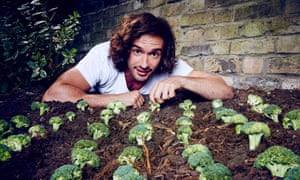


With the exception of fitness guru Joe Wicks, the overwhelming majority of wellness personalities are young women.


With the exception of fitness guru Joe Wicks, the overwhelming majority of wellness personalities are young women. Photograph: Channel 4

In contrast to the wellness cooks on our TV screens, these men have credentials to lend weight to the claims they make. There is cardiologist William Davis, whose bestseller Wheat Belly set into motion the anti-grain brigade. There is also “renowned neurobiologist” David Perlmutter, a dull facsimile of Davis. His cynically samey Grain Brain, another low-carb polemic. In a touching display of tenderness, Dr Michael Greger named his 2016 diatribe against junk food How Not to Die. If the science behind wellness is suspect, the blame falls at the feet of these men.


That is not to say that wellness personalities are undeserving of the criticism they face. Those who peddle these nutritional myths ought to be held to account, no matter where in the food chain of bullshit they stand. But hitting out at the salespeople of this pseudoscience without looking to the producers is like buying stocks and shares in the wizard of Oz. It could be that these young women – all perky, pretty and privileged – are the easy targets of our lazy misogyny, or simply that it is easiest at which to level our ire at the most visible proponents of the wellness fad. Either way, it is clear that, unless it is hit at its core, the movement will trundle on, evolving into new and noxious forms of diet culture in different guises.


A share of the blame lies with publishers, too. At a time when money is rare in publishing, editors are digging deep to offer book deals to wellness gurus, no matter the credibility of their claims.



Teenage ballerina Saskia Gregson-Williams’s debut endorsed a needlessly restrictive diet.


Teenage ballerina Saskia Gregson-Williams’s debut endorsed a needlessly restrictive diet. Photograph: PR

In 2015, Ebury Press published Naturally Sassy by then 17-year-old ballerina and food blogger Saskia Gregson-Williams. The meat-, dairy- and wheat-free cookbook was her debut. She describes having found comfort by learning to cook when she was living away from home as a young teenager while studying at the Royal Ballet School. It was a route out of fixation on the low-fat, low-calorie diets that the other dancers espoused. There is no doubt that Gregson-Williams believes in the healing powers of clean eating. What is less clear is how the publishers were able to justify endorsing a needlessly restrictive diet, from a ballerina (a profession notorious for fostering eating disorders) and then marketing it to impressionable teenage girls.


There are many toxic layers to the wellness phenomenon. It is no coincidence that the faces of wellness are unfailingly young and thin, overwhelmingly white and all the talk of purity against that backdrop of privilege leaves a rather unsavoury taste in the mouth. Wellness is also the unprincipled driftings of the publishing houses with whatever currents lead them to a quick buck. It is the evangelism of wellness bloggers, picking up and shrugging off whatever label will give them the most page views. At its core, it is idea that food is medicine.


It all sounds silly when the fictions of wellness are brought together: gluten is poison; sugar is crack; acidity is cancer; terminal illnesses are no longer terminal. But these sensational claims reach us by insidious means, and those who suggest we ought to just use some common sense underestimate just how muddled the truth about food really is. So, many of us will, at some point or another, turn to the false prophets of the diet industry to cure the ills that our health service is too stretched and too underfunded to deal with. We might become evangelists for wheatgrass for a while, or sing the praises of some superfood that “cured” a dodgy knee. We might laugh these fads off, in time, just as the wellness personalities slip out of their skins and into the next big craze.


We have an obsession with diets. With fad diets. There is no miracle cure, but there is a way to push back: call them as you see them. Wellness is a fad diet. Clean eating is a fad diet. If it promises salvation on a plate, it is a fad diet. Hold the wellness gurus accountable, let them know that their diet is a diet. Make them eat their words.


Five wellness superfoods that aren’t actually that super (according to dietitian Helen Bond)


Coconut oil “One of the few plant oils that is loaded with saturated fat – it has more saturated fat than butter. While advocates argue that it doesn’t have the same detrimental impact on blood cholesterol levels, it still raises total and LDL (bad cholesterol) in our blood.”


Matcha powder “No health claims have been approved for matcha or green tea by the European Food Safety Authority, so it cannot be advertised as having any proven health benefits.”


Coconut water “A 200ml glass would provide the same amount of potassium as one medium banana. Tap water will hydrate you just the same and it is calorie, sugar and cost free.”


Goji berries “The antioxidants in goji berries don’t seem to arrive in our circulation in high enough quantities to have an effect. Plus, the berries are not as high in vitamin C as other fruits.”


Spirulina “This is a rich plant source of vitamin B12, usually only found in animal foods – but spirulina is only eaten in very small amounts, so it won’t contribute much to your overall vitamin B12 intake and it is not absorbed well by the body.”


In numbers


£627m The value of the free-from market in 2016, according to market research firm Mintel. Growth of 52% is predicted over the 2016-21 period, to see the market reach £952m.


27,595,369 The number of posts on Instagram with #cleaneating


£3tr Estimated value of the global wellness economy in 2015


495,191 Books sold by Ella Mills, AKA Deliciously Ella


219,158 Books sold by Amelia Freer, author of Eat. Nourish. Glow


186,477 Books sold by Jasmine and Melissa Hemsley, authors of The Art of Eating Well


122,123 Books sold by Madeleine Shaw, author of Get the Glow: Delicious and Easy Recipes that will nourish you from the Inside Out, and Ready, Steady, Glow; Fresh, Fast Food Designed for Life


100, 247 Books sold Natasha Corrett and Vicki Edgson, authors of Honestly Healthy: Eat with Your Body in Mind, the Alkaline Way


Bad fad – Ruby Tandoh on how clean eating turned toxic

3 Ocak 2017 Salı

Sharp rise in number of patients turned away from A&E

The number of patients being turned away from A&E and sent to other hospitals is at a record high, figures show, revealing the huge pressure the NHS faces this winter.


More patients arriving by ambulance were redirected to other hospitals this year compared with the same period over the last four years. Such incidents are referred to as diverts. The NHS has previously said that diverts caused by lack of physical or staff capacity should be a last resort.


Guardian analysis of NHS England data showed that from 2 to 23 December the number of patients forced to go elsewhere increased by 73% to 95 compared with the previous year, when the number was 55. There were 60 incidences in 2014 and 16 in 2013 – 2012 figures could not be included because of how they were recorded.


The rising trend has prompted concern that patients’ health could suffer as a result of the delay to them receiving medical attention due to diverts.


The chief executive of the Patients’ Association, Katherine Murphy, said ambulance diversions meant it took longer for patients to get care. “When someone needs access to care they need it. Diverting isn’t an answer to providing a safe system,” she said.


Murphy added that there was huge pressure on hospitals now all year around, not just in the winter period. She put this down to the fact that patients often stayed in hospital longer than necessary because of inadequate social service provision. This meant those who needed an acute bed often had to go to another hospital.


An NHS England spokesperson said: “Common sense means that ambulances spread the emergency load between neighbouring hospitals, including a very small number of diverts – 19 [in the week before Christmas] compared with an average of 20 a week over the past year. While hospitals are under pressure they have generally been coping with the increased number and severity of winter illnesses.”


While the NHS says that there were only 19 in the week leading up to Christmas, there were 36 diverts from 12 to 18 December, with the weekly average up on last year.


Dr Mark Porter, the British Medical Association chair of council, said: “Every one of these diverts is a patient unable to get the treatment they need from an overstretched NHS, deprived of resources and failing to keep up with rising demand. Frontline staff are under serious pressure and are working flat out, but the system can’t cope with the number of patients needing to move through acute care, as it is congested.


“We can only get to grips with pressure on A&E if every part of the system – from general practice to social care – is adequately funded, supported and working well.”


In October the performance of hospitals against the crucial target of 95% of A&E patients being treated and either admitted, discharged or transferred within four hours was the fourth worst since records began.


The NHS is on track to have its most difficult winter ever. A total of 785,883 patients – up from 613,971 last year – could end up waiting more than the supposed maximum four hours for A&E care in the December to February months. This is based on a 28% year-on-year rise in such delays seen each year between 2010-11 and 2015-16, according to Incisive Health, a specialist health communications and policy firm.


Meanwhile, the number of cases of norovirus is at a five-year high. Data from Public Health England shows the bug had reached 2,435 this season, 12% more than the average for the same period over the last five years.


The shadow health secretary, Jonathan Ashworth, said A&Es up and down the country were under pressure. “Not only do we now know the scale of diverts, we also know that over recent months hundreds of thousands of patients have been forced to wait longer than four hours in A&Es. As well as this, more and more patients are increasingly waiting on trolleys.”


Sharp rise in number of patients turned away from A&E

28 Eylül 2016 Çarşamba

Linda turned up at A&E twice a day. A dedicated team now stops that

In a desperate effort to get relief for excruciating pain caused by osteoarthritis, curvature of the spine, and abdominal discomfort following surgery, Linda Douglas went to A&E twice a day.


The chronically ill 48-year-old, who lives near Sunderland, was “at the end of [her] rope” because of the constant pain and frequent hospital visits, and felt life “was not worth living”. That was until a new team of health and social care professionals took over her case and improved her quality of life from “six to 99%” in early 2016.


The team comprising her GP, consultant, community matron, social worker and paramedic worked together to come up with a care plan tailored to her needs. Now, she can largely avoid hospital and live a much more normal life, mainly because John, her husband and carer, has been trained to administer her daily medication. She says: “My life was driven by fear. I was terrified of being unwell and not being able to get the care I needed to control my pain. I don’t need to worry any more. It’s like a weight has been lifted.”


Douglas was helped thanks to the All Together Better partnership, part of NHS England’s Vanguard programme that was ushered in last year via chief executive, Simon Stevens’s Five Year Forward View blueprint policy. This same programme, which was expected to champion ways of providing better, more efficient care for heavy users of NHS services, has not been given as much money as originally hoped. According to Kerry McQuade, head of vanguard delivery in Sunderland, the £4.8m the partnership received in 2016/17 did not match the initial bid, although it received more than similar projects in other parts of the country.


Sunderland is one of the most deprived cities in England. On average, people born there start having health problems more than 10 years before those born in wealthier parts of the country, and die more than six years sooner.


The NHS is a big part of many lives there, but a small minority of long term sick, vulnerable or frail elderly locals account for a large proportion of health and social care resources. Six per cent of the population – those with long-term, multiple illnesses – are responsible for half of the city’s health spend. With the pressure on from NHS England to reduce costs by nearly £1bn by 2021 in the Northumberland, Tyne and Wear region as central funding is squeezed, the focus on the most needy patients makes sense.


Local GP Dr Fadi Khalil describes Sunderland’s scheme – one of 14 across England – as “massive” in scale. Covering nearly 300,000 patients at 50 GP practices across the city, it is focused on reducing hospital admissions via a series of initiatives designed to offer care that aim to keep patients well and cared for where they live.


In the past, despite the “best intentions in the world”, the most needy patients weren’t getting the best care because of a disjointed and fragmented set of services, says Khalil. Patients had to undergo repeat visits to A&E, repeat crisis admissions to hospital, and had to repeat their stories to a string of frontline primary, community, acute and social care staff.


This was not only bad for them but a tremendous waste of precious resources. Finally, under the vanguard programme, local authority and health commissioners and providers are being encouraged to work together with patients.


“In the past when someone [got] a chest infection, they would end up in hospital. Now we’ve got things in place that keep them at home where they’re safer and more familiar with their environment,” Khalil says. Such patients, who have been identified by their GPs as at risk of rapid onset of health problems, have access to their GP, and a nurse or paramedic out of hours who can visit them at home, and who make regular check-ups to prevent urgent, unplanned visits to hospital.


Five teams, created late last year, are at the core of Sunderland’s scheme, with community matrons, district nurses and social workers all were moved into the same office.


It was a shock to the system at first and “initially quite daunting”, according to adult social care team manager Rachel Daurat, particularly to the social workers who had to move out of their dedicated offices at Sunderland city council.


She says health and social care have traditionally worked to entirely different agendas. However, working together on a patient case has meant they have been able to learn from each other’s perspectives and ensure different providers are working in harmony to improve circumstances for those receiving their care.


Sue Hughes, a district nurse taking part in the initiative agrees: “We are just a team now,” she says. “We understand the pressures we each face day to day and we support each other. It’s hard to ever imagine us going back – and I don’t think it could work.”


Join the Healthcare Professionals Network to read more pieces like this. And follow us on Twitter (@GdnHealthcare) to keep up with the latest healthcare news and views.


Linda turned up at A&E twice a day. A dedicated team now stops that

12 Eylül 2016 Pazartesi

How family tragedy turned Roald Dahl into a medical pioneer

In 1990, I was a junior doctor at the John Radcliffe hospital in Oxford. I had finished all my training, and was now starting my first year on the wards. Roald Dahl was one of my patients. I can still remember the night I first met him.


It was nearly midnight and the lights were low. I was working away on the ward computer when I became aware of this large figure wandering slowly nearer, casting a great big shadow. I carried on tapping, concentrating. The restless patient walked past the nurses’ station, where I was sitting, and a few moments later wandered back again. He must have come past three or four times, each time a little slower, peering over my shoulder, trying to see what I found so absorbing. Eventually he stopped.


“What are you doing?”


It was a deep, booming voice. I looked up to see a giant of a man towering over me. He was wearing a silk nightshirt, and was wrapped in a huge dressing gown. He had large ears and twinkling, inquisitive eyes. It almost felt as if The BFG was peering down at me. But it wasn’t the Big Friendly Giant. It was Roald Dahl himself.


‘Words is oh such a twitch tickling problem’ … The BFG


‘Words is oh such a twitch tickling problem’ … The BFG. Photograph: AP

We started chatting. I think Dahl was intrigued. Being a world famous author, he was used to people fussing and fawning over him, yet here was someone who seemed to be paying him no attention at all. Rather than dismiss me, however, Dahl wanted to know all about the medical research I was writing up on the computer.


“And have you read any of my books?” he asked after a while.


“Well,” I said and paused. “I have not read any, but I loved the film of The Jungle Book.”


The Jungle Book, as you probably know, is a wonderful film based on a fabulous book, but it is not by Dahl, it is by Rudyard Kipling. He looked at me curiously, trying to decide whether I was completely ignorant, or just teasing. Suddenly, having decided that this was a great joke, he roared with laughter. We became good friends after that.


After her stroke, Dahl’s wife Patricia invented new words: a drink was a ‘sooty swatch’ and he made her ‘skitch’ (cross)


As a junior doctor, I was on call every third night. Dahl found it difficult to sleep, and in the hushed semi-darkness of the wee small hours, we would chat. What about? Just about everything: people, places, literature, love, music, marriage … and medicine. He told me all about his life, especially his extraordinary – and often tragic – encounters with the medical world.


Most people know Dahl as a famous writer of children’s books, but few are aware of his fascination with medicine. Right from his earliest days to the end of his life, Dahl was intrigued by what doctors do and why. Indeed, he often said he would have liked to have been a doctor. During his lifetime, he and his family suffered some terrible medical tragedies – but he also played a part in some incredible medical triumphs.


In 1965, Dahl’s first wife, the Oscar-winning actor Patricia Neal, had a brain haemorrhage, causing a stroke that nearly killed her. She underwent an operation to stop the bleeding, but the left half of her brain was damaged. She was unable to talk, and her right side was paralysed, though gradually things began to improve.


“I witnessed the slow, mysterious recovery of a brain that had been severely insulted,” Dahl recalled one evening in Oxford, “and the steady return to consciousness of the owner of that brain.” Pat eventually left hospital and her speech began to return, but she struggled with the names of objects and people. When she couldn’t find the words, she invented new ones. A drink was a “soap driver” or a “sooty swatch”. A cigarette was an “oblogon”. Pat would complain that Dahl “made her skitch” (cross) or “gave her the sinkers” (depression).


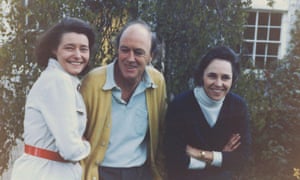
Patricia, Dahl and Valeria Eaton Griffith, with whom he wrote a stroke guide


Patricia, Dahl and Valeria Eaton Griffith, with whom he wrote a stroke guide. Photograph: RDNL/Courtesy RDMSC

Dahl made careful notes of these neologisms, which helped with an article he was writing about her stroke for Ladies’ Home Journal, but he may have thought they would come in useful elsewhere. It would be more than 15 years before The BFG would greet little Sophie with a bellow of laughter and the words: “Just because I is a giant, you think I is a man gobbling cannybull … ! Please understand that I cannot be helping it if I sometimes is saying things a little squiggly … Words is oh such a twitch tickling problem to me all my life …”


Dahl spent hours creating new words for The BFG, many of which, as he said of Pat’s neologisms, were better than the originals. He described human beans that taste scrumdiddlyumptious or uckyslush; a zoo full of hippodumplings and crocadowndillies; the telly telly bunkum box. Dahl’s account of The BFG’s difficulty could have come straight from the mouth of Pat: “You must simply try to be patient and stop squibbling … I know exactly what words I am wanting to say, but somehow or other they is always getting squiff squiddled around … what I mean and what I says is two different things …”


Like other children’s authors, Dahl had made up words before, but in The BFG there was a veritable explosion. Dahl was vague when I asked him about the link. “Well, I’d always enjoyed making up new words. That’s part of the fun, you know, that keeps the nippers interested. But I suppose, yes, some of the trouble Pat had did work its way into The BFG. Yes, it must have.”


It seemed so obvious to me that I was amazed to find subsequently, while researching my book about Dahl’s medical achievements, that it had never been explored before. Looking back, I wish I had probed Dahl further. Having now read much more about this extraordinary man, I know that the answer he gave about neologisms was the sort of nebulous response he gave when he felt the truth of the matter was not exactly the story he wanted to tell.


Take The Gremlins: he wrote the book for Walt Disney, with a view to turning it into a film, and brought the expression into popular usage, but did he actually invent the term “gremlins”? Then there’s the question of how his plane came down in Libya during the second world war – was he really shot down, or did he crashland after being given the wrong location of an airfield by an incompetent commanding officer? And did the resulting “monumental bash on the head” really convert a promising oil executive into a bestselling author, as Dahl claimed, or was the literary potential already there, just waiting to express itself?


Perhaps Dahl felt some discomfort at having based the speech of one of his best-loved characters on the aftereffects of his wife’s stroke. Or maybe he had never recognised the link until I raised it. No one in the family remembers him discussing it, but then he rarely talked about the books he was working on. Either way, Pat’s stroke provided inspiration for more than just The BFG’s Gobblefunk language. Back in 1965, there was little in the way of rehabilitation for stroke patients: Dahl was told just one hour a day would be appropriate.


“Surely one hour a day is not enough,” he said to me. “What in the world are you going to teach a child if she only goes to school for an hour a day? That is what Pat was like then – a child. She didn’t even know her ABC.”


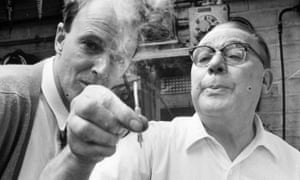
Stanley Wade with the valve they invented to treat Dahl’s son’s hydrocephalus.


Stanley Wade with the valve they invented to treat Dahl’s son’s hydrocephalus. Photograph: Leonard McCombe/Time & Life Pictures/Getty Images

He feared she would become an “enormous pink cabbage”, so he set up – with friends and neighbours in Great Missenden, Buckinghamshire – an intensive six-hours-a-day regime. Some professionals warned this was too much, but he ignored them. Pat was coached back to normality “slowly, insidiously and quite relentlessly”. She eventually resumed her acting career, even getting another Oscar nomination.


This miraculous recovery attracted a lot of attention. Other stroke patients and their families wrote to ask how Dahl had managed it. So with the help of a neighbour, Valerie Eaton Griffith, Dahl wrote a guide. She developed this into a book, and the methods were taken up widely, inspiring a whole new movement, which led to the formation of The Stroke Association.


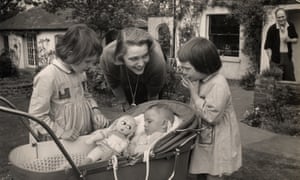
Theo convalescing with, from left, Olivia, Patricia, Tessa and Dahl


Theo convalescing with, from left, Olivia, Patricia, Tessa and Dahl. Photograph: RDNL/Courtesy RDMSC

Amazingly, Dahl’s extraordinary medical influence did not stop there. One evening, we were chatting about a report I was sending to the Lancet. “Ah yes,” he commented casually, “it’s a good journal. We published there many years ago … Yes, we invented a valve for hydrocephalus.” From the sparkle in his eyes, I suspected he was trying to get a rise from me. He enjoyed teasing junior doctors. Had he really invented a neurosurgical device to treat water on the brain? I didn’t believe a word. I knew Dahl was a great storyteller. But, 25 years after his death, while researching my book, I was astonished to find that this was true.


Dahl’s son Theo had developed hydrocephalus after being hit by a taxi, aged four months. The valve he was fitted with kept blocking and, in characteristic style, Dahl set about solving the problem with the help of a neurosurgeon – and a toymaker. “We produced this splendid little valve,” Dahl told me. “It was used to treat thousands of children around the world.” My neurosurgical colleagues still occasionally come across them today, while operating on adults who had them inserted as children.


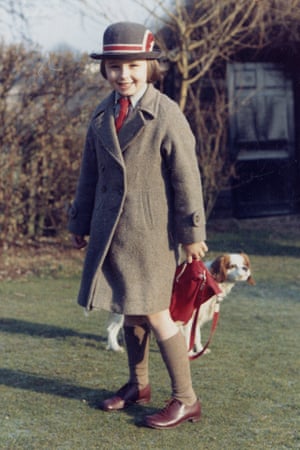
‘We thought she was over the worst of it’ … Olivia, who died after catching measles


‘We thought she was over the worst of it’ … Olivia, who died after catching measles. Photograph: RDNL/Courtesy RDMSC

And then there was his involvement in measles vaccination, an altogether more devastating episode. When Dahl’s daughter Olivia caught the virus aged seven, she developed the most severe form, with inflammation of the brain: encephalitis. She died within days. Dahl was devastated and, for years, would barely talk about it. But with me, he was very open.


“We thought she was over the worst of it,” he said one evening. “One saw, you know, the usual sort of thing: the fever, the tiredness, the spots. We even teased her for her polka dots.” Dahl had a wan smile and his eyes began to well up. He looked so tired and sad. After the initial illness, Olivia had appeared to improve before slipping into a coma. There was nothing anyone could do. But when the measles vaccine became available some years later, Dahl did all he could to help its uptake. He supported campaigns with a famous measles letter to children which is still used today, and badgered the government to do more.


I realise now, as we chatted all those years ago, Dahl wasn’t so much teasing me, as being coy about all he had achieved. Apparently, he could be proud, boastful, arrogant and argumentative when discussing his writing. But when talking about these major medical breakthroughs, he was happy to minimise his role, giving the credit to others.


I was privileged to look after Dahl as his life came to an end. He wrote so poignantly about fatalities in the war, and devised such bizarre deaths in his Tales of the Unexpected, I wondered how he would face his own demise. I found it was with humour, humility – and an unending fascination in medical science.


Roald Dahl’s Marvellous Medicine by Tom Solomon is published by Liverpool University Press on 13 September. The Stroke Association is one of six charities benefiting from sales of the book. Tom Solomon tweets @RunningMadProf; tomsolomon.co.uk


How family tragedy turned Roald Dahl into a medical pioneer

28 Temmuz 2016 Perşembe

Victorino Chua: "angel turned evil" hospital nurse fails in appeal bid

A hospital nurse who murdered two patients and poisoned others has failed in a bid to challenge his conviction and sentence.


Victorino Chua was jailed for life with a minimum term of 35 years in May last year after being convicted by a jury at Manchester crown court.


His applications for permission to appeal against both conviction and sentence were rejected on Thursday by judges at the court of appeal in London.


The father of two, 50, who was described by police as a narcissistic psychopath, injected insulin into saline bags and ampoules while working on two acute wards at Stepping Hill hospital, Stockport, in June and July 2011.


These were unwittingly used by other nurses, causing a series of insulin overdoses to mainly elderly victims.


When the self-styled “angel turned evil” was sentenced, the trial judge, Mr Justice Openshaw, described his actions as “indescribably wicked”. He said it was a “strikingly sinister and truly wicked feature of the case” that Chua did not know who would fall victim to his actions.


Lord Justice Treacy, sitting with two other judges, announced that the one proposed ground of appeal against conviction was not arguable, and rejected an argument that the minimum term of 35 years was “manifestly excessive”.


Victorino Chua: "angel turned evil" hospital nurse fails in appeal bid

19 Ağustos 2015 Çarşamba

Benefit sanctions ruin lives. No wonder the DWP turned to fiction | Rhiannon Lucy Cosslett

It is inspiring what obtaining your rewards cut will do for your function ethic. Just ask the gormless Sarah, who – bless – did not consider a CV would assist her locate operate and missed a meeting with her operate coach back in March. Thankfully she pulled up her socks and updated her resume. “My advantage is back to typical now and I’m genuinely pleased with how my CV seems,” Sarah grins as she appears more than a personal computer screen into the camera, stopping just short of a tap-dancing “gee, thanks, Mr Duncan Smith” in the manner of a young Shirley Temple. Another benefit-sanctions accomplishment story, you may possibly feel. The only issue is that Sarah doesn’t exist.


Connected: DWP admits inventing quotes from fake ‘benefits claimants’ for sanctions leaflet


This week, following a freedom of information request courtesy of Welfare Weekly, the Department for Perform and Pensions (DWP) admitted that Sarah, along with fellow benefit claimant Zac (who presented up a heartwarming tale of notifying the jobcentre of his hospital appointment in advance, thus safeguarding his claim) were only utilised in their promotional supplies “for illustrative purposes”.


Their mugshots, meanwhile, are stock pictures. Naturally, there is no suggestion anyplace on the leaflet – which has mysteriously disappeared from the DWP internet site but has been downloaded by Welfare Weekly – that these claimants are fictional.


It is difficult not to see a twisted comic darkness in this. The optimistic spin is so firmly rooted in the realms of fantasy as to be ludicrous, and follows an incident last yr where the department was accused of planting fake tweets praising the a lot-maligned universal credit score measures, though it denied this.


Twitter end users are mocking the DWP’s newest misstep with the inevitable hashtag #fakedwpstories (“since the jobcentre sanctioned me I only eat caviar” “I conserve so much on trousers now all that funds isn’t burning holes in my pockets”), and rightly so. The fake leaflet personae signify a surreal contrast to the real effect that positive aspects sanctions can have on individuals in austerity Britain.


Tales abound from claimants who have been sanctioned for a assortment of bizarre and trivial reasons, this kind of as failing to apply for a work that had expired, or missing a jobcentre appointment that clashed with a perform programme interview. There have been punishments that are shocking in their heartlessness: it could be a funeral, a stillbirth, a heart assault, a premature labour that leads to you to miss your signing-on appointment: challenging. No excuses.


Other claimants describe a type of bureaucratic, Kafkaesque nightmare, a dystopian labyrinth that appears deliberately designed to catch you out. Just inquire the man whose dole queue was so extended that he was late for his appointment, or the 1 who failed to attend his simply because he was at a occupation interview. Each were sanctioned.


This certain DWP cock-up represents an omnishambles worthy of The Thick of It, but there is also, to borrow the phrases of Mark Serwotka, the standard secretary of the Public and Industrial Services union (PCS), one thing “disgraceful and sinister” about trying to trick individuals into believing in the benevolent chastisement of the state. In contrast to the deprivation and destitution that can outcome from sanctioning, the fictional Zac and Sarah, with their beatific expressions beaming out from leaflets, are eerily chipper. Back in the true planet, sanctioned benefits claimants are currently being forced into homelessness and resorting to food banks. There have been suicides. Final week, a famished female whose rewards had been stopped was prosecuted and fined much more than £300 for stealing a 75p pack of Mars Bars. Actuality is not really panning out the way the Conservatives intended.


The reality that the government is having to concoct “positive” tales about the sanctions system for propaganda functions suggests that there is a paucity of claimants out there keen to dispense glowing feedback on their experiences, to put it mildly. The “new regime” (the government’s phrase) was introduced in October 2012, and has by no means been a good results in terms of PR, operating as it does on what my colleague Patrick Butler refers to as a “sanction now, investigate later” rationale. Beneath the government’s “hard line” method, nearly 1 million jobseeker’s allowance claimants had been sanctioned in 2014, however there are doubts as to the sanctions’ effectiveness in helping individuals find function. The function and pensions select committee said that the government had not presented evidence that the program was not “purely punitive”. Furthermore, more evidence advised that sanctions led to poorer top quality, short-term or unstable employment.


If a funeral, stillbirth or heart assault causes you to miss your signing-on appointment: difficult. No excuses.


Then there are the jobcentre whistleblowers, who in January uncovered the existence of “hit squads” that set claimants up to fail in the pursuit of staff performance targets. There had been reports of staff focusing on the a lot more vulnerable jobseekers, reserving appointments without having informing the claimant, and currently being threatened with disciplinary accessibility if they didn’t refer sufficient individuals for sanction. With damning reviews this kind of as these, the temptation to coat the cruelty in a shiny gloss need to be huge.


What can we learn from the story of Zac and Sarah, the ragged orphans upon whom the benevolent fairy godmother of the DWP bestowed their enchanted kindness? That the government regards individuals on benefits as so “other” that it has no qualms about making use of fictional characters as stand-ins? Surely those who dismissed the evaluation that the Conservatives are engaging in an ideological assault on the vulnerable and disadvantaged will be difficult pushed to argue towards it, when it’s their wheel that is spinning the fairytales.


In addition, request by yourself: what exposes the presence of an ideology much more obviously than the dogged pursuit of it in the face of all contradictory proof? A flawed and cruel agenda, innovative with blinkered indifference, underpinned by an unmoving belief technique that casts its heroes and its villains as simplistically as a child’s bedtime story. If it feels creepy to you, that’s because it is. And the narrative continues regardless of its dishonesty. A sunlit street is superimposed more than the grey deprivation. An expressionless, robotic Zac and Sarah are waiting for you there. “Welcome to the new regime,” they say. “We hope you take pleasure in your stay.”


Benefit sanctions ruin lives. No wonder the DWP turned to fiction | Rhiannon Lucy Cosslett

16 Haziran 2014 Pazartesi

Organ donation: The family members who turned their grief into the gift of daily life

For her component, Ilse says: “Life with out Georgia does not make sense and it’s only just starting up to sink in that we will never see her yet again. But understanding Georgia has saved other people means it wasn’t all for nothing.”


Georgia was a pleased youngster who loved ballet, could count to a hundred and knew the words to her favourite Julia Donaldson books by heart. “She was vivid and humorous an effortless daughter and a supply of huge joy,” says Ilse, 39, who gave up her task as an air site visitors controller right after her son Joshua, two, was born.


She and James, 38, a property barrister, have been on vacation in Sharm el-Sheikh in Egypt with their two children when Georgia collapsed on Christmas Day final 12 months. “We were about to go into the sea when Georgia stated ‘Mama, mama,’ and collapsed,” says Ilse. “I caught her as her head and arms flopped back and she gasped for air.”


Georgia was rushed to the nearby hospital and place on a lifestyle-assistance machine. Tests recommended she was possibly brain-dead, but Ilse and James desperately tried to get their daughter repatriated to a British hospital with a far better standard of health-related care. “We knew in our hearts she was gone, but we still hoped there was a likelihood,” says Ilse.


Later that day, they received hold of Dr Akash Deep, head of the children’s intensive care unit at King’s School Hospital, London, which specialises in brain injuries. “There was no point in raising hopes but I wanted to do every little thing I could to aid,” says Dr Deep.


On Boxing Day at 6pm, Georgia and her family were airlifted to King’s School Hospital, with the minor woman nonetheless on lifestyle support. Georgia was pronounced brain-dead on arrival at 1am the following morning. CT scans showed a bleed in her brain. It was later on confirmed as a ruptured aneurysm – a blood-filled bulge in a blood vessel. “They are very rare, specifically in children, and most only trigger signs and symptoms if they burst,” says Dr Deep.


The household had been provided 5 hours to say goodbye prior to their daughter was taken off existence assistance. “We begged for far more time and have been grateful to be granted it,” says Ilse. “Georgia was warm and her skin pink. We lay subsequent to her, assisted wash her hair and talked to her. It had been so sudden it did not sink in.”


It was for the duration of these darkest of hours that the topic of organ donation was raised by Ilse. “As James and I held Georgia’s hands, I said that it was anything I felt strongly about,” says Ilse.


James was initially much less specified. “We had in no way talked about organ donation prior to,” he explains. “Georgia was nonetheless my princess and I didn’t want someone carving her up. But I centered on how I would really feel if Joshua essential a transplant, and how grateful I would be to a donor. Right after that, it wasn’t a hard determination.”


Yet Ilse says they required the additional time Dr Deep had allowed Georgia to invest on her existence-assistance machine to come to this selection. “There are some dad and mom who have to decide on the spot, which is why it is excellent for folks to be educated about this concern, so they really do not have to talk about it for the initial time when one thing horrible transpires.”


Dr Deep says that at King’s there is a loved ones liaison nurse, a advisor and a specialist nurse on call to discuss organ donation with mothers and fathers. He was struck by the Fieldsends’ altruism: “They utilised their private grief as an possibility to turn their tragedy into a present of daily life,” he explains. “They were hugging each and every other and crying, but when we talked about donation their eyes would sparkle yet again. The spark was indescribable. As medical doctors we are supposed to be skilled, but we’re human beings as well, and it provides me a chill down my spine to consider about it.”


Ilse and James signed papers agreeing to donate Georgia’s liver, kidney, corneas (eyes) and heart valves Georgia had suffered a cardiac arrest whilst currently being examined on the life-support machine, so she was unable to donate her heart. “James said no to her eyes at initial. They were the lovely, sparkly, blue eyes that we looked into every single day,” says Ilse. “We have been both crying, but I stated: ‘I know it is horrible, I do not want to do this either, but imagine Joshua was blind. Wouldn’t we want a person to aid? As terrible it was, we had to tick ‘yes’.”


Then the process to discover suitable recipients for Georgia’s organs began. “It is doubly hard in paediatric practice due to the fact the size completely matters,” says Dr Murphy.


A liver can survive between 6 and eight hrs outside of the body before transplant a kidney up to 24 hrs. Inside of days, a lady in her early teenagers was found for her kidneys and a baby boy for her liver it meant medical doctors have been ready to flip off Georgia’s lifestyle-help machine. They gave Ilse and James permission to aid by getting rid of the tape on her mouth. “Akash informed us that Georgia’s heart would stop beating 15 minutes following the machines had been turned off, and the tubes taken out of her. Following that, we would have five minutes to say goodbye ahead of she was taken into theatre.”


Ilse and James each cuddled their daughter. “We stated: ‘Go, Georgia, you go do your bit’,” remembers Ilse, through tears. “She was so caring, it is what she would have wished.”


Georgia was pronounced dead one evening a number of days following Christmas. Following the operation to eliminate her organs, she was taken to the hospital morgue. “She had been modified into her favourite pink dress with purple flowers. I considered seeing her would be upsetting, but she only had a line from her chest to her belly button from the operation. I hadn’t grasped how lovely she was going to look,” says Ilse.


That morning, Georgia’s brain – which the household have donated for healthcare review – was eliminated for autopsy, along with Georgia’s eyes. Afterwards Ilse and James took Georgia to their property in Bramley, Surrey, exactly where she remained in her bed right up until she was cremated on January eleven. “Her eyelids have been closed and artificial eyeballs meant you couldn’t tell her eyes had been removed,” says Ilse. “I slept with her every evening. I advised her how considerably I loved her and how great she was. We informed Joshua that Georgia was poorly and essential to rest. He talked to her, also.”


She is mindful to some this may possibly sound morbid, but adds: “We mentioned a number of times no matter whether it was the appropriate point to do. If we hadn’t been able to bring her house, it would have been so considerably more difficult.”


By the time of Georgia’s cremation and funeral, Ilse had learnt that the liver and kidney donations had been profitable. “It gave me power, even though I was still in a state of shock,” says Ilse.


Afterwards, Joshua asked exactly where his sister was. “I informed him Georgia was dead and asked him to repeat it to me so he understood,” says Ilse. “I mentioned Georgia would stay in his heart.”


In April, Ilse and James were informed that Georgia’s heart valves – which can be stored for up to ten many years – had been utilised to save the lives of two distinct children a young girl and a new-born infant. Last week, Ilse found out that Georgia’s corneas – which can been stored for up to 28 days – had assisted give sight to two guys in their twenties. “Georgia has saved four lives and given two other individuals sight, which is extraordinary,” she says.


Ilse is even now in anguish at the reduction of her kid: she sleeps in Georgia’s bed, keeps her dresses hanging from her cupboard doors and carries her daughter’s ashes with her. “I don’t truly feel I’ll ever be ready to spread them,” says Ilse. But she is comforted in the knowledge that Georgia lives on in other people: “There will come a day when I can look back and smile and believe about Georgia and the lives she saved.”


Dr Murphy urges all parents to discuss what would come about in the occasion of a child dying and to take into account signing the complete family up to the nationwide organ donor register. “The loss of a kid is unimaginable for most of us, but with children often dying in require of an organ, we need far more parents to say yes to organ donation, just as Ilse and James did. They are actually an inspiration to us all.”


To discover out far more, go to organdonation.nhs.united kingdom or phone 0300 123 23 23


To protect the identity of recipients, we have been asked not to publish the exact date of Georgia’s death


Organ donation: The family members who turned their grief into the gift of daily life

4 Mayıs 2014 Pazar

"ME has turned my existence upside down"

It occurred so quickly. Within weeks of acquiring unwell it felt like every little thing all around me was falling apart, my schooling, my self-confidence, my enjoy of existence.


What was taking place to me? My regional GP said that my signs and symptoms didn’t make considerably sense. No matter what it was would pass – it is standard to come to feel like this right after a virus, she informed me. It did not pass. I was referred to a couple of professionals, but despite the fact that they agreed that some of my signs and symptoms matched up with an ME diagnosis (I had difficulties with my abdomen and bladder, too, which are characteristic of the problem) they couldn’t give me an all round reply. Their common opinion was that I attempt to reside as standard a life as achievable. They recommended me to return to school but the a lot more I went, the worse I received, and sooner or later I had to drop out altogether.


As my health continued to decline, my battles with medical doctors grew. I couldn’t recognize why, but I was produced to truly feel that this mystery illness was my fault. Several doctors advised me that I certainly just did not want to go to school and that I would never achieve anything at all if I stored up this “game”. I frequently left consultations crying but also shaking with anger that these pros could be so threatening and unkind. I felt no 1 was listening to me. I wanted practically nothing much more than to go to college and do all the issues that I missed so desperately, but they did not think me – one GP even shouted at me and my mother.


One of the specialists I saw wrote to a paediatrician with a specific interest in you, ME. That expert refused to see me, saying that the much more medical doctors I saw, the worse it would be for me and what they named my “belief” about my illness. Now I know that it is important to have you diagnosed early, ME. If I’d observed him then, I possibly wouldn’t be this negative nowadays.


ME, it’s been two and a half many years now and I am far more or much less housebound – also unwell, dizzy and exhausted to do any of the normal issues I dream of. I am totally reliant on my parents. I use a wheelchair when I depart the residence. You manufactured it hard for me to keep in touch with any buddies, so now I do not see any person my own age. That has been quite upsetting. It taught me a existence lesson: extremely handful of folks will quit and wait for you. I now know what it feels like to be shut out and forgotten, to truly feel lost in a separate planet of seemingly endless physical suffering.


I have so tiny energy that even something as straightforward as going to a restaurant will now leave me feeling as though I’ve received terrible flu. The typical signs and symptoms linked with you, ME, contain serious fatigue, ache, interrupted rest and poor concentration, but this listing just skims the surface and there are numerous far more. Often, for me, dizziness is the greatest problem – it’s difficult to describe but I suppose it feels like I’m on a moving boat, all the time. Sometimes, the vertigo and the nausea are so sturdy that I can’t even lift my head up. I truly feel continuous and intense pain all in excess of my entire body, at times so excruciating that I lie awake at night for hrs, in tears.


Sooner or later, final 12 months, my family and I moved home to be closer to my brother’s school and I registered with a new medical doctor. He was approachable and concerned, and I felt as even though he believed me. Soon after two many years of not realizing what was incorrect, I was referred to a expert service that offers with you, ME. There, the advisor diagnosed me quickly with moderate to extreme ME. At long last, my household and I had a identify for you.


I also learnt that I wasn’t alone. You impact about 250,000 individuals in Britain, according to the ME Association. At times, but not constantly, your onset can be linked to a viral infection, as mine was. You cannot be cured, but sufferers can attempt to manage you with various degrees of good results. It generally involves structured rest, cautious control of power amounts and medication to help with particularly challenging symptoms.


Now, underneath the care of a support for ME patients in Bath, I’m on an activity management programme to cope with you. I am learning once more, at a special health care tutor school, and I can usually manage twenty minutes prior to a break, then an additional twenty minutes. Occasionally even that is too considerably, but I consider to go along anyway just to get out of the home and have the make contact with with other people. Afterwards, I do pursuits that are classed as yellow – much less strenuous than tutoring – like viewing repeat television demonstrates or listening to music.


It’s a commence, but you and I, ME, are nevertheless trapped in a continuous, ever modifying battle – your symptoms are huge, unrelenting, exhausting and influence most of my physique techniques. I even now have to deal with the stigma of you, also: every time I go to hospital for my consultations I truly feel as if I am currently being looked upon in a various light from other individuals. I get the impression that doctors feel ME is just a label offered to people when they can not describe what else is incorrect.


I may possibly get much better or I might get worse, and I still have several challenges and uncertainties ahead. But the one issue I do know for particular is that no one who turns to the health technique for help should be created to feel the way I was, no matter what the circumstance. If I could have one want, ME, it is that all people who you have inflicted, all people fighting each day with the vast assortment of disabling signs and symptoms you cause, come to feel as although they have the assistance they want. Most of all, that involves being in a position to acquire the proper diagnosis inside of 3 to 6 months of developing signs and symptoms.


We should not have to endure the countless acts of ignorance and unkindness for something that just is not our fault. Possibly then, ME, you will control to flip fewer lives entirely upside down.


From Holly


Holly’s poem


My stomach often queasy with legs uneasy


The area lurching and my head swirling


Each and every portion of my entire body burning


With consistent, unrelenting pain.


My eyes now really feel hefty


and I’m usually unsteady.


At times I feel so weak


I overlook what I am saying when I speak.


Every drop of power just would seem to drains away


Leaving me shattered, unable to believe, lifeless and pale.


I’m 16 and stuck behind the exact same 4 walls


For most of the day


All options and almost everything I once loved


Now cruelly taken away.


My existence passes by in a hazy blur


Each day the identical but some even worse


It just isn’t going to appear fair


When it feels like there is no one particular to turn to


And no a single is there.


Disbelief and doubts just add to the ache


I could not even get started to describe


How it feels to truly feel this way


And then to be given the blame


What would it be like to feel typical once again?


To appreciate life with out payback, symptoms and discomfort


To ride a bike or take a stroll


Even if the clouds have been grey


I lengthy to be cost-free just for a single day.


What saddens me most


Is that few folks actually know


What you M.E. are like and why you never ever go


How awful you make me come to feel each single day,


You are a lengthy, lonely nightmare that just won’t go away.


May possibly is ME Awareness Month and Could 12 is International ME Day. To find out much more pay a visit to actionforme.org.united kingdom or meassociation.org.uk


"ME has turned my existence upside down"