organ etiketine sahip kayıtlar gösteriliyor. Tüm kayıtları göster

2 Ocak 2017 Pazartesi

Organ donation becomes mandatory in France

France has reversed its policy on organ donations so that all people could become donors on their death unless they join an official register to opt out.


The new law presumes consent for organs to be removed, even if it goes against the wishes of the family.


Until 1 January, when the legislation took effect, unless the person who had died had previously expressed a clear wish for or against donation, doctors were required to consult relatives who, in almost a third of cases, refused.


Those who do not want all or any of their organs to be used must now put their name on a “refusal register” – so far 150,000 people have signed up. The authorities have promised to make it easier for those who wish to refuse by allowing them to join the register online instead of by registered post.


Alternatively, those vehemently opposed to their organs being used can leave a signed document with their next-of-kin or transmit their wish orally to relatives who must make a written declaration of non-consent to doctors at the time of death. The process is explained on the agency’s Facebook page.


In November, the French Agence de la Biomédecine released a film, Déjà-vu2, aimed at encouraging 15- to 25-year-olds to agree to organ donation.


The European Union has highlighted the lack of organs for transplant and the increasing number of patients on waitings lists worldwide. Its figures claim that in 2014, 86,000 people were waiting for organ donations in EU states, Norway and Turkey, and 16 people were dying every day while waiting for a transplant.


In the UK, doctors lament one of the lowest consent rates in Europe, as well as a shortage of donors from black or Asian communities. A record number of organs were donated and transplanted in the UK in 2015-16, but the rate remains short of the target of 80% by 2020. The biggest obstacle remains relatives’ opposition, who have vetoed transplants even from registered donors.


NHSBT, which is responsible for the NHS organ donor register and for matching and allocating donor organs, said it was considering further steps it could take when approaching families to ensure more potential donors’ decisions were not vetoed.


One option would be to no longer ask the next-of-kin to confirm consent or authorisation. Their permission is not required by law if someone has registered a decision to donate on the NHS organ donor register.


Families in Scotland are already required to complete a retraction form to record why they overturned a relative’s decision to donate. NHSBT said a similar form could be introduced across the UK.


Organ donation becomes mandatory in France

13 Eylül 2016 Salı

"It"s better than winning the lottery": readers" organ donation stories

‘To be dialysis free is better than winning the lottery’


In 2008 I became very ill with a rare autoimmune disease called microscopic polyangiitis vasculitis which caused severe kidney failure. In 2014 I was due to receive a living kidney donated by my husband, but was failed by my consultant and ended up not expecting to survive fighting for my life in hospital instead for four months. Thankfully on 4 July of this year (the first anniversary of my mother’s passing) my hero husband donated a wonderful kidney to me. There is no doubt he saved my life and to be dialysis free is better then winning the lottery.


Both our operations went fantastically and my only challenge was being 12 litres over with fluid (they pump you with fluid to keep the kidney working and alive) and the excess fluid leaked from my wound so I needed a Vac dressing and my right leg was terribly swollen. It is not an easy journey physically, mentally nor emotionally however one I would recommend to anyone lucky enough to be offered a kidney and a life again.


Jackie Bex, United Kingdom


‘The decision seemed easy: I had two kidneys and only needed one’


My experience in donating a kidney has been amazing and has left me with a great feeling of having actually achieved something life-changing. I had no idea that it was even possible to donate a non-directed living-kidney initially (in other words to someone I did not know), but I chose to become a kidney donor after watching a BBC documentary on the subject. I was also surprised that at the age of 63, I was not too old (donation is actually possible from age 18 and the oldest donor is over 80!). The decision seemed easy to me, as I had two kidneys and only needed one and the risk was totally minimal. Why not save a life?


My friends and family were very divided about the decision. Many people could not understand my motivation and felt the risk was unnecessary. Others completely appreciated my desire to do something practical and life-changing.


After the operation I was fortunate enough to receive a letter from the recipient of my kidney explaining how much it had changed her life. She had been on dialysis for many years, could not find employment, was unable to travel on holiday and relied on her parents. Now she is independent, has a job and can travel freely without the need for painful dialysis.


Chris Jones, a retired 67-year-old living in Scotland


‘We told each other how lucky we were. How wrong we were’


Not long after we were married my husband Keith discovered that he had kidney disease. I offered to be a donor and was successful, even though we were incompatible blood types and he required plasmapheresis to remove his antibodies.


In 2010, on the night we were supposed to be admitted to the transplant ward we sat huddled together. We told each other how lucky we were. How wrong we were. The surgery went well but afterwards in the recovery room, I found out that morphine has no affect on me and awoke feeling as if I had just been chopped in half. Eventually though, we both went home and started to plan the lives that we thought we had ahead of us. We celebrated my birthday and started to plan for Christmas. Keith was so unbelievably happy and grateful and had endless plans for all the things he thought he would now be able to do. But he seemed to continue to struggle.


One day he fainted twice. He was still under the care of the renal unit, going back twice a week for appointments there, so he phoned them for advice. They took hours to phone back and when they did, simply told him not to take his blood pressure medication in the morning. He didn’t live that long. The next morning, I found him dead on the hall carpet.


I regretted the surgery very bitterly as I felt – and still do – that if the transplant had never happened, my beloved husband would still be here. Life on dialysis would have been a very different kind of life – but it would still have been life.


Rebecca Farwell, a writer and tutor in Norwich


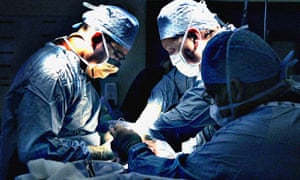
Consultant Surgeon Andrew Ready and his team conducting a live donor kidney transplant at The Queen Elizabeth Hospital, Birmingham in 2006.


Consultant Surgeon Andrew Ready and his team conducting a live donor kidney transplant at The Queen Elizabeth Hospital, Birmingham in 2006. Photograph: Christopher Furlong/Getty Images

‘I became a doctor because of my transplant’


I was 21-years-old and had three weeks left to live. I had idiopathic hepatitis, was scared, helpless and questioning how I had ended up facing death at such a young age. I was so far from the young, seemingly arrogant and invincible boy I was a year previously. When only 10% of my liver was functional I was put on the transplant list as a final resort.


Before I became ill I had just graduated from the University of Sheffield. From the point I left home at 18 to go and live in Sheffield I thought I was fully independent, untouchable, and had everything in my life because of my actions and nobody else’s. I acted as though I would never need any kind of emotional support from anybody, especially my parents. Fighting to survive, they were all I wanted now.


As a GP my father struggled to cope. He was only too aware of the implications of each set of test results and took every deterioration in my health personally. Being a man that had healed and treated people for over 30 years I felt his helplessness knowing he couldn’t make his own son better.


Very few people get to have a second chance at life. My experience has made me realise how important the smallest things in life are; post-transplant, the most groundbreaking day for me was when I managed to get out of bed and walk to the toilet on a zimmerframe with my dad supporting me.


My decision to study medicine was a direct result of my hepatitis; I want to be one of those doctors that had the same life changing effect on me. I see no other profession in the world that compares to medicine and no one I have a greater respect for.


Marcus Mehta, a 29-year-old doctor from Lincoln


The day I received my new lung is my re-birthday


I was told I had idiopathic bronchiolitis obliterans and needed a lung transplant to save my life. 3 November 2014 was the day that I received the ultimate gift of life and my new lung was transplanted. This date is now my re-birthday and my family and I celebrate it every year with a quiet dinner. We also take a moment to raise our glasses to honor my donor and donor family who made that day possible.


Only eight days days after my transplant I was discharged and was allowed to go home. I felt like the luckiest person in the world. So far I have not had any rejection episodes and my new lung is doing great.


Catherine Horine, 61-years-old and living in the US


‘One man was able to have an extra 16 years with his family due to my father’s heart’


In 1988, my parents were struck by a train on their way to a local lake. My mother was killed on impact while my father survived the accident with a severe skull fracture and a collapsed lung. My father had surgery and the doctors removed his right temporal lobe. He never regained consciousness and remained in a coma until his death 10 days later.


About three days before his death, I was approached by the hospital staff about organ donation. Once we understood that my father’s prognosis was not going to improve and that the process of brain death had started to take his life, we agreed to the organ donation. The decision was easy for us. Once brain death was confirmed, they took my father in for the harvesting surgery. They ended up taking his kidneys, one cornea (the other had bacteria on it) and his heart. My father was in great shape and worked as a ski instructor. Despite being a smoker, his heart was in an excellent condition.


Afterwards, we were given the number of the local organ donation organization and told we could get vague updates on the recipients. We were able to find out the age, sex and state of the recipients and whether the surgery was successful. We received vague, non descriptive thank you notes from the families that received the kidneys and heart, but had no update on the cornea transplant.


17 years later, as part of a public speaking class on organ donation I contacted the company to see if my father’s recipients were alive and well. One of the kidney recipients had rejected his new kidney within a few short months but had received another kidney approximately a year later. Sadly, he passed away not long after. The other kidney recipient was still alive and well. She still had my father’s kidney. I was so pleased to hear this. Sadly, the heart recipient had passed 6 months prior to my call. I was told that he was gravely ill when he had the transplant and due to my father’s heart got an extra 16 years with his family.


Lynn, 48-years-old and living in Pennsylvania


"It"s better than winning the lottery": readers" organ donation stories

7 Eylül 2016 Çarşamba

My awareness campaign helped get 40 people to sign up as organ donors

My mum, Patricia, has polycystic kidney disease (PKD), a genetic disorder that ends in kidney failure. We always knew she would eventually need a transplant and I was the only one in the family who was able to donate. My two sisters also have the disease and my dad has been living with cancer and receiving chemotherapy, on and off, for over 20 years.


Mum didn’t want to take a kidney from me, even though she was slowly dying – she didn’t want to put her child through surgery. We were both scared it wouldn’t work and what impact that could have on us emotionally.


But when her health deteriorated so much that there was a risk she would be too sick to receive a kidney if she waited any longer, we decided to go ahead. I donated my kidney in February this year.


I was asked what I wanted to do if the surgeons found they couldn’t give my kidney to my mum after all. The options were to either destroy it, pop it back inside me or donate it to someone else who needed it desperately. The choice was easy. Even though my sisters have PKD and will one day need a kidney, they didn’t need it yet – and someone else did. I suddenly realised the significance of what I had to give and the difference it would make.


The transplant changed our lives – we don’t have that constant worry any more. We spent two years visiting the renal ward in hospital and met other patients, their families and friends. I spent time in recovery with some patients who had received an organ from a stranger. The joy and relief in these patients and their families is indescribable. To be able to give new life to someone makes organ donation something very special.


I’m a human resources consultant, and have been working with the League Against Cruel Sports, where chief executive Eduardo Goncalves and his team supported me through my recovery after the operation. I received many personal messages, cards and flowers from my colleagues.


When Eduardo, who has himself donated a kidney to one of his sons, asked me to work with him on building awareness of organ donation, I was delighted, as I knew that the staff would be very engaged. They all have a passion for animal welfare, but also really care about people.


We wanted to encourage staff to consider joining the donor register and we did so by sharing our experiences of kidney donation. After telling our stories, and how we felt as a result, 98% of all staff at the league joined the donor register online.


I made a difference to my mum’s life, and to mine, when I donated my kidney. I made a difference by being involved in the awareness project – and thanks to the project, 40 people at the league will now make a difference to other people’s lives by being on the register.


Organ Donation Week runs until 11 September.


The day I made a difference is the Guardian Voluntary Sector Network’s series that showcases the work of people involved with charities. If you have a story you want to share email voluntarysectornetwork@theguardian.com with a short summary of your experience.


For more news, opinions and ideas about the voluntary sector, join our community – it’s free!


My awareness campaign helped get 40 people to sign up as organ donors

5 Eylül 2016 Pazartesi

Has your life been changed by organ donation? Share your stories

On average three people die a day in need of a transplant, highlighting a shortage of people willing to donate their organs.


Despite a rise in organ donation in Wales due to their “deemed consent” system, where residents are presumed to have consented to organ donation unless they positively opt out, there is still a shortfall of donors from black or Asian communities.


Last year, 466 patients died in need of an organ and a further 881 were removed from the transplant waiting list, many whom would also have died shortly afterwards.


NHS Blood and Transplant estimates that if 80% of families approached to donate a relative’s organs said yes, more than 1,000 additional transplants would take place across the UK each year.


If your life has been changed by organ donation we’d like to hear from you. Whether you’re a donor, someone who has had a transplant, or a friend or family of either, share your stories with us. What did the experience mean for you? Why do you think organ donation is so important? Perhaps you’re medical staff and work on donation and transplant procedures.


You can share your experiences with us (anonymously if you wish) by filling in the form below. We’ll include some of your responses in our reporting.


Has your life been changed by organ donation? Share your stories

4 Eylül 2016 Pazar

Welsh "deemed consent" organ donation system shows promising results

The number of families agreeing that their loved ones’ organs can be donated for transplantation may be rising more quickly in Wales than other parts of the UK following the introduction of a groundbreaking new consent system, new figures suggest.


Health officials and ministers in Wales are encouraged by how the so-called “deemed consent” system is working and NHS Blood and Transplant (NHSBT) has said the picture in Wales is promising.


Under the new Welsh system, which came into force last December, residents are deemed to have consented to organ donation unless they positively opt out.


In June the Welsh government said the scheme had already saved dozens of lives after revealing that in the first six months, of the 60 organs that were transplanted, 32 came from people whose consent had been “deemed”.


New figures from NHSBT show that in the financial year 2015/16 the family consent/authorisation rate increased in Wales from 49% to 59%. Across the UK the rise was smaller: 58% to 62%.


Although the overall UK rate is higher, the more significant percentage increase in Wales last year may signal a change in attitude.


The number of living donors in Wales also increased by 20% to 49. Across the UK the number of such donors dropped by 2%.


Organ Donation week takes place across the UK from Monday. One priority in Wales is to get its messages across to young people and the Welsh government is mailing every new student arriving in the country this autumn to explain the system.


Under the Welsh system people who want to be an organ donor either register a decision to opt in or do nothing. For those who choose to do nothing, if they are 18 or over, have lived in Wales for more than 12 months and die in Wales, they will be regarded as having consented to organ donation.


Family consent, however, is still important because if a person has not opted in or out, relatives are still involved in the process and if they say their loved one would not have wanted their organs removed, a donation would not go ahead.


Dr Frank Atherton, chief medical officer for Wales, said he was pleased with how the scheme was working. “Things seem to be moving in the right direction,” he said. “It is encouraging. We’ve put a lot of effort into campaigns to help people understand their options. All that is starting to make an impact.”


He made it clear that the scheme was still in its very early days. The 2015/16 figures relating to family consent have to be treated with caution as the Welsh scheme was launched with only four months of the financial year to go and experts warn there could be fluctuations from year to year.


But Atherton said the move towards the system has certainly led to many more families discussing the topic. “Next year there will be a full evaluation of what the impact of deemed consent has been.”


Overall, the figures show there is still a long way to go if the UK target of increasing consent rates to 80% by 2020 is to be met. In Wales and in the UK as a whole, around four out of 10 families who were approached did not agree to organ donation taking place.


Last year in the UK, 466 patients died in need of an organ and a further 881 were removed from the transplant waiting list. Many of them would have died shortly afterwards.


Sally Johnson, director of organ donation at NHSBT, expressed optimism about what was happening in Wales. “We welcome the opportunities that the legislation and communications programme in Wales is providing in getting everyone in Wales to think about and talk about organ donation.


“We have been working closely with the Welsh government on the introduction of deemed consent and are working with them to make it a success. It’s early days, but things look promising.”


Case study


Kimberly Chard, 31, from Cardiff, who was born with cystic fibrosis, underwent a double lung transplant at the end of last year.


She said: “Every day I think of the selfless gift my donor and their family gave me, how they chose to save lives despite their loss. They are my heroes and I feel very blessed to have had the chance to live again. Having a transplant shows just how precious life is and what’s truly important. I will always treasure the future my donor and their family gave me.


“The new system has created an opportunity for everyone to get involved and discuss their choices and what their decision would be if they were ever in the situation to be able to donate their organs.


“By talking to their loved ones, people are making it so much easier for their family as they would know what their decision was and be able to honour their loved ones decision.”


Welsh "deemed consent" organ donation system shows promising results

1 Eylül 2016 Perşembe

Organ donation rates for transplants still too low in UK, says NHS

A record number of organs were donated and transplanted in the UK in 2015-16 but the consent rate is still one of the lowest in Europe, with a worrying shortfall of donors from black or Asian communities.


In the 12 months to the end of March, 1,364 people became organ donors when they died and their donations resulted in 3,519 transplants taking place, figures published on Thursday show.


The consent rate stood at 62%, slightly up on 2012-13 when it was 57%, but well short of the target of 80% by 2020 with the biggest obstacle being family refusal, mostly when they were unaware of their deceased relative’s intentions.


The consent rate was much lower (34%) among potential black, Asian and minority ethnic (BAME) donors, which is of particular concern as 26% of the current waiting list are BAME.


Sally Johnson, NHS Blood and Transplant director of organ donation and transplantation, said: “Think about what we would want others to do for us if we ever need a transplant and be prepared to donate. Talking to your relatives about what you want is crucial as it is much more difficult to agree to donation when you don’t know what the patient would have wanted. There are about 6,500 people waiting for a transplant now and they need people to agree to donate for them to get the organ transplant they so desperately need.


“It is especially important for people from our black and Asian communities to talk about organ donation. I realise that this is a very difficult subject but there are many black and Asian people who need a transplant. While some are able to receive an organ from a white donor, others will die if there is no donor from their own community.”


Last year, 466 patients died in need of an organ and a further 881 were removed from the transplant waiting list, many whom would also have died shortly afterwards.


NHS Blood and Transplant estimates that if 80% of families approached to donate a relative’s organs said yes, more than 1,000 additional transplants would take place across the UK each year.


People from black and Asian communities have a higher incidence of conditions such as diabetes and certain forms of hepatitis, making them more likely to need a transplant, and make up a third of the active kidney transplant waiting list. But in 2015-16 only 67 (5%) of all deceased organ donors were from black and Asian backgrounds.


Lloyd Dalton-Brown, 65, who lives in Exeter, agreed to donate his half-sister Jane’s organs when she died aged 29 after being hit by a truck in 2000. Their father was from Trinidad. “Because of that gift [of organs] five people had transplants, which is utterly fantastic. One of them was a mother of children of three and four; she got one of Jane’s kidneys and because of that ended up with quality of life and was able to bring up her children.


“A lot of people from Caribbean backgrounds are quite susceptible to kidney disease. Her organs were going to be really beneficial to someone in that category. There’s a positive outcome after a very sad ending.”


The Welsh government, which on 1 December became the first part of the UK to introduce a “soft opt-out” system, expressed satisfaction at a 24% rise in the number of its citizens whose lives have been saved or improved by organ transplants, compared with a 4% increase in the UK as a whole. The effect of the change in system was relatively small in the period analysed, during which there were nine cases where consent was deemed.


Charities including Live Life Give Life and the British Heart Foundation urged people to join the organ donor register and communicate their decision to their loved ones.


To join the NHS Organ Donor Register visit www.organdonation.nhs.uk or call 0300 123 2323.


Organ donation rates for transplants still too low in UK, says NHS

10 Ağustos 2016 Çarşamba

Giving Life: organ donation in Australia – in pictures

Giving Life, by Andrew Chapman, charts the life-changing impact of organ donation. The photographer began his project after receiving a donated liver in 2011. ‘I’m only here because of a miracle of modern life,’ he says. ‘Following catastrophic liver failure, I was in a coma with only days to live when I received a donor organ. For this gift of life I am extremely grateful, not only to the donor and his family but also to a wonderful team of doctors, nurses and support staff at Melbourne’s Austin hospital liver transplant unit.’ For more information go to Donate Life, ‘and once you’ve registered, don’t forget to tell your family and friends of your intentions,’ Chapman adds.


Giving Life: organ donation in Australia – in pictures

11 Temmuz 2014 Cuma

Why every a single of us need to register as an organ donor

And as she reached out and registered the residing legacy of her son, some thing that had been empty was filled, a connection that was severed was restored


Stirring, potent and the type of life-affirming moment that ought to have each and every last one particular of us registering as a donor. And however. And however it is not so easy, is it?


Organ donation is an unpleasant, gruesome topic. If it weren’t, there wouldn’t be such an indignant fuss above government proposals this week – to coincide with Nationwide Transplant Week – that any individual applying for a bus pass, a tv licence or a marriage licence or a birth registration should be asked if they want their organs donated in the occasion of death.


Buttonholing misty-eyed brides and gurgling babies for their livers and corneas? How crass, how inappropriate, how MORBID!


If only we could flip our mindset and see organ donation as giving to the living rather than taking from the dead. I’m all for a tick-the-box normalization of the entire approach I’d like to make it necessary, so agonizing in excess of the pros and cons or burying our heads in grief merely is not an selection.


An individual who grasps the terrible dilemma much better than most is Shelley Wealleans, whose infant son, Lewis died of a heart defect aged just three months in 2004. At the time she was asked if she would consider organ donation but, horrified to even be approached, she rejected the idea out of hand.


She went on to have two much more young children, but with bitter irony, her infant son, Mackenzie was born with a diverse heart defect and desperately needed a transplant.


And as she waited and waited for a donor heart of the right dimensions to grow to be obtainable, she ruminated more than her earlier decision.


“When Mackenzie fell unwell I felt I was as two-faced as they come,” she stated. “I felt guilty being aware of a mum in the past was sitting feeling just as I did. I’d explained no when I could have saved a child’s lifestyle basically by saying ‘yes’. And then I necessary some other mother, with far more power and courage than I had, to say ‘yes’ for me.”


But no person did. Two months later on, shortly before his 2nd birthday, Mackenzie died.


When Mrs Wealleans then had a daughter, Madison, she was added to the organ donation register when she was just 52 hrs previous.


There are at present 10,000 men and women on transplant waiting lists in the United kingdom. Around 1,000 desperately ill patients die a yr – 3 a day – waiting for donor organs due to the fact so handful of men and women carry and card and so few family members are inclined to permit donation.


But to have any hope of obtaining we must be prepared to give. Some years ago the New York Instances ran an extraordinary story of a kidney transplant chain that linked thirty living donors to 30 recipients.


Kidneys can be very effective transplanted from the residing, so the thought was that when patient A required a kidney but there was no immunological match in the family, he would receive a kidney from loved ones B offering a person from household A donated a kidney to loved ones C, one particular of whom donated a kidney to loved ones D and so on.


At 1 stage family members Q had been donating to family F, but by some means the cat’s cradle of crossed connections “like taking part in 3-dimension chess” worked and, astonishingly, inside 6 months thirty people had offered and thirty had received.


Relying on the organs of the dead is plainly significantly less predictable. Fate deals its hand at random, but that’s all the a lot more reason to draw up a count-us-all-in contingency plan.


Until finally then, we urgently want to improve organ donation with nationwide initiatives like National Transplant Week which ends tomorrow, and with local action. At Derriford Hospital in Plymouth, for example, medical professionals, nurses and individuals, organ recipents and the households of donors, have joined forces in a ‘‘viral’’ campaign to raise awareness with the distribution of rubber bracelets (lanyards for clinical personnel) bearing the message ‘‘Join the register. Share your determination. Save lives.’’ The concept is as soon as an personal has registered he or she passes on the bracelet/lanyard to another – and so on.


Selfless humanity comes less difficult when we’re in the rudest of wellness, nobody’s ill, nobody’s dead and nobody’s racked with conflicting emotions. And there is no better time than right now to join the register with a keystroke at the computer: www.organdonation.nhs.united kingdom


Why every a single of us need to register as an organ donor

Every last a single of us should register as an organ donor

And as she reached out and registered the residing legacy of her son, anything that had been empty was filled, a connection that was severed was restored


Stirring, strong and the type of daily life-affirming moment that ought to have every single last one particular of us registering as a donor. And however. And yet it is not so basic, is it?


Organ donation is an uncomfortable, gruesome topic. If it weren’t, there wouldn’t be this kind of an indignant fuss in excess of government proposals this week – to coincide with Nationwide Transplant Week – that anybody applying for a bus pass, a tv licence or a marriage licence or a birth registration should be asked if they want their organs donated in the occasion of death.


Buttonholing misty-eyed brides and gurgling infants for their livers and corneas? How crass, how inappropriate, how MORBID!


If only we could flip our mindset and see organ donation as giving to the living rather than taking from the dead. I’m all for a tick-the-box normalization of the complete approach I’d like to make it necessary, so agonizing above the pros and cons or burying our heads in grief merely isn’t an selection.


Somebody who grasps the horrible dilemma much better than most is Shelley Wealleans, whose infant son, Lewis died of a heart defect aged just 3 months in 2004. At the time she was asked if she would take into account organ donation but, horrified to even be approached, she rejected the concept out of hand.


She went on to have two a lot more youngsters, but with bitter irony, her infant son, Mackenzie was born with a diverse heart defect and desperately required a transplant.


And as she waited and waited for a donor heart of the proper dimensions to become accessible, she ruminated more than her earlier determination.


“When Mackenzie fell ill I felt I was as two-faced as they come,” she explained. “I felt guilty being aware of a mum in the previous was sitting feeling just as I did. I’d said no when I could have saved a child’s existence merely by saying ‘yes’. And then I required some other mom, with much more power and courage than I had, to say ‘yes’ for me.”


But no one did. Two months later, shortly just before his 2nd birthday, Mackenzie died.


When Mrs Wealleans then had a daughter, Madison, she was added to the organ donation register when she was just 52 hrs previous.


There are at the moment 10,000 individuals on transplant waiting lists in the United kingdom. Close to 1,000 desperately ill patients die a 12 months – 3 a day – waiting for donor organs since so few people carry and card and so handful of family members are prepared to permit donation.


But to have any hope of acquiring we have to be ready to give. Some many years in the past the New York Times ran an extraordinary story of a kidney transplant chain that linked thirty residing donors to thirty recipients.


Kidneys can be really effective transplanted from the residing, so the idea was that when patient A needed a kidney but there was no immunological match in the loved ones, he would acquire a kidney from household B supplying an individual from family A donated a kidney to family members C, one particular of whom donated a kidney to family D and so on.


At one point loved ones Q have been donating to loved ones F, but by some means the cat’s cradle of crossed connections “like playing 3-dimension chess” worked and, astonishingly, within six months 30 people had offered and thirty had obtained.


Relying on the organs of the dead is obviously much less predictable. Fate deals its hand at random, but that is all the far more explanation to draw up a count-us-all-in contingency program.


Until finally then, we urgently require to enhance organ donation with national initiatives like National Transplant Week which ends tomorrow, and with local action. At Derriford Hospital in Plymouth, for instance, doctors, nurses and patients, organ recipents and the households of donors, have joined forces in a ‘‘viral’’ campaign to increase awareness with the distribution of rubber bracelets (lanyards for clinical staff) bearing the message ‘‘Join the register. Share your selection. Conserve lives.’’ The concept is as soon as an personal has registered he or she passes on the bracelet/lanyard to one more – and so on.


Selfless humanity comes simpler when we’re in the rudest of well being, nobody’s unwell, nobody’s dead and nobody’s racked with conflicting feelings. And there’s no far better time than proper now to join the register with a keystroke at the pc: www.organdonation.nhs.uk


Every last a single of us should register as an organ donor

8 Temmuz 2014 Salı

Organ transplants at record level

Even though specialists welcomed the rise, they mentioned that 3 individuals nevertheless die every single day in the United kingdom while waiting for an organ donation.


An NHS BT spokeswoman explained that there requirements to be a ”revolution” in societal attitudes in direction of donation so a lot more lives can be saved.


She stated that the proportion of households who agree to organ donation following the death of a family member remains ”stubbornly low”.


During 2013/14, much more than 4 in 10 households approached about organ donation stated no to donating a loved one’s organs, she mentioned.


She explained that people who consider they would like to donate organs in occasion of their death ought to allow their loved ones know their feelings just in case tragedy strikes.


NHS BT’s director of organ donation and transplantation, Sally Johnson, stated: ”We are actually grateful to the households of the 1,320 deceased donors and to every of the one,146 living donors who made transplants possible final year. Their donations ensured that for the eighth yr in succession, the amount of folks benefiting from an organ transplant elevated.


”However, we can not be complacent. Despite year-on-12 months increases in action, the Uk can and need to do a lot more to conserve and increase lives via organ donation and transplantation.


”Family refusal is our largest problem and it really is unhappy we lag so far behind some other nations in terms of consent/authorisation rates to donation.


”The truth is every prospective donor is precious and whenever a family members cannot carry themselves to donate individuals waiting for an organ may die.


”If you choose donating is the right factor to do, please signal up to be a donor and spell out your wishes to those closest to you. Then, ought to the time come, your family members will know you want to donate your organs to support to save other individuals.”


:: Folks can sign up to the Organ Donor Register by going to: www.organdonation.nhs.uk or by calling 03001232323.


Organ transplants at record level

7 Temmuz 2014 Pazartesi

We want organ donor "opt-out" technique urgently | @guardianletters

7 years ago, the government ordered a review of the UK’s organ donation technique. Figures showed that the charge of demand for organs was far outstripping provide, major to hundreds of needless deaths each yr. The Organ Donation Taskforce identified that countries employing a presumed consent, or “opt out”, program had far increased donation rates. The United Kingdom was not in the prime 10. Tragically, absolutely nothing came of the evaluation. Given that then, seven,000 folks – such as kids – have died. With latest advances in science have come improved prospective, and demand, for transplantation. The gap is right now higher than ever.


In spite of laudable registration campaigns, the opt-in system can no longer be anticipated to fulfil its purpose. Organs are donated from just 1% of the numbers of deceased every single yr, although healthy organs from half a million folks are cremated or buried. As a consequence, currently being on the transplant waiting list has turn out to be a game of Russian roulette. For illustration, if you happen to be waiting for a liver, there is a twenty% chance that it will not reach you in time. For heart individuals, the figure is even increased. Youngsters struggling kidney failure are getting, in some circumstances, to wait for 5 perilous years.


In Wales, they are lastly moving forwards. Following a time period of careful public consultation and debate, an awareness-raising programme is underway ahead of the implementation of a new “opt out” technique subsequent yr. Individuals who object to organ donation can rest assured – as can their relatives – that their wishes will be respected below the new method.


For now, there are 7,000 people in the United kingdom – many younger young children amid them – waiting for a lifesaving transplant. Whilst we wait for the rest of the nation to catch up with the Welsh, we can at least make certain we are appropriately registered on the NHS’s donor database. For specifics, go to www.organdonation.nhs.united kingdom.
Ed Goncalves
Director, KidneyKids United kingdom


We want organ donor "opt-out" technique urgently | @guardianletters

4 Temmuz 2014 Cuma

Patient died throughout drug trial "because of numerous organ failure"


She was admitted to Royal Shrewsbury Hospital with a chest infection and died of a number of organ failure on August 24 last year following establishing a variety of viral infections. Dr Atheer al-Ansari, a advisor rheumatologist at the Orthopaedic Hospital in Gobowen, Shropshire, who cared for her throughout the trial, mentioned he was “shocked” by her issue and had never observed a patient with 3 such significant infections ahead of.


Mrs Owen, of Coed Y Go, Oswestry, suffered from rheumatoid arthritis and had been taking part in a clinical examine of a new drug, MK8457, to see if it could ease her symptoms.


He assured the hearing that he had created it clear from the commence that she ought to end taking the medication if she suffered any unwell effects.


Nonetheless, Heidi Knight, on behalf of Mrs Owen’s family, claimed that on the weekend she became sick, Dr Ansari informed her to keep taking the pills. He replied: “I spoke to Mrs Owen 3 instances that weekend and repeated that she ought to end the medication.”


He also sent a letter to her GP giving the very same advice.


Mrs Owen was the only Briton out of 60 patients in the globally study, run by a overall health care business referred to as MSD. In accordance to Dr Ansari, none of the other patients had suffered from severe infection.


Dr Catherine Whittall, analysis programme manager at the Orthopaedic Hospital, confirmed Mrs Owen totally understood the hazards and was content to get part. “Mrs Owen in no way expressed any concern about being on the trial and Dr Ansari often stored her up to date with the hazards and positive aspects,” she said.


The inquest heard Dr Ansari had ordered the review to be discontinued and the hospital had considering that carried out its personal inner assessment into the circumstances of Mrs Owen’s death.


John Ellery, the Shropshire coroner, ruled Mrs Owen had died from multi-organ failure due in component to rheumatoid arthritis and its treatment method.


Patient died throughout drug trial "because of numerous organ failure"

25 Haziran 2014 Çarşamba

Schoolgirl sent home to rest was dying of a number of organ failure

The schoolgirl, who had not been able to eat or drink for 19 days and weighed just six stones, begged doctors not to send her property, even telling them “I am dying.”


In spite of this, she was sent back to her family members home in in Stourport-on-Severn, Worcestershire, with the rash spreading across her total entire body.


Following he condition continued worsened her father Richard Carter, 48, took her back to hospital the following day but an A&ampE medical professional sent her residence for a 2nd time following testing her oxygen amounts.


Miss Carter was rushed back to hospital two days later on on Christmas Eve the place she then suffered 4 heart attacks and numerous organ failure.


She died at 3pm in front of her mother and father and sister Samantha, 21, who watched helplessly as repeated resuscitation attempts failed.


An inquest in July 2010 heard she had designed a lethal mixture of circumstances in no way prior to noticed in a patient.


Now Mr Carter and his wife Jacqueline, 52, have acquired a “substantial” out of court settlement from Worcestershire Acute Hospitals NHS Believe in.


The mothers and fathers, who run pet outlets across Worcestershire, criticised NHS doctors for letting their daughter down.


They said they have been still angry bosses had refused to make an admission of formal liability in spite of accepting that if Miss Carter had not been discharged, she would most likely have survived.


Mr Carter explained they had been disappointed they had not acquired an apology from the Trust.


He added: “Our loved ones has been utterly devastated at dropping Amy, we have genuinely struggled to come to terms with what has took place.


“We truly feel that the treatment method Amy obtained at hospital fell nicely below acceptable specifications.


“You beat oneself up. As parents you feel I ought to have been accountable for her but you trust the medical professionals.


“On reflection now this is what we now beat ourselves up about, we believe we must have insisted.


“But at the time you don’t believe you can, we presumed she was on the correct side of it and would get greater and trusted the medical professionals.


“Our outlook on life is totally different, which is what it does to you. They will just carry on and we are left to choose up the pieces.


“We place our faith into the clinicians that had been looking following her in hospital and now we have to reside with the guilt of contemplating we could have completed more to conserve her existence.


“We have been fighting for justice for Amy ever considering that she died and the settlement from the Trust marks the finish of a long legal battle.


“Nevertheless, we are bitterly disappointed that they did not totally accept any responsibility for what occurred to our daughter and were unable to provide us with any thorough explanation of what went incorrect.


“With no this details, the reality is that we have no faith that the same tragedy can by no means be repeated.


“Our lives have been turned upside down since 2009 and as a loved ones we no longer celebrate Christmas as it marks the anniversary of us dropping Amy.


“We hope that by way of Amy’s situation lessons are learnt by healthcare staff in recognising when patients need to have more remedy rather than being sent home in the hope no other family has to go through what we have.”


Health-related specialists at Irwin Mitchell attorneys who represented the loved ones located that Miss Carter should not have been discharged on December 21, 2009.


They discovered the bacterial condition she created as a complication of a serious episode of glandular fever would have been spotted if she had remained in hospital.


As an alternative she was permitted house and an overpowering volume of bacteria entered her bloodstream leading to septicaemia which resulted in a speedy deterioration and Amy creating multi-organ failure.


Worcestershire Acute Hospitals NHS Believe in maintains their determination to discharge the teenager was correct.


But medical professionals located hospital workers sent Amy home regardless of her dad and mom raising issues that she was unable to walk since she was so weak.


She had also misplaced over half a stone in fat, was suffering from a large temperature and had created a widespread rash more than her entire body.


Mrs Carter said she was in “disbelief” when her daughter was permitted property because her she had asked doctors if she was going to die just a day earlier.


She extra: “I was shocked due to the fact I was contemplating how am I going to treat her when we get house.


“It was just disbelief. Considering the problem she was in, we did not count on her to go home.


“She couldn’t eat or drink. We were concerned she hadn’t improved, she had got worse if anything. She was dismissed in the morning but we did not go house until the evening.


“I was going to the nurses telling them that the rash was even now vibrant and she was obtaining problems breathing.


“She had asked if she was going to die just the day prior to she was allow home, which is how bad she felt.”


Thomas Riis-Bristow, a healthcare law and patient’s rights lawyer at Irwin Mitchell, additional: “Ever given that Amy’s death the family members have been desperate for solutions about whether or not far more could have been completed to save her.


“They are disappointed that the Believe in has produced no formal admission of liability, in spite of accepting that if Amy had not been discharged, she would have survived.


“Practically nothing can flip back the clock, but the settlement at the quite least, marks the conclusion of the family’s long legal battle to secure justice for Amy’s memory.


“We hope that any shortcomings the Trust discovered in its own internal investigation into the therapy given to Amy are enhanced to avert any long term deaths in related conditions.”


Schoolgirl sent home to rest was dying of a number of organ failure

Newborns "should become organ donors"

Latifa Patel, a trainee paediatrician functioning in the North West, raised the situation at the British Health-related Association conference in Harrogate.


She said it was very likely that an organ donor could have been found if the guidelines in Britain had permitted donation from infants under two months of age.


“We do not like to believe about younger infants obtaining ill or dying but it occurs each day.


“And tiny babies require small organs. Making it possible for babies to have their organs donated would give one more youthful infant a possibility.”


She said mothers and fathers whose infants have died have requested their organs be used but have to be turned down.


“It is a non-contentious problem, but it will consider time, effort and a good deal of perform to update the guidelines,” Dr Patel explained.


Newborns "should become organ donors"

16 Haziran 2014 Pazartesi

Organ donation: The family members who turned their grief into the gift of daily life

For her component, Ilse says: “Life with out Georgia does not make sense and it’s only just starting up to sink in that we will never see her yet again. But understanding Georgia has saved other people means it wasn’t all for nothing.”


Georgia was a pleased youngster who loved ballet, could count to a hundred and knew the words to her favourite Julia Donaldson books by heart. “She was vivid and humorous an effortless daughter and a supply of huge joy,” says Ilse, 39, who gave up her task as an air site visitors controller right after her son Joshua, two, was born.


She and James, 38, a property barrister, have been on vacation in Sharm el-Sheikh in Egypt with their two children when Georgia collapsed on Christmas Day final 12 months. “We were about to go into the sea when Georgia stated ‘Mama, mama,’ and collapsed,” says Ilse. “I caught her as her head and arms flopped back and she gasped for air.”


Georgia was rushed to the nearby hospital and place on a lifestyle-assistance machine. Tests recommended she was possibly brain-dead, but Ilse and James desperately tried to get their daughter repatriated to a British hospital with a far better standard of health-related care. “We knew in our hearts she was gone, but we still hoped there was a likelihood,” says Ilse.


Later that day, they received hold of Dr Akash Deep, head of the children’s intensive care unit at King’s School Hospital, London, which specialises in brain injuries. “There was no point in raising hopes but I wanted to do every little thing I could to aid,” says Dr Deep.


On Boxing Day at 6pm, Georgia and her family were airlifted to King’s School Hospital, with the minor woman nonetheless on lifestyle support. Georgia was pronounced brain-dead on arrival at 1am the following morning. CT scans showed a bleed in her brain. It was later on confirmed as a ruptured aneurysm – a blood-filled bulge in a blood vessel. “They are very rare, specifically in children, and most only trigger signs and symptoms if they burst,” says Dr Deep.


The household had been provided 5 hours to say goodbye prior to their daughter was taken off existence assistance. “We begged for far more time and have been grateful to be granted it,” says Ilse. “Georgia was warm and her skin pink. We lay subsequent to her, assisted wash her hair and talked to her. It had been so sudden it did not sink in.”


It was for the duration of these darkest of hours that the topic of organ donation was raised by Ilse. “As James and I held Georgia’s hands, I said that it was anything I felt strongly about,” says Ilse.


James was initially much less specified. “We had in no way talked about organ donation prior to,” he explains. “Georgia was nonetheless my princess and I didn’t want someone carving her up. But I centered on how I would really feel if Joshua essential a transplant, and how grateful I would be to a donor. Right after that, it wasn’t a hard determination.”


Yet Ilse says they required the additional time Dr Deep had allowed Georgia to invest on her existence-assistance machine to come to this selection. “There are some dad and mom who have to decide on the spot, which is why it is excellent for folks to be educated about this concern, so they really do not have to talk about it for the initial time when one thing horrible transpires.”


Dr Deep says that at King’s there is a loved ones liaison nurse, a advisor and a specialist nurse on call to discuss organ donation with mothers and fathers. He was struck by the Fieldsends’ altruism: “They utilised their private grief as an possibility to turn their tragedy into a present of daily life,” he explains. “They were hugging each and every other and crying, but when we talked about donation their eyes would sparkle yet again. The spark was indescribable. As medical doctors we are supposed to be skilled, but we’re human beings as well, and it provides me a chill down my spine to consider about it.”


Ilse and James signed papers agreeing to donate Georgia’s liver, kidney, corneas (eyes) and heart valves Georgia had suffered a cardiac arrest whilst currently being examined on the life-support machine, so she was unable to donate her heart. “James said no to her eyes at initial. They were the lovely, sparkly, blue eyes that we looked into every single day,” says Ilse. “We have been both crying, but I stated: ‘I know it is horrible, I do not want to do this either, but imagine Joshua was blind. Wouldn’t we want a person to aid? As terrible it was, we had to tick ‘yes’.”


Then the process to discover suitable recipients for Georgia’s organs began. “It is doubly hard in paediatric practice due to the fact the size completely matters,” says Dr Murphy.


A liver can survive between 6 and eight hrs outside of the body before transplant a kidney up to 24 hrs. Inside of days, a lady in her early teenagers was found for her kidneys and a baby boy for her liver it meant medical doctors have been ready to flip off Georgia’s lifestyle-help machine. They gave Ilse and James permission to aid by getting rid of the tape on her mouth. “Akash informed us that Georgia’s heart would stop beating 15 minutes following the machines had been turned off, and the tubes taken out of her. Following that, we would have five minutes to say goodbye ahead of she was taken into theatre.”


Ilse and James each cuddled their daughter. “We stated: ‘Go, Georgia, you go do your bit’,” remembers Ilse, through tears. “She was so caring, it is what she would have wished.”


Georgia was pronounced dead one evening a number of days following Christmas. Following the operation to eliminate her organs, she was taken to the hospital morgue. “She had been modified into her favourite pink dress with purple flowers. I considered seeing her would be upsetting, but she only had a line from her chest to her belly button from the operation. I hadn’t grasped how lovely she was going to look,” says Ilse.


That morning, Georgia’s brain – which the household have donated for healthcare review – was eliminated for autopsy, along with Georgia’s eyes. Afterwards Ilse and James took Georgia to their property in Bramley, Surrey, exactly where she remained in her bed right up until she was cremated on January eleven. “Her eyelids have been closed and artificial eyeballs meant you couldn’t tell her eyes had been removed,” says Ilse. “I slept with her every evening. I advised her how considerably I loved her and how great she was. We informed Joshua that Georgia was poorly and essential to rest. He talked to her, also.”


She is mindful to some this may possibly sound morbid, but adds: “We mentioned a number of times no matter whether it was the appropriate point to do. If we hadn’t been able to bring her house, it would have been so considerably more difficult.”


By the time of Georgia’s cremation and funeral, Ilse had learnt that the liver and kidney donations had been profitable. “It gave me power, even though I was still in a state of shock,” says Ilse.


Afterwards, Joshua asked exactly where his sister was. “I informed him Georgia was dead and asked him to repeat it to me so he understood,” says Ilse. “I mentioned Georgia would stay in his heart.”


In April, Ilse and James were informed that Georgia’s heart valves – which can be stored for up to ten many years – had been utilised to save the lives of two distinct children a young girl and a new-born infant. Last week, Ilse found out that Georgia’s corneas – which can been stored for up to 28 days – had assisted give sight to two guys in their twenties. “Georgia has saved four lives and given two other individuals sight, which is extraordinary,” she says.


Ilse is even now in anguish at the reduction of her kid: she sleeps in Georgia’s bed, keeps her dresses hanging from her cupboard doors and carries her daughter’s ashes with her. “I don’t truly feel I’ll ever be ready to spread them,” says Ilse. But she is comforted in the knowledge that Georgia lives on in other people: “There will come a day when I can look back and smile and believe about Georgia and the lives she saved.”


Dr Murphy urges all parents to discuss what would come about in the occasion of a child dying and to take into account signing the complete family up to the nationwide organ donor register. “The loss of a kid is unimaginable for most of us, but with children often dying in require of an organ, we need far more parents to say yes to organ donation, just as Ilse and James did. They are actually an inspiration to us all.”


To discover out far more, go to organdonation.nhs.united kingdom or phone 0300 123 23 23


To protect the identity of recipients, we have been asked not to publish the exact date of Georgia’s death


Organ donation: The family members who turned their grief into the gift of daily life

3 Mart 2014 Pazartesi

Record variety of lives saved as Uk organ donor numbers rise

A box for tranporting human organs

Amongst the 3,489 recipients one,955 obtained a kidney, 846 a liver and 205 1 lung or a set of lungs. Photograph: Graham Turner for the Guardian


Record numbers of critically unwell individuals had their lives saved or extended final yr following the largest ever quantity of individuals donated their organs following death, new NHS figures reveal.


In complete 3,489 individuals across the Uk obtained a selection of entire body elements ranging from a kidney, liver or a heart to each a heart and lung in 2013. They were capable to do so because organs were recovered from 1,323 deceased men and women, a rise of 13.7% on the 1,164 in 2012.


The quantity of individuals donating has risen yr-on-year, with only a single exception, in excess of the last decade from 709 in 2003 to nearly double that last year, NHS blood and transplant (NHSBT) figures display.


The figures reflect modifying public attitudes in the direction of organ donation and NHS measures to boost donation prices, such as creating clinical prospects and professional nurses in hospitals and setting up devoted organ retrieval teams.


Amongst the 3,489 recipients, 1,955 obtained a kidney, 846 a liver and 205 1 lung or a set of lungs, 188 acquired a substitute heart while six obtained both a heart and lung.


Sally Johnson, director of transplantation at NHSBT, welcomed both information but warned that three folks a day are dying although on the organ transplant waiting listing due to the fact of an organ shortage. Just more than seven,000 folks are on it, five,689 of whom require a new kidney.


“Final 12 months we set our aspiration to match the greatest nations in the planet for organ donation and transplantation, and if we are going to obtain this, we will need to see a revolution in attitudes in society in direction of donation,” she mentioned.


Last year 58.6% of families who have been asked about the possibility of donating their relative’s organs agreed, up from 56.5% in 2012. The NHS desires to reach 80% consent from families by 2020.


There have been also 1,127 “residing donor” transplants last yr in which a residing man or woman donated a kidney or, in thirty instances, component of their liver to aid someone else, usually a relative or good friend, but occasionally a stranger. That implies that a complete of 4,616 people acquired a new organ last 12 months.


Record variety of lives saved as Uk organ donor numbers rise

17 Şubat 2014 Pazartesi

Staying Clean in a Toxic Planet: Organ Toxicity and Cleansing

Each day we are exposed to toxic chemical compounds. We are surrounded by them due to the pesticides in our meals, the air we breathe and the residue from chemicals in practically every little thing we use. Our bodies are a storehouse for these toxic metals and chemical substances which, more than time, construct up in us to levels that make us sick.


The Environmental Protection Company (EPA) has a checklist of 99,000 chemicals and pesticides recorded. By the finish of any provided day, an individual can ingest in excess of 500 percent of the optimum safe limit of toxic residue. Harmful toxins accumulate in the bones, brain, thyroid, and fatty tissues, and when toxins accumulate, the physique can’t use the essential minerals it wants. Nutrition suffers, and the physique becomes susceptible to neurological issues and hormonal imbalances. Harmful toxins can make you really feel tired and depressed, and trigger a sluggish liver.


Eating and breathing chemical substances


Toxic chemical substances enter the physique as we breathe in the air close to us, or swallow meals containing chemical preservatives. In everyday life we come across harmful toxins like chemical spills, carbon monoxide and fumes from gasoline. This can cause coughing, breathing issues, confusion or disorientation, and lengthy-term concerns like cancer and heart illness.


Some of the dyes utilized in food contain coal tar, and considerably of our meals is processed with a number of chemical substances extra to boost taste and preserve it. Additives like sugar substitutes and even the factors we cook with like aluminum cooking utensils, plastic foods containers and bottles incorporate toxic chemicals.


Toxins the entire body absorbs by way of the skin


The simple act of mixing and applying a pesticide to your garden brings with it a chance of absorbing pesticides via the skin. Poisons ingested this way can lead to severe toxic reactions, and occasionally death. No matter the place we dwell, in the city or a rural region, scientists feel our bodies hold over 700 varieties of contaminants.


In addition to publicity at work, there is client publicity to chemicals in cleaning items, hair dye and makeup. Chemical compounds that are absorbed by means of the skin reach the blood stream lead to toxic results and based on circumstances can be fatal.


Tissue slice study and organ toxicity


The liver is a single of the most essential organs of the body. In purchase for us to be healthy, the liver demands to function well. Its work is to filter and neutralize what ever toxins we eat, breathe and soak up by means of the skin. Whatever it can not manage stays stored in it, creating all varieties of overall health troubles.


Scientists have been conducting tissue scientific studies that propose a single day new organs will be grown for transplant. The study involves taking tissue slices and isolating them outside the body. Due to the fact the liver can regenerate itself, medical professionals are hopeful that in the potential, a diseased liver can be replaced. Even so, that is not an selection in today’s world. So what can a person do? Thankfully, there is an answer.


How to cleanse the physique
The entire body naturally eliminates toxins through the lungs, kidneys and skin. When this is not possible, impurities continue to be in the program, typically causing a lower in vitality, unexplained aches and pains, bloating, and psychological issues. Fortunately, the body can be cleansed of most of these toxins by way of basic lifestyle alterations. Some individuals uncover it useful to commence a detoxification program to cleanse the physique of these hazardous harmful toxins. Even though these detox plans differ in kind, they typically involve a routine of fasting, dietary supplements and alterations in life style. The most common foods to avoid are refined sugars, coffee, alcohol, and saturated fats. But it does not stop there: chemical-laden merchandise such as family cleansers, cigarettes (which you should cease smoking anyway) and plastic goods containing BPAs are to be avoided as well if a single would like to truly cleanse the organs. After a number of days of your new clean living lifestyle, you could uncover that you do not miss the toxic merchandise you use to put in your physique!


 Cammie Channing is a dental hygienist and overall health writer from Tucson, Arizona whose perform has been featured on over 30 websites.


Advisable Resource: The Detox Prescription: Supercharge Your Health, Strip Away Lbs, and Eradicate the Toxins Inside


Staying Clean in a Toxic Planet: Organ Toxicity and Cleansing

9 Şubat 2014 Pazar

Organ donation: A kidney donor dies – and brings new life to two people

As Mrs X begins to die in a lilac-painted hospital side room, surrounded by her husband and children who are perched on a semi-circle of purple plastic chairs, a team of surgeons and nurses is making preparations for her afterlife. In an operating theatre a few metres down the corridor, a six-person team of organ retrieval specialists has arrived to remove her kidneys, her liver and possibly her corneas.


Elsewhere, another possible recipient receives a midnight call, and is summoned to a third hospital to await the second kidney.


For the operations to be successful, the removal of the organs and the transplant must happen very swiftly. Complex arrangements begin around lunchtime when Mrs X’s family are made to understand that there is no hope of her recovering from the catastrophic heart attack that brought her to hospital two weeks earlier, and agree that it is time to let her die.


She has signed the organ donor register, and the family have supported her request, so a specialist nurse for organ donation (shortened with the ugly acronym Snod), has been paged in to help them, and to launch the laborious job of searching for the best recipients. If a recipient is found on the other side of the country, then air transport will have to be arranged, because once the kidney is out of the body there is only a 12-hour transplantation window, otherwise its functions begin to deteriorate.


The Snod is here before the donor has died, before the recipients even know their lives are about to be transformed by the long-awaited arrival of an organ. He will be here for a day’s work that won’t end until early the following morning, supporting the family through the process, performing the last offices on the donor, washing and dressing the body and placing her in a shroud once the organs have been removed.


The family has had two weeks coming to understand that their mother will not survive, so they are better prepared for the process than many. Doctors have scanned her head, established that there is an unsurvivable brain injury, and concluded that it would be in her best interests to withdraw treatment. In her late 50s, the dying patient is not too old to donate her organs. “Kidneys have no sell-by date,” a doctor says.


The nurse has spent much of the afternoon talking to them, explaining what will happen. Families find it easier to talk to nurses than doctors. “Sometimes you have to explain information again and again and again, because they are at a stage of such great grief that we have to ensure they have understood. Doctors are not very good at having this conversation. They use medical terms people don’t understand. It is a lot of information to take in. The consultant on the intensive care ward will be looking after 22 people. Nurses have more time. Families feel they can ask the silly question,” he says.


Some families are uncertain about what their relative would have wanted, and staff wish this was a subject people were more ready to discuss. “We are asking people to do something for others at a time that is so devastating for them. It is an awful time to be asking someone this information. A lot of families say no because they don’t know what their relatives would have wanted,” he says. NHS Blood and Transplant (NHSBT) figures show that despite the fact that most people either want to donate their organs, or would consider it, only half have talked to their families about it. Figures also show that seven out of 10 families opt not to give permission for their relative’s organs to be donated, if they don’t know their wishes.


Fortunately Mrs X’s family knows want she would have wanted and are anxious for as much of her body to be transplanted in new people as possible. “They are a lovely family. Really kind,” the nurse says.


operation to retrieve kidneys from a donor ‘It is the most rewarding type of operation you can do. You know at once if it has worked.’ Photograph: Sean Smith for the Guardian


Following the journey of a transplant is a uniquely challenging journalistic exercise, not least because the timing of an operation is impossible to predict in advance and depends on human tragedy. There are very strict rules governing confidentiality, to prevent the family of the donor and the recipient finding out too much about each other. Contact between the two is rare, and only happens at the end of a very supervised process. To adhere to these rules, all names, locations and dates have been removed from this account, making this an uncomfortably detail-free article.


But there is a parallel desire from NHSBT to focus attention on the need to sign up new organ donors and to highlight the extraordinary life-prolonging effect of a successful transplant. Although there has been a 30.5% increase in transplants in the past five years, there are still more than 7,000 on the transplant list, and last year more than 1,300 people either died while on the waiting list or became too sick to receive a transplant. The process of signing up to donate is simple and takes only a couple of minutes online.


Earlier this year, the law was changed in Wales to introduce a system of presumed consent for organ donation, which will give doctors the right, in principle, to remove people’s organs when they die unless they have registered an objection. Supporters of the new policy, which will be introduced in December 2015, believe that it will save lives; opponents worry that it could intensify the anguish of some grieving families. France, Spain, Sweden, Italy, Belgium and numerous other countries have already adopted the system. In England, the debate continues.


By early evening, the final medical checks are done on the dying woman, and the nurse sends out a list of possible body parts that might be suitable for transplant to an organ donation coordinating hub in Bristol. He receives back a list of hospitals, caring for possible recipients, and begins to call consultants to tell them what is on offer, and to see if they want to accept it on behalf of a patient.


Until this is all in place, the family must wait, before the breathing tubes are removed and their relative is allowed to begin the process of dying. They are encouraged to go home for a while, before returning to sit in the depressing waiting room, drinking cherry cola and Ribena, watching a muted television in the corner. A homemade sign, decorated with a sketch of a fluctuating heartbeat line, promises: “Throughout Your Loved One’s Journey, There May be Ups and Downs, However We Will Endeavour, To Make It as Smooth as Possible.”


a kidney ‘We do it like a plumbing job. It looks nice on paper, but it is a major ­operation …’ a kidney just after its removal from a living donor. Photograph: Sean Smith for the Guardian


Staff know that this wait can be agonising and try to prepare them for it. “Sometimes they withdraw consent if the process takes too long. We do tell them the process takes a long time,” the nurse says. By 10.30pm, recipients have been found for the two kidneys, but no home has been found for the liver.


He begins instructing the retrieval team on this basis, but is interrupted by his mobile phone. “Really? That’s fantastic. Anne, you have made my day. That is amazing,” he says, smiling into the phone. “The breathing is fading a bit. We’ll do the extubation between 11.30 and 12 …” The surgeon in Birmingham who was previously offered the liver has changed his mind, and decided to accept it. “That’s good news for two reasons. It could save someone’s life; also it helps the family who are very keen for the donation to happen,” he says.


At around midnight, the breathing tube is removed from Mrs X’s mouth, and the family is called back to be with her for the final process. “I don’t do anything to accelerate her death. We ensure that she is comfortable, but we don’t do anything else.” She lies on the bed, with a pile of soft toys on her feet, breathing independently. There is silence apart from the whir of the air conditioning, and the high chirruping from medical equipment in the room, echoed by cheeps in the ward across the corridor, like electronic birds answering each other’s call, wearyingly unceasing.


Her eyes are shut. The nurse notes that the oxygen levels are dropping quite quickly. At some point in this hospital’s long history, someone decided it would be soothing to paint the wards with a lavender paint. Now the pale pink is criss-crossed with old plug sockets, bits of dried-up Sellotape, and endless bossy public health instructions, hand-shaped stickers that instruct visitors to “Stop and Wash! Do your bit!” and to “Switch It Off! Making Business Sense of Climate Change”. She dies surrounded by scuffed grey lino, bright yellow binliners, a box screwed to the wall dispensing white plastic gloves, breakfast trolleys pushed into the corner, and the orange glow of street lights outside, rain dripping down the windows.


Family members come out to the corridor, for a break from the pressure. Something is ending here, but not quite ending. Naturally, there is none of the joy of a maternity ward, but there is a sense of expectation, of new life beginning.


In the cool ante-room outside the theatre, the young surgical team are briefed on her medical details and told which organs should be retrieved. The last stage of life turns out to be very quick, and is over within 30 minutes. Doctors start removing Mrs X’s organs at around 1am. It turns out that the liver is not good enough to transplant, but the kidneys look in very good condition.


A beautiful procedure


Later that night, in another hospital, somewhere else, Mr Y is mentally preparing himself for a major operation, which has inevitably come without warning. He is lying in a room that he has to himself, still dressed, a thin hospital blanket pulled over his clothes, when I’m taken in to meet him at around 4am. He is awake, but was initially (understandably) not desperate to talk to me. The prospect of having a major operation you were not expecting to have just a few hours ago is dispiriting enough without being asked to describe how you’re feeling to a journalist in the early hours of the morning.


After a reassuring conversation with the surgeon, he is very obliging, however, and explains how he went to the doctor a few years ago with swollen legs and a puffy face, and discovered he had high blood pressure and that his kidneys were no longer working. He hadn’t realised anything was seriously wrong. “It is the silent killer,” he says. He has been on dialysis for two years.


He had worked as a warehouse employee but lost his job recently. In any case, dialysis had made work exhausting. “I’m always tired. I feel very weak and sleepy as well. Dialysis is very, very time-consuming. You’re stuck to a machine all the time. I don’t feel happy, but you get used to it, because if you don’t, you can’t survive.”


He has been looking for new work, but a lot of jobs he can’t apply for because the three weekly visits he needs to make for dialysis eat into his working hours. His illness also makes interviews complicated. “If you disclose your sickness, they will not call you back, because they think your performance will be low. But if you don’t disclose your illness and they find out, they can terminate your contract. You are stuck between two positions.


“My mind was not on transplants at all. The doctor told me that it would be difficult and I would have to wait a long time,” he says.


He regrets not having taken his health more seriously. “The car goes to an MoT; every six months, you should get into the habit of doing the same, visiting your GP. I didn’t go to the doctor. I should have gone to the doctor.”


He isn’t curious about the donor family or the circumstances that have made the organ available. “I don’t want to know anything. I just don’t want to know.”


This is not unusual, a consultant at the hospital explains. “They tend not to ask. I suspect it is because they want to dehumanise it a little bit – take the organ now and deal with the human side later. It is emotionally challenging as it is, to be called in for a transplant, without thinking about the donor family’s grief. There’s a lot to cope with already.”


kidney courier The donated organs are taken for transplant … some 7,000 people in the UK are on the waiting list for a kidney transplant. Photograph: Sean Smith for the Guardian


The surgeon reports later that the procedure, which began at 8.30 the following morning and was over by 11.30, went “beautifully”. He was thrilled at the state of the kidney. “It was really a wonderful organ,” he says with unexpected delight.


His description highlights both the amazing simplicity of the process – pulling an organ out of one body and popping it in to someone else a few hours later – and the extraordinary sophistication required to make it work.


The host of the kidney has changed gender. It has left the body of the woman, where it has grown for the past five decades and been sewn into the body of a sick man. The surgeon could tell that the kidney was not in its first flush of youth – it had lost its pearly sheen, and there were traces of scarring – but it was functioning well. “The donor was a good donor. This was an excellent kidney, beautifully retrieved,” he says.


When the transplant box arrived, he had to check that it was the correct organ, coming from the hospital he expected, checking that it was the right kidney, as promised, and not the left one. The kidney was not ready for transplanting, so he worked with colleagues to trim it, remove all the fat, expose the anatomy, check the vein, the artery, the urethra, and repair anything that was damaged.


Transplanting an organ is less traumatic than removing one (several doctors use the word “harvesting”, although one corrects himself, apologetically: “Harvesting – I try not to use that word, it sounds like a 1970s cloning film”); the old kidneys are left in the body. The critical moment comes towards the end, when doctors release the clamps, the instruments that hold the blood flow, and allow the blood to rush into the new organ. “You don’t stop to think ‘this is fantastic’ and have a moment of happiness. It is a moment of attentiveness. You are too busy, you need to make sure you do a good job,” he says. “When you see the production of urine in recovery, that’s when we can start to relax, then things look good.”


Sometimes it can take days before the new organ starts functioning, but in Mr Y’s case, it was almost instantaneous. “When it works, I feel good. It is the most rewarding type of operation you can do. It is completely different from the feeling you have after a cancer operation, when the best you can hope for is that everything bad has been removed. This is something positive. You know immediately if it has worked. It is extremely satisfying.


“The speciality that I have the privilege to work in is the most exciting of any others – we are so exposed to the ethical, legal and emotional aspects. We are just immensely grateful to the families because it is extremely difficult to agree to donation when it is so sudden and so unexpected.”


That night Mrs X’s second kidney is also successfully transplanted into another sick individual. Her death has saved two lives.


Pretty incredible people


Things do not always go so smoothly. In a third hospital, Mrs Z, 53, who has been on dialysis for six years, has been called in at midnight to receive a new kidney. She has had a suitcase packed, ready by her front door for years, as she waits for the correct organ to come up. This is the fourth time she has been summoned; on the three previous occasions tests showed that her body was likely to reject the organ. She is calmly thrilled at the prospect of a transplant, which will free her from dialysis, and will enable her to make a long-postponed visit to her 90-year-old father in India.


She is at the end stage of kidney failure, and finds the thrice-weekly requirement to be in hospital for dialysis profoundly wearing. “Some days you feel depressed. You get emotional, very upset.” A surgeon comes in and draws a picture in ballpoint pen of how the operation will be done. “We do it like a plumbing job,” he says, explaining that it will take up to four hours. “It looks nice on paper, but it is a major operation. It takes one month to feel OK. Are you OK with that?”


She smiles and says she is. Staff have taken a blood sample to see whether there is anything to prevent the operation from going ahead. “It was very heartbreaking last time.”


Later that night, it turns out that the final tests have again shown a strong likelihood that she will reject the organ, and she is again sent home, with no option but to continue on dialysis.


Giving a tour of the dialysis unit at a busy London hospital, the clinical director of renal nephrology explains how exhausting the process is. There are 70 dialysis machines constantly in use here, over three shifts, seven days a week, cleaning the blood, sucking out its toxins, and returning it to the body. The process offers only the equivalent of 10% of normal kidney function.


“They will make light of it but these are pretty incredible people. It is hard work being on dialysis. It takes incredible patience. We circulate blood for four hours, which leaves them tied for four hours to the machine. During that time, we ask their heart and blood vessels to do things that are not unlike a 10-mile run for me. Then they have to go home on the tube, pick the kids up from school or go back to work. These are superhumans for what they endure,” he says. “The joy we get when people are transplanted is immense. It is a wonderful thing to see people get better, to see their quality of life go back up.”


He is undecided about whether England should follow Wales towards a policy of presumed consent. “Families often balk at the idea of somebody putting a knife to someone they barely think of as dead. I don’t think anyone would ever take an organ without consent. We want the public to tell us what to do; we want to know that the public is comfortable with what we are doing,” he says.


The assistant director of Organ Donation and Transplantation NHSBT, Anthony Clarkson, mostly wants people to discuss the issue with their families. “We know there is a reluctance to talk about organ donations among families – research shows that half of the population has never had this conversation. There are taboos around death. There is a reluctance to talk about this,” he says.


“For the revolution on consent for organ donation in the UK, we need it to become a normal part of end of life care, and we need it to become a normal part of society, where people expect to be asked about organ donation, and the expected response is that they will be a donor. People don’t talk about it enough.”


Ten days later, Mr Y is still recovering, but has come home after a week in hospital. He is still finding it painful to walk, and is a bit overwhelmed by the quantity of drugs he is required to take, but he hopes he will be well enough to start looking for work again in a couple of months.


He has had a very positive experience in hospital. “It started working straight away. It was amazing. The doctors answered my questions with dignity and respect. They are there to help you to live. The only question the doctor cannot answer properly is how many years the kidney can continue working.”


He still has no desire to find out anything about the donor whose organ has freed him from a life on dialysis. “I have the right to ask, but I decided not to. I’m a Christian. I feel it is a gift from God.”


Does it feel strange to be living with part of someone else inside? “That is the reason I don’t want to know anything about the source. It will play on my mind. I feel if I ask too many questions, I will get too much information. Somebody else’s body is in my stomach. Some people wouldn’t care, but I mind. I am not so keen to know. It makes me feel sad.”


• Join the NHS organ donor register at organdonation.nhs.uk or call 0300 123 23 23


Organ donation: A kidney donor dies – and brings new life to two people

"Thanks to my organ donor, I reside again"

Sharon Brennan after her lung transplant

‘I catch myself grinning with delight at the future that is as soon as a lot more mine to grasp’ … Sharon Brennan. Photograph: Martin Godwin for the Guardian


It was at 5.46am on Friday thirty August final yr that I received a call that would transform my life. I’d woken before dawn, already out of breath as my exhausted lungs struggled to cope even when asleep. Ten minutes later on my mobile phone rang. As soon as I saw it was a “blocked” phone I knew why it was ringing.


I was born with cystic fibrosis (CF), an incurable genetic, degenerative illness. It had gradually overwhelmed my lungs right up until, at the age of 32, I needed a double lung transplant if I was to survive into my mid-30s. The get in touch with that morning was from my transplant co-ordinator at Harefield hospital, Middlesex, asking me to get there as quickly as attainable as they believed they had appropriate lungs for me.


My physique was shaking when I place the mobile phone down, which was at odds with how calm I felt as I got ready to depart. I even started generating tea for my mothers and fathers and my husband, Chris. My dad drove us through London throughout morning rush-hour traffic. I’d imagined that when the time came we would travel in stunned silence, but we chatted away as if it was a standard family outing. Yet as I stared out of the window I felt distant from our fellow commuters. They have been wrapped up in their every day routines even though we have been preparing for the chance that our lives could change for ever.


Once we’d arrived at hospital we had to wait above 5 hrs before we knew if I was to have a transplant that day. At times donated organs are in also poor a issue for the medical professionals to chance carrying out the operation. I knew the chances of getting a transplant on my initial phone have been slim – a friend acquired nine “false alarms” over four many years before last but not least getting her new lungs.


But even right after I’d signed the consent form and been informed “it’s a go” by my co-ordinator, I did not genuinely think the operation was going ahead till I was collected for theatre. My household came with me as far as the anaesthetist’s room, and as I was wheeled by means of the doors I managed to wipe away my tears and wave goodbye. The last thing I mentioned to them was: “Happy smile.”


A nurse held my hand while they place me to rest and I recited over and above how adore was the most important factor in lifestyle, and advised her she should inform my loved ones I would stated that. I located out a lot later that there was a ten% possibility I wouldn’t have manufactured it off the working table.


My household had to wait from 2pm until finally 2am to see me again as the operation took considerably longer than the anticipated eight hours. My old lungs were so scarred that it took ages to remove them. That explanation has haunted me ever since. When I was 1st positioned on the transplant record I was advised to expect a wait of in excess of two many years. That was a single of the darkest days of my lifestyle. I instinctively knew I would not last that long. But even I was amazed by how negative my lungs actually have been. The contact had come when I really necessary it.


We have been warned in advance about the quantity of machines I’d be hooked up to, but it was nevertheless startling. The ventilator tubing down my throat was soon eliminated but I was left with two lines in my neck (every with multiple tubes attached for fluids, antibiotics and insulin), heart and oxygen monitors, a blood pressure cuff, a catheter for urine, oxygen tubing below my nose, a tube in my appropriate nostril for liquid meals, an IV line in my wrist to check my blood oxygen levels, and 4 chest drains spread beneath my ribcage, every operating into a massive bucket. A financial institution of monitors towered over my bed.


My memories of my very first week after transplant are quite fragmented but I was advised I spent most of it getting violently sick and miserable with discomfort. It was not right up until the 2nd week that I was capable to remain awake for far more than an hour or two. However to avoid my new lungs from collapsing I was on an exercising bike inside of days of my operation. I was soon capable to walk up three flights of stairs – one thing I would not been ready to do for virtually half a decade.


I was lastly discharged 27 days soon after my operation, and 6 and a half months after I would very first been listed for a transplant. My recovery will be slow as my physique is quite weak and requirements a lot of bodily rehabilitation, but to stroll out of the hospital wheeling my own suitcase and with no needing oxygen or a wheelchair, or to stop for a hacking cough, was amazing.


A transplant is such a miraculous treatment that I still haven’t received in excess of the shock that I’ve been through it – when I was born in 1981, the 1st Uk heart and lung transplant was still two years away.


The sudden switch from getting ready to die to fighting for recovery left me in deep turmoil – in the early days I typically stated how much I missed my previous lungs. In my worst moments I questioned no matter whether I had been correct to agree to a transplant. I will usually be on immunosuppressant tablets and could knowledge infection or rejection at any time. This unpredictability weighs heavily on me as some people dwell for 25 many years right after they acquire new lungs, whilst other people barely survive one more 12 months.


But eventually I know I’m amazingly fortunate that I got this chance to reside when far more. Even though I was on the transplant listing, so many youthful people with CF whom I’d received to know by way of social media died waiting for their opportunity. Sam Yates died at the age of 28 following waiting 3 many years for the get in touch with that never came. Emma Jane Kingston died at twenty. Brian Goldspink died at 36. There have been a lot of a lot more. It was devastating to witness the grief of their households and to know that my loved ones could one day encounter those emotions.


As I get stronger, the complete horror of what my loved ones were living by means of ahead of the transplant has hit property. It became routine to normalise every decline in my overall health, until finally it seemed acceptable to commit most days in bed on oxygen, too exhausted to do significantly but breathe. It is only just sinking in that my donor really did save my lifestyle. My gratitude is immeasurable.


It really is never far from my thoughts that inside me a person else’s lungs are breathing daily life into me. I believed I would locate that concept invasive but it’s as if I’ve a new good friend from the grave filling my daily life with immeasurable wonder. I was overwhelmed with grief when I identified my donor was a youthful woman and I come to feel a formidable obligation towards her and her family to live my daily life the ideal way I can. It frustrates me now when other individuals do not see the worth of each other.


As the year unravels ahead of me, I catch myself grinning with delight at the potential that is now, as soon as more, mine to grasp. Yes, it truly is complete of new uncertainties about my life expectancy but I now have the capacity to go for a stroll with my canine dance in my kitchen and, in the fullness of time, climb Helvellyn mountain in the Lake District. That is something I’ve dreamed of doing ever given that Chris informed me how a lot he’d adore to sit at the best with me one day and be silenced by the attractiveness all around us. Thanks to my donor, I dwell yet again.


To signal up to become an organ donor pay a visit to: organdonation.nhs.uk


"Thanks to my organ donor, I reside again"