Prescriptions of powerful pain killers, such as codeine and tramadol, have doubled in the past decade – with the number of prescriptions issued rising from 12m in 2006 to 24m in 2016. NHS Digital figures show that one of the highest increases in prescriptions has been for oxycodone, which shot up from 387,591 to 1.5 million – a 206% rise – over that period.
But doctors warn that more should be done to monitor these drugs, and that they should not be given out so readily. The Faculty of Pain Medicine and Royal Pharmaceutical Society said more patients should be persuaded to try psychological means of dealing with pain, such as mindfulness, instead.
They warn that while opioids can be effective for cancer patients and for tissue damage, they do not always help the growing number of patients now taking them for long-term pain. These drugs also have side effects, such as severe constipation and dangerous sedation.
One of the main concerns is the risk of becoming addicted. Yasir Abbasi, a psychiatrist with Mersey Care NHS Trust, said: “Being dependent or addicted to prescribed painkillers can lead towards a slippery slope of illicit behaviour which can pave the way for hardcore drugs. There are not enough non- pharmacological interventions available to reduce our reliance on opioid medication.”
Share your experiences
We want to hear from our readers about this topic. Have you been given pain killers for chronic pain? Did you feel you had enough support while on these drugs? Did you become addicted? Do you think there should be more support services for those who become dependent? Tell us your stories and experiences.
“The air pollution problem in Poland is beyond any western standards. Despite poor conditions, Poland has done nothing to reduce used car imports, promote renewable energy, protect green areas or rationalise precaution levels. (Right now an alert is announced at 600% of the norm and the ministry for environment refuses to change that level because “they would have to announce the alert too often”.)
“Where I live (Warsaw) the air quality is very bad. The intensive development of apartment buildings in suburban areas without proper public transportation pushes people into cars and reduces green space. Over the last decade Warsaw suffered a net loss of 160,000 trees.
“Recently as more groups join the demand for better air, the city hall pretends they care, but there is no real action. I became a father five months ago and air quality has become a reason to stay indoors against our will for most of the winter. I’m a member of Warsaw’s city activist group Miasto Jest Nasze (the City is Ours), an organisation which set up Warsaw’s smog alert.” (Tymon Radwański)
London, UK
Ed H-B (@EdH_B)
3 week old #airpollution filters frm cycling in Central #London – everyone should wear masks in #protest & tweet dirty filters! #cleanairnow pic.twitter.com/b34puftPGM
February 14, 2017
Bath, UK
“Levels of nitrogen dioxide on several roads leading into the city have exceeded the EU limits for years. It’s said that people living off the southern approach road into the city are likely to die nine years younger than those living on the hill on the opposite side of the city, three miles away.” (Louise Hidalgo, Bathampton Meadows Alliance)
AFRICA
Port Harcourt, Nigeria
A school boy walks past smoke and fumes emitted from a dump in Port Harcourt. Photograph: Pius Utomi Ekpei/AFP/Getty Images
“Residents of Port Harcourt became aware of a black substance falling from the sky last November. Authorities said an investigation was going to be carried out but not much happened until late January and early February when this pollution became unbearable.
“A lot of residents believed local refineries were the likely cause and took to social media to ask the state government to act. Finally, a committee was set up and a report released showing the soot is petroleum based, but the government said they couldn’t determine which activities were the cause.” (Babajide Odulaja)
“If you wipe surfaces indoors and outdoors with a white towel or tissue paper, you get a black smudge. Perhaps more worrisome is that if you clean your nostrils with a white material, you come up with a jet black residue. If you walk barefooted, the soles of your feet turn black.” (Eben Dokubo)
(Update: The situation was declared an emergency this week. According to reports the state government have shut down a Chinese construction company apparently responsible for the pollution.)
AMERICAS
Santiago, Chile
Envigado, Colombia
“Air pollution is visible here on most days. You can taste it in the air. I believe it’s caused by low-quality diesel, and the high number of motor vehicles. There is no rail system and freight is transported by road. Heavy vehicles emit a thick, black exhaust that is frightening to see and lingers in the air.” (Anonymous)
Mexico City, Mexico
Los Angeles, US
“I grew up in Los Angeles in the 50s and 60s. I remember days where the air pollution was so bad your eyes would burn and it hurt – actually was painful – to take a deep breath. Combine that with the heat and a shining grey sky that beat down on you, where the soup was so thick all you could see of the sun was a diffuse bright patch in the sky, where even the grass turned brown and the trees died from the pollution, and you have a hell on earth of the sort described by Tolkein when he wrote about the wastelands of Mordor.” (EvilMidnightBomber)
“I remember walking home from my grade school in the late 60s literally crying like I had been teargassed the air was so bad. My parents said it was even worse before incinerators were banned.” (MakeBeerNotWar)
ASIA
Shanghai, China
“We celebrate when we see blue sky and share pictures with each other on WeChat. I purchased an air purifier for my home – we have no idea if it helps. We just feel secure, it’s like buying insurance: you suddenly feel good.” (Artem)
“When the air pollution is bad, many people in my office develop coughs and sick days are taken. I like to walk or ride a bicycle home, but I always need to check the air quality before leaving work. Today I decided to take the bus home because the air quality reading was 150. I have also cancelled weekend plans with friends due to the unhealthy air levels. It can be very depressing.
“When the neighbouring city Hangzhou hosted the G20 and they shut down all the factories for two weeks it was amazing. Shanghai had clear blue skies the whole time. It shows if they really wanted to improve the quality of life and health of their residents they could, but they are not willing to unless a group of rich, powerful people are coming.” (Anonymous)
Beijing, China
Hong Kong
“Often, I don’t take my baby outside as I am so concerned about the effect on him. I wear a face mask on the days it is above an orange rating. My husband exercises at the gym instead of running when it’s bad. I often have a bitter taste or thick feeling on my mouth and tongue when I walk home at rush hour. This is a serious and scary problem, it’s obvious in the pollution visible on buildings, skin problems, difficulty breathing, chest pain and coughs.” (Anonymous)
Ulaanbaatar, Mongolia
Protesters march in Ulaanbaatar on 28 January to demand government action to reduce air pollution. Photograph: Davaanyam Delgerjargal/EPA
“We are a part of the #BreatheMongolia and #MongolsAreSuffering initiatives. Protests and demonstrations in Ulaanbaatar have been raising awareness of the dangerous air pollution in the city and calling upon the government for solutions to the crisis as soon as possible. Thousands of demonstrators marched holding black balloons that represent their damaged lungs caused by air pollution and hung the balloons on the fence around the government house, aiming to show that around 500 children die annually in Mongolia due to air pollution.
“It has officially been declared that air pollution in Ulaanbaatar has reached disaster levels, exceeding 120 times the safe limit; 80% of the air pollution comes from the districts of ger (traditional circular felted tents) households, where people burn coal to stay warm.
“The top three diseases that resulted in the largest number of deaths in Mongolia in 2013 were air pollution-related. Studies show that air pollution exposure also results in miscarriage, premature birth and has an impact on the intellectual and physical development of a child. We know of someone who had multiple miscarriages while living in the city and had to move out to the countryside in order to give birth successfully. The people of Mongolia deserve clean air.” (Nomi Ganbold and JaRed Cameron)
Delhi, India
Sebastian Taylor (@DilliSeb)
@guardiancities Taken last November mid morning here in Delhi. Only when this extreme did it become a (minor) political issue…for a week. pic.twitter.com/aVd0snXhuP
February 13, 2017
“I am asthmatic and air pollution makes me sick. In 2014 I packed up and left Delhi, moved to the mountains. But I have to keep coming back to the city and fighting air pollution has become a personal battle for me. I have seen healthy friends become sick in November 2016 as air pollution was at its peak. Tier two and tier three cities in India are worse though, there are no records on them and nothing to make people aware of it.” (Shibayan Raha)
“The air pollution in Delhi is actually pretty scary. I really haven’t ever experienced anything quite like it. There are days where I just have to stay inside because if I go out, I know the next day I’ll be struggling with sinus issues and laboured breathing. I have had a chronic cough since I have been here.
“Many people here, from young kids to athletic adults, to elders, all have this chronic congestive cough. We call it the Delhi chest, or the Delhi cough. Little kids with chronic respiratory illnesses are the norm here, not the rarity. And still they burn trash, run vehicles on diesel.
“I grew up in Los Angeles, and we had summer inversion layers that were probably the start of the reasoning for things like the Clean Air Act and the EPA. But the intensity of the physical symptoms I have here I have never experienced anywhere before.” (Nancy)
Guardian Cities is dedicating a week to investigating one of the worst preventable causes of death around the world: air pollution. Explore our coverage at The Air We Breathe and follow Guardian Cities on Twitter and Facebook to join the discussion
The pressure on the NHS ambulance services is increasing. Recent figures showed that of the UK’s 13 ambulance services, only Wales was reaching emergencies within the target time of eight minutes. They also showed that the number of patients waiting for ambulances for more than an hour had almost tripled in the past two years, and that ambulance crews were wasting more than 500,000 hours queuing outside hospitals.
Keith Willett, the director of acute care at NHS England has called it, “a system-wide problem … it is about an increase in demand for urgent healthcare need. Of all the parts of the healthcare sector, the ambulance service has seen the largest increase in demand at 7.3% in the last year.”
Paramedics too have reported working under tremendous pressure as a result of increasing demand. Many say they continue working well past the end of their 12-hour shifts, and rarely get meal breaks. So what impact is this having on patients?
Share your experiences
We’d like to find out what it’s like to receive care. We also want to hear from those working in the service about their daily challenges. What have patients experienced? What impact did it have? What parts of the service are effective and what’s not working so well? What worries you about the future?
Share your views and stories in the form below. The information you give us will be confidential and we will be in contact with you before we publish any contributions.
Men are much less likely to get medical help for mental health problems than women, according to new figures.
A survey commissioned by the Mental Health Foundation found that not only are men far less likely than women to seek professional support, they are also less likely to disclose a mental health problem to friends and family.
But this can have serious implications: data from the Office of National Statistics shows suicide is the single biggest killer of men aged under 45 in the UK, with 76% of all suicides in 2014 being men.
In the past year a number of campaigns have been launched to encourage men to talk about their mental health problems. Documentaries by the rapper Professor Green, Stephen Fry and the Bafta-award-winning actor Adam Deacon have all helped to draw attention to the issue.
We want to hear from young men about their mental health. Have you experienced difficulties? What did it teach you? How can men be encouraged to talk more openly? Tell us your stories below.
Do you look at other people’s lives and compare them to your own? Does this make you question whether you are smart, fit or happy enough?
If so, then you may be a perfectionist. Writing for the Guardian earlier this year, clinical psychologist Linda Blair described a perfectionist as a person: “who strives for flawlessness, for a perfect creation, outcome or performance … They find it difficult to delegate, even if that means neglecting their health, relationships and wellbeing in pursuit of a ‘perfect’ outcome.”
According to some studies, this is something that largely affects women. A US survey in 2009 found that women are also more likely than men to experience feelings of inadequacy at home and at work, and a larger proportion felt they failed to meet their own high standards.
These insecurities are well-documented in the world of work: in 2011, the Institute of Leadership and Management found half of female managers, compared with fewer than a third of the male ones, reported self-doubt in their performance. An internal survey of women working at Hewlett-Packard also found women applied for a promotion only when they met 100% of the qualifications. Men applied when they met just 50%.
The desire to be perfect seems to influence thinking from a young age: research by Girlguiding UK found that a quarter of seven- to 10-year-old girls felt the need to be perfect.
Perfectionism can have serious implications: it’s been linked to anxiety and depression, and the health and happiness of young women is a growing concern. In fact a NHS study found 28.2% of 16- to 24-year-olds have a mental health condition, with one in four women aged 16 to 24 experiencing anxiety, depression, panic disorder, phobia or obsessive compulsive disorder.
We decided to explore this topic with our readers, asking for young women’s experiences and stories of perfectionism. We received 134 responses – with an average age of 25. For a lot of young women who contacted us, body image was a huge preoccupation and many said they felt undervalued unless they met society’s expectations of beauty. The pressure to be perfect also extended to the workplace, withmany respondents talking about feeling inadequate at their jobs or experiencing impostor syndrome. They also complained of feeling the pressure to have it all: juggling being a mother with career and other personal pressures.
Social media has a big role to play in influencing women’s outlook on this issue. Miranda, 18, from Cambridge summed this up: “I certainly feel the pressure to be perfect and it has got to the point where it’s damaging my health. Social media is the main culprit. I had to delete my Instagram account because it would actually make me cry. I am a mature person with a firm grip on reality, but I have so many peers whose lives seem so perfect and sociable that it left me feeling worthless and lonely.”
The impact of all this pressure on women’s mental health and wellbeing was notable, with many experiencing anxiety, eating disorders and depression. We approached five women to find out more. Here are their stories:
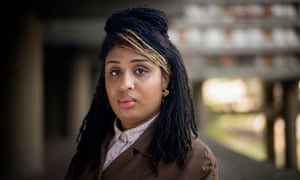
Chardine Taylor-Stone, 31, who works in the arts in London
‘The pressure to be perfect feels heightened to me as a black woman.’ Photograph: Sarah Lee for the Guardian
As a child I felt pressure to be a certain kind of perfect, so I wanted to look pretty and nice while my male cousins were running riot, that sort of nonsense. I wanted to marry a man and get a job.Now I am an adult my aspirations have changed and I am a lot more confident about who I am. I’ve broken out of those narrow expectations, but I still feel a lot of pressure in terms of my career.
I am one of few black working-class womenin my industry,which is dominated by white men. Most of the black women I see in the arts are personal assistants;none of them are working in a position that gives them autonomy – although they usually end up running a lot of things anyway.
I definitely have impostor syndrome; that’s defined as self-doubt and a sense of intellectual fraudulence thatoverrides any feelings of success. I didn’t have this so much before, when I was working in call centres, but I feel it now in a predominantly upper-middle-class environment. It’s weird being the only person of colour or the only one with a certain accent – it makes you feel as though you shouldn’tbe there. I sometimes suffer so much anxiety about sending an email, worrying about whether I will phrase it correctly. It’s silly because I’ve done well and proven myself, I have my own flat and a good job, yet that doesn’t feel good enough.
The pressure to be perfect feels heightened to me as a black woman because my mum always told me I would have to work harder than a white person to get ahead. It is true but it’s a self-defeating aspiration.
Perfection, or what society deems perfect, is not attainable for everyone, but it feels even further away for a woman of colour. The image of perfection is a certain physical type: a skinny woman with blond hair etc. Those things are not even half attainable to you, and you sometimes feel you were born imperfect.
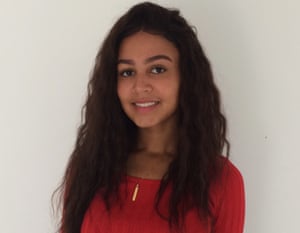
Salma Al-Hassan, 18, student at Warwick University, from Oxford
‘I wish I could be more relaxed about how I look.’
I feel the need to look perfect all the time. I am not sure where this obsession comes from but social media definitely makes it worse.
I got Instagram when I was 14 and growing up with it has really affected me. I spend ages scrolling through the site and seeing images of women with perfect hair and makeup, thinking I should look like them – even though a lot of the time the pictures have been altered. I have always felt self-conscious about my hair because it wasn’t long and straight like the girls I saw online. I would see all my friends with their silky long hair, so easy to brush, and think: “I want that.” I got hair extensions to make my hair longer, which cost a lot but now I am trying to love my natural afro hair again. I want to embrace my natural curl.
Social media also brings the pressure of getting lots of likes; a lot of people post at “prime time”, which is about 5pm, when everyone is online. I know friends who will say: “If I don’t get 40 likes I am deleting the picture.” I’m not majorly worried about this, although I have deleted photos before, but afterwards thought: “That was stupid and I shouldn’t care what other people think.”
Another source of pressure for me, personally, comes from the fact that the media has become obsessed with a particular aesthetic for mixed-race and black women. We are only deemed attractive if we have tiny waists and large hips and lips. Over the past few months I have started to become very self-conscious about my lips, which are not as full and beautiful as other black women’s. I don’t have plans to get plastic surgery, but if I did get anything done it would be lip fillers because it just seems to be a fashion thing now – lot of celebrities get it done.
I wish I could be more relaxed about how I look: I am getting better gradually but I still always try to look good, and always put on makeup. While nowadays there is definitely a much more diverse idea of what beauty is, there are still stupid stereotypes which people are stuck in, myself included. There is still a long way to go for women to accept themselves for who they are.
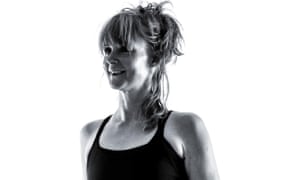
Anna Robertshaw, 37, a yoga teacher from Tunbridge Wells
‘From the outside my life looked great, but inside I was struggling.’
My early 20s were a bit of a whirl. I got pregnant with my eldest at 23, which was wonderful; at the time I was still together with my husband,who was my childhood sweetheart. After our son was born we set up home in Tunbridge Wells and I quit my job to become a full-time mother. My husband had a wonderful and well-paid job and so we moved into a beautiful home, and it wasn’t long before my second son came along. Then, when he was five months old, I got pregnant with my third boy.
From the outside my life looked great, but inside I was struggling. I felt a lot of pressure to be a perfect mum, and this got worse when my boys started school. I couldn’t help but compare myself to other mothers, and to think their children were really polite and wellbehaved. I felt lost and had no confidence in my ability to raise my boys in a way that was right for me.
Depression and anxiety came on thick and fast. I was prescribed antidepressants, but I soon realised they were not for me. I remember sitting out in the garden, feeling so detached from my boys. It was like I was looking at them through a screen. I stopped medication and sought other means of help, eventually finding homeopathy and yoga.
My life took a different course after this, and I separated from my husband. Part of my recovery was letting things go, and starting to take charge of my life and think about what was right for me. For so long, I had fitted into everyone else’s idea of who I should be, and I was so afraid of breaking that image, but it was making me miserable.
With age comes wisdom and now I am happy with my new partner and my life in general. I am much less harsh on myself and have realised everything cannot be perfect all the time.
The biggest lesson for me, in terms of losing the urge to try to be perfect, was becoming a mum: it taught me that it’s not all about me, it’s all about them. Kids have their own views and sometimes speak more truth than grownups. They also taught me that I couldn’t possibly maintain a tidy, clean house all the time and neither could I maintain my body shape or appearance because of the effect being pregnant for years has had on them.
My advice to young people today would be to find a hobby or passion that brings you joy and don’t compare yourself to others. Sometimes it’s our biggest failures that teach us the most valuable lessons and letting things fall apart isn’t the end of the world – it’s a chance to rebuild it.
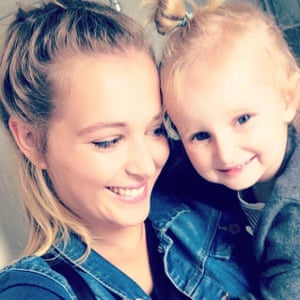
Lotta Sampson-Stone, 22, a student and single mother from Plymouth
‘Being a mum, in particular, is a lot of pressure.’
I am quite critical of myself as a single parent. I am conscious of trying to portray myself online and to family as the perfect mother and now I am at university I also want to be a perfect student. It can be hard to juggle everything.
I moved to Plymouth from Lancashire for universitylast yearand have been desperate to make it work, but it’s hard. I worry that I’ve not spent enough time with my daughter and too much time in the library, or that I’ve spent too much time with her and not enough time socialising.
Being a mum, in particular, is a lot of pressure. On Facebook I see mothers saying: “I baked with my boy today and we made pasta necklaces.” When you’ve just plonked your kid in front of the telly it makes you think: “Should I be doing that?” But it’s hard to be a full-time student, single parent and do baking and arts and crafts activities as well.
I made a conscious decision only very recently to limit time spent on social media. I did not want it to impact on how I viewed my life with my daughter and what I could and could not provide for her. The best thing I can give her is a mum who’s totally happy and present in the here and now – she doesn’t care that her mum isn’t a size six or that the flat gets cluttered..
I hope my daughter won’t grow up as insecure as me. I hope she never negatively compares herself to others and that if she recognises differences she embraces them and does not feel they make her less of a mother, student, woman or human being.
Kate Goodrum, 18, a student at Cambridge University, from London
‘One thing I have learned is that being perfect doesn’t always make you happy.’
Even as a girl I always had a perfectionist streak. While other children went out and got cheerfully muddy I would be held back by a fear of looking scruffy, and even in primary school I worried about not getting good grades. So the drive for perfection was always there, but as I got older it took hold in a more negative way and led to an eating disorder. I became very critical of how I looked, to the point where my body mass index got really low and I was told by doctors that I wouldn’t be able to sit my GCSEs if my health didn’t improve.
This was so hard to take because I’ve always striven for perfection, academic as well as physical. In fact, it was the wake-up call I needed and I went for treatment. By the time my A-levels came around I’d put on weight and was much better physically, but there were still underlying issues and insecurities.
Eating disorders never really go away, and even four years later, although I’m much better, I still compare myself to others and feel bad about how I look, thinking I am too fat or not tall enough and I don’t have abs.
I have sort of come to terms with the fact that being a perfectionist is part of my personality. I’m never content with anything I have achieved. I got into Cambridge University last year and while I am excited about starting I am also worried about the workload. I hate not being the best at everything and I worry I will be the dumb one there as other people will be so clever and multi-talented. I am worried I won’t be able to keep up.
Despite this, all I’ve experienced has taught me to try to be less harsh on myself. One thing I have learned is that being perfect doesn’t always make you happy. You can have a great body and do well in exams but it doesn’t solve all your problems – even my response to getting into Cambridge has made me see that.
In my mind the perfect woman is successful, happy and not stressed. Someone with a good social life and lots of friends. I suppose someone who has everything really, but then the older I get the more I realise that this ideal probably doesn’t exist. Maybe it’s time we stopped striving for something else and started celebrating what we have now.
A new study suggests more than three quarters of workers aged 16 to 64 have experienced symptoms of poor mental health, and nearly two thirds of those with mental health problems believe work was a contributing factor.
Many of the 20,000 employees surveyed by the charity Business in the Community employees found their employers lacked awareness, training and responsiveness to mental health issues. More than half said their employers took no action when they disclosed their symptoms of poor mental health.
We’d like to hear from you about your experiences of mental health in the workplace. Do you feel able to discuss mental health in your workplace? Have you had a positive or negative experience when you have discussed your mental health? Are you an employer who has experience of building a workplace culture that supports good mental health?
You can share your views by filling in the form below – completely anonymously if you would prefer. We’ll be putting together an article highlighting your views to coincide with World Mental Health Day on Monday 10 October 2016.
New figures show in June that nearly a quarter of a million children and young people were in contact with mental health services for problems such as anxiety, depression and eating disorders.
The NHS data highlights the scale of the growing crisis in young people’s mental health. But what help is there for those who need it? Research shows 28% of children referred for support in England – including some who had attempted suicide – received no help in 2015.
We asked for your experiences of children’s mental health services in England, receiving responses from parents, teachers and young people themselves. Here are some excerpts from the comments we received, condensed and edited for clarity.
Beth Ackers, 18, Merseyside
I went to the doctor last year because I was feeling depressed and anxious. I was nervous about going to see my GP as I wasn’t sure what was wrong with me. My mum came with me and I think she did most, if not all, of the talking. I was just too emotional and worked-up to speak properly.
I was immediately referred to child and adolescent medical health services [CAMHS] and an assessment appointment was set up. After this, I was told I would only have to wait six weeks, but when I hadn’t heard anything by 12 weeks I was told that they would need to do the initial assessment again. I was then referred to cognitive behavioural therapy and given six sessions. However, when I got to the end of these sessions they said that I actually needed different treatment. The person who saw me felt that my issues were more ingrained and talking to a counsellor or therapist might be more appropriate. I was told this at the beginning of June and still haven’t got an appointment to talk with someone. Since then, I’ve turned 18 and am not sure how this will affect my treatment. The whole experience has made me feel quite isolated and abandoned. It took a lot to talk about how I was feeling, and now I feel like I am being ignored. I also found the service quite disorganised, and doing the assessment again was stressful. I cannot afford to get private counselling and am just hoping that I was will be offered someone to talk to at my university when I start soon.
Azia, 17, West Yorkshire
I went to see my GP in 2014 about anxiety and depression. I had been feeling hopeless and helpless, tearful, with no motivation or interest in doing anything. I was not getting any enjoyment out of life and had suicidal thoughts. From around the age of 13, I also experienced anxiety. The physical symptoms were headaches, soreness in my limbs, bloatedness (and with that increased trips to the toilet), sweats and shivers, loss of libido and increased sleeping.
My doctor recommended that I get help from a local mental health charity called The Market Place before considering children’s and adolescent’s mental health services. The counselling was not helpful, so I went back to my GP who referred me to CAMHS.
My assessment happened within three to five months and I was given a case manager and began family therapy soon after. We soon discovered that it wasn’t the right therapy for me and so I began mindfulness-based cognitive therapy (MBCT) a month later.
I am currently undergoing cognitive behavioural therapy (CBT), which I am finding very helpful. The waiting period for this therapy was over six months however, which was very frustrating. Having said that, I could still contact my case manager if I needed to, and she was always very helpful.
Overall I have had few problems with CAMHS and all the medical professionals I have come into contact with are excellent. They are superb listeners and have always asked me what I felt was best for me as well as giving their professional opinion. Many people slate CAMHS without appreciating the good they do and the lack of control they have over certain areas, such as waiting periods.
The waiting period I endured for CBT was rather long and it allowed my problems to get worse. However I am reluctant to criticise CAMHS for this because if they were given adequate funding from the government this wouldn’t be a problem.
Rose Grace, 24, Manchester
I was 14 when I was diagnosed with anorexia. Having an eating disorder was one of the worst experiences of my life, a situation made worse by children’s mental health services. Firstly, the therapist I was assigned to made me feel uncomfortable; it felt like he was blaming my parents for my situation and I didn’t feel I was being listened to. I ended up working out for myself what was causing my eating disorder.
Eventually, my condition got worse and I was admitted to hospital as an inpatient. However, I wasn’t admitted as a patient in a specialist unit for eating disorders and the staff didn’t seem to have any experience treating people with conditions such as my own. They made me feel I had brought this all on myself. A few weeks later I left hospital and despite being physically better, I was psychologically worse. It was only because of my parents that my condition improved over the next few years. They spoke to another therapist who helped them understand how to help me. The biggest step forward was talking about my anorexia differently and viewing it as a negative voice separate from me. My parents then would say to me, “I know that this is not you, it’s your anorexia” and I would realise they were right. Being able to visualise it that way helped me to beat it.
Leo Winkley, 45, headteacher, York
This is a really important issue for schools – the simple fact is that we are having to plug the gaps in provision and cover the ridiculous waiting times for children to be seen in a massively overstretched and under-resourced CAMHS. Solutions that we have put in place include training teachers in mental health first aid, employing a team of counsellors for drop-in sessions and developing a more proactive mental health and wellbeing course within our personal, social, health and economic programme. We are very lucky to have the resources to do this. There needs to be investment to allow schools to equip teachers better; whether we like it or not, teachers will be in the frontline on the critical issue of children’s mental health.
Whether we like it or not, teachers will be in the frontline on the critical issue of children’s mental health.
There are times when a school really needs to refer a child on to experts. This is where the real problems lie – the lengthy delays. With an under-resourced CAMHS, the management response seems to be to make the referral thresholds higher and higher. In this situation, the school can only put its own support, monitoring and reporting measures in place and put all reasonable pressure on the local CAMHS provider. It’s very important that pastoral care in a school doesn’t desensitise the public to these issues and only deals with the most acute or chronic cases. Early and sensitive intervention can make a big difference.
Anonymous, 17, London
Initially, I went to the doctor for my low and high moods, including hallucinations, delusions and suicidal thoughts. Going to the GP was daunting, but I found the doctor empathetic and professional. She called CAMHs and the reply was instant. I was contacted the next day and asked to come in the day after. Everything happened swiftly. I met a family therapist for my first session in which I gave information about my symptoms and what had happened to me. My next session was with a psychiatrist whom I then started to meet weekly, even though I was reluctant to talk. My psychiatrist was very helpful and compassionate, and seemed to care about me as a client. I regularly attended sessions in which we would discuss techniques and strategies, go through my thought processes in trying circumstances and discuss what was important to me. I was made to feel comfortable and secure, and never judged. I was very satisfied with how things were going. However, I do understand that friends who have gone through CAMHS have not been as lucky. I was told in all of my sessions where I could go for help, who I could talk to and I was given all the support I needed.
I am still attending my fortnightly sessions. I have not yet received any medication, as they did want to put me on anti-depressants. However, they were worried about the potential increase of suicidal thoughts. They also wanted to put me on anti-psychotic medication, but, were reluctant because of my age. I have not received a diagnosis, but they are still investigating.
Anonymous, 51, Buckinghamshire
My children have had ongoing mental health issues and have received support from our local CAMHS over the years. However, local services have deteriorated significantly over the past five years.
My youngest child has had repeated referrals to CAMHS over the last two years by their school and GP for their deteriorating mental health difficulties. On every occasion we were told they didn’t meet the threshold for therapeutic help even though they were self-harming, threatening to kill themselves and having increasingly dangerous angry outbursts requiring police interventions.
In desperation, I insisted that my youngest be referred to a specialist hospital team for a second opinion. Their diagnosis was early bipolar syndrome. They prescribed medication to help and my child was referred back to local CAMHS for ongoing care.
Sadly, my child made another attempt on her life which required hospitalisation as an inpatient. After a seven-day wait at home, the only bed available was more than 300 miles away from our home. My child has been resident there for more than two months and no bed closer to home has become available.
Having my child sent so far away has left me feeling helpless and unable to support her as much as I would like. Communication has been very difficult both with my child and the hospital staff and I have found myself constantly having to chase for information and to reassure my child. Visiting has been restricted to weekends; it’s a five-hour drive from where we live.
Initially we were told the mental heath services would continue to seek out a bed closer to home but that has not materialised. My child was initially relieved to have had a bed located but upset that it was so far away. They miss their home comforts, our pets and family. These things have, I feel, added to everyone’s distress.
We are still waiting for local CAMHS to share their support plan for when my child returns home. Our local CAMHS does not offer family therapy such as art therapy, owing to cuts.
James Downs, 27, Cardiff
I was a high-achieving young boy and at 14 I developed obsessive compulsive disorder (OCD) and anxiety about my appearance. It got to the point that it would take me ages to get ready and I kept skipping school without telling anyone why. After a year of doing this, I told my parents and the school the reasons behind my truancy and was eventually referred to children’s mental health services. I was seen quickly but the quality of treatment wasn’t very good. I felt like they wanted to treat me for OCD without talking about any deeper issues going on. I was offered help but soon my OCD changed into an eating disorder and I became anorexic. I didn’t feel they were working with me to improve my health, but that they felt I was badly behaved. The whole focus was just on, “You must gain weight” rather than them asking, “What’s going on to make you feel this way?” Eventually I gained weight and was given a lot of medication (anti-depressants etc) which I wasn’t happy with. I was offered care in my community and sent home, with a team around me to help. I gained weight but developed bulimia and no one seemed to care about this, so I just stopped talking to people about it. I am still working through my issues with food and cannot help but feel that my life might have been different if these issues had been properly dealt with when I was younger.
I know there are more specialist services in place for treating eating disorders now, but I also know there are cuts to CAMHs and what’s on offer is quite patchy. This makes me worry for other young people as I don’t want them to go through what I did.
Mental health is everybody’s business. The government needs to invest more so that we, as classroom teachers, receive proper training to deal with these issues and have the support in place when exploring the best way to move forward with a child. There’s a fear of delving into mental health because of a lack of knowledge – that’s why teachers need a clear structure for support. It’s an issue the government says it cares about, but at the moment it isn’t doing very much.
The waiting time for CAMHS is not a hidden issue. You hear report after report about the impossibility of having a child referred and the lack of help when you get there. There is pressure for teachers to plug the hole left by a lack of services. We are constantly trying, without qualified knowledge, to help children and what we can offer depends on school funds and whether we can get specialist help, such as a counsellor on site. The CAMHS professional helpline is my biggest support. I’ve had many a conversation about children who I knew didn’t meet the threshold for referral but still needed help. The people on the lines are always supportive, never laugh when I say for the millionth “Sorry to bother you, but …” and “I hope I’m not wasting your time, but …” and they certainly always have a way forward in terms of strategies to implement and interventions to support a child. However, this usually isn’t enough and the children really need one-to-one professional help as soon as possible. We need to have a real focus on what the different branches of mental health are, how to identify them, where to go for support when you don’t meet the criteria for diagnostic assessment and examples of interventions to implement for each problem area.
Stacey Hirons, 42, work in crisis intervention, Coventry
I work for Coventry’s crisis intervention service, supporting young people aged 11 to 18 (although often we have younger referrals, too). In my experience CAMHS is a service under immense pressure with substantial waiting times. When support does come it can change crisis situations overnight. Frustratingly, this is the exception. We are also often told CAMHS cannot work with a child until their home situation is settled, but mental health issues put enormous stresses on families, meaning the situations are unlikely to be resolved without CAMHS support. It’s a vicious circle. One other bugbear is that CAMHS are not able to visit families at home and see the young people in their real-life contexts. This is especially difficult for our service: a young person who is too anxious, aggressive or violent to attend school and/or be out in the community is hardly going to want to come to hospital appointments. In my experience, sometimes there are delays and sometimes the service is brilliant at responding. What is really needed is investment from central government, and work done to create a positive message about the importance of mental wellbeing.
Stuart Hannah, child and adolescent psychotherapist, Leeds
I have worked in different child and adolescent mental health services in London and the south-east as well as the Yorkshire region since 2003, when I left social care to specialise in child mental health. The work is interesting and varied in as much as you never really know what stories people have to tell about their lives and what will unfold in the consulting room.
However, the work is undertaken in a context of perpetual change and economic uncertainty. Every service I have been in has suffered from collective low morale and very high levels of uncertainty about the future. To a degree, a traumatised workforce is trying to work with a traumatised population and this is a worrying cocktail.
Parents often arrive thinking there is something wrong with their child and expect you to make them better immediately. As stories unfold, it usually emerges that difficulties are collectively located in all family members to varying degrees, as well as the parental couple relationship, formative experiences in early childhood and the modus operandi of the parents.
I wonder whether CAMHS should be completely rethought and stripped back to basics. I am partly reassured by the Future in Mind agenda and some of the local transformation plans. The emphasis on multi-agency collaboration makes good sense as does matching service provision closely to local need, identified via robust data collection.
However, the collective wellbeing of children and families in our society directly correlates with economic and social realities and their impact on how people, particularly parents, feel. Now more than ever we need to encourage empathy in all human relationships, and in communities underpinned by core values of respect, compassion, tolerance and equal opportunities for all. Properly funded and creatively delivered, CAMHS can make an active contribution to empathy development in individuals, families and organisations, but it needs to be thought of as part of a broader picture of how we want our society to look in a decade’s time.
Anonymous, Herefordshire
When my daughter was 10, she struggled with the fact that her father had decided he no longer wanted contact. This really knocked her for six. She became angry and tearful. She’d come home and scream and hit her pillow. She’d burst into tears at random times. Her work at school suffered. I went to the GP and explained the problems and asked for counselling. He said her school should provide help for this. Her primary school had nothing they could offer so I asked for help through the NHS. She was referred to CAMHS but they sent a letter back explaining that they couldn’t help as she didn’t meet the criteria. I looked into private treatment, but as a single parent I couldn’t afford private counselling at £40 a session.
When my daughter reached secondary school, they were far more helpful and provided weekly counselling sessions for a year and a half. My daughter is now doing much better at school and is no longer angry any more. She understands that the situation is not her fault. If it hadn’t been for her secondary school I’m not sure what state she would be in now.
There appears to be no help for children experiencing mental health issues unless they’ve reached a point of self-harm. CAMHS need to intervene at an early stage to prevent further harm. In my experience, as an adult you can walk into a GP surgery and come out with a referral for six sessions of therapy. This facility doesn’t seem to exist for children.
Anonymous, 24
I was looked after by children’s mental health services from the age of 13 to 18. I went to see my GP at the age of 12 because of depression due to bullying. I didn’t know what to do and, when I went to see them, my parents didn’t know what to do. My school was terrible, really unhelpful. My doctor explained that there was a long waiting list to be seen and it was during this wait that I tried to kill myself. In fact, one of the only negatives of my experience was the long waiting time to get help. I understand it’s even worse now, which is worrying.
After I made an attempt on my life, I was seen straight away and the care I received from that point was excellent. There’s no doubt in my mind that the nurses and doctors who cared for me saved my life. I always felt supported and listened to. The nurses always wanted to help me. Even though it’s their job to listen, it felt like they really cared. Also, because I was 13, it would have been easy for those looking after me to just say, “We know what is best for you,” but they always took my opinion on board. They listened to my feelings.
I saw a range of psychiatrists and counsellors over the years, and was diagnosed with a variety of conditions including anxiety and agoraphobia (a fear of being in public places). I had my ups and downs, but steadily got better during my time with them. I never tried to kill myself again.
I do feel that the transition to adult mental health services is difficult. It felt strange that as soon as I turned 18 I could not be seen any more unless I went somewhere else. This felt really scary, and it would be good if there were more support in place or if the transition was slower and more gradual.
Anonymous, children’s mental health services
I work in CAMHS and we are massively underfunded. As well as this a lot of third-sector organisations that used to look after young people’s wellbeing have been cut or shut, which means we cannot refer people elsewhere if they don’t meet our threshold. I have been working with CAMHS for many years in a range of different areas. The biggest challenge is demand v capacity. There’s massive expectations on staff to deliver but with very limited resources. That’s one of the biggest frustrations because we are here to help young people and sometimes feel we simply cannot do our job. It feels like the NHS is being slowly deconstructed and staff morale is so low.
We do sometimes have to turn people away we should see because we get so many referrals, and this means the threshold for who we can help keeps changing. What we can now deliver is care for those in acute need. There are now a lot of young people who are left to struggle until it gets to the point of acute crisis. They don’t receive help early enough.
From a staff perspective, we feel frustrated and under a great deal of pressure. The systems we use are slow, clunky and inefficient. CAMHS does care about young people and does want to provide the best service, but people’s expectations are unrealistic as they don’t understand the stress we are under. It’s not that we are not interested or not working hard enough, we simply don’t have the capacity.
Abby, 19, west Sussex
I first sought help about three months before my 18th birthday, but because of my age CAMHS refused to see me. They said that by the time my referral was processed I would be an adult. The first – and only – time I saw a CAMHS worker was in hospital after I’d tried to kill myself two weeks before my birthday.
There should be something in place to help people who are not quite old enough for adult services, but deemed too young for children’s ones. For example, if someone was 17 and a half years-old at the time of their first assessment, they could be referred to adult services instead of CAMHS. I think this would prevent people like me from falling through the net.
Now I am an adult, I have a wonderful GP who is hugely supportive and proactive in fighting my corner and making sure I get the help I need.
Tina McGuff, 46, Dundee
I work in finance but do mental health support voluntarily after setting up my own charity. My charity is for young people and I help families try to access services. I also give talks about my experiences with mental illness in schools and universities to raise awareness and break the stigma. I want to help children get seen before they reach crisis point.
When I was younger, I was sectioned under the Mental Health Act with anorexia and I nearly died. I also ended up having a psychotic episode in my 20s and suffered from orthorexia until my mid 30s. I am now fully recovered and have published a book about how we have to help each other and lift the lid on these problems.
I visit parents who need advice in helping their children, offering them support and a shoulder to cry on. I also try to put them in touch with other experts who might be able to help. The most common problem they have is not being able to get an appointment with CAMHS quickly. In one instance a girl tried to kill herself in January but wasn’t seen until June. That is just unacceptable.
We need ring-fenced resourced money to fund mental health services in this country and more support in schools. I talk in schools and this can make a huge difference. Often kids will come and talk to me afterwards and tell me about their own issues. The school can jump in and help that individual. Early intervention is key and if we as a society can talk about mental health openly then it will help save lives.
Anonymous, 39, North Yorkshire
My son is 14 and was referred to CAMHS last year with anxiety and intrusive thoughts. His issues gradually appeared – it started with him having nightmares, and then he got upset over minor things. Soon it developed into daily panic attacks at school. These issues came after a particularly difficult year with seven deaths in the family and a divorce between myself and his father. We also moved four times in six months, so this could have contributed to his stress.
We went to the doctor and they immediately referred him, but it was eight weeks before he was assessed. In this time, he was offered no support and I was surprised by how long it took. Luckily, he didn’t decline too much during this period, but it was still a battle to get to school, and he worked out that if he said he was sick then he would be sent home.
After his assessment, he was seen once a week and offered cognitive behaviour therapy as well as mindfulness techniques etc. It has really improved his anxiety but he still suffers from intrusive thoughts. He believes he is worthless, a burden and that everyone hates him. This aspect isn’t really being dealt with and now it’s time for him to be discharged. He has been told essentially that he has a certain amount of time to recover and if that doesn’t happen then tough. He will leave the service without some issues being appropriately handled.
Anonymous worker, mental health social worker
One of the issues is the lack of hospital beds and specialist units. Often the situation you get is that on a national scale, children will be shifted around the country because there aren’t enough beds on a local level. Where I work, for example, children end up far away from their family after assessment. I recently saw a child who was placed miles away and they were detained in hospital for their own protection, against their will. They spent nearly a month away from home and then stayed in hospital for treatment. These children are isolated from their families, from services and professionals local to where they live. He was away from school and friends in a little private hospital. It wasn’t even an NHS bed – and it’s not uncommon for the NHS to pay private hospitals in this way.
I see this happen often. This year, in terms of the assessments I’ve made on children, it’s happened a lot. It hinders recovery because young people need to be in a local hospital, where they have local community teams feeding in. They also need to be discharged as soon as possible to maintain a normal school and family life.
Kerry-Mae Doogan, 21, Wigan
I was first referred to CAMHS aged 14 by my family GP. At the time there was a waiting list of up to a year for help, and in the end I waited for more than seven months to be assessed. Once I was seen by CAMHS I was moved between workers and my regular appointments were often cancelled without warning. In the end I discharged myself from the service because it was doing me more harm than good. Instead I went to a local charity counselling service which I found much more helpful.
I experienced delays before and after the initial assessment. In that time my health got worse, although I was fortunate I was able to cope during this period.
My experience would have been improved by not being shuffled between various workers who made me repeat my background information over and over again.
I have been in recovery for two years now and I no longer use medication or have much contact with mental health services. When I was 18, I got involved with the Royal College of Psychiatrists as a young adviser to their quality networks for inpatient and community CAMHS. I am working with them to improve standards of child mental health services. I don’t want other children to be let down the way I was.
Natalie Milner, 22, Leeds
I had panic attacks during school several times before I finally asked my mum to help me. We made an appointment with the doctor about one or two months after the first attack.
The doctor seemed convinced I thought the attacks were heart attacks, which she brushed off, by saying: “You know you didn’t have a heart attack don’t you?” I never mentioned a heart attack – I didn’t know what was going on with my body. She suggested next time it happened to just carry a paper bag around with me and ventilate into it. She never told me what a panic attack was and never gave any thought to me having anxiety issues.
My mum eventually pushed for a referral and, after a six-month wait, I received cognitive behavioural therapy through CAMHs. I continued to have panic attacks more and more frequently during the waiting period. I remember it making me feel scared to be in public and made me more and more isolated from my friends. No one really understood what I was going through. I once had a panic attack in front of my best friend and she said, “Oh please don’t”. I didn’t have help or a diagnosis, so to everyone else it seemed like I was acting out.
I feel my age was definitely the reason why I wasn’t taken seriously. I felt like they all thought, “What do you have to worry about – you’re just at school”. Everyone believed it was all my control and that I could choose not to have panic attacks and choose not to be depressed. My mum wouldn’t let me tell my grandparents as she didn’t think they’d understand.
I remember asking adults, teachers and my doctor every week and I never got the answer to what this was (a panic disorder). I found out what a panic attack was on the internet late at night and finally it all made sense. I can now control my panic attacks if they resurface thanks to the help of the CBT I had when I was a child. I just wish I had been taken more seriously from the start.
Anonymous, 47, Monmouthshire
Last year, my child, who had been having suicidal thoughts for at least two years, was diagnosed with severe depression and anxiety disorder. She was 15 at the time.
We were lucky she had enough of a self-preservation instinct to see a school counsellor who got her to see the GP. We were told there was at least a nine-month wait to be treated by the CAMHS in south Wales. Even though she was feeling suicidal, because she hadn’t actually self-harmed she wasn’t enough of a high-risk patient to make her a priority, so she had to wait. During this time I watched my compassionate, funny, lovely daughter disappear before my eyes. She became angry, sad, lonely and despairing. Her social life was non-existent and her grades got worse as her anxiety grew. She was referred to a private psychologist who saw her for seven months twice a month. It cost a fortune, but we had no choice.
Gradually she improved but the psychologist thought medication would be useful. In order to get this prescribed she had to see a consultant psychiatrist, which happened within six weeks of a second referral to CAMHS.
Since then she’s been on a low dose of medication and has agreed to do some group therapy to deal with her anxiety. CAMHS and the NHS have been great now she’s in the system, but I don’t want to think what would have happened if we hadn’t got her help privately in the long wait to be seen. During that wait she has battled with her feelings of despair and studied for GCSEs. It was an incredibly stressful time for her.
Our experience would have been greatly improved if she’d been referred more quickly. By the time a child asks for help they are already quite unwell. Initial help needs to come within a couple of weeks. It’s very hard to ask for help and the longer mental health issues go on, the harder they are to resolve.
In the UK and Ireland the Samaritans can be contacted on 116 123. In the US, the National Suicide Prevention Hotline is 1-800-273-8255. In Australia, the crisis support service Lifeline is on 13 11 14. Hotlines in other countries can be found here.