promising etiketine sahip kayıtlar gösteriliyor. Tüm kayıtları göster

5 Ocak 2017 Perşembe

Don"t loose your snooze: the technology that"s promising a better night"s sleep

A bed that adjusts itself in the night to stop people from snoring. A princess and the pea-style gadget that fits under a mattress and monitors sleep. A “water-based, app-controlled mattress topper”, which will encourage deep slumber.


Sleep technology is one of the biggest trends at CES, the world’s premier electronics show, which opened to the public on Thursday.


The range of products on show reflect the growing interest in solutions to insomnia and other sleep problems – as well as the predictions that the global sleep market will be worth $ 80bn by 2020.


The “Sleep Number 360 smart bed”, made by bed company Sleep Number, is among the most eye-catching products. The mattress can detect a change of body position during the night and uses air chambers in the mattress to contour to the sleeper’s frame.


Sampling the bed on Thursday morning, a Guardian reporter was promised “the most comfortable, effortless sleep” of his life.


The reporter did not actually fall asleep during the three minutes he spent on the bed, but could feel the bed adjusting to support his lower back and shoulders. Invited – by a video demonstration screened above the bed – to turn to his side, the bed adjusted again.
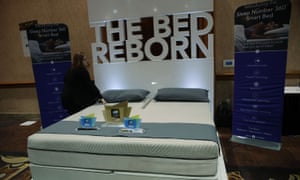


The Sleep Number 360 smart bed at CES in Las Vegas, Nevada.


The Sleep Number 360 smart bed at CES in Las Vegas, Nevada. Photograph: Alex Wong/Getty Images

A video presentation explained that the Sleep Number 360 bed is “even smart enough to sense snoring before you do”.


Should it detect a snorer, the bed will raise the top of the mattress by 7%, which Sleep Number claims will stop the snoring. “It’s the only bed that goes to work when you go to sleep,” said Kelley Parker, senior product brand manager at Sleep Number.


The bed is able to detect the sleeper’s heart rate, breath rate and motion, to provide an excellent premium sleep experience, Parker said. It can adapt to two different sleepers’ positions. But this kind of sleep, it seems, does not come cheap.


Parker said that “pricing is not finalized” but that it would be similar to existing Sleep Number pricing. (The manufacturer’s top-of-the-range bed retails at $ 7,099.99 – although it is currently on sale for $ 5,899.99.)


A recurring theme at CES is connectivity. Almost every device on show – including some washing machines and ovens – will connect to cell phones and even smart home devices like the Amazon Echo or Google Home.


The Sleep Number 360 bed, and most of the other sleep devices on show at CES, connect to an app on a smartphone to give the user information on how they slept, and even remind a person when they should go to bed. The Sleep Number 360 will also connect to your thermostat to control room temperature during the night. (If you can afford a wireless thermostat after buying the bed.)


A few stalls along from the magic bed, Sleep Ace was demonstrating its own line of sleep-friendly products. The Sleep Dot attaches to the sleeper’s pillow and feeds information back to a cell phone on movement and sleep cycles.


Some wearable devices already to this, but the attraction of the Sleep Dot, which costs $ 49.99, is that you don’t need anything strapped to your wrist.


The National Institutes of Health estimates that 50 to 70 million Americans suffer from some kind of sleep disorder. Nearly one in five adults are said to suffer from chronic insomnia, while in February 2016 the Centers for Disease Control and Prevention said more than a third of people in the US do not get enough sleep.
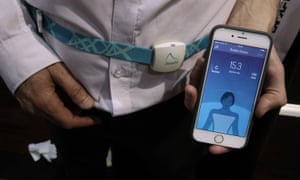


Another product at CES, 2breathe Sleep Inducer, is a device that helps people sleep using guiding tones composed from the user’s breathing.


Another product at CES, 2breathe Sleep Inducer, is a device that helps people sleep using guiding tones composed from the user’s breathing. Photograph: Alex Wong/Getty Images

Sleeping less than seven hours a day can lead to increased risk of obesity, diabetes, heart disease and “frequent mental distress”, the CDC said.


One product that may be appreciated by fans of the Hans Christian Andersen, author of the The Princess and the Pea tale, is the Emfit QS. It’s a sensor that can be installed under a mattress to monitor sleep. It connects to a smartphone to provide “comprehensive reports” about “physical recovery, stress levels, and sleep quality”.


The company says it will be of particular interest to athletes seeking to track physical recovery. Like the Sleep Number the Emfit QS will also send alerts telling a userwhen to go to bed, which could potentially be helpful (or annoying).


Another sleep device generating interest at CES is the “Kryo Sleep Performance System”: a mattress topper that cools down to 60F(16C), which the company claims is optimum for deep sleep.


The Kryo connects to a smart phone – of course – and within ten nights of collecting data it will understand a sleeper’s habits enough to optimize its temperature. The mattress topper has been financed by an Indiegogo campaign, and Kryo estimates it will ship out some of the Kryo sleep performance systems in 2017. It is expected to cost $ 299.


Don"t loose your snooze: the technology that"s promising a better night"s sleep

4 Eylül 2016 Pazar

Welsh "deemed consent" organ donation system shows promising results

The number of families agreeing that their loved ones’ organs can be donated for transplantation may be rising more quickly in Wales than other parts of the UK following the introduction of a groundbreaking new consent system, new figures suggest.


Health officials and ministers in Wales are encouraged by how the so-called “deemed consent” system is working and NHS Blood and Transplant (NHSBT) has said the picture in Wales is promising.


Under the new Welsh system, which came into force last December, residents are deemed to have consented to organ donation unless they positively opt out.


In June the Welsh government said the scheme had already saved dozens of lives after revealing that in the first six months, of the 60 organs that were transplanted, 32 came from people whose consent had been “deemed”.


New figures from NHSBT show that in the financial year 2015/16 the family consent/authorisation rate increased in Wales from 49% to 59%. Across the UK the rise was smaller: 58% to 62%.


Although the overall UK rate is higher, the more significant percentage increase in Wales last year may signal a change in attitude.


The number of living donors in Wales also increased by 20% to 49. Across the UK the number of such donors dropped by 2%.


Organ Donation week takes place across the UK from Monday. One priority in Wales is to get its messages across to young people and the Welsh government is mailing every new student arriving in the country this autumn to explain the system.


Under the Welsh system people who want to be an organ donor either register a decision to opt in or do nothing. For those who choose to do nothing, if they are 18 or over, have lived in Wales for more than 12 months and die in Wales, they will be regarded as having consented to organ donation.


Family consent, however, is still important because if a person has not opted in or out, relatives are still involved in the process and if they say their loved one would not have wanted their organs removed, a donation would not go ahead.


Dr Frank Atherton, chief medical officer for Wales, said he was pleased with how the scheme was working. “Things seem to be moving in the right direction,” he said. “It is encouraging. We’ve put a lot of effort into campaigns to help people understand their options. All that is starting to make an impact.”


He made it clear that the scheme was still in its very early days. The 2015/16 figures relating to family consent have to be treated with caution as the Welsh scheme was launched with only four months of the financial year to go and experts warn there could be fluctuations from year to year.


But Atherton said the move towards the system has certainly led to many more families discussing the topic. “Next year there will be a full evaluation of what the impact of deemed consent has been.”


Overall, the figures show there is still a long way to go if the UK target of increasing consent rates to 80% by 2020 is to be met. In Wales and in the UK as a whole, around four out of 10 families who were approached did not agree to organ donation taking place.


Last year in the UK, 466 patients died in need of an organ and a further 881 were removed from the transplant waiting list. Many of them would have died shortly afterwards.


Sally Johnson, director of organ donation at NHSBT, expressed optimism about what was happening in Wales. “We welcome the opportunities that the legislation and communications programme in Wales is providing in getting everyone in Wales to think about and talk about organ donation.


“We have been working closely with the Welsh government on the introduction of deemed consent and are working with them to make it a success. It’s early days, but things look promising.”


Case study


Kimberly Chard, 31, from Cardiff, who was born with cystic fibrosis, underwent a double lung transplant at the end of last year.


She said: “Every day I think of the selfless gift my donor and their family gave me, how they chose to save lives despite their loss. They are my heroes and I feel very blessed to have had the chance to live again. Having a transplant shows just how precious life is and what’s truly important. I will always treasure the future my donor and their family gave me.


“The new system has created an opportunity for everyone to get involved and discuss their choices and what their decision would be if they were ever in the situation to be able to donate their organs.


“By talking to their loved ones, people are making it so much easier for their family as they would know what their decision was and be able to honour their loved ones decision.”


Welsh "deemed consent" organ donation system shows promising results

1 Temmuz 2014 Salı

ESC Scorching Lines: 1st True Information On Promising Novartis Heart Failure Drug

The initial true particulars about the a lot-anticipated novel new heart failure drug from Novartis Novartis will kick off this year’s Sizzling Line sessions at the yearly meeting of the European Society of Cardiology in Barcelona, Spain. The meeting runs from August 30 right up until September three.


As I have previously reported, the PARADIGM-HF trial was stopped since of a extremely statistically important reduction in cardiovascular mortality in individuals taking LCZ696 (a novel, 1st-in-class Angiotensin Receptor Neprilysin Inhibitor) instead of the existing gold common of remedy, an ACE ACE inhibitor. Until we see the information it is unattainable to attain any conclusions, but it should be mentioned that there would be huge clinical and organization implications if a new drug  becomes a normal of therapy for millions of people with heart failure.


One more presentation that will likely entice a whole lot of curiosity is the SIGNIFY trial with the drug ivabradine, which is marketed in Europe by Servier and is below improvement in the US by Amgen. As I have previously reported, the European Medicines Agency mentioned that it has started out a assessment of the drug primarily based on troubling findings from the trial.


Also confident to entice interest will be two presentations on the new PCSK9 inhibitor alliorcumab beneath development by Sanofi and Regeneron. Chris Cannon will current benefits of the Odyssey Combo II study in high threat patients with inadequately managed hypercholesterolemia on maximally tolerated daily statin. Michel Farnier will present results of the ODYSSEY FH I and FH II scientific studies in patients with heterozygous familial hypercholesterolemia not adequately managed with existing lipid-decreasing treatment.


Right here is the complete record of Sizzling Line trials:


Hot Line: Cardiovascular ailment: novel therapies


  • 31 Aug 08:thirty – ten:20

  • Chairpersons: Mariell JESSUP (Philadelphia, US), Hector BUENO (Madrid, ES)


08:30 Benefits of the Prospective comparison of ARNI with ACEI to Determine Impact on Worldwide Mortality and morbidity in Heart Failure trial (PARADIGM-HF) Milton PACKER (Dallas, US)


  • Discussant: Michel KOMAJDA (Paris, FR)


08:48 A randomized managed trial of vagal stimulation for the remedy of systolic heart failure: NEural Cardiac Therapy foR Heart Failure (NECTAR-HF) Faiez ZANNAD (Vandoeuvre Les Nancy, FR)


  • Discussant: John CAMM (London, GB)


09:06 Impact of ferric carboxymaltose on functional capacity in individuals with heart failure and iron deficiency (Verify-HF) Piotr PONIKOWSKI (Wroclaw, PL)


  • Discussant:  Harry CRIJNS (Maastricht, NL)


09:24 Cardiac resynchronization treatment with a novel quadripolar lead decreases problems at 6 months: preliminary benefits of the More-CRT trial Giuseppe BORIANI (Bologna, IT)


  • Discussant: John CLELAND (London, GB)


09:42 Colchicine for Submit- operative Pericardial Effusion: The post-operative pericardial effusion (POPE-two) Study. A multicenter, double-blind, randomized trial Philippe MEURIN (Villeneuve-St.-Denis, FR)


  • Discussant: Jae K OH (Rochester, US)


10:00 COlchicine for Prevention of the Post-pericardiotomy Syndrome and Post-operative Atrial Fibrillation (COPPS-2 trial) Massimo IMAZIO (Torino, IT)


  • Discussant: Stavros V KONSTANTINIDES (Mainz, DE)


Sizzling Line: Coronary artery condition and lipids


  • 31 Aug 16:thirty – 18:00 Miscellaneous Hot Line Barcelona – Central Village

  • Chairpersons: John Gordon HAROLD (Los Angeles, US), Fausto Jose PINTO (Lisbon, PT)


sixteen:thirty The Stabilization Of pLaques Utilizing Darapladib-Thrombolysis in Myocardial Infarction 52 (Reliable-TIMI 52) trial: Main Benefits Michelle O’DONOGHUE (Boston, US)


  • Discussant: Robert M CALIFF (Durham, US)


sixteen:48 Ivabradine in patients with steady coronary artery ailment without clinical heart failure: The final results of SIGNIFY Kim FOX (London, GB)


  • Discussant: Jean-Pierre BASSAND (Thise, FR)


17:06 Efficacy and security of alirocumab in higher cardiovascular danger individuals with inadequately managed hypercholesterolaemia on maximally tolerated everyday statin: final results from the ODYSSEY COMBO II examine Christopher Paul CANNON (Boston, US)


  • Discussant: Thomas Felix LUSCHER (Zurich, CH)


17:24 Efficacy and safety of alirocumab in patients with heterozygous familial hypercholesterolaemia not adequately managed with recent lipid-reducing treatment: results of ODYSSEY FH I and FH II scientific studies Michel FARNIER (Dijon, FR)


  • Discussant: Thomas Felix LUSCHER (Zurich, CH)


17:42 The distinctions of the effects on lipid-lowering actions and glucose metabolisms in between rosuvastatin and atorvastatin in Japanese diabetic individuals with hyperlipidemia Hisao OGAWA (Kumamoto, JP)


  • Discussant: John CHAPMAN (Paris, FR)


Hot Line: Heart failure: gadgets and interventions


  • 1 Sep eleven:00 – twelve:50 Miscellaneous Hot Line Barcelona – Central Village

  • Chairpersons: Hisao OGAWA (Kumamoto, JP), Panagiotis VARDAS (Heraklion, GR)


eleven:00 Randomized comparison of a novel, ultrathin strut biodegradable polymer sirolimus-eluting stent with a resilient polymer everolimus-eluting stent for percutaneous coronary revascularization Thomas PILGRIM (Bern, CH)


  • Discussant review Patrick SERRUYS (Rotterdam, NL)


eleven:18 Autonomic regulation therapy for the improvement of left ventricular function and heart failure signs and symptoms: The ANTHEM-HF Research Inder ANAND (Minneapolis, US)


  • Discussant overview Gerhard HINDRICKS (Leipzig, DE)


11:36 Biventricular pacing for atrIo-ventricular BlOck to Stop cArdiaC dEsynchronization Jean-Jacques BLANC (Brest, FR)


  • Discussant assessment Patrick SCHAUERTE (Berlin, DE)


eleven:54 Comparison of appropriate ventricular septal pacing and right ventricular pacing in patinets acquiring a CRT-D Christophe LECLERCQ (Rennes, FR)


  • Discussant review Jagmeet SINGH (Boston, US)


twelve:12 Optimal technique and outcomes of catheter ablation of persistent atrial fibrillation: Outcomes of the Potential, Randomized STAR AF 2 Trial Atul VERMA (Newmarket, CA)


  • Discussant review Paulus KIRCHHOF (Birmingham, GB)


12:thirty EuroEco (European Overall health Financial Trial on House Monitoring in ICD Sufferers): a provider viewpoint on comply with-up costs and net financial affect of remote monitoring in 6 European nations Hein HEIDBUCHEL (Leuven, BE)


  • Discussant review Carina BLOMSTROM-LUNDQVIST (Uppsala, SE)


Hot Line: Myocardial Infarction


  • one Sep 16:thirty – 18:00 Miscellaneous Sizzling Line Barcelona – Central Village

  • Chairpersons: Lars WALLENTIN (Uppsala, SE), Karl-Heinz KUCK (Hamburg, DE)


sixteen:30 Comprehensive versus Lesion only Principal -PCI Trial (CvLPRIT): Deal with the infarct related artery only or all lesions Anthony H GERSHLICK (Leicester, GB)


  • Discussant review Shamir R MEHTA (Hamilton, CA)


16:48 In-ambulance versus in-cath lab administration of ticagrelor in STEMI individuals transferred for major PCI: the randomized, double-blind ATLANTIC research Gilles MONTALESCOT (Paris, FR)


  • Discussant review Paul Wayne ARMSTRONG (Edmonton, CA)


17:06 The British Heart Basis Fractional Flow Reserve versus Angiography in Guiding Management to Optimise Outcomes in Non-ST-Section Elevation Myocardial Infarction Colin BERRY (Glasgow, GB)


  • Discussant overview Bernard DE BRUYNE (Aalst, BE)


17:24 Nitric oxide for inhalation to decrease reperfusion damage in acute st-elevation myocardial infarction


  • Discussant evaluation Michael MARBER (London, GB)


17:42 Impact of intravenous TRO40303 as an adjunct to principal percutaneous coronary intervention for acute ST-elevation myocardial infarction: Results of the MITOCARE review Dan ATAR (Oslo, NO)


  • Discussant assessment Hans Erik BOTKER (Aarhus N, DK)


Sizzling Line: Coronary artery disease and atrial fibrillation


  • 2 Sep 11:00 – 12:30 Miscellaneous Sizzling Line Barcelona – Central Village

  • Chairpersons: Keith FOX (Edinburgh, GB)


eleven:00 Perioperative statin treatment in cardiac surgical treatment for the prevention of atrial fibrillation and perioperative myocardial harm: the Statin Treatment In Cardiac Surgical procedure (STICS) Trial Barbara CASADEI (Oxford, GB)


  • Discussant evaluation Paulus KIRCHHOF (Birmingham, GB)


eleven:18 The X-VERT Trial: A comparison of oral rivaroxaban once everyday with dose-adjusted Vitamin K Antagonists in individuals with nonvalvular atrial fibrillation undergoing elective cardioversion Riccardo CAPPATO (San Donato Milanese, IT)


  • Discussant overview Christoph BODE (Freiburg, DE)


eleven:36 Recurrence of arrhythmia following quick-term oral AMIOdarone right after CATheter ablation for atrial fibrillation: A double-blind, randomized, placebo-controlled research Stine DARKNER (Copenhagen, DK)


11:54 Impact of large-intensity statin treatment on atherosclerosis in patients with ST-elevation myocardial infarction: Final results of the prospective, longitudinal intravascular ultrasound adhere to-up review Lorenz RABER (Bern, CH)


  • Discussant overview Steven E NISSEN (Cleveland, US)


12:twelve IMPI Steroid Review: A Trial of Adjunctive Prednisolone in Tuberculous Pericarditis Bongani Mawethu MAYOSI (Cape Town, ZA)


ESC Scorching Lines: 1st True Information On Promising Novartis Heart Failure Drug

13 Mayıs 2014 Salı

Strike 2 For After Promising GSK "Stinkbomb" Heart Drug

GSK said today that a massive phase 3 trial of a as soon as highly-promising drug had failed to meet its major endpoint. Final 12 months the firm  announced that one more phase 3 trial with the exact same drug had  failed. GSK mentioned it would “further analyse the information and far better recognize the findings” but that, for now at least, it would not seek regulatory approval for the drug.


The SOLID-TIMI 52 (Stabilisation Of pLaques Making use of Darapladib – Thrombolysis In Myocardial Infarction 52) trial randomized a lot more than 13,000 sufferers inside of thirty days of an acute coronary syndrome to acquire both placebo or darapladib, an anti-inflammatory drug designed to stabilize atherosclerotic plaques. GSK reported right now that the drug did not drastically decrease major coronary events.  The complete benefits of the trial will be presented at a potential scientific meeting.


Last November GSK announced  that the STABILITY trial (STabilisation of Atherosclerotic plaque By Initiation of darapLadIb Treatment) had failed to meet its principal endpoint. In that trial darapladib was in contrast to placebo in more than 15,000 patients with persistent coronary heart condition. The primary final results of the trial had been then presented in March at the American College of Cardiology and published concurrently in the New England Journal of Medicine.


GSK stated that the two trials had uncovered “no significant safety concerns” with the drug. But an ongoing situation has been that darapladib brings about unpleasant odors of feces and urine in some folks taking the drug. This prompted 1 reporter, Matt Herper, to label darapladib a “stinkbomb of a drug.” But unless growth of the drug resumes this will no longer pose a problem for GSK, of course.


Darapladib was originally produced by Human Genome Sciences. It was a essential purpose why GSK acquired that firm.


Strike 2 For After Promising GSK "Stinkbomb" Heart Drug

14 Nisan 2014 Pazartesi

The Uncertain Long term Of A Once Very Promising Device For Decreasing Blood Stress

Following the magnificent crash and burn of the Symplicity HTN-3 trial at the American University of Cardiology two weeks in the past, the potential of renal denervation (RDN)– the after highly promising catheter technological innovation that a lot of imagined would remedy resistant hypertension– appears in doubt.


Although the gadget has not been approved in the US– and will not be accepted with out more clinical trials– in Europe and other areas it remains on the market place. So the inquiries about the technology’s future revolve close to the future route of study in the field and how the current renal denervation market place will be impacted by the trial outcomes.


The uncertainty and confusion is driven by the quite wide disparity between the findings of the Symplicity HTN-3 randomized managed trial, which found a vanishingly small blood stress decreasing effect for RDN when compared to controls who underwent a sham method, and the Symplicity global registry, which discovered a extremely huge remedy effect similar to that observed in all the other prior uncontrolled or poorly managed trials.


Medtronic, which manufactures the Symplicity RDN system and sponsored the Symplicity HTN-3 trial, explained that it “remains committed to advancing renal denervation.” The trial “confirmed the profound security of the Symplicity program,” the firm said. “We do not believe… that this trial proves renal denervation does not function further clinical research is essential to confirm this hypothesis.” The company said that “a panel of independent experts produced up of worldwide doctors and researchers… affirmed that Medtronic ought to continue to provide access to the Symplicity method as long as the business continues to study it, which we intend to do. Medtronic believes physicians need to make clinical selections based on the totality of proof, such as their personal independent expertise.”


Boston Scientific explained its own RDN technological innovation is “highly differentiated” from Medtronic’s and is “supported by compelling clinical evidence and a powerful clinical program.” The firm has nevertheless to figure out its subsequent methods.


Michael Böhm, who presented the registry findings at the American College of Cardiology meeting last month, supports the continued clinical use of the gadget, particularly in meticulously selected sufferers with uncontrolled hypertension who have exhausted other alternatives and when carried out by skilled operators. The operators in the registry, he stated, had far much more experience with the method than the operators in Symplicity HTN-3. Along with other individuals, he mentioned that there are at present no goal approaches to measure the technical good results of the method. It is possible, he explained, that the greater knowledge of the registry operators created much better results. Another argument employed to assistance the continued use of RDN is that it may be much more powerful in some population subgroups.


Many commenters at the ACC struggled to strike a delicate balance. There was wide agreement that analysis in renal denervation must proceed, but a lot of believed use of RDN outdoors of a clinical trial was difficult to justify. But because the device remains on the market place in many countries, and since there is minor precedent for removing a solution from the market place when it has gained approval in the absence of a security problem, some think that the choice to make use of RDN need to be left to the individual doctor.


Not Steve Nissen. ”I think revenue should be suspended,” Nissen informed Reuters. “You (now) have a trial with no proof it performs.” PK Shah advised Reuters that physicians in Europe “would be much better off carrying out the right clinical trials and possibly putting a brief-phrase moratorium” on RDN except in the context of a clinical trial.


The new president of the ACC, Patrick O’Gara, stated he thought that some sufferers may possibly have benefited from RDN. “We need to have to convene a group of authorities to weigh the positives and negatives of a moratorium,” O’Gara told Reuters.


Speaking on behalf of the European Society of Cardiology, François Schiele advised me that RDN “should not be used except in clinical trials,” but he was clearly unhappy with the current predicament. As a former strong believer in RDN, he stated “it is difficult for me to recognize that it does not function.”


At a Late Breaker Deep Dive session Robert Califf explained that physicians should ”hold off on clinical use until finally a person can produce rigorous supportive data utilizing God’s gift of randomization.” He also said it “would be great to have a practical assay” to measure the impact of the catheter process.


Milton Packer defended the use of sham procedures in clinical trials because “there’s so much bias in the wonderment of getting done something to someone.” “Procedures,” he said, “are fundamentally a religious expertise.”


Darrel Francis, who predicted early on that Symplicity HTN-3 would not meet its major endpoint, mentioned that the registry does send “a resoundingly clear message” that Symplicity “is safe, which is of paramount importance for sufferers.” But the benefits of Symplicity HTN-three “teach essential lessons in human behaviour, underlining for us why we have to do blinded randomized controlled trials on these concerns if we want the true solution.”


We want to seem very carefully by means of the Symplicity 3 data to aid design and style future trials that will have a better likelihood of detecting effects that are smaller sized than we hoped, and could be a lot more variable than we guessed. I hope we are witnessing the origin of a new curiosity in meticulous methodology.


Comment: Renal denervation is an excellent illustration of the fact that there is no force in the known universe higher than the capacity of the human thoughts to deceive itself. People who now deny the significance of Symplicity HTN-3 and advocate the continued clinical utilization  of RDN join the chorus of deniers who for so prolonged supported  other ineffective procedures like the Vineberg method and transmyocardial laser revascularization.


It is even now completely attainable that RDN will 1 day be located to be beneficial. But right up until then– right up until there is some way to in fact measure the effectiveness of personal procedures and until the clinical advantages of RDN are rigorously demonstrated in stringent clinical trials– the technological innovation should not be given to any person outdoors the setting of a clinical trial.


It is been drummed into all of us that randomized trials make proof and observational research create hypotheses. My sense is that those who advocate the continued clinical use of RDN outdoors of clinical trials have switched these ideas around. They use the registry information as proof to help continued use of RDN and use the  randomized managed trial to create the hypothesis that RDN must not be employed. They ought to buy their priorities.


The Uncertain Long term Of A Once Very Promising Device For Decreasing Blood Stress

13 Nisan 2014 Pazar

Intranasal Ketamine Promising For Therapy Resistant Major Depression

Outcomes from a newly published study indicate that intranasal ketamine spray can make a quick and sustained antidepressant impact inside of 24 hrs, and was nicely tolerated in a tiny group of individuals with remedy-resistant key depressive disorder.


This is the 1st study to demonstrate rewards with an intranasal formulation of ketamine.  Previous investigation has indicated that intravenous ketamine might have a position in assisting sufferers with main depressive disorder and suicidal ideation.


The examine was published on the web in the Biological Psychiatry on April two.


In a double-blind, crossover research, the researchers randomized 20 patients with major depressive disorder to ketamine (a single 50 mg dose) or saline.  Change in depression severity was measured making use of the Montgomery-Asberg Depression Rating Scale. Secondary outcomes included modifications in self-reviews of depression, anxiety, the sturdiness of response, as effectively as the proportion of responders. Eight individuals met response criteria to ketamine inside 24 hours versus one particular on saline, out of 18 sufferers completing two therapy days with ketamine or saline.


In the examine, ketamine was discovered to be protected with minimal dissociative results or changes mentioned in blood stress or heart charge. The intranasal route for drug delivery has been of interest to investigators because it is non-invasive, and could offer quick absorption and delivery. In addition, the ease of administration may potentially boost compliance.


“We found intranasal ketamine to be effectively tolerated with couple of side effects,” said Kyle Lapidus, MD, PhD, Assistant Professor of Psychiatry, at the Icahn College of Medication at Mount Sinai.


Ketamine, an FDA-authorized anesthetic which is an NMDA receptor antagonist, has been utilised in animals and people for many decades. Ketamine has also been a drug of abuse and can lead to adverse psychiatric or cognitive issues when abused. In minimal doses, ketamine has already shown guarantee in delivering fast relief of depression, with tolerable side effects.


“One of the main results of ketamine in the brain is to block the NMDA [N-methyl-d-aspartate] glutamate receptor,” explained James W. Murrough, MD, principal investigator of the review, and Assistant Professor of Psychiatry and Neuroscience, and Associate Director of the Mood and Nervousness Issues Program at the Icahn College of Medicine at Mount Sinai. “There is an urgent clinical require for new treatment options for depression with novel mechanisms of action. With additional study and development, this could lay the groundwork for using NMDA targeted treatment options for main depressive disorder.”


“What we have right here is a evidence of idea study,” stated co-writer Dr. Dennis S. Charney, the Anne and Joel Ehrenkranz Dean of the Icahn College of Medication at Mount Sinai and President for Academic Affairs for the Mount Sinai Well being Technique, and a globe professional on the neurobiology and therapy of mood disorders, “and we think about the benefits extremely promising. We hope to see this line of research additional developed so that we have far more therapies to supply sufferers with serious, challenging-to-treat main depressive disorder.”


Ketamine, which acts by blocking the NMDA receptor, has a a lot more quick result in alleviating signs and symptoms of depression (within hrs) in contrast to a lot more common medications such as SSRIs which consider a lot of weeks to months to commence to have effects. In truth, serial ketamine infusions have proven guarantee in contrast to the impact of a single dose of ketamine for treatment method-resistant depression. General, medications such as SSRIs may only be moderately successful, leaving up to a third of depressed sufferers resistant to health care treatment.


“Currently, there is an crucial unmet need for added antidepressant alternatives,” he explained.  “Many sufferers fail to respond to a lot of medicine treatments and even if response is attained, there often is a lengthy delay in therapy efficacy,” mentioned Lapidus.


“Although more research is necessary to confirm the antidepressant results and to decide how to lengthen this possible benefit, our findings propose that intranasal ketamine can have antidepressant properties and constrained side effects even when given in addition to other ongoing antidepressant medications.”


Lapidus explained that they noted these results in the two a extremely treatment method-resistant population and in topics with fewer antidepressant failures.


Whether or not ketamine holds guarantee for use in the emergency division as a “rescue medication” to alleviate the signs of depression has intrigued both researchers and the public.


Intranasal Ketamine Promising For Therapy Resistant Major Depression

7 Mart 2014 Cuma

At final, a promising alternative to antipsychotics for schizophrenia | Daniel and Jason Freeman

Envision that, right after feeling unwell for a while, you go to your GP. “Ah,” says the doctor decisively, “what you want is medicine X. It is frequently quite successful, even though there can be side-results. You may obtain weight. Or feel drowsy. And you could develop tremors reminiscent of Parkinson’s condition.” Warily, you glance at the prescription on the doctor’s desk, but she hasn’t completed. “Some sufferers find that sex gets to be a issue. Diabetes and heart problems are a chance. And in the long phrase the drug might actually shrink your brain … “


This situation could sound far-fetched, but it is exactly what faces individuals diagnosed with schizophrenia. Considering that the 1950s, the illness has typically been handled employing antipsychotic medication – which, as with so numerous medications, were discovered by likelihood. A French surgeon investigating treatments for surgical shock found that 1 of the drugs he attempted – the antihistamine chlorpromazine – created potent psychological effects. This prompted the psychiatrist Pierre Denker to give the drug to some of his most troubled patients. Their signs and symptoms enhanced significantly, and a major breakthrough in the treatment method of psychosis appeared to have arrived.


Many other antipsychotic medication have followed in chlorpromazine’s wake and today these drugs comprise ten% of complete NHS psychiatric prescriptions. They are expensive products: the NHS spends much more on these drugs than it does for any other psychiatric drug, which includes antidepressants. Globally, close to $ 14.5bn is estimated to be invested on neuroleptics every single 12 months.


Considering that the 1950s the method of all too numerous NHS psychological health teams has been a straightforward a single. Assuming that psychosis is mostly a biological brain problem, clinicians prescribe a neuroleptic medicine and everybody does their degree greatest to get the patient to get it, usually for long intervals. There can be tiny doubt that these drugs make a constructive variation, decreasing delusions and hallucinations and making relapse less very likely – offered, that is, the patient requires their medication.


Sadly, dropout costs are higher. This is partly since individuals occasionally do not accept that they are sick. But a significant reason is the side-effects. These vary from drug to drug, but they are common and for several individuals are worse than the signs and symptoms they are created to deal with.


In addition, antipsychotics will not function for everyone. It is estimated that six months soon after initial currently being prescribed them, as several as 50% of individuals are both taking the medication haphazardly or not at all.


The typical remedy for this most significant of psychiatric illnesses, then, is expensive, regularly unpleasant, and not always powerful even for those who carry on taking the medicines. But it is what we have relied on – which aids to make clear why the final results of a clinical trial, recently published in The Lancet, have created so much curiosity and debate.


A staff led by Professor Anthony Morrison at the University of Manchester randomly assigned a group of patients, all of whom had opted not to consider antipsychotics, to treatment as normal (involving a selection of non-pharmaceutical care) or to remedy as typical plus a course of cognitive treatment (CT). Drop-out charges for the cognitive treatment had been low, whilst its efficacy in lowering the symptoms of psychosis was comparable to what medication can attain.


So what exactly is CT for schizophrenia? At its core is the concept that the patient should be encouraged to speak about their experiences – just as they would for each and every other psychological condition. Psychosis isn’t viewed as a biological illness that one particular either has or does not have. Instead, just like each other mental disorder, psychotic experiences are seen as the severest circumstances of ideas and feelings – notably delusions and hallucinations – that many of us expertise from time to time.


Functioning with each other, the patient and therapist create a model of what is causing the experiences, and why they’re recurring. These aspects will fluctuate from person to particular person, so what is produced is a bespoke account of the individual’s knowledge, which is then utilised to manual treatment method. For illustration, a particular person so worried by paranoid fears that they won’t set foot outside may well be helped to trace the roots of their nervousness to previous experiences to gradually check out their fearful ideas and to discover to control their nervousness although obtaining on with the pursuits they enjoy. An individual troubled by hearing voices will be assisted to recognize what’s triggering these voices, and to build a more assured, empowering partnership with them.


These are early days. Nonetheless, most of the meta-analyses of CT’s efficacy for psychosis, when extra to regular treatment method, have indicated definite (albeit modest) advantages for individuals, with the Lancet review showing that CT is better than other psychological treatment options for decreasing delusions and hallucinations. The most recent guidelines from the UK’s Nationwide Institute for Overall health and Care Excellence (Good) recommend it for people at risk of psychosis and, when mixed with medicine, for men and women with an ongoing dilemma.


But not everyone is convinced, and even though the analysis published in The Lancet is encouraging, it was little scale. CT for psychosis is nevertheless evolving, and we feel that evolution should prioritise three key areas.


1st, we need to target on comprehending and treating personal psychotic experiences. As we’ve reported in a prior publish, there is rising purpose to doubt the usefulness of the diagnosis “schizophrenia”. The phrase has been utilised as a catch-all for an assortment of uncommon thoughts and feelings that frequently have no intrinsic connections, and aren’t qualitatively various from people seasoned by the standard population. Every single psychotic experience could therefore require a tailored treatment method.


2nd, we need to construct on the current transformation in knowing the triggers of psychotic experiences, taking a single aspect at a time (insomnia, say, or worry), creating an intervention to adjust it, and then observing the results of that intervention on an individual’s difficulties.


And last but not least, we should pay attention to what patients want from their treatment – for example, by focusing on bettering ranges of wellbeing, which have a tendency to be quite reduced amid individuals with schizophrenia.


What about costs in contrast with drug remedy? A program of CBT is typically just more than £1,000, but if it prospects to a reduction in the amount of time individuals invest in hospital and their use of other solutions, or a return to work, then it simply pays for itself.


The Good guidance on psychosis and schizophrenia, updated this 12 months, is unequivocal:


“The systematic evaluation of financial proof showed that provision of CBT to men and women with schizophrenia in the Uk enhanced clinical outcomes at no further expense. This obtaining was supported by economic modelling undertaken for this guideline, which


advised that provision of CBT may end result in net value savings to the NHS, linked with a reduction in potential hospitalisation costs.”


If the genuine promise of cognitive treatment can be fulfilled, we might at final have a genuinely effective, relatively low-cost, and side-result-free of charge substitute to antipsychotics for individuals individuals who don’t wish to get them. View this area.


Daniel and Jason Freeman are the authors of Paranoia: the 21st Century Worry. Daniel is a professor of clinical psychology and a Health-related Analysis Council Senior Clinical Fellow at the University of Oxford, and a Fellow of University University, Oxford. Twitter: @ProfDFreeman. Jason is a psychology writer. Twitter: @JasonFreeman100


At final, a promising alternative to antipsychotics for schizophrenia | Daniel and Jason Freeman