pioneer etiketine sahip kayıtlar gösteriliyor. Tüm kayıtları göster

12 Eylül 2016 Pazartesi

How family tragedy turned Roald Dahl into a medical pioneer

In 1990, I was a junior doctor at the John Radcliffe hospital in Oxford. I had finished all my training, and was now starting my first year on the wards. Roald Dahl was one of my patients. I can still remember the night I first met him.


It was nearly midnight and the lights were low. I was working away on the ward computer when I became aware of this large figure wandering slowly nearer, casting a great big shadow. I carried on tapping, concentrating. The restless patient walked past the nurses’ station, where I was sitting, and a few moments later wandered back again. He must have come past three or four times, each time a little slower, peering over my shoulder, trying to see what I found so absorbing. Eventually he stopped.


“What are you doing?”


It was a deep, booming voice. I looked up to see a giant of a man towering over me. He was wearing a silk nightshirt, and was wrapped in a huge dressing gown. He had large ears and twinkling, inquisitive eyes. It almost felt as if The BFG was peering down at me. But it wasn’t the Big Friendly Giant. It was Roald Dahl himself.



‘Words is oh such a twitch tickling problem’ … The BFG


‘Words is oh such a twitch tickling problem’ … The BFG. Photograph: AP

We started chatting. I think Dahl was intrigued. Being a world famous author, he was used to people fussing and fawning over him, yet here was someone who seemed to be paying him no attention at all. Rather than dismiss me, however, Dahl wanted to know all about the medical research I was writing up on the computer.


“And have you read any of my books?” he asked after a while.


“Well,” I said and paused. “I have not read any, but I loved the film of The Jungle Book.”


The Jungle Book, as you probably know, is a wonderful film based on a fabulous book, but it is not by Dahl, it is by Rudyard Kipling. He looked at me curiously, trying to decide whether I was completely ignorant, or just teasing. Suddenly, having decided that this was a great joke, he roared with laughter. We became good friends after that.


After her stroke, Dahl’s wife Patricia invented new words: a drink was a ‘sooty swatch’ and he made her ‘skitch’ (cross)


As a junior doctor, I was on call every third night. Dahl found it difficult to sleep, and in the hushed semi-darkness of the wee small hours, we would chat. What about? Just about everything: people, places, literature, love, music, marriage … and medicine. He told me all about his life, especially his extraordinary – and often tragic – encounters with the medical world.


Most people know Dahl as a famous writer of children’s books, but few are aware of his fascination with medicine. Right from his earliest days to the end of his life, Dahl was intrigued by what doctors do and why. Indeed, he often said he would have liked to have been a doctor. During his lifetime, he and his family suffered some terrible medical tragedies – but he also played a part in some incredible medical triumphs.


In 1965, Dahl’s first wife, the Oscar-winning actor Patricia Neal, had a brain haemorrhage, causing a stroke that nearly killed her. She underwent an operation to stop the bleeding, but the left half of her brain was damaged. She was unable to talk, and her right side was paralysed, though gradually things began to improve.


“I witnessed the slow, mysterious recovery of a brain that had been severely insulted,” Dahl recalled one evening in Oxford, “and the steady return to consciousness of the owner of that brain.” Pat eventually left hospital and her speech began to return, but she struggled with the names of objects and people. When she couldn’t find the words, she invented new ones. A drink was a “soap driver” or a “sooty swatch”. A cigarette was an “oblogon”. Pat would complain that Dahl “made her skitch” (cross) or “gave her the sinkers” (depression).
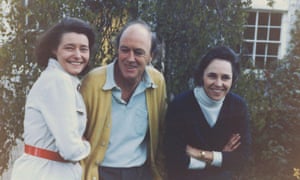


Patricia, Dahl and Valeria Eaton Griffith, with whom he wrote a stroke guide


Patricia, Dahl and Valeria Eaton Griffith, with whom he wrote a stroke guide. Photograph: RDNL/Courtesy RDMSC

Dahl made careful notes of these neologisms, which helped with an article he was writing about her stroke for Ladies’ Home Journal, but he may have thought they would come in useful elsewhere. It would be more than 15 years before The BFG would greet little Sophie with a bellow of laughter and the words: “Just because I is a giant, you think I is a man gobbling cannybull … ! Please understand that I cannot be helping it if I sometimes is saying things a little squiggly … Words is oh such a twitch tickling problem to me all my life …”


Dahl spent hours creating new words for The BFG, many of which, as he said of Pat’s neologisms, were better than the originals. He described human beans that taste scrumdiddlyumptious or uckyslush; a zoo full of hippodumplings and crocadowndillies; the telly telly bunkum box. Dahl’s account of The BFG’s difficulty could have come straight from the mouth of Pat: “You must simply try to be patient and stop squibbling … I know exactly what words I am wanting to say, but somehow or other they is always getting squiff squiddled around … what I mean and what I says is two different things …”


Like other children’s authors, Dahl had made up words before, but in The BFG there was a veritable explosion. Dahl was vague when I asked him about the link. “Well, I’d always enjoyed making up new words. That’s part of the fun, you know, that keeps the nippers interested. But I suppose, yes, some of the trouble Pat had did work its way into The BFG. Yes, it must have.”


It seemed so obvious to me that I was amazed to find subsequently, while researching my book about Dahl’s medical achievements, that it had never been explored before. Looking back, I wish I had probed Dahl further. Having now read much more about this extraordinary man, I know that the answer he gave about neologisms was the sort of nebulous response he gave when he felt the truth of the matter was not exactly the story he wanted to tell.


Take The Gremlins: he wrote the book for Walt Disney, with a view to turning it into a film, and brought the expression into popular usage, but did he actually invent the term “gremlins”? Then there’s the question of how his plane came down in Libya during the second world war – was he really shot down, or did he crashland after being given the wrong location of an airfield by an incompetent commanding officer? And did the resulting “monumental bash on the head” really convert a promising oil executive into a bestselling author, as Dahl claimed, or was the literary potential already there, just waiting to express itself?


Perhaps Dahl felt some discomfort at having based the speech of one of his best-loved characters on the aftereffects of his wife’s stroke. Or maybe he had never recognised the link until I raised it. No one in the family remembers him discussing it, but then he rarely talked about the books he was working on. Either way, Pat’s stroke provided inspiration for more than just The BFG’s Gobblefunk language. Back in 1965, there was little in the way of rehabilitation for stroke patients: Dahl was told just one hour a day would be appropriate.


“Surely one hour a day is not enough,” he said to me. “What in the world are you going to teach a child if she only goes to school for an hour a day? That is what Pat was like then – a child. She didn’t even know her ABC.”
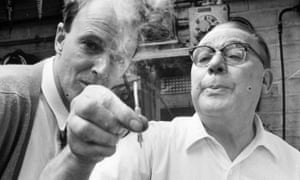


Stanley Wade with the valve they invented to treat Dahl’s son’s hydrocephalus.


Stanley Wade with the valve they invented to treat Dahl’s son’s hydrocephalus. Photograph: Leonard McCombe/Time & Life Pictures/Getty Images

He feared she would become an “enormous pink cabbage”, so he set up – with friends and neighbours in Great Missenden, Buckinghamshire – an intensive six-hours-a-day regime. Some professionals warned this was too much, but he ignored them. Pat was coached back to normality “slowly, insidiously and quite relentlessly”. She eventually resumed her acting career, even getting another Oscar nomination.


This miraculous recovery attracted a lot of attention. Other stroke patients and their families wrote to ask how Dahl had managed it. So with the help of a neighbour, Valerie Eaton Griffith, Dahl wrote a guide. She developed this into a book, and the methods were taken up widely, inspiring a whole new movement, which led to the formation of The Stroke Association.
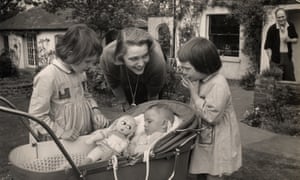


Theo convalescing with, from left, Olivia, Patricia, Tessa and Dahl


Theo convalescing with, from left, Olivia, Patricia, Tessa and Dahl. Photograph: RDNL/Courtesy RDMSC

Amazingly, Dahl’s extraordinary medical influence did not stop there. One evening, we were chatting about a report I was sending to the Lancet. “Ah yes,” he commented casually, “it’s a good journal. We published there many years ago … Yes, we invented a valve for hydrocephalus.” From the sparkle in his eyes, I suspected he was trying to get a rise from me. He enjoyed teasing junior doctors. Had he really invented a neurosurgical device to treat water on the brain? I didn’t believe a word. I knew Dahl was a great storyteller. But, 25 years after his death, while researching my book, I was astonished to find that this was true.


Dahl’s son Theo had developed hydrocephalus after being hit by a taxi, aged four months. The valve he was fitted with kept blocking and, in characteristic style, Dahl set about solving the problem with the help of a neurosurgeon – and a toymaker. “We produced this splendid little valve,” Dahl told me. “It was used to treat thousands of children around the world.” My neurosurgical colleagues still occasionally come across them today, while operating on adults who had them inserted as children.
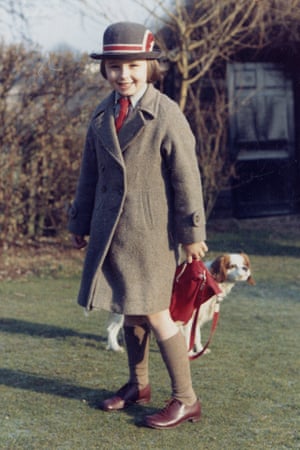


‘We thought she was over the worst of it’ … Olivia, who died after catching measles


‘We thought she was over the worst of it’ … Olivia, who died after catching measles. Photograph: RDNL/Courtesy RDMSC

And then there was his involvement in measles vaccination, an altogether more devastating episode. When Dahl’s daughter Olivia caught the virus aged seven, she developed the most severe form, with inflammation of the brain: encephalitis. She died within days. Dahl was devastated and, for years, would barely talk about it. But with me, he was very open.


“We thought she was over the worst of it,” he said one evening. “One saw, you know, the usual sort of thing: the fever, the tiredness, the spots. We even teased her for her polka dots.” Dahl had a wan smile and his eyes began to well up. He looked so tired and sad. After the initial illness, Olivia had appeared to improve before slipping into a coma. There was nothing anyone could do. But when the measles vaccine became available some years later, Dahl did all he could to help its uptake. He supported campaigns with a famous measles letter to children which is still used today, and badgered the government to do more.


I realise now, as we chatted all those years ago, Dahl wasn’t so much teasing me, as being coy about all he had achieved. Apparently, he could be proud, boastful, arrogant and argumentative when discussing his writing. But when talking about these major medical breakthroughs, he was happy to minimise his role, giving the credit to others.


I was privileged to look after Dahl as his life came to an end. He wrote so poignantly about fatalities in the war, and devised such bizarre deaths in his Tales of the Unexpected, I wondered how he would face his own demise. I found it was with humour, humility – and an unending fascination in medical science.


Roald Dahl’s Marvellous Medicine by Tom Solomon is published by Liverpool University Press on 13 September. The Stroke Association is one of six charities benefiting from sales of the book. Tom Solomon tweets @RunningMadProf; tomsolomon.co.uk


How family tragedy turned Roald Dahl into a medical pioneer

17 Mayıs 2014 Cumartesi

Give statins to all above-40s, says heart surgery pioneer

In reality, large trials demonstrate that the risk of such effects on more than one hundred,000 folks was less than 1 per cent.


The BMJ withdrew elements of the report amid fears that it could unduly scare the 7 million folks in the Uk taking statins, which decrease the level of cholesterol in the blood.


Speaking on Radio 4’s Right now programme, Sir Magdi, 76, a professor of cardiothoracic surgical treatment at the National Heart and Lung Institute at Imperial University London, said: “I uncover it [the BMJ report] very upsetting because it is nearly certainly going to outcome in folks not taking statins.


The proof for statins is “overwhelming”, he said: “The reduced the cholesterol, the more healthy you are and the longer you will live… The risk-benefit ratio is massively in favour of taking the drug.”


Reduced cholesterol avoid heart attacks, strokes, cancer and dementia, so not taking statins is “a disaster”, he stated.


Statins have been all around for 25 many years, so we know the long-phrase outcomes, what they do biochemically and how to keep track of any complications, he additional.


Give statins to all above-40s, says heart surgery pioneer

8 Nisan 2014 Salı

Circulation Retracts Paper By Stem Cell Pioneer And Its Personal Editor

Following an investigation by Harvard Health care School and Brigham and Women’s Hospital a 2012 paper published in Circulation has been retracted. The “institutional review… established that the data are sufficiently compromised that a retraction is warranted.” The two senior authors of the paper are Piero Anversa, a pioneering researcher in cardiac stem cells, and Joseph Loscalzo, the editor-in-chief of Circulation and the chairman of the division of medication at the Brigham.


As reported earlier on Retraction Observe, the paper has been cited thirty times according to Thomson Scientific’s Net of Knowledge.


Right here is the retraction statement:


For the write-up by Jan Kajstura, Marcello Rota, Donato Cappetta, Barbara Ogórek, Christian Arranto, Yingnan Bai, João Ferreira Martins, Sergio Signore, Fumihiro Sanada, Alex Matsuda, James Kostyla, Maria-Virginia Caballero, Claudia Fiorini, David A. D’Alessandro, Robert E. Michler, Federica del Monte, Toru Hosoda, Mark A. Perrella, Annarosa Leri, Bruce A. Buchholz, Joseph Loscalzo, and Piero Anversa (Cardiomyogenesis in the aging and failing human heart. Circulation. 2012126:18691881 DOI: 10.1161/CIRCULATIONAHA.112.118380), an ongoing institutional evaluation by Harvard Healthcare College and Brigham and Women’s Hospital has established that the data are sufficiently compromised that a retraction is warranted.


The American Heart Association American Heart Association, as a result, retracts the write-up.


A 2011 weblog on Nature.com thorough some of the events in a prolonged-standing controversy in excess of Anversa’s research.


Circulation Retracts Paper By Stem Cell Pioneer And Its Personal Editor

27 Şubat 2014 Perşembe

DNA pioneer James Watson sets out radical concept for selection of illnesses

Scientist in race row

James Watson, 85, says he produced his theory soon after pondering why exercising appears to benefit people with higher blood sugar. Photograph: Edmond Terakopian/PA


Not satisfied with his work that unravelled the double helix construction of DNA and landed him a share of a Nobel prize half a century ago, James Watson has come up with a radical concept for diabetes, dementia, heart ailment and cancer.


The 85-year-outdated scientist has turned to the pages of the Lancet medical journal to set forth his grand notion, which some academics say might not have observed the light of day had it come from anyone else.


Watson, who stepped down as director of the Cold Spring Harbour Laboratory in New York in 2007 after the Times quoted his views on Africa and intelligence, has organized a conference at the lab this 12 months to discover his most recent hypothesis.


Writing in the Lancet, Watson claims that late onset, or variety two diabetes, is typically considered to be induced by oxidation in the physique that causes irritation and kills off pancreatic cells. But he thinks the root of that irritation is fairly different: “The basic result in, I suggest, is a lack of biological oxidants, not an excess,” he writes.


Watson, a keen singles tennis player, says he developed his theory right after pondering why workout appeared to advantage individuals with high blood sugar, an early indicator of potential diabetes. Workout developed “reactive oxygen species” that were extensively believed to be dangerous.


Other study fed into his thinking, chiefly a research by Matthias Blüher at the University of Leipzig. He showed that reactive oxygen species released in exercising combatted the insulin resistance noticed in diabetes, but that the benefits vanished if you gave men and women antioxidants prior to the exercised.


Watson believes that rather than getting wholly negative, oxidising molecules, such as hydrogen peroxide, are vital for the body’s wellness. In certain, he factors out that hydrogen peroxide goes to operate in a cellular organ called the endoplasmic reticulum, the place it guarantees proteins are secure. If levels of oxidants are too minimal, he suggests, the proteins grow to be misshapen and trigger the inflammation that damages the pancreas. And a raft of other illnesses.


Huge research have currently proven that antioxidant dietary supplements do not help folks to dwell longer. Watson’s hypothesis also suggests there is nothing to be acquired, although he makes a point of saying he is not experienced to give individuals well being guidance.


“Just about every doctor I’ve ever known tells every patient who is capable of carrying out so to exercise. I feel physical exercise assists us create healthy, functional proteins. But we genuinely want to have some higher-good quality research to demonstrate this.”


He adds: “We sorely need to consider a much a lot more critical and thorough scientific seem at the mechanisms via which exercising improves our overall health.”


Watson’s thought acquired a mixed reception from scientists on Thursday. A single professor of metabolic medicine was unimpressed and said the idea was not even novel. “It is only because of his identify that James Watson is permitted to present his woolly ideas in the Lancet,” he explained.


The director of the MRC Metabolic Illnesses Unit at the University of Cambridge, Stephen O’Rahilly, was significantly less scathing. He said: “He is exhorting more science to be completed on how physical action may possibly be beneficial. We want to realize the mechanism. Making the proper reactive oxygen species in the appropriate place at the correct time is essential for us to stay effectively, and blocking them may possibly not be a very good idea.”


DNA pioneer James Watson sets out radical concept for selection of illnesses

2 Şubat 2014 Pazar

Why I back the pioneer Lord Saatchi

It is a tragic indictment of contemporary medication that innovation is as well usually jettisoned in favour of the standing quo for worry of legal action. Defensive medicine is at the heart of so considerably clinical practice nowadays, but the Bill – if accepted into law – would deftly excise this, top the way for physicians to feel cost-free to strive for medical advancement.


This does not indicate that physicians would have totally free rein to experiment on a patient – they would still be bound by professional guidance and their duty of care would continue to be to their patient. Nor would it mean that the Bill would turn out to be a substitute for proper clinical trials.


But what it does indicate is that, in instances the place the evidence is shaky, wanting or not however clear, the Bill would set out a code by which physicians could consider options. It would supply a legal framework by which doctors, in discussion with their sufferers, could consider off-label drugs or a gadget, therapy or intervention that may possibly have some clinical data supporting it, but has however to be totally confirmed.


Initially, the Division of Health was sceptical, but given that the Bill was launched it has acquired significant public, health care and legal help. Then, in November last yr, Jeremy Hunt, the Health Secretary, gave it his backing, saying that “we need to create a climate where clinical pioneers have the freedom to make breakthroughs in treatment”, and commending Lord Saatchi as “a fantastic illustration of a parliamentarian motivated by conscience”.


A public consultation is now planned, beginning later this month. This is tremendously fascinating: the historical past of medication is littered with innovators who flew in the face of received wisdom and dared to challenge orthodoxy.


If the Bill passes, it could properly be that in many years to come Maurice Saatchi will join their ranks, and will no longer be known as an promoting guru, but the guy who helped doctors uncover a remedy for cancer – and saved an untold number of lives.


To view Lord Saatchi explain his Bill, visit telegraph.co.uk/video. For other Telegraph stories and updates on the Bill, see telegraph.co.united kingdom/well being/saatchi-bill. To react to the consultation on the Saatchi Bill site: http://saatchibill.tumblr.com/


Prince Charles is appropriate about hospital foods


Nicely completed to the Prince of Wales for highlighting the need for good food in hospitals. Speaking at an event at Clarence Property jointly organised by the Department of Overall health, he mentioned it was important to “see food as a medicine in itself”. Calling for the quality of food served by the NHS to be made a “clinical priority”, he explained extended-overdue alterations could have advantages in other areas of well being care, such as malnutrition among the elderly.


About time, as well. Absolutely you do not require far more than a modicum of frequent sense to realise that, when the body is healing itself, it requirements excellent quality food to assist?


And however some hospitals invest as little as 69p on each meal. The sad fact is that cooks are a uncommon commodity in hospitals, with “cook-chill” meals mass-developed offsite before currently being reheated – or “regenerated” utilizing high-strain steamers – in hospital. Such is the reliance on this sort of food that in a variety of new hospitals created underneath Private Finance Initiatives, there are no kitchens at all.


This is completed in the identify of expense-efficiency, but it is a false economy: sufferers who are undernourished since they aren’t eating the meals that is getting served, or because the meals is of poor high quality, will consider longer to get better.


Insights on dementia had me hooked


For those of you with an curiosity in dementia, I’m currently reading the most great guide: Where Memories Go, by Sally Magnusson. Component memoir and portion manifesto for how we ought to treat older people, it had me hooked from the moment I picked it up, and is Radio 4’s Guide of the Week from nowadays.


It is a moving account of a daughter coming to terms with her mother’s dementia, and is pitch-excellent in the way it describes what sufferers’ households go by means of: from the inform-tale feeling that anything isn’t quite right to the attempts to dismiss worries and pretend every thing is fine by way of to the acceptance that the sufferer is gradually becoming lost to his or her loved ones.


It’s had me enthralled. It helps that Magnusson is a journalist – as was her mother, who was married to the broadcaster Magnus Magnusson – and tackles the topic with insight and perspicacity. It ought to be compulsory studying for every medical professional and nurse, simply because it reminds us that behind each and every patient with dementia, there are close friends and households who are grieving for the man or woman that we will by no means know.


Max Pemberton’s most recent guide, ‘The Medical doctor Will See You Now’, is published by Hodder. To order a copy, phone Telegraph Books on 0844 871 1515


Why I back the pioneer Lord Saatchi