In 1990, I was a junior doctor at the John Radcliffe hospital in Oxford. I had finished all my training, and was now starting my first year on the wards. Roald Dahl was one of my patients. I can still remember the night I first met him.
It was nearly midnight and the lights were low. I was working away on the ward computer when I became aware of this large figure wandering slowly nearer, casting a great big shadow. I carried on tapping, concentrating. The restless patient walked past the nurses’ station, where I was sitting, and a few moments later wandered back again. He must have come past three or four times, each time a little slower, peering over my shoulder, trying to see what I found so absorbing. Eventually he stopped.
“What are you doing?”
It was a deep, booming voice. I looked up to see a giant of a man towering over me. He was wearing a silk nightshirt, and was wrapped in a huge dressing gown. He had large ears and twinkling, inquisitive eyes. It almost felt as if The BFG was peering down at me. But it wasn’t the Big Friendly Giant. It was Roald Dahl himself.
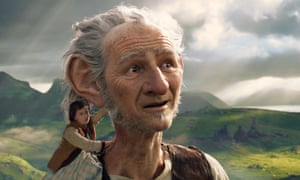
We started chatting. I think Dahl was intrigued. Being a world famous author, he was used to people fussing and fawning over him, yet here was someone who seemed to be paying him no attention at all. Rather than dismiss me, however, Dahl wanted to know all about the medical research I was writing up on the computer.
“And have you read any of my books?” he asked after a while.
“Well,” I said and paused. “I have not read any, but I loved the film of The Jungle Book.”
The Jungle Book, as you probably know, is a wonderful film based on a fabulous book, but it is not by Dahl, it is by Rudyard Kipling. He looked at me curiously, trying to decide whether I was completely ignorant, or just teasing. Suddenly, having decided that this was a great joke, he roared with laughter. We became good friends after that.
After her stroke, Dahl’s wife Patricia invented new words: a drink was a ‘sooty swatch’ and he made her ‘skitch’ (cross)
As a junior doctor, I was on call every third night. Dahl found it difficult to sleep, and in the hushed semi-darkness of the wee small hours, we would chat. What about? Just about everything: people, places, literature, love, music, marriage … and medicine. He told me all about his life, especially his extraordinary – and often tragic – encounters with the medical world.
Most people know Dahl as a famous writer of children’s books, but few are aware of his fascination with medicine. Right from his earliest days to the end of his life, Dahl was intrigued by what doctors do and why. Indeed, he often said he would have liked to have been a doctor. During his lifetime, he and his family suffered some terrible medical tragedies – but he also played a part in some incredible medical triumphs.
In 1965, Dahl’s first wife, the Oscar-winning actor Patricia Neal, had a brain haemorrhage, causing a stroke that nearly killed her. She underwent an operation to stop the bleeding, but the left half of her brain was damaged. She was unable to talk, and her right side was paralysed, though gradually things began to improve.
“I witnessed the slow, mysterious recovery of a brain that had been severely insulted,” Dahl recalled one evening in Oxford, “and the steady return to consciousness of the owner of that brain.” Pat eventually left hospital and her speech began to return, but she struggled with the names of objects and people. When she couldn’t find the words, she invented new ones. A drink was a “soap driver” or a “sooty swatch”. A cigarette was an “oblogon”. Pat would complain that Dahl “made her skitch” (cross) or “gave her the sinkers” (depression).
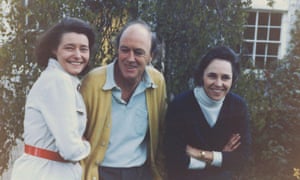
Dahl made careful notes of these neologisms, which helped with an article he was writing about her stroke for Ladies’ Home Journal, but he may have thought they would come in useful elsewhere. It would be more than 15 years before The BFG would greet little Sophie with a bellow of laughter and the words: “Just because I is a giant, you think I is a man gobbling cannybull … ! Please understand that I cannot be helping it if I sometimes is saying things a little squiggly … Words is oh such a twitch tickling problem to me all my life …”
Dahl spent hours creating new words for The BFG, many of which, as he said of Pat’s neologisms, were better than the originals. He described human beans that taste scrumdiddlyumptious or uckyslush; a zoo full of hippodumplings and crocadowndillies; the telly telly bunkum box. Dahl’s account of The BFG’s difficulty could have come straight from the mouth of Pat: “You must simply try to be patient and stop squibbling … I know exactly what words I am wanting to say, but somehow or other they is always getting squiff squiddled around … what I mean and what I says is two different things …”
Like other children’s authors, Dahl had made up words before, but in The BFG there was a veritable explosion. Dahl was vague when I asked him about the link. “Well, I’d always enjoyed making up new words. That’s part of the fun, you know, that keeps the nippers interested. But I suppose, yes, some of the trouble Pat had did work its way into The BFG. Yes, it must have.”
It seemed so obvious to me that I was amazed to find subsequently, while researching my book about Dahl’s medical achievements, that it had never been explored before. Looking back, I wish I had probed Dahl further. Having now read much more about this extraordinary man, I know that the answer he gave about neologisms was the sort of nebulous response he gave when he felt the truth of the matter was not exactly the story he wanted to tell.
Take The Gremlins: he wrote the book for Walt Disney, with a view to turning it into a film, and brought the expression into popular usage, but did he actually invent the term “gremlins”? Then there’s the question of how his plane came down in Libya during the second world war – was he really shot down, or did he crashland after being given the wrong location of an airfield by an incompetent commanding officer? And did the resulting “monumental bash on the head” really convert a promising oil executive into a bestselling author, as Dahl claimed, or was the literary potential already there, just waiting to express itself?
Perhaps Dahl felt some discomfort at having based the speech of one of his best-loved characters on the aftereffects of his wife’s stroke. Or maybe he had never recognised the link until I raised it. No one in the family remembers him discussing it, but then he rarely talked about the books he was working on. Either way, Pat’s stroke provided inspiration for more than just The BFG’s Gobblefunk language. Back in 1965, there was little in the way of rehabilitation for stroke patients: Dahl was told just one hour a day would be appropriate.
“Surely one hour a day is not enough,” he said to me. “What in the world are you going to teach a child if she only goes to school for an hour a day? That is what Pat was like then – a child. She didn’t even know her ABC.”
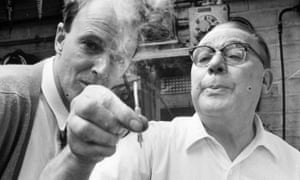
He feared she would become an “enormous pink cabbage”, so he set up – with friends and neighbours in Great Missenden, Buckinghamshire – an intensive six-hours-a-day regime. Some professionals warned this was too much, but he ignored them. Pat was coached back to normality “slowly, insidiously and quite relentlessly”. She eventually resumed her acting career, even getting another Oscar nomination.
This miraculous recovery attracted a lot of attention. Other stroke patients and their families wrote to ask how Dahl had managed it. So with the help of a neighbour, Valerie Eaton Griffith, Dahl wrote a guide. She developed this into a book, and the methods were taken up widely, inspiring a whole new movement, which led to the formation of The Stroke Association.
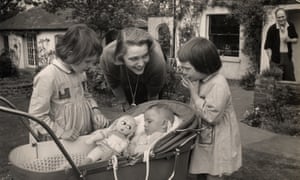
Amazingly, Dahl’s extraordinary medical influence did not stop there. One evening, we were chatting about a report I was sending to the Lancet. “Ah yes,” he commented casually, “it’s a good journal. We published there many years ago … Yes, we invented a valve for hydrocephalus.” From the sparkle in his eyes, I suspected he was trying to get a rise from me. He enjoyed teasing junior doctors. Had he really invented a neurosurgical device to treat water on the brain? I didn’t believe a word. I knew Dahl was a great storyteller. But, 25 years after his death, while researching my book, I was astonished to find that this was true.
Dahl’s son Theo had developed hydrocephalus after being hit by a taxi, aged four months. The valve he was fitted with kept blocking and, in characteristic style, Dahl set about solving the problem with the help of a neurosurgeon – and a toymaker. “We produced this splendid little valve,” Dahl told me. “It was used to treat thousands of children around the world.” My neurosurgical colleagues still occasionally come across them today, while operating on adults who had them inserted as children.
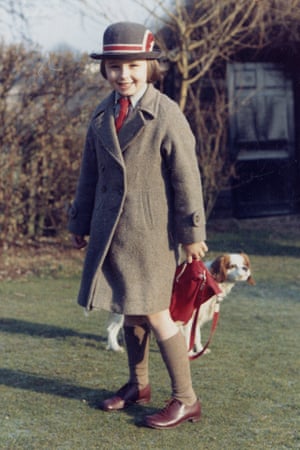
And then there was his involvement in measles vaccination, an altogether more devastating episode. When Dahl’s daughter Olivia caught the virus aged seven, she developed the most severe form, with inflammation of the brain: encephalitis. She died within days. Dahl was devastated and, for years, would barely talk about it. But with me, he was very open.
“We thought she was over the worst of it,” he said one evening. “One saw, you know, the usual sort of thing: the fever, the tiredness, the spots. We even teased her for her polka dots.” Dahl had a wan smile and his eyes began to well up. He looked so tired and sad. After the initial illness, Olivia had appeared to improve before slipping into a coma. There was nothing anyone could do. But when the measles vaccine became available some years later, Dahl did all he could to help its uptake. He supported campaigns with a famous measles letter to children which is still used today, and badgered the government to do more.
I realise now, as we chatted all those years ago, Dahl wasn’t so much teasing me, as being coy about all he had achieved. Apparently, he could be proud, boastful, arrogant and argumentative when discussing his writing. But when talking about these major medical breakthroughs, he was happy to minimise his role, giving the credit to others.
I was privileged to look after Dahl as his life came to an end. He wrote so poignantly about fatalities in the war, and devised such bizarre deaths in his Tales of the Unexpected, I wondered how he would face his own demise. I found it was with humour, humility – and an unending fascination in medical science.
• Roald Dahl’s Marvellous Medicine by Tom Solomon is published by Liverpool University Press on 13 September. The Stroke Association is one of six charities benefiting from sales of the book. Tom Solomon tweets @RunningMadProf; tomsolomon.co.uk
How family tragedy turned Roald Dahl into a medical pioneer
