sexual etiketine sahip kayıtlar gösteriliyor. Tüm kayıtları göster

7 Mart 2017 Salı

Funding to two Indigenous sexual health programs cut without consultation

The federal government decided to stop funding two long-running Indigenous sexual health programs without consultation or analysis, and despite a growing sexual health crisis in the Top End, Senate estimates has heard.


Both organisations have accused the government of shortsightedness, and said without their services or any feasible replacement Indigenous LGBTQI people will be less likely to seek medical care.


The Northern Territory Aids and Hepatitis Council’s Aboriginal Sexual Health program, and the Queensland Aids Council’s 2 Spirits program have run for more than 20 years addressing the disproportionately high rate of sexually transmitted infections among Aboriginal and Torres Strait Islander populations.


Both organisations were told last year they should seek alternative funding to continue operating beyond June 2017.


In Senate estimates last week, Department of Health officials said they had done a “desktop review” of programs, which found “really limited evidence that these programs, which we’ve been funding for decades now, have really had any impact”, according to Bobbi Campbell, the first assistant secretary at the department.


Asked if the department had asked the NT and Queensland programs to partner with the department for an evaluation, Campbell said no. “We need to look at this from national perspective.”


The Queensland Aids Council’s executive director, Michael Scott, said his organisation had more than two decades of experience and community rapport, and their annual funding of $ 451,000 was a “drop in the ocean” for the work they did.


“We employ four Indigenous staff and they work from a whole-of-community approach, which means even though we’re funded to work with Indigenous gay men and sistagirls, we do remote outreach to Indigenous remote populations, to the entire community,” he said.


“It is a really important service because we also do training for other organisations, such as Aboriginal medical services, on how to appropriately work with Indigenous gay men and sistagirls.”


During the estimates hearing department officials also pointed to the rising rates of STIs and HIV in Indigenous populations, particularly the remote communities where the two organisations work. While the rate of new cases of HIV among non-Indigenous men and women stabilised in the four years to 2015, the rate among Indigenous men doubled.


Aboriginal and Torres Strait Islander men were twice as likely to have HIV than non-Indigenous men, according to the University of New South Wales Kirby institute for infection and immunity in society, which also reported rates of chlamydia, gonorrhoea and syphilis were, respectively, three, 10, and six times greater than among the non-Indigenous population in 2015. Remote and very remote areas saw even more substantial differences.


Last year the number of syphilis cases in the NT increased to 229 from just 14 in 2012. The high rate is set to continue in 2017, with more cases reported in January than for the whole of 2012.


Scott said his employees had been told people in the community would probably not seek care elsewhere once 2 Spirits closed.


“They forgo health care because they’re not comfortable walking through the door,” he said. “They’ll be living with STIs because they aren’t getting tested. That’s not just a health issue for them but for their communities as well.”


Daniel Alderman, a care and support coordinator for the Northern Territory Aids and Hepatitis Council, said his organisation had heard similar reports.


“This directly affects the most marginalised population we work with, Indigenous clients, [who] as you know suffer significant trauma,” he told Guardian Australia.


“Then we have seen more marginalised communities – sistagirls, brotherboys … they’re shunned from their communities that they live in and suffer significant stigma and discrimination.


“It’s cutting funding to Indigenous employment and one of the common things we hear from our Indigenous clients is they don’t want to access general or Aboriginal medical services because they fear they’ll be discriminated against.”


The Labor MP Warren Snowdon said the government didn’t just fail to perform an evaluation but “ignored the fact that these organisations had been operating for 21 years and providing an important service”.


“It beggars belief they can be canning these programs without any transition to other programs and leaving exposed these people who are involved [to] sexually transmitted infections and Aids,” he told Guardian Australia.


He said the cost of prevention far outweighed the cost of treating someone with HIV, and accused the government of “wiping its hands” of the responsibility.


“You’re prepared to pay for the treatment of HIV … but you’re not prepared to pay upfront for the prevention programs,” he said. “It doesn’t make sense.”


The office of Indigenous health minister, Ken Wyatt, was contacted for comment.


Funding to two Indigenous sexual health programs cut without consultation

7 Şubat 2017 Salı

Good vibes: selling sex toys online to fund sexual health programs

As an engineer, Jak Haines never expected to find herself in the sex business – she was just looking for an opportunity to practise conscious capitalism.


“I looked at different sectors … but I decided the sex industry was ripe for change,” she says.


Haines launched her website, Vävven, in November to sell sex toys and accessories that are “body safe”, ethically sourced and are marketed without objectification.


As a social enterprise, Vävven will donate 30% of its profits to causes for sexual and reproductive health and rights.


Haines had a 20-year career in heavy industry (turnaround management) before she closed down her business last year and decided to put her ideals to work. Conscious capitalism aims to use ethical business practices to elevate humanity. “Business can change society,” she says.


Launching a business in the sex industry appealed to her because of its challenges of managing standards (sex toys are required to meet lower safety standards because they are usually sold as novelty items), stigma and objectification in marketing. “There are a whole lot of things you could change within the industry without even linking it to a cause,” she says.


But she enjoys the irony of using the sex industry to fund the cause of sexual and reproductive health and rights. “It is also a bit of ‘stuff you’ to society,” she laughs.


Once it turns a profit, the organisations Vävven will support include Marie Stopes International (family planning, sexual health and abortion) and Oxfam and its gender justice program.


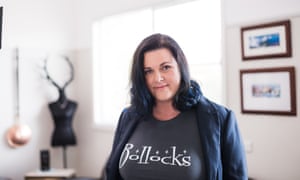
The founder of Vävven, Jak Haines, aims to use the profits of the sex industry to fund reproductive health and rights


The founder of Vävven, Jak Haines, aims to use the profits of the sex industry to fund reproductive health and rights. Photograph: Sarah Candlin

Vävven will also donate to Women on Waves – the Dutch non-profit that offers a floating sexual health and abortion clinic to women in countries where abortions are illegal. Last year Women on Waves used a drone to deliver abortion pills to two women in Northern Ireland.


There are few social enterprises that operate in this area but two are the UK Family Planning Association’s “pleasure shop” and the Denver-based online sex toy shop Vibrant, which donates all profits to Planned Parenthood.


Haines says the taboo nature of the sex industry means she has faced difficulties in getting her new business going. Firstly, it has been hard to find products that are safe to use and made by people who work in fair conditions. “If you are purchasing something for love, you shouldn’t be causing harm to others,” she says.


Although she sources her products from all over the world, most sex toys are made in China, where manufacturers are not accustomed to being asked to provide products at a higher safety standard. As a very small business, her requests are often swept to one side.


Haines has managed to find ethical manufacturers who “tick all boxes”, except for the stipulation that they must have freedom of association (the ability to join independent unions, for instance), which is not available in China.


Advertising her website also presents some trials. For a start, consumers are used to seeing sex products advertised with objectifying images of women and men, so catching their eyes without those images can be difficult, says Haines.


“You are attempting to change the way society thinks at the same time as you are marketing to them – and that is a ludicrously hard line to walk,” she says. “A woman can still look sensual, that is fine, but if they are just there just as a sexual object, that is not fine.”


She quotes feminist erotic filmmaker, Erika Lust: “Sex can stay dirty but the values have to be clean”.


Haines has also come up against what she describes as an unwritten moral code, which means that some businesses and banks are unwilling to deal with her because she is considered part of the sex industry.


Facebook, for instance, will allow Vävven to have a page,but will not allow it to “boost” its posts as paid advertising. “Selling of an intimacy product is considered immoral,” she says.


Dealing with a bank or getting access to PayPal can also take an “extraordinarily” long time. “There are a number of the big four [banks] that won’t even touch you because you sell sex toys. They say there is high risk with them – what that actually means, I am not sure.”


Building mutually beneficial relationships with other businesses is also a very slow process. “One of the things I discovered about the industry is that it is cagey, they are not necessarily interested in collaboration, which is a big problem. They need to learn how to collaborate”.


The Australian condom manufacturer Glyde Health is an exception with the managing director, Clive Woodworth, keen to join forces around the issue of sexual health.


Glyde Health supplies condoms and lubricants in bulk to brothels, male sex premises, the Aids councils and clinics for sexual health and family planning.


Woodworth started the business 27 years ago when he saw an opportunity to supply higher quality condoms than those that were being imported into Australia.


The company sells between 8m to 10m Malaysian-made condoms per year (Australia imports close to 60m per year).


Woodworth says it is still rare to find businesses in the sex industry that are mindful of objectification and operate under ethical lines.


He would like to see uniform legislation across all the states and territories to protect sex workers and says the stigma around the industry means that issues such as this are not properly dealt with.


He says there is room in the sex industry for businesses such as Vävven: “an operation that allows people to enjoy their sex life but not objectifying women as sex objects”.


Glyde Health also does not use objectifying images, marketing itself as a supplier of “sexual health products”. Like Haines, Woodworth’s entry into the sex industry was a business decision, rather than a personal interest. Before starting Glyde Health, he imported perfume.


“I went from French perfume to French letters in one fell swoop,” he says.


Good vibes: selling sex toys online to fund sexual health programs

23 Ağustos 2016 Salı

Dealing with the Trauma of a Sexual Assault

In life, there are many things we must deal with. Some of these things are easy, and for some people, there are issues that are much more difficult. Everyone deals with these issues in different ways. For instance, while there are similarities in the behaviors of sexual assault victims, each victim has their own way of dealing with the trauma and after effects. Some need to seek out professional help, while others are able to deal with it on their own. No matter how on deals with the trauma of a sexual assault, the memories are there forever.


The 3 Phases of Rape Trauma


There are three phases of rape trauma. The first is the acute phase, which is immediately after the assault, and can last days to many weeks. The second phase is the outward adjustment phase, where the victim acts like life is normal, but inside they are falling apart. The third phase of rape trauma is post-traumatic stress disorder (PTSD), which can include showing symptoms of intense fear, experiencing flashbacks, avoiding situations that trigger memories of the assault, and showing a great deal of distress because of the assault. Symptoms of the third phase include hyper vigilance and difficulty sleeping. In order to deal with the three phases of trauma, it is important to start getting serious about self-care.


What is Self-Care?


Self-care is taking the steps necessary to be able to live a healthy and comfortable life, even with the memories of a sexual assault. Victims need to take care of themselves, making sure that not only their minds, but their bodies are healthy and strong. The healthier one is, the easier it is going to be to deal with this type of trauma. When one is in poor health, the depression that can come from the trauma can lead to a number of health issues. Victims need to make sure that they are following a healthy, well-balanced diet, getting plenty of exercise (this also helps to clear the mind), and get into regular, healthy routines. All of this involves getting in tune with one’s self, and learning how to heal both the mind and the body.


Coping Strategies


In addition to self-care, it is important for victims of sexual assault to learn about coping strategies that are going to help them be able to better deal with what has happened to them. These strategies can be as simple as taking a hot bath to relax, or creating an entire support system of people who victims can reach out to and connect with (particularly other victims of similar crimes). Other coping strategies include:


  1. Talking about the assault with listeners who are empathic

  2. Crying

  3. Exercising (cycling, walking, running, aerobics, etc.)

  4. Relaxation exercises (yoga, stretching, etc.)

  5. Laughing (watch a funny movie)

  6. Praying and meditation (listening to a guided imagery CD, deep muscle relaxation, etc.)

  7. Enjoying music and art

  8. Getting plenty of sleep and eating properly

  9. Not using stimulants such as caffeine, nicotine, and sugar

  10. Hugs (from loved ones, including pets)

  11. Committing to something that the victim feels strongly about

  12. Eating certain foods that are tryptophane activators (warm turkey, baked potatoes, creamy soups, etc.)

  13. Getting involved with a community activity or volunteer organization

  14. Keeping a journal and writing about the experience in detail, including feelings about the experience

If you or someone you love has been the victim of a sexual assault, don’t wait until it is too late to get help. This is an event that can and does stay with victims for the remainder of their lives, but it doesn’t have to cripple them. Talk to someone, and get the help you need, or help someone else who has been through it and needs you.


Resources:


Dealing with the Trauma of a Sexual Assault

4 Ağustos 2016 Perşembe

"Less sex? We just have less to prove": millennials on sexual encounters

Millennials – people born between 1980 and 1995 – will be familiar with studies making claims about them, from observations on their eating habits to their anxiety levels. But now their sex lives, or lack thereof, are also being put under the microscope. A US study suggests that young people born in this bracket are less sexually active than previous generations.


This was found to be particularly true for younger millennials born in the 1990s, sometimes referred to as the Snapchat generation.


Eight young people shared their views on this story, based on their experiences:


Helen, 25, Hampshire: my generation is very comfortable talking about sexual identity


I don’t think millennials are having less sex. In my group of female friends, we talk about sex openly and are very comfortable discussing our sexual identity (there is very little or no judgment on this from others).


There should be more information about female sexual pleasure. Websites such as OMGyes should be given more attention. We are really lacking in proper sex education too, especially information about sexual identity and female pleasure.


My biggest fear around sex is getting pregnant. My partner and I practise the withdrawal method (I couldn’t cope with the psychological effects of the pill or the implant). We both hate using condoms. Having had more than my fair share of brief encounters, sex for me is infinitely better in a long-term, loving relationship. It’s much better when you can be completely honest about what you like and dislike, and let yourself go.


Feet in bed

Hatty, 25, London: to millennials, the older generation’s obsession with sex seems really backward


Millennials are not less interested in sex, we just have less to prove about it.


In the UK at least, 1990s “ladette” culture saw young women proving their feminist credentials by being more like the boys and having more casual sexual encounters than they might actually have wanted to. Millennials, on the other hand, have no pressure from family to remain virginal (my mum put me on the pill and bought me condoms without batting an eyelid), but also no pressure to be sexually liberated either.


There is also less pressure on men to be macho about sex. I have a male friend who waited until his early 20s to lose his virginity, because he wanted it to be within the context of a loving relationship and he wasn’t afraid to tell people that.


To millennials, the older generation’s obsession with sex and their highly restrictive gender-normative approach seems backward.


Abby, 24, London: young people lack information about sexual pleasure and orgasms for women


Millennials are as interested in sex as any other generation and they want it just as much. Whether or not we are doing it as much, I am not sure, but a quick search on Tumblr will show you that there’s no shortage of interest.


The difference is perhaps that asexuality is now more acknowledged and accepted. People are more comfortable admitting that they have no interest in sex.


People are now more comfortable admitting that they have no interest in sex


Before I started having sex, my biggest fear was that I would be a virgin forever. Now that I’m in a relationship, I don’t have any huge fears or anxieties, apart from worries about getting pregnant. But I’m on the pill and I’m careful, so I’d have to be very unlucky for that to happen.


A post-it note

Young people lack information about sexual pleasure for women. There’s so much information on the internet, if you know where to look, but there are lots of teenage girls and young women who are too focused on male pleasure. It’s important for women to enjoy sex too.


Floarin, 25, London: we now live in an overly sexualised world – maybe that’s led to sex fatigue


I don’t think young people are less interested in sex. We may be even more interested in it. Attitudes have changed and we can speak about it more openly than perhaps our parents did. That said, society is saturated with sexual imagery, so much so that we’ve almost become desensitised to it. That could have an impact on our sex lives. Almost a form of fatigue, where we think about it often, but don’t necessarily engage in it as much.


But that’s very much conjecture. They’re just extrapolations. You only have to look at what they allow before the watershed now, in comparison with only 10 years ago, to see that we live in an overly sexualised world.


Jordan, 26, Essex: nowadays people prefer to stay in, rather than go out and interact


There are many reasons why millennials are less into sex, the main one being the rise in technology. Social skills are dependent on human interaction, and nowadays people do not make effort to go out and meet others, they prefer to stay in and interact online instead. This coupled with worries about contracting sexually transmitted diseases means a lot of people would rather just stay in and watch porn.


Brian, 33, London: our generation has a very different view around sexual identity. We are much more open


I believe interest in sex has increased massively due to the internet and social networking sites. People can now interact with anyone they like through a variety of dating apps. Our generation also has very different views around sexual identity. We have more words to describe sexual identities and lifestyles, such as bi, trans, asexual, polygamous etc. We are much more open.


Alice, 21, Newcastle: I feel really insecure about sex, and there’s less attention given to this


Perhaps my generation is less interested in it – I certainly am. I feel insecure about having sex and there’s less attention given to this. I think advice about performance would be helpful. Instead, people think the only thing young people worry about is sexually transmitted infections and getting pregnant.


Sex has become less important, possibly because of our overexposure to it – it’s all over TV screens, in films and on the internet. We have become less interested in the intimacy of it as a result. As a generation, we also have a lot of other sources of stress that impact on our desire to have sex. I do also think technology has made us less likely to engage in real human interaction, which includes sex.


Bella, 19, Scotland: we’re much more worried about sex


People are just as interested in sex, but we’re just so much more worried about it. I’m still a virgin, I’ll admit that, and it’s not that I haven’t had the opportunity or that I don’t want to have sex, it’s that the idea of engaging with someone like that scares me. I felt all our sex education was very much done in the spirit of scaring us away from pregnancy and STDs. It felt almost like we were being taught abstinence.


Dominic, 26, China: online porn really put me off sex


Many friends, myself included, are choosing not to have relationships and feel no social pressure to have casual sex. I’d like to think that this is because we’re more interested in other things, but these other things may well be Netflix and pointless mobile apps. The last generation were promiscuous, in part, to be rebellious in the eyes of their peers. Nowadays, there’s no social pressure to have sex. Perhaps now we are having sex as much as we actually want.


A keyboard with the word

Online porn really put me off sex as a teenager. I gradually started to find it disgusting and addictive until I quit for many years. But now I understand that it can be part of a healthy sex life if it is not overconsumed.


I am looking for a relationship instead of brief sexual encounters now. I enjoy those special moments when you realise you might like someone, the first nervous touch of their hand or a shared smile. I love how messy and complex love can be, but in my mind, sex and love are two separate things.


Katie, 26, London: I don’t feel like my sexuality belongs to me, it’s just something people use to sell products


The ubiquity of sex has made us a generation obsessed with it, but terrified of the reality of it. We’re also a generation without privacy. As a young woman, I don’t feel like my sexuality belongs to me, it’s just something people use to get clicks or sell products. Just look at the recent Marc Jacobs ad – who is this for? It’s for men, so they buy it for their girlfriends.


I’m lucky enough to be in a happy same-sex relationship, but there’s no privacy in shared houses and there’s nothing sexy about hearing your flatmate snoring/wanking/watching Game of Thrones in the background as you try to have an intimate moment. And as there are far fewer real life spaces for gay women to meet other gay women now, before I found my partner I felt isolated and like queer sex between women was more about men being entertained online, rather than a real and meaningful experience between two people.


Jennifer, 23, London: people have become really bad at having flings and casual relationships


As a historian who focuses on the history of sex and sexuality, I can tell you that the enjoyment and desire for sex is timeless. What I think has happened is that people have become really bad at having flings and casual relationships. One night stands are pretty limited to nightclubs, and who goes to nightclubs any more? Plus no one is interested in mediocre one night stand sex.


People queuing for a club

But there has become such a fear culture surrounding relationships. Guys are scared to see girls more than twice, in case they accidentally end up with a girlfriend. Girls are scared to admit to guys that they are just looking for a fling or a casual arrangement, in case they look easy and it decreases their value as a woman. Deep down, we know it’s all bullshit, but we’re all inadvertently feeding this commitment-phobe madness.


  • Some names have been changed


"Less sex? We just have less to prove": millennials on sexual encounters

28 Temmuz 2016 Perşembe

Natural Foods For Sexual Dysfunction

What is sexual dysfunction?


Sexual dysfunction refers to any sex-related problem from impotence to lack of libido. It can be distressing for men and women who would like to enjoy a healthy sex life. Some of the symptoms are:


Erectile dysfunction


Men can suffer from erectile dysfunction whereby they can’t gain or maintain an erection. ED can be caused by either physical or psychological factors. Physical causes include conditions such as diabetes, a drop in testosterone and high blood pressure, while psychological causes can include performance anxiety or stress. Impotence is a stressful and upsetting situation that tends to turn it into a cause and effect cycle. Men worry about getting an erection, so therefore it doesn’t happen.


Low Libido


Men and women can suffer from a lack of sex. Physical causes can include: obesity, diabetes,drug abuse, a head injury and prescription medication used for prostate problems. Psychological causes for both men and women can include: depression, stress, tiredness, childhood issues, and relationship problems.


Is It Common and Who Gets It?


Yes, sexual dysfunction is common in men and women. It’s thought 1 in 5 men will suffer from erectile dysfunction at some point in their lives. According to experts,half of all women will experience problems with sex, such as female sexual dysfunction, as they get older and can cause health issues like, dry vagina through to painful intercourse and emotional problems.


What Foods Can Help?


A healthy diet goes a long way to improving your bodily health, but there are some foods which are thought to contain minerals, vitamins and oils that can boost a libido.


Many have been recommended for thousands for years. Our ancestors understood the benefits before modern man discovered trace amount of zinc and magnesium in certain foods.


Here are some foods that may help boost your libido and improve your sex life.


Oysters


It’s a cliché but oysters have a high amount of zinc, which is important for the production of testosterone. Research, from Barry University in Miami, found that oysters containing two amino acids, increased sex hormones in rats.


There’s also a large dose of vitamin B12 for good blood flow and healthy blood, not to mention the fact the oysters look sexual and boost the psychological sex drive.


Spinach


Spinach is full of magnesium. This decreases inflammation in blood vessels, which some experts believe increases the blood flow. Good blood flow is essential for men and women to become aroused.


Dark chocolate


When we eat chocolate our levels of serotonin and dopamine increase and stress levels decrease. This can lead to more sex simply because we feel relaxed and happy. Cocoa may also increase blood flow and relax blood vessels, so reach for dark chocolate rather than the milk version because this has more cocoa included.


Peppers


Hot peppers stimulate the metabolism and endorphins in much the same way as exercise. When blood pumps efficiently around the body we feel energised and alive – this can lead to an interest in sex.


Green tea


Green tea is excellent for health all round, but it can boost your sex life because of the catechin compounds which break down belly fat and help the liver turn fat into energy. They also kill body-damaging free radicals and aid blood cell vessels to release nitric oxide, which improves blood flow. Try switching to green tea on every other hot cuppa you enjoy.


Pesto


Pesto is made from ground pine nuts and pine nuts are full of sperm-healthy zinc. Team oysters with pesto for a double dose of zinc and testosterone production.


Ginger


It’s thought that eating just one teaspoon of ginger a few times a week has heart benefits. Sweet and spicy ginger boosts blood flow so drink it in tea, sprinkle a little on your fish or nibble it raw. The taste of ginger may also calm nerves and nausea making it potentially making it useful for psychological sex worries.


Bananas


One of the best sources of potassium bananas may help counterbalance the effects of salt. Too much salt is harmful to our health, increasing blood pressure and damaging kidneys. Potatoes have the same effect. Some studies have linked a lack of potassium with depression which is a psychological libido killer.


Fatty Fish


Fatty fish is great source of essential oils. It’s good for your heart and may also raise dopamine levels. Happy hormones make it more likely you’ll enjoy sex, or more likely you’ll want it in the first place.


Red Wine


Enjoying a glass of red wine can boost sexual desire. It’s rich in antioxidants from grapes, which boosts nitric oxide torelax arteries as well.  Wine can also reduce nerves or worries. Just be careful not to go overboard because too much has the opposite effect.


A Healthy Lifestyle


Having all round good health is the best way to boost your libido. That includes mental health as well as the physical. Cut out fatty, sugary and salty foods that harm your body and replace them with more fruit, bran and vegetables plus the above mentioned foods to boost your sex drive.


Natural Foods For Sexual Dysfunction

18 Temmuz 2014 Cuma

Dont inquire victims of sexual abuse to communicate up till you can support them | Anonymous

As a victim of historical sexual abuse, at the moment beneath investigation, I view the every day news coverage with interest. Unquestionably, police inquiries and prosecutions are welcomed, as is greater exposure of the problem in a “post-Savile” era.


However, each and every headline and breaking news story, such as Wednesday’s arrest of 660 suspected paedophiles, is accompanied by a mixture of conflicting emotions. Each shocking new revelation brings a individual delight that this filth is getting uncovered at long final, but with it comes harm as it has been hidden for so lengthy – the two by society and within me. Extremely previous scars are opened, and considered patterns turn out to be an electrical storm – overloaded by adrenalin, cortisol and a malfunctioning hypothalamic-pituitary-adrenal axis, which governs the fight or flight response. It is known as complex PTSD for a explanation.


But alongside the emotional exhaustion of the nervous program, I am reminded that other individuals cannot recognize the depth of ache that I feel. Pals are unable to give much meaningful help – the hole in which I locate myself is too deep and too dark – and sooner or later they end calling out.


And so with every phone for victims to come forward, I want to scream: “Do not inquire them to come forward if you are not going to assist them.” The trauma suffered is this kind of that victims need to have aid, nursing and wrapping in cotton wool. They want compassion, knowing and to be in a position to believe in – some thing that they have not been ready to do for so prolonged. Even so, what takes place is that police refer victims into the voluntary sector, the place agencies offer some immediate “first aid” and variety words – but tiny else. There is no funding to arrive at a suitable diagnosis of what psychological issues might exist – and the prospect of meaningful long-term treatment at no value is unrealistic. These organisations are so starved of funding, that often significantly much more than a helpline is impossible.


So, what of the NHS? My 1st physician stated “you seem OK”. The 2nd mentioned “the NHS are really bad at this kind of point – if I had been you I’d pay for it myself”. Eventually right after a yr I received to see a psychotherapist, who assessed that I would require limitless support. However, as they have been only ready to aid for two many years on the NHS, they explained that they had been ethically unable to begin any therapy as I may finish up in a worse state than when they started out. They agreed that I necessary support but the impending court situation meant that they did not “want to open my can of worms”. This only serves to compound my lack of trust for authority figures.


So, I am left delighting in the exposure of decades of abuse, but screaming for a wise victim help response – the absence of which traumatises me, and will traumatise other folks. I know my daily life will by no means be the same again. I have a criminal situation to endure, followed by inquiries into institutional abuse followed by inquiries into the failings of the criminal justice method – but the question I request myself is “after all of this … will there be enough of me left to enjoy the days I have remaining?”


All I can do is attempt to aid create change for the children I will never ever have.


Dont inquire victims of sexual abuse to communicate up till you can support them | Anonymous

13 Mayıs 2014 Salı

"I decide" campaign targets support of powerbrokers on sexual rights

MDG: Post Millenium Development Goals IPPF campaign Vision 2020: I decide

Determination revision … the IPPF hopes to existing Ban Ki-moon with a million-sturdy petition on sexual and reproductive rights following summer time. Photograph: IPPF


A worldwide campaign to make sure that the proper of people to make choices above their own bodies is enshrined in the subsequent set of improvement ambitions was launched by the Worldwide Planned Parenthood Federation (IPPF) on Tuesday.


Fifty member organisations of the federation from across the world will be holding talks, carnivals, rallies and marches in help of the I determine campaign. The campaign seeks to win the support of leaders for such as women’s and men’s sexual and reproductive wellness and rights in discussions about what need to adhere to the millennium advancement goals, which expire next yr.


Organisers want to gather 1m signatures to existing to Ban Ki-moon, the UN secretary general, in the summertime of 2015.


The UN’s open functioning group on sustainable development targets is due to existing a draft set of universal targets to member states at the UN standard assembly in September. Women’s rights activists have been campaigning for a standalone purpose on gender equality and women’s empowerment, which has so far been the subject of broad agreement.


The IPPF says the standalone purpose must contain targets specifying universal accessibility to reproductive healthcare, such as the availability of schooling and details about family members preparing solutions and access to safe abortion. The federation also desires targets to get rid of gender-based violence, legal equality for girls, and the equal participation of girls in public lifestyle and decision-making. It is calling for sexual and reproductive wellness and rights to be incorporated as a target beneath a health objective, and gender equality and sexual wellness and rights to be mainstreamed by way of all other objectives.


By 2020, the federation would like to eliminate all types of discrimination against women and women.


“We want a planet exactly where all females, males and young people have accessibility to the sexual and reproductive well being information and companies they require a globe in which sexuality is recognised each as a normal and valuable facet of lifestyle and as a basic appropriate a globe in which options are entirely respected, and in which stigma and discrimination have no area. This vision should be realised within a context of sustainable development that seeks to meet the needs of the current without compromising the capability of potential generations to meet their very own wants,” mentioned the IPPF, a worldwide network of 152 member associations operating in more than 170 nations.


The federation pointed out that sexual and reproductive wellness and rights impact people’s each day lives, livelihoods, options and aspirations, and warned that these rights can’t be left out of publish-2015 discussions.


“Failure to recognise sexual and reproductive overall health and rights compromises the lives of girls and ladies, and people’s potential to lift themselves out of poverty and to dwell sustainably inside of their resources,” said Tewodros Melesse, the IPPF’s director basic.


“We feel that discrimination, coercion and violence play a massive element in our societies. 1 in three women globally knowledge[s] violence, and ladies are nevertheless forced into marriage before the age of 15. We require this to change. People must have the correct to make a decision who they live with what occurs to their bodies if, when and how many kids to have [and] the appropriate to establish their futures freely and risk-free from harm.”


"I decide" campaign targets support of powerbrokers on sexual rights

18 Nisan 2014 Cuma

NHS whistleblower: I was accused of fraud and sexual impropriety

Dr Mattu was suspended for eight many years, then sacked, in a situation which is already estimated to have cost the NHS at least £6 million.


Professionals feel he could be in line for damages of up to £10 million.


The cardiologist publicly exposed overcrowding and fears for patient safety at Walsgrave Hospital in Coventry in 2001, claiming that there may have been avoidable deaths as a outcome.


He was then “vilified and bullied” by the University Hospital of Coventry and Warwickshire NHS Trust during a “witch hunt” which lasted almost a decade, in accordance to his attorneys.


Dr Mattu told BBC Radio 4’s These days programme: “I was rather concerned that the reason I came into medicine, which was to care for patients and to hopefully conserve lives, was not a priority or surely a main factor of what managers in the hospital in Coventry were focused on.


“Patient security was frequently place at risk and individuals had been dying that I felt would not have died at other hospitals I had worked at.”


He stated he was forced to flip whistleblower simply because the trust repeatedly ignored his complaints about the remedy of individuals, including a policy which allowed five patients to be place in a ward developed for 4.


A yr following speaking out the £70,000-a-year physician was suspended by the trust on total spend soon after being accused of bullying. He was dismissed in 2010.


Dr Mattu said that following his selection to blow the whistle, the hospital’s head of protection was asked to monitor him and “try and uncover as significantly information to use towards me as possible” in an attempt to blacken his title.


“I was accused of fraud, I was accused of sexual impropriety, assaults, not carrying out my duties and so on,” he mentioned.


The believe in employed private investigators, who had been paid nearly £60,000 to investigate the cardiologist’s affairs.


He was cleared this week of wrongdoing by Birmingham Employment Tribunal, which ruled the trust unfairly dismissed him and subjected him to “detriments” simply because he was a whistleblower.


Dr Mattu stated: “I’m completely relieved that one particular of the things that has come out of this situation that I have won is that I have been vindicated for what I did, since a single of the other key findings of the tribunal is that they located that I had not induced or contributed to towards my dismissal.”


But he mentioned the trust’s actions had been normal of the response of NHS managers.


“Unfortunately that is a typical practice of numerous managers inside the NHS, this denial of what the main purpose is as to why you are targeted,” he said.


“It is really challenging to feel that it is sheer coincidence that, obtaining in no way faced from 1979 to 2001 any allegations or complaints, that all of a sudden I must have turn into so altered in my nature and persona that suddenly more than 200 allegations were justified, I was suspended for five-and-a-half years, and prevented from carrying out the work I had so a lot needed to do given that the age of 18.


“I just locate it really tough to conquer the truth that there is usually this attempt to place forward a plausible option when the true cause at the heart of why all these allegations had been all of a sudden mustered up is the reality that I had whistle blown, spoken out as an advocate for the individuals and was not prepared to accept what was in the best interests of the managers.”


He added: “Emotionally it has been really draining. I have mixed emotions in excess of the judgment: I am relieved that I have won the case, I am also pleased that my detriments have been recognised by the employment tribunal.


“But the saddest point out of all of this for me is that the people who have lost out the most are the patients and the public simply because for 13 years the believe in management have prevented me from seeking following individuals. They have also, in the way they have taken care of me, discouraged any more whistleblowers in the NHS from coming forward and risking obtaining their occupation and livelihood destroyed.”


He mentioned he needed talks with Mr Hunt and NHS chief executive Simon Stevens about his situation and the treatment of other whistleblowers.


Dr Mattu’s solicitor Stephen Moore described the situation as a “David v Goliath battle”.


Following becoming suspended Dr Mattu won a disciplinary hearing and the believe in was forced to reinstate him in 2008.


A year later an inquiry by the Standard Medical Council also cleared him of the prolonged-standing bullying allegations.


But Dr Mattu continued to experience hostility from management and in 2009 launched grievance procedures.


This was met with counter-allegations of far more bullying and breach of confidentiality and in 2010 Dr Mattu was dismissed by the believe in while on sick depart.


The trust defended its actions and mentioned it was seeking into the tribunal’s selection “to contemplate its grounds for appeal”.


In a statement, it mentioned: “We are disappointed by the Employment Tribunal’s decision that the dismissal of Dr Mattu was unfair, given that the procedure followed by the Believe in was reviewed by the Court of Appeal in March 2012 when it identified in the Trust’s favour.


“The Trust now requirements to examine the Tribunal’s determination in much more detail (which runs to over 400 pages) to think about its grounds for appeal.


“However, we are pleased that they have firmly rejected his main declare that his dismissal in 2010 was in any way linked to whistle-blowing about patient care.”


NHS whistleblower: I was accused of fraud and sexual impropriety

14 Şubat 2014 Cuma

Sexual Healing

1. Assists Keep Your Immune Method Humming


Men and women who have sex have larger ranges of what defends your entire body towards germs, viruses, and other intruders. Researchers at Wilkes University in Pennsylvania discovered that college college students who had sex when or twice a week had higher amounts of the a specific antibody in contrast to students who had intercourse much less usually.


2. Boosts Your Libido


Longing for a more lively intercourse existence? “Having sex will make intercourse greater and will boost your libido,” says Lauren Streicher, MD. She is an assistant clinical professor of obstetrics and gynecology at Northwestern University’s Feinberg School of Medication in Chicago.


For females, having intercourse ups vaginal lubrication, blood movement, and elasticity, she says, all of which make intercourse come to feel far better and aid you crave far more of it.


three. Improves Women’s Bladder Manage


A sturdy pelvic floor is crucial for steering clear of incontinence, something that will influence about thirty% of females at some stage in their lives.


Very good intercourse is like a workout for your pelvic floor muscles. When you have an orgasm, it brings about contractions in these muscles, which strengthens them.


4. Lowers Your Blood Pressure


Research suggests a hyperlink between intercourse and reduced blood strain, says Joseph J. Pinzone, MD. He is CEO and healthcare director of Amai Wellness.


“There have been many studies,” he says. “One landmark examine located that sexual intercourse particularly (not masturbation) lowered systolic blood strain.” That’s the initial variety on your blood stress check.


five. Counts as Exercising


“Sex is a genuinely wonderful form of physical exercise,” Pinzone says. It won’t replace the treadmill, but it counts for something.


Intercourse uses about five calories per minute, four more calories than viewing Television. It offers you a one particular-two punch: It bumps up your heart charge and makes use of a variety of muscle tissue.


So get active! You might even want to clear your routine to make time for it on a normal basis.  “Like with workout, consistency assists maximize the positive aspects,” Pinzone says.


six. Lowers Heart Assault Chance


A very good intercourse life is good for your heart. In addition to being a fantastic way to raise your heart rate, sex assists hold your estrogen and testosterone levels in balance.


“When both one of these is low you begin to get plenty of problems, like osteoporosis and even heart disease,” Pinzone says.


Getting intercourse more usually might aid. In the course of 1 examine, guys who had intercourse at least twice a week have been half as very likely to die of heart disease as males who had intercourse rarely.


Jordan Markuson is the Founder of Aqua Overall health Labs and generates the ocean’s only residing supplement, PhytOriginal. He has been a nutritionist, writer and entrepreneur for more than ten years. He is an activist supporting consumption of raw, renewable, and natural foods. Jordan believes that based mostly on all accessible scientific proof, as soon as food is processed it loses the vast majority of the critical nutrients. He is extremely interested in marine-primarily based phytoplankton as a fish oil substitute simply because of the pure omega-three EPA &amp DHA crucial fatty acid it creates.


www.webmd.com


Sexual Healing

7 Şubat 2014 Cuma

Eve Ensler: "We need to be hysterical about sexual violence"

The last time Eve Ensler and I met, she was sporting a sleek black bob and shiny boots, and had Jane Fonda on her arm. It was 10 years ago, when Hollywood actors were falling over themselves to perform her hit play, the Vagina Monologues, in front of audiences who got a thrill out of hearing stars say “cunt” on stage. Back then, post-feminism was still the height of fashion, Sex And The City was still on air, and I was growing tired of celebrity froth and rude words being passed off as radicalism. Ensler recalls finding me “intense and scary, and hostile to everything we were doing”.


Since that interview, a great deal has happened. The complacency of post-feminism has been replaced by a new, much more indignant movement of grassroots groups such as Vagenda and UK Feminista. Ensler has very nearly died from uterine cancer. She has also created a global women’s campaign called One Billion Rising, which on Valentine’s Day last year brought close to one billion women out on to the streets to protest against violence towards women, and will do so again next Friday. This time round, we find each other so unrecognisably altered that the interview dissolves into unexpected intimacy, and by the time we say goodbye, I am quite shaken.


Link to video: Eve Ensler: ‘Women will rise up and take back the Congo for the Congolese’


The contrast is striking as soon as I arrive. Her Manhattan loft is done out in colourful drapes fashioned from Indian saris, and she bounces around it with an unselfconscious ease in her own skin that is arresting and compelling. Her pre-cancer bob has been replaced by a more haphazardly friendly crop, and the old angular severity and faint air of ambition have vanished. With less than three weeks to go, preparations for OBR are reaching fever pitch and Ensler is buzzing, because it looks as though its second year will be even bigger than its first.


The idea behind it is both simple and fantastically ambitious. According to UN figures, one in three women on the planet will be beaten or sexually assaulted. That works out at one billion women, so Ensler wants a billion to gather on 14 February outside buildings that represent justice – police stations, courthouses, government offices – and dance. That’s it. Where and how they dance is up to them; each gathering is organised at a local level. In Miami, they plan to stop the traffic, to highlight sex trafficking; in Peru, they’re getting construction workers to carry placards renouncing street harassment. The sole unifying principle is that they dance to end violence against women. Last year, women and men danced in more than 200 countries.


Ensler always says that when she first began organising Valentine’s Day events back in 1998, she assumed violence against women would by now be a thing of the past. Her V-Day movement was obviously going to stop men beating women, and eradicate rape and sexual assault from the planet. She never dreamed, she likes to say, that 15 years later she would have to come up with an even bolder solution, but I’d always taken this for rhetorical playfulness. She didn’t seriously believe she could end all sexual violence against women, did she?


“Well, that’s a good question.” Ensler grins. “Here’s what I think. Look at slavery. It’s utterly barbaric. How could a practice like that absolutely exist, ever? So, raping women? Same thing. How could that exist? So part of me goes, of course it has to end now! We have to have an idea that it’s possible to end this. Because if we all keep going around as if, well, it’s just part of what life is, it’s part of the human condition, it’s who men are, it becomes permanently normalised, right? So, yes, I do hold an idea that it’s possible. Absolutely. I wouldn’t keep doing this work if I didn’t. I’d be an insane person. Now, obviously it hasn’t happened yet. But at the same time, the world has changed. We are talking about violence against women, it is on the front page of newspapers. It wasn’t 16 years ago. So it has changed, and that makes me think, why can’t we end it? I’m going to believe it’s possible until I leave this world, because that gets me up in the morning. And if that’s a pipe dream, so be it.”


Ensler was always an idealist, but never planned on becoming a global activist. When she wrote the Vagina Monologues in 1996, she was a minor playwright just hoping to see it staged in a tiny downtown New York theatre. It has since been produced in 140 countries, in multiple languages, and Ensler discovered that audiences all over the world were laughing and crying in exactly the same places.


“So then I began to understand that this worldwide violation of women, this denial of desire or pleasure, this blaming of women for their sexuality when they are abused, is actually universal. When you’re fighting female genital mutilation in Gambia, or you’re fighting gang rape in Congo, or you’re fighting acid burning in Pakistan, you are in your world believing this is happening in your culture, because it’s specific to your local reality. But when you suddenly understand that violence against women is the methodology that sustains patriarchy, then you suddenly get that we’re in this together. Women across the world are in this together.”


Educated western women struggle to see parallels between their reality and an Afghan villager’s, say, so the concept of global patriarchy is a tough sell, isn’t it? “The so-called liberated women?” she blinks. “I’m not buying all of that. If we look at this country, 300,000 girls on college campuses in America are sexually assaulted every year. Is that an end to oppression? One out of three in the US military is raped by their comrades? So we’re not talking about an end to that violence, absolutely not.”


Eve Ensler Ensler in The Vagina Monologues. Photograph: Robbie Jack/Corbis


Up to this point, I’m with Ensler. But I’ve always taken for granted that rational argument is the way to get change, whereas she says, “We should be hysterical. Yes, I really think so. I mean, look at what’s going on! Sometimes I think we’ve all learned how to be so well-behaved and polite, and there are many clever people, and we have access to so much information – but the world is still falling at its knees. We have 85 people who make the same amount as 3.5 billion. We have one in three women on the planet being raped or beaten. And all our best thinking – thinking – has brought us here. All this great information is just spinning more information. Where is the action part, which is about rising up to do something about it? Until that thinking is translated into the body, and we are feeling what is happening, nothing is going to get us to motivate to change. I mean,” she begins to laugh in amazement, “I love that people think theorising is stronger than dancing. I love that they think that’s a stronger way of changing the world.”


Isn’t it? I ask her to explain why I am wrong. “Where do I begin? Last year, close to one billion people danced, and here are the things that happened. In the buildup to the dancing, coalitions came together that have never come together before. They understood their body, they understood their sexuality, they understood love. They were able to see themselves working together in ways they couldn’t do before.”


Ensler is in good company, for if the new feminist movements have one thing in common, it’s an aversion to prescriptive ideological programmes. All this inclusivity has been good at bringing a new generation of women to feminism, but I wonder how far it can be sustainable once they get down to the business of working out what actually to do. Ensler knows that nothing will change until women are economically equal, which is both true and a tall order, but is she saying men are basically violent towards women because they have the economic power to get away with it – or do only damaged men damage women?


She sighs. “I’ve been thinking about violence against women for 16 years, and I wish I could tell you I was closer to an understanding of what motivates men to do it. But I have a few theories. One is that we bring up boys to be disconnected from their hearts at a very young age. What are the defining qualities for a man? That you don’t cry.


“Let’s just stay with that. If I had not been allowed to cry in my life, I would be either dead or in a mental institution. What is the one thing you can do when all else fails? You can cry. You can get rid of the trauma. What if you don’t have that? Where does it go? It goes into self-hatred, it goes into rage, it goes into shame – and somebody’s going to pay the price for that. When men get angry and frustrated, they beat up their wives. And once you are far enough dissociated from yourself, anything’s possible. Imagine a man on top of a woman who’s screaming no no no, and he’s continuing. Where is he, that he doesn’t feel what she’s saying? He’s gone.”


Ensler talks very quickly, often with a cadence not unlike a charismatic preacher’s, in sentences that build and rally and roll in a great rhythmic refrain. But when I ask why she thinks her own father raped and beat her senseless throughout her childhood, her face freezes, and the words come slowly and haltingly.


“I think, umm… I think my father wanted control. Control was a very big thing for my father’s generation. They were taught to be in control of their feelings, their family – in control.” She pauses. “And I think when anything felt out of his control – his emotions, maybe his feelings towards me, an autonomous being doing things he didn’t tell me to do – it was absolutely unbearable.” After another pause, she adds quietly, “There is an insane sadism that comes from believing you have a right to control other people. And when people don’t let you do that, it just gets deeper and more psychotic.


“The other piece was that my father didn’t know what to do with his sexual feelings. I think there are many parents who have sexual feelings towards their children, and we don’t have any discourse around that. What do you do with those feelings? People punish the child for evoking those feelings.”


Eve Ensler, Jane Fonda and Sally Field on the frontline of a protest in Juarez, Mexico, 2004 Mexico 2004: Ensler, Jane Fonda and Sally Field on the frontline of a protest in Juarez. Photograph: Getty Images


Ensler was born in a middle-class suburb of New York 60 years ago, to a rather glacial housewife and a domineering corporate executive who began abusing her when she was a few years old. Her mother never intervened, and her younger sister witnessed the violence helplessly. As soon as she was old enough to leave home, Ensler took a lot of class-A drugs, had a lot of promiscuous sex, became an alcoholic, lived in communes and numbed her way through her 20s until she met her husband. She cleaned up, worked with homeless women, campaigned against nuclear weapons, got divorced in her mid-30s and became a small-time playwright on the beatnik downtown New York scene, until, at 43, she wrote the Vagina Monologues and the sexual violence of her childhood became the motor of her existence.


Fay Weldon once said, “Rape is not the worst thing that can ever happen to a woman, if you are safe, alive and unmarked afterwards.” Germaine Greer has argued something similar, claiming, “It is not women who have decided that rape is so heinous, but men.” Is it just possible, I ask Ensler, that we have accorded rape greater emotional power than it merits?


“That is just the most ludicrous thing I’ve ever heard.” She looks stricken, and speaks slowly and deliberately. “I know what rape does. What people don’t understand about rape – and it’s so hard to communicate – is it’s not an act, it’s a life. It robs you of dignity, agency, choice. It is an invasion that renders you incapable of trust, and makes intimacy one of the most terrifying things. A woman in Haiti said something brilliant to me – she said it makes sex something you’re obsessed with but can never enjoy. The sexual assault and the beatings by my father made me leave my body, and you know, I am 60 years old and it is only this year that I’m finally able to actually purge his negative and dark projections into me, and reinhabit my own body.”


Had I asked if she thought she inhabited her own body when we met a decade ago, she would have said yes without any hesitation. She’d done years of therapy and had just written a play, The Good Body, all about women’s relationships with their bodies. But when Ensler began passing blood five years ago, and her stomach distended, and she suffered terrible indigestion, and felt nauseous, she decided not to pay attention. By the time she finally saw a doctor, cancer had spread. It was stage III, nudging stage IV, and the odds of her surviving were bleak. How could she of all people have ignored what her body was telling her?


“I know, I know.” She smiles. “Cancer was just like a smash into the wall – like, ‘Girl, you are so not in your body, you are so not paying attention to yourself.’ But I had things to do! When my doctor called to tell me I had cancer, he said, ‘I have two things to say, and you have to listen to me. You cannot go to Haiti tomorrow. And you have cancer.’ He had to say them in that order because he was sure I would keep going, because my body was secondary to everything. I didn’t value it.”


Ensler believes she got cancer because her body became literally sick of the compulsion to keep proving herself. “I had to prove I wasn’t stupid, I had to prove that I was somebody, I had to prove that I could do it all on my own. And I think I had gone as far as I could go. I thought, what is the point of this – am I going to do this for ever? Am I going to prove myself to death?”


I’d been expecting a fairly straightforward conversation about Ensler’s work with OBR, but as she talks about cancer, I feel myself turn cold with fear, because the self she is describing sounds horribly recognisable. If that’s why she got ill, then I’m in trouble. Ensler is not the first person to talk about cancer in these terms, but the peculiar persuasiveness of her intimacy makes me blurt out: “The truth is, I’ve got no idea what ‘being in the body’ even means. I’ve only ever lived in my head.”


It’s true; for as long as I can remember, my body just seemed like a troublesome inconvenience, the least important thing I could think of. “I could have told you that about you,” Ensler says. “And it’s so important to get in your body. Can I tell you, it’s different in here [motioning to her heart]. And it’s really good.”


But I don’t think I ever really feel much about anything, I admit. I just think and do.


I’m amazed to hear myself telling her this, but she looks unsurprised. “Oh God, I so relate. I had a tumour the size of a mango and I didn’t even notice. And you know what, where are we going with all that fancy head stuff? We’re achieving and doing, but where the fuck are we going? When I sat there and they said to me, the cancer might be in your liver, it was like a new world. Wake the fuck up, sister. And I bless it. Because I don’t know what else would have taken me there. Can I tell you, I am now the happiest I have been in my life. Profoundly. I’m working from a different engine now; I don’t have to work, I want to. And that was the beginning of this life, which is so good.”


Is she saying she is glad she got cancer? “Are you kidding? Of course I am. I wasn’t in the beginning. But then I really got it. Because I realised I was disconnected from everything and everybody. And there is such a loneliness with it. Once you live in your body, you can just be.”


She studies me again. “How much are you living to prove yourself?”


Don’t we all have to prove ourselves? Nothing comes unconditionally.


“Bullshit. It’s all bullshit. I’m convinced that the core of everything that is wrong on this planet is people feeling that they are not good enough. But there is nothing to prove. You don’t have to do anything. You know, I don’t really give a fuck if you’re a good interviewer. I actually like you – not your do, but you.”


But we are what we do, aren’t we? “No. No. No!” Deep down I think I’ve always known this must be true, but Ensler is the first person who has ever made it sound believable. She grips my hand. “Let me tell you something, if you keep going on this path you will get sick, it’s inevitable.”


This doesn’t really feel like an interview any more. The last time we met, if someone had told me that our next encounter would end with me asking her how I go about getting back into my own body, I would have said they were mad. But she can get A-listers to perform a play about vaginas, persuade a billion people to dance, and believes she can end rape, so I don’t know why I’m surprised. She is one of the most powerfully magnetising personalities I’ve ever met.


We stand and she hugs me. “You don’t have to get cancer to come back into your own body, you really don’t. I got to do it so you don’t have to. You think your body is just an engine, a machine to move you along. Let me tell you, I love my body so much now, I adore this body. I’m missing seven organs and 70 nodes, and I’m functioning. How could I not love this body?”


Eve Ensler: "We need to be hysterical about sexual violence"