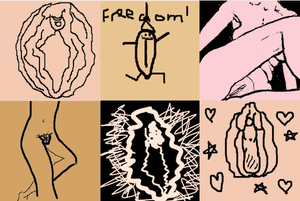
episode etiketine sahip kayıtlar gösteriliyor. Tüm kayıtları göster

12 Nisan 2017 Çarşamba

BBC antiques expert died after "postpartum" psychotic episode

A jewellery expert from Antiques Roadshow died days after being restrained by five paramedics and police officers following suspected postpartum psychosis, an inquest has heard.


The psychotic episode that struck Alice Gibson-Watt, 34, resulted in delusions so severe she believed her five-week-old baby was communicating with her telepathically.


The inquest at west London coroner’s court that began on Tuesday will determine whether the way Gibson-Watt was restrained while being taken to hospital injured her.


Gibson-Watt was a jewellery expert at Sotheby’s who had appeared on the BBC1 antiques show. Her husband Anthony described to the court the “deeply traumatic” events of 13 November 2012, when his wife began crawling on the floor and screaming that her daughter had died, despite her being alive.


She had given birth to Chiara, her first child, the previous month and was thought to be suffering from postpartum psychosis, which can cause hallucinations, paranoia and delusions. The condition affects about one in 1,000 mothers.


PC Sue Thomson was one of those who helped to restrain Gibson-Watt in the ambulance that attended the couple’s home in Fulham, west London.


The officer said in evidence on Wednesday that Gibson-Watt, who had been strapped down with restraints across her chest and legs, was screaming so loudly that talking to the paramedic was difficult.


“She was thrashing from side to side and I was worried she could harm herself or those trying to help her,” Thomson said. She joined other personnel in the ambulance to help restrain Gibson-Watt, along with her mother Miranda Phillimore.


At one point Thomson said it appeared Gibson-Watt was “trying to bite out at someone’s arms”. After arriving at accident and emergency at Chelsea and Westminster hospital, she was given a sedative that calmed her.


Thomson said she then had a “normal conversation” with Gibson-Watt before she told her “she could hear the baby speaking to her and it was saying to her that it was dead”.


Consultant psychiatrist Dr Miriam Barrett, of the North West London mental health trust, told the inquest on Wednesday that in a meeting with Gibson-Watt at 6am on 14 November she “appeared quite rational and normal, but underneath she was showing in her thinking there were delusions”.


“She was convinced that she was communicating with her baby and the baby could communicate with her,” Barrett said. “The baby was part of her delusions and that is where the risk arose.”


She said during the meeting there was no sign Gibson-Watt was in pain or discomfort from any possible injury to the abdomen.


PC Thomson told the court that at no time did she see anyone touch the patient’s chest or abdomen. She had used “calm, even pressure on the shoulders and knees” to restrain her.


Other officers who gave evidence also said they did not see any of those restraining Gibson-Watt touching her chest or abdomen, or touching her in a way that could harm her or injure her liver.


After being assessed at A&E, Gibson-Watt was taken to a mental health unit at west Middlesex university hospital in Isleworth. There she suffered a cardiac arrest and it was then decided she required urgent surgery after a tear was found on her liver that had caused serious internal bleeding.


Gibson-Watt was transferred to an intensive care unit at Kings College hospital in south London, where she died on 20 November 2012.


The inquest is expected to continue until late April.


BBC antiques expert died after "postpartum" psychotic episode

28 Ekim 2016 Cuma

Why is it harder for women to orgasm? A hands-on episode of Vagina Dispatches

Hello!


Here’s the rub: no matter where you stroke or poke, coming can be tricky for some of us. The fact is, men are more likely to orgasm – but did you ever wonder why it’s so difficult for women? We tried to find out in episode three of our video series Vagina Dispatches, which we launched today.


Vagina Dispatches episode three: the orgasm gap

Both Mae and I have found this tricky (and so did the neuroscientist we spoke to, and the pelvic floor therapist, and the sex educator) but that doesn’t mean we can’t work at it. If you can relate, or if you tried out some of our handy tips we mention in the video we want to hear from you. Email us at vaginadispatches@theguardian.com. Don’t worry, we won’t share anything you tell us without your permission.


If you’re reading this and haven’t already signed up for the newsletter, you can do so here.


Bloody vaginas


In episode two, we talked about menstruation – or, rather, the lack thereof. We interviewed Dr Coutinho who felt that having periods is unnatural and spoke to artist Jenn Lewis, who strongly disagreed. A number of commenters were inclined to agree with Jenn, as they wrote in to tell us:


The first episode in this series was about appreciating the natural beauty of the vulva. Having a period is natural, too.


– Camille (on Facebook)


Mae and I explain in the video that we have a hormonal IUD which stops our periods. Viewers also had some valuable thoughts about this method of contraception:


I wanted to point out that there are IUDs that aren’t hormonal and don’t affect the period. I have used a copper IUD (commercial name Paragard) for years and years, I love it because it very effectively and conveniently does the job of birth control and does not change my hormonal balance in the process. Your show gives the impression that IUDs are beneficial because they affect your hormones and stop your periods, first and foremost. Because some women don’t want to tamper with their hormones, you may be discouraging them from IUD use.


It’s true. And we’re reading through all of your responses, questions, and concerns about stopping your periods – and taking them very seriously. In fact, we are compiling a list we plan to present to a doctor. So please keep them coming! Here are a few examples:


  • “I’m a pro-sex feminist and joyfully celebrate women and men who don’t want to be parents. And as a woman who had my daughters when I was 37 and 39, I feel very lucky that the plumbing still worked. Not sure it would have, if I’d stopped my period.”– Kathleen, via email

  • “I recently read a science reporter’s article about menstruation being so very helpful in removing excess iron in women’s blood that the male scientist involved in the study chose to get bloodletting every other month for a similar outcome … I wonder now if the health problems I had early in life might not have been exacerbated by the fact that I had so few periods, sometimes only two a year.”– Anonymous, via email

  • “Is there any scientific research that is been done to understand painful menstruation in women?” – Victoria from Togo, west Africa

Our colleague Aliza Aufrichtig (otherwise known as the brains behind the giant vulva wall) was especially interested in that last one. In her words:


I started having two-week-long periods accompanied by cramps so bad I couldn’t move for days. I bled heavily for 12 to 30 days at a time, often with only days of a break in between. Put another way, the average ovulating woman has bled for a total of nearly one year since the 2012 election but I’ve nearly doubled that. Added together, I’ve had my period for longer than Trump’s presidential campaign. Hard to say which is worse.


Aliza did some digging and turns out, there’s a dearth of research on painful periods.


And – even though no one has specifically asked the question – I started wondering about how your period affects your sex drive. It turns out, it does.


Please forward this message along and share episode three to help spread the genital knowledge. And if you’re enjoying this series, please support our work with a contribution or by becoming a member.


Got more? Email us at vagina.dispatches@theguardian.com. Especially about orgasms.


Sorry Mum,


Mona & Mae


Vulva Wall

We’ve got nearly 18,000 vulvas on the great wall! Photograph: Vagina Dispatches

Why is it harder for women to orgasm? A hands-on episode of Vagina Dispatches

Vagina Dispatches episode three: the orgasm gap – video

Women are less likely to orgasm than men – but is it really more difficult for women? There’s still ambiguity about what the female orgasm even is, let alone how to have one. In episode three of Vagina Dispatches, we (Mona and Mae) go into the lab with a neuroscientist who measures orgasms. Then we speak to a psychologist, a sex educator and a pelvic floor therapist to find out how we can increase our sexual pleasure, and our chances of coming


Vagina Dispatches episode three: the orgasm gap – video

23 Eylül 2016 Cuma

Vagina Dispatches: episode one - the vulva

Think you know about vaginas? Think again. In the four-part series running from now through November, we find out that even the most basic of body knowledge is lacking – people still don’t understand what vaginas look like or how they function. In episode one, we build a giant vulva, then talk to a gynecologist, a labiaplasty surgeon and a trans woman, to find out what vulvas really look like.


WARNING: contains images of vulvas and strong language


If you want to get in touch with questions or comments for us, please write to vagina.dispatches@theguardian.com.


Stay tuned for episode two.


Mona & Mae


Vagina Dispatches: episode one - the vulva