England etiketine sahip kayıtlar gösteriliyor. Tüm kayıtları göster

12 Mayıs 2017 Cuma

NHS hospitals across England hit by large-scale cyber-attack

A number of hospitals have been hit by a large scale cyber attack, NHS England has confirmed.


Hospitals across the country appear to have been simultaneously hit by a bug in their IT systems, leading to many diverting emergency patients. NHS England said it was aware of the problem and would release more details soon.


Meanwhile doctors have been posting on Twitter about what has been happening to their systems.


A screen grab of a instant message conversation circulated by one doctor says: “So our hospital is down … We got a message saying your computers are now under their control and pay a certain amount of money. And now everything is gone.”


If.ra (@asystoly)

Why would you cyber attack a hospital and hold it for ransom? The state of the world


NHS hospitals across England hit by large-scale cyber-attack

25 Nisan 2017 Salı

Cancer symptoms often missed by GPs in England, study suggests

Thousands of people diagnosed with cancer in A&E every year have visited their GP three times or more with symptoms, research has shown.


The study found that 71% of all patients diagnosed in accident and emergency departments had seen their GP at least once with symptoms that turned out to be cancer. The remainder had never visited their GP.


Of the group that did see their GP with symptoms, 41% had sought help three or more times while 59% had seen their GP once or twice.


Some of these had difficult-to-spot cancers, such as lung cancer or multiple myeloma, and tended to be younger or female.


But the group also included people with common cancers such as breast cancer. The study found that 31% of patients with breast cancer had visited their GP three or more times, 41% with bowel cancer had visited three or more times, and 37% with prostate cancer had visited three or more times.


People who are diagnosed with cancer as an emergency have a worse prognosis than those diagnosed at an earlier stage. The quicker a cancer patient can get a diagnosis, the better their options for treatment.


The study, said to be the most comprehensive to date, was published in the British Journal of General Practice. The authors, including from University College London, the University of Cambridge and Public Health England, analysed 2010 data from 4,637 people diagnosed in A&E.


They found those patients who had never been to their GP tended to be older, male and living in the most deprived regions of England.


Patients in A&E diagnosed with common cancers who had visited their GP three times or more may be presenting with atypical symptoms, the authors said.


A previous study, including by three of the same authors, found those patients who saw a GP three or more times before being referred for cancer tests were more likely to be dissatisfied with their overall care.


They also have less confidence in the doctors and nurses who go on to treat them, that study found.


Dr Georgios Lyratzopoulos, one of the lead researchers based at UCL, said: “These findings tell us that some patients diagnosed as an emergency might not be acting on ‘red flag’ symptoms which could have prompted them to visit their GP.


“There’s also a host of other factors that may be at play. For example, many elderly patients may find it difficult to get to the surgery or have other conditions which would prevent them from seeking an appointment, such as dementia.


“This highlights the need to explore all the reasons why cancers are diagnosed late, including what happens outside GP surgeries.


“It also shows that late diagnosis is more complex than it’s often presented to be, as there are multiple reasons why cancers are spotted late.”


Dr Julie Sharp of Cancer Research UK said: “Campaigns like Be Clear on Cancer have boosted the public’s awareness of cancer signs and symptoms. But this study shows that there are multiple reasons that affect how and when a cancer diagnosis is made.


“We need to continue to increase awareness of cancer signs and symptoms and help break down the barriers preventing people from seeing their GP earlier. GPs need better access to the right tests and referral routes if we want to see this number reduced.”


Judith Brodie, acting chief executive of the charity Beating Bowel Cancer, said: “It’s concerning that the study shows 41% of bowel cancer patients who are diagnosed as emergencies had previously sought help from their GP three or more times.


“A bowel cancer patient’s chance of being successfully treated drops dramatically if they are not diagnosed until a late stage so more must be done to ensure that the public is aware of the symptoms and how important it is to get them checked out as soon as possible.


“Knowledge of the disease will also give them the confidence to persevere with their GP if they feel their symptoms are not being taken seriously enough.”


Cancer symptoms often missed by GPs in England, study suggests

17 Nisan 2017 Pazartesi

Electroconvulsive therapy on the rise again in England

The use of electroconvulsive therapy to treat serious mental health problems, a procedure long thought to be in steep decline, is on the rise again in England, a Guardian analysis indicates.


Exclusive data covering four-fifths of NHS mental health trusts in England shows that more than 22,600 individual ECT treatments were carried out in 2015-16, a rise of 11% from four years ago, when about 20,400 were carried out.


The number of patients treated also rose, albeit more modestly, to more than 2,200, suggesting that on average individuals undergo more ECT procedures than before.


The figures, obtained through freedom of information requests, show that despite being a crude, controversial treatment, which fell sharply out of favour around the turn of the millennium, ECT is enjoying a revival.


The procedure involves anaesthetising the patient and passing electricity through the brain to induce seizure. Despite ghoulish depictions in popular culture and a marked lack of science explaining how and why it works, treatments can prove effective. Patient stories range from life-changing benefits to tales of lives being ruined.


The data collected by the Guardian covers 44 NHS trusts that provided comparable data. Figures for private clinics are not included.


After considerable fluctuation over the last four years, a comparison of figures from 2012-13 and 2015-16 reveals an 11% rise when it comes to the number of ECT treatments. Almost two-thirds of NHS trusts reported a rise in the number of ECT treatments carried out over the four-year period. The average number of ECT treatments per patient also rose, from 9.6 in 2012-13 to 10.1 four years later.


The changes in ECT were more striking in some parts of the country than others. While the number of treatments carried out by Mersey Care NHS trust, for example, has remained fairly constant over the last four years, the figures for Lincolnshire Partnership NHS foundation trust show a 75% increase in treatments.


Experts and practitioners say a slew of factors could be responsible for the revival. Some say it is down to improved patient access, lack of credible alternatives for serious cases of mental illness and the fact that in many cases ECT does seem to make a difference.


“I think [ECT] should be on the increase because it has been underused for a number of years,” said Tim Oakley, chair of the ECT Accreditation Service (ECTAS) accreditation committee and a clinical director at the Northumberland, Tyne and Wear NHS foundation trust.


“There are some patients who would respond very well to ECT who perhaps don’t get it as quickly as they should or don’t get it at all for various reasons,” he said. “In terms of getting people better, particularly for depression where everything else fails, it is still the best treatment.”


Others point to the patchwork nature of provision – popular in some parts of the country, not in others – as a sign that it is down to local medical preferences.


“The decision about whether ECT is to be used or not is based on the quirks of the local psychiatrist,” said Richard Bentall, professor of clinical psychology at Liverpool University. “There are some places where psychiatrists think it works, and they just do it lots of times, and there are some places where people think: ‘Bloody hell, I don’t think the evidence for this is very good,’ so will only do it in absolutely desperate circumstances.”


He added: “My view is that ECT is a classic failure of evidence-based medicine. I don’t believe that there are adequate clinical trials of ECT to establish its effectiveness.”


While some, including Oakley, have argued that historical ECT trials do show a benefit from the treatment, Bentall believes their design was not up to scratch, and said the data obtained by the Guardian highlighted the need for large randomised placebo-controlled clinical trials – a proposal some proponents of ECT have argued would be unethical.


But Bentall said: “It is clearly unethical to pass electric shocks across people’s brains unless it is effective [and] helpful to do so and therefore there is an ethical requirement to show that treatment is effective.”


Others have suggested the increase in number of ECT treatments could be down to a change from bilateral to unilateral therapy, where the electrodes are applied to one side of the head, rather than at both temples.


“That has slightly fewer side-effects and is less likely to cause memory impairment,” said Andrew Molodynski, consultant psychiatrist at Oxford Health NHS foundation trust and national mental health lead of the British Medical Association’s consultant committee. “It is also slightly less powerful, so it might be that if more people are having that then they are needing slightly more treatments.”


“It is by far the most powerful treatment for depression,” he added. “As a treatment it is certainly not bad as long as it is done properly and for the right people, which is people with genuinely treatment-resistant depression.” While Molodynski added that he did not believe it would be ethical to carry out new clinical trials of the effectiveness of ECT, he thought studies into outcomes over prolonged periods would be valuable.


But Molodynski pointed out that the Guardian figures suggested either that the procedure was being used more freely, or that more people appeared to be falling into the category of those with treatment-resistant depression.


He said the increase should be viewed negatively if it was a result of people with less severe forms of depression not getting the care they needed. “Equally, if people are resorting to ECT for inpatients more quickly, because it works more quickly than antidepressants, in order to get them out of hospital because of our perpetual bed crisis, that would be a major concern.”


One ECT service manager from a London-based mental health trust, who asked not to be named, said the Guardian findings tallied with his own experience of a recent rise in ECT use, adding that the trend was likely to be linked to changes in practice and better regulations, with people becoming more accepting of the procedure. “Our trust treated more patients last year than they have ever treated before,” he said.


A 2014-15 survey which included clinical outcomes for 2,148 people, published by ECTAS and covering England, Wales, Northern Ireland and the Republic of Ireland, reported that 91.5% of patients had improved after the treatment, compared with 1.7% who had become worse.


The mental health charity Mind, however, warned of side-effects, pointing to a 2003 survey it carried out with patients who had undergone ECT who reported memory loss, difficulty concentrating and dizziness.


While the idea of inducing a seizure for therapeutic reasons was first recorded in 1785, ECT was not developed until the 1930s. It was subsequently introduced to England and was commonly used well into the 1960s and 1970s.


But its use waned towards the end of the 20th century. According to the Royal College of Psychiatrists: “Between 1985 and 2002, its use in England more than halved, possibly because of better psychological and drug treatments for depression.”


Dr Rob Chaplin, from the Royal College of Psychiatrists, said: “Previous data collection has shown a decline in ECT, but this appears to have plateaued, perhaps suggesting a change in attitude towards a therapy that has historically been poorly administered and badly misunderstood.


“Since the launch of our accreditation service for ECT in 2003, safety standards have doubled, making ECT in the UK one of the best in the world.


“There is unmistakable evidence that electroconvulsive therapy is an effective treatment for many depressive illnesses, and can act much faster than drugs.”


At present, the National Institute for Health and Care Excellence (Nice) advises that ECT be used only as a last resort for those with prolonged or severe manic episodes, who are in a catatonic state, or who have severe depression or moderate depression when other treatments have not worked.


The data


There is a dearth of information on how widely ECT is used, so the Guardian requested data from every English NHS mental health trust, as listed by the Care Quality Commission, under the Freedom of Information Act for a 10-year period between 2005-06 and 2015-16.


It quickly became clear that many trusts either did not hold or could not access relevant data for the decade covered by the request.


The vast majority could not provide data for the full 10-year period requested. The data presented here begins in 2012 for that reason: a number of trusts were unable to provide figures prior to that year.


Three trusts refused the request outright, saying the staff time required to comply with the request was too great, while seven trusts could not even provide consistent data from 2012-13 onwards. Some trusts admitted they were missing data over periods of months in certain years.


Two trusts provided data that turned out to be completely incorrect, only providing accurate figures after multiple contacts.


The majority of the trusts provided financial year data. However, in those cases where calendar year data was provided, the data was grouped with the closest financial year.


This project may have revealed an increase in ECT use in England but it has also uncovered a lack of properly collected data relating to the procedure.


Electroconvulsive therapy on the rise again in England

13 Nisan 2017 Perşembe

Hundreds of children"s playgrounds in England close owing to cuts

Hundreds of children’s playgrounds have been closed or are being closed by cost-cutting local authorities across England, with councils blaming “unprecedented budget constraints” for the decision to get rid of parks and sports facilities.


A series of freedom of information requests to local authorities found that 112 playgrounds were closed in the 2014-15 financial year, and a further 102 in 2015-16.


Councils also revealed that they had 80 more closures in 2016-17, followed by plans for 103 in the current budget period and at least 51 closures planned for 2018.


But the more recent figures most likely understate the number of closures, because around a third of councils said they had not yet finalised their plans, according to the Association of Play Industries, which submitted the FOI requests.


Mark Hardy, chair of the API, said that government investment of around £100m would be required to reverse the trend in closures.


“With increasing childhood obesity and the health benefits of activity and play well known, now is not the time for community playgrounds to be closing. This action goes against the government’s clear intention to get children more active and needs to be stopped as quickly as possible,” Hardy said.


Gary Porter, the Conservative chair of the Local Government Association, said councils “want to do everything they can keep our parks and playgrounds intact but are doing this in the face of unprecedented budget constraints.


“Given ongoing funding reductions, many councils continue to have to make difficult decisions about which services are scaled back or stopped altogether. Decisions like this are never taken lightly and councils are exploring new ways to fund and maintain these facilities.”


A spokesperson for the Department for Communities and Local Government said: “Our historic four-year funding settlement means that councils have almost £200bn to spend over the course of this parliament – allowing them to prioritise the services that communities and local people value.”


Hundreds of children"s playgrounds in England close owing to cuts

11 Nisan 2017 Salı

Two in five GPs in south-west of England plan to quit, survey finds

About two in five GPs in the south-west of England are planning to quit, exposing a potential doctors’ crisis in the NHS. A survey of more than 2,000 GPs in the region revealed the impending healthcare problems.


Figures published last month showed there had been a drop in the number of GPs working in the NHS despite the government aim of recruiting 5,000 more by 2020.


The survey, carried out by the University of Exeter, also found that seven in 10 GPs intended to change their working patterns in a way that would mean less contact with patients. This included leaving patient care, taking a career break or reducing their hours.


The researchers said the data provided a snapshot of low morale which, if echoed in other regions, could point to a deeper and more imminent crisis than previously anticipated in relation to the worsening shortage of GPs nationwide.


John Campbell, a professor who led the research, which is published in BMJ Open, has called for a move away from “sticking plaster solutions” towards robust, joined-up, action to avert the crisis nationwide.


Campbell, a practising GP, said: “We carried out this survey because of a nationally recognised crisis in the shortage of GPs across the country, and our findings show an even bleaker outlook than expected for GP cover, even in an area which is often considered desirable, and which has many rural communities,.


“If GPs have similar intentions to leave or reduce their hours in other regions, as many are reporting, the country needs to take robust action more swiftly and urgently than previously thought.”


The research team sent surveys to 3,370 GPs across the region and received responses from 2,248, with 54% reporting low morale.


Campbell said: “We know that there’s an ageing workforce in general practice, with 30% of GPs being over 50 years old. Previous research has found that GP morale is low because of workload pressures, and many younger GPs do not want the financial risk and responsibilities of taking on a practice.


“Yet if the GPs we surveyed fulfil their intentions to leave or to cut back their patient contact, and no action is taken to address the issue, the south-west of England will experience a severe shortfall of GPs in the next five years.


“Whilst numerous government-led initiatives are under way to address recruitment, there is a need to address the underlying serious malaise which is behind this data.


“We are in a perilous situation in England, with poor morale of the current GP workforce, and major difficulties with recruitment and retention of GPs reflected in the stark overall reduction in the GP workforce. Reactive, sticking-plaster, approaches are not the answer.”


Campbell said GPs and their teams delivered nine in every 10 patient contacts with the NHS but attracted just seven pence in every pound of NHS spending.


“The government needs to work with the Royal College of General Practitioners, the British Medical Association and universities to obtain evidence on the causes of the problem, to develop and implement relevant strategy, and to effect fundamental change in healthcare resourcing and planning nationwide,” he said.


Two in five GPs in south-west of England plan to quit, survey finds

928 carers in England quit a day as social care system "starts to collapse"

More than 900 adult social care workers a day quit their job in England last year, figures reveal, as homecare providers warn the adult social care system has begun to collapse.


Analysis by the BBC of data released by a charity, Skills for Care, shows that in 2015-16 about 338,520 adult social care workers left their roles, equal to 928 people leaving their job every day. There were more than 1.3 million people employed in the adult social care sector in England in the period.


Of those leaving a job, 60% left the adult social care sector altogether, the figures showed, while there was an estimated shortage of 84,320 care workers, meaning about one in every 20 care roles remained vacant.


The average full-time frontline care worker earned £7.69 an hour, or £14,800 a year, according to the data, and one in every four social care workers was employed on a zero-hours contract.


The figures come as the UK Homecare Association wrote a letter to the prime minister warning of the crisis facing social care.


Mike Padgham, the chair of the UK Homecare Association, said: “My biggest fear is that we will soon run out of capacity to provide care to those who cannot fund themselves. I agree wholeheartedly with Age UK’s warning that the social care system will begin to collapse this year, but I would go further and say that the system has already begun to collapse.”


The Skills for Care figures show that the industry has a staff turnover rate of 27%, which is nearly twice the average for other professions in the UK, according to the BBC report.


The government has said it will spend an extra £2bn on the social care system and permitted local authorities to raise council tax bills in order to fund the gap in social care budgets.


The Department of Health said: “Social care jobs have increased at an average of 3% a year since 2010, but we want to see improvements in turnover rates, with talented staff attracted to a robust sector backed by an additional £2bn over the next three years.


“Meanwhile, we’re investing in the workforce of the future, with a total of 87,800 apprentices starting last year – up 37,300 compared to 2010.”


928 carers in England quit a day as social care system "starts to collapse"

10 Nisan 2017 Pazartesi

NHS England to expand provision of "gamechanging" stroke treatment

Thousands of stroke patients will be saved from lifelong disability after NHS England decided to invest millions of pounds in a new treatment hailed as a “gamechanger”.


About 8,000 people a year who have a stroke will benefit from a massive expansion in the number of hospitals offering mechanical thrombectomy.


Currently only a few hundred patients a year receive the treatment and just a handful of hospitals in England offer it, despite its proved effectiveness. Stroke experts say the procedure can produce remarkable results, with patients who would otherwise have ended up in a wheelchair instead able to walk out of hospital within 48 hours of having it.


“Thrombectomy is a real gamechanger which can save lives and reduce the chances of someone being severely disabled after a stroke,” said Juliet Bouverie, the chief executive of the Stroke Association.


“This decision by NHS England could give thousands of critically ill stroke patients an increased chance of making a better recovery. It could also mean more stroke survivors living independently in their own homes, returning to work and taking control of their lives again as a result,” she added.


A thrombectomy is used to remove a blood clot in someone’s brain which has not dissolved despite the patient receiving clot-busting thrombolytic drugs. It involves a doctor putting a thin tube into a patient’s artery, usually through their groin, and then feeding it up through their body to where the clot is in their brain. Once there, a wire mesh tube called a stent – usually used in heart or vascular surgery – on the top of the tube is wrapped around the clot and it is then pulled out by a doctor called an interventional neuroradiologist.


Doing that restores normal blood flow to the brain and greatly reduces damage to brain tissue, which is what causes patients to suffer long-term, often serious damage to their physical and mental functions. Patients are either sedated or under general anaesthetic during the procedure, which must be carried out within six hours of the stroke occurring.


“This major national upgrade to stroke services puts the NHS at the leading edge of stroke care internationally,” said Simon Stevens, NHS England’s chief executive. “It’s another practical example of the NHS quietly expanding innovative modern care that will really benefit patients, but which tends to be invisible in the public debate about the NHS.”


Stevens is keen that the NHS follows the lead of Germany and France, which undertake 7,500 and 3,500 thrombectomies a year respectively. While the procedure can help 10% of the 90,000 people a year in the UK who are admitted to hospital following a stroke, fewer than 600 patients a year in England have one.


Although the procedure costs about £12,000 to perform, the big savings in medical and social care for patients who would otherwise have been left seriously disabled have convinced NHS England that it represents value for money.


St George’s in London is the only hospital in the UK to offer thrombectomy around the clock every day of the week. NHS England hope the massive expansion will lead to 24 NHS trusts which are centres of excellence in neuroscience operating on the same 24/7 basis as the NHS becomes more of a seven-day service.


Dr Jeremy Madigan, a consultant diagnostic and interventional neuroradiologist at St George’s, said: “Our patients are benefiting from the thrombectomy service we provide, with an 80-90% chance of opening up blocked vessels via this technique, compared to 30% with traditional clot-busting drugs.


“Providing a thrombectomy service at all times of day, as we do at St George’s, radically improves the range and mix of interventions available to us as clinicians.”


However, Bouverie said that creating 24 centres to perform the procedure would compel the NHS to centralise acute stroke services in fewer places, which would likely prove controversial.


It would also require a big increase in the number of interventional neuroradiologists the NHS employs – currently about 90 – especially if the service is to operate around the clock.


NHS England to expand provision of "gamechanging" stroke treatment

30 Mart 2017 Perşembe

Quarter of adults in England "get less than half hour of exercise a week"

One in four adults in England get less than 30 minutes of exercise a week, with women more likely to be inactive, a report shows.


NHS Digital’s annual review of obesity in England also found high levels of obesity among adults and children, with only around a quarter of adults eating the recommended five portions of fruit and vegetables a day.


Twenty six per cent of all adults were classified as inactive (undertaking fewer than 30 minutes of physical activity a week), with women more likely to be inactive (27%) than men (24%).


People who are long-term unemployed or who have never worked are most likely not to take exercise (37%), compared with 17% of those in professional and managerial jobs.


Almost a third of people in South Tyneside, Leicester, Barking and Dagenham and Rochdale are deemed to be inactive, while the lowest rates of inactivity were found in Wokingham (13%) and Brighton and Hove (14%), the report said.


In 2015, 58% of women and 68% of men in England were overweight or obese. Obesity has risen from 15% of adults in 1993 to 27% in 2015.


The prevalence of morbid obesity has more than tripled since 1993, affecting 2% of men and 4% of women in 2015.


The report also revealed high numbers of overweight children, with more than one in five in reception class (aged four to five) being overweight or obese in 2015-16, rising to more than one in three for children in year 6.


On Thursday, Public Health England (PHE) published new voluntary targets for the food industry to reduce sugar levels by 20% by 2020 in nine categories of food popular with children.


The NHS Digital report found that only 26% of adults ate the recommended five portions of fruit or vegetables a day in 2015: 47% of men and 42% of women ate fewer than three portions a day. But 52% of 15-year-olds said they hit the recommended five a day.


The data also showed there were 525,000 hospital admissions in England in 2015-16 where obesity was recorded as a factor. Two in three patients, or 67%, were female.


The data revealed, too, that 6,438 weight-loss surgical procedures were carried out.


A spokesman for the Obesity Health Alliance, a coalition of more than 40 health charities, campaign groups and medical colleges, said: “As waistlines increase, so do the chances of developing life-threatening conditions like Type 2 diabetes, heart disease and cancer, putting further strain on our already overstretched health service.


“This data is a stark reminder of exactly why we need measures like the sugar reduction programme and the soft drinks industry levy to help create a healthier environment for all.”


Dr Justin Varney, Public Health England’s national lead for adult health and wellbeing, said: “We need many more adults and children to be more physically active. Little and often makes a big difference – just 10 minutes extra walking each day can improve a person’s health and their overall quality of life.”


Chris Allen, senior cardiac nurse at the British Heart Foundation, said: “Being inactive can dramatically increase your risk of having a deadly heart attack or stroke.


“But the good news is that it’s never too late to start being more active, which can help you control your weight, reduce blood pressure and cholesterol and improve your mental health.


“The recommended 150 minutes of physical activity a week may seem like a lot, but you can break it down into 10-minute sessions and gradually build up.”


Quarter of adults in England "get less than half hour of exercise a week"

28 Mart 2017 Salı

NHS workers in England to get "derisory" 1% pay rise

Health workers ranging from doctors, dentists, nurses and midwives to cleaners and porters are to receive a 1% pay rise, angering unions.


The government said it had accepted recommendations from Pay Review Bodies (PRB) for increases in the coming year.


Unions reacted with fury, saying the rise was “derisory”, especially as fuel, food and transport costs were increasing.


Christina McAnea, head of health at Unison, said: “This deal amounts to less than £5 a week for most midwives, nurses, cleaners, paramedics, radiographers and other healthcare staff. It’s a derisory amount in the face of soaring fuel bills, rising food prices and increasing transport costs.


“The government’s insistence on the 1% cap has tied the PRB’s hands. As the PRB itself admits, it can no longer prevent health employees’ pay falling way behind wages in almost every part of the economy.Without the cash to hold on to experienced employees, the NHS staffing crisis will worsen as people leave for less stressful, better rewarded jobs elsewhere.


“Today’s unfair settlement is yet more evidence of the government’s failure to invest in the NHS. Ministers must stop relying on goodwill, rethink this short-sighted pay policy and reward staff properly.”


Rehana Azam, of the GMB union, said: “Public sector workers desperately need a real pay rise, not the miserly and cruel decision being imposed on them by the government.


“Dedicated professionals are hurting and the quality of services is deteriorating for everyone else. Theresa May talks about helping those who are ‘just about managing’, but it’s clear that she doesn’t include over 5 million public sector workers. Imposing a 1% settlement is an insult to our selfless NHS staff and other public sector workers – who keep us safe day in, day out.”


Unison’s general secretary, Dave Prentis, said: “Day after day NHS staff are giving 100%, but getting just 1% in return. Low pay makes it tough for the NHS to hold on to experienced employees and recruit the next generation. And without enough staff, patient care will suffer. The pay of top judges and MPs has already breached the government’s 1% limit. It’s high time ministers stopped penalising NHS employees and gave them a decent pay rise.”


Jon Skewes, of the Royal College of Midwives, said: “It is extremely disappointing that the government is continuing with its disastrous policy of pay restraint for a seventh year. While we welcome that both the Scottish and Welsh governments will give a slightly higher award to lower paid staff, we want to see an inflationary increase given to all staff.


“As a result of below-inflation increases for the past seven years, midwives have seen their pay drop in value by over £6,000 since 2010. It is unsustainable for this to continue. There is currently a shortage of 3,500 midwives in the NHS, with many more midwives debating whether to leave midwifery because the pressures the service is currently under have created a situation in which midwives have never been so challenged in their ability to give high-quality, safe care to women and their families.


“Eighty percent of midwives who were intending to leave or have left the service told us they would be persuaded to stay if their pay was higher.”


Janet Davies, general secretary of the Royal College of Nursing, said the announcement was a bitter blow to nursing staff across England.


“The government will deter new people from joining the nursing profession at the very moment it is failing to retain staff and European colleagues in particular head for the door. The government is still refusing to keep nursing wages in line with inflation. The government has already cut nursing pay by 14% in real terms, leaving too many struggling and turning to food banks and hardship grants.


“Many nurses rely on working extra hours for the NHS as agency staff but, from next week, they will be forced to work through a ‘bank’ and accept lower rates of pay than they get in their normal NHS job. Ministers are ignoring the evidence that staff shortages put patient care and safety at risk. Tens of thousands of nursing jobs lie vacant today and the government missed the opportunity to stop that getting worse.”


A Department of Health spokesman said: “The dedication and sheer hard work of our NHS staff is absolutely crucial to delivering world-class care for patients. We are pleased to announce that all NHS staff will receive a 1% pay increase.”


Unite national officer Sarah Carpenter said: “What the PRB has proposed is woefully inadequate and means that the majority of NHS staff will have experienced a loss of income in real terms of about 17% since 2010.


“This won’t staunch the recruitment and retention crisis currently affecting many healthcare professions, which is exacerbated by the ugly Brexit shadow hanging over the future of the estimated 55,000 EU nationals working for the NHS. Health secretary Jeremy Hunt often speaks warm words in support of NHS staff, but the reality is that he has been quite content to see this serious erosion in NHS pay continue.”


NHS workers in England to get "derisory" 1% pay rise

18 Mart 2017 Cumartesi

Rural deprivation and ill-health in England "in danger of being overlooked"

Rural communities are in danger of being overlooked when it comes to poverty, deprivation and ill-health, warns a new report from Public Health England.


In England 9.8m people – or 19% of the population – live in rural settings ranging from coastal villages to market towns to large, open expanses like the Yorkshire Dales.


But experts caution that while on average people in rural areas have better health than those in cities, the popular idea of affluent bucolic life is a misconception.


Instead, they say, official statistics have failed to capture the reality that many residents scattered across rural communities face deprivation, poverty and poor health.


“Within a rural community there are significant inequalities between parts that actually are very wealthy and parts that are quite deprived,” said Dr Rashmi Shukla,
Public Health England’s regional director for the Midlands and East of England and lead author of the report.


Published by the Local Government Association (LGA) and Public Health England, the research sheds light on a number of issues affecting the health and wellbeing of rural communities, including low-paid work, unemployment of young people, high costs of housing and fuel poverty.


Access to health services is also of concern, the authors note, with GPs, dentists and other services further away than in urban areas. Indeed, while 97% of urban households lie within 8km of a hospital, the figure for rural households is just 55%.


In addition, rural areas often lack of public transport, while poor broadband and mobile phone network availability hinders communication and access to online health services, banking, and shopping.


“Even people who may not be materially disadvantaged may have difficulties connecting and may be more socially isolated as a consequence of that,” said Shukla.


Social isolation, she adds, is a particular problem for older people – a sector of society that is larger in rural communities, with 23.5% of residents over the age of 65, compared to 16.3% in urban areas.


An ageing rural population, the authors point out, brings a number of challenges. These include the fact that older people often have poorer health and greater care needs, issues compounded by the greater distances to healthcare services and poor public transport. “Financial poverty in rural areas is also highly concentrated amongst older people, with around one-quarter of those in poverty in pensioner households,” the authors add.


Izzi Seccombe, chairman of the LGA’s Community Wellbeing board, said that many of the services that could help tackle these issues have been under pressure.


“What local authorities have all seen is a reduction in government grant,” she said. “While they have tried to protect the services for vulnerable people, like social care, some of our other services that we deliver – which can be subsidised transport, can be library services, it can be grants to the voluntary sector – those have been squeezed.”


The report encourages local authorities to take action to improve healthcare for rural areas, urging them to look closely at the particular challenges facing different communities. The authors also highlight successful initiatives including the “Fish Well” health improvement project in Norfolk, that offered quayside health checks, advice and support to fishermen that they would otherwise have found difficult to access.


The authors also highlight the need for official statistics that look more closely at conditions experienced by those living in the countryside, and at different areas within it, pointing out that current approaches don’t pick up small pockets of deprivation, and tend use measures that are more relevant in urban areas, such car ownership.


“A lot more digging needs to be done to understand the level of deprivation within rural communities,” said Shukla. “Just under 10m of our population live in these communities and a proportion of them are under severe hardship. We need to address that,” she added.


Seccombe agrees. “We must not forget our vulnerable people in more isolated communities,” she said.


Rural deprivation and ill-health in England "in danger of being overlooked"

17 Mart 2017 Cuma

Girls from poorer families in England struggle to afford sanitary protection

Girls from low-income families across England are struggling to afford sanitary protection, with many teachers buying tampons for their students or seeking help with supplies from charities and voluntary groups, the Guardian has been told.


Charities, campaigners and teachers say that the problem is happening in cities and rural areas across the country, describing girls missing school, using donations, or wearing makeshift protection during their period.


The issue came to light after it was reported that a charity in Leeds, Freedom4Girls, was contacted by a local school who were worried about truancy among teenage girls when they had their period. The charity, which provides products to women in Kenya, agreed to do the same for local girls.


Since then more teachers have come forward to discuss the issue openly, with many contacting charities for help or telling how their schools already support girls in the same situation. Hayley Smith, founder of Flow Aid, a campaign working to provide free sanitary products to the homeless, said that she had a request from a London primary teacher, who worked in multiple schools in the capital, on Monday asking to her to provide sanitary products to young girls who could not afford them.


Smith said: “Teenagers and young girls are being forced to wrap or stuff toilet paper down their knickers, to prevent them from bleeding all over themselves while at schools. The cost of sanitary products are just too much for some girls and their families, and it’s leading to missing school and it’s putting their health at risk.”


“It’s absolutely despicable in the 21st century that girls are being forced to comprise their education simply because an absolute necessity is unavailable and not affordable.”


Smith is now looking at distribution channels to ensure students get supplies. “I work with Ealing Soup Kitchen and St Mungo’s and I am asking them if they have any links in primary schools we can distribute to,” she said. The campaigner added that she is also looking at creating drop off or donation points where people can give products to local schools.


Donations have already been given in Beverley, a market town in east Yorkshire. Councillor Chris Linthwaite, from Molescroft parish council, said the Friends of Longcroft School, a voluntary group, had to step in and provide sanitary donations after an investigation highlighted it as a problem. “Basic school equipment, items of uniform including 80 pairs of shoes were needed too.” The school confirmed the donations.


Rosy Candlin ofEvery Month, a campaign to create packs of menstrual products for people experiencing homelessness or poverty in Manchester, said she had been into a school in Rochdale to talk about this issue, with students raising funds for students who could not afford products.


She agreed there was still a lot of stigma: “For a family to say ‘we cannot afford food’ that’s so much easier to ask for. But because of the shame put on mensuration it’s much harder. Even in food banks we have to tell me to make it explicit that they carry our packs as people less likely to ask for them.”


Candlin says that often people use socks instead or they will simply skip school, as was the case in Leeds.” There’s a lot of girls who use lots of tissue to create makeshift protection, or they will have just a few pads and leave them in for longer, so it becomes unhygienic and unhealthy so there are no real good options.”


The Guardian also heard from dozens of teachers who said that they regularly provide pads and tampons for their students. One teacher in Manchester, who asked to remain anonymous, said: “This year I have a student who has benefited from free sanitary products. The student mentors and I put together two bags of essential toiletries including pads. She does pick up extra supplies every so often. So has another girl in the class. They would benefit from being able to tap into a guaranteed national provision – it’s less embarrassing when you feel you are not the only one.”


Another teacher from Newcastle said: “There is a core group of girls who regularly need to use staff-bought sanitary products. I buy the same brands I use myself, I just make sure I buy extra when they’re on offer.”


One teaching assistant from Surrey said last week someone in her department helped out a pupil who had only been given one sanitary towel for the day by her mother. “The girl came to a member of our department as she did not know what to do. It is not unusual for this to happen and we have a supply of sanitary towels and spare knickers for that purpose.”


Bothana Tashani of Freedom4Girls said that since the story about what was happening in Leeds went public they have heard from teachers, students and organisations all around the UK. “We were not surprised when we were first contacted by a school in Leeds about it. It’s upsetting because no one has talked about it before as there is a lot of shame and embarrassment around not being able to afford sanitary products.”


Tina Leslie of Freedom4Girls has now launched a crowdfunding page to raise money for research into the scale of the issue in the UK, calling for a comprehensive, nationwide study on the issue.


The news comes as a bill is about to go through the Scottish parliament to make it a requirement for schools to provide pads and tampons. A petition has since been started in the UK forTheresa May and the UK government to do the same.


Conservative MP Jason McCartney has since said he will raise the issue in parliament. He has said that he wants to get a group of MPs together to start a campaign for free sanitary products for young girls in need.


Girls from poorer families in England struggle to afford sanitary protection

3 Mart 2017 Cuma

NHS England chief brings in new rules on ward bed closures

Simon Stevens, the chief executive of NHS England, has acted to make it much more difficult for hospitals to slash their supply of beds, after the dramatic loss of the facilities in recent years was widely blamed for exacerbating the winter crisis.


Stevens is introducing tough rules for hospitals concerning bed closures from April to ensure that patient care does not suffer.


His move comes after heavy criticism of the NHS for allowing the number of hospital beds in England to fall by 20% over the past 10 years at a time of growing demand. About 15,000 beds disappeared between 2010-11 and 2016-17, official NHS figures show.


Stevens stressed that his edict would not mean a complete moratorium on hospitals shrinking their tally of beds, but there was a need for tough criteria given the increasingly large number of beds being used by patients who could not be discharged yet were medically fit to leave.


In A Friday speech at the Nuffield Trust’s health policy summit, Stevens will say: “More older patients inevitably means more emergency admissions, and the pressures on A&E are being compounded by the sharp rise in patients stuck in beds awaiting home care and care home places, so there can no longer be an automatic assumption that it’s OK to slash many thousands of extra hospital beds, unless and until there really are better alternatives in place for patients.”


NHS trusts in England planning to cease provision of a particular service already have to pass four tests before doing so, including showing that GPs back their move and that the public has had a say.


Stevens’ intervention, in effect, creates a new fifth test that will have to be passed by NHS managers planning bed closures. They will get the go-ahead only if they can prove that NHS care in the local area outside the hospital can ensure patients will receive good care; permission could also be given if it can be shown that a new medical treatment for patients with a particular condition means beds can be safely deleted. Hospitals which are inefficient in their use of hospital beds will get the green light if they improve their performance to show that losing beds will not affect patients.


It is unclear what the impact of the new rules will have on the sustainability and transformation plans (STPs) developed recently by NHS chiefs in 44 areas of England. Many of the plans envisage a further loss of hospital beds by 2020-21 in efforts to help the NHS save £22bn. Also, the conditions will only apply to “significant bed closures”, which may not stop hospitals reducing their numbers gradually, a few at a time.


Prof Jane Dacre, president of the Royal College of Physicians, said Stevens’ plan was a step in the right direction. “However, the RCP would urge STPs to reduce the potential impact on patient care and have extra capacity in place before any bed closures occur,” she said.


Jonathan Ashworth, the shadow health secretary, said: “The number of hospital beds across the country is actually now forecast to drop again under the government’s STP proposals, with no convincing evidence that the necessary community care will be put in place to replace them. It’s not obvious therefore how health ministers will meet these new tests on bed closures Mr Stevens is setting.”


NHS England chief brings in new rules on ward bed closures

14 Şubat 2017 Salı

A&E in England registers record delays: readers share their experiences

A&E patients in England endured a record-breaking month of delays in January, with more than 60,000 people waiting between four and 12 hours for a hospital bed, and more than 780 waiting over 12 hours.


The figures are at the highest level since 2004, when a target was introduced that 95% of patients must be seen and either admitted or discharged in under four hours.


We asked Guardian readers to share their experiences of A&E in January. Here’s what they said.


‘It angers me that this is being portrayed as a normal winter crisis’ – Laura White, 30, Wiltshire


On 19 January, I was rushed to hospital by ambulance. I suffer from severe asthma so spend a lot of time in hospitals. The staff were swift, calm, professional and outstanding, but as someone with much experience of emergency care over the past few years, a marked increase in response time is noticeable. I am always a high-priority case as there is a real risk of sudden death, but even then there simply aren’t enough paramedics to cover demand. I was extremely ill en route and the paramedic had to help me to breathe. He phoned the hospital to warn them of a high-priority case coming in and allow them to prepare for arrival.


I was wheeled straight around to the high-dependency area. I was shocked to see around half a dozen trollies in the corridor with patients on. This has never been the case in my experience of this hospital.


The staff were caring and helpful and trying to attend to all patients, but they were clearly stressed. The lead doctor and junior had a discussion over my bed about needing to do a blood gas test, but were reluctant to because the only working machine was in intensive care. This was followed by a nurse asking how everyone was, to the reply: “I have a full resuscitation, a full high care, no beds available. But there is a woman in the corridor who needs to be in here so I have to choose one of these people who are extremely ill to put in the corridor. I can’t do this; this is not a decision I should have to make.”


It angers me that this is being portrayed as a normal winter crisis and the sort of thing we see each year. I can assure you it has got progressively worse in the past year and is currently well beyond breaking point.


‘No one was ever left waiting for attention or care’ – Hannah Powell, 47, North Yorkshire


I was admitted to A&E six times in four weeks at the start of this year, twice by ambulance, because of problems with my heart. On each occasion I was seen immediately, with almost no wait. I was admitted to the coronary care unit on three occasions and, although there was clearly a bit of bed juggling going on, there were beds available. There were some waits: two days to have pacemaker surgery, and a weekend to see a cardiologist. But on the ward no one was ever left waiting for attention or care.


Obviously heart trouble is a high priority at the triage stage, but it was clear to me that the hospital’s systems and processes were working well. Although the staff were under pressure the whole time, they were, without exception, utterly committed to the care they delivered and were not going to let shortages of beds or staff to get in their way.


‘A defining moment was seeing the tenderness with which the nurses and assistants treated an elderly patient.’


‘A defining moment was seeing the tenderness with which the nurses and assistants treated an elderly patient.’ Photograph: David Sillitoe for the Guardian

A defining moment was seeing the tenderness with which the coronary care nurses and assistants treated an elderly patient, despite being rushed off their feet during a busy night shift.


‘A&E was extremely busy and there seemed to be a shortage of staff’ – Karen Hourihan, 57, social worker, Liverpool


I waited 55 minutes in excruciating pain for paramedics to arrive. I was taken to A&E and after a short wait in the corridor I was taken into a cubicle. My son was with me and he was able to advocate on my behalf by seeking out medical people and requesting updates. Nobody came to speak to me directly about my injury. I was taken to a holding ward while waiting to be admitted. I arrived at 8pm and was admitted to a ward at 4am when a bed became available. A&E was extremely busy and there seemed to be a shortage of staff.


Staff appeared to have little time to spend explaining things and reassuring patients. This was not too much of an issue for me as my son was present the whole time. However, for anybody alone or older I imagine it would have been an isolating experience. Having said that, the staff did their best to provide a good standard of care.


‘I was put in a room and forgotten about’ – Melanie Salinger, 53, Bishop’s Stortford, teacher


When I visited A&E, I was put into a side room and promptly forgotten about. Eventually, a nurse asked how my consultation had gone and I said I still hadn’t had one. It turns out I had been forgotten; they had no record of me. I was diagnosed with pneumonia and had to leave that room and sit in a chair for 10 hours as there were no beds. I was sat in a busy area with everyone looking at me. My blood pressure was very low, so I actually needed to lie down.


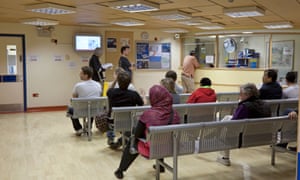
A hospital waiting area


‘I had to sit in a busy area with everyone looking at me. My blood pressure was very low, so I actually needed to lie down.’ Photograph: Alamy Stock Photo

Once a bed was found for me the nurses in the ward cared for me very well. However, the noise at night was constant. It sounded like an all-night party. Someone on my ward complained so it went quiet for half an hour – then started again. How are we meant to recover? I asked to be discharged as I knew I would recover quicker at home.


‘Wonderful service, could not be beaten’ – Larissa, 38, Bexley


I injured my wrist on a Sunday afternoon, but attended the hospital on the Monday morning. I had been told of the awful waiting times so I came prepared with a sandwich, thermos and my kindle.


However, I waited less than 10 minutes to see the nurse. She took my details and asked a few questions about my injury. I was then sent for an X-ray. The nurse informed me there could be quite a wait, but I only waited around 10 minutes. The radiographers were lovely, caring and professional.


The nurse called my name after 10 minutes, showed me the X-ray of my fracture and put me in a temporary cast. I was triaged, X-rayed and plastered in less than an hour and a half. I barely had time to open the thermos, and the kindle remained shut.


Wonderful service, could not be beaten. The NHS staff were great.


A&E in England registers record delays: readers share their experiences

9 Şubat 2017 Perşembe

A&E in England sees worst ever delays in January, leak suggests

A&E patients in England experienced the worst month of delays in January since a four-hour target was introduced 13 years ago, leaked figures suggest.


Provisional data passed to the BBC says an unprecedented number of patients spent longer than the target time waiting to be seen in emergency wards in January.


It showed that more than 60,000 people waited between four and 12 hours for a hospital bed. And more than 780 waited more than 12 hours. Both figures are record highs since the introduction in 2004 of a target that 95% of patients must be seen and either admitted or discharged in under four hours.


The leaked document from NHS Improvement suggests that out of 1.4m visits in January, only 82% were dealt with within the four-hour target.


The NHS Providers chief executive, Chris Hopson, said: “These figures have not been verified and should therefore be treated with caution, but they are in line with the feedback we have been getting from trusts.


“NHS staff have responded magnificently to increased winter pressures, but the situation has become unsustainable. The rise in long trolley waits is particularly worrying, as there is clear evidence they can lead to worse outcomes for patients.”


Hospitals have not hit the target nationally since the summer of 2015.


A Department of Health spokesman said the January data was yet to be verified and that official figures, due out on Thursday morning, only covered December.


He said: “We do not recognise these figures – it is irresponsible to publish unverified data and does a disservice to all NHS staff working tirelessly to provide care around the clock.


“Despite the pressures of winter, the vast majority of patients are seen and treated quickly and hospitals have detailed plans in place to manage busy periods – supported by an extra £400m of funding.”


Dr Mark Porter, chair of the British Medical Association council, said delays in A&E were a symptom of a bigger crisis in social care, which the government was failing to grasp.


“When social care isn’t available, patients experience delays in moving from hospital to appropriate ongoing care settings – preventing patients being admitted at the front end in A&E,” he said.


“The prime minister cannot continue to bury her head in the sand as care continues to worsen.”


A&E in England sees worst ever delays in January, leak suggests

27 Ocak 2017 Cuma

Record number of urgent operations cancelled in England last year

Hospitals cancelled a record number of urgent operations last year as bed shortages left them struggling to cope with the growing number of patients needing surgery, NHS figures show.


Hospitals in England cancelled a total of 4,093 urgent procedures during 2016, which equates to 341 per month. That was 8% more than the 3,777 they had to put off in 2015 and 27% up on the 3,216 such operations they cancelled during 2014.


While some cancellations occur because of the patient’s health, the large majority are due to hospitals having too few beds, especially in intensive care or high-dependency units in which patients can recover afterwards, often because a more urgent case has arrived. A few involve staff shortages or a surgeon becoming unexpectedly unavailable.


The latest figures mean that in all 17,598 patients have had their urgent operation cancelled over the past five years, often at the last minute, despite their condition requiring surgery without delay.


Opposition parties claimed the figures, published on Friday by NHS England, showed that problems in the health service were deepening and that the government was not giving it sufficient money to keep up with the rising demand for treatment.


“Theresa May’s NHS crisis continues, and the problems are worse and more widespread than in previous years. By underfunding and overstretching the NHS, the Tories have pushed health services to the brink”, said Jonathan Ashworth, Labour’s health spokesman.


Norman Lamb, his counterpart for the Liberal Democrats, added: “The government’s stubborn refusal to give the NHS emergency funding means record numbers of operations are being cancelled as hospitals face weeks on end of intolerable pressure. This will inevitably have serious repercussions for patient care and the morale of NHS staff.”


The NHS England data shows that hospitals also cancelled 38,129 non-urgent elective operations between April and October – again, the largest-ever number for those six months.


Of those patients, 2,204 did not have their rescheduled surgery within 28 days, as the NHS Constitution says they should, in another sign of the huge pressures on the service.


However, NHS England’s latest winter situation reports data showed on Frida that hospitals came under slightly less strain last week than during the “winter crisis” that unfolded in the early weeks of January.


Overall 43 acute hospital trusts were forced to divert A&E patients to another emergency department because they could not cope with the large numbers of people needing care, down from 52 the week before. Similarly, 51 trusts declared some sort of alert during the week, down from 68 a week earlier.


A further Eleven people died from flu last week, bringing the total to 53 since the start of December, and 65 needed to be treated in an intensive care or high-dependency unit.


NHS England and Public Health England said the number of flu cases hospitalswere treating was worrying and linked to the particularly cold weather affecting much of England recently.


Record number of urgent operations cancelled in England last year

25 Ocak 2017 Çarşamba

Charges proposed for out-of-hours GP appointments in England

Patients could face paying their family doctors for out-of-hours appointments and minor procedures that fall outside the surgery’s contracted NHS work, under new plans being proposed by some GP leaders.


The scheme would see doctors use their own time to treat and charge patients and involve the setting up of a third-party company to manage the payments to GPs.


Dr Prit Buttar, leader of Oxfordshire’s local medical committee (LMC), told Pulse magazine there had been discussions with LMCs across England about rolling out the system nationally by the end of 2017.


The move is driven by anger among GPs about the amount of money put forward for general practice by the government. Buttar said it was essential to look at alternative ways of funding that allowed practices to still operate within the rules.


He added: “They will offer practice services, for example, if someone wants a minor operation but can only do this in an evening, then they can do this by charging a small fee.


“It will allow GPs to value their own time more and puts pressure on the government. The government is a monopoly customer, they can dictate how much they are willing to pay.”


GPs would be able to provide private services to their own patients through the third-party company, which would deal with the doctor-patient transactions.


LMCs are made up of NHS GPs and represent their interests locally and nationally, and work with the British Medical Association’s (BMA) general practitioners committee (GPC).


Last year, LMCs called on the GPC to hold a ballot among GPs for mass resignations from the NHS unless the government came up with more funding, but the GPC has said it would not ballot members due to promising negotiations with NHS England.


A spokeswoman for NHS England reiterated that GPs could not charge patients for accessing normal NHS services, such as routine appointments, but said nothing about family doctors possibly levying fees for private care.


She said: “All patients have a right to access high quality primary care services which are free at the point of delivery. Strict safeguards are in place to ensure that GPs cannot charge patients for NHS services.”


Some GPs – who are not employed directly by the NHS – already charge patients for writing letters for them relating to, for example, insurance claims or holiday vaccinations.


The BMA insisted the plans set out by Dr Buttar were “not a BMA proposal” and described them as “clearly not fully developed”.


Dr Chaand Nagpaul, BMA GP committee chair, said: “All GP practices are contracted to provide free care to every patient irrespective of their financial ability to pay. This is a key cornerstone of the NHS, which the vast majority of doctors support.”


Nagpaul said GPs were not allowed to charge their own patients for private services that were not available on the NHS, including minor surgery to remove benign lumps. He said the immediate priority for Downing Street was tackling a severe shortage of several thousand doctors and the spectre of 300 surgeries facing closure.


A BMA survey found eight out 10 GPs said they struggled to provide safe, effective care because of heavy workload.


Charges proposed for out-of-hours GP appointments in England

19 Ocak 2017 Perşembe

Nurse shifts left unfilled at nearly every hospital in England, figures show

Almost every hospital in England has fewer nurses on duty than each believes are needed to guarantee safe patient care, research shows.


Analysis of official data by the Health Service Journal (HSJ) found that 96% of NHS hospital trusts in England had fewer nurses covering day shifts in October than they had planned and 85% did not have the desired number working at night.


The disclosure of such widespread failure to ensure hospitals are properly staffed has prompted fresh concern that a chronic lack of nurses and the NHS’s dire finances are putting patient safety at risk.


Nurse shortages have led to patients having to wait for medication, going unwashed or not having observations done on time, the HSJ said.


Janet Davies, the chief executive of the Royal College of Nursing, said: “This is yet more evidence that there are too few nurses caring for patients, putting people at serious risk. Safe staffing levels aren’t an optional extra. Having the right number of nurses is essential to ensure that patients can recover properly.”


The college estimates there are as many as 24,000 vacancies for nurses across the UK.


Nurses told the HSJ that understaffing meant hospitals were already providing substandard care, leading to patient safety “near misses”.


The figures are the worst hospitals have recorded since they were obliged to start publishing details of staffing levels in 2013, in the wake of a report on the Mid Staffordshire care scandal.


The number of trusts that do not have planned numbers of staff at work has gone up despite the recruitment of record numbers of nurses by acute hospitals. Limits introduced in 2015 on the amount hospitals can pay to hire agency nurses may help explain why staffing levels are dropping in many places.


One nurse said: “Sometimes observations get missed and I can recall many times where the patient is found to be deteriorating when they are eventually done. This gives you immense stress as you are left with the realisation you did not pick up on your patient’s condition early enough to prevent an acute episode.”


Another said: “I have seen patients not have proper care, dressings not changed, [and] not given the choice of shower or a wash as it takes more time that we do not have.”


HSJ reached its conclusions by examining data on nurse staffing levels that trusts release through the NHS Choices website. These include the numbers present in general medical wards, maternity units, surgical wards and intensive care units at 214 acute hospitals.


In hospitals in England, a nurse is meant to look after no more than eight medical patients, and the ratio can be as low as one to one in neonatal and intensive care units.


The figures show that Dewsbury and district hospital in West Yorkshire had 75% of the number of nurses it had planned to have on duty last October, down from the 87% it managed in the first three months of 2015.


Princess Alexandra hospital in Harlow, Essex, which went into special measures that month, covered 77% of shifts, as did Pontefract general infirmary in West Yorkshire.


The HSJ found that some trusts were employing unusually high numbers of healthcare assistants. That may suggest they are replacing nurses with cheaper personnel who have little clinical training.


Prof Peter Griffiths, of Southampton University, a member of NHS Improvement’s safe staffing committee for acute wards, said: “This is clearly not a good place for the NHS to be and it isn’t getting any better.” He said healthcare assistants could help plug gaps but relying on them to deputise for nurses in the long term risked compromising patient safety and involved “the risk of a false reassurance”.


The shadow health secretary, Jonathan Ashworth, said: “Tired, overworked nurses cannot be expected to continue providing the quality of care which patients need. The government needs to do much more to make sure nursing remains an attractive profession and to ensure hospitals can get in place the number of nurses they need to keep patients safe.”


A Department of Health spokesman said: “We expect all parts of the NHS to make sure they have the right staff in the right place at the right time to provide safe care. That’s why there are already almost 26,000 extra clinical staff, including almost 11,400 additional doctors and over 11,200 additional nurses on our wards since May 2010.”


Nurse shifts left unfilled at nearly every hospital in England, figures show

30 Aralık 2016 Cuma

Norovirus cases in England at highest level in five years

More patients have been struck down with vomiting bug norovirus this year compared with the previous five years, according to official figures.


Data from Public Health England shows reports of the bug had reached 2,435 this winter – 12% more than the average for the same period over the last five years. The figure is also 71% higher than the same period last year, although last winter had unusually low levels of norovirus.


In the week ending on Christmas Day, the outbreaks of vomiting and diarrhoea resulted in more bed closures than during the same period last year – rising from an average of 559 beds closed per day to 699. Hospitals reported 20 outbreaks of norovirus in the first two weeks of December, 17 of which led to bay or ward closures and 13 of which were confirmed as the bug.


In total so far this season, there have been 163 hospital outbreaks reported.


Nick Phin, deputy director of the national infection service at PHE, said: “Norovirus is a common cause of illness during winter. Exactly when the peak in activity occurs will be different each winter but levels seen so far this year are not unexpected compared with the previous five years.”


The number of laboratory reports of the bug rotavirus this season is 1,136, which is also 3% higher than the average for the period from 2003 to 2013.


In early November the Mexican restaurant chain Wahaca closed several branches in London after more than 350 customers and staff fell ill with suspected norovirus. PHE and environmental health officers were called in after the suspected outbreak of the winter vomiting bug struck at nine restaurants.


NHS England also released figures showing there were 291,808 calls to the NHS 111 service in the week ending on Christmas Day as temperatures plummeted and a cold weather alert was issued. This was nearly 9% lower than the number of calls to the helpline in the same week last year. Of calls answered, 93.2% were answered within 60 seconds and 1.5% of patients abandoned their calls after waiting 30 seconds.


Norovirus cases in England at highest level in five years

16 Aralık 2016 Cuma

Hospitals in England told to put operations on hold to free up beds

Hospitals in England have been told to put most operations on hold over Christmas to ensure enough beds are free for patients who need emergency treatment.


The health service regulator, NHS Improvement, has asked all hospitals that provide acute care to postpone most of their planned operations in a drive to make more beds available over the winter break.


In a letter to NHS Trusts, the regulator said surgery would have to be rescheduled if hospitals were to reduce their bed occupancy to 85% from 19 December to 16 January, when pressure on the health service is expected to be at its most intense. According to NHS England, hospital bed occupancy currently stands at about 95%.


Many hospitals take steps to wind down the number of operations they perform over the Christmas period, but the letter obtained by the Health Service Journal states that operations may need to be postponed “beyond any current plans”.


It says: “Given the level of risk facing the system, it is clear that having sufficient bed capacity going into Christmas is critical, and we know most organisations will already have this in hand as part of local planning arrangements.


“In preparing for managing winter pressures, it is recommended that all providers pace their elective work by introducing elective breaks where trusts cease most in-patient elective activity and focus on treating emergence activity and non-admitted patients.”


Admissions to hospital emergency departments tend to spike over the winter because of the cold weather and a rise in respiratory infections.


The NHS Providers chief executive, Chris Hopson, told the Health Service Journal that the guidance was “another classic example of how trusts are now caught between a rock and a hard place” of meeting surgical targets while coping with ever rising emergency demands. “Trust chiefs tell us it’s increasingly difficult to deliver both,” he said.


“This guidance does go further than before, for example in specifying a target bed occupancy level as the holiday period starts, but it is in line with the direction of travel over the last few years,” Hopson added.


The letter, dated 9 December, came to light as the Nuffield Trust warned that pressure on beds in NHS England hospitals had become so intense that on any given day last winter the equivalent of more than five extra hospitals’ worth of beds had to be brought into service.


On the busiest day last winter, 26 January, hospitals had to find a record 4,390 extra beds, the equivalent to the capacity of seven hospitals. With the pressure on beds so acute, the Nuffield report said hospital managers would find it harder to deal with emergency patients within four hours of their arrival in A&E departments as targets require.


Beds have come under increasing pressure in the past few years as more people are referred to hospital and medically fit patients are not discharged on time. Delays in discharging patients stand at a record high, up 27% on last year, as do trolley waits, up 54% in the year to October. John Appleby, the Nuffield Trust’s chief economist, said: “It’s a big sign the system isn’t working that efficiently.”


He said the call on hospitals to free up more beds over Christmas showed a “tinge of anxiety” over the levels of bed occupancy in the NHS. “It’s a bit invidious,” he said. “But clearly emergencies must take priority.”


Jon Ashworth, the shadow health secretary, said: “This leaked memo represents a damning indictment of Theresa May’s mismanagement of the NHS. The Tory failure to provide the NHS with the funding it needs means that hospitals are having to close operating theatres over Christmas just to get through the winter.


“This short-term fix is only going to store up problems for next year and leave more and more people stuck on waiting lists when already almost 4 million people are waiting for an operation. Starving the NHS and social care sector of the investment they need simply can’t be allowed to continue.”


A spokesperson for NHS Improvement said: “NHS providers will be doing all they can to make sure their patients are able to receive quality care during the busy Christmas period. A reduction of elective hospital activity in the run-up to Christmas is standard practice, and well rehearsed by NHS providers.


“Many hospital trusts also routinely wind down elective activities in the run-up to the Christmas and new year period, as patients do not wish to be in hospital over the festive period and those who are medically fit for discharge want to return home. This also frees additional capacity.


“Cancellations should be kept to an absolute minimum and, in trusts where elective work does need restricting, then the decisions should always be taken using appropriate clinical reviews to ensure patient needs are met.”


Hospitals in England told to put operations on hold to free up beds

11 Aralık 2016 Pazar

NHS England sending anorexic patients to Scotland for treatment

The NHS in England is sending patients who are seriously ill with eating disorders to Scotland for treatment because chronic bed shortages mean they cannot be cared for in England.


Vulnerable patients, mainly teenagers and young adults, are being taken hundreds of miles from their homes in order to receive residential care in Glasgow and near Edinburgh.


Mental health experts voiced deep concern about the trend and said it could damage patients’ chances of recovery, increase their sense of isolation through the separation from their families and even increase their risk of dying.


Doctors, eating disorders charities and patients have told the Guardian that the quality of care received by patients, some of whom are at risk of dying, is being compromised by the NHS in England having far too few beds to cope with the growing number of cases of anorexia, bulimia and other forms of psychiatric illness linked to eating habits.


“I’ve seen a rise in calls from people saying their children have been sent far away, miles away, to be looked after because there are either no services nearby or they are full”, said Jane Smith, chief executive of Anorexia and Bulimia Care. “This is a life-threatening situation for young people. People are in inpatient care because they are at risk of dying. They are in a very fragile, risky state.”


Rebecca Doidge, 20, from St Albans in Hertfordshire, spent six months in the Priory private hospital in Glasgow earlier this year because she was desperate for treatment and could not find anywhere else. The distance had negative side-effects, she said.


Despite being well looked after there, “being sent so far away does compromise care”, she said. “The outcomes are going to be better if you can stay near home. It’s really hard to integrate back home or go to another environment when discharged if you are in a different country. It makes communication between those treating you in hospital and those at home difficult.”


During her stay in the Priory, which has 25-30 beds, “about seven of the people there were from Hertfordshire,” she said. “The number of English people there massively outnumbered Scots.”


Anup Vyas’s stepdaughter has been receiving treatment for a rare eating disorder in Huntercombe private hospital in Livingston, near Edinburgh, since February. After previous stints in units in Watford, London and Colchester in Essex, the 17-year-old’s condition is so serious that “now she is basically being kept alive in Scotland”, said Vyas.


“NHS England acknowledge that her being so far away is not ideal. Her brothers haven’t visited her since June and no friends have gone up. Most people in the unit are from England, especially the north of England – places like York and Manchester.” The family’s home is in Hemel Hempstead, 350 miles from Livingston.


The health secretary, Jeremy Hunt, criticised the practice as “completely unacceptable”. He recently said NHS children and adolescent mental health services were the NHS’s worst area of care.


“It is clearly unacceptable for people to be sent hundreds of miles away for care at a time when they need the support of friends and family the most”, he said. “That’s why in April we committed to a national ambition to eliminate inappropriate out-of-area placements by 2020-21.” Ministers had also earmarked £150m for enhanced services in community settings to help ensure that mental health problems in young people were tackled before their health worsens, he said.


NHS England, despite its professed commitment to openness, refused to say how many patients from England were receiving treatment for eating disorders in Scotland. Expanding the supply of specialist beds to treat people with those conditions would take time, it said.


“It’s extremely distressing for parents to have a child who is so unwell that they require inpatient care, and it’s even worse when they can’t easily visit their child because of long travel distances”, said Sarah Brennan, chief executive of Young Minds. “For many young people the distance from family and friends is one of their biggest fears when they are hospitalised. Being separated from loved ones doesn’t help with recovery and makes the stress of hospitalisation worse.”


Dr Jon Goldin, a consultant psychiatrist in London specialising in children and adolescents, said he had heard of patients being moved long distances. “But it shouldn’t be happening,” he said. “It’s a concern. Patients should be treated nearby and should be in contact with family. They need support and it’s much harder to get that when families have to travel long distances.


“Part of their recovery may involve therapy with their family, especially for children aged 14 and under.”, said Goldin, who is also a spokesman for the Royal College of Psychiatrists.


More young people were developing eating disorders, he said. Genetic factors, personality factors and socio-cultural factors, such as images in the media of models “which glamorise thinness” are among the many reasons for the trend, Goldin said.


A spokeswoman for the Priory hospital in Glasgow said it took patients from all over the UK. “The Priory hospital in Glasgow has a reputation for providing some of the highest standards of mental healthcare in the country, and has been given a ‘very good’ rating by our regulator, Healthcare Improvement Scotland, for staffing, management, information to patients, and the environment it offers those we care for. As such, we support patients from across the UK and overseas.”


A spokeswoman for NHS England said: “The NHS recently laid out very clear plans to expand staff and services for specialist eating disorders and other mental health problems, in order to tackle and eliminate distant out-of-area placements. Transformation won’t happen overnight but work is under way to improve services for everyone and to make sure care is available at home or as close to home as possible when a patient needs more intensive therapy.


“To help achieve this, the government has allocated a cumulative £1.4bn to children and young people’s mental health services over the next five years, and the new waiting time for eating disorder patients will ensure patients get better care more quickly.”


NHS England sending anorexic patients to Scotland for treatment