rural etiketine sahip kayıtlar gösteriliyor. Tüm kayıtları göster

18 Mart 2017 Cumartesi

Rural deprivation and ill-health in England "in danger of being overlooked"

Rural communities are in danger of being overlooked when it comes to poverty, deprivation and ill-health, warns a new report from Public Health England.


In England 9.8m people – or 19% of the population – live in rural settings ranging from coastal villages to market towns to large, open expanses like the Yorkshire Dales.


But experts caution that while on average people in rural areas have better health than those in cities, the popular idea of affluent bucolic life is a misconception.


Instead, they say, official statistics have failed to capture the reality that many residents scattered across rural communities face deprivation, poverty and poor health.


“Within a rural community there are significant inequalities between parts that actually are very wealthy and parts that are quite deprived,” said Dr Rashmi Shukla,
Public Health England’s regional director for the Midlands and East of England and lead author of the report.


Published by the Local Government Association (LGA) and Public Health England, the research sheds light on a number of issues affecting the health and wellbeing of rural communities, including low-paid work, unemployment of young people, high costs of housing and fuel poverty.


Access to health services is also of concern, the authors note, with GPs, dentists and other services further away than in urban areas. Indeed, while 97% of urban households lie within 8km of a hospital, the figure for rural households is just 55%.


In addition, rural areas often lack of public transport, while poor broadband and mobile phone network availability hinders communication and access to online health services, banking, and shopping.


“Even people who may not be materially disadvantaged may have difficulties connecting and may be more socially isolated as a consequence of that,” said Shukla.


Social isolation, she adds, is a particular problem for older people – a sector of society that is larger in rural communities, with 23.5% of residents over the age of 65, compared to 16.3% in urban areas.


An ageing rural population, the authors point out, brings a number of challenges. These include the fact that older people often have poorer health and greater care needs, issues compounded by the greater distances to healthcare services and poor public transport. “Financial poverty in rural areas is also highly concentrated amongst older people, with around one-quarter of those in poverty in pensioner households,” the authors add.


Izzi Seccombe, chairman of the LGA’s Community Wellbeing board, said that many of the services that could help tackle these issues have been under pressure.


“What local authorities have all seen is a reduction in government grant,” she said. “While they have tried to protect the services for vulnerable people, like social care, some of our other services that we deliver – which can be subsidised transport, can be library services, it can be grants to the voluntary sector – those have been squeezed.”


The report encourages local authorities to take action to improve healthcare for rural areas, urging them to look closely at the particular challenges facing different communities. The authors also highlight successful initiatives including the “Fish Well” health improvement project in Norfolk, that offered quayside health checks, advice and support to fishermen that they would otherwise have found difficult to access.


The authors also highlight the need for official statistics that look more closely at conditions experienced by those living in the countryside, and at different areas within it, pointing out that current approaches don’t pick up small pockets of deprivation, and tend use measures that are more relevant in urban areas, such car ownership.


“A lot more digging needs to be done to understand the level of deprivation within rural communities,” said Shukla. “Just under 10m of our population live in these communities and a proportion of them are under severe hardship. We need to address that,” she added.


Seccombe agrees. “We must not forget our vulnerable people in more isolated communities,” she said.


Rural deprivation and ill-health in England "in danger of being overlooked"

24 Ekim 2016 Pazartesi

Generation of hope: the girls challenging misogyny in the heart of rural Paraguay

At the end of a 20km red dirt track winding through a rainforest in eastern Paraguay, lies a secondary school for girls providing a source of hope in a country that has a notorious reputation when it comes to women’s rights.


“Machismo is very strong here,” says Palmira Mereles, as she scrapes the dirt from a freshly unearthed root vegetable, a manioc, in the school’s garden. “Only men have a voice. Women aren’t encouraged to have dreams or opinions.”


Now 21, Mereles was part of the first year group to study at the Mbaracayú Education Center when it opened in 2009. Built by the NGO Fundación Paraguaya, it aims to tackle precisely the problems she points to: the issues of gender equality in this small landlocked country.


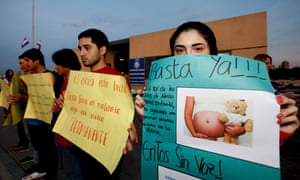
It has been a year since Paraguay’s strict abortion laws were brought to international attention when a 10-year-old girl was denied a termination. The girl, known as “Mainumby”, was allegedly raped by her stepfather, but abortion in the predominantly Catholic country is only legal if the mother’s life is at risk. Amnesty International describes these laws as “draconian”, and despite repeated requests from the girl’s mother, protests within the country and across the world, the authorities refused to allow it.


We were treated like a house of witches


Gloria Rubín


This was not an isolated incident. Teen pregnancy rates are among the highest in the region. More than one in 20 girls under 20 have given birth (pdf); and in rural areas, like the Atlantic forest, a quarter of these girls are aged 14 or under. As a result, many are unable to finish their education.


“Gender discrimination is common across Paraguay,” says Celsa Acosta, the school’s founding director. “Poverty is desperate, particularly in rural areas, and girls suffer the worst consequences. We wanted to help them take control of their own lives.”


A woman holds a sign that reads “Stop now” during a protest against child sexual abuse, Paraguay


Protests against child sexual abuse erupted in Asuncion, Paraguay’s capital, after the Mainumby case. Photograph: Cesar Olmedo/AP

Activists have often come up against the country’s traditional Catholic background. Gloria Rubín who was Paraguay’s minister for women when the school was built, produced a sex education handbook to be distributed to Paraguayan secondary schools. But the church organised protests against it, and the book was withdrawn. When she later travelled around teaching the handbook directly to teachers across Paraguay, the church pursued her with demonstrations, she says. “We were treated like a house of witches.”


[Sex education] is taught from the perspective of the Catholic ​church, which means it’s stuck in the 19th century


Gloria Rubín


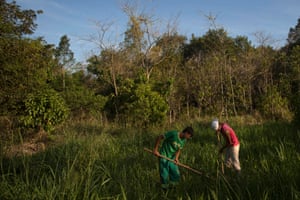
The school sits in an isolated clearing surrounded by the Mbaracayú reserve, which protects the largest surviving fragment of Atlantic forest in Paraguay (only 7% of the original forest remains). The small campus is scattered with dormitories, classrooms and thickets of lofty palms. Alongside the vegetable garden where they grow potatoes, maize, courgettes and peanuts, there’s a livestock farm, hotel rooms, and a tourist trail winding into the undergrowth.


In this richly fertile yet vulnerable area, the school aims to grow these girls into leaders of sustainable development in their communities. They are taught techniques for agribusinesses and IT skills, which is particularly unique for indigenous communities. Alongside the national curriculum, they can also study a range of vocations, including textiles, tourism and environmental management. More radically, they provide programmes on gender, self-esteem, and sex education.


Sex education across the country is “inadequate” according to Rubín. “It’s taught from the perspective of the Catholic church, which means it’s stuck in the 19th century,” she says. Yet it has a central role at the Mbaracayú school. Girls are taught about their sexual and reproductive rights on a weekly basis, in what the school describes as “orientation” classes focusing on their physical and psychological health.


Working on a reforestation project in the Atlantic forest


The Atlantic forest is home to the only living examples of almost 10,000 species of plant. Photograph: Felipe Dana/AP

“I became pregnant very young, because I lacked the information to know any better,” school founder Acosta explains. “It really marked me as a person. I decided then to make sure girls of the next generation have access to the information that I never did.


“We teach about contraception and ensure girls understand their own fertility,” she continues. “But just as important, in a macho culture, is cultivating their self-esteem. They need to know what they want and be able to assert it in their relationships.”


The school also gives a second chance to girls who previously dropped out of education. Elva Gomez, 19, lives and studies here with her four-year-old daughter.


“Before coming here, I thought I’d just stay at home and look after Romina,” she says. “But now I want to finish my studies and train to be a nurse.”


The Mbaracayú school hopes that girls will be able to better support themselves and their families with the qualifications and skills they offer. Students from indigenous communities study for free, while most Paraguayan families pay 100,000 guaraní a month (£12). And though many parents of local indigenous communities were initially sceptical about this progressive school, most are now keen for their daughters to study there after witnessing its benefits – two graduates of the 2011 class are now primary school teachers in their communities.


Students are also encouraged to apply for university scholarships, both within the country and abroad. Mereles studied agricultural sciences in Costa Rica, before returning to teach and run the vegetable garden.


“I’ve known many girls who didn’t want to continue studying,” she says. “They didn’t believe they could achieve anything. But over time their attitudes change. They become much more confident.”


With the school’s drop out rate at just 9% compared to 17% throughout the region, there is a new generation of girls from the heart of the Mbaracayú forest who are gaining the confidence to fight for their rights – and the potential for change in the rest of the country is perhaps within reach.


Join our community of development professionals and humanitarians. Follow @GuardianGDP on Twitter. Follow the conversation on the hashtag #LatAmNow.


Generation of hope: the girls challenging misogyny in the heart of rural Paraguay

20 Şubat 2014 Perşembe

Funding change could force rural GP practices to shut, BMA warns

Doctor working on a laptop at the office

The BMA is ­concerned that extreme cuts in help could depart large places with out a GP practice close by. Photograph: Andres Rodriguez / Alamy/Alamy


About 100 GP practices could be forced to near due to the fact of cuts in national funding, leaving sufferers in rural areas without a GP, doctors’ leaders have warned.


Changes to how practices are paid imply some could no longer be viable, despite the reality that some “offer important providers to 1000′s of rural sufferers”, the British Medical Association (BMA) stated.


It warned that big locations of rural England could be left with no GP practice for residents.


The government has made the decision to phase out a funding arrangement referred to as the Minimum Practice Cash flow Assure (MPIG) in excess of a seven-12 months time period, beginning in April.


MPIG indicates a lot of smaller sized GP practices are guaranteed a minimal level of funding that is not dependent on the quantity of patients on their list.


NHS England has published an anonymised record of 98 “outlier” practices that could drop much more than £3 per patient per year. Some practices on the list will get rid of far more than £100 per patient per yr, although other individuals will get rid of £20 or £30 per patient.


The BMA said that in addition to the 98, there had been a “substantial amount” of other practices that would be severely impacted.


Dr Chaand Nagpaul, chair of the BMA’s GP committee, mentioned: “The government has significantly misjudged the prospective effect of its funding modifications, especially on rural GP companies.


“It is most likely that a few hundred practices will get rid of obvious levels of funding, with 98 practices identified by NHS England as currently being at serious danger from extreme cuts in their fiscal help that could threaten their capacity to remain open.


“This comes at a time when GP practices are already below stress from growing workload and declines in overall levels of funding.


“The government has not confirmed exactly where these practices are or the extent of their fiscal problems, nevertheless some will be smaller sized GP practices in rural communities with comparatively modest numbers of individuals registered with them.


“These GPs provide important companies to individuals in locations where accessing healthcare is previously not easy simply because of the big distances sufferers have to travel to get to their local NHS providers. If these practices were to shut it could depart large geographical areas with no a nearby GP practice.


“The predicament has not been assisted by NHS England’s decision to devolve accountability for this problem to nearby NHS managers with no a framework on how these GP practices ought to be supported. We are with no a nationwide plan of how to tackle this issue and safeguard GP services.


“Ministers have to get a grip on this issue urgently, given these funding reductions are just weeks away from currently being implemented. We want to guarantee no practice closes and that there is a co-ordinated method to deal with this situation.”


Dr Katharina Frey, who runs a rural practice in Cumbria, stated: “My practice is a very modest one particular that cares for just below 1,000 sufferers in a rural south Cumbrian area.


“We have for a lot of years provided a genuine household-orientated support for sufferers and I feel we are a genuinely important service for our regional local community.


“We are under actual financial strain already and can’t, simply because of the current funding climate, afford to utilize a practice nurse.


“We are also possessing to feel quite carefully about how we substitute senior staff. This situation will grow to be even much more pressurised when we lose the MPIG support that at the moment accounts for close to a third of our existing core funding.


“We are previously working at complete capacity with declining sources – I just do not know how we will cope with this further monetary blow.”


An NHS England spokesman mentioned: “NHS England is committed to producing sure patients have access to large-high quality GP providers wherever they dwell and the GPs are effectively funded to provide these providers.


“MPIG is not an equitable way of funding practices, which is why we are supporting its phased withdrawal. We think it is fairer to allocate funds based on the numbers of individuals practices serve and the overall health needs of those individuals.


“We have looked very cautiously at how the changes to MPIG, together with other changes to the general health-related providers contract, will impact on practices and we estimate that the vast majority will acquire added funding as a outcome.


“We also know that some practices will shed funding and we have asked our spot teams to function with them to see how they can be supported. It might be that an option arrangement might be appropriate.


“This choice will be made by region teams right after a complete assessment of all the nearby situations.”


Funding change could force rural GP practices to shut, BMA warns