Change etiketine sahip kayıtlar gösteriliyor. Tüm kayıtları göster

22 Nisan 2017 Cumartesi

Abortion in Ireland: committee votes for constitutional change

A committee set up to deliberate on Ireland’s strict abortion regime has voted for the constitutional rules to be changed.


The Citizens’ Assembly, a randomly selected group of 99 members of the public chaired by the supreme court judge Mary Laffoy, met on Saturday to discuss the contentious issue for the final time.


At the heart of the assembly’s work is examining the eighth amendment to the republic’s constitution, which gives equal right to life to the mother and the foetus. In the first of a series of votes by members on whether to advise constitutional reform, the assembly voted 87% in favour of change.


A series of other votes are being held over the weekend to determine the specific changes the assembly will recommend.


Since 2014 in Ireland, a pregnancy can be terminated under the Protection Of Life During Pregnancy Act if there is a risk to the woman’s life, including from suicide. The procedure can involve a medical or surgical termination, or an early delivery by induction or caesarean section.


There has been a strong campaign for women to be allowed to have an abortion in cases of rape and incest, or if there has been a fatal foetal abnormality diagnosis.


Figures from the Health Service Executive showed 26 terminations were carried out under the legislation in 2014 and again in 2015. In both years, 14 were because of a risk to the life of the mother from physical illness, three in relation to suicide and nine following emergencies arising from physical illness.


In 2013, Amanda Mellet became the first of three Irish women to formally ask the UN to denounce the prohibition on abortions in cases of fatal foetal abnormalities as “cruel and inhumane”.


Mellet and her husband took their case to the UN’s human rights committee after they were forced to go to England to terminate the pregnancy.


Last year the UNHRC ruled that by forcing Mellet to leave Ireland to have an abortion, the state had inflicted trauma and distress on her.


For the first time in its history, Ireland compensated Mellet as a result of the ruling. Under the country’s laws, if Mellet and the other two women had remained in the republic they would have been forced to give birth to stillborn babies.


On Saturday, Judge Laffoy said the result of the vote provided a mandate for changing the status quo and, if implemented by the government, it would require a constitutional referendum, the Irish Times reported.


Opening the session, she praised the commitment of the assembly members.


“This exercise in deliberative democracy allowed us to withdraw from the polarising perspectives and begin first and foremost with the facts.”


Abortion in Ireland: committee votes for constitutional change

18 Nisan 2017 Salı

Poppy Jaman: ‘I think there’s a wave of change coming in mental health’

Poppy Jaman, chief executive of the not-for-profit Mental Health First Aid England (MHFAE), believes Theresa May meant business when she pledged in January to make mental health a priority. Despite ministers being accused of breaking their promises after £800m in cash earmarked for mental health was last month redirected to offsetting wider NHS budget problems, Jaman argues that the government will come good.


“I think this government has already set a precedent for change, with two consecutive prime ministers making commitments to improve the outlook for those with mental health issues and attending to the prevention agenda,” says Jaman, referring to NHS England’s Mental Health Taskforce national strategy published in 2016. “I think it’s massively a great step that the current PM has made a public commitment to mental health.”


MHFAE runs training courses in how to identify the warning signs of mental ill health in others and help steer them towards appropriate support. Jaman has headed the social enterprise for almost 10 years, since it evolved from a government initiative within the Department of Health. She says she’s “feeling confident” the Conservatives recognise the significant toll mental health problems can take on individuals and wider society. By way of illustration she points to the imminent roll-out for secondary school staff of a government-funded schools training course delivered by MHFAE to address mental health issues among young people. The goal is to have “mental health first aiders” in place who can help to identify pupils with mental health challenges, ideally before they reach a crisis point. The programme aims to train staff in more than 1,000 schools by 2020.


Evidence over the past decade from MHFAE’s training to more than 150,000 individuals – such as NHS staff, charity workers and employees at large corporations including Unilever and WH Smith – shows it can contribute to the broader “public health prevention” and wellbeing agenda, says Jaman, by “giving people the tools” to recognise signs of mental difficulty.


The jobcentre service needs staff who understand mental health so people get the right support


Poppy Jaman


The mental heath first aid approach is ostensibly an adjunct to standard first aid and Jaman has been campaigning to put the two on a par. This includes supporting a push to amend regulations around first aid within the Health and Work Act, so that all organisations are required to have mental health first aiders in place, and an obligation to deliver mental as well as physical first aid. An early day motion last year calling for such a transformation was backed by about 500 MPs, including Norman Lamb and Frank Field. Implementing it would be “a big leap for equality” and parity of esteem between mental and physical health, Jaman argues.


“I truly believe that making this legislative change would have a big positive impact because it would shift the dial on how employers have to think about the mental and physical health needs of their workforce.”


A third-generation British Bangladeshi, Jaman, 40, says her early grassroots professional work, coupled with having experience of depression as a young woman, helped her to develop an understanding of the challenges facing people with mental health problems, especially among diverse groups. And having grown up in a deprived ward in Portsmouth and left school at 16 (she later got an MBA), she says she is cognisant of how poverty and racial inequalities affect mental wellbeing and access to care. “There is a plethora of data on health outcomes, job outcomes and opportunities for the black and minority ethnic community and when you overlay that with the prevalence of mental ill health and outcomes, the odds are stacked against them.”


Prince William and Lady Gaga discuss mental health for Heads Together – video

So it’s no surprise that Jaman does not underestimate the significant impact of current government policies such as sanctions and fitness-for-work tests for people living with mental health problems. One area in which she is anxious to see improvements is help for people who are unemployed, many of whom have a mental health diagnosis.


She refers to a recent public call by an alliance of mental health professional organisations including the British Psychological Society for a suspension of the government’s sanctions programme because of its negative impact on mental wellbeing and for statutory support for creating psychologically healthy workplaces.


The same group also recommended increased mental health awareness training for jobcentre staff, which Jaman agrees is necessary. “It [the jobcentre] service needs people who understand mental health so that people are getting the right support,” she says. Asked how this is conceivable in a jobseekers system that advocates have repeatedly argued is hostile to mentally vulnerable people, she responds that change needs to come from “the leadership” at the Department for Work and Pensions. “I think there is a wave of change coming around this,” she insists.


When it comes to nudging the government in the right direction, Jaman is clearly a pragmatist. It is important to challenge government policies “where we don’t think things are right”, she argues, but ultimately, “for me it’s about ‘let’s work with whoever we need to work with’.”


Poppy Jaman: ‘I think there’s a wave of change coming in mental health’

13 Şubat 2017 Pazartesi

Addiction Recovery: High Time for Change

6 Breakthrough Therapies for the 21st Century


The Status Quo is Not Working


There has been a distinct disconnect between the “mind” and “brain” sciences when it comes to addiction recovery. In her ground-breaking book, Unbroken Brain: A revolutionary new way of understanding addiction, Maia Szalavitz states:


“Our brains are embodied – much of the problem with the debate over addiction and psychiatry more generally is a refusal to accept this and our ongoing need to see “physical”, “neurological”, and “psychological” as completely distinct.”


We can now see a fundamental flaw with this outdated thinking; a flaw that has in part led to skyrocketing heroin usage (particularly in those ages 18-25) and overdose rates that have quadrupled since 2010[1]. According to the National Institute on Drug Abuse, illicit drugs cost the US nearly $ 200 billion annually; just behind alcohol and tobacco use ($ 224 and $ 295 billion, respectively)[2].


Residential, intensive outpatient, step-down, 12-step, and sober living programs abound in this nation and grow in numbers daily. One thing is certain; things are getting worse, not better, and substance use is becoming harder than ever to treat!


Why is this? This simply should not be when our understanding of the human brain and behavior is greater than it has ever been. Why are substance users kept in a constant cycle of recovery and relapse while many programs and providers are fiercely committed to ending these cycles under the current model? What is missing in an industry that has been largely unchanged for the past half-century? As a result of my relentless search, I believe that answer is near.


The True Cause of Addiction and Substance Use Disorders


It is no secret that those with substance use disorders also suffer from lifelong struggles with learning and behavior. Some have attention and focus issues due to ADHD and OCD. While others battle anxiety and depression, whether independently or as part of a larger disorder such as PTSD or bipolar. Because of this, addiction recovery will never be truly attainable until the underlying brain-based issues are addressed.


A Paradigm Shift is Needed


A fundamental understanding of how learning impacts behavior is of the highest importance if we are to truly break the relapse-recovery cycle. I offer the following simple equations to illustrate what needs to change:


  1. Learning + Environment = Behavior

  2. Impaired Learning + Environment = Undesirable Behavioral Patterns (Addiction)

Most often we cannot change one’s environment, which is the basis for many residential treatment programs as we know them. Taking an individual out of their environment = behavior change. Changing this one variable alone is simply not enough to break the cycle of addiction. This is especially true as many residential treatment programs move towards shorter and shorter time of stay (i.e. 30 vs. 180 days or more).


Beyond environment, most recovery programs are focused on elimination of problem behaviors (the end result). The treatment norm for the past half-century has been varied aspects of mental health counseling; both in individual and group settings.


Based on the equations above, a critical component of the addiction cycle is being overlooked. The root of the problem. The only component that can truly impart lasting change…


Learning (the cause)


The brain learns through many avenues of input from our environment (sight, sound, balance, etc.). These functions can be measured[3] and changed through appropriate, brain-based intervention strategies. Hence, Brain Training for the learning and behavioral disorders that lead to addiction and substance use.


Disruption of the Status Quo – Brain Training for Addiction Recovery


  1. Brainwave Optimization. Treatment programs across the nation are seeking out biofeedback and neurofeedback. This highly sophisticated set of tools can help those with addiction improve self-regulation and learning.

  2. Temporal Processing is the rate at which we process sounds in our brains. As you might imagine, learning is significantly impaired when sounds are not interpreted effectively by your brain. We can improve this ability through training of brain-body timing.

  3. Balance Therapy. Our ability to maintain balance is directly connected to our more ‘human’ frontal brain[4]. Therefore, any improvement in balance and spatial awareness will have a positive impact on learning and behavior.

  4. Visual Integration Therapy. 70-80% of learning occurs through our eyes. Those with learning and behavioral disorders have distinct challenges with eye movements that can be corrected when properly assessed.  

  5. Neurological Rehabilitation is a ‘catch-all’ category that contains a host of treatment modalities to improve motor skills, fight-or-flight responses, strength and coordination, cognitive function, and more. All which impact behavior.

  6. Metabolic Therapies. For any addiction recovery program to be truly successful, we need to pay attention to what fuels our bodies. From blood sugar handling to neurotransmitter production, nutritional intervention will ensure your brain functions at the highest level possible.

We’ve Always Done it That Way (is not working anymore!)


While mental health therapies have been an integral component of a sound addiction recovery strategy; it is necessary for us to understand that we need more. What we need are evidence-based strategies to address the underlying learning and behavioral issues that are the hallmark of addiction and substance use disorders.


Enter Brain Training… Measuring ‘biomarkers’ of brain function with sophisticated testing, and creating positive change in these markers through progressive neurological training modalities. This, along with more traditional mental health options, is what offers the greatest hope to those looking to move past addiction; and to achieve complete recovery!


[1] https://www.cdc.gov/drugoverdose/data/heroin.html


[2] https://www.drugabuse.gov/related-topics/trends-statistics


[3] http://apexbraincenters.com/blog/5-important-tests-to-consider-when-seeking-treatment-for-addiction/


[4] http://journal.frontiersin.org/article/10.3389/fnint.2014.00059/full


Addiction Recovery: High Time for Change

10 Ocak 2017 Salı

Pine Pollen: It Could Change Your Life

Pine pollen is indeed one of nature’s top superfoods.


It has a vast array of health-giving properties and is available to us in Nature. While it is available commercially, many of us could realistically harvest it in the Wild, probably within steps of our front doors.


In this article, I cover:


Health Benefits of Pine Pollen


[embedded content]


By many, pine pollen is considered a “potent tonic medicine,” and “powerful adaptogen” that “supports regeneration and longevity” in animals, including humans. (1)


Here are some of the key characteristics of pine pollen:


  • contains all 8 eight of the essential amino acids or proteins (“essential” meaning that they must come from diet, and are not manufactured by the body), as well as a wide variety of the non-essential amino acids

  • contains nearly all of the B-complex vitamins

  • contains both Vitamin D2 and D3, with D3 being a rare find in the plant kingdom

  • rich in polysaccharides

  • contains ALA, a plant-source of Omega 3

  • a good source of MSM with detoxifying properties, offering the ability both decalcify the body and improve the flexibility of joints and connective tissues

  • has an impact on the improvement of the immune system

  • supportive of the endocrine system, and of hormone balancing and the reproductive hormones

  • can decrease sensitivity to pain

  • highly inflammatory

  • has radiation protective properties, offering assistance to the damaging effects of EMFs (think– mobile technology, WiFi), and other such radioactive concerns

  • strong antioxidant properties allowing for the interruption of oxidation within the body

  • contains many plant steroid hormones, which help to increase the amount of androgenic hormones, such as testosterone and DHEA, in the bloodstream

  • has the ability to signal more progesterone in women

  • libido increasing benefits

(1)


The commercially available forms of pine pollen generally come in powder form, or as a tincture.


The tincture is said to have more of a profound affect at elevating the androgenic hormones in the bloodstream, in fact, within just a couple of minutes of intake. (1)


Short of those having a pine allergy, which is rare, the powder form of pine pollen is said to be safe to be consumed by any gender of any age. The tincture, though, may best be avoided by those with an allergy, the young, and those that already possess elevated hormones. (1)


Like with bee pollen, it’s generally good advice to start small and build up slowly over time if choosing to consume pine pollen.


How To Harvest Pine Pollen


[embedded content]


You can save a bundle by harvesting your own pine pollen.


There is “suggestion” that commercially available pine pollen is more digestible because of some the processing and breaking of the cells, but, hmmm… Anyway…


Step 1


Remove the soft catkins from the tree.


Step 2


Set aside in a large bowl to allow to dry completely.


It is recommended to keep them in a warm place for drying, to allow for quick and thorough drying.


Step 3


Put some of the catkins into a sifter and shake out the pollen into a large empty bowl.


It is recommended to either compost the spent catkins, or to feed them to chickens.


Step 4


Sift the powder using a fine mesh sifter into another bowl.


Step 5


It is recommended to keep the pollen in the freezer in a glass container.


Here’s another very good video on pine pollen harvesting:


[embedded content]


Recipe: Spruce Tree and Pine Pollen Cookies


[embedded content]


Ingredients:


  • 1/2 cup Fresh spruce tree needles

  • Water (enough to cover the spruce needles)

  • 1/4 cup of Pine pollen powder

  • 2 tablespoons of Butter (or coconut oil)

  • 2 tablespoons of Xylose or other sugar (one of the essential sugars, derived from birch trees)

  • 1/3 cup of flour

Pre-prep Steps:


  1. Get some new growth off a spruce tree, and soak it in water.

  2. Drain off the water (set aside).

  3. Finely chop the spruce needles.

  4. Get some fresh wild harvested pine pollen.

Directions:


  1. Mix the butter and sugar.

  2. Mix in the flour.

  3. Mix in pine pollen powder.

  4. Mix in the spruce needles.

  5. Stir in just enough of the soak water to create a “cookie dough consistency.”

  6. Put about 1 Tablespoon of the batter onto an ungreased baking sheet.

  7. Bake at 350 degrees Fahrenheit for about 12-15 minutes.

(2)


Raw Michelle is a natural health blogger and researcher, sharing her passions with others, using the Internet as her medium. She discusses topics in a straight forward way in hopes to help people from all walks of life achieve optimal health and well-being. SUBSCRIBE here to get more from Raw Michelle!


Sources for this article include:
(1) Health Benefits Of Pine Pollen, by Nyishar
(2) How to Make Spruce Tree and Pine Pollen Cookies, by Haphazard Homestead


Pine Pollen: It Could Change Your Life

4 Ocak 2017 Çarşamba

For change in social care to bring value, it must be messy

Last year was characterised by sudden, unpredicted change. Some certainties unravelled overnight, as polls turned out not to reflect votes, others had been building for some time.


The crisis in health and care services is being dangerously accelerated by cuts, but you can trace its roots back to decades-old failure to take seriously the ever-growing gap between what services can deliver and the growing demands on them. It is easy to believe that all the future holds is the loss of services. But the future will be whatever we choose to make it.


There is a time for tweaking and refining the existing model, but perhaps the middle of the widespread collapse of health and care services is not that time. We need significant central government investment to avoid crisis becoming catastrophe, but then what?


Sustainability and transformation plans (STPs), which were the big headline of NHS change in 2016, are for the most part prime examples of how we lack a model for radical change in public services. They are the system responding to crisis by doing what we always do – just faster, at bigger scale and with more anxiety. The more urgent and important the work, the less leaders feel able – or obliged – to involve a wide group of organisations, let alone people who use services and their families.


Most STPs express what leaders were already intending to do, with little of the involvement of new people that would have led to new aims, approaches and behaviour. Lack of collaboration has bred suspicion, but they are not the secret cuts plans they have been dubbed: they are more likely to avoid talking about cuts that have been inevitable for years.


Where they say the right things about community-based care or prevention, many are essentially works of fiction with no model for the culture, power and economic changes needed.


There is much talk of scale in public service delivery, but nearly always this is the industrial age’s need to operate in large units. Our large organisations, silted up with the governance requirements that must accompany any big budget, are not the place where change will happen.


The real challenge is to scale those bureaucracies down to be human and family-sized again. The lesson of successful models – such as personal budgets, Shared Lives, community enterprise, Buurtzorg, local area coordination and Homeshare – is that we avoid the prototype-then-replicate approach and instead create enough infrastructure for people to form similar but entirely individual relationships everywhere. This is the scaling model of the internet age.


The only kind of change you can make happen suddenly, on a large scale, is destruction, whereas creation of anything real and valuable starts small, but ambitious. For real change to take hold, you need to involve people who don’t always agree with each other and you need a tolerance for messiness: the neater the plan, the more fictional it is.


There many kinds of people who care about each other and who already change the world around them: hundreds of Homeshare households, thousands of community entrepreneurs, 10,000 Shared Lives carers, tens of thousands of timebankers and millions of unpaid family carers. Can those overlooked groups join together, gradually and messily, to become a national movement that chooses to build a better, more human future? Do we still have time?


Join the Social Care Network to read more pieces like this. Follow us on Twitter (@GdnSocialCare) and like us on Facebook to keep up with the latest social care news and views.


For change in social care to bring value, it must be messy

22 Aralık 2016 Perşembe

No more excuses. It"s time to change abortion laws in NSW and Queensland | Anna Livsey

Abortion laws in Queensland and New South Wales suck and right now is the time to change them. A survey this week found that Australians overwhelmingly believe that women should have unqualified access to abortion.


The Australian Electoral Study has been taken each election since 1969 by the Australian National University and this year found, among other things, that 65% of Australians believe women should be able to obtain an abortion readily when they want one, 26% believe women should be able to obtain an abortion only in special circumstances and 4% believe that a woman should not be able obtain an abortion under any circumstances.


This is the highest level of support ever.


But despite that, access to the procedure is severely restricted for women in Queensland and New South Wales, particularly poor women and those living in rural areas.


Say you live in Queensland, but outside the south-east corner. Your options for a surgical abortion look like this (the clinics that provide surgical abortions are marked in red).


Map based on Children by Choice’s list of Queensland abortion providers

As you can see, outside of the south-east corner of the state there are only two clinics that provide them. And to make matters worse, these clinics will close in February due to a lack of funding. This leaves women in central, far north or western Queensland having to travel hundreds, if not thousands, of kilometres to obtain an abortion, which can end up costing more than $ 1,000.


The situation is so dire in Queensland that one of the state’s leading pro-choice groups, Children by Choice, crowdfunds abortions. Last year the organisation raised more than $ 90,000 via grants, donations, and no-interest loans for clients who needed financial assistance. They also seek funds for individual cases via their Facebook page.


In New South Wales, women face a similar lack of options, with abortion providers concentrated in coastal areas and procedures almost exclusively performed in private clinics.


This situation exists in large part because of both states’ antiquated, regressive and now patently out of touch abortion laws, which criminalise the procedure except under certain circumstances.


These laws do not prevent abortions from happening though. It is widely accepted that between 10,000 and 14,000 take place in Queensland every year. The laws merely make life more difficult for women, particularly for those who already face disadvantage due to where they live, their socio-economic status and what kind of relationship they are in.


However, the wheels are in motion for things to change.


Currently there are bills before both the Queensland and NSW parliaments that seek to decriminalise the procedure, and in the case of New South Wales, enforce exclusion zones around abortion clinics so that anti-choice protesters cannot accost people at their entrances.


There has been a lot of pushback against the two proposals. See the submissions to the inquiry into MP Rob Pyne’s abortion law reform bill in Queensland for a taste. But the proposed changes are not extreme. They would put Queensland and New South Wales abortion law in line with the rest of Australia and with most European countries.


And change is possible. In the past two decades abortion has been decriminalised in Tasmania, Victoria and the ACT and just this year in Poland a popular protest prevented regressive abortion laws from being enacted by the country’s conservative government.


Changing the current laws is a step towards affording women in Queensland and New South Wales the same dignity, respect and access to safe options that many women around Australia, and the world, already enjoy.


And if the wishes, health, safety and bodily autonomy of women seeking abortions are not enough, the changes would now also reflect the wishes of the overwhelming majority of Australians.


No more excuses. It"s time to change abortion laws in NSW and Queensland | Anna Livsey

30 Kasım 2016 Çarşamba

Isn’t It About Time For A Change?

Since going on the radio in 1981 and taking an active role in promoting good health, I have become appalled by the alarmingly decrepit state of health of the American people.


There is a huge difference that exists between the health of the people and the option for lack of disease and vibrancy.


Today, for the majority, wealth means how much you have. For me, wealth means good health.


The American medical profession has become nothing more than a “hooker” for the Big Pharma “pimp” by abandoning the Hippocratric Oath they pledged to serve skillfully and with sincere compassion.


Millions of Americans are dying unnecessarily by being the brutalized and agonized victims of indiscriminate manslaughter, crucified by the premeditated malpractice through improper conduct and negligent treatment by a totally misinformed and corrupt American medical community.


To add insult to injury, this disgraceful and dishonorable malpractice on living human beings is motivated by only money, sheer stupidity, and absurd medical application.


Most medical doctors, licensed to malpractice, should have their licenses revoked immediately to stop the grossly offensive and disgraceful malpractice of “guesstimation”, diagnosing and the horrendous use of poison chemical drug therapy pushed by the physical-chemical alleged scientists and Big Pharma, which results in broken lives and early deaths.


Bear in mind that Mother Nature does not require any outside interference from the medical community to care for or heal the human body. Yet, American medical schools are endlessly turning out future would-be murders, butchers, poisoners, electrocuters, zombie-makers and frauds. No where do we find healers. Vibrant health and the elimination of disease is contrary to the basic economic interests of the American medical profession and the medical-drug-hospital industry combined. Why? because there is no money to be made with healthy people.


The corrupt American medical profession is guilty of irresponsible deception and trickery in the promiscuous and senseless crimes of manslaughter in the deaths of millions of Americans due to the use of utterly stupid, archaic and immorally wrong Pasteurian methods of treating the ill, sick and diseased.


A medical doctor cannot cure you of any illness, sickness or disease. It’s your body that is the greatest doctor on the planet and can effectively prevent bodily disturbances and heal itself of any body-chemistry imbalance, if given the chance, through biological hygiene, nutrition, proper elimination and lack of energy and stamina.


Medical doctors have been taught to treat symptoms only and not causes. So, millions of innocent human beings will continue to die needlessly because medical doctors cannot effectively treat what they do not nor will not understand and seem to know little of – the natural biological processes of the human body – because they have no training in natural methods of body care and healing.


The American medical community makes no attempt to teach preventative medicine – how to become healthy and remain healthy – for they say, “that’s your problem. We’re only interested in treating symptoms and making money.”


How can a medical doctor help you health-wise when they lack the knowledge to actually do that? Medical schools do not teach nutrition or the natural reactions of the biological process of the human body. What’s really weird is that our highly educated doctors also die of the same illnesses, sicknesses and diseases they attempt to cure.


If you are afflicted with a major disease, going to a medical doctor for treatment is like playing Russian Roulette, and you have a way better than average chance of losing.


Most doctors only guess at what the proper remedy might be for the symptoms they so erroneously diagnose. The wrong diagnosis, the wrong medical application, leads to death. Hell, the old-fashioned “witch-doctors” had more knowledge about the natural biological process of the human body than our elite doctors that graduated from Harvard.


Most doctors today are specialists because they see a human being as a chemical-physical mass of miscellaneous separate parts and cannot accept disease as something wrong with the entire being and do not have the foresight to treat it as such.


Most American medical doctors trust and depend exclusively on chemical-drug therapy for their own survival in the black art of malpractice in treating their patients, aka customers.


Because of the failure of the American medical community to recognize natural methods in disease prevention, healthy body maintenance and elimination of disease, American have experienced an overwhelming increase in chronic degenerative diseases.


Proper nutrition and the treatment of the body as a whole rejects the idea that chemical substances can substitute for natural biological processes. Each individual human body is a separate biological world with its own variety of distinct and unique characteristics, so that the identical physical-chemical therapy cannot be indiscriminately applied with the hope of any success in the treatment of bodily disturbances.


That being the case, why hasn’t the brilliant minds of physical-chemical science failed to accept this?


Chemical drugs can only give temporary relief to symptoms, and the prolonged use of poison chemical drugs will definitely damage the body’s chemistry balance to the point of total disaster.


Proper nutrition, organic sulfur crystals, biological medicine and naturopathic methods of treating the human body must, out of necessity, replace today’s conventional medical therapy if the afflicted are to become well and remain well.


It might be hard to believe but biological medicine and nutrition are not in conflict with conventional medicine. They are worlds apart and just two different approaches to the treatment of illness, sickness and disease. One is natural and one is dictated by Big Pharma.


We, the American people, have been so deviously, systematically and consistently brainwashed into accepting the established dogma of orthodox medicine that, by habit of acceptance of pseudo-authority, we have formed erroneous, preconceived ideas about most natural methods of healing not ordained by the medical profession. Because of this, millions of Americans will continue to suffer and die needlessly from the malpractice of the misguided, but sincere, apprentice physicians.


Medical doctors should be sent back to school to learn natural methods. But, if they did that, there would be a good chance that their medical licenses would be revoked by the American Medical Association that snuggle up closely in bed to Big Pharma.


It’s a proven fact that the conventional medical drug approach to healing, which treats symptoms and not causes, is unable to solve the problem of ill health in America. Patient deaths from medical doctor causing disease have reached unbelievable heights. Toxic drug illnesses involving medical service are so prevalent today that it’s actually dangerous to go to a medical doctor for treatment.


Remember, you are putting your life at risk because a safe, harmless drug does not exist.


So many medical doctors are “surgery-happy” idiots, incompetently performing surgical operations on hundreds of thousands of unsuspecting patients.


How many medical doctors can keep up on the properties and potential dangers of all the new drugs being introduced? How many patients have paid with their lives for their doctor’s experiments in drug use? Even x-rays are being used at will and the cumulative affect is disease-producing and even fatal.


It’s amazing that American doctors continue to purchase malpractice insurance at any price to continue to harm their customers because they do not understand the harm they do with their mistaken methods of treatment.


Isn’t it about time for a change?


Aloha!


To learn more about Hesh, listen to and read hundreds of health related radio shows and articles, and learn about how to stay healthy and reverse degenerative diseases through the use of organic sulfur crystals and the most incredible bee pollen ever, please visit www.healthtalkhawaii.com, or email me at heshgoldstein@gmail.com or call me at (808) 258-1177. Since going on the radio in 1981 these are the only products I began to sell because they work.
Oh yeah, going to www.asanediet.com will allow you to read various parts of my book – “A Sane Diet For An Insane World”, containing a wonderful comment by Mike Adams.
In Hawaii, the TV stations interview local authors about the books they write and the newspapers all do book reviews. Not one would touch “A Sane Diet For An Insane World”. Why? Because it goes against their advertising dollars.


Isn’t It About Time For A Change?

Isn’t It About Time For A Change?

Since going on the radio in 1981 and taking an active role in promoting good health, I have become appalled by the alarmingly decrepit state of health of the American people.


There is a huge difference that exists between the health of the people and the option for lack of disease and vibrancy.


Today, for the majority, wealth means how much you have. For me, wealth means good health.


The American medical profession has become nothing more than a “hooker” for the Big Pharma “pimp” by abandoning the Hippocratric Oath they pledged to serve skillfully and with sincere compassion.


Millions of Americans are dying unnecessarily by being the brutalized and agonized victims of indiscriminate manslaughter, crucified by the premeditated malpractice through improper conduct and negligent treatment by a totally misinformed and corrupt American medical community.


To add insult to injury, this disgraceful and dishonorable malpractice on living human beings is motivated by only money, sheer stupidity, and absurd medical application.


Most medical doctors, licensed to malpractice, should have their licenses revoked immediately to stop the grossly offensive and disgraceful malpractice of “guesstimation”, diagnosing and the horrendous use of poison chemical drug therapy pushed by the physical-chemical alleged scientists and Big Pharma, which results in broken lives and early deaths.


Bear in mind that Mother Nature does not require any outside interference from the medical community to care for or heal the human body. Yet, American medical schools are endlessly turning out future would-be murders, butchers, poisoners, electrocuters, zombie-makers and frauds. No where do we find healers. Vibrant health and the elimination of disease is contrary to the basic economic interests of the American medical profession and the medical-drug-hospital industry combined. Why? because there is no money to be made with healthy people.


The corrupt American medical profession is guilty of irresponsible deception and trickery in the promiscuous and senseless crimes of manslaughter in the deaths of millions of Americans due to the use of utterly stupid, archaic and immorally wrong Pasteurian methods of treating the ill, sick and diseased.


A medical doctor cannot cure you of any illness, sickness or disease. It’s your body that is the greatest doctor on the planet and can effectively prevent bodily disturbances and heal itself of any body-chemistry imbalance, if given the chance, through biological hygiene, nutrition, proper elimination and lack of energy and stamina.


Medical doctors have been taught to treat symptoms only and not causes. So, millions of innocent human beings will continue to die needlessly because medical doctors cannot effectively treat what they do not nor will not understand and seem to know little of – the natural biological processes of the human body – because they have no training in natural methods of body care and healing.


The American medical community makes no attempt to teach preventative medicine – how to become healthy and remain healthy – for they say, “that’s your problem. We’re only interested in treating symptoms and making money.”


How can a medical doctor help you health-wise when they lack the knowledge to actually do that? Medical schools do not teach nutrition or the natural reactions of the biological process of the human body. What’s really weird is that our highly educated doctors also die of the same illnesses, sicknesses and diseases they attempt to cure.


If you are afflicted with a major disease, going to a medical doctor for treatment is like playing Russian Roulette, and you have a way better than average chance of losing.


Most doctors only guess at what the proper remedy might be for the symptoms they so erroneously diagnose. The wrong diagnosis, the wrong medical application, leads to death. Hell, the old-fashioned “witch-doctors” had more knowledge about the natural biological process of the human body than our elite doctors that graduated from Harvard.


Most doctors today are specialists because they see a human being as a chemical-physical mass of miscellaneous separate parts and cannot accept disease as something wrong with the entire being and do not have the foresight to treat it as such.


Most American medical doctors trust and depend exclusively on chemical-drug therapy for their own survival in the black art of malpractice in treating their patients, aka customers.


Because of the failure of the American medical community to recognize natural methods in disease prevention, healthy body maintenance and elimination of disease, American have experienced an overwhelming increase in chronic degenerative diseases.


Proper nutrition and the treatment of the body as a whole rejects the idea that chemical substances can substitute for natural biological processes. Each individual human body is a separate biological world with its own variety of distinct and unique characteristics, so that the identical physical-chemical therapy cannot be indiscriminately applied with the hope of any success in the treatment of bodily disturbances.


That being the case, why hasn’t the brilliant minds of physical-chemical science failed to accept this?


Chemical drugs can only give temporary relief to symptoms, and the prolonged use of poison chemical drugs will definitely damage the body’s chemistry balance to the point of total disaster.


Proper nutrition, organic sulfur crystals, biological medicine and naturopathic methods of treating the human body must, out of necessity, replace today’s conventional medical therapy if the afflicted are to become well and remain well.


It might be hard to believe but biological medicine and nutrition are not in conflict with conventional medicine. They are worlds apart and just two different approaches to the treatment of illness, sickness and disease. One is natural and one is dictated by Big Pharma.


We, the American people, have been so deviously, systematically and consistently brainwashed into accepting the established dogma of orthodox medicine that, by habit of acceptance of pseudo-authority, we have formed erroneous, preconceived ideas about most natural methods of healing not ordained by the medical profession. Because of this, millions of Americans will continue to suffer and die needlessly from the malpractice of the misguided, but sincere, apprentice physicians.


Medical doctors should be sent back to school to learn natural methods. But, if they did that, there would be a good chance that their medical licenses would be revoked by the American Medical Association that snuggle up closely in bed to Big Pharma.


It’s a proven fact that the conventional medical drug approach to healing, which treats symptoms and not causes, is unable to solve the problem of ill health in America. Patient deaths from medical doctor causing disease have reached unbelievable heights. Toxic drug illnesses involving medical service are so prevalent today that it’s actually dangerous to go to a medical doctor for treatment.


Remember, you are putting your life at risk because a safe, harmless drug does not exist.


So many medical doctors are “surgery-happy” idiots, incompetently performing surgical operations on hundreds of thousands of unsuspecting patients.


How many medical doctors can keep up on the properties and potential dangers of all the new drugs being introduced? How many patients have paid with their lives for their doctor’s experiments in drug use? Even x-rays are being used at will and the cumulative affect is disease-producing and even fatal.


It’s amazing that American doctors continue to purchase malpractice insurance at any price to continue to harm their customers because they do not understand the harm they do with their mistaken methods of treatment.


Isn’t it about time for a change?


Aloha!


To learn more about Hesh, listen to and read hundreds of health related radio shows and articles, and learn about how to stay healthy and reverse degenerative diseases through the use of organic sulfur crystals and the most incredible bee pollen ever, please visit www.healthtalkhawaii.com, or email me at heshgoldstein@gmail.com or call me at (808) 258-1177. Since going on the radio in 1981 these are the only products I began to sell because they work.
Oh yeah, going to www.asanediet.com will allow you to read various parts of my book – “A Sane Diet For An Insane World”, containing a wonderful comment by Mike Adams.
In Hawaii, the TV stations interview local authors about the books they write and the newspapers all do book reviews. Not one would touch “A Sane Diet For An Insane World”. Why? Because it goes against their advertising dollars.


Isn’t It About Time For A Change?

18 Kasım 2016 Cuma

Internet of things set to change the face of dementia care

Smart bottles that dispense the correct dose of medication at the correct time, digital assistants, and chairs that know how long you’ve sat in them are among the devices set to change the face of care for those living with dementia.


Dementia is now the leading cause of death in England and Wales, and is thought to affect more than 850,000 people in the UK. But a new wave of connected devices, dubbed “the internet of things”, could offer new ways to help people live independently for longer.


“We have got an elderly population, and children in their 40s and 50s are looking after their elderly parents – and they may not have the capabilities to coordinate that care effectively,” said Idris Jahn, head of health and data at IoTUK, a programme within the government-backed Digital Catapult.


While phone calls and text messages help to keep people in touch, says Jahn, problems can still arise, from missed appointments to difficulties in taking medication correctly. But he adds, connected sensors and devices that collect and process data in real time could help solve the problem.


“For [people living with dementia] the sensors would be more in the environment itself, so embedded into the plug sockets, into the lights – so it is effectively invisible. You carry on living your life but in the background things will monitor you and provide feedback to people who need to know,” he said. “That might be your carer, it might be your family, it might be your clinician.” The approach, he added, has the potential to change the way care is given. “It is having that cohesive mechanism to put everyone into the loop, which I think hasn’t existed in the past and it is something that people need.”


Among the projects IoTUK is involved with is a £5.2m venture, funded by NHS England and run by the Surrey and Borders Partnership NHS Trust.


One of two NHS test sites embracing the internet of things, the trust has created two living labs at the University of Surrey to explore a variety of connected devices aimed at helping those living with dementia. Eventually such systems could be offered by the NHS to those diagnosed with the condition.


“The vision is to provide and early intervention and prevention approach – we don’t have a cure for dementia, so it is really about being able to keep people as well as possible,” said Helen Rostill, director of innovation and development at the Surrey and Borders Partnership NHS Trust.


Within the next two weeks, says Rostill, the devices will be trialled in the homes of six to 10 volunteers, allowing the team to iron out any issues ahead of a six month randomised control trial, involving 700 pairs of people with dementia and their carers, that will begin in January. “I think this really is personalised medicine,” said Rostill. “This really is about understanding individuals’ patterns of behaviour and deviations from those patterns.”


Amongst the technological developments are scales that monitor an individual’s hydration levels, smart wallets that track how many pills have been removed from a blister pack, bottles that dispense the correct dose of medication at the correct time and can send reminders to smartphones, avatars to guide people through care routines and even sensors that can be attached to chairs to monitor how long someone has been sitting. The data collected will then be processed using machine-learning algorithms, and the resulting information shared with the monitoring team and carers, allowing phone calls, visits or other arrangements to be made.


While individual sensors are currently on the market, says Rostill, creating a system based on a suite of connected devices could prove a boon. “What we are doing here is combining the data from different types of devices which I think will provide a unique window of insight into these very complex conditions that are multi-dimensional,” she said.


Also involved in the trial is a monitoring system called Howz, from health tech company Intelesant. Set to launch for consumers before Christmas for around £200, the system incorporates egg-shaped sensors that monitor activity in different rooms, as well as devices to track electricity consumption, revealing insights such as whether the kettle has been turned on, or if the fridge is open. The data is then sent to a mobile app, providing carers or relatives with real-time information.


It isn’t only smart devices that are under development. Dementia Citizens, a project backed by Nesta, aims to improve support for those living with dementia through a variety of apps. Set to launch next year, but currently undergoing pilot testing, are Playlist for Life, an app that explores the impact of music on those living with dementia and Book of You, a digital memory book of images, sounds and comments.


Ben Fehnert, co-founder of Ctrl Group, a company that worked with Nesta, the Department of Health and the charities Book of You and Playlist for Life to develop the apps, said that innovations like the digital book could improve dementia care.


“When people are visiting someone who is living with dementia sometimes they don’t know quite how to engage with them or what to do,” he said. “It is a method of engaging with them which helps reminiscence and it helps the quality of life for the individual and it helps with the quality of the relationship with the carer.”


Internet of things set to change the face of dementia care

13 Kasım 2016 Pazar

Top 17 Ways You Can Use Epsom Salt That Will Change Your Life

Epsom salt is not actually salt—it’s a naturally-occurring mineral compound of magnesium and sulfate. Magnesium helps the body regulate over 325 enzymes and plays an essential role in coordinating and organizing many bodily functions. Epsom salts has been well known for its use as a natural remedy and treatment option for a number of ailments.


Top 17 Ways You Can Use Epsom Salt That Will Change Your Life


Relieve Gout Pain

Pour some Epsom salt into a hot bath and soak the joints are which are affected as its magnesium combat the inflammation, which can decrease the swelling as well as help relieve the pain.


Anxiety

There is no better way to relax after a long day then to take an epsom salt bath. The magnesium helps to promote a good mood and relax those nerves.


Face Cleaner

To clean your face at night, mix a half teaspoon of Epsom salt with your regular cleansing cream. Just massage into skin and rinse with cold water.


Mosquito Bites

Epsom salt can ease the symptoms of mosquito bites. Make a compress by soaking a washcloth in cold water that has been mixed with Epsom salt (2 tablespoons per cup of water), then gently apply to the bite area.


Regulate Blood Sugar

Both magnesium and sulfate help to improve the body’s ability to produce and use insulin. Regular intake of Epsom salts may help to regulate blood sugar, lowering the risk of diabetes and improving your overall daily energy levels.


Eye Health

Rinse your face with a solution of Epsom salt and warm water can help heal conjunctivitis and sties.


Eliminates Toxins From Body

Since skin is highly porous, adding Epsom salt to your bathwater can pull salt and other harmful substances out of your body.


Treat Chapped Lips

Mix some Epsom salts with a greasy cream and massage the mixture over cracked lips. This gentle exfoliation will leave your lips soft and smooth.


Reduces pain & Inflammation

A warm bath containing Epsom salt can ease pain and relieve inflammation. It can also help heal cuts and reduce the swelling associated with sprains and bruises.


Pest Control

Spraying a solution of epsom salt water on your plants and lawn can help control insects without harming the grass. Sprinkle some epsom salt near doorways and entry points to prevent slugs and snails.


Maintain Heart Health

Epsom salt is used to maintain heart health, prevent heart diseases and hear attacks. This improves blood circulation, protects elasticity of arteries, prevents blood clots and reduces the risk of heart attack.


Treats Sunburn

Epsom salt is very soothing for sunburned skin. Its anti-inflammatory properties alleviate mild sunburn irritation like itchiness and pain. It can even help maintain an even skin tone.


Dislodge Blackheads

Add a teaspoon of Epsom salt and 3 drops iodine into a half cup of boiling water. Apply this mixture to the blackheads with a cotton ball.


Insomnia

Epsom also help in insomnia, it will help to sleep normally. It can relax your body, which in turn can relax your mind. Just soak your feet for 20-minute before bed.


Garden Fertilizer

Studies show that Epsom salt may help plants grow greener with higher yields and more blooms. Magnesium helps seeds to germinate, increasing chlorophyll production and improving phosphorus and nitrogen uptake.


Relieves Constipation

Add one teaspoon of Epsom salt to four ounces of water. Dissolve and drink the mixture in one sitting. You should have a bowel movement between 30 minutes to six hours after drinking the mixture.


Remedy for colds and flu

Take a hot bath with Epsom salts when you feel you’re catching a cold as it helps the body to fight infection more easily and recover faster.


Sources:


livingthenourishedlife.com, preparednessmama.com, diyncrafts.com


Read More Articles:


Top 17 Ways You Can Use Epsom Salt That Will Change Your Life

28 Ekim 2016 Cuma

Sometimes the road to diet change can be fun

When I was a kid, if I were told that I’d be writing a book about diet and nutrition when I was older, I would’ve thought that whoever told me that was out of their mind.


Living in Newark, New Jersey, my parents and I consumed anything and everything that had a face or a mother except for dead, rotting, pig bodies, although we did eat bacon (as if all the other decomposing flesh bodies were somehow miraculously clean). Going through high school and college it was no different. In fact, my dietary change did not come until I was in my 30’s.


Just to put things in perspective, after I graduated from Weequahic High School and before going to Seton Hall University, I had a part-time job working for a butcher. I was the delivery guy and occasionally had to go to the slaughterhouse to pick up products for the store. Needless to say, I had no consciousness nor awareness, as change never came then, despite the horrors I witnessed on an almost daily basis.


After graduating with a degree in accounting from Seton Hall, I eventually got married and moved to a town called Livingston. Livingston was basically a yuppie community where everyone was judged by the neighborhood they lived in and their income. To say it was a “plastic” community would be an understatement.


Livingston and the shallowness finally got to me. I told my wife I was fed up and wanted to move. She made it clear she had to be near her friends and New York City. I finally got my act together and split for Colorado.


I was living with a lady in Aspen at the end of 1974, when one day she said, ” let’s become vegetarians”. I have no idea what possessed me to say it, but I said, “okay”!


At that point I went to the freezer and took out about $ 100 worth of frozen, dead body parts and gave them to a welfare mother who lived behind us.


Well, everything was great for about a week or so, and then the chick split with another guy.


So here I was, a vegetarian for a couple weeks, not really knowing what to do, how to cook, or basically how to prepare anything. For about a month, I was getting by on carrot sticks, celery sticks, and yogurt. Fortunately, when I went vegan in 1990, it was a simple and natural progression. Anyway, as I walked around Aspen town, I noticed a little vegetarian restaurant called, “The Little Kitchen”.


Let me back up just a little bit. It was April of 1975, the snow was melting and the runoff of Ajax Mountain filled the streets full of knee-deep mud. Now, Aspen was great to ski in, but was a bummer to walk in when the snow was melting.


I was ready to call it quits and I needed a warmer place. I’ll elaborate on that in a minute.


But right now, back to “The Little Kitchen”. Knowing that I was going to leave Aspen and basically a new vegetarian, I needed help. So, I cruised into the restaurant and told them my plight and asked them if they would teach me how to cook. I told them in return I would wash dishes and empty their trash. They then asked me what I did for a living and I told them I was an accountant.


The owner said to me, “Let’s make a deal. You do our tax return and we’ll feed you as well”. So for the next couple of weeks I was doing their tax return, washing their dishes, emptying the trash, eating three squares a day and learning as much as I could.


But, like I said, the mud was getting to me. So I picked up a travel book written by a guy named Foder. The name of the book was, “Hawaii”. Looking through the book I noticed that in Lahaina, on Maui, there was a little vegetarian restaurant called,” Mr. Natural’s”. I decided right then and there that I would go to Lahaina and work at “Mr. Natural’s.” To make a long story short, that’s exactly what happened.


So, I’m working at “Mr. Natural’s” and learning everything I can about my new dietary lifestyle – it was great. Every afternoon we would close for lunch at about 1 PM and go to the Sheraton Hotel in Ka’anapali and play volleyball, while somebody stayed behind to prepare dinner.


Since I was the new guy, and didn’t really know how to cook, I never thought that I would be asked to stay behind to cook dinner. Well, one afternoon, that’s exactly what happened; it was my turn. That posed a problem for me because I was at the point where I finally knew how to boil water.


I was desperate, clueless and basically up the creek without a paddle. Fortunately, there was a friend of mine sitting in the gazebo at the restaurant and I asked him if he knew how to cook. He said the only thing he knew how to cook was enchiladas. He said that his enchiladas were bean-less and dairy-less. I told him that I had no idea what an enchilada was or what he was talking about, but I needed him to show me because it was my turn to do the evening meal.


Well, the guys came back from playing volleyball and I’m asked what was for dinner. I told them enchiladas; the owner wasn’t thrilled. I told him that mine were bean-less and dairy-less. When he tried the enchilada he said it was incredible. Being the humble guy that I was, I smiled and said, “You expected anything less”? It apparently was so good that it was the only item on the menu that we served twice a week. In fact, after about a week, we were selling five dozen every night we had them on the menu and people would walk around Lahaina broadcasting, ‘enchilada’s at “Natural’s” tonight’. I never had to cook anything else.


A year later the restaurant closed, and somehow I gravitated to a little health food store in Wailuku. I never told anyone I was an accountant and basically relegated myself to being the truck driver.


The guys who were running the health food store had friends in similar businesses and farms on many of the islands. I told them that if they could organize and form one company they could probably lock in the State. That’s when they found out I was an accountant and “Down to Earth” was born. “Down to Earth” became the largest natural food store chain in the islands, and I was their Chief Financial Officer and co-manager of their biggest store for 13 years.


In 1981, I started to do a weekly radio show to try and expose people to a vegetarian diet and get them away from killing innocent creatures. I still do that show today. I pay for my own airtime and have no sponsors to not compromise my honesty. One bit of a hassle was the fact that I was forced to get a Masters Degree in Nutrition to shut up all the MD’s that would call in asking for my credentials.


My doing this radio show enabled me, through endless research, to see the corruption that existed within the big food industries, the big pharmaceutical companies, the biotech industries and the government agencies.


This information, unconscionable as it is, enabled me to realize how broken our health system is.


I left Down to Earth in 1989, got nationally certified as a sports injury massage therapist and started traveling the world with a bunch of guys that were making a martial arts movie. After doing that for about four years I finally made it back to Honolulu and got a job as a massage therapist at the Honolulu Club, one of Hawaii’s premier fitness clubs.


It was there I met the love of my life who I have been with since 1998. She made me an offer I couldn’t refuse. She said,” If you want to be with me you’ve got to stop working on naked women”. So, I went back into accounting and was the Chief Financial Officer of a large construction company for many years.


Going back to my Newark days when I was an infant, I had no idea what a “chicken” or “egg” or “fish” or “pig” or “cow” was. My dietary blueprint was thrust upon me by my parents as theirs was thrust upon them by their parents. It was by the grace of God that I was able to put things in their proper perspective and improve my health and elevate my consciousness.


The road that I started walking down in 1975 has finally led me to the point of writing my book, A Sane Diet For An Insane World. Hopefully, the information contained therein will be enlightening, motivating, and inspiring to encourage you to make different choices.


Doing what we do out of conditioning is not always the best course to follow. I am hoping that by the grace of the many friends and personalities I have encountered along my path, you will have a better perspective of what road is the best road for you to travel on, not only for your health but your consciousness as well.


Aloha!


To learn more about Hesh, listen to and read hundreds of health related radio shows and articles, and learn about how to stay healthy and reverse degenerative diseases through the use of organic sulfur crystals and the most incredible bee pollen ever, please visit www.healthtalkhawaii.com, or email me at heshgoldstein@gmail.com or call me at (808) 258-1177. Since going on the radio in 1981 these are the only products I began to sell because they work.
Oh yeah, going to www.asanediet.com will allow you to read various parts of my book – “A Sane Diet For An Insane World”, containing a wonderful comment by Mike Adams.
In Hawaii, the TV stations interview local authors about the books they write and the newspapers all do book reviews. Not one would touch “A Sane Diet For An Insane World”. Why? Because it goes against their advertising dollars.


Sometimes the road to diet change can be fun

23 Ekim 2016 Pazar

Irish women need your help to change our abortion laws | Una Mullally

Amid all the talk of separation between the UK and its EU neighbours there is an opportunity to build a solidarity movement, at least between people in Britain and Ireland. Draconian laws that force women from both parts of Ireland to travel to Britain to access abortion have never received so much public attention as recently, and growing awareness in Britain is giving Irish women new hope.


The stories are heartbreaking: couples bringing the remains of foetuses with fatal abnormalities home through British airports in freezer bags because they couldn’t have a termination in an Irish hospital; the depravity of forcing a raped asylum seeker on hunger strike to continue a pregnancy she didn’t want; the brain-dead woman kept alive because she was pregnant; the young Northern Irish woman given a suspended sentence because she took abortion pills to end a pregnancy and her housemates told the police. There is no abortion in Ireland for rape, for incest, for fatal foetal abnormalities. Let’s be clear though, thousands of Irish women have abortions every year – they just don’t have them in Ireland. An Irish problem washes up on Britain’s shores.


Many things led to the ban on abortion in Ireland. But those factors – Catholicism, misogyny, an obsession with controlling women’s bodies – sound more archaic with each passing year. Within Ireland, consistent polling shows there is now a desire for women not to be criminalised for abortions and for the constitutional ban on abortion to be repealed. The tangible obstacle is the eighth amendment to the constitution, which was inserted after a referendum in 1983. This clause states: “The state acknowledges the right to life of the unborn and, with due regard to the equal right to life of the mother, guarantees in its laws to respect, and, as far as practicable, by its laws to defend and vindicate that right.”


Before any abortion legislation can be enacted, this amendment (which effectively puts the life of the unborn on a par with the life of the mother) needs to be overturned by referendum. But Irish women are no longer waiting for change to come. We are demanding it, and asking our allies to help.


The movement to repeal the 8th is growing, especially since the equal marriage referendum last year inspired a generation of young Irish people. In the days after that referendum, the question that Irish people hear repeatedly from abroad was raised: how can Ireland have gay marriage and not abortion? It’s one that can only be answered by acknowledging that misogyny in Ireland runs even deeper than homophobia.


British people need to stomp on the streets and on the floors of parliament to help shame our government


What the equal marriage referendum taught us was that change comes from the bottom up. And we don’t just need one voice advocating for change, but many. The recent March for Choice in Dublin was replicated in cities around the world, with tens of thousands of people turning out to demand reproductive rights.


Sweeping things under the carpet is a national sport in Ireland, but at last, women’s personal stories are informing a movement in a way that was impossible in the past because of social taboos. We have a torrid history of oppressing women, thanks to the power the Catholic church once wielded in collusion with the state. Women are now telling their abortion stories in great numbers for the first time, and as we learned during the equal marriage referendum campaign, you can’t beat real-life experiences with abstract arguments.


Successive Irish governments haven’t listened to their female citizens. But what Irish governments really dislike is being embarrassed from abroad. As a nation, we are insecure, obsessed with our identity and what people think of us. So if politicians don’t have the guts to tackle this issue then they need to be shamed into action.


Solidarity matters because the extended hand often feels so much warmer than your own. The idea that people you don’t even know care about you is important. It bolsters you. And while solidarity from outside Ireland exists in pockets, we now need it from Britain en masse.


British people need to stomp on the streets and on the floors of parliament to help shame our government. British people should especially demand that women in Northern Ireland have the same reproductive rights as in England, Scotland, and Wales, and that those rights be extended to women on the Isle of Man too. A strip of sea separates us, but we are just like you. We watch EastEnders, shop in Topshop, cry at Bake Off and drink gin. Your football teams are our football teams. We don’t earn enough and are sick of the rain. We are not “other”.


Many women and groups in Britain are already helping. The Abortion Support Network, which was established in 2009, assists women financially and logistically to access abortion in Britain. In London, protesters have marched with wheelie suitcases, symbolising the dozen women who travel each day from Ireland to access abortion in Britain. Volunteers give Irish women who are travelling for abortions a bed to sleep in. The British Pregnancy Advisory Service clinics sometimes offer reduced fees for Irish women who can’t afford the price of an abortion.


But there is still no other medical procedure that has to be undergone in such a clandestine manner, and that is why we need Britain to do more. We are so intertwined; by language, by history, by culture, by geography. Our lives and lifestyles are to an outside eye so similar. So imagine if what we’re dealing with was your reality? It is as unfair and heartbreaking to us as it would be if it were you. We need your help.


Irish women need your help to change our abortion laws | Una Mullally

8 Ekim 2016 Cumartesi

NHS leadership needs to give staff a powerful voice in any system change

Inevitably the NHS reform drive got caught up in the party conference crossfire. Diane Abbott, in her last few days as shadow health secretary, attempted to rebrand sustainability and transformation plans (STPs) as “secret Tory plans”, while prime minister Theresa May made the ludicrous assertion that the government had given the NHS “more than its leaders asked for”, conjuring up an image of NHS England trying to work out what to do with all the extra cash.


But clinicians as well as politicians are becoming increasingly vocal on the current round of reform. The Royal College of GPs is getting angry over the obsessive focus on sorting out hospital deficits rather than transforming care. At their annual conference this week, college chair Maureen Baker accurately pointed out that if there is insufficient investment in general practice, system transformation simply won’t happen, and the whole process will have been in vain.


NHS England has expressed concern about the lack of clinical involvement in drawing up local plans. At the recent NHS Expo, chief nursing officer Professor Jane Cummings revealed that she had had “mixed responses” when pushing for nurses to have a greater role in STPs, and urged healthcare professionals to make their voices heard.


The RCN backs the drive for patients to increasingly manage their own care, but has warned that the only way to do that effectively is to listen to patients and clinicians. In many areas this did not happen before the plans were submitted to NHS England.


The extraordinary speed with which the plans are being put together is causing concern. Last week Julia Simon, who has just finished as the head of commissioning policy at NHS England, went so far as to claim there were “a lot of lies in the system about the … benefits that will be delivered; it’s just a construct, not a reality”. She described the speed as “mad” and “shameful”.


NHS England is rushing the process for a reason. As NHS Improvement chief executive Jim Mackey made clear from his first days in the job, it would be a calamitous failure for the NHS to push the Department of Health over its parliamentary spending limit. The possible consequences are far greater than simply NHS England chief executive Simon Stevens losing his job; it could lead to a fundamental change in the relationship between frontline health services and government.


Despite Health Secretary Jeremy Hunt’s determination to keep a personal grip on the health service, and despite the numerous weaknesses in the current structure, the NHS does at least have a meaningful degree of autonomy from direct Whitehall control. Busting the spending limit runs the serious risk that this would be reversed, to the detriment of the whole system.


But NHS England and NHS improvement need to balance the need for quick action to stabilise the finances with acceptance that the only way to deliver the transformation they seek is for it to be led by clinicians as much as managers.


STPs are focused on structures and process, but as thousands of pages of visions and plans that have come to little over the years demonstrate, documents like these are ultimately worthless without clinical buy-in and leadership, because they all depend on clinicians taking different decisions with their patients on the best way forward.


The frenetic pace of the STP process gives the erroneous impression that, at least for the most advanced areas, it will all be over by Christmas. In reality, this is just the beginning of many years of work to change the culture of the entire health and care system.


Once the immediate panic over getting financial plans in place has subsided, the NHS leadership needs to focus relentlessly on giving staff a powerful voice in system change. Clinicians need to be empowered and supported in making the improvements that they know are needed, while also being challenged to develop their thinking around crucial areas such as building services around the needs of the patients rather than the institution.


Either clinicians start to lead this, or it will fail.


Join the Healthcare Professionals Network to read more pieces like this. And follow us on Twitter (@GdnHealthcare) to keep up with the latest healthcare news and views.


NHS leadership needs to give staff a powerful voice in any system change

7 Ekim 2016 Cuma

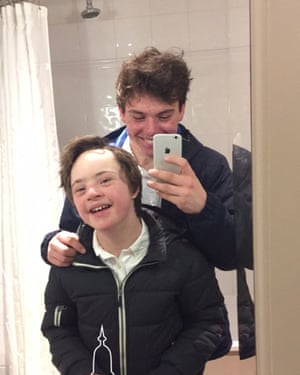
My brother has Down’s syndrome. I wouldn’t change him for the world | Oliver Shone

“Sausage rolls!” I hear him exclaim, sitting in his place at the table while indulging in his favourite ice-cream. His knowledge is limited, his speech is limited, his comprehension of life is limited – but his emotions are heightened. This is my 13-year-old brother, Sebbie; he has Down’s syndrome, a congenital disorder arising from a chromosome defect.


He may not seem as clever as the average child; however, his intelligence, though less apparent, is no less valuable. He is not able to conform to society’s expectations by taking exams and tests to demonstrate his intellect. But Albert Einstein said: “Everybody is a genius. But if you judge a fish by its ability to climb a tree, it will live its whole life believing that it is stupid.” He is clever, but cannot be part of “our” life because he is not clever in the “normal” way.


He is sitting opposite me at the table eating his pudding, while dancing to a “happy song”; he just has to physically express enjoyment (he loves his vanilla soft scoop). Internal rhythm is often talked about by musicians and is something to which I cannot relate; Sebbie’s rhythm, however, represents his effusive personality. Dancing is one of his greatest passions.


Looking at him from across the table, I think how far he has come, physically and mentally. He has recently learned to swim and is making progress towards adding numbers.


‘He can be tricky, perplexing and sometimes outrageous, but his sense of fun and love outweighs all else.’


‘He can be tricky, perplexing and sometimes outrageous, but his sense of fun and love outweighs all else.’ Photograph: Oliver and Sebbie Shone

I will never forget the day Sebbie was born; it was my fourth birthday and he arrived so quickly I didn’t even have time to finish my cake before going to see him in the hospital. He was in the special care baby unit, surrounded by wires and lying in a tiny pod. Lots of doctors surrounded him and, young as I was, I realised that he was not a healthy child, but to me he was just my new little brother and was perfect. I did not understand, then, the overwhelming distress and horror that faced my family.


There were many big words flying around that I did not understand. Tetralogy of Fallot … atrial septal defect … open-heart surgery … My parents were alarmed, panicked; I had not seen them like this and I felt afraid too. This was the start of a long and terrifying journey of operations, hopes and fears. But nothing seems to dampen his enthusiasm and his quirky outlook on life.


It is hard to judge “normal” in this world. There is talk of testing for Down’s syndrome, selective abortion and eradicating this condition. While I understand that no disability is ideal, I think it would be desperately sad to lose these precious children and adults who bring so much light into their families’ lives. Gone would be my crazy brother who talks of pizzas, trains and skiing all in the same sentence; gone would be the adoration that he feels for me and gone would be that wonderful dancing and tuneless singing.


We often find ourselves laughing round the table at funny remarks and comments of his; he has always had the ability to generate laughter. His sense of humour is infectious; there have been many times that he has diffused a tense situation with his comical asides. It is hard to take life too seriously when Sebbie lifts up his jumper and tells me to “Put your belly away!” His sense of timing is impeccable.


His lack of inhibition means he is more likely than not to join another family at the park or beach while giving us a cheeky wave. He has no sense of embarrassment, shyness or social conventions; this can lead to some embarrassment from me, although most people’s reactions are positive.


I often think of his future and what it holds. Sebbie will never be able to live alone and will need constant care and supervision, which I plan to always be a part of. Although we love him, it is frightening to look ahead to a life that will never be independent. We not only worry about how he will cope in later life, but also the major operation that will probably face him before he is 18.


Sebbie’s current condition (although he is physically more than able) can lead to frustration and difficulty. Even the simplest tasks, such as putting on a coat, socks and shoes, can lead to disputes, especially as he is such a strong character. Growing up with a brother with Down’s syndrome has been a real challenge but I would not change him for the world. He can be tricky, perplexing and sometimes outrageous, but his sense of fun and love outweighs all else. There are adults with the condition who have learned to drive cars, are performing in drama groups and are holding down jobs.


My great uncle had the same condition and he was born exactly 100 years before Sebbie, in 1903. Thankfully times have changed since he was alive – he spent his life in an institution. Now disabled children have huge opportunities open to them and are achieving more than was ever thought possible. With our help I hope that Sebbie will grasp these opportunities. Who knows what he might achieve? I will always be at his side to help him along and I know the rewards I get back from him, in the form of love and friendship will make it worthwhile.


Oliver originally wrote this piece as part of his GCSE English course last year


My brother has Down’s syndrome. I wouldn’t change him for the world | Oliver Shone

17 Ağustos 2016 Çarşamba

How Exercising for 30 Minutes a Day Can Change Your Life

Perhaps one of the widest held misconceptions of a healthy lifestyle is that the person practising it has to spend several hours in the gym every day. And while regularity is crucial when it comes to exercising, putting in such a hefty shift each day isn’t.


In fact, the CDC recommended guidelines on healthy levels of exercise aren’t as arduous as you might think. They suggest 150 minutes of moderate cardiovascular activity each week (which amounts to five 30-minute sessions) in addition to strength-training exercises on two days each week.


What’s more, this activity doesn’t necessarily have to be solid work at the gym. This might be a brisk walk to and from work, or it might be a sporting activity; anything which essentially increases your heart rate and speeds up your breathing.


Exercising to burn calories


Perhaps the most obvious benefit of physical exertion is its capacity to burn calories; and ultimately, help us lose weight. Again, you don’t have to bust a gut for hours on the treadmill to shift hefty numbers. Many sporting activities can burn as many as 400 calories in just half an hour, which serves to further demonstrate how beneficial short bursts can be.


However, the advantages of exercising regularly are numerous, and not simply limited to shifting calories and losing weight. Here are a handful of ways in which frequent physical activity can help to change your life for the better:


Helps mobility


Firstly, let’s start with the basics. As well as helping you to maintain a healthy weight, regular activity will also help to maintain your range of motion and stay agile. That means that your joints won’t be as stiff as you get older, and you’ll be able to retain better mobility: and the more mobile you are during old age, the less susceptible you’ll be to circulation problems and osteoporosis. One study backed by the National Institute on Ageing found that regular exercise significantly reduced the risk of disability.


Lowers risk of chronic illness


The range of conditions whose risk directly correlates with being overweight or obese is an extensive one. As well as those related to reduced mobility mentioned above, those with a high body fat percentage are more likely to develop serious conditions stemming from increased pressure on internal organs; such as high blood pressure, heart disease, stroke and liver disease.


A co-commissioned study by the American Diabetes Association and the American College of Sports Medicine stated that a programme consisting of physical activity and ‘modest weight loss’ reduced the development of diabetes in high risk subjects by as much as 58%.


Increases pain tolerance


Another physical benefit which has been linked with exercise by research is a better capacity to tolerate pain.


Many might associate physical exertion with increased pain, due to the short-term pressure it puts on joints and muscles. However several studies have shown that regular activity actually helps the body to develop a resistance to pain; and by increasing bone strength, regular physical activity also reduces the likelihood of strains and injuries.


Reduces stress


Exercise also has an effect on stress hormones (adrenaline and cortisol), and the way the body responds to them.


In the short term, exercising actually raises levels of cortisol and adrenaline; this is because activity gets the body working harder, and causes these hormones to be released. But the more you work out, the better your endocrine system becomes at coping with these hormones and compensating for their presence; which means that in the long term, the body has a better capacity to manage stress hormones and keep them under control.


Physical activity has the added benefit of triggering endorphin release. This is a hormone which is a natural analgesic and even makes us feel good, which also helps to lower anxiety and reduce pain.


Improves productivity


Undertaking regular exercise can make you more productive in a variety of ways.


Again, the way in which activity controls and regulates hormone release plays a part in this. By facilitating a better capacity to handle stress hormones, exercise can help us to be more alert and better handle the pressures of a busy workload.


In addition, regular physical activity enables the body to process sugars more efficiently. This means that the body will be less likely to experience steep energy spikes and dips over the course of the day; helping us to remain focussed and on task. 


Sources:


https://www.cdc.gov/physicalactivity/basics/adults/https://www.cdc.gov/physicalactivity/basics/adults/


https://www.treated.com/dr-wayne-osborne/how-to-burn-calories-like-an-olympic-athlete 


https://www.nia.nih.gov/newsroom/2014/05/structured-physical-activity-program-can-help-maintain-mobility-vulnerable-older


http://www.ncbi.nlm.nih.gov/pmc/articles/PMC2992225/ 


http://www.ncbi.nlm.nih.gov/pubmed/24504426 


How Exercising for 30 Minutes a Day Can Change Your Life