courage etiketine sahip kayıtlar gösteriliyor. Tüm kayıtları göster

21 Nisan 2017 Cuma

Life with Cancer and the Steadfast Courage in the Face of Death

When I was first diagnosed ( Karen’s Journey ) I couldn’t help myself but to feel afraid, somehow I felt shame for feeling this emotion because I thought as a believer of God I had to be strong in every area of my life despite the challenges I may face. After all the word of God says in His perfect love there is no fear. Could it be then that I really didn’t know of His love? Or perhaps, I’m a normal human being with normal emotions? God gave us emotions right? Let me tell you… Yes!! It is normal to feel afraid!! Now, the question is… what do we do in the midst of that emotion? Do we allow it to paralyze us or do we move from it? So many questions and yet, the bible, pastors, therapists, family, relatives, friends, colleagues, will have their own very unique answer to this complex question. Would they all coincide that Steadfast Courage is a must?


Emotions?


You may be wondering why is this woman talking about emotions on this site? Very simple! Emotions play such a significant role in our everyday life consequently these emotions have a great impact in our over all health. I have personally found a great void in the medical community addressing this very important area of life. Somehow doctors have been trained to separate this vital component of health and detached it from patients healing practices and protocols.


My healing journey has embarked me into a journey of self discovery and I believe this is true for most cancer patients regardless of their treatment preference. Somehow we focus a great deal on our physical being, which of course must be addressed but how about our emotional health? It is known that our emotions have perhaps a greater impact on our health than what we eat. One of the doctors on my team whom I greatly admire once said “A negative thought can kill you faster than a bad germ. One of the main things to detoxify is your mind” (Dr. Antonio Jimenez, 2014).


I am not a doctor nor do I claim to know what is right or wrong for any cancer patient needing medical advice. However, as a cancer thriver myself I can say that I prefer to believe and hope that things can change for me in my reality. Believe I can heal and hope I will live a long life as it was intended by God the creator of the universe.


Settling?


Why should I settle for what the doctors say or what the medical reports reflect. We ALL have an expiration date on our lives and what matters is how we choose to live daily now. I reject fear as it drains my immune system and it puts me in an unnecessary anxiety mode. Think about it… Does fear change the medical report or the doctor’s opinion on your life? Of course not. But what if your positive thoughts and words you intentionally choose to speak over yourself are filled with Steadfast Courage? This choice alone will have an immediate impact over your situation. What if you choose to be vigilant in your emotional awareness just as you are with your diet, exercise, therapies, supplements, relationships, etc. What if you choose to face death with Steadfast Courage? What if you choose to overwhelm your circumstances with hope and faith vs fear? And even if things don’t change for you, would you spend your remaining days alive as an slave of fear?


YOU CHOOSE


You choose what will fill your mind and heart and allow it to take over you… Thankfulness, Peace, Hope, Love … No cancer can ever take that away from you. I don’t claim to be fearless but it is a daily choice I must make to live in gratitude, peace, joy, love and in hope. I have been told that I am an idealist and I don’t live in reality. To be honest if reality means to live in fear, anxiety, hopelessness, faithlessness, unhappiness, pressured with time and allowing life to happen instead of living life, well than yes I am an idealist. I choose to create this other reality for me filled with joy peace hope and love, I choose to believe I can heal. I believe you and I are powerful people and we must choose Steadfast Courage in the Face of Death.


Karen Berrios on BloggerKaren Berrios on Facebook

Karen Berrios

Blogger


After much thought I took the path less travelled, a path on which I strongly believe the Lord is walking right alongside of me.

I started my healing path in 2014 as a 41-year-old wife, mother of three and business owner. I’m still holding these titles as I travel on my new cancer journey. The C diagnoses has given me an invitation to live again, allowing me to learn so much about myself, health, relationships, lifestyle and of course this awful disease… cancer…


I decided to start a blog to share my experiences with you. Of course, many of you may ask why? Why would this woman make herself open and vulnerable to thousands of strangers on the internet? Simple! An amazing invitation was given to me, to embark myself into a healing journey, not only to bring back physical order but to heal my mind and soul, to develop and grow into a new season of change. Although I don’t have all the answers and I don’t have it all together, I want to share, ignite and declare the works of that healing light that dwells in all of us.


No, I cannot say that I am completely “cancer free.” But things are definitely moving in the right direction. Tumor has shrunk, and blood flow to it has been reduced. Looking at my blood work through the eyes of the (conventional) medical community, I can say that my immune system is stronger and my level of tumor markers is lower. I know in my heart that I’m on my way to discover, heal and fully live in thankfulness for every blessing I have, embracing the journey with joy and hope and intentionally loving people everyday of my life. I don’t know how it is all going to end but I know I can choose how I want to live today.


It is my hope and prayer that by sharing my journey, you and others can benefit from what I’ve learned and what I’m still going through. If you, too, are searching for answers, I want you to know that you are not alone, that I am right here with you. But most importantly I want you to know that the power to heal is within you.


Life with Cancer and the Steadfast Courage in the Face of Death

22 Kasım 2016 Salı

Thank you, Liz Jackson, for your candour and courage in facing a bastard of a disease | Paul Daley

“Parkinson’s disease” – my father never spoke these words before he died eight years ago from pneumonia associated with his decades-long endurance of this dreadful affliction.


My mother, who saw him through the worst of it until she could no longer do so, never said them. Neither did the doctors – not to his children at least.


Dad tried to keep the disease a secret from us even though the symptoms made the affliction obvious. After his death Mum said he’d never even admitted to her that Parkinson’s disease was killing him.


Maybe he was too proud to admit that something beyond his control, something so humiliating, had him in its python grip. He might’ve feared, irrationally of course, that we’d think less of him. Who knows? We never talked about that – and so much else besides.


I’ve long admired the journalism of Liz Jackson, the multi-award winning ABC broadcaster and film-maker. To me she has always been prominent in a milieu of journalists from the broadcaster who have shown us later generations the way.


And now my respect for her has grown further, having watched her heartbreaking documentary, A Sense of Self, about her diagnosis with – and life since – Parkinson’s.


Her candour and courage and humour in the face of the disease and for her decision to tell the story of her family’s experiences is beyond admiration. Ditto her dignity, in volunteering that she tried for a while to hide the disease from her children out of fear they might see her as weak, or colour their enduring impressions of her.


Then there’s her journalistic professionalism – to tell the story come what the hell may and probably will; the legacy grows exponentially. There is a lake of tears for Liz Jackson now, but not for the pity she despises. No, it’s to celebrate a world that can make a woman who Google-doctors her symptoms, understands the shitful truth of it all but continues to do brilliant work and goes from doctor to doctor to outrun it – and make this documentary.


Anyone familiar with Liz Jackson and who saw the program would be shocked at her decline. It illustrates starkly what a cruel, bastard of a disease Parkinson’s is, the way it robs one of bodily, intellectual and emotional control, and renders the previously strong so terribly, terribly prematurely frail.


The program is remarkable, however, for the humanity with which she emerges – a person defined by everything else that she is, except the disease, really.


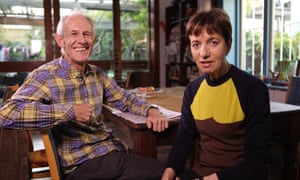
former ABC journalist Liz Jackson with husband Martin Butler


Former ABC journalist Liz Jackson and documentary maker husband Martin Butler. Together they produced A Sense of Self, documenting her struggle with Parkinson’s Disease Photograph: Tom Hancock

It is one of the most moving and important pieces of television I’ve seen, for the way it effectively transcends its immediate subjects so that it might interrogate and provoke us into considering how we approach and judge and emotionally respond to the dreadfully ill in our midst.


Dad was completely exhausted, wrung-out – a physical husk of a man – when he finally succumbed. He fought and fought and never really lost he will to live because he loved life and his kids, and especially his grandkids, so much.


He was a modest though proud bloke. Which is perhaps why he never volunteered what he had. And we never pushed him. When I think back, he probably lived with it for 20 years. But somehow, he kept the drug regimen a secret from us.


Even in his final months at home, before we intervened to move him into supported living because caring for him was going to kill our elderly mother, he would pretend it wasn’t happening. He’d sit there in his chair, drinking tea or on family occasions (which he loved), wine, through a straw, his hands shaking so violently that we’d want to help him.


Mum would give us a look that meant, “No,” then rescue his dignity, mop up, without a word or missing a beat, whatever he’d spilt on the floor or himself.


Parkinson’s is a dreadful curse. But nobody knows why we get it. Those who’ve seen a family member succumb to it reassure themselves that it is not hereditary. But its very mystery is testimony to the importance of what Liz Jackson has done in highlighting the cruelty and tragedy that freights it.


I have several friends who’ve lost loved ones to Parkinson’s. There is no common experience. Not all sufferers will endure the same symptoms. Dad had terrible tremors, he lost the capacity to write legibly, to remember – and say – names, even of family members such as my wife – and eventually he had terrible dementia.


But he was never afflicted with the depression and the panic attacks that have crippled Liz Jackson.


Liz Jackson, A Sense of Self

Just as my dad was spared her panic attacks and depression, I hope she and other Parkinson’s sufferers are spared his dementia.


In a way that was the hardest thing for us.


The dying months of the Bulletin magazine, for which I wrote, coincided with Dad’s terminal decline. Dad, though he never said so, read everything I ever wrote.


In late 2007 I skived off the federal election campaign when John Howard’s caravan passed through Melbourne. He was sitting in front of a TV in the nursing home, the Bulletin open, on his lap, at my story.


He looked at me. His eyes were blank. He no longer seemed to know me.


Thank you again Liz Jackson.


Thank you, Liz Jackson, for your candour and courage in facing a bastard of a disease | Paul Daley

18 Kasım 2016 Cuma

A moment that changed me: meeting my late love Denise, who gave me the courage to come out | Lisa Alabaksh

My university seminar had just finished, and I was standing in line at the refectory, grumbling about a man who had suggested any woman who disagreed with him must be a lesbian. “Well, I am a lesbian so I don’t know what he’d say to me,” said Denise Marshall. It was the first time we’d met. I was enchanted.


This was early 1992 and I’d been pretending to be “straight” for quite some time. I didn’t ever use the word lesbian. If my sexuality had been spoken about at all – which it definitely wasn’t – I would have used the word gay.


To meet a woman so out and so absolutely gorgeous … well … I was hooked. I didn’t know, of course, just how far my life would go with the funny, red-haired woman in a duffel coat, but we were friends immediately, laughing at both being from Tottenham, just up the road from the Middlesex University campus in Enfield, when all around us were people from proper “up north”: Tracy from Manchester, Wendy from Bradford, John and his twin from somewhere “not London”.


We were funny and flash in our north London cockiness. We thought so, at least.


Denise was profoundly political, a feminist and socialist to her core and deeply delighted by her life as an out-and-proud lesbian activist. Every Thursday afternoon, while the rest of us sat around smoking, Denise would go off to work with a group of Kurdish women who needed housing. I didn’t even know what Kurdish was at the time.


For the next three years, Denise held court after lectures and many people listened. Me most of all. She hadn’t been around heterosexuals for many years, she said. She had been a development worker for Stonewall, helping to set up housing projects for vulnerable young lesbians and gay men. University was full of straight people. She was fascinated by them and it made her fascinating. She also knew from our first meeting that I wasn’t being true to myself. She didn’t say so directly. But because she presented being a lesbian as a beautiful privilege, she made me realise I could live differently.


Denise organised a group of us to go to the May Day rally in 1992, and soon we were all reading her two favourite books: The Ragged-Trousered Philanthropists by Robert Tressell and Sour Sweet by Timothy Mo. She taught me about feminism, class oppression, the importance of caring for our communities, of working to right wrongs. Pretty soon I was out of the closet, and with Denise’s encouragement I went to Gay Pride, had some fine fun flings with fabulous women, and my life took off. Denise was an education in herself and I spent every moment I could with her.


My secret life faded and I found liberation in living honestly. Our friendship deepened, I moved in as Denise’s lodger, and then one day, it all changed. We became lovers.


This was 1995, and Denise had become the manager of a women’s refuge. I had graduated as an English teacher and the internet had just arrived. Like the rest of the world, we had no idea what that dial-up tone would mean and where it would take us. We had no idea what becoming lovers would come to mean either, but our love was wild and wonderful, and neither of us had ever been happier. It was a golden time of feminism, lesbianism, freedom and hope. We adored each other.


Ten years later, not long after I became a headteacher, I collapsed one day, insanely tired following an Ofsted inspection. An emergency brain scan led to a diagnosis of multiple sclerosis. I had to retire from my job, and was told I would soon need a wheelchair. It felt like my life was over. But it wasn’t. I still had Denise.


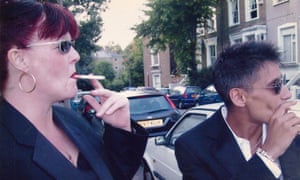
Denise Marshall and friend


‘Denise’s final Facebook post asked friends to look after me, and they did.’ Denise Marshall and friend. Photograph: Lisa Alabaksh

She became CEO of Eaves, a feminist charity specialising in support, advocacy and research into all aspects of violence against women. Eaves changed policy and perceptions around trafficking through its Poppy project, and the work was respected worldwide. Funding was cut with the advent of the coalition government in 2010, and Denise was heartbroken. But she was a force of nature, and kept the Eaves projects going, as well as writing two novels, travelling the world for adventure, playing poker and using social media with a political passion.


In August 2015, our life together ended. Denise died of stomach cancer, and Eaves closed two months later – a double devastation. Through sickness, diagnosis, treatment, pretty much up to the end of her life, Facebook had been Denise’s link to the outside world, and in those early minutes, hours, days and weeks of grief it became mine too. Posting on Facebook was my way of not drowning, because online, there were friends. Real friends; people I’d actually met and who knew Denise. I would write, sometimes in the dark, desperate hours of insomnia, and someone would be there. Facebook saved my life. Denise’s final post asked friends to look after me, and they did.


By the time of my first birthday without Denise, I had posted some 60,000 words. She was loved by so many and she was missed so much, personally and professionally. People told me it helped to read my posts, and that message helped me. One day, two friends brought a manuscript around, made up of the posts I’d written, and from there this became an actual book and my life changed again.


Now I am a published writer who has a life that includes people I really don’t know but who now know me. Sort of. The book is an out-and-proud story of lesbian love, feminist fire and a universal recognition that everyone can be stronger for longer with a bit of kindness and compassion. It is about surviving the swim across the oceans of grief and finding hope in the heartache. It is about love.


The moment I met Denise Marshall, I found my life’s passion – working to end violence against women and girls – and I took the first step on the path to living openly and happily as a lesbian, as who I am. Because of Facebook, I have been able to survive the greatest loss of my life. Along the way, I’ve tried to live according to a mood and a mindset I call Hahalala – health and happiness and love and laughter all. This outlook and expression came to me after my own recovery from sickness. Although Denise would often roll her eyes at my cheeriness, she too was an optimist and she loved and believed in the concept.


In the last days of her life, I asked how she had done it all, how she was still managing to raise a smile, how we were all going to survive without her. She smiled the smile that enchanted me the first time I met her, in that refectory queue, 23 years earlier. “It’s a case of having to, my darling,” she said.


A moment that changed me: meeting my late love Denise, who gave me the courage to come out | Lisa Alabaksh

20 Mayıs 2014 Salı

Well being Secretary hails courage of dementia campaigners

“What you have done is truly inspirational; braver than what any of us have done.”


The awards, supported by The Telegraph, recognise the efforts of individuals, businesses and communities to improve the lives of those with dementia, and to reduce social isolation.


Winning schemes created links between schools and care homes, with children and elderly people sharing activities such as singing and gardening, trained bus drivers in how to help those with the condition and brought together sports clubs with fans with dementia, in order to share their sporting memories.


Mr Hunt said the community efforts, and a national campaign to recruit 1 million “dementia friends” was now influencing global policies on the condition, and was one of the key topics under discussion at the World Health Assembly in Geneva earlier this week.


Jeremy Hughes, chief executive of the Alzheimer’s Society, joined Mr Hunt in thanking the Daily Telegraph for supporting the awards, which were sponsored by Lloyds Banking Group. Mr Hughes said: “Day by day, The Daily Telegraph has been bringing dementia out of the shadows, letting people know that it is okay to talk about dementia, and that has been really important.”


Angela Rippon, TV broadcaster and national dementia care ambassador, saluted an “amazing social movement” which was changing attitudes towards the condition.


The winners were: Sporting Memories (national initiative); Introduction to Dementia for Bus Drivers, First bus operator (business); Joy Watson (national champion); Dementia Friendly Crawley (local initiative); The Archie Project (regional initiative);


Stoke Damerel Community College (school/college); Dementia Friendly Gurudwaras (voluntary initiative).


https://www.dementiafriends.org.uk/


Well being Secretary hails courage of dementia campaigners

27 Nisan 2014 Pazar

Stephen Sutton"s inspiring courage


Sometimes tragedy can inspire people to do extraordinary things. Stephen Sutton, a 19-yr-outdated boy with terminal cancer, drew up a list of what he would like to do just before dying. The concepts integrated taking part in the drums at a packed stadium, going to CERN in Switzerland, hugging an elephant and getting a tattoo. Another was to raise income for charity – and his good results has been astonishing. Helped by celebrities such as Simon Pegg, Stephen Fry and Russell Brand, donations have topped a record-breaking £2.five million. His authentic aim was to raise just £10,000.


Writing from his hospital bed, Mr Sutton stated: “I am in high spirits and blessed to have so much really like and assistance all around me.” The income he has raised is laudable ample, but just as impressive is his spirit. Rejecting the concept that he is “dying with cancer”, he informed people that he is “living with my cancer, regardless of it being there”. Many will doubtless take encouragement from his bravery. Mr Sutton has provided an illustration of how to dwell effectively. Hopefully the income he has raised will assist other people to do the identical.


Stephen Sutton"s inspiring courage