campaigners etiketine sahip kayıtlar gösteriliyor. Tüm kayıtları göster

12 Mayıs 2017 Cuma

Sugar tax must apply to sweets as well as drinks, say campaigners

The sugar tax should be extended to cover sweets, not just soft drinks, according to public health campaigners. The charity Action on Sugar said it wanted ministers to get tough on childhood obesity by forcing confectionery manufacturers to reduce the sugar in their products.


Chocolates and sweet confectionery account for 9% of all the sugar eaten by children aged between four and 10 and for 11% by those aged between 11 and 18.


The levy, which is due to come into force in the UK affecting heavily sugared fizzy drinks from next year, should also be applied to sweet treats sold in coffee shops and restaurants because those often contained a lot of sugar and calories, the campaign group said.


Under the new rules, producers or importers of soft drinks will have to pay a sugar tax of 18p per litre on drinks containing five grams or more of sugar per 100 millilitres and 24p per litre more if their products contain eight grams or more per 100 millilitres. The Treasury expects the levy to raise £520m a year.


“Action on Sugar is urging the next government to implement a mandatory sugar levy on all confectionery products that contain high levels of sugar to ensure maximum impact to help tackle the obesity and type 2 diabetes crisis,” said Graham McGregor, Action on Sugar’s chairman, who is professor of cardiovascular medicine at Queen Mary University of London.


“The levy should be structured by the Treasury as per the soft drinks industry levy, whereby it is aimed at manufacturers to encourage them to reduce sugar in their overall product ranges. The next government needs to bring in tough measures to ensure compliance and put public health before the profits of the food industry.”


Dentists in Britain backed the move as a way of tackling tooth decay. “When the sugar levy is already showing that progress is possible, it makes no sense to draw an arbitrary line and ignore the likes of sweets or energy drinks that are so aggressively marketed at children,” said Mick Armstrong, chair of the British Dental Association. “Ministers keep giving the impression that it’s ‘mission accomplished’ on sugar controls. Dentists are confronting an epidemic of tooth decay and government must show it is prepared to go further on advertising, reformulation targets and through the tax system.”


A sugar tax on sweets had to be mandatory because “voluntary sugar reduction vis reformulation alone will not combat obesity”, said McGregor.


Conservative sources said they would not be extending the sugar tax. “Reducing childhood obesity is vital, and we’re pleased that Public Health England says that our plan to address it is the most ambitious in the world,” a source said.


The Food and Drink Federation, which represents manufacturers, recently warned that the 20% cut in sugar content of most types of foodstuffs being sought by Public Health England by 2020 was highly unlikely to happen because it would not be “technically possible, or acceptable to UK consumers”.


Sugar tax must apply to sweets as well as drinks, say campaigners

9 Nisan 2017 Pazar

Stop PIP reassessments for patients with progressive diseases, campaigners say

MPs and patient groups have called for an end to the repeated assessments that people with progressive diseases must undergo in order to qualify for disability benefits.


Thousands of people with rheumatoid arthritis, Parkinson’s disease, multiple sclerosis, motor neurone disease and other conditions will be retested this year to decide whether they are still eligible for personal independence payments (PIP) because of their disabilities.


But MPs and patient charities argue that repeated testing makes little sense for people with incurable diseases that are known to get progressively worse. According to the most recent figures from the Department of Work and Pensions (DWP), 3,500 people with progressive conditions were reassessed for PIP between April and October last year.


Carol Monaghan, the MP for Glasgow North West, said she was challenging four cases where patients with multiple sclerosis had been called in for reassessment despite their illness getting worse. “MS is a progressive condition. They’re never going to be any better than they are at the moment, so they should never be asked to go for a reassessment,” she said.


“Some of these people are still able to walk to a certain extent, so they get themselves in, just about, and then they’re being told, ‘You look fine,’” she added.


The number of people called in for reassessments was obtained by Madeleine Moon, the MP for Bridgend, in a written parliamentary question. The DWP figures reveal that the number of people reassessed for PIP rose sharply from 200 in 2014–15 to 2,400 in 2015–16.


The DWP say the reviews ensure that patients receive benefits in line with their disabilities. “PIP is an interactive benefit, designed to ensure any changes in a claimant’s functional ability can be identified and that they receive the right support at the right time,” a spokesperson said. More than a quarter of claimants are receiving the highest level of support, he added.


But Phil Reynolds at Parkinson’s UK said around a quarter of people living with Parkinson’s in Britain had lost some or all of their support following benefit reassessments, only to have the payments reinstated on appeal. “It’s absolutely crucial that the DWP looks again at the broken PIP assessment to ensure people with long-term conditions get the support they so desperately need, rather than rigging the system against them,” he said.


Nearly half of people with multiple sclerosis who claim PIP must be reassessed within two years, according to MS Society. “We’re concerned about the number of people with MS being inappropriately reassessed, especially when we know assessments can cause stress and anxiety, and in some cases exacerbate MS symptoms,” said Laura Wetherly from MS Society.


“With more than 100,000 people living with MS in the UK, the PIP system needs to accurately reflect the realities of living with a fluctuating and progressive condition. Having a disability like MS is hard enough. People should be able to rely on support without fear of having it taken away,” she added.


Stop PIP reassessments for patients with progressive diseases, campaigners say

24 Şubat 2017 Cuma

Children"s sugar intake equals five doughnuts a day, campaigners say

Children and young people are consuming the equivalent of 20 chocolate chip biscuits a day in sugar, according to anti-obesity campaigners.


The calculations by the Obesity Health Alliance have led to renewed calls for food and soft drinks manufacturers to make their products healthier to cut the number of dangerously overweight children. They want urgent action to reduce the amount of “hidden” sugar in many common foodstuffs.


“Most parents would never hand over 20 chocolate biscuits a day to their children, but with so much hidden sugar in our food and drink it can often be hard to know just how much children are consuming,” said Dr Modi Mwatsama, a spokesman for the alliance.


It is urging food firms to replicate the reduction in the amount of salt they put into their products in the 2000s.


Children and young people aged between 11 and 18 typically have an intake of 73.2 grams of sugar a day, far in excess of the 30g – or seven teaspoons – maximum recommended in official health advice, according to the OHA’s estimates. Those 73.2g are the equivalent of 20 chocolate chip or custard cream biscuits, 14.6 jelly babies, 5.4 slices of Victoria sponge cake or 4.8 jam-filled doughnuts.


The alliance’s figures are based on its analysis of Public Health England and the Food Standards Agency’s most recent national diet and nutrition survey, an annual study of what a representative sample of the population is eating and drinking, published last September.


It also found that four- to 10-year-olds are consuming 53.5g of sugar a day, while the figure among 19- to 64-year-olds is 59.9g daily.


Dr Alison Tedstone, Public Health England’s chief nutritionist, said that while some food manufacturers have pledged to cut the amount of sugar in their products, certain kinds of retailers – including coffee chains – need to follow suit.


“Some big industry players have taken positive early steps, but it’s the big coffee shops, pubs and restaurants we need to do the same,” she said.


Producers including Tesco, Waitrose, Nestlé, Lucozade, Ribena and Kellogg’s have announced plans to reduce their use of sugar as part of a reformulation drive ahead of the government’s sugar tax coming into force in 2018. However, many other firms have made no such commitment and may be hit by the tax.


PHE wants all food manufacturers and outlets to strip 20% of all sugar out of a wide range of products by 2020. It plans to issue a report sometime next month setting out in detail for the first time what types of foods contribute the most to people’s sugar intake and where they buy and consume them.


Sarah Toule, head of health information at World Cancer Research Fund, said that overweight or obese children are much more likely to be dangerously overweight in adulthood and thus increase their risk of developing 11 forms of cancer.


Children"s sugar intake equals five doughnuts a day, campaigners say

26 Ocak 2017 Perşembe

Jeremy Hunt"s hospital food revolution has failed, campaigners say

Jeremy Hunt has been accused of failing to deliver his promised revolution in hospital food after the health secretary’s own department found that many hospitals have still not improved patient catering.


A Department of Health study shows that almost half of hospitals in England have failed to implement key improvements almost two and a half years after Hunt’s crackdown.


The disclosure led food campaigners to claim that supposedly legally binding duties put on hospitals in 2014 to serve healthier food and check if patients were malnourished had come to nothing.


At the time Hunt claimed his new hospital food standards would force NHS trusts to offer patients fresh fruit around the clock and cut the amount of salt in meals or risk being fined or losing contracts to deliver vital care.


“These figures from the government’s own research show the widespread failure in England to drive up food standards in hospitals. We can see from the report that almost half of all hospitals are not meeting the government’s own standards on hospital food,” said Katherine Button of the Campaign for Better Hospital Food.


The DH research, titled “Compliance with hospital food standards in the NHS. Two years on: a review of progress since the Hospital Food Standards Panel report in 2014”, found widespread breaches of what were meant to be mandatory standards that all should meet.


48% of hospitals are still not meeting government buying standards that oblige them to meet a range of standards regulating the quality, nutritional value and ethical sourcing of the food they serve patients, staff and visitors.


While over half of all hospitals had by last year begun assessing the nutritional needs of every patient in order to detect and avoid malnutrition, an unspecified substantial minority still had not.


Only 55% of hospitals have fully complied with the British Dietetic Association’s nutrition and hydration digest, a toolkit designed to help hospitals ensure patients receive nutritious meals that meet their dietary requirements.


Katharine Jenner, the campaign director of Consensus Action on Salt, Sugar and Health, said: “This is more evidence that voluntary measures don’t work, even when they are dressed up as ‘legally binding’ in NHS standard contracts for hospitals. We need mandatory standards, with rigorous monitoring, reporting and meaningful sanctions for non-compliance.”


Button said she feared that hospitals’ push to overhaul their food may have been hampered by NHS-wide cost-cutting. “It seems that this well-intentioned drive to increase standards has fallen victim to budget cuts in catering departments and kitchens across the country.”


The DH insisted that its research painted a much more positive picture of progress made since Hunt unveiled the new standards to widespread acclaim in August 2014. It also shows, for example, that 96% of hospitals are either already compliant with the 10 key characteristics of good nutritional care or working towards that goal.


A spokeswoman said: “Every patient deserves nutritious food when they are in hospital which is why we introduced the first ever legally binding food standards in the history of the NHS. We can now see that over 90% of hospitals are compliant or actively working towards compliance with food standards and food is rated good in nine out of 10 hospitals.”


Jeremy Hunt"s hospital food revolution has failed, campaigners say

13 Eylül 2016 Salı

Campaigners criticise UK government’s response to air pollution warning

Campaigners have attacked the government for rejecting calls by MPs for greater action on air pollution, as severe pollution episodes were predicted for parts of the UK this week.


MPs warned in April that dangerously high pollution in British cities was a “public health emergency”, and told ministers to take further measures, including more clean air zones and a diesel scrappage scheme.


In its formal response on Tuesday, officials claimed that the government was already spending heavily on cleaner transport and that it plans to consult on a framework for clean air zones later this year.


“We will introduce new, tougher targets which will drive down air pollution from all sources, reducing transboundary pollution and significantly reducing the number of premature deaths across the EU caused by poor air quality,” said the response.


The MPs had wanted all cities to be able to charge polluting vehicles instead of just the five which government is planning to allow. But officials responded: “Local authorities can take action as and when necessary to improve air quality and we encourage them to do so.”


“[The government] has established the UK as a global leader in ultra low-emission vehicles. We are one of the largest and fastest growing markets in Europe and last year around one in five battery electric cars sold in the UK was built in the UK”.


It also flatly rejected the idea of a diesel scrappage scheme: “We have considered the use of scrappage schemes … and have concluded that this may not be an appropriate and proportionate response.”


The publication came as the environment department warned of “very high” air pollution – the worst on the scale – in and around Hull on Wednesday, and “high” pollution across much of northern England. The health advice for very high episodes is for the entire population to reduce physical exercise outdoors, and for asthma sufferers and other vulnerable groups to avoid any exertion.


— Adam Vaughan (@adamvaughan_uk) September 13, 2016

If you’re in Hull tomorrow, try not to breathe the air. Yuck. Yet another e.g. of need for more air pollution action pic.twitter.com/MZ8eaR63tn


Health and environment groups reacted angrily to the government response, saying plans to reduce UK pollution were “inadequate” and “in disarray”.


“Despite the mounting evidence of the dangers people face having to breathe our illegally dirty air, the government is refusing to take the bold action needed to cut the 40,000 early deaths from air pollution each year in the UK,” said a spokeswoman for Friends of the Earth.


Bridget Fox, transport campaigner at Campaign for Better Transport, said: “It’s clear that the government’s rhetoric on tackling lethal and illegal levels of air pollution is still not matched by action.”


In mid-October, judges at the high court will consider a legal challenge against the government’s pollution action plan by the environmental law firm, ClientEarth, which last year won a victory in the supreme court against the government on its failure to meet EU air quality limits.


But David Cameron’s former energy and environment adviser said continuing legal action was unhelpful. In an article on the Green Alliance thinktank’s blog, Stephen Heidari-Robinson said that: “[court action] focuses on compliance with EU standards for just one pollutant, rather than addressing the problem holistically to save lives”.


“Worse, it encourages the belief that Brexit can simply sweep away the problem (it can’t). Second, it sets up a zero sum game – ban cars, save lives – when, to solve the problem with the consent of the population, we need to improve air quality and maintain mobility. And, third, it scares the hell out of officials who might end up in court and diverts their attention towards feeding the legal document monster.”


In a statement ClientEarth chief executive, James Thornton, said court action was a last, but necessary, resort. “It is necessary … particularly when tens of thousands of lives are at risk because an intransigent government persistently fails to comply with the law, which is where we find ourselves on air pollution in the UK.


“What sort of democracy would we be living in if we as citizens have to comply with the laws put in place by government, but ministers can ignore them when they feel like it? Many autocrats enjoy such an ability to ignore the law. But since Magna Carta, we have committed to live under the rule of law, government and citizen alike.”


Campaigners criticise UK government’s response to air pollution warning

17 Ağustos 2016 Çarşamba

Childhood obesity strategy may be watered down, campaigners fear

Health campaigners fear that the government’s childhood obesity strategy, expected this week, has been watered down under relentless pressure from the food and drinks industry and will prove ineffective in changing the habits of an overweight nation.


The strategy is supposed to be based on recommendations from Public Health England after an investigation into the measures that would work best. A third of children are overweight or obese by the time they leave primary school.


PHE urged curbs on buy-one-get-one-free and multipack price promotions on crisps, sweets and other junk foods in supermarkets, and came out in favour of tackling junk food advertising to children. It supported a tax on sugary drinks, although it said the other measures would work better.


Health groups fear industry lobbying may have prevailed and that the measures have at least been diluted, although the levy on sugary drinks – announced in George Osborne’s last budget in March – is expected to go ahead. Details of the tax are expected to be announced by the Treasury in a consultation document to be published this week alongside the childhood obesity strategy.


Critics are concerned about the timing of the launch. David Cameron made childhood obesity a personal issue and the strategy was being put together inside No 10. However, it is now expected to appear while Theresa May is on holiday in Switzerland, suggesting she will not champion it in the same way.


The Children’s Food Campaign, a member of the Obesity Health Alliance, which includes charities and health organisations such as the royal colleges, is concerned by suggestions that the tough action they wanted on cut-price junk food and TV advertising will not happen.


Leaks suggest there will be no ban on multi-buy promotions in supermarkets. “Price promotions were one of the big issues that Public Health England majored on,” said Malcolm Clark, of the campaign. “It looks like the government is failing to listen to its own public health experts.


“Industry likes to paint us as nanny-statists, but PHE is not a campaigning organisation. They have done a very thorough literature review of peer-reviewed evidence and come up with a recommendation on that.”


The Children’s Food Campaign has lobbied hard for a ban on adverts for foods high in salt, fat and sugar during family TV programmes. A ban on such ads on children’s TV is not enough, they say, because of the huge numbers of children who watch family programmes such as Britain’s Got Talent and The X Factor. They have called for a 9pm watershed, at which time viewing figures for under-15s drop.


The food and drink industry has been strongly opposed to a ban on such adverts before 9pm because it would cover programmes watched by millions of viewers.


Tam Fry, patron of the Child Growth Foundation and spokesperson for the National Obesity Forum, said that if the hoped-for measures did not come about, “it will spell disaster for obesity. It will not be the game-changing document promised by [the health secretary] Jeremy Hunt with draconian measures to tackle the epidemic, but a limp repetition of the flawed responsibility deal.


“The government’s own senior health advisers have called obesity a national risk, requiring a Cobra-style crisis management response. Apart from the government appearing to be resolute about a sugar levy, its intentions are light years away from what is needed.”


Childhood obesity strategy may be watered down, campaigners fear

4 Ağustos 2016 Perşembe

Olympics are a carnival of junk food marketing, say campaigners

Campaigners have attacked junk food marketing by sponsors of the Olympic Games in Rio, claiming that companies are once more using the sporting event to promote unhealthy high-fat and sugar products.


Sponsorship of the London Olympics by Coca-Cola and McDonald’s was fiercely criticised four years ago. In Brazil, Team GB is sponsored by Kellogg’s, whose Olympics marketing theme is “Great Starts”. But many of the breakfast cereals it is promoting, such as Frosties and Coco Pops, are high in sugar, said the Children’s Food Campaign.


“We know first hand from London 2012 what a carnival of junk food marketing the Olympics are,” said Malcolm Clark, coordinator of the campaign.


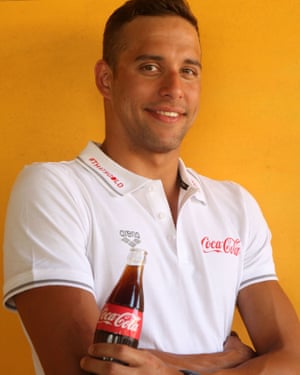
Chad le Clos in Coca Cola advert


South Africa’s Olympic champion swimmer Chad le Clos launching a Coca-Cola campaign. Photograph: Mirco Toniolo/Rex Shutterstock

“And we are seeing it again this time, with almost all Kellogg’s Games-related marketing currently promoting high-sugar, less healthy products; with Coca-Cola’s global #thatsgold ad giving twice as much screen time to red, full-sugar Coke as to Coke Life and Coke Zero Sugar combined; and with the emergence of limited edition Brazilian flag-coloured M&M’s and other sugary products which associate themselves with the Games.


“Only Aldi supermarket’s advertising campaign, with its focus on British produce, including fresh fruit and vegetables, seems to buck the trend and promote demonstrably healthier products.”


The campaign has complained to the Advertising Standards Authority over what it says are unsubstantiated health claims by Kellogg’s and its use of the word “nutritious” on its Olympics promotional website.


It has also taken issue with the director general of the Food and Drink Federation (FDF), Ian Wright, who said in an interview that Coca-Cola and McDonald’s, sponsors of the 2012 Olympics, were very responsible companies and that any controversy emanated from western countries. “Asian and Latin American countries have no problem with companies that behave responsibly,” he said in an article in Campaign magazine.


Public health experts from around the world took issue with Wright.


Members of the Turkmenistan team eat McDonald’s food inside the Rio Olympic village


Members of the Turkmenistan team eat McDonald’s food inside the Rio Olympic village. Photograph: Kai Pfaffenbach/Reuters

“The Food and Drink Federation’s statement is outrageous, and wrong,” said Dr Fabio Gomes, a Brazilian public health nutritionist and World Health Organisation regional adviser on nutrition. “If these companies did indeed act responsibly they would not advertise to children, they would not send their licensed clowns to Brazilian schools to hook children on their brands and products and they would not promote sugary drinks and energy-dense products that are not recommended by Brazil’s official food-based dietary guidelines.”


“We find the UK Food and Drink Federation’s comments to be offensive,” said Alejandro Calvillo Unna, the spokesperson for the Mexican NGO El Poder del Consumidor (Consumer Power).


Related: Junk food TV ads make children hungry and tempted, charity finds


“In Latin America, these two companies – Coca-Cola and McDonald’s – represent one of the main vectors of the obesity and diabetes epidemic in our region. They deny the scientific evidence about the harm their products generate, they manipulate children, use misleading advertising and invest millions of dollars in lobbying to impede the development of policy measures in countries that are working to combat obesity and chronic disease.”


Tim Lobstein, the policy director at the World Obesity Federation, said: “Child obesity is rising rapidly in developing economies and the last thing the children need are inducements to consume more junk food. The Olympic Games should be a beacon of human progress and ability, not a place where poor nutrition is given a halo of gold.”


Wright stood by his comments, the FDF said. “The recent, groundbreaking McKinsey report ranked the most effective interventions to tackle obesity worldwide – portion control and reformulation of foods came out top, with restrictions on sports sponsorship nowhere on the list.


“At a time when public health budgets are shrinking, restricting sports sponsorship from food and drink companies – whether of grassroots sport or international competitions – would result in less physical activity, not more.”


A Kellogg’s-branded sculpture of Rebecca Adlington in the Serpentine in London


Swimmers in the Serpentine in London’s Hyde Park pass a Kellogg’s-branded sculpture of the British swimmer Rebecca Adlington. Photograph: Rex Shutterstock

A Kellogg’s spokesperson said: “Kellogg’s products can be found in eight out of 10 British households and many athletes eat breakfast cereal as part of a balanced diet and that’s why we are proud to be an official sponsor of Team GB.


“We offer a wide range of breakfast cereals and cereal snacks with varying amounts of sugar all of which are clearly labelled; our cereals provide 3% to 10% of the recommended daily allowance of sugar while our snacks 5% to 20%.


“We strongly believe an all-encompassing approach is needed to tackle obesity. That’s why we are playing our part by listening to our shoppers and launching new foods and adapting the recipes of our existing products to give people more of what they want and less of what they don’t want.”


Olympics are a carnival of junk food marketing, say campaigners

20 Mayıs 2014 Salı

Well being Secretary hails courage of dementia campaigners

“What you have done is truly inspirational; braver than what any of us have done.”


The awards, supported by The Telegraph, recognise the efforts of individuals, businesses and communities to improve the lives of those with dementia, and to reduce social isolation.


Winning schemes created links between schools and care homes, with children and elderly people sharing activities such as singing and gardening, trained bus drivers in how to help those with the condition and brought together sports clubs with fans with dementia, in order to share their sporting memories.


Mr Hunt said the community efforts, and a national campaign to recruit 1 million “dementia friends” was now influencing global policies on the condition, and was one of the key topics under discussion at the World Health Assembly in Geneva earlier this week.


Jeremy Hughes, chief executive of the Alzheimer’s Society, joined Mr Hunt in thanking the Daily Telegraph for supporting the awards, which were sponsored by Lloyds Banking Group. Mr Hughes said: “Day by day, The Daily Telegraph has been bringing dementia out of the shadows, letting people know that it is okay to talk about dementia, and that has been really important.”


Angela Rippon, TV broadcaster and national dementia care ambassador, saluted an “amazing social movement” which was changing attitudes towards the condition.


The winners were: Sporting Memories (national initiative); Introduction to Dementia for Bus Drivers, First bus operator (business); Joy Watson (national champion); Dementia Friendly Crawley (local initiative); The Archie Project (regional initiative);


Stoke Damerel Community College (school/college); Dementia Friendly Gurudwaras (voluntary initiative).


https://www.dementiafriends.org.uk/


Well being Secretary hails courage of dementia campaigners

29 Nisan 2014 Salı

French youngsters exposed to dangerous cocktail of pesticides, campaigners say

A field in northern France

The samples have been taken from childrenliving among 50 and 200 metres from agricultural zones. Photograph: Pascal Rossignol/Reuters


French children in agricultural regions are currently being exposed to a dangerous cocktail of pesticides, some of them banned, a French overall health and setting group has claimed.


Générations Futures carried out independent evaluation of the hair of youthful people residing or studying near farms or vineyards right after dad and mom expressed concern about their children getting exposed to poisons that could disrupt their endocrine technique.


The group, a non-profit organisation specialising in the use and results of pesticides on people and the environment, says its findings confirmed their fears.


Researchers took hair samples from a selected group of young children aged amongst three and ten living or attending colleges among 50 and 200 metres from diverse agricultural zones. It sent the samples to an independent laboratory in Luxembourg that utilised methods equivalent to those employed by detectives investigating poisoning circumstances.


A complete of 624 pesticide traces were found in the 29 samples tested – 1 sample was deemed of insufficient quantity – suggesting that 80% of the children had been exposed to agricultural pesticides in the earlier three months.


In total, the laboratory found traces of 53 pesticides believed to influence hormone technique of mammals, major to cancerous tumours, birth defects, developmental problems and understanding disabilities in humans.


An regular of 21.52 different pesticides had been found for every single little one, 35 so-known as “endocrine disruptor” pesticides were discovered at least when, even though 13 had been identified in every hair sample. Just underneath three-quarters of the young children ate natural make routinely, suggesting the contamination came from an outside source and not their meals.


“The presence of much more than 21 pesticides, on regular, that are endocrine disruptors in the hair that was analysed demonstrates that our children are exposed to a considerable cocktail of these substances,” mentioned François Veillerette, a spokesperson for Générations Futures. “Now the European commission must ultimately public a clear and protective definition of the endocrine disruptors that have to be banned.”


The group’s report urges urgent action. “Our demand is easy and primarily based on an ambitious aim: no organism need to include endocrine disruptors in buy to protect the overall health of unborn children.”


Générations Futures says the French government’s very own nationwide method to deal with endocrine disruptors has reached a dead end. The program was initially to be published in 2013, but has been repeatedly postponed until the end of this month.


“Because young children are portion of the population specially vulnerable to the dangers of endocrine disruptors, they must not be exposed to them,” it stated.


The study showed that many young children had been exposed to dangerous chemicals banned in agricultural use but still utilised in parasite therapies for pet animals.


Jean-Charles Bocquet, director of the European Association of Plant Safety Product Manufacturers, dismissed the analysis. “The presence of pesticide traces is not automatically indicative of a well being danger, particularly in infinitely modest doses. I am confident you’d discover traces of diesel in our hair if you looked for it,” he informed Le Parisien.


Veillerette disagreed. “It is not the dose that the issue, but the accumulation of pesticides leading to a cocktail result,” he said.


Générations Futures says it has sent its findings to a specialised university analysis staff for further examination.


French youngsters exposed to dangerous cocktail of pesticides, campaigners say

3 Nisan 2014 Perşembe

Politicians need to stop pandering to anti-fluoridation campaigners

Final week, Public Overall health England urged a lot more councils to contemplate including fluoride to their water supplies. The situation for this is clear: fluoridation improves dental wellness, decreases hospital admissions due to dental issues and thus saves far much more funds than it expenses.


Some have argued that fluoridation is a chance to overall health, but the report by public Health England looked at prices of hip fractures, kidney stones, cancers, Down’s syndrome births and all-result in mortality and concluded that there is “no evidence of harm to wellness in fluoridated areas”.


Nevertheless, as with so numerous public well being interventions, the sound and fury of opposing ideology usually trumps rational evaluation. If the backlash against fluoridation in the Republic of Ireland is anything at all to go by, Public Health England can count on vigorous opposition.


Fluoride has been extra to water in Ireland considering that the 1960s and has substantially enhanced the nation’s dental well being, even in the era of fluoridated toothpaste. Despite this, a small but extremely vocal opposition repeatedly pops up to declare fluoridation is damaging to wellness. These claims have been debunked time and time yet again.


The recent incarnation of the opposition relies heavily on a report by self-proclaimed “fluoridation scientist” Declan Waugh, who blames fluoride for a range of illnesses. The report has been roundly dismissed by the Irish Skilled Board on Fluoridation and Overall health, its chairman Dr Seamus O’Hickey concluding that … in spite of its presentation, its material is decidedly unscientific … the allegations of ill wellness results are based on a misreading of laboratory experiments and human wellness studies, and also on an unfounded personal theory of the author’s.”


Despite this, clever use of social media and powerful lobbying has gained fluoridation naysayers significant political traction, prompting the Irish government to promise however an additional full overview of the practice.


This variety of irrational thinking is equally apparent in the anti-vaccination movement, for illustration between people who proceed to think that the MMR vaccine leads to autism. A 2011 editorial in the New England Journal of Medicine noted wearily that “… the spectrum of anti-vaccinationists ranges from people who are basically ignorant about science … to a radical fringe element who use deliberate mistruths, intimidation, falsified data, and threats of violence in efforts to avert the use of vaccines and to silence critics.”


Study into the mindsets of anti-vaccination campaigners suggests that they have a tendency to exhibit traits this kind of as conspiratorial considering, reasoning flaws, a reliance on anecdote above data and minimal cognitive complexity in considering patterns. Equivalent traits are noticed in the anti–fluoride motion, with comparable mistrust of well being interventions. It could not be a coincidence that the present drive against fluoride in Ireland emanates from West Cork, a region of the nation with an very lower vaccine uptake that has been the epicentre of latest measles outbreaks.


That such beliefs persist in the face of sturdy proof could be a quirk of human psychology. Campaigners could see themselves as enlightened crusaders, so when their assertions are questioned or contradicted by the information, this is viewed not as a valuable correction of error but rather an attack on their identity and narrative. Conspiratorial thinking is endemic in such groups with critics being regarded as agents of some ominous interest group – big pharma is a widespread bogeyman – that desires to conceal the truth. This gets a defence mechanism to defend beliefs that are incompatible with the evidence.


If all else fails, attacking the messenger could be easier than accepting that your complete raison d’être is misguided.


Motivated rejection of evidence is often a symptom of cognitive dissonance, a psychological phenomenon that occurs when individuals are challenged by details inconsistent with their beliefs. They might reject unwelcome info, seek out confirmation from these who currently share their beleaguered viewpoint, and try to persuade other folks of the veracity of their world see. This may describe why some folks proselytise even far more vigorously right after their beliefs have been debunked.


That people can be irrational is hardly a revelation, but possibly the ugliest facet of the Irish debate is how elected representatives have given this kind of outlandish fringe assertions a sense of legitimacy. One Irish politician has claimed that fluoridation leads to cancer and Down’s syndrome others have demanded an end to the practice, parroting claims that would have taken all of three minutes on Wikipedia to expose as utter nonsense.


The Irish government’s response is appeasement, and a waste of time and public money. Not only is there previously an Irish body that routinely testimonials the safety of fluoridation, this is a Sisyphean process because anti-fluoride groups have previously reached their conclusion, and will trust no professional body unless it agrees with their assertions. Nearly undoubtedly fluoride will get but yet another clean bill of well being, campaigners will reject the findings and the same tedious cycle will repeat again, in significantly the very same way dad and mom who oppose vaccination are impervious to the scientific literature undermining their place.


It is irresponsible for politicians to demonstrate this kind of contempt for science that they are prepared to take the lead from pseudoscientists and conspiracy theorists rather than experts. Leadership ought to be about generating the greatest selections based on the data available, even on emotive troubles such as fluoridation and vaccination.


As the Irish debate lumbers on, and nearby authorities in the Uk take into account fluoridation, we ought to demand that our elected representatives base well being policy on evidence. There will undoubtedly be opposition as there has been in the previous but what is crucial is that decisions are based mostly on scientific analysis, not misinformation and worry. The cost of this kind of folly is clear to anyone who remembers the human suffering in the wake of the misinformed panic more than the MMR vaccine just a decade in the past.


Brigadier Common Jack Ripper expounds his concept about fluoridation and valuable bodily fluids to Group Captain Lionel Mandrake in the movie Dr Strangelove

Politicians need to stop pandering to anti-fluoridation campaigners

27 Mart 2014 Perşembe

Atos contract comes to an end bringing considerably relief for campaigners

ATOS demonstration held in Manchester

Demonstrators in Manchester gather outdoors the Atos centre to protest towards the French-owned business. Photograph: Steven Purcell/ Steven Purcell/Demotix/Corbis


As forecast, Atos Healthcare has left its controversial £100m-a-yr contract with the Division for Perform and Pensions to deliver the operate capability assessment, the notorious “match for work” test that for its several critics has grow to be a grim byword for out-sourced state incompetence and callousness.


There will be some relief among campaigners that Atos has quit but most understand that although the French-owned company could have been the lightning rod for public anger above disability benefit reform it was ministers and the state who the two brought in the test and created and enforced the norms and laws by which it is delivered.


Two queries arise: why, after many years of mounting concern about Atos’s efficiency and the accuracy and safety of the WCA has it taken so lengthy for matters to come to a head? And second: does Atos’s departure signal a want on the element of ministers to genuinely reform a approach that handful of outdoors of the DWP – whether campaigners, GPs, MPs, or benefit claimants – think about to be either humane or match for goal?


Ministers indulged in the usual political blame game on Thursday morning: the WCA was a undesirable contract inherited from Labour. But 1 of the earliest acts of this government, back in November 2010, was to extend the Atos contract for a additional five many years. It was Coalition ministers who made the decision on a large and fast expansion of the test, in May possibly 2011, to re-assess one.5m existing incapacity benefit claimants, despite obvious warnings from their personal skilled advisor, Professor Malcolm Harrington, that the rollout ought to be delayed right up until what he described as an “inhumane and mechanistic” test could be additional refined.


A long list of reviews, campaigns and inquiries more than the past 3 years testify to the terrible human consequences of that austerity-led dash to pull vulnerable individuals off incapacity benefit as a way of driving down welfare investing. In the publish-industrial functioning class communities the place incapacity advantage take up was highest the WCA became a kind of terror: for years, claimants had been advised they had been too sick to perform now they would be tested and if they failed, their currently slender weekly revenue would be cut by 30%. Not just did they face becoming pitched into deep poverty overnight but they would endure the stigma of currently being labelled a “scrounger”.


The widespread distress amongst claimants brought on by the re-evaluation of incapacity advantage was swiftly picked up in GPs surgeries, welfare tips bureaux and food banking institutions. Right after an attempted suicide in a Merseyside jobcentre, DWP staff were warned by officials to be “empathetic” in direction of folks impacted by the changes. Alarmingly, the WCA cropped up with regularity at coroner’s inquests, the place fear of imminent re-assessment, or depression brought on by currently being declared fit for perform, was more and more noted as a factor in the deaths of vulnerable folks.


There is no company proof that the WCA drives folks to consider their life but this week a report by the Psychological Welfare Commission for Scotland concluded that the check straight led a lady with a historical past of stress related depression to consider her own existence. She died significantly less than a month soon after an Atos assessor declared her match for perform, resulting in her £94.25 a week benefit cash flow getting minimize to £67.50. “There was not something else which we could identify that would lead us to think that there was any other aspect in her existence that resulted in her selection to finish her daily life,” stated the commission. The WCA, the commission concluded, was flawed. The DWP disagreed. It declared that its methods were “largely robust and proper.”


WCA appeals tribunals tell a diverse story. The WCA – dubbed by a single MP as a “crude pc check” – is notorious for delivering seemingly incomprehensible decisions. Tales of claimants with terminal cancer who are located match for work, for example, have grow to be a stock neighborhood newspaper story. There have been above 600,000 appeals towards fit-for-work decisions in latest years, clogging up tribunal courts and costing the taxpayer above £60m a yr. Nationally, 4 out of ten appealed selections do well. Where claimants have skilled representation this figure rockets. Oxfordshire Mind reported not too long ago that a startling 98% of WCA appeals taken up by its advisors on behalf of mentally-unwell customers had been effective.


Nevertheless it was not until relatively lately that Atos and the government dropped the fiction that all was properly. In January, Atos boss Joe Hemming informed a sceptical committee of MPs: “We have a genuine passion for delivering solutions to the citizen in a way that continues to satisfy the way the citizen needs to be served.” But tensions between government and Atos had come to a head final summertime. The DWP had raised issues about Atos’s efficiency for its element Atos was desperate to leave a contract that it regarded as both undeliverable and a public relations disaster.


The disability minister, Mike Penning, explained on Thursday morning that Atos will quit the WCA ahead of its contract ends in August 2015 (even though it will proceed to operate a separate WCA contract in Northern Ireland). The choice will not impact Atos’s other huge government welfare contract, to carry out the Individual Independence Payment assessments (although the National Audit Workplace has raised concerns that this contract also is working into critical problems). There are number of indications that the government sees the WCA issue as something other than a technical contracting concern. Outsourcing giants Serco and G4S are believed to be in the frame to substitute Atos.


Campaigners, on the other hand, think that Atos’s departure alone will consequence in minor materials alter to the WCA. No government is probably to abandon the principle of incapacity benefit re-evaluation but they will look for a root and branch assessment that make certain that the check gets to be far more sensitive and puts the person first, rather than welfare money financial savings. “The check must be more than an exercising in obtaining men and women off rewards,” said the Scope charity chief executive Richard Hawkes: “It need to make sure disabled individuals get the specialist, tailored and flexible help they need to have to locate and preserve a job.”


Atos contract comes to an end bringing considerably relief for campaigners

6 Mart 2014 Perşembe

Messages about lowering sugar intake unclear, say campaigners

Starbucks caramel frappuccino

A Starbucks caramel frappuccino is made up of a lot more than 44g of sugar – 11 teaspooons


One particular Starbucks caramel frappuccino with skimmed milk and whipped cream contains virtually twice as considerably sugar as the Planet Wellness Organisation says is the advisable daily intake, and a can of Coca-Cola or Pepsi has one and a half times the quantity, but campaigners fear that the message about cutting down on sugar is insufficiently clear.


In a draft updated guideline on sugar consumption, WHO recommended on Wednesday that no more than ten% of our calories ought to come from sugar, but advised much less than 5% would be preferable.


For an regular grownup consuming 2,000 calories a day, that equates to 50g of sugar – or twelve teaspoons – at the greater limit and 25g – six teaspoons – at the decrease restrict.


A kid, whose calorie intake is much decrease, would reach the limit even faster.


The Starbucks caramel frappuccino contains much more than 44g of sugar – eleven teaspoons – which is significantly above the lower limit and nearly at the upper limit, suggesting that it could be unwise to drink one particular at all.


Coca-Cola and Pepsi in 330ml cans have nine teaspoons of sugar, a 51g Mars bar has eight teaspoons and a Muller Crunch Corner strawberry shortcake yoghurt six teaspoons. There is additional sugar in numerous savoury dishes, like pasta sauce and soup, to improve taste and texture.


Aseem Malhotra, cardiologist and science director of the pressure group Action on Sugar, which developed the table of food items with added sugars at its launch in January, stated most men and women would find it difficult to determine how much sugar they are consuming, and are not assisted by labels.


Malhotra points out that several producers add with each other the WHO recommendation of 10% of additional sugars and a more ten% of intrinsic sugars – individuals from fruit and greens, which had been the subject of a separate nutritional recommendation by the WHO in 2003 to try out to persuade individuals to eat far more of them. As a outcome, Coca-Cola can say that the 35g of sugar in a 330ml can is 39% of an adult’s guideline daily advisable sum of total sugars, even although it is made up of only additional sugar.


“This is very misleading,” stated Malhotra. “I agree with the WHO recommendation, but it has to be translated into one thing meaningful for the client.”


Public Wellness England responded to the WHO announcement by accepting the 10% limit recommendation. It went even more, incorporating that it “will meticulously consider the suggestion that a additional reduction of sugar to under 5% of total energy intake per day would have further positive aspects.” The United kingdom currently has a ten% limit guideline. Surveys recommend that adults in England consume 11.six% of their calories as sugar and young children 15.two%.


The WHO recommendation is a response to the growing obesity epidemic, which is a result in of improved heart condition, strokes, type 2 diabetes and some cancers, and also tooth decay.


But the food and drink market appeared to be relaxed in excess of the guidelines. Barbara Gallani, director of regulation, science and health at the Meals and Drink Federation, said: “The primary recommendation in the draft guidance … supports the present United kingdom policy on sugars, that intake of cost-free sugars must not exceed 10% of complete vitality. Exactly where bodyweight achieve is referenced in the draft guidance, this as well supports existing United kingdom government policy and market action to lessen calories in the diet plan.


“Excess calories, no matter whether from fat, sugars or other nutrients, can result in bodyweight acquire, which is why United kingdom meals and drink producers are working to lessen calories in their items, numerous performing so underneath the United kingdom government’s Duty Deal calorie reduction pledge.” The federation pointed out that the WHO said there was greater uncertainty about the science underpinning a 5% limit.


Messages about lowering sugar intake unclear, say campaigners

17 Şubat 2014 Pazartesi

Campaigners urge George Osborne to stand firm on alcohol tax rises

Bottles of wine

Bottles of wine in a supermarket. Photograph: Sean Spencer/Alamy


Medical professionals and alcohol campaigners have written to the chancellor, George Osborne, urging him not to give in to industry stress to scrap yearly tax increases on alcohol in the up coming price range.


Sir Ian Gilmore, chair of the Alcohol Health Alliance and the Royal University of Physicians’ particular adviser on alcohol, stated he was concerned that Osborne had frozen the duty escalator on beer – “showing indicators that he is weakening on this resolve” – – and that the industry was campaigning to scrap it altogether.


“The government’s record has not been good on alcohol,” he mentioned. “The minimal unit pricing U-turn was a choice instance of failing to comply with in which the evidence lies. We know that value is the most important determinant of how significantly society drinks. In the absence of setting a sensible floor price, duty is the traditional way of doing it.”


The alliance lobbied for minimum unit pricing since it would boost the price of the strongest drinks above weaker drinks. “The way that cider is preferentially taken care of indicates that you can nevertheless buy a litre of white cider with 7.5% tax for next to nothing – virtually pocket money charges,” he mentioned.


David Cameron 1st backed minimum unit pricing and then transformed his thoughts. The alliance fears the government may cave in to business stress in excess of the duty escalator too.


The letter is signed by 24 members of the alliance, urging the chancellor to stand firm in the encounter of a campaign from the Wine and Spirit Trade Association, the Scotch Whisky Association and the TaxPayers’ Alliance.


Katherine Brown, director of the Institute of Alcohol Scientific studies, mentioned it would be madness for the government to give in to stress. “Scrapping the duty escalator would be going towards nevertheless another government dedication to tackle the low-cost alcohol that is creating mayhem on our streets and bringing our well being support to its knees.


“Moreover, creating alcohol more cost-effective poses a genuine danger to vulnerable groups such as young women. With nearly a third of female drinkers aged sixteen-24 consuming the equivalent of nine shots of vodka in a session each week, we want to be doing almost everything in our powers to curb excessive alcohol consumption, not encouraging it by decreasing the cost.”


The alliance says alcohol harm in the United kingdom expenses much more than £21bn every single yr, which is far more than double the total income collected from alcohol duties (£10bn). Alcohol bought in supermarkets and off-licences is 61% a lot more cost-effective than it was in 1980, it says.


Miles Beale, chief executive of the Wine and Spirit Trade Association, explained: “Most responsible customers would be outraged to find out that because the alcohol duty escalator was launched in 2008, tax on wine has improved by 50% and on spirits by 44%. Independent investigation from Ernst and Youthful has located that if the chancellor scraps the escalator in his approaching price range, this would improve public finances by £230m in 2014 alone and generate much more than 6,000 jobs.”


Campaigners urge George Osborne to stand firm on alcohol tax rises

10 Şubat 2014 Pazartesi

France"s difficult stance on female genital mutilation is functioning, say campaigners

The ladies had been ready to depart for London on Eurostar when French police arrived at the school gate to consider them into care and their mothers and fathers into custody. It is doubtful the cousins, each 6, had been advised why they had been crossing the Channel. But activists campaigning against female genital mutilation (FGM) told the Guardian they had learned that the dad and mom were preparing to have them “reduce”, and tipped off the police just in time.


“We had to cease them going,” explained Isabelle Gillette-Faye of the Gams movement. “We have been alerted by a household buddy who knew what the parents had been preparing and was towards mutilation. But we did not have considerably time. We heard about it on the Thursday and they had been travelling on Saturday morning. It was a close point.”


The story demonstrates France’s zero-tolerance in direction of FGM, a hard strategy that has jailed about a hundred people in dozens of substantial-profile circumstances.


FGM was defined as a crime underneath French law in 1983 with the risk of ten years in prison, or up to 20 many years for cutting a lady underneath the age of 15. Mother and father who oversaw FGM had been declared “accomplices” to the crime. The law also applies to dad and mom who send French-born children abroad to be minimize by generating it a crime no matter the place it is carried out. The very first conviction was secured in 1988 against a father and his two wives, who had been offered three-year suspended sentences. In 1991, a cutter was jailed for 5 many years. Two years later on a mom was jailed for the 1st time, offered a three-yr sentence, two of which had been suspended.


Linda Weil-Curiel is a lawyer who has been operating to bring the cutters and dad and mom to justice. So far there have been about 40 trials, an growing quantity of which have ended in prison sentences.


“At first the African communities didn’t want mothers and fathers prosecuted, but it is against the law and the law is the very same for all,” she stated. “We clarify to medical doctors the relevance of examining all young children. In that way they can check not just for FGM but for sexual abuse.”


Dr Emmanuelle Piet says tiptoeing around religious or social traditions has no area in the FGM debate.


“I’ve observed what FGM does and frankly I don’t give a damn about cultural sensibilities. It is a lot more crucial to stop a violent crime currently being committed towards a little one or woman.


“People talk of culture and tradition, but kids have a basic human correct not to be mutilated. It is racist to believe otherwise. Can you think about the outcry if this was occurring to white, blonde girls?”


Piet works in the north-eastern Paris suburb of Bondy, in the gritty Seine-Saint-Denis department, in which roughly a quarter of the 53,500 population was born outdoors of France – the huge majority in former French colonies in Africa. As a gynaecologist, Piet sees numerous of the mothers and children at the mother and infant safety support, which offers totally free healthcare to children from birth to 6. Among her individuals are women who have undergone FGM in former colonies, like Djibouti and Mali, exactly where Unicef says, respectively, up to 93% and 89% of women are cut.


“I request if they want the identical for their personal minor lady. Ladies and women with mutilated genitals are usually deeply traumatised and angry. I can see the concern and pain on their faces even before I touch them.”


Gillette-Faye mentioned the London-bound family members have been from a culture in which “cutting is so ingrained they believe they are doing the greatest for their daughters”.


“The mothers and fathers have been extremely cultured, educated, expert, but it was fully standard for them to mutilate their daughters,” she explained. “A woman who was not reduce was not regarded as regular or pure.”


She additional: “The mother and father wouldn’t admit why they have been travelling to London but we had been advised they have been heading for a personal clinic exactly where the ladies would be minimize.”


French medical professionals, hospital staff and teachers in regions of high immigration from countries in which it is prevalent are qualified by anti-FGM organisations to spot cutting and encouraged to report it.


As a end result, Weil-Curiel, Piet and Gillette-Faye say they have witnessed no new circumstances of FGM carried out in France for a substantial time.


“We have a triple method, preventing via education, shaming with publicity and punishing. It seems to perform,” Weil-Curiel mentioned. “We see ladies who are lower prior to they come to France, but we have not seen anybody lower in France for a while.


“You can be reasonably confident that a lady becoming taken away ‘on holiday’ in the course of the college term to a country the place FGM is rife is going to be minimize,” mentioned Gillette-Faye.


“If we believe this is going to happen, we get in touch with in the mothers and fathers and examine the children. We make clear why FGM is a crime and warn that we have recorded the little one with nothing at all missing, so if she comes back lower then they will be prosecuted.”


Piet admits mother and father nonetheless uncover techniques close to the law, but remains sceptical that several send their girls to the Uk.


“FGM utilized to be carried out mainly on infants. Now women who have been born and educated in France are being sent back to their parents’ nation, when they finish main college, exactly where they are reduce and forcibly married. They return before their 16th birthday pregnant.


“When they come to see me. They are veiled, they are terrified and they are traumatised. They appear to have lost all their French education and language. It truly is like they have just arrived in a foreign country.


“They don’t want to speak about it. As with other kinds of violence, the aggressor warns them not to say what has been done to them.”


French campaigners likesuch as Gillette-Faye, Weil-Curiel and Piet are incredulous of, and angered by, Britain’s failure to tackle FGM.


“You have a tradition of multiculturalism, but you can not accept everything in the title of tolerance, and definitely not the abuse of ladies through mutilation and forced marriage,” said Gillette-Faye.


“You have to inform mother and father cutting is not acceptable and if they do not listen you threaten them with prosecution and jail. It functions.”


The French former justice minister Rachida Dati summed up France’s attitude, saying: “This mutilation has no basis in any religion, philosophy, culture or sociology. It is a severe and violent abuse of a female. It can’t be justified in any way. FGM is a crime.”


France"s difficult stance on female genital mutilation is functioning, say campaigners