Strategy etiketine sahip kayıtlar gösteriliyor. Tüm kayıtları göster

2 Şubat 2017 Perşembe

Conservative minister pledges new strategy to help children of alcoholics

A Conservative minister has promised to produce a new strategy to help the children of alcoholics after she was moved to tears hearing Labour frontbencher Jon Ashworth talk about his father’s drinking.


Nicola Blackwood, the public health minister, praised Ashworth for speaking out, along with Labour former minister Liam Byrne, about their experiences of growing up with an alcoholic parent.


“I hope each member who has spoken today will continue to work with me as we fight to tackle this social injustice,” she said, promising to sit down with MPs to draw up a strategy for tackling the problem.


Ashworth spoke in the debate after talking for the first time about his alcoholic father in an interview with the Guardian.


He told MPs: “I am the child of an alcoholic. Throughout my life, I was an only child, in the week I would live with my mum and at the weekends I would live with my dad and my dad would spend the whole weekend drunk.


“From the age of eight or so going to my dad’s meant I was effectively the carer. It was very typical for my dad to pick me up from school and literally fall over because he was so drunk.”


Ashworth recalled having to phone a taxi because his dad could not make the short walk up a street and coming home to find a fridge full of bottles of white wine. He also spoke about the pain of watching his father play in goal in a football match and his workmates shouting: “Jon Ash is in goal, all you have to do is throw a can of Stella and he’ll go for that rather than the ball.”


The shadow health secretary added: “My biggest regret in life is that my dad moved to Thailand when he was about 59. That was that, he just went. Six months later I got married and he promised me he would come to the wedding and the day before he phoned and said he was not coming.


“I was so angry I could hardly speak to him. I wanted him to meet my new wife and meet my new family. A few months later he was dead. I had to go to Thailand to get the body and deal with the funeral.


“The friends he had met over there told me he was drinking a bottle of whisky a day. They told me he couldn’t come to the wedding because he didn’t want to embarrass me.


“We were a working class family from Salford and I had gone to university and become a politician. Posh people would be at the wedding and he felt he would embarrass me by being there. I will always regret that.”


Byrne, the chair of the all-party group of children of alcoholics, said Blackwood’s promise of a government strategy was a breakthrough.


“For over a year we’ve tried to make sure that the voices of children of alcoholics are heard in parliament making the case for change,” he said. “Now the government has listened. The government has agreed to sit down and hammer out a plan. Crucially ministers have agreed with our number one goal: no child of an alcoholic should ever feel alone.”


Conservative minister pledges new strategy to help children of alcoholics

5 Ocak 2017 Perşembe

Doctors urge Theresa May to publish anti-smoking strategy

More than 1,000 doctors, including heads of royal colleges and public health institutions, are calling on the prime minister to publish the latest tobacco control plan without delay.


In a letter to Theresa May, the senior doctors say the plan is essential to drive down smoking rates, which are highest and most damaging to health among the least well-off. The plan was due to be published last summer.


Reminding May of her commitment to “fighting against the burning injustice that if you’re born poor, you will die on average nine years earlier than others”, they point out that half of that difference in life expectancy is caused by smoking.


The letter, which is being published in the British Medical Journal, is being sent to May by Dr Andrew Furber, president of the Association of Directors of Public Health, and Prof John Middleton, president of the Faculty of Public Health.


Furber warned that progress against smoking, which has been good in recent years, could slip. “Directors of public health in local authorities are charged with the responsibility of reducing smoking prevalence. But to succeed needs leadership at national as well as local level,” he said.


“The government must renew the tobacco strategy without further delay. Otherwise we risk losing the momentum gained from recent welcome changes such as standardised packing.”


Middleton said: “Smoking rates have declined over the years, in large part because of concerted government action. However rates are still highest amongst the poorest and if the prime minister truly wants to increase the life expectancy of the poorest in society her government needs to renew its tobacco control strategy, which expired over a year ago.”


The first tobacco strategy in the UK was the Blair government’s white paper, Smoking Kills, published in 1998. Other plans followed, including Andrew Lansley’s in 2011, then health secretary in the coalition government, which included a commitment to consult on standardised cigarette packaging.


Some anti-smoking measures have been a response to EU legislation, such as advertising and promotion bans. However, says Deborah Arnott, chief executive of Action on Smoking and Health, tobacco control strategies have reduced smoking rates in England faster than in some other European countries, particularly among children.


In 1998, 24% of 15-year-olds were smoking, but by 2014 that proportion had dropped to 8%. “France and Germany had European legislation but their rates have not gone down as fast,” she said.


There is also evidence that smoking rates can rise again if the pressure is eased. New York City’s successful Tobacco-Free Living initiative, which lowered smoking rates from 21% in 2002 to 14% by 2010, suffered funding cuts to mass media campaigns from 2009. By 2011, smoking rates rose, reaching 16.1% in 2013, but fell again after more investment in 2014.


Experts hope the new UK tobacco control plan, which has been delayed in part because of the Brexit vote and its fallout, will plot the course for driving smoking rates down to 5% by 2035, which a report from Cancer Research UK said was feasible.


“What we want is a smoke-free future,” said Dr Nicholas Hopkinson, a consultant chest physician at the Royal Brompton hospital and reader in respiratory medicine at Imperial College, who coordinated the letter.


Support for mass media campaigns is needed, he says, as well as the continuation of policies on the cigarette pricing and tobacco smuggling. Spending on media campaigns in England has dropped in the past five years from just under £25m in 2009-10 to £5.3m in 2015, although evidence shows they help people quit.


“It is absolutely clear these interventions work. It is just keeping up the momentum and making sure there is a high priority to this,” he said. “There are 9 million smokers in the UK, and smoking is increasingly associated with inequality – it is quite a bit higher in the poorer parts of society.”


Among the signatories are the heads of several medical colleges. One of them, Prof Neena Modi, president of the Royal College of Paediatrics and Child Health, said: “Most smokers become addicted as children and once addicted find it extremely difficult to quit. Since the government introduced a strategy to tackle smoking in 1998, smoking rates among 15-year-olds have fallen by two-thirds.


“We must not put that achievement at risk. The last tobacco strategy expired over a year ago, so we want to see the new plan published and enacted as a matter of urgency.”


Doctors urge Theresa May to publish anti-smoking strategy

12 Eylül 2016 Pazartesi

Jamie Oliver says PM"s obesity strategy has let down every UK child

Jamie Oliver has accused Theresa May of letting down young people and parents, in a strongly worded attack on the government’s “travesty” of a plan to tackle childhood obesity.


The chef said he would be “really, really annoying” for the rest of this parliament as a result of Theresa May’s “unforgiveable” failure to introduce strong enough measures.


“Everything about the childhood obesity strategy that’s just come out is a complete stinking herring. It’s a terrible job Theresa May’s done there,” Oliver told the Radio Times.


“She’s completely let every child in Britain down, let parents down, everyone has been let down. The stuff on the shelf with her predecessor [David Cameron] was going to be much more robust.”


The chef has campaigned on children’s nutrition issues since his 2005 Channel 4 series Jamie’s School Dinners. He is scathing about the planned sugar tax being the only element of the childhood obesity “plan of action” published last month that will force food companies to change their practices.


“If you look at the strategy, the only thing that’s mandatory – and I can honestly tell you that I put it there – is the sugary drink tax … Take that out, there’s nothing [else],” he said.


Oliver railed against the government’s decision to step back from using regulation, such as the plan’s failure to limit junk food advertising or ban promotion of sweets at supermarket checkouts.


“It’s the same old bull. And the same old bull hasn’t worked for 20 years. And it was done when they were all on holiday, in August. It just means ‘don’t care, don’t care, don’t care, get it under the radar.’ It’s a travesty,” he added.


He and fellow obesity campaigners intend to “be really, really annoying for the whole [parliamentary] term. But I do think British parents don’t want to hear bad news all the time. People just want stuff to be fixed,” he said.


The Department of Health declined to respond directly to Oliver’s comments. But it maintained that its plan was a world leader in combating obesity. “We are fully committed to reducing childhood obesity and are confident our world-leading plan will make a real difference to help reverse a problem that has been decades in the making. This is the start of a conversation and we haven’t ruled out further measures if we do not see the progress we need,” a spokesman said.


The Children’s Food Campaign, an alliance of health, children’s and education groups, backed Oliver. “Jamie is spot on. Many parents, teachers and health professionals have been in touch with us to express their anger at the weaknesses of the childhood obesity plan,” said its co-ordinator Malcolm Clark.


He added: “The food industry has embarked on a war against the academic evidence and the government’s own public health advice. Sadly, on many aspects – including marketing and price promotions – the government sided with them.”


Jamie Oliver says PM"s obesity strategy has let down every UK child

21 Ağustos 2016 Pazar

Theresa May"s first test was obesity strategy and she has failed, health experts say

Leading health experts have accused Theresa May of failing the first test of her premiership over the government’s response to the obesity crisis.


The delayed obesity strategy had already attracted strong criticism over its failure to restrict junk-food marketing and advertising and its reliance on voluntary action by the food and drink industry.


And now one campaigner has labelled it a “national scandal” that augurs ill for the future given that, on entering No 10, May pledged to reduce inequalities and that obesity disproportionately affects those in socially deprived areas.


Related: May’s obesity ‘plan’ betrays children who face a rising tide of preventable cancer | Harpal Kumar


Prof Graham MacGregor, an NHS cardiovascular expert and chair of Action on Sugar, said he had seen a previous version of the plan under David Cameron and while it was still not satisfactory, Thursday’s final version was even worse.


“She [May] came in saying ‘We are going to look after the poor and the socially deprived’ and immediately shown she’s absolutely not interested. This is a huge crisis facing the UK: we are the most obese nation in Europe; it’s going to bankrupt the NHS. Farcically, she’s gone backwards even on Cameron. It’s a national scandal.


“It’s been watered down in the last three weeks. To release it [while May is] on holiday when neither Jeremy Hunt nor her are there, it augurs very badly for her as prime minister. If she continues like that it’s [going to be] a disaster.”


The strategy was delayed for more than a year amid much speculation about its contents and grave warnings by campaigners about the consequences if it did not take a tough line on practices they say are fuelling obesity.


They include: supermarket price-cutting promotions on junk food; promotion of unhealthy food to children in restaurants, cafes and takeaways; and advertising of unhealthy food through family TV programmes, social media and websites.


Cancer Research UK’s chief executive, Sir Harpal Kumar, who headed up NHS England’s cancer taskforce, which reported last year, said the government had given in to industry lobbying despite May’s talk on entering office of not being in thrall to “the privileged few”.


Writing in the Guardian, he said: “The new prime minister entered Downing Street with a pledge to tackle health inequality and to champion the needs of the individual in preference to the ‘mighty’.


“Obesity has a disproportionate impact on the poorest in our society … The new government faced its first test of this pledge with a chance to address inequality and to protect the next generation from diseases like cancer. This plan fails that test.


“There can be little doubt that preventing cancer has fallen victim to economic scaremongering and industry lobbying, despite the fact that obesity costs UK society almost £1bn every week.”


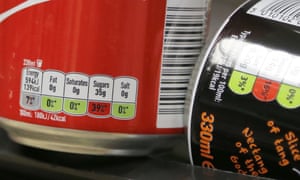
Drinks cans labelled with their sugar content.


Drinks cans labelled with their sugar content. Photograph: Frank Augstein/AP

While welcoming the reaffirmed commitment to the sugary drinks tax and the funding for school breakfast clubs and sport that it will facilitate, Kumar said there was an inexcusable failure to address the impact of marketing and in-store promotions.


“Some will say parents should be responsible for what their children eat,” he wrote. “Parents clearly have a key role, but as a father I know the pitfalls of pester power and how hard it can be for families to shun the tempting junk and ensure healthy food is always on the table.”


Kumar said restrictions on junk food adverts before the 9pm watershed could more than halve children’s exposure to them.


A Department of Health spokesman said: “Our obesity plan is world-leading, with more far-reaching and comprehensive measures than anything pursued by any other western government. Nevertheless, we will measure progress carefully and do not rule out further action if results are not seen.”


Theresa May"s first test was obesity strategy and she has failed, health experts say

20 Ağustos 2016 Cumartesi

The Observer view on the government’s childhood obesity strategy | Observer editorial

While the nation was enveloped in Olympics fever last week, celebrating the success of British athletes at the peak of physical perfection, the government published its long-awaited childhood obesity strategy. It was a disgrace, so thin on action it barely deserves to be labelled a strategy. It will condemn too many British children to a lifetime of health problems and a premature death.


One in three children leaves primary school overweight or obese, putting them at significantly greater risk of developing cardiovascular disease, cancer and type 2 diabetes later in life. Simon Stevens, the chief executive of the NHS, has described obesity as “the new smoking”; the health secretary, Jeremy Hunt, has labelled childhood obesity a “national emergency”; and the government’s chief medical officer, Sally Davies, has called on the government to include obesity alongside terrorism in its national risk planning. This is far from hyperbole: poor diet is the nation’s biggest premature killer, ahead of smoking and drinking, and costs the NHS around £6bn a year.


Last year, the government promised a “draconian” approach to tackling childhood obesity. Yet there were really only two significant measures in the watered-down plan. First, a sugar levy on soft drinks, already announced under David Cameron, which would have been very difficult for Theresa May to renege upon. While a positive step, this is unlikely to achieve anything like the progress needed without being part of a broader package of measures to cut children’s sugar and fat intakes. It is also likely to be tied up for years in the courts as it is subject to challenge by soft drinks manufacturers, if it is ever implemented at all. Second, the strategy set out measures to promote physical exercise, which, while uncontroversial, cannot alone counteract the impact of unhealthy diets.


The food industry is notorious for using friendly cartoon characters and online games to market directly at children


Just as telling is what’s missing. A year ago, Public Health England reviewed the evidence about what works in reducing obesity. It called for far-reaching measures: to reduce junk-food advertising directed at children, to limit the number of supermarket promotions on unhealthy foods, and to force manufacturers to gradually reduce the sugar content of high-sugar foods. None features in the government’s strategy: it simply sets out a voluntary approach to asking manufacturers to reduce sugar levels over time. This is the same approach adopted by former health secretary Andrew Lansley in his 2011 “responsibility deal”, which left it up to the food and drinks industry to voluntarily change its approach. Yet studies have shown it failed to work.


This is hardly surprising. There is a race to the bottom at work in our food industry. Packing foods with addictively delicious – and cheap – fat, salt and sugar is one of the fastest ways to a healthy profit. Once the worst offenders go down this road, conditioning our palates to crave more of the unhealthy in a way that puts paid to the idea of free consumer choice, others follow. There’s little point to one manufacturer taking action; consumers will simply switch away from their products. This is why enlightened members of the industry are pushing for a compulsory approach to reducing sugar and fat contents: they want to take action, but need a level playing field.


The food industry is notorious for using friendly cartoon characters and online games to market directly at children, pushing them to pressure parents into buying fat- and sugar-laden foods. It is known for misleadingly passing off products, such as breakfast drinks that contain more sugar than a can of cola, as healthy. There are parallels with the 1950s tobacco industry, which offered guarantees its products were safe that companies knew they could not make stand up.


Except this is even worse – this time, the target is young children. And food manufacturers are winning; children consume, on average, three times the maximum recommended amount of sugar. Tooth decay is the most common reason for children aged between five and nine to be admitted to hospital.


Obesity may be a national crisis, but it is a crisis we know how to address. The tragedy is that, prior to 2010, the UK was a world leader in nutrition policy. The previous Labour government devolved responsibility to the independent Food Standards Agency, insulating nutrition policy from heavy industry lobbying. The FSA led the way on the reformulation of food products, brokering industry-wide deals to get the industry to reduce salt contents. As a result, Britain was the first country in the world to successfully reduce salt intakes. It is an approach that has been copied around the world; countries such as South Africa, Chile and Argentina have applied it not just to salt, but sugar and fat, with great success.


Related: Theresa May’s climbdown on obesity is her first big mistake | Jackie Ashley


In 2010, the coalition government rubbished this approach. In response to industry lobbying, nutrition policy was restored to the Department of Health, with disastrous effect. Policy again became vulnerable to the powerful food and drinks lobby that, like the once-mighty tobacco industry formerly did, spends vast sums on influencing ministers and MPs. Companies that make billions from selling unhealthy food argue that if the government increases regulation of the industry, there will be a heavy price to pay in terms of job losses and economic output.


These arguments are easily demolished. The global bank Credit Suisse, hardly a bastion of anti-business sentiment, published a report calling for a sugar tax in 2013 and argued that it would have positive impacts on the economy in the long run. The only companies that greater regulation hurts are those that seek to make their money from pushing sugar. But what kind of society puts their economic interests over and above the health of our children?


When Theresa May stood on the steps of Downing Street last month, she pledged to the British public: “When we take the big calls, we’ll think not of the powerful, but of you.” Yet her government’s anti-obesity strategy echoes the costly vulnerability of governments around the world to big tobacco lobbying in the 1960s and 70s.


Damningly, it could not do more to promote the interests of the powerful at the expense of the health of our children. And it bodes terribly for other sectors of the economy in which regulation is needed to ensure decent businesses flourish and the cowboys don’t win out. Just five weeks into May’s premiership, capitalism has never looked less responsible.


Comments will be opened later today


The Observer view on the government’s childhood obesity strategy | Observer editorial

Will the government"s new childhood obesity strategy work?

Related: Childhood obesity: UK’s ‘inexcusable’ strategy is wasted opportunity, say experts


There has been a lot of criticism of the government’s new childhood obesity strategy for being “watered down”. What was it originally going to look like?


The government promised a strategy that would take “draconian” action, in the words of health secretary Jeremy Hunt last October, to tackle the very serious obesity epidemic in children. One third of children are overweight or obese by the time they reach 11 years of age. Obesity can lead to major health problems in later life, including heart disease, cancer and diabetes, and costs the NHS more than £4bn every year. NHS boss Simon Stevens has said obesity is going to bankrupt the service.


David Cameron made childhood obesity a flagship issue for his second term, putting officials in No 10 in charge, rather than the department of health. Public Health England (PHE) was asked to investigate the evidence and recommend a series of interventions. Top of the list were hitting supermarket promotions of junk food via multibuys and “bogof” (buy one get one free) offers, and curbs on TV ad for foods high in fat, salt and sugar before 9pm, which would affect family shows such as Britain’s Got Talent and the X-Factor. PHE also backed cutting the sugar and fat content of foods. It supported a tax on sugar-sweetened drinks, but said it would be less effective.


So what did we get?


Instead of this comprehensive strategy, the brief document published this week focused on just two things – reducing sugar consumption and increasing physical activity. There is not a word on advertising or price promotion. And instead of something “draconian”, the focus is on voluntary action, apart from the sugar tax, which had already been announced.


Industry is being asked to reduce the sugar content of foods that children enjoy by 20% by 2020. That is how the Cameron government’s earlier obesity initiative, the Public Health Responsibility Deal, worked. This was a voluntary agreement with food and drink companies to reformulate their foods, reduce portion sizes and so on, but not all companies joined in, and critics say it achieved little.


The British Retail Consortium, representing supermarkets and other outlets, wanted the strategy to make the cuts in sugar mandatory, citing the responsibility deal pledge on cutting salt, which some companies complied with while others did not. But the government has gone firmly down the voluntary road again. The sugar cuts will initially be made in children’s breakfast cereals, yoghurts, biscuits, cakes, confectionery, morning goods (such as pastries), puddings, ice cream and sweet spreads. That does nothing to address the issue of “hidden sugars” in ketchup, pasta sauces, baked beans and all sorts of ready meals, although the document says work will begin later on other foodstuffs.


At the heart of the strategy is the sugar tax, which had already been announced by George Osborne in March. That is only on soft drinks and does not come in for two years. If manufacturers lower the amount of sugar in their drinks, they will escape the tax.


What about fat in the diet?


There is nothing about fat in the strategy – it is all about sugar. But Sara Petersson, of data analysts Euromonitor, says: “It is becoming abundantly clear that replacing a critical ingredient of a product, or single nutrient in a diet, is neither an easy process for food companies nor a successful obesity strategy from a public health point of view.” She adds that “similarly to sugar, fat intake is also higher in diets of countries with higher overweight and obesity rates”. And she points out that replacing sugar with “natural” sweeteners such as honey or coconut sugar will make no difference, because they are just as high in calories.


But surely the measures to get children off the couch and more active will work?


There’s no doubt that children would benefit from more physical activity in all sorts of ways. It is good for mind and body. But it’s no cure for obesity. To burn off a Big Mac cheeseburger, fries and cola, an adult would need to walk for six hours, it has been calculated. All the evidence shows that exercise can help you maintain your weight – but not lose it.


Related: Childhood obesity strategy: not even an E for effort


And there is a question mark over whether children will actually end up running about more. Schools are to be asked to give them 30 minutes’ more physical activity each day. Parents and carers are to be requested to ensure children do a further 30 minutes every day. That will be a big ask for some families.


For a flagship government strategy, did it get the big push you would expect?


Far from it. Instead of a prime-ministerial launch, it was slipped out in mid-August just before the A-level results by the department of health, while Theresa May was on holiday in the Swiss Alps. It would appear that obesity is not the priority it was for David Cameron.


Will the government"s new childhood obesity strategy work?

17 Ağustos 2016 Çarşamba

"Weak" strategy on childhood obesity is wasted opportunity, say experts

Medical experts and campaigners have criticised the government’s childhood obesity strategy as weak and embarrassing, and accused policymakers of throwing away the best chance to tackle the culture of unhealthy eating that is crippling the NHS.


The government’s measures, centred on the sugar tax announced by George Osborne in March, rely on voluntary action by the food and drink industry and are shorn of any restrictions on junk food marketing and advertising.


The industry, which has lobbied hard against regulation for months, has undertaken to reduce by 20% the amount of sugar in products such as cereals, desserts, yoghurts and sweets. The strategy document makes clear that manufacturers that reduce sugar in their products will escape the sugar tax, which is not due to come in for two years.


The money accrued by the levy on sugary drinks will go to fund breakfast clubs and sport. Schools will be asked to give pupils an extra 30 minutes a day of physical activity, and parents and carers will be encouraged to get their children moving for a further 30 minutes.


Citing the triumphs of Team GB at the Olympics and the example of St Ninians primary school in Stirling where children walk or run a mile every morning, the public health minister, Nicola Blackwood, said: “Initiatives like this will make a huge difference to children’s health and fitness and we hope our new measures on school sport will help to create future Team GB Olympians.”


But the strategy contains neither of the two measures that Public Health England (PHE) said would have the most impact on the childhood obesity epidemic.


A third of children leaving primary school are overweight or obese and at risk of a lifetime of health problems including diabetes, heart disease and cancer. Asked to investigate the issue and make recommendations on what should be done, PHE backed a sugar tax and reductions in sugar content of foods but prioritised two other measures:


  • Banning price-cutting promotions of junk food in supermarkets, such as multipacks and buy one get one free, as well as promotion of unhealthy food to children in restaurants, cafes and takeaways.

  • Restricting advertising of unhealthy food high in salt, fat and sugar to children through family TV programmes such as Britain’s Got Talent and The X Factor, as well as on social media and websites.

Neither appears in the strategy.


Campaigners likened the strategy to the responsibility deal brought in by Labour and continued throughout David Cameron’s premiership, which was widely condemned as a failure. Food and drink companies were encouraged to pledge to make their food healthier by cutting salt, fat and sugar. There has been little in the way of monitoring, but health groups believe the deal has not significantly contributed to improving the nation’s diet.


“After the farce of the responsibility deal where Andrew Lansley made the food industry responsible for policing themselves, it is sad to see that this is just another imitation of the same responsibility deal take two,” said Prof Graham MacGregor, chairman of Action on Sugar and Consensus Action on Salt and Health.


“It is an insulting response to the UK crisis in type-2 diabetes, both in children and adults. This will bankrupt the NHS unless something radical is done.”


Action on Sugar called on the prime minister to rescue the childhood obesity strategy. “Theresa May launched her prime minister campaign by saying that she wanted to tackle health inequalities, obesity being a major factor in this,” said Jenny Rosborough, the group’s campaign manager and a registered nutritionist. “The UK should lead the world in tackling obesity and type-2 diabetes and this is an embarrassing and inexcusable waste of a fantastic opportunity to put the nation’s health first.”


Although the childhood obesity strategy was a flagship initiative of Cameron’s and originally the work of staff in Downing Street, May has chosen not to launch it. It has been published by the Department of Health while she is on holiday in Switzerland.


The Children’s Food Campaign, a member of the Obesity Health Alliance, which includes charities and health organisations such as the royal colleges, fought hard for tough action on cut-price junk food and a ban on TV adverts for unhealthy food before 9pm, when viewing by children tends to drop off.


“Price promotions were one of the big issues that Public Health England majored on,” said Malcolm Clark of the campaign. “It looks like the government is failing to listen to its own public health experts.


“Industry likes to paint us as nanny-statists, but PHE is not a campaigning organisation. They have done a very thorough literature review of peer-reviewed evidence and come up with a recommendation on that.”


Sir Harpal Kumar, Cancer Research UK’s chief executive, said: “While encouraging more exercise in schools is to be welcomed, the evidence is compelling that we also need restrictions on the marketing and promotion of unhealthy foods. We need stronger action to protect children from junk food advertising if we want to make a difference. So for the government to ignore these aspects is inexcusable.


“The government had a chance to protect the next generation from diseases like cancer and reduce the crippling burden of obesity on the NHS. We need the game-changing strategy it promised a year ago. As it stands, our children will witness a rising tide of ill-health from obesity well into the future.”


The strategy document nods to the thinking underlying the focus on voluntary measures and physical activity. It aims to “significantly reduce” childhood obesity within 10 years, it says. “We are confident that our approach will reduce childhood obesity while respecting consumer choice, economic realities and, ultimately, our need to eat.”


The president of the Royal College of Physicians, Prof Jane Dacre, said: “I am disappointed that after such a long wait for the childhood obesity strategy, the government has published a downgraded plan.”


The British Medical Association described the strategy as weak. “Given the UK has the highest level of obesity in western Europe, with one in three children overweight or obese by the time they leave primary school, the government should be doing everything in its power to tackle this problem. Instead it has rowed back on its promises by announcing what looks like a weak plan rather than the robust strategy it promised,” said Prof Parveen Kumar, the BMA board of science chair.


“Although the government proposes targets for food companies to reduce the level of sugar in their products, the fact that these are voluntary and not backed up by regulation, renders them pointless. Targets are also needed to reduce levels of saturated fat and salt in products – these must be backed up by regulation.


“Poor diet has become a feature of our children’s lives, with junk food more readily available, and food manufacturers bombarding children with their marketing every day for food and drinks that are extremely bad for their health. It is incredibly disappointing that the government appears to have failed to include plans for tighter controls on marketing and promotion.”


The British Soft Drinks Association, meanwhile, said it was unhappy that the sugary drinks levy was going ahead. “Given the economic uncertainty our country now faces, we’re disappointed the government wishes to proceed with a measure which analysis suggests will cause thousands of job losses and yet fail to have a meaningful impact on levels of obesity,” said Gavin Partington, its director general.


He said manufacturers were already cutting the sugar content of their drinks.


Ian Wright, director general of industry body the Food and Drink Federation, said:
“The proposed tax on soft drinks is a disappointing diversion from effective measures to tackle obesity. Soft drink companies are already making great progress to reduce sugars from their products, having achieved a 16% reduction between 2012 and 2016.


“However the target set for sugars reduction in the plan is flawed. It focuses too strongly on the role of this single nutrient, when obesity is caused by excess calories from any nutrient. Moreover the target is unlikely to be technically practical across all the selected food categories.


Reformulation is difficult and costly: there are different challenges for each product; recipe change can only proceed at a pace dictated by consumers. We will of course do everything we can in the next six months to work towards a practicable reformulation solution while continuing to urge the government to adopt a ‘whole diet’ approach.”


"Weak" strategy on childhood obesity is wasted opportunity, say experts

Childhood obesity strategy may be watered down, campaigners fear

Health campaigners fear that the government’s childhood obesity strategy, expected this week, has been watered down under relentless pressure from the food and drinks industry and will prove ineffective in changing the habits of an overweight nation.


The strategy is supposed to be based on recommendations from Public Health England after an investigation into the measures that would work best. A third of children are overweight or obese by the time they leave primary school.


PHE urged curbs on buy-one-get-one-free and multipack price promotions on crisps, sweets and other junk foods in supermarkets, and came out in favour of tackling junk food advertising to children. It supported a tax on sugary drinks, although it said the other measures would work better.


Health groups fear industry lobbying may have prevailed and that the measures have at least been diluted, although the levy on sugary drinks – announced in George Osborne’s last budget in March – is expected to go ahead. Details of the tax are expected to be announced by the Treasury in a consultation document to be published this week alongside the childhood obesity strategy.


Critics are concerned about the timing of the launch. David Cameron made childhood obesity a personal issue and the strategy was being put together inside No 10. However, it is now expected to appear while Theresa May is on holiday in Switzerland, suggesting she will not champion it in the same way.


The Children’s Food Campaign, a member of the Obesity Health Alliance, which includes charities and health organisations such as the royal colleges, is concerned by suggestions that the tough action they wanted on cut-price junk food and TV advertising will not happen.


Leaks suggest there will be no ban on multi-buy promotions in supermarkets. “Price promotions were one of the big issues that Public Health England majored on,” said Malcolm Clark, of the campaign. “It looks like the government is failing to listen to its own public health experts.


“Industry likes to paint us as nanny-statists, but PHE is not a campaigning organisation. They have done a very thorough literature review of peer-reviewed evidence and come up with a recommendation on that.”


The Children’s Food Campaign has lobbied hard for a ban on adverts for foods high in salt, fat and sugar during family TV programmes. A ban on such ads on children’s TV is not enough, they say, because of the huge numbers of children who watch family programmes such as Britain’s Got Talent and The X Factor. They have called for a 9pm watershed, at which time viewing figures for under-15s drop.


The food and drink industry has been strongly opposed to a ban on such adverts before 9pm because it would cover programmes watched by millions of viewers.


Tam Fry, patron of the Child Growth Foundation and spokesperson for the National Obesity Forum, said that if the hoped-for measures did not come about, “it will spell disaster for obesity. It will not be the game-changing document promised by [the health secretary] Jeremy Hunt with draconian measures to tackle the epidemic, but a limp repetition of the flawed responsibility deal.


“The government’s own senior health advisers have called obesity a national risk, requiring a Cobra-style crisis management response. Apart from the government appearing to be resolute about a sugar levy, its intentions are light years away from what is needed.”


Childhood obesity strategy may be watered down, campaigners fear

31 Mayıs 2014 Cumartesi

ASCO 2014: How Scientific Collaboration Can Boost Our Strategy To Fighting Cancer

Though overall age-adjusted death rates for cancer in the US have declined in the previous decade, inform that to about half a million individuals who will get a cancer diagnosis this year, according to data from the American Cancer Society (ACS) and the Nationwide Cancer Institute (NCI). The shock and emotional soreness related with the 6 letter word are devastating.


With considerable national and personal expenditures in grownup cancer investigation leading to higher survival and high quality of daily life for some cancers (breast), accomplishment at treating other cancers (pancreatic) has not yet been attained. The unique biology of specified tumors and their potential to mutate has largely prevented researchers from unlocking the crucial to obtaining larger 5-12 months survival charges.


With new techniques obtainable to fight cancer, like a novel strategy recognized as “immune modulation” helping to accomplish substantial gains in longevity for patients with melanoma and specific varieties of lung cancer, it is crucial to nevertheless recognize that a lot operate demands to be accomplished in our fight against cancer.


David H. Koch Institute for Integrative Cancer...

David H. Koch Institute for Integrative Cancer Investigation (Photo credit: Wikipedia)


Keeping this in mind, academic institutions have begun to comprehend the worth of data sharing and scientific collaboration in an try to discover new treatment options and modalities to approach cancer, both in kids and grownups. The days of study groups competing towards one particular one more hunting at related conceptual puzzles is now getting replaced by unified approaches with so-named “dream teams”–groups of focused researchers whom freely collaborate between institutions–pioneered by the organization Stand Up To Cancer, (SU2C) according to Philip Sharp, Ph.D, Nobel Laureate, Institute Professor at MIT’s David H. Koch Institute for Integrative Cancer Investigation, and Chair of the Scientific Advisory Committee for SU2C.


Unknown“This superb concept of S2UC– of collaboration and bringing together teams of scientists that compliment one particular other– and raising money by appealing to the public and massive donors changed the fashion of cancer analysis by making it far more collaborative and interactive discipline,” explained Sharp. “I located the vision compelling and knew this would be a really public face of cancer research and wanted it to be as higher a quality and have as large an affect as it possibly could.”


Dr. Sharp PhotoAs Sharp explains, SU2C appeals to professionals in the area of cancer study and standard science relevant to a targeted concept. It is not meant to duplicate fundamental science work completed by NCI or sophisticated cancer therapeutics investigations in the personal sector, as Sharp explained, particularly in the context of discussing translational investigation which ideally has a shorter time to reach patients.


“We have tried to uncover the very best teams that have representatives from those communities and then leverage them with what we feel are proximal breakthroughs that have not been moved to translation as fast as attainable and put money there and make that come about,” described Sharp.  “People who are donating this income want to see the advantages of these new approaches as fast as feasible.”


Although the conceptual theme of immune modulation was component of the early perform of the early dream teams in accordance to Sharp, the notion of “personalized medicine”–designing therapeutics following identifying a certain mutation in a cancer cell has been a viable technique going forward. “We have also produced a significant investment in the immune strategy to cancer analysis as nicely.”


Sharp’s research in the preliminary stages of his profession targeted on the molecular biology of gene expression and RNA splicing in cancer cells. In 1977, he elucidated the mechanism of RNA splicing, and identified that genes contain so-known as “nonsense” segments which are edited or eliminated by cells as they procedure genetic data. This approach is integral to the comprehending of the genetic basis for cancer and illness progression, and Sharp was subsequently awarded the 1993 Nobel Prize in Physiology or Medication for this discovery. His research is now  focused on comprehending how specific molecules of RNA can activate certain genes, referred to as RNA interference. This has altered how researchers strategy cell biology and may be a new supply of therapeutics in the long term.


Sharp’s dedication to SU2C more than the previous six many years, has led to a adjust in the paradigm of how we technique cancer remedy. As co-founder of Biogen (now Biogen Idec), and Alnylam Pharmaceuticals, an early stage therapeutics firm and Magen Biosciences Inc., a biotechnology organization developing compounds to make certain well being of human skin, Sharp has been a pioneer in selling the use of molecular biology and genomics, and now “convergence,” as approaches to more efficient drug growth.


And, as he detailed in a white paper from MIT in 2011, the concept of “convergence”–the merging of existence sciences, physical sciences and engineering is now generally viewed as an critical method to perform meaningful investigation to obtain viable solutions to cancer biology and therapy in 2014.  As Sharp emphasizes, convergence represents the so-named threerd “frontier” in the progression from the first two milestones accomplished in the past thirty many years: the advent of cell and molecular biology and genomic sequencing.


Employing such “dream teams” to method breast, pancreatic, melanoma and lung cancers fosters collaboration amid huge academic institutions, even though promoting the concept of “translational medicine” as an efficient way to carry laboratory advances to the bedside, in accordance to Sharp. For this novel strategy,  S2UC researchers are viewed as leaders in their strategy to streamlining cancer analysis.


Unknown-1


St. Jude Children’s Investigation Hospital, a worldwide leader in pioneering pediatric cancer diagnosis and therapy, is also a participant in shared information and collaboration among other institutions, in accordance to Leslie Robison, Ph.D, Chair of the Division of Epidemiology and Cancer Handle, and Associate Director for Cancer Prevention and Control at St. Jude Children’s Research Hospital.


“One of the major charges of our institution is to deal with patients, perform substantial quality investigation, but to make positive we disseminate that study as broadly and widely as feasible,” explained Robison.  “We help to disseminate and facilitate getting access to our information.”


ASCO 2014: How Scientific Collaboration Can Boost Our Strategy To Fighting Cancer

17 Mayıs 2014 Cumartesi

Tories strategy Labour MP Frank Area to aid tackle NHS deficit

Frank Field

Frank Area is drawing up proposals that he says will assist to fill a looming £30bn a 12 months ‘black hole’ in NHS funding. Photograph: Martin Godwin for the Observer


A Tory minister has asked Labour MP Frank Field to meet the wellness secretary, Jeremy Hunt, to talk about his ideas for raising national insurance contributions to pay for the NHS, in a sign that the Conservatives are considering radical alternatives to plug the large funding gap.


Area told the Observer that he was approached by the minister, who explained the economic crisis in the NHS needed to be addressed and that he was right to be floating tips on how the service could be maintained and put on a sound monetary footing for potential generations.


Discipline informed the minister he would be willing to meet the health secretary, but not ahead of he had held talks with shadow chancellor Ed Balls about his proposals, which he did last Tuesday.


According to Discipline, the minister also said that the financial crisis in the NHS had been the subject of discussions at large ranges in government in recent weeks.


Discipline is drawing up proposals that he says will aid to fill a looming £30bn a 12 months “black hole” in NHS funding that will arise by 2020.


With no action, he says, a Labour or any other government would be faced with the prospect of having to make swingeing cuts across the other public providers, far deeper than envisaged so far, to maintain the NHS in anything at all like its existing form.


Field mentioned: “A Conservative minister approached me and mentioned they had been speaking about the NHS’s financial crisis and my concepts on how to deal with it inside the department.


“The minister stated it would be a very good concept to go along and talk to the wellness secretary about it and agreed that something had to be carried out.”


Some Conservatives now feel that drastic action wants to be taken on NHS funding, and regret that David Cameron has not proposed some kind of NHS tax to underpin his dedication to sustaining the present support free at the point of use. The chancellor, George Osborne, however, is identified to be strongly opposed to any move that would compromise a Tory standard election message based mostly close to the thought of decrease taxes, and is said to believe that radical alternatives can be delayed right up until the up coming parliament.


Latest figures, based on information from NHS England and the Nuffield Believe in and made by the Commons library, suggest that NHS costs alone will go from £95bn a yr now to far more than £130bn a 12 months by 2020.


As a end result, Discipline argues that a one% rise in nationwide insurance coverage, equivalent to that ordered by Gordon Brown to shell out for enhanced spending on the NHS in 2002, would be welcomed by the public if it was guaranteed that the cash would be invested especially on health and social care.


In his meeting with Balls, which he described as “extremely friendly and constructive”, Discipline explained that any rises in national insurance coverage on best of an first emergency improve, must be matched with an accompanying pledge to decrease income tax by the very same amount – which means that deep cuts would have to be created elsewhere.


The Observer revealed final month that Field’s concepts were getting fed into Labour’s policy review. Balls has been opposed to such a move, fearing it would leave Labour open to charges that it is returning to a high-tax agenda. At Tuesday’s meeting, Discipline explained how radical his proposals are – a progressive nationwide insurance base to raise revenue, to be matched by tax cuts.


Signs, nevertheless, that the Tories are interested in the Field prepare suggests they could be examining ways to outflank Labour, and depart it vulnerable on an concern regarded as one of its strongest.


Discipline stated the additional NI contributions need to go into a devoted fund that would be run as a mutual, with elected members negotiating every year’s level of contributions. “What we require is a new settlement for the NHS, an NHS mark two, that will reassure people that the most popular public support is protected for long term generations.” He is now concerned that unless of course Labour moves on the situation, the Tories will steal the thought. Area proposed the sale of council homes in 1979, only to see Margaret Thatcher take up the thought and flip it into one of her most emblematic policies.


Labour is presently committed to combining the budgets for wellness and social care but the party’s public place as a result far has been that it will not appear at a certain NHS tax.


Shadow wellness secretary Andy Burnham is wary of rising NI in a way that would mean younger men and women in function possessing to pay out the care charges of these previously of pensionable age.


He favours other options, which includes a prepare floated by Labour before the last election for a levy of 10% to 15% on people’s estates soon after death to pay out care costs. To tackle Burnham’s issues, Discipline proposes that people now over pension age would be asked to carry on to pay NI, if they wished cost-free care. Otherwise, they would have to pay below the present method.


Tories strategy Labour MP Frank Area to aid tackle NHS deficit

21 Nisan 2014 Pazartesi

Researchers uncover strategy to dealing with negative memories

“Often we dwell on how sad, embarrassed, or harm we felt throughout an occasion, and that tends to make us really feel worse and worse. This is what takes place in clinical depression-ruminating on the unfavorable elements of a memory,” Dolcos mentioned.


“But we found that as an alternative of considering about your feelings for the duration of a adverse memory, seeking away from the worst emotions and pondering about the context, like a buddy who was there, what the weather was like, or anything else non-emotional that was element of the memory, will rather effortlessly consider your thoughts away from the unwanted emotions related with that memory.


“Once you immerse yourself in other particulars, your thoughts will wander to anything else entirely, and you won’t be centered on the negative emotions as significantly.”


The technique is a extremely promising substitute to other coping mechanisms this kind of as suppression or reappraisal.


“Suppression is bottling up your emotions, attempting to place them away in a box. This is a technique that can be successful in the quick term, but in the prolonged run, it increases nervousness and depression,” says Dolcos.


“Another otherwise successful emotion regulation approach, reappraisal, or searching at the situation differently to see the glass half full, can be cognitively demanding.


“The technique of focusing on non-emotional contextual information of a memory, on the other hand, is as simple as shifting the emphasis in the mental movie of your recollections and then letting your mind wander.”


The approach can be powerful in both the quick term and the long phrase as use of the mechanism can lead to a reduction of the memory’s emotional effect. The review was carried out by initially asking the participants to describe their most adverse and good memories. Following numerous weeks, they were given cues to trigger memories although getting scanned in a magnetic resonance imaging (MRI) machine. They have been asked to focus on the emotion and then also the context of the memory.


“Neurologically, we wanted to know what took place in the brain when individuals had been employing this basic emotion-regulation method to deal with damaging recollections or boost the influence of optimistic recollections,” explained report co-writer Ekaterina Denkova. “1 factor we discovered is that when participants were targeted on the context of the occasion, brain regions involved in basic emotion processing were functioning with each other with emotion management regions in buy to, in the end, decrease the emotional effect of these memories.”


Researchers uncover strategy to dealing with negative memories

1 Nisan 2014 Salı

NHS fees strategy is a turning point in privatisation

protest agains the health and social care bill

A protest in 2011 towards the health and social care bill, which ‘opened the floodgates for complete-scale privatisation of the NHS’. Photograph: Demotix / melpressmen/Demotix/Press Association Pictures


The kite flown by a rightwing thinktank that everyone must have to shell out for access to healthcare (£10 each and every can conserve the NHS, 31 March) marks a critical turning point in switching in the direction of a fully paid-for overall health services. This approach has been lengthy planned. 1st Blair encouraged and then pressured NHS hospitals into turning into independent basis trusts, self-standing suppliers within a competitive industry. Cameron took this considerably additional by ruling that all NHS functions would be open to tender by any experienced supplier. The Lansley overall health and social care bill, hatched in deepest secrecy before the 2010 election with not a word about it in the Tory manifesto so that it had no electoral mandate, opened the floodgates for full-scale privatisation of the NHS. But usually the mantra was repeated that the NHS would continue to be “cost-free at the stage of support”. Now that assurance is being kicked away.


The thinktank authors decry the NHS as “an outdated, cosseted and unaffordable healthcare technique”. They do not mention that the Tory government has deliberately imposed a £20bn reduce in NHS funding in excess of the existing five-12 months time period to place it below intolerable strain and perhaps breakdown in purchase to pave the way for a gradual switch to a entirely paid-for personal support, which has often been their secret aim, just like prior to 1948. Nor do they mention that the NHS, at a price of 8% of GDP, is the most expense-productive in the world, half the comparative expense of the private US healthcare technique.


We now see why the Tories have been so keen to demean the NHS on each and every event in excess of the past couple of months. Cue the want to junk the previous, failing NHS and announce the dawn of a brand-new, burnished private healthcare method – and at a bargain price of £10 a month. But keep in mind tuition charges: capped at £3,000, then trebled. If every Uk grownup paid £10 a month, this new tax would increase £5.4bn. Treble that, or a lot more, and we’re speaking significant cash for the healthcare privateers.
Michael Meacher MP
Labour, Oldham West and Royton


• How dare Norman Warner and Jack O’Sullivan denigrate the NHS in such strident terms? I refer them to the meticulously documented report in August 2013 by Dr Don Berwick, who was commissioned to investigate patient security in the NHS. Berwick recognised that healthcare is political and that the existing sustained denigration of the NHS is an ideological campaign which smears “a globe-leading instance of dedication to health and healthcare as a human correct” that should be emulated, and that even though the NHS does have patient safety troubles, so “does each other healthcare technique in the world”. Noting that huge changes are needed, Berwick also says the achievements of the NHS are enormous and suggests that “drama, accusations and overstatement” are ideal avoided.


Reform, which published Warner and O’Sullivan’s report, believes that “by liberalising the public sector, breaking monopoly and extending option”, high-high quality solutions can be made available to absolutely everyone. Current experiences with private companies to the NHS in Cornwall and Suffolk, for instance, indicate otherwise. Reform was set up by a Conservative MP and a Tory strategist. The membership of Reform’s advisory board displays that it is funded by private businesses, with chief executives, chairmen and directors of main pharmaceutical organizations, worldwide investment banking institutions, and accountancy firms constituting the vast majority of board members. Could there be an ideological or probably even some other agenda right here?
Gwen Parr
Pulborough, West Sussex


• It is very misleading to describe the thinktank Reform as “independent”. In 2012, its leading six funders incorporated Prudential Insurance coverage, KMPG (consultants concerned with the NHS), McKesson (a pharmaceutical distributor and healthcare data business), Baxter (a private healthcare company) and BMI (which runs 66 hospitals and treatment centres in the country). These organisations all have a vested curiosity in the tendering out and privatisation (“reform”) of the NHS and in reviews that help the idea of charging for NHS companies.
Sean de Podesta
Brighton


• It would have been excellent if the Guardian had described Norman Warner’s and Reform’s vested interest in criticising the NHS. Warner is an advisory board member of Synlab, a German company involved in NHS privatisation, although Reform is funded by BMI Healthcare, Serco and Sodexo – organisations that have significantly to acquire from the break-up of the heath services (hat-tip to @SolHughesWriter on Twitter for this data).
Ian Sinclair
London


• The suggestion of an NHS membership fee is the newest instance of weird and unsocial reasoning. Folks apparently won’t place up with tax rises to assist the NHS so let us complicate matters by charging charges. How does that help – except if the motive is to exclude these unable to shell out the fee from NHS solutions? The denigration of tax leads to decrease taxes, major to reductions in public services, which leads to the wealthy paying for private medicine, personal education and, one day no doubt, private street lighting and refuse collections, leaving the dispossessed with ever-dwindling providers.
Peter Cave
London


• Alternatively, Warner and O’Sullivan could propose a .05% rise in income tax, to raise approximately the exact same sum, but with no added collection charges, as opposed to their scheme, which, if it is something like road tax, would lose over half the amount collected in administration.
Rod Parfitt
Cleeve, Somerset


• I go through with curiosity your report on a potential £10 per month membership for the NHS. As a surgeon in the NHS, 1 of the key issues I encounter with planned and emergency surgery is weight problems. Most obese patients are aware of the overall health consequences of their weight problems nevertheless, they will not look to know of the hazards they encounter for stomach surgical treatment. Simply moving them on and off an operating tables can be hazardous for the employees alone. The dangers of surgical procedure and submit-operative problems can lead to a prolonged recovery with a threat of main disability. Possibly there need to be an elevated membership fee in line with BMI?
Kathryn McCarthy
Consultant surgeon, Bristol


• Great juxtaposition of headlines on page two on Monday: “Spend £10 a month to use the NHS” and “Poorest properties face £120 council tax rise as security net goes”.
Jeanne Warren
Garsington, Oxfordshire


• The wellness sector regulator Check is committed to parity of esteem for bodily and psychological health providers, and is not recommending that funding for psychological overall health providers need to be cut by twenty% much more than for acute hospitals (Mental health solutions want targeted investment, not even far more cuts, 26 March). Beneath the NHS payment technique, national rates are not set for psychological health services. Pricing choices for psychological wellness companies are manufactured at regional level by commissioners and suppliers, who are anticipated to have regard to the national principles but can make their very own value adjustments where there are very good causes to do so.
Professor Ric Marshall
Director of pricing, Keep track of


NHS fees strategy is a turning point in privatisation

6 Mart 2014 Perşembe

ten Vital Well being Strategy Positive aspects, 2013


ten Vital Well being Strategy Positive aspects, 2013

28 Şubat 2014 Cuma

The Undiet and Small Alterations Strategy to Wellness

As a extended time overall health nut I like to show people the rewards of a few factors of living a healthful way of life. We all are mindful of the outstanding alterations that happen to the body by just adding more fruits and vegetables to the diet regime, reducing meat consumption and limiting sodium intake. These adjustments have served my household well. Here are a number of other straightforward adjustments you may apply to dwell healthier and a lot more energized.


Commence a Little Natural Garden 


Natural generate is extremely lower in harmful pesticides. Because standard farming depletes soil of healthy microbes that give plants required nutrients for a healthful diet, eating organic food is the only way to get optimum nutrients. Allergy symptoms, problems digesting gluten, and other wellness troubles are prevalent due to the fact of inefficient soil.


Start off little by getting a tiny planting box and expand two of your favourite greens together. Maintain in thoughts that specific greens and herbs grow much better with each other. Try out these pairings:


  • Basil and tomatoes

  • Beets and garlic

  • Carrots and onions


Sugar Snaps and Strawberries: Simple Remedies for Producing Your Very own Little-Space Edible Garden

Get on an “Undiet”


Fad diets may aid you lose bodyweight, but they are challenging to follow and could impact your wellness in the long run. You must adjust your way of life steadily and adopt a nutritious diet plan. Eating healthier is about residing a healthier lifestyle for lengthy-term outcomes, NOT getting a swift repair for a lifetime of bad living routines. The best way to lose bodyweight is to consume a plant based diet. I eat 2-three servings of veggies every single day and drink natural beet and spinach juice.


Exchange Junk Foods with “Healthy Junk Food”


About nine in 10 grownups eat junk food each and every day. French fries, potato chips, and processed snacks are rich in saturated excess fat, salt, sugar and preservatives, so they should be averted at all charges.


  • Change potato chips with homemade kale chips or pickles.

  • Change cookies or brownies with baked sweet potatoes sprinkled with Himalayan salt or sea salt.

  • Substitute sour cream with fresh kefir mixed with Himalayan salt or sea salt.


Improve Bowel Overall health by Detoxing


Most people really don’t speak about the importance of getting regular bowel movements. It’s needed for excellent health and is how your entire body gets rid of harmful toxins.  If you eat plenty of fresh greens then there is no want to do a heavy detox. If you eat a great deal processed foods then I advise detoxing each two months.


Drink half a gallon of water a day. Drink filtered water with fresh organic lemon juice or herbal tea (with no sugar). Drink 8 ounces 1st issue in morning ahead of you consume your 1st meal.


  • For normal bowel movements drink a glass of water mixed with a teaspoon psyllium husks each and every day.

  • For detoxing soon after a spell of consuming poorly, drink 4 cups of scorching water with lemon and fresh cayenne pepper for two-3 days. (This is a modified model of the Master Cleanser diet program which involves employing Grade B maple syrup.)


 Ditch the Hormones in Meat


If you’re a meat eater, try out to cut consumption by 50 % and change with raw greens. Cutting down on how considerably meat you eat will support you afford to eat only organic farm-raised chicken or beef from a neighborhood co-op or farm to keep away from hormones. Hormones flood the female systems with extra estrogen and brings about plenty of problems. It leads to youthful ladies to start menstruation as younger as 9 years old.  Hormones can lead to uterine fibroids.   Eat bison considering that it has less fat and calories than beef. Each after in a even though I’ll eat a hamburger. I eat chicken possibly as soon as every single two months.


Consume Fish Responsibly


Eat at least two servings of (ideally), wild caught fish a week to stop heart disease, diabetes and large cholesterol. These fish are higher in omega-three fatty acids:


•           Mackerel


•           Salmon


•           Sardines


Take care not to consume the following fish due to overfishing:


•           Bluefin Tuna


•           Orange Roughy


•           Grouper


 Fresh and Raw Are Very best


Fresh, natural raw veggies are the most nutritious way to accomplish wonderful well being. Processed foods include trans-fats and saturated fats that can ruin your excess weight reduction efforts and cause cardiovascular difficulties. Stay away from purchasing canned or packaged meals. Twice a week I eat only mostly raw veggies with roasted veggies in the mix.


Dee Doanes is the founder and editor-in-chief of Health Plus Type, an option overall health lifestyle website. She’s passionate about spreading the philosophy of the entire body, thoughts, and spirit connection. Her motto is, “Be free, be open, be satisfied!”


The Undiet and Small Alterations Strategy to Wellness

5 Şubat 2014 Çarşamba

Obamacare: Go through Your New Strategy Cautiously

Right here at the workplace we’ve been watching Obamacare unfold. I’ve reported to you some of the successes: decreased premiums, closing of a health care charity due to decreased need. While it seems most likely that a lot more Americans will have accessibility to well being insurance coverage, this isn’t the same as access to care.


In general I really do not perform with HMOs but for a variety of reasons I’ve caught with BCN, Blue Cross Blue Shield’s HMO. They are reasonably straightforward to perform with and my individuals look pleased with them. But some of my sufferers who signed up for BCN this yr are obtaining out I’m not on their strategy. When ACA kicked in, BCBS created a bunch of new insurance merchandise that have equivalent names, and some of my sufferers picked the a single I’m not portion of.  I asked a patient to send me data on which medical professionals he can see.


If a patient even bothers to read through the listing of medical doctors, there is no way for them to know what I noticed right away: their new well being care plan is fundamentally a private model of Medicaid.  The listing of medical doctors had numerous professionals and hospitalists but few major care medical doctors. Most of the PCPs that have been listed had been clinical supervisors, overseeing resident physicians in training.


Blue Cross is getting sensible by limiting which medical professionals the sufferers can see. This will assist them handle fees. It also means that these sufferers will have constrained entry to their doctors in contrast to pricier ideas. The upside is that patients who were previously uninsured can now be covered properly enough. Men and women accustomed to similarly-named strategies from earlier years might be in for a shock. In exchange for reduced premiums, they’ve provided up a great deal of selection.


As far more Americans get insurance coverage, they are going to see what our shortage of main care medical professionals signifies in the trenches. If we’re significant about caring for far more people, we have to get critical about creating more of the proper variety of medical professional.


Remain tuned.


Obamacare: Go through Your New Strategy Cautiously

31 Ocak 2014 Cuma

NHS Alter Day is about a various strategy to leadership | Interview with Jackie Lynton

Jackie Lynton

Former mental wellness nurse Jackie Lynton is element of the core leadership crew for this year’s Modify Day on 3 March 2014.


In March, personnel across the NHS will be asked to make pledges to improve patient care, as element of the second-ever NHS Change Day.


The initial NHS Adjust Day took area in March 2013 as a notion that sprang from frontline staff. It has been described as the biggest ever well being and care social movement, and one of the unusual aspects of this grassroots movement is that it has no single figurehead, but aims to make healthcare workers themselves leaders of adjust.


But of course, such a huge day can not happen on its very own. Former mental well being nurse Jackie Lynton is a single of the members of the core group assisting organise this year’s Change Day on three March 2014, alongside emerging leaders inside the NHS.


Lynton sees her role as supporting and taking guidance from individuals on the frontline and says it really is unhelpful when men and women describe her as the leader of Alter Day. “We function in a hierarchical organisation,” she says. “Creating a social motion inside a hierarchy is difficult sufficient. For me to then stand up and say I’m the leader of Modify Day absolutely requires away from the truth that it’s a grassroots movement.”


Lynton is head of transformation for the NHS Horizons staff at NHS Enhancing Good quality, a team “on the edge of the organisation rather than at the core centre”, targeted on encouraging new trends and challenging the standing quo. She received involved with this year’s Modify Day when she noticed the influence of the very first event last year.


“As soon as I heard about it I just believed in it,” she says. “I considered this is precisely what we want to be undertaking in terms of mobilising. It came at a time when the NHS necessary that hope, that determination – a various approach to change. Modify from the bottom up.”


At 189,000 on the web pledges, the response to the first NHS Alter Day in 2013 was unprecedented. The timing was optimum the NHS had been blighted by a series of higher profile scandals in latest many years, like the inquiry into “appalling” requirements of care at Stafford Hospital – and employees morale was sinking.


Modify Day, which has been presented by some individuals as a backlash to “unwell-believed out NHS reforms”, does have its critics. But Lynton counters the suggestion that pledges to improve patient care will not produce lasting modify, saying that a snapshot survey undertaken following final year’s Change Day showed 50% of pledgers explained their actions had a prolonged phrase influence on them or their organisations.


Last year’s pledges have been varied: Change Day co-founder Dr Damian Roland pledged to taste the paediatric medicines he prescribes to recognize better what his young sufferers are going by way of some NHS employees pledged to have a cup of tea with patients who never receive a lot of site visitors market study company MRUK pledged to set up a pc on Change Day exactly where staff could sign up for blood, marrow and organ donation.


Lynton herself manufactured three pledges – to spend some time on the front line, to assist boost patient care at her neighborhood GP practice, and to guarantee hierarchy never will get in the way of patient care.


This year the core leadership group is hoping for 500,000 on-line pledges from individuals, organisations or teams. But Lynton’s favourite pledge from 2013 was not even place up on their web site. A second-yr student nurse from York galvanised her peers to set up a ward simulation – everybody place their pyjamas on and played individuals and nurses.


This gave the college students a deep understanding of what it’s like to be a patient – from how it feels when an individual is dying in the next bed to the devastating effect it can have when somebody asks for details and they are fobbed off with a leaflet. The University of York has now taken the simulation on as component of their educating programme, and several of the pupil nurses have turn out to be part of Modify Day’s core leadership crew.


“They received so into it it grew to become so true to them. What they learned will last for the rest of their careers,” says Lynton. “You commence out as a student nurse with every single hope that you are going to modify the globe. And some people inquire, following thirty years or five or 10 years, is that going to be knocked out of you, or does the method dress in you down? Change Day is about how to recreate that hope and reignite that power.”


The Adjust Day motion challenges the standing quo and, by means of informal networks, empowers front line workers to consider action. But the leadership team also performs with classic NHS power structures to get “the best of the two worlds”, says Lynton. It is a notion that’s commencing to catch on globally Northern Ireland, Australia and Sweden are working their own Alter Days this yr.


The motion is quite personalized to Lynton. “It actually reconnected me with my values and why I came to the NHS in the very first spot,” she says. “I nevertheless remember my really initial patient and she continues to be my reference thirty years on. Her title is Blanche and she taught me how to be a clinician. She taught me how to pay attention, and care with somebody.”


It’s this kind of ethos that Lynton feeds into her leadership type. She is an inclusive, enabling manager, who offers her employees permission to take action for themselves, she says. Sometimes she methods back and lets others lead, even if she’s the most senior particular person in the area. “The NHS is about those resounding values of equality for all, and the NHS belongs to us all,” she says. “The essential point for me about getting a leader is generating hope, but currently being realistic at the exact same time.”


On the back of Modify Day, Lynton has also assisted set up the School for Wellness and Care Radicals, a virtual learning programme for folks who want to learn how to work in a distinct way. Kicking off right now (31 January), far more than 800 men and women have signed up to weekly seminars that will equip them with the equipment essential to make optimistic alterations in health and patient care.


• Want your say? E-mail us at public.leaders@theguardian.com.


Join the Public Leaders Network for far more comment, analysis and occupation possibilities, direct to your inbox. Adhere to us on twitter through @Guardianpublic.


NHS Alter Day is about a various strategy to leadership | Interview with Jackie Lynton

1 Ocak 2014 Çarşamba

New Year/New You: An Entrepreneur"s Strategy To Long lasting Weight-loss

Wendy Darling (right) with host Terri Suresh, speaking on The Wellness Curve (image courgesy of Terri Surresh)

Wendy Darling (right) with host Terri Suresh, speaking on The Wellness Curve (image courtesy of Terri Surresh)


In the spirit of the New 12 months, here’s the story of an entrepreneur who produced a business all around the company of excess weight reduction, and is offering other extremely time-challenged and driven people (read through: entrepreneurs) with a custom-made and long term path to their excess weight loss and energy targets.


She is writer, speaker, counselor and executive/lifestyle coach Wendy Darling (no relation to the fictional character, plainly), the founder of Thumbprints Global LLC and creator of the program Loving Your self Lean: Your Physique, Your Lifestyle, Your Way.


I had the opportunity to meet this effervescent coach and entrepreneur at the December CEO Area company growth conference in Las Vegas earlier this month, the place she presented and served as faculty. I promptly renamed her “Darling Wendy” for the stability of the week-lengthy occasion. With her common demeanor, she accepted the impromptu name with a smile.


Darling is a special individual with two graduate degrees in counseling psychology and post-graduate function in conventional management. She was in the midst of a burgeoning 20-plus yr occupation in organizational advancement when the life she as soon as knew took a sharp left turn in the kind of a key accident in 1991. Her existence was spared, even though her recovery necessary numerous many years. On her return to daily life, she discovered new presents that have led her to the growth of entirely new modalities for healing and helping. These days she blends her traditional coaching with a new and keen intuition that tends to make her hugely efficient in assisting all varieties of people – children, mothers and fathers, and yes, fellow executives and entrepreneurs, to attain their seemingly impossible objectives.


These days she is a frequent speaker–a radio and speak demonstrate personality–and has developed and delivered a lot more than 50 applications to a collective audience of far more than 250,000 folks in the 20 years given that her existence changing and miraculous flip of occasions. These initiatives contain the present Loving Yourself Lean plan that offers personal coaching and virtual group sessions to help clients remove the emotional roadblocks that are restricting them from long lasting success. In the procedure she guides customers in the improvement of personalized nutritional and workout/movement approaches that let them to obtain their targets naturally, and in several cases with breakthrough velocity.


For entrepreneurs, the market of fat-loss is massive. By the numbers, ABC Information estimates the following business numbers as of 2012:


  • $ 20 Billion: The yearly income of the U.S. bodyweight reduction business as of 2012 like books, programs, drugs and fat reduction surgeries.


  • 108 Million: The number of individuals on diet plans in the United States. Dieters typically make 4 to 5 attempts per year.


  • 85%: The percentage of clients who eat excess weight-loss products and companies who are female.


  • 1 Hour: The sum of time spent on everyday exercise by men and women who misplaced and kept off at least 30 pounds of extra weight for 5 years.


  • 220,000: The amount of men and women with morbid weight problems in United States who had bariatric surgical treatment in 2009.


  • $ 11,500 to $ 26,000: The regular cost of surgery, which minimizes the dimension of the abdomen.


  • $ 500,000 to $ 3 Million: The common salaries paid to celebrity endorsers of significant weight-reduction plans.


  • $ 30,000: The sum of money celebrity endorsers, on average, earn per pound lost.


  • $ 5,594: Price for a week-extended (6 night) excess weight-loss program at Beau Rivage Palace, a luxury hotel in Lausanne, Switzerland. The plan consists of massages and private training sessions and discourages deprivation.


A January 2013 survey (reported in the February 2013 concern of Client Reports) by the Customer Reviews Nationwide Analysis Nationwide Research Center polled more than 1,300 licensed psychologists about the concerns and techniques they considered vital for assisting consumers lose weight and also be successful in maintaining it off.


The significant problems the psychologists cited have been as follows:


  • Comprehending and managing the behaviors and emotions relevant to weight management (44%)

  • Emotional eating (43%)

  • Keeping a typical exercising schedule (43%)

  • Creating suitable meals options in common (28%)


In general, psychologist respondents cited the concerns of gaining mastery more than behaviors and emotions related to eating as key to their clients’ achievement, indicating that these two themes go with each other. Additionally 92% of the 306 respondents who provide fat reduction treatment method inside of their existing practice reported their roles in assisting clientele “address underlying emotional issues associated to fat gain.”


Leader and life coach Wendy Darling is the creator of Loving Yourself Lean

Leader and daily life coach Wendy Darling is the creator of Loving By yourself Lean


These findings do not shock Darling. Her own method is a exclusive program that is straightforward, but can yield important final results for the customers she serves. She addresses the troubles of finding and healing the emotional and psychological blocks that lead to weight obtain (and other unproductive behaviors) at the core of her increasing roster of plans. Her Loving Yourself Lean program is a unique “healing” system, as she describes it: “I assist clientele get to the root of what is causing them to be overweight. When the core interference is removed, excess weight releases effortlessly.” In this respect, excess weight loss programs  are individually configured to each and every client. Most normally, they will run 90 days. She runs her the counseling and coaching portions of her practice by way of personal virtual sessions that clients can obtain totally independent of other services or can make use of in conjunction with periodic little group sessions of ten-20 folks. (Even in a virtual setting, the group dynamic can be vital, she says).


The program is not inexpensive, but offers options for strategies that can be custom-made to integrate personal weekly counseling, group on the web sessions, or the two. Darling is capable to provide payment alternatives, she tells me, and is also capable to accommodate the demanding schedules of complete-time organization owners and entrepreneurs, which make up the majority of her bodyweight-reduction clientele. (In addition to currently being very driven and accomplished folks, her customers tend to incorporate far a lot more women than guys, she says, though there are ample male participants, as well.)


For individuals who are compelled by Darling’s pondering and strategy but unable to participate in a total system, she offers resource materials, articles or blog posts, and a routine of live occasions and presentations on her web site at www.lovinglean.com. Interested readers can also download an e book of recipes and resources that she tends to make offered totally free.


As an aside: whilst we have no enterprise partnership together I will be joining Wendy’s first 2014 system, starting January 21, and will report back in potential columns on my ongoing expertise there.


In our interview, Darling and I also discussed the problems of predominantly “manufactured” meals in an industrial and entrepreneurial society, and the problems of discovering adequate time to meet the self-care demands of movement/recreation, loved ones time, and access to sufficient fresh air, water, nutritional diet regime, relaxation and sleep. All of these problems are factors in the capability to accomplish consistent leanness and wellness.


But even deeper than these issues, she confirms, are the problems of addressing and healing the emotional barriers to optimum overall health. When these are mastered, the progress is natural. 1 latest client released a complete of 60 pounds inside of the 90-day system, with relative ease. Another has launched 15 lbs, even by way of the time time period that incorporated Thanksgiving and Christmas.


Even though excess weight-reduction approaches and swift fix applications are rampant, Darling’s encounter underscores Buyer Reports’ findings that point to the need for emotional balance and capabilities at the core of a successful plan.  Beyond personalized improvement, for entrepreneurs who are continuing to seek opportunities, the fat-loss industry continues to be one particular of our society and culture’s greatest market place options for firms and services suppliers to fill.  What are your own fitness and wellness objectives for 2014, and how do you intend to attain them? I search forward to hearing your thoughts.


New Year/New You: An Entrepreneur"s Strategy To Long lasting Weight-loss