memories etiketine sahip kayıtlar gösteriliyor. Tüm kayıtları göster

8 Mart 2017 Çarşamba

An afternoon with Stan Bowles: the twinkle is still there but the memories are gone

The smile has not changed, as puckish as it always was; nor has the mischievous glint in Stanley Bowles’s sea-blue eyes. I remember it all like yesterday, when Bowles bedazzled football, weaving, winding through a humiliated defence yet again, in the hoops of Queens Park Rangers, atop the league, back in the 1970s.


But at a pub in his native Manchester, Stan himself remembers none of this. His Alzheimer’s disease is now, as they say, “100%”, both sides of the brain, “and something at the back”, adds his daughter Andria, nowadays, as she describes herself, “full-time carer” – and lifeline. Of course, we recall a few goals of yore: “We’re talking about you playing football, Stan.”


“Football?”


Fifty years ago last weekend, QPR won one of the most remarkable cup finals in football history: from the Third Division, they overcame a two-goal deficit to defeat First Division West Bromwich Albion 3-2, and win the League Cup. I was at Wembley that unforgettable day, aged 12, with my father and brother, dizzy with disbelief.


Little did we know, though, that 1967 was just the beginning for hitherto humble Rangers. Within 10 years the club came within 14 minutes (during which Liverpool put three past Wolves, in a deciding game) of the First Division title, equivalent to today’s Premier League. But memory of the zenith decade casts a shadow over QPR’s half-centennial, for that achievement in 1975-76 was synonymous with the uncanny brilliance and waggish personality of one player: Bowles. The man who, as his best friend Don Shanks says, “can hardly remember who he is. It’s heartbreaking, soul-destroying.”


My God, those days. I travelled every long weekend either back from university to west London or up and down the M6, M1, usually in a Morris Minor driven by my best friend Patrick Wintour (of this parish), brother Tom and a friend, William, whose family had shared our house. We went to watch the Superhoops and above all the greatest player ever to wear them, Bowles. My sister, now a professional illustrator, started her career by winning, aged 15, a “Draw Stan Bowles” competition. My first ever article was published in The Superhoop supporters’ club magazine.
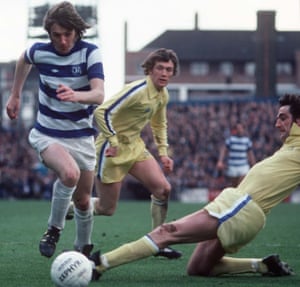


Stan Bowles eludes Leeds’ Norman Hunter and Trevor Cherry


QPR’s Stan Bowles eludes Leeds’ Norman Hunter and Trevor Cherry in April 1976. Photograph: Stewart Fraser/Colorsport

We would drive to Sunderland or Manchester, take supporters’ club chartered trains to Stoke, hitchhike back from Everton. After listening to that last terrible Wolves v Liverpool game on the wireless, Patrick said: “I’ve never felt so philosophical in my life. Nothing’s ever meant so much.” His girlfriend was furious. At the centre of it all: Bowles’s flair, long hair, gawkish gait but spellbinding ability to accelerate, decelerate, anticipate. His late winner at Newcastle, voodoo with the ball against Middlesbrough, a perfect winning goal at Leicester, then what could have been a title-clincher against Leeds in our last game of the season.


Among those also watching was the former home secretary Alan Johnson, who says: “Bowles’s impish wizardry left so many Rangers fans with wonderful memories. I am privileged to be one of them.” The broadcaster Robert Elms insists: “The bond between QPR and Stan Bowles is more complete than between any other single player and a football team. This wayward, wondrous, magical, yet totally down-to-earth street genius is the embodiment of our Queens Park Rangers.” The composer Michael Nyman says: “My love of Stan goes back to a muddy match when he first played at Loftus Road against Rangers for Carlisle in 1972 [we signed him five months later]. He was as astonishing then as in every subsequent match I saw him play in.”


Stan’s golden years were shared, on and off the pitch, with Shanks, the QPR defender famous for “stealing” Miss World Mary Stavin from Liverpool’s Graeme Souness. Bowles reputedly took every opportunity during a game at Anfield to remind Souness of his mate’s conquest. “Stan played football without stress or pressure,” Shanks recalls. “While other players would be in a panic during a big game, or poor shape for a bad one, Stan would just play. ‘Give me the ball, I’ll do the rest.’ A football pitch was Stan’s natural home.”


Stan can hardly remember who he is. It’s heartbreaking, soul-destroying


Don Shanks


The manager Dave Sexton stressed then what he called Rangers’ “continental” football, inspired by Dutch games, and Shanks places Bowles in the history of what has happened to British football since. Shanks says: “Stan was like players who come from Europe now, before their time: Costa, Agüero. A star, but unselfish; he was a team player … amazing rapport. We knew what Stan would try to do – the amazing thing is that he did it. Round the back of the defence, with pace – and magic.”


But it was Stan the man that Shanks – and QPR fans and players – loved too. “Everyone was equal to Stan,” he says. “It didn’t matter if you were collecting rubbish or a pop star. If QPR were up in Manchester, he might stay over and play for a Sunday league team.” Bowles would stop over at Shanks’s parents’ flat on the White City estate, next to Loftus Road: “Always polite – ‘Thank you Mr Shanks, thank you Mrs Shanks’ … I used to say: ‘It’s OK Stan – no one else talks to them like that.’”


I remember Bowles joining fans in The Crown & Sceptre near QPR’s ground on Christmas Eve – his birthday. He was offered more pints than even he could manage, and bought a few himself, for total – albeit adoring – strangers.


Most famously: “Stan loved a bet,” says Shanks, who was also his partner at the White City dog track or bookmakers. “Not big money – it was a pastime, 50 quid between two dogs, for the adrenaline rush. He hardly went to a casino, but if he did, he’d put £20 here, £20 there. Later, he’d go to those card schools and play for six hours.” A barman at the dog track was John O’Mahony, now among fans campaigning for a Bowles testimonial. He says: “Stan always drew people round him, but he never showed off. He was always just himself.”
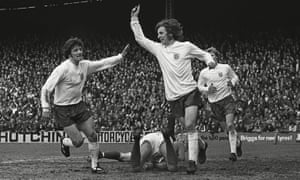


England’s Stan Bowles


England’s Stan Bowles celebrates with Kevin Keegan after scoring against Wales in 1974. Photograph: Colorsport/Rex/Shutterstock

And he still is, but actually not. Bowles moved back from London to Manchester before the family announced his condition in 2015. And here he is, at the Whitegate Inn on the road to Oldham, enjoying lager-and-lemonade-top with Andria, his friend Mike, a builder who visits every day, and Joanne Connolly, a fan whose dad – “Taxi Teddy” – knew Bowles from outings to the dogs; Joanne calls Stan the “adolescent fervour that lasted a lifetime”.


Stan wears a dapper woollen overcoat, tartan tweed hat and smart scarf. Now he puts on a pair of sunglasses. “Dino!” he says. “That’s Robert De Niro,” explains Mike. “Dino!” repeats Stan. “It’s hard to speak Stan-ish,” says Andria. “He’s having a good day today, but it’s not always like this. On bad days, he’s a rabbit in the headlights, very anxious and confused.” Andria, the modern-day matriarch of Moston, is a woman of humbling strength and commitment, but insists to the contrary: “It’s something I do,” she says of her charge. She admits: “He was a selfish Dad, but he’s mellowed, he’d started to do that before the disease. Now he’s home, with us, where my own Nan and Grandpa lived.”


There are moments of sudden clarity from Bowles. I mention Gerry Francis, the QPR captain with whom Stan had telepathic rapport: “Gerry, he’s alright he is.” And when you call him Stan he corrects you: “It’s Stanley!”


In comes Stanley’s great-granddaughter, Macie, aged five. Andria used to run another pub down the road “where my Nan used to drink”, but gave it up to look after Macie (“my son’s daughter, but …”) before Stanley was diagnosed. “So it’s like having two children now,” says Andria. I ask: “Macie, does he do what he’s told?” “No, ’cause he doesn’t know what you’re saying. He can’t talk proper because he’s poorly. But I understand him.”



Stan Bowles


Stan Bowles’s great-granddaughter Macie says: ‘He can’t talk proper because he’s poorly. But I understand him.’ Photograph: Christopher Thomond for the Guardian

Mike says he still takes Stanley for a bet: “He’ll write ‘2.15C’ – it could be Cheltenham, it could be Catterick. Once he put a tenner on a winner, worth £130, but he’d thrown away the chit.”


“London!” Stanley repeats. Mike takes him “up” to the smoke occasionally, and they stay around Brentford, Bowles’s last professional club. Mention of the Bees starts another, urgent, conversation: that club staged a benefit game in 1987, and this season published a commemorative programme to raise funds for Stan’s welfare. “I see myself looking after him for the rest of his life,” Andria insists, but talk inevitably turns to the possibility that Stan will need residential care one day. “There are two options,” Shanks had said, “go the NHS way or get private so he can be comfortable and his family can visit.” “There’s a place down the road,” says Andria, “£600 a week.”


Bowles played in days when footballers even at his level were unable to plan for what might follow. The announcement that Billy McNeill – the first captain of a British team, Celtic, to hoist the European Cup, half a century ago – suffers from dementia reopened the dual debates over welfare and head injuries. Bowles’s condition – and dire financial straits – is an example of the game’s reluctance to look after its own; Nobby Stiles also suffers from Alzheimer’s, but there is scant care from mighty Manchester United. Alex Young, who died last week from a short illness after suffering from dementia, had better luck having played for Everton who operate, says O’Mahony, “a role-model system for former players”.
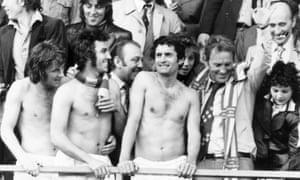


QPR


Stan Bowles, left, with Gerry Francis, Frank McLintock and manager Dave Sexton after QPR beat Leeds 2-0 in May 1976 amid a thrilling title run-in. Photograph: Reg Lancaster/Getty Images

QPR has an ex-players association, but with no benevolent welfare charge. “Sometimes,” says Shanks, “I wonder what the PFA is there for if not to help people like Stan and Frank Sibley [Rangers midfielder in that 1967 Wembley final, now battling Parkinson’s]. I also wonder if the people running QPR understand the legacy, who Stan was, what he meant to the club and its fans.”


The club did organise a Stan Bowles Day in 2015, at which he waved to adoring crowds before a game with Rotherham. Fifty pence from each programme went to Bowles, and there’s a fund with over £15,000 in it – but the matter of a proper testimonial at QPR has embittered some corners of Shepherd’s Bush.


Discussions began in 2015, when supporters met the club soon after Bowles’s family made his condition public. “The first meeting was positive,” says O’Mahony, “but it was down to us to arrange it all, and raise funds. Now we’re two years down the line, and Stan has deteriorated.”


A spokesman for the club referred to a statement a fortnight ago from the CEO, Lee Hoos, who said: “To set the record straight: QPR, as a club, welcome the proposal of a Stan Bowles benefit match. We are determined to help put on an event for Stan that supports his care and raises money … We are today starting the steps to ensure this event is a success.”


“There’s no coming back from where Stan is now,” says Shanks. “But …” He recalls Stan Bowles Day – “when Stan walked out at Loftus Road he knew exactly where he was, for some reason; a moment of knowing who he was. The family’s been fantastic, and now this should be testimonial year for Stan – he was the greatest, this is a special case. I’ve got a lump in my throat saying this, but we don’t have long. We can’t get to that situation of: ‘Oh, should’ve done this, should’ve done that.’ It has to be now.”
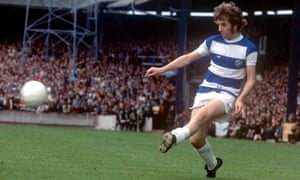


Stan Bowles


Stan Bowles in action for QPR in a Division One win against Manchester United in September 1975. Photograph: S&G and Barratts/Empics Sport

We raise another glass in Manchester. “We all love you Stan!” Bowles puts down his beer, takes my hand with a vice-grip, and stands. “Stay still,” he says, takes my head between his palms and plants a smacker on my cheek. I glance towards the others and, as Mike says, “I’ve got glass in my eyes”. Stanley sits and says: “I’m still going.” His eyes twinkle. And again: “I’m still going.”


Additional research by Joanne Connolly


An afternoon with Stan Bowles: the twinkle is still there but the memories are gone

29 Ocak 2017 Pazar

How the brain stores memories | Daniel Glaser

Every week there is a new dementia study, raising hopes that we can find a way to halt memory loss. Interestingly, in any form of dementia our memories don’t vanish immediately but fade gradually – our memory systems have a property known as ‘graceful degradation’.


In a computer, each item of information is stored in a specific location. If part of the memory or hard drive becomes corrupted, a specific fact or image is lost instantly. The brain works differently by splitting up memories into overlapping patterns across a network of thousands and millions of neurons. As memory fades, there is a gradual deterioration in the ability to recall efficiently.


We have the added benefit of many more memory triggers if we want to recall, say, a specific address. Any element of the memory can bring it back – from a photograph, to the sound of a squeaky gate or a dodgy paving stone underfoot. Compared to a computer, it’s a much more resilient way of storing valuable information – probably a good thing since you can’t back up your brain.


Dr Daniel Glaser is director of Science Gallery at King’s College London. Listen to this week’s podcast at theguardian.com/science/audio


How the brain stores memories | Daniel Glaser

18 Aralık 2016 Pazar

Why pictures trigger buried memories much faster than words

As you’ll have noticed, in our issue devoted to this year’s most memorable news images, there is an immediacy to a photograph that we can’t help but respond to. A picture can trigger a buried memory and recall a precise moment in time much more rapidly than words. But why exactly?


Neuroscientists have known for many years that humans have an extraordinary ability to encode pictures. In one study, first carried out around 50 years ago and repeated since, people are shown 10,000 photographs and, a few days later, another 1,000 – half from the original batch and half new. Within seconds, respondents point accurately to the ones they’ve seen before. Which is why, at this time of year when you look through a photo review, a picture glanced at six months ago will still chime and feel familiar, even though you couldn’t call it to mind a minute ago.


This is possible because our brains are so efficient at storing the ‘essence’ of a picture, capturing not just the subject but specific visual qualities. You can’t bring this to mind actively, it’s what we call a ‘passive effect’. If you were asked to recall a news image from March, you may struggle, but if you saw a stack of photos from that time, you’d instantly know the ones you’d seen before.


Before we get too full of ourselves, it’s worth knowing that at least one other animal shares a similar ability – the pigeon. In studies they show high levels of recall when presented with different images – helpful for finding food. For us it may be linked to social relations or just navigation.


However trivial the picture, it’s the recognition and the rush of familiarity that is fun – an added benefit that’s lost on pigeons but satisfying for us.


Dr Daniel Glaser is director of Science Gallery at King’s College London


Why pictures trigger buried memories much faster than words

5 Kasım 2016 Cumartesi

"You see tough things as a police officer. I felt sick as memories flooded back"

When people used to ask me, a serving police officer, how I was feeling, “OK” became an easy phrase to use. It didn’t show how much I was hiding.


I have worked for Essex police for more than 30 years. After 20 years of service, in 2013 my mental health started to decline. There were no big warning signs, no alarms, no sirens, just the start of a really difficult period of my life.


As a police officer, you see tough things. I started to have flashbacks to certain incidents I had encountered. I would feel sick as some memories flooded back. At other times I would feel an overwhelming sense of despair, feeling that life was just not worth it.


Alan Phillips


Alan Phillips: ‘There were no big warning signs’

In January 2014 I started to drink, a little too much most days. My behaviour at work became more erratic and on several occasions I was spoken to by supervisors. I wanted to tell them how I felt but I couldn’t find the words. I gave little clues but these were not picked up on. When anyone asked me if anything was wrong, I’d always respond that I was OK.


Mentally, I crashed in April 2014. I spent a week-and-a-half unable to move, not washing, shaving or dressing, just staying in bed. I finally saw a doctor. I’d been off work nearly a week and my wife encouraged me to go.


This wasn’t the end of the problems – I still live with stress, depression and symptoms of post traumatic stress disorder. But at the moment, I’m managing; I’m working. I’m open about my mental health now and that has changed a lot. Being in the police force can mean you encounter some difficult things. This condition is not because we are weak; thoughts of suicide are not a sign that you are a coward. This condition is one suffered by the strong.


I have been involved with Mind’s Blue Light programme from the beginning. Mind’s research shows that nearly two-thirds (63%) of emergency service staff and volunteers have contemplated leaving their job or voluntary role because of stress or poor mental health.


The Blue Light infoline offers vital support to people in the emergency services who may be experiencing similar feelings to the ones I had. It serves an important purpose. If you have any worries at all about your mental health while working in the emergency services and are afraid to tell someone, this service can offer a confidential ear and tailor support to the field you work in.


Once you speak, people will listen, but you have to tell them.


Alan Phillips is a detective constable in Essex police. Mind has just run a Blue Light Infoline awareness week.


For more news, opinions and ideas about the voluntary sector, join our community – it’s free!


"You see tough things as a police officer. I felt sick as memories flooded back"

1 Haziran 2014 Pazar

Scientists to carry back the misplaced memories of Alzheimer"s individuals


Roberto Malinow, a professor of neurosciences and senior writer of the examine, mentioned: “We can type a memory, erase that memory and we can reactivate it, at will, by applying a stimulus that selectively strengthens or weakens synaptic connections.


“Since our operate exhibits we can reverse the processes that weaken synapses, we could possibly counteract some of the beta amyloid’s effects in Alzheimer’s patients.”


Scientists optically stimulated a group of nerves in a rat’s brain that had been genetically modified to make them sensitive to light, although concurrently delivering an electrical shock to the animal’s foot.


The rats quickly discovered to associate the optical nerve stimulation with ache and displayed dread behaviours when these nerves have been stimulated.


In the up coming stage of the experiment, the analysis staff stimulated the exact same nerves with a memory-erasing, reduced-frequency train of optical pulses.


These rats subsequently no longer responded to the original nerve stimulation with concern, suggesting the discomfort-association memory had been erased.


The scientists discovered they could then re-activate the lost memory by re-stimulating the exact same nerves with a memory-forming, high-frequency train of optical pulses.


These re-conditioned rats once once again responded to the unique stimulation with worry, even although they had not had their feet re-shocked.


Sadegh Nabavi, a postdoctoral researcher in the lab and the study’s lead author, explained: “We can trigger an animal to have dread and then not have dread and then to have dread once more by stimulating the nerves at frequencies that strengthen or weaken the synapses.”


Scientists to carry back the misplaced memories of Alzheimer"s individuals

13 Mayıs 2014 Salı

New brain cells could wipe away previous memories, examine finds

“The locating was very surprising to us at first. Most men and women think new neurons indicate better memory,” mentioned Sheena Josselyn, a neuroscientist from the Hospital for Sick Children in Toronto, who led the research.


Right up until now, numerous scientists have imagined long-phrase memories may possibly be tied to language simply because young children normally start off forming lengthy-phrase recollections at about the same time they start off talking.


“But the really weird factor is that most animals display infantile amnesia too,” said Josselyn.


“So the improvement of language can not be the total explanation.”


Inspired by observations of their personal toddler, Josselyn and her husband, examine coauthor Paul Frankland, started to query why young kids could not retain memories of scenarios or occasions.


The recollections involve the hippocampus, the only part of the brain which normally generates new neurons, which scientists feel is vital to make recollections.


But the manufacturing of these new cells tapers off in childhood.


“That’s precisely when we begin to be capable to kind prolonged-term recollections,” Josselyn explained.


Her research of mice, which like people fail to retailer early memories, showed the decline in the production of new neurons as the rodents grew up matched their capability to keep in mind frightening conditions.


Josselyn explained: “More neurons improve the capacity to learn new recollections in the potential


“But memory is based on a circuit, so if you add to this circuit, it helps make sense that it would disrupt it.”


She believes the newly additional neurons could have a beneficial position in clearing old recollections and creating way for new ones.


New brain cells could wipe away previous memories, examine finds

21 Nisan 2014 Pazartesi

Researchers uncover strategy to dealing with negative memories

“Often we dwell on how sad, embarrassed, or harm we felt throughout an occasion, and that tends to make us really feel worse and worse. This is what takes place in clinical depression-ruminating on the unfavorable elements of a memory,” Dolcos mentioned.


“But we found that as an alternative of considering about your feelings for the duration of a adverse memory, seeking away from the worst emotions and pondering about the context, like a buddy who was there, what the weather was like, or anything else non-emotional that was element of the memory, will rather effortlessly consider your thoughts away from the unwanted emotions related with that memory.


“Once you immerse yourself in other particulars, your thoughts will wander to anything else entirely, and you won’t be centered on the negative emotions as significantly.”


The technique is a extremely promising substitute to other coping mechanisms this kind of as suppression or reappraisal.


“Suppression is bottling up your emotions, attempting to place them away in a box. This is a technique that can be successful in the quick term, but in the prolonged run, it increases nervousness and depression,” says Dolcos.


“Another otherwise successful emotion regulation approach, reappraisal, or searching at the situation differently to see the glass half full, can be cognitively demanding.


“The technique of focusing on non-emotional contextual information of a memory, on the other hand, is as simple as shifting the emphasis in the mental movie of your recollections and then letting your mind wander.”


The approach can be powerful in both the quick term and the long phrase as use of the mechanism can lead to a reduction of the memory’s emotional effect. The review was carried out by initially asking the participants to describe their most adverse and good memories. Following numerous weeks, they were given cues to trigger memories although getting scanned in a magnetic resonance imaging (MRI) machine. They have been asked to focus on the emotion and then also the context of the memory.


“Neurologically, we wanted to know what took place in the brain when individuals had been employing this basic emotion-regulation method to deal with damaging recollections or boost the influence of optimistic recollections,” explained report co-writer Ekaterina Denkova. “1 factor we discovered is that when participants were targeted on the context of the occasion, brain regions involved in basic emotion processing were functioning with each other with emotion management regions in buy to, in the end, decrease the emotional effect of these memories.”


Researchers uncover strategy to dealing with negative memories

1 Şubat 2014 Cumartesi

A drive stirs memories of currently being in adore

rehab column family

‘All of the love I had for driving and London when I was a teenager – with newfound freedom and a tenner in my pocket – is nevertheless extremely current.’


The same month I passed my driving check, I fell in really like for the first time. My boyfriend and I went everywhere collectively, actively in search of out options to run errands for loved ones members or close friends just so we could drive to new locations. I would often consider the wheel (we have been each 17 but he was nevertheless a learner). He would sit in the passenger seat feeding combine tapes into the temperamental cassette player. The love affair fizzled out right after a year, but my affection for my vehicle did not.


Typically, after I would completed my Saturday shift at the nearby pub, I would steam up the motorway to my college friend’s flat in London, which he shared with his sick father.


Even in my heavy car – total with shonky steering and a stiff clutch – I would really feel magnificent gliding in excess of Waterloo bridge. The beautiful buildings lining the river have been magical when lit up at evening, and pleasure swelled inside as I turned my head left and correct, admiring the truth that there were so a lot of people.


Exactly where I came from, all life seemed to be snuffed out at 9pm, and the only indications of exercise have been spotted via gaps in the curtains of spread-out houses or the odd country pub. There have been huge gaps of nothing at all, and as a teenager I felt a developing sense of isolation and aggravation. London, on the other hand, was glowing, throbbing, resplendent – I felt warm every single time I got close. I felt at property.


Dan and I would usually drive the 5 minutes it took from his flat to Soho, the place parking was totally free at night we would pretend we were flush, sophisticated grownups as we drank coffee at midnight on Frith Street. Often we danced in a sweaty Spanish basement club on Old Compton Street. I by no means had much more than a beer simply because afterwards we often wished to drive for a while about the West End.


I basically learned how to drive in London how to pull out into hectic streets with self-confidence, nudge my way into different lanes and use my mirrors with aplomb as I averted dizzyingly quickly Lycra-clad couriers. I was a nation woman who’d discovered to dodge rabbits on narrow nation roads, but city driving was far more about assertiveness as opposed to talent. I was secretly proud of my bravado.


My father – who dished out compliments economically – stated my driving wasn’t undesirable. This was large praise indeed from somebody who drove elegant autos elegantly at all occasions. I was rather ineffective in situations concerning adore, useless at feeling in handle of my daily life in common, but in my auto I felt like I was queen of the street.


I never live in the West End now. I was too naive in the 90s to comprehend quite how costly London could be. But when the roads are clear and the trains are running on time, the city’s heart is by no means that far away from my property. When I truly feel like escaping, when I have the chance to be alone, I seldom head to the nation. Alternatively I aim for the middle of London, and if I can, I drive. Most of the time, specifically at evening, it helps make me quite pleased. All of the really like I had for driving and London when I was a teenager – with newfound freedom and a tenner in my pocket – is nonetheless extremely present.


Last week when existence felt crazy, I experimented with to think of items that would much better my predicament. I went to Al-Anon meetings, talked to close friends and cooked until finally my house smelled incredible. But I was sick of analysing my partnership with R sick of feeling angry or sad, or indulging self-pity. I wanted to really feel powerful and in manage.


I asked a pal to come and babysit when the kids had gone to sleep. I drove into town on my own, with, for when, nowhere to go and nothing at all to do. I took my outdated route into town, past Dan’s outdated flat, and looked up at the filthy flat roof where we often went to smoke.


I drove close to a few grand squares, passed outlets that had been closed and restaurants that were bustling. It was good to be concentrating on the road and my surroundings. I went to Soho but did not quit to see friends. Soon after an hour or so I headed for home again.


Nearing my residence, I had a sudden urge to carry on driving up the hill to R’s flat, just to be with him. I felt thrilled by the idea of sleeping with him once more, practically as if the drive had roused my memories of currently being in adore for the initial time, finding things afresh. But, I went home.


Driving close to London aimlessly at night may look pointless to a lot of – a waste of petrol, energy and an evening – but it truly is something I may effectively do once more.


A drive stirs memories of currently being in adore