felt etiketine sahip kayıtlar gösteriliyor. Tüm kayıtları göster

6 Ocak 2017 Cuma

My swimming odyssey: ‘It felt like a last chance to prove what I was capable of’

I had always thought I could swim. It may have been because I could run. It may have been because I wanted to swim. Or because I only ever did 10 minutes of breaststroke at a time, or splashed off a warm beach. But I really couldn’t swim.


It took 12 months of lessons and practice before I was able to swim in open water, beyond the pool or my home beach in Brighton. Then I could let myself believe I was up to taking on a challenge I had been dreaming of for more than a year: I wanted to swim in the Greek waters of the Ionian Sea. Specifically, I wanted to swim to Ithaca, the island home of Greek hero Odysseus.


Since childhood, I had been fascinated by Greek myths and the heroic tales of the Trojan war. As I grew older and read classics at university, it became Odysseus who captured my imagination more than any other. Legend has it that Odysseus was within sight of Ithaca when he was blown hundreds of miles off course. It took him several years to get home after that. Meanwhile, his wife Penelope stayed at home on Ithaca, spending every night unpicking the embroidery she had completed during the day, having promised her suitors that she would marry one of them just as soon as her sewing was finished. Eventually, a decade after Odysseus set out from Troy to return home, they were reunited. Sometimes you have to wait for the one you love.


I never wanted to be Penelope; instead, I had fought for years to be my own hero, my own Odysseus. I wanted my sense of belonging to come from within, and as soon as I found that, I found D, my husband. Now that I had my own Ithaca, I wanted to see the real one.


There was a deadline to contend with: after a year of marriage and even longer of trying for a baby, we had recently been referred for IVF treatment. I was shaken by the news. My relationship with my body had changed radically over the last few years. Finally learning to have a little faith in what it was capable of had been one of the most rewarding experiences of my life. Now, I was being told that positive thinking was not going to be enough.


Six weeks later, I was on my way to the island of Lefkada, where I was going to spend a week on a guided swimming trip around the islands of the Ionian. It would be an opportunity to see what I was capable of in the water, and to remind myself of the barriers I had overcome, even as I was now confronting a new one.


The evening I arrived was heavy with heat. We all gathered on a terrace overlooking the sea to introduce ourselves and eat together under the vines. J, the leader of the trip, encouraged us to go around the table saying a little about ourselves.


“Hi, my name is Jess and I recently swam the English Channel as part of a relay with some mates.”


“Hi, my wife and I are regular Masters swimmers in the south of France; these are our times…”


“Hi, I’m on this trip with my teenage daughter as a rest before her Olympic tryouts.” And so it went, on and on. These were people who had swum for their country, across their country and to their country. They may as well have been a different species.


The first morning, we boarded a beautiful wooden boat with a taciturn Greek captain who made no effort to hide the fact that he despaired of us all and our sanity. The pattern for the week was quickly set. The boat headed out to wherever the swim was to begin, then we would be briefed on deck about what type of swim it would be. Some were coastal, all the way around an island, with plenty to look at below us; some would be crossings from island to island – more satisfying, but potentially much harder work. And some would be a combination of the two. For most of the week, we would have a morning swim, lunch somewhere nearby, then a bit of time on the boat before a second swim. Friday would be the exception, because that was the day of the heroic 5km swim from Kefalonia to Ithaca.
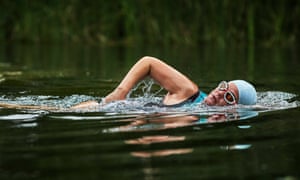


Alexandra Heminsley


‘The barriers were not merely physical, but mental.’ Photograph: Chris Floyd

Being in an entirely unfamiliar environment was all-consuming. I was used to wading into the water; a slow walk with a gradual drop-off. Now, we were clambering or jumping off a boat, straight into deep water. The most striking thing was its clarity. I had never seen anything like it. In Brighton there are only a few days when the water is clear enough to see through, and even more rarely is the ocean floor visible. Now, I could see a whole new universe. In our underwater world, body type had little effect on how we moved. The strength, the glide, the ease of the reach through the water was all that counted.


I found the sensation of travelling between two bodies of land dizzyingly intimidating. Once, managing a single length of the pool had been too much for me. Then, swimming in open water, albeit close to the shore. Then, the unknown length and depth of the river. Each time, I had persuaded myself that if I could relax and focus, I could do it. Each time, I had been proved right. The barriers were not merely physical, but mental.


This was something else entirely. As we reached the farthest point between the islands, the sea became so deep, it was beyond blue; a dark purple, almost charcoal, with shimmers of yellow as the current moved on and on below us. We found ourselves righting and re-righting our course, having to fight to stay straight, rather than being dragged somewhere else. That pull in the water, begun as a ripple on the other side of the world, reached me then, in that moment, as if gently to tug my sleeve and let me know that, perhaps, I was reaching the limitations of what my body could do. And the thought stayed with me all week as we approached Friday, the day of the 5km swim.


We had a pre-6am start that morning, to be ready for a boat trip of more than two hours. I was tired and beginning to ache in places I had never felt before. The mood on the boat was noticeably quieter than usual. Until now, I had enjoyed conversations with the group, getting tips on my technique, as well as hearing stories of their entrancing swims around the world. Today’s early start and the task ahead, though, had left us all but silent.


It’s all about the breath, I reminded myself. Keep the breath steady and you’ll keep yourself steady


My nerves were mounting. Not only was it farther than I had ever swum continuously – by more than a kilometre – but we would be negotiating a busy channel, competing with swells and currents, as well as holidaymakers’ boats and billionaires’ superyachts. And there was the added pressure that we had been told to swim tightly in our groups during the crossing, directly alongside each other for safety: there was no option to slow down to catch my bearings or indulge in panic. I would either let the team down or find myself drifting dangerously alone in the currents.


I sat in the prow of the boat, my legs dangling over the water as she moved slowly through the still, flat, unbroken surface, the sun rising behind the distant islands, and I felt horribly alone. I missed home with a longing I was sure only Odysseus had ever felt. For the others, this was an energetic holiday, but for me it felt like a last chance to prove to myself what I was capable of before I faced the uncertainties of IVF.


As I stared down into the water, a dolphin’s fin broke the surface and danced ahead of us. I yelped; the captain cut the engine. In that instant, I saw that I had been a fool. Only seconds before, I had been feeling so utterly alone while mere metres from such a magnificent sight. The dolphin leapt and pranced ahead, before approaching the boat and swimming alongside it for a little while. I sobbed, overwhelmed at how appallingly close the lowest and the most beautiful moments can be to each other. Yes, we swim alone. But we can never truly know what swims alongside us.


Half an hour later, people started to ready themselves to head into the water. My heart was hammering. It’s all about the breath, I reminded myself. Keep the breath steady and you’ll keep yourself steady.


Now it was time to swim. I became lost in sensory overload within the first few minutes. The light seemed liquid, leaping up and circling me every time I drew my hand through the water, trying to push against the current that was moving with such strength beneath me.


The first hour or so went smoothly, the group moving steadily as one. About halfway, something changed. We were approaching a tiny island, barely big enough to lay a picnic blanket on, and until this point we had been using it as a sighting point, keeping it in view in order to steer a straight course. We were to swim north of it as we passed, which we were all on course to do. As we approached, the ocean floor came up and back within sight. There was some comfort in seeing the sloping patterns of the underside of the island beneath us. Until I realised that it wasn’t moving.
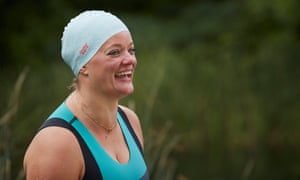


Alexandra Heminsley


‘I had never stood toe to toe against nature in this way before.’ Photograph: Chris Floyd

We were swimming at our hardest. Perfectly in rhythm, well warmed up, pulling hard, breathing hard. At last, I felt like a real swimmer. Except I was going absolutely nowhere. An anxiety dream come to life. I was pulling and pushing at the water with all my might, but we had hit the point where the currents were at their strongest. The harder I swam, the less I moved. The rocks below me were entirely static.


I continued like this for five or 10 minutes before panic set in. I knew that to stop was instantly to slide back, away from the group. Exhale. Keep going. Exhale. Believe. Exhale. Glide. But the demons were chasing me now. I had never stood toe to toe against nature in this way before. You can’t fight nature, I thought, and felt tears choke in my throat. I forced an exhale. I wouldn’t let myself think it. But I did. If you can’t fight nature, what about pregnancy? And with that I was lost in a world of worry. Would I ever get pregnant? What would IVF do to me? What would IVF do to us? Would it be worth it? Would we get there? When would I know?


The water swirled around me and roared in my ears. I forced the air out of my lungs, again and again. The salt water was crusting my mouth, and every breath felt like a punch as the sunlight hit my eyes.


Your body might never be the same after this summer, I told myself. Enjoy what you have


Think of home. Be your own hero, be your own Odysseus, be ship, cargo and crew. I repeated these things to myself again and again, forcing physical relaxation until mental solace came. I made myself feel the power in my limbs and lungs, and love it. I was strong. Your body might never be the same after this summer, I told myself. Enjoy what you have.


Eventually, I won the battle. The rocks beneath me slid slowly out of sight. The deep blue returned. I have never been so glad to be swimming so utterly out of my depth. But the horror wasn’t over. About half an hour later, a sort of fizziness began in the tips of my fingers. I had only felt it once or twice before, in the final few metres of running events. I knew it meant that I needed oxygen, and fuel. I realised what was happening and tried to power my way through with positive thinking. Success was limited. My mind had got me thus far, but my lungs had not had the chance to catch up.


I needed help. I called to the rescue boat, and clung to it. J told the others to carry on, while I hauled myself in. My breathing was laboured and erratic, my head spinning and the tips of my feet and fingers numb. I breathed. I gulped at the orange juice on board to get some sugar into my system. I grabbed a handful of nuts. Devastated not to be in the water, I sat, breathing, for five minutes. We were so close to Ithaca. I could make out individual trees on the mountainside. Ten minutes later, I knew I couldn’t let the dream go.


“Can I get back in?” I asked.


J checked me over, to make sure that I wasn’t still delirious.


“I have to reach Ithaca. It’s why I came.”


She nodded. I leapt off the boat and headed for the grey rock. I couldn’t believe there was any strength left in me, and I vowed never to forget the moment that the island’s sea life started to make itself apparent to me. Once again, the sea shallowed, and fish shimmied between crags, sea urchins perched on ridges and starfish danced on the side of the island.


Finally I touched the rock, and burst into tears. Huge sobs, shaking my shoulders, forcing me to cling on to the island to keep myself steady. I had done it. I had discovered a grit I hadn’t known I had. I had slowly, over a year of marriage and a year spent in the water, learned that strength does not always mean merely ploughing forward in the face of adversity; it means changing your plans when what you’re doing isn’t getting you where you need to go; and it means nurturing the confidence to adapt without panicking. The relaxation that swimming demanded of me had taught me that calmness is strength. As I clung to that rock, I had no idea of the extent to which my adaptability and survival skills were about to be tested.


***


As the plane landed back on English soil, I smiled, knowing that I would be home soon and that there were still a few months before the most difficult stages of the IVF swung into action. I was gleeful to be returning to my Penelope, but it was tinged with the melancholy of knowing this summer was past full bloom. I wanted to carry on swimming outdoors, putting my new-found strength and confidence into practice.


I was sure I would be pregnant soon. I was anxious about the side-effects of doing a cycle of IVF, but I was not anxious about it failing.


I was wrong. It proved a brutal and disorienting experience. The cycle ended in early September with me battle-scarred, exhausted and with a streak of red blood that confirmed that I was not pregnant. The Saturday morning after we realised the treatment had not been successful, I woke up at 6am and stared at the ceiling as the tears rolled slowly, silently, down the sides of my face and on to the pillow. What now?


Slowly, the overwhelming duvet of sadness that had swamped us began to shift. While the summer had not been the idyllic sea frenzy I had hoped for, once I looked up and beyond myself, I saw that we were being treated to an exceptionally beautiful autumn. We had agreed to try one more round of IVF, but for now I had a chink of time in which to use my body for as much adventure as it could manage.


As autumn progressed, I swam and I swam, feeling the strength flowing gently back. I had been utterly unprepared for the havoc that the drugs and surgery would wreak on my body. There were extra rolls of flesh that seemed to have sprouted within a fortnight. The belly that appeared as I grew eggs stayed, as did the soft pouches sitting on my hips. My boobs were uncontrollably enormous – the sort of thing mothers-to-be so often take delight in. But, for me, they did not represent an exciting new life change, merely a daily reminder of what I didn’t have. As did the significant amount of internal pain in which the egg collection surgery had left me and which meant that running, and its associated jiggle, was out of the question.


Slowly I emerged from this body that bore no relationship to the one I had built for myself over the previous five years, and took on more and more swims, enriched weekly by the sights, smells and sounds.


Soon, we had a second round of IVF scheduled. I felt fiercely protective towards my own body. Ours was a relatively new love, hard won over miles run and distance now swum. It had taken years to accept that, yes, my body had value, but that value lay more in where it could take me, what it could show me, than in any perceived visual pleasure it could provide for others. I tried to approach this latest quest with the spirit of adventure that had sprung so late in me but proved such a source of joy. I would not yield to any suggestion that my life or my body were lesser if they didn’t incorporate motherhood.


Resolute about keeping my fitness up, I swam lengths twice a week in the pool and continued to swim in the sea, even as the heat slowly started to ebb from it. The day before my second egg collection surgery, I swam in the mouth of Shoreham harbour, feeling my muscles read the movement of the water and warm my blood against the autumn chill. I had rebuilt myself. I was ready.


This time, the treatment went well, and a few weeks later we had a positive pregnancy test. It was followed by the heartbreak of miscarriage. The first round had been disappointment, a setback. This round was crushing grief. My body had betrayed me. Where I had found strength, I now saw inadequacy, insufficiency, weakness. Where I had found beauty, I now saw flesh that served no purpose: a nascent belly, swollen from medication but aching with emptiness, uncontainable breasts bursting with anything but sexuality. Where I had felt self-love, I now saw an unwelcome stranger in the mirror. My body had been rejected, and in turn I rejected my body.
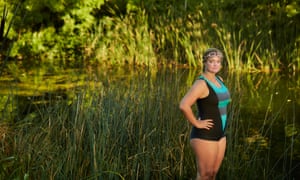


Alexandra Heminsley


‘I have learned not to be frightened.’ Photograph: Chris Floyd

The first time I felt strong enough to get back into the water was in December. I underwent a full winter of cold-water swimming. I never chose to do it; I just chose not to stop doing it. Where so many other plans around me had turned to dust, in one area at least I just had to keep going.


Jumping into cold water if you are not accustomed to it can put huge pressure on your heart, send your breathing into potentially unrecoverable erratic fits and starts, and leave you woozy with hypothermia – too sleepy to swim, too cold to recover. You can’t fight thermodynamics any more than you can fight infertility. But you can adapt. You can acclimatise. You can find joy where others see pain. And this was what I chose. To keep swimming, week in, week out, until what had seemed like an impossibility became golden, a delight.


Through January, February and on towards March, the coldest month, I carried on swimming. Though the sea temperature dropped incrementally each week, my body, as it slowly acclimatised, felt the same each time. After five minutes or so, my body would start to warm me from within, the hard work of the swimming pushing heat as far as it could out into my limbs. My skin would glow red, as if I’d received a thousand tiny slaps. Within half an hour, I would be glowing from within, warm for the rest of the day. Like a hangover in reverse, I had done something that was painful for moments but that left me feeling well for hours. I had made the difficult habitual, the habitual easy and the easy beautiful.


That winter of swimming was a sort of inadvertent exposure therapy. A type of behavioural therapy used to treat anxiety disorders, exposure therapy usually involves helping people to confront their fears by exposing them in tiny, almost insignificant amounts to the thing they are most afraid of.


There are people all around us dealing with sickness, injury and upset, but they choose to keep moving


Over the winter, I repeatedly exposed myself to the elements. As I hit the water day after day, I took myself to a place I never thought I could go. Previously distressed at having reached the limits of what my body could do for me, I rediscovered pride in what it could achieve and where it could take me.


More importantly, I was exposing myself to myself. That winter, I was the heaviest I had ever been. At the time, it felt like weakness, like surrender, but now I see that what felt like unnecessary blubber from hormones, grief or greed was keeping me warm, keeping me in the water to do what I needed to do. To thrive at the weight I was felt not just subversive, but a triumph.


I was emerging from the water calm but energised. I could do more than I’d imagined, and the more I swam, the more I witnessed others experiencing this alongside me. As I glided along in the lido, I saw women slowly easing themselves down the steps, scars the length of their thighs. I saw injured shoulders ahead of me, struggling to swing their arms around but finding fluidity and peace in the water. I saw women who arrived at the seafront jangling with panic or sadness, leaving it serene an hour later.


These quiet, everyday gladiators battling the wet and the cold showed me time and again that it wasn’t just me who headed for the water in times of distress. There are people all around us dealing with sickness, injury and upset, but they choose to keep moving instead of standing at the edge of life, peering in.


When I think about never having a child, a sort of breathlessness, almost a vertigo, comes over me. The same metal vice tightens around my ribcage, the one I felt as I entered the sea those first few times. I don’t know if we will ever have a child. I don’t even know if we have it in us to try IVF again. But I never know for sure what swims beneath me as I push myself through open water.


Swimming has taught me about my adaptability. It is not enough simply to train hard. You must adjust how you move, refine how you approach the water and embrace your environment. In swimming, as in life, I found fortitude and resilience when I needed them most; but I also found the courage to change depending on the weather, the tide or my own body. I have learned not to be frightened; that life is to be lived as a participant, not a spectator.


The most useful thing anyone said to me about grief is that you never really get over it. When you have difficulties with fertility or staying pregnant, the whole experience is a process of accepting that grief might be round the corner. But is that not the very nature of love? To fall in love is to expose yourself to infinite potential for rejection or pain, and to be a parent is to accept a lifelong commitment to the unknown. To love truly is to know that you might lose it in a heartbeat. In the same way that you never know if the wind will change when you’re half a mile from the shore, or the waves might smash you in the face just as you gasp to breathe. We must stand on the shore, proud of the life our bodies offer us, and accept that we’ll never truly know what lies beneath the surface any more than we’ll know what lies ahead. And then we must leap in.


This is an edited extract from Leap In: A Woman, Some Waves And The Will To Swim, by Alexandra Heminsley, published next week by Hutchinson at £12.99. To order a copy for £10.65, go to bookshop.theguardian.com, or call 0330 333 6846.


My swimming odyssey: ‘It felt like a last chance to prove what I was capable of’

11 Aralık 2016 Pazar

"I felt pushed away": Beth Grant on having to move 380 miles for anorexia treatment

Beth Grant, 25, has been receiving treatment for anorexia on and off since she was 13, including five months in a hospital in Glasgow earlier this year, 380 miles from her home in Hertfordshire.


I was 13 when I was first diagnosed with anorexia. I didn’t have my first stay in hospital until I was in my 20s. Before that I received outpatient treatment, first through children’s and late adults mental health services. I was discharged when I went to university aged 21.


I got support while at university from the university’s counselling services, though I gradually declined while on my course. During the last month of my third year in 2015, I was admitted to the Priory hospital in Chelmsford, Essex, about 45 minutes from my family home near St Albans in Hertfordshire. It was a great place. As you progressed you got more freedoms, for example unsupervised snacks and home visits if you managed to get your Body Mass Index up to 15. That gave many of us something to aim for.


I left having regained a suitable amount of weight but was still not completely healthy. Then in February this year I relapsed after a family bereavement. I was told I couldn’t go back to Chelmsford. It’s my understanding that there are just over 300 beds in the country and there are thousands of people who need help. Chelmsford only has 12-14 beds, was small, intimate and a nice group of people.


I was told that the only place available was in Glasgow, 380 miles and a six-hour drive from my home. I resisted the move at first because I really didn’t want to be that far from home. My family were similarly concerned. The problem was that I needed more help than my parents could offer. I was worried that if I lost any more weight I would end up on a medical ward. I didn’t want to leave, but I felt I had no choice.


My parents were so incensed that I had to go so far away that they refused to drive me up. So the NHS decided to transport me by taxi, which must have cost them over £1,000. After that I didn’t see my family for five weeks. My mum was going through treatment for breast cancer at the time so found it hard to come up. I stayed in Glasgow for the next five months but saw my mum a total of four times.


I felt let down. I felt I had been sent away originally just so people could get rid of me, like I was being pushed aside. During my time in Glasgow, no friends came up to visit. I know it sounds silly, but I felt ashamed about being in an inpatient unit and I didn’t want to tell too many people. The nurses were for the most part OK. Some clearly cared more than others, though they could be dismissive at times and sometimes they would simply ignore you. Staff weren’t as hands-on as they should have been and some of my friends were left for five hours during the day without being checked on. But the daily group programmes were very helpful, such as ‘nutritional education’ and ‘understanding your eating disorder’.


In June this year, I was eventually transferred because I was so homesick and depressed. Knowing I was so ill didn’t help as I blamed myself and believed that I deserved to continue to feel that bad. It felt even worse not to be near my mum and unable to physically support her while she was going through radiotherapy as well. I wasn’t putting on weight and it was decided that it would be better for me to be treated closer to home.


Having an eating disorder is extremely isolating; as a normally sociable person it feels like torture. Being so far from home just made it worse. I absolutely love food so for me anorexia is more of a self-punishment. I was bullied from a young age and withholding food became a way of controlling something in my life. I didn’t deserve food. I am also extremely driven, which is maybe linked to it somehow, although it holds me back.


I’ve been an inpatient at one other place since then, in Ealing in west London, which is not too far from my home. The very strict regime there meant I put on weight, but my mental health was no better. I left two weeks ago. I didn’t want to have to stay there over Christmas and I didn’t like the unbelievably strict, inflexible guidelines. I’m now in treatment through my old outpatient team and see a counsellor twice a week, a dietician and a social worker. Constant support is really important and having someone to talk to, or simply to sit with and be near when you don’t want to be alone, is what you need most when you are this unwell.”


"I felt pushed away": Beth Grant on having to move 380 miles for anorexia treatment

21 Kasım 2016 Pazartesi

I had to quit NHS admin – I felt like a workhorse flogged too hard

I had recently resigned from a well-paid job when I started working for the NHS in an administrative role. I was happy to be performing a useful service in the interests of a larger social goal, while no longer being required to write strategy documents or meet financial targets. However, in my seven months as a hospital specialty coordinator (a posh term for medical secretary, invented in order to create a sense of potential job progression), I experienced more stress – of several different kinds – than I have ever experienced.


The NHS is 25 years behind the rest of the country in terms of technology and management techniques


After the 2013 final report of the public inquiry into the “deaths by human error” at the Mid Staffordshire NHS foundation trust, the induction training programme for all new starters in the NHS – both clinical and administrative – was substantially rewritten. The major change in the day-long training sessions was the section on transparency and accountability. All new staff, we were told, were encouraged to follow the trust’s whistleblowing policy: this meant that we should feel duty-bound to report any incident, however small, that might jeopardise the wellbeing of a patient.


The NHS is 25 years behind the rest of the country in terms of technology and management techniques. Despite millions of pounds spent on computer technology in the NHS, I was amazed to discover that everything done within the health service – every clinic letter, investigative test, scan result – requires a hard copy file note to accompany its electronic counterpart. Across the country, hospital administrative staff, such as myself, waste thousands of hours each week trying to locate hard copy patient notes that could be anywhere within numerous hospital departments, and in many cases, across several different hospitals.


The most familiar sight in any hospital admin department is overloaded trolleys with patient notes being trundled from one section of the hospital to another, and overflowing filing trays that require staff to come in at weekends just so that they don’t start Monday mornings depressed by the amount of filing they have to do.


I could not work out why technological advancements and concern for the environment could have somehow bypassed the NHS, the fifth largest employer in the world. Jeremy Hunt’s goal of a paperless health service by 2018 looked to be a long way off, particularly since most of the managers preferred the security of hard copies (as back-up in the event of a computer glitch, and also in terms of patient confidentiality, since paper is not vulnerable to computer hacking).


Managers struggled to address the problems of their increasingly demoralised staff, who were trying to cope not just with the paperwork, but also with the constant demands of patients who wanted to know why their test had not been scheduled, or why they had not received their results. Absenteeism was rife because staff frequently called in sick with stress. On some days I found myself doing three people’s jobs. If a consultant was sick, their clinic for that day was cancelled. If a medical secretary, or two, or three, called in sick, the patients kept coming, and so did the accompanying paperwork.


I felt like I didn’t have time to breathe, let alone take a lunch break, and inevitably, when people are stressed, they take it out on each other. In my experience, the consultants, registrars and junior doctors were polite and considerate to the admin staff; and the patients were understanding and forbearing: it was the other admin staff who were the most unpleasant to one another. On one occasion, for example, a group of admin staff organised an official meeting to complain that their colleagues were “hogging” the few hours per week of a temporary helper.


Some managers tried a technological fix to the problem of overwork and paperwork – “two computer screens will make you more efficient by speeding up your processing times” – whereas what we needed was less absenteeism and better systems. We were, however, forbidden to use any external agency staff to cope with the dire shortages. These were considered an expensive luxury at a time of cost-cutting. Since all managers were assessed on their ability to achieve targets and avoid serious incidents, the real reasons for the poor performance of their staff were disregarded as long as no breaches of the trust’s policies needed to be reported.


In the end, I felt like a workhorse who was flogged too hard for trying and failing to shoulder the burdens of the job. I have left the NHS and am working in a job where I no longer dread the thought of Monday morning. I never reported a colleague through the whistleblowing hotline and, as far as I know, no one reported me. I can’t help feeling guilty, though, at the thought of the continued toil of my former workhorse colleagues I left behind.


If you would like to write a blogpost for Views from the NHS frontline, read our guidelines and get in touch by emailing sarah.johnson@theguardian.com.


Join the Healthcare Professionals Network to read more pieces like this. And follow us on Twitter (@GdnHealthcare) to keep up with the latest healthcare news and views.


I had to quit NHS admin – I felt like a workhorse flogged too hard

5 Kasım 2016 Cumartesi

"You see tough things as a police officer. I felt sick as memories flooded back"

When people used to ask me, a serving police officer, how I was feeling, “OK” became an easy phrase to use. It didn’t show how much I was hiding.


I have worked for Essex police for more than 30 years. After 20 years of service, in 2013 my mental health started to decline. There were no big warning signs, no alarms, no sirens, just the start of a really difficult period of my life.


As a police officer, you see tough things. I started to have flashbacks to certain incidents I had encountered. I would feel sick as some memories flooded back. At other times I would feel an overwhelming sense of despair, feeling that life was just not worth it.


Alan Phillips


Alan Phillips: ‘There were no big warning signs’

In January 2014 I started to drink, a little too much most days. My behaviour at work became more erratic and on several occasions I was spoken to by supervisors. I wanted to tell them how I felt but I couldn’t find the words. I gave little clues but these were not picked up on. When anyone asked me if anything was wrong, I’d always respond that I was OK.


Mentally, I crashed in April 2014. I spent a week-and-a-half unable to move, not washing, shaving or dressing, just staying in bed. I finally saw a doctor. I’d been off work nearly a week and my wife encouraged me to go.


This wasn’t the end of the problems – I still live with stress, depression and symptoms of post traumatic stress disorder. But at the moment, I’m managing; I’m working. I’m open about my mental health now and that has changed a lot. Being in the police force can mean you encounter some difficult things. This condition is not because we are weak; thoughts of suicide are not a sign that you are a coward. This condition is one suffered by the strong.


I have been involved with Mind’s Blue Light programme from the beginning. Mind’s research shows that nearly two-thirds (63%) of emergency service staff and volunteers have contemplated leaving their job or voluntary role because of stress or poor mental health.


The Blue Light infoline offers vital support to people in the emergency services who may be experiencing similar feelings to the ones I had. It serves an important purpose. If you have any worries at all about your mental health while working in the emergency services and are afraid to tell someone, this service can offer a confidential ear and tailor support to the field you work in.


Once you speak, people will listen, but you have to tell them.


Alan Phillips is a detective constable in Essex police. Mind has just run a Blue Light Infoline awareness week.


For more news, opinions and ideas about the voluntary sector, join our community – it’s free!


"You see tough things as a police officer. I felt sick as memories flooded back"

18 Ekim 2016 Salı

My final year at Oxford, when I felt punished for having ME

I had made it to the final year of my English degree at Oxford University, but I almost didn’t make it any further. I’d applied knowing the workload would be heavy but was still unprepared for the intensity of the course, which would often require two essays a week. For a single essay, we could be expected to read three novels as well as vast amounts of other reading. My peers and I would think nothing of doing a couple of all-nighters a week to stay on top of it. The next morning at breakfast, we would exchange tales of our martyrdom – someone had stayed up for three days straight reading Crime and Punishment, another had moved into the library, toothbrush and all.


This life shuddered to a halt when I suddenly became ill in the first term of my final year. I had glandular fever which, unbeknown to me then, had triggered ME – a chronic, extremely debilitating disease. As there was no way I could continue with my coursework, with the support of my GP I applied for a week’s extension. It was denied by the university.


So at a time when I should have been, under doctor’s orders, resting, I dragged myself to the library. When I collapsed on the front quad one day, I knew I had to go home. There, as I became sicker, it was clear to me I wouldn’t be able to go back to Oxford any time soon and would need a year out.


Becoming suddenly ill was hard enough but my distress was increased by the university’s reaction. A senior member of college staff tried twice on the phone to persuade me to go back the next term, as if I could simply make up my mind I was better and all would be well. It felt they did not believe I was ill; as if they thought I had something to gain from taking a year out, rather than losing a year of my life, in pain.


Although I had seen several doctors at home in Yorkshire, one of whom had sent a medical note to my college, Wadham, to say I was too ill to continue, the college said this wasn’t enough. Only the college doctor in Oxford could grant me a year off. This was standard college practice.


After weeks of distressing negotiations, I was allowed to suspend my studies for a year – with conditions. I was not allowed anywhere on college grounds (where all my friends lived) for the year. Worse, in order to rejoin my course after a year, I would have to sit six hours of exams and achieve a 2:1 standard. These exams were only for sick students.


ME is an illness where any kind of exertion – physical or mental – exacerbates symptoms. Doing extra exams on top of the huge quantity of revision I was expected to do would make me more ill, I knew. I put in a request to return without sitting exams but tutors said the papers were essential to prove that I could pass my finals. One said I needed to “toughen up”.


Eventually I bargained the college down to one three-hour exam. I spent two hours of it not knowing what to write but, somehow, I made it through.


Oxford is an old, creakingly traditional institution. Its website boasts that it is the oldest university in the English-speaking world, and some of the language still in everyday use is archaic. Oxford’s word for a year out of a degree is “rustication”. It’s from Latin (of course): “rus” means countryside, and the word was first used when students were expelled by being sent to their family home in the country. Officially, the word “suspension” is used now, but tutors and students alike still call it “rustication”. And it is more than just a word. This centuries-old attitude links being ill with being punished and seems to see those who need time off for health reasons as problem students to be banished and who have to prove themselves worthy before they are allowed back.


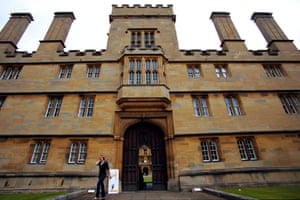
The University of Oxford. Wadham College.


Wright’s college, Wadham, finally agreed she could take the year off – with conditions. She was not allowed on college grounds, and had to take re-entry exams. Photograph: Frank Baron for the Guardian

These re-entry exams are not official Oxford University policy but are usual practice in many colleges. In some cases, students have been required to sit the equivalent of all their finals, and get a 2:1 in them, to rejoin their course.


Last year, one student, Sophie Spector, at Balliol College, claimed she felt forced to leave Oxford altogether because of these kinds of exams, a case human rights lawyer Chris Fry described as “one of the more extreme examples of discrimination I have seen”.


In contrast with many universities, the vast majority of marks at Oxford are awarded based on exams sat at the end. Finals can be upwards of 30 hours of exams and are a test of mental and physical stamina as much as academic skills and knowledge. The arguments against changing the system are always the same – to protect the integrity of the course; the “unique” Oxford experience. But intellectual rigour has been confused with physical or mental fitness.


Sophie Spector

Sophie Spector says she felt forced to leave Balliol College after becoming ill

I spoke to several others who had been through “rustication”. One, who graduated in 2015, had been suffering mental health problems that led to her self-harming. Letters from her college, seen by the Guardian, refer to her “behaviour” at the time as “serious misconduct”. One referred to university regulations and told her that she was being suspended on disciplinary as well as medical grounds. She was not permitted to use college facilities, including “common rooms, the computing room, the dining hall, the lodge, the library and the college’s accommodation”.


She says: “At no point did I feel the main consideration was for my wellbeing. Rather than focus on sorting out my problems, I spent the year trying to recover from the trauma of having rusticated. My doctor told me a senior member of my college had described me as a ‘freak’.”


A recent history graduate summed up her feelings after asking for a year off as “humiliated”. She was told in a letter that she was not allowed to go into her college without written permission during her suspension “to ensure that students on course are not disrupted”. She was expected to sit two exam papers and achieve a mark of 60% before she could return. “Basically the whole process felt punitive, like I was being subjected to it because I had misbehaved.”


One college, Magdalen, was criticised for forbidding “rusticated” students from attending a college ball.


Many students are, thankfully, treated much better, but individual colleges are free to make many of their own rules, and students’ experience can be largely determined by senior staff. If tutors have an appropriate understanding of illness and disability, students are well supported. But change in Oxford is slow. Even the university’s own disability service, which I found helpful and supportive, cannot overrule the decisions of colleges in many cases.


Oxford students have been campaigning for improved care of sick and suspended students for years. Recently there have been minor reforms – “suspended” students can now borrow from university libraries in their year out and retain access to their email. But this does not go nearly far enough.


I put a comprehensive set of questions to the university covering the points made in this article. This was the response: “Suspension of study is a rare but helpful measure used by all universities to support students. Most suspensions are either at the student’s request or with their full agreement. We know it helps the overwhelming majority of students, who return to complete their courses successfully.


“Suspension is not something to be undertaken lightly, so colleges always make sure students explore every possible source of support before suspending. There is no question of students not being believed or supported when they experience difficulties. It is important that students only return when they are fully prepared to do so. In some cases, the assessment of fitness to return includes the setting of college exams.


“The colleges are working in consultation with Oxford University student union on a common approach and discussing both access to college facilities during suspension and academic conditions for return to study.”


In the end, I graduated in 2015 with a first, very much in spite of the extra obstacles I had experienced. Although my health has improved with time and rest, I am still debilitated. I believe that if Oxford had handled my illness more sensitively, it would have aided my recovery.


What do other universities do?


How unusual is Nathalie Wright’s experience? Education Guardian contacted 30 universities to find out about their procedures when a student needs time off for medical reasons – an “interruption” or an “abeyance”, as it’s usually called. The word “rustication” seems confined to Oxford, Cambridge and Durham – and in most institutions a “suspension” is more likely to be the result of some sort of misdemeanour.


We asked whether students were required to see an official “university doctor” or specialist, in addition to their own GP, for proof that they were ill. The answer, from those that replied, was “no” – all said a family doctor’s note was good enough.


Most said students who took time off were welcome to use campus facilities or visit friends and attend social functions, with a few restrictions. When attendance was not feasible, “virtual” access to libraries and virtual learning environments was often arranged.


All the universities that replied, with the exception of Cambridge, said they never set exams to check whether students had the required academic ability to return. The Cambridge spokesman said exams were sometimes set, but this was rare. “It’s a welfare issue because we’d want the student to be well cared for. We’d want both student and college to be reassured they were ready to come back and finish their degree.”


But is it right to equate performance in an academic exam with mental or physical health and fitness to return to studying? “Doing exams to prove you are fit is something I have never heard of and may be of little, if any, practical use,” says Ruth Caleb, head of counselling at Brunel University and coordinator of the Mental Wellbeing in Higher Education working group. “Many mental and physical conditions, such as depression, anxiety, ME, Crohn’s disease or irritable bowel syndrome, are fluctuating so a student might be fit at one point, then unfit, or less fit, at others.” described the wide variety of services available in universities.


There is little if any guidance for universities on how best to look after students who need to take a break from their studies. However, most institutions, motivated by the wish to see students complete their course, offer extra support on their return. Alice Woolley


My final year at Oxford, when I felt punished for having ME

29 Aralık 2013 Pazar

Dry January: I felt great final time but I still dread it

We now come on to the topic of lunch. When I am on my personal, drink is not an problem. I can cope with water, and have a glass of ginger beer if I am feeling adventurous. With buddies or company contacts, it is a different matter. In a restaurant, I am quite incapable of getting by without opening a bottle of wine.


There is a very odd point about giving up alcohol. If I take place to be in a spot exactly where there isn’t any drink, I do not miss it at all. I can travel for several weeks or even months and exist perfectly happily on water.


However, the minute I know there is alcohol to be had, it grow to be a necessity. This obviously displays weakness of character. I suspect a lot of of my buddies suffer from the identical dilemma.


On the one particular hand, we are probably not alcoholics. Then again, we’re absolutely not teetotalers either. We belong to an uncertain intermediate class. Alcohol is our drug, our way of dulling the pain of day-to-day existence.


On the whole, I feel it does much more very good than harm. It tends to make one somewhat far more generous in spirit and I think a lot more disposed to be variety to other people. Alcohol helps make daily life much a lot more entertaining when you are with friends. Even far more crucially it makes bores tolerable.


On balance, I think that consuming too much is most likely far better than drinking as well little. Franklin D Roosevelt, the best US president of the final century, who is explained to have been a heavy drinker, is a situation in point. At the other end of the spectrum, you have the catastrophic George W Bush, who would have been a significantly better president had he taken the occasional drink.


Contemplate the information. In 1823, when the American republic was at its most vigorous and manly, the consumption of pure alcohol per capita was 28 litres, the equivalent of 318 bottles per head.


In 2011, with America in galloping decline, that figure has sunk to a miserable to 9.four litres, the equivalent of a paltry 104 bottles of wine.


This is also accurate of Britain. In the 18th century, most British people were drunk for most of the time, largely on beer and gin. Nowadays, by contrast, we hardly drink at all. Nevertheless the 18th century was an age of prodigious cultural achievement and expansion. There is a direct, demonstrable correlation amongst consuming less and nationwide decadence.


Bear in mind that Charles Kennedy was by far the greatest Lib Dem leader they have had given that their formation. I was a political correspondent during Mr Kennedy’s leadership and never ever did I find out any proof at all that his drinking (which I suspect was exaggerated) did him the slightest harm. It was a device utilized by his political enemies (who were possibly spiteful teetotalers) with an eye for the primary chance to destroy his leadership.


But historians will judge Charles Kennedy a key figure in the Lib Dem revival of the last quarter century. William Rees-Mogg, former editor of The Times, wrote that “George Brown drunk is a greater man than Harold Wilson sober”. This comparison also applies to Charles Kennedy and Paddy Ashdown, or FDR and George W Bush. Donald Trump is an additional teetotaler, as is Robert Mugabe, and so as well was Hitler.


Present day lifestyle has been drastically diminished by the campaign towards alcohol, waged by physicians and valetudinarian lobby groups. Go back 50 many years. Men and women drank far a lot more and thrived. The thought of a lunch with no alcohol was unthinkable. The eminent literary critic Edmund Wilson used to purchase several dry martinis all in one particular go and it never seems to have impacted the high quality of his work.


James Bond is an additional crucial situation in stage. 007 was capable of drinking prodigious quantities all day prolonged although single-handedly conserving the planet and seducing numerous gorgeous girls. Not too long ago, a group of doctors have claimed that Bond would have been a rotten spy and useless in bed.


To my eye, this seems to be like propaganda, and heavily suspect. Heavy consuming is no obstacle to overall performance in both sphere. Bear in mind that Ian Fleming had himself worked in the naval intelligence, and – in contrast to the medical professionals – had direct, personalized information of what he was speaking about. I suspect it was one of these physicians who thought up Dry January. The best solution is to keep away from temptation as much as possible. Lunch can be skipped altogether it draws a single as well readily into speak to with bores.


The evenings are more problematic. David Munk, foreign editor of the Telegraph, has given me some important tips. He says that if you consume a meal as quickly as achievable following arriving residence, that need for a drink to mark finish of the functioning day gets much less acute.


Nonetheless, I know it is essential to stay as dry as I can throughout January. Drinking is a very very good pal but a really undesirable master. I have witnessed it destroy the lives of a quantity of individuals, and that is due to the fact they allow it handle them, rather than the other way around. But as soon as in a even though, it is crucial to show to myself that I can get by with no it.


* One of the approaches to remain committed to the Dry January challenge – to go for 31 days with no drinking – is to ask your pals and family members to sponsor you. Set up your sponsorship on-line at dryjanuary.org.uk and increase income for a excellent result in although you are not consuming. The funds you donate will aid Alcohol Concern make a real difference and assist increase awareness of the problem of alcohol misuse. For full details, go to the Alcohol Concern site


Dry January: I felt great final time but I still dread it