urge etiketine sahip kayıtlar gösteriliyor. Tüm kayıtları göster

1 Nisan 2017 Cumartesi

NHS recruits must be given special status after Brexit, MPs urge

The government is under intense cross-party pressure to guarantee that EU nationals will still be able to work in the NHS, as concern grows that Brexit will cause a critical shortage of nurses and doctors.


Tory, Labour and Liberal Democrat MPs said ministers must not only guarantee that EU staff already working in the NHS can stay, but also that recruitment from EU countries can continue.


The calls for NHS workers from the EU to be given special status as Britain heads towards Brexit were echoed by former Tory health minister Dr Dan Poulter, who now combines his role as an MP with work as an NHS psychiatrist. Poulter told the Observer that unless action were to be taken on both fronts – to reassure those already here and to ensure a future flow from the EU – services to patients would be soon be seriously affected.


“The NHS is heavily reliant on the contributions made by many dedicated EU healthcare professionals, and without them, our health and care system simply wouldn’t be able to cope,” Poulter said.


“Protecting the rights of EU nationals to continue to live in the UK and care for patients is essential, but it is also important that we look after the best interests of the patients of tomorrow. Having the right work visa rules to ensure that in future, healthcare professionals from within the EU can continue to contribute to the NHS and care for patients, must be a priority.”


Poulter said he knew of many colleagues from EU countries who were concerned and of two fellow doctors who were planning to return to Spain by the end of the year. Fears that there could be a mass exodus from the NHS are growing as evidence mounts that EU nationals are already beginning to leave. Some 17,197 EU staff, including nurses and doctors, left their posts last year, compared with 11,222 for 11 months in 2014.


Merkel calls on all sides to protect everyday lives of EU citizens in UK – video

The supply of doctors is already a serious worry. A total of 10,363 – nearly 10% – of those working in England’s NHS Hospital and Community Health Services (HCHS) last year were from other member states.


Labour’s health spokesman, Jon Ashworth, highlighted NHS data showing that there are 22,081 EU nationals working as nurses in an NHS which is struggling to fill 26,000 vacancies.


Ashworth said: “This NHS crisis will be compounded if the 140,000 EU nationals working in the NHS and social care sector walk away. It’s time for an ‘NHS guarantee’ for these workers ensuring their rights – offering these workers who care for our sick and elderly the certainty that they deserve.


“What’s more, we need urgent guarantees that the NHS will be able to continue recruiting from the EU as it currently does. Yet we have no clarity whatsoever from the prime minister. Will health professionals from the EU be able to come to work in the UK after Brexit, will there be a cap on their numbers? The government need to tell us their plans and quickly.”


The Liberal Democrats are also demanding that the government grant an urgent “NHS passport” to every EU citizen working in our health service to encourage them to stay.


Theresa May has so far refused to guarantee that EU nationals will be allowed to stay after Britain leaves the EU. The prime minister reiterated last week when article 50 was triggered that she would not do so unless the rights of UK citizens living in other EU states were also guaranteed.


A total of 2,348 doctors from the 27 other EU states left NHS England between July and September 2016 compared with 1,281 in the same period in 2015. That is a rise of 83%.


There were also warnings yesterday that a potential exodus of EU workers could hit other sectors. A spokesman for the CBI said: “Since the referendum, we have heard from members in sectors who depend on EU workers to fill local shortages that they are having difficulties filling.”


As the growing season approaches for ​Britain’s £3bn horticulture industry, recruiters warned that it would be hit particularly hard by staff shortages. The head of the largest Romanian employment agency for temporary workers in the UK called on the Brexit secretary, David Davis, to be clear that EU workers still enjoyed the same rights.


“There was a lot of talk about restricting the rights of Romanians on the day article 50 was triggered but that did not happen in the end. For the next two years of negotiations there should be clear messages​,”​ said Alexandru Barbacaru​ of Est-Vest Services​​.


NHS recruits must be given special status after Brexit, MPs urge
20 Şubat 2017 Pazartesi

Hesitant To Ask What’s In That Vaccine? – The 1 Life Saving Question I Urge You To Ask

Despite what you may have been fed by the CDC and their cohorts in the media, vaccines are not an argument of duality.


There are, in fact, 4 different ways of looking at this increasingly important vaccine debate, and they are;


-Pro vax


– Anti vax


– Delayed scheduling vax and


– Selective vaccinating.


Anti vaxxer!”


So, why is it that any time someone questions the safety of vaccines, everyone loses their minds, and starts screaming “Anti vaxxer!” That seems a bit odd to me, as it does to a lot of other sane and rational people that wonder about vaccine safety.


Why is that?


With all 4 opinions of vaccines, safety is supposed to be the paramount consideration, so this is bound be be an emotive subject for everyone.


Ok, so let’s get our logical, scientific and rational thinking caps on for a bit. Forget everything else for a second, and ponder this stand alone statement…


We are INJECTING organic AND INORGANIC substances into our tiny babies.


Inorganic Compounds In All Vaccines


In a 2017 research study it was found that of 44 vaccines, 43 had inorganic compounds in them such as; aluminium, hafnium, tungsten, nickel, antimony, chromium, silver, bismuth, strontium, iron, chromium, lead, cerium, platinum, zinc, gold and zirconium…all injected into human bodies.


That 1 vaccine that did not have inorganic compounds? A cat vaccine.


Can We Agree?


I’m not really sure if an ‘agree to disagree’ attitude is really appropriate on this subject. There is a LOT of money and lying going on and that is why you MUST do the research AND follow EVERY trail back to it’s source AND comprehend what it all means. If you don’t, you MIGHT be putting your child at risk of death or life long disability. NO parent wants that pain, shame and guilt on their conscience!


Ask That 1 Question


Do everyone a favour and ask just this ONE, potentially life saving question, of your doctor: “What’s in it?”


Watch them carefully to see what kind of bluster comes out of them. When requesting to know the ingredients that are in a vaccine, you can expect a lot of different responses.


Those varied responses will range from an indulgent smile (the kind reserved for cheeky children) to out right indignation. Odd responses to a question concerning your child’s safety, I’m sure you will agree.


If You Get Past That 1, Here’s Your Next Question…


What kind of brain dead zombie would do that?” The truth is that there are a million reasons why.


Some just haven’t stumbled upon the hidden-in-plain-sight corruption in the industry, some people are cowed down by fear spewed at them via all media outlets. Some people think that these stories of death and disability couldn’t possibly be true, and others just don’t know how prevalent they are.


My excuse is that, I was young, yes all mine were vaxxed before I thought “Duh! ASK!”


The Life Gift Of Questioning


I got lucky, eventually, that I matured into a nosey and questioning type of person. But, some people find it hard, I get that. Just remember your questions, and keep your child’s safety uppermost in your mind as you resist the fear tactics and pressure exerted to have these shots, that’s IF you don’t want them.


I’m passing this gift of questioning to you, right now, for your children. What’s wrong with asking? Nothing. Everything is right with asking “What is being injected into my child?”


(There’s always a chance that you find the ingredients list acceptable and continue on your merry way with vaccinating your children. I wish you good luck and I’m here for you when you’re ready for your heavy metal detoxing.)


What Information Can You Trust?


I highly recommend starting with Robert Kennedy Jr (RFK), someone that has no financial stake in the outcome of this issue. ALL his 6 kids were vaccinated before he learned what was in them. Even HE didn’t know to ask questions and blindly trusted others to tell him what was safe.


In addition, he has sued 500+ companies when he was litigating the issue of mercury contaminated areas in the U.S. ie when it comes to heavy metal contamination, AND being very familiar with reading scientific research papers, this guy knows what’s going on and has done his research.


One out of every 6 children has a neuro-developmental disorder according to the CDC”


1micro gram equals a trace amount. The flu vaccine has 25micro grams. There are concerns that foetuses of pregnant women could be getting up to 1 million times the CDC safe limits.”RFK Jr


Does that sound like our kids are healthy to you? Doesn’t that statistic seem heartbreakingly absurd!?


More Important Questions


– Who wouldn’t want to make sure what was injected into their child is safe?


Why is there 25micro grams of mercury in some vaccines when the CDC says that only 1micro gram is the safe level of exposure to mercury?


Please, Please, Start Asking Questions!


I can’t urge you any more strongly to thoroughly investigate this issue of what’s in vaccines before you allow anyone to inject your child with them. I’m pretty sure your kids would do it for you!


Remember this well…ALL vaccines, to get approved for use, rely SOLELY on the manufacturers research.


References


https://worldmercuryproject.org/ 


http://vactruth.com/vaccine-inserts/ 


http://files.slobodavockovani.sk/200002051-54955558f5/Gatti_-_New_Quality_Control_Investigations_on_Vaccines_Micro_and_Nanocontamination_-_sk.pdf


Hesitant To Ask What’s In That Vaccine? – The 1 Life Saving Question I Urge You To Ask

27 Ocak 2017 Cuma

Labour MPs urge Priti Patel to stand against Trump"s "global gag" rule

MPs are calling on Priti Patel to take urgent action to support charities that provide women with information on abortion in an effort to limit the impact of one of Donald Trump’s first acts as president.


Six Labour politicians have written to the development secretary suggesting Britain takes similar steps to the Netherlands, which is planning to form an overseas fund after the US ruled that it would stop providing aid to international groups working in this area.


“As we are sure you are aware, the new US president Donald Trump signed an executive order blocking funding for a number of international NGOs that support women’s rights and family planning,” the MPs wrote, about what has been dubbed the Mexico city policy, or global gag rule.


“We would implore you to take urgent steps on funding and policy as the Dutch government has and as the UK government has done so previously, to mitigate the impact of this decision.”


The group – Stephen Doughty, Stella Creasy, Gareth Thomas, Stephen Twigg, Luciana Berger and Anna Turley – praise Patel for championing the work of the Department for International Development (DfID) for women and girls in developing countries. They say it has focused on access to education, health services, family planning, better nutrition and water and sanitation.


“The department has been at the global forefront in helping poor women to lead healthy and productive lives, and to increase voice, choice and control for girls and women,” they add, warning that Trump’s decision could undermine DfID’s work.


They highlight the Dutch plans for a fund to help projects providing access to birth control, abortion and women’s education.


“If Britain is going to show the kind of global leadership the prime minister suggests, then we need to put our money where our mouth is and step in when others fall short” said Creasy, who helped organise the London Women’s March.


“Cutting funding for reproductive healthcare doesn’t end abortion, it ends safe abortions. Trump may not realise that but Britain does and should act accordingly.”


What is the ‘global gag rule’, and why does Trump support it?

Doughty, a former aid adviser who sits on the development committee, argued that Trump had delivered a “sinister start” to his presidency.


“At a time when Donald Trump is advocating torture and slashing contributions to the UN – they are also gagging women’s rights organisations,” he said, urging Patel and Theresa May to try to undo some of the damage.


Thomas, who is a former DfID minister, said he had previously been involved in a decision to set up a fund after George W Bush, the last Republican president, stopped US aid funding safe abortion and family planning.


“We worked with allies in other development agencies to try to ameliorate the consequences of George Bush’s decision,” he said. “Now that Trump has followed suit I hope Theresa May will instruct DfID to once more lead the development community to help close the gap and thus support the rights of women across the world to live the life they want to.”


A DfID source said. “The secretary of state has spoken about the fact that family planning in development is an important priority to her. We will continue to show global health leadership by working to deliver this‎.”


Labour MPs urge Priti Patel to stand against Trump"s "global gag" rule

5 Ocak 2017 Perşembe

Doctors urge Theresa May to publish anti-smoking strategy

More than 1,000 doctors, including heads of royal colleges and public health institutions, are calling on the prime minister to publish the latest tobacco control plan without delay.


In a letter to Theresa May, the senior doctors say the plan is essential to drive down smoking rates, which are highest and most damaging to health among the least well-off. The plan was due to be published last summer.


Reminding May of her commitment to “fighting against the burning injustice that if you’re born poor, you will die on average nine years earlier than others”, they point out that half of that difference in life expectancy is caused by smoking.


The letter, which is being published in the British Medical Journal, is being sent to May by Dr Andrew Furber, president of the Association of Directors of Public Health, and Prof John Middleton, president of the Faculty of Public Health.


Furber warned that progress against smoking, which has been good in recent years, could slip. “Directors of public health in local authorities are charged with the responsibility of reducing smoking prevalence. But to succeed needs leadership at national as well as local level,” he said.


“The government must renew the tobacco strategy without further delay. Otherwise we risk losing the momentum gained from recent welcome changes such as standardised packing.”


Middleton said: “Smoking rates have declined over the years, in large part because of concerted government action. However rates are still highest amongst the poorest and if the prime minister truly wants to increase the life expectancy of the poorest in society her government needs to renew its tobacco control strategy, which expired over a year ago.”


The first tobacco strategy in the UK was the Blair government’s white paper, Smoking Kills, published in 1998. Other plans followed, including Andrew Lansley’s in 2011, then health secretary in the coalition government, which included a commitment to consult on standardised cigarette packaging.


Some anti-smoking measures have been a response to EU legislation, such as advertising and promotion bans. However, says Deborah Arnott, chief executive of Action on Smoking and Health, tobacco control strategies have reduced smoking rates in England faster than in some other European countries, particularly among children.


In 1998, 24% of 15-year-olds were smoking, but by 2014 that proportion had dropped to 8%. “France and Germany had European legislation but their rates have not gone down as fast,” she said.


There is also evidence that smoking rates can rise again if the pressure is eased. New York City’s successful Tobacco-Free Living initiative, which lowered smoking rates from 21% in 2002 to 14% by 2010, suffered funding cuts to mass media campaigns from 2009. By 2011, smoking rates rose, reaching 16.1% in 2013, but fell again after more investment in 2014.


Experts hope the new UK tobacco control plan, which has been delayed in part because of the Brexit vote and its fallout, will plot the course for driving smoking rates down to 5% by 2035, which a report from Cancer Research UK said was feasible.


“What we want is a smoke-free future,” said Dr Nicholas Hopkinson, a consultant chest physician at the Royal Brompton hospital and reader in respiratory medicine at Imperial College, who coordinated the letter.


Support for mass media campaigns is needed, he says, as well as the continuation of policies on the cigarette pricing and tobacco smuggling. Spending on media campaigns in England has dropped in the past five years from just under £25m in 2009-10 to £5.3m in 2015, although evidence shows they help people quit.


“It is absolutely clear these interventions work. It is just keeping up the momentum and making sure there is a high priority to this,” he said. “There are 9 million smokers in the UK, and smoking is increasingly associated with inequality – it is quite a bit higher in the poorer parts of society.”


Among the signatories are the heads of several medical colleges. One of them, Prof Neena Modi, president of the Royal College of Paediatrics and Child Health, said: “Most smokers become addicted as children and once addicted find it extremely difficult to quit. Since the government introduced a strategy to tackle smoking in 1998, smoking rates among 15-year-olds have fallen by two-thirds.


“We must not put that achievement at risk. The last tobacco strategy expired over a year ago, so we want to see the new plan published and enacted as a matter of urgency.”


Doctors urge Theresa May to publish anti-smoking strategy

19 Aralık 2016 Pazartesi

MPs urge government to do more to combat "unacceptable" UK suicide rates

Access to websites and social media platforms that tell people how to kill themselves should be restricted, according to MPs, who are warning that the government is not doing enough to bring down the “unacceptable” suicide rate in the UK.


The House of Commons health select committee, chaired by the Conservative MP Dr Sarah Wollaston, is calling on ministers on Monday to “work with internet providers and social media platforms to consider what changes can be made to restrict access to sites which encourage self harm or give detailed advice on suicide methods”.


They said they had taken evidence from a recent study by the University of Bristol that exposure to suicide content, including reading about others’ attempts, had served to validate or justify suicide as an acceptable course of action.


Suicide rates are still ‘unacceptably high’ in the UK.

Detailed information about methods of suicide and the relative painfulness of different techniques is available instantly through search engines including Google. According to Suicide.org, a suicide prevention charity, “pro-suicide websites, groups, and bulletin-boards continue to expand.”


Earlier this year, the National Society for the Prevention of Cruelty to Children revealed that its Childline service is being contacted by record numbers of children and young people who are struggling with suicidal thoughts and feelings.


The call for action came as the government prepares to renew its suicide prevention strategy. “4,820 people are recorded as having died by suicide in England last year, but the true figure is likely to be higher,” said Wollaston. “Suicide is preventable and much more can and should be done to support those at risk.”


The suicide rate in 2013 was the highest it has been since 2001, and the 2014 and 2015 rates were only marginally lower. Suicide is highest among men, who account for three-quarters of all such deaths, and it remains the biggest killer of men aged under 49. Rates among women are rising too. However, rates have been on an overall downward trend since 1981 everywhere in the UK apart from Northern Ireland, where they spiked in 2005 and 2006 and remain the highest anywhere in the UK.


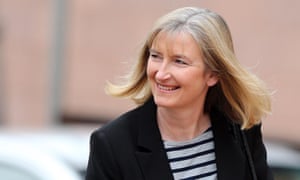
Dr Sarah Wollaston MP.


Dr Sarah Wollaston is leading the committee calling for restrictions to be placed on certain websites. Photograph: Peter Byrne/PA

The select committee is urging the government to increase support for public mental health and early intervention services. It found that around a third of people who end their lives by suicide are in contact with their GP before their death, but are not receiving specialist mental healthcare. Another third are in the care of specialist mental health services.


“GPs need better training in suicide risk,” the report states. “All patients being discharged from inpatient care should receive follow-up support within three days of discharge rather than the current standard of seven days.”


A Department of Health spokesperson said it recognises that “every death by suicide is a tragedy and devastating for families, friends and communities”. “We are investing almost £1bn in providing mental health support in A&E and home-based crisis care — and are currently updating our suicide prevention strategy, which we are confident will address many of the issues raised by the committee,” they said.


NHS England has set a goal to reduce suicides by 10% by 2020.


A spokesman for the NHS Confederation, which represents NHS trusts, said: “Developing mental health services is essential, but money hasn’t come as quickly as promised, and this is holding-up progress. For too long we have seen year-on-year increases in prison suicide and there are worrying trends around children’s mental health, too, with insufficient investment to improve their care.”


The health select committee also called for those bereaved by suicide to receive better primary and secondary care, and said media guidelines on the reporting of suicide were being widely ignored and that greater attention should be paid to breaches of the rules. The MPs claimed that too many newspapers and broadcasters use the term “commit suicide”, which they said “reinforces stigmatising attitudes from when suicide was a criminal offence”.


In the UK, the Samaritans can be contacted on 116 123. In the US, the National Suicide Prevention Hotline is 1-800-273-8255. In Australia, the crisis support service Lifeline is on 13 11 14. Hotlines in other countries can be found here.


MPs urge government to do more to combat "unacceptable" UK suicide rates

12 Aralık 2016 Pazartesi

Women"s groups urge Scotland to scrap two doctors abortion rule

The Scottish government should scrap the legal requirement for two doctors to approve a termination, effectively decriminalising the procedure, and consider regulating abortion drugs for use by women in their own homes, according to a report by a coalition of women’s rights organisations.


With abortion law devolved to Holyrood as part of the Scotland Act 2016, the report argues that the SNP government must now “be bold in creating a distinctive approach” by removing it from criminal statute and regulating it like any other healthcare procedure.


The campaigners – including Amnesty Scotland, NUS Scotland and Scottish Women’s Aid – are calling on politicians to “make a woman’s legal right to choose a reality” by removing the two doctors rule.


Under UK law abortion is permitted for non-medical reasons up to 24 weeks and with the permission of two doctors. The SNP reaffirmed its commitment to current legal protections and to maintaining time limits in line with the rest of the UK in its spring manifesto.


But the report insists it is time to go further, arguing: “There is an opportunity within the devolution of abortion law to develop a distinct Scottish approach to women’s reproductive health and the strengthen women’s rights.”


Since the devolution of abortion law was announced last November, some pro-choice campaigners have raised concerns about the risk of anti-abortion groups exploiting cross-border differences.


Others have suggested the surge in political engagement, particularly among women, brought about by the 2014 independence referendum campaign could bolster any forthcoming drive to extend abortion rights in Scotland.


On a visit to Dublin two weeks ago, Scotland’s first minister, Nicola Sturgeon, said her government would explore how to allow Northern Irish women to obtain free access to abortions in Scotland’s NHS hospitals.


Abortion is legal in Northern Ireland only when the pregnancy poses a direct threat to the mother’s life. The NHS has so far refused to pay for abortions for Northern Irish women who travel to Britain.


Emma Ritch, executive director of the feminist campaign group Engender, which spearheaded the report, said: “It does seem there is a very unique status given to abortion, in that it is the only type of healthcare in which this criminalisation exists. We would want to see decriminalisation happen so that abortion was regulated in the same way as any other type of healthcare.


“Any Scottish approach to abortion should be based on international best practice, so we could adopt a situation as in Canada where there is no criminal law when it comes to abortion. While the debate around time limits is not a focus of the report, there is no compelling evidence of a reason to have time limits at all. Research shows that women want to access abortions at the earliest possible stage, and allowing later-term abortions does not significantly increase demand.”


The report criticises NHS Scotland for lagging behind England in its provision of later-term abortions, with terminations for non-medical reasons not normally available after 20 weeks, forcing some women to travel south.


It also suggests the Scottish government should consider regulating the provision of medical abortion drugs to allow terminations in early pregnancy to be carried out at home. A total of 12,082 abortions were carried out in Scotland in 2015, about 80% of which took place before 12 weeks of pregnancy.


The report counters the assumption that Scottish social attitudes, influenced by strong religious traditions, are more anti-choice than elsewhere in the UK. It says that according to polling carried out in the last year, 75% of Scots support a woman’s right to choose.


Women"s groups urge Scotland to scrap two doctors abortion rule

29 Kasım 2016 Salı

Stop asking us to deliver the impossible, NHS trusts urge ministers

Ministers and NHS bosses are being urged to stop asking the health service to “deliver the impossible” of higher standards of care when it is being denied the money it needs to do its job properly.


The plea from the organisation that represents NHS trusts in England was accompanied by a blunt warning that care for patients is already deteriorating and that even a flu outbreak could “destabilise” some hospitals this winter.


NHS Providers, whose member trusts receive £65bn of the NHS’s £100bn annual budget, says the health secretary, Jeremy Hunt, and the NHS England chief executive, Simon Stevens, are making unrealistic demands of the service.


“The government has said there will be no more money. The government and our system leaders have said that the NHS still has to deliver everything that is currently being asked for,” Chris Hopson, the chief executive of NHS Providers, will say on Tuesday.


He will dismiss the idea that the NHS could hit its tough financial targets this year while also transforming how it delivers care, giving every patient high-quality care, meeting a host of waiting time targets, implementing the government’s “seven-day NHS” pledge and also improving patient safety.


Ministers and NHS bosses should scale back their expectations of what the NHS can do in all those areas given its parlous finances and the government’s refusal to boost its budget, Hopson argues.


Three-quarters (73%) of NHS trust bosses believe they do not have enough staff to function properly, according to a new NHS Providers report on the state of the NHS in England. More than half (55%) say they are worried or very worried by their organisation’s lack of staff. Many trust chairs and chief executives now say the difficulty in recruiting personnel is as onerous as balancing their books.


In a survey of 172 bosses from 136 of England’s 238 trusts, one said: “There are simply not enough high-quality clinical staff in the country to cover some specialities.” Another said: “Brexit has caused drying up of recruitment from the rest of Europe.” Widespread worry about the NHS’s workforce “concerns me more than the money”, said a third boss.


Just 10% are confident or very confident that they can maintain the level and quality of services they currently provide over the next six months because money is so tight. Nearly half (49%) expect their financial position to worsen over that time.


Hopson will tell his organisation’s annual conference that the government’s decision not to put more money into a cash-strapped NHS raises “four main risks. The first is that the service the NHS provides is now starting to deteriorate”, and that the deterioration will accelerate because of the “crisis” in social care services.


The NHS is also becoming less resilient, he will add. “When you run a system under as much pressure for as long as we have been running the NHS, it becomes much less able to absorb the shocks that any health system has to absorb – the winter flu outbreak [or] closure of a couple of care homes [or] a few experienced GPs retiring and being replaced by more risk-averse locums”.


In addition, Hopson will say, “pressure on staff and leaders becomes intolerable, which erodes morale”. Hopson is also worried that pressures are so great that “the invisible bond of mutual trust and faith between the government and NHS system leaders, on one hand, and frontline leaders, on the other, is starting to fray”.


NHS Providers’ warnings on staffing come as an audit of NHS stroke services in England, Wales and Northern Ireland found that patients who have suffered a stroke do not always receive optimum care because many units have too few nurses and doctors, especially at weekends.


Nearly half (49%) of stroke units do not have the recognised minimum number of nurses needed to ensure good care, according to the Sentinel Stroke National Audit Programme. At weekends as many as 80% of units do not have the three nurses per 10 beds that is recommended. In addition, 40% of units have at least one vacancy for a consultant and 28% do not provide consultant-led ward rounds every day of the week.


Staff shortages were a concern, the experts behind the audit said. A lack of nurses in stroke units has been shown to increase the risk of patients dying.


The Department of Health welcomed NHS Providers’ acknowledgement that trusts were treating record numbers of patients and also making good progress at reducing its collective deficit, which hit a record £2.45bn in 2015-16.


Stop asking us to deliver the impossible, NHS trusts urge ministers

24 Ekim 2016 Pazartesi

MPs urge chancellor to honour leave campaign"s £350m NHS promise

Dozens of MPs have signed a joint letter, organised by a group that aims to hold leave campaigners to their pre-referendum promises, which calls on the government to uphold the most infamous Brexit promise of all – £350m more a week to be spent on the NHS.


The letter, signed by 41 MPs, mainly from Labour but also some Liberal Democrats and Caroline Lucas of the Greens, demands that the chancellor, Philip Hammond, make the pledge in his autumn statement a month from now.


The £350m pledge was a key element of the Vote Leave campaign’s promise to voters, billed as money that would be saved after leaving the EU which could instead go to health spending.


In the wake of the 23 June referendum many leading pro-Brexit figures began to distance themselves from the idea, a process highlighted in a new Vote Leave Watch video to accompany the letter.


Last month it emerged that a successor group to Vote Leave, Change Britain, had not included the pledge among its aims.


The letter, addressed to Hammond, noted that the chancellor’s speech to the Conservative party conference earlier this month said that “the message of the referendum result had been ‘received, loud and clear’ by the government”.


The letter continued: “We accept the verdict of the British people. Yet it is clear that, if this mandate is to mean anything, it must include the single most visible promise of the leave campaign – spending £350m more a week on the NHS.


“In just under a month you will present your first autumn statement. We are calling on you to commit to increase national NHS spending by £350m a week – that is £18.2bn a year – as soon as this money becomes available by leaving the European Union. This additional funding must be over and above the amount that is currently planned to be spent on the National Health Service.


“Anything else will be a betrayal of the wishes of the British people. We challenge you, when you stand up in the House of Commons on 23 November, to show us the money and commit to Vote Leave’s promise; or explain why you cannot, and why your cabinet colleagues so cynically misled the British people.”


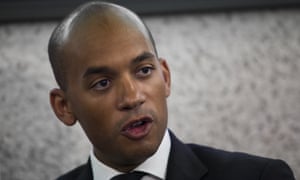
Chuka Umunna, the Labour MP who chairs Vote Leave Watch, said the message to Hammond was that “this Brexit government will not be able to run away from the promises of Brexit campaigners”.


Umunna said: “He has a month to work out how the government are going to find the money to keep this promise. If he can’t his pro-leave colleagues will have to explain why they misled voters during the campaign and are now breaking their promises.”


The full letter and signatories


Dear Chancellor,


We believe in a Britain with an excellent, well-funded public sector that provides a world-class service to the British people, pays its hard-working staff well and treats them with respect.


This was the vision of Britain promised by your cabinet colleagues who campaigned for a leave vote in the EU referendum. Vote Leave promised that, if Britain left the EU, £350m a week extra would be spent on the NHS. They travelled the country in a bus which said: “We send the EU £350m a week, let’s fund our NHS instead.” In the press conference suite at their London headquarters, a large sign read: “Let’s give our NHS the £350m the EU takes every week.”


The foreign secretary, the secretary of state for international trade, the secretary of state for the environment, the secretary of state for transport and the secretary of state for international development all appeared in photo opportunities featuring these messages. They made a very clear promise to the British people, and it is clear that a very large number of people believed this promise.


In your speech to Conservative party conference earlier this month, you said that the message of the referendum result had been “received, loud and clear” by the government. Members of the government talk of the “mandate” from the voters for Brexit.


We accept the verdict of the British people. Yet it is clear that, if this mandate is to mean anything, it must include the single most visible promise of the leave campaign – spending £350m more a week on the NHS.


Chuka Ummuna, the Labour MP who chairs Vote Leave Watch:


Chuka Ummuna, the Labour MP who chairs Vote Leave Watch: ‘this Brexit government will not be able to run away from the promises of Brexit campaigners.’ Photograph: Jack Taylor/Getty Images

In just under a month, you will present your first autumn statement. We are calling on you to commit to increase national NHS spending by £350m a week – that is £18.2bn a year – as soon as this money becomes available by leaving the European Union. This additional funding must be over and above the amount that is currently planned to be spent on the National Health Service.


Anything else will be a betrayal of the wishes of the British people. We challenge you, when you stand up in the House of Commons on 23 November, to show us the money and commit to Vote Leave’s promise; or explain why you cannot, and why your cabinet colleagues so cynically misled the British people.


Yours sincerely,


Chuka Umunna, Chair of Vote Leave Watch


Tom Brake, Patron of Vote Leave Watch


Norman Lamb, Patron of Vote Leave Watch


Emma Reynolds, Patron of Vote Leave Watch


Rushanara Ali


Ian Austin


Adrian Bailey


Kevin Baron


Tom Blenkinsop


Ben Bradshaw


Dawn Butler


Vernon Coaker


Mary Creagh


Stella Creasy


Julie Elliott


Chris Evans


Mike Gapes


Lilian Greenwood


David Hanson


Carolyn Harris


Tristram Hunt


Graham Jones


Stephen Kinnock


Peter Kyle


Caroline Lucas


Holly Lynch


Seema Malhotra


Conor McGinn


Alison McGovern


Ian Murray


Melanie Onn


Toby Perkins


Bridget Philipson


Rachel Reeves


Gavin Shuker


Ruth Smeeth


Angela Smith


Owen Smith


Wes Streeting


Anna Turley


Phil Wilson


John Woodcock


MPs urge chancellor to honour leave campaign"s £350m NHS promise

19 Eylül 2016 Pazartesi

Police urge home secretary to ban FGM practitioner from entering UK

Scotland Yard is urging the home secretary, Amber Rudd, to intervene in the case of woman from Sierra Leone who carries out female genital mutilation and is said to be seeking entry into the UK.


The Metropolitan police applied to the court for a female genital mutilation protection order and also for an order to prevent the woman from entering the UK.


But Mr Justice Holman, sitting in London, said the question of whether the woman could enter the country was a matter for the secretary of state, not the court.


The woman, who was not named in court, is understood to be Kharday Zorokong, who was part of a Sierra Leonean delegation that included the minister for gender, Dr Sylvia Blyden, to the 73rd session of the UN committee on the rights of the child in Geneva last week. Zorokong performs FGM, but is opposed to operations on children under 18. Campaigners feared that she would come to the UK as part of Blyden’s delegation after the meeting in Geneva.


Zimran Samuel, appearing for the police, said officers had been asked by acampaigner in her 40s, who was also an FGM survivor, to take action to ban the cutter.


Samuel did not name the cutter but said she had a “high-profile status” as the head of a council of cutters in her community. Because of her status, people in the UK would want to use her services, even although it is illegal here, he said.


Later, Samuel said that he was concerned that there was a “loophole” in the law set up to protect women and girls against FGM. While FGM orders, introduced in the serious crime bill, allowed the protection of named individuals, it did not allow protection in this case. He told the judge that a request to the home secretary to be stop Zorokong from entering the UK was “in motion”.


The judge said he found FGM “abhorrent and a terrible scourge on women”, but “the right thing is to try to get the secretary of state not to let this woman in”.


After the judge declined to make any orders, the Metropolitan police said in a statement: “The MPS is now considering what other options are available to prevent the entry into the UK of a person who may wish to carry out FGM.”


DS Wendy Morgan, from the MPS sexual offences, exploitation and child abuse command, said: “FGM is illegal and constitutes child abuse. A lot of work has been done to raise awareness over the last few years of this horrific practice, highlighting the short- and long-term health risks and the absence of any religious teaching that supports it. However, we are not complacent and more still needs to be done.


“The Met spends time highlighting the support available to those who may be at risk. When victims come to us with concerns over the risks they face, no matter what stage they are at in their life, the Met takes take these concerns very seriously.


“Police have a responsibility to act to protect vulnerable people and prevent people, especially the vulnerable, from becoming victims of crime. The Met will always to seek to follow the law to carry out this responsibility.”


Before the Ebola outbreak forced a temporarily ban on the practice, it was estimated that 88% of Sierra Leonean girls were cut, the seventh highest rate of the 28 countries in which FGM is practised.


While FGM is not illegal in Sierra Leone, ministers have proposed outlawing the practice among under-18s. But many anti-FGM campaigners in the country say this will have little impact, as it is traditionally the parents who make the decision of a daughter, irrespective of age.


Nimko Ali, an anti-FGM campaigner and founder of Daughters of Eve, said she welcomed the judge’s comment and was hopeful that Rudd would take action. She said that cutters in Sierra Leone had a powerful role and political clout in the country.


Ali said: “I’m hopeful that this will be successful. The symbolic nature of the judge saying: ‘I haven’t got the power but you should explore other areas’ is very welcome. The sense of impunity with which this woman (Zorokong) can sit on the UN and say that FGM is an act of consent. If she were to visit the UK it would be a propaganda mission.”


Anti-FGM campaigners from Sierra Leone have condemned Zorokong’s appearance before the UN. At the meeting, Blyden spoke about protecting under-18s from FGM but insisted that an adult women should be allowed to “do what she wants to her body”, ignoring the pressure upon women to undergo mutilation.


Yasmin Jusu-Sheriff, part of the Not In My Name coalition with Equality Now, said it was inappropriate that Zorokong was present at the UN last week.


The first ever recorded figures for FGM, reported in July, showed that between April 2015 and March 2016 there were 5,702 new cases in England. Most of the women and girls were born in Africa and underwent the procedure there, but at least 18 were subjected to FGM in the UK.


Police urge home secretary to ban FGM practitioner from entering UK

19 Ağustos 2016 Cuma

Childhood obesity: retailers urge mandatory cuts to food sugar levels

Leading retailers have criticised the government’s watered-down childhood obesity strategy, arguing it would be better if ministers imposed mandatory cuts to sugar levels in food rather than leaving it up to voluntary action by manufacturers.


The British Retail Consortium (BRC), representing grocers, said it was disappointed that the government would only propose voluntary reductions because that could lead to some manufacturers trying to taking advantage by retaining more sugar in their food products.


“We believe that the only way to achieve the targets that the government [has] set out is to ensure a level playing field across the food industry and previous experience with salt reduction has proven this to be the case,” said Andrew Opie, director of food and sustainability policy at the BRC.


Under the voluntary “responsibility deal” between the Cameron government and industry, some supermarkets cut the salt in own-brand products faster than others and found they were at a competitive disadvantage, Opie said.


Sainsbury’s said it supported compulsory sugar reduction targets and added that it was already removing multi-buy packs of sugary foods, which tempt people to purchase and eat more than they need. No restrictions on such promotions were in the government plan, even though they were recommended by Public Health England.


Related: Former ministers attack ‘massive damp squib’ of childhood obesity plan


“We need a holistic approach to tackle childhood obesity, including compulsory measured targets across all nutrients – not just sugar – and mandatory traffic light labelling across all food and drink products, regardless of whether they are consumed inside or outside the home,” said Mike Coupe, chief executive of Sainsbury’s.


The long-awaited childhood obesity strategy was released by the Department of Health on Wednesday, but was swiftly criticised. Food and drink manufacturers that reduce the amount of sugar in their products by 20% will escape a proposed sugar tax on soft drinks when it is introduced in two years’ time.


The strategy left out two measures that Public Health England had said would have the greatest impact on the childhood obesity epidemic: ending price-cutting promotions of junk food in supermarkets; and restricting advertising of unhealthy food to children through family TV programmes such as Britain’s Got Talent and The X Factor, as well as on social media and websites.


Two former health ministers also criticised the government’s plan to tackle childhood obesity. Dr Dan Poulter, a Conservative MP, said: “This is certainly not the ‘gamechanging’ plan for reducing childhood obesity that it had been built up to be.” Norman Lamb, a Liberal Democrat who also served in the last coalition government, said it was a “massive damp squib”.


Related: Childhood obesity: UK’s ‘inexcusable’ strategy is wasted opportunity, say experts


Jamie Oliver said the strategy was “underwhelming” because “so much is missing”. “I’m in shock,” added the celebrity chef, who was behind a campaign to improve school dinners. “The long-awaited childhood obesity strategy from Theresa May’s new government is far from robust, and I don’t know why it was shared during recess. It contains a few nice ideas, but so much is missing.


“Where are the actions on the irresponsible advertising targeted at our children, and the restrictions on junk food promotions? With this disappointing and, frankly, underwhelming strategy, the health of our future generations remains at stake,” Oliver continued.


Health experts, the food and drink industry and retailers all agree that sugar, the focus of the government plan, is not the only cause of obesity.Euromonitor, the respected data analyst, said it was unlikely that sugar was solely responsible for the obesity crisis in the UK or across Europe.


Sara Petersson, nutrition analyst, said: “In order to fight the current crisis, we will have to take on a more global approach to improving our diets. For example, our Passport: Nutrition data shows that, similarly to sugar, fat intake is also higher in diets of countries with higher overweight and obesity rates.”


Food Standards Scotland (FSS), the statutory body that advises the Scottish government, said the UK obesity strategy fell short of what has been proposed to ministers in Scotland.


“It is particularly disappointing that some crucial measures such as taking action on promotions and on advertising and marketing have been ignored,” said the chair of FSS, Ross Finnie. In January, the FSS board agreed a package of proposals, including regulation on food and drink promotions, portion-size reductions and tougher targets on the salt, sugar and fat content of foods and drinks.


Soft drinks manufacturers have been lobbying against the sugar tax since the former chancellor, George Osborne, announced it in March.


Related: Is a sugar tax enough to tackle childhood obesity? Our readers debate


“We agree with the government that obesity rates are too high, but we do not believe a tax on only some soft drinks with sugar will reduce them,” said a spokesman for Coca-Cola. “A policy focused on a single nutrient in a narrow range of products – that provide an average of just 5% of the total calories in a British teenager’s diet – is not the right response.”


Ian Wright, director general of the Food and Drink Federation, said the soft drinks tax was a disappointing diversion from effective measures to tackle obesity”. The 20% sugar reduction in foods such as yoghurts and desserts, he said, “focuses too strongly on the role of this single nutrient, when obesity is caused by excess calories from any nutrient”.


Health experts had little positive to say, even on the proposal that children should be encouraged to do an extra hour’s physical activity every day, because of its limited impact. “Exercise is good but exercise alone will not curb obesity,” said Professor Neena Modi, president of the Royal College of Paediatrics and Child Health. “It would take an hour of hard exercise to work off one chocolate chip muffin.”


  • This article was amended on 19 August 2016. An earlier version referred to “the 20% sugar reduction in foods, such as yoghurts, desserts, ketchup and pasta sauces”. Ketchup and pasta sauces are not foods that are subject to the sugar reduction targets, so the reference to them was removed.


Childhood obesity: retailers urge mandatory cuts to food sugar levels

2 Ağustos 2016 Salı

Users of HIV prevention PrEP urge NHS to fund "life-changing" medicine

Men and women across the UK at risk of acquiring HIV were offered hope after a high court ruled that a preventative treatment for HIV – known as PrEP – can be legally funded by the NHS.


Until now, those at risk of HIV transmission have been left with no choice but to obtain the preventative drug using private prescriptions or online pharmacies where the quality of medicine cannot always be assured.


Michael, 39, who lives in Sussex, buys Tenvir-EM – a generic version of Truvada, the drug used for PrEP – from online pharmacies. His partner is HIV positive and he takes PrEP to further reduce the “infinitesimal chances” of infection.


“The NHS is digging its heels on reviewing the drug so I, and many in my position, turn to internet pharmacies. I’d much prefer it to be available on the NHS. I would happily pay the prescription charge several times over, if only for the reassurance that the medicines are genuine. For now, I rely on good faith,” says Michael.


HIV campaigners ‘delighted’ by high court ruling on preventative drug.

NHS England said earlier this year that it would not routinely fund the drug as it claimed the treatment was preventative and not its responsibility. Instead, local councils were put in charge, which responded by saying they did not have the funds.


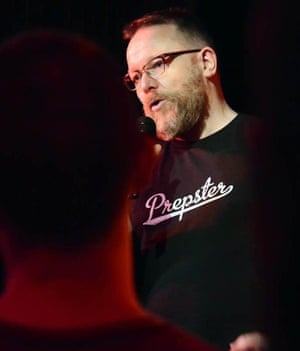
Dr Will Nutland, founder of Prepster – a PrEP awareness website – and a public health worker at the London School of Hygiene & Tropical Medicine, began taking the drug this year in part to protect against HIV transmission, but also to test the quality of online purchases.


“I’ve been sexually active for 30 years and I’ve always had the risk that HIV could be transmitted; condoms can break. I bought my first box of PrEP over a year ago as I wanted to demonstrate how easy it is to get hold of. It cost £45 from India. I thought, if I was advocating for it, then I must be prepared to take them myself. I found that, broadly, it was a simple process although I once had to pay 25% import duties,” says Nutland.


About 4,000 people acquire HIV in the UK every year. The average cost of a lifetime of treating each patient at current prices is put at about £360,000. Nutland believes that this cost could be eliminated.


Michael James, 49, from London, buys three months’ supply at a time from an online pharmacy in India at a cost of £150. But he is worried about safety, and angry with the NHS for discriminating against those at risk of HIV transmission.


“Of course it is a risk not knowing the quality and effectiveness of the medication but this is the only option many of us have. It’s a disgrace to be discriminated against in such a way by the government, who continue to handball the responsibility from authority to authority at the risk and expense of the individual,” says James.


Doctor Will Nutland


PrEP activist Will Nutland believes the drug could hugely reduce the number of HIV cases. Photograph: Nuno Lopez

Nutland isn’t personally concerned about the safety of PrEP bought over the internet, instead he believes the greatest problem is that those most at risk cannot afford to buy the drugs.


“There’s a Facebook group, where people swap information and batch numbers. There are about 100 of us in the UK, who test at sexual health clinics to measure the amount of the drug in our blood. There hasn’t been one person whose test hasn’t shown the drug, the only issue being when the tests have been taken too soon, too little of the drug shows up.


“The website IwantPrEPnow lists four reputable pharmacies. I don’t personally have any concerns with the drugs coming in. A major problem is affordability. I can afford the £45 a month, but the people who should use it might not be able to,” he says.


Although it is a positive that PrEP is easy to get, Nutland worries that may stop people from having advisable health checks before taking the drug, which is another reason that he is urging the NHS to fund the drug.


“It’s a concern that people using PrEP are doing so without HIV tests and kidney function tests,” he says. “If it was through an NHS commission, through a sex clinic, there would be a full barrage of tests. People are not safeguarding other things. Those who can protect themselves. Buying online is a stopgap until it’s properly available.”


Users of HIV prevention PrEP urge NHS to fund "life-changing" medicine

16 Haziran 2014 Pazartesi

Doctors urge WHO to rein in e-cigarettes market place

E-cigarette

An e-cigarette. Photograph: Tim Ireland/PA


A lot more than a hundred leading public overall health physicians and professionals from about the world have signed a letter to the director basic of the Planet Wellness Organisation, Margaret Chan, calling for new controls on e-cigarettes and warning that they may possibly be a stalking horse for the tobacco industry.


The authorities want the WHO to deliver e-cigarettes beneath the exact same tight controls as tobacco products, with bans on advertising and promotion. They say there is inadequate evidence so far that e-cigarettes are harmless and can aid folks to quit smoking.


Their most significant concern is that, if advertising and advertising are allowed, smoking will be “renormalised”, undermining public smoking bans and undoing decades of work to marginalise cigarettes and persuade people of the harm they do.


“By moving into the e-cigarette market, the tobacco sector is only maintaining its predatory practices and escalating earnings,” says the letter. It says the WHO must not be misled by the industry’s efforts to current itself as a partner, as it did with filters and “reduced-tar” cigarettes in the past before scientists showed that these issues did not minimize harm.


“If the tobacco sector were committed to minimizing the harm triggered by tobacco use, it would announce target dates to end manufacturing, marketing and advertising and selling its far more damaging products rather than just including e-cigarettes to its item mix and rapidly taking more than the e-cigarette market place.


“It would also right away desist from its aggressive opposition to tobacco manage policies such as tax increases, graphic health warnings and plain packaging,” says the letter, whose signatories incorporate Prof John Ashton, president of the United kingdom Faculty of Public Well being (FPH) Prof Rifat Atun, of the Harvard College of Public Wellness and Prof Robert Beaglehole, of the University of Auckland.


Supporting the public well being medical professionals are authorities in paediatrics and cardiovascular disease, such as Dr Hilary Cass, from Guy’s and St Thomas’ NHS trust in London, and Prof Helmut Gohlke, of the German Cardiac Society. Other signatories consist of Dr Jay Berkelhamer, of Emory University School of Medicine in the US, and Prof Frank Chaloupka, director of the Well being Policy Centre at the University of Illinois.


URL:


The situation is controversial even inside the public overall health local community. This month, 53 scientists who consider a diverse view wrote to Chan (pdf), saying that regulating e-cigarettes in the very same way as tobacco items would expense lives by decreasing the variety of people making use of them to quit smoking.


“These items could be amid the most important health innovations of the 21st century – maybe conserving hundreds of hundreds of thousands of lives. The urge to manage and suppress them as tobacco items should be resisted,” they wrote.


But Simon Capewell, professor of clinical epidemiology at Liverpool University, speaking on behalf of the FPH, said its members were concerned by the boom in e-cigarette use and the feasible commercial interests behind it.


“The FPH is deeply concerned about the superficial evaluation of e-cigarettes and that the possible harms of e-cigarettes have been systematically underestimated,” he said. “The faculty is also concerned that the tobacco industry is cynically using discussions around e-cigarettes to undermine productive tobacco controls.”


He said the market was claiming e-cigarettes were solely a device to aid folks stop smoking, but the addition of flavours this kind of as strawberry and bubblegum to the nicotine vapour suggested youngsters have been being targeted. It was attainable that they might assist some people to quit, but a lot more evidence was essential, he explained. “From the faculty’s point of view, that is the single achievable worth they may well have.”


Prof Robert West, from University University London, whose recent study showed e-cigarettes were far more powerful than nicotine substitute therapy at helping individuals stop smoking, was a signatory to the earlier letter asking the WHO not to clamp down.


“The explanation I was keen to join in with the original letter is that what ever policies are suggested by WHO or any individual else, the crucial issue is they need to be based mostly on a dispassionate evaluation of the evidence and what is worrying is that that is not what they are receiving,” he mentioned.


He felt, even so, that concern about the tobacco industry’s involvement was valid. “That is a properly genuine argument as prolonged as no one is making an attempt to pull the wool in excess of anyone’s eyes,” he mentioned.


Doctors urge WHO to rein in e-cigarettes market place

24 Mayıs 2014 Cumartesi

Return to Victorian-design hospitals to fight superbugs, professionals urge

Hospital in 1914.

Nurses and individuals at King’s University Hospital in 1914. Photograph: Hulton Archive/Getty Images


Wards in British hospitals need to have to be redesigned to give defences towards the spread of deadly, antibiotic-resistant superbugs. That is the stark warning of scientists, who mentioned final week that the danger now posed by drug-resistant infections had reached crisis degree.


In the long phrase, governments need to motivate the pharmaceuticals sector to develop new generations of antibiotics, said a group of British experts. Even so, these new medication will consider so prolonged to attain the market that brief-phrase measures must also be introduced to hold back resistant ailments that now threatens to overwhelm overall health professionals.


A group of senior scientists – including Dame Sally Davies, the chief healthcare officer, and Professor Jeremy Farrar, director of the Wellcome Believe in – told the Royal Society final week that the planet faced the prospect of individuals dying from schedule infections since efficient antibiotics no longer existed.


Changes to be produced to hospital wards should, they explained, incorporate greater distances among beds, reduce bed occupancy rates, enhanced staff-patient ratios and massive, openable windows.


“We are speaking about returning hospital wards to the type we had 100 years in the past,” stated microbiologist Professor Kevin Kerr, of Hull York Medical College.


The critical level of such “outdated school” measures is to purchase time, extra fellow microbiologist Professor Mark Fielder, of Kingston University in Surrey: “We want to hold back the spread of resistant bacteria while discovering approaches to persuade pharmaceuticals [businesses] to boost their output of new generations of antibiotics – for we are facing a potential in which there may be no powerful antibiotics left on the planet.”


Kerr stated: “In the close to long term it is possible that a scratch from a rose thorn could turn out to be septic. With out efficient antibiotics, septicaemia could effortlessly set in and result in death. It is a horrible prospect, but a very real 1. We are facing a return to the state of affairs that existed prior to antibiotics had been identified.”


Resistance to antibiotics arises as a consequence of the processes of all-natural choice. In a population of bacteria, some are more resistant to medicines than others. Sometimes these resilient strains survive, multiply and become a lot more resistant to antibiotics. This is how superbugs this kind of as MRSA have evolved.


Scientists estimate there are 5,000 deaths a year in the Uk due to strains of bacteria that have evolved resistance to antibiotics. In future, the continuing rise in resistance could have wider repercussions. Surgical procedure, and remedy for illnesses this kind of as leukaemia, would be hard to carry out if there had been no implies to kill off random infections in sufferers.


Nevertheless only a handful of new antibiotics are in development. “In the 1960s, there had been plenty of new versions appearing,” additional Fielder. “But that has stopped. Basically we took our eye of the ball.”


The issue for medication is that antibiotics do not offer very good returns to shareholders in pharmaceuticals companies. Medicines that can tackle diabetes or higher blood pressure offer a a lot greater prospect of very good earnings.


“If you build a continual issue like higher blood pressure, you will have to get medicines for it for the rest of your daily life,” Fielder said. “By contrast, you usually only get antibiotics for a week at most, when you are struggling from an acute situation. That represents a poor monetary return for the pharmaceuticals companies that make the drug.”


The urgent problem of persuading drug companies to develop new antibiotics must be tackled by the healthcare equivalent of a physique like the Intergovernmental Panel on Climate Adjust, Davies and Farrar said. Possible steps could include offering companies tax breaks for making new antibiotics or lengthening the period for which a new drug is protected by patent.


Other approaches could also be promoted to produce different ways of killing bacteria, extra molecular geneticist Professor Chris Thomas of Birmingham University. “An additional very promising strategy requires the use of bacterial phages, viruses that assault certain bacteria. If you know the bacterium that is causing an individual’s sickness and you know a phage virus that attacks that bacterium, you could inject your patient with individuals viruses and so deal with their situation. The critical point is that we need to have to create a range of different approaches to this crisis. Primarily this is a race against time.”


Return to Victorian-design hospitals to fight superbugs, professionals urge

15 Mayıs 2014 Perşembe

Faith leaders urge Obama to axe law restricting US abortion assist

MDG : Barack Obama

A letter to Barack Obama from US religious groups claims that the recent law ‘denies millions of women and girls accessibility to secure abortion services’. Photograph: AP


Much more than 30 US faith-primarily based groups are calling on Barack Obama to clarify then repeal a law that restricts aid funding for abortion companies.


In a letter to the president, published on Wednesday, organisations from the Christian, Jewish and Muslim faiths urge clarification on how the Helms amendment ought to be interpreted.


The amendment, introduced in 1973, bans US aid cash currently being utilized to fund abortion as a technique of family members organizing or to “motivate or coerce any person to practise abortions”. But below the law, funds can be utilized to shell out for terminations in circumstances of rape and incest, or when a woman’s existence is in danger.


Nonetheless, the law has been broadly interpreted as a complete ban on funding for abortion services, irrespective of circumstance and even in countries the place terminations are legal.


The groups describe the continued ambiguity as immoral. “Though we come from various religious traditions, we are united in our belief that females and girls who encounter sexual violence and rape deserve meaningful access to the total variety of reproductive healthcare choices, such as secure abortion,” reads the letter, coordinated by the Religious Coalition for Reproductive Option and the Centre for Health and Gender Equity. “We feel that it is unacceptable – and in reality immoral – for our nation to proceed to apply the Helms amendment incorrectly.”


The letter continues: “When a pregnancy is a end result of rape or incest, or when a pregnancy is a risk to the daily life of a female, safe abortion can and ought to be produced available and accessible, and US foreign assistance should support such accessibility.


“Unfortunately, the Helms amendment does just the opposite: it denies hundreds of thousands of females and girls entry to protected abortion solutions. Even though in the end we look for elimination of this law, at a minimal the executive branch of the US government ought to clarify existing law so that in the situations of rape, incest and lifestyle endangerment, US foreign assistance is permitted to support abortion access.”


Campaigners have been calling for a repeal of the law for many years, saying it undermined US attempts to decrease maternal mortality. A report last year by the Guttmacher institute stated the amendment had constrained the potential of the US “to fully address the troubles of unsafe abortion and maternal mortality and morbidity”.


The letter follows the launch in December of the Break Barriers campaign, which urged Obama to ensure access to complete post-rape care – which includes abortion solutions – for women and women in regions going through crisis or conflict.


It comes a month ahead of planet leaders meet in London for a summit on ending sexual violence in conflict. The US secretary of state, John Kerry, is expected to attend.


Faith leaders urge Obama to axe law restricting US abortion assist

17 Mart 2014 Pazartesi

Enable mothers and fathers to donate the organs of infants who die, urge doctors

Sign outside Great Ormond Street Hospital

In the 6 years to 2012, the authorities say, 54% of the 84 infants who died in Fantastic Ormond Street have been appropriate to be organ donors. Photograph: Peter Macdiarmid/Getty Pictures


Doctors at Great Ormond Street children’s hospital are calling for the rules to be transformed to enable parents to donate the organs of newborn babies who die, in the hope of saving the lives of other sick young children.


Guidelines in the Uk do not allow infants to be certified as brain-stem dead beneath the age of two months, which is not the case in most western European nations, the US and Australia.


That implies, physicians say, that the organs of babies who have been not born prematurely but who later die in intensive care can not be transplanted to aid other babies and modest kids. They would like mother and father to be given the decision.


The Academy of Healthcare Royal Colleges’ tips, laid down in 1992, state that it is “rarely possible to confirm death using neurological criteria in infants under two months of age”, even even though it is carried out in other nations.


Donation is allowed to consider place soon after death is confirmed using “circulatory criteria”, but in that situation the heart – the organ that sick babies can only get from yet another infant simply because dimension is essential – is not usually usable.


In a paper in the journal Archives of Condition in Childhood: foetal and neonatal edition, three experts at St George’s medical school and Excellent Ormond Street make the situation for a rethink on the recommendations.


They say the predicament is “bizarre”. Organs donated by infants under two months outdated from abroad are at times transplanted into Uk infants, but the reverse never happens.


In the six many years to 2012, the experts say, just more than half (54%) of the 84 infants who died in Wonderful Ormond Street have been suitable to be organ donors. Eleven could have been donors soon after a certification of brain-stem death, even though organs from 34 others could have been used after a circulatory-death determination.


“This analysis supplies us with a glimpse of what may well be possible in the United kingdom if our recommendations around diagnosis of death in quite younger infants have been brought into line with other countries,” said Dr Joe Brierley, intensive care expert, organ donation expert and 1 of the authors of the paper.


“At Fantastic Ormond Street, we witness firsthand the urgent need for organs for young children of all ages – but little infants specifically have the odds stacked towards them simply because they need to be matched with similarly aged youngsters.


“Organ donation is a very emotive topic, notably when it requires kids, but I think it is an alternative that need to be accessible to a household if they choose it is the appropriate decision for them.


“The reduction of a little one will often be an really tragic and heartbreaking experience but a good deal of mother and father who choose to donate their child’s organs later on locate some comfort in the expertise that, at this most tragic time for their personal household, they have been able to do anything extraordinarily kind.”


Enable mothers and fathers to donate the organs of infants who die, urge doctors

17 Şubat 2014 Pazartesi

Campaigners urge George Osborne to stand firm on alcohol tax rises

Bottles of wine

Bottles of wine in a supermarket. Photograph: Sean Spencer/Alamy


Medical professionals and alcohol campaigners have written to the chancellor, George Osborne, urging him not to give in to industry stress to scrap yearly tax increases on alcohol in the up coming price range.


Sir Ian Gilmore, chair of the Alcohol Health Alliance and the Royal University of Physicians’ particular adviser on alcohol, stated he was concerned that Osborne had frozen the duty escalator on beer – “showing indicators that he is weakening on this resolve” – – and that the industry was campaigning to scrap it altogether.


“The government’s record has not been good on alcohol,” he mentioned. “The minimal unit pricing U-turn was a choice instance of failing to comply with in which the evidence lies. We know that value is the most important determinant of how significantly society drinks. In the absence of setting a sensible floor price, duty is the traditional way of doing it.”


The alliance lobbied for minimum unit pricing since it would boost the price of the strongest drinks above weaker drinks. “The way that cider is preferentially taken care of indicates that you can nevertheless buy a litre of white cider with 7.5% tax for next to nothing – virtually pocket money charges,” he mentioned.


David Cameron 1st backed minimum unit pricing and then transformed his thoughts. The alliance fears the government may cave in to business stress in excess of the duty escalator too.


The letter is signed by 24 members of the alliance, urging the chancellor to stand firm in the encounter of a campaign from the Wine and Spirit Trade Association, the Scotch Whisky Association and the TaxPayers’ Alliance.


Katherine Brown, director of the Institute of Alcohol Scientific studies, mentioned it would be madness for the government to give in to stress. “Scrapping the duty escalator would be going towards nevertheless another government dedication to tackle the low-cost alcohol that is creating mayhem on our streets and bringing our well being support to its knees.


“Moreover, creating alcohol more cost-effective poses a genuine danger to vulnerable groups such as young women. With nearly a third of female drinkers aged sixteen-24 consuming the equivalent of nine shots of vodka in a session each week, we want to be doing almost everything in our powers to curb excessive alcohol consumption, not encouraging it by decreasing the cost.”


The alliance says alcohol harm in the United kingdom expenses much more than £21bn every single yr, which is far more than double the total income collected from alcohol duties (£10bn). Alcohol bought in supermarkets and off-licences is 61% a lot more cost-effective than it was in 1980, it says.


Miles Beale, chief executive of the Wine and Spirit Trade Association, explained: “Most responsible customers would be outraged to find out that because the alcohol duty escalator was launched in 2008, tax on wine has improved by 50% and on spirits by 44%. Independent investigation from Ernst and Youthful has located that if the chancellor scraps the escalator in his approaching price range, this would improve public finances by £230m in 2014 alone and generate much more than 6,000 jobs.”


Campaigners urge George Osborne to stand firm on alcohol tax rises