PrEP etiketine sahip kayıtlar gösteriliyor. Tüm kayıtları göster

10 Nisan 2017 Pazartesi

People at risk of HIV in Scotland to be given PrEP drug on NHS

People at risk of HIV in Scotland are to be given drugs on the NHS that will protect them from infection, it has been announced, in a move that Aids campaigners say will put pressure on the authorities in England to end delays in providing the same medication despite two major court rulings.


In a major victory for campaigners, the Scottish Medicines Consortium (SMC) said pre-exposure prophylaxis (PrEP) would be free on the NHS to those who need it because they are at risk – for instance, if they have a partner with HIV. Access to the drugs could begin within weeks.


NHS England resisted rolling out PrEP due to its cost, although it is a lot cheaper than a lifetime of HIV treatment which could cost £360,000. It lost to campaigners in the high court and then the court of appeal, but those who want to take PrEP have been told they must wait for a big new trial to answer “significant outstanding implementation questions”.


The National Aids Trust (NAT), which funded the court battle in England, said it was delighted PrEP would shortly be available in Scotland. “This game-changing prevention tool has the potential to massively reduce HIV rates and turn Scotland into a model internationally of how to do HIV prevention well. The speed and decisiveness of the Scottish process contrasts starkly with delays in the other three UK nations,” said Deborah Gold, NAT’s chief executive.


“Though we were jubilant when, following our two successful court cases, NHS England agreed steps to fund PrEP, we remain concerned that since that date, progress towards the ultimate goal of PrEP in England has been slow. It is difficult not to think of the possible thousands of HIV diagnoses that could have been prevented had the NHS in England not prevaricated, and we urge them to pursue the promised trial with appropriate urgency.”


The PrEP4Scotland Coalition (made up of HIV Scotland, Terrence Higgins Trust Scotland, Waverley Care and NAT) which has campaigned and negotiated with the Scottish authorities on the introduction of PrEP, said: “We applaud the SMC for taking this bold step to tackling HIV in Scotland. PrEP provides opportunities to reinvigorate how people at higher risk of HIV exposure engage with testing and prevention opportunities, and it is a vital opportunity to make a real reduction in the number of new HIV transmissions.”


Trials in several countries around the world including the UK have shown beyond doubt that PrEP works. The drug used is Truvada, which is one of a cocktail used to treat people infected with the virus and keep them well. PrEP has been hailed as one of the tools that could help end the Aids epidemic and efforts are being made to get it introduced into high-burden countries such as South Africa.


Every year about 5,000 people become infected with HIV in the UK and the rate among men who have sex with men is rising fastest. This was the group in whom the trials in the UK were done and where the evidence is strongest.


But NHS England dragged its feet because of the cost – estimated at potentially £20m a year to treat everyone who could benefit. It attempted to shift the bill to the local authorities, who are now responsible for public health, including HIV, obesity and smoking.


The local authorities said they could not afford to pay either. NAT sued NHS England in the high court and won last August. NHS England took its case to the court of appeal and lost again in November.


In December, NHS England said it would make the drugs available through a trial, which would enrol at least 10,000 people over the next three years.


NHS England said there were issues that needed addressing in a trial – which may include how consistently people take the daily tablets and how long they stay on the regime. But a trial also allows the NHS to obtain cheaper generic versions of the drug, rather than paying the market price to Gilead, the manufacturer and patent holder of Truvada. NHS England has already asked various companies to tender to supply the pills.


Prof Noel Gill, head of Public Health England’s HIV and STI department, said: “All the detailed work underpinning the clinical trial of PrEP is well under way and we expect it will commence by the summer 2017.”


Scotland’s decision to part with the NHS in England follows a huge community effort and years of campaigning, said HIV Scotland. “In 2016 HIV Scotland published a PrEP good practice guide, and administered Scotland’s expert group which produced prescribing criteria, cost assessments, and mapped information and training needs of workers and the community,” said its chief executive George Valiotis.


“Today, Scotland has made history in the fight against the HIV epidemic,” said
Robert McKay, national director for Terrence Higgins Trust Scotland. “PrEP can now be used as a vital tool – alongside condom use, regular testing and early treatment – to help bring an end to HIV transmission in Scotland.


“Not only will this make a life-changing difference to individuals by protecting them from a lifelong and stigmatised condition, but for every person who would have become HIV positive without PrEP, NHS Scotland will save £360,000 in lifetime treatment costs.”


People at risk of HIV in Scotland to be given PrEP drug on NHS

6 Ekim 2016 Perşembe

6 Ways to Spice Up Your Meal Prep with Flavor

Meal prepping is a huge “thing” nowadays.


And I see why.


It’s perfect for the busy mom, the-on-the-go millennial and the food-conscious body builder. Prepping your meals is also a great way to start changing your relationship with food if you want to lose weight. It is much better for your health to spend time preparing your food a few days ahead. You’ll be much less likely to rush out the door and stop at the closest fast food place.


So, how can you make your meals exciting enough so when you do prep them, you’ll actually eat them?!


When I speak with potential clients who are on the fence about starting a weight loss regimen, one of the biggest fears they have is that they’ll be stuck eating boring foods! They envision a dry kale salad and some pale tofu for dinner every night.


As a woman who grew up in the deep south with a family full of grandma’s and aunts who never held back on seasoning salt and extra hot sauce, I can relate.


Going “clean-eating” may be a little scary.


But I can also say that I have personally done it.


And now that I’m a herbalist, I beautifully replace high sodium, artificial sweeteners, and chemical flavorings with savory spices.


Here are six ways to spice up your meals so you can prep with confidence. And have your taste buds knocked off – the healthy way.


  1.  Use Himalayan pink salt. — Salt is an essential mineral for us to maintain almost every function in our bodies. We need salts to balance the fluid volume in our body.  Salt is an essential nutrient to trigger nervous and muscle responses correctly. However, excess salt can cause high blood pressure. Salt enhances flavor and reduces food spoilage. Himalayan pink salt has a little more potassium, iron, and magnesium and calcium than regular table salt. Some even prefer it’s flavor because of these added elements.

  2. Use fresh fruits. — Regular white, refined sugars are terribly dehydrating and can slow brain function. Why not eat fresh fruits instead to substitute artificial sweeteners and regular sugar in your food prep meals? Eating the fruit first will allow you to satisfy a craving for sweets and to curb your appetite so you’ll want less. Fresh fruits provide rich flavor to meals like no other seasoning can.

  3. Buy from farmers markets — Fruits and veggies purchased from the farmer’s market are much riper and flavorful. Home grown tomatoes, for example, have an incredible burst of flavor that will have you craving that kale and cucumber salad.

  4. Use herbs to season. — My favorite way to flavor foods is to use 5 or more culinary herbs. Thyme, cardamom, ginger, garlic, rosemary, sage, oregano, and turmeric are some of my favorite herbs to use in cooking. There are so many fantastic vegan recipe books that have culturally ethnic recipes that pop with flavor just from of the spices.

  5. Go frozen instead of canned.  — If you can’t use only fresh foods, go with frozen items instead of canned. Flash frozen foods preserve much more flavor compared to canned. There are usually added preservatives to canned foods making them a sloppy mess for your food prep.

  6. Prep bases. — When preparing your food for the week, layer your delicious items on top of a base. Make a high fiber base such as chickpeas or lentils, and add fresh arugula, grilled zucchini or roasted peppers that add lots of sweet and spicy flavor to the meal.

It doesn’t have to be difficult to cook up some great tasting meals that are high in nutritional value and that also taste great. You may just be surprised at how your taste buds begin to crave these natural flavors that foods and herbal spices can provide. Getting them prepped beforehand (once a week on Sunday) can take a lot of stress off of your life and have you living more holistically in no time.


Resources:


http://www.sciencedirect.com/science/article/pii/S0308814610011878


http://onlinelibrary.wiley.com/doi/10.1111/j.1745-459X.2010.00317.x/full


http://www.sciencedirect.com/science/article/pii/S0306452202001239


6 Ways to Spice Up Your Meal Prep with Flavor

15 Eylül 2016 Perşembe

PrEP HIV drugs: court hears NHS England appeal

A legal battle is being fought out in the court of appeal over who pays the bill for a service to block HIV infection.


The high court ruled that NHS England has the power to commission PrEP, which has been described as a “game-changer” in the fight against HIV/Aids.


NHS England is appealing on the grounds that local authorities have the legal responsibility to arrange services to “prevent” the spread of HIV, while its own responsibilities are limited to treating those already assumed to be infected.


PrEP, short for “pre-exposure prophylaxis”, is a prevention strategy that involves people who are HIV-negative but at high risk of infection taking the anti-retroviral drug Truvada to reach optimal levels of protection.


The anticipated cost of providing PrEP services is £10m-£20m a year.


When taken consistently, it has been shown to reduce the risk of HIV infection in people who are at high risk by more than 90%.


The legal battle is important and urgent because of its potential impact on the provision of other services, including hearing implants for children with deficient or missing auditory nerves, prosthetics for lower limb loss, and a drug for treating certain mutations in children aged two to five with cystic fibrosis.


Nine new treatments and services NHS England had planned to make available to patients have been put on hold pending the outcome of the appeal.


In May this year NHS England’s specialist services commissioning committee decided not to commission PrEP, saying it lacked power to do so under NHS legislation and regulations.


But Mr Justice Green, sitting in London’s high court, ruled on 2 August that it did have the power under the NHS Act 2006 and under regulations made in 2012 which came into effect in April 2013. The ruling was a victory for the National Aids Trust (NAT), a charity, with backing from the Local Government Association (LGA).


Jonathan Swift QC, appearing for NHS England, is asking the appeal judges – Lord Justice Longmore, Lord Justice Underhill and Lady Justice King – to rule the high court decision wrong in law and to conclude that provision of PrEP services does indeed fall outside NHS England’s legal powers.


Swift said the case was a matter of general public importance because it involved the balancing of the division of health responsibilities between NHS England, the health secretary and local authorities. The QC drew a distinction between “PrEP” and “PEP”. He said NHS England has provided PEP – the post-exposure prophylactic service – since 2013.


He described PEP as an emergency service provided in cases where there was “an assumption” that the person being treated was HIV-infected at the time of treatment – in contrast to PrEP, which was for people not infected.


Mr Swift argued the 2012 regulations only required NHS England to provide services, for patients already believed to be infected. Responsibility for funding PrEP fell to local authorities since they were under an express obligation to make arrangements for services to prevent the spread of sexually transmitted infections, including HIV.


The high court judgment which is being challenged said the case was about “the allocation of budgetary responsibility in the health field”.


Mr Justice Green said: “No one doubts that preventative medicine makes powerful sense. But one governmental body says it has no power to provide the service and local authorities say they have no money.


“The claimant is caught between the two and the potential victims of this disagreement are those who will contract HIV/Aids but who would not were the preventative policy to be fully implemented.


“In my judgment the answer to this conundrum is that NHS England has erred in deciding that it has no power to commission the preventative drugs in issue.”


Alternatively, said the judge, NHS England has “mischaracterised the PrEP treatment as preventative when in law it is capable of amounting to treatment for a person with infection”. In any event NHS England had the power to commission preventative treatments because that facilitated, or was incidental to, “the discharge of its broader statutory functions”.


NHS England is asking the appeal court to rule the high court wrong on all counts. Campaigners have said that while the majority of gay men use condoms to prevent being infected with HIV, there is also an “ethical duty” to provide PrEP to those who do not. And they say the drug would provide an additional defence against HIV, and would not be used simply as an alternative to safe sex.


PrEP HIV drugs: court hears NHS England appeal

4 Ağustos 2016 Perşembe

PrEP HIV drugs: fight for limited NHS funds takes unedifying turn

The fight in the courts over who should pay for drugs to protect against HIV infection has taken an unedifying turn. There have been allegations that gay men will become more promiscuous if NHS England pays for the pills as a result of the high court ruling and that children with cystic fibrosis will be deprived of a drug that could help them breathe.


The issues are as emotive as they could be, just as they have always been over the battles for access to new cancer drugs that might give women with young children a few more weeks of life. But the problem is exactly the same one. Hard decisions have to be taken as long as the NHS has a limited pot of money to spend.


The high court action was brought by the National Aids Trust because NHS England was trying to hand the bill for pre-exposure prophylaxis (PrEP) drugs – taken in successful trials by gay men to protect themselves against HIV infection during sex – to the local authorities, who were given responsibility for public health. The local authorities, also responsible for tackling obesity, alcohol and smoking, said they did not have the cash.


NHS England lost. Although it intends to appeal, it has set out its plans for what it will do if the appeal fails. That will involve incredibly difficult decisions. PrEP will have to come out of the specialist commissioning budget, which is £15.6bn in 2016/17. There are 146 different services competing for that pot of money, ranging, the court heard, from renal dialysis and secure in-patient mental health services, through to treatment for rare cancers and life-threatening genetic disorders – as well as a drug for children with cystic fibrosis.


NHS England has prioritised some of these services into levels 1 and 2. Those will go ahead, come what may, it said after the judgment. But decisions on levels 3 and 4 have been postponed until after the appeal. If NHS England loses, it must then decide which services to fund – and it still may not include PrEP.


Simon Stevens, the head of NHS England, flagged up the problem to the health select committee in June. “PrEP has great potential and all of us would like to see it more widely available in this country,” he said.


But Truvada, the drug used in the trials, has not yet been assessed for cost-effectiveness, although the National Institute for Health and Care Excellence (Nice) has been asked to look at it.


But, Stevens went on: “This particular drug is not yet licensed for prophylactic treatment for HIV.


“Frankly, the prices that the manufacturer is seeking to charge probably also need to take a substantial haircut to represent value.”


Truvada is a drug that has been used in treating HIV infection for years and was licensed in 2005. But in the two months since Stevens spoke, Gilead, the manufacturer, has received approval from the European Medicines Agency to change and extend its licence for PrEP use. That will be rubber-stamped by the European commission in six to eight weeks. When that happens, it can charge what it thinks the market will bear and nobody will be able to make a cheaper copy until the new patent expires – and that could be a decade or two.


The cost at the moment is about £400 a month, or £4,800 a year for each person treated. The NAT and other Aids campaigners rightly argue that is low compared with the estimated average of £360,000 over a lifetime for treating somebody with HIV. There are about 103,700 people with HIV in the UK. The numbers of gay men becoming infected in the UK hit a record high of 2,800 in 2014, which is about eight every day. NAT told the court that is accruing £2.88m in extra costs to the NHS daily. In that context, PrEP looks very cost-effective.


But for NHS England it is a case of finding the money. There are thought to be 10,000 to 15,000 people considered to be at high risk of infection because they have multiple partners and sometimes do not use condoms.


Interestingly, NHS England intends to go on the offensive. It says it will call in the manufacturers of the various drugs competing for funds – including Gilead – and ask for a “best and final” price. Just possibly some of the companies will take a cut in their profits rather than lose sales. And just maybe this will lead to the naming and shaming of drug companies – holding them responsible for the men at risk of HIV and the children who cannot breathe, rather than the NHS.


PrEP HIV drugs: fight for limited NHS funds takes unedifying turn

3 Ağustos 2016 Çarşamba

Anger after NHS warns PrEP HIV drug could put other treatments at risk

A warning from NHS England that it cannot confirm funding for drugs to treat rare conditions including cystic fibrosis in children if it is to pay for an HIV prevention pill has been criticised by Aids campaigners.


The high court ruled on Wednesday that NHS England can fund pre-exposure prophylaxis (PrEP), a medication that cuts the risk of HIV infection by almost 90% and is aimed particularly at men who have unprotected sex with multiple male partners.


NHS chiefs immediately said they would appeal against the decision and warned that if the health service is to be responsible for providing the HIV therapy, at a cost of £10m-£20m a year, it may not fund other treatments.


As well as a cystic fibrosis drug for children, eight other treatments would be under threat of having funding cut, according to the NHS, including stem cell transplants for a rare blood cancer and a prosthetic knee for amputees.


Related: Users of HIV prevention PrEP urge NHS to fund ‘life-changing’ medicine


Drugs for rare conditions are categorised by price and effectiveness, from level one to five. The NHS statement said: “Given the ruling, NHS England cannot confirm funding for those treatments and services in levels three and four.” It did not name specific conditions.


Deborah Gold, the chief executive of the National Aids Trust (NAT), told the Times the statement was “deeply unhelpful”.


She said: “NHS England press releases now appear to be pitting PrEP against other treatments. Had NHS England not unlawfully pulled PrEP from its decision-making process in March, all prioritised new policies and drugs would now already be funded.”


Other treatments at risk of losing funding include a drug to prevent low sodium levels in the blood of chemotherapy patients, a childhood narcolepsy treatment and brain implants for children with hearing problems.


The NAT brought the high court case following anger and consternation among campaigners after NHS England said it would not fund PrEP because it did not have the power to do so. It argued that it was the role of local authorities, which have been given control of public health measures including reducing smoking and family planning as well as HIV prevention. Local authorities said they did not have the money to pay.


Mr Justice Green in the high court said NHS England had erred and that both it and the local authorities were able to fund the drugs if they so chose.


“No one doubts that preventative medicine makes powerful sense,” he said in his judgment. “But one governmental body says it has no power to provide the service and the local authorities say that they have no money.


“The clamant [the National Aids Trust] is caught between the two and the potential victims of this disagreement are those who will contract HIV/Aids but who would not were the preventative policy to be fully implemented.”


Gold said it was “enormously disappointing” that NHS England had decided to appeal against the ruling.


Anger after NHS warns PrEP HIV drug could put other treatments at risk

2 Ağustos 2016 Salı

PrEP rationing is symptomatic of NHS bid to cut costs, at all costs

NHS England’s setback in the high court over its attempt to get one set of cash-strapped public bodies (local councils) to foot the £10m-£20m a year bill for PrEP treatment rather than another – itself – is the latest manifestation of the health service’s increasing efforts to reduce the number of treatments it pays for, or the number of patients who receive them, or both.


Gradually, and largely unacknowledged, the NHS is rationing access to more and more types of care in order to try to balance its books, even when doing so includes treatments – such as PrEP, with its 90% success rate – that are proven to work but deemed prohibitively expensive in the midst of its decade-long funding squeeze.


Doctors, patients and health charities routinely insist that lives will be lost as a result, but still the process rolls on, affecting different groups of patients every time a decision is made.


HIV campaigners ‘delighted’ by high court ruling on preventative drug

Last week, NHS England was criticised by the charity Addaction for “abandoning” people with Hepatitis C, the blood-borne virus that can – if left untreated – cause severe liver problems, by decreeing that just 10,000 patients a year can receive drugs that studies show are effective in 90% of cases.


The 10,000-a-year quota was “manifestly unjust” and would mean “a potential death sentence for thousands”, claimed Simon Antrobus, the charity’s chief executive. About 214,000 in the UK are estimated to be infected with Hep C, and others have it without realising it. Many have contracted it from using needles and syringes to inject illegal drugs.


Addaction is waiting to hear if its application for a judicial review of the NHS’s introduction of quotas last year has been approved, so NHS England may yet have to defend the legality of its decision.


Coincidentally, the BMJ last week published the results of an investigation by academics at Cambridge and Bath universities into the restricted availability of drugs that cost about $ 90,000 per patient in the US and about £35,000 per head in England.


It found that, “NHS England, unable to budget for broad access to these drugs, tried to alter the outcome of the National Institute for Health and Clinical Excellence process [of approving them] and, when it failed, defied Nice’s authority by rationing access to them.”


Dr Andrew Ustianowski, an NHS consultant in infectious diseases who resigned from NHS England’s clinical advisory group in protest at its conduct, told the BMJ: “If you are going to choose a fight, then choosing this battlefield is quite a sensible thing to do – a marginalised population, very high-cost drugs.”


Related: Users of HIV prevention PrEP urge NHS to fund ‘life-changing’ medicine


Similarly, the Anthony Nolan Trust, aided by several dozen doctors, is campaigning to reverse NHS England’s recent decision to stop paying for a second stem cell transplant for people with relapsing blood cancer. Each such treatment gives the recipient a one in three chance of survival but costs between £50,000 and £120,00, which NHS England says is unaffordable. Nolan claims it has handed the 20 people a year who need a transplant but will no longer get one on the NHS “a death sentence”.


Until recently, most rows over NHS rationing have involved decisions by GP-led clinical commissioning groups, the 209 local NHS bodies that hold the health budget in different parts of England, to deny people who need it access to treatment including IVF, cataract surgery, hernia repairs and a new hip or knee.


But NHS England’s need to reduce the cost of what are known as specialised services, which jumped from £13bn in 2013-14 to £14.7bn last year, means it feels obliged to make what the Commons public accounts committee last month called “tough decisions”. It has already been attacked for reducing the number of drug treatments that the newly relaunched Cancer Drugs Fund will pay for from 84 in January 2015 to just 48 now and its budget from £466m to a strictly capped £340m.


NHS England’s actions cast doubt on its chief executive Simon Stevens’s public insistence that the extra £10bn a year ministers have said the NHS will receive by 2020 is enough for it to do its job properly.


With the NHS now desperate to prove it can live within its means, a further tightening of the rationing screw is inevitable, even though the human impact of an NHS struggling to live within its means will be measured in greater suffering, growing unmet medical need, reduced chances of survival, potentially higher costs in the long term, and more early death.


PrEP rationing is symptomatic of NHS bid to cut costs, at all costs

Users of HIV prevention PrEP urge NHS to fund "life-changing" medicine

Men and women across the UK at risk of acquiring HIV were offered hope after a high court ruled that a preventative treatment for HIV – known as PrEP – can be legally funded by the NHS.


Until now, those at risk of HIV transmission have been left with no choice but to obtain the preventative drug using private prescriptions or online pharmacies where the quality of medicine cannot always be assured.


Michael, 39, who lives in Sussex, buys Tenvir-EM – a generic version of Truvada, the drug used for PrEP – from online pharmacies. His partner is HIV positive and he takes PrEP to further reduce the “infinitesimal chances” of infection.


“The NHS is digging its heels on reviewing the drug so I, and many in my position, turn to internet pharmacies. I’d much prefer it to be available on the NHS. I would happily pay the prescription charge several times over, if only for the reassurance that the medicines are genuine. For now, I rely on good faith,” says Michael.


HIV campaigners ‘delighted’ by high court ruling on preventative drug.

NHS England said earlier this year that it would not routinely fund the drug as it claimed the treatment was preventative and not its responsibility. Instead, local councils were put in charge, which responded by saying they did not have the funds.


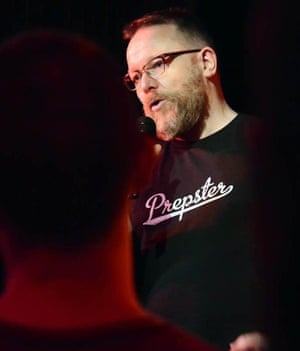
Dr Will Nutland, founder of Prepster – a PrEP awareness website – and a public health worker at the London School of Hygiene & Tropical Medicine, began taking the drug this year in part to protect against HIV transmission, but also to test the quality of online purchases.


“I’ve been sexually active for 30 years and I’ve always had the risk that HIV could be transmitted; condoms can break. I bought my first box of PrEP over a year ago as I wanted to demonstrate how easy it is to get hold of. It cost £45 from India. I thought, if I was advocating for it, then I must be prepared to take them myself. I found that, broadly, it was a simple process although I once had to pay 25% import duties,” says Nutland.


About 4,000 people acquire HIV in the UK every year. The average cost of a lifetime of treating each patient at current prices is put at about £360,000. Nutland believes that this cost could be eliminated.


Michael James, 49, from London, buys three months’ supply at a time from an online pharmacy in India at a cost of £150. But he is worried about safety, and angry with the NHS for discriminating against those at risk of HIV transmission.


“Of course it is a risk not knowing the quality and effectiveness of the medication but this is the only option many of us have. It’s a disgrace to be discriminated against in such a way by the government, who continue to handball the responsibility from authority to authority at the risk and expense of the individual,” says James.


Doctor Will Nutland


PrEP activist Will Nutland believes the drug could hugely reduce the number of HIV cases. Photograph: Nuno Lopez

Nutland isn’t personally concerned about the safety of PrEP bought over the internet, instead he believes the greatest problem is that those most at risk cannot afford to buy the drugs.


“There’s a Facebook group, where people swap information and batch numbers. There are about 100 of us in the UK, who test at sexual health clinics to measure the amount of the drug in our blood. There hasn’t been one person whose test hasn’t shown the drug, the only issue being when the tests have been taken too soon, too little of the drug shows up.


“The website IwantPrEPnow lists four reputable pharmacies. I don’t personally have any concerns with the drugs coming in. A major problem is affordability. I can afford the £45 a month, but the people who should use it might not be able to,” he says.


Although it is a positive that PrEP is easy to get, Nutland worries that may stop people from having advisable health checks before taking the drug, which is another reason that he is urging the NHS to fund the drug.


“It’s a concern that people using PrEP are doing so without HIV tests and kidney function tests,” he says. “If it was through an NHS commission, through a sex clinic, there would be a full barrage of tests. People are not safeguarding other things. Those who can protect themselves. Buying online is a stopgap until it’s properly available.”


Users of HIV prevention PrEP urge NHS to fund "life-changing" medicine

The NHS must show it cares about gay men’s lives – and roll out PrEP HIV drugs | Owen Jones

The health and lives of gay men matter. That’s what the high court ruled on Tuesday morning. Last year, NHS England decided against rolling out a treatment called PrEP – which prevents the transmission of HIV. The wellbeing of gay men was overriden by other priorities. Given it costs substantially more money to treat HIV than to prevent it, even financial considerations weren’t a good reason.


Related: NHS can fund ‘game-changing’ PrEP HIV drug, court says


On Tuesday, NHS England was defeated in court and told it was responsible for funding the treatment, and that they have a “preventative role and power to commission preventative function”. Pressure must now be placed on the NHS to start rolling this drug out immediately. As the British Medical Journal pointed out, “delays by NHS England will cost lives”.


If you want to stop HIV spreading, then PrEP is one among many solutions. It works. As studies in the United States have shown, if taken every day, it has been shown to reduce the risk of HIV infection in high-risk individuals by up to 92%. The objections to PrEP, in truth, are based on moral objections. If you do not want the risk of HIV, goes the argument, then wear a condom. Those who get HIV are, by implication, morally condemned for bringing it on themselves.


Of course, safer sex messages must always emphasise the importance of condoms: after all, they protect against many other STIs. But – in the real world, rather than the non-existent world of the morally self-righteous – things are more complicated. People get carried away; people get drunk (yes, in the real world imperfect people sometimes drink more than the recommended daily amount); condoms break. The same moralising is used against the right of women to have control over their own bodies, whether it be the right to abortion or even the morning-after pill. The standards set by the “morally pure” cause harm – or even kill.


We have come so far with the treatment of HIV, once a disease that ravaged the gay world. But according to the Terence Higgins Trust, there are 45,000 men who have sex with men living with HIV; and thousands of them do not know they even have it. The annual rate of newly infected men in 2014 was higher than the decade before. If you genuinely want to send HIV infection rates hurtling into reverse, then PrEP is not the only solution – but it is a good one.


Gay people, their health and their lives, matter. That’s a court judgment. NHS England must now accept the defeat – and start doing its job: protecting health and saving lives.


The NHS must show it cares about gay men’s lives – and roll out PrEP HIV drugs | Owen Jones

NHS can fund "game-changing" PrEP HIV drug, court says

A leading Aids charity has won a high court battle over whether a preventative treatment for HIV that charities say is a “game-changer” can legally be funded by the NHS.


NHS England said it had received advice that it did not have the legal power to fund pre-exposure prophylaxis (PrEP), a “highly effective” anti-retroviral treatment used to stop HIV from becoming established in the event of transmission.


But Mr Justice Green, sitting in London, ruled that NHS England “has erred in deciding that it has no power or duty to commission the preventative drugs in issue”.


The ruling was a victory for the National Aids Trust (NAT), which brought the case to court.


Deborah Gold, the NAT chief executive, said: “This is fantastic news. It is vindication for the many people who were let down when NHS England absolved itself of responsibility for PrEP. The judgment has confirmed our view that it is perfectly lawful for NHS England to commission PrEP. Now NHS England must do just that.


“Over 4,000 people are getting HIV every year in the UK – we desperately need further prevention options to add to condom use. PrEP works. It saves money and it will make an enormous difference to the lives of men and women across the country who are at risk of acquiring HIV. The delay to commissioning PrEP is both unethical and expensive.”


When taken consistently, PrEP has been shown to reduce the risk of HIV infection in people who are at high risk by more than 90%.


Related: Hope for ‘end of Aids’ is disappearing, experts warn


A row erupted earlier this year after NHS England said it would not routinely fund the drug. In March, the body decided the treatment was a preventative service and was therefore not its responsibility. It has said local councils are in charge of funding preventative health services.


However, NHS England agreed to a re-evaluation after the NAT launched a legal challenge. Then in May it said it had “considered and accepted NHS England’s external legal advice that it does not have the legal power to commission PrEP”, and that under 2013 regulations “local authorities are the responsible commissioner for HIV prevention services”.


Allowing NAT’s application for judicial review, Green said on Tuesday the core of the legal challenge was about “the allocation of budgetary responsibility in the health field”.


He said: “No one doubts that preventative medicine makes powerful sense. But one governmental body says it has no power to provide the service and local authorities say they have no money.


“The claimant is caught between the two and the potential victims of this disagreement are those who will contract HIV/Aids but who would not were the preventative policy to be fully implemented.


“In my judgment the answer to this conundrum is that NHS England has erred in deciding that it has no power to commission the preventative drugs in issue.”


Alternatively, said the judge, NHS England has “mischaracterised the PrEP treatment as preventative when in law it is capable of amounting to treatment for a person with infection”.


In any event NHS England had power to commission preventative treatments because that facilitated, or was incidental to, “the discharge of its broader statutory functions”.


Campaigners have said that while the majority of gay men use condoms to prevent being infected with HIV, there is also an “ethical duty” to provide PrEP to those who do not.


And they said the drug would provide an additional defence against HIV – and would not be used simply as an alternative to safe sex.


It comes after the results of a trial, published in February 2015, suggested that rates of HIV infection could be slashed by treating actively gay men with the anti-viral drug when they are healthy.


Dr Michael Brady, medical director at the HIV/Aids charity Terrence Higgins Trust, welcomed the findings and described the drug as “a game-changer”.


He said PrEP offered “another line of defence” against HIV, alongside condoms and regular testing. Brady said: “It is not a vaccine and it won’t be for everyone, but, once approved, we expect it to significantly increase the momentum in our fight against the virus.


“We urge the government, NHS England and local authorities to make PrEP a key priority in the fight against HIV.”


NHS can fund "game-changing" PrEP HIV drug, court says