'unacceptable' etiketine sahip kayıtlar gösteriliyor. Tüm kayıtları göster

10 Şubat 2017 Cuma

Jeremy Hunt: NHS problems completely unacceptable

Jeremy Hunt has said that performance in some parts of the NHS is “completely unacceptable”.


The health secretary said there was “no excuse” for some of the problems being seen in the health service and that some of the care being offered was not what anyone would want for their family.


His remarks, in an interview with the BBC, came after official figures for December and leaked January statistics for waiting times in England showed consecutive months of the worst delays in A&E since a four-hour target was introduced 13 years ago.


Earlier, one of his key advisers, Patrick Carter, had said that hospitals were under such extreme pressure that they were in a state of war.


On Thursday figures emerged showing that the number of A&E patients seen within the target of four hours fell to a record low of 86% in England in December, while those waiting longer than 12 hours to be admitted to a hospital bed doubled to more than 2,500 in 2016. The leaked January figures suggested a worse performance on A&E waiting times, with NHS England meeting its four hour target in 82% of cases.


The number of people waiting more than two months to start cancer treatment after an urgent referral was at a record high of 25,157 in 2016, and the proportion of patients receiving hospital treatment within 18 weeks fell below 90% for the first time since 2011.


Hunt said there was already a “big transformation programme” under way in the NHS with the aim of treating more people at home or in the community to ease burdens on hospitals.


But he said the changes would take time and said progress had been “disappointingly slow” in some areas.


“It is incredibly frustrating for me,” said the health secretary. “I am doing this job because I want NHS care to be the safest and best in the world. That kind of care is completely unacceptable. No one would want it for members of their own family.”


He said there were no excuses for cases such as that of 89-year-old Iris Sibley, who was stuck on a hospital ward at Bristol Royal Infirmary for more than six months because a nursing home place could not be found for her.


“It is terrible for Mrs Sibley but it is also very bad for the NHS,” Hunt said.
He insisted the government was addressing problems in the social care system which are preventing many elderly and frail patients from being discharged from hospital – so-called “bed-blocking”.


Hunt added: “The prime minister has been very clear: we recognise the pressure’s there. We recognise there is a problem about the sustainability of the social care system. That has to be addressed and we are going to do that.”


Barrister Sir Robert Francis, whose 2013 report uncovered poor care in Mid Staffordshire, said the NHS was facing an “existential crisis” which made a further similar scandal inevitable.


Francis, a non-executive director at the Care Quality Commission, told the Health Service Journal there was an “increasing disconnect” between what is said nationally about the NHS and “what people on the ground feel or see is going on”.


“Let’s make no bones about it, the NHS is facing an existential crisis,” he said. “The service is running faster and faster to try and keep up and is failing, manifestly failing.


“The danger is that we reach a tipping point; we haven’t reached it yet, but there will come a point where public confidence in the service dissipates.”


Jeremy Hunt: NHS problems completely unacceptable

19 Aralık 2016 Pazartesi

MPs urge government to do more to combat "unacceptable" UK suicide rates

Access to websites and social media platforms that tell people how to kill themselves should be restricted, according to MPs, who are warning that the government is not doing enough to bring down the “unacceptable” suicide rate in the UK.


The House of Commons health select committee, chaired by the Conservative MP Dr Sarah Wollaston, is calling on ministers on Monday to “work with internet providers and social media platforms to consider what changes can be made to restrict access to sites which encourage self harm or give detailed advice on suicide methods”.


They said they had taken evidence from a recent study by the University of Bristol that exposure to suicide content, including reading about others’ attempts, had served to validate or justify suicide as an acceptable course of action.


Suicide rates are still ‘unacceptably high’ in the UK.

Detailed information about methods of suicide and the relative painfulness of different techniques is available instantly through search engines including Google. According to Suicide.org, a suicide prevention charity, “pro-suicide websites, groups, and bulletin-boards continue to expand.”


Earlier this year, the National Society for the Prevention of Cruelty to Children revealed that its Childline service is being contacted by record numbers of children and young people who are struggling with suicidal thoughts and feelings.


The call for action came as the government prepares to renew its suicide prevention strategy. “4,820 people are recorded as having died by suicide in England last year, but the true figure is likely to be higher,” said Wollaston. “Suicide is preventable and much more can and should be done to support those at risk.”


The suicide rate in 2013 was the highest it has been since 2001, and the 2014 and 2015 rates were only marginally lower. Suicide is highest among men, who account for three-quarters of all such deaths, and it remains the biggest killer of men aged under 49. Rates among women are rising too. However, rates have been on an overall downward trend since 1981 everywhere in the UK apart from Northern Ireland, where they spiked in 2005 and 2006 and remain the highest anywhere in the UK.


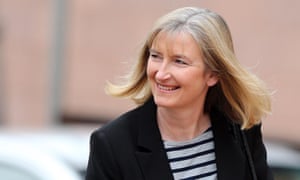
Dr Sarah Wollaston MP.


Dr Sarah Wollaston is leading the committee calling for restrictions to be placed on certain websites. Photograph: Peter Byrne/PA

The select committee is urging the government to increase support for public mental health and early intervention services. It found that around a third of people who end their lives by suicide are in contact with their GP before their death, but are not receiving specialist mental healthcare. Another third are in the care of specialist mental health services.


“GPs need better training in suicide risk,” the report states. “All patients being discharged from inpatient care should receive follow-up support within three days of discharge rather than the current standard of seven days.”


A Department of Health spokesperson said it recognises that “every death by suicide is a tragedy and devastating for families, friends and communities”. “We are investing almost £1bn in providing mental health support in A&E and home-based crisis care — and are currently updating our suicide prevention strategy, which we are confident will address many of the issues raised by the committee,” they said.


NHS England has set a goal to reduce suicides by 10% by 2020.


A spokesman for the NHS Confederation, which represents NHS trusts, said: “Developing mental health services is essential, but money hasn’t come as quickly as promised, and this is holding-up progress. For too long we have seen year-on-year increases in prison suicide and there are worrying trends around children’s mental health, too, with insufficient investment to improve their care.”


The health select committee also called for those bereaved by suicide to receive better primary and secondary care, and said media guidelines on the reporting of suicide were being widely ignored and that greater attention should be paid to breaches of the rules. The MPs claimed that too many newspapers and broadcasters use the term “commit suicide”, which they said “reinforces stigmatising attitudes from when suicide was a criminal offence”.


In the UK, the Samaritans can be contacted on 116 123. In the US, the National Suicide Prevention Hotline is 1-800-273-8255. In Australia, the crisis support service Lifeline is on 13 11 14. Hotlines in other countries can be found here.


MPs urge government to do more to combat "unacceptable" UK suicide rates

17 Haziran 2014 Salı

NHS guilty of "unacceptable" lapses in sale of patient information to private sector

Sir Nick explained the public would merely not tolerate this kind of lax attitudes in the direction of “intensely private” data about them.


The sales were manufactured by the NHS Data Centre, the predecessor body to HSCIC.


The evaluation published on Tuesday calls for a series of adjustments to tighten controls of information, with increased transparency about the use of details.


The Government has presently announced legal alterations to stop the sale of information to the insurance coverage industry, following the disclosures by the Telegraph.


The review mentioned that the 3 insurance coverage bodies which at the moment hold this kind of information have been ordered to delete the data.


Sir Nick said: “The HSCIC must understand lessons from the loosely recorded processes of its predecessor organisation. The public just will not tolerate vagueness about healthcare data that may possibly be intensely personal to them.


“We exist to guard their information and we have to earn their trust by demonstrating scrupulous care with which we manage their private details.”


Even though data did not title patients, in some cases it would have been attainable to “deduce” which patients the information referred to, the assessment identified.


It concluded that “there have been significant administrative lapses in recording the release of data. In some instances the decision making method was unclear and records of choices incomplete when handling medical data this is unacceptable.”


The revelations in February about the handling of hospital information emerged amid developing worries about ideas for a nationwide database which will carry with each other info from GP data.


The programme was due to be launched in May possibly, but has been place on hold until next 12 months as further controls had been drawn up, and will comply with a variety of local pilot schemes.


The HSCIC board explained it had accepted Sir Nick’s suggestions in complete.


Jeremy Hunt: NHS culture wants ‘profound transformation’


NHS guilty of "unacceptable" lapses in sale of patient information to private sector

23 Nisan 2014 Çarşamba

Warning in excess of "unacceptable" lottery in care of the dying

Family members of cancer sufferers were much more very likely to come to feel their loved ones had acquired very good quality care, the right ache relief, and died in the place of their choosing, the studies have identified.


Prof Richards explained he was also concerned by important geographical variations in the care acquired by sufferers, irrespective of their condition.


“There are massive geographic variations, but it is not as straightforward as a north/south divide or London versus the rest,” he mentioned. “The south west comes out nicely but so does the north east… we want to realize these variations so we can boost the high quality of care.”


Prof Richards, who was national clinical director for cancer and end-of-daily life care prior to he was appointed to CQC last yr, said: “The level of variation is unacceptable we require to realize why this is, in buy to aid the places carrying out badly to do far better.”


Analysis suggests that people who invested their dying weeks in their very own properties or in hospices and in care residences, tended to have better experiences of care than those who invested much of their time in hospital.


“There was a big big difference in the good quality of care,” said Prof Richards. “In standard, we see those in hospices getting the best care, when it comes to people who died in care homes, or in their own property, its about neck and neck, but hospitals, I regret, are some way behind.”


Strategies for the nationwide evaluation cite recent research which have identified poor finish-of-existence care amongst dementia sufferers residing in care residences.


Last yr, a report by the thinktank Demos located that these with dementia, or other complicated conditions, suffered worse care than individuals with a diagnosis of cancer.


Prof Richards said that cancer care tended to be better at supplying “hospice-style” aid since charities and pioneers in the area had founded such efforts decades ago.


He said long term alterations to enhance the care of all dying sufferers were likely to need better use of patient data, with a lot more sharing of details, so that the appropriate help could be presented at all instances.


He mentioned ambulance crews need to be provided observe if individuals had said they did not want to be sent to hospital in their dying hrs.


Prof Richards explained the national evaluation, which is due to report by up coming March, will consider to identify any “barriers to care” affecting those suffering from distinct ailments, as well as people from different ethnic backgrounds, and people with mental well being situations or studying disabilities.


“This is not just about geographical variation,” he explained, “It’s about examining what the barriers to very good care are for all sorts of individuals with all sorts of backgrounds or diagnoses.”


A national survey of 50,000 bereaved relatives discovered that people in the south west rated the care provided most very, with these in Cornwall, Somerset, Devon and Dorset among the most constructive about the way their loved ones had been treated. Higher scores had been also located in the north east, with the lowest scores located in London, and the east of England, the 2012 research located.


Warning in excess of "unacceptable" lottery in care of the dying