Artificial etiketine sahip kayıtlar gösteriliyor. Tüm kayıtları göster

21 Nisan 2017 Cuma

Should link between dementia and artificial sweeteners be taken with a pinch of salt?

They were supposed to be the healthy alternative to their sugar-rich siblings. But now diet colas and other low-calorie drinks have been hit by news that will radically undermine those credentials: a counterintuitive study suggesting a link to stroke and dementia.


The study in the journal Stroke may cause a rethink among those worried about obesity, diabetes or a possible early heart attack from sugar-rich drinks who have been considering making a change. It comes to the alarming conclusion that people polishing off one can a day of artificially sweetened drink are nearly three times as likely to have a stroke or develop dementia.


It’s a shocking conclusion. But the first reason to pause is that the study found no such risk in people who drank standard sugary lemonades and colas.


There is little previous evidence with regard to dementia, which is why the researchers were looking at it, but the link between sugar and stroke is very well known. Too much sugar raises the risk of obesity, diabetes, heart attacks and stroke. It’s altogether a bad thing, which is why the World Health Organisation is telling us all to cut down. So what was going on in this study?


It’s not in itself a bad study. The evidence it analyses is pulled from the well-respected Framingham Heart Study – a cohort of more than 5,000 people in Massachusetts, US, whose diets and lifestyles have been monitored for nearly 50 years, with the main objective of finding out more about heart disease. Along the way, researchers have looked at other health outcomes.


What they are up against is people’s capacity for forgetfulness and lies. This is the case with every study into the food we eat – except for those rare studies, almost impossible to do today, which have in effect imprisoned their subjects and controlled every sip and mouthful they took.


If you can’t do that, you have to ask people to complete food diaries or complete questionnaires. This study took the latter approach. Most people probably did intend to list accurately everything they ate and drank over the period, but it’s not easy to remember. And some people will be too embarrassed to be entirely accurate. Researchers understand this and try to take account of it, but it is difficult.


There are several possible other reasons why an increased stroke risk was associated with diet drinks and not sugary drinks. One is what is called “reverse causality”. People who come to realise that they are sick and have a high risk of a stroke then switch their behaviour – choosing diet drinks long after sugary drinks have helped cause the problem. It’s also possible that those among the cohort who drank most sugary drinks had already died, because the researchers were looking at only the last 16 years, not the whole 50.


When it came to dementia, the link with diet drinks that researchers saw disappeared once they took into account some elements of the health of the people in the study. “When the researchers accounted for other risk factors for Alzheimer’s, such as risk genes, diabetes, heart disease, cholesterol levels and weight, this significant association was lost, suggesting that these drinks are not the whole story,” said Dr Rosa Sancho, head of research at Alzheimer’s Research UK.


The researchers point to it themselves: “We are unable to determine whether artificially sweetened soft drink intake increased the risk of incident dementia through diabetes mellitus or whether people with diabetes mellitus were simply more likely to consume diet beverages,” they write. But they call for more research and others will support them in that.


Artificial sweeteners have been viewed with suspicion by a lot of consumers for many years and not entirely deservedly. They are not natural, in the way that sugar is natural, being grown from beet or cane. Some of the hostility comes from those who worry about ingesting man-made chemicals. But while some artificial flavourings have been shown to carry health risks, studies have failed to find similar problems with artificial sweeteners.


Aspartame “has been extremely controversial since its approval for use by several European countries in the 1980s”, says NHS Choices. In 1996, a study linked it to a rise in brain tumours. “However, the study had very little scientific basis and later studies showed that aspartame was in fact safe to consume,” says the NHS.


Large studies have also been carried out to look at whether the sweetener increased cancer risks – and gave it a clean bill of health. The European Food Safety Authority said in 2013 it was safe even for pregnant women and children, except for anyone with a rare genetic condition called phenylketonuria.


With soft drinks in the spotlight because of rising obesity levels, companies have been making huge efforts to develop artificial sweeteners that will taste as good as sugar and be acceptable to the doubters. Stevia, a plant extract, is marketed as a natural sweetener to the increasingly sceptical health-conscious.


But there are those who think artificial sweeteners will never be the answer to obesity and the diseases that follow in its wake. The problem, in their view, is our sweet tooth and the answer is to reduce our liking for sweetness. So they want to see the gradual reduction of the amount of sugar in our drinks and our food and snacks – without its replacement by artificial sweeteners.


It worked with salt, says Cash, the campaign for action on salt and health, which did much to bring down the salt levels in our food without our noticing it. The same should be possible for sugar. But not if artificial substitutes are used to keep our food and drinks tasting just as sweet as they did before.


Should link between dementia and artificial sweeteners be taken with a pinch of salt?

10 Nisan 2017 Pazartesi

Revealed: girl of 13 is first child in Britain to receive artificial heart

A 13-year-old girl from Worcester is the first child in Britain to have received an artificial heart, the Guardian can reveal, after doctors decided it was the only way to save her life.


Chloe Narbonne had the device installed in a complex nine-hour operation that involved 30 NHS staff at the Royal Brompton, a specialist heart and lung hospital in London. The artificial heart kept the then 12-year-old girl alive until a human heart became available a few weeks later.


While others have had a device known as a “Berlin heart”, which replicates its functions outside of the body, Chloe is the youngest person in Europe to have had an artificial heart implanted. With her fourth heart now beating in her chest almost a year on, she told the Guardian: “I feel well, like my normal self, but not quite my normal self, not after what I’ve been through. I guess the artificial heart was my lifesaver; it’s what kept me alive until I got another heart. What I’ve been through is life-changing.”


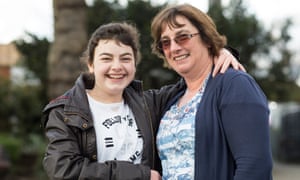
Chloe and her mum, Fabienne.


Chloe and her mum, Fabienne. Photograph: David Levene for the Guardian

Chloe was diagnosed with dilated cardiomyopathy when she was four weeks old. Her heart failed when she was 11 and still at primary school. She then had a stroke while waiting for a new heart, and when that first transplant failed to work, she was left close to death.


At that point, medics decided an artificial heart was the only option to keep her alive until another heart could be transplanted. André Simon, the director of heart and lung transplantation at the Royal Brompton and Harefield specialist hospitals, flew back early from a conference in the US to operate on Chloe last May.


What doctors said was an “extremely risky” surgery involved two medical firsts. Chloe was the first person in the world to be transferred from one hospital to another with her chest open and while on a life-saving extracorporeal membrane oxygenation machine, which delivers oxygen to a patient from outside the body. And Simon had to rebuild her heart’s atrium, or upper chamber, which had been removed during the failed transplant days earlier. A few weeks later, after her health stabilised on the artificial heart, she received the new heart.


Chloe’s mother, Fabienne Narbonne, said: “How they saved Chloe should be recognised for what it is – a miracle. Without the artificial heart she would be dead. It kept her alive for those crucial few weeks. By the time she got it she had run out of options.”


Simon, who has carried out all 13 artificial heart surgeries that have occurred in London hospitals, believes the success of Chloe’s operation should prompt other specialists to consider the devices for more children.


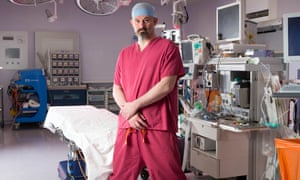
Heart surgeon André Simon.


Heart surgeon André Simon. Photograph: Richard Saker for the Observer

Chloe’s long waits for a transplanted heart have made her and her parents, Fabienne and Todd, passionate advocates for a change in the law on organ donation. Chronic shortages of donated hearts, lungs, livers and kidneys result in thousands of people a year dying while on the transplant waiting list. The family want the rest of the UK to follow the example of Wales, which in December 2015 switched from the opt-in system of organ donation to one of opt-out, where people have to specifically refuse consent for organ retrieval if they die.


Fabienne Narbonne said: “We owe eternal thanks to the donors and their families, without whom none of this would be possible as without donors there is no point being on a waiting list, however long you have to wait. We cannot thank them enough for offering Chloe a second chance at life, no words can explain how it feels and we have nothing but respect and gratitude for their gift of life.”


how it works

Only 1,690 people in the world have ever received an artificial heart. Of those, 34 were under 18. The oldest person in the UK to receive one was 62. Chloe is the third youngest in the world, after a nine-year-old and an 11-year-old in the US.


“Chloe is an example of a patient who would have been out of options without the 50cc total artificial heart,” said Michael Garippa, the president of SynCardia, the American firm which makes the devices. “It was the only device that could save her.”


Revealed: girl of 13 is first child in Britain to receive artificial heart

14 Eylül 2016 Çarşamba

"Back on my feet": how artificial limbs can have a second life in Africa

Losing a limb is a devastating physical and psychological experience for anyone. For adults and children in countries where prosthetics are not routinely available, it can also mean losing your home, your family and ending up on the streets.


Mohamad Musa, from Sanchaba in western Gambia, has experienced first-hand the harsh reality of life as an amputee. His leg was removed at Banjul hospital in 2014 after suffering pain for many years. Without a prosthetic limb, he spent much of his day “just sitting” and had to leave school in 7th grade.


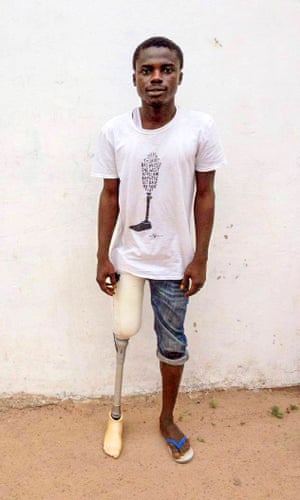
Mohamad Musa had his leg removed in 2014 after suffering pain for many years.


Mohamad Musa had his leg removed in 2014 after suffering pain for many years. Photograph: Legs4Africa

Now in his twenties, Musa is among hundreds to date who have benefited from recycled artificial legs sent out by UK charities to places where they are desperately needed. Earlier this year, Legs4Africa volunteers arrived in his town and offered him the chance of being fitted with a prosthetic. “They brought me back on my feet,” he explains.


His story and others have been made possible due to effective partnerships. One such collaboration between Limbcare and Legs4Africa resulted in 500 limbs being despatched to Tanzania in May this year. The prosthetics which also include arms and hands will be distributed to a Dar es Salaam hospital where experienced technicians will fit them to those in need. Len Amos, Limbcare’s director of recycling and communication, says: “All of these parts went to a country with no NHS and where an awful lot of children are disowned by their parents because they can’t work, so end up begging.”


The partnership between the two charities began with a phone call. Amos had been asked by a foundation working with underprivileged communities to send out disability equipment. He contacted Legs4Africa founder Tom Williams asking if he wanted to help fill the container destined for Tanzania. By coincidence, Williams had received a request for legs also from Tanzania. Aided by volunteers, they had the limbs tagged, bagged and sent on to their destination.


Limbcare and Legs4Africa obtain second-hand legs from the NHS, private clinics and funeral firms. Under EU laws, prosthetics are classed as medical waste so the NHS cannot reuse them once a patient has outgrown or stopped using them because of a change in health. Instead, around 5,000 are either incinerated or go for landfill every year in the UK.


[A prosthetic] leg can be the reason someone rises out of poverty and begins living a life of dignity


“There’s no market [for used limbs] in the UK and if we don’t collect them they’ll be destroyed,” explains Williams whose charity collects from nearly a dozen hospitals and clinics. This informal process usually starts with Legs4Africa approaching either senior management or the prosthetist who then fill a box of redundant limbs for the charity to collect. In some cases, trusts will encourage staff to put prosthetics and mobility aids aside. Williams’s dream would be for formal collaboration and partnership between charities and the entire NHS.


One country’s waste is another’s opportunity to transform lives, especially in parts of sub-Saharan Africa where prosthetics are not manufactured. “You have to be rich, in the military or the government to receive an artificial limb,” says Amos. “You’d have to be lucky even to get walking sticks.”


Although manufacturers will not guarantee prosthetics for life, secondhand ones are generally perfectly reusable according to Amos. They will be exported to local hospitals where occupational therapists assess people for suitability then engineers adapt the limbs to individual patients. It is a painstaking process. A person’s height has to be taken into account, to ensure the leg section is the correct length, and their weight so the limb doesn’t swing out too quickly.


Diseases such as diabetes, car accidents and civil war are all to blame for an increasing number of people in Africa living with limb loss. Gambia’s only prosthetist, Gabu Jarjue, is based at the Royal Victoria teaching hospital in Banjul which benefited from a Legs4Africa shipment this year. Gambia is a developing nation and disability a low priority, says Jarjue, with the daily life of patients and their families one of “discrimination and exclusion”. His belief is that the sooner Gambia addresses the needs of amputees, the quicker it will realise that a properly rehabilitated patient costs less than a disabled one. “[A prosthetic] leg can be the reason someone rises out of poverty and begins living a life of dignity.”


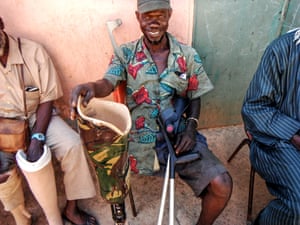
Musa, a mechanic who lost his leg in an accident at work, is a recipient of a prosthetic leg.


Musa, a mechanic who lost his leg in an accident at work, is a recipient of a prosthetic leg. Photograph: Legs4Africa

There is no set structure to how Legs4Africa establishes and maintains partnerships with healthcare professionals like Jarjue and with healthcare institutions. However, hospitals and clinics, which are often referred to the charity by individuals in the community, must meet strict criteria. They must have the facilities and expertise to customise the components sent out by the charity, guarantee not to sell them and be responsible for transporting the prosthetics from port to hospital. “We also ask for reports and photos,” adds Williams.


As for Musa, he’s enjoying having a new prosthetic leg and the opportunities it affords him. He says: “I’m with no pain and thinking of my future – my dream is education.” The aim of charities like Limbcare and Legs4Africa is to get many more like Musa back on their feet. Through partnerships like theirs, this is a very achievable goal.


Join the Healthcare Professionals Network to read more pieces like this. And follow us on Twitter (@GdnHealthcare) to keep up with the latest healthcare news and views.


"Back on my feet": how artificial limbs can have a second life in Africa

24 Temmuz 2016 Pazar

Long-Term Artificial Light Exposure Disrupts Circadian Rhythms and Can Be Detrimental To Our Health, New Study Finds

Constant exposure to artificial light disrupts the human body clock and hormonal system.  A new study shows artificial light exposure for extended periods can also have other adverse effects on our health.


Circadian rhythms — our internal body clocks — are deeply rooted in the biology of nearly all organisms. Studies show the persistent use of artificial lighting in modern society disrupts circadian rhythms and can be detrimental to our health.


Some of the negative health outcomes constant artificial light can cause include muscle loss, early signs of osteoporosis, and pro-inflammatory activation of the immune system.


But, there’s some good news, too.


Artificial Light Permeates the Skies


More than 80 percent of the world and more than 99 percent of the United States and European populations live under light-polluted skies.  Scientists report the Milky Way is hidden from more than one-third of humans, including 60 percent of Europeans and nearly 80 percent of North Americans, because of today’s light pollution.


Light pollution is a global issue. Most of the world is affected by this problem.  Humanity has covered our planet in a glowing fog — potentially affecting all cultures on a grand scale.  Today, artificial lighting during the night disrupts the natural environmental cycle and is a risk factor for “frailty.”


For example, night-shift work is rather high around the globe.  Nearly 20 percent of workers in Europe, 29 percent of Americans, and 36 percent of Koreans and Chinese are involved in night-shift work.


Studies of night-shift workers revealed increases in breast cancer, metabolic syndrome, bone fractures, and osteoporosis in this group.  And people who are exposed to more light at night tend to have poorer sleep quality, increased body weight, and higher incidences of cardiovascular disease.


Although these studies suggest there’s a link between artificial light exposure and health, they don’t necessarily prove artificial light exposure is the cause of these ailments and diseases.  For this reasons, scientists have embarked on research to study the effects of constant artificial light exposure on health.


Adverse Health Effects of Constant Light Exposure


Exercise and eating right are essential for good health.  But researchers of a new study suggest it’s also important to get in the habit of turning off lights to stay healthy.


In a recent public release, Johanna Meijer of Leiden University Medical Center in the Netherlands offered the following comment about the results of their new study.


“Our study shows that the environmental light-dark cycle is important for health.  We showed that the absence of environmental rhythms leads to severe disruption of a wide variety of health parameters.”


The health parameters Johanna Meijer is referring to includes “pro-inflammatory activation of the immune system, muscle loss, and early signs of osteoporosis.” The researchers say that the observed physiological changes that constant artificial light exposure can cause are similar to “frailty” that is usually seen in people or animals as they grow older.


Meijer and colleagues investigated the relationship between a loss of the light-dark cycle and disease.  They continuously exposed mice to light for 24 weeks and measured several major health parameters. Studies of the animals’ brain activity showed that the constant artificial light exposure reduced the normal rhythmic patterns in the brain’s central circadian pacemaker of the suprachiasmatic nuclei (SCN) by 70 percent.  The SCN produces a signal that can keep the rest of the body on an approximately 24-hour schedule.


Removing normal light and dark patterns and the circadian rhythm resulted in the animals’ reduction of their skeletal muscle function. Their bones showed signs of deterioration.


Circadian rhythms are behavioral, mental, and physical changes that follow an approximately 24-hour cycle.  They respond primarily to light and darkness in an organism’s environment. They are found in most living things — tiny microbes, plants, and animals.


The Good News


This new research has some good news, too.  After the mice were returned to a standard light-dark cycle for two weeks, the SCN neurons quickly recovered their normal rhythm, and the animals’ health difficulties were reversed.


Meijer says, “The good news is that we subsequently showed that these negative effects on health are reversible when the environmental light-dark cycle is restored.”


The study’s findings suggest that people should consider the amount of light exposure they get — especially people who are aging or otherwise vulnerable.  Constant light exposure is very common in nursing homes and intensive care units, and many people work during the night.


Meijer adds a little more on the topic of light-dark cycles.


“We used to think of light and darkness as harmless or neutral stimuli with respect to health.  We now realize this is not the case based on accumulating studies from laboratories all over the world, all pointing in the same direction. Possibly this is not surprising as life evolved under the constant pressure of the light-dark cycle. We seem to be optimized to live under these cycles, and the other side of the coin is that we are now affected by a lack of such cycles.”


According to the researchers, the bottom line is “light exposure matters.”


This new study titled, “Environmental 24-hr Cycles Are Essential for Health,” is published in Cell Press, Current Biology journal.


This team of researchers plans future studies involving in-depth analysis of light-dark cycles on the immune system. Also, with the widespread exposure of patients to artificial light in hospitals, the researchers want to investigate the possible health benefits to patients when they are exposed to normal light and dark cycles.


Long-Term Artificial Light Exposure Disrupts Circadian Rhythms and Can Be Detrimental To Our Health, New Study Finds

12 Ağustos 2014 Salı

The Artificial Rat Brain Constructed Like A Jam Donut

A fake brain that seems a bit like a jam-filled donut has been grown for the very first time by bio-engineers


The complex brain framework has currently demonstrated its capacity to give researchers insights into the injury brought on by head injuries.


And scientists hope the laboratory-grown tissue, which is made up of the two grey and white matter, will aid in the review of dementia and strokes, and as a check bed for new drugs.


“This function is an outstanding feat,” explained Dr Rosemarie Hunziker, plan director of Tissue Engineering at the National Institute of Biomedical Imaging and Bioengineering, which funded the project . “It combines a deep understand of brain physiology with a massive and increasing suite of bioengineering tools to create an setting that is the two needed and adequate to mimic brain perform.”


BRAIN

The 6 concentric layers mimic the human cortex (Credit: Tufts University)


The 3d-tissue cultures, manufactured from rat cells, which have been stored alive for up to two months “could lead to an acceleration of therapies for brain dysfunction, as nicely as provide a better way to study typical brain physiology,” mentioned Dr David Kaplan, director of the tissue engineering resource centre at Tufts University in Boston and lead author of the story in Proceedings of the National Academy of Sciences.


It could also answer a lot more basic concerns about human brains, the most complicated structures in the universe.


“There are inquiries we have that are more challenging to define, like how we shop memories or how the brain feels soreness. It’s a extended listing of queries to reply, which is why we’re so excited,” Dr Kaplan explained.


Neurons, person brain cells, have extended been grown in petri dishes but they lack the organisation found in appropriate brains and which is vital to knowing their mixed functions.


Dr Kaplan and his colleagues utilized a scaffold created of silk proteins with a collagen gel at the centre – the jammy bit – to motivate neurons to increase into a donut form.


Rat neurons in the outer scaffolding grew connections via the gel, connecting them into an extended network a lot like individuals found in genuine brains.


A modified design with 6 concentric donuts has been grown to model the six layers of the human cortex.


“It’s a type-fitting, Lego-like program,” Dr Kaplan said. “So we really don’t have to fret about employing glues and how they may possibly complicate the interfaces among these diverse compartments.”


When the Tufts researchers dropped a bodyweight on the tissue they found that it altered its chemical and electrical activity in methods similar to brain-injured mammals.


“With the method we have, you can basically track the tissue response to traumatic brain injury n genuine time,” Dr Kaplan said. “Most importantly, you can also start to track fix and what transpires over longer intervals of time.”


The Artificial Rat Brain Constructed Like A Jam Donut

3 Haziran 2014 Salı

US bakery giant Panera to swear off artificial substances by 2016

Panera says it will get rid of artificial colors, flavors, sweeteners and preservatives from its foods by 2016, a reflection of the developing distaste people are exhibiting for this kind of elements.


The chain of bakery cafes, which has about 1,800 US areas, is producing the pledge as element of a “Foods Policy” it is unveiling Tuesday that outlines its dedication to “clean” and “simple” substances.


The announcement comes at a time when Panera Bread Co is facing slowing sales growth and functioning to jumpstart its organization through a selection of indicates, this kind of as revamping the occasionally complicated way folks order and get foods and switching baking hours to the daytime to develop a homier truly feel in cafes.


The unveiling of Panera’s sweeping “Meals Policy” also underscores how positioning food items as natural has turn out to be a advertising benefit, irrespective of regardless of whether it brings any dietary positive aspects. Element of the attraction for consumers is that they come to feel far better about what they’re consuming, often because they don’t truly feel as guilty about how several calories they are consuming.


Chipotle, for instance, has acquired in reputation in portion by portraying itself as a a lot more wholesome different to classic rapidly-food chains like McDonald’s. Even Subway not too long ago said it would quit making use of azodicarbonamide in its breads. The ingredient was dubbed the “yoga mat” chemical right after a petition by Vani Hari, who runs FoodBabe.com, noted it was utilized to make yoga mats.


Still, declaring food items as getting organic or free of charge of artificial substances has the potential to invite criticism and even legal troubles. A lawsuit filed in November, for instance, alleges that Entire Meals Marketplace employs a “spectacular array” of artificial substances in some of its shop-brand goods, despite the grocer’s promise that the items have “nothing at all artificial.”


Panera also is not swearing off genetically modified components, yet another problem that is gaining consideration in certain circles. As opposed to Chipotle, which says its menu will quickly be free of charge of GMOs, Panera makes use of as well numerous various elements to be ready to make that declare. And neither chain has any ideas to end promoting fountain sodas from Coca-Cola and PepsiCo, even even though the drinks are sweetened with substantial fructose corn syrup.


As for the rest of its menu, Panera says it is about halfway by means of the removal of artificial elements. It’s nevertheless looking for techniques to removes the artificial colors used in its bakery icings, for instance, and is testing a smoked ham in select markets that isn’t going to use artificial preservatives.


“We made a decision it was time to put all this into a clear and concise policy,” Ron Shaich, Panera’s founder and CEO, explained in an interview.


Ten years in the past, for instance, Panera announced that it would use chicken raised without having antibiotics, a move Shaich said assisted drastically drive product sales.


Panera’s new policy also states the chain’s commitment to “transparency,” that means it will make it straightforward for individuals to see the components and nutritional content material of its meals. It also says it will work to have a “good affect” on the meals method, this kind of as by supporting North American suppliers every time feasible.


Regardless of whether the new policy assists entice much more clients is yet to be seen.


Last yr, Panera’s sales rose 2.six% at firm-owned locations open at least a yr. That was down from 6.5% in 2012 and four.9 % in 2011.


This yr, the St Louis-primarily based firm is forecasting product sales development of two to 3.five%.


US bakery giant Panera to swear off artificial substances by 2016

14 Nisan 2014 Pazartesi

Artificial blood "will be manufactured in factories"

“Although equivalent research has been conducted elsewhere, this is the initial time anybody has manufactured blood to the acceptable high quality and security specifications for transfusion into a human getting,” explained Prof Turner.


There are ideas in place for the trial to be concluded by late 2016 or early 2017, he explained. It will most likely involve the treatment of 3 sufferers with Thalassaemia, a blood disorder requiring standard transfusions. The behaviour of the produced blood cells will then be monitored.


“The cells will be safe,” he explained, adding that there are processes whereby cells can be removed.


The strategy highlights the prospect of a limitless provide of manufactured variety-O blood, free of charge of ailment and compatible with all patients.


“Although blood banks are nicely-stocked in the United kingdom and transfusion has been largely protected because the Hepatitis B and HIV infections of the 1970s and 1980s, several elements of the planet nonetheless have problems with transfusing blood,” mentioned Prof Turner.


Even so, scaling up the method to meet demand will be a challenge, as Prof Turner’s laboratory circumstances are not replicable on an industrial scale. “A single unit of blood is made up of a trillion red blood cells. There are two million units of blood transfused in the United kingdom each and every yr,” he said.


Currently, it expenses about £120 to transfuse a single unit of blood. If Prof Turner’s approach is scaled up effectively, it could substantially lessen expenses.


Dr Ted Bianco, Director of Engineering Transfer at the Wellcome Believe in, said: “One need to not underestimate the challenge of translating the science into regimen procedures for the clinic. Nowhere is this a lot more obvious than in the challenge Professor Turner and colleagues have set out to deal with, which is to change the human blood donor as the source of provide for lifestyle-conserving transfusions.”


For the minute, factories of blood stay the things of fiction.


Artificial blood "will be manufactured in factories"