Africa etiketine sahip kayıtlar gösteriliyor. Tüm kayıtları göster

20 Mart 2017 Pazartesi

Cancer rates are soaring in Africa, yet Tanzania"s radiotherapy hub stands idle

The white bulk of the cobalt-60 radiotherapy machine is just visible inside the dark cement bunker. The electricity in the room at Bugando Medical Centre is shut off. The machine, donated last year by the Indian government, looks ready to go, but it has yet to deliver a life-saving dose of radiation.


Medical staff at Bugando, a tertiary care and teaching hospital in Tanzania’s second largest city, Mwanza, are keen to start offering radiotherapy to the growing number of cancer patients arriving at the hospital’s doors.


In 2014, the government helped to build a state-of-the-art oncology wing at the hospital to make it a regional hub for cancer treatment, complete with several bunkers to house radioactive material safely.


But getting the expensive technology up and running has been a long struggle. In the wing’s main hall, two more donated machines – used linear accelerators from Italy and the US – are sitting in a jumble of parts, waiting for the hospital to secure the funds to install them.


Bugando is a lifeline for the 13 million-strong population of northern Tanzania’s Lake Victoria region, providing specialised care no other hospital around can offer. But like many other parts of the country’s healthcare system, this centre – run by the government and the Catholic church – faces staff and equipment shortages that limit what it can do.


Last year, Tanzania’s government allocated 11.3% (pdf) of the national budget to health. That percentage, which includes significant donor funding, has been rising modestly, but it still falls short of the 2001 Abuja declaration (pdf), in which African nations pledged to set a target of spending 15% of their budgets on health. There are fewer than five skilled health professionals per 10,000 people in Tanzania, compared with the regional average of 14.1.
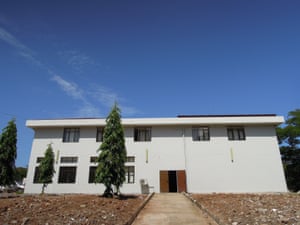


The oncology wing at Bugando Medical Centre in Mwanza, Tanzania.


The oncology wing at Bugando Medical Centre in Mwanza. Photograph: Krista Mahr

That shortfall is particularly glaring when it comes to cancer diagnosis and treatment. The World Health Organization warned recently that non-communicable diseases are likely to kill more people in Africa than infectious disease by 2030, and Bugando is on the frontline of this fight.


Dr Nestory Masalu, Tanzania’s only internationally trained medical oncologist, helped set up the oncology ward in 2009; in 2010 he saw 320 cancer cases. Last year, he and his colleagues saw 14,000.


“Cancer is exploding,” says Dr Merchades Bugimbi, Bugando’s acting director. “Everyone is asking, ‘Why, why, why?’”


The answer is not straightforward. Doctors and health workers in the Mwanza region attribute the spike to poor health education, environmental changes, high HIV rates, improved diagnostics and the fact that people are simply living longer.


In late February, Dodo Boniface, a farmer who lives 170km (105 miles) from Mwanza, stood in the new oncology wing, holding his four-year-old daughter, Dainess. In January, Dainess started complaining about pain in her back. Within days, she had lost use of her legs. The family was referred to Bugando, where she was diagnosed with lymphoma that had moved into her spine.


“We’ve really struggled with this,” says Boniface.
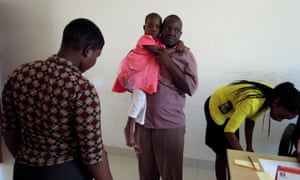


Dodo Boniface carries his daughter, Dainess, during a weigh-in at Bugando Medical Centre in Mwanza. Doctors are trying to assess whether Dainess is strong enough for a course of chemotherapy.


Dodo Boniface carries his daughter, Dainess, during a weigh-in at Bugando Medical Centre in Mwanza. Doctors are trying to assess whether Dainess is strong enough for a course of chemotherapy. Photograph: Krista Mahr

Bugando is the only hospital in the region that can do biopsies and has its own pathology lab; the team here can also perform complex surgeries and offer chemotherapy. But the centre still has limitations: the hospital does not have MRI or a functional CT scan machine to investigate and diagnose certain kinds of cancer, according to staff.


Dainess’ family isn’t insured, but sold some cattle to pay for her scans at a private clinic. Now they’ve been advised she should start a course of chemotherapy. Since 2015, the US-based International Cancer Care and Research Excellence Foundation (Iccare) has subsidised chemotherapy for paediatric patients at Bugando. The programme collaborates with the Duke Global Health Institute at Duke University, which is working on strengthening cancer treatment in Bugando and in other parts of Tanzania.


It’s not always easy to get cancer patients to keep coming back. Many don’t have the money to get to the hospital or stay for treatment. Others worry that the illness is a curse, and prefer to consult traditional doctors. When Iccare first started its programme, half the paediatric cancer patients abandoned treatment mid-course. The programme has reduced that number by 20%.


“If you diagnose patients with cancer, they don’t accept it,” says Dr Beda Likonda, Bugando’s radiation oncologist. “It’s like a denial. They look for other options.” By the time many do seek treatment, their cancer is advanced.


Dainess can be treated at Bugando, but many others cannot. Masalu, the medical oncologist, estimates that 60% of new cases at Bugando require radiotherapy. The radiotherapy machine in the bunker may soon be ready, says Likonda, but it’s older technology and a blunter instrument than the linear accelerators languishing in storage. Together, those two machines will take a few million dollars to install and maintain, he says.


For now, Bugando patients who require radiation are referred to Ocean Road Cancer Institute in Dar es Salaam, more than 1,000km away and home to the country’s only radiotherapy treatment centre. Making the journey once is daunting and expensive, let alone going back and forth for the required cycles of therapy. “They are told to go back home, and come back in one month,” says Masalu. “They can’t.”


Rahel Charles Rosana, a 49-year-old widow who lives about 70km outside Mwanza, hasn’t been able to go anywhere for a long time. By the time Rosana was examined for cervical cancer at a local health centre, she had been having such intense abdominal pain that she hadn’t slept lying down for five years. The health workers suspected she had cancer and referred her to Bugando, but she struggled to pay for even one visit.


“I can’t afford to go back,” Rosana says, visibly uncomfortable in a chair in her small village. If she were referred to Dar for radiotherapy, a common treatment for cervical cancer, there would be no way for her to get there.
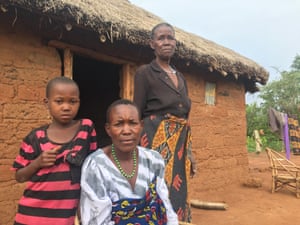


Rahel Charles Rosana, centre, with her mother and daughter at their home outside the village of Misasi.


Rahel Charles Rosana, centre, with her mother and daughter at their home outside the village of Misasi. Photograph: Krista Mahr

Cervical cancer has emerged as the most common cancer in Tanzania – and the leading cause of cancer-related deaths. Eighty percent of Tanzanian women are diagnosed at an advanced stage, according to Pink Ribbon Red Ribbon, a US-based non-profit. The mortality rate for the disease, which is treatable and curable if caught early, could be as high as 44%, according Dr Safina Yuma, cervical cancer specialist at the health ministry.


“This disease is killing more women than die in childbirth,” says Celina Schocken, Pink Ribbon Red Ribbon’s CEO. “It has an incredibly high disease burden and gets very little donor funding.”


Pink Ribbon Red Ribbon and its partners have been helping the government to improve screening and health worker training to catch cervical cancer earlier. Around Mwanza, where rates are especially high, they help pay for treatment and transportation for women to get to Bugando or Ocean Road in Dar es Salaam. The group is also planning to build hostels for cancer patients to stay in both cities to relieve expenses during long treatments.


At Makongoro Health Centre in Mwanza, Dr Goret Dussa says she was trained under one of these programmes to do screening and cryotherapy, a simple, early treatment that uses gas to freeze pre-cancerous cells on the cervix. “Before this, we didn’t know how to do it,” Dussa says.


Dussa was driving out to do screenings and treatment in rural areas outside Mwanza, but the funding has run out. She is also having a problem with the centre’s donated cryotherapy machine, and has been borrowing a machine from another clinic. She’s requested new equipment from the government, but isn’t sure if she’ll get the money.


After all, there is a limit to what any donor or NGO can do. “There’s a five-year project, but then it ends,” says Yuma. “If you develop something and you stop, there’s no meaning to it. We need the government to take over.”


At Bugando, Masalu is banking on the government finally locking down the funds to get the radiation machines up and running to treat women like Rosana closer to home. He has big plans for Bugando’s cancer treatment programme, including the construction of a 120-bed cancer ward next to the oncology wing, and training more young oncologists to join his staff.


“The government is starting to think about non-communicable diseases, especially cancer,” says Bugimbi, the hospital’s acting director. The radiation programme, he admits, is stuck for now. But he adds, “Always, we try.”


Cancer rates are soaring in Africa, yet Tanzania"s radiotherapy hub stands idle

21 Kasım 2016 Pazartesi

UN calls for urgent action to protect young women from HIV/Aids in Africa

Urgent action is needed to help and protect girls and young women from Aids in sub-Saharan Africa, thousands of whom are still being infected with HIV every week, the UN says.


Many adolescent girls do not know they have the virus and do not seek help or get treatment because they cannot tell their families they have had a sexual relationship with an older man. The death rates among adolescents are high.


In 2015, 7,500 girls and young women aged 15 to 24 were infected with HIV every week. More than 90% of the adolescents infected in sub-Saharan Africa are girls. Between 2010 and 2015, the total annual number of new infections among 15- to 24-year-old women fell just 6%, from 420,000 to 390,000. The UN target to reduce that number to fewer than 100,000 a year by 2020 is way off track, says the latest report from UNAids.


Too little has been done to help girls protect themselves and stay well, according to Michel Sidibé, the executive director of UNAids. “Young women are facing a triple threat,” he said. “They are at high risk of HIV infection, have low rates of HIV testing, and have poor adherence to treatment. The world is failing young women and we urgently need to do more.”


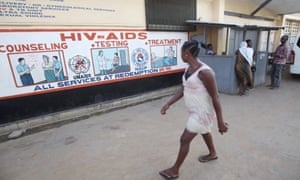
A woman looks at posters displaying information about HIV and Aids at a hospital in Liberia


A woman looks at posters displaying information about HIV and Aids at a hospital in Liberia. Photograph: Ahmed Jallanzo/EPA

Girls are particularly vulnerable in southern Africa because of their low status in a strongly patriarchal society. “Women’s and girls’ heightened vulnerability to HIV goes far beyond physiology: it is intricately linked to entrenched gender inequalities, harmful gender norms, and structures of patriarchy that limit women and girls from reaching their full potential and leave them vulnerable to HIV,” says the report.


Helping girls avoid HIV is hard because efforts must address the issues of gender imbalance and violence in societies, as well as poverty, which causes some girls to have relationships with men for money, says the report. Education is also important. Studies have shown that girls who stay in school longer are less likely to become infected.


The report says that a cycle of infection is taking place, which must be broken. Girls and young women are infected with HIV by older men. Men tend to acquire HIV later in life, from women who were infected when they were younger.


The good news from the report is that the numbers of people with HIV being put on drug treatment to keep them well has now reached 18.2 million, which is 3 million more than two years ago. UNAids says it is on track to meet the treatment target of 30 million people by 2020.


But preventing infection is proving more difficult. There were 2.1m new infections in 2015 – the same number as in each of the last three years and only slightly down from 2.2m in 2010.


Global HIV numbers

It was hoped that widespread drug treatment would make a difference to the numbers becoming infected. People who are on the drugs have a low level of the virus in their blood and are unlikely to transmit it to their sexual partners.


But many men are reluctant to go to health clinics and do not get tested, or if they do, they will not go on drug treatment until they actually fall ill, which could be months or years later. “Studies are showing that almost 61% of infections are caused by people who know they are HIV positive but they are not on treatment,” said Sidibé. While that is happening, he said, “how do we control the epidemic?”


Drug resistance is another issue highlighted in the report, which is published ahead of World Aids Day on 1 December. The basic drug combination – “first line” treatment – has become cheap, but the virus is adept at mutating. When people develop or pick up resistant strains of HIV, they need second- or third-line drugs, which are much more expensive. If resistance spreads, said Sidibé, the cost of treating millions of people with newer drugs will be prohibitive and make it impossible to end Aids.


“We need really to protect the drugs that we have. If not, we will have failed,” he said.


UN calls for urgent action to protect young women from HIV/Aids in Africa

7 Kasım 2016 Pazartesi

West Africa TB study claims are misleading | Letters

Your article (3 November) highlights a recent study by a network of researchers which claims that multidrug-resistant TB (MDR-TB) rates in west Africa are actually higher than estimates published by the World Health Organisation. These claims are misleading and unhelpful. The study is based on data collected from selected referral centres located in the capital cities of eight west African countries which typically have a concentrated level of the most difficult TB cases, including MDR-TB. To extrapolate nationwide resistance rates from such focused data is misleading and does not present an accurate picture of the problem.


The collection of data is vitally important for all diseases, for all countries, and west Africa remains a part of the world where MDR-TB surveillance data are most lacking. WHO estimates on MDR-TB are based exclusively on population-based surveys, such as those recently conducted in Nigeria and Senegal. They are designed to generate information representative of all TB cases over the entire country, not only in the hotspots. Evidence has shown that population-based surveys enable a better understanding of the overall epidemiology of MDR-TB.
Dr Matteo Zignol
World Health Organisation


Join the debate – email guardian.letters@theguardian.com


West Africa TB study claims are misleading | Letters

3 Kasım 2016 Perşembe

Multidrug-resistant TB rates soaring in west Africa, WHO warns

Soaring rates of multidrug-resistant tuberculosis have been found in west Africa, with the highest in the dense population of Lagos, Nigeria, suggesting the seriousness of the epidemic has been considerably underestimated.


Until now, the World Health Organisation has had to rely on estimates for MDR-TB in west Africa because the data has not been collected or reliable. But a new surveillance network across eight countries in the region has found that drug resistance is a much greater threat than had been assumed.


The WHO had estimated that up to 2% of new TB infections in west Africa were resistant to drugs, but the researchers found the true rate was 6%.


The rate among people who had already been treated for TB was much higher: the WHO had estimated 17% of these infections in west Africa were resistant to drugs, but the network has found the average is 35%.


The hotspots are in Lagos, Nigeria’s largest city, where 66% of people previously treated for TB have a drug-resistant strain. Among people treated for TB for the first time, nearly a third – 32% – had a drug-resistant strain.


In Mali, the researchers found that 59% of people previously treated for TB had drug resistance.


“It is a wake-up call for the ministries of health and the governments to take MDR-TB seriously,” said Prof Martin Antonio, principal investigator at the Medical Research Council unit in the Gambia. “I think it is a problem for the rest of the world as well. Ebola wasn’t just a west African problem.


“We recommend that efforts be put in place for containment of a potential west African TB epidemic at the earliest possible stage. This is especially important as west Africa, with its 245 million inhabitants, is one of the poorest regions globally, whose fragile health systems can easily be overwhelmed by infectious disease epidemics, as seen in the recent Ebola outbreak.”


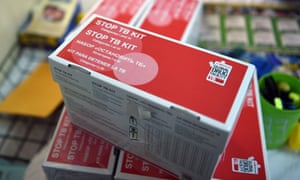
Tuberculosis medication


TB normally takes six months to cure using a combination of antibiotics, but when the bacteria becomes resistant to them a new combination is needed. Photograph: Mick Tsikas/AAP

His unit is part of the West African Network of Excellence for TB, Aids and Malaria, funded by the European and Developing Countries Clinical Trials Partnership, which was set up to collect data on the three infectious diseases across the region.


The surveillance also picked up evidence of extensively drug-resistant tuberculosis (XDR-TB) in Togo and Ghana. These are strains that are resistant to second-line antibiotics used to treat MDR-TB.


The network has published its findings in the BioMed Central Medicine journal.


TB normally takes six months to cure using a combination of the antibiotics rifampicin and isoniazid, but when the bacteria becomes resistant to them a new combination is needed that is more expensive and involves longer treatment.


The latest report from the WHO found that drug-resistant cases had risen to more than 500,000 a year worldwide. The numbers of people with TB were also revised upwards, from 9.6 million to 10.4 million a year, after better data emerged from India.


Multidrug-resistant TB rates soaring in west Africa, WHO warns

14 Eylül 2016 Çarşamba

"Back on my feet": how artificial limbs can have a second life in Africa

Losing a limb is a devastating physical and psychological experience for anyone. For adults and children in countries where prosthetics are not routinely available, it can also mean losing your home, your family and ending up on the streets.


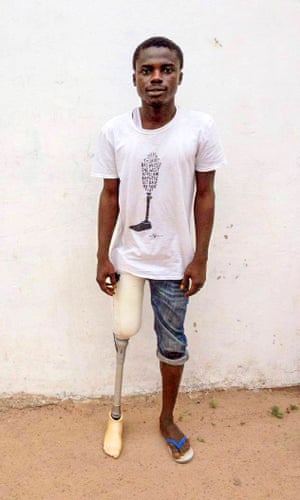
Mohamad Musa, from Sanchaba in western Gambia, has experienced first-hand the harsh reality of life as an amputee. His leg was removed at Banjul hospital in 2014 after suffering pain for many years. Without a prosthetic limb, he spent much of his day “just sitting” and had to leave school in 7th grade.


Mohamad Musa had his leg removed in 2014 after suffering pain for many years.


Mohamad Musa had his leg removed in 2014 after suffering pain for many years. Photograph: Legs4Africa

Now in his twenties, Musa is among hundreds to date who have benefited from recycled artificial legs sent out by UK charities to places where they are desperately needed. Earlier this year, Legs4Africa volunteers arrived in his town and offered him the chance of being fitted with a prosthetic. “They brought me back on my feet,” he explains.


His story and others have been made possible due to effective partnerships. One such collaboration between Limbcare and Legs4Africa resulted in 500 limbs being despatched to Tanzania in May this year. The prosthetics which also include arms and hands will be distributed to a Dar es Salaam hospital where experienced technicians will fit them to those in need. Len Amos, Limbcare’s director of recycling and communication, says: “All of these parts went to a country with no NHS and where an awful lot of children are disowned by their parents because they can’t work, so end up begging.”


The partnership between the two charities began with a phone call. Amos had been asked by a foundation working with underprivileged communities to send out disability equipment. He contacted Legs4Africa founder Tom Williams asking if he wanted to help fill the container destined for Tanzania. By coincidence, Williams had received a request for legs also from Tanzania. Aided by volunteers, they had the limbs tagged, bagged and sent on to their destination.


Limbcare and Legs4Africa obtain second-hand legs from the NHS, private clinics and funeral firms. Under EU laws, prosthetics are classed as medical waste so the NHS cannot reuse them once a patient has outgrown or stopped using them because of a change in health. Instead, around 5,000 are either incinerated or go for landfill every year in the UK.


[A prosthetic] leg can be the reason someone rises out of poverty and begins living a life of dignity


“There’s no market [for used limbs] in the UK and if we don’t collect them they’ll be destroyed,” explains Williams whose charity collects from nearly a dozen hospitals and clinics. This informal process usually starts with Legs4Africa approaching either senior management or the prosthetist who then fill a box of redundant limbs for the charity to collect. In some cases, trusts will encourage staff to put prosthetics and mobility aids aside. Williams’s dream would be for formal collaboration and partnership between charities and the entire NHS.


One country’s waste is another’s opportunity to transform lives, especially in parts of sub-Saharan Africa where prosthetics are not manufactured. “You have to be rich, in the military or the government to receive an artificial limb,” says Amos. “You’d have to be lucky even to get walking sticks.”


Although manufacturers will not guarantee prosthetics for life, secondhand ones are generally perfectly reusable according to Amos. They will be exported to local hospitals where occupational therapists assess people for suitability then engineers adapt the limbs to individual patients. It is a painstaking process. A person’s height has to be taken into account, to ensure the leg section is the correct length, and their weight so the limb doesn’t swing out too quickly.


Diseases such as diabetes, car accidents and civil war are all to blame for an increasing number of people in Africa living with limb loss. Gambia’s only prosthetist, Gabu Jarjue, is based at the Royal Victoria teaching hospital in Banjul which benefited from a Legs4Africa shipment this year. Gambia is a developing nation and disability a low priority, says Jarjue, with the daily life of patients and their families one of “discrimination and exclusion”. His belief is that the sooner Gambia addresses the needs of amputees, the quicker it will realise that a properly rehabilitated patient costs less than a disabled one. “[A prosthetic] leg can be the reason someone rises out of poverty and begins living a life of dignity.”


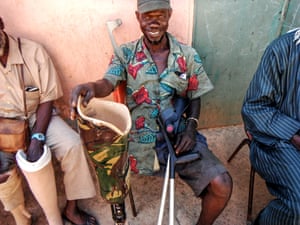
Musa, a mechanic who lost his leg in an accident at work, is a recipient of a prosthetic leg.


Musa, a mechanic who lost his leg in an accident at work, is a recipient of a prosthetic leg. Photograph: Legs4Africa

There is no set structure to how Legs4Africa establishes and maintains partnerships with healthcare professionals like Jarjue and with healthcare institutions. However, hospitals and clinics, which are often referred to the charity by individuals in the community, must meet strict criteria. They must have the facilities and expertise to customise the components sent out by the charity, guarantee not to sell them and be responsible for transporting the prosthetics from port to hospital. “We also ask for reports and photos,” adds Williams.


As for Musa, he’s enjoying having a new prosthetic leg and the opportunities it affords him. He says: “I’m with no pain and thinking of my future – my dream is education.” The aim of charities like Limbcare and Legs4Africa is to get many more like Musa back on their feet. Through partnerships like theirs, this is a very achievable goal.


Join the Healthcare Professionals Network to read more pieces like this. And follow us on Twitter (@GdnHealthcare) to keep up with the latest healthcare news and views.


"Back on my feet": how artificial limbs can have a second life in Africa

24 Temmuz 2016 Pazar

Only complacency can stop Nigeria – and Africa – from finally conquering polio | Oyewale Tomori

In Nigeria, if we’re diligent and careful, we may never see another child lose the use of their legs to polio.


Thirty years ago, millions of children went unvaccinated against a preventable disease that persisted and paralysed in nearly every country in the world. Since then, the number of unvaccinated children has dropped precipitously. While we still have work to do to ensure not even one child is missed, the biggest challenge Nigeria has to contend with now is complacency.


On 24 July 2016, Nigeria reachedtwo years without a case of wild polio. That is commendable. But if reaching this landmark has left many euphoric, total eradication would be historic. If Nigeria and the rest of Africa can make it to July 2017 without a case of polio, we will be officially polio free. To do this, we have to consolidate the progress we have already made, and vigorously invest in our collective capacity to contain and wipe out the disease wherever it may linger.


To banish polio from Nigeria and the rest of the continent, we must vaccinate every child. To miss even one would be to leave the door open for wild polio virus to return, or to risk outbreaks of vaccine-derived polio virus, a very rare form of polio that can emerge in under-immunised populations.


In Nigeria and across Africa, national governments have been instrumental in supporting this last-mile effort. So too have local civil society leaders, religious and traditional chiefs. All have been backed by the incredible commitment of the continent’s health workers. It is through these networks that we are able to quickly, aggressively and effectively respond to the last vestiges of polio in some of the most remote corners of the world.


Since President Muhammadu Buhari took office last year, he has clearly stated that he is committed to ending polio in Nigeria. Earlier this month, following a meeting with Dr Matshidiso Moeti, the World Health Organisation’s regional director for Africa, Buhari called for a reinvigorated approach to guaranteeing Nigeria’s polio-free status by prioritising public funding to health programmes and to innovative strategies that have enabled the country to immunise millions of children even in hard-to-reach and insecure areas. While national commitment is critical, state governors and local officials need to act on Buhari’s message. They must not only pledge to keep Nigeria polio-free, but also ensure all our children have access to the vaccines they need to protect them from killer diseases.


The health infrastructure built to eradicate polio need not disappear with the disease, either. The infrastructure and response mechanisms built to bring an end to polio can and should be repurposed into sustainable public health programmes and a functioning health infrastructure. We should care for our children with the same excitement we exhibit when bringing them into the world and not abandon responsibility to donors and international agencies.


Nigeria already has the opportunity to develop a great legacy. In the past two years, polio surveillance networks have been used to monitor and contain the 2014 Ebola outbreak, as well as responding to measles and rubella outbreaks throughout Africa.


Nigeria should also take the lessons learned from its emergency operations centres – which have been used to great effect for polio and were instrumental in stopping Ebola – to monitor and control disease outbreaks such as Lassa fever, and provide better health services to the large population of internally displaced people.


I know better than most that the obstacles that stand in the way of eradication are not to be discounted. The violent insurgency in north-east Nigeria has made routine vaccination exceedingly difficult in certain parts of the country, and finding and vaccinating children displaced by violence remains a major challenge. Nonetheless, the eradication of polio is not a luxury. We have come too far and invested too much to rest on our laurels.


Those who have dedicated their lives to improving public health are said to run on impossible idealism and a tenacious commitment to the greater good. Few of them are ever lucky enough to bring a definitive end to such a devastating disease. For all of the children whose lives have been irreparably damaged by an entirely preventable illness, let’s come together and call on our leaders at home and abroad to make polio a distant memory.


Dr Oyewale Tomori is president of the Nigerian Academy of Science and chairman of Nigeria’s Expert Review Committee on Polio Eradication and Routine Immunisation


Only complacency can stop Nigeria – and Africa – from finally conquering polio | Oyewale Tomori

18 Ağustos 2015 Salı

Meningitis C vaccine shortage prompts fears of key outbreak in Africa

A shortage of meningitis C vaccine is threatening to jeopardise the potential to cope with a likely outbreak of the condition in Africa, global public well being organisations, such as the World Overall health Organisation, have warned.


A Meningitis A vaccine launched in 2010, MenAfriVac, has substantially lowered incidence of that strain but type C infections have been growing and a cheap equivalent that would shield against meningitis C, between other strains, is still many years away.


In the meantime, the members of the Global Coordinating Group for Vaccine Provision for Epidemic Meningitis Handle, which also comprises the Worldwide Federation of Red Cross and Red Crescent Societies (IFRC), and Médecins sans Frontières (MSF) are attractive to pharmaceutical firms to support them by plugging the gap.


Related: Meningitis vaccine withstands African heat with no injury


At existing, they say pharmaceutical businesses have advised them they are unable to provide the newer, a lot more efficient conjugate vaccines, which supply longer lasting immunisation than the outdated polysaccharide vaccines.


Dr William Perea, coordinator of the management of epidemic ailments unit at WHO, explained: “The issue is that now that we have vaccinated 200 million folks there are no far more epidemics with [meningitis] A, but this 12 months was a shock to us because we had been not expecting such a large one particular [meningitis C epidemic] as occurred in Niger.


“What we have told the companies is we want the conjugate vaccine to be ready to prevent epidemics for longer periods but they will not make the vaccine in ample quantities at affordable costs.”


As nicely as the further safety afforded by the conjugate vaccines, they are also ideal for kids, in contrast to the polysaccharide version. Even so, according to WHO figures, they usually value at least ten occasions far more than polysaccharide vaccines, which are priced at about $ 4 to $ five. Even with the producers providing the conjugate vaccines at $ 25 a dose, for the five million doses needed that amounts to $ 125m as opposed to $ 25m for the polysaccharide vaccines.


People gather at the health centre in Lazaret, near Niamey in Niger, in April 2015, where patients suffering from meningitis are being treated.
Folks collect at the well being clinic in Lazaret, near Niamey, Niger, in April 2015, the place sufferers struggling from meningitis are being treated. Photograph: Boureima Hama/AFP/Getty

“Either they assist us have affordable conjugate vaccines or we’ll have to use an previous vaccine that does not supply us with the identical quality,” mentioned Perea.


Meningitis C can trigger serious brain injury and is fatal in 50% of cases if untreated.


There were twelve,000 circumstances of meningitis in Niger and Nigeria and 800 deaths in the very first 6 months of the 12 months but with cases increasing because 2013, the fear is that subsequent year’s meningitis season, which starts in January, could see a considerably larger quantity of instances.


The MenAfriVac stockpile, brought about by way of a public-private partnership, was produced in response to an outbreak of meningitis A in sub-Saharan Africa in 1996-97 that developed 200,000 situations and 20,000 deaths.


It is as well early to say whether or not the C strain will behave in a similar style to A, moving to other nations in sub-Saharan Africa, but Perera mentioned the fact that it had already expanded from Nigeria to Niger in a couple of many years meant that this was a situation it was crucial to put together for.


MSF’s global healthcare coordinator, Dr Myriam Henkens, emphasised the importance of a multivalent vaccine – one particular that covers distinct strains of the illness: “We want vaccine makers to prepare manufacturing of a multivalent vaccine now to let ample lead time and capacity to meet this demand.”


A GSK spokeswoman confirmed the business had been in talks with the WHO and mentioned: “We are evaluating if and how we may possibly be in a position to supply further doses.”


Sanofi Pasteur said it was trying to improve production of its polysaccharide vaccine which covers Meningitis C.


Meningitis C vaccine shortage prompts fears of key outbreak in Africa

11 Nisan 2014 Cuma

Ebola experts in west Africa battle to stem deadly outbreak in photographs


Health care authorities in Guinea and other neighbouring African nations are struggling to include an outbreak of Ebola, one particular of the world’s deadliest viruses. The tropical pathogen, which can trigger haemorrhagic fever and organ failure, has a fatality charge of up to 90%. The outbreak has killed a lot more than two-thirds of those who have been infected, which includes 101 men and women in Guinea and neighbouring Liberia


People gather next to a billboard to promote newborn registration on April 1, 2014 in a street of Gueckedou. Gueckedou, a market city of 220000 people near the Liberia and Sierra Leone borders, is on the front line of Guinea
Guéckédou, a bustling city close to the border of Liberia and Sierra Leone, is on the frontline of Guinea’s more and more desperate struggle to contain 1 of the worst outbreaks of Ebola in history. Photograph: Seullou/AFP/Getty
A nurse of the
Médecins Sans Frontières (MSF) is top the mission to stem the spread of Ebola. The healthcare charity has erected a pair of tin-roofed tents outside a overall health centre in southern Guinea, the epicentre of the outbreak. One particular tent houses suspected Ebola cases the other, confirmed ones. Workers say they are constructing a third tent for survivors and hope that the virus can be contained. Photograph: Seullou/AFP/Getty
A scientist separates blood cells from plasma cells to isolate any Ebola RNA in order to test for the virus at the European Mobile Laboratory in Gueckedou
A scientist in a mobile laboratory in Guéckédou separates blood cells from plasma in order to test for the virus. It is a lot more than two months given that the outbreak erupted in west Africa. Experts say it could get months to halt the spread of the pathogen. Photograph: Misha Hussain/Reuters
Health specialists work in an isolation ward for patients at the Doctors Without Borders facility in Guekedou, southern Guinea.
Overall health specialists prepare to examine a patient in an isolation ward. Ebola carriers have a greater likelihood of survival if medical care is administered quickly right after infection. Hiccups, say medical doctors, are the ultimate telltale signal of infection. Individuals can be discharged from isolation units soon right after their clinical signs, such as fever and diarrhoea, disappear. Photograph: Seyllou/AFP/Getty Photos
A patient arrived at the ebola healthcare structure in Guéckédou .
The household of a patient pay attention from afar as a nurse administers therapy. In previous outbreaks, the sick have been occasionally abandoned by their households or dumped outdoors isolation wards. Survivors can typically be stigmatised and direct speak to with them avoided. Transmission of the condition is not understood in a lot of remote villages, where some suspect the virus is brought on by witchcraft. Photograph: Amandine Colin/MSF
Staff of MSF carry the body of a person killed by viral haemorrhagic fever, at a center for victims of the Ebola virus in Guekedou, Guinea
MSF workers eliminate the entire body of an Ebola victim. Health-related employees and water sanitation professionals will support the family of the deceased to prepare the entire body for burial. Right after washing the entire body with chlorine and putting it in a plastic bag, authorities will provide gloves and chlorine to funeral attendees to minimize the chance of contagion. Photograph: Seyllou/AFP/Getty Images
A view of gloves and boots used by medical staff, drying in the sun, at a center for victims of the Ebola virus in Guekedou
Gloves and boots belonging to health care employees dry in the sun. The Ebola virus is passed by means of make contact with with blood, sweat and other bodily fluids of infected people or animals. Photograph: Seyllou/AFP/Getty Photographs
Health workers teach people about the Ebola virus and how to prevent infection, in Conakry, Guinea
Wellness employees in Conkary, the Guinea capital, educate villagers how to prevent infection. There is no remedy for Ebola, which was identified in Sudan and the Democratic Republic of the Congo in 1976. In the past 4 decades, the virus has struck several African nations with alarming regularity. Photograph: Youssouf Bah/AP
a talk about viral haemorrhagic fever. The viral haemorrhagic fever epidemic raging in Guinea is caused by several viruses which have similar symptoms -- the deadliest and most feared of which is Ebola.
An MSF nurse briefs colleagues and Guinean medical professionals on the virus. The viral haemorrhagic fever epidemic raging in Guinea is caused by many viruses with equivalent symptoms – the deadliest of which is Ebola. Photograph: Seyllou/AFP/Getty Photos
A woman walks past dried bushmeat near a road of the Yamoussoukro highway March 29, 2014. Bushmeat - from bats to antelopes, squirrels, porcupines and monkeys - has long held pride of place on family menus in West and Central Africa, whether stewed, smoked or roasted. Experts who have studied the Ebola virus from its discovery in 1976 in Democratic Republic of Congo, then Zaire, say its suspected origin - what they call the reservoir host - is forest bats. Links have also been made to the carcasses of freshly slaughtered animals consumed as bushmeat.
A female seems suspiciously at dried meat, near the Yamoussoukro highway in the Ivory Coast. Bushmeat, which can comprise something from squirrels to antelopes, is well-liked in components of west and central Africa, in which it is stewed, boiled or roasted. Ebola authorities say the pathogen’s suspected origin – or reservoir host, as it is recognized – is forest bats, a common ingredient of bushmeat. Photograph: Thierry Gouegnon/Reuters
A Liberian student reads newpaper headlines on the Ebola epidemic, Monrovia, Liberia
A student in Monrovia examines newspaper headlines on the Ebola epidemic. Liberia has announced 7 suspected and confirmed cases of the virus, such as 4 deaths. Outbreaks occur largely in remote villages shut to tropical rainforests, according to the World Overall health Organisation. Photograph: Ahmed Jallanzo/EPA
Guinea-Conakry is being ravaged by an Ebola virus epidemic, and the Guinean-Bissau officials are concerned with a possible case inside their borders.
A soldier from Guinea-Bissau instructs girls in Conakry, Guinea, on how to wash their hands with neighborhood disinfectants. Bissau-Guinean officials have raised concerns about a possible case of Ebola. A lot of west African states have porous borders, and individuals often travel in between nations. Photograph: Tiago Petinga/EPA
A Senegalese hygienist demonstrates how to protect oneself against the Ebola virus at Dakar airport, during a visit of the Senegalese health minister to check the safety measures put in place to fight against the virus
A hygienist at Dakar airport exhibits personnel how to avoid infection. Senegal has closed its borders with Guinea as west Africa races to incorporate the Ebola outbreak, described as the most tough since the virus was found practically forty years ago. Photograph: Seyllou/AFP/Getty Photos


‘) jQuery(‘.associated-galleries-slot’).load(‘http://gdn-galleries.appspot.com/parts/galleries/associated/box?page-url=’ + window.spot.href) }


Ebola experts in west Africa battle to stem deadly outbreak in photographs

9 Nisan 2014 Çarşamba

Public-private partnerships can aid enhance healthcare in Africa | @guardianletters

It is surprising, but maybe not surprising, to read of the affect of the public-personal partnership amongst the Lesotho government and Netcare on healthcare across Lesotho (Finance deal threatens Lesotho’s hospitals, says Oxfam, 7 April). Even so, public-personal partnership can operate in an African healthcare setting, and this has been demonstrated more than the last six many years by the accomplishment of the Health Improvement Undertaking Zanzibar (HIPZ) in transforming companies on the island.


Since 2006, an modern model of collaboration among HIPZ and the Zanzibar government has noticed a huge improvement in care at Makunduchi and Kivunge hospitals. This partnership improves healthcare provision without business obtain for folks or corporations, or the accruement of debt, with an ultimate aim of long-phrase sustainability.


The success of this model has essential a number of vital variables: a commitment to fully comprehend local requirements, an open-minded and pragmatic approach by the HIPZ team (recognising the importance of listening to neighborhood employees), steady investment in neighborhood staff, and transparent monitoring of outcomes, but with the acceptance that improvement is slow and often hard to demonstrate in the brief phrase. This largely unknown model of collaboration demonstrates a stark contrast to that observed in Lesotho.
Dr Jon Rees, Mr Ru MacDonagh, Roma Walker, Dr Nick Campain
On behalf of the HIPZ Trustees


• Your report rightly raised issues about healthcare charges in Lesotho. The Planet Bank Group is functioning closely with the government to recognize price-powerful remedies to increase health for the people of Lesotho.


We would like to clarify a number of key points. The public-personal partnership overall health network – which serves a quarter of the population – accounted for almost 35% of the complete overall health price range. Although this is a considerable allocation of the budget, it is about the same percentage invested on the facilities beneath the outdated system. Most essential, the network is delivering far better benefits.


As the post noted, maternal and infant mortality charges have declined and the good quality of care presented has improved at the new health services. These essential achievements have driven better-than-anticipated demand at the network – which includes 4 main clinics and the only referral hospital open to all citizens.


We are functioning in a number of areas to support the government of Lesotho to even more increase access to large-good quality health services for girls and youngsters, specially these residing in remote regions. We welcome the chance to work with all stakeholders so that everyone in Lesotho, particularly the poorest, is capable to entry the crucial health providers they deserve.
Laurence Carter
Director, PPP transaction advisory solutions, Global Finance Corporation


• The letter you published referring to the Tony Blair Africa Governance Initiative (9 April) is misleading. We are an independent Uk-registered charity and Mr Blair, as our founder and patron, carries out his work in Rwanda on a professional-bono basis. As this kind of he is properly placed to comment on the nation – its progress and its problems. AGI derives no revenue from its partnership with the government of Rwanda. A quick appear at our internet site (www.africagovernance.org) will tell you that we perform with many African governments to help them drive the improvement that lifts their individuals out of poverty.
Nick Thompson
Chief executive, Tony Blair Africa Governance Initiative


Public-private partnerships can aid enhance healthcare in Africa | @guardianletters

Public-private partnerships can help improve healthcare in Africa | @guardianletters

It is shocking, but perhaps not surprising, to read of the impact of the public-private partnership between the Lesotho government and Netcare on healthcare across Lesotho (Finance deal threatens Lesotho’s hospitals, says Oxfam, 7 April). However, public-private partnership can work in an African healthcare setting, and this has been demonstrated over the last six years by the success of the Health Improvement Project Zanzibar (HIPZ) in transforming services on the island.


Since 2006, an innovative model of collaboration between HIPZ and the Zanzibar government has seen a huge improvement in care at Makunduchi and Kivunge hospitals. This partnership improves healthcare provision without commercial gain for individuals or corporations, or the accruement of debt, with an ultimate aim of long-term sustainability.


The success of this model has required a number of crucial factors: a commitment to fully understand local needs, an open-minded and pragmatic approach by the HIPZ team (recognising the importance of listening to local staff), consistent investment in local staff, and transparent monitoring of outcomes, but with the acceptance that improvement is slow and often difficult to demonstrate in the short term. This largely unknown model of collaboration demonstrates a stark contrast to that seen in Lesotho.
Dr Jon Rees, Mr Ru MacDonagh, Roma Walker, Dr Nick Campain
On behalf of the HIPZ Trustees


• Your article rightly raised concerns about healthcare costs in Lesotho. The World Bank Group is working closely with the government to identify cost-effective solutions to improve health for the people of Lesotho.


We would like to clarify a few key points. The public-private partnership health network – which serves a quarter of the population – accounted for nearly 35% of the total health budget. While this is a significant allocation of the budget, it is about the same percentage spent on the facilities under the old system. Most important, the network is delivering better results.


As the article noted, maternal and infant mortality rates have declined and the quality of care provided has improved at the new health facilities. These important achievements have driven greater-than-expected demand at the network – which includes four primary clinics and the only referral hospital open to all citizens.


We are working in several areas to help the government of Lesotho to further expand access to high-quality health services for women and children, especially those living in remote areas. We welcome the opportunity to work with all stakeholders so that everyone in Lesotho, especially the poorest, is able to access the essential health services they deserve.
Laurence Carter
Director, PPP transaction advisory services, International Finance Corporation


• The letter you published referring to the Tony Blair Africa Governance Initiative (9 April) is misleading. We are an independent UK-registered charity and Mr Blair, as our founder and patron, carries out his work in Rwanda on a pro-bono basis. As such he is well placed to comment on the country – its progress and its challenges. AGI derives no profit from its partnership with the government of Rwanda. A quick look at our website (www.africagovernance.org) will tell you that we work with several African governments to help them drive the development that lifts their people out of poverty.
Nick Thompson
Chief executive, Tony Blair Africa Governance Initiative


Public-private partnerships can help improve healthcare in Africa | @guardianletters

4 Nisan 2014 Cuma

Shrien Dewani to be held in psychiatric hospital in South Africa before trial

Shrien Dewani

Shrien Dewani is accused of arranging the murder of his wife Anni on their honeymoon in South Africa. Photograph: Ben Stansall/AFP/Getty Images


A British guy accused of organising his wife’s murder while on honeymoon will be detained in a high-safety psychiatric hospital with some of South Africa’s most notorious killers and rapists when he is extradited up coming week.


Shrien Dewani, a businessman from Bristol, faces months beneath surveillance at Valkenberg psychiatric hospital in Cape Town as he awaits trial above the death of his Swedish wife, Anni, in November 2010. He fought a court battle against extradition on the basis that he was struggling submit-traumatic anxiety disorder and depression.


South Africa’s Times newspaper reported on Friday that “protection has been beefed up and a new safety organization appointed” at Valkenberg just before Dewani’s arrival.


“When the Times visited the hospital yesterday five guards have been monitoring and searching vehicles coming into the premises, in contrast with 3 guards last week,” it continued. “A employee said staff had been advised of Dewani’s arrival this week.”


The hospital has a grim popularity. A 2006 article in South Africa’s respected Mail &amp Guardian newspaper noted: “Although hospital staff and provincial government officials are at pains to point out that it is a hospital, it resembles a prison, with its bleak buildings, visitor physique searches, the sounds of clanging steel gates and burly security guards.


“Staff are also quick to point out that the stark rooms accommodating some of South Africa’s most violent criminals – mainly murderers and rapists – are a enormous improvement on the previously overcrowded and filthy wards.”


Dewani, 33, is expected to arrive in Cape Town on Tuesday morning. Two senior officials from an elite police unit acknowledged as the Hawks and a South African medical professional and nurse will accompany him aboard British Airways flight BA0059 at Heathrow airport at 9.30pm on Monday, in accordance to the Occasions.


The Instances quoted a police source saying that information of Dewani’s flight had been blocked on the country’s border movement control program except to those with substantial safety clearances.


He will land at 9.55am on Tuesday in Cape Town exactly where, South Africa’s justice department stated, he will “immediately be escorted to Western Cape substantial court in which he is anticipated to make his initial look in a South African court of law”.


Dewani denies any involvement in the killing of 28-yr-outdated Anni, who was shot as couple’s taxi was apparently carjacked in Gugulethu township in Cape Town. He claims the couple were kidnapped at gunpoint and he was released unharmed.


A South African guy, Xolile Mngeni, was convicted of the murder and jailed for existence. Zola Tongo, a taxi driver, was jailed for 18 years following he admitted his portion in the killing although an additional accomplice, Mziwamadoda Qwabe, pleaded guilty to murder and acquired a 25-year prison sentence.


The pair testified that Dewani had organized the murder, but worries have been raised over the conduct of the police investigation, like allegations of torture.


Shrien Dewani to be held in psychiatric hospital in South Africa before trial

29 Ocak 2014 Çarşamba

Female genital mutilation has an effect on a fifth of younger girls in sub-Saharan Africa

MDG : FGM : A mother and daughter after a meeting to eradicate female genital mutilation in Senegal

About 140 million girls and ladies throughout the world are living with the consequences of FGM, which is mainly carried out on younger ladies amongst infancy and age 15. Photograph: Finbarr O’Reilly/Reuters


Practically one in five younger ladies in sub-Saharan Africa are nonetheless forced to endure female genital mutilation (FGM), in accordance to a UN report that paints a grim image of the state of the world’s young children.


Statistics launched by Unicef, the UN agency for youngsters, in Every youngster counts: revealing disparities, advancing children’s rights, published on Thursday, displays problems this kind of as violence, kid marriage and FGM are widespread across some of the world’s poorest nations. The release of the figures comes ahead of the 25th anniversary of the convention on the rights of the little one in November.


Unicef refers to figures published final 12 months in its 1st report summarising and analysing information from the 29 countries in Africa the place FGM is the most prevalent. Eighteen of these countries are in west and central Africa. In 2012, the UN common assembly passed a resolution demanding greater efforts to remove the practice. The resolution exclusively known as for data to be collected utilizing common methods and requirements.


FGM, recognised internationally as a violation of the human rights of ladies and females, can result in significant bleeding and issues urinating. It can also lead to cysts, infections, infertility and problems in childbirth. About 140 million women and ladies globally are residing with the consequences of FGM, which is largely carried out on young women between infancy and age 15.


The Unicef report highlights the value of information in creating progress for youngsters and exposing the unequal access to companies and protections.


“Information has created it attainable to save and increase the lives of millions of youngsters, specifically the most deprived,” said Tessa Wardlaw, head of Unicef’s data and analytics area. “Even more progress can only be produced if we know which young children are the most neglected, exactly where women and boys are out of school, the place illness is rampant, or exactly where basic sanitation is lacking.”


The figures present that almost 4-fifths of the world’s young children are subject to violent discipline – defined as physical punishment or psychological aggression – at house or in college. In the Democratic Republic of the Congo, which has been plagued by conflict for decades, 92% of kids encounter physical violence at college or at house.


“In countries of conflict, young children are in danger of seeing violence as a element of each day life – frequently witnessing horrific scenes of fighting and then encountering more violent acts at house or school,” says Unicef. “Kids who experience violence can often go on to commit it themselves, which makes breaking the cycle vital.”


Costs of child marriage are large, with around one in 10 ladies in the world being married ahead of the age of 15 – jeopardising their rights to well being, schooling and protection. Ladies in Central African Republic are now almost twice as probably to be forced into marriage by the age of 15 in contrast with ladies in Afghanistan (29% and 15% respectively). A lot more than a third of ladies in Niger are married before they attain the age of 15.


Figures reveal large disparities among rich and bad families, specifically in deaths of underneath-fives. Higher-income countries accounted for eleven% of the world under-five population in 2012, but only one.4% of global under-5 deaths. Reduced-income nations accounted for all around 20% of the world’s below-5 population, but had one-third of under-five deaths.


Of the approximately 18,000 young children under five who die every single day – six.6 million kids under 5 died in 2012 – a disproportionate amount are from locations of cites or the countryside that are cut off from providers since of poverty or geography. Despite the fact that diarrhoea can be handled efficiently and cheaply with oral rehydration salts, children with diarrhoea from the richest houses are up to 4 occasions a lot more likely to be treated than people from the poorest properties.


Some 15% of the world’s young children are concerned in kid labour, infringing on their right to learn and play.


But Unicef’s data also exhibits gains manufactured in the last decade: about 90 million more children would have died had mortality prices stayed at their 1990 level (before the 2000 millennium growth objectives were launched) and deaths from measles among beneath-fives fell from 482,000 in 2000 to 86,000, thanks in massive part to elevated immunisation.


Female genital mutilation has an effect on a fifth of younger girls in sub-Saharan Africa