soaring etiketine sahip kayıtlar gösteriliyor. Tüm kayıtları göster

20 Mart 2017 Pazartesi

Cancer rates are soaring in Africa, yet Tanzania"s radiotherapy hub stands idle

The white bulk of the cobalt-60 radiotherapy machine is just visible inside the dark cement bunker. The electricity in the room at Bugando Medical Centre is shut off. The machine, donated last year by the Indian government, looks ready to go, but it has yet to deliver a life-saving dose of radiation.


Medical staff at Bugando, a tertiary care and teaching hospital in Tanzania’s second largest city, Mwanza, are keen to start offering radiotherapy to the growing number of cancer patients arriving at the hospital’s doors.


In 2014, the government helped to build a state-of-the-art oncology wing at the hospital to make it a regional hub for cancer treatment, complete with several bunkers to house radioactive material safely.


But getting the expensive technology up and running has been a long struggle. In the wing’s main hall, two more donated machines – used linear accelerators from Italy and the US – are sitting in a jumble of parts, waiting for the hospital to secure the funds to install them.


Bugando is a lifeline for the 13 million-strong population of northern Tanzania’s Lake Victoria region, providing specialised care no other hospital around can offer. But like many other parts of the country’s healthcare system, this centre – run by the government and the Catholic church – faces staff and equipment shortages that limit what it can do.


Last year, Tanzania’s government allocated 11.3% (pdf) of the national budget to health. That percentage, which includes significant donor funding, has been rising modestly, but it still falls short of the 2001 Abuja declaration (pdf), in which African nations pledged to set a target of spending 15% of their budgets on health. There are fewer than five skilled health professionals per 10,000 people in Tanzania, compared with the regional average of 14.1.
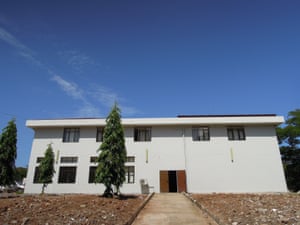


The oncology wing at Bugando Medical Centre in Mwanza, Tanzania.


The oncology wing at Bugando Medical Centre in Mwanza. Photograph: Krista Mahr

That shortfall is particularly glaring when it comes to cancer diagnosis and treatment. The World Health Organization warned recently that non-communicable diseases are likely to kill more people in Africa than infectious disease by 2030, and Bugando is on the frontline of this fight.


Dr Nestory Masalu, Tanzania’s only internationally trained medical oncologist, helped set up the oncology ward in 2009; in 2010 he saw 320 cancer cases. Last year, he and his colleagues saw 14,000.


“Cancer is exploding,” says Dr Merchades Bugimbi, Bugando’s acting director. “Everyone is asking, ‘Why, why, why?’”


The answer is not straightforward. Doctors and health workers in the Mwanza region attribute the spike to poor health education, environmental changes, high HIV rates, improved diagnostics and the fact that people are simply living longer.


In late February, Dodo Boniface, a farmer who lives 170km (105 miles) from Mwanza, stood in the new oncology wing, holding his four-year-old daughter, Dainess. In January, Dainess started complaining about pain in her back. Within days, she had lost use of her legs. The family was referred to Bugando, where she was diagnosed with lymphoma that had moved into her spine.


“We’ve really struggled with this,” says Boniface.
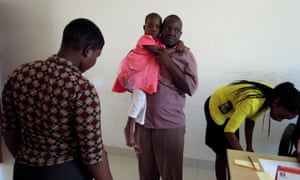


Dodo Boniface carries his daughter, Dainess, during a weigh-in at Bugando Medical Centre in Mwanza. Doctors are trying to assess whether Dainess is strong enough for a course of chemotherapy.


Dodo Boniface carries his daughter, Dainess, during a weigh-in at Bugando Medical Centre in Mwanza. Doctors are trying to assess whether Dainess is strong enough for a course of chemotherapy. Photograph: Krista Mahr

Bugando is the only hospital in the region that can do biopsies and has its own pathology lab; the team here can also perform complex surgeries and offer chemotherapy. But the centre still has limitations: the hospital does not have MRI or a functional CT scan machine to investigate and diagnose certain kinds of cancer, according to staff.


Dainess’ family isn’t insured, but sold some cattle to pay for her scans at a private clinic. Now they’ve been advised she should start a course of chemotherapy. Since 2015, the US-based International Cancer Care and Research Excellence Foundation (Iccare) has subsidised chemotherapy for paediatric patients at Bugando. The programme collaborates with the Duke Global Health Institute at Duke University, which is working on strengthening cancer treatment in Bugando and in other parts of Tanzania.


It’s not always easy to get cancer patients to keep coming back. Many don’t have the money to get to the hospital or stay for treatment. Others worry that the illness is a curse, and prefer to consult traditional doctors. When Iccare first started its programme, half the paediatric cancer patients abandoned treatment mid-course. The programme has reduced that number by 20%.


“If you diagnose patients with cancer, they don’t accept it,” says Dr Beda Likonda, Bugando’s radiation oncologist. “It’s like a denial. They look for other options.” By the time many do seek treatment, their cancer is advanced.


Dainess can be treated at Bugando, but many others cannot. Masalu, the medical oncologist, estimates that 60% of new cases at Bugando require radiotherapy. The radiotherapy machine in the bunker may soon be ready, says Likonda, but it’s older technology and a blunter instrument than the linear accelerators languishing in storage. Together, those two machines will take a few million dollars to install and maintain, he says.


For now, Bugando patients who require radiation are referred to Ocean Road Cancer Institute in Dar es Salaam, more than 1,000km away and home to the country’s only radiotherapy treatment centre. Making the journey once is daunting and expensive, let alone going back and forth for the required cycles of therapy. “They are told to go back home, and come back in one month,” says Masalu. “They can’t.”


Rahel Charles Rosana, a 49-year-old widow who lives about 70km outside Mwanza, hasn’t been able to go anywhere for a long time. By the time Rosana was examined for cervical cancer at a local health centre, she had been having such intense abdominal pain that she hadn’t slept lying down for five years. The health workers suspected she had cancer and referred her to Bugando, but she struggled to pay for even one visit.


“I can’t afford to go back,” Rosana says, visibly uncomfortable in a chair in her small village. If she were referred to Dar for radiotherapy, a common treatment for cervical cancer, there would be no way for her to get there.
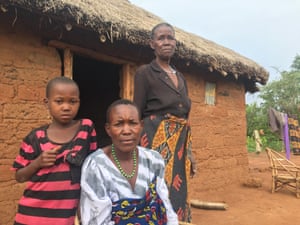


Rahel Charles Rosana, centre, with her mother and daughter at their home outside the village of Misasi.


Rahel Charles Rosana, centre, with her mother and daughter at their home outside the village of Misasi. Photograph: Krista Mahr

Cervical cancer has emerged as the most common cancer in Tanzania – and the leading cause of cancer-related deaths. Eighty percent of Tanzanian women are diagnosed at an advanced stage, according to Pink Ribbon Red Ribbon, a US-based non-profit. The mortality rate for the disease, which is treatable and curable if caught early, could be as high as 44%, according Dr Safina Yuma, cervical cancer specialist at the health ministry.


“This disease is killing more women than die in childbirth,” says Celina Schocken, Pink Ribbon Red Ribbon’s CEO. “It has an incredibly high disease burden and gets very little donor funding.”


Pink Ribbon Red Ribbon and its partners have been helping the government to improve screening and health worker training to catch cervical cancer earlier. Around Mwanza, where rates are especially high, they help pay for treatment and transportation for women to get to Bugando or Ocean Road in Dar es Salaam. The group is also planning to build hostels for cancer patients to stay in both cities to relieve expenses during long treatments.


At Makongoro Health Centre in Mwanza, Dr Goret Dussa says she was trained under one of these programmes to do screening and cryotherapy, a simple, early treatment that uses gas to freeze pre-cancerous cells on the cervix. “Before this, we didn’t know how to do it,” Dussa says.


Dussa was driving out to do screenings and treatment in rural areas outside Mwanza, but the funding has run out. She is also having a problem with the centre’s donated cryotherapy machine, and has been borrowing a machine from another clinic. She’s requested new equipment from the government, but isn’t sure if she’ll get the money.


After all, there is a limit to what any donor or NGO can do. “There’s a five-year project, but then it ends,” says Yuma. “If you develop something and you stop, there’s no meaning to it. We need the government to take over.”


At Bugando, Masalu is banking on the government finally locking down the funds to get the radiation machines up and running to treat women like Rosana closer to home. He has big plans for Bugando’s cancer treatment programme, including the construction of a 120-bed cancer ward next to the oncology wing, and training more young oncologists to join his staff.


“The government is starting to think about non-communicable diseases, especially cancer,” says Bugimbi, the hospital’s acting director. The radiation programme, he admits, is stuck for now. But he adds, “Always, we try.”


Cancer rates are soaring in Africa, yet Tanzania"s radiotherapy hub stands idle

3 Kasım 2016 Perşembe

Multidrug-resistant TB rates soaring in west Africa, WHO warns

Soaring rates of multidrug-resistant tuberculosis have been found in west Africa, with the highest in the dense population of Lagos, Nigeria, suggesting the seriousness of the epidemic has been considerably underestimated.


Until now, the World Health Organisation has had to rely on estimates for MDR-TB in west Africa because the data has not been collected or reliable. But a new surveillance network across eight countries in the region has found that drug resistance is a much greater threat than had been assumed.


The WHO had estimated that up to 2% of new TB infections in west Africa were resistant to drugs, but the researchers found the true rate was 6%.


The rate among people who had already been treated for TB was much higher: the WHO had estimated 17% of these infections in west Africa were resistant to drugs, but the network has found the average is 35%.


The hotspots are in Lagos, Nigeria’s largest city, where 66% of people previously treated for TB have a drug-resistant strain. Among people treated for TB for the first time, nearly a third – 32% – had a drug-resistant strain.


In Mali, the researchers found that 59% of people previously treated for TB had drug resistance.


“It is a wake-up call for the ministries of health and the governments to take MDR-TB seriously,” said Prof Martin Antonio, principal investigator at the Medical Research Council unit in the Gambia. “I think it is a problem for the rest of the world as well. Ebola wasn’t just a west African problem.


“We recommend that efforts be put in place for containment of a potential west African TB epidemic at the earliest possible stage. This is especially important as west Africa, with its 245 million inhabitants, is one of the poorest regions globally, whose fragile health systems can easily be overwhelmed by infectious disease epidemics, as seen in the recent Ebola outbreak.”


Tuberculosis medication


TB normally takes six months to cure using a combination of antibiotics, but when the bacteria becomes resistant to them a new combination is needed. Photograph: Mick Tsikas/AAP

His unit is part of the West African Network of Excellence for TB, Aids and Malaria, funded by the European and Developing Countries Clinical Trials Partnership, which was set up to collect data on the three infectious diseases across the region.


The surveillance also picked up evidence of extensively drug-resistant tuberculosis (XDR-TB) in Togo and Ghana. These are strains that are resistant to second-line antibiotics used to treat MDR-TB.


The network has published its findings in the BioMed Central Medicine journal.


TB normally takes six months to cure using a combination of the antibiotics rifampicin and isoniazid, but when the bacteria becomes resistant to them a new combination is needed that is more expensive and involves longer treatment.


The latest report from the WHO found that drug-resistant cases had risen to more than 500,000 a year worldwide. The numbers of people with TB were also revised upwards, from 9.6 million to 10.4 million a year, after better data emerged from India.


Multidrug-resistant TB rates soaring in west Africa, WHO warns

18 Ekim 2016 Salı

Is Big Pharma To Blame For Soaring Health Costs?

[unable to retrieve full-text content]

Drug companies are often demonized for high drug prices. They say it’s necessary in order to create new drugs. Experts at a recent debate take sides.


Is Big Pharma To Blame For Soaring Health Costs?

29 Eylül 2016 Perşembe

Self-harm, PTSD and mental illness soaring among young women in England – survey

Rates of self-harm, post-traumatic stress disorder (PTSD) and chronic mental illness are soaring among young women in England aged 16 to 24, according to the biggest NHS survey of mental ill-health and treatment since 2007.


One in eight young women (12.6%) within that age group has PTSD, according to the study. That is three times the 4.2% rate found when the government-funded adult psychiatric morbidity survey was last conducted in 2007.


PTSD graphic

Researchers found a similarly worrying upward trend for the number of 16- to 24-year-old young women who self-harm – almost one in five. That has risen three-fold from 6.5% in 2000 to 11.7% in 2007 to the 19.7% found in 2014.


The same age group also has the highest rates of common mental disorders such as anxiety and depression of any group in the population. Overall 28.2% of young women told researchers they had some form of mental health condition, almost three times higher than the 10% of men from the same age group who did so.


Mental health graphic

Experts said that violence and abuse, including rape, as well as near-death experiences such as car crashes, and a loved one being killed or committing suicide were part of the explanation for the sharp rise in PTSD.


Although the definition of what constitutes trauma has remained unchanged since the survey was last conducted in 2007, the researchers said that their use for the latest survey of a new screening tool for PTSD, which is thought to be more accurate than its predecessor, may help explain the big jump in those with that disorder.


Sally McMahon, the lead researcher behind the survey, said: “We know that there are things like violence and abuse that are strongly associated with mental illness.”


Graphic

But, she added: “This is also the age of social media ubiquity. This is the context that they [young women] are coming into and it warrants further research.”


She described 16-25 year olds as the “first cohort to come of age in social media ubiquity”.


She pinpointed mobile phone use as another potential driver if the alarming trends revealed in the report, published on Thursday by NHS Digital.


Self-harm, PTSD and mental illness soaring among young women in England – survey

23 Haziran 2014 Pazartesi

Hay fever linked to warm climate triggers soaring amount of GP visits

Hay fever nose blowing

There are predictions that a ‘particularly severe’ pollen season could cause widespread struggling until finally the middle of July. Photograph: Alamy


Soaring numbers of individuals are seeing their GP due to the fact of hay fever linked to the warm climate, amid predictions that a notably severe pollen season could trigger widespread struggling right up until the middle of subsequent month.


The eleven,873 men and women in England and Wales who visited their GP simply because of hay fever-variety signs and symptoms in the second week of June was 114% a lot more than the five,560 who did so in the exact same week last year.


The figure was also 3 times larger than for the preceding week and five instances the quantity of consultations on the problem two weeks in the past.


Most of those impacted were aged five to 14, or 15 to 24, explained the Royal School of Common Practitioners (RCGP), which collected the figures. Signs of hay fever incorporate sneezing, a runny nose, itchy eyes, irritability and drowsiness.


The scientific director of the charity Allergy United kingdom, Prof Jean Emberlin, mentioned the mild winter and warm spring have been producing a notably substantial pollen count. She explained: “As soon as the grass got a truly good dry day the pollen counts went shooting up to substantial and very large and they have been there on dry, warm days ever since. We are going to get these counts carrying on by means of June and into the initial couple of weeks of July.”


Hay fever, which is triggered by an allergy to grass, tree or weed pollens, is believed to affect about 10% of the population. Dr Maureen Baker, the chair of the RCGP, explained: “Hay fever is terrible but the discomfort must only be short-term and there should be no extended-phrase effects.”


Samantha Preston, an allergy skilled with the LloydsPharmacy chain of chemists, advisable that sufferers avoid or decrease symptoms by: trying to keep windows and doors closed at property to end pollen circulating drying outfits indoors wearing wraparound sunglasses taking antihistamines pre-emptively and rubbing a small amount of petroleum jelly at the base of their nostrils.


Hay fever linked to warm climate triggers soaring amount of GP visits

20 Mart 2014 Perşembe

Soaring survival on breast cancer, new examine displays

The very best mortality charges are in Spain, Norway, Sweden and Portugal, which all had death prices below twenty per cent, the newest figures demonstrate.


In November a report by the Organisation for Economic Co-operation Advancement identified ptients with breast, bowel and cervical cancer fare worse in Britain than in the huge bulk of industrialised nations, with only Poland proven to be worse for all three of the cancers.


Charities explained that too typically illness is discovered as well late, with instances missed by GPs and delays for hospital scans and diagnostic exams.


Mike Hobday, Director of Policy and Analysis at Macmillan Cancer Help, explained: “Overall it is excellent information that more men and women than ever are surviving breast cancer in England and Wales, but plainly we even now have work to do in the Uk to catch up with our European counterparts.


“It’s crucial that cancer is caught in its early phases to ensure individuals have timely access to treatment and assistance. GPs perform a essential part here in early referral of suspected cancer and Macmillan is assisting them to drive via enhancements in diagnosis and to concentrate significantly much more on maintaining individuals nicely after their therapy.”


He stated the investigation also showed as well numerous older breast cancer individuals becoming failed.


Baroness Delyth Morgan, Chief Executive of Breast Cancer Campaign, mentioned: “Even however globally more breast cancer circumstances are being diagnosed, we do know that thanks to analysis and innovations in treatment method, mortality rates are falling in the United kingdom and it is reassuring to see this confirmed in these benefits.


“Despite this, there is nevertheless a lot far more perform to do to make certain that every person has the very best likelihood of surviving breast cancer, no matter where they live in the globe, the United kingdom, or even inside the same city. By functioning together and continuing to invest in crucial research into the ailment, we will be in a position to uncover the cures and conquer breast cancer by 2050.”


Dr Richard Francis, Study Manager at Breakthrough Breast Cancer, explained: “It is actually promising to see that breast cancer mortality prices have decreased across Europe, in particular that a single of the most notable decrease across the European countries concerned in this review was England.”


He explained that regardless of the improvements, main advances had been required.


Dr Francis said: “Now, a lot more than ever, folks require to understand that breast cancer is not yesterday’s difficulty – one particular lady is diagnosed with breast cancer every single 10 minutes. We’re continuing to urge drug firms and the Government to work collectively in order to build a better technique for acquiring patients accessibility to daily life-extending treatment options.”


Soaring survival on breast cancer, new examine displays

3 Şubat 2014 Pazartesi

Why are breast enlargements soaring in spite of PIP scandal?

He told Telegraph Wonder Girls: “I believe individuals are generally comprehending that if they’ve had it carried out properly and not gone for a low-cost choice, the benefits are excellent.


“Secondly, the economic climate is bettering and individuals are much more confident to invested income on themselves and much less crucial issues.”


Even although breast enlargement has risen from 2012 to 2013, it did drop in popularity by one.six per cent from 10,015 in 2011 to 9,854 in 2012 as the PIP scandal was becoming unearthed.


Mosahebi mentioned: “My ideas are it is all to do with the economy, and people have possibly been contemplating about it and possessing the scandal did not assist, but men and women have waited to see if there was a resolution to it, and if it’s just to do with bad management of the PIP implants. It’s come out that, number a single, do not go for a low cost choice.”


Emma Gabbott, 39, a fitness instructor in Hull, had her breasts enlarged in October 2013, and went to great lengths to ensure the method was secure.


She said: “I did believe about [the PIP implants scandal] but certainly I went to a different area and found out about various implants.


“Obviously there is a fret about it, but with my surgeon’s suggestions and he went on about almost everything and the way they’ve changed almost everything, I felt much better.”


She was initially going to a clinic where she couldn’t select her personal implants, but determined to go to a far more high-priced a single in which she had the choice of choosing her very own.


She explained: “Money is not an concern. I’d rather pay much more than much less for everything to be secure.”


Breast augmentations are nevertheless the most popular cosmetic surgical procedure, which Mosahebi says is due to breasts currently being integral to how females see their femininity.


He mentioned: “For girls it’s always been the most popular 1 simply because breasts have such a powerful connotation for how ladies perceive themselves and how other people perceive them.”


But cosmetic surgical treatment as a whole is on the rise, as the variety of procedures topped 50,000 a yr for the initial time in 2013.


A total of 50,122 operations were carried out, 17 per cent a lot more than 2012, and the most well-known procedures integrated blepharoplasty, or eye-lid surgical procedure and face lifts.


Cosmetic surgery is even now predominantly undertaken by women, who made up 45,365 of the operations, compared to 4,757 for males.


But even though procedures are rising, so are the quantity of complaints, according to Sally Taber, chair of Independent Healthcare Advisory Providers.


She told The Guardian: “It is critical to measure patient fulfillment charges as effectively as numbers of operations carried out.


“Even though it may possibly be that the vast majority of procedures have been wholly satisfactory, the Independent Sector Complaints Adjudication Service (ISCAS), the entire body responsible for adjudicating on complaints in the independent healthcare sector, has witnessed an boost in complaints from patients who have undergone cosmetic surgery throughout the very same period. This requirements more interest.”


Why are breast enlargements soaring in spite of PIP scandal?