Claims etiketine sahip kayıtlar gösteriliyor. Tüm kayıtları göster

8 Mayıs 2017 Pazartesi

E-cigarette companies fined over false claims about toxic chemicals

Australia’s competition regulator has become the first in the world to successfully take legal action against e-cigarette companies for making false and misleading claims about the carcinogens in their products.


Federal court Justice John Gilmour ordered three online e-cigarette retailers – The Joystick Company Pty Ltd, Social-Lites Pty Ltd and Elusion Australia Ltd – and their individual CEOs and directors to pay penalties for breaching consumer law.


In separate proceedings the court found each of the companies had claimed their products did not contain harmful carcinogens and toxins, when this was not the case. It also found that the directors of Joystick and Elusion, and the CEO of Social-Lites, were knowingly involved in this deception.


Joystick and Social-Lites have been ordered to pay a penalty of $ 50,000, while the company heads have been ordered to pay $ 10,000. Elusion has been ordered to pay $ 40,000 and its director $ 15,000.


All three retailers admitted the conduct alleged by the ACCC and consented to the amounts of the penalties.


According to the case brought by the Australian Competition and Consumer Commission (ACCC), statements on the company websites led consumers to believe they would not be exposed to the harmful chemicals found in ordinary cigarettes.


However independent testing commissioned by the ACCC identified the presence of carcinogens and toxic chemicals, such as formaldehyde, acetaldehyde and acrolein in the products of Joystick, Social-Lites and Elusion, as well as acetone in Social-Lites’ products.


Formaldehyde is classified by the World Health Organisation International Agency for Research on Cancer as a Group 1A carcinogen, meaning it causes cancer, while acetaldehyde is classified as possibly carcinogenic. Acrolein is classified as a toxic chemical.


Dr Becky Freeman, a tobacco control researcher with the University of Sydney’s school of public health, said some consumers thought e-cigarette companies were “small artisan companies interested in improving health” when in fact most were owned by big tobacco.


Many advertisements for e-cigarettes and related products claimed they were less toxic and therefore less harmful than tobacco, she said. “But I’d challenge you to find something that isn’t less toxic than tobacco,” Freeman said. “We have no long-term data on e-cigarettes to show that they’ve help people quit for good or that they’re safe.”


The federal court ruling was “enormously significant”, said Simon Chapman, an emeritus professor of public health. He was aware that other complaints about e-cigarette advertising have been made to the ACCC. “These are by no means isolated examples,” Chapman said.


“Tobacco companies want to walk on both sides of the street. They try to argue that e-cigarettes are simply an ordinary consumer product and not a therapeutic device and therefore shouldn’t be subject to the same regulations, yet they often make statements that these things are excellent ways of quitting.”


He said it was “insulting to science” to claim the products were harmless or safe given the lack of evidence about long-term effects.


“Of course they don’t have all the products of combustion that tobacco products have, as they are vaporised and not burned. So while they’re likely to be less harmful, we do not yet know the magnitude of their harm, we just have no accurate way of estimating that yet,” said Chapman.


The ACCC’s acting chair, Delia Rickard, said businesses, including those online, must ensure they provide accurate information to customers and have a reasonable basis for making any claims. “This is particularly important for products that may cause harm to the health of consumers,” she said.


E-cigarette companies fined over false claims about toxic chemicals

25 Nisan 2017 Salı

Backlash after report claims saturated fats do not increase heart risk

Saturated fat does not increase the risk of a heart attack by clogging up arteries, three cardiologists have said in a challenge to medical thinking, sparking a furious backlash.


In an editorial published in the British Journal of Sports Medicine the cardiologists also write that relying on foodstuffs marketed as “low fat” or “proved to lower cholesterol” to avoid heart disease is “misguided”.


A key previous research study, they say, “showed no association between saturated fat consumption and all-cause mortality, coronary heart disease, CHD mortality, ischaemic stroke or type-2 diabetes in healthy adults”. Instead they say that a Mediterranean-style diet and 22 minutes of walking a day are the best ways to prevent heart problems.


The paper co-authored by Pascal Meier, a cardiologist at University College London and editor of the journal BMJ Open Heart; Rita Redberg, the editor of the American journal JAMA Internal Medicine; and Aseem Malhotra, a cardiologist at the NHS’s Lister hospital in Stevenage, has triggered furious criticism from a range of experts in cardiology and evidence-based medicine. Some said the views were not based on reliable evidence and would mislead consumers and further confuse the public over which foods they should eat and which they should avoid.


They also dismiss the potential for a smaller intake of saturated fats to help prevent heart disease. “There is no benefit from reduced fat, including saturated fat, on myocardial infarction [heart attacks], cardiovascular or all-cause mortality,” they say.


Instead of adopting a low-fat diet, people seeking to cut their risk of heart problems should instead follow “an energy-unrestricted Mediterranean diet (41%) fat supplemented with at least four tablespoons of extra virgin olive oil or a handful of nuts”.


But critics responded by accusing the co-authors of naiveté, ignoring evidence which contradicts their theories and simplifying a hugely complex issue.


Dr Amitava Banrejee, a senior clinical lecturer in clinical data science and honorary consultant cardiologist at UCL, said: “Unfortunately the authors have reported evidence simplistically and selectively. They failed to cite a rigorous Cochrane systematic review which concluded that cutting down dietary saturated fat was associated with a 17% reduction in cardiovascular events, including CHD, on the basis of 15 randomised trials.”


Dr Gavin Sandercock, director of research at Essex University, rejected the trio’s claims about the benefit of “replacing refined carbohydrates with healthy high fat foods” as not true and not based on any existing evidence. “We must continue to research the complex links between fat, cholesterol and heart disease but we must not replace one myth with another”, Sandercock said.


Christine Williams, professor of human nutrition at Reading University, said the cardiologists’ dietary advice was impractical, especially for poorer people. “The nature of their public health advice appears to be one of ‘let them eat nuts and olive oil’ with no consideration of how this might be successfully achieved in the UK general population and in people of different ages, socioeconomic backgrounds or dietary preferences,” she said.


However, some experts did back the authors. Dr Mary Hannon-Fletcher, head of the school of health sciences at Ulster University, hailed their views as “the best dietary and exercise advice I have read in recent years. Walking 22 minutes a day and eating real food. This is an excellent public health message.


“The modern idea of a healthy diet where we eat low-fat and low-calorie foods is simply not a healthy option. All of these foods have been so altered they are anything but healthy. So eating real foods in moderation and exercising daily is the answer to keeping fit and healthy; it’s just too simple a message for the public to take on board,” she said.


Gaynor Bussell, a dietitician and member of the British Dietetic Association, also offered the authors qualified support. “Many of us now feel that a predominantly Med-style diet can be healthy with slightly more fats and fewer carbs, provided the fats are ‘good’ – such as in olive oil, nuts or avocados,” she said.


However, saturated fats should comprise no more than 11% of anyone’s food intake, she said – far less than the 41% fat level backed by the co-authors.


While carbohydrates should still be part of every meal, people should routinely consume high fibre or wholegrain versions, Bussell said.


Williams also accused the BJSM of publishing opinions seeking to portray saturated fats as “innocent” in the causation of heart disease in order to generate headlines. “Some would argue the journals have a very credible business model based on attracting controversy in an area of great importance to public health where clarity, not confusion, is required,” she said.


Backlash after report claims saturated fats do not increase heart risk

7 Nisan 2017 Cuma

Belle Gibson hit with $30,000 in court costs over false cancer claims

Disgraced health blogger Belle Gibson has to pay $ 30,000 towards the legal costs of Consumer Affairs Victoria and has been banned from making deceptive claims about her health in connection with wellbeing advice.


Federal court justice Debra Mortimer made the orders on Friday against Annabelle Natalie Gibson, who claimed she had brain cancer and healed herself with natural remedies.


The judge said Gibson was prohibited from claiming, in connection with the development and promotion and sale of her wellness advice:


  • that she had been diagnosed with brain cancer at any time before 24 May 2016

  • that she was given four months to live

  • that she had taken and then rejected conventional cancer treatments in favour of embarking on a quest to heal herself naturally

Consumer Affairs Victoria took Gibson to court last year alleging she had lied about a 2009 brain cancer diagnosis and subsequent recovery.


It was also alleged that she had lied to consumers about donating to charities from the sales of her Whole Pantry app.


Last month Mortimer found the allegations against Gibson to be mostly true, saying she had “played on the genuine desire of members of the Australian community to help those less fortunate”.


An excerpt from Gibson’s Whole Pantry Book describes her journey from being told she had four months to live, to finding out she was pregnant, to rejecting medical intervention and travelling the country in search of non-medical advice.


If Gibson refused to obey Friday’s court order, she would be liable for imprisonment, sequestration of property or other punishment, the court documents said.


She has been absent from court since the case began and has not defended herself through lawyers.


Belle Gibson hit with $30,000 in court costs over false cancer claims

8 Mart 2017 Çarşamba

"I was wrong": Pauline Hanson apologises for vaccination claims

Pauline Hanson has apologised for incorrectly claiming on Sunday that parents could conduct their own tests to evaluate vaccination safety.


“Yes, I do apologise,” she said. “As far as having tests done, OK, I admit I was wrong with that.”


Senator Hanson has been criticised by the Australian Medical Association and others for giving the incorrect impression that vaccines were not safe.


“All I’m saying to people that are concerned about it – you go and do your research, go ask questions of your doctor,” she told Channel Seven on Thursday.


Pauline Hanson voiced criticism of the government’s vaccination rules on the ABC’s Insiders program last week, sparking furious condemnation from health and medical groups.


She advised parents to test their children before vaccinations because some parents, she claimed, had reported problems with vaccines.


Hanson also argued that successive governments had “blackmailed” people into having their children vaccinated because of the policy of withholding childcare fee rebates and welfare payments from parents who don’t have their children fully immunised.


“What I don’t like about it is the blackmailing that’s happening with the government,” Hanson said. “Don’t do that to people. That’s a dictatorship. I think people have a right to investigate themselves.”


She later defended her comments saying they were her “personal opinion” and she acknowledged she had vaccinated her own children.


Hanson’s comments were also condemned by the prime minister, Malcolm Turnbull.


“If parents choose not to vaccinate their children, they are putting their children’s health at risk and every other person’s children’s health at risk too,” Turnbull said.


The president of the Australian Medical Association, Michael Gannon, told the ABC that Hanson needed to take responsibility for her position on vaccination.


“She needs to realise that she’s a serious player in Australian politics now,” he said. “You know, with 8, 9, 10% of Australians indicating an intention to vote for One Nation, she can no longer make fringe statements that are dangerous to the health of the whole community.”


“We know in medical science that we’re never going to reach that 1 or 2% of rusted-on flat-earthers who don’t accept the science of vaccination.


“But what we worry about a lot about is that about 8% of the population are so-called vaccine-hesitant, and they’re looking for any information that might lead them away from what is, with the exception of clean water, probably the most significant health measure we’ve got.


“It is absolutely essential that we have accurate information, and this fatuous idea that parents can spend half an hour on Wikipedia and come to a greater understanding of the issues than their doctor and the accumulated wisdom of all the world’s medical scientists is ludicrous.”


"I was wrong": Pauline Hanson apologises for vaccination claims

6 Mart 2017 Pazartesi

NHS mental health trust to be prosecuted amid claims it failed to offer safe care

A mental health trust is to be the first NHS provider to be prosecuted under legislation brought in after the Mid Staffs scandal.


Southern Health NHS foundation trust is being taken to court after a patient sustained serious injuries during a fall from a low roof at Melbury Lodge, Royal Hampshire county hospital, Winchester, in December 2015.


It is accused of failing to provide safe care and treatment resulting in avoidable harm to a patient and other patients being exposed to a significant risk of avoidable harm, the Care Quality Commission (CQC) said on Monday.


Legislation allowing the CQC to prosecute for such alleged offences was introduced in 2014 as a response to events at Mid Staffs, which was was criticised by a public inquiry for the “routine” neglect of patients between 2005 and 2009.


Southern Health provides services to 45,000 people across Hampshire, Dorset, Wiltshire, Oxfordshire and Buckinghamshire.


Melbury Lodge includes a specialist mother and baby unit for women suffering with mental illness, as well as a ward for older people with mental health problems.


In its most recent report, in September last year, the CQC noted that anti-climb guttering had been installed to prevent patients getting on to the roof and that the fence had been fixed to reduce potential footholds after concerns were previously raised about its accessibility.


Basingstoke magistrates court will hear the case relating to Melbury Lodge this year.


Julie Dawes, interim chief executive of Southern Health said: “I express again our apologies to the patient involved, and the patient’s family. The safety of people using our services is of central importance to us and we are doing everything we can to improve the safety and quality of our services at present.


“Since the incident the trust has made significant improvements to Melbury Lodge, investing over £1m. This includes climb-proof guttering to prevent a similar incident taking place, as well as comprehensive refurbishment of the interior to make the ward safer and more therapeutic for patients.”


NHS mental health trust to be prosecuted amid claims it failed to offer safe care

17 Şubat 2017 Cuma

Health cuts most likely cause of major rise in mortality, study claims

An unprecedented rise in mortality in England and Wales, where 30,000 excess deaths occurred in 2015, is likely to be linked to cuts to the NHS and social care, according to research which has drawn an angry response from the government.


The highly charged claim is made by researchers from the London School of Hygiene & Tropical Medicine, Oxford University and Blackburn with Darwen council, who say the increase in mortality took place against a backdrop of “severe cuts” to the NHS and social care, compromising their performance.


The Department of Health (DH) responded by accusing the authors of the paper and accompanying commentary, published in the Journal of the Royal Society of Medicine on Thursday, of bias.


The researchers ruled out other possible causes of the increase, including cold weather, flu and the relatively low effectiveness of the flu vaccine that year, noting that fatalities from the virus rose “but not exceptionally”.


After examination of NHS performance data for the period, which shows the service missing almost all its targets, they concluded: “The evidence points to a major failure of the health system, possibly exacerbated by failings in social care.”


The rise in deaths from 2014 to 529,655 in 2015 was the biggest in percentage terms in almost 50 years and the mortality rate was the highest since 2008. The excess deaths were largely among older people who are most dependent on health and social care, the authors said.


Excess deaths per month in 2015 compared with 2006-2014

The research further warned that the “spike” was showing signs of becoming an established pattern, with provisional official weekly mortality data from 2016 showing deaths from October onwards increasing by 7% compared with the five-year average.


While accepting their findings would generate controversy, the authors expressed surprise that the rise and the reasons for it had not previously been scrutinised.


Prof Danny Dorling from the University of Oxford said: “It may sound obvious that more elderly people will have died earlier as a result of government cutbacks, but to date the number of deaths has not been estimated and the government have not admitted responsibility.”


The researchers observed that the increase in mortality came as waiting times rose in A&E departments – despite unexceptional attendances – for admissions, diagnostic tests and also consultant-led care. Ambulance response times also increased as did operations cancelled for non-clinical reasons. Staff absence rates rose and more posts remained empty as staff had not been appointed.


The authors said health service austerity had been exacerbated by £16.7bn of cuts to the welfare budget and a 17% decrease in spending for older people since 2009, while the number of people aged 85 and over had risen almost 9%.


Age-standardised death rates per 100,000 population for all ages

Barbara Keeley, the shadow social care minister, said: “The Tories have created a crisis in social care. They have cut billions of pounds from council budgets and care is suffering as a result.


“In the March budget, the government must provide extra funding urgently and deliver a sustainable settlement to deal with the crisis in health and social care.”


The Lib Dem leader, Tim Farron, called it “a national scandal that in one of the richest countries in the world, vulnerable older people are missing out on the services they need and may even have died due to poor care”.


The report’s co-author, Dominic Harrison, the director of public health at Blackburn with Darwen council, said the research “raises a red flag that is telling us that the health and care system may have reached the limits of its capacity to safely and effectively care for the population that funds it. Our analysis suggests that the most likely cause of that failure, when all other possible explanations have been excluded, is insufficient resources and capacity”.


The paper will make uncomfortable reading for the government at a time when it is under substantial pressure to boost spending for both the NHS and social care amid fears they are at breaking point.


Number of patients spending more than 12 hours from decision to admit to admission

A DH spokesman described the study as “a triumph of personal bias over research”. He added: “Every year there is significant variation in reported excess deaths, and in the year following this study they fell by nearly 20,000, undermining any link between pressure on the NHS and the number of deaths. Moreover, to blame an increase in a single year on ‘cuts’ to the NHS budget is arithmetically impossible given that budget rose by almost £15bn between 2009-10 and 2014-15.”


The fall the DH refers to is the reduction in excess winter deaths, which compares those between December and March with those in the rest of the year. Excess deaths over the year are measured relative to the average in recent years.


Harrison said the point the authors were making was that in months such as January 2015, which saw a spike in deaths, there was an insufficient service response to a surge in demand. He termed this a “fail event” and warned there could be recurrences over the next five years without a rise in funding. He added that preliminary figures pointed to a possible significant increase in excess deaths last month.


“I have few doubts that our findings will be strongly contested,” he said. “This report has been published in good faith in a peer-reviewed academic journal by senior health professionals who are concerned to understand the causes of avoidable death in the population – precisely so that we can avoid it happening again.”


Health cuts most likely cause of major rise in mortality, study claims

7 Şubat 2017 Salı

Health tourism claims are a distraction from NHS’s real problems | Letters

We know of no good evidence that “health tourism” – individuals travelling to England solely to access NHS services – is a significant burden on the NHS (Hospitals to check patients’ right to care, 6 February). Such patients are seen very rarely, if at all, in clinical practice.


Assurances that individuals with infectious diseases and those requiring “emergency treatment” will not be turned away fundamentally misunderstand how healthcare is delivered. People present with symptoms, not diagnoses. Unless people can access routine investigations, communicable diseases and life-threatening conditions will go undiagnosed. Case studies show that, even under the existing charging regulations, individuals are coming to harm.


The NHS in England sees around a 650,000 patients every 24 hours. The administrative costs involved in accurately assessing whether each patient is “lawfully resident” would be substantial. Everyone would be inconvenienced by the requirement to carry means of identification. As Nye Bevan wrote, “if the sheep are to be separated from the goats both must be classified. What began as an attempt to keep the Health Service for ourselves would end by being a nuisance to everybody.”


It is not naive to suggest that the NHS should offer treatment to everyone regardless of immigration status and that the task of policing our borders be left to the immigration authorities. This is the approach taken in Scotland, in Wales, and in a number of other European countries. The media noise about health tourism is a distraction. The primary reason the NHS is struggling is that we choose to spend a much lower proportion of gross domestic product on healthcare than other high-income countries.
Dr Tom Yates CT1 doctor in acute medicine, London, Ibrahim Abubakar Professor of infectious disease epidemiology, University College London, Dr Rob Aldridge ST5 doctor in public health, University College London, Dr Alex Armitage Paediatric registrar, Lewisham Hospital, London, Dr Peter Baker Public health speciality registrar (ST4), Imperial College London, Dr David Barr Specialist registrar in infectious diseases, Glasgow, Dr Sunil Bhopal Wellcome Trust research training fellow, London School of Hygiene & Tropical Medicine, Dr David Biles GP Trainee, London, Dr David Blane Academic GP, Maryhill Health Centre, Glasgow, Dr Mike Brown Consultant, Hospital for Tropical Diseases, University College Hospital, London, Dr James Chan ST2 doctor in emergency medicine, West Yorkshire, Dr Jim Cole General practitioner, Tower Hamlets, London, Dr Rosie Crane Paediatric registrar, Oxford, Dr Jonny Currie GP and public health specialty registrar, Liverpool, Dr Angharad Davis Neurology registrar, National Hospital for Neurology and Neurosurgery, London, Dr Delan Devakumar ST5 doctor in public health, University College London, Dr Chris Dugan Specialist registrar in infectious diseases, London, Dr Chi Eziefula Consultant in Infection, Brighton and Sussex University Hospitals, Dr Catherine Isitt CT1 Doctor in Haematology, London, Dr Søren Kudsk-Iversen LAS senior house officer in anaesthetics, Reading, Dr Michael Marks Infectious diseases registrar, Guy’s Hospital and St Thomas’ Hospital, London, Dr Lizzie Moore ST2 doctor in public health, Oxford, Dr Miriam Orcutt Research associate, Institute for Global Health, University College London, Dr Tom Parks ST3 registrar in general medicine and infectious diseases, University College Hospital, London, Dr Erica Pool Academic clinical fellow (CT3) in HIV/genitourinary medicine, Brighton, Dr Helen Preston ST4 doctor in obstetrics and gynaecology, North West Deanery, Dr Carl Reynolds Specialist registrar in respiratory medicine, Imperial College Healthcare NHS Trust, London, Dr Jenny Riches ST2 doctor in obstetrics and gynaecology, North West Deanery, Dr Rafi Rogans-Watson Specialist registrar in geriatrics, London, Dr Partho Roy ST3 doctor in public health, Croydon, Dr Adam Sandell General practitioner, Cumbria, Dr Deepa Shah General Practitioner, London, Dr Catherine Sikorski ST3 doctor in paediatrics, London, Dr Vasundhara Verma GP trainee (ST2), Brighton, Dr Stephanie Wilmore Specialist registrar in microbiology, London, Dr Christopher Wood Consultant HIV physician, North Middlesex University hospital, London, John S Yudkin Emeritus professor of medicine, University College London


The proposal detailed in your report adds “action to recoup treatment costs from overseas visitors” to an already expanding list of government “responses” to the current healthcare crisis. This now includes: sundry restructurings; experiments with private/public partnerships; periodic “efficiency” drives; reallocating existing limited funds between cash-strapped services; increasing calls upon the voluntary sector; and blaming health workers and managers for their ineffectiveness, patients for their lifestyles and obesity, and relatives for failing to observe their in-family care responsibilities. Indeed, it includes anything but the establishment of a properly weighted, fully progressive system of taxation that can alone provide the fundamental human and material resources needed to solve the problem, and expand much-needed services, jobs, incomes and purchasing power among the poor and needy in deprived areas.


As the vast majority of us have made clear our willingness to contribute appropriately to this, it is difficult to see how the government can avoid the obvious conclusion; except for the fact that it would (at last) involve people like themselves and their wealthy friends making a full and proper contribution to society’s needs. As things get increasingly desperate, either we increase public pressure to an extent necessary to force them to take effective action and give a true moral lead, or we replace them with people more morally and humanly inclined.
Bernard Cummings
London


We can all see that the government’s proposal to make foreign nationals show proof of ability to pay before receiving NHS treatment is monstrous; but have they realised it is also misplaced? If the problem is that too many travellers to Britain fail to acquire adequate health insurance before departing, surely the fault is not with our hospitals but the airlines? If the carriers were to be made liable for the NHS costs for any uninsured passenger that boarded one of their planes, they would take steps to ensure no one flew to Britain without insurance; which would mean no proof of payment at the hospital entrance would be necessary and also that the problem would be addressed before rather than after the passenger fell ill. Problem solved.
Ian Mackillop
Ilminster, Somerset


The harrowing case of Iris Sibley and her family, reported on your front page (Six-month hospital ordeal exposes crisis in social care, 6 February), highlights the complexities and confusion that exist in relation to the long-term care of vulnerable elderly people, which no doubt adds to any stress and strain experienced by those caught up in the system.


In this case it was the lack of appropriate healthcare sector resources, not of those in social care, that created the so-called bed-blocking scenario, given that Mrs Sibley was assessed initially as needing continuous professional healthcare in a nursing home rather than in a residential care home. Most nursing home care of this type, ie continous healthcare provision, is not subject to financial assessment, while residential – ie social – care is subject to means testing and financial contributions from residents. There are also a variety of in-between “hybrid” options, as reported in your story, that can create further uncertainty and distress at very difficult times in people’s lives.


The mantra from ministers for greater integration of health and social care continues to ring hollow when, in addition to the problem of massive under-funding, the two systems are funded and resourced, commissioned, provided and managed so differently. Until these issues are addressed in their totality, the cracks in the creaking systems will just get bigger, adding to the current lamentable situation. I see no evidence of any coherent strategy, let alone the political will from this government to tackle these fundamental structural problems – time now for a royal commission, maybe?
Colin Biggins
Dedham, Essex


Few people deny that the NHS and social care are underfunded. As a Conservative MP has pointed out, recent increases in funding have been less generous than ministers claimed. In the recent autumn statement, the chancellor declined to allocate more money for the adequate provision of social care for frail or lonely people leaving hospital.


It is not well enough realised that a major loss of funds from the health service arose in 1991 when the then government resolved to manage it as though it were a market, with “providers”, eg hospitals, “selling” their services to “purchasers”, eg health authorities.


For the market to work, tenders, contracts, invoices and payments from one part of the service to another were necessary, causing huge increases in administrative costs. Before the market, these costs were about 5% of the NHS budget. By 1997 they had risen to 12% of the budget, and by 2010 to 14%.


With the market comes competition, which many politicians thought would improve performance. Complex medical care needs cooperation, not competition. With a commercialised market hospital, managers have to consider the hospital’s income from a treatment, as well as what treatment the patient needs.


Parliament is soon to debate the NHS reinstatement bill, one of whose aims is to get rid of the expensive competitive market. All voters should write to their MP urging support for this bill. This is not a political matter because all political parties in government have supported this market, though individual MPs have not. MPs may change their minds, and their votes, when they consider the evidence and the views of their constituents.
Dr Richard Gunstone
Rugby, Warwickshire


Join the debate – email guardian.letters@theguardian.com


Read more Guardian letters – click here to visit gu.com/letters


Health tourism claims are a distraction from NHS’s real problems | Letters

23 Kasım 2016 Çarşamba

Government scolded by watchdog over NHS funding claims

The watchdog overseeing how ministers use official statistics has told the government to be clearer and more exact in its claims about NHS funding after it investigated Theresa May’s contentious claim that she was giving the health service a £10bn boost.


The UK Statistics Authority looked into the prime minister’s repeated use of the £10bn claim after Labour and the British Medical Association complained that the figure was misleading and wrong. It has asked the Treasury to overhaul how government spending on both the NHS and health more widely is presented in order to minimise the risk of further “confusion” about the size of budget rises.


The UKSA’s intervention followed an increasingly public disagreement between May and Simon Stevens, the chief executive of NHS England, over how much extra funding the government had pledged to give the health service over the course of this parliament. May has put the figure at £10bn in the House Commons, a newspaper interview and at the Conservative party conference. She said that sum meant her administration was giving the NHS more money than the £8bn it had asked for in 2014 in order to transform how it works and close a £30bn budget gap by 2020.


Jon Ashworth, the shadow health secretary, accused the prime minister of exaggerating the true sum and using “spin” to try to present the government in a better light over the NHS. Dr Mark Porter, chair of the BMA’s ruling council, had also asked the UKSA to look into May’s claim.


In 2015, then chancellor George Osborne said the NHS in England would receive £8bn more between 2016-17 and 2020-21. But the Conservatives began saying they were giving it £10bn soon after they won last year’s general election. The larger figure comes from adding in the £2bn boost the NHS received in 2015-16 and was already announced by the time Osborne made his pledge.


Ed Humpherson, the UKSA’s director general for regulation, replied to Ashworth on Monday, saying that the watchdog “has considered the statements made and reflected that for any statement drawing on official statistics or other public data the following principles should be followed: the source of the statement should be clear and accessible; aspects pertaining to the data such as time period represented should be clear and; it should be very clear about what is being measured and in what context.”


He also said confusion had arisen because “while NHS England spending is rising, some other elements of the Department of Health budget are decreasing”. Health thinktanks, NHS groups and Labour and the Liberal Democrats have all criticised Jeremy Hunt, the health secretary, for slashing the non-NHS parts of his department’s budget – such as money for public health and for Health Education England to educate and train health professionals – by several billions of pounds in order to free up cash to help ministers give NHS England the promised £8bn rise.


Humpherson said: “While the Department of Health has been when asked about the nature of the estimated real terms increase in health spending and its split between NHS England and the department’s overall budget, the total health spending figures are much less frequently referred to by government and may be less readily accessible.”


The UKSA intends to ask the Treasury to “investigate whether in future they can present estimates for NHS England and total health sending separately. I will also explore with officials producing these figures other ways in which they might ensure clarity around sources, time periods and what is being measured, and in what context, when reporting on the level of increase in real budget allocations to NHS England.”


While Hunt has acknowledged that the £10bn was the budget increases over a six-year period, May has yet to do the same.


Ashworth said the UKSA’s response showed it had endorsed his concerns about the £10bn figure. “This response makes clear that the government’s claims about an extra £10bn for the NHS are very misleading and I’m glad that the UKSA have asked for the government to present the figures more clearly in future.”


Meanwhile, Dr Sarah Wollaston, the Conservative MP and ex-GP who chairs the health select committee, has thrown her weight behind Stevens after a story in the Mail on Sunday claimed that Downing Street was keen to oust the NHS boss because he had publicly disagreed with May’s account of the NHS’s budget.


“I asked him a question at Commons health [committee] and Simon Stevens was right to answer truthfully. It’s called duty of candour”, she tweeted. “If No 10 aides really are ‘gunning for’ Stevens for upholding his duty of candour, that would set a disgusting example to the NHS.”


Wollaston added that “there cannot be one rule for government and another for NHS staff. I’m sick of post-truth politics and the double standards on duty of candour”.


Government scolded by watchdog over NHS funding claims

16 Kasım 2016 Çarşamba

MPs back fresh curbs on "misleading" formula milk marketing claims

A Scottish National party MP has received unanimous Commons backing for new legislation to curb “misleading and scientifically questionable claims” around the marketing of formula milk for babies.


Alison Thewliss introduced her proposal, which has cross-party support, via the 10-minute rule in the House of Commons on Wednesday. After gaining parliamentary approval with no opposition, she can now bring a draft bill for legislation governing the marketing of replacement breast milk products into line with World Health Organisation policy for a second reading before parliament in February.


Although the WHO introduced an international marketing code more than 30 years ago to prevent aggressive practices in formula milk promotion, the UK has never fully implemented it.


Thewliss, MP for Glasgow Central, said legislation was needed to tackle a legal loophole that allows “scientifically questionable” claims about the health benefits of formula milk to be printed in reputable medical and nursing journals.


Thewliss said: “I believe it is vitally important that parents get accurate information on the contents of formula milk, and the best way to prepare it safely. At present there is a worrying lack of independent scrutiny of infant and young child formula, as well as growing frustration about the industry marketing tricks and misleading claims being pushed on parents and health professionals alike.”


The move, which is backed by the chair of the Commons health select committee, the Conservative Dr Sarah Wollaston, has also drawn support from midwives.


Gillian Smith, director of the Royal College of Midwives Scotland, said that, as an MP for a city centre constituency where breastfeeding rates were low and health outcomes poor, Thewliss was to be congratulated.


Smith added that the UK as a whole continued to have higher rates of formula feeding than many other European countries. “I do think adverts for follow-on milk do influence mothers. We are not bad at initiating breastfeeding, but not so good at sustaining it, and there is a significant drop-off by six months,” she said.


While the benefits of breastfeeding in protecting infants from infection and diseases have been shown in countless clinical trials, there are still many instances when formula milk may often be safer or help to resolve nutrient deficiencies.


Thewliss insisted she came to the debate “with absolutely no judgment or attempt to tell other parents how to feed their children”.


She said: “I understand there is a genuine and sincere requirement for infant formula milk for mothers who can’t or indeed don’t wish to breastfeed, and any number of circumstances which lead parents and carers to choose formula.”


MPs back fresh curbs on "misleading" formula milk marketing claims

7 Kasım 2016 Pazartesi

West Africa TB study claims are misleading | Letters

Your article (3 November) highlights a recent study by a network of researchers which claims that multidrug-resistant TB (MDR-TB) rates in west Africa are actually higher than estimates published by the World Health Organisation. These claims are misleading and unhelpful. The study is based on data collected from selected referral centres located in the capital cities of eight west African countries which typically have a concentrated level of the most difficult TB cases, including MDR-TB. To extrapolate nationwide resistance rates from such focused data is misleading and does not present an accurate picture of the problem.


The collection of data is vitally important for all diseases, for all countries, and west Africa remains a part of the world where MDR-TB surveillance data are most lacking. WHO estimates on MDR-TB are based exclusively on population-based surveys, such as those recently conducted in Nigeria and Senegal. They are designed to generate information representative of all TB cases over the entire country, not only in the hotspots. Evidence has shown that population-based surveys enable a better understanding of the overall epidemiology of MDR-TB.
Dr Matteo Zignol
World Health Organisation


Join the debate – email guardian.letters@theguardian.com


West Africa TB study claims are misleading | Letters

2 Kasım 2016 Çarşamba

Val Kilmer denies he has cancer after Michael Douglas claims

Val Kilmer has denied claims by Michael Douglas that he has cancer after the latter said “things don’t look to good for him”.


Douglas, who acted with Kilmer in 1996 film The Ghost and the Darkness, was discussing the film at a Q&A in London on Sunday. According to People, he told host Jonathan Ross: “The picture didn’t turn out as well as I hoped, but I had a wonderful time. Val was a wonderful guy who is dealing with exactly what I had, and things don’t look too good for him.”


Douglas was diagnosed with tongue cancer in 2010, although it was initially reported as throat cancer. “My prayers are with him. That’s why you haven’t heard too much from Val lately,” Douglas added.


But on Tuesday night Kilmer posted on Facebook denying that he was ill. “I love Michael Douglas but he is misinformed,” Kilmer wrote. “The last time I spoke to him was almost two years ago, when I asked him for a referral for a specialist to get a diagnosis for a lump in my throat.


“I ended up using a team at UCLA and have no cancer whatsoever. I still have a swollen tongue and am rehabbing steadily … come see me live and happy and in person in Westwood next week if you think I’m fibbing!”


Kilmer is a follower of Christian Science, whose adherents often reject conventional medicine in the belief that prayer will heal them. He addressed fans’ concerns that he was not taking care of his health in the post. “Some fans have mistakenly thought my silence about my personal issues meant that somehow I wasn’t being responsible to my health, because of my reliance on prayer and love,” he said. “Nothing could be further from the truth. I hope this puts to rest any further concerns about my health by publications that have no respect for the truth.


“Whatever led Michael Douglas to speculate about my health, he’s a loving and devoted friend to a privileged group of talented people around the world, and I’m sure he meant no harm.”


Fears for Kilmer’s health had first been raised in 2015, when he spent time in hospital and was later seen wearing a tracheostomy tube, although he repeatedly denied he had a tumour or cancer.


Val Kilmer denies he has cancer after Michael Douglas claims

31 Ekim 2016 Pazartesi

Childhood obesity: May government diluted plans, claims Dispatches

Theresa May’s government has been accused of diluting plans drawn up under David Cameron that were designed to cut Britain’s childhood obesity levels.


Restrictions on junk-food advertising and on unhealthy product placement in supermarkets were among measures cut from a draft of the government’s childhood obesity strategy when it was published in August, Channel 4’s Dispatches programme will say on Monday.


The programme says the draft, a copy of which it has seen, also contained a pledge to halve childhood obesity by 2026 to 800,000 cases. But when the full strategy was released that had been changed to a pledge to “significantly reduce” the number of chronically overweight children.


Criticising the watering down of the strategy, Jamie Oliver, the celebrity chef and healthy food campaigner, tells the programme: “Obesity is killing huge amounts of people, well before their time. This is a war. If you are worried about the thing that hurts British people the most, it ain’t Isis, right?”


He said of the published strategy: “This should go to the Trade Descriptions Act because that says an ‘action plan’ and there’s hardly any action in there. When you look at how the plan came out at midnight, next to the A-level results, while the whole of government’s on holiday, it absolutely screams out, ‘we don’t care’. I’d say it’s never too late to say I’m sorry. And, just sort of, you know, start again.”


The leaked draft, thought to date from June, numbers 37 pages, while the strategy published in August ran to just 13 pages, according to the programme.


Proposals removed included forcing restaurants, cafes and takeaways to put calorie information on menus, Dispatches says. Other plans dropped include making supermarkets remove junk food from checkouts and ends of aisles, and limiting buy-one-get-one-free and other multi-buy discounts on unhealthy foods.


The published strategy is also missing proposals for restrictions to junk-food advertising, including commercial breaks in and around popular Saturday night television programmes such as The X Factor, which were included in the draft.


Instead, May’s version emphasised the role of exercise, despite the Cameron-era draft which stated exercise “will not in itself solve childhood obesity”.


Doctors, health campaigners and politicians criticised the strategy when it was published, for not going far enough. Key elements include cutting sugar by 20% in food eaten by children and a tax on sugary drinks to raise money for school sports.


The health secretary, Jeremy Hunt, had previously said the strategy needed to be a “gamechanging” moment to tackle a “national emergency”.


James Cracknell, double Olympic gold rowing medallist and healthy eating campaigner, said of the published strategy: “The terminology – it’s about hope, would, should. A lot of it is voluntary codes, and we know that doesn’t work.”


Graham MacGregor, professor of cardiovascular medicine at the Wolfson Institute of Preventive Medicine, and chairman of Action on Sugar, told the programme: “I was gutted. I mean it was a pathetic plan. It didn’t include any restrictions on marketing or promotion or advertising to children, which is scandalous. We’ve missed a huge opportunity. We would have been the first country in the world to have a comprehensive plan for preventing obesity. We could have done it, and very sadly and very disappointingly Theresa May – for reasons best known to herself – decided not to go ahead with it.”


Writing in the Sunday Times, Oliver said: “Cameron’s strategy is 37 pages long and bravely commits to halving England’s childhood obesity levels within 10 years. May’s plan is only 13 pages long, and her voice and personal commitment do not ring true on a single one of those pages.”


He added: “After two years in the making, it took just 36 days for May to dismantle Cameron’s plan, and she has not replaced it with something better, bigger, bolder, braver or something that is even fit for purpose. What happened? Was it too big for her? Did parts of the food industry start to bite back? Nothing has changed to warrant milder action. Things have not got better, they have only got worse, especially in our most disadvantaged communities.”


A Department of Health spokesman said the government’s published strategy was groundbreaking. He said: “No other developed country has done anything as ambitious. The government has intentionally taken a careful and measured approach which will reduce obesity. We are taking bold action through the soft drinks industry levy to cut the amount of sugar consumed by young people.


“Alongside this, our restrictions on advertising and promotion are among the toughest in the world. These steps will make a real difference to help reverse a problem that has been decades in the making, but we have not ruled out further action if the right results are not seen.”


Dispatches: The Secret Plan To Save Fat Britain, is on Channel 4 at 8pm on Monday


Childhood obesity: May government diluted plans, claims Dispatches

19 Ekim 2016 Çarşamba

NHS head disputes Theresa May claims over health funding

The head of the NHS in England has rejected Theresa May’s claim that the health service has been given more funding than it requested to meet rising demand for care.


Simon Stevens told MPs that the NHS would receive an additional £8bn between now and 2020-21, not the “£10bn extra” the prime minister said. Moreover, it would get less money than it needed between 2017 and 2020, meaning it would be “more challenging” than expected to keep services running.


The chief executive of NHS England disagreed with the prime minister’s statement, which she repeated on Monday, that “the government has not just given him £8bn extra, we’ve given him £10bn extra”. The £8bn was pledged last year by the then chancellor, George Osborne.


Stevens told the Commons health select committee that the NHS had only received the money it had asked for in two of the five years covered by the £8bn: 2016-17 and 2020-21.


For those two years the budget increases the NHS is due to get are “in the zone” of the sums it needs to implement its Five Year Forward View plan to transform patient care to keep the service sustainable.


“But for the [other] three years we didn’t get the funding we requested,” Stevens said pointedly. “As a result we have a bigger hill to climb. It’s going to be more of a challenge in 2017-18, 2018-19 and 2019-20 [than NHS chiefs expected],” he added.


While the NHS would get only “modest” extra sums in 2017-18 and 2019-20, “2018-19 will be the most pressurised year for us … [because] we will have negative per-person NHS funding growth.”


His remarks contrast sharply with what May told the Manchester Evening News during a visit to the city on Monday, in which she repeated the government’s longstanding insistence that it had given Stevens all the money he asked for to fund the Forward View and then £2bn more. The health select committee, health thinktanks and NHS organisations have all disputed both claims.


“Simon Stevens was asked to come forward with a five-year plans for the NHS. He did that, so that’s been generated by the NHS itself. He said that it needed £8bn extra – the government has not just given him £8bn extra, we’ve given him £10bn extra,” she told the MEN.


“As I say, we have given the NHS more than the extra money they said they wanted for their five-year plan.”


The health secretary, Jeremy Hunt, speaking to MPs alongside Stevens, refused to comment on the Guardian’s disclosure last weekend that May has already told the NHS boss that the service will not receive any funding increase in next month’s autumn statement. “It was a private meeting,” he said.


Asked by MPs about May’s belief, which she outlined at the meeting on 8 September, that the NHS could learn from the Home Office and Ministry of Defence’s recent experience of efficiency drives, Stevens dismissed any parallels. While crime had fallen in recent years, demand for NHS care had risen, was still growing and would continue upward, he said. For example, demand for cancer care had risen 55% over the past five years.


He also pointed out that the £8bn figure was at the lower end of projections of the NHS’s needs. “The original modelling suggested a funding requirement in five years’ time of between £8bn and £21bn, depending on the level of efficiency which could be produced, the continuing availability of social care relative to rising need, the availability of capital investment to lubricate new service models – particularly investments in GP services and out-of-hospital care – and the availability of preventative services through local authorities, but also the role the NHS itself has to play.”


Sally Gainsbury, a senior policy analyst with the Nuffield Trust health thinktank, said that while NHS trusts had cut their unit costs by 13% since 2010, their income had gone down by 18% over the same period.


Hunt dropped hints that the autumn statement might yield extra money to prop up the ailing social care system in England, which the Care Quality Commisison last week warned was “approaching a tipping point” and denying growing numbers of elderly people vital support they need to keep them healthy.


“I do accept the broad point that however great the pressures are in the NHS, they are even greater in social care,” said Hunt. He is thought to privately share Stevens’s public view that if ministers do find extra cash, it should be put into social care rather than the health service.


Hunt also gave the clearest indication yet that the 55,000 EU nationals working in the NHS, including 10,000 doctors and 18,000 nurses, would be allowed to stay once Britain leaves the EU.


Labour said that Stevens’s comments showed that, contrary to the government’s repeated claim, it was underfunding the NHS. “We now know the truth: the Tories have failed to give the NHS the money it needs to protect patient care,” said Jonathan Ashworth, the shadow health secretary.


“Despite all of the government’s spin, the chief executive of the NHS made clear that the NHS did not get the funding it asked for over the next four years and has a ‘hill to climb’ to maintain current services.


“The dramatic decline in NHS finances over the past few years has left A&E departments at breaking point, hospital wards dangerously overcrowded and millions of patients having to wait months for essential operations.”


NHS head disputes Theresa May claims over health funding

22 Eylül 2016 Perşembe

Thousands more NHS operations cancelled than figures show, report claims

Tens of thousands more operations were cancelled at the last minute in English hospitals than official figures suggest, an investigation has claimed.


About half of English NHS trusts admitted in response to Freedom of Information requests that they had cancelled nearly 42,000 operations between one and three days before patients were admitted.


It comes after official figures in May showed the number of hospital operations in England cancelled at the last minute because of a lack of staff or beds rose to 74,086, its highest in 15 years. However, that statistic only records cancellations on the day of admission.


The BBC, which carried out the investigation, says the new figures give a picture more in line with official figures published in Scotland, Wales and Northern Ireland, where the definition of last-minute cancellations is wider and is taken over several days.


FoI requests were submitted to all 156 NHS trusts in England, asking them to provide figures for operations cancelled one to three days before patients were due to be admitted. Data from the 74 trusts which replied suggested they cancelled 41,474 operations within the period.


May’s official figures marked the worst record of cancellations for the NHS in England since 2001-02, when 81,743 patients had procedures cancelled on the day they were supposed to happen. Experts warned the data was a sign of the pressures on the health service.


At the time, Clare Marx, president of the Royal College of Surgeons, said pressures on A&E units, staff shortages, and bed shortages due to a lack of social care for discharged patients were contributing to the problem.


An NHS England spokesperson said: “The proportion of patients seeing their operations cancelled at the last minute remains under 1% in spite of record numbers of operations being scheduled.


“Our national data collection rightly requires trusts to focus on monitoring the number of last-minute cancellations, as this is where the most distress is caused for patients.


“Hospitals should continue to ensure that every effort is made to reschedule cancelled operations as soon as possible.”


Thousands more NHS operations cancelled than figures show, report claims

15 Eylül 2016 Perşembe

Stephen Hawking urges inquiry into Hunt"s NHS patient death claims

Stephen Hawking, Lord Winston and a number of senior doctors are urging the prime minister, Theresa May, to hold an inquiry into Jeremy Hunt’s controversial claim that 11,000 patient deaths a year are caused by a lack of medics on duty in hospitals at weekends.


Their plea comes in a letter to the Guardian that claims the health secretary has caused a “devastating breakdown of trust between government and the medical profession” by misrepresenting the evidence on the “weekend effect”.


Hunt has come under fire since he began maintaining last year that “there are 11,000 excess deaths because we do not staff our hospitals properly at weekends”. Critics, including the British Medical Journal, have rejected his claim and accused him of highly selective use of complex evidence about the higher number of patients who die within 30 days of being admitted to hospital on a weekend.


The letter is a significant new challenge to Hunt’s integrity over the weekend effect – higher mortality among those admitted on a Saturday or Sunday – and what lies behind it.


Its authors want the prime minister to order an independent inquiry into the process behind the definition and claims of a weekend effect. They say there is so much disagreement about the evidence underpinning the weekend effect that ministers should pause the new junior doctors’ contract and the push to create “a truly seven-day NHS”.


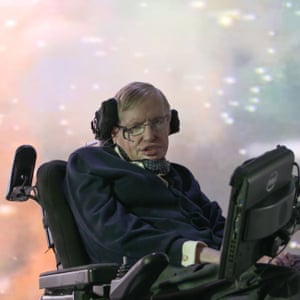
Physicist Stephen Hawking.


Physicist Stephen Hawking. Photograph: National Geographic Channels/Pau

Hunt’s assertion of a weekend effect due to understaffing is important politically because he has consistently used it to justify imposing the unpopular new contract on England’s 54,000 NHS junior doctors and the government’s push to make more NHS services in England available at weekends. The latter was a key Conservative pledge in last year’s general election campaign.


Other signatories to the letter include: Trish Greenhalgh, a professor at Oxford University specialising in evidence-based medicine; Prof Neena Modi, president of the Royal College of Paediatrics and Child Health; and Prof Alistair Hall, a cardiologist and epidemiologist at the Leeds teaching hospitals NHS trust.


They accuse Hunt of wasting NHS resources by forcing it to expand to a much fuller seven-day service on the basis of “bad evidence”, and of ignoring findings that challenge his thesis and misleading MPs and the general public.


“It is wrong to waste precious resources, or lives, because of bad evidence. Like NHS treatments, health policy should be evidence-based to demonstrate clinical and cost-effectiveness,” they write.


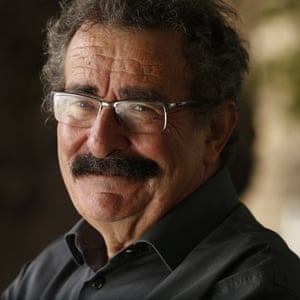
Scientist Lord Robert Winston.


Scientist Lord Winston. Photograph: Murdo Macleod for the Guardian

“Hunt has cherrypicked research, causing a devastating breakdown of trust between government and the medical profession. In making these claims without faithfully representing the evidence, he has obstructed fact and misled parliament and the public,” they add.


Other signatories include: Dr Margaret McCartney, a prominent GP and an author, columnist and broadcaster on medical matters; Dr Phil Hammond, vice-president of the Patients Association; and several prominent junior doctors.


The doctors dispute specifically Hunt’s claim that eight research studies back up his concern that a lack of medics in hospitals at weekends is leading to large numbers of avoidable patient deaths.


The authors of the letter also want the prime minister to halt “any policies or contractual reform driven by this evidence until it can be examined objectively and with rigour”.


Prof Julian Bion, an expert in the weekend effect at Birmingham University, said that the High-Intensity Specialist-Led Acute Care project, which he has been leading since 2014, is undertaking the sort of inquiry that the letters writers seek.


While not disputing the existence of a weekend effect, Bion said the causes of it were “multifactorial” and not simply due to too few doctors being on duty. “There is evidence that patients admitted at weekends are sicker and the weekend effect may therefore have a ‘community dimension’,” he added. “The causes may include [the availability or not and quality of] community and social care as much as hospital care.”


Paul Aylin, another expert in weekend-related mortality and a professor at Imperial College London, said there were many “studies out there of varying quality, and people therefore have plenty to pick from to support their side of the argument”. But international evidence showed a weekend effect in patients who had a gastrointestinal haemorrhage, stroke, heart attack, arrhythmia or cardiac arrest, but not in neonatal deaths, he said.


A Department of Health spokesman rejected the authors’ concerns. “Over the past six years, we have been presented with clear independent evidence of variation in care across the weekend – this government makes no apology for tackling the issue, to build a safer seven-day NHS for patients,” he said.


“Further peer-reviewed evidence is emerging all the time, including the authoritative 2015 Freemantle report, which confirmed previous evidence of a weekend effect.”


Stephen Hawking urges inquiry into Hunt"s NHS patient death claims

2 Eylül 2016 Cuma

Antibacterial soaps banned in US amid claims they do "more harm than good"

Antibacterial soaps were banned from the US market on Friday in a final ruling by the Food and Drug Administration, which said that manufacturers had failed to prove the soaps were safe or more effective than normal products.


Dr Janet Woodcock, director of the FDA’s center for evaluation and research, said that certain antimicrobial soaps may not actually serve any health benefits at all.


“Consumers may think antibacterial washes are more effective at preventing the spread of germs, but we have no scientific evidence that they are any better than plain soap and water,” she said in a statement. “In fact, some data suggests that antibacterial ingredients may do more harm than good over the long term.”


Manufacturers had failed to show either the safety of “long-term daily use” or that the products were “more effective than plain soap and water in preventing illness and the spread of certain infections”.


The new federal rule applies to any soap or antiseptic product that has one or more of 19 chemical compounds, including triclocarbon, which is often found in bar soaps, and triclosan, often in liquid soaps. It does not affect alcohol-based hand sanitizers and wipes, which the FDA is still investigating, or certain healthcare products meant specifically for clinical settings. The FDA has given manufacturers a year to change their products or pull them off shelves.


The FDA first proposed a rule about the chemicals in 2013, following research that they might affect human hormones or change natural resistance to bacteria. The agency requested research from the producers to back up their health claims, but in the three years since has found that data lacking or their requests ignored.


Triclosan has been proven effective at killing bacteria if used at sustained length – far longer than the few minutes most people spend washing their hands – and was once only found in healthcare settings.


Recent studies have linked triclosan to a series of disruptions in human and animal health. A University of Chicago study released in July found that triclosan changed the microbiome inside human guts, and its researchers suggested that exposure could damage developing fetuses. A study from earlier this year found that overuse could also be contributing to antibiotic resistance, and a 2015 study found that antibacterial formulas were not more effective than soap and water.


Triclosan can be found in 93% of liquid soaps labeled “antibacterial” or “antimicrobial”, according to the FDA, though some companies, including Proctor & Gamble, have already begun phasing the chemical out of products. There are partial triclosan bans in the European Union and Minnesota, but the chemical remains common in toothpaste, as it is believed effective against the bacteria that cause gum disease.


People should still keep their hands clean, the FDA noted. “Washing with plain soap and running water remains one of the most important steps consumers can take to avoid getting sick and to prevent spreading germs to others,” the agency said. The Centers for Disease Control and Prevention recommends that if people need to use a hand sanitizer, it should have at least 60% alcohol.


Antibacterial soaps banned in US amid claims they do "more harm than good"

30 Haziran 2014 Pazartesi

Fertility troubles linked to children"s psychological wellness issues, investigation claims

Three pregnant women

Researchers believe children born to women with fertility issues have a larger chance of building psychological well being troubles. Photograph: i really like pictures/Alamy


Youngsters born to females with fertility troubles are a lot more very likely to produce psychiatric ailments than individuals with healthier mothers, research suggests.


Doctors discovered increased costs of mental problems – from anxiety and schizophrenia to autism – in young children whose mothers had concerns receiving pregnant.


The scientists could not explain the findings but said genetic faults or other biological issues with the mom had been much more likely to blame than any fertility treatment method they had.


“The precise mechanisms behind the observed improve in threat are even now unknown but it is normally believed that underlying infertility has a more crucial position in adverse effects in offspring than the treatment procedures,” said Allan Jensen, an epidemiologist at the University of Copenhagen in Denmark.


One possibility is that faulty genes that raise the threat of psychiatric conditions are much more widespread in girls with fertility troubles. “If transferred to their offspring, this might at least partly make clear the enhanced threat of psychiatric illnesses,” Jensen mentioned.


The Danish group utilised a database that back links patient information, enabling them to examine the health-related histories of mother and father and their youngsters. They very first searched for all young children born in Denmark between 1969 and 2006. From a total of far more than two.4 million, they separated out 124,000 (five%) born to ladies with registered fertility problems, and two.3 million (95%) whose mothers had no such difficulties.


The researchers followed the children’s health care histories, generally for twenty many years, right up until 2009. For the duration of that time, children born to females with fertility issues had a 33% increased threat of psychiatric problems. The kids had a 27% greater danger of schizophrenia and psychoses, a 37% higher risk of anxiousness and neurotic issues, an 28% higher chance of finding out issues, and a 22% higher threat of psychological improvement issues, including autism spectrum issues, the scientists found.


More analyses of youngsters aged 19 and below, and 20 and over found that the dangers continued into adulthood.


Primarily based on the figures, Jensen calculated that in Denmark, about 1.9% of all diagnosed psychiatric issues are connected with the mother’s infertility. “This figure supports our interpretation of the results, that the improved chance is actual but modest,” said Jensen, who will describe the operate at the European Society of Human Reproduction and Embryology meeting in Munich on Monday. The investigation has not been published in a peer-reviewed journal.


Yacoub Khalaf, medical director of the assisted conception unit at Guy’s Hospital in London, was sceptical of the figures. “As a clinical observation, if they suggest the risk of psychological retardation is increased by 28%, certainly above the many years we would have seen an epidemic of psychological retardation as a result of fertility treatment, which has in no way been observed. The figures are staggering and at odds with anything at all that is been reported so far.”


Allan Pacey, chair of the British Fertility Society, mentioned the benefits were intriguing. “I suspect we are seeing an impact of biology going on to influence these young children or maybe it truly is the social surroundings in which these younger youngsters have been brought up.”


Previous analysis on youngsters born following fertility remedy suggests that certain procedures, this kind of as intracytoplasmic sperm injection (ICSI), may possibly increase the danger of birth defects, although the website link is not definite.


But typical fertility remedies do not seem to be to increase the threat of mental problems. A main examine published in the British Health care Journal last 12 months by another Danish crew identified that youngsters born right after IVF and ICSI had been no much more likely to have mental ailments than youngsters conceived naturally. The researchers did see a tiny improve of psychological problems in young children born after their mothers had ovarian stimulation followed by intrauterine sperm injection.


Fertility troubles linked to children"s psychological wellness issues, investigation claims

15 Haziran 2014 Pazar

Separated mothers and fathers are "damaging" youngsters by sharing their care, skilled claims

She argues that “When folks say that it’s ‘only fair’ for a father and mother to share their five-yr-previous daughter on alternate weeks, they suggest it is honest to the adults – who see her as a possession and her presence as their correct – not that it is honest to the little one.”


Ms Leach said when lawyers bid for their consumer to have overnight accessibility with their young children they are ignoring evidence about the distressing and damaging influence on the little one.


Leach said the rights of the child should often outweigh these of the mother and father and added: “It can be damaging to the child to divide time equally among the parents.”


Ian Maxwell, from Households Require Fathers, advised the Independent on Sunday that society had moved on from classic attachment concept when bonds in between mother and child have been noticed as the strongest.


He extra: “The bond in between fathers and children is just as critical and we would question the evidence Ms Leach is citing for the primacy of the maternal bond.”


He mentioned her argument did not accord with widespread sense was described her claims as “worrying.”


Leach has previously drawn criticism for her prior bestselling guide, Your Little one &amp Kid: From Birth to Age 5, published. In this she claimed only mothers could care properly for their children.


She has also attracted controversy following she claimed scientific proof showed that leaving a infant to cry could affect the improvement of its brain and make it prone to nervousness in later on life.


It comes as a feel tank recommended that operating fathers need to be provided the chance to perform a larger part in early parenting, via an entitlement to four weeks of paid leave following the birth of their little one.


The IPPR argues that this doubling of the present paternity leave entitlement of just two weeks should be combined with a doubling of the degree of pay out and paid at least the nationwide minimum wage.


They claim that more than 400,000 operating dads a 12 months would benefit.


Only fifty five per cent of fathers consider the complete 2 weeks off perform when their child is born and a single third of eligible fathers do not take any of their statutory leave at all. Most state this is due to the fact they cannot afford to take the entitlement.


The proposed four weeks of paternity leave would be a time period of leave particularly for fathers that can not be taken by mothers. The IPPR also argues that operating dads need to also be capable to get twice as significantly paid time off to go with their parenters to hospital scans and midwife appointments.


Kayte Lawton, IPPR Senior Study Fellow, mentioned: “New dad and mom need to have time away from operate to care for their youthful children, and to strengthen their partnership with each and every other at what can be a hugely pleasant but also very stressful time. However, this is frequently difficult for fathers since they have limited entitlements to paid depart, and so they usually assume the part of breadwinner although their companion is on maternity leave.


“Fathers who get a lot more than a few days off around the birth of their little one are much more probably to be actively concerned in raising their little one than people who do not. Fathers’ better involvement in family daily life can make it easier for mothers to return to work following taking maternity leave, which helps to increase the family’s income and lessen the influence of motherhood on women’s careers.”


Separated mothers and fathers are "damaging" youngsters by sharing their care, skilled claims

Children can be "damaged" by spending evening with father, kid specialist claims

She also mentioned when attorneys bid for their client to have overnight accessibility with their younger young children they are ignoring proof about the distressing and damaging affect on the youngster.


Leach said the rights of the kid have to usually outweigh those of the mother and father and extra: “It can be damaging to the youngster to divide time equally between the mothers and fathers.”


Ian Maxwell, from Households Want Fathers, informed the Independent on Sunday that society had moved on from traditional attachment concept when bonds amongst mother and little one have been observed as the strongest.


He additional: “The bond between fathers and youngsters is just as essential and we would query the evidence Ms Leach is citing for the primacy of the maternal bond.”


He stated her argument did not accord with typical sense was described her claims as “worrying.”


Leach has previously drawn criticism for her prior bestselling guide, Your Little one &amp Little one: From Birth to Age 5, published. In this she claimed only mothers could care properly for their kids.


She has also attracted controversy after she claimed scientific evidence showed that leaving a child to cry could impact the improvement of its brain and make it prone to anxiousness in later lifestyle.


It comes as a consider tank recommended that working fathers should be offered the opportunity to perform a bigger function in early parenting, by way of an entitlement to four weeks of paid depart following the birth of their child.


The IPPR argues that this doubling of the present paternity leave entitlement of just 2 weeks ought to be mixed with a doubling of the degree of shell out and paid at least the nationwide minimal wage.


They claim that a lot more than 400,000 functioning dads a year would benefit.


Only fifty five per cent of fathers get the complete 2 weeks off operate when their little one is born and a single third of eligible fathers do not get any of their statutory depart at all. Most state this is since they cannot afford to consider the entitlement.


The proposed 4 weeks of paternity depart would be a period of leave specifically for fathers that are not able to be taken by mothers. The IPPR also argues that operating dads need to also be ready to get twice as significantly paid time off to go with their parenters to hospital scans and midwife appointments.


Kayte Lawton, IPPR Senior Study Fellow, said: “New parents need to have time away from work to care for their younger children, and to strengthen their relationship with every single other at what can be a hugely satisfying but also extremely nerve-racking time. Nonetheless, this is usually difficult for fathers because they have restricted entitlements to paid depart, and so they typically assume the function of breadwinner while their companion is on maternity leave.


“Fathers who consider a lot more than a number of days off all around the birth of their child are much more most likely to be actively involved in raising their little one than those who do not. Fathers’ better involvement in family members existence can make it simpler for mothers to return to work after taking maternity depart, which assists to increase the family’s earnings and lessen the affect of motherhood on women’s careers.”


Children can be "damaged" by spending evening with father, kid specialist claims

Young children can be "damaged" by becoming shared between parents, youngster expert claims


Fathers’ rights groups have branded the feedback manufactured by Penelope Leach, one particular of Britain’s major parenting authorities, “worrying” and towards widespread sense.


Ms Leach, a former president of the National Childminding Association who has written a amount of books about caring for youngsters, claims making it possible for underneath fives to remain with their fathers produces “unhealthy attachment troubles.”


She also claims in her most recent guide, Loved ones Breakdown, that there was “undisputed evidence” that a time period of separation from their mother can adversely influence a child’s brain improvement.


She argues that “When individuals say that it is ‘only fair’ for a father and mom to share their 5-yr-outdated daughter on alternate weeks, they imply it is honest to the adults – who see her as a possession and her presence as their right – not that it is fair to the youngster.”


She also mentioned when attorneys bid for their consumer to have overnight accessibility with their youthful youngsters they are ignoring proof about the distressing and damaging affect on the kid.


Leach said the rights of the child must constantly outweigh those of the mother and father and extra: “It can be damaging to the child to divide time equally amongst the mother and father.”


Ian Maxwell, from Households Want Fathers, told the Independent on Sunday that society had moved on from traditional attachment theory when bonds amongst mother and little one had been observed as the strongest.


He added: “The bond between fathers and youngsters is just as essential and we would query the evidence Ms Leach is citing for the primacy of the maternal bond.”


He explained her argument did not accord with widespread sense was described her claims as “worrying.”


Leach has previously drawn criticism for her earlier bestselling guide, Your Little one &amp Little one: From Birth to Age 5, published. In this she claimed only mothers could care correctly for their children.


She has also attracted controversy soon after she claimed scientific evidence showed that leaving a infant to cry could have an effect on the improvement of its brain and make it susceptible to nervousness in later life.


Young children can be "damaged" by becoming shared between parents, youngster expert claims