Hawking etiketine sahip kayıtlar gösteriliyor. Tüm kayıtları göster

15 Eylül 2016 Perşembe

Stephen Hawking urges inquiry into Hunt"s NHS patient death claims

Stephen Hawking, Lord Winston and a number of senior doctors are urging the prime minister, Theresa May, to hold an inquiry into Jeremy Hunt’s controversial claim that 11,000 patient deaths a year are caused by a lack of medics on duty in hospitals at weekends.


Their plea comes in a letter to the Guardian that claims the health secretary has caused a “devastating breakdown of trust between government and the medical profession” by misrepresenting the evidence on the “weekend effect”.


Hunt has come under fire since he began maintaining last year that “there are 11,000 excess deaths because we do not staff our hospitals properly at weekends”. Critics, including the British Medical Journal, have rejected his claim and accused him of highly selective use of complex evidence about the higher number of patients who die within 30 days of being admitted to hospital on a weekend.


The letter is a significant new challenge to Hunt’s integrity over the weekend effect – higher mortality among those admitted on a Saturday or Sunday – and what lies behind it.


Its authors want the prime minister to order an independent inquiry into the process behind the definition and claims of a weekend effect. They say there is so much disagreement about the evidence underpinning the weekend effect that ministers should pause the new junior doctors’ contract and the push to create “a truly seven-day NHS”.



Physicist Stephen Hawking.


Physicist Stephen Hawking. Photograph: National Geographic Channels/Pau

Hunt’s assertion of a weekend effect due to understaffing is important politically because he has consistently used it to justify imposing the unpopular new contract on England’s 54,000 NHS junior doctors and the government’s push to make more NHS services in England available at weekends. The latter was a key Conservative pledge in last year’s general election campaign.


Other signatories to the letter include: Trish Greenhalgh, a professor at Oxford University specialising in evidence-based medicine; Prof Neena Modi, president of the Royal College of Paediatrics and Child Health; and Prof Alistair Hall, a cardiologist and epidemiologist at the Leeds teaching hospitals NHS trust.


They accuse Hunt of wasting NHS resources by forcing it to expand to a much fuller seven-day service on the basis of “bad evidence”, and of ignoring findings that challenge his thesis and misleading MPs and the general public.


“It is wrong to waste precious resources, or lives, because of bad evidence. Like NHS treatments, health policy should be evidence-based to demonstrate clinical and cost-effectiveness,” they write.
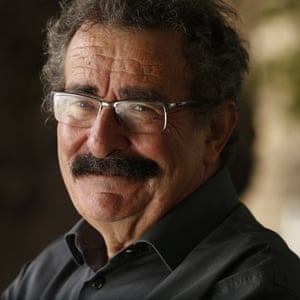


Scientist Lord Robert Winston.


Scientist Lord Winston. Photograph: Murdo Macleod for the Guardian

“Hunt has cherrypicked research, causing a devastating breakdown of trust between government and the medical profession. In making these claims without faithfully representing the evidence, he has obstructed fact and misled parliament and the public,” they add.


Other signatories include: Dr Margaret McCartney, a prominent GP and an author, columnist and broadcaster on medical matters; Dr Phil Hammond, vice-president of the Patients Association; and several prominent junior doctors.


The doctors dispute specifically Hunt’s claim that eight research studies back up his concern that a lack of medics in hospitals at weekends is leading to large numbers of avoidable patient deaths.


The authors of the letter also want the prime minister to halt “any policies or contractual reform driven by this evidence until it can be examined objectively and with rigour”.


Prof Julian Bion, an expert in the weekend effect at Birmingham University, said that the High-Intensity Specialist-Led Acute Care project, which he has been leading since 2014, is undertaking the sort of inquiry that the letters writers seek.


While not disputing the existence of a weekend effect, Bion said the causes of it were “multifactorial” and not simply due to too few doctors being on duty. “There is evidence that patients admitted at weekends are sicker and the weekend effect may therefore have a ‘community dimension’,” he added. “The causes may include [the availability or not and quality of] community and social care as much as hospital care.”


Paul Aylin, another expert in weekend-related mortality and a professor at Imperial College London, said there were many “studies out there of varying quality, and people therefore have plenty to pick from to support their side of the argument”. But international evidence showed a weekend effect in patients who had a gastrointestinal haemorrhage, stroke, heart attack, arrhythmia or cardiac arrest, but not in neonatal deaths, he said.


A Department of Health spokesman rejected the authors’ concerns. “Over the past six years, we have been presented with clear independent evidence of variation in care across the weekend – this government makes no apology for tackling the issue, to build a safer seven-day NHS for patients,” he said.


“Further peer-reviewed evidence is emerging all the time, including the authoritative 2015 Freemantle report, which confirmed previous evidence of a weekend effect.”


Stephen Hawking urges inquiry into Hunt"s NHS patient death claims

The evidence of an NHS weekend effect is shaky | Letter from Neena Modi, David Owen, Robert Winston, Stephen Hawking and others

We call on Theresa May to act in the public’s interest and take immediate action over freshly disputed evidence surrounding a “weekend effect”. Department of Health documents leaked to the Guardian and Channel 4 News revealed NHS policy concerns from Jeremy Hunt’s own civil servants. His repeated claim about thousands of patients dying unnecessarily because of poor weekend hospital care “has not been helpful” in justifying new seven-day services. The internal briefing document proposed other means to vindicate his policy, but repeats the assertion that “eight independent studies have set out the evidence for a ‘weekend effect’ – unacceptable variation in care across the week”.


The evidence for these claims is not supported by reliable research. Of the eight “studies” cited by Hunt, only four are independently peer-reviewed, yet peer-review is essential. Three use data from the same population and are not independent, with just two from the last decade. The remainder are not peer-reviewed medical literature, being opinion pieces, the lowest form of clinical evidence. Critically, when his claims began, at least 13 independent, peer-reviewed papers were available to the secretary of state that refute his definition of a weekend effect.


Hunt has cherrypicked research, causing a devastating breakdown of trust between government and the medical profession. In making these claims without faithfully representing the evidence, he has obstructed fact and misled parliament and the public.


We call on Theresa May to commission an independent inquiry into the process behind these policies. It is wrong to waste precious resources, or lives, because of bad evidence. Like NHS treatments, health policy should be evidence-based to demonstrate clinical and cost-effectiveness. Additionally, we call for a pause on any policies or contractual reform driven by this evidence until it can be examined objectively and with rigour.


Dr Taha Nasser
Dr Ben White
Dr Hugo Farne
Dr Antonio De Marvao
Dr Rachel Clarke
Dr Margaret McCartney
Dr Philippa Whitford MP
Dr Phil Hammond Vice-president, Patients’ Association
Professor Alistair Hall Epidemiologist
Professor Trisha Greenhalgh Evidence-based practice
Professor Neena Modi President RCPCH
David Owen House of Lords
Professor Robert Winston House of Lords
Professor Stephen Hawking


Join the debate – email guardian.letters@theguardian.com


The evidence of an NHS weekend effect is shaky | Letter from Neena Modi, David Owen, Robert Winston, Stephen Hawking and others

7 Temmuz 2014 Pazartesi

Stephen Hawking: I was close to death after bout of pneumonia in 1980s

Stephen Hawking talks to Royal College of Surgeons

Stephen Hawking tells the Royal School of Surgeons about his close to-death encounter following pneumonia. Photograph: Philip Toscano/PA


Physicist Stephen Hawking grew to become so ill following a bout of pneumonia for the duration of the 1980s that physicians offered to switch off his life help machine.


Hawking, who had a tube inserted into his windpipe thirty many years in the past soon after creating motor neurone disease, explained he was considered to be “so far gone” that medics weighed up disconnecting his ventilator.


Medical professionals later agreed the A Brief Background Of Time author ought to be flown back from Switzerland – exactly where he had fallen unwell – to England for even more therapy. There he was in a position to lead close to a “full and active lifestyle”.


The 72-12 months-outdated informed the Royal University of Surgeons on Monday: “I was rushed to hospital and put on a ventilator.


“The medical professional mentioned they thought I was so far gone they offered to flip off the ventilator.


“But I was flown back to Cambridge. The doctors there tried tough to get me back to how I was just before.”


The University of Cambridge lecturer was speaking at the launch of the European International Tracheostomy Collaborative (GTC) in central London, exactly where he was provided a standing ovation by far more than 200 delegates.


He said: “For the last three years I have been on total-time ventilation but this has not prevented me from top a total and active lifestyle.”


The GTC undertaking, funded by the Well being Foundation, makes it possible for experts and health-related experts to operate collectively on treating individuals, like Hawking, with an artificial airway.


About 15,000 tracheostomy procedures are carried out in England and Wales each and every 12 months.


Stephen Hawking: I was close to death after bout of pneumonia in 1980s