deadly etiketine sahip kayıtlar gösteriliyor. Tüm kayıtları göster

24 Nisan 2017 Pazartesi

It"s a deadly fallacy that eating disorders are a teenage illness

Sophie* developed an eating disorder when she was 11 years old. With the help of child eating disorder services, she got better and by the age of 16 had achieved a stable weight. But her A-levels proved tough and she relapsed. This time, she had to face the challenge of navigating adult eating disorder services as a vulnerable teenager. When she was finally referred to me nearly eight months after her relapse, she was 19 years old with a BMI of nine.


I worked as a consultant psychiatrist in child eating disorders before moving to adult services in Oxford. When the government announced in the Five Year Forward View a £30m investment for eating disorders in child and adolescent mental health services (Camhs) each year until 2021, I was delighted. We know early intervention offers the best chance of recovery and it’s great to see that 66 new specialist services have been set up across the country.


The problem is, anorexia nervosa is a serious mental illness – not a phase of adolescence.


As someone who’s worked with both child and adult services, the problem is clear to me. People who only work with children have this sort of fantasy that everyone will recover by the time they’re an adult if we spot their illness early enough. I used to share colleagues’ optimism that early intervention would aid recovery. But when you see young people on an inpatient unit whose facial muscles are visible through the skin, young people who are so malnourished their skin is blue, you realise it isn’t that simple.


The mean age to develop an eating disorder is 15, but the mean length of illness is approximately six to eight years. Better Camhs doesn’t equal fewer patients going into adult services. The success rate for treatment is only 50%, and like Sophie, a lot of patients sadly go through a long period of improvement before relapse.


In Camhs, most child psychiatrists and paediatricians have had some eating disorders training. Adults know they have a responsibility for the health and wellbeing of children so, generally, children are admitted before a life-threatening deterioration. When you’re 17 you can access Camhs services that are benefiting from investment. At 18 you can’t.


The majority of patients with an eating disorder are adults. Many are fearful of seeking help, and when they do decide to see their GP they are often turned away. Even when they are referred to specialist services, they face long waits – 16 months’ wait is routine in Oxford and across the country.


When adults finally access services, they encounter problems there, too. In some adult eating disorder services there are no consultant psychiatrists specialising in eating disorders. Adults suffering from severe anorexia or bulimia nervosa need a multidisciplinary approach because they will have other physical or psychiatric conditions such as dangerous vitamin and electrolyte deficiencies, or depression and anxiety.


Other healthcare professionals do not have sufficient training to recognise and manage these conditions safely. Adult patients are a lot sicker than young people: our mean age of patients is 29 years and by this time they have 15 years’ history of illness. Adult services also have the highest number of referrals: in Oxford, the number of Camhs referrals per year is about 100 patients. For adults it’s 300 – and that doesn’t account for the additional unmet need where suffering adults aren’t getting help.


In Sophie’s case, when I tried to admit her to hospital there was no designated person in the hospital to deal with eating disorder admissions. The hospital did not have the equipment or know-how to manage her condition. She spent five months in an intensive care unit with multiple organ failure. In Camhs, there is an identified person to call and ask about admissions. But for young adults like Sophie, there just isn’t a clear pathway for those desperately needing help.


According to the Five Year Forward View, there will be a new pathway for adult eating disorder services in 2018-19 to properly guide patients through the system. It’s hard to be optimistic about this in context of wider NHS cuts and the increasing numbers of adults seeking treatment – in Oxford, over the last five years there has been a 50% increase in referrals.


Seeing eating disorders as a teenage illness neglects a huge swathe of suffering people. It is worrying that in some areas of the country services are expected to reduce referrals from Camhs to adult services. There are no quick fixes for eating disorders. The majority of patients require 20-40 sessions of psychological treatment. For 20-30% of patients, the illness will span their entire life.


Incredibly, Sophie survived. Others aren’t so lucky. Eating disorders have the highest rate of mortality among psychiatric disorders yet these deaths are entirely preventable. There must be specialist services for all ages – not just Camhs.


*Not her real name


Dr Agnes Ayton is vice chair of the eating disorders faculty at the Royal College of Psychiatrists


If you would like to write a blogpost for Views from the NHS frontline, read our guidelines and get in touch by emailing sarah.johnson@theguardian.com.


Join the Healthcare Professionals Network to read more pieces like this. And follow us on Twitter (@GdnHealthcare) to keep up with the latest healthcare news and views.


It"s a deadly fallacy that eating disorders are a teenage illness

15 Şubat 2017 Çarşamba

Delhi"s deadly dust: how construction sites are choking the city

Far out on Delhi’s southern and eastern fringes the rows of high-rises suddenly turn skeletal. The population of the Indian capital, already the second largest in the world, is forecast to grow by 9 million in the next 15 years; and despite a recent lull in new projects, areas such as Noida are a universe of worksites, cranes and workers.


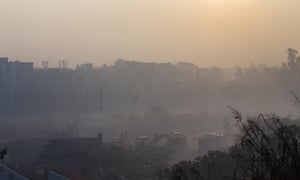
The empty towers stretch as far as can be seen – which is only about 300 metres. Like much of Delhi on most winter mornings, Noida is blanketed in thick smog and a heavy dust that cakes windows and clogs throats.


A comprehensive 2016 study of what is to blame for Delhi’s poor air identified some obvious sources,such as car emissions, the city’s coal-fired power stations and rubbish fires both small and literally mountainous. But it also highlighted more unlikely culprits.


Dust kicked up by cars along Delhi’s vast and growing road network contributes between a third and 56% of the most harmful pollutants in the city’s atmosphere.


The city’s construction sites, and the production of the raw materials that feed them – such as bricks and concrete – are also an outsized contributor to the foul air that some lung specialists warn is making Delhi hazardous, particularly for children and the elderly.


In a country largely under construction – by some rough projections, around 70% of the buildings that will exist in India’s cities by 2030 are yet to be built – controlling the dust produced by roads and worksites is an important, but largely neglected, part of clearing Delhi’s air, according to environmental groups.


Landlocked by treeless plains and deserts, Delhi is inherently dusty. “It’s one of the reasons we can’t have air quality standards as strict or high as the US,” says Sarath Guttikunda, the founder of UrbanEmissions, an air pollution research group. “Our annual standard for PM2.5 pollutants is 40 units, but the World Health Organization’s guideline is 10.”


Construction equipment sits idle at a site shrouded in smog in New Delhi, India


Construction and demolition are the third-largest contributor of coarse pollutants. Photograph: Bloomberg/Getty Images

But poor building standards and antiquated practices, multiplied across thousands of worksites, make construction and demolition the third-largest contributor of coarse pollutants – strongly linked in a 2015 study to heart disease.


At one building site in Chittaranjan Park, an affluent south Delhi neighbourhood, half-covered piles of rubble spill out on to the pavement. No fences have been erected to keep the wind from whipping dust out into the street. Enormous mounds of dirt left in empty lots, or simply dumped at the roadside, are also a common sight.


“The Indian construction contractor is trying to maximise his margins,” says Polash Mukherjee, a researcher with the Delhi-based Centre for Science and Environment. “If he’s constructing his house, he’s not required to go to a facility by law and dispose of the waste. Unless he’s forced by government to cover his trucks when he transport raw materials, he won’t do it.”


Builders aren’t just cutting corners: Delhi simply lacks the capacity to safely process the amount of construction waste it produces. A senior environmental engineer at the Delhi Pollution Control Committee told the Guardian current facilities allow for about 1,000 tonnes of waste to be processed per day, but the city produces an estimated 3,600 tonnes.


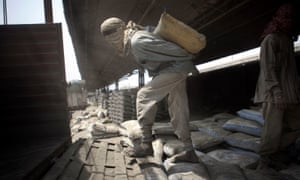
Run-of-the-mill construction activities take a hefty toll. The process of mixing concrete alone, for example, is estimated to contribute 10% of the coarse pollutants in Delhi’s air, according to an Indian Institute of Technology Kanpur study. Less polluting methods of producing concrete exist, but cost money. “Here it’s often mixed in a pit by manual labour,” says Mukherjee. “It’s cheaper that way, because there’s such a surplus of labour.”


Laborers load cement bags manually onto transport carriers at the Shakur Basti station in New Delhi, India.


Concrete is ‘often mixed in a pit by manual labour. It’s cheaper that way.’ Photograph: Bloomberg/Getty Images

A 2015 study of 19 large Delhi construction sites found the air quality around all of them exceeded safe limits by at least three times, with workers on these sites, mostly daily wage labourers, bearing the brunt. Almost none wear pollution masks, while a handful tie handkerchiefs across their faces to guard against the dust.


Naresh Sharma, a cook on a site in Greater Noida, said workers were sometimes issued pieces of jaggery, a concoction of sugarcane and date palm believed to clear the throat and lungs. “It clears your throat from phlegm, but I don’t think it prevents damage,” says Sai Kiran Chaudhari, a leading pulmonologist at the Delhi Heart and Lung Hospital.


Two years ago, India’s environment court issued extensive regulations to clean up the city’s construction industry, mandating 50,000 rupee (£595) fines for builders who failed to cover their sites in tarpaulin, put up barriers, or sprinkle building materials with water before they were stored or transported. But Mukherjee says construction in Delhi is administered according to complex rules by numerous authorities, and in any case, “enforcement is very, very lax”.


Delhi itself has strong regulations, he adds, “but the biggest projects, the metros, hospitals or malls, are usually in suburbs outside the city, in Gurgaon or Noida, where those rules don’t apply”.


Even when clear orders are issued, they are routinely flouted. Brick production has been banned in Delhi for environmental reasons, but flourishes in nearby towns such as Dadri, in Uttar Pradesh state.


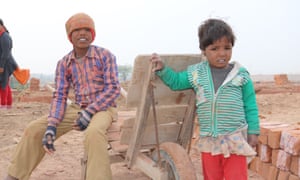
Children at brick factory Delhi


Children working at a brick production site on the outskirts of Delhi. Photograph: Michael Safi

At RR Brickfields, one of the 18 kilns that dot the dry fields around the town, workers including children were collecting finished bricks from a furnace cut deep into the earth. Thick smoke billows from a chimney stack for almost the entire six months each year that the kiln operates. Studies have suggested India’s brick industry could contribute nearly 10% of India’s emissions of black carbon, a major contributor to climate change.


Since early 2016, brick kiln owners have been required to gain environmental clearance before firing their ovens. “But in some areas, people bribe officials. Sometimes they produce bricks secretly,” said the owner of the kiln.


He said he was still in the process of applying for a clearance and, despite the apparent signs of industry, insisted his kiln was not one of those operating.


Then there is the largest year-round contributor to the city’s air crisis: the dust thrown up by the more than 9 million cars that grind along Delhi’s poorly maintained, sometimes unpaved 33,000km road network. Dust has always been factor of Delhi life, but the particles released by traffic are particularly toxic, Mukherjee says.


“It mixes up with the vehicular emissions, the industrial pollution,” he says. Harmful pollutants bind to the dust and settle in the air, when they might otherwise be dispersed by winds.


Building more pavements would make “a big difference”, he says. So would planting vegetation along dividers and road shoulders. “Those bushes would get covered in dust, but it would prevent the dust from blowing further down the road,” Mukherjee adds.


A significant proportion of Delhi’s pollution blows in from across the region, including from crop burning in Punjab and Haryana. There is growing awareness that Delhi’s air problem is really a regional one. Modelling produced for the Guardian by Greenpeace shows that air pollution increases the risk of heart disease for Delhi residents, and the risk of lung cancer by 62%. But the air in Amritsar, the Punjab capital, poses its residents a similar risk. The rates in Allahabad, in Uttar Pradesh, are even higher.


But lasting change will also involve tackling Delhi’s local pollution sources, Mukherjee says. “We know the solutions. We’ve known them for 30 years,” he says. “Implementation is the bane in India.”


Lung specialists such as Chaudhari are beginning to recommend to some older patients and those with chronic conditions to leave the city. “At one stage you have to think Delhi is not the place to live, you should look for a better option,” he says.


He says he aims to leave the city before the age of 50. “I’m serious,” he says. “Next time someone tries to trace me, I might be gone.”


Guardian Cities is dedicating a week to exploring one of the worst preventable causes of death around the world: air pollution. Explore our coverage here and follow Guardian Cities on Twitter and Facebook to join the discussion


Delhi"s deadly dust: how construction sites are choking the city

25 Ocak 2017 Çarşamba

The UK’s deadly air pollution can be cured: here"s how

Pollution levels in the UK are soaring. Last year, a committee of MPs in the UK described the state of the air that we breathe as a public health emergency.


London mayor Sadiq Khan has a budget of £875m to try to tackle air pollution – small, compared to the capital’s annual £3.6bn bill arising from its impact.


And while there may be recognition of the problem, there are fewer examples of successful solutions. How can we travel without harming other people’s health? How can businesses deliver paper clips, coffee and food without polluting the air we breathe?


An estimated 40,000 people across the UK (9,500 in London) die early each year from particle pollution and nitrogen dioxide. Three roads in London have already breached UK and EU limits for nitrogen dioxide for 2017. We have a lot to do and simply cleaning exhausts is not enough.


Diesel traffic is a main source of urban exposure and over half the world’s diesel vehicles are sold in Europe. The low emission zone is the weapon of choice. Over 200 cities now ban the most polluting vehicles. German cities with such zones have made faster progress on particle pollution than those without.


Particle pollution on some main roads in London has improved when lorries were upgraded ahead of the low emission zone. France has just launched a national framework for low emission zones, and following the government’s court defeat, new zones look set for many UK cities.


Low emission zones exclude older vehicles, assuming they emit more pollution than the newer ones. But, for many years, new diesels passed ever-tighter exhaust tests in the laboratory only to emit much more nitrogen oxides on roads. This goes beyond the VW scandal. Other vehicle manufacturers might not have a legal case to answer but they certainly have a moral one.


Promisingly, it looks like the newest buses and lorries produce just a few per cent of the nitrogen oxides when compared to pre-2014 vehicles and, astonishingly, less than half that emitted from the average new diesel car. Fitting better exhaust controls to older buses works too; on one London street nitrogen dioxide fell by around 20% when half the buses were upgraded. Petrol exhaust technologies have worked well for more than 10 years. Greater priority also needs to be given to freight in transport planning to reduce lorry and van movements.


Each year’s delay means more health harm. One answer would be a switch to only the very newest buses and lorries, and petrol cars instead of diesel, while alternative fuelled vehicles and their fuel infrastructure are developed longer-term. This requires scrappage and investment schemes. A large cost but the cost of not doing it is massive.


However, simply cleaning exhausts would be a missed opportunity to build better cities. Reducing traffic would reduce air pollution, reduce climate change emissions, tackle the increasing particle pollution from brakes, tyre and road wear and, with more active travel, it would have huge health benefits.


An annual benefit of €1,300 (£1,126) could come from each person who swaps a five km daily car commute to a cycle journey. Above all, we need to monitor to check that policies work and to ensure that all communities benefit from investment to clean our air.


Sign up for your free weekly Guardian Public Leaders newsletter with news and analysis sent direct to you every Thursday. Follow us on Twitter via@Guardianpublic


The UK’s deadly air pollution can be cured: here"s how

9 Aralık 2016 Cuma

Over 200 years of deadly London air: smogs, fogs, and pea soupers | Vanessa Heggie

On 9 December 1952 the Great Smog officially ended – for five days a thick layer of air pollution, mostly caused by coal fires, had covered London and caused the deaths of thousands of residents. 64 years later the London Mayor has committed £875 million to tackle the problem. This week the Royal Society of Biology hosted an event on air pollution and health (#greyskythinking) and the Royal Society of Chemistry will run their annual Air Pollution conference next week. After two centuries of fatal London fogs, what have we learnt?


Fogs were relatively common in London in the 1700s, but by the early 1800s these had become deadly, as the smoke and fumes from industrialisation and urban growth were trapped by calm, still air. It was not just the pollution that was a threat to life and health, but also the traffic, and newspapers were full of tragic stories of accidents: in the 1837 December fog the Times reported that “an aged female named Jane Wilson” was “knocked down by a cart and severely injured” and Chelsea resident Mr Phillips was thrown out of his chaise into the road where a “cart passed over his right thigh, and fractured it dreadfully”. Animals suffered too – in 1873 the annual cattle show at Smithfield market was ruined by a December fog that left the “fat cattle…panting and coughing”, and many of the animals collapsed and died.


The Victorians are famous for their public health activity – ambitious sewer schemes, the introduction of Medical Officers of Health, and vaccination programmes – so why did they struggle, as we do, to deal with deadly air pollution?


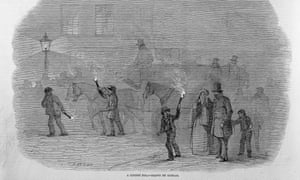
black and white illustration showing foggy street scene; two men with burning torches lead a horse and carriage, while in the foreground a small boy with a torch leads a family group.


The Illustrated London News, Volume 10, 1847. The men and boy carrying lighted torches are acting as guides to the carriage and pedestrians: fogs were often so thick it was impossible to see across a street. Illustration: Wellcome Library, London/Wellcome Library, London. Wellcome Images

If it’s everyone’s fault, it’s no one’s fault


One problem lay in the fact that the smogs had many causes. Heavy industry was one source, but so too were the railways and steamer-boats,and particularly domestic coal-burning fires. Various societies were formed to campaign for what was often called ‘smoke abatement’, but they met with resistance. At a meeting of the ‘Noxious Vapours Abatement Association’ in Manchester, a representative from the Health Committee of the Salford Corporation (like a modern city council) won applause from a working class audience when he objected to smoke abatement because


“he would be sorry to see a persecution commenced against the manufacturers, for if they were driven from the borough, where would the bread of the working man come from?”


If ‘big business’ wasn’t going to reform, why should individuals? Smoke abatement campaigners seem to have thought that education was all that was needed: in 1881 the Smoke Abatement Committee opened a smoke-prevention technology exhibition in London which attracted an extraordinary 116,000 visitors in just a few months; all the installations were independently tested to make sure that the manufacturers’ claims were accurate. Yet this did not lead to a mass take-up of smoke-reducing technology, and an attempt to force changes by passing a law regulating domestic smoke failed in 1884.


Some industries had been regulated by the Smoke Nuisance Abatement (Metropolis) Act of 1853, but only in London, and this excluded some factories such as glass works and potteries. Rather oddly, a lot of the discussion about this Act focused not on the health risks of smoke, but on the expense of laundry caused by the dirty air of London (estimated as high as £2 million) – as one member of the House of Lords suggested: “The smoke so affected the clothing of the working classes that it was computed every mechanic paid at least five times the amount of the original cost of his shirt for the number of washings rendered necessary.”


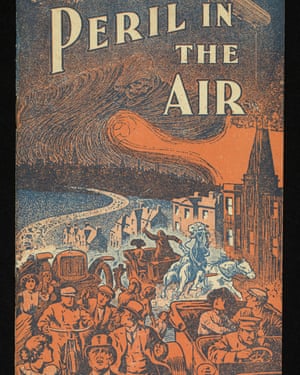
Sensational cover (orange and blue) of a skull-faced Death in a swirling dark cloud over a city from which terrified inhabitants are fleeing on foot, in cars, bicycles and horse-drawn carriages.


Front cover for booklet advertising Peps cough and cold tablets in 1913. The ‘peril’ refers to deaths from respiratory diseases during heavy fogs in cities. Photograph: Wellcome Library, London/Wellcome Library, London. Wellcome Images

Who pays the price?


Even if it saved on washing bills, there was a genuine fear that over-regulation might lead to job losses. Worse, the Victorians were also concerned that reforming domestic fireplaces would actually make people sicker, rather than healthier. Although open fire places were serious sources of coal smoke pollution, they had one advantage over more efficient systems: they created draughts. Through most of the nineteenth century medical professionals thought that disease was spread by ‘miasmas’, clouds of harmful matter. One way to tackle the danger of miasma was to ensure air did not become ‘stagnant’, and open fireplaces helped to create a ‘healthy’ circulation of air.


While the larger, airier homes of the middle and upper classes could be ventilated in other ways, investigations into the slums and basement dwellings of the poor suggested that open fires were vital. Of course, this could be solved with serious slum clearances and massive investment in homes for the poor, but it proved hard to justify that expense on the grounds that it would prevent air pollution. In any case, reformers worried, people were ‘sentimentally attached’ to their open fires, and resisted technological change.


Suggestions to solve the smoke problem remained small scale: taxes on new stoves or fireplaces, restrictions on certain manufacturing plants, the formation of small local societies to help people buy efficient stoves ‘by instalments’, and so on. But one problem not tackled was the rather obvious one: pollution travels. Responsibility for enforcing anti-pollution and anti-smoke laws rested, by the late 19th century, with local governments and the London County Council, so if pollution was blowing in from a factory in an uncooperative neighbouring jurisdiction, there was nothing councils could do to enforce the limited rules that existed. In 1914 central government was finally persuaded to set up a committee to reconsider the legislation about pollution, but its work was interrupted by the outbreak of war.


It was not until 1956 that a Select Committee’s recommendations, pushed by backbenchers against a sceptical Conservative government, led to the passing of the 1956 Clean Air Act, a direct response to the smog of 1952. For the first time, this Act regulated domestic fireplaces as well as industrial furnaces, and created smoke control areas where only smokeless fuels could be burnt.


Although a milestone in public health, just 60 years later Londoners are dying, again, from polluted air. Although the London Mayor has announced that funding for this problem will be doubled the challenges remain essentially the same faced by the Smoke Abatement Leagues in the 1800s: the causes are complex, some pollution is (thought to be) linked to economic growth and jobs, there are social reasons why people resist changes (especially if they require personal sacrifices, such as giving up car or air travel) and the miasma of pollution still travels across regional and national boundaries. Do we have any new solutions?


Over 200 years of deadly London air: smogs, fogs, and pea soupers | Vanessa Heggie

1 Aralık 2016 Perşembe

Injecting natural oils for muscle gain could be deadly, doctors warn

Bodybuilders seeking to enhance their physique by injecting natural oils risk lasting damage and even death, doctors have warned.


They fear that a case in west London in which a 25-year-old man suffered scarring and restricted function after injecting coconut oil may be the “tip of the iceberg”.


Instances have been recorded in recent years of bodybuilders using other oils, including sesame oil, walnut oil and paraffin, which are less costly than other synthetic compounds, in the hope of boosting muscle size and definition.


There has been little medical literature on the subject to date, but a paper published in BMJ Case Reports on Thursday says the practice is well documented among Arab and Middle Eastern communities and online.


The 25-year-old man was referred to Ealing hospital because of pain and loss of function in his right arm, into which he had injected the coconut oil over several months.


An ultrasound scan showed a rupture in his triceps – a rare condition in young patients – and multiple cysts within the arm muscles. Surgery to repair the rupture was successful but he was left with scarring and limited elbow flexion.


Dr Ajay Sahu, of London North West Healthcare NHS trust, who co-authored the report, said: “He has lost significant function in his tricep and he’s right-handed. If he had injected the coconut oil into one of his veins by mistake it could have been fatal. It could cause an embolism in the heart, the lungs or the brain. You need to think about the implications.”


Sahu said the case was difficult to diagnose because the patient did not initially admit what he had done, and Sahu was not aware at the time that injecting natural oils was something people did to try to build muscle.


He suggested resort to such drastic measures was symptomatic of increasing concern among young men about how they look.


“People do all sorts of things [to gain muscle] and these things are very unreported,” he said. “These people will never come to the doctor and say all the things they do. This is just the tip of the iceberg.”


Injecting natural oils for muscle gain could be deadly, doctors warn

Haiti"s deadly cholera outbreak "a stain on our reputation", UN says

The cholera outbreak that killed more than 9,000 Haitians after it was spread by peacekeepers has been a stain on the UN’s reputation, the world body admitted on Thursday, as it set out long-awaited plans for eliminating the disease from the country.


The announcement of the strategy – unveiled as the UN’s outgoing secretary general, Ban Ki-moon, bids to leave a global health legacy – was overshadowed by question marks about its funding and disappointment in some quarters at what was perceived as a failure to offer an unqualified apology.


The world body had doggedly refused to address the issue of how its own peacekeepers, relocated from Nepal to Haiti in 2010 following a major earthquake, brought the deadly cholera bacterium with them.


A first tacit admission of blame came in August, but the UN’s “explicit and unqualified denial of anything other than a moral responsibility” was subsequently branded a disgrace by its own human rights special rapporteur.


A strategy unveiled on Thursday by the UN focuses on long-term issues including water, sanitation and health systems, as well as the development of a package of material assistance and support to those Haitians most directly affected by cholera.


“The people of Haiti deserve this tangible expression of our respect and solidarity, as well as our regret, and the genuine support that comes with it,” said the organisation.


“The United Nations should seize this opportunity to address this tragedy which has also negatively affected its reputation and global mission.”


The UN endeavours to deploy “responsible peace operations that operate at minimum risk to people, societies and ecosystems”, said the statement, which described the cholera outbreak as “a stain on our reputation”.


In a reference to the simmering levels of anger directed towards the UN by many in Haiti, the statement conceded: “The package is not likely to fully satisfy all those who have been calling for such a step, nor will it happen overnight. However, the secretary general has concluded that it is better to take this step than not to.”


Ban, the document said, “wishes to propose a solution, not leave an unresolved problem, for his successor”.


However, a lack of finance may inhibit the delivery of the package. The announcement conceded that efforts to tackle the outbreak have been undermined by insufficient funding.


Brian Concannon, executive director of the Institute for Justice and Democracy in Haiti, a partnership of Haitian and US human rights advocates, said the initial wording of the announcement marked “a refreshing change from six years of ignoring victims’ voices and the UN’s clear legal obligations to them”.


But he noted that the use of the phrase “moral responsibility” was the same language that the UN secretary general used during his trip to Haiti in July 2014, and appeared to be calculated to address the concerns of UN lawyers more than those of the people of Haiti.


“Haitians are looking for a less qualified apology – for both introducing cholera and for the six years of denial of responsibility, which was an insult to Haitian dignity,” said Concannon.


Stéphane Dujarric, a spokesman for the secretary general, said that the new approach went to the root of the problem with long-term investments in sanitation facilities and by “putting people and communities affected by cholera at the heart of our efforts”.


Haiti"s deadly cholera outbreak "a stain on our reputation", UN says

2 Kasım 2016 Çarşamba

Sleep Apnea: A Deadly But Underestimated Sleep Disorder

Have you been following the World Series this year?


Cleveland’s Mike Napoli never had a good night’s sleep and could not recall the last time he dreamed. Doctors broke his jaw to reposition it, so he could breathe.


This is just one example of what causes sleep apnea.


Sleep apnea occurs when people’s ways to get air are cut off while they sleep and it affects more people than you may imagine.


It has been thought to be a hereditary sleeping issue, meaning that it can be passed down from person to person. However it can also be caused by lifestyle choices, obesity and general unhealthiness.


It causes them to suffer oxygen deprivation, snore, and sleep in fits and starts. Most people just think of the overweight, barrel-chested middle-aged man when they think of sleep apnea. Yet, airways may be cut off for many reasons.


A big soft palate or a long uvula (that flap in everyone’s throat) may shut off the airway. Nostrils may be too narrow where air is supposed to enter the body.


Blame a deviated septum for that.


In most cases, people can either breathe through their nose or throat, so they are able to compensate. It means they continue with breathing struggles.


The issue is that because people can compensate they assume there is no problem. They could die because of this wrong assumption.


Playing Russian Roulette


Sleep apnea is like Russian roulette.


Add in a stuffy nose, sore throat, and the person with excess skin sagging into their throat has no way to breathe.


They may normally snore loudly, like a chainsaw, whose loud rhythm is normally interrupted by a cough, or a sniffle for air.


A head cold means all of their ways to get air are cut off and they die. Their heart cannot get sufficient oxygen, causing a heart attack.


There are many causes of apnea and many ways to solve the problem. Some are surgical, and some involve a machine to force air into the body, through a CPAP (Continuous positive airway pressure) machine.


6 Natural Methods to Alleviate This Disorder


There are many natural methods to help sleep apnea, but as with most things, some are better than others.


Now I want to make it clear here, that although these methods are very good at helping, you should visit your doctor before starting any method and also to get a fuller overview about how serious your sleep apnea really is.


Lose Weight


It is no coincidence that a great many sleep apnea sufferers also happen to be overweight. It is also no coincidence that many of those who lose weight discover that their symptoms disappear over time.


One study found that 20% of those involved in the study found an almost immediate cure with an intensive weight loss routine.


Change The Position You Sleep


This is a nice simple one that you might find has an immediate effect.


Lying on your back causes all of your throat muscles and tongue to move towards the back of your throat, thereby closing up your airways.


By giving side sleeping a go, you could reduce potential apnea episodes and help you to sleep more deeply whilst getting enough oxygen.


Increase Your Vitamins Intake


More specifically vitamin D and vitamin C.


Research has found a correlation between sleep apnea and Vitamin D deficiency. Whilst not a cure in of itself, it is a simple fix and one that can have quantitative benefits.


The vitamin C connection is more to do with fixing some of the damage that apnea might cause through helping to repair damaged cells.


Magnesium


This particular mineral is vital with muscle function so it is worthwhile to ensure that you get enough in your diet. If your throat muscles are working optimally, they are in a better position to stay strong.


Consider Herbal Remedies


Certain herbs such as lavender,can help to reduce sleep apnea symptoms. AGain this is not to be taken as a cure, but rather to help to reduce any adverse effects.


Serotonin Precursor 5-HTP


A serotonin precursor named 5-HTP, could be used for sleep apnea sufferers. This is because decreased serotonin levels have been shown to be a direct cause, therefore increasing this hormone might just do wonders.


So there you have it.


A very underestimated sleeping disorder that may not sound like a dangerous sleep issue, but it certainly is and one that anyone might think they have it should immediately visit a doctor.


Sleep Apnea: A Deadly But Underestimated Sleep Disorder

14 Ekim 2016 Cuma

7 Plants Native Americans Used to Cure EVERYTHING (From Simple Pain to Deadly Cancer)

The Cherokee and Meskwaki are Native American tribe that is indigenous to the Southeastern United States. They believe that the Creator bless them with a gift of understanding and preserving medicinal herbs. They believed and used the benefits of nature’s pharmacy. Here are some of the medicinal plants that were commonly used by the Cherokee tribe.


7 Plants Native Americans Used to Cure Disease (From Simple Pain to Deadly Cancer)


Blackberry


Blackberry is the well known remedy for stomach problem. It is good sources of vitamin A, B6, C, E, K, thiamine, riboflavin, niacin, and folate. It also contain good amount of calcium, iron, magnesium, phosphorous, potassium, and zinc. Using a strong tea from the root of blackberry helps to reduce swelling of tissue and joints. A decoction from the blackberry roots, sweetened with honey, makes a great cough syrup. Even chewing blackberry leaves can sooth bleeding gums and prevent cancer.


Big Stretch (Wild Ginger)


The Native American tribe Cherokee believed that the mild tea made from the root of wild ginger, to stimulate better digestion and treats stomach problems, colic, and intestinal gas. A strong tea from the root of wild ginger can wipe out emission from the lungs. Another Native American tribe, The Meskwaki, cured ear infections by utilizing pulverized, soaks stems of wild ginger.


Mint


Mint is extremely popular nowadays, and and is commonly consumed in tea form. It has strong antioxidant properties and also high in vitamin C, A, fiber, magnesium, calcium, potassium, and phosphorus.


It has been used by native americans tribes to improve digestion, and its leaves ointments used as cold compresses. Moreover, its leaves and stems were also used as a treatment for high blood pressure. If you are breast feeding and find your nipples cracking, try applying some mint water.


Navajo Tea (Greenthread)


Also called greenthread, Plains Tea or Coyote Plant, this plant has been used for centuries by Native Americans to quickly relieve that most brutal and irritating of infections: the UTI (urinary tract infection). It is best when made into a tea or decoction.


Jisdu Unigisdi (Wild Rose)


Wild rose fruit boost our immune system, it is a rich source of vitamin C which help us to fight common cold and the flu. The Cherokee drink mild tea out of wild rose hips to stimulate the function of the kidneys and the bladder. Wild rose petal infusion used to treat sore throat and a decoction of its root will treat diarrhea naturally.


Hummingbird Blossom (Buck Brush)


Native Americans used this medicinal plant to treat mouth and throat issues, inflammation and fibroid tumors, and it also has been used to treat high blood pressure and treat lymphatic blockages. The Cherokee boil its leave and flowers in water for 5 minutes and then consumed it warm in order to obtain best results.


Mullein


This herb has the power to soothe asthma and chest congestion. According to the Cherokee inhaling in the smoke from burning leaves and roots of this plant effectively open up our air pathways and calm our lungs. Mullein is very helpful in soothing mucous membranes. Soak your feet in a warm mullein decoction to lower joint pain and swelling. Due to its anti-inflammatory attributes it soothes painful and irritated tissue naturally.


Sources:


– http://www.whitewolfpack.com/2015/09/12-of-natures-most-powerful-medicinal.html


– http://in5d.com/12-plants-native-americans-used-to-cure-everything/


– http://www.healthy-holistic-living.com/plants-for-healing.html


– http://www.naturallivingideas.com/medicinal-herb-garden/


Also Read:


7 Plants Native Americans Used to Cure EVERYTHING (From Simple Pain to Deadly Cancer)

7 Ekim 2016 Cuma

Hurricane Matthew: Haiti needs vaccines to stop deadly cholera spreading | Dr Anita Zaidi and Helen Matzger

[unable to retrieve full-text content]


9,000 people died in Haiti’s last cholera outbreak. We must act fast in disaster-affected hotspots to help prevent history repeating itself


Six years ago, as the country attempted to rebuild following a massive earthquake, cholera began spreading in Haiti. And it didn’t stop.


Adults and children – many of whom contracted cholera by drinking untreated water from familiar rivers and streams – lay listless in hospitals packed to capacity with emergency cases. The death toll mounted. The months passed. The cases continued. Stories of pregnant women and tough little girls and boys struggling to survive became the norm and were well recorded by partners on the ground, who were bearing witness to what is now considered the worst cholera outbreak in recent history.


Related: Hurricane Matthew: preparations and aftermath – in pictures


Related: UN makes first public admission of blame for Haiti cholera outbreak


Continue reading…


Hurricane Matthew: Haiti needs vaccines to stop deadly cholera spreading | Dr Anita Zaidi and Helen Matzger

27 Eylül 2016 Salı

China tops WHO list for deadly outdoor air pollution

China is the world’s deadliest country for outdoor air pollution, according to analysis by the World Health Organisation (WHO).


The UN agency has previously warned that tiny particulates from cars, power plants and other sources are killing 3 million people worldwide each year.


For the first time the WHO has broken down that figure to a country-by-country level. It reveals that of the worst three nations, more than 1 million people died from dirty air in China in 2012, at least 600,000 in India and more than 140,000 in Russia.


At 25th out of 184 countries with data, the UK ranks worse than France, with 16,355 deaths in 2012 versus 10,954, but not as poorly as Germany at 26,160, which has more industry and 16 million more people. Australia had 94 deaths and 38,043 died in the US that year from particulate pollution.


Maria Neria, director of the WHO’s public health and the environment department, told the Guardian: “Countries are confronted with the reality of better data. Now we have the figures of how many citizens are dying from air pollution. What we are learning is, this is very bad. Now there are no excuses for not taking action.”


Gavin Shaddick, who led the international team that put together the data, said: “Globally, air pollution presents a major risk to public health and a substantial number of lives could be saved if levels of air pollution were reduced.”


Deaths attributable to ambient air pollution

Sixteen scientists from eight international institutions worked with WHO on the analysis, which gathered data from 3,000 locations, using pollution monitors on the ground, modelling and satellite readings.


They looked at exposure to tiny particulates 2.5 microns in size, known as PM2.5s, which penetrate the lungs and are the air pollutant most strongly associated with an increased risk of death. “The real driver of ill health is ultra-fine particles, 2.5s – they have the ability to permeate the membrane of the lungs and enter our blood system,” said Shaddick, who is based at the University of Bath. “Increasingly there is an understanding that there are not just respiratory diseases but cardiovascular ones associated with PM2.5s.”


In the UK more than 90% of the population lives in areas with levels of PM2.5s above the WHO’s air-quality limits of 10 micrograms per cubic metre for the annual mean. The government is in the high court on 18 and 19 October facing a legal challenge by environmental law group ClientEarth, which says ministers’ clean-up plans are inadequate.


Globally, 92% of the population breathes air that breaches WHO limits but the world map of deaths caused by PM2.5s changes when looked at per capita. When ranked by the number of deaths for every 100,000 people, Ukraine jumps to the top of the list at 120.


It is followed by eastern European and former Soviet states, and Russia itself, probably due to a legacy of heavy industry in the region. China drops down to 10th, at 76 per 100,000, and India falls to 27th, with 49 per 100,000.


Worst and cleanest countries per capita

Most of the air pollution comes from cars, coal-fired plants and waste burning but not all of it is created by humans. Dust storms in places close to deserts also contribute to dirty air, explaining partly why Iran is at 16th highest for total deaths, at 26,000 a year.


Most of the total deaths worldwide – two out of three – occur in south-east Asia and the western Pacific, which includes China, Vietnam, Japan, Australia, South Korea and small Pacific island states.


Shaddick said: “We might think of [pollution in] Beijing as being very high, but when you fill in the gaps between the big [Chinese] cities, [air pollution in] regions [is] remarkably high compared to the WHO limits [10 grams per cubic metre for the annual mean], up in the 50s and 60s. That’s something we in the west can’t even comprehend. That was probably a bit of a shock [to me].”


The Pacific states of Brunei Darussalam, Fiji and Vanuatu have the lowest number of deaths from air pollution, the WHO found.


Anne Hidalgo, mayor of Paris and chair-elect of a network of cities combating climate change, said: “Fighting pollution is one of my top priorities as mayor of Paris. It is a vital public health issue and all mayors should take on their responsibility to deliver bold actions.”


The city of Paris voted on Monday to ban cars along a stretch of the river Seine to cut pollution, defeating a minority rightwing opposition.


Hidalgo added: “I have said it before and am saying it again: we cannot negotiate with Parisians’ health.”


Neira said Canada and Scandinavian countries deserved praise for curbing air pollution and singled out France too. “France is taking a lot of action, Paris is taking aggressive measures: aggressive in the good sense. [It] maybe unpopular because it’s for the health of people but they are putting some restrictions on individuals. We all need to understand this is a matter of public health,” she said.


China tops WHO list for deadly outdoor air pollution

29 Ağustos 2016 Pazartesi

Millions at risk as deadly fungal infections acquire drug resistance

Scientists have warned that potentially deadly fungal infections are acquiring resistance to many of the medicines currently used to combat them. More than a million people die of fungal infections every year, including about 7,000 in the UK, and deaths are likely to increase as resistance continues to rise.


Researchers say the widespread use of fungicides on crops is one of the main causes of the rise in fungal resistance, which mirrors the rise of resistance to antibiotics used to treat bacterial infections in humans.


“There are close parallels between bacterial and fungal resistance, though the problems we face with the latter are particularly worrying,” said Prof Adilia Warris, a co-director of the newly opened Centre for Medical Mycology at Aberdeen University.


“There are more than 20 different classes of antibacterial agents. By contrast, there are only four classes of anti-fungal agents. Our armoury for dealing with deadly fungi is much smaller than the one we have for dealing with bacteria.


“We cannot afford to lose the few drugs we have – particularly as very little funding is being made available for research into fungi and fungal infections.”


Fungi cause a range of illnesses – such as thrush, athlete’s foot and dandruff – that can be treated relatively easily.


Other illnesses have more serious consequences. Individuals who are receiving bone marrow transplants and who are immune-suppressed can die of aspergillus and candida fungi infections, for example.


Another example of their grim potential was highlighted last week when doctors reported that a bagpipe player had died because deadly fungi had infected his pipes.


The total global number of fungal deaths is about the same as the number of deaths from malaria


“Fungi are everywhere,” said Prof Gordon Brown, head of the Aberdeen mycology centre.


“We breathe in more than 100 spores of aspergillus every day. Normally our immune systems mop them up but, when our disease defences are compromised – for example, during cancer treatments or after traumatic injuries – they lose the ability to fight back.


“Fungi can spread through patients’ bodies and into their spines and brains. Patients who would otherwise survive treatments are dying every year from such infections.”


This point was also stressed by Prof Neil Gow, another Aberdeen researcher. “Essentially fatal fungal infections are diseases of the diseased,” he said.


In addition, premature babies and patients with the inherited condition cystic fibrosis are also vulnerable.


However, the problem is even worse in developing countries. In sub-Saharan nations, where millions are infected with HIV – which causes severe depletion of patients’ immune systems – infections with cryptococcus and pneumocystis fungi account for more than half a million deaths a year.


“The total global number of fungal deaths is about the same as the number of deaths from malaria but the amount that is spent on fungal infection research is only a fraction of the cash that goes on malaria research,” added Gow.


A vaccine that could protect against fungal disease has yet to be developed, while the rise of resistance to the class of medicines known as azole drugs is causing alarm among doctors.


Recent reports from the US and Europe indicate that resistance to azole drugs is increasing in both aspergillus and candida fungi. The widespread use of agricultural fungicides to protect crops and their use in some paints and coatings has been linked to the rise of this resistance.


Doctors have recently uncovered another worrying development: outbreaks of fungal infections – mainly cryptococcus – that have appeared in previously healthy people. In one outbreak, in the northwest US, dozens of people died.


In the wake of these developments, it was decided by Britain’s Medical Research Council to open its Aberdeen mycology centre earlier this year.


It will employ experts in the field to gain new understanding of how fungi move into the human body and survive there. It will also work on the development of new drugs and tests for pinpointing specific fungi that are infecting patients.


“Fungal infections are going to be an increasing problem in coming years and we need to develop the best defences,” said Brown. “We aim to do that here.”


Millions at risk as deadly fungal infections acquire drug resistance

20 Ağustos 2016 Cumartesi

Lacking Education May Be as Deadly as Being a Smoker

Lacking education may be as deadly as being a current, rather than former smoker.  A study on higher education and life expectancy suggests people with a higher education reap the benefits of living longer.


When it comes to improving and saving lives, study evidence shows that education should receive more focus, rather than changing health behaviors, like smoking, drinking, and diet.


Lacking Education Reduces Life Expectancy


Due to a variety of factors, studies show that a higher level of education is a strong predictor of whether a person lives longer.  Healthier behaviors, a higher income and social status, and improved social and psychological well-being, are three basic factors that attribute to a person living a longer life.


A study by researchers at New York University, the University of Colorado, and the University of North Carolina at Chapel Hill estimated the number of deaths that can be linked to differences in education.  The team of researchers found that study evidence consistently shows a strong association between education level and mortality.


According to Virginia Chang, associate professor of public health at NYU’s Steinhardt School of Culture, Education, and Human Development and College of Global Public Health, and associate professor of population health at NYU School of Medicine, public health policies may need to view higher education as a primary focus.


“In public health policy, we often focus on changing health behaviors such as diet, smoking, and drinking.  Education — which is a more fundamental, upstream driver of health behaviors and disparities — should also be a key element of U.S. health policy.”


In the United States there are many people lacking education.  More than 10 percent of U.S. adults between the ages of 25 and 34 don’t have a high school degree.  Additionally, more than a quarter have some college but have not earned a bachelor’s degree.


A considerable part of the link between education and mortality is causal.  That is, one event is the result of the occurrence of the other event.


Study Highlights


Using the Centers for Disease Control and Prevention’s National Health Interview Survey, the study team looked at information on more than a million people from 1986 to 2006.  The researcher’s goal was to estimate the number of deaths attributed to low levels of education. They studied people born in 1925, 1935, and 1945 to understand how education levels affected mortality over time.


The researchers also noted the causes of death — including cancer and cardiovascular disease.  They found in the 2010 population, if adults who had not completed high school went on to earn a GED or high school degree, 145,243 lives could have been saved.


This finding is comparable to the estimated number of deaths that could be averted if all current smokers had the mortality rates of former smokers. Additionally, if adults who had some college went on to complete their bachelor’s degree, 110,068 people may have lived longer.


Encouraging Education


The difference in whether a person lived longer — compared to his or her level of education — substantially improved over time.  For example, life expectancy was longer for those with high school degrees.  However, life expectancy was far longer for people with college degrees.


Encouraging adults who have not finished high school to complete high school could save twice as many lives among those born in 1945 as compared to those born in 1925, according to researchers of this study.


Patrick Krueger, assistant professor in the Department of Health & Behavioral Sciences at the University of Colorado Denver | Anschutz Medical Campus and the Institute of Behavioral Sciences at the University of Colorado Boulder, suggests trends need to change.


“Our results suggest that policies and interventions that improve educational attainment could substantially improve survival in the U.S. population, especially given widening educational disparities.  Unless these trends change, the mortality attributable to low education will continue to increase in the future.”


Impacting Survival Patterns


The researchers said that based on their findings, meeting the goals of Healthy People 2020 could have a substantial impact on future survival patterns.


Healthy People 2020 is an initiative to improve Americans’ health decade by decade.  They set goals for increasing the proportion of students lacking education to complete high school by 2020.


Virginia Chang comments on the need for higher education.


“Broadly, life expectancy is increasing, but those with more education are reaping most of the benefits.  In addition to education policy’s obvious relevance for improving learning and economic opportunities, its benefits to health should also be thought of as a key rationale. The bottom line is paying attention to education has the potential to substantively reduce mortality.”


Published findings of this study titled, “Mortality Attributable to Low Levels of Education in the United States,” are in the journal PLOS ONE.


Lacking Education May Be as Deadly as Being a Smoker

18 Ağustos 2015 Salı

Exotic, possibly deadly Asian tiger mosquito detected in north Queensland

An exotic mosquito that has the prospective to spread deadly diseases has been detected in north Queensland.


The grownup Asian tiger mosquito was collected in a schedule monitoring trap at Cairns port late last week and is believed to have arrived on an worldwide vessel.


The Asian tiger mosquito can bite dozens of instances a minute. It is capable of spreading conditions such as chikungunya virus, Ross River virus, dengue and yellow fever.


Associated: Vicious mosquito heads to Australia, its bite loaded with dengue fever


Although it is nevertheless to create itself on the mainland, populations have existed in the Torres Strait Islands for about a decade.


Mosquito researcher Nigel Beebe stated the tiger mosquito was generating a “world domination” move.


“We really do not want that thing right here, we are attempting quite difficult to hold it out,” he said on Tuesday.


“Modelling has suggested it will go as far as Melbourne and Adelaide. We contact it the barbecue buster and individuals will truly dislike it since it will hammer them.”


Authorities acted swiftly to destroy any other grownup mosquitoes that might have entered Cairns port.


A Division of Agriculture spokeswoman said prospective breeding and resting internet sites had been treated with a residual insecticide and fogging had been undertaken.


Added mosquito traps had been deployed and have been becoming monitored everyday.


“There have been no further Asian tiger mosquitoes detected,” the spokeswoman explained.


Exotic, possibly deadly Asian tiger mosquito detected in north Queensland

Exotic, probably deadly Asian tiger mosquito detected in north Queensland

An exotic mosquito that has the potential to spread deadly ailments has been detected in north Queensland.


The adult Asian tiger mosquito was collected in a schedule monitoring trap at Cairns port late last week and is believed to have arrived on an global vessel.


The Asian tiger mosquito can bite dozens of times a minute. It is capable of spreading conditions this kind of as chikungunya virus, Ross River virus, dengue and yellow fever.


Related: Vicious mosquito heads to Australia, its bite loaded with dengue fever


Even though it is yet to set up itself on the mainland, populations have existed in the Torres Strait Islands for about a decade.


Mosquito researcher Nigel Beebe said the tiger mosquito was making a “world domination” move.


“We really don’t want that point here, we are attempting quite difficult to preserve it out,” he said on Tuesday.


“Modelling has recommended it will go as far as Melbourne and Adelaide. We call it the barbecue buster and folks will truly dislike it because it will hammer them.”


Authorities acted swiftly to destroy any other adult mosquitoes that may have entered Cairns port.


A Department of Agriculture spokeswoman explained possible breeding and resting internet sites had been treated with a residual insecticide and fogging had been undertaken.


Added mosquito traps had been deployed and had been becoming monitored daily.


“There have been no further Asian tiger mosquitoes detected,” the spokeswoman said.


Exotic, probably deadly Asian tiger mosquito detected in north Queensland

13 Temmuz 2014 Pazar

Silent, not deadly how farts remedy conditions | Dean Burnett

It appears like it was only final week that a study by the University of Exeter exposed that smelling farts cures all manner of fatal illnesses, which lead to a lot of media coverage about the healing properties of nether-region emissions.


Some cynical varieties experimented with to fight this, metaphorically lifting the duvet from the developing cloud of excitement. Positive, the actual research was far much more complicated, and did not especially reference farts, just hydrogen sulphide, a gas developed by all-natural bodily processes that provides flatulence its unpleasant odour. The examine claimed that targeted delivery of compound called AP39 causes a lot more hydrogen sulphide to be produced by an ailing cell, and hydrogen sulphide in little doses can prove protective to the cell’s mitochondria, which supplies the cell’s power and is usually damaged by conditions. Hydrogen sulphide avoiding this mitochondrial damage as a result can help cells resist the progression of several diseases.


Of program, for a lot of in the media, “hydrogen sulphide delivery assists prevent condition damage in cells in certain condition models” will constantly be trumped by “farts cure cancer” when it comes to headlines. But, for after, it turned out that the wild extrapolations had been true, and smelling farts really did remedy key illnesses. And as 1 may anticipate, the consequences of this were sudden, unpleasant, and lingered for a lengthy time afterwards.


First of all, a good deal of the underlying science had to be re-written. It was broadly believed that inhalation of high concentrations of hydrogen sulphide was very hazardous to well being, not advantageous. It was also believed that smelling a fart simply meant the component gases entered the lungs and were largely just exhaled again, not absorbed effectively and delivered to diseased cells.


A lot of scientists also wondered why this phenomenon hadn’t been observed before now, thinking about that the regular person is supposedly farts about 14 instances per day but there have constantly been a lot of sick individuals close to in spite of continuous publicity to these human emissions. The clear counter to this argument is that, without having the healing properties of flatulence, sickness costs could be considerably greater than they are. On best of this, studies exposed that men and women hardly ever break wind around the terminally sick, due to awkwardness and worry of saying some thing insensitive resulting in elevated “clenching” of the related sphincters.


When the existence-sustaining properties of flatulence have been extensively identified, there have been a lot of social consequences. Individuals who openly farted about others have been no longer taken care of with disdain but with grudging respect. But contrastingly, farting misplaced a good deal of its humorous associations, as individuals came to see a fart becoming made for comedic effect as a fart that could now not be utilised to save a existence, as if the dispenser had just poured a litre of blood down the drain for a joke. This kind of items were deemed unacceptable. When the Red Cross adopted the phrase “Pull my finger” as the slogan for its campaign to enhance donations of flatulence for disaster victims, a classic joke was in essence misplaced forever.


For a long time, the major supply of flatulence for medicinal functions was that donated by humans. As human flatulence has never conformed to a predictable routine, personal waste-gasoline assortment attachments, or “belt balloons”, became a frequent web site. As use and demand boost, much flatulence was ultimately harvested from domestic cows, a practice which had the sudden but appreciated consequence of slowing global warming.


With flatulence encouraged, folks started out eating much more flatulence-creating foodstuffs, especially these foods that included beans and a lot of spice, resulting in Mexican cuisine reaching global dominance in underneath a month.


As is usually the situation with significant social adjustments, specific men and women were unable or unwilling to adapt. These who refused to embrace flatulence and donate their emissions simply because they regarded it rude or vulgar were ultimately labelled “too grand to guff”, and in a cruelly ironic twist, sooner or later became social outcasts.


There have been, of program, a lot of damaging consequences. The makes use of of flatulence in mainstream medication lead to the underlying ideas getting seized on and speedily corrupted by alternative medication adherents. The concept that “if a single bodily emission cures illnesses, they all do” rapidly took hold, and lead to an improve in spread of illnesses as sick individuals had been coughed on, sneezed on, belched on or… worse, by people who claimed that carrying out so would help them.


A lot of also criticised the reversal of the public smoking ban in the Uk, which occurred following effective campaigns based on the truth that improved flatulence had now created public areas smell far worse than cigarette smoke ever did. Individuals who complained about the dangers of passive smoking were invariably dismissed by people who pointed out that the healing properties of farts will cancel them out. Some pubs and dining establishments experimented with to introduce focused “farting areas” on their premises, but these so-referred to as “Dutch ovens” never ever actually caught on.


And as ever, it was Ryanair who delivered the most shameless attempt to money in on the therapeutic positive aspects of intestinal gasses, by cutting back on the air filtering on their flights and charging passengers an extra “indirect gaseous medicinal administration” fee.


At this stage, you might be thinking “but this is nonsense none of this occurred, it is just somebody with a media platform extrapolating wildly from anything an individual else wrote and presenting it as fact”.


Yes, that is precisely what it is. But as we saw in the initial 2 paragraphs, this sort of issue is apparently fine.


Dean Burnett prefers to supply his unpleasant outbursts by way of the odourless medium of Twitter, @garwboy


Silent, not deadly how farts remedy conditions | Dean Burnett

1 Temmuz 2014 Salı

Scientist generates deadly new flu strain for pandemic study

Professor Kawaoka has so far stored his research secret but admitted that the work is comprehensive and ready for submission to a scientific journal. The experiment was created to check the alterations to the 2009 H1N1 strain of virus that would enable it to escape immune safety in buy to increase the design and style of vaccines, he said.


“Through assortment of immune escape viruses in the laboratory beneath appropriate containment problems, we had been in a position to identify the important regions [that] would allow 2009 H1N1 viruses to escape immunity,” Professor Kawaoka mentioned in an email.


“Viruses in clinical isolates have been recognized that have these identical modifications in the [viral protein]. This exhibits that escape viruses emerge in nature and laboratory scientific studies like ours have relevance to what occurs in nature,” he stated.


Prior to his statement to The Independent, Professor Kawaoka’s only known public mention of the examine was at a closed scientific meeting earlier this yr. He declined to release any printed details of his speak or his lecture slides.


The perform was carried out at Wisconsin University’s $ 12m (£7.5m) Institute for Influenza Virus Study in Madison which was built especially to residence Professor Kawaoka’s laboratory, which has a degree-three-agriculture group of biosafety: a single under the prime safety level for the most hazardous pathogens, this kind of as Ebola virus.


However, this review was accomplished at the reduced level-2 biosafety. The university has said repeatedly that there is minor or no threat of an accidental escape from the lab, even though a related US Government lab at the Centers for Condition Manage and Prevention in Atlanta with a increased degree-three biosafety rating was lately criticised more than the accidental publicity of at least 75 lab workers to feasible anthrax infection.


Professor Kawaoka’s perform had been cleared by Wisconsin’s Institutional Biosafety Committee, but some members of the committee were not informed about details of the antibody examine on pandemic H1N1, which started in 2009, and have voiced worries about the path, oversight and security of his total analysis on flu viruses.


Rebecca Moritz, who is responsible for overseeing Wisconsin’s function on “select agents” such as influenza virus, mentioned that Professor Kawaoka’s perform on 2009 H1N1 is seeking at the adjustments to the virus that are required for present vaccines to become ineffective.


“With that becoming stated, this operate is not to generate a new strain of influenza with pandemic potential, but [to] model the immune-stress the virus is currently dealing with in our bodies to escape our defences,” Ms Moritz mentioned.


“The perform is designed to identify potential circulating strains to guide the approach of choosing strains employed for the subsequent vaccine…The committee identified the biosafety containment procedures to be proper for conducting this study. I have no worries about the biosafety of these experiments,” she said.


Professor Kawaoka explained that he has presented preliminary findings of his H1N1 examine to the WHO, which were “well received”.


“We are confident our examine will contribute to the field, specifically given the amount of mutant viruses we generated and the sophisticated evaluation utilized,” he said.


“There are dangers in all analysis. Even so, there are ways to mitigate the dangers. As for all the investigation on influenza viruses in my laboratory, this function is carried out by experienced researchers below proper containment and with full assessment and prior approval by the [biosafety committee],” he extra.


Scientist generates deadly new flu strain for pandemic study

5 Haziran 2014 Perşembe

Far more infants may possibly be infected by probably deadly drip, well being bosses warn

“It is just achievable that one particular or two infants have been infected and have been treated who have not been notified to us.”


1 child has died even though 14 other individuals were left fighting for their lives with blood poisoning following getting provided the liquid feed in NHS neonatal care units at six various hospitals.


A public health alert was issued by well being chiefs on Wednesday evening right after it emerged all the newborns’ had been given a nutrition drip produced by London-primarily based ITH Pharma Ltd.


Medical regulators are investigating an incident which occurred last Thursday at the company’s London manufacturing plant.


The contamination is believed to have been accidental rather than any act of sabotage.


Speaking to BBC Radio 4’s Right now programme, Mr Cosgrove stated: “This seems to be as if it is the most probably trigger of these infections. There is two causes for that.


“One is that the producer, with the regulator, has looked back at the method and identified a achievable level in the manufacturing method the place infection may have entered in direction of the end of final week.


“The 2nd point is that all the circumstances of this infection that we have so far, the dates of onset of that infection would fit with them having been the recipient of this specific feed that may have been contaminated.”


All of the feeds which could be contaminated have considering that been recalled and regulators stressed that it was unlikely any have been nonetheless in use as the batch has passed its use-by date.


“We know there are 22 hospitals across the country which acquired this merchandise,” he mentioned. “We also know that that merchandise is no longer becoming utilized, it really is a very short-existence product. The regulator has put out an urgent recall to make sure that there is not any of it being used.”


Paediatric doctors on Wednesday stated the contamination was “every parent’s worst nightmare” and that urgent action must be taken to increase the safety of processes to generate such nutrition.


The blood poisoning, triggered by a widespread bacterium identified as Bacillus cereus, develops rapidly so any as nevertheless undetected instances are anticipated emerge very soon.


The 15 infants had been currently being taken care of in 6 neonatal intensive care units and several had been born prematurely.


The newborn died on Sunday at Guy’s and St Thomas’ Hospital, which is treating two other instances. Adam Finn, professor of paediatrics, University of Bristol, stated: “When a medicine makes individuals sick, it is everyone’s worst nightmare.


“This contamination incident would seem to have been detected rapidly but, tragically, not speedily ample to save a existence misplaced. Possessing stopped the outbreak, the up coming priority will be to recognize how it came to take place and make certain it cannot recur.”


The newborns, most of whom had been premature, had been becoming fed through a tube into their bloodstream due to the fact they had been as well poorly to be mouth fed.


Public Well being England (PHE) and the Medicines and Healthcare Items Regulatory Company (MHRA) are investigating.


The very first case appeared at Chelsea and Westminster hospital on Saturday and then other London hospitals began to see circumstances in excess of the weekend. It was believed to have been caused by contaminated bedding or comparable goods employed locally until instances began appearing elsewhere on Monday and Tuesday.


The last situations at Luton have been diagnosed early on Wednesday and investigations soon identified the feed as the most likely result in, a spokesman for Public Wellness England explained.


An incident at the manufacturing plant is believed to have been the supply of accidental contamination and inspectors will pay a visit to the plant run by ITH Pharma Ltd.


The business, based in London, was founded by Adam Bloom and Karen Hamling, the two trained pharmacists.


Late on Wednesday Ms Hamling issued a statement via lawyers saying ITH Pharma was “really saddened to hear about the death of a baby in hospital, and that 14 other people are unwell with septicaemia”.


“ITH Pharma is a expert producer of parenteral nutrition, which is provided to infants in neo-natal intensive care units. The products in question, which are no longer in circulation, are manufactured to buy for personal sufferers on a everyday basis, in response to bespoke orders from hospitals.


“We are co-operating entirely with the MHRA in the investigation, and are undertaking almost everything we can to aid them set up the details in this case as speedily as attainable.”


Speaking on Very good Morning Britain, Ms Turbitt, London Deputy Director of Wellness Safety for Public Well being England, mentioned: “We are fairly confident in speaking with the organization that manufactured the solution that there was a single incident that took place on a single day to a restricted quantity of products that went out to infants.


“This firm has manufactured goods for years and years and many years and there has not been a single incident like this.


“They have acquired very great processes to make certain that the product that goes out is sterile and is secure. It is a quite unusual incident and we haven’t witnessed any other infants grow to be unwell.”


Bacillus cereus is a bacteria identified broadly in the surroundings in dust, soil and vegetation. Most surfaces would be probably to test good for its presence.


Adam Burgess, the MHRA’s manager of the Defective Medicines Reporting Centre, mentioned: “We have sent inspectors to the manufacturer’s facility to carry out a thorough and rigorous inspection and we have ensured that the potentially impacted medication is recalled.”


A spokesman for Guy’s and St Thomas’s Believe in stated: “All babies on the unit are getting screened for the bacterium as a precaution and enhanced infection management measures have been place in area to prevent any further instances. These enhanced measures will stay in place till the believe in is content that no other infants are at chance.”


Hospitals with circumstances


• Chelsea and Westminster NHS Trust (4 cases)


• Guy’s and St Thomas’ NHS Basis T rust (three situations)


• The Whittington Hospital (one case)


• Brighton and Sussex University Hospitals NHS Believe in (3 situations)


• CUH Addenbrookes (Cambridge University Hospitals) (2 situations)


– Luton and Dunstable University Hospital (two cases)


Far more infants may possibly be infected by probably deadly drip, well being bosses warn