millions etiketine sahip kayıtlar gösteriliyor. Tüm kayıtları göster

28 Nisan 2017 Cuma

NHS pays out millions to patients of surgeon convicted of needless breast operations

The NHS has been forced to pay out almost £10m in compensation to more than 250 patients of a rogue surgeon found guilty of carrying out needless breast operations on patients who were left traumatised and scarred.


Consultant surgeon Ian Stuart Paterson, 59, was convicted on 20 counts of wounding with intent and unlawful wounding against nine women and one man on Friday. But he could have more than 1,000 more victims, among them hundreds of private patients who may never be compensated for botched and needless operations.


Paterson had denied the charges, which related to procedures he carried out between 1997 and 2011. The jury at Nottingham crown court had heard claims that the surgeon – who saw hundreds of patients a year – carried out the operations for “obscure motives”, which may have included a desire to “earn extra money”.


He denied misrepresenting patients’ test results to dupe insurers into paying for surgery, but other former patients have told the Guardian that the surgeon exaggerated or simply invented the risk of cancer and – in some cases – claimed payments for more expensive procedures that those he had carried out.


Paterson was employed by Heart of England NHS trust in 1998 – despite having been previously suspended from the Good Hope hospital in Birmingham – and also practised at privately run Spire Healthcare hospitals in the Midlands over a 13-year period.


The NHS has so far paid out around £9.5m, settling 256 cases, with 25 outstanding, the Guardian has learned. But hundreds of Paterson’s private patients may never see a penny after Paterson’s insurance company – the Medical Defence Union (MDU) – said their cover was “discretionary” and had been withdrawn. Paterson had a limited separate insurance policy of £10m, which solicitors say will not nearly cover the compensation and costs of all private patients.


Spire Healthcare, which runs the Parkway and Little Aston hospitals where Paterson treated private patients, have settled some cases but argue that as Paterson was not technically their employee, they are not responsible for his actions. The company would not divulge any details about compensation.


Sarah Jane Downing, who set up a petition, demanding compensation for Paterson’s private victims, said she had been left “shocked and appalled” at the lack of redress.



Sarah Jane Downing.


Sarah Jane Downing. Photograph: Teri Pengilley for the Guardian

“Many of these people chose private healthcare because they bought into those promises in the glossy brochures. And now we have realised that those promises are not worth the paper they are printed on. It’s utterly devastating.”


At a recent coffee morning for former Paterson patients, many described the consultant’s “brilliant” bedside manner. “He was so lovely, I thought I was so lucky – I thought I was being looked after,” said Elaine Diskin, who had eight operations by Paterson over as many years.


Her husband, Mike, also had a deep respect for the surgeon – so much so that when he had a pain in his chest, he went to him and did not hesitate when the surgeon said he suspected lipoma and that they “had to get it out”.


“Sinister was the word he used,” Diskin said. “I had no reason to doubt him because he was looking after Elaine so well.”


They trusted Paterson so much they also recommended his care to a friend, who went on to have a lump removed. “We used to joke that we’d paid for his skiing holidays,” said Elaine Diskin.


After the Diskins were recalled for a review of their treatment in 2012 they discovered that at least seven of the eight operations Paterson had done on Elaine – along with both performed on her husband and their friend – were unnecessary.


A civil case with seven “test” cases – which will determine to what extent Spire can be held liable for Paterson’s work in their hospitals – is scheduled to be heard in October, but looks likely to be delayed. The outcome will affect all the private patients who have brought civil claims – and who fear they may get nothing.


Solicitors familiar with the case say Spire has made a handful of payments – the largest about £150,000 – to former patients in the private sector which include unnecessary removal of lumps and the received“cleavage-sparing mastectomies”, a controversial operation that left breast tissue behind after the removal of cancerous cells.


Concerns about Paterson were raised as far back as 2003. But despite several internal and external investigations and complaints from patients, GPs and other surgeons he was only suspended by the General Medical Council in 2011. “In every profession you get rogue operators – but there are checks and balances to stop terrible things happening,” said Mike Diskin. “Why were there not in this case, or why were they ignored?”


Timeline


1998: Paterson is hired as a consultant surgeon at the Heart of England NHS trust, despite being previously suspended from the Good Hope hospital, and also sees private patients at Spire Healthcare hospitals Little Aston and Parkway.


2003: Paterson is investigated because of concerns about “cleavage-sparing mastectomies”. Recommendations are not followed through.


2007: Breast surgeon Hemant Ingle is appointed and with others raises concerns. Further investigations are carried out and Paterson is told to stop performing “cleavage-sparing mastectomies”. Mark Goldman, chief executive of the Heart of England NHS trust, informs Spire that the trust is investigating Paterson.


2008: Two GPs complain about Paterson’s treatment of a patient, saying he gave misleading information about pathology reports, over-treated patients and disregarded the multidisciplinary team meeting process. Another report is critical.


2009: A Spire Parkway patient makes a formal complaint about Paterson. No action is taken. Heart of England NHS trust recalls 12 patients who have had “cleavage-sparing mastectomies”. West Midlands Cancer Intelligence Unit submits two further reports.


2010: The General Medical Council (GMC) tells Spire Parkway executives about a complaint from an NHS patient. .


2011: Parkway were informed Paterson had carried out a “cleavage-sparing mastectomy” in 2009 after being told to stop in January 2008. A month later the GMC informed Spire about another patient complaint. A total recall of all Paterson’s patients begins.


Paterson is suspended by the NHS in May 2011 but continues to perform breast surgery for Spire until 31 May and general surgery until 8 June 2011. He is paid until November 2012.


NHS pays out millions to patients of surgeon convicted of needless breast operations

14 Mart 2017 Salı

Republicans call kicking millions off their healthcare "freedom"? That"s perverse | Adam Gaffney

Paul Ryan is promoting Trumpcare as if it were some sort of medical Magna Carta – a brave declaration of healthcare freedom. “We’re not going to make an American do what they don’t want to do. You get it [healthcare] if you want it. That’s freedom” he recently said on Face the Nation. Freedom to die uninsured, that is.


It’s not that House Republicans are proposing some libertarian healthcare promised land wherein open heart surgeries and rounds of chemo are bartered and traded like tubes of toothpaste – far from it. Instead, the bill largely relies on Obamacare’s blueprint, although it mangles its details for the benefit of the rich while stripping coverage from a staggering 24 million people by 2026 (according to Monday’s estimates from the Congressional Budget Office).


Ryan’s healthcare bill would, like the Obamacare, provide subsidies (or tax credits) for the purchase of private insurance policies. Yet these tax credits would be comparatively more regressive and less generous than those in the Affordable Care Act (ACA); many Americans would thus be freed from having affordable premiums.


The Republican bill also discards Obamacare’s cost sharing subsidies for low-income individuals, who would henceforth have the freedom to pay higher copayments and deductibles. Additionally, it prevents tax credits from being used for the purchase of plans that cover abortion, freeing more women from control over their own reproductive systems.


The bill would also punish those with low incomes by squeezing federal funding of Medicaid beginning in 2020, effectively emancipating millions of poor people from the ranks of the insured.


Trumpcare would at the same time cut the ACA’s taxes on the wealthy, which, as the New York Times recently reported, would redistribute upward some $ 144bn over a decade to millionaires. Now in fairness, this provision would increase freedom for some: freedom, for instance, to buy a second vacation home, or a first yacht.


And finally, what Ryan seems to see as Trumpcare’s greatest emancipatory element – the elimination of the ACA’s unpopular individual mandate – would simply be replaced by a 30% premium penalty, assessed by insurers, for those who spent time uninsured. As Patrick Henry might have put it: give me a continuous coverage premium surcharge as opposed to a tax penalty, or give me death.


Unbelievably, Ryan sees “freedom” in all of this devastation.


For Ryan and those in his ideological camp, freedom in healthcare is basically the freedom of the consumer, who should be free to buy – or not buy – the particular insurance plan that suits his or her needs and tastes. Hence the bewilderment of Representative John Shimkus who recently asked why, exactly, men should be compelled to buy plans that cover maternity care (Trump’s pick to lead the Center for Medicare and Medicaid Services, Seema Verma, has said something similar).


Ryan thus offers a peculiar vision of healthcare freedom. For the medical literature tells us – to no one’s surprise – that the uninsured are more likely to die. And as noted, the CBO has now estimated that Trumpcare will increase the ranks of the uninsured by 24 million in a decade from now.


The bill would thus increase our freedom to die of health conditions that are amenable to modern medical care, and thereby liberate tens of thousands of people a year off of the face of the planet.


The Ryan formulation of healthcare freedom is thus a false freedom. Real healthcare freedom would look vastly different, though it would also go well beyond what the ACA has accomplished.


Healthcare freedom worthy of the name would mean knowing that one will never – and can never – be uninsured. It would provide the liberty to choose the doctor and hospital of one’s choice.


Healthcare freedom would ensure women’s control over their reproductive health. And critically, true healthcare freedom would mean that we can all make healthcare choices based on our medical needs and personal preferences – not our bank balances – which means eliminating today’s increasingly onerous copayments and deductibles.


Trumpcare would take us in the opposite direction on each of these fronts.


This more egalitarian vision of healthcare freedom may sound utopian, but it is entirely achievable: it emerges when societies create social rights to healthcare through the development of universal healthcare systems.


The conservative vision of healthcare freedom offered by Ryan and company, in contrast, is not a form of freedom at all: indeed, by serving the class interests of the rich at the expense of the welfare – and the very lives – of the poor and the sick, it is better seen as a form of oppression.


Republicans call kicking millions off their healthcare "freedom"? That"s perverse | Adam Gaffney

2 Mart 2017 Perşembe

Countries pledge millions to plug hole left by US "global gag rule"

Countries have pledged tens of millions for family planning schemes in developing countries to plug a gap left by Donald Trump’s ban on US funding to groups linked to abortion.


About 50 governments are attending the hastily convened She Decides conference in Brussels on Thursday, with early pledges closing in on $ 100m (£80m).


Sweden and Finland each promised €20m to compensate for the reinstated “global gag’ rule”, which bans US funding for NGOs that provide abortion or information on the procedure to women in developing countries.


The UK has sent the international development minister, Rory Stewart, to the one-day conference, but it remains unclear if the government will announce a financial contribution.


Organisers hope to raise $ 600m. “This is not a conference against the American administration; this is a conference for something,” Sweden’s deputy prime minister, Isabella Lövin, told the Guardian.


“We are expressing our strong support for women’s rights, for the progress that has been made. Access to contraceptives and sexual reproduction is a vehicle for development and the eradication of poverty.”


In an executive order signed last month, Trump reinstated the global gag rule, a US aid policy Republican presidents since Ronald Reagan in 1984 have imposed but their Democrat counterparts have lifted.


Sweden’s international development minister cited evidence from the World Health Organization showing that, under George W Bush’s presidency, the rule increased abortions and maternal deaths from unsafe terminations. “This is something we can prevent,” she said.


Alexander De Croo, Belgium’s deputy prime minister, told the Associated Press: “This should not be a moment where we are taking steps back into the dark ages.”


Belgium, Denmark, the Netherlands and Norway have pledged $ 10m each, with further contributions expected to be announced by other wealthy countries.


A government spokeswoman was unable to confirm whether he would announce any financial contribution from the UK.


The Department for International Development has previously described the UK as a global leader on family planning. It points to “a major international summit this summer to secure commitments that increase access to family planning services for women and girls in the world’s poorest and most fragile countries”.


Other wealthy countries are expected to announce donations. Canada’s minister of international development, Marie Claude Bibeau, said: “Women’s rights begin with their right to control their bodies. We should never take that away from them, especially for young adolescents. Canada is proud to stand with its partners and will always stand up for women’s rights everywhere.”


Afghanistan, Chad and Ethiopia are among the developing countries sending representatives to the conference, where they are expected to give evidence on how funding for family planning makes a difference to women’s lives.


Organisers have also expressed hope that US foundations may get involved by contributing funds. While the conference has been warmly welcomed by NGOs, some have voiced fears the money cannot be raised quickly enough to fill the shortfall left by Trump’s executive order.


Lövin expressed hope of hitting the target, but said Thursday’s conference was only the first step.


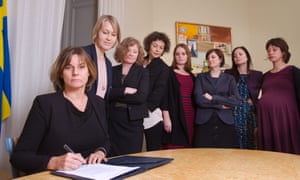
Sweden’s deputy PM, Isabella Lövin, signs bill seen as a parody of Donald Trump signing the ‘global gag’ order.


Sweden’s deputy PM, Isabella Lövin, signs bill seen as a parody of Donald Trump signing the ‘global gag’ order. Photograph: Johan Schiff/EPA

The Swedish deputy prime minister made headlines last month when she appeared to parody Trump and the all-male lineup in the Oval Office that signed the global gag order.


Lövin, who is also environment minister, tweeted a picture of herself and female colleagues, as she signed Sweden’s climate law.


But she brushed aside questions she was mocking Trump and his administration, saying: “The message was not that we were only women in that picture; the message was that we are taking leadership when it comes to tackling climate change.


“This was my staff and myself and my state secretaries and I was signing a bill and that’s all.”


Countries pledge millions to plug hole left by US "global gag rule"

16 Şubat 2017 Perşembe

Millions of premature births could be linked to air pollution, study finds

Air pollution could be a contributing factor in millions of premature births around the world each year, a new report has found.


Nearly 15 million babies are born annually before reaching 37 weeks gestation. Premature birth is the leading cause of death among children younger than five years old, and can cause lifelong learning disabilities, visual and hearing problems, the World Health Organization (WHO) reports.


Researchers for the Stockholm Environment Institute (SEI), the London School of Hygiene and Tropical Medicine and the University of Colorado, have concluded that as many as 3.4 million premature births across 183 countries could be associated with fine particulate matter, a common air pollutant, with sub-Saharan Africa, north Africa and south and east Asia most impacted by the issue.


“Preterm birth and associated conditions are one of the biggest killers of children in the US and worldwide,” said Dr Paul Jarris, chief medical officer at the March of Dimes, a US-based nonprofit focused on maternal and baby health. “Yet, there’s a lot of things we don’t know about what causes preterm birth, so every bit of information we can get is helpful.”


“We have known for a long time that air pollution contributes to asthma and heart disease in adults,” said Jarris. “What I think people fail to recognise is that so many of these risk factors impact babies before they are even born.”


Previous studies have looked at how effects of air pollution in utero might negatively impact babies’ birth weight, or the likelihood that they will be born early. SEI’s study, which examined data from 2010, attempted to calculate how those factors might influence the global rate of premature births.


“By showing in our study that 18% of preterm births are associated with air pollution, we are quantifying the health impacts of fine particulate matter on babies before they are born,” said Chris Malley, a researcher in SEI’s York Centre, at the University of York and lead author on the study.


Each year, around one in every 10 babies worldwide are born prematurely, according to the WHO. Africa and south Asia bear a disproportionate burden of premature births, accounting for 60% of all premature births globally. That region also dominated SEI’s report of premature birth associated with air pollution.


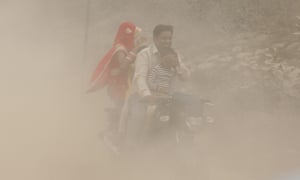
smog in India


South Asia had the most preterm births associated with air pollution. Photograph: Harish Tyagi/EPA

SEI’s new report provides an estimate of potential birth impacts associated with air pollution, but the authors acknowledged that the study had considerable caveats because of a lack of research in some of the most affected areas.


This is one more reason why we need to be good stewards of the environment


Dr Paul Jarris


Still, two experts who reviewed the study called estimates “conservative”.


A number of factors have been identified in playing a part on premature birth, including poverty, infection, smoking and substance use, physical activity and maternal education. However, even with the report’s limitations, it is still one of the first to argue that reducing air pollution could also be effective in reducing premature births across the world.


Because of a lack of research in regions such as south and east Asia and Africa, researchers used studies conducted in the US and Europe to estimate global outdoor air pollution exposure.


Indoor cooking fires could play a larger role than the study allows for. “The exposure in Asia, and in part in say, China and India, to outdoor air pollution is significantly higher than outdoor air pollution in the US,” said Malley. “So that’s the other part of the uncertainty, that at these higher levels of exposure we don’t know whether this same relationship holds.”


The report focused on one kind of air pollution considered especially harmful to human health: fine particulate matter. This pollution is made up of tiny particles from a variety of emissions, such as diesel emissions and agricultural fires.


The particles, smaller than 2.5 micrometres in diameter, are considered harmful because they can lodge deep in the lungs, affecting the pulmonary and cardiovascular systems. Past studies have looked at these factors as ways that air pollution may impact preterm birth and low birth weight in babies.


South Asia had the most preterm births associated with particulate matter pollution – as many as 1.6 million associated births. Notably, even though China has a relatively low rate of preterm births, researchers found that as many as 521,000 preterm births could be associated with air pollution because of high concentrations of particulate matter.


A similar study conducted in the US found that air pollution had a costly impact on unborn children, estimating that the economic impacts cost $ 4.33bn in 2010.


Researchers said the estimates support their conclusion that “reduction of maternal [air pollution] exposure through emission reduction strategies should be considered alongside mitigation of other risk factors associated with preterm births.”


“This is one more reason why we need to be good stewards of the environment,” said Jarris. “The most vulnerable among us – unborn children – are affected, and really in a way that impacts families’ lives for generations.”


Guardian Cities is dedicating a week to exploring one of the worst preventable causes of death around the world: air pollution. Explore our coverage here and follow Guardian Cities on Twitter and Facebook to join the discussion


Millions of premature births could be linked to air pollution, study finds

14 Şubat 2017 Salı

Trump"s "global gag" aid rule endangers millions of women and children, Bill Gates warns

The “global gag rule” imposed by Donald Trump, blocking US funds to any organisation involved in abortion advice and care overseas, could impact millions of women and girls, endangering their lives and those of their babies, Bill and Melinda Gates have warned.


The changes are expected to result in funding from the world’s biggest donor to family planning and women’s health programmes in the developing world being slashed. It could, Bill Gates told the Guardian, “create a void that even a foundation like ours can’t fill”.


Gates and his wife spoke out as they published a progress letter to Warren Buffett, the businessman who 10 years ago invested a large part of his fortune in the couple’s foundation which has at its centre the mission to save children’s lives. Empowering women and girls, the couple said, was central to that aim.


Trump signed an executive order reimposing the Mexico City policy, also known as the global gag rule, on his first full day in office. Republican presidents since Ronald Reagan in 1984 have imposed the policy, while their Democrat counterparts have lifted it. The rule strips funds from any organisation that “performs or actively promotes abortion as a method of family planning” overseas.


But Trump’s order goes further, applied to any organisation that receives funding from US Aid , not just those involved in family planning. That expansion, said Melinda Gates, was a surprise.


“We’re concerned that this shift could impact millions of women and girls around the world,” she said. “It’s likely to have a negative effect on a broad range of health programs that provide lifesaving treatment and prevention options to those most in need.


“This includes programmes that prevent and treat HIV, TB and malaria, and provide healthcare to women and children around the world. Enabling women to time and space their pregnancies and providing access to treatment and prevention of infectious diseases is lifesaving work. It saves moms’ lives and it saves babies’ lives, and that has long had wide support in the United States.”


Bill Gates said their foundation would not be able to bridge the potential funding gap. “The US is the No 1 donor in the work that we do. Government aid can’t be replaced by philanthropy. When government leaves an area like that, it can’t be offset, there isn’t a real alternative. This expansion of this policy, depending on how it’s implemented, could create a void that even a foundation like ours can’t fill.”


He had an early phone call with Trump in November and then a meeting in December with the president-elect in New York, he told the Guardian. They talked about the eradication of polio, which Gates hopes could come as early as this year, and the research his foundation is supporting towards an Aids vaccine and ways to protect people from pandemics such as Ebola in west Africa.


“So that was a good discussion – the fact that he was interested in having me talk about the Foundation’s work – I was pleased,” said Gates.
But the philanthropist did not anticipate the scope of the executive order affecting family planning, an issue at the centre of the foundation’s work, that Trump was to sign.


Bill (L) and his Melinda Gates (C) with Warren Buffett as the latter pledge of 10m shares of Berkshire Hathaway to the couple’s foundation.


Bill and his Melinda Gates with investment veteran Warren Buffett (R) in 2006. Photograph: Nicholas Roberts/AFP/Getty Images

The letter to Buffett is an assessment of the progress the Gates Foundation has made since 2006, when he pledged 10m shares in his company Berkshire Hathaway in annual instalments worth a total of $ 31bn at the time. The couple write of the progress that has been made in saving children’s lives, particularly through immunisation and vaccine development, and the work that lies ahead in making childbirth safer and tackling malnutrition.


Their letter makes clear what is at stake with Trump’s move to reimpose the global gag rule, arguing that women and maternal health are key to so many global health issues.


Empowering women is a key theme of the letter in which the couple argue that enabling women to access contraceptives control over the number of pregnancies they have is crucial. When women have a gap of at least three years between births, their children are more likely to survive and be healthy and well educated, the couple say. “Like vaccines, contraceptives are one of the greatest lifesaving innovations in history,” writes Bill Gates in the letter.


What is the ‘global gag rule’, and why does Trump support it?

Since they set up their foundation its focus has shift from the hunt for technological solutions towards social change. The attention to women’s empowerment came from the evidence, the couple say.


“You cannot go out and be in the developing world and then come back and look at the data and turn away from the importance of women in the developing world,” said Melinda Gates.


Whether they breastfeed and take their children to be vaccinated makes a profound difference to how the child grows and his or her life chances, and men are not always there, she added. “So you have to look at the woman’s role and when you look at it you realise it can be an accelerator to every single thing you want to have happen in the world for global health and global development and social change.”


In their letter, Bill Gates sats that poverty is sexist, a phrase he first heard from the U2 frontman Bono.


“The poorer the society, the less power women have. Men decide if a woman is allowed to go outside, talk to other women, earn income. Men decide if it’s acceptable to strike a woman. The male dominance in the poorest societies is mind-blowing.”


In the letter, Melinda Gates adds: “It’s also crippling. Limiting women’s power keeps everyone poor.”


She and her husband tell of their visits to sex workers in India whom the couple say they encouraged to form self-help groups, thinking the women would help each other insisting their clients wore condoms to protect themselves from HIV. That vision, said Bill Gates, “was way too narrow”. The sex workers began to support each other in every aspect of their lives.


“Warren, if Melinda and I could take you anywhere in the world so you could see your investment at work, we probably would take you to meet sex workers. I met with a group in Bangalore, and when they talked about their lives, they had me in tears,” writes Bill Gates.


“One woman told us she turned to sex work after her husband left her – it was the only way to feed her children. When people in the community found out, they forced her daughter out of school, which made the girl turn against her mother and threaten to commit suicide.


“That mother faced the scorn of society, the resentment of her daughter, the risks of sex work, and the humiliation of going to the hospital for an HIV test and finding that no one would look at her, touch her, or talk to her. Yet there she was, telling me her story with dignity.”


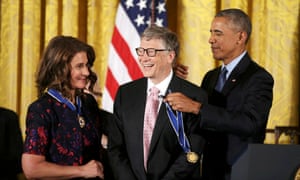
Bill and Melinda Gates receive medals from Obama at presidential medal of freedom ceremony in November 2016.


Bill and Melinda Gates receive medals from Obama at presidential medal of freedom ceremony in November 2016. Photograph: Carlos Barria/Reuters

There have been setbacks, such as the failure yet to end polio, but the couple emphasise the enormous progress that has been made in the last couple of decades in global health and speak in the letter of their optimism for the future.


“Polio will soon be history. In our lifetimes, malaria will end. No one will die from AIDS. Few people will get TB. Children everywhere will be well nourished. And the death of a child in the developing world will be just as rare as the death of a child in the rich world.


“We can’t put a date on these events, and we don’t know the sequence, but we’re confident of one thing: The future will surprise the pessimists.”


Trump"s "global gag" aid rule endangers millions of women and children, Bill Gates warns

5 Ocak 2017 Perşembe

NHS groups "paying millions to private firms that block GP referrals"

NHS organisations are paying millions of pounds to private firms that stop patients being referred to hospital by their GPs, an investigation has found.


Controversial referral management centres are used by some clinical commissioning groups (CCGs) to scrutinise patient referrals to hospitals by family doctors.


Supporters say they can reduce inappropriate referrals, saving the NHS money, but critics argue that adding an extra layer of scrutiny risks delaying diagnosis. There is also doubt over the effectiveness of such schemes.


In an investigation, the British Medical Journal (BMJ) sent freedom of information requests to all 211 CCGs in England. Of the 184 that responded, 72 (39%) said they commissioned some form of referral management scheme.


Almost a third (32%) of the schemes are provided by private companies, while a further 29% are provided in-house and 11% by local NHS trusts. Some 69% of the CCGs with schemes gave details of operating costs. These CCGs combined have spent at least £57m on schemes since April 2013.


Most CCGs were unable to provide evidence showing the scheme saved money. Only 14% could show that the scheme had saved more cash than it had cost to operate, while 12% showed that their schemes had not saved money overall.


Meanwhile, 74% of CCGs (53 groups) failed to supply figures to show whether any money had been saved, the BMJ reported.


Some CCGs did not collect data on savings, some said their referral scheme was designed not to save money but to improve the quality of referrals, and others declined to disclose details of savings on the grounds of commercial confidentiality.


Overall, there were 93 referral management schemes in operation across 72 CCGs, with some CCGs having more than one.


Dr Richard Vautrey, deputy chairman of the British Medical Association’s GPs committee, told the BMJ: “[CCGs] are leaping at these schemes without any clear evidence of benefit. They are just hopeful that it might reduce their costs.


“It is a very short-term approach to healthcare management. We need to see much more evaluation … and not just keep making the same mistakes year after year. As public bodies, there should be an expectation on every CCG to account for what it is doing.”


Vautrey said some schemes were helpful because they gave GPs rapid access to advice from local specialists.


Graham Jackson, co-chair of NHS Clinical Commissioners, the membership organisation representing CCGs, said referral management was only one way of managing demand for services.


“In many cases they provide a useful and effective role which is more than a redirection service,” he said. “CCGs will balance the cost of commissioning with the benefit they provide to GPs and patients in terms of peer review, education, caseload management and choice.”


In October, Roberta Blackman-Woods, Labour MP for City of Durham, criticised a local scheme to screen referrals for conditions including cardiology, gynaecology and gastroenterology.


The North Durham CCG has awarded a contract to the private firm About Health to manage referrals.


NHS groups "paying millions to private firms that block GP referrals"

4 Ocak 2017 Çarşamba

Millions of UK asthma sufferers "not receiving basic levels of care"

Millions of asthma patients are not receiving basic levels of care to keep their condition in check, a charity has warned.


Two-thirds of sufferers are not being given fundamental care to manage their condition, Asthma UK said. This is about 3.6 million people across the UK.


Full provision of this basic care would “reduce the impact of asthma, reduce hospital admissions and improve the lives of hundreds of thousands of people”, according to a new report by the charity.


Basic care includes having an appropriate asthma review at least once a year – or more often for severe cases and children – being on the right medication and knowing how to use it, and having a written asthma action plan.


The annual asthma survey, based on responses from 4,650 patients from around the UK, found a variation in the proportion of people receiving basic care across the country, with some areas “lagging behind others”.


Patients in Northern Ireland appeared to get the best basic care, with 47.6% receiving all elements of recommended care.


The lowest proportion was in London, where just 27.5% of patients received this level of care.


The report’s authors said it was not just this basic care that was “failing people with asthma”. The report stated that seven out of 10 patients who required hospital care or out-of-hours treatment did not have a follow-up appointment.


The authors said: “Correct discharge arrangements after a hospital stay for asthma saves lives, and this is a particularly worrying finding.”


There are about 5.4 million people with asthma in the UK. In 2015, 1,468 people died from the condition – the highest number for more than a decade. The charity said two-thirds of asthma deaths were preventable with the right basic care.


“It is worrying that basic care is not being delivered on a consistent basis because every person with asthma should be receiving this care,” said the charity’s clinical lead, Dr Andy Whittamore.


Kay Boycott, chief executive of Asthma UK, said: “With the 2014 national review of asthma deaths reporting two out of three asthma deaths are preventable with good basic care, it is hugely disappointing that the latest Asthma UK care survey shows little has changed since that damning report.


“It is clear that expecting old ways to tackle long-standing problems won’t work. We must take a bold new approach and take advantage of new asthma digital health solutions to transform the way asthma care is delivered and support self-management.


“Digital asthma action plans, smart inhalers and automated GP alerts are just some of the ways asthma care could be brought up to date and help reduce the risk of potentially fatal asthma attacks.”


The proportion of patients in each region who received all elements of basic asthma care, according to Asthma UK


East Midlands: 33.5%


East of England: 30.4%


London: 27.5%


North-east: 38.5%


North-west: 34.5%


Northern Ireland: 47.6%


Scotland: 41.1%


South-east: 33.2%


South-west: 34.2%


Wales: 32.2%


West Midlands: 32.2%


Yorkshire and the Humber: 28.1%


Millions of UK asthma sufferers "not receiving basic levels of care"

8 Kasım 2016 Salı

Why is heart disease still killing millions every year?

The heart is a remarkable muscle. It sits behind the rib cage, pumping 100,000 times a day to carry nutrients to the furthest extremities of the body.


But it is also a vulnerable organ, prey to the excesses of a modern western lifestyle – and as excessive lifestyles have spread around the globe, they have had a predictable effect.


Around the globe, the morbidity burden of cardiovascular disease (CVD) has increased by 40% in the past 25 years. The gains in the west – since the 1960s, deaths from heart attacks and strokes in the UK have nearly halved – have been outweighed by the fact that the global population is increasing in number and ageing. There were 12.3m CVD deaths worldwide in 1990 – this had risen to 17.3 million by 2013. That’s over three times the number caused by Aids, TB and malaria combined.


The World Health Organisation (WHO) and World Heart Federation have said the risk of premature death from CVD could be cut by 25% by 2025 with a three-pronged attack to reduce high blood pressure, curb smoking, and provide at least half of those who have already had a heart attack or stroke with secondary prevention, such as medication.


But a panel of international experts – which I chair – say in a highly critical report to be presented at the World Innovation Summit for Health (Wish) in Doha this month that the response from policymakers has been weak.


Given the fact that the disease develops slowly and does not create the panic caused by a flu pandemic, there is a lack of urgency and responsibility is fragmented, with governments facing opposition from powerful lobby groups such as the tobacco industry, says the report.


Hypertension affects 1 billion people worldwide. Smoking kills 6 million annually and although its use is falling the number of smokers worldwide has increased from 721 million in 1980 to 967 million in 2012. In secondary prevention, a single measure – controlling low-density lipoproteins in those who have already had a heart attack – reduces the risk of a further one by 40%.


Some countries have launched bolder initiatives, leading the way for the rest.


  • New Zealand set a goal in 2011 to reduce smoking prevalence to 5% by 2025 and provided NZ$ 5m (£2.9m) a year.

  • Brazil uses community health workers to visit every household in their catchment area once a month. The scheme covers half the population. This has led to a significant cut in hospital admissions, with a 20% drop in age-standardised deaths from heart disease and stroke over the course of the 20-year programme.

  • In South Africa a scheme called Practical Approach to Care Kit (Pack) supports nurses to provide care in the community, leading to improvements in prescription, referral and screening, and reductions in the length of hospital stays.

  • In India, the mTobaccoCessation service – a text based programme sending free, customised messages to help smokers give up, launched in January 2016 – enrolled 800,000 people in the first 60 days, showing the extent of demand. Trials have shown the programme can double or triple smoking cessation rates.

  • In the UK, a trial is underway in Cheshire and Merseyside, in collaboration with the WHO, to raise awareness of blood pressure and develop a suite of text messages to help people keep it under control. Tests have shown that this can lead to “statistically significant improvement”.

These are conditions that kill more people than any other, yet policymakers rarely make CVD prevention a major focus of their attention, despite the high health and economic burden and the unnecessary loss of life. It does not get as much attention as diseases that are perceived as more life-threatening, or as posing a greater risk, such as cancer or Ebola.


We in the UK cannot afford to be complacent. Although the total number of cardiovascular deaths has come down – from 320,000 in 1961 to 180,000 in 2009 – CVD is still the biggest killer, accounting for 32% of all deaths in 2009 [pdf].


Nearly every single country worldwide shares the same burden and faces the same challenge. That means that there are many innovators around the world testing new ideas and trialling new solutions. But they need political and financial support if they are to find an answer to the most significant public health threat in the world today.


Lord Darzi is a surgeon and executive chair of the World Innovation Summit for Health (Wish), an initiative of the Qatar Foundation.


Join the Healthcare Professionals Network to read more pieces like this. And follow us on Twitter (@GdnHealthcare) to keep up with the latest healthcare news and views.


Why is heart disease still killing millions every year?

5 Kasım 2016 Cumartesi

Millions of patients putting strain on NHS with minor ailments

Millions of patients are putting unnecessary strain on the NHS by seeking medical help for minor complaints such as colds, insect bites and dandruff, according to a report.


Overloaded GP surgeries and A&E units are having to divert scarce resources into dealing with flu, sore backs and travel sickness, the Local Government Association said.


The LGA, which represents more than 370 local councils in England and Wales, is urging people suffering from minor ailments to think before they seek NHS help and get used to treating themselves.


“We need a new culture of care where people stop and think before calling the doctor,” said Cllr Izzi Seccombe, the chairman of the LGA’s community wellbeing board.


“GPs and A&E departments are already overstretched. However, many appointments are unnecessary and for minor conditions that a person could treat or manage themselves.”


There are 57m GP consultations every year for minor complaints, including 5.2m for blocked noses, 40,000 for dandruff and 20,000 for travel sickness, according to the LGA report. These appointments, together with 3.7m A&E visits for similar concerns, cost the NHS £2bn a year.


The 3.7m visits, 19% of A&E attendances, include people with a sprain (38%), flu (17%), colic (13%) and insect bites (13%).


Council leaders are advising patients affected by such ailments to visit a pharmacy or seek treatment advice from the NHS Choices website instead.


They say family doctors can play a key role by helping the many millions of people with a long-term condition such as diabetes or heart disease to learn how to manage their illness, reducing the need to seek professional medical help.


“Better self-management could make a huge difference to a person’s physical and mental wellbeing. Instead, the lack of knowledge among the general population about how they can do this is placing a huge burden on surgeries and hospitals,” said Seccombe, the Conservative leader of Warwickshire county council.


The Royal College of GPs backed the plan, but said long waiting times to see a GP can prompt people to seek help at A&E.


Prof Maureen Baker, the chair of the RCGP, said: “Minor ailments, including coughs and colds, can be distressing for patients and parents of young children, so it’s important that they are fully aware of the range of NHS services that are available to them in their local area.


“When patients in some areas of the country are having to wait for nearly a month to see their GP due to rocketing demand and not enough GPs to keep pace, it makes absolute sense to use alternatives, such as patients visiting their local pharmacist, who will be ideally placed to give them advice and discuss the various treatments available.”


Millions of patients putting strain on NHS with minor ailments

30 Eylül 2016 Cuma

The Guardian view on stunting: malnutrition is holding millions of children back

South Korean women are neither especially diminutive nor remarkably lofty. With a mean height of 162.3cm, they are 12.5cm taller than their Filipina peers, and 7.5cm shorter than Latvian women. But they stand out from the crowd for one reason: they are a full 20cm taller than their ancestors a century ago. That collective growth spurt tells us something important: that height differences often ascribed to genetics owe a huge amount to nutrition, hygiene and healthcare. South Korea’s rapid development meant women’s growth was no longer hindered as it had been. In contrast, under-nourished Filipinas are still associated with “shortness”. Even within a community, cultural factors – such as an eldest son preference in South Asia – can lead to marked differences in height outcomes.


This is not a question of mere vanity. What really matters is not how tall one can grow, but whether one fails to grow as expected. More than 160 million of the world’s under-fives are stunted. In India 39% of children are stunted and in the Democratic Republic of the Congo 70%. Though stunting is a physical measure, and is associated with the increased risk of some chronic diseases such as diabetes in future, it is also an important indicator that mental development may have been affected. Their brains are unable to make the neural connections that they should; their cognitive ability does not blossom. Malnourished children also have little energy, further diminishing their ability to learn and escape poverty. Research suggests they are less likely to be enrolled in school, and learn less when they are there.


It is obvious why this bothers the World Health Organisation. But now the World Bank’s president is threatening to name and shame countries which fail to address the problem. Jim Yong Kim, a former doctor, says that stunting is not only the outcome of the unfair distribution of resources: it drives such imbalances, too, since inequality is “baked into the brains” of a quarter of children before they reach the age of five. The problem is not only humanitarian, but economic. And it is in the interest of governments to act – even if they are looking at the narrowest possible measures of national success – because they cannot compete if large portions of their workforces are stunted. Dr Kim’s ambitious goal is to halve stunting in seven years and end it in 14. A World Bank-sponsored programme in Peru, targeting families from pregnancy onwards, slashed stunting rates by giving conditional cash transfers to mothers, allowing them – and educating them – to give their children nutritious food and stimulate them through play. Health clinics were given incentives to support them. Swift action can bring immense benefits to a generation. Bodies and brains develop fastest in the womb and in the first two years after birth; it is hard for those who fall behind to catch up later. When we talk of children growing to their full potential, we speak more literally than we realise.


The Guardian view on stunting: malnutrition is holding millions of children back

29 Ağustos 2016 Pazartesi

Millions at risk as deadly fungal infections acquire drug resistance

Scientists have warned that potentially deadly fungal infections are acquiring resistance to many of the medicines currently used to combat them. More than a million people die of fungal infections every year, including about 7,000 in the UK, and deaths are likely to increase as resistance continues to rise.


Researchers say the widespread use of fungicides on crops is one of the main causes of the rise in fungal resistance, which mirrors the rise of resistance to antibiotics used to treat bacterial infections in humans.


“There are close parallels between bacterial and fungal resistance, though the problems we face with the latter are particularly worrying,” said Prof Adilia Warris, a co-director of the newly opened Centre for Medical Mycology at Aberdeen University.


“There are more than 20 different classes of antibacterial agents. By contrast, there are only four classes of anti-fungal agents. Our armoury for dealing with deadly fungi is much smaller than the one we have for dealing with bacteria.


“We cannot afford to lose the few drugs we have – particularly as very little funding is being made available for research into fungi and fungal infections.”


Fungi cause a range of illnesses – such as thrush, athlete’s foot and dandruff – that can be treated relatively easily.


Other illnesses have more serious consequences. Individuals who are receiving bone marrow transplants and who are immune-suppressed can die of aspergillus and candida fungi infections, for example.


Another example of their grim potential was highlighted last week when doctors reported that a bagpipe player had died because deadly fungi had infected his pipes.


The total global number of fungal deaths is about the same as the number of deaths from malaria


“Fungi are everywhere,” said Prof Gordon Brown, head of the Aberdeen mycology centre.


“We breathe in more than 100 spores of aspergillus every day. Normally our immune systems mop them up but, when our disease defences are compromised – for example, during cancer treatments or after traumatic injuries – they lose the ability to fight back.


“Fungi can spread through patients’ bodies and into their spines and brains. Patients who would otherwise survive treatments are dying every year from such infections.”


This point was also stressed by Prof Neil Gow, another Aberdeen researcher. “Essentially fatal fungal infections are diseases of the diseased,” he said.


In addition, premature babies and patients with the inherited condition cystic fibrosis are also vulnerable.


However, the problem is even worse in developing countries. In sub-Saharan nations, where millions are infected with HIV – which causes severe depletion of patients’ immune systems – infections with cryptococcus and pneumocystis fungi account for more than half a million deaths a year.


“The total global number of fungal deaths is about the same as the number of deaths from malaria but the amount that is spent on fungal infection research is only a fraction of the cash that goes on malaria research,” added Gow.


A vaccine that could protect against fungal disease has yet to be developed, while the rise of resistance to the class of medicines known as azole drugs is causing alarm among doctors.


Recent reports from the US and Europe indicate that resistance to azole drugs is increasing in both aspergillus and candida fungi. The widespread use of agricultural fungicides to protect crops and their use in some paints and coatings has been linked to the rise of this resistance.


Doctors have recently uncovered another worrying development: outbreaks of fungal infections – mainly cryptococcus – that have appeared in previously healthy people. In one outbreak, in the northwest US, dozens of people died.


In the wake of these developments, it was decided by Britain’s Medical Research Council to open its Aberdeen mycology centre earlier this year.


It will employ experts in the field to gain new understanding of how fungi move into the human body and survive there. It will also work on the development of new drugs and tests for pinpointing specific fungi that are infecting patients.


“Fungal infections are going to be an increasing problem in coming years and we need to develop the best defences,” said Brown. “We aim to do that here.”


Millions at risk as deadly fungal infections acquire drug resistance

23 Ağustos 2015 Pazar

NHS competitors could waste millions, says Labour, soon after Care Uk complains

Labour has warned that the NHS could be forced to spend hundreds of thousands on competitors attorneys soon after the UK’s biggest private healthcare provider demanded an fast investigation into a decision to award an elective care contract to a regional health trust.


Care Uk has been branded a undesirable loser following lodging a complaint with the NHS watchdog Keep track of more than the management of a contract by commissioners in north London.


Check has now begun an investigation into the determination by 4 GP-led clinical commissioning groups (CCGs) to award a contract to the Barking, Havering and Redbridge University Hospitals NHS Believe in. The believe in mentioned it was very disappointed by the investigation and warned that it would delay the opening of a care centre.


Andrew Gwynne, the shadow overall health minister, explained the new competition guidelines could force the NHS to waste hundreds of thousands on competition lawyers.


“This is a worrying sign of what lies ahead for the NHS under the Tories,” Gwynne said. “David Cameron promised to put medical doctors in control, but his competitors principles allow massive private wellness organizations to challenge the awarding of contracts to the NHS,” he extra. “It’s a ridiculous state of affairs that ministers need to have to urgently tackle.”


Care Uk, the UK’s biggest personal provider of wellness and social care, explained that the GP-led commissioning groups had applied the wrong criteria in awarding the contract, with as well considerably emphasis on price and too minor fat on top quality.


The contract covers a assortment of providers, which includes basic surgical treatment, orthopaedics and ophthalmology, for 965,000 men and women.


Care Uk, which has supplied elective care providers in the area for many many years, explained the CCGs’ decision to take away the contract was discriminatory.


Campaign groups warned that the NHS could face higher legal costs if private businesses began often interesting CCG selections.


Professor Sue Richards, the co-chair of Hold Our NHS Public, stated large private sector firms like Care Uk have been full of the virtues of competitors in concept, but claimed that when in practice NHS hospitals had been proven to be capable to do a greater occupation at a reduce cost, they called in the attorneys.


Richards stated that investigations into contracts could increase legal expenses for the NHS. “The last chief executive of the NHS, Sir David Nicholson, warned that the NHS had turn out to be a competitors lawyers’ paradise. How considerably will all of this cost and what could it have attained if invested on patient care?” she explained. “Don’t be a undesirable loser, Care Uk.”


Richard Vautrey, the deputy chair of the BMA’s Basic Practitioners Committee, stated that GPs had issues about challenging tendering processes, which could favour commercial companies.


“We remain concerned that worthwhile resources that would be much better invested on patient care are currently being diverted into an expensive tendering procedure and, possibly, into legal difficulties about the outcome of contract awards,” he mentioned.


Care United kingdom had revenues of virtually £730m in 2014, with underlying earnings of around £53m. The care supplier, whose nationwide portfolio includes hospitals, GP surgeries and psychological wellness centres, is owned by the private equity company Bridgepoint Capital.


Monitor explained that the investigation would target on whether or not the CCGs’ assessment of the bids was “consistent with their obligations to act in a transparent and proportionate way and to deal with suppliers equally”.


The NHS trust insisted that its productive bid had shown the greatest worth for cash, which was why it was selected by the CCGs. “Putting the elective care centre into NHS hands implies that sufferers will have greater continuity of care, and waiting instances will be diminished,” it said.


Care United kingdom explained it welcomed the investigation, adding that the existing circumstance could potentially trigger reduction of patient choice and increase troubles about cost competitors.


“Care Uk is committed to continuing to operate the service to the highest possible standards and continuing to assistance the neighborhood NHS in addressing its functionality issues for the duration of the period of Monitor’s investigation,” it mentioned.


A spokesman for the CCGs stated: “Barking and Dagenham, Redbridge, Havering, and Waltham Forest Clinical Commissioning Groups are disappointed that this investigation has been launched. We will of course cooperate completely with Check to help them acquire the info they demand.


“The CCGs continue to be confident that our arrangements to decide on a supplier of these services have been in the very best interests of sufferers, in accordance with the NHS principles on procurement, option and competitors.”


NHS competitors could waste millions, says Labour, soon after Care Uk complains

16 Temmuz 2014 Çarşamba

Why millions of us nevertheless cannot quite kick the smoking habit

Catherine Zeta-Jones can oft be spotted lighting up a secret stogie, despite the fact that this might be considered essential stress relief for a lady whose husband blamed amorous pursuits for his throat cancer.


Barack Obama promised to renounce his thirty-yr habit in return for his wife letting him run for the White House. Not remarkably, becoming leader of the free planet did not bestow the calm necessary for this kind of abstinence. In spite of chewing Nicorette gum in the method of a ketamined horse, the president is explained even now to cadge gaspers from his aides.


For the duration of an episode of the BBC’s Question Time in 2011, our very own David Cameron confessed to currently being a reformed smoker, remarking: “I surely help No Smoking Day and, in contrast to in some earlier many years, I hope to meet its requirements in total.” Earlier he had recalled: “When I was 14, 15, sixteen, I was carrying out factors that teenagers do in terms of drinking as well much, currently being caught having the odd fag, items like that.” This appeared to be a reference to cigarettes rather than arcane Etonian practices.


Nigel Farage: unashamed smoker


The Resplendent Smoker


Aka the Unashamed Fagger. Rock chicks Cameron Diaz and Kate Moss fall into this class the former faring greater than the latter in the “not seeking like she’s on forty-a-day” stakes.


For Nigel Farage and Ken Clarke, smoking is all part of the what you see is what you get/man of the men and women stance (the cheroot-toting Clarke also possessing been in the employ of British American Tobacco).


Nick Clegg experimented with, and failed, to emulate this bravura when he advised Radio 4’s Desert Island Discs that his castaway luxury would be a “stash” of cigs an attempt to play it great, second only to his declare to have slept with “no a lot more than 30” unfortunate girls.


The Skinny Smoker


For “skinny”, study “thin at all costs”, in the manner of the Mses E Hurley, J Aniston and T Woodall. Marketing Charles Saatchi’s non-throttling credentials is not the only purpose why Trinny favours an outdoors table at Scott’s, for she – like her fellow slimline smokers – is steadfast in preferring cancer to calories. They could favour state-of-the art “youthening” therapies, but they can not drop the old skin parchers. As one death-stick dieter reveals: “I live off air – cigarette smoke.”


The Rebellious Smoker


Seditious smokers are life’s eternal teenagers, with a homicidal (that is, suicidal) phobia of being advised what to do, regardless of whether by mothers and fathers, employers or society at huge.


A single has only to stand outdoors The Globe of an evening and spot all the ruff-sporting puffers to know that theatre varieties favour the odd fag. If pushed, the thespian will drawl: “It’s so poor for the voice, darling, but brilliant for the nerves and so much naughty fun. I’ve been at it because my days in rep.” The truth that Very good Existence sweetheart Felicity Kendal has her fag-ash Lil moments only endears her to her fawning public.


Kate Winslet, so rock-and-roll try-challenging that she is married to a chap known as “Rocknroll”, and right royal rogue Prince Harry should never really feel obliged to kick the habit.


Elsewhere, there are non-smokers who have never ever puffed more than because the 2006 ban, myself integrated. I detest cigarettes, but not as a lot as I detest having my behaviour policed. (As I said: teenage.)


Jennifer Saunders: provoked outrage:


The Taboo Smoker


The comedian Jennifer Saunders happily provoked outrage in January when she was spotted enjoying an Ab Fab-style cigarette three many years soon after currently being given the all-clear from cancer.


Wander outside any hospital and one will locate medical doctors, nurses, guests and patients with drips lining up for a spot of kill-throat activity.


The ultimate taboo smoker I have encountered was a heavily pregnant comrade at a dinner get together. A fellow guest launched into a relentless, didactic monologue concerning all the items my staunchly unmaternal friend should be performing by way of massaging her perineum. Coolly, my good friend poured herself a second glass of burgundy and languorously lit up: exit irate earth mom in a puff of smoke. My good friend smiled beatifically as she exhaled and uttered, as any taboo smoker would: “I just had to.”


Why millions of us nevertheless cannot quite kick the smoking habit

1 Haziran 2014 Pazar

Millions encounter postcode lottery in GP companies

The School stated the study, primarily based on the GP Patient Survey, showed the profession is ”creaking under the bodyweight of a developing and ageing population”.


They have launched a campaign to demand an extra £3.5 billion a yr to be ploughed into GP companies, and have place up posters in surgeries displaying sufferers having to queue down the street for an appointment except if extra funds is discovered.


Dr Maureen Baker, chairwoman of the RCGP stated: ”Every single patient should be capable to see their GP when they are in need of health-related assistance, irrespective of in which they reside.


”It is totally shocking that, due to the existing funding crisis in standard practice, sufferers are now facing a postcode lottery.


”It is doubly unacceptable that those sufferers impacted have a tendency to be people who dwell in deprived parts of the nation.”


A expanding and ageing population coupled with a surge in patients with numerous and persistent conditions was piling strain on GPs, but their share of the NHS price range has been slashed, she mentioned.


Dr Baker said: ”Family medical doctors are operating tougher than ever – but with rising patient demand, due to a growing and ageing population, and plummeting investment, there basically are not ample GPs to go round.


”There is now a desperate shortage of GPs in a lot of parts of the country, leaving the support teetering on the brink of collapse.


She additional: ”Over the final decade, investment in basic practice has slumped and has now reached an all-time minimal, with GPs conducting 90% of NHS patient contacts for just eight.5% of the total NHS price range.


”GPs want to provide higher-quality care for every single patient, but at a time of plummeting sources we are seeing 40 million more patients a year than just five many years in the past.


”The simple fact is that family doctors are now heaving beneath unsustainable workloads, with the vast majority now routinely conducting 60 patient consultations in a single day.”


The University mentioned the amount of visits to GPs has soared from an estimated 300m to 340m in the previous 5 years, and at least 10,000 a lot more GPs require to be recruited to ease the stress.


Dr Patricia Wilkie, president of the National Association for Patient Participation stated: ”Patients across the country are often unable to obtain a timely appointment with a GP, because there simply are not adequate GPs in some nearby places.


”This postcode lottery is absolutely inappropriate with clear and possibly significant implications for patients.


”It is clear that the root of the difficulty is a shortage of GPs and the lack of funding for general practice. Without appropriate funding for common practice the circumstance for patients will only deteriorate.”


NHS England said they are recruiting and education a lot more GPs. A spokeswoman mentioned: ”Patients ought to have very good accessibility to health providers, regardless of where they live.


”This 12 months, for the initial time, NHS England introduced a deprivation aspect into nearby well being budgets to start off to redress historic funding issues.”


Millions encounter postcode lottery in GP companies

29 Mayıs 2014 Perşembe

E-cigarettes could save millions of lives, experts inform WHO

“If regulators deal with lower-chance nicotine goods as classic tobacco items… they are improperly defining them as portion of the dilemma.


“Regulators must stay away from support for measures that could have the perverse effect of prolonging cigarette consumption.


Among those to signal the letter are authorities who have advised the National Institute for Overall health and Care Excellence (Wonderful) on its guidelines about decreasing the harm from tobacco.


They published the letter right after claiming to have witnessed a leaked document from the WHO which labelled the e-cigarettes as a “threat”.


A WHO spokesman mentioned: “WHO is at the moment working on recommendations for governments on the regulation and advertising and marketing of e-cigarettes and similar units.


“This is element of a paper that will be submitted to the parties of the WHO Framework Convention on Tobacco Control later this yr.


“We are also doing work with national regulatory bodies to look at regulatory possibilities, as properly as toxicology authorities, to understand a lot more about the attainable impact of e-cigarettes and similar gadgets on health.”


Analysis published final week by Mr West discovered e-cigarettes can aid increase the success fee of individuals striving to quit smoking by 60% in contrast to nicotine patches or gum.


But critics say that not adequate is identified about the prolonged-phrase results of the units, which deliver nicotine in a vapour.


The Department of Wellness has explained that e-cigarettes are not threat cost-free and a recent report for Public Health England said e-cigarettes required regulation and careful monitoring.


There have also been issues that e-cigarettes may assist to “renormalise” and glamorise smoking among younger people.


E-cigarettes are at present not regulated as medicine but Britain’s drug watchdog the MHRA would like to introduce new controls by 2016.


E-cigarettes could save millions of lives, experts inform WHO

14 Mayıs 2014 Çarşamba

Stephen Sutton dies: an uplifting life that inspired millions

Number of situations can appear as cruel or as bleak as a 19-year-previous boy dying of cancer. And yet, in the situation of Stephen Sutton, who died peacefully in his rest in the early hrs of Wednesday morning, it became an inspiring, uplifting tale for millions of individuals.


Sutton was already anything of a regional hero in his native Birmingham, but it was an extraordinary Facebook update in April that catapulted him into the nationwide spotlight.


“It really is a ultimate thumbs up from me”, he wrote, accompanied by a selfie of him lying in a sickbed, covered in drips, smiling cheerfully with his thumbs in the air. “I’ve carried out effectively to blag issues as nicely as I have up until now, but however I feel this is just one hurdle also far.”


It was an extraordinary minute: many would forgive a youthful man currently being robbed of existence in his prime becoming total of rage and misery. And but right here was a basic, understated show of cheerful defiance.


Sutton had initially set a fundraising target of £10,000 for the Teenage Cancer Trust. But the emotional influence of that selfie was so profound that, in a matter of days, much more than £3m was donated.


He made a short-term recovery that baffled doctors he explained that he had “coughed up” a tumour. And so began an extraordinary dialogue with his well-wishers.


To his very own astonishment nearly a million men and women liked his Facebook web page and tens of 1000′s followed him on twitter. It is trendy to be downbeat about social media: to dismiss it as getting riddled with the banal and the narcissistic, or for stripping human interaction of warmth as conversations shift away from the “true planet” to the on the internet sphere.


But it was hard not to be moved by the on the internet response to Stephen’s story: a national wave of emotion that is not normally forthcoming for those outside the world of celebrity.


His social media updates had been relentlessly upbeat, placing these of us who have tweeted moaning about a cold to shame. “Just one more update to let everybody know I am still doing and feeling very well,” he reassured followers significantly less than a week prior to his death. “My ailment is extremely sophisticated and will get me ultimately, but I will consider my damn hardest to be right here as lengthy as possible.”


Sutton was diagnosed with bowel cancer in September 2010 when he was 15 tragically, he had been misdiagnosed and taken care of for constipation months earlier.


But his response was unabashed positivity from the really starting, even describing his diagnosis as a “very good factor” and a “kick up the backside”.


The day he began chemotherapy he attended a celebration dressed up as a granny – he was so thin and pale, he said, that he was “quite convincing”. He refused to get time off school, exactly where he excelled.


When he was diagnosed as terminally ill two many years later he set up a Facebook page with a bucketlist of factors he desired to achieve, it included sky-diving, crowd-surfing in a rubber dingy, and hugging an animal bigger than himself (an elephant, as it would turn out).


But it was his fundraising for cancer that became his passion, and his efforts will undoubtedly transform the lives of some of the 2,200 teenagers and young grownups diagnosed with cancer each and every 12 months.


The Teenage Cancer Trust on Wednesday said it was humbled and hugely grateful for his efforts, with donations even now ticking up and reaching £3.34m by mid-afternoon .


His dream had been to grow to be a medical doctor. With that ambition stolen away from him, he sought and discovered new approaches to support people. “Spreading positivity” was another key aim. Four days ago, he organised a Nationwide Excellent Gestures Day, in Birmingham, giving out “cost-free higher-fives, hugs, handshakes and fist bumps”.


Indeed, it was not just income for cancer Sutton was following. He grew to become an evangelist for a new technique to daily life.


“I never see the level in measuring life in time any far more,” he told one particular crowd. “I would rather measure it in terms of what I in fact achieve. I’d rather measure it in terms of creating a difference, which I believe is a considerably more valid and pragmatic measure.”


By such a measure, Sutton could scarcely have lived a longer, richer and much more fulfilling life.


Celebrities had been amid these who were captivated by Sutton. The comedian Jason Manford championed Sutton’s fundraising, placing on a gig that offered out within four minutes. “It is been the most existence affirming week of my existence,” Manford tweeted me at the end of April. “That boy deserves the globe.”


Entertainers from Ricky Gervais to Benedict Cumberbatch cheered him on. David Cameron visited him in hospital.


“The reason we took to him so passionately was due to the fact he was greater than us, he did some thing that none of us could even imagine undertaking,” Manford explained in a statement on Wednesday. “In his darkest hour he selflessly devoted his ultimate moments to raising hundreds of thousands of pounds for teenagers with cancer.”


Others having to pay tribute included Clare Balding, Barry Manilow and Kevin Pietersen.


In his last few weeks Sutton was a star-struck teenager, unable to procedure the outpouring of emotion and compassion that he had triggered. He did not want to die, but his thirst for existence did not manifest itself in gloomy or depressing techniques.


“Cancer sucks, but daily life is great,” was his motto. His thumbs-up gesture became instantaneously recognisable.


Announcing Stephen’s death, his mom wrote that “her heart is bursting with pride but breaking with soreness for my courageous, selfless, inspirational son”, and that the “ongoing help and outpouring of adore for Stephen will assist tremendously at this difficult time, in the same way as it assisted Stephen during his journey”.


Her pride undoubtedly has considerably to do with the truth that cancer by no means defeated Sutton, even although it took his existence. He will not just be remembered his fundraising or his refusal to be defined by his cancer. He inspired men and women to embrace life, regardless of the obstacles, to be full of compassion, and to seem soon after every single other. That is quite a legacy for a 19-year-outdated boy from Birmingham.


Stephen Sutton dies: an uplifting life that inspired millions