Revealed etiketine sahip kayıtlar gösteriliyor. Tüm kayıtları göster

2 Mayıs 2017 Salı

My experience as a patient revealed how the NHS needed a digital overhaul | Juliet Bauer

After 10 years in the media industry, including several years at the Times as director of digital products, I made the shift from the private to the public sector.


I did this because of a deeply personal experience, a stressful and scary second pregnancy that caused me to spend six months in and out of hospital.


I was fortunate to be treated by excellent NHS staff who saved my life and that of my premature baby daughter. But, as I observed healthcare from a hospital bed, I became fascinated by how the service struggled to make the most of information and technology, and provide the insight, products and services that are commonplace in other areas of modern life.


Patients want to access their test results, book appointments and view their records in the same quick, convenient digital way we access our bank accounts and do our shopping. Without these facilities, patients have less control and clinicians’ valuable time is used with non-clinical questions, reducing the time they have to spend on care.


Patients also need to be able to understand their conditions; they want to know what is likely to happen to them, and what’s happened before to people in the same situation. During my time in hospital I was surprised that often this insight and the answers to my questions were just not there. I recognised that there was a huge opportunity to improve health, if only information was used in a better, more sophisticated way so healthcare professionals can do what they do best – deliver excellent care to patients.


I came away from my experience extremely grateful to the NHS but also feeling that there was a lot of unnecessary demand that could be alleviated. At a time when the NHS is under real pressure and people living longer than ever before, we need to use information and technology to work more efficiently, help people live healthier lives and provide patients with the intelligent, personalised, high-quality care they deserve.


Now, as the director of digital experience for NHS England, I have the chance to deliver the online products and services that enable patients to access health and care information, advice and treatment simply and conveniently and to allow clinicians to focus on what’s most important. We are creating new solutions that put the information they need to make good decisions at their fingertips and are developing new tools to help them interact with, and make choices about, health and care services. Central to this work is the transformation of the NHS Choices website.


NHS Choices provides comprehensive and trusted advice on health conditions and services and receives more than 1.5 million visits per day. We are upgrading the site to become NHS.UK, which will not just offer more personalised advice and information, but will also enable patients to book appointments and access their personal health records. This will enable us to give patients – especially those with long-term conditions who are cared for by a number of specialists – what we know they want: a single joined-up relationship with the NHS.


This spring we launched the NHS Digital apps library, which includes trusted apps to help people manage and improve their own health. The library will include apps approved by the National Institute for Health and Care Excellence, as well as those that can connect to NHS systems and not only utilise their information to provide better, more tailored advice but also enable staff to monitor patients’ health in real time.


We are looking at the solutions and services we’re implementing and appreciate that apps and online services have little value if people can’t access them. That’s why, since January, we’ve implemented free wifi in 1,000 GP surgeries and why, over the next year, we will roll this out to all other surgeries in the country.


Although it was sometimes difficult to navigate the system, and manage my health, I was lucky back in 2015 when I spent my time in hospital. I was treated by brilliant NHS staff who had the right experience and expertise to save my life.


Now I’m fortunate again, because I’m in a position to make positive changes to help ensure that luck does not come in to it, and all patients and clinicians have the technology, services and insight to provide the care needed in the right place, at the right time, every time.


Juliet Bauer, director of digital experience for NHS England, will be speaking at eHealth Week on 3–4 May. The Guardian Healthcare Professionals Network is media partner for the event.


Join the Healthcare Professionals Network to read more pieces like this. And follow us on Twitter (@GdnHealthcare) to keep up with the latest healthcare news and views.


My experience as a patient revealed how the NHS needed a digital overhaul | Juliet Bauer

18 Nisan 2017 Salı

Revealed: 100,000 wait more than two weeks to see cancer specialist

More than 100,000 patients a year are “having their worst fears dragged out” by having to wait longer than the stated maximum of two weeks to see a cancer specialist to find out if they have the disease, new NHS figures obtained by the Guardian reveal.


A total of 102,697 people in England did not get to see a consultant within 14 days of being urgently referred by their GP last year – a key patient right in the NHS constitution. Some 25,153 people had to wait more than the official target of 62 days to start their treatment.


Macmillan Cancer Support said growing delays to see a specialist, have a diagnostic test and start treatment meant that “thousands of people are being left in an appalling state of limbo”. The Royal College of Radiologists said it feared that long waits beyond the supposed maximums may also reduce patients’ chances of survival and risk some cancers becoming untreatable.


The findings are contained in an analysis of cancer waiting times performance in 2016 undertaken by the House of Commons Library at the request of the shadow health secretary, John Ashworth. “These statistics should be a badge of shame for Theresa May. It’s a national disgrace that this Tory government’s sustained failure to properly fund cancer services has left thousands of patients waiting longer than expected for treatment they urgently need,” he said.


Dr Nicola Strickland, the president of the Royal College of Radiologists, said: “Any delay in diagnosis or time to start therapy risks a growth in the cancer, potentially making it incurable. These delays increase the anxiety experienced by patients and their relatives at this difficult time.”


Diagnostic services’ difficulty in meeting demand means that 230,000 patients a year are also waiting more than a month for the results of X-rays and CT and MRI scans, she said. NHS cancer services are hobbled by chronic shortages of radiologists and clinical oncologists, she said.


The Commons research also breaks down the month-by-month performance by about 150 NHS hospital trusts and several private sector organisations which provide NHS-funded cancer services against the three main cancer targets. They specify that 93% of patients must see a specialist within 14 days of being referred for suspected cancer, 96% should have their first treatment inside 31 days and that 85% of those feared to have a new primary cancer should start treatment within 62 days.


“These targets exist for a reason. If cancers are caught early, survival rates improve. Behind every single one of these figures is a family having their worst fears dragged out for even longer,” said Dr Ann McMahon, the professional adviser to the Royal College of Nursing and Breast Care Nursing Forum.


The analysis shows that 25 out of 157 providers, almost one in six, failed to ensure that the required 93% of patients urgently referred by their GP last year saw a specialist within 14 days. The troubled Worcestershire Royal Acute Hospitals NHS trust recorded both the worst monthly performance – seeing just 39.4% of patients – and also the worst overall performance across the year against that standard, with only 74% of patients seen on time.


It provided 13,100 people with an appointment with a specialist within 14 days, but it failed to do so with 4,605 other patients, by far the largest number of any hospital trust or private firm. The Shrewsbury trust has been involved in controversy recently after two patients died in early January during the NHS’s worst winter crisis in years, reportedly after long waits on trolleys to get a bed. The Care Quality Commission said that month that safety standards were inadequate.


FEighty-six of of all 155 providers, or 55%, breached the 62-day target.


“A cancer diagnosis is a devastating, life-changing moment in many people’s lives. Every cancer patient should be given the comfort of knowing they were diagnosed and treated as quickly as possible, but as these data show, thousands of people are being left in an appalling state of limbo each year,” said Moira Fraser, Macmillan’s director of policy, public affairs and campaigns.


“Extended waits to start treatment can have a serious impact on someone’s mental wellbeing and we are concerned may ultimately harm someone’s long-term health outcomes.


“Unless you have been through it, it is impossible to imagine the stress and uncertainty of waiting for treatment, treatment you know could be the only chance for you or a loved one. We are seeing more and more referrals, which is to be welcomed, but investment in cancer services has not been keeping pace,” McMahon said.


A spokesman for the Department of Health said: “Cancer survival rates are actually now at a record high, and the NHS treated over 110,000 patients – 82% – within the target of 62 days last year, as the NHS rises to the challenge of an increase in urgent referrals for suspected cancer of over 90% compared to 2009/10.


“To build on this progress we have announced up to £300m a year to meet our new target for patients to be given a definitive diagnosis, or the all-clear, within 28 days of a GP referral‎.”


Revealed: 100,000 wait more than two weeks to see cancer specialist

10 Nisan 2017 Pazartesi

Revealed: girl of 13 is first child in Britain to receive artificial heart

A 13-year-old girl from Worcester is the first child in Britain to have received an artificial heart, the Guardian can reveal, after doctors decided it was the only way to save her life.


Chloe Narbonne had the device installed in a complex nine-hour operation that involved 30 NHS staff at the Royal Brompton, a specialist heart and lung hospital in London. The artificial heart kept the then 12-year-old girl alive until a human heart became available a few weeks later.


While others have had a device known as a “Berlin heart”, which replicates its functions outside of the body, Chloe is the youngest person in Europe to have had an artificial heart implanted. With her fourth heart now beating in her chest almost a year on, she told the Guardian: “I feel well, like my normal self, but not quite my normal self, not after what I’ve been through. I guess the artificial heart was my lifesaver; it’s what kept me alive until I got another heart. What I’ve been through is life-changing.”


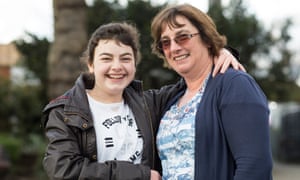
Chloe and her mum, Fabienne.


Chloe and her mum, Fabienne. Photograph: David Levene for the Guardian

Chloe was diagnosed with dilated cardiomyopathy when she was four weeks old. Her heart failed when she was 11 and still at primary school. She then had a stroke while waiting for a new heart, and when that first transplant failed to work, she was left close to death.


At that point, medics decided an artificial heart was the only option to keep her alive until another heart could be transplanted. André Simon, the director of heart and lung transplantation at the Royal Brompton and Harefield specialist hospitals, flew back early from a conference in the US to operate on Chloe last May.


What doctors said was an “extremely risky” surgery involved two medical firsts. Chloe was the first person in the world to be transferred from one hospital to another with her chest open and while on a life-saving extracorporeal membrane oxygenation machine, which delivers oxygen to a patient from outside the body. And Simon had to rebuild her heart’s atrium, or upper chamber, which had been removed during the failed transplant days earlier. A few weeks later, after her health stabilised on the artificial heart, she received the new heart.


Chloe’s mother, Fabienne Narbonne, said: “How they saved Chloe should be recognised for what it is – a miracle. Without the artificial heart she would be dead. It kept her alive for those crucial few weeks. By the time she got it she had run out of options.”


Simon, who has carried out all 13 artificial heart surgeries that have occurred in London hospitals, believes the success of Chloe’s operation should prompt other specialists to consider the devices for more children.


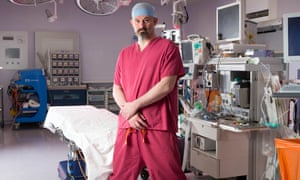
Heart surgeon André Simon.


Heart surgeon André Simon. Photograph: Richard Saker for the Observer

Chloe’s long waits for a transplanted heart have made her and her parents, Fabienne and Todd, passionate advocates for a change in the law on organ donation. Chronic shortages of donated hearts, lungs, livers and kidneys result in thousands of people a year dying while on the transplant waiting list. The family want the rest of the UK to follow the example of Wales, which in December 2015 switched from the opt-in system of organ donation to one of opt-out, where people have to specifically refuse consent for organ retrieval if they die.


Fabienne Narbonne said: “We owe eternal thanks to the donors and their families, without whom none of this would be possible as without donors there is no point being on a waiting list, however long you have to wait. We cannot thank them enough for offering Chloe a second chance at life, no words can explain how it feels and we have nothing but respect and gratitude for their gift of life.”


how it works

Only 1,690 people in the world have ever received an artificial heart. Of those, 34 were under 18. The oldest person in the UK to receive one was 62. Chloe is the third youngest in the world, after a nine-year-old and an 11-year-old in the US.


“Chloe is an example of a patient who would have been out of options without the 50cc total artificial heart,” said Michael Garippa, the president of SynCardia, the American firm which makes the devices. “It was the only device that could save her.”


Revealed: girl of 13 is first child in Britain to receive artificial heart

24 Şubat 2017 Cuma

Revealed: thousands of children at London schools breathe toxic air

Tens of thousands of children at more than 800 schools, nurseries and colleges in London are being exposed to illegal levels of air pollution that risk causing lifelong health problems, the Guardian can disclose.


A study identifies 802 educational institutions where pupils as young as three are being exposed to levels of nitrogen dioxide that breach EU legal limits and which the government accepts are harmful to health.


The research, commissioned by the mayor of London, Sadiq Khan, suggests thousands more children and young people are at risk from toxic air than previously thought.


Khan said the results were devastating and warned that it was the capital’s poorest children who were bearing the brunt of the air pollution crisis.


“It is an outrage that more than 800 schools, nurseries and other educational institutions are in areas breaching legal air pollution limits,” he said.


“This is an environmental challenge, a public health challenge but also – and no one talks about this – it is fundamentally an issue of social justice. If you are a poor Londoner you are more likely to suffer from illegal air.”


Khan called for the government to introduce a clean air act and for a diesel scrappage scheme to take polluting cars off the road quickly.


Sadiq Khan, the mayor of London


Sadiq Khan: ‘We are evaluating the success of other cities … Nothing is off the table.’ Photograph: Dinendra Haria/Rex/Shutterstock

The results show nearly double the number of schools than previously thought are affected by illegal levels of toxic air. A report that was kept secret by former mayor Boris Johnson revealed last year 433 primaries were exposed to dangerous levels of air pollution.


The new data shows 802 out of 3261 nurseries, primary and secondary schools and higher education colleges, are within 150 metres of nitrogen dioxide pollution levels that exceed the EU legal limit of 40µg/m3 (40 micrograms per cubic metre of air).


A third of state nursery schools in the capital (27), nearly 20% of primaries (360) and 18% of secondary schools (79) are in areas where toxic levels of nitrogen dioxide threaten children’s health. Of the further education colleges in the capital, 43% (30) were in areas of illegally toxic levels of NO2.


Nurseries map

Traffic is a major contributor to air pollution and there is growing concern about emissions from diesel vehicles, which contribute through the production of particulate matter and nitrogen oxides (NOx).


Dr Francis Gilchrist, consultant respiratory paediatrician at Royal Stoke University hospital, said it was known that children were particularly sensitive to air pollution and that lung damage had lifelong consequences.


“If something is not done about air pollution these issues are going to get worse and worse. There is definitely concern that air pollution is affecting children’s lungs – in particular it exacerbates respiratory illness, like asthma, and it predisposes children who are healthy to having repeated chest infections,” he said.


“If you damage your lungs in childhood you are likely to see these effects right through into adulthood, so there is a lifelong impact.”


Khan hopes the introduction of what he says is the world’s first ultra-low emission zone will cut toxic NO2 emissions from diesel vehicles by 50%. He plans to extend the zone to the north and south circular roads in the capital and has brought its introduction forward a year to 2019.


Last week he announced that drivers ofolder, more polluting cars will have to pay a £10 charge to drive in central London from October.


But other cities – including Paris, Athens and Madrid – have announced more dramatic measures, introducing car-free days and bans on diesel cars from city boundaries.


Khan said he had not ruled anything out. “We are evaluating the success of other cities. We are looking at their plans and nothing is off the table. But at the moment we think our plans are the most effective.”


London is not alone in the UK in facing an air pollution crisis. Khan and the leaders of four other cities badly affected by poor air quality – Leeds, Birmingham, Derby and Nottingham – had written to the government calling on them to do more to tackle the problem across the UK.


“It must be the case that air quality in other cities is having a similar impact and that it is worse in the most deprived parts of those cities. It must impact on schools in the same way, but they do not have the information that is now available in London. The government must take action,” he said.


The new research on schools, nurseries and colleges was based on modelling of data from 2013 carried out by experts from the environmental research group at King’s College London and Aether, the environmental data analysts.


The modelling is more precise than the government’s measurements, which the high court has condemned as overoptimistic.


School NO2 table

Judges told ministers last November they must cut the illegal levels of NO2 in dozens of towns and cities in the shortest possible time after ruling their plans to improve air quality were so poor they were unlawful.


The government has until April to come up with proposals to bring before the court.


The study adds to the pressure on ministers to tackle air pollution amid growing evidence of a toxic air crisis in parts of the UK. London breached its annual air pollution limits just five days into 2017.


Last month Khan issued the first “very high” air pollution alert with warnings displayed at bus stops, train stations and road signs across the capital.


This year Khan gave £250,000 to fund 50 air quality audits at the worst affected primary schools. The money will allow schools to work with local councils to introduce measures to protect pupils from toxic air and could include banning the most polluting cars at drop-off and pick-up time, clean air routes for walking to school, green barriers and moving entrances away from busy roads.


Air pollution causes up to 50,000 early deaths – 9,000 of these in the capital – and costs the country £27.5bn each year, according to a government estimate. MPs have called it a public health emergency.


Khan is calling for ministers to introduce a comprehensive diesel scrappage scheme to compensate drivers who bought diesel cars after being told they were more environmentally friendly than petrol vehicles. He also wants the government to introduce a clean air act “fit for the 21st century”.


“Today people scratch their heads that 30 or 40 years ago we knew smoking was bad for your health but no action was taken,” he said. “I don’t want a situation now where in 20 or 30 years’ time our children or grandchildren say knew about air quality but no action was taken.


“I want London to be the envy of the world in relation to air quality, to be the greenest city in the world.”


‘Some days it makes me consider leaving London’


The playground at Tachbrook nursery school in Pimlico, west London, has lots to keep a three-year-old happy at breaktime.


But, like other schools highlighted in the report, it is very close to a busy main road. HGVs, cars, taxis and buses plough up and down the Embankment nearby, and so the school is subject to NO2 pollution levels above EU legal limits.


Headteacher Elizabeth Hillyard said she had signed a petition along with other headteachers in the capital urging more to be done about toxic air.


“Air pollution has bad effects on health and it needs to be addressed and all the heads in Westminster have signed the petition,” she said.


Like other schools, Tachbrook does what it can to protect children, including having a fence around the playground. Kate Lyons, a parent collecting her three-year-old son, said the issue was a concern.


“We are generally concerned about the air in this area,” Lyons said. “You can feel it and taste it. My little boy loves playing in the playground at school, and it does worry me.


“We live nearby and sleep with our windows closed because of the pollution. We used to live in Edinburgh and you can feel the difference living here in London and some days it is something that makes me consider leaving.”


Additional reporting by Caelainn Barr


Revealed: thousands of children at London schools breathe toxic air

13 Kasım 2016 Pazar

Revealed: dozens of children still treated on adult psychiatric wards

Dozens of children and young people with mental health problems are still being treated on wards containing adults with sometimes severe psychiatric problems despite ministers having supposedly outlawed the practice in 2010, the Guardian can reveal.


Mental health campaigners condemned the persistence of the problem and said it was “completely unacceptable” for vulnerable minors to be subjected to what many find a “terrifying” experience. The Liberal Democrat health spokesman Norman Lamb, who was the minister for care, including mental health care, in the coalition government, said putting children on adult wards was “scandalous” and must be ended at once.


Official figures from mental health hospitals collated by NHS Digital, the health service’s statistical arm, show that in July 47 children and young people aged 17 or under were treated on adult psychiatric wards. Of those 21 were aged 17, another 18 were 16-year-olds and the other eight were aged 15 or under. There is particular anxiety that under-16s are still receiving treatment in adult settings as the government made clear six years ago that this should never happen.


Gordon Brown’s Labour administration placed the “age-appropriate environment duty” on NHS mental heath trusts in April 2010 in a bid to end a practice that parents, charities, MPs and the children’s commissioner for England had criticised as unpleasant and traumatising for children.


“The simple truth is that this has to end completely. It’s scandalous that the practice continues. It is unsafe and wrong. There must be a clear and unequivocal commitment from this government to eradicate the practice completely without delay”, said Lamb.


The duty legally obliges managers of mental health units, under section 131A of the Mental Health Act 1983, to ensure that “the patient’s environment in the hospital is suitable having regard to his age (subject to his needs)”. While it allows 16- and 17-year-olds to still be looked after on adult wards occasionally in “exceptional circumstances”, such as if they need to be admitted as an emergency, it forbids totally under-16s ever being treated there.


The figures, which the Guardian requested from NHS Digital, cover January to July this year. A total of 39 under-18s were treated on adult wards in that time, though some may have shown up in the figure for more than one month, NHS Digital said. One hundred and thirty 17-year-olds and 90 children aged 16 were also treated during that time. If the same trend is maintained in the rest of the year that would result in a total of 446 under-18s being treated there, which would the highest for many years. A total of 391 children were treated in such wards in 2014-15.


Under-18s spent 1,938 days on adult mental health wards between them during April and June, almost double the 1,102 days they spent there from January to March. Most of those occurred in the north of England, which saw such bed days soar from 35 in the first three months of the year to a massive 1,405 in the second quarter. In that same period there were 225 such bed days in the Midlands and East of England (down 650 the previous quarter), 185 in London (down from 220) and 125 in the south of England (down from 195), NHS Digital’s data show.


Responding to the figures, the health secretary, Jeremy Hunt, said the number of children in psychiatric wards had fallen by 60% since 2010 and such places should be used rarely. He is set to make a major speech on children’s mental health care on Tuesday, weeks after condemning adolescent and child mental health services as the NHS’s most glaring area of failure to meet need.


“However, this type of care should be an absolute last resort, once all other avenues have been exhausted,” Hunt said. “But to help ease demand, we recently opened 50 new beds, increasing the total number to the highest there has ever been.” Those 50 took the NHS’s supply of beds in children and young people’s mental health services up to 1,442, though the continued use of adult wards suggests that is not enough.


Sarah Brennan, the chief executive of the charity Young Minds, said: “It’s completely unacceptable that vulnerable children are still being treated on adult mental health wards, six years after the government changed the law to stop this from happening. Young people often find it terrifying to be placed alongside much older patients, and say that it adds to their distress rather than helping them.”


Meanwhile, new research to be released on Monday reveals huge frustration among parents of children and young people with mental health conditions at the difficulty of obtaining help for them.


Two-thirds (66%) of such parents surveyed by Young Minds complained that their child had to wait a long time to get treatment, and almost half (49%) said no one believed them when they first raised concerns about their offspring’s mental welfare.


Two in five (41%) of the 316 parents said thresholds for accessing treatment were too high, which meant their child was deemed not ill enough to warrant NHS care, while 36% had paid a private counsellor, psychologist or other therapist to help their child because NHS care was unavailable.


“Not only are many thousands of young people suffering with mental health problems but their parents are suffering too. They feel helpless, unheard and are desperate to help their young people but don’t have the knowledge or tools”, said Emma Rigby, chief executive of the Association for Young People’s Health.


Revealed: dozens of children still treated on adult psychiatric wards

9 Ekim 2016 Pazar

Untold grief: the heartbreaking impact of stillbirth is revealed in new documentary

It remains one of society’s few taboo subjects, but now a documentary hopes to explain the impact of stillbirth and bring greater understanding to an experience that often remains hidden.


Still Loved, the first feature-length film to tackle the issue, will be screened at selected cinemas throughout the UK in October. Its director, Debbie Howard, hopes that the film will not only speak to those who have suffered a loss but strip away some of society’s preconceptions about how we deal with these deaths.


“I had two different friends who lost babies and I was really affected by the profound effect it had on them,” she says. “Initially, I made a short fictional film on the subject but as I did the research and spoke to families I realised there was so much to say that it would be better as a documentary. I knew the subject matter was challenging but I felt very passionately about giving parents a voice.”


Shot over three years, the often harrowing but ultimately hopeful documentary follows a handful of parents as they discuss their experiences with an at times brutal candour, laying bare both how it feels to be told that your child has died and, crucially, how and if you can find your way back to some semblance of normality. There are scenes of despair but also of bittersweet joy as families remember their babies in moving ceremonies or conceive again.


“One of the things no one ever says about stillbirth is how it affects every area of your life,” says Mel Scott, an occupational therapist from Somerset whose baby, Finley, died during labour. “I felt really isolated after Finley died. My husband had to go back to work and I was on maternity leave but with no baby.”


Making it worse was the assumption that the grief would soon pass. “It makes me cross when people say grief has a time and you should get over it,” she says. “Life might get bigger and brighter around the pain but it’s still there.”


Lou Evans, a physiotherapist from Derbyshire, agrees. “When Lauren died I wanted the whole world to know how much pain I was inand how much I continued to be in even as the years passed,” she says. “A lot of my friends and even my husband, Matt, couldn’t always understand that. They didn’t see why the time I spent at Lauren’s grave or working with the local branch of [stillbirth charity] Sands was therapeutic. I do think people sometimes wanted me to be quiet.”


That opinion – that those who have experienced stillbirth should grieve in silence – is still common, and Howard believes it is why she initially struggled to get the film off the ground.


“I had one very established documentary maker tell me I absolutely think this film should be made but nobody will want to show it and nobody will watch it,” she says. “It was even tough getting the cinemas on board – they would say there’s no interest, and I’d get quite annoyed and write back saying how do you know that? I didn’t think it was true.”


Michelle Hemmington, whose son, Louie, died as a result of medical negligence, believes that Howard has got the balance between honest and hopeful just right. “The film’s strength is that it isn’t overly sad,” she says. “The subject is difficult but the emotions are positive.”


The film is similarly strong in its depiction of fathers, who are often ignored in the rush to ensure that the mother is cared for. “One of the big problems is that there isn’t really anything for dads,” says Matt Grove, who admits he struggled on returning to work as a police officer. “After Ben died I went for counselling, and people were almost surprised that there was a dad there.”


Grove hopes Still Loved will reach a wide audience. “If people take one thing away it is that they should always check the baby’s movement and not worry about bothering the doctors if they feel something is wrong,” he says. “If this film manages to save lives, it will be worth it.”


Still Loved is being screened as part of International Pregnancy and Infant Loss Awareness Month.


Untold grief: the heartbreaking impact of stillbirth is revealed in new documentary

3 Ekim 2016 Pazartesi

Revealed: MRSA variant found in British pork at Asda and Sainsbury"s

Meat produced from British pigs has been shown to be infected with a livestock strain of MRSA, the Guardian can reveal, raising concerns that the UK is on the brink of another food scandal.


Tests on a sample of 97 UK-produced pork products from supermarkets show that three – sold at Asda and Sainsbury’s – were contaminated with the superbug strain which can cause serious health problems.


The Guardian, working with the Bureau of Investigative Journalism (BIJ), has also established that a loophole in import regulations is leaving an open door for MRSA CC398-infected live pigs from countries such as Denmark, where the disease is rife.


The findings have serious implications for human health. MRSA CC398 is a potentially deadly bacteria which can be resistant to even the strongest antibiotics. It is less harmful to humans than the MRSA bug that kills about 300 people in hospitals in England and Wales each year. But it causes unpleasant persistent infections and can seriously harm people with compromised immune systems, such as those already suffering other illness.


It is known to have been responsible for at least six deaths in Denmark, though that is likely to be the tip of the iceberg. People can contract the disease from infected meat, and from infected animals.


The superbug, like other foodborne germs, is killed by thorough cooking – but it can be passed on through lapses in hygiene. Workers on pig farms can also catch the disease from infected animals and pass it on to other people.


Without action to halt it, the spread of the bug could follow the pattern in Denmark, where MRSA CC398 became established over a decade, now afflicts about two-thirds of pig farms and is viewed as a major public health crisis, with 12,000 people believed to have contracted it. Currently, there is no screening programme for MRSA CC398 on British farms.


Prof Tim Lang, of the Centre for Food Policy at City University in London, said: “If we don’t have tight infection control and we don’t try to control the movement of live animals, infection can spread. The British are up in arms about the movement of people, but the EU also has a large movement of animals. We need biosecurity, we need to tighten up this livestock movement. You may get cheap meat, but in the long term it’s going to add to your public health problems.”


Prof Erik Millstone of Sussex University added that the emergence of antibiotic-resistant superbugs from agriculture was “a huge threat to human health” and that there was a clear risk that MRSA CC398 could spread among British livestock herds and to people. He anticipated that the government would downplay this risk but warned: “While the [government] tries its customary tactics of blaming the victim, it won’t work.”


The tests were carried out by Dr Mark Holmes, director of studies in clinical veterinary medicine at Churchill College, Cambridge University, and commissioned by the Alliance to Save Our Antibiotics, founded by the Soil Association, Compassion in World Farming and Sustain. Two samples of minced pork from Asda and one from Sainsbury’s were found positive.


Last year, tests by the Guardian on 100 samples of pork in UK supermarkets, including a mix of imported and UK-bred meat, found nine contained the superbug. However, all but one of the infected products were of Danish origin, the other Irish. That investigation marked the first time MRSA CC398 had been publicly found in products in UK supermarkets.


Today’s follow-up tests are the first to name supermarkets whose UK-produced pork has been contaminated with the superbug. It is not possible to say whether these products originally came from imported pigs, or whether UK pig herds have been infected through imports. Either way, imports are likely to be the main agent spreading the disease, as the UK’s pork production has remained relatively free from MRSA CC398 until now, and the main method of spreading the disease is from animal-to-animal contact on farms.


At least one regular Danish supplier of imported pigs to the UK was found to be contaminated with the drug-resistant bacteria in 2014, the Bureau of Investigative Journalism has established. The company –Breeding Centre Rønshauge A/S – refused to say how many pigs it had exported to the UK and whether they could have been contaminated. But official export figures show that the company supplied 41 pigs to the UK in July this year, 65 in 2013 and 16 in 2012.


But the UK government does not screen for the infection in imported animals, citing a low risk of serious illness. The main initial effect is a nasty skin infection that is disfiguring, unpleasant and highly infectious, but not fatal.


Emma Rose, from the Alliance to Save Our Antibiotics, said: “It is extremely worrying to find LA [livestock-associated]-MRSA in British-produced pork.”


“Scientists are now warning that the extensive MRSA reservoir in animals could ultimately lead to a pandemic spread in the human population. LA-MRSA is able to cause serious and potentially fatal infections in humans, and as the bacteria is resistant to antibiotics, it is extremely difficult to treat. What’s more, even more dangerous variations are emerging as the superbug evolves.”


The Department for Environment, Food and Rural Affairs (Defra) said: “Livestock-associated MRSA is not the same as MRSA strains that can cause healthcare-associated infections and if meat is handled and prepared properly the risk to people is low. Defra and the National Pig Association recommend that pigs imported to Britain are screened for LA-MRSA.


“The government is reviewing options for surveillance, which will be proportionate to the very low health risk posed by livestock-associated MRSA.”


Asda declined to comment on the test findings. Sainsbury’s told the Guardian that MRSA CC398 was “very uncommon” in British pork and that it worked with farmers “to ensure antibiotics are used responsibly and are taking advice from leading industry experts”.


The rise of the CC398 variant has been linked to the overuse of antibiotics in factory farming, where often cramped and dirty conditions allow disease to flourish and farmers become dependent on frequent doses of antibiotics.


The threat from imports of live animals has been overlooked, according to experts. When animals are imported, they have to undergo screening for a variety of other diseases, but screening for MRSA CC398 is purely voluntary. As a result, there is no way of knowing how many infected animals may have been brought to Britain.


Watch the Guardian’s investigation into how intensive pig farming is accelerating an antibiotic crisis.

There have been at least two confirmed cases of the disease found at UK pig farms, one of them in Northern Ireland and the other in eastern England. However, as no systematic tests are carried out on UK farms, it is impossible to know how many may harbour the bug.


Defra does not collate statistics on the number of farm animals imported, but figures from the Danish government show the UK imported more than 3,000 breeding pigs from the country in the past six years, including 916 in 2013, 598 the following year and 283 last year.


In the last three years, the UK food industry has been rocked with revelations from the Guardian of campylobacter in chicken, which can cause serious illness, stronger versions of salmonella with greater resistance, and of drug-resistant forms of E coli, recently found in one in four supermarket chickens, that thwart all but the strongest antibiotics. Most of the problems are thought to be down to the pressure towards factory farms producing the cheapest possible meat.


Revealed: MRSA variant found in British pork at Asda and Sainsbury"s

8 Eylül 2016 Perşembe

"Postcode lottery" revealed in NHS care

Patients with dementia, diabetes and learning disabilities are being let down by their local health services in many parts of England, new figures show.


A postcode lottery of care across the country has been highlighted as new performance data shows that while some health bodies are performing well, neighbouring organisations are falling short.


More than half (57%) of local health bodies in England are not performing well enough on dementia, 71% are classed as “needs improvement” for diabetes care and 92% need to improve care for people with learning disabilities, the figures show.


The figures, released by NHS England, show that many clinical commissioning groups (CCGs) have been classed as needing improvement in the different aspects of care.


They have been released as part of a package of measures announced by the health secretary, Jeremy Hunt, to improve IT and digital services in the NHS.


Hunt said patients would be able to compare how well their local health service performed against others for key areas including cancer, dementia, diabetes, mental health, learning disabilities and maternity care.


Information on how well each local trust performs on dementia, diabetes and learning disability services was published on the MyNHS website, with more information on other services to be added in the autumn.


On dementia care, CCGs are rated on the number of patients are receiving a formal diagnosis and whether people with dementia are receiving annual reviews of their care plan in primary care.


Of England’s 209 CCGs, 120 need to improve their performance for these aspects of care.


Jeremy Hughes, the chief executive of the Alzheimer’s Society, said: “Over the last few years, our health system has made strides to improve dementia diagnosis rates, but with 45% of CCGs still lagging behind the national ambition, there is a significant way to go.


“People with dementia in York should be getting the same support as those in Bradford – but with diagnosis rates varying by as much as 46.1% across the country, too many people remain in the dark, unable to access the vital information, treatments and non-medical support a diagnosis can bring.


“Given the progressive nature of dementia, which means a person’s needs become more severe over time, the focus on care plan reviews is essential. However, a care plan review must be matched with support on the ground and measures should develop to assess how meaningful these plans are.”


Prof Alistair Burns, NHS England’s national clinical director for dementia, said: “Awareness of dementia is at its highest and we believe that timely diagnosis of dementia allows people to access the emotional, practical and financial support that brings. We have increased the diagnosis rate across the country so now more than 440,000 people have a formal diagnosis of dementia and can benefit from post-diagnostic support.


“NHS England today launched a support package for local areas if they feel they need extra help following the publication of the Improvement and Assessment Framework.”


Meanwhile, 149 of 209 CCGs were rated as needing to improve their care for diabetes patients based on the number of people affected who get the recommended checks each year and the proportion of patients who attend an education course about their disease.


Prof Jonathan Valabhji, NHS England’s national clinical director for obesity and diabetes, said: “People with diabetes, type 1 and type 2, have the best care and outcomes when they receive structured education early following diagnosis and go on to regularly receive and achieve all of the Nice [National Institute for Health and Care Excellence]-recommended checks and targets.


“This is part of our wider programme to improve care for everyone with diabetes including support to improve achievements of the Nice recommendations, attendance at structured education and a reduction in amputations and improve specialist diabetes support during inpatient stays.”


Care for people with learning disabilities was rated on the proportion of patients receiving annual check-ups and their ability to keep patients out of hospital. No CCG was given the highest rating of “top performing” and 193 out of 209 were deemed to “need improvement”.


An NHS spokeswoman said: “We have seen significant increases in the numbers of people both being discharged from hospital and having their care and treatment reviewed in the last year, but it’s no secret that significant improvement needs to be made across England.


“The real difference will be made over the coming months and years as local councils and NHS bodies implement their response to Building the right support, the three-year, cross-system plan to ensure people with a learning disability and/or autism have greater say in the care and support they receive.”


A Department of Health spokeswoman said: “Work is well under way to help services around the country make progress in key areas, backed with funding to help prevent diabetes, find a cure for dementia and provide suitable supported accommodation for people with learning disabilities.


“All this is shaped by world-leading transparency, focusing efforts where improvements are needed and helping us learn from the best services.”


"Postcode lottery" revealed in NHS care

28 Mayıs 2014 Çarşamba

Sole reported US Mers case revealed as misdiagnosis by CDC

Well being officials on Wednesday backtracked on an earlier report that a mysterious Middle East virus had apparently spread from one man or woman to another in the United States.


Extra testing has shown the virus did not, in reality, spread to an Illinois man from a traveler he’d met in a business meeting.


The Centers for Disease Management and Prevention announced the revised diagnosis on Wednesday.


This month, a medical professional who traveled from Saudi Arabia to Indiana was identified as the 1st US situation of Middle East respiratory syndrome, or Mers. Officials examined people he met, and two preliminary exams detected antibodies towards Mers in the Illinois man.


No other contacts tested optimistic.


On 17 Might, CDC officials referred to as a information conference to announce the test results. They mentioned the Illinois guy was not sick and exams for presence of the real virus in him had been unfavorable, but the blood tests that detected antibodies to the virus had been enough grounds to get action. Overall health officials started testing men and women he had been in get in touch with with and asked the man to dress in a mask and avoid crowds.


Because then, other exams – which includes a more definitive 1 that will take 5 days to full – have discounted that obtaining, CDC officials said Wednesday.


Asked if they had jumped the gun with the earlier announcement, one particular official said the CDC will proceed to err on the side of caution if it may stop potential spread of a dangerous new disease. “We cannot wait till we have all the exams back in buy to take public health action,” mentioned Dr David Swerdlow, who is managing the CDC’s response to the latest Mers reports.


It really is not clear what brought on the earlier false positive test outcomes. It truly is achievable the tests reacted to the antigen for a virus with similarities to Mers, officials explained.


Well being officials have been relieved to get the new final results. They had believed the virus have to have spread from the Indiana guy to the Illinois guy throughout a business meeting that concerned no closer speak to than a handshake. That recommended it may possibly spread a small easier than some had thought – in the Middle East, the virus has spread much more intimately, to family members or well being care workers caring for a Mers patient.


CDC officials stated they even now think it really is attainable the virus can spread in an extended, encounter-to-face enterprise meeting. But “it is a minor reassuring that this gentleman is not a case,” Swerdlow said.


Mers has sickened much more than 600, primarily, in the Middle East, and killed much more than 175. The Mers germ belongs to the coronavirus household that consists of the frequent cold and Sars, which caused some 800 deaths in 2003.


Sole reported US Mers case revealed as misdiagnosis by CDC

4 Şubat 2014 Salı

Revealed: the fattest towns and cities in England

Copeland in west Cumbria is the fattest neighborhood authority region (75.9%). Other regions where folks are risking their wellness incorporate Blackpool (72.1%), Milton Keynes (72.5%), County Durham (72.5%), Fenland in Cambridgeshire (72.four%), Bolsover in Derbyshire (72.five%), East Lindsey in Lincolnshire (73.8%), Doncaster in South Yorkshire (74.4%) and Sedgemoor in Somerset (73.4%).


Professor Kevin Fenton, director of wellness and wellbeing at Public Well being England, mentioned: ”Many neighborhood authorities are previously working challenging to reduce weight problems amounts and these new information will assist all neighborhood areas check their progress in tackling these lengthy-standing issues.


”People who are overweight or obese have an improved risk of establishing kind two diabetes, heart condition and certain cancers.


”Excess excess weight can also have an effect on self-esteem and psychological wellness. Total wellness troubles connected with being overweight or obese cost the NHS above £5 billion every 12 months.


”There is no silver bullet to minimizing obesity it is a complicated issue that needs action at personal, household, neighborhood and nationwide levels. We can all perform our part in this by eating a healthful, balanced diet plan and becoming more energetic.”


Percentage of obese or obese people, by regional authority


Adur 62.2%


Allerdale 66.5%


Amber Valley 69.%


Arun 66.eight%


Ashfield 69.6%


Ashford 67.4%


Aylesbury Vale 64.five%


Babergh 66.4%


Barking and Dagenham 63.five%


Barnet 55.six%


Barnsley 70.5%


Barrow-in-Furness 67.%


Basildon 71.seven%


Basingstoke and Deane 63.four%


Bassetlaw 69.2%


Bath and North East Somerset 55.seven%


Bedford 60.9%


Bexley 66.one%


Birmingham 64.%


Blaby 66.5%


Blackburn with Darwen 67.9%


Blackpool 72.1%


Bolsover 72.5%


Bolton 60.one%


Boston 69.9%


Bournemouth 58.7%


Bracknell Forest 66.2%


Bradford 67.seven%


Braintree 68.2%


Breckland 66.7%


Brent 54.3%


Brentwood 67.%


Brighton and Hove 49.two%


Bristol, City of, 59.1%


Broadland 67.three%


Bromley 65.%


Bromsgrove 64.9%


Broxbourne 70.two%


Broxtowe 64.four%


Burnley 63.6%


Bury 68.two%


Calderdale 66.three%


Cambridge 54.3%


Camden 50.one%


Cannock Chase 62.five%


Canterbury 54.two%


Carlisle 68.four%


Castle Point 72.eight%


Central Bedfordshire 69.1%


Charnwood 59.2%


Chelmsford 62.4%


Cheltenham 60.two%


Cherwell 63.two%


Cheshire East 61.2%


Cheshire West and Chester 68.5%


Chesterfield 67.seven%


Chichester 66.two%


Chiltern 60.five%


Chorley 69.1%


Christchurch 57.2%


City of London 61.9%


Colchester 64.five%


Copeland 75.9%


Corby 70.2%


Cornwall 69.eight%


Cotswold 62.7%


County Durham 72.five%


County of Herefordshire 66.8%


Coventry 56.5%


Craven 65.7%


Crawley 66.%


Croydon 62.one%


Dacorum 64.4%


Darlington 62.9%


Dartford 68.1%


Daventry 67.3%


Derby 64.one%


Derbyshire Dales 62.five%


Doncaster 74.four%


Dover 63.two%


Dudley 70.2%


Ealing 57.three%


East Cambridgeshire 65.%


East Devon 61.3%


East Dorset 64.three%


East Hampshire 63.5%


East Hertfordshire 65.four%


East Lindsey 73.eight%


East Northamptonshire 69.%


East Riding of Yorkshire 67.7%


East Staffordshire 71.6%


Eastbourne 64.six%


Eastleigh 67.9%


Eden 68.eight%


Elmbridge 56.7%


Enfield 64.2%


Epping Forest 63.one%


Epsom and Ewell 55.six%


Erewash 69.2%


Exeter 52.8%


Fareham 64.8%


Fenland 72.four%


Forest Heath 65.1%


Forest of Dean 66.9%


Fylde 69.1%


Gateshead 61.9%


Gedling 67.9%


Gloucester 65.3%


Gosport 72.9%


Gravesham 65.9%


Fantastic Yarmouth 68.5%


Greenwich 64.4%


Guildford 55.2%


Hackney 48.seven%


Halton 70.two%


Hambleton 67.three%


Hammersmith and Fulham 49.seven%


Harborough 70.three%


Haringey 59.%


Harlow 66.%


Harrogate 64.7%


Harrow 59.%


Hart 61.%


Hartlepool 68.five%


Hastings 65.3%


Havant 67.eight%


Havering 63.three%


Hertsmere 61.two%


Substantial Peak 57.6%


Hillingdon 67.2%


Hinckley and Bosworth 69.6%


Horsham 63.six%


Hounslow 62.eight%


Huntingdonshire 69.one%


Hyndburn 67.5%


Ipswich 65.one%


Isle of Wight 64.9%


Isles of Scilly 64.four%


Islington 53.six%


Kensington and Chelsea 45.9%


Kettering 69.eight%


King’s Lynn and West Norfolk 70.3%


Kingston on Hull, City of 60.2%


Kingston upon Thames fifty five.1%


Kirklees 61.7%


Knowsley 67.three%


Lambeth 51.eight%


Lancaster 58.2%


Leeds 62.2%


Leicester 57.%


Lewes 69.3%


Lewisham 61.2%


Lichfield 66.seven%


Lincoln 57.6%


Liverpool 67.2%


Luton 59.%


Maidstone 66.two%


Maldon 70.%


Malvern Hills 60.three%


Manchester 62.seven%


Mansfield 70.five%


Medway 66.1%


Melton 64.%


Mendip 65.seven%


Merton 58.three%


Mid Devon 64.one%


Mid Suffolk 67.six%


Mid Sussex 62.seven%


Middlesbrough 68.four%


Milton Keynes 72.five%


Mole Valley 62.five%


New Forest 68.six%


Newark and Sherwood 64.eight%


Newcastle upon Tyne 60.3%


Newcastle-under-Lyme 63.4%


Newham 56.eight%


North Devon 64.1%


North Dorset 64.%


North East Derbyshire 67.2%


North East Lincolnshire 66.2%


North Hertfordshire 60.%


North Kesteven 65.5%


North Lincolnshire 70.one%


North Norfolk 68.three%


North Somerset 61.9%


North Tyneside 70.1%


North Warwickshire 67.9%


North West Leicestershire 69.%


Northampton 63.7%


Northumberland 71.9%


Norwich 57.8%


Nottingham 60.seven%


Nuneaton and Bedworth 64.five%


Oadby and Wigston 62.one%


Oldham 69.6%


Oxford 55.9%


Pendle 67.seven%


Peterborough 65.5%


Plymouth 60.%


Poole 57.6%


Portsmouth 57.9%


Preston 56.2%


Purbeck 69.4%


Reading through fifty five.three%


Redbridge 55.four%


Redcar and Cleveland 70.9%


Redditch 65.9%


Reigate and Banstead 64.%


Ribble Valley 64.4%


Richmond on Thames 47.6%


Richmondshire 63.two%


Rochdale 68.6%


Rochford 71.3%


Rossendale 69.one%


Rother 63.9%


Rotherham 65.3%


Rugby 65.three%


Runnymede 62.eight%


Rushcliffe 58.3%


Rushmoor 59.6%


Rutland 65.6%


Ryedale 73.seven%


Salford 63.three%


Sandwell 66.three%


Scarborough 71.one%


Sedgemoor 73.4%


Sefton 68.7%


Selby 71.%


Sevenoaks 65.three%


Sheffield 59.9%


Shepway 66.%


Shropshire 62.five%


Slough 64.1%


Solihull 63.8%


South Bucks 64.5%


South Cambridgeshire 64.seven%


South Derbyshire 68.4%


South Gloucestershire 59.2%


South Hams 60.9%


South Holland 72.2%


South Kesteven 68.2%


South Lakeland 65.8%


South Norfolk 61.two%


South Northamptonshire 68.eight%


South Oxfordshire 60.five%


South Ribble 66.one%


South Somerset 60.seven%


South Staffordshire 69.five%


South Tyneside 68.2%


Southampton 64.eight%


Southend-on-Sea 64.four%


Southwark 56.three%


Spelthorne 63.four%


St. Albans 59.6%


St. Edmundsbury 66.%


St. Helens 67.5%


Stafford 69.6%


Staffordshire Moorlands 70.%


Stevenage 62.7%


Stockport 65.9%


Stockton-on-Tees 63.six%


Stoke-on-Trent 66.five%


Stratford-on-Avon 65.7%


Stroud 60.four%


Suffolk Coastal 61.6%


Sunderland 68.9%


Surrey Heath 68.one%


Sutton 62.five%


Swalee 68.8%


Swindon 70.four%


Tameside 69.two%


Tamworth 70.seven%


Tandridge 62.9%


Taunton Deane 65.two%


Teignbridge 59.five%


Telford and Wrekin 70.2%


Tendring 69.8%


Test Valley 66.6%


Tewkesbury 69.3%


Thanet 68.four%


Three Rivers 63.9%


Thurrock 70.8%


Tonbridge and Malling 65.two%


Torbay 66.eight%


Torridge 63.four%


Tower Hamlets 47.2%


Trafford 59.7%


Tunbridge Wells 59.four%


Uttlesford 63.four%


Vale of White Horse 63.%


Wakefield 69.six%


Walsall 68.9%


Waltham Forest 54.6%


Wandsworth 52.two%


Warrington 70.%


Warwick 62.seven%


Watford 57.eight%


Waveney 66.%


Waverley 59.9%


Wealden 63.%


Wellingborough 70.two%


Welwyn Hatfield 52.seven%


West Berkshire 65.five%


West Devon 63.five%


West Dorset 59.6%


West Lancashire 63.one%


West Lindsey 68.six%


West Oxfordshire 62.four%


West Somerset 61.seven%


Westminster 52.6%


Weymouth and Portland 61.3%


Wigan 65.3%


Wiltshire 61.6%


Winchester 58.five%


Windsor and Maidenhead fifty five.9%


Wirral 66.4%


Woking 60.5%


Wokingham 57.four%


Wolverhampton 69.eight%


Worcester 65.3%


Worthing 61.4%


Wychavon 70.eight%


Wycombe 66.3%


Wyre 70.9%


Wyre Forest 63.5%


York 58.4%


Revealed: the fattest towns and cities in England