schools etiketine sahip kayıtlar gösteriliyor. Tüm kayıtları göster

11 Mayıs 2017 Perşembe

How schools are dealing with the crisis in children’s mental health

It could easily be a child’s bedroom. In the centre is a large mat, while a selection of dolls and soft toys line the walls. It is hard to believe that this nurture point in Plaistow, east London, aimed at helping children deal with their emotional problems, was once a school staff room.


Youngsters aged five to 11 can drop in three days a week and speak to a trained counsellor from the charity Place2Be. But as well as worries over friendships, bullying or problems at home, headteacher Paul Harris reveals that a growing number of children are suffering from anxiety as a result of Brexit and the election of Donald Trump.


Fortunately, pupils at Curwen primary and its sister school, Kensington primary in Manor Park, can speak to a counsellor before their problems become overwhelming.


The lunchtime drop-in – known as Place2Talk – is part of a package of support services offered by the charity, which includes one-to-one counselling and play therapy for children suffering from more serious mental health issues.


Working with 282 primaries and 50 secondaries, the charity provides early intervention support in schools to children who are troubled and unhappy.


The charity is not the only one working with schools. The Art Room charity supports five- to 16-year-olds who are experiencing emotional and behavioural difficulties.


There are eight Art Rooms in schools in Oxfordshire, London and Edinburgh, supporting 500 children a week by offering art as therapy to increase their self-esteem, self-confidence and independence.


It is this kind of partnership that Theresa May, the prime minister, said in January that she wanted to see more of. She said then that one of her priorities was children’s mental health, which has long been recognised as in crisis.


Statistics show that one in 10 children – or an average three children in every classroom – has a diagnosable mental health problem, and that 75% of mental illness in adults has its roots in childhood.


The prime minister said, before the election was announced, that she wanted every secondary school to be offered mental health first aid training, as well as new ways introduced to strengthen links between schools and NHS staff alongside more online support services for children and young people. May’s recognition of the crisis in children and adolescent mental health has been welcomed. But headteachers say that cuts of £3bn to school budgets threaten existing in-school care and want mental health funding ringfenced.


Harris, who is also executive head of three other primaries in the London borough of Newham, says the proposed school funding cuts mean losing the service of 17 teaching staff: “I believe support needs to start young in primary schools to build resilience before children go on to secondary.


“Cash needs to be earmarked for this from health budgets, otherwise we will lose this vital service.”


Celine Bickerdike: ‘Teachers had to believe you had a problem before you could access the school’s services’



Celine Bickerdike


Celine Bickerdike is a young champion for the mental health charity Time to Change

Celine Bickerdike, 19, is an apprentice in Leeds and has secured a university place to study history. She has had anxiety and depression since aged 12. But it was five years before she sought professional help.


“My first experience of being judged because of having a mental health problem was when some girls took my antidepressants from my bag and started reading out the side-effects in front of everyone. They humiliated me. How can people be so cruel?


“There was some school mental health support, but teachers had to believe you had a problem before you could access it. Most of my teachers thought I was OK – one even said that I was stressed because I wasn’t working hard enough. I broke down during my mocks, which was when my history teachers, who I was really close to, told me to go and see a doctor.


“I put an enormous amount of pressure on myself to get the grades I needed for university. I was anxious about the future – and failure.


“I didn’t get into the university I wanted and this really took its toll. I felt completely lost. All my friends were at university. I had gone from having a promising future to being on job seeker’s allowance.


“I think initially, my parents didn’t take my mental health problems seriously; they thought it was just ‘hormones’. I’d always been a bit of a worrier so they assumed that my problems were small because of that.


“Nowadays I find it easier to talk to people about my mental health because I’m more confident and don’t doubt my condition as much. People’s conditions should be believed as soon as they develop so that it’s easier to prevent them worsening like mine did.”


How schools are dealing with the crisis in children’s mental health

1 Mayıs 2017 Pazartesi

Schools cutting mental health services to plug funding gaps, warn MPs

Cash-strapped schools are cutting mental health services such as counsellors and pastoral provision as they try to cover funding gaps, two influential groups of MPs have said.


The health and education select committees joined forces for the inquiry, which called on the government to look at the impact of budget cuts on mental health services for children.


Services to support wellbeing are “the first thing to go” when budgets are under pressure, the inquiry heard. The government announced £1.25bn in additional funding for young people’s mental health in 2015, but almost 80% of primary school headteachers responding to a survey said a lack of money prevented them from providing mental health support in schools such as counsellors.


The MPs wrote: “We know that more than half of all mental ill health starts before the age of 15 and it is therefore a false economy to cut services for children and young people.”


There are “unacceptable” variations in the level of access children have to mental health services because some parts of the country lack strong links between schools and mental health providers, the inquiry found.


The education minister, Edward Timpson, told the inquiry a pilot scheme increasing collaboration between schools and mental health services was being expanded to 1,200 more schools. The MPs called on the government to “commit resources to establish partnerships with mental health services across all schools and colleges”.


The issue of social media was of particular concern for the inquiry, which found that it could help and harm young people’s mental wellbeing. Witnesses told the inquiry that young people tended to contact support services such as Childline on the internet rather than by phone, and social media could help connect young people, especially those with rare conditions, to supportive communities. But cyberbullying and sleep deprivation due to late-night screen use concerned witnesses to the inquiry.


Schools should teach pupils how to make sensible decisions around social media, the inquiry determined, as part of equipping them for the modern world. But they should also teach parents about social media, especially about its impact and that of screen time more generally on children’s sleep.


“Parents have a key role to play in limiting screen time, reducing sleep deprivation and preventing exposure to harmful online activity,” the MPs wrote.


Ofsted inspections could play a key role in raising the importance of mental health and wellbeing in schools, the MPs said, but witnesses said thewatchdog was too focused on academic achievement, with only one-third of Ofsted reports specifically referring to the mental health and wellbeing of pupils. The report called on Ofsted’s chief inspector, Amanda Spielman, who took over in January, to look at ways of making mental wellbeing more prominent “as a matter of priority”.


An Ofsted spokeswoman said: “Personal development, behaviour and welfare of pupils is one of our key judgments in school inspections and is graded in every section five inspection. As part of this, inspectors already evaluate the experience and wellbeing of particular individuals and groups of pupils, including those with mental health needs.


“Ofsted has also started discussions with the CQC [Care Quality Commission] about some future joint survey work in relation to the government’s proposals to transform mental health support for children and young people.”


Sarah Brennan, the chief executive of mental health charity YoungMinds, said: “We are facing a mental health crisis in our classrooms and it is vital that the next government rebalances the education system to ensure that the wellbeing of children is as important as academic achievement in schools.


“Many schools are doing excellent work to promote good mental health. But funding constraints, coupled with a lack of prominence given to wellbeing in the Ofsted inspection framework, mean that when schools face tough decisions about which services to cut, they are under pressure to prioritise other areas.


“At a time when rates of self-harm are rising sharply, and when specialist mental health services are overwhelmed, this cannot be right.”


Norman Lamb, the Liberal Democrat MP and mental health campaigner, said children and young people were being “shortchanged”.


“It is scandalous that much of the additional funding for children’s mental health secured by the Liberal Democrats in 2015 is not getting through,” he said.


“Until the government commits to providing more long-term funding for health and social care, this mental health crisis will not be tackled.”


Schools cutting mental health services to plug funding gaps, warn MPs

4 Nisan 2017 Salı

Corbyn pins Labour"s local election hopes on NHS and schools

Jeremy Corbyn has pledged to put the NHS crisis and lack of school funding at the heart of Labour’s local election campaign, and blamed the party’s poor polling on the media for failing to give those issues due prominence.


The Labour leader launched the campaign in Newark, Nottinghamshire, against a backdrop of low support in the polls and warnings that his party could lose dozens of seats on 4 May.


His supporters booed when Corbyn was asked whether the local elections would be the ultimate and perhaps final test for his leadership.


“These elections are a chance for us to take our case out to the country about how we want to make a fairer Britain, an investment-led Britain, a Britain that isn’t in health crisis, schools that are not underfunded where they have to collect from the parents, that we don’t have to go around the whole country seeing Sure Start centres closed, libraries closed, all these things,” the Labour leader said.


“We will take the case out there for what Labour councils can do and do their best in a period of austerity but show that a Labour government will invest in the needs of people not in tax giveaways.”


He added: “Our party is very strong and very active on all of the doorsteps.”


During his speech, Corbyn highlighted figures suggesting life expectancy in Britain for pensioners is falling.


When asked why opinion polls show support for the Conservatives is so much higher than for Labour when the NHS is struggling and life expectancy falling for some groups, Corbyn said: “Too often our media do not deal with the issues people face day to day. There are more than a million people waiting for social care in this country and there are many people stuck in hospital who frankly shouldn’t be in hospital but can’t leave … and so I’m not expecting or wanting an easy ride from the media, I don’t care about that.


“But what I do care about is an obsession by so many to ignore the reality of homelessness, of social care … It simply doesn’t have to be the case in modern Britain. So these elections give us an opportunity and I hope all newspapers and radio and TV will at least get involved in the serious debate about health, social care, schools, housing because at the end of the day if people grow up in poverty they tend to underachieve at school and if they underachieve at school, they tend to lead less fulfilling lives. If they lead less fulfilling lives, we all lose.”


The local government elections – including many county council seats – will take place across England, Scotland and Wales, alongside a number of mayoral elections in areas such as Greater Manchester and the West Midlands.


Prof John Curtice, the leading election expert, has warned there could be a 12-point swing from Labour to the Conservatives in May’s contests, with Corbyn’s party at risk of losing control of councils in Nottinghamshire and Derbyshire.


The latest Guardian/ICM poll put Labour at 25%, their lowest support in these polls since the 2015 general election and joint equal to their lowest performance going back to 1983.


Corbyn pins Labour"s local election hopes on NHS and schools

12 Mart 2017 Pazar

Schools to trial happiness lessons for eight-year-olds

Eight-year-old children will be given lessons on happiness and teenagers will be instructed on combating anxiety and suicidal thoughts, under government projects due to be trialled.


The Department for Education (DfE) is inviting bidders for multimillion-pound contracts to teach and train on mental health in more than 200 schools.


Typical mindfulness lessons will reportedly encourage children to think of disturbing thoughts as “buses” that will move away, and they will be given questionnaires on bullying and friends.


It is the latest attempt by Theresa May’s team to tackle what she called in January the “burning injustice of mental health and inadequate treatment that demands a new approach”.


An estimated 10% of children suffer a diagnosable mental health condition and mental illness is costing roughly £105bn each year.


Lord Layard, who is a government adviser for a current four-year trial of once-a-week mindfulness classes in 26 schools, said there was an obsession with only measuring academic achievement.


“The development of the character of children is an incredibly important issue,” said Layard, who is also a professor at the London School of Economics and Political Science (LSE).


“If you really want schools to take the wellbeing of their pupils as an important goal, there has to be a way of measuring that.”


The trials will follow an Institute for Public Policy Research report that said all secondary schools needed access to a mental health professional on site, at least one day a week, to combat anxiety and depression.


The National Audit Office claims there is a £3bn funding gap in schools.


Laura Henry, an award-winning early years specialist consultant and Ofsted inspector, said the trials could save the government billions in social care and housing costs down the line.


“I think it’s an excellent idea,” said the mother-of-two, whose eldest son is on the autistic spectrum. “Over the last decade there has been a massive push to academia, results and school league tables and children’s personal social development has been left behind.


“A holistic approach is needed and children should be able to self-regulate their own behaviour.”


Henry, a former teacher, said specially trained teachers should help with grieving techniques and that any questions about bullying and pupils’ friends needed to be sensitive.


“It’s absolutely the best way to spend DfE money. It will save x amount of money in social care when they are adults,” she added.


The government’s contracts for three trials, the Youth Aware of Mental Health (YAM), The Guide, and the “preventative programmes”, are out to tender until Friday 24 March.


The Guide, based on a Canadian model, will involve specially trained teachers giving 13 to 15-year-olds 60-minute classes on the different types of mental illnesses and how to combat them.


YAM, which mirrors schemes elsewhere in Europe, will give sessions by a trained instructor, lasting 45 to 60 minutes, focusing on collecting pupils’ attitudes.


The two will be rolled out to 135 secondary schools.


The third trial, of the preventative programmes, designed for 100 primary schools and 50 secondaries, will be a “lighter touch” all about wellbeing for kids between Year 4 and Year 8.


The trio of projects will run between this May and summer 2019.


The Sunday Times reported that children would be told to compare mental illness to buses and be asked to rate statements such as: “Other people pick on me or bully me.”


A spokesperson for the DfE, which says it is pumping £1.4bn into mental health support for young people, refused to comment on detail.


The spokesperson added: “We know that schools often want to provide specific interventions to promote the mental wellbeing of their pupils but sometimes struggle to know what approaches to use. That is why we have announced plans to do further research trials in schools on what interventions work best.”


Schools to trial happiness lessons for eight-year-olds

6 Mart 2017 Pazartesi

Theresa May paves way for new generation of grammar schools

Theresa May will pave the way for a new generation of grammar schools on Wednesday, as her chancellor uses the budget to push ahead with a controversial policy that is seen as a key priority for the prime minister.


Philip Hammond will plough £320m into expanding the government’s free school programme, creating 70,000 places in 140 schools, which will be free to offer selective education after the government passes legislation.


May’s pledge to end the ban on grammars during this parliament means that many of the new schools, which are largely due to open after 2020, could opt to choose pupils based on academic merit.


The chancellor will underline the government’s focus on selective education by also extending free public transport for the poorest children to grammar schools, covering those within two to 15 miles of their homes.


The news triggered an immediate backlash from groups representing teachers, asking why the money wasn’t going to existing state schools. They claimed that a funding crisis meant children faced being taught in bigger class sizes, with limited resources and fewer teachers.


Labour accused the government of “throwing more good money after bad” while the Liberal Democrats described it as an unbelievable decision in the face of “devastating cuts to school budgets”.


The policy comes alongside plans, expected to be announced on Wednesday, to put aside rising tax revenues to help build up a £60bn reserve to deal with Brexit-related uncertainty.


Hammond is also likely to react to a Conservative backlash over the government’s business rates reforms by offering more transitional relief to companies and to put money towards plugging a massive funding gap for social care.


But the decision to place the possibility of more grammar schools at the heart of a budget that will be seen as the chancellor’s chance to steady the ship before article 50 is triggered underlines a determination to drive forward what many consider May’s flagship education reform.


The prime minister insisted that the proposals would guarantee more choice for parents. “For too many children, a good school place remains out of reach with their options determined by where they live or how much money their parents have,” she said. “Over the last six years, we have overseen a revolution in our schools system and we have raised standards and opportunity, but there is much more to do.”


Hammond insisted that the core schools budget – which stands at more than £40bn a year – would be protected and that the policy would help to ensure that children could access quality education whatever their background.


“Investing in education and skills is the single most important thing that we can do to equip our children for the future,” he said.


The policy will also see £216m of investment into school infrastructure to help rebuild and refurbish existing schools, which the Treasury said would be on top of £10bn to be spent on the condition of schools. It said that 1.8m more pupils were being taught in good or outstanding schools – now making up 89% of the total – but argued that more than 1m were still in under-performing institutions.


The new schools will come on top of 500 free schools already in train for 2020, with 110 of the 140 expected after the next election. Examples of successful free schools provided by the Treasury included Tauheedul Islam boys’ high school in Blackburn, Exeter mathematics school and the London Academy of Excellence.


While not all the new schools will choose to become grammars, officials made clear that the new money was to support the proposals in the green paper called schools that work for everyone in which the notion of expanding selective education was key.


Dr Mary Bousted, the general secretary of the Association of Teachers and Lecturers, said teachers and heads would be dismayed to see Hammond throwing money at free schools and grammar schools when others were facing big real terms funding cuts.


“These spending pledges are totally insufficient to tackle the funding crisis the government is inflicting on schools by forcing them to make over £3bn of savings by 2020. Bigger class sizes, fewer learning resources and fewer teachers with greater workloads are the likely consequences,” she said.


She argued that “funding the expansion of selective education is a mistake that will result in a small minority benefitting at the expense of the vast majority of the country’s young people”.


The shadow education secretary, Angela Rayner, said free schools were being opened in areas where they were not needed. “This is now throwing more good money after bad. It will do nothing to address the shortage of available school places,” she said, pointing to £3bn of funding cuts.


The Lib Dem education spokesman, John Pugh, said: “This is unbelievable. Two weeks ago, the free schools programme was shown to have overspent to the tune of £9bn, at the same time as existing schools struggle to pay for books, cut teachers and their buildings decay around them.”


But Toby Young, director of the New Schools Network said: “I’m delighted that the government has renewed its commitment to free schools. It’s a recognition that free schools are the most cost-effective way of providing much-needed new places, as well as popular with parents and more likely to be ranked ‘outstanding’ by Ofsted than any other type of school.”


The policy comes as Hammond is being urged to scrap cuts to inheritance, corporation and income tax in order to plough money into benefits, as figures reveal the extent to which living standards are going to be squeezed by rising inflation.


Analysis by the Resolution Foundation shows a “double whammy” for lower-income working families who the government has said it wants to target.


It finds that real wages could start falling by the end of the year while the government’s welfare freeze will inflict far more pain than has been predicted, taking £3.6bn more than expected from some of the poorest people in the country by 2020.


Torsten Bell, the thinktank’s director, warned that the pattern of external forecasts since November suggested that the Office for Budget Responsibility could revise up its inflation forecast to 2.6% this year and next. He said the impact on wages could be catastrophic.


Hammond will respond to concern over the deterioration of social care in England by announcing a £1.3bn emergency boost for those services, Whitehall sources say. The money will be made available over the next two financial years, starting next month, but is unlikely to appease critics such as the Local Government Association and Age UK, who claim the sector needs at least £2bn a year more giving rising costs and the growing elderly population.


Hammond is expected to say that the money should directly benefit the NHS by reducing the number of patients who end up stuck in hospital despite being medically fit to leave because social care in their area is unavailable.


It is likely to be directed at schemes that aim to tackle what the NHS calls delayed transfers of care, or bedblocking, and the risk of mainly older patients being admitted or readmitted to hospital.


However, Hammond is set to face down demands from Labour, the British Medical Association and many NHS bodies by refusing to increase the health service’s budget beyond the sums already agreed.


The BMA has called for an extra £10bn a year for the NHS, while Labour has demanded £12bn for health and social care.


But he is expected to make an extra £200m available for NHS capital projects in 2017-18, after warnings from NHS England chief Simon Stevens that his planned “transformation” of the health service in England would struggle unless local NHS bodies had more money to spend building and repairing premises.


Jeremy Hunt, the health secretary, controversially moved more than £1bn from the NHS’s capital budget to its revenue budget in an attempt to give hospitals more money to spend amid an unprecedented financial squeeze.


Lib Dem MP Norman Lamb has organised a cross-party group of 28 MPs who have met the prime minister to urge action on the issue. They are calling for £2bn for social care over 2017-18, £1.5bn for the NHS focused on out of hospital care and £500m dedicated to mental health.


Theresa May paves way for new generation of grammar schools

1 Mart 2017 Çarşamba

STIs and crisp-packet contraception: what I learned from talking about sex in schools

Everyone has a story about crap sex education. My own consisted of a single afternoon in primary school, where a shame-faced stranger haltingly warned us about our impending wet dreams in such abstract terms that she may as well have been explaining quantum chromodynamics. That was all we got. It’s a wonder we are not all dead.


So the news that sex and relationship education will soon be compulsory in British secondary schools, with children from four years old upwards receiving lessons in relationships, should be widely celebrated. I left school two decades ago and, despite spending a solid month on the subject, I am yet to encounter a situation where I have needed to know what an oxbow lake is. Meanwhile, had my school put the same effort into sex and relationships, I guarantee that I would still be using those lessons to this day.


Leaving youngsters to figure out how sex works for themselves is the very definition of madness. For a few years, I was heavily involved with World Contraception Day, and I got to see first-hand what happens when kids have to form their own ideas about sex. The misinformation I encountered was catastrophic. I met kids who did not think you could get pregnant if you did it standing up, and kids who thought the pill protected you against STIs. There were kids who believed that post-coitally rinsing yourself out with Coca-Cola was an effective form of contraception. On one particularly bleak morning in Maidstone, I found myself arguing with a teenager who maintained that, in an emergency, an empty crisp packet would be a fine alternative to a condom.


Sure, you could argue that this ruling has come a little late, since rates of teenage pregnancies in this country have now reached the lowest point since records began. And, yes, in a balanced and sensible world this would not be necessary because parents would have already fully equipped their children to learn the importance of healthy relationships.


But still, it is vitally important. The internet has meant that, without schools stepping in to lead the way, there is a real danger that kids will educate themselves about sex with pornography. After all, no generation has ever had such easy access to porn. When I was a kid, if we wanted to look at porn we had to scour local woodlands for miraculously discarded carrier bags full of year-old Razzles. I shudder to think of the ideas we would have formed if we could have just hopped on the internet. No wonder 75% of British people want to see sex and relationship education address the harmful effects of online porn and sexting.


We have known for years that teens are more responsible in their attitudes towards sex if they are given a proper educational grounding first. And, at last, that is what they are going to get. Even if it dents the sales of fizzy drinks and crisps a little, that has to be a good thing.


STIs and crisp-packet contraception: what I learned from talking about sex in schools

24 Şubat 2017 Cuma

Revealed: thousands of children at London schools breathe toxic air

Tens of thousands of children at more than 800 schools, nurseries and colleges in London are being exposed to illegal levels of air pollution that risk causing lifelong health problems, the Guardian can disclose.


A study identifies 802 educational institutions where pupils as young as three are being exposed to levels of nitrogen dioxide that breach EU legal limits and which the government accepts are harmful to health.


The research, commissioned by the mayor of London, Sadiq Khan, suggests thousands more children and young people are at risk from toxic air than previously thought.


Khan said the results were devastating and warned that it was the capital’s poorest children who were bearing the brunt of the air pollution crisis.


“It is an outrage that more than 800 schools, nurseries and other educational institutions are in areas breaching legal air pollution limits,” he said.


“This is an environmental challenge, a public health challenge but also – and no one talks about this – it is fundamentally an issue of social justice. If you are a poor Londoner you are more likely to suffer from illegal air.”


Khan called for the government to introduce a clean air act and for a diesel scrappage scheme to take polluting cars off the road quickly.


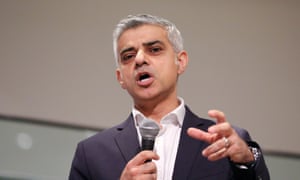
Sadiq Khan, the mayor of London


Sadiq Khan: ‘We are evaluating the success of other cities … Nothing is off the table.’ Photograph: Dinendra Haria/Rex/Shutterstock

The results show nearly double the number of schools than previously thought are affected by illegal levels of toxic air. A report that was kept secret by former mayor Boris Johnson revealed last year 433 primaries were exposed to dangerous levels of air pollution.


The new data shows 802 out of 3261 nurseries, primary and secondary schools and higher education colleges, are within 150 metres of nitrogen dioxide pollution levels that exceed the EU legal limit of 40µg/m3 (40 micrograms per cubic metre of air).


A third of state nursery schools in the capital (27), nearly 20% of primaries (360) and 18% of secondary schools (79) are in areas where toxic levels of nitrogen dioxide threaten children’s health. Of the further education colleges in the capital, 43% (30) were in areas of illegally toxic levels of NO2.


Nurseries map

Traffic is a major contributor to air pollution and there is growing concern about emissions from diesel vehicles, which contribute through the production of particulate matter and nitrogen oxides (NOx).


Dr Francis Gilchrist, consultant respiratory paediatrician at Royal Stoke University hospital, said it was known that children were particularly sensitive to air pollution and that lung damage had lifelong consequences.


“If something is not done about air pollution these issues are going to get worse and worse. There is definitely concern that air pollution is affecting children’s lungs – in particular it exacerbates respiratory illness, like asthma, and it predisposes children who are healthy to having repeated chest infections,” he said.


“If you damage your lungs in childhood you are likely to see these effects right through into adulthood, so there is a lifelong impact.”


Khan hopes the introduction of what he says is the world’s first ultra-low emission zone will cut toxic NO2 emissions from diesel vehicles by 50%. He plans to extend the zone to the north and south circular roads in the capital and has brought its introduction forward a year to 2019.


Last week he announced that drivers ofolder, more polluting cars will have to pay a £10 charge to drive in central London from October.


But other cities – including Paris, Athens and Madrid – have announced more dramatic measures, introducing car-free days and bans on diesel cars from city boundaries.


Khan said he had not ruled anything out. “We are evaluating the success of other cities. We are looking at their plans and nothing is off the table. But at the moment we think our plans are the most effective.”


London is not alone in the UK in facing an air pollution crisis. Khan and the leaders of four other cities badly affected by poor air quality – Leeds, Birmingham, Derby and Nottingham – had written to the government calling on them to do more to tackle the problem across the UK.


“It must be the case that air quality in other cities is having a similar impact and that it is worse in the most deprived parts of those cities. It must impact on schools in the same way, but they do not have the information that is now available in London. The government must take action,” he said.


The new research on schools, nurseries and colleges was based on modelling of data from 2013 carried out by experts from the environmental research group at King’s College London and Aether, the environmental data analysts.


The modelling is more precise than the government’s measurements, which the high court has condemned as overoptimistic.


School NO2 table

Judges told ministers last November they must cut the illegal levels of NO2 in dozens of towns and cities in the shortest possible time after ruling their plans to improve air quality were so poor they were unlawful.


The government has until April to come up with proposals to bring before the court.


The study adds to the pressure on ministers to tackle air pollution amid growing evidence of a toxic air crisis in parts of the UK. London breached its annual air pollution limits just five days into 2017.


Last month Khan issued the first “very high” air pollution alert with warnings displayed at bus stops, train stations and road signs across the capital.


This year Khan gave £250,000 to fund 50 air quality audits at the worst affected primary schools. The money will allow schools to work with local councils to introduce measures to protect pupils from toxic air and could include banning the most polluting cars at drop-off and pick-up time, clean air routes for walking to school, green barriers and moving entrances away from busy roads.


Air pollution causes up to 50,000 early deaths – 9,000 of these in the capital – and costs the country £27.5bn each year, according to a government estimate. MPs have called it a public health emergency.


Khan is calling for ministers to introduce a comprehensive diesel scrappage scheme to compensate drivers who bought diesel cars after being told they were more environmentally friendly than petrol vehicles. He also wants the government to introduce a clean air act “fit for the 21st century”.


“Today people scratch their heads that 30 or 40 years ago we knew smoking was bad for your health but no action was taken,” he said. “I don’t want a situation now where in 20 or 30 years’ time our children or grandchildren say knew about air quality but no action was taken.


“I want London to be the envy of the world in relation to air quality, to be the greenest city in the world.”


‘Some days it makes me consider leaving London’


The playground at Tachbrook nursery school in Pimlico, west London, has lots to keep a three-year-old happy at breaktime.


But, like other schools highlighted in the report, it is very close to a busy main road. HGVs, cars, taxis and buses plough up and down the Embankment nearby, and so the school is subject to NO2 pollution levels above EU legal limits.


Headteacher Elizabeth Hillyard said she had signed a petition along with other headteachers in the capital urging more to be done about toxic air.


“Air pollution has bad effects on health and it needs to be addressed and all the heads in Westminster have signed the petition,” she said.


Like other schools, Tachbrook does what it can to protect children, including having a fence around the playground. Kate Lyons, a parent collecting her three-year-old son, said the issue was a concern.


“We are generally concerned about the air in this area,” Lyons said. “You can feel it and taste it. My little boy loves playing in the playground at school, and it does worry me.


“We live nearby and sleep with our windows closed because of the pollution. We used to live in Edinburgh and you can feel the difference living here in London and some days it is something that makes me consider leaving.”


Additional reporting by Caelainn Barr


Revealed: thousands of children at London schools breathe toxic air

22 Kasım 2016 Salı

‘Stark choice’ as schools struggle to foot bill for poorer students

Kevin Prunty is executive head teacher at Cranford community college, a high-achieving school in Hounslow, west London. His pupils are ambitious and successful, but many come from disadvantaged backgrounds.


Like other schools serving deprived areas, Cranford find itself increasingly playing a sophisticated welfare role in its community. It is also footing the bill for uniforms, PE kits, shoes, lunches and educational trips from a diminishing budget, to subsidise parents who cannot afford to meet the costs.


But with school budgets under pressure and further cuts expected there are fears they will not be able to continue to fill the gap.


“Schools know already that there are sizeable further cuts to funding on the way – and whilst we are currently able to fund these additional needs – it will soon become more difficult and perhaps impossible to justify doing so,” says Prunty.


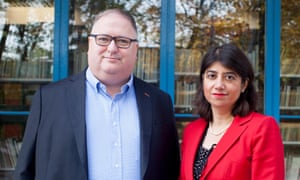
Kevin Prunty and Seema Malhotra


Kevin Prunty, head of Cranford community college in west London, with Seema Malhotra MP. Photograph: Alicia Canter for the Guardian

He says it’s not possible to measure the additional cost in the sense of how many uniforms, how many trips, how many meals. Instead he describes the kind of scenarios his staff deal with on a daily basis to illustrate the level of need.


A year 7 boy needs additional support but his symptoms don’t meet the threshold to qualify for child and adolescent mental health services (Camhs).


An educational welfare officer helps a family where the father is suffering from a mental illness and keeps telling his children they are terminally ill. Another colleague intervenes to help a child with impaired hearing.


Someone else takes a pupil out to buy a suit for a job interview for a traineeship. It’s not just the money – they coach them for the interview and make sure the suit fits properly. “There’s nobody to say whether the arms are too long, so some of our staff take the responsibility,” says Prunty.


And things are getting worse. Since pupils returned to school in September, staff have noticed an increase in the number of children who are not eligible for free school meals who come in without any money for lunch. Inevitably the school provides – it all costs and meanwhile budgets are shrinking.


The Institute for Fiscal Studies has estimated that increasing costs and growing pupil numbers will result in an 8% cut in funding per student by 2020 and an inquiry has been begun by the public accounts committee to examine the financial sustainability of schools.


The sector would like to hear there is more money for schools in the autumn statement later this week – the reality is that schools like Prunty’s are likely to lose out in the long-awaited redrafting of the national funding formula (NFF) in which money from well-funded urban schools working with disadvantaged families is expected to move to less well-funded schools in less needy areas.


He has already had to address a £1m shortfall in the budget caused by a cut in grant funding from the government and rises in pension costs, national insurance costs and below-inflationary salary rises. He has managed to balance the budget but twelve jobs had to be cut – four teachers and the rest support staff.


At another school in the area, a principal who asks not to be named says he increasingly feels like a debt collector, having to chase up parents who owe the school money. As families at his school struggle to make ends meet, many are building up large debts. Some owe hundreds of pounds for school lunches and he estimates that parental debt is costing the school £10,000 a year.


Last year the school handed out 45 uniform grants worth £100 each to parents in need. Then there are equipment grants for things like scientific calculators. He feels for the parents, many of whom are in low paid jobs and are surprised to find they are not entitled to free school meals for their children. “There’s a lot that’s adding to pressure on parents. It’s uncomfortable to be talking to them about the money they owe the school. But that money is money we are not spending on teachers,” he says. “Schools are not in the debt management business. It’s not sustainable to be running this level of debt.”


The issue has been raised by Seema Malhotra, Labour MP for Feltham and Heston, who has become increasingly concerned about the hidden burden on schools’ budgets. “Schools are being faced with a stark choice,” she said. “Let children from poorer backgrounds miss out on educational opportunities and experiences, or pick up the costs and take on financial debt. Budgets are already under pressure and with further cuts to school funding, helping families in need is set to get harder.”


At Springwest Academy in nearby Feltham, which also serves a community with high levels of disadvantage, there are similar concerns. Pastoral mentors deal with calls day in and day out from families with worries about housing and finances; school uniforms and shoes are being paid for more frequently out of the school’s hardship fund and almost four out of ten pupils (38.3%) are referred for counselling or other mental-health support.


Victoria Eadie is chief executive of the Tudor Park Education Trust which includes Springwest. “It does worry me what’s going to happen. I don’t know a school in Hounslow that is not having to go though some form of restructuring and quite severe cuts.” Until now her school, like others, has been able to step in to support the neediest. With further cuts, she says, “schools will not be able fill the gap”.


‘Stark choice’ as schools struggle to foot bill for poorer students

6 Ekim 2016 Perşembe

Councils failing to monitor most British schools for dangerous air pollution

Councils are failing to monitor most schools in Britain for dangerous air pollution despite government advice, freedom of information requests have revealed.


All Britain’s 433 local councils were asked by the British Lung Foundation (BLF) whether they placed pollution monitors within 10 metres of school grounds. Of the 322 which replied, only 140 said they did.


In urban areas identified by the World Health Organisation as having harmful levels of particulate pollution, nearly half were found to be monitoring only one or two schools. Less than one in three local authorities monitored more than two schools.


Air quality monitoring guidance for the UK is drawn up by the Department for Environment, Food and Rural Affairs (Defra). The government does not insist that schools are monitored and local authorities are left to implement and interpret results and take action where needed.


The survey showed “alarming discrepancies” in council behaviour, said a BLF spokeswoman. Some used very simple diffusion tubes to measure only NO2 gas, but others monitored for different-sized particles called PM10s and 2.5s which are spewed out by traffic and industry, she said.


Equally, some authorities monitored the air close to school playgrounds, but others measured air quality hundreds of metres away.


“The guidance on monitoring that Defra gives local authorities needs to be revised and strengthened. Parents should be able to tell what their children are breathing, especially if they have conditions like asthma,” the spokeswoman said.


Concern about children’s health has grown following new scientific research which has shown lung capacity can be permanently impaired by pollution at very early ages.


A study of 2,400 children at 25 schools across east London found children had 5-10% less lung capacity, with an increased risk of diseases such as asthma and bronchitis.


According to the BLF, nearly 1 million schoolchildren up to 15 years old have been diagnosed with lung conditions.


“Children and teaching staff are not being made fully aware of the health risks posed by air pollution. Local authorities need clear guidance to monitor the air that children breathe as well as more resources and funding to tackle it,” said Russell Hobby, general secretary of the National Association of Head Teachers.


“Children’s lung health is particularly vulnerable to air pollution, yet they are not being protected by the government’s air quality monitoring guidance. There is a huge discrepancy in the levels of monitoring outside schools across the country, with many schools in the most harmfully polluted places not being monitored,” said Dr Penny Woods, chief executive of British Lung Foundation.


A an LGA spokesman said: “Councils follow guidelines on monitoring air pollution which are laid down by central government. These are to take a risk-based approach – monitoring those locations where members of the public might be regularly exposed.


“As well as schools this could also include residential properties, hospitals and care homes – depending on which area is at greatest risk. Many schools are actually some distance from busy roads and therefore unlikely to have high air pollution levels.”


He added that the “real issue” was for councils to move from monitoring pollution to acting on it, which would take government support.


A report that was commissioned but not published by London city hall under Boris Johnson showed that the number of primary schools in the capital breaching EU pollution levels had fallen from 433 in 2010 to 357 in 2013.


Another report, for the mayor of London, found children at nearly 90 secondary schools in London regularly breathed illegal and dangerous levels of air pollution.


Research by the Campaign for Clean Air found that 1,148 schools in London are within 150 metres of roads carrying 10,000 or more vehicles per day, and a total of 2,270 schools are within 400m of such roads.


“Children across the UK are exposed to illegal levels of air pollution on a daily basis. Air pollution is an invisible problem and parents have a right to know if their children are breathing dirty air, so it should be monitored,” said Andrea Lee, healthy air campaigner at environmental law firm ClientEarth.


Councils failing to monitor most British schools for dangerous air pollution

5 Haziran 2014 Perşembe

Australians want to tax rich, commit on overall health and schools, depart own tax as is

Australians want the wealthy taxed much more, public investing on health and schooling improved, and their personal tax charge left specifically in which it is, in accordance to a survey released on Friday.


In sharp contrast to measures in the federal spending budget, Australians polled by the thinktank Per Capita uncovered a dramatic shift in the direction of support for investing much more on publicly funded solutions, and an improve in the perception that the nation’s wealthiest are not doing their honest share of the heavy lifting.


“Between 2010 and late 2012, our views of the tax system grew to become steadily significantly less generous – we felt more and more that we have been paying also considerably tax and our support for public investing, although higher, was falling,” mentioned the yearly survey’s summary.


“These sentiments have now reversed … [Australians] now reject the strategy to investing cuts mooted by the government’s commission of audit.”


The survey, carried out in February shortly right after the initial Commission of Audit report, found 70% of Australians feel the government need to spend much more on public companies. Just eight% believed it ought to commit less.


The survey also discovered that 53% of individuals believed they have been paying the correct quantity of tax, an approximate 17% swing away from the proportion who believe they pay out also much tax, when in contrast to the 2012 results.


“It’s a striking reversal from a quite consistent trend across the very first three years of the survey that noticed Australians feeling less generous about their tax contributions, to a place now exactly where men and women are saying, ‘We really don’t truly feel more than taxed and instead we want to make sure our public companies are protected and expanded,’ ” Per Capita’s executive director, David Hetherington, told Guardian Australia.


The survey discovered that a lot more than 7 out of ten people believe higher income earners do not shell out their fair share, but the final results revealed a level of “cognitive dissonance” between people who really don’t believe they count in the class.


Practically half the respondents who earned a high cash flow and who explained they paid also much tax also believed that other substantial revenue earners pay out too tiny.


“We’ve seen over a variety of many years that high income earners’ perception of what a large income is in Australia aren’t well grounded,” Hetherington mentioned. “People who are wealthy on an goal basis, do not see themselves as wealthy or higher cash flow earning.”


“We did ask how people would like to see public companies funded, and one particular of the responses was ‘higher revenue tax prices on the best five% of earners’ and that was the most well-liked.”


Subsequent in line, with 23%, was removal of tax concessions on superannuation and housing.


Hetherington explained the survey occurred weeks outside the normal “policy wonk” discussion that heats up shortly before a federal spending budget, so it was unlikely men and women were influenced by speculation all around what the treasurer, Joe Hockey, would reveal.


“However, I would say although that the broader political debate is a aspect that has an effect on the survey results,” he explained.


“I think what it shows is that the government has misread the mood of the Australian people, and in certain misread the value that people area on public solutions. We see a great deal of talk about value of residing pressures, but one particular of the factors that feeds into the way households perceive cost of living is entry to substantial top quality, minimal expense public services.


“If all of a sudden the kids’ Tafe program has gone up by a issue of four or five, we’re going to charge you $ 7 to go to the physician, we are continuing to subsidise non government schools at the cost of public colleges, I think individuals come to feel that.”


Far more than half of respondents mentioned that if the government is to boost funding to public schools, it must be accomplished by cutting paying on non-government colleges.


Australians want to tax rich, commit on overall health and schools, depart own tax as is

25 Mayıs 2014 Pazar

Schools warned more than FGM risk to girls for the duration of summer time holidays

The Division for Training (DfE) has urged colleges to be vigilant in guarding against the dangers of female genital mutilation ahead of the summer holidays – recognized to be a notably dangerous time for at-risk girls.


The division has sent out an electronic mail to all schools in England and Wales drawing interest to up to date recommendations created to preserve ladies secure before the begin of the summertime break, at times referred to as the “cutting season” for ladies at chance of mutilation.


Michael Gove previously wrote to all headteachers warning them of the dangers of the practice, which entails the elimination of a girl’s outer sexual organs and can lead to lifelong trauma and physical issues, following a Guardian-backed campaign to increase awareness of the practice attracted far more than 234,000 signatures on Alter.org.


An estimated 66,000 ladies and women in the United kingdom have been victims of FGM, with up to 24,000 girls beneath the age of 15 believed to be at danger.


The campaign – led by 17-yr-old Bristolian pupil Fahma Mohamed – acquired the assistance of the UN secretary standard, Ban Ki-moon, and Pakistani schoolgirl and schooling activist Malala Yousafzai. It also inspired 24-12 months-outdated American mother-of-three Jaha Dukureh to launch a comparable campaign in the US on Modify.org, calling for the government to collect more data about the practice, which professionals warn is happening to US citizens on American soil.


The DoE’s electronic mail to colleges states: “On three April 2014 the government published new statutory safeguarding guidance for all colleges, Maintaining Young children Secure in Schooling. The guidance specifically addresses female genital mutilation (FGM) and offers a hyperlink to multi-agency tips on that problem.”


The electronic mail goes on to urge teachers to “be vigilant, notably in the summer season phrase, as ladies may be at chance for the duration of the summertime holidays”.


Efua Dorkenoo, senior FGM advisor at Equality Now, welcomed the move but called for additional action from the DoE. “It is wonderful that the Department for Schooling has let teachers know that they must be alert to achievable indicators of FGM prior to the summer time holidays,” she explained.


“Nonetheless, teachers must be skilled as well on reporting and sharing information and on exact particulars of which warning signs to appear out for – and they should be held accountable. It is also crucial that youthful FGM survivors are given care and help.”


Schools warned more than FGM risk to girls for the duration of summer time holidays

8 Mayıs 2014 Perşembe

Michael Gove urges colleges and schools to view for signs of abuse

School radicalisation warning

Michael Gove who has written to all schools and colleges in England urging them to be alert for signs of radicalisation and exploitation of students Photograph: Joe Giddens/PA


The education secretary, Michael Gove, has written to all schools and colleges in England urging them to be alert for signs of radicalisation and exploitation of students.


In a letter to headteachers, Gove warned that schools and colleges needed to be aware of any type of abuse of children and should not think that it could not happen to them.


He said the government had published advice on different types of abuse and neglect, including child sexual exploitation, female genital mutilation, radicalisation, and cyberbullying, among others.


Gove wrote: “The guidance reiterates that staff members working with children should always think ‘it could happen here’ where safeguarding is concerned.”


The updated advice said that everyone who dealt with children and their families had a part to play in keeping youngsters safe. “School and college staff are particularly important as they are in a position to identify concerns early and provide help for children, to prevent concerns from escalating,” it said.


The new advice contained links to existing guidance from different organisations on a range of issues, including one from “Channel”, which is part of a government strategy to protect people at risk of being radicalised.


The document said: “Channel is about protecting people from radicalisation into all forms of terrorism, but the most significant threat to this country is from al-Qaida affiliated, influenced and associated groups.”


It suggested there were a number of indicators that an individual was involved with an extremist group or cause, such as changing how they dressed or their appearance, losing interest in friends or activities not associated with a particular ideology, and their behaviour becoming focused on an extreme idea or cause.


It also said that those at risk of being radicalised might possess material or symbols associated with an extremist cause (e.g. the swastika for far-right groups), spend increasing time in the company of other suspected extremists, or attempt to recruit others to their cause.


The Department for Education’s new advice said that everyone working in a school or college should be aware of the signs of abuse and neglect “so that they are able to identify cases of children who may be in need of help or protection” and can take action.


In a specific section on female genital mutilation (FGM) it said that all professionals needed to be “alert to the possibility of a girl being at risk of FGM, or already having suffered FGM”.


It added that girls at risk of the practice may not know they were in danger.


Michael Gove urges colleges and schools to view for signs of abuse

Michael Gove urges schools and schools to observe for indications of abuse

School radicalisation warning

Michael Gove who has written to all schools and colleges in England urging them to be alert for signs of radicalisation and exploitation of students Photograph: Joe Giddens/PA


The education secretary, Michael Gove, has written to all schools and colleges in England urging them to be alert for signs of radicalisation and exploitation of students.


In a letter to headteachers, Gove warned that schools and colleges needed to be aware of any type of abuse of children and should not think that it could not happen to them.


He said the government had published advice on different types of abuse and neglect, including child sexual exploitation, female genital mutilation, radicalisation, and cyberbullying, among others.


Gove wrote: “The guidance reiterates that staff members working with children should always think ‘it could happen here’ where safeguarding is concerned.”


The updated advice said that everyone who dealt with children and their families had a part to play in keeping youngsters safe. “School and college staff are particularly important as they are in a position to identify concerns early and provide help for children, to prevent concerns from escalating,” it said.


The new advice contained links to existing guidance from different organisations on a range of issues, including one from “Channel”, which is part of a government strategy to protect people at risk of being radicalised.


The document said: “Channel is about protecting people from radicalisation into all forms of terrorism, but the most significant threat to this country is from al-Qaida affiliated, influenced and associated groups.”


It suggested there were a number of indicators that an individual was involved with an extremist group or cause, such as changing how they dressed or their appearance, losing interest in friends or activities not associated with a particular ideology, and their behaviour becoming focused on an extreme idea or cause.


It also said that those at risk of being radicalised might possess material or symbols associated with an extremist cause (e.g. the swastika for far-right groups), spend increasing time in the company of other suspected extremists, or attempt to recruit others to their cause.


The Department for Education’s new advice said that everyone working in a school or college should be aware of the signs of abuse and neglect “so that they are able to identify cases of children who may be in need of help or protection” and can take action.


In a specific section on female genital mutilation (FGM) it said that all professionals needed to be “alert to the possibility of a girl being at risk of FGM, or already having suffered FGM”.


It added that girls at risk of the practice may not know they were in danger.


Michael Gove urges schools and schools to observe for indications of abuse

25 Şubat 2014 Salı

White Property and USDA propose principles for free of charge lunches and ad limits in schools

Moving past the lunch line, new guidelines that will be proposed Tuesday by the White Home and the Agriculture Department would limit marketing of unhealthy foods in schools. They would phase out the marketing of sugary drinks and junk foods about campuses throughout the college day and make sure that other promotions in schools have been in line with well being specifications that already apply to college meals.


That means a scoreboard at a high school football or basketball game eventually wouldn’t be allowed to market Coke, for illustration, but it could promote Diet program Coke or Dasani water, which are also owned by Coca Cola. Same with the front of a vending machine. Cups, posters and menu boards which advertise food items that don’t meet the specifications would also be phased out.


Ninety % of this kind of marketing and advertising in schools is relevant to drinks, and several soda businesses presently have began to transition their income and advertising in schools from sugary sodas and sports drinks to their very own healthier products.


The proposed rules are component of very first lady Michelle Obama’s Let’s Move initiative to combat child weight problems, which is celebrating its fourth anniversary this week. Mrs Obama and agriculture secretary Tom Vilsack will announce the new guidelines at a White Residence occasion.


“The idea right here is simple – our classrooms should be healthier places in which little ones aren’t bombarded with adverts for junk foods,” the very first lady mentioned in a statement launched just before the announcement. “Because when mothers and fathers are operating difficult to educate their little ones wholesome routines at home, their operate shouldn’t be undone by unhealthy messages at college.”


The principles also would enable far more youngsters accessibility to cost-free lunches and guarantee that colleges have wellness policies in spot. The proposed rules come on the heels of USDA regulations that are now requiring foods in the college lunch line to be healthier.


Guidelines set to go into effect next college yr will make other food items around college more healthy as well, like in vending machines and separate “a la carte” lines in the lunch area. Calorie, body fat, sugar and sodium limits will have to be met on almost every food and beverage sold in the course of the college day at a hundred,000 schools. Concessions sold at after-college sports activities video games would be exempt.


The healthier food rules have come under fire from conservatives who believe the government shouldn’t dictate what kids eat – and from some college students who really do not like the more healthy meals.


Mindful of the backlash, the USDA is enabling schools to make some of their personal selections on what constitutes advertising and marketing and asking for feedback on some alternatives. For illustration, the proposal asks for remarks on initiatives like Pizza Hut’s “Book It” plan, which co-ordinates with colleges to reward little ones with pizza for reading through.


Rules for other college fundraisers, like bake sales and marketing and advertising for these events, would be left up to colleges or states.


Off-campus fundraisers, like an occasion at a regional fast-meals outlet that rewards a college, nevertheless would be permitted. But posters advertising the quickly foods may possibly not be permitted in college hallways. An e mail to mothers and fathers, with or without having the marketing, would have to suffice. The thought is to market place to the mothers and fathers, not the little ones.


The rule also makes allowances for significant infrastructure expenses – that scoreboard advertising Coca Cola, for illustration, wouldn’t have to be immediately torn down. But the school would have to get one particular with a more healthy message the up coming time it was replaced.


The beverage sector, led by Coca Cola, Dr Pepper Snapple Group and PepsiCo, is on board with the move. American Beverage Association President and CEO Susan Neely explained in a statement that aligning signage with the more healthy drinks that will be supplied in schools is the “logical subsequent step”.


“Mrs Obama’s efforts to carry on to strengthen college wellness make sense for the properly-currently being of our schoolchildren,” Neely stated.


Although Mrs Obama lobbied Congress to pass the school nutrition bill in 2010, most of her efforts in recent years have been focused on the personal sector, constructing partnerships with foods firms and retailers to sell healthier meals.


The youngster nutrition law also expanded feeding packages for hungry college students. The guidelines currently being proposed Tuesday would boost that even more by allowing the highest-poverty schools to serve lunch and breakfast to all students for totally free. In accordance to the USDA and the White House, that initiative would enable nine million children in 22,000 schools to receive free of charge lunches.


The USDA has previously tested the program, which is developed to boost participation for students and minimize paperwork and applications for schools, in 11 states.


In addition, the Obama administration will announce new recommendations for college wellness policies. Schools have been needed to have standard wellness policies that set their own general requirements for meals, physical action and other wellness pursuits considering that 2004. But the new rules would need parents and other individuals in the college community to be involved in individuals decisions.


White Property and USDA propose principles for free of charge lunches and ad limits in schools

7 Şubat 2014 Cuma

Female genital mutilation: Scotland"s government to request all schools to act

Scottish education secretary Michael Russell

Scottish education secretary Michael Russell was praised by campaigners for taking a bold phase in the direction of tackling FGM. Photograph: Ken Jack/Demotix/Corbis


Scotland’s government said it would be creating to each headteacher in the nation asking them to train their employees and educate mothers and fathers about female genital mutilation.


The intervention by the Scottish schooling secretary comes in the wake of a Guardian campaign to raise awareness in schools which has gathered much more than 118,000 signatures in less than 48 hours.


Michael Russell stated he would be creating to each and every Scottish headteacher calling on them to train teachers and dad and mom about the warning indications and dangers of FGM.


“A important part of eradicating the practice entirely is education – which is why I, alongside equalities minister Shona Robison, will be writing to headteachers across Scotland in buy to reach out to teachers and mothers and fathers on this extremely hard issue.”


Asking the UK’s education ministers to create to colleges about female genital mutilation is the core demand of a campaign led by 17-year-old Fahma Mohamed to support stamp out the barbaric practice. Government figures say 20,000 British women are at danger of becoming minimize every year.


She praised Holyrood for taking a daring phase in the direction of tackling FGM.


Mohamed mentioned: “I want to congratulate Scotland for stepping up to the challenge and listening to us – it exhibits that it is amazing what you can obtain with commitment and passion.


“I’m overjoyed that women in Scotland will be safer and over all it will shield the following generation by breaking the cycle of abuse.”


The move was at odds with the Division for Schooling in Westminster, which remained silent on the situation and did not answer queries from the Guardian.


Mohamed, portion of a Somali household who moved to Britain when she was seven, explained: “I have a question for Michael Gove – is he frightened of me? I’m just a pupil who is passionate about this, and apparently he just would like to ignore this situation and hope it will go away.”


Norman Baker, the House Workplace minister and government lead on FGM, has said he would be creating to Gove to draw his focus to the Guardian’s campaign, even though the Liberal Democrat president, Tim Farron, and his party colleagues Julian Huppert and Greg Mulholland tabled an early day movement in parliament calling on the government and training department to do everything in their power to stop the practice.


On Friday evening the shadow wellness secretary, Andy Burnham, backed the Guardian’s campaign and praised the government for showing leadership on the situation right after it introduced a duty on hospitals to report new cases and funding for training and raising awareness.


“There are tons of places exactly where I would want to criticise the government but to be fair to them they have rightly prioritised this situation. Credit score to the Guardian too for the very same,” he said.


The National Association of Head Teachers (NAHT) joined campaigners and activists calling on Gove to present leadership on FGM. Its basic secretary, Russell Hobby, mentioned that the NAHT had called on the government to update tips on FGM in schools and that Gove must take the lead on the concern.


“For this explanation NAHT strongly endorses the Guardian’s petition calling on the secretary of state to take the lead in encouraging schools to deal with this problem critically,” he mentioned. “Colleges can make a big difference simply because of the trust in which they are held. NAHT believes that FGM exceeds the limits of tolerance in our society.”


Headteachers echoed the contact to action. Gladys Berry, the head of Highbury Fields college in London, which ran a programme of lessons with pupils final 12 months, explained: “Headteachers require a letter from the Division of Schooling some will be anxious about the response from distinct elements of the community so they need to have to feel that it is suitable and required to educate FGM in their school.


“Unless of course we can educate kids in the classroom, circumstances will not come to light and we will not know about people who are at threat.”


An additional London headteacher, Bavaani Nanthabalan, extra: “The Division of Schooling has by no means communicated with colleges right on FGM or provided us any tips. It is a hugely delicate concern.


“A supportive letter from Mr Gove encouraging us to increase awareness of this issue in schools would help schools handle this severe difficulty in a sensitive way. Schools can do much more to shield girls at chance of FGM with the right assistance from the government.”


Leyla Hussein, herself a victim of FGM and a single of Britain’s most large-profile campaigners, said she could not comprehend why the Department for Education was so reluctant to compose to colleges straight.


“It really is remarkable that Michael Gove can write a letter to headteachers telling them to enhance discipline in schools and not compose a letter about producing it necessary to teach FGM. I just never get it.” Hussein, who described Mohamed as “exceptionally brave”, additional: “Education has often been the missing link when it comes to fighting FGM.”


Ninko Ali, who founded the campaign group Daughters of Eve with Hussein, explained: “Each and every other minister has spoken out on this. Gove is the only a single that hasn’t. I just do not consider he cares about the social wellbeing of children it is only about academic achievement. He doesn’t want to speak about a child’s safety, but he will talk about Latin. It truly is like he isn’t going to care and that is very unhappy.”


Female genital mutilation: Scotland"s government to request all schools to act

29 Ocak 2014 Çarşamba

China bans cigarettes from schools

The newest ban, imposed by the Ministry of Education, covers kindergartens, elementary and middle colleges, and vocational colleges. Universities need to set up smoking areas and forbid lighting up in academic buildings.


Anti-tobacco efforts have been hampered by the country’s powerful tobacco monopoly, well being campaigners say, which pays hundreds of billions of yuan in taxes each yr.


Critics say an additional issue is that it is not clear who is accountable for punishing violators of cigarette bans, that means officials typically just flip a blind eye.


Schools can no longer look for sponsorship from cigarette brands or publish tobacco advertisements on campus, the ministry explained in a observe.


School principals must enforce the ban by putting in smoke alarms or surveillance cameras to spot offenders. College canteens have to also quit offering tobacco.


Colleges that do not crack down properly will be punished, the ministry explained.


As portion of the battle against smoking, the government had earlier urged Communist Celebration cadres and government officials to stop smoking in schools, workplaces, stadiums, and on public transport and elsewhere to set a great illustration.


edited by Arron Merat


China bans cigarettes from schools