The health secretary has ordered an investigation into the deaths of a number of babies at an NHS trust in the Midlands, after seven of them were judged to have been avoidable.
Jeremy Hunt made the move after bereaved families and the local coroner criticised the quality and safety of maternity care at the Shrewsbury and Telford Hospital NHS trust. He has asked NHS England and NHS Improvement to look into an undisclosed number of deaths at the trust in recent years, amid concern that some were not properly investigated at the time.
The BBC said it had obtained details of at least nine suspicious deaths that occurred at the trust between September 2014 and May 2016, seven of which were later deemed to have been avoidable if the newborns had received better care.
Five of the deaths involved apparent failures by staff to correctly monitor a baby’s heartbeat.
Dr Edwin Borman, the trust’s medical director, said the rate of baby deaths at the trust – which handles 4,700 deliveries a year – was no worse than anywhere else in the NHS.
However, he told BBC News: “In the case of foetal heart monitoring, we have identified a number of cases where learning has not been fully implemented. We’ve put systems in place to make improvements.”
John Ellery, the coroner in the June 2016 inquest into the death of Kye Hall at Telford’s Princess Royal hospital, said errors by staff had contributed to the baby boy’s death.
“His death was caused or contributed to by failings at the Princess Royal hospital, Telford, namely a failure to reclassify Kye’s mother as a high-risk case on two occasions and a failure to auscultate [listen to] his foetal heart rate at two critical times prior to delivery,” the coroner said.
Kye was born on 15 August 2015, but he died four days later as a result of hypoxic ischaemic brain injury and birth asphyxia, or serious oxygen deprivation.
The trust accepted during the inquest that some recordings of Kye’s heart rate when he was still in the womb were not taken or written down, and that his mother, Kate Anson, could have been referred to the consultant-led maternity unit when her blood pressure dropped.
Last week, an inquest into the death of a one-day-old girl, from a group B streptococcus infection while in the trust’s care, found she could have lived had she received better medical attention. The trust accepted that Pippa Griffiths would probably have survived if staff had spotted the infection earlier.
Pippa was born at home on 26 April 2016. When her mother, Kayleigh, rang the maternity unit at 6.30pm to voice concern about Pippa’s feeding, staff reassured her. She said she called again at 2.55am the next day to report brown mucus, although midwife Claire Roberts said she did not remember the baby’s mother saying that.
Sarah Jamieson, the trust’s head of midwifery, said afterwards: “We are truly sorry that we were unable to provide the appropriate care that would have prevented Pippa’s death.”
Maternity services at the trust were strongly criticised last year in an inquiry, commissioned by NHS England, into the death of a baby girl, Kate Stanton-Davies, in 2009.
Her mother, Rhiannon, said: “Look at the failings, learn from them, move on. To not do that, they haven’t just killed my daughter, but they have disregarded the value of her life, her memory.”
The inquiry found a “lack of a safety culture” in the maternity unit at the time. It also found staff had not been held accountable for their failings related to Kate’s death, and that lessons needed to improve patient safety had not been learned.
The nine suspicious deaths include those of twins Ella and Lola Greene, who were stillborn in 2014 after staff failed to correctly read and interpret their heart rates. The trust also accepted other inquest findings that poor foetal heart monitoring was a factor in the deaths of Graham Scott Holmes-Smith in 2015 and Ivy Morris in May 2016.
Other deaths under examination include that of Oliver Smale in 2015. The coroner said his death could have been prevented if he had been born earlier by caesarean section.
The Department of Health said: “Earlier this year, the health secretary asked NHS regulators to undertake an investigation at Shrewsbury and Telford NHS trust in light of disclosures that in a number of tragic cases standards of care fell far below those that parents would expect.”
One in 10 deaths around the world is caused by smoking, according to a major new study that shows the tobacco epidemic is far from over and that the threat to lives is spreading across the globe.
There were nearly one billion smokers in 2015, in spite of tobacco control policies having been adopted by many countries. That number is expected to rise as the world’s population expands. One in every four men is a smoker and one in 20 women. Their lives are likely to be cut short – smoking is the second biggest risk factor for early death and disability after high blood pressure.
The researchers found there were 6.4m deaths attributed to smoking in 2015, of which half were in just four populous countries – China, India, USA, and Russia.
Major efforts to control tobacco have paid off, according to the study published by the Lancet medical journal. A World Health Organisation treaty in 2005 ratified by 180 countries recommends measures including smoking bans in public places, high taxes in cigarettes and curbs on advertising and marketing.
Between 1990 and 2015, smoking prevalence dropped from 35% to 25% among men and 8% to 5% among women. High income countries and Latin America – especially Brazil which brought in tough curbs on tobacco – achieved the biggest drops in numbers of smokers.
But many countries have made marginal progress since the treaty was agreed, say the authors of the study from the Institute of Health Metrics and Evaluation at the University of Washington in the US. And although far more men smoke than women, there have been bigger reductions in the proportions of men smoking also, with minimal changes among women.
Senior author Dr Emmanuela Gakidou said there were 933m daily smokers in 2015, which she called “a very shocking number”. The paper focused only on those who smoke every day. “The toll of tobacco is likely to be much larger if we include occasional smokers and former smokers and people who use other tobacco products like smokeless tobacco. This is on the low end of how important tobacco is,” she told the Guardian.
There is much more that needs to be done, she said. “There is a widespread notion that the war on tobacco has been won but I think our evidence shows that we need renewed and sustained efforts because the toll of smoking in 2015 is much larger than most people would think, so we absolutely have a lot more to do. We need new and improved strategies to do it and a lot of effort and political will.”
Traditionally there have been far fewer women smoking around the world than men, but it was a huge problem for both, she said.
“There are some really worrisome findings – for example in Russia female smoking has increased in the last 25 years significantly. There are also some western European countries where about one in three women are smoking. So it is true globally that a lot fewer women smoke than men but there are some countries where it is a big problem for women,” she said.
Dr Kelly Henning of Bloomberg Philanthropies, which is committed to tobacco control and co-funded the study with the Bill and Melinda Gates Foundation, said: “I think the study highlights the fact that the work is not finished on tobacco. The good news is the decline in daily smoking among men and women … however there are still many smokers in the world and there is still a lot of work to do. I think we have to keep our eye on the issue and really do more.”
Countries with some of the highest death tolls such as China and Indonesia “really don’t need those health problems – they have so many other issues they are trying to address. But tobacco control is critically important in those places,” she said.
“China has more than a million deaths a year from smoking related diseases and China is only beginning to see the effects of their high male smoking rate. That is only one instance of what is expected to become an extremely major epidemic,” she said.
Writing in a linked comment, Professor John Britton from the University of Nottingham said: “Responsibility for this global health disaster lies mainly with the transnational tobacco companies, which clearly hold the value of human life in very different regard to most of the rest of humanity.” British American Tobacco, for instance, sold 665bn cigarettes in 2015 and made a £5.2bn profit.
“Today, the smoking epidemic is being exported from the rich world to low-income and middle-income countries, slipping under the radar while apparently more immediate priorities occupy and absorb scarce available human and financial resources,” he writes. “The epidemic of tobacco deaths will progress inexorably throughout the world until and unless tobacco control is recognised as an immediate priority for development, investment, and research.”
Western consumers who buy cheap imported toys, clothes and mobile phones are indirectly contributing to tens of thousands of pollution-related deaths in the countries where the goods are produced, according to a landmark study.
Nearly 3.5 million people die prematurely each year due to air pollution, the research estimates, and about 22% of these deaths are associated with goods and services that were produced in one region for consumption in another.
The analysis provides the first detailed picture of the extent to which consumer demand in the US and western Europe contributes to pollution in developing countries, with profound health consequences.
“If the cost of imported products is lower because of less stringent air pollution controls in the regions where they are produced, then the consumer savings may come at the expense of lives lost elsewhere,” the authors conclude.
The study also reveals how emissions from industrial hotspots affect the health of people in neighbouring countries and, to a lesser extent, more distant regions, as pollutants circulate on global air currents. About 12% (411,100) of early deaths globally were related to air pollutants emitted in a different region of the world, the research found.
The study focused on the emission of fine particulate matter pollution (PM 2.5) from power stations, factories, aeroplanes and shipping in 13 regions, taking in data from 228 countries. Particulates are thought to account for more than 90% of the global mortality from outdoor air pollution, raising the number of deaths from heart disease, stroke, lung cancer and asthma.
The tiny particles can trigger asthma attacks in the lungs and can cross from the air sacs in the lung into the bloodstream, where they can cause inflammation, alter the way blood clots, and make blood vessels more permeable. Particulates have also been shown to migrate into other tissues, such as the liver, kidneys and brain, although it is less clear what the health consequences are in these organs, and the effects also depend on the chemical makeup of the particulates.
“In general, air pollution links to general ill health,” said Matthew Loxham, a toxicologist at Southampton University who was not involved in the study. “It’s a range of different conditions.”
The scientists used a combination of air pollution data, emissions measurements and models of global air currents to tally up where pollution was emitted and where it ended up in 2007. An economic model, based on data from the Global Trade Analysis Project, was then used to attribute air pollution to the demand of consumers for finished goods, although the results were not broken down by product type.
Chinese emissions caused more than twice the number of deaths worldwide than the emissions of any other region, followed by emissions produced in India and the rest of the Asia region. The scientists calculated that PM 2.5pollution produced in China is linked to more than 64,800 premature deaths in other regions, including more than 3,000 deaths in western Europe and the US.
However, this figure was significantly outweighed by the 108,600 premature deaths in China linked to consumption in western Europe and the US.
Steven Davis, a co-author based at the University of California, Irvine, said that the paper simply aimed to lay out the evidence for the benefit of policymakers. “It’s not really up to us to say what’s fair or not,” he said.
In a press briefing this week, his co-authors called for international action on the issue.
“For greenhouse gas emissions we have a global agreement. People can argue about whether its been effective or not – but at least we have a global framework,” said Dabo Guan, a professor in climate change economics at the University of East Anglia and the paper’s senior author. “People have thought air pollution was a local issue.”
Guan cites the example of mobile phones made in China, which might be sold for $ 200, around 70% of which goes to the company that designed the product and just $ 5-6 to the Chinese manufacturer.
“On average every six months we change our phone,” he said. “It has a health cost on the other side of the world.”
For countries like China, whose economies are dependent on exporting cheaply-made goods, improving environmental standards has to be balanced against potential negative economic impacts.
“Some other country would step up and say hey, we’re willing to let our people die to have that business,” said Davis.
Improving pollution control technologies in China, India and elsewhere in Asia would have a disproportionately large health benefit in those regions and worldwide, according to the analysis in the journal Nature.
Qiang Zhang, another author from Tsinghua University, Beijing, said that consumers in Europe and the US who buy cheap imported toys and clothes also bear a responsibility.
“We need to move our lifestyles away from cheap and wasteful,” he said.
Oliver Hayes, a pollution campaigner for Friends of the Earth air pollution, said: “No-one should be denied the right to breathe clean air, whether they live in Beijing or Barking. But air pollution doesn’t recognise borders, and it’s clear that the devastating impacts of polluters can be felt many miles from their activities.
In 2015, the Princeton economists Anne Case and Angus Deaton’s groundbreaking paper in the National Academy of Science’s magazine reported that mortality rates among a section of Americans were suddenly surging – something unheard of in previous decades. Mortality was only rising in a certain group: middle-aged non-Hispanic whites without a college degree.
Case and Deaton have returned with a new paper published last week by the Brookings Institute. It paints a grim picture of two Americas, in which one has recovered from the 2008 economic crisis and the other hasn’t. The latter, once called “blue-collar aristocrats”, consists of families who were previously able to get by with jobs not requiring college degrees. The disappearance of those jobs has been accompanied by an alarming rate of suicides, overdoses, and diseases caused by drugs and alcohol.
Case and Deaton call these “deaths of despair” – and argue they have recently reached disturbing levels. While opioids account for many of the deaths, drug abuse may only be a symptom of a larger, unseen epidemic of despair.
Dr Anne Case answered questions over email.
Could you briefly describe your original research and what this new follow-up paper adds to it?
Our 2015 paper documented a set of facts: that after a century of almost uninterrupted progress on mortality, US white non-Hispanics (WNH) in midlife were experiencing a sustained period in which mortality rates stopped falling and rose instead. This stands in contrast to the continued declines in midlife mortality in other rich countries, and to progress being made in the US by black non-Hispanics, and Hispanics, who are on average poorer than whites.
Our 2015 paper highlighted the role played by suicide, alcohol-related liver mortality, and accidental drug overdoses in pushing mortality rates higher for WNH Americans. Our latest paper allowed us to take a deeper dive, looking at mortality and morbidity in much broader perspective. We found the mortality increases are in sync with the distress midlife WNHs face in many dimensions: poorer health and mental health, social isolation, obesity, marriage (or lack of marriage), poorer labor market opportunities, and weaker attachment to the labor market.
Two additional findings stand out: using these outcomes as measures of wellbeing, there appear to be two Americas: one for people who got a four-year college degree, and one for people who didn’t. In addition, these poorer outcomes for those without a college degree become more and more pronounced the later in the 20th century.
You use the term “deaths of despair”. I’m wondering how you would define “despair” in this context?
We think of drug, alcohol and suicide deaths. In a sense, they are all suicide – either carried out quickly (for example, with a gun) or slowly, with drugs and alcohol.
How do you see religion and marriage as factors in the rise of mortality rates among WNH Americans?
There hasn’t been a decline in religion, but it appears there has been a change in the type of churches to which people report an affiliation. “Legacy” churches (eg Catholic, mainline Protestant) have given way to “seeking” churches, in which there is less structure.
I’m not sure traditional ideas of marriage have changed, but later-born birth cohorts of WNH without a college degree are substantially less likely to get married, or stay married. To be concrete, almost three-quarters of WNH men and women with less than a BA born in 1950 were married when observed at age 30; that fell to two-thirds for the cohort born in 1960 seen at age 30; and to half for the cohort born in 1980.
Scholars in sociology tell us this is closely connected to the fact that men in later-born cohorts can’t marry if they don’t have “a good job”. Those jobs – jobs with on-the-job training, jobs with benefits, jobs where, if you work hard, you can expect to move up – are harder and harder to come by now. While marriage rates fell, rates of cohabitation rose. However, unlike what one sees in many European countries, these cohabitations are fragile in the US. Taken together, this leaves less structure (in religion, in jobs, in marriage). If things go well, this is fine, but if things go poorly, this can lead to suicide.
You write that the recent decline in incomes does not completely explain the rise in “deaths of despair” among white non-Hispanics without a college degree; they also face a “cumulative disadvantage” over the course of their lives. How do you explain this?
Current household income per person doesn’t explain why those without a BA have rising mortality rates. For both those with and without a college degree, incomes rose in the 1990s and fell with the great recession. But those with a BA saw mortality rates fall throughout this period, while those without a BA saw mortality rates rise throughout.
We are working with a model of “cumulative disadvantage” to help us make sense of the rise in despair. You can think of everyone born in a given year (say, 1960 or 1970) as being handed a weight that they have to carry with them. The heavier the weight, the harder it is to carry, and the longer you carry it, the worse things become. That weight may be the kinds of jobs a person can get with a high school degree (measured in wages and opportunities for advancement), and it appears that weight is heavier for each successive birth cohort. The quality of the labor market may affect whether a person marries, and the stability of their personal lives, and whether they risk their health at work.
What current policies, if enacted, could prolong or deepen or halt the epidemic?
Addiction and mental health programs are essential. Working to stop the over-prescription of opioids is essential. Policies that make available educational opportunities for people who don’t want a college degree – that allow people to develop the skills that will be rewarded in the 21st-century economy – would make a big difference.
You suggest that Europeans don’t see the same rise in death rates due in part to a stronger social safety net. Could you see an argument for such a social safety net in America?
This might be more difficult than it sounds. Americans like to think of themselves as individuals who can look after themselves and their families, and expect the same of their neighbors. A stronger safety net may not be politically feasible. The difference between a “helping hand” and a “handout” may be in the eye of the beholder.
In the US, the National Suicide Prevention Hotline is 1-800-273-8255. In the UK, the Samaritans can be contacted on 116 123. In Australia, the crisis support service Lifeline is on 13 11 14. Hotlines in other countries can be found here
Pollution is responsible for one in four deaths among all children under five, according to new World Health Organisation reports, with toxic air, unsafe water and and lack of sanitation the leading causes.
The reports found polluted environments cause the deaths of 1.7 million children every year, but that many of the deaths could be prevented by interventions already known to work, such as providing cleaner cooking fuels to prevent indoor air pollution.
“A polluted environment is a deadly one – particularly for young children,” says Dr Margaret Chan, director-general of the WHO. “Their developing organs and immune systems – and smaller bodies and airways – make them especially vulnerable to dirty air and water.”
The harm from air pollution can begin in the womb and increase the risk of premature birth. After birth, air pollution raises the risk of pneumonia, a major cause of death for under fives, and of lifelong lung conditions such as asthma. It may also increase the risk of heart disease, stroke and cancer in later life.
Children play on an open stove used for smelting woods at an unregulated charcoal factory in Manila, Philippines. Photograph: Ted Aljibe/AFP/Getty Images
The reports present a comprehensive review of the effect of unhealthy environments and found 570,000 children under five-years-old die each year from respiratory infections such as pneumonia, while another 361,000 die due to diarrhoea, as a result of polluted water and poor access to sanitation.
The WHO estimates that 11–14% of children aged five years and older currently report asthma symptoms, with almost half of these cases related to air pollution. It also suggests that the warmer temperatures and carbon dioxide levels linked to climate change may increase pollen levels, making asthma worse.
“Investing in the removal of environmental risks to health will result in massive health benefits,” said Dr Maria Neira, WHO director of environmental and social determinants of health. For example, tackling the backyard recycling of electrical waste would cut children’s exposure to toxins which can cause reduced intelligence and cancer.
In October, the UN’s children’s agency Unicef made the first global estimate of children’s exposure to air pollution and found that almost 90% – 2 billion children – live in places where outdoor air pollution exceeds WHO limits. It found that 300 million of these children live in areas with extreme air pollution, where toxic fumes are more than six times above the health guidelines.
The WHO announced in May that air pollution around the world is rising at an alarming rate, with virtually all cities in poorer nations blighted by unhealthy air and more than half of those in richer countries also suffering.
Pupils from Bowes primary school in Enfield, north London, protesting about levels of air pollution outside their school. Photograph: Chris Radburn/PA
Research in 2015 revealed that more than 3 million people a year die early because of outdoor air pollution, more than malaria and HIV/Aids combined. Chan told the BBC on Monday that air pollution is “one of the most pernicious threats” facing global public health today and is on a much bigger scale than HIV or Ebola.
Three days after his inauguration, Donald Trump reinstated the “global gag” rule, which prohibits the use of US aid money for abortions, prevents NGOs from using private funds for abortion services, from referring women to groups that provide abortions, and even from offering information on services.
We asked NGOs around the world to tell us how the policy impacted them in the past, and what it means for their work today.
‘The policy constitutes bullying and blackmail’
Sally Griffin, director, ICRH-Mozambique
Mozambique is at a crucial turning point. Abortion was recently decriminalised and the government and its partners are preparing to roll out services. We fear this policy could derail the process, either through its impact on funding for services, or through the climate of fear and restraint it creates.
We receive US funding to provide HIV, sexual and reproductive health (SRH) services to sex workers. The ‘global gag’ rule pushes us into a corner: abandon our efforts to support access to safe abortion or close down our programme providing essential SRH services to marginalised people. Either way, vulnerable women will have their reproductive and sexual rights compromised.
The policy constitutes bullying and blackmail, particularly of local organisations that are heavily dependent on US funding to provide services and to survive, and are therefore effectively powerless to turn it down.
This policy is going to undermine the reproductive health of our women
‘Impoverished women may not be able to afford quality abortion care’
Rani Jha, obstetrician and gynaecologist, Nepal
I work to provide free or subsidised safe abortions and contraceptive services to marginalised women. The services are funded by international donations and we are afraid that we may not be able to secure more funds in the future. Then, we may have to curtail our services or start charging patients. But Nepal is a poor country and impoverished women may not be able to afford quality abortion care. We can expect a rise in the rate of unsafe abortions, and subsequent mortality and morbidity. This is going to undermine the reproductive health of our women.
What is the ‘global gag rule’, and why does Trump support it?
‘The rule will reduce our work to near zero’
Claudia Dides, executive director, Miles Chile
In the past, the implementation of the policy meant that only government funding was available to support the promotion of sexual and reproductive rights. There was an increase in the number of girls aged 11–14 having unwanted pregnancies, and an increase in the prevalence of HIV/Aids.
The global gag rule will reduce our work to near zero as we depend almost 100% on external support to promote the sexual and reproductive rights of women and teenagers in Chile. They would be left without information on the latest contraceptive methods, they would have limited access to sex education (government programmes are limited or non-existent), and there would be restrictions on advocating preventive actions around HIV/Aids and other sexually-transmitted diseases.
‘Mothers will visit the clinic with problems they might have avoided’
Heloise, Ghana
In northern Ghana, it is common for poor young women to receive financial support from their boyfriend in exchange for sex. But without SRH and rights education, they often don’t know how to prevent pregnancy. If a woman does get pregnant, she will often rely on her boyfriend and his family to support her. And if she goes to school, she may have to drop out. After the baby is born, the man’s family is considered free of responsibility and this can leave the woman without financial or family support. In this region, girls and women are often so poor they have no money to get treatment for any pregnancy or newborn complications, resulting in extremely high rates of maternal and child mortality.
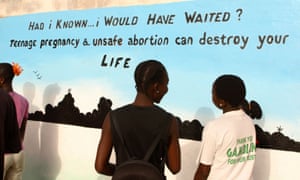
Family planning clinic in Gambia. Photograph: Chloe Hall/REX Shutterstock
With the reinstatement of the ‘global gag’ rule, mothers will visit the clinic with gynaecological problems they might have avoided had they received preventative SRHR education. There will be more deaths, our clinics and health professionals will be burdened by higher caseloads of complications, and maternal and child mortality, and an already overburdened and under-financed health system will face yet more problems.
‘The policy violates human rights to information, bodily integrity and autonomy’
Kathy Mulville, executive director, Women’s Global Network of Reproductive Rights, Philippines
The policy will feed stigma around abortion and prevent millions from making informed decisions about their own bodies
In countries where abortion is decriminalised, and comprehensive safe abortion information and services and contraceptives are widely accessible, we have seen that unsafe abortions and maternal mortality and morbidity are effectively eradicated. This has significant ripple effects for economic and social development; increased school attendance among girls, reduced levels of household poverty and hunger, reduced inter-generational transfers of poverty, mitigated socioeconomic impact of HIV/Aids, and improved environmental sustainability.
In addition to putting much-needed funding in jeopardy, the ‘global gag’ rule will only worsen the already challenging context in which we, our members and local partners work, further stigmatizing efforts to advocate for safe and legal abortions. The policy will feed the already rampant stigma around abortion and will prevent millions from making free and informed decisions about their sexuality and their own bodies, while also violating their human rights to information, bodily integrity, and autonomy in reproductive decision-making.
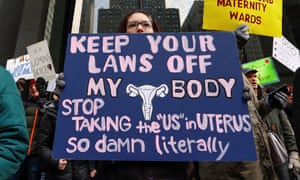
Demonstrators protest at an abortion rights rally in Chicago. Photograph: Kamil Krzaczynski/Reuters
‘It will weaken evidence-based services for the poorest and most vulnerable women and girls’
Suzanne Petroni, senior director – global health, youth and development, International Center for Research on Women, US
The International Centre for Research on Women is not subject to the gag rule, but our local partners around the world would have to sign it – several have already indicated they are not willing to do so. This may constrain our ability to conduct efficient research, used to improve the design and implementation of policies and programmes that reach thousands, if not millions, worldwide.
For example, our US–funded work to understand how to improve the wellbeing of girls in Zambia who are HIV-positive, to ensure adherence to anti-retroviral therapy services by problem drinkers in India, and to expand access to voluntary family planning in numerous countries, may all be affected by the imposition of this new and expanded “global gag” rule. As well as restricting services directly, the rule is likely to diminish the availability and use of solid evidence, and will weaken the design and delivery of evidence-based services for the poorest and most vulnerable women and girls – and men and boys – globally.
‘Women should determine the care they receive, not the US government’
Sera Bonds, CEO, Circle of Health International, US
This is not our first global gag rule rodeo – nor, sadly, is it likely to be our last
Too many organisations dependent on big government funds lose funding in times such as these and are no longer able to provide life-saving services like safe deliveries. We have not taken US government funding for this exact reason; women and their trusted healthcare providers should determine the care they receive, not the US government or a donor.
However, the governor of Texas, where we are based, has pledged to stop funding going to women’s health initiatives, and federal and state aid going to refugees in the state. This doubly impacts our work in the Rio Grande valley where we staff a clinic for refugees. I am sure that, together, we can figure a way through this. This is not our first global gag rule rodeo – nor, sadly, is it likely to be our last.
Do you work for a global health organisation funded by US aid? We want to know how the global gag rule will affect your work. Tell us in the comments below.
Join our community of development professionals and humanitarians. Follow @GuardianGDP on Twitter.
Earlier this month the cold snap across Europe claimed more than 60 lives. In Poland temperatures fell to below -30°C in some regions and 10 people died of the cold on 8 January alone. Meanwhile in Greece and Turkey refugees and homeless people suffered greatly in the unseasonably heavy snow. The sad thing is that almost all of these deaths were preventable.
Every winter hypothermia extends its icy grip, causing 25,000 extra deaths per year in England for example. A decrease in air temperature of 1°C causes a 1.35% increase in mortality across Europe, and added up over the years, cold weather has caused far more deaths than any single heatwave event.
Medically, hypothermia is defined as when the body’s core temperature drops below 35°C, bringing about changes in the composition of the blood and raising the risk of cardiovascular diseases, among other things. Older people are particularly vulnerable, along with children and people suffering from other diseases. So how can we better protect people?
A new study carried out in the Lublin region of Poland has analysed what kind of interventions seemed to have the greatest effect. The results, published in the journal Weather, show that it isn’t just the severe cold snaps that we need to worry about. In fact around 70% of cases in their study occurred early in the winter (between October and December), which they speculate may relate to people being less adapted to the cold, and less prepared.
All of us need to dig out our hats, gloves and winter woollies far earlier, and European health authorities need to start taking preventative action from September, they suggest.
Russia’s president Vladimir Putin has ordered the government to crack down on so-called surrogate alcohol, as the death toll from consumption of a fake batch of bath tincture exceeded 60.
Putin on Wednesday demanded new regulations be put in place to tighten controls over the production and sale of liquids including perfume, cleaning fluids, medicines and cosmetics that contain more than 25% alcohol. He also told the government to look at increasing the legal consequences for violations in the production and sale of these items.
The death toll in the Siberian city of Irkutsk over recent days has now reached 62. Investigators on Monday said they had discovered an underground laboratory in the city making fake boyaryshnik, a tincture supposedly meant to be added to baths for relaxation. The fluid, which normally contains 93% ethanol, as well as hawthorn extract and lemon oil, is widely drunk in Russia as a cheap substitute for alcohol.
However, police found that the batch in Irkutsk contained methanol, a poisonous substance found in antifreeze, instead of ethanol. Local authorities declared a state of emergency in Irkutsk on Monday, and across the wider region on Tuesday. Police seized thousands of bottles of the liquid from shops and kiosks across the region, and authorities ordered a temporary ban on the sale of all fluids containing alcohol.
Twelve people have been arrested for distributing the fake batch, and courts in Irkutsk remanded them in custody on Wednesday.
According to Irkutsk region’s ministry of health, 107 people have been poisoned by the batch of fake boyaryshnik, with 62 dead so far. Around half of them died in hospital, while others were already dead on arrival. There are still 36 people in hospital. Four people have been released having made what local doctors called a “miracle recovery”.
There are two main problems in Russia’s surrogate alcohol market: first is the widespread consumption of items marked as perfumes or bath tinctures. They are exempt from sales restrictions and taxes that normal alcoholic drinks would carry but are often sold at drinks kiosks where it is obvious people would purchase them for consumption. In one Russian region, automated street machines selling Boyaryshnik were installed earlier this year.
The second problem is fake alcohol: there have been numerous cases of underground factories making cheap vodka or whisky and attaching fake labels to the bottles.
In Irkutsk, both problems combined to lethal effect, as dozens died from ingesting a tainted version of something that was in any case not designed as a drink.
The Irkutsk tragedy is an extreme example, but deaths from drinking low-quality alcohol are common. Russia’s consumer watchdog said that during the first nine months of 2016, 9,300 Russians died from alcohol poisoning. Of these, 1,200 had died from methanol poisoning, the watchdog said.
Health officials are launching a campaign to help spot the early signs of sepsis, a condition that has been blamed for about 37,000 deaths a year in England. The campaign, run by Public Health England and the UK Sepsis Trust, is aimed at parents and carers of newborns to four-year-old children. It is part of a series of measures by the NHS to tackle the condition, which arises as a complication of an infection.
“We need to get far better at spotting it across the NHS. By raising awareness and improving clinical practice, we will save lives in the fight against this horrible illness,” said the health secretary, Jeremy Hunt.
Melissa Mead, a UK Sepsis Trust ambassador, whose baby son William died of sepsis two years ago, will appear in a new film that forms part of the campaign. “Sepsis is a cruel, ruthless condition that doesn’t discriminate and can affect anyone,” she said. “I hope this campaign reaches as many people as possible, so all parents out there know about sepsis and how serious it can be. The more parents know, the quicker they can act if they suspect their child may be suffering from sepsis – it could be life-saving.
“I will never hear my sweet child say, ‘Mummy, I love you.’ I will never know the man that William would have grown to be. So please, it is too late for me to ‘think sepsis’ but it’s not too late for you.”
Millions of leaflets urging parents to take their child to A&E or call 999 if their child is displaying symptoms will be delivered to GP surgeries and hospitals across the country. Parents should take immediate action if their child looks mottled, bluish or pale, appears lethargic or difficult to wake, is abnormally cold to touch, is breathing rapidly, has a rash that does not fade when pressed, or has a fit or convulsion.
Hunt praised Mead – as well as “families who have tragically lost children to sepsis” – for her help with the campaign.
Sir Bruce Keogh, national medical director for NHS England said: “This campaign is an important addition to our ongoing work – we will never treat sepsis in time unless everyone ‘thinks sepsis’.”
Dr Ron Daniels, the chief executive of the UK Sepsis Trust, said: “With sepsis claiming over 37,000 lives annually in England, this awareness campaign is a crucial step forward. Clinicians and members of the public can save thousands of lives every year if they just ask: could it be sepsis?
“The UK Sepsis Trust welcomes this initiative, but system-wide improvements to sepsis care must follow. We’re delighted to have developed campaign materials that will empower parents to identify sepsis symptoms in their children and seek medical attention immediately.”
Hospitals are failing to investigate far too many deaths and frequently ignore and exclude relatives of patients who have died, a major NHS inquiry has found.
The health service’s failure to properly look into deaths is “a system-wide problem” that means hospitals are not learning from their mistakes and thus stopping other tragedies from occurring, its report says.
The Care Quality Commission report, ordered by health secretary Jeremy Hunt, is scathing about hospitals’ shoddy and insensitive treatment of bereaved relatives’ requests for information and to be involved in an inquiry. One relative told the CQC that they encountered “more courtesy at the supermarket checkout” after their loved one’s death.
Prof Sir Mike Richards, the CQC’s chief inspector of hospitals, said: “Families and carers are not always properly involved in the investigations process or treated with the respect they deserve. We found this was particularly the case for families and carers of people with a mental health problem or learning disability which meant that these deaths were not always identified, well investigated or learnt from.”
Prof Sir Mike Richards: ‘Families and carers are not always … treated with the respect they deserve.’ Photograph: John Stillwell/PA
Deborah Coles, director of the charity Inquest, which investigates deaths in custody, said the review of how hospitals respond to deaths had exposed “a defensive wall surrounding NHS investigations, an unwillingness to allow meaningful family involvement in the process and a refusal to accept accountability for NHS failings in the care of its most vulnerable patients”.
The CQC, the care watchdog for England, intends to overhaul how hospitals look into unexpected patient deaths or deaths owing to mistakes by staff. Investigations in future should be more thorough, more open and involve families much better, it promised.
Hunt told the CQC to undertake the inquiry after it emerged that Southern healthcare NHS foundation trust only investigated 1% of all deaths among patients with learning disabilities over a four-year period and even fewer – 0.3% – of those with mental health problems.
A review group the CQC set up to assess hospitals’ procedures said any relative should be told how and why their loved one had died.
“Yet throughout the review process we have heard from families who had to go to great lengths themselves to get answers to these questions, who were subjected to poor treatment from across the healthcare system and who had their experiences denied and their motives questioned,” said Dr George Julian, the regulator’s special adviser on family and carer experience. This was particularly the case for relatives of patients who had had either a mental health problem or learning disabilities.
One parent told the CQC: “I was put in a room. I shall never forget what the nurse in the room told me. She said, ‘You have got to accept that his time has come.’ Bearing in mind my son was just 34 years old.”
Katherine Murphy, the chief executive of the Patients Association, said the report confirmed that too many hospitals did not honestly and openly investigate complaints from relatives. “These families have already lived through heartbreaking times – watching their loved one pass away – and they simply should not then be treated with so little respect and consideration,” she said.
The review team based their findings on assessing how 12 NHS trusts responded to unexpected or unusual patient deaths or deaths where errors had occured, discussion with more than 100 families and a survey of all NHS trusts in England.
When the team reviewed 27 investigations hospitals had undertaken they found that the families’ views had been taken onboard in just three cases. Many relatives were not kept informed about how investigations were progressing, often causing further distress.
The Academy of Medical Royal Colleges, which represents doctors, will help the CQC draw up an agreed system for investigating unusual deaths. Coles said a truly independent investigation framework was needed to tackle head-on the dangerous systems and practices which were “costing people’s lives”.
Problems the CQC found included families’ involvement in investigations being merely “tokenistic”, the views of NHS staff being given greater weight than that of relatives and hospitals seeing family members as “antagonistic” if they sought too much information or involvement.
Real progress in driving down infections and deaths from malaria will be at risk if substantially more funding is not forthcoming, according to the latest annual report on the epidemic.
Last year, more than 400,000 people (pdf) – mostly small children and pregnant women – died from malaria. Insecticide-impregnated bed nets to sleep under and effective drug treatments have brought the number of deaths down by nearly 30% worldwide in the five years from 2010 to 2015; the number of new cases over the same period is down by more than 20%. But the report, published by the World Health Organisation, shows there are substantial gaps in the coverage.
Some countries such as Sri Lanka and Kyrgyzstan have eliminated malaria and the WHO says the target of elimination in ten countries by 2020 will be met. Last year at least ten countries had 150 cases or fewer and nine more had between 150 and 1,000.
But the task of reducing the toll of malaria in the heavily endemic countries of sub-Saharan Africa, which have 90% of cases and 92% of deaths, is hard and needs more resources, says the report.
“We are definitely seeing progress,” said Dr Pedro Alonso, director of the WHO Global Malaria Programme. “But the world is still struggling to achieve the high levels of programme coverage that are needed to beat this disease.”
On the positive side, more children are being tested to determine whether they have malaria, so that the treatment is effective, and more pregnant women are being given drugs to prevent them getting malaria.
But an estimated 43% of the population of sub-Saharan Africa was not protected by nets or indoor spraying to kill the mosquitoes that transmit the disease last year. A third of the children with fever in 23 African countries were not taken to a health facility where they could be tested and appropriately treated.
While funding went up steeply between 2000 and 2010, it has flatlined for the last five years. It is estimated that $ 6.4bn (£5bn) per year is needed to keep the global malaria elimination efforts on target in 2020, but in 2015 it was only $ 2.9bn, or 45%. A third of that is provided by the governments of countries where malaria is endemic. Last year the US contributed 35% of the total and the UK put in 16%. The report says that substantially more money is needed both from international donors and from the affected countries.
“If this flatlining remains, we will not be able to achieve the ambitious goals and targets the world agreed on a year ago,” said Alonso. In 2015, the World Health Assembly adopted a global technical strategy for malaria, with milestones every five years until 2030. It calls for a 40% reduction in malaria cases between 2015 and 2020. Only 40 of the 91 countries with endemic malaria are on track to achieve that.
Nathan is a 20-year-old arts student. He had depression before he came to university, and felt well-supported by his family, but it has been difficult living and studying away from home.
“Suddenly you come to university and you’ve not got your family around you. So you need your friends, which is tricky because they are busy and stressed themselves.”
Nathan (who did not want his real name to be used) has a history of self-harming and has received support from the student mental health services, which he says are over-subscribed.
When he visited them three weeks ago to try to get counselling, he was told there was a waiting list and he would not be seen until after Christmas. He was offered a 20-minute drop-in session but he says he feels he needs more than that.
Nathan is a student at the University of Bristol, where it emerged this week that three teenagers, all believed to be first-year students, had died within weeks of starting their studies this term. The cause of death in each case will be decided by a coroner, but relatives of two of them have indicated that they killed themselves.
The deaths at Bristol, one of the most prestigious universities in the country, have resurfaced concerns about a crisis in student mental health and the capacity of universities to respond to it. A recent Guardian investigation revealed that the number of students seeking counselling at university has gone up by 50% in the past five years.
“The pressures on students to be successful in all aspects of their lives are completely unrealistic,” said one head of student services. New students were particularly vulnerable as they negotiated the social pressures of freshers’ week and the academic expectations of their courses.
“Not only are they expected to be A* students, they are expected to be living the life, to be good looking, to have the right clothes and to do the right social activities.”
Students have a lower suicide rate than the general population but it appears to have grown. Figures from the Office for National Statistics show that in 2014 there were 130 deaths by suicide of full-time students aged 18 and over in England and Wales. This compares with 112 in 2011; and 75 in 2007. The increase can be explained in part by the growing university population, which now stands at 2 million.
A survey by the National Union of Students last year, revealed that nearly eight in 10 student respondents (78%) had experienced mental health difficulties over the previous year and a third (33%) said they had had suicidal thoughts. Other surveys have shown that one in five students are self-harming.
Ruth Caleb, the chair of the Universities UK mental wellbeing in higher education working group and head of counselling services at Brunel University, said most, if not all such services were seeing students who had had suicidal thoughts. Although student deaths by suicide were rare, they happened across the sector and had a devastating effect,” she said.
“It’s absolutely heartbreaking. It raises awful feelings. It just makes you feel very, very sad and wish you could have done something to support the student, but quite often they’ve not come forward.”
Bristol University. Photograph: eye35.pix/Alamy
In Bristol, up and down the chilly hills of Clifton on Thursday morning, news was slowly filtering through as students made their way from seminars and lectures to the student union. Not everyone knew. “Three?” exclaims one girl, clutching a pile of books on film noir. “I had no idea,” said another.
Nathan had heard about the deaths, as had his friend Bella, a second-year English student who knew one of the students because they came from the same area and used to go to the same parties. “It’s weird,” says Bella. “It was so unexpected.”
“For everyone involved it’s shocking,” said Mark Ames, director of student services at Bristol. “We have 22,000 students, so in any one year we would expect to have to manage the fact that some of our students will die while they are with us.
“In common with any other university, on occasion we do have a student death that unfortunately the coroner might conclude was death by suicide. But our numbers over the years do not suggest we have a trend here. Unfortunately, what we have is a coincidence.
“As far as we are aware there’s no link between the deaths – although we are very aware of the risks of clusters in these kind of events.”
In the last academic year Bristol had one death by suicide; there were none the year before that, and one the previous year.
When told about Nathan’s experience, the university apologised and urged him to contact their services again.
“Like every university counselling service, we are over-subscribed for individual counselling,” a spokesman said. “Many of our counselling interventions can begin immediately. We assess the needs of each student to work out what is the most appropriate intervention for them.”
Universities are aware that the first few weeks in higher education can be challenging for vulnerable new students.
“Anybody changing their life is going to be anxious,” Caleb said. “Quite often you’ve moved geographically. It’s a completely different life. You are out of your comfort zone, you don’t know anybody. You have to come out of your room and make friends.”
Bristol puts on live performances in freshers’ week by a New Zealand organisation called UniSmart which provides a one-stop student survival guide, including information about welfare and wellbeing, and there are welcome talks from staff who oversee halls of residence. But some students the Guardian spoke to said they would have liked more information about the mental health support services available. Others said they felt well looked after.
Bristol, like the rest of the sector, has witnessed a marked change in the support needs of new students over the last few years. The number of students who lack the necessary “resilience” to meet the challenges of independent living and study has grown, according to Ames, and many more arrive having already been diagnosed and treated for a mental health condition.
Ben, who is in his first-year of a law degree, is one such student. Originally from the north, he feels a long way from home. He informed the university before arriving that he had a history of mental health problems, but has heard nothing since, and though he said he felt well now, he would not know where to go for help.
“I feel it should be a bit more proactive,” he said. “It’s daunting coming to university. The course is intense. You are bombarded with all this social stuff, but it can get quite lonely. You can go into yourself.”
A fifth-year dentistry student said she felt well supported by the university. “The university do send out regular emails about if we are not coping well, or if we feel stress. There’s definitely support available on the website.”
Two second-year medical students agreed they felt well supported, though they thought medics benefited from a particularly close-knit community. Others said it depended on who you ended up living with.
Mental health and wellbeing are a growing priority across the sector, but experts say more needs to be invested in services in some universities. A report in September by the Higher Education Policy Institute thinktank said some institutions needed to triple their spending on mental health services to meet demand.
The University of York has been more open than most about the challenges of providing mental health support after it emerged that there were five student deaths by suicide between February 2015 and January 2016. A university report into student mental ill health included data from ambulance callouts to the university, which showed that in the first few weeks of 2016, up until 9 February, there were 12 callouts for incidents of self-harm or attempted suicide – half of all callouts to the university. In the previous year there were 134 emergency callouts, of which almost a third (32%) were for self-harm or suicide attempts.
A spokesperson for the university said: “As the number of students considering higher education grows, we must anticipate mental health vulnerabilities by encouraging openness between staff and students to talk about these issues in a supportive environment.
“Over the next three years we are investing £500,000 in mental health support services and awareness campaigns across campus. This includes expanding our in-house counselling service, with the addition of two new members of staff, to ensure that those who need urgent appointments can be seen very quickly.”
The universities umbrella body, Universities UK, is working on a strategy aimed at improving the mental health and wellbeing of students.
“It’s up to universities to make student life as stress-free as possible,” said Caleb, who is on the steering group. “Universities are trying to do their best and still we are seeing a high level of mental ill heath coming through. Some students you are very concerned about and you need to look after them very carefully. Sometimes it’s the ones who have not disclosed [that they are having are problems].”
Siobhan O’Neill, a professor of mental health sciences at Ulster University, agreed: “It’s not just about the services provided, it’s about students coming forward. We find that students are reluctant, particularly the ones at risk of suicide, to ask for help.”
Students are under more pressure than ever, she said.
“There’s student fees and debt. Students and their families are risking more by going to university. The stakes are much higher.” Then there are the additional pressures from social media and “social perfectionism”.
She added, however, that it was important not to be alarmist – most young people do well at university and manage the transition from home to independence successfully. “For most it’s a really good time – sometimes the best years of your life.”
In the UK, the Samaritans can be contacted on 116 123. In the US, the National Suicide Prevention Hotline is 1-800-273-8255. In Australia, the crisis support service Lifeline is on 13 11 14. Hotlines in other countries can be found here
Sub-zero temperatures are expected to sweep across Britain this week after the first cold snap of the year, prompting warnings that vulnerable people should prepare for a freezing winter.
The chilly weather coincides with the launch of a major NHS campaign urging people with long-term health conditions and the over-65s to take action in an effort to reduce the 25,000 extra deaths that occur each winter.
Prof Keith Willett, medical director for acute care at NHS England, said: “It is vital that the most vulnerable people take preventative steps to keep healthy and stay well. We have a high number of A&E attendances over this time that are due to issues that could have been avoided had people sought advice at the first sign of illness.”
The Stay Well This Winter campaign will use TV, radio and social media to encourage people to wrap up warm and consult a pharmacist as soon as they feel unwell rather than waiting. It also encourages people, particularly those with long-term illnesses or mobility problems, to heat their homes to at least 18C (65F) and to check on friends and neighbours who may be vulnerable.
Prof Paul Cosford, director for health protection at Public Health England, said: “With winter on the way, now is a good time to make sure you, and those you know who may be particularly at risk from the cold, are as prepared as possible. If you qualify for the free flu jab, get it now.
“Also remember that eating a healthy, balanced diet and that staying physically active can keep you healthy.”
He added that assistance with heating costs is available to those who might need it. “There are a variety of ways you can apply for help to keep your house warm, such as winter fuel payments, warm home discounts and cold weather payments. If you meet the criteria, register for priority service with your energy and water suppliers.
“Try to maintain indoor temperatures to at least 18°C (65°F), particularly if you find it hard to get around, have a long-term illness or are 65 or over. You may prefer your living room to be slightly warmer,” he said.
Cold weather increases the risk of heart failure, kidney disease, stroke or dementia, as well as making heart attacks and strokes more likely.
For each degree centigrade the temperature falls below five degrees, there is a 10% increase in the number of older people seeing their GP about breathing problems, a 0.8% increase in emergency hospital admissions, and a 3.4% increase in deaths, research shows.
The UK shivered through a chilly Bonfire night, as temperatures fell below freezing in places, snow fell on higher ground and biting winds made conditions feel colder. On Sunday night temperatures outside the south-east were expected to fall below zero across much of the country.
Tom Crocker, a forecaster at the Met Office, said the cold snap is likely to last: “The forecast over the next few days is staying rather chilly.”
The BBC expects Monday night to be the coldest so far this winter, leading to widespread frost. Crocker expected Monday to be bright but cold across much of the country.
BBC Weather (@bbcweather)
Expect the coldest night of the season so far during Monday night. Widespread frost to greet you on Tuesday morning. Stav D pic.twitter.com/z4kNVZutss
November 6, 2016
“Tuesday looks like being another relatively bright day, but we have got quite persistent rain moving in from the west on Tuesday afternoon,” he said. Snow is expected to be widespread on higher ground.
The precipitation is likely to make Tuesday night warmer, he said, although it is still likely to be below freezing in rural areas.
“It will be turning a little bit milder towards the end of the week, but still chilly and unsettled,” Crocker said. Temperatures are expected to move into the low double figures, especially in the south.
Met Office (@metoffice)
It’s another #cold day – #temperatures will struggle but it will feel much #colder than this with a strong northerly #wind – wrap up warm! pic.twitter.com/EtlvuRFx02