matter etiketine sahip kayıtlar gösteriliyor. Tüm kayıtları göster

27 Mart 2017 Pazartesi

Demonstrations matter – they create the kind of power politicians despise

The tide is turning and you can feel it on the streets of the world’s capital cities. On Sunday, hundreds of peaceful protesters were arrested in Moscow and St Petersburg, after thousands massed in unsanctioned demonstrations against corruption.


There were similar scenes in Minsk, where punitive taxes on the unemployed have driven people to the streets. In February, half a million Romanians forced their government to abandon a law pardoning corrupt officials, by taking to the streets.


In Britain, in the month of March, three major protests have taken place: a demo to save the NHS that drew up to 250,000 people; a 30,000-strong march against racism; and, on Saturday, a protest in favour of staying in the EU, again numbering more than 100,000 people.
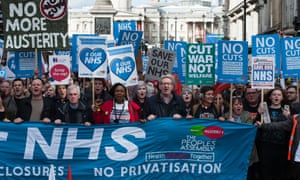


National demonstration in London to protest agains the state of the NHS.


National demonstration in London to protest agains the state of the NHS. Photograph: W Szymanowicz/Barcroft Images

And when Donald Trump’s repeal of Obamacare failed in Congress, although the blow was struck by rebel Republican lawmakers, the force behind it surely came from the thousands of people who swarmed into town hall meetings to berate their representatives in the runup to the vote.


The point is not that “mass action works” – it rarely does, on its own. The point is that it’s not futile. Putting your body on to the street, or into a mass meeting, or getting it thrown into a police van – as happened to hundreds of Russians and Belarusians this weekend – creates power of the kind professional politicians despise.


If you want to understand how irked the political class feels when people exercise their right to protest, study the Twitter feed of MP Owen Smith. The one-time Labour leadership contender didn’t join the Save the NHS demo – but he did find time, at the very moment a quarter of a million people were on the streets – to belittle them. He tweeted to a follower: “Is that how we save it then? With a march? I always thought it was better to win elections and then fund it properly.”


Brief though it is, Smith’s tweet encapsulates an entire political philosophy. The people who ignored Smith’s advice and marched for the NHS understood what the closeted technocrats do not. Mass action creates its own dynamics; they can be massive and far-reaching – despite the scant and bland coverage all demos get on TV and in the press.


In the first place, assembling in a large crowd shows you that you are not alone. And it informs you in great detail about the kind of people you are not alone with. On the NHS demo, it was obvious that huge numbers of NHS workers had turned out, alongside user groups often led by elderly people. Why is that interesting? Because in the modern, privatised and corporatised NHS, the staff are afforded few collective outlets for expression. Coming together – not just as “nurses from Doncaster” but nurses, doctors and patients from Doncaster – breaks down the invisible walls institutional life creates.


On Saturday’s Unite for Europe march, it was – by all accounts – the liberal salariat that predominated. A lot of sarcasm has been aimed that way by the Labour left and the media right but, again, such mass gestures are about finding each other, testing out arguments, and creating and transforming messages.
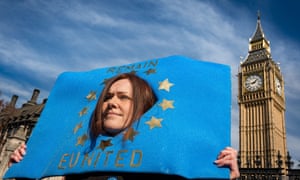


Unite for Europe march, London.


Unite for Europe march, London. Photograph: Valerio Berdini/Rex/Shutterstock

If you add to all this the experience of resistance to Trump in the US, the global picture becomes interesting. On 21 January the US experienced possibly the biggest mass mobilisation in its history – with an estimated 4.2 million people protesting against Trump’s inauguration in towns and cities across America.


What social media adds to such mobilisations is not just visibility but the intensification of the shared experience. Each block of 1,000 protesters on any demo in the developed world is really a thousand nodes on a network containing tens of thousands of other nodes. It is a moving and incessant information-distributing machine.


And that is why the first move of any government that wants to curtail democracy is to curtail the right to demonstrate. Putin outlawed the majority of planned demos last weekend, but they went ahead regardless. Slammed into the police vans were not just brave but faceless Russians, but people with Facebook and Twitter followers all over the planet.


That’s why demonstrations matter and why, in the name of resisting the growing kleptocracy, racism and authoritarianism of political elites, we should keep on demonstrating.


But demonstrations are never enough. Just as 30,000 people on the streets usually merits only a colourful picture and a caption in the newspaper, what they did afterwards is barely recorded at all. This is why revolts and revolutions always surprise elites, and a media conditioned to see the world through the elite’s viewfinder.


“When the people decide to live …” wrote Tunisian poet Abu al-Qasim al-Shabi, “chains will be broken”. Those words were widely shared in 2011 during the Arab spring.


Revolts happen because elites push things so far that large numbers of ordinary people conclude there is no other option but to resist.


You can do some things at the ballot box: the defeat of Geert Wilders in the Netherlands, the humbling of Paul Nuttall in Stoke-on-Trent and – hopefully – the defeat of Marine Le Pen in France on 7 May. But some challenges require you to don a pink hat, or – as the Russians did – hang a designer sports shoe around your neck, paint an amusing sign, march, take pictures and tweet them to your friends.


When the people decide to live, demonstrations are what they do: and there’s a lot of people demonstrating it as spring gets under way.


Demonstrations matter – they create the kind of power politicians despise

22 Kasım 2016 Salı

Samer Nashef: "Understanding the healthcare system is a matter of life or death"

So you’ve been told you need an operation. Can you be sure that you really should go under the knife? What is the risk of having surgery? Or the risk of not having it? Is the timing of the operation ideal for you? Is your hospital any good? Is your smart and smooth-talking surgeon with an excellent bedside manner competent?


More than 30 years have passed since I stood as a mere medical student before an audience of distinguished surgeons and delivered a talk in which I examined the success rates of their operations. I did not expect to be ostracised for daring to bring this into the open and I would never have anticipated this early skirmish with the medical establishment would lead to a lifelong dedication to the evaluation and improvement of surgical outcomes.


The subsequent two decades brought about a revolution in medical care in the UK. For the first time, the quality of care became measurable and, as a direct consequence, my own speciality of heart surgery made a quantum leap towards better and safer outcomes for patients.


Why write a book about it? Well, the public has a right to know what happens behind the operating room door. The “patient” is evolving into a “healthcare consumer”. There are reams of data available about the myriad medical and surgical treatments and the people who dish them out. My book provides you with the tools to interpret this information. Also, the study of medical risk is a young science that is constantly breaking new ground – and it is fascinating.


Not so long ago, even the most eminent doctors treated patients with absolutely no evidence that their treatments did any good. In fact, many treatments did a lot of harm. Nowadays, doctors practise evidence-based medicine, meaning that the effectiveness and safety of the treatment is backed by solid, scientific facts. The next step on the ladder towards even better medicine is how well these treatments are administered. This covers everything from performance of an operation through to the preoperative and postoperative care. It also includes the safety and quality mechanisms integrated into the structure and the governance of the hospital providing the treatment. This medical “breakthrough” is recent and has only just begun, in the last 20 years or so, to receive the attention it deserves.


Many things contribute to your surviving an operation. Discoveries in this field have been true eye-openers. Good technical surgery is very important, but surprisingly human factors, including holidays, recent events, communications and surgeons’ personalities, play a part. In fact, the only factor that seems to make not a scintilla of difference to whether you survive an operation is your choice of anaesthetist.


Data about surgical outcomes are now in the public domain in Britain. We are now beginning to have true transparency in healthcare and, in that regard, heart surgery leads the way. Transparency, although generally considered a good thing, also has unintended and nasty consequences that can cause patient harm. In The Naked Surgeon, I show the benefits of transparency, but also draw attention to the many pitfalls. In addition, I hope to give you insight into my world of heart surgery, one full of drama and humanity.


At one time or another we all have to make decisions about our health. Understanding the system, its mechanisms and thought processes, can help us make the right decisions about what can often be a matter of life or death. That’s why I wrote The Naked Surgeon.


Extract


What is amazing about heart surgery is not that it exists and works, but that it took so long to appear. After all, the heart is a pump, pure and simple. When something goes wrong with a pump, it is a plumbing problem, needing plumbing solutions. How else do you fix a blockage in a pipe, or a leaky valve? Yet, for more than 2,000 years, the heart was exclusively the domain of the physician, not the surgeon, and woe betide the surgeon who dared touch it. The taboo on operating on the heart was so strong that Theodor Billroth, one of the great founding fathers of modern surgery, stated in 1889 that “a surgeon who tries to suture a heart wound deserves to lose the esteem of his colleagues”.


More about The Naked Surgeon


Doctors are supposed to have a bedside manner: Nashef has the authorial counterpart, a knack of even making you care, for instance, about the mechanical properties of the suture material Prolene (this isn’t a mere technicality but a life-and-death matter about which Nashef cares deeply). – Peter Forbes


Buy the book


The Naked Surgeon by Samer Nashef is published by Scribe Publications at £8.99 . and is available from the Guardian Bookshop for £7.37.


Samer Nashef: "Understanding the healthcare system is a matter of life or death"

22 Eylül 2016 Perşembe

The cost of the NHS is a matter of perspective | Letters

The half-truth as you quote Tim Farron as saying about paying for the NHS is that the money has to come out of people’s pockets (Editorial, 21 September). This is not as difficult as it may sound at first if we work out the value to the community of the services provided by the NHS and compare it with the costs. The consistent increase in longevity since 1948 must owe a great deal to its existence, and the addition to the national income year by year must run into billions of pounds if we put a proper value on such things as enabling people to return to work after injury or illness after a shorter absence, or even at all. Reduction in pain and anxiety runs into many more billions, as well as the benefits from improved drugs, new and simpler methods of surgery, treating conditions in outpatients departments, or regular visits to GP surgeries (instead of hospitalisation).


If a monetary value were to be put on these and many other of the NHS’s activities, this would produce a “profit”, year by year. Part of this could then be ploughed back into the service in a similar way to part of commercial and industrial profits being used to finance expansion. It is time to stop nit-picking on the cost side of the NHS and get down to working out just how much we owe it.
Harvey Cole
Winchester, Hampshire


Raising sufficient revenue to finance our currently strained NHS shouldn’t be a problem economically. When a private company employs more people to produce more goods or services that people clearly need and demand, an appropriate price has to be levied to pay wages and other costs, reimburse lenders and reward shareholders. A private insurance company has to levy premiums on its new customers. In no case is such pricing felt to be an undue imposition with adverse economic effects. Indeed, economists generally consider any such move to have positive multiplier effects on the rest of the economy, as the initial new workers increase demand for general consumer goods.


The same logic surely applies in the case of public services. Provided people really need and demand the services (obviously very much the case) and more service is indeed given (which should be the case if quality workers are employed), then raising revenue through tax or social insurance should have unambiguously good effects. And we can both safely expand essential services and employ good people in well-paid professional and semi-professional public jobs providing these services, more or less to the point that public need and demand is met. If so, this is a massively important (hitherto insufficiently recognised) point that all political parties need to take on board.
Bernard Cummings
Erith, Greater London


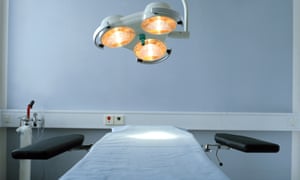
Operating table and lamp


State pensioners should make NI contributions according to their ability to pay, writes Alan Baker. Photograph: Henrik Sorensen/Getty

I stopped paying national insurance contributions when I reached the state pension age 12 years ago. Since then I have needed to make increasing use of the NHS. I have two suggestions for increasing funding for the NHS.


First, require state pensioners to make NI contributions according to their ability to pay. If abolition of the exemption were to be considered ill-advised by political parties fearful that such a measure would lose them votes, then NI contributions could instead be phased out and merged into the income tax system. This approach, less damaging politically, would enable pensioners to contribute to the funding of state pensions and benefits and the NHS fairly, according to their means.


Second, the public need to be better informed about the costs of the NHS, so that we might be more willing to pay for its services. The real cost of a “free” visit to a GP and of “free” common operations such as hip replacements, cataract removals and heart bypasses should be displayed boldly in surgeries and in pharmacies. More of us might then recognise that the NHS provides excellent value for our money – and needs more to meet its understandably rising costs.
Alan Baker
Cambridge


The Labour leadership have not been as forthcoming as they might about their views on the NHS. Tim Farron sees them as supporting “renationalisation”, which means the current version of the NHS reinstatement bill awaiting its second reading in November. If it were passed into law, £10bn more annually would become available without any increase in taxation, because the current marketised system costs that much more in administration than did the public service model NHS which preceded it (admin costs are now over 14% of the NHS budget instead of the previous 5%).
Jeanne Warren
Oxford


Your editorial suggests that Jeremy Corbyn’s campaign has failed to provide detail on how he would finance an expanded NHS. This omission is understandable. On the day of his innovative health policy launch in August, the media chose to focus on “traingate” (Report, 25 August). This ludicrous non-news story, which successfully blew away Corbyn’s attempt to publicise his excellent health policy details, involved Richard Branson, whose Virgin Healthcare has a strong commercial interest in eradicating the NHS. What a coincidence.
Catharine Sadler
Little Birch, Herefordshire


Join the debate – email guardian.letters@theguardian.com


The cost of the NHS is a matter of perspective | Letters

18 Eylül 2016 Pazar

The ousted doctor: ‘My patients’ souls matter most’

On a Tuesday in July, Dr David Zigmond skimmed down London’s Old Jamaica Road on his 1980s motorbike, as he had done for the past four decades, curving into the courtyard of St James church in Bermondsey, cutting his engine, removing his helmet and striding into a part of the church where he held his surgery. Here there was the customary ebullient greeting of staff and patients, questions about new babies and ageing grandparents. The 69-year-old’s slightly dishevelled appearance – cord trousers, checked shirt open at the neck “although I wouldn’t go as far as Tom Jones in his day” mattress-stuffing curls and a boyish smile – lets you know he doesn’t do formal.


He welcomes patients calling him by his first name if they wish, although “not everyone wants the ‘call me Dave’ approach.” In his consulting room there are exotic model birds winking at you – a couple of toucans, parrots hanging from lamps – and just about everywhere you look polished carved wooden animals, many bought for him by patients. The interior, with its art prints covering the walls, resembles a well-used sitting room with deep armchairs and a strong, comfy chair – perfect for when Dr Zigmond needs a patient to lean back and be examined, yet feel at ease.


Dr Zigmond has an engaging garrulous good humour and evidently takes enormous pleasure in his work, drawing on skills gained from training as a psychiatrist and psychotherapist as well as in medicine (For the past 38 years he has spent one day a week at Hammersmith Hospital doing psychological medicine): “My patients’ souls are as important as their physical wellbeing,” he says.


Today, 5 July, his diary has a space marked out for inspection by the Care Quality Commission, the NHS body that judges how efficient and safe doctors’ surgeries are as “systems”. He is sanguine. He plans to show them a practice that patients grow attached to, many into the third generation, where staff stay for years and the atmosphere is unmistakably relaxed.


A wall lined with shelves housing thousands of brown paper files, dating back to 1987, containing Dr Zigmond’s handwritten comments


Off the wall: thousands of brown paper files, dating back to 1987, containing Dr Zigmond’s handwritten comments – he didn’t use computers for his notes. Photograph: Phil Fisk for the Observer

There has never been a serious complaint against him, and he is exceptional in not having been called for a disciplinary hearing in all his 40 years as a GP. He anticipates an agreeable couple of hours, as in 2014 when the inspectors last came. He had explained his philosophy and modus operandi, talking of medicine as an art form, “being a human being so patients feel they know well me enough to trust, while maintaining boundaries – compassionate detachment, I call it.”


“On that occasion,” he will recollect later, “they seemed concerned with seeing whether I was running a healthy, happy, well-functioning practice. They looked at feedback forms, talked to patients and made intuitive judgment.” They gave him a glowing report.


This time, when the CQC delegation – a doctor, a compliance officer and someone to survey patients’ views – arrive at his unorthodox consulting room and take their seats, they make plain that no small talk is required. The atmosphere, Dr Zigmond will say later, quickly chills. This investigation will be very different.


They have come through the well-tended graveyard of St James church, modelled on a Greek temple with pilloried galleries around three sides, by architect James Savage. For all its grandeur, it is set in one of London’s poorest neighbourhoods, surrounded by acres of tower blocks and housing estates. The inspectors launch into issues surrounding Dr Zigmond’s noncompliance with regulations and what it may mean for his 1,700 patients.


Giving patients enough time to let me know what is going on with them is part of protecting their wellbeing


Dr Zigmond believes all will be well if they can listen to his reasoning. “Let’s talk, have a conversation,” he suggests. “That way you’ll get a real understanding of our struggling, flawed but wholesome little world here. I want to be candid, warts and all.”


So he describes relegating or discarding things. “For instance, formalities to demonstrate corporate compliance: irrelevant data inputting, sticking rigidly to care pathways…” Later he describes how “one of the inspectors, a neatly suited and formally mannered man in his mid-50s, clears his throat and talks of other areas of concern…”


Dr Zigmond is being assessed under new regulations brought into force in late 2014, and the inspectors, ordered to gather neatly tabulated data, are not impressed by his explaining that over-regulation destroys much of our best healthcare. But he ploughs on: “I know the argument that the institutional world is acting on behalf of patients, but it has proved far from failsafe. I remain convinced that giving patients enough time to let me know what is going on with them is part of protecting their wellbeing.”


Dr Zigmond’s concern chimes with the new recommendation by the BMA that GP appointments should be five minutes longer than the present 10 minutes, because this would lead to improved decision-making and service, and allow for the complex needs of an ageing, and increasingly obese, population to be understood and discussed.


The delegation leaves and, at the end of the week, Dr Zigmond takes off for a brief holiday in France with his partner. Getting home, he finds the answer machine flashing. It is his receptionist saying the CQC are seeking an emergency order to close down his practice. He has to be in court the following morning.


There is no time to prepare.


“I arrived flustered, hurried, and alone at court,” he tells me. “The CQC had assembled massive and well-armed forces with hundreds of pages of ‘evidence’. Very soon I could see the professional profile they constructed: reckless or feckless, casually or deliberately unsafe, disobedient and unreformable – in short a gross and intolerable liability to any public service.”


As he listened, he wondered whether his book, If You Want Good Personal Healthcare – See a Vet, published last year, a collection of essays inveighing against the way the NHS is becoming increasingly depersonalised, had been a black mark against him.


The case lasted eight hours, the bench listening attentively to Dr Zigmond as he explained there are times when noncompliance must be the order of the day “if we are to provide our best personal care for others”. The magistrate seemed sympathetic but concluded that his noncompliance posed a risk to patients. Although he could continue practising as a doctor, his surgery must close with immediate effect. And that was that.


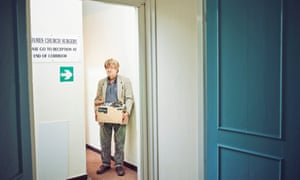
Dr Zigmond holding a box and looking glum as he packs up his surgery


End of an era: ‘Ever increasing electronic traffic numbs our brains, dumbs our speech and often displaces off-screen reality,’ says Dr Zigmond in his surgery. Photograph: Phil Fisk for the Observer

Michele Golden, head of inspections for London at the Care Quality Commission, acknowledges how harsh this seems and she wants to be as helpful as possible, but she cannot talk about Dr Zigmond’s case specifically. At a time when the NHS needs to find the best possible way of coping with the enormous demand it faces, she seems eager that I understand they must regulate medical practice with what they have concluded is the best possible data. That way they can make evidence-based decisions. Golden tells me: “We have five key questions which must be satisfied: is the system being run by a doctor safe, effective, caring, responsive, well-led? This covers a wide range of matters such as following up patients, repeat medicines, being meticulous about reading all information sent about a patient, necessary checks on the things that relate to patients’ safety in all ways. It is very rare indeed for us to apply to court for an emergency suspension and we only do it where we fear serious risk to health and wellbeing.”


It is very rare for us to apply for an emergency suspension and we only do it where we fear serious risk to health


So within this remit how much attention is paid to the views of patients saying they are satisfied with their doctor? Golden considers: “We know, from various inspections, that patients will say how happy they are, and it may be that their doctor is a very nice person, but that doesn’t mean they understand if the system is actually unsafe for them.”


Dr Zigmond and I are sitting in his office, where he is taking brown paper files, dating back to when he began here in 1987, down from the shelves. All are handwritten – he is one of the few remaining doctors not using computers for his notes. “Files will be collected over the next three weeks and stored…” It is this thought that makes his eyes water, and he suddenly has the look of a desperately sad child who doesn’t understand the world any longer.


So why, I ask, didn’t he try compliance-lite which might have satisfied the powers-that-be? “It would have taken too much time and energy. I would not have been able to provide good quality continuity and personal care. Ever-increasing electronic traffic numbs our brains, dumbs our speech and often displaces off-screen reality.”


As we talk, several patients arrive having found the notice posted on the door saying the practice is closed. One is Debra McDermott, 54, who erupts through the door, saying everyone on her estate is going mad. “David is a doctor who knows you are ill before you do, and who listens to what you say and responds. He sees my son and my grandchildren. We’ve got very elderly people in the block and they are panic stricken, they don’t want to go to a huge new place with doctors who don’t know them.”


During the day, around 100 patients come to express themselves in tears, hugs and fury. One woman slumps into a chair as she says: “I have such depression and David is my safety blanket. I might not make it without him.”


Dr Zigmond stops what he is doing and thinks. “I see myself as a container for a patient,” he says, “which is not necessarily about making a physical or psychological problem go away, but about offering understanding to make their pain and struggle more bearable.”


The CQC will soon complete its first year using its new registration process and it will be interesting to see its effects. Meanwhile, when I next meet Dr Zigmond, he has just driven in his 1964 Rover from the north coast of Cornwall, where he spent a week with his son, stepsons and their families. Now comes the task of re-orienting his life. He sighs: “It seems madness at a time when there is an acute shortage of doctors, and for me it’s a high price to be severed from the work I love and my ‘family’ of patients. Perhaps we have to ask if the NHS in its wisdom knows best.”


The ousted doctor: ‘My patients’ souls matter most’

The ousted doctor: ‘My patients’ souls matter most’

On a Tuesday in July, Dr David Zigmond skimmed down London’s Old Jamaica Road on his 1980s motorbike, as he had done for the past four decades, curving into the courtyard of St James church in Bermondsey, cutting his engine, removing his helmet and striding into a part of the church where he held his surgery. Here there was the customary ebullient greeting of staff and patients, questions about new babies and ageing grandparents. The 69-year-old’s slightly dishevelled appearance – cord trousers, checked shirt open at the neck “although I wouldn’t go as far as Tom Jones in his day” mattress-stuffing curls and a boyish smile – lets you know he doesn’t do formal.


He welcomes patients calling him by his first name if they wish, although “not everyone wants the ‘call me Dave’ approach.” In his consulting room there are exotic model birds winking at you – a couple of toucans, parrots hanging from lamps – and just about everywhere you look polished carved wooden animals, many bought for him by patients. The interior, with its art prints covering the walls, resembles a well-used sitting room with deep armchairs and a strong, comfy chair – perfect for when Dr Zigmond needs a patient to lean back and be examined, yet feel at ease.


Dr Zigmond has an engaging garrulous good humour and evidently takes enormous pleasure in his work, drawing on skills gained from training as a psychiatrist and psychotherapist as well as in medicine (For the past 38 years he has spent one day a week at Hammersmith Hospital doing psychological medicine): “My patients’ souls are as important as their physical wellbeing,” he says.


Today, 5 July, his diary has a space marked out for inspection by the Care Quality Commission, the NHS body that judges how efficient and safe doctors’ surgeries are as “systems”. He is sanguine. He plans to show them a practice that patients grow attached to, many into the third generation, where staff stay for years and the atmosphere is unmistakably relaxed.


A wall lined with shelves housing thousands of brown paper files, dating back to 1987, containing Dr Zigmond’s handwritten comments


Off the wall: thousands of brown paper files, dating back to 1987, containing Dr Zigmond’s handwritten comments – he didn’t use computers for his notes. Photograph: Phil Fisk for the Observer

There has never been a serious complaint against him, and he is exceptional in not having been called for a disciplinary hearing in all his 40 years as a GP. He anticipates an agreeable couple of hours, as in 2014 when the inspectors last came. He had explained his philosophy and modus operandi, talking of medicine as an art form, “being a human being so patients feel they know well me enough to trust, while maintaining boundaries – compassionate detachment, I call it.”


“On that occasion,” he will recollect later, “they seemed concerned with seeing whether I was running a healthy, happy, well-functioning practice. They looked at feedback forms, talked to patients and made intuitive judgment.” They gave him a glowing report.


This time, when the CQC delegation – a doctor, a compliance officer and someone to survey patients’ views – arrive at his unorthodox consulting room and take their seats, they make plain that no small talk is required. The atmosphere, Dr Zigmond will say later, quickly chills. This investigation will be very different.


They have come through the well-tended graveyard of St James church, modelled on a Greek temple with pilloried galleries around three sides, by architect James Savage. For all its grandeur, it is set in one of London’s poorest neighbourhoods, surrounded by acres of tower blocks and housing estates. The inspectors launch into issues surrounding Dr Zigmond’s noncompliance with regulations and what it may mean for his 1,700 patients.


Giving patients enough time to let me know what is going on with them is part of protecting their wellbeing


Dr Zigmond believes all will be well if they can listen to his reasoning. “Let’s talk, have a conversation,” he suggests. “That way you’ll get a real understanding of our struggling, flawed but wholesome little world here. I want to be candid, warts and all.”


So he describes relegating or discarding things. “For instance, formalities to demonstrate corporate compliance: irrelevant data inputting, sticking rigidly to care pathways…” Later he describes how “one of the inspectors, a neatly suited and formally mannered man in his mid-50s, clears his throat and talks of other areas of concern…”


Dr Zigmond is being assessed under new regulations brought into force in late 2014, and the inspectors, ordered to gather neatly tabulated data, are not impressed by his explaining that over-regulation destroys much of our best healthcare. But he ploughs on: “I know the argument that the institutional world is acting on behalf of patients, but it has proved far from failsafe. I remain convinced that giving patients enough time to let me know what is going on with them is part of protecting their wellbeing.”


Dr Zigmond’s concern chimes with the new recommendation by the BMA that GP appointments should be five minutes longer than the present 10 minutes, because this would lead to improved decision-making and service, and allow for the complex needs of an ageing, and increasingly obese, population to be understood and discussed.


The delegation leaves and, at the end of the week, Dr Zigmond takes off for a brief holiday in France with his partner. Getting home, he finds the answer machine flashing. It is his receptionist saying the CQC are seeking an emergency order to close down his practice. He has to be in court the following morning.


There is no time to prepare.


“I arrived flustered, hurried, and alone at court,” he tells me. “The CQC had assembled massive and well-armed forces with hundreds of pages of ‘evidence’. Very soon I could see the professional profile they constructed: reckless or feckless, casually or deliberately unsafe, disobedient and unreformable – in short a gross and intolerable liability to any public service.”


As he listened, he wondered whether his book, If You Want Good Personal Healthcare – See a Vet, published last year, a collection of essays inveighing against the way the NHS is becoming increasingly depersonalised, had been a black mark against him.


The case lasted eight hours, the bench listening attentively to Dr Zigmond as he explained there are times when noncompliance must be the order of the day “if we are to provide our best personal care for others”. The magistrate seemed sympathetic but concluded that his noncompliance posed a risk to patients. Although he could continue practising as a doctor, his surgery must close with immediate effect. And that was that.


Dr Zigmond holding a box and looking glum as he packs up his surgery


End of an era: ‘Ever increasing electronic traffic numbs our brains, dumbs our speech and often displaces off-screen reality,’ says Dr Zigmond in his surgery. Photograph: Phil Fisk for the Observer

Michele Golden, head of inspections for London at the Care Quality Commission, acknowledges how harsh this seems and she wants to be as helpful as possible, but she cannot talk about Dr Zigmond’s case specifically. At a time when the NHS needs to find the best possible way of coping with the enormous demand it faces, she seems eager that I understand they must regulate medical practice with what they have concluded is the best possible data. That way they can make evidence-based decisions. Golden tells me: “We have five key questions which must be satisfied: is the system being run by a doctor safe, effective, caring, responsive, well-led? This covers a wide range of matters such as following up patients, repeat medicines, being meticulous about reading all information sent about a patient, necessary checks on the things that relate to patients’ safety in all ways. It is very rare indeed for us to apply to court for an emergency suspension and we only do it where we fear serious risk to health and wellbeing.”


It is very rare for us to apply for an emergency suspension and we only do it where we fear serious risk to health


So within this remit how much attention is paid to the views of patients saying they are satisfied with their doctor? Golden considers: “We know, from various inspections, that patients will say how happy they are, and it may be that their doctor is a very nice person, but that doesn’t mean they understand if the system is actually unsafe for them.”


Dr Zigmond and I are sitting in his office, where he is taking brown paper files, dating back to when he began here in 1987, down from the shelves. All are handwritten – he is one of the few remaining doctors not using computers for his notes. “Files will be collected over the next three weeks and stored…” It is this thought that makes his eyes water, and he suddenly has the look of a desperately sad child who doesn’t understand the world any longer.


So why, I ask, didn’t he try compliance-lite which might have satisfied the powers-that-be? “It would have taken too much time and energy. I would not have been able to provide good quality continuity and personal care. Ever-increasing electronic traffic numbs our brains, dumbs our speech and often displaces off-screen reality.”


As we talk, several patients arrive having found the notice posted on the door saying the practice is closed. One is Debra McDermott, 54, who erupts through the door, saying everyone on her estate is going mad. “David is a doctor who knows you are ill before you do, and who listens to what you say and responds. He sees my son and my grandchildren. We’ve got very elderly people in the block and they are panic stricken, they don’t want to go to a huge new place with doctors who don’t know them.”


During the day, around 100 patients come to express themselves in tears, hugs and fury. One woman slumps into a chair as she says: “I have such depression and David is my safety blanket. I might not make it without him.”


Dr Zigmond stops what he is doing and thinks. “I see myself as a container for a patient,” he says, “which is not necessarily about making a physical or psychological problem go away, but about offering understanding to make their pain and struggle more bearable.”


The CQC will soon complete its first year using its new registration process and it will be interesting to see its effects. Meanwhile, when I next meet Dr Zigmond, he has just driven in his 1964 Rover from the north coast of Cornwall, where he spent a week with his son, stepsons and their families. Now comes the task of re-orienting his life. He sighs: “It seems madness at a time when there is an acute shortage of doctors, and for me it’s a high price to be severed from the work I love and my ‘family’ of patients. Perhaps we have to ask if the NHS in its wisdom knows best.”


The ousted doctor: ‘My patients’ souls matter most’

13 Eylül 2016 Salı

We must legalise access to medical cannabis as a matter of urgency | Mike Barnes

You’re effectively using the essential ingredients of cannabis right now. You and everyone else. That’s because our brains, and other parts of the body, have a natural endocannabinoid system that is now known to assist with how we deal with pain, the control of movement, the protection of the brain after damage and a host of other functions. Our increasing knowledge of this natural endocannabinoid system now gives a solid scientific rationale for why cannabis has so many positive medicinal effects. And as well as this recently understood scientific rationale, there is a substantial body of clinical evidence that medical cannabis works. My review of that evidence is published today by the UK all-party parliamentary group on drug reform as part of their inquiry into medical cannabis.


My challenge to the government is to have the political courage to accept the scientific rationale, accept the evidence and move to legalise access to medical cannabis under prescription here in the UK as a matter of urgency.


Cannabis has been a useful medicine for centuries, with known use dating back to 4000BC in ancient China


Currently, the government has cannabis classified as a Schedule 1 drug, a classification for substances judged to have no medicinal value. This is irrational and incoherent. The evidence is plain to see and has been compelling enough for a large number of countries to legalise access to medical cannabis including the Netherlands, Germany, Spain and 25 US states.


My report shows that there is strong evidence that medical cannabis helps with chronic pain; spasticity (common, disabling and painful after stroke or brain injury and common in those suffering from multiple sclerosis, as examples); for nausea and vomiting, especially during chemotherapy; and for the management of anxiety. There is also evidence of usefulness in sleep disorders, for appetite stimulation (in HIV, for example), fibromyalgia, post-traumatic stress disorder, severe childhood epilepsies, bladder problems and even for control of some cancers. The list goes on.


And this issue matters to a lot of people. Estimates by the campaign group End Our Pain put the number of people in the UK taking cannabis primarily for medical reasons at one million. Many have found that “regular” prescription medicines just don’t work for them, or have debilitating side-effects. As access to cannabis in the UK is illegal, all these people are at risk of prosecution. These people would be regarded as patients in those countries with a more enlightened approach, but here they risk being treated as criminals.


The usefulness of medical cannabis is unquestionable; but is it safe? Certainly there are some potential short-term effects such as dizziness, drowsiness, dry mouth, balance problems and sometimes confusion. These effects, however, are largely induced by the psychoactive component – tetrahydrocannabinol (THC). This is the chemical that causes the “high” sought by recreational users. The other main chemical is cannabidiol (CBD), which is neither illegal nor psychoactive and indeed counters the effects of THC. That’s why medical cannabis will be produced in controlled conditions to ensure the right balance between CBD and THC.


Much more powerful and potentially dangerous prescription medicines are prescribed routinely by doctors. Every drug prescribed has positive and negative effects and the doctor’s job is to weigh those risks and benefits, explain that balance to the patient and allow an informed choice. It would be no different in the case of medical cannabis.


What about the threat of long-term problems, such as triggering schizophrenia? The evidence is conflicting but nevertheless some cannabis products (mainly those high in THC) can induce transient symptoms similar to the symptoms of schizophrenia and exacerbate symptoms in individuals already suffering from psychosis. I would expect a doctor not to prescribe medical cannabis in such cases.


Cannabis has been a useful medicine for centuries, with known use dating back to 4000BC in ancient China. It was also widely used in ancient Indian, Greek and Roman cultures. Medicinal use was first properly documented by Dioscorides in the first century AD. It has certainly gone through periods of being in and out of fashion. A particular period of enthusiasm was during the 19th century when, for example, Sir John Russell Reynolds recommended it for period pain suffered by Queen Victoria.


The government now has the scientific rationale and the evidence. And through the campaigning efforts of End Our Pain and others, we have the powerful personal testimonies of those that are suffering. Let’s act. Let’s legalise access to medical cannabis now.


We must legalise access to medical cannabis as a matter of urgency | Mike Barnes

9 Haziran 2014 Pazartesi

Does It Matter Who Is the Physician Who Performs Your Screening Colonoscopy?

This spring, the New England Journal of Medication (NEJM) published a revealing report about colonoscopy abilities of gastroenterologists. What they located was striking. Amongst patients whose doctors removed a higher amount of premalignant polyps (adenomas), the probability of developing colon cancer was substantially diminished. The research, which didn’t get much press, displays on the worth of physicians’ encounter in carrying out procedures, and how that could influence the effectiveness of cancer screening.


Gastroenterologists vary broadly in their adenoma “pick-up” charges. And despite the fact that it’s widely accepted that colon cancer screening by colonoscopy can be daily life-saving, it’s unknown, and stays unproved, to what extent the doctors’ abilities make a distinction.


colon adenoma (Wikimedia Commons)

colon adenoma (Wikimedia Commons)


This was a large, albeit correlative, analysis. The 14 research authors employed electronic health records from Kaiser Permanente Northern California to locate more than 300,000 screening colonoscopies carried out among 1998 and 2010. The individuals have been all over 50 many years old and received care at any of 17 health care facilities in the Kaiser Permanente system. The researchers honed in on 264,972 procedures that met their criteria, such as that the gastroenterologists had enough expertise to merit evaluation. They identified and rated 136 physicians who’d performed at least 300 colonoscopies, like at least 75 for purposes of screening. In this examine, the doctors’ adenoma detection charges ranged between seven.four and 52.five %.


The researchers ranked the doctors and assigned them to quintiles – five groups – primarily based on how frequently they found benign polyps by screening. Then they evaluated the patients’ data, and found 712 colon cancers that manifest amongst 6 months and ten years after screening. The final results had been clear. For patients whose physicians ranked in the highest quintile of polyp detection, the colon cancer rate was only 52 percent of that between patients whose doctors’ detection prices fell into the lowest quintile the colon cancer fee was, essentially, halved.


The doctors’ skill impacted the stage at which colon and rectal cancers were identified amid sufferers whose gastroenterologists discovered the most polyps, the price of innovative tumors was just 43 % of that whose physicians ranked in the lowest quintile. The variation was even better for fatal colon tumors. Patients whose doctors had select-up costs in the highest quintile had just 38 percent the odds, relative to those for the lowest quintile, of dying from growth of an interval colon cancer. In summary, the researchers documented a marked, inverse correlation between gastroenterologists’ frequency of getting rid of benign polyps and their individuals obtaining colon cancer.


The findings, although observational, had been “dose-dependent” in a way that renders lower the likelihood of a possibility explanation. As described in the weblog, NOW@NEJM, “each one % improve in adenoma detection price brought with it a three % lower in interval cancer risk and a 5 % decrease in risk of fatal colon cancer.”


What accounts for variation in polyp detection? In some circumstances, it may well reflect the demographics or population a doctor serves older individuals have a tendency to have a lot more polyps, for instance. But a large factor is how lengthy, and difficult, the physician spends searching around “down there.” Put basically, some doctors are a lot more diligent in scoping a patient’s innards, in passing a fiberoptic tube by means of the rectum, sigmoid and left portion of the colon, right up until they attain the point where the gadget nears the appendix at the finish of the correct colon. Sufferers are far from uniform, also, in how well or completely they could prep for the screening exam. If a patient hasn’t sufficiently cleared her gut prior to colonoscopy, the gastroenterologist could miss a pathological patch, or a polyp. Then once more, doctors may be a lot more or significantly less likely to reveal to a patient that they couldn’t see properly sufficient, that the method need to be repeated. Aspects like a patient’s insurance coverage, and reimbursement, could issue in.


The American College of Doctors recommends colon cancer screening by any of a number of approaches, such as testing stool samples for blood, or colonoscopy, in grownups of typical danger between the ages of 50 and 75. The U.S. Preventive Providers Activity Force says the exact same. The American College of Gastroenterology offers a related prepare, with a preference indicated for colonoscopy in grownups in excess of age 50, and not always with an age restrict, who are ready to have the procedure. Relatedly, just this week the Annals of Internal Medicine suggests, in an editorial accompanying a new study, that colonoscopy is like a “green banana” – well worth buying for the potential,  i.e. cost-effective, in otherwise wholesome individuals over 75 many years who’ve not had prior screening.


Colonoscopy does have risks which are not always offered due consideration – an occasional perforation, rectal prolapse, troubles from anesthesia… Plus the process is sufficiently unpleasant that numerous individuals may well select to stay away from it and, instead, go for blood testing of stool samples, which could be just as effective as a very first-pass for cancer screening.


For anyone who chooses to undergo screening colonoscopy, the NEJM paper must increase inquiries – about the doctor’s knowledge, and the time he or she takes in performing the process. The question to consider asking is, “what’s your normal pick-up rate for patients my age, medical doctor?” And if you are provided a “clean” result soon after colonoscopy, i.e. you’re informed they didn’t locate anything at all, you may no longer presume that’s the result you want to hear.


Does It Matter Who Is the Physician Who Performs Your Screening Colonoscopy?

27 Mayıs 2014 Salı

Dear Washington: consider severe mental sickness significantly. It"s a matter of lifestyle and death | Rep Tim Murphy

In the practically 12 months and a half since I have been investigating America’s broken psychological wellness technique – even with my 30-year background in clinical psychology – I have been shocked to discover just how considerably our country has failed these with significant psychological sickness.


Get Elliot Rodger, a 22-yr-old whose instability was known, but went overlooked ahead of he killed 6 school college students and himself in California more than the weekend. Or get Gus Deeds, yet another younger man who was in mental wellness crisis but was denied extended inpatient care before he killed himself and stabbed his father, a Virginia state senator. There was Adam Lanza in Connecticut, Jared Loughner in Tucson, James Holmes in Aurora, Aaron Alexis at the Washington Navy Yard, and on and on.


All had untreated or undertreated severe mental sickness. All spiraled out of manage inside a method that lacked the simple mechanisms to help.


mental well being beds above time

Whilst these are severe cases, they highlight how our broken technique does not respond until finally right after a crisis when we could be carrying out some thing to quit it from taking place. But even in the face of tragedy, we are also uncomfortable to acknowledge the information because the final bastion of stigma in mental overall health considerations these with critical mental illness.


The information are that psychological sickness is a brain ailment, and of the 9.6m individuals in this country with a severe psychological illness – like schizophrenia, bipolar disorder or key clinical depression – approximately 40% will not even get treatment this 12 months.


We have identified it less complicated to focus the two the discussion and public sources on gauzy packages for “behavioral wellness” and “emotional nicely-being” than to confront the agonizing actuality that these with schizophrenia or serious psychosis are a lot more probably to up with no care (four.4m), homeless (250,000), in prison or on parole (1.3m), or dead by or trying suicide (1.38m) than in appropriate psychiatric remedy (roughly 4m).


federal funding mental health

The time has come that we approach critical mental illness as a healthcare emergency demanding an method ideal described as “crisis psychiatry”. Which is the basis for a bill I very first introduced six months ago, the Assisting Households in Mental Health Crisis Act. My legislation fixes the shortage of psychiatric hospital beds, clarifies HIPAA privacy laws so families are portion of frontline care delivery crew, and aids sufferers get treatment method effectively prior to their sickness spirals into crisis.


In contrast to newer, more restricted legislation that lacks bipartisan help, my bill represents a extensive and broad-ranging overhaul, delivering acute psychiatric care to the most vulnerable. None of the difficult concerns surrounding significant mental sickness are taken up in a competing measure offered by Rep Ron Barber of Arizona.


Placing a lot more funds into the current failed technique will do absolutely nothing to avert the following Elliot Rodger, nor will it support the millions of households caring for a loved one particular with an acute untreated psychiatric sickness who refuses treatment and lacks insight into their problem.


And most assuredly, preserving the standing quo will only serve the monetary interests of legal advocates and anti-psychiatry activists who get federal taxpayer dollars to in fact stop patients from obtaining treatment and direct them into the criminal justice method or homelessness.


The status quo is not just uncompassionate it is inhumane.


Now is the time for courage just before yet another tragedy unfolds. For the hundreds of thousands of families in psychological well being crisis, we should have the courage to reject the failed status quo and provide true answers to aid SMI patients get life-saving therapy and recover. When it comes to conserving lives, there can be no compromise.


Rep Tim Murphy is a Republican US Representative from Pennsylvania and a training psychologist.


Interactive report: America’s psychological wellness care crisis, part a single – households left to fill the void of a broken technique


Dear Washington: consider severe mental sickness significantly. It"s a matter of lifestyle and death | Rep Tim Murphy

22 Mayıs 2014 Perşembe

Healthcare is not a solution, no matter what neoliberalism has taught us | Humphrey McQueen

“We are all socialists now”, explained Britain’s chancellor of the exchequer, William Harcourt, in 1894. He was remarking that his liberal opponents have been united in favour of municipal reservoirs. Must socialists these days intone, “We are all neo-liberals now”? Not that we support promoting off the waterworks rather, 120 many years following Harcourt, we have been forced to defend the (figurative) water provide against people who would.


Opponents of neoliberalism have absorbed several of its presumptions. The most pervasive is to repeat the lie that sell-offs are privatisations. To say personal and not corporate is to do the function of our enemy’s spin physicians. The word private helps make the counting-house sound neighbourly. Similar mischiefs movement from parroting reform rather of denouncing de-types.


Health is the latest and most prominent de-kind, even though education, employment, housing and transport are also topic to comparable inequities. Unequal outcomes from people 5 pillars of each day lifestyle compound each and every other, possibly nowhere far more so than for psychological sickness.


Our well-being is the outcome of their interaction, not just a physical situation of an individual. As the socialist epidemiologist Fiona Stanley puts it, the actual brain drain commences just before birth. Consequently, provisions for equitable care have to be created on “social” equality. Each and every policy should encounter this test: is it likely to increase social equality across the generations?


From that beginning point, I have usually been vital of Medicare (and its ancestor, Medibank) as a curative model funded in component by a flat-rate tax. My objection has never been to a universal technique but to the fact that Medicare has never ever been one particular. Nothing at all right here has come within coo-ee of Britain’s nationwide overall health support.


I appreciate the positive aspects of Medicare. Without having it, in the United Blunders for illustration, I would be either dead or homeless. As it was, from 2001 I was at least $ 5,000 out of pocket for treatment method-related expenses above five many years of diagnosis and adhere to-up, not such as reduction of earnings.


The surgeon warned that I would in no way once again be ready to bend it like Beckham but that the reduction of a thigh muscle was a small price to shell out for getting alive. So was the $ 5,000. Nevertheless, its outlay was a reminder of how far Medicare has often been from universal coverage. Not everyone has the money or friendships to meet vital extras.


In spite of these prolonged-standing complaints about Medicare, I caught myself frothing against a co-payment for GP visits. That surprise sent me back to the source of my objections, Richard Titmuss’ 1962 tome, Cash flow Distribution and Social Adjust. He showed why universal services delivery is the only route towards better social equality, because in a single technique of healthcare the wealthy and powerful have a existence-and-death curiosity in generating it work.


So what is our activity? We want to fight our way out of the corner into which neoliberalism has backed us, and insist on universal programs funded by steeply progressive tax-costs on capital more than on profits, on house as properly as on revenue.


The Coalition’s proposed $ seven co-payment is regressive. But the flat-rate Medicare tax, even though it calls for those on typical weekly earnings to spend a greater lump sum than someone on the minimal wage, isn’t much much better. one% on $ 35,000 of taxable cash flow collects $ 350 on $ 70,000, it is twice as much at $ 700. That doubling is not progressive.


A progressive charge would run like this: 1% stays at $ 350 out of $ 35,000 but 2% on $ 70,000 would be $ one,400. Alternatively of the increased revenue earner paying out only twice as considerably in total, she would contribute 4 instances as considerably. However, increased earners are much more most likely to lessen the taxable element of their income by deductions and dodges – they have to be abolished.


Medibank and Medicare taught us to wear this kind of flat-fee impost – the GST, the flood levy, and the national disability insurance coverage scheme. Now we have the deficit tax. My only objection to the last is that it is not everlasting and not steep ample. In an perfect globe, Westpac’s Gail Kelly and her mates would be on a marginal charge of 90%.


In a even more concession to neoliberalism, we’re all encouraged to advocate equality of chance when the call must be for equality of outcomes. It is one particular point for each Australian to have the identical charge of accessibility to heart surgery. It is an additional to get the same top quality of care at Bourke as in the Jesus Hilton (aka St Vincent’s Personal).


Also few defenders of Medicare recall the local community health program (CHP) from the 1970s. The first CHP was set up in 1964, in Footscray, Melbourne, by the Australian meat market workers union. Its purpose was to supply remedy to injured meat workers and research the brings about of industrial accidents.


The trade union clinic and research centre, as it was referred to as, became the model for related services for girls and Indigenous Australians which nonetheless exist these days. Campaigners for the extension of Medicare need to put an even higher effort into rejuvenating CHP centres, to make them our universal provider. They need to be the heart, brain and lungs of wellness in each and every neighborhood and at each and every workplace.


But this kind of a point looks hard these days, if not extremely hard. It truly is not that neoliberalism is a vicious idea in the twisted minds of evil men and women, whether or not John Howard and Tony Abbott, or Julia Gillard and Bill Shorten. Neoliberalism expresses the necessity that capital has to expand by commodifying each and every factor of our lives.


To stop the spread of that illness it is important to reassert the vision that Titmuss celebrated in his 1970 masterpiece, The Present Romantic relationship. He contrasted volunteer Uk blood donors with the US victims of a free market place in plasma and noticed that wellness care has practically none of the characteristics of a consumer good.


Nevertheless, Australia’s commonwealth serum laboratories were privatised in 1994, below Paul Keating, who produced Medicare a important plank of his “social wage”. How long will it be prior to the efficiency of supplying blood is completely de-formed by market place signals? If we go on settling for Medicare, for the third best, we shall end up with a futures marketplace in blood.


Titmuss was appropriate: healthcare is not a merchandise. Unlike when we buy footwear, as patients we have little thought of what remedies we will need. Lastly, we are not in a position to return them, least of all from the grave.


Healthcare is not a solution, no matter what neoliberalism has taught us | Humphrey McQueen

7 Mayıs 2014 Çarşamba

"Do not resuscitate" orders not a matter for national policy, appeal court hears

Addenbrooke

Addenbrooke’s hospital: health department attorneys explained the position on DNRs was a decision for nearby health trusts rather than nationwide policy. Photograph: Graham Turner for the Guardian


Forcing medical doctors to adhere to a national policy on choices about whether or not to attempt resuscitation of critically sick individuals would run counter to the political will of ministers on how the NHS is run, judges have been told.


Attorneys for the Division of Well being (DH) and the hospital trust at the heart of a family’s challenge on the concern also informed the appeal court in London that courts need to not rush in to prescribe or override the judgment of physicians.


The husband and daughters of Janet Tracey, who died at Addenbrooke’s hospital in Cambridge, want Jeremy Hunt, the wellness secretary, to institute a national policy requiring medics to seek advice from patients and family members ahead of putting ‘do not resuscitate’ (DNR) orders in the notes of critically sick individuals.


Tracey, who broke her neck in a auto accident quickly right after being diagnosed with terminal lung cancer, died in March 2011, aged 63, possessing had two this kind of notices.


Vikram Sachdeva, representing the DH, stated the place on such troubles was for nearby well being trusts “and a matter of expert obligation rather than binding national policy”. Problems that arose from such an arm’s length technique could be dealt with in a variety of ways, such as audits, patients’ or coroners’ issues, analysis groups and other avenues that could bring accountability.


The Tracey family’s want for Hunt to phase in was, Sachdeva stated, “inconsistent with the clear political will” on how well being companies were presented.


Lord Pannick QC, for Cambridge University Hospitals NHS Foundation trust, of which Addenbrooke’s is portion, earlier said the court need to be “exceptionally slow” to override the judgement of medical professionals acting sensitively and in very good faith.


Tracey’s death had occurred regardless of the medical doctors and health-related personnel delivering “devoted” care, attempting to involve Tracey and her household, and “undertaking their very best in situations that had been difficult for all concerned”.


"Do not resuscitate" orders not a matter for national policy, appeal court hears