Claudia Wright has filler injected into her lips every two months to plump them out, and is having them done again in two weeks. “I want them to look big,” she says. She likes them best the day after the procedure, when they are still swollen. When they settle – lip enhancements are supposed to last up to 18 months – it makes her want to book another appointment.
Wright, who is 24, is open about the procedure on her beauty blog and Instagram account. “I like the fake look,” she says. “I’ve got bleached blond hair, I have long eyelashes. I like that look, I’m not trying to look natural. I’m so open about everything I’ve had done, I don’t think it’s an issue.”
She started having lip enhancements when she was 21. Her mum, she says, recently told her that her top lip looked like a rubber dinghy “and that if I carry on getting it done no one will take me seriously. She’s really against them.” But women her own age have told her they love them and ask where she gets them done. “If anything, I’m getting a little bit more each time I go now because I want them to look more full. I did want just a full top lip but now I want both of them looking really full.”
The British Association of Aesthetic Plastic Surgeons (Baaps) recently released its annual figures showing a 40% drop in the number of cosmetic surgery procedures performed by its members, the lowest for nearly a decade. After years of steady rises, it came as a bit of a surprise. The economy and job insecurity was blamed – cosmetic surgery is expensive, after all.
The truth – says former president Rajiv Grover, who compiles the annual audit– is a bit more nuanced. Baaps only represents about 40% of cosmetic surgeons and he suspects that, with the wealth of information online (including many dedicated cosmetic surgery forums), people are researching experts and choosing a specialist, rather than a general cosmetic surgeon. They are going to a breast surgeon for breast augmentation or an ear, nose and throat surgeon for a nose job – surgeons who practise a bit of cosmetic surgery on the side, but aren’t members of Baaps, and so don’t get included in the figures.
But he accepts there may be a drop in surgery overall (if not by 40%). Surgeons are reporting a reduction in the number of procedures a patient has at one time. Before, he says, someone might come “to have some liposuction of saddlebags, as well as having some skin removed from their lower tummy and maybe some breast surgery, [but] now they’re just having one of those things done. That’s where I think uncertainty in the economy will have come into it.” Crucially, though, he says, “there is a rise in what you can have done without surgery. If people don’t have the time to spend two weeks off work recovering from a facelift and want a little bit of improvement, they can have whatever is on offer without downtime.”
The sheer number of non-surgical procedures is dizzying, and ever-growing. Botox is now so well established that it celebrates its 15th anniversary as an FDA-approved cosmetic treatment this month, but you can also have your face lasered and peels applied to improve skin texture, and ultrasound therapies to tighten. You can have tiny threads, that gradually absorb into the body, put in your face during your lunch break to hoick it up, and filler put into your cheeks. Soon, people will be able to have fat-melting injections for their double chins. At-home treatments are also increasing – you can get home laser hair removal and microneedling devices (rollers with tiny spikes that prick the skin and are supposed to encourage collagen production). One DIY trend that emerged last year was dermaplaning – using a scalpel to shave a layer of skin cells and hair, from the face for a supersmooth, airbrushed effect.
“A significant proportion [of patients] say they’ve come to me because they don’t want surgery yet or they want to try to prevent it from happening at all,” says Dr Frances Prenna Jones, whose clinic in Mayfair offers a wide range of treatments. “Twenty years ago your only option was surgery – now there are machines, injectables and so much more you can do. A lot of the time, it is replacing the need to have surgery done.”
Machines using lasers or LEDs “work deeper down within the muscle to make new collagen and elastin to give that nice infrastructure, and tightening effect”. Previously, loose skin was cut away and tightened. Now it is plumped up with injectable filler. Volume replacement is what has really changed in the last few years, says Prenna Jones. “Even three years ago, people would say, ‘I am not having filler, there’s no way.’ Now that people understand what it really means – that you don’t have to have puffed-up lips or puffed-up cheekbones. When I look at the amount of filler I was doing three years ago and the amount I’m doing now, that’s definitely on the rise.”
The cost of the treatments hasn’t come down spectacularly, so she doesn’t think that is driving popularity; it’s more the fact it is becoming normalised. “Now I think women accept that it is part of their monthly budget, the same as doing their hair.”
The use of more intense beauty treatments – such as teeth whitening and HD brows, where eyebrows are dyed, waxed and shaped – has accelerated in the past few years. “It is becoming increasingly normalised to have more done [to meet] what we think of as quite basic beauty standards,” says Heather Widdows, professor of global ethics at the University of Birmingham and author of the forthcoming book Perfect Me. “It doesn’t feel like a big hurdle to go from getting your hair done to Shellac-ing your nails to Botoxing.” There is less stigma, she says. “I think Botox, to use one example, is now being seen as routine maintenance, and that’s a very different scenario from 10 years ago.”
Kylie Jenner is famous for her lips, which have been filled. Photograph: Steve Granitz/WireImage
What is driving the change can’t be attributed to one thing, she says. “We live in a more virtual and visual culture. We look at images differently, we have HD and computer technology that means we see flaws in skin we didn’t see before. And more people we know have had non-surgical procedures.”
Surveys about body image, she says, routinely show an epidemic of unhappiness about appearance. The rise of more “normal” women (ie, not supermodels) who become YouTube and Instagram stars should, in theory, mean wider and more democratic standards for beauty, but in reality it is their “normalness” that has changed the idea of what normal is, particularly when it is accompanied by heavy makeup and invasive procedures. “It puts pressure on all women to feel they have to look like that,” says Widdows.
What is striking, says the Guardian’s beauty writer Sali Hughes, is the number of much younger women seeking to alter their face. Contouring makeup, where different shades “shape” the face, is “predominantly a young woman’s trend and it’s fuelled by celebrities, but the celebrities who fuel it as a trend also have surgery and non-surgical procedures, so it’s a triple-pronged attack. It just so happens that young women can only afford the contouring part. It really exists to look good in pictures.” But the more disturbing thing, she says, is how many young people want, or are having, non-surgical procedures. She recently met an 18-year-old at an event who told her all her friends want fillers and lips like Kylie Jenner (the youngest of the Kardashians, who had lip-filler injections) for their birthdays. “They want their parents to pay for fillers for them.”
The aim, she says, is not to look natural. “They’re mimicking a surgical look or at least a heavily injected look that celebrities wear. I think young people are much less interested in pretending that this is what nature gave them than we perhaps assume. Where you would once hear actors in their 40s and 50s completely denying non-surgical procedures, and I quite understand why, even though I don’t think they should, young people don’t have that anxiety about non-surgical.”
Dr Tijion Esho, founder of the Esho clinics in London and Newcastle, says there has been a culture change. “One big thing now is people start earlier,” he says. Before, people would not consider these treatments until they were in their mid-40s. “Now women in their mid-20s are very aware of the ageing process and are already doing things to halt it early. The non-surgical treatments are improving more and more. It doesn’t mean non-surgical will ever replace the knife – there is a limitation to what non-surgical can do – but, in many areas, people can get improvements that are satisfactory.”
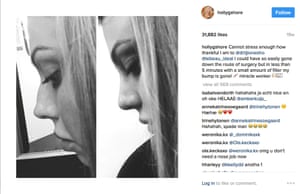
Fillers have changed everything, Esho says. He can use fillers to improve the shape of someone’s nose – a cheaper, less permanent version of a nose job without the need for general anaesthetic – for instance. In February one patient, Holly Hagan, the 24-year-old star of the reality series Geordie Shore, posted pictures on Instagram of some filler she had to change the shape of her nose and chin.
Dr Tijon Esho also shaped Holly Hagan’s nose with just fillers. Photograph: Instagram
‘When we’re doing fillers in young people we have to be very careful, from an ethical standpoint,” he says. “Legally, it does concern me because there is no law to say what age someone has to be to undergo fillers. Someone could treat a 16-year-old, but ethically that is wrong.” The non-surgical industry is unregulated and anyone can set themselves up as a practitioner with no training. Botox is prescription-only and people should be seen by a prescriber – a doctor, dentist, nurse or pharmacist – but that doesn’t always happen, which is why beauty therapists can offer it cheaply in salons.
Has the look that young patients are after changed? There is a growing minority, Esho says, “where there is an evolution in what we perceive as beauty”. Some bring in Instagram pictures where they have been heavily filtered, and skin and faces are flawless, and say they want to look like that. “It has almost gone full circle. Initially, when surgery and non-surgical aesthetics were available, it was the treatment of the rich. It was a statement to have it done so people wanted to let you know. Then there was a transition where people didn’t want others to know, it became more natural, understated. Now, it has gone back, but because now the services are more accessible, it’s more obvious. And social media has made it more noticeable.” His most popular treatment is providing lip filler, which accounts for about 70% of his work.
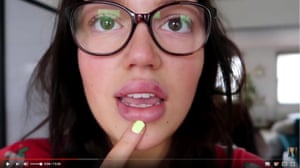
On YouTube, you can find numerous videos of vloggers who have posted about their lip fillers. Gabriella Lindley, a beauty vlogger, has had more than 360,000 views of hers; another video she put up, entitled “My Lip Filler NIGHTMARE” in which she talks about how her lips went lumpy, has had more than 314,000 views.
Vlogger Gabriella Lindley’s My Lip Filler NIGHTMARE! Photograph: YouTube
Jessica Balkay, 22, researched lip fillers on YouTube before getting her lips done for the first time. “I wanted to get it done as I just didn’t like the shape of the sides of my lips and wanted a fuller top lip.” She said it has made her “really happy. I love makeup and taking selfies and having my lips looking fuller just made me feel happier with my appearance.”
She is planning to have a few more injections to build up the size and shape, then plans to go every six months for top-ups. “I think in my generation it is becoming a lot more normalised to have non-surgical procedures,” she says. “I don’t see the issue with that as long as people research reputable places and are doing it for themselves, not to please others. I don’t want to look like anyone else but myself, but I want to be a prettier version of myself.”
Where will it end? Widdows sighs. She thinks the use of non-surgical, but still invasive, procedures are likely to become commonplace. “Doing nothing gets harder and we have to wait and see whether Botox becomes ‘required’, like [people consider] visible body-hair removal or hair dyeing. That’s the way it’s moving.”
Hughes is a bit more optimistic, particularly where much younger women are concerned. “The only glimmer of light in the whole sorry picture is that at least non-surgical procedures are not lasting, so one hopes that young people outgrow them in the same way that I outgrew lightning bolts drawn down my face.”
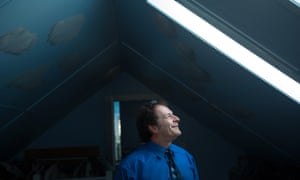
On a Tuesday in July, Dr David Zigmond skimmed down London’s Old Jamaica Road on his 1980s motorbike, as he had done for the past four decades, curving into the courtyard of St James church in Bermondsey, cutting his engine, removing his helmet and striding into a part of the church where he held his surgery. Here there was the customary ebullient greeting of staff and patients, questions about new babies and ageing grandparents. The 69-year-old’s slightly dishevelled appearance – cord trousers, checked shirt open at the neck “although I wouldn’t go as far as Tom Jones in his day” mattress-stuffing curls and a boyish smile – lets you know he doesn’t do formal.
He welcomes patients calling him by his first name if they wish, although “not everyone wants the ‘call me Dave’ approach.” In his consulting room there are exotic model birds winking at you – a couple of toucans, parrots hanging from lamps – and just about everywhere you look polished carved wooden animals, many bought for him by patients. The interior, with its art prints covering the walls, resembles a well-used sitting room with deep armchairs and a strong, comfy chair – perfect for when Dr Zigmond needs a patient to lean back and be examined, yet feel at ease.
Dr Zigmond has an engaging garrulous good humour and evidently takes enormous pleasure in his work, drawing on skills gained from training as a psychiatrist and psychotherapist as well as in medicine (For the past 38 years he has spent one day a week at Hammersmith Hospital doing psychological medicine): “My patients’ souls are as important as their physical wellbeing,” he says.
Today, 5 July, his diary has a space marked out for inspection by the Care Quality Commission, the NHS body that judges how efficient and safe doctors’ surgeries are as “systems”. He is sanguine. He plans to show them a practice that patients grow attached to, many into the third generation, where staff stay for years and the atmosphere is unmistakably relaxed.
Off the wall: thousands of brown paper files, dating back to 1987, containing Dr Zigmond’s handwritten comments – he didn’t use computers for his notes. Photograph: Phil Fisk for the Observer
There has never been a serious complaint against him, and he is exceptional in not having been called for a disciplinary hearing in all his 40 years as a GP. He anticipates an agreeable couple of hours, as in 2014 when the inspectors last came. He had explained his philosophy and modus operandi, talking of medicine as an art form, “being a human being so patients feel they know well me enough to trust, while maintaining boundaries – compassionate detachment, I call it.”
“On that occasion,” he will recollect later, “they seemed concerned with seeing whether I was running a healthy, happy, well-functioning practice. They looked at feedback forms, talked to patients and made intuitive judgment.” They gave him a glowing report.
This time, when the CQC delegation – a doctor, a compliance officer and someone to survey patients’ views – arrive at his unorthodox consulting room and take their seats, they make plain that no small talk is required. The atmosphere, Dr Zigmond will say later, quickly chills. This investigation will be very different.
They have come through the well-tended graveyard of St James church, modelled on a Greek temple with pilloried galleries around three sides, by architect James Savage. For all its grandeur, it is set in one of London’s poorest neighbourhoods, surrounded by acres of tower blocks and housing estates. The inspectors launch into issues surrounding Dr Zigmond’s noncompliance with regulations and what it may mean for his 1,700 patients.
Giving patients enough time to let me know what is going on with them is part of protecting their wellbeing
Dr Zigmond believes all will be well if they can listen to his reasoning. “Let’s talk, have a conversation,” he suggests. “That way you’ll get a real understanding of our struggling, flawed but wholesome little world here. I want to be candid, warts and all.”
So he describes relegating or discarding things. “For instance, formalities to demonstrate corporate compliance: irrelevant data inputting, sticking rigidly to care pathways…” Later he describes how “one of the inspectors, a neatly suited and formally mannered man in his mid-50s, clears his throat and talks of other areas of concern…”
Dr Zigmond is being assessed under new regulations brought into force in late 2014, and the inspectors, ordered to gather neatly tabulated data, are not impressed by his explaining that over-regulation destroys much of our best healthcare. But he ploughs on: “I know the argument that the institutional world is acting on behalf of patients, but it has proved far from failsafe. I remain convinced that giving patients enough time to let me know what is going on with them is part of protecting their wellbeing.”
Dr Zigmond’s concern chimes with the new recommendation by the BMA that GP appointments should be five minutes longer than the present 10 minutes, because this would lead to improved decision-making and service, and allow for the complex needs of an ageing, and increasingly obese, population to be understood and discussed.
The delegation leaves and, at the end of the week, Dr Zigmond takes off for a brief holiday in France with his partner. Getting home, he finds the answer machine flashing. It is his receptionist saying the CQC are seeking an emergency order to close down his practice. He has to be in court the following morning.
There is no time to prepare.
“I arrived flustered, hurried, and alone at court,” he tells me. “The CQC had assembled massive and well-armed forces with hundreds of pages of ‘evidence’. Very soon I could see the professional profile they constructed: reckless or feckless, casually or deliberately unsafe, disobedient and unreformable – in short a gross and intolerable liability to any public service.”
As he listened, he wondered whether his book, If You Want Good Personal Healthcare – See a Vet, published last year, a collection of essays inveighing against the way the NHS is becoming increasingly depersonalised, had been a black mark against him.
The case lasted eight hours, the bench listening attentively to Dr Zigmond as he explained there are times when noncompliance must be the order of the day “if we are to provide our best personal care for others”. The magistrate seemed sympathetic but concluded that his noncompliance posed a risk to patients. Although he could continue practising as a doctor, his surgery must close with immediate effect. And that was that.
End of an era: ‘Ever increasing electronic traffic numbs our brains, dumbs our speech and often displaces off-screen reality,’ says Dr Zigmond in his surgery. Photograph: Phil Fisk for the Observer
Michele Golden, head of inspections for London at the Care Quality Commission, acknowledges how harsh this seems and she wants to be as helpful as possible, but she cannot talk about Dr Zigmond’s case specifically. At a time when the NHS needs to find the best possible way of coping with the enormous demand it faces, she seems eager that I understand they must regulate medical practice with what they have concluded is the best possible data. That way they can make evidence-based decisions. Golden tells me: “We have five key questions which must be satisfied: is the system being run by a doctor safe, effective, caring, responsive, well-led? This covers a wide range of matters such as following up patients, repeat medicines, being meticulous about reading all information sent about a patient, necessary checks on the things that relate to patients’ safety in all ways. It is very rare indeed for us to apply to court for an emergency suspension and we only do it where we fear serious risk to health and wellbeing.”
It is very rare for us to apply for an emergency suspension and we only do it where we fear serious risk to health
So within this remit how much attention is paid to the views of patients saying they are satisfied with their doctor? Golden considers: “We know, from various inspections, that patients will say how happy they are, and it may be that their doctor is a very nice person, but that doesn’t mean they understand if the system is actually unsafe for them.”
Dr Zigmond and I are sitting in his office, where he is taking brown paper files, dating back to when he began here in 1987, down from the shelves. All are handwritten – he is one of the few remaining doctors not using computers for his notes. “Files will be collected over the next three weeks and stored…” It is this thought that makes his eyes water, and he suddenly has the look of a desperately sad child who doesn’t understand the world any longer.
So why, I ask, didn’t he try compliance-lite which might have satisfied the powers-that-be? “It would have taken too much time and energy. I would not have been able to provide good quality continuity and personal care. Ever-increasing electronic traffic numbs our brains, dumbs our speech and often displaces off-screen reality.”
As we talk, several patients arrive having found the notice posted on the door saying the practice is closed. One is Debra McDermott, 54, who erupts through the door, saying everyone on her estate is going mad. “David is a doctor who knows you are ill before you do, and who listens to what you say and responds. He sees my son and my grandchildren. We’ve got very elderly people in the block and they are panic stricken, they don’t want to go to a huge new place with doctors who don’t know them.”
During the day, around 100 patients come to express themselves in tears, hugs and fury. One woman slumps into a chair as she says: “I have such depression and David is my safety blanket. I might not make it without him.”
Dr Zigmond stops what he is doing and thinks. “I see myself as a container for a patient,” he says, “which is not necessarily about making a physical or psychological problem go away, but about offering understanding to make their pain and struggle more bearable.”
The CQC will soon complete its first year using its new registration process and it will be interesting to see its effects. Meanwhile, when I next meet Dr Zigmond, he has just driven in his 1964 Rover from the north coast of Cornwall, where he spent a week with his son, stepsons and their families. Now comes the task of re-orienting his life. He sighs: “It seems madness at a time when there is an acute shortage of doctors, and for me it’s a high price to be severed from the work I love and my ‘family’ of patients. Perhaps we have to ask if the NHS in its wisdom knows best.”
On a Tuesday in July, Dr David Zigmond skimmed down London’s Old Jamaica Road on his 1980s motorbike, as he had done for the past four decades, curving into the courtyard of St James church in Bermondsey, cutting his engine, removing his helmet and striding into a part of the church where he held his surgery. Here there was the customary ebullient greeting of staff and patients, questions about new babies and ageing grandparents. The 69-year-old’s slightly dishevelled appearance – cord trousers, checked shirt open at the neck “although I wouldn’t go as far as Tom Jones in his day” mattress-stuffing curls and a boyish smile – lets you know he doesn’t do formal.
He welcomes patients calling him by his first name if they wish, although “not everyone wants the ‘call me Dave’ approach.” In his consulting room there are exotic model birds winking at you – a couple of toucans, parrots hanging from lamps – and just about everywhere you look polished carved wooden animals, many bought for him by patients. The interior, with its art prints covering the walls, resembles a well-used sitting room with deep armchairs and a strong, comfy chair – perfect for when Dr Zigmond needs a patient to lean back and be examined, yet feel at ease.
Dr Zigmond has an engaging garrulous good humour and evidently takes enormous pleasure in his work, drawing on skills gained from training as a psychiatrist and psychotherapist as well as in medicine (For the past 38 years he has spent one day a week at Hammersmith Hospital doing psychological medicine): “My patients’ souls are as important as their physical wellbeing,” he says.
Today, 5 July, his diary has a space marked out for inspection by the Care Quality Commission, the NHS body that judges how efficient and safe doctors’ surgeries are as “systems”. He is sanguine. He plans to show them a practice that patients grow attached to, many into the third generation, where staff stay for years and the atmosphere is unmistakably relaxed.
Off the wall: thousands of brown paper files, dating back to 1987, containing Dr Zigmond’s handwritten comments – he didn’t use computers for his notes. Photograph: Phil Fisk for the Observer
There has never been a serious complaint against him, and he is exceptional in not having been called for a disciplinary hearing in all his 40 years as a GP. He anticipates an agreeable couple of hours, as in 2014 when the inspectors last came. He had explained his philosophy and modus operandi, talking of medicine as an art form, “being a human being so patients feel they know well me enough to trust, while maintaining boundaries – compassionate detachment, I call it.”
“On that occasion,” he will recollect later, “they seemed concerned with seeing whether I was running a healthy, happy, well-functioning practice. They looked at feedback forms, talked to patients and made intuitive judgment.” They gave him a glowing report.
This time, when the CQC delegation – a doctor, a compliance officer and someone to survey patients’ views – arrive at his unorthodox consulting room and take their seats, they make plain that no small talk is required. The atmosphere, Dr Zigmond will say later, quickly chills. This investigation will be very different.
They have come through the well-tended graveyard of St James church, modelled on a Greek temple with pilloried galleries around three sides, by architect James Savage. For all its grandeur, it is set in one of London’s poorest neighbourhoods, surrounded by acres of tower blocks and housing estates. The inspectors launch into issues surrounding Dr Zigmond’s noncompliance with regulations and what it may mean for his 1,700 patients.
Giving patients enough time to let me know what is going on with them is part of protecting their wellbeing
Dr Zigmond believes all will be well if they can listen to his reasoning. “Let’s talk, have a conversation,” he suggests. “That way you’ll get a real understanding of our struggling, flawed but wholesome little world here. I want to be candid, warts and all.”
So he describes relegating or discarding things. “For instance, formalities to demonstrate corporate compliance: irrelevant data inputting, sticking rigidly to care pathways…” Later he describes how “one of the inspectors, a neatly suited and formally mannered man in his mid-50s, clears his throat and talks of other areas of concern…”
Dr Zigmond is being assessed under new regulations brought into force in late 2014, and the inspectors, ordered to gather neatly tabulated data, are not impressed by his explaining that over-regulation destroys much of our best healthcare. But he ploughs on: “I know the argument that the institutional world is acting on behalf of patients, but it has proved far from failsafe. I remain convinced that giving patients enough time to let me know what is going on with them is part of protecting their wellbeing.”
Dr Zigmond’s concern chimes with the new recommendation by the BMA that GP appointments should be five minutes longer than the present 10 minutes, because this would lead to improved decision-making and service, and allow for the complex needs of an ageing, and increasingly obese, population to be understood and discussed.
The delegation leaves and, at the end of the week, Dr Zigmond takes off for a brief holiday in France with his partner. Getting home, he finds the answer machine flashing. It is his receptionist saying the CQC are seeking an emergency order to close down his practice. He has to be in court the following morning.
There is no time to prepare.
“I arrived flustered, hurried, and alone at court,” he tells me. “The CQC had assembled massive and well-armed forces with hundreds of pages of ‘evidence’. Very soon I could see the professional profile they constructed: reckless or feckless, casually or deliberately unsafe, disobedient and unreformable – in short a gross and intolerable liability to any public service.”
As he listened, he wondered whether his book, If You Want Good Personal Healthcare – See a Vet, published last year, a collection of essays inveighing against the way the NHS is becoming increasingly depersonalised, had been a black mark against him.
The case lasted eight hours, the bench listening attentively to Dr Zigmond as he explained there are times when noncompliance must be the order of the day “if we are to provide our best personal care for others”. The magistrate seemed sympathetic but concluded that his noncompliance posed a risk to patients. Although he could continue practising as a doctor, his surgery must close with immediate effect. And that was that.
End of an era: ‘Ever increasing electronic traffic numbs our brains, dumbs our speech and often displaces off-screen reality,’ says Dr Zigmond in his surgery. Photograph: Phil Fisk for the Observer
Michele Golden, head of inspections for London at the Care Quality Commission, acknowledges how harsh this seems and she wants to be as helpful as possible, but she cannot talk about Dr Zigmond’s case specifically. At a time when the NHS needs to find the best possible way of coping with the enormous demand it faces, she seems eager that I understand they must regulate medical practice with what they have concluded is the best possible data. That way they can make evidence-based decisions. Golden tells me: “We have five key questions which must be satisfied: is the system being run by a doctor safe, effective, caring, responsive, well-led? This covers a wide range of matters such as following up patients, repeat medicines, being meticulous about reading all information sent about a patient, necessary checks on the things that relate to patients’ safety in all ways. It is very rare indeed for us to apply to court for an emergency suspension and we only do it where we fear serious risk to health and wellbeing.”
It is very rare for us to apply for an emergency suspension and we only do it where we fear serious risk to health
So within this remit how much attention is paid to the views of patients saying they are satisfied with their doctor? Golden considers: “We know, from various inspections, that patients will say how happy they are, and it may be that their doctor is a very nice person, but that doesn’t mean they understand if the system is actually unsafe for them.”
Dr Zigmond and I are sitting in his office, where he is taking brown paper files, dating back to when he began here in 1987, down from the shelves. All are handwritten – he is one of the few remaining doctors not using computers for his notes. “Files will be collected over the next three weeks and stored…” It is this thought that makes his eyes water, and he suddenly has the look of a desperately sad child who doesn’t understand the world any longer.
So why, I ask, didn’t he try compliance-lite which might have satisfied the powers-that-be? “It would have taken too much time and energy. I would not have been able to provide good quality continuity and personal care. Ever-increasing electronic traffic numbs our brains, dumbs our speech and often displaces off-screen reality.”
As we talk, several patients arrive having found the notice posted on the door saying the practice is closed. One is Debra McDermott, 54, who erupts through the door, saying everyone on her estate is going mad. “David is a doctor who knows you are ill before you do, and who listens to what you say and responds. He sees my son and my grandchildren. We’ve got very elderly people in the block and they are panic stricken, they don’t want to go to a huge new place with doctors who don’t know them.”
During the day, around 100 patients come to express themselves in tears, hugs and fury. One woman slumps into a chair as she says: “I have such depression and David is my safety blanket. I might not make it without him.”
Dr Zigmond stops what he is doing and thinks. “I see myself as a container for a patient,” he says, “which is not necessarily about making a physical or psychological problem go away, but about offering understanding to make their pain and struggle more bearable.”
The CQC will soon complete its first year using its new registration process and it will be interesting to see its effects. Meanwhile, when I next meet Dr Zigmond, he has just driven in his 1964 Rover from the north coast of Cornwall, where he spent a week with his son, stepsons and their families. Now comes the task of re-orienting his life. He sighs: “It seems madness at a time when there is an acute shortage of doctors, and for me it’s a high price to be severed from the work I love and my ‘family’ of patients. Perhaps we have to ask if the NHS in its wisdom knows best.”
For as long as Alice, now 32, can remember, her father, “a major drug dealer with freezers full of cocaine”, was physically abusive towards her and her mother. “My first memory is of him backing us to the front door with a gun, saying he’d kill her, kill me and kill himself one day.”
Alice’s post-traumatic stress disorder (PTSD), a debilitating mental condition that can be caused by experiencing or witnessing a life-threatening event, went misdiagnosed for many years. The panic attacks, body shakes, nightmares and insomnia took their toll, while doctors treated her for depression and anxiety. There were many triggers: physical contact, being alone, showering, seeing someone who resembled a family member, loud sounds, even a red baseball cap – the kind her father wore. He and his friends also sexually abused her on numerous occasions. The disorder imprisoned Alice; she couldn’t answer the phone or go to the shops on her own. “I would get triggered by something and I’d shake or shiver,” she says.
The MDMA just pulls things out of you. There were times when I just sat up and started talking
Over the years, she tried talking therapy, somatic therapy, and eye movement desensitisation and reprocessing (EMDR), in which a therapist moves his or her fingers left and right in front of a patient’s face as they recount their trauma (the eye movements seem to dampen the memories). Nothing worked.
Then, two and a half years ago, Alice enrolled in a clinical trial for a treatment combining psychotherapy with MDMA, near her home town of Erie, Colorado. She took 125mg of the drug, the same dose a clubber might take recreationally, three times over the course of 12 weeks. Her “trips” were accompanied by eight-hour therapy sessions. “I sat on a comfy couch and my therapist gave me a pill in a little handmade ceramic cup,” she says. “It had a ritualistic feel to it. I was terrified the first time.” Having taken the capsule, Alice was given an eye mask and headphones, and lay back listening to drum music until the drug, which she’d never taken before, kicked in.
“The MDMA just pulls things out of you,” she says now. “It supports you. You can start looking at all your experiences and how they are affecting you. There were times when I just sat up and started talking. Or I’d cry. Or there were moments of re-enactment. Physically, I felt like my whole body was vibrating for a while.”
During the session, her psychiatrist guided the conversation according to goals she had set with Alice beforehand. “I had the first few minutes of peace I’ve had in years,” Alice says, though the sessions weren’t all plain sailing. “Some parts were wonderful and others were kind of hellacious. I was super-sad and couldn’t stop crying. It was not just an automatic love drug. But I was always able to come back to feeling good.”
Alice’s recovery was astonishing. The gold-standard assessment tool for this kind of trauma is the clinician-administered PTSD scale, or Caps, which uses a lengthy questionnaire to determine the severity of a patient’s symptoms (sample question: have there been times when you felt emotionally numb or had trouble experiencing feelings like love or happiness?). Any score over 60 is “severe”. Alice’s score went from 106 to two. It’s now at zero. In other words, her PTSD is gone.
•••
Alice is one of 136 patients who have now undergone MDMA-assisted psychotherapy in trials run by the not-for-profit Multidisciplinary Association for Psychedelic Studies (Maps), based in Santa Cruz, California. Maps was founded in 1986 by Rick Doblin, then a trainee therapist, and now an effervescent 62-year-old who has dedicated his life to studying the medical uses of psychedelic drugs, including psilocybin (magic mushrooms) and marijuana. “It’s taken 30 years to get to this point,” he says. “I’ve always known MDMA would work, but it’s been really gratifying to see such tremendous results.” He has studies nearing completion in Vancouver, Colorado, South Carolina and Israel, with plans for more in Australia.
Doblin and his colleagues want to make the drug a prescription medicine. It is currently listed as a Schedule 1 substance by the US Drug Enforcement Administration (DEA) and a Class A drug by the Home Office in the UK, along with heroin, cocaine and LSD. So far, the Maps studies have been relatively small, but the results are encouraging. One South Carolina study involved 20 patients, mostly victims of sexual abuse, who had suffered from PTSD for more than 19 years. It was a placebo-controlled study, so all patients were given the same therapy, but only some were given the MDMA; 83% of those given the MDMA no longer met the criteria for PTSD following treatment, compared with 25% of those who were not given the drug. Best of all? The results have held for several years.
Rick Doblin, founder of Maps, has spent 30 years studying the medical uses of psychedelic drugs. Photograph: Gretchen Ertl
But the real test will be next year’s phase three trials, the final stage of validation required if MDMA-assisted therapy is to be legalised. (Around 50% of all medical treatments fail at this stage.) A phase three trial requires bigger groups, at least 230 people, around the world. Once two trials are completed, and provided the results still look positive, the data can be submitted to the US Food and Drug Administration (FDA) and the European Medicines Agency for approval. In theory, MDMA could be legalised for therapeutic use by 2021.
•••
MDMA is not a silver bullet: treatment is heavily reliant on the accompanying therapy, and there is a lot of therapy: three monthly sessions with the drug, lasting eight hours each, punctuated by nine weekly 90-minute sessions without it.
International guidelines recommend the first line of treatment for PTSD should be EMDR or cognitive behavioural therapy; but it can be very hard to treat. “Perhaps 50% of people will have resistance,” says Jonathan Bisson, professor in psychiatry at Cardiff University. “We need new treatments.”
Antidepressants and anti-anxiety medications are already big business for pharmaceutical companies. According to a 2008 US Veterans Association study, around 80% of veterans diagnosed with PTSD are given psychiatric drugs. But a 2015 study in the Journal of the American Medical Association found that around two-thirds of veterans still meet the criteria for a PTSD diagnosis after treatment.
Nevertheless, the US military continues to spend huge sums on drugs and disability payments. The Veterans Association says that, of nearly the 1.5 million former soldiers receiving compensation, 870,000 have PTSD, and their treatment costs the government as much as $ 17bn (£12.7bn) a year. (In the UK, the Ministry of Defence pays £875m ($ 1.16bn) a year to those bereaved or injured through service; this figure covers mental and physical disability.) Doblin argues that if even a small portion of those funds were allocated to MDMA-assisted therapy, significant savings could be made. “To make MDMA into a medicine will cost around $ 30m,” he says. “If it works, it could save hundreds of millions, if not billions, of dollars a year.”
MDMA use under medical supervision is a world away from someone necking a load of pills at a rave
If the FDA approves the drug, the DEA will have to decide whether to declassify it to Schedule 2, alongside morphine, opium and codeine – drugs that have a high potential for abuse but can be used under supervision. It is tempting to draw comparisons with the way medical marijuana has been legalised in many US states. If MDMA were to follow the same pattern, it wouldn’t be long before any entrepreneurial drug user could cry trauma to gain access to a steady stream of highly potent ecstasy. But Doblin stresses this won’t happen. “These drugs are fundamentally different: marijuana is the treatment itself; we’re talking about MDMA-assisted psychotherapy.”
These different approaches reflect the level of risk associated with the drugs. No one dies from a marijuana overdose; 50 people died after taking MDMA in the UK in 2014 alone. There is no figure for MDMA-related deaths in the US, but there has been a sharp rise in hospitalisations, from around 4,500 people aged under 21 in 2005 to more than 10,000 in 2011, the latest data available.
Used recreationally, MDMA is not without risk. “It mucks about with the body’s thermostat and pushes up the body temperature, which can lead to organ failure and be fatal,” explains Harry Shapiro, director of the UK charity DrugWise. “But its use under medical supervision is a world away from someone necking a load of pills at a rave.”
•••
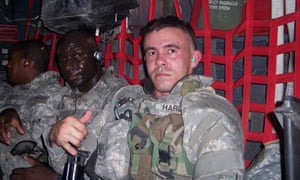
When James “CJ” Hardin, now 36, came back to the US from his tour of Iraq in 2006, he knew something was wrong. He was having nightmares and difficulty sleeping; loud sounds, crowds of people and flashes of light would send him into a state of anxiety. “I’d get tunnel vision and become hypervigilant, pulse racing and breath shallow.”
There were no flashbacks while he was awake, but he had nightmares about combat almost every night. He self-medicated with alcohol, combined with prescription sleeping pills and antidepressants. The Veterans Association offered CJ group therapy, but he found it a “dick measuring contest”, where participants engaged in one-upmanship over the atrocities they had experienced. When the sleeping pills became less effective, he also took the sedating antihistamine Benadryl, and drank rum until he passed out.
After leaving the military in July 2010, CJ moved to North Carolina. “I isolated myself and continued my bad habits, staying at home, drinking and smoking marijuana all day. Then I’d wake up, eat and do it all again.” A chance meeting with a Maps researcher led him to sign up for one of its studies – this one led by psychiatrist Michael Mithoefer and his wife Annie, a nurse, from their home and clinic in Charleston, South Carolina. The couple, now in their 60s, trained with the Czech psychedelic therapy pioneer Stanislav Grof, and have been working with MDMA since 2000.
James “CJ” Hardin was having nightmares and difficulty sleeping after his tour of Iraq. Photograph: James “CJ” Hardin
By that time, CJ was having frequent suicidal thoughts: “I’d resigned myself to believing my life wasn’t going to change.” But during his first session, once the drug had taken effect, he started to open up about his trauma. “All of a sudden I knew I was safe. I realised I’d been treating my life like I was in Iraq the whole time, when I’m not. I am back in the US. That left me immediately.”
He was able to talk about his fears of mortar attacks, and how he felt in a constant state of peril, as if he might die at any moment. “I felt like there was no light at the end of the tunnel. After that first session, the light clicked on. It wasn’t right in front of me, but it was there. I had hope.” The MDMA alone wouldn’t have worked, he says; it was the catalyst that made the therapy work. “It disarmed me, opened my mind and allowed me to feel at peace and safe as I talked about the things I did. After years thinking you’re a horrible person and not safe, it’s the biggest vacation.”
Like Alice, CJ had three sessions. And, like Alice, his Caps score plummeted: from 87 to just seven, falling to three the following year.
•••
MDMA (full name 3,4-methylenedioxymethamphetamine) was first synthesised in 1912 by the German pharmaceutical company Merck, which had been looking for a substance to stop bleeding. It wasn’t until the 1970s that its potential was explored more fully, when a California chemist called Alexander Shulgin started to experiment with cooking up psychoactive drugs. He made a batch of MDMA and started testing it on himself. In 1976, following a 120mg dose, he wrote, “I feel absolutely clean inside, and there is nothing but pure euphoria. I have never felt so great or believed this to be possible … I am overcome by the profundity of the experience.”
Shulgin introduced the drug to California psychotherapist Leo Zeff, who had previously developed LSD therapies. Zeff was so impressed by MDMA, describing it as “penicillin for the soul”, that he came out of retirement to introduce the drug to therapists across America and Europe. But just as its therapeutic potential was being explored, it started to make its way into the rave scene; in 1985, it was banned by the DEA.
“MDMA is highly volatile in one person but not the next,” says DEA spokesman Melvin Patterson. “You and I could both take it, and I would have no reaction and your organs would start to shut down. There were tons of raves happening, and a lot of people being rushed to hospital and packed in ice to get their temperature back to normal. It was rare that people overdosed or died, but it did happen, and at such a frequency that we had to step in.”
The Mithoefers began researching MDMA-assisted therapy in 2000. “It seemed to make particular sense for PTSD,” Michael says. “Most of the treatments that have been effective involve revisiting the trauma in a therapeutic setting, but a lot of people are unwilling or unable because they get overwhelmed by anxiety. MDMA decreases fear and defensiveness, while increasing trust and empathy.” He worked with Doblin to develop a plan for a clinical study, approved by the FDA in 2001.
Psychiatrist Michael Mithoefer and his wife Annie, a nurse, have been researching MDMA-assisted therapy for a decade. Photograph: Hunter McRae
So far, all the Maps trials have used doses of MDMA from a 31-year-old batch with 99.8% purity made in a lab at Purdue University, Indiana. But for phase three trials, the drug needs something called good manufacturing practice certification: Maps has to be able to show that, if MDMA were legalised, it could be produced on an industrial level at the same quality. This is where the pharmaceutical company Shasun comes in.
•••
Shasun’s factory is in the Northumberland village of Dudley, located a few miles south of Cramlington, a small town with the highest life expectancy in the UK. It is not a secret facility: taxi drivers know the plant without being given the address, which is on a main road opposite a row of red-brick semis and shops. But they may be surprised to learn that, inside, chemists are synthesising MDMA, perfectly legally.
Security is high. Visitors must first report to the lodge inside the gates and in front of the red-and-white barrier, the kind more often seen at military bases. Mobile phones must be surrendered, along with laptops, pagers, cameras and electronic car key fobs. The confiscation has less to do with secrecy than with the fact that the equipment could ignite and cause an explosion – a huge safety risk on a site processing volatile chemicals.
Shasun has been given a licence from the Home Office to manufacture Schedule 1substances. Around 20 of the company’s 325 UK staff are involved in the production of 1kg of MDMA – worth close to £300,000 ($ 398,000). After that, it will be shipped to licensed distributorsin the US and Europe.
British CEO Kevin Cook met Doblin two years ago in Boston, after being introduced by someone Cook describes as “a friend in big pharma”. He came away from the meeting reassured that Doblin knew what he was doing, and was doing it for a good cause; Shasun was prepared to jump through all the regulatory hoops to keep everyone on board.
Getting the Home Office licence was not easy. The firm has had to comply with a very long list of health and safety regulations, and security procedures. The drugs they make, and their key ingredients, are now stored in an alarmed vault to which just a handful of staff have access, their movements monitored by CCTV. “We can handle products here where there is a high risk of diversion – products that can be used for recreational as well as medical benefit,” says Cook, who has worked for Shasun for 27 years. Shasun’s business development manager Mike Hopkins jumps in to stress: “We’re not doing a Breaking Bad here.”
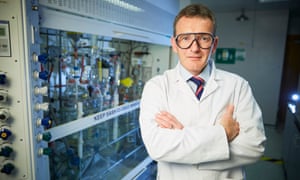
Kevin Cook, CEO of the British company manufacturing MDMA for medical use. ‘We’re not Breaking Bad here.’ Photograph: Christopher Thomond for the Guardian
The MDMA lab is in Shasun’s development centre, a prefab in a corner of the site. A rabbit hops around on the grass outside. “Oh, he’s fine, don’t mind him,” Cook says. “There aren’t any chemicals out here he needs to worry about.” To access the building, visitors must wear white lab coats and protective goggles. Making the MDMA is much like following a recipe – one that was acquired from a German firm and emailed to Shasun’s chemists as an attachment. “Add X of this, stir to Y, heat to Z. It’s like cooking, but to get a really good-quality end product, you have to experiment a lot,” Cook explains. Robert Smith, a chemist with a degree from Cambridge and a PhD from Manchester, demonstrates the equipment his small team uses to synthesise the drug. Unlicensed manufacturers would face many years in jail, but making MDMA does not give Smith any kind of illicit thrill. “We just treat it like any other project.” He shrugs.
Recruiting a team was not difficult, Hopkins says; no one cited ethical concerns. “We always try to inspire our teams to understand what they are making and why. In this case, they are working for a non-profit trying to help people with severe PTSD. They find that sort of thing very motivating.”
•••
After fundraising, Maps’ second biggest challenge is training therapists, who must undergo the same treatment as their patients, to understand how it works. In November last year, Ben Sessa, a British psychiatrist based in Bristol, travelled to South Carolina for a 10-day stay with the Mithoefers, during which he underwent his own MDMA-assisted therapy session. “I haven’t got any psychological trauma,” he says. “I had a lovely upbringing, stable family. But it’s really important to learn this mental state in order to guide my patients through it.”
On the day of his session, all of it captured on video, Sessa takes his first dose of MDMA just before 11am, washed down with a swig of Gatorade. It’s a double blind study, so he doesn’t know if it’s a placebo. He hopes it isn’t. (“I chose the red pill and not the blue pill,” he says, referencing The Matrix.) Dressed in jeans and a T-shirt, Sessa reclines on a bed with Michael in a chair facing him, to his right, and Annie to his left. Propped into a seated position by a fortress of pillows and a large red and gold cushion, he has a blood pressure monitor wrapped around his left arm while the Mithoefers’ small white dog, Flynn, snuggles next to his leg.
The conversation is led by Sessa, with occasional prompts from the Mithoefers. Music plays in the background, starting with a gentle piano piece and building to higher tempo as the drug kicks in. The Mithoefers tell him to lie back, close his eyes and “go inside”. Annie regularly checks in on him, offering sips of juice, extra blankets and words of encouragement.
This is not a panacea. We need a cautious, methodological approach with sound scientific evidence
Around two hours into the session, Sessa takes a supplementary dose. Even though he’s in a darkened room, he asks for his red-rimmed sunglasses. “That second dose really hit the spot, man,” he tells the Mithoefers. He breathes heavily and purposefully, nodding his head to the music with his eyes closed, his lower jaw shifting subtly from left to right. Clearly, he did not take the placebo.
Sessa had taken MDMA in a rave context in the past but tells me: “This was very different from taking ecstasy recreationally. Imagine taking all that external energy that keeps you pumping all night on the dance floor and turning it inwards.”
Much of his session is spent lying down with an eye mask and headphones on; at times he hums and moans or reaches out to hold one of the Mithoefers’ hands. “I felt very safe and secure, but when I went to the toilet in the harsh light and stood looking at myself in the mirror, that’s when it felt like raving. I was completely fucked. I wanted to rush back into the bed and get under the covers and go back inside.”
At other times, he is encouraged to sit up and talk – about personal issues, psychotherapy, his constant need to be busy. “Life’s too short,” he tells the Mithoefers. “All these trinkets we adorn ourselves with are meaningless. It’s time that’s the only gift. So I don’t like to waste time.”
By around 4pm, the effects of the drug are wearing off, though Sessa says he experienced no comedown. He thinks ravers’ comedowns are mostly hangovers. “Most people who take ecstasy will go to the pub, drink three pints, then go to a club and stay up until five, take coke, drink more wine and beer, then get some soup and sleep on Sunday. Of course they feel bad on Monday!”
Three days later, Sessa had a second session. It was the same setup, but this time without the drug. “It was incredibly cathartic,” he says. “I was in floods of tears at times and talking about all sorts of issues. It was as if the MDMA had unlocked them three days earlier. It’s not just the drug sessions themselves where the work takes place – the real work is how the material that’s unlocked is then processed in the non-drug sessions.”
Sessa, who has worked with many children and adolescents battling trauma and addictions, believes MDMA could be an incredibly powerful tool for his patients. “We don’t have any medicines that allow patients and their therapists to approach trauma. Antidepressants only treat the symptoms, so this could be a very important step forward.”
Trauma is incredibly hard to treat, he says. “You sit in a room with a stranger and ask them to tell you about their child abuse and expect them to do it. They don’t. They can’t. So their mental health problem becomes a chronic disorder. In 20 years’ time, people may say: ‘Do you remember when we used to do psychotherapy without psychedelics?’”
MDMA could be legalised for therapeutic use by 2021. ‘Imagine taking all that external energy that keeps you pumping all night on the dance floor and turning it inwards.’ Photograph: Aaron Tilley for the Guardian
Despite his enthusiasm, Sessa remains pragmatic and is put off by some of the more evangelical factions in the pro-psychedelic movement, as well as its strong links with anti-establishment hippy culture; for him, this detracts from the science. “Some people want to live in a chemical utopia. This is not a panacea. We need a cautious, methodological approach with sound scientific evidence.”
Sessa has brought what he’s learned back to the UK, where he is hoping to start two Maps-funded MDMA studies in 2017; for now, he says, he’s in a “fragile period of getting ethical approval”.
One of these studies is in Cardiff and will involve giving patients either MDMA or a placebo and putting them in an MRI scanner, where they will be subjected to a narrative script of their trauma to see what happens in their brain. The second study, in Bristol, will treat patients with alcohol dependency, post-detox. “We’ll put them through a course of MDMA psychotherapy and look at the rates of recovery. The link between trauma and addiction is unambiguous,” Sessa says.
•••
In anticipation of the drug’s legalisation, Maps has set up a benefit corporation, a socially responsible company that, unlike Maps, is allowed to manage prescription sales of a medicine. All profits from the MDMA developed by Shasun will be funnelled back into Maps’ research. The patent for MDMA has long expired but, thanks to a law signed by Ronald Reagan in 1984, no other pharmaceutical company would be able to use Maps’ research data for five years after the drug is approved.
Big pharma probably wouldn’t be interested anyway, Doblin says, because the therapy involves so few doses of MDMA. “Most pharmaceutical companies want to make a drug people take on a daily basis, that treats symptoms, not the problem, so when you stop taking it, the problem comes back. It’s a money-making formula. We are the opposite of that: you take the drug a few times, hopefully it cures you and you go on your way.”
For Alice and CJ, legalisation can’t come soon enough. Alice says the biggest change since treatment has been her relationship with her husband and two young children. “It allowed me to connect – I could step into now, instead of living back then.” For the first time, she was able to hug her husband, whom she married 11 years ago, when she was 21, and to undress in front of him. “I could hold on to my children’s hands and snuggle them without feeling gross.” She is now working as an optician and training to become a psychotherapist herself.
For CJ, the treatment led to a “100% turnaround” in his life. Like Alice, he no longer has therapy or takes medication for his mental health. He has given up drinking and found a job with an aviation company. He married his long-term girlfriend at the end of August. He still thinks about his time in the army, but now remembers the good things, the people he bonded with. He wishes other people could experience the benefits: “It feels as though there’s a cure for cancer that I know of – and it’s not being used.”
• Alice is a pseudonym. Additional reporting: Helen Pidd.
Drugs in therapy
Ketamine Licensed for use as an anaesthetic on humans and animals, ketamine is also used illegally as a party drug, and associated with powerful hallucinations. In 2014, a small controlled trial by the NHS and the University of Oxford found that some people with severe depression responded well to small quantities of the drug.
LSD It helped the 60s swing but some medical experts hailed LSD as a potential treatment for addiction and anxiety long before it was banned. Though still illegal in the UK and US, a controlled study this year by Imperial College London looked at brain scans of users and found the networks that deal with vision, attention, movement and hearing became more connected.
Magic mushrooms The hallucinogenic fungus is a popular illicit drug, but preliminary research by the University of Arizona found that psilocybin – the psychedelic compound produced in some mushrooms – helped in the treatment of obsessive compulsive disorder in a trial in 2006. This year, a clinical trial showed it was effective in treating severe depression.
Marijuana Advocates of marijuana use for the treatment of post-traumatic stress disorder are eagerly awaiting the outcome of a recent $ 2.15m (£1.6m) trial in the US, backed by the state of Colorado. Anecdotal evidence from traumatised ex-service personnel who use marijuana suggests that it controls their anger and aids sleep.
Compiled by Jason Rodrigues. Model-making by Kerry Hughes.