Whatever happened to convalescent homes (Letters, 7 and 15 December)? I was twice sent to such a place in 1954 and 1955, aged seven, following serious illness. It was 35 miles from my home and named after Jan Smuts, the South African nationalist leader, soldier and Calvinist. The naming was appropriate: it was run by methods that were, even by the standards of the day, harsh and spartan. Up at 6am in freezing cold, forced exercise, enforced naps and compulsory medication with some vile substance called “Radio Malt” daily, as well as other substances lost to memory, too awful to recall, and physical punishment. Kindness was not on the menu.
Parental visits were allowed once a week but they were not permitted inside. My family had no car and so my mother travelled hours by bus, every fortnight and, more than once, walked through snow with holes in her shoes, to feed me pork sandwiches at the gate – a taste of home.
The experience undoubtedly marked me, and many others, for life. Their passing should not be mourned. Martin Plaster Bristol
• Join the debate – email guardian.letters@theguardian.com
• Read more Guardian letters – click here to visit gu.com/letters
The NHS will remain funded from general taxation and free for patients to use, the government has pledged, in a statement that appears to rule out the introduction of charges to access care.
The government was responding to new projections from the Office for Budget Responsibility showing that the health service would need such large sums of money in the coming decades that it would threaten the UK’s public finances.
Growing demand for care and breakthroughs in treatment mean the next government in 2020 will have to end the NHS’s decade-long period of 1% annual budget increases, the OBR’s experts believe.
Analysis of the OBR report on future public spending on healthcare by the Nuffield Trust health thinktank shows that NHS spending UK-wide would have to rise from £139bn now to as much as £234bn by 2030 just to keep it keep working. That is based on its share of GDP going up from 7.4% now to 8.8% by 2030, one of the smaller increases the OBR envisaged.
The OBR said a growing and ageing population and increasing use of technology in healthcare would force ministers to spend more of Britain’s national wealth on the NHS. It set out eight different increases in GDP that could occur by 2065-66.
If older people start to exhibit better health than at present, and some evidence suggests that is already happening, then the NHS’s share of GDP may only have to go up slightly, to 7.9%, according to the OBR’s fiscal sustainability and public spending on health report. Its proportion of national wealth is due to fall to 6.9% by 2020, however, despite the extra £10bn that ministers are giving the service in England during this parliament.
If it become subject to “constant other cost pressures”, it may need to consume as much as 18.5% of GDP in 50 years’ time – more than double the current proportion – just to keep providing good-quality services.
Prof John Appleby, the director of research at the Nuffield Trust, welcomed the OBR’s calculations as proof that “the amount the health service is projected to cost the UK in the long-term continues to be affordable through general taxation”.
With the NHS budget UK-wide hitting £234bn by 2030, Appleby insisted that the 3.5% a year budget increases needed to raise its GDP share to 8.8% by then involved sums that “aren’t astronomical.”
At the moment, the NHS receives £139bn a year of the £1.9tn total value of GDP. If ministers decide to raise its share of GDP to 8.8%, that would see it get £234bn of what is expected to be the £2.7tn of national wealth in 2030.
“The potential increase of £95bn represents an average annual real-terms increase of 3.5%, less than the historical UK average of 4% each year,” Appleby said.
Ministers may decide not to substantially boost NHS funding after a “lost decade” of low funding between 2010 and 2020, Appleby added. Doing that would mean that it would not be able to afford to pay for new treatments, care quality would suffer and waiting times for treatment would rise, he said.
A government spokesperson said: “As the Nuffield Trust analysis makes clear, the way the NHS is currently funded continues to be sustainable and the public can be assured that under this government the NHS will remain free at the point of use.”
In an interview with the Guardian earlier this year Jeremy Hunt, the health secretary, said that whoever was in power after the 2020 general election would have to give the NHS a lot more money.
“The biggest risk to a single payer model when it’s coming through taxation is if the government screws up the economy,” he said. “If you have a strong growing economy, governments always have a choice to put more money into the NHS. It’s what Tony Blair did in the early 2000s. It’s what George Osborne did in the last spending review.
“And as we eliminate the deficit, providing the economy continues to grow, we will have that choice again in the future. I, for one, think we will have to put more money into the NHS, going forward, because of the pressures of an ageing population.”
The number of women dying from causes related to pregnancy and childbirth has almost halved since 1990, a global report has revealed.
Worldwide the annual number of maternal deaths per 100,000 live births fell by 44% between 1990 and 2015, from approximately 385 to 216.
But the figure came far below the target set by the United Nations as part of its millennium development goals in 2000, which aimed to see a drop of 75% by 2015.
The report also highlights that global inequalities in maternal healthcare are increasing, with the gap between countries with the lowest level of maternal deaths and the highest doubling between 1990 and 2013, reaching a 200-fold difference.
“Lots of people worked very hard and progress was achieved, but it was patchy,” said Wendy Graham from the London School of Hygiene and Tropical Medicine, who was a co-coordinator of the report. “Like many things in health, in the progress that the average receives invariably there are some left behind.”
It is estimated that 210 million women become pregnant every year, with 140 million babies born. But according to the report – a series of six papers published in the Lancet by an international team of researchers – provision of maternal healthcare worldwide is hugely variable.
“This is about human rights and a lack of standardised care across the world,” said Stephen Kennedy, head of the Nuffield department of obstetrics & gynaecology at the University of Oxford, who was not involved in the series.
“Women should be as healthy as possible before pregnancy and have access to adequate health care when they are pregnant,” he added. “There is then no reason why common problems in pregnancy shouldn’t be managed in exactly the same everywhere because the evidence base is so strong. We know what to do. The problem is that we are failing to implement that knowledge.”
According to the new Lancet series, the chances of a woman dying from childbirth over her lifetime is about one in 4,900 in high-income countries, while for women in sub-Saharan Africa the figure is one in 36. By contrast, according to the World Health Organisation, the UK figure is one in 5,800.
“[What] drives some of the risk is that we still have high fertility in some parts of the world,” said Graham. “We still have large parts of low- income countries where there is a high unmet need for contraception.”
While births in the presence of skilled birth attendants rose from 57% to 74% between 1990 and 2013, the authors warn that many women in poor and rural settings do not have access to such care, while the increase in coverage does not necessarily mean such care is of high quality.
“There are still about 53 million women who have no care at all at the time of delivery,” said Graham.
“If you have coverage of care that is not good quality you are not going to prevent the deaths,” she added. “There is a non-trivial proportion of facilities that are called maternity units but don’t have running water, don’t have electricity, don’t have trained providers.”
Where women do make use of maternal healthcare services, the quality of care can vary dramatically, the authors add, with some receiving too little care, too late. That, they say, can be down to delays in recognising or accessing care, as well as poorly-equipped facilities, with too few staff and a lack of evidence-based care.
The situation, they add, can arise not only in low income countries, such as those in sub-Saharan Africa, but also in high- and middle-income countries due to social inequalities: black women were more likely to die in childbirth in New York in 2010 than women in North Korea or Vietnam.
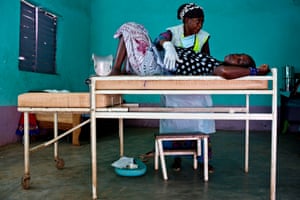
A woman is examined by a midwife at a health clinic near Doko, Siguiri, Guinea. Photograph: Kate Holt/UNICEF
The opposite end of the spectrum is also of concern, the authors write, citing the over-medicalisation of birth that they dub “too much too soon”, as shown by high rates of caesarean sections and induced labour as well as unnecessary ultrasound examinations and excessive use of antibiotics.
“You have countries like Brazil and parts of Latin America where about 40% of deliveries are by caesarean section, they are a very common procedure,” said Graham. “Now there is no way that 40% of women need a caesarean section.”
By contrast, around a quarter of babies in England and Wales are delivered by caesarean section, while almost 19% of births worldwide involve the procedure. “Globally, caesarean section rates are rising, and medically unnecessary caesarean sections are prevalent,” the authors report.
The authors also reveal that about 27 million cases of serious pregnancy-related complications occurred in 2015 from the five main direct obstetric causes including haemorrhage and problems arising from abortions. “Death is the tip of the iceberg,” said Graham. “Morbidity is a very large burden on families and health systems.”
The authors highlight a need for maternal healthcare services to respond to growing diversity in the health problems affecting pregnant women as well as the trend for women to have babies later in life. The latter, they say, includes offering care not just regarding the pregnancy and birth itself, but also taking into account that older mothers are more likely to have medical conditions that also need to be addressed and considered, as well as different preferences for their care.
“That joined-up thinking and that joined-up working among professionals and services doesn’t really exist in low income countries in many places on the scale that can respond to these epidemiological transitions,” said Graham.
Other challenges, the authors note, lie in the boom in people moving into urban centres, as well as the rise in obesity, pointing out that in 2014, 13% of mothers were obese.
“Again it is this issue of getting prepared for services to meet the needs of obese patients,” said Graham.
The report also highlights the need for emergency services to provide better maternal health care during crises, from outbreaks such as that of the Zika virus to mass migration, whether political or environmental.
“Your first line services have to recognise that pregnancy will continue and births will happen,” said Graham. “Systems need to be more resistant to what we call shocks – whether it is Zika or indeed ebola, shocks happen.”
“The new report makes it evident that there is a growing divide between the haves and the have-nots,” said Katja Iversen chief executive of Women Deliver.
“We have come far in bringing down maternal mortality, but we are definitely not there yet,” she added. “It is not just about increasing the number of health centres, it is also about women’s economic status in society. It is not just about increasing the quality of care that women receive, it is also about education, nutrition and equality. And it is not just about low income countries, it is also something that we see in pockets of very wealthy countries.”
Afusat Saliu, right, with her two daughters and her good friend Anj Handa, who lodged the petition on change.org. Photograph: Anj Handa
An 11th-hour legal challenge is currently being mounted in an attempt to halt the imminent deportation from the United kingdom of a Nigerian lady who is searching for asylum to safeguard her two daughters from becoming subjected to female genital mutilation in her native country.
More than a hundred,000 folks have signed a petition calling on the Property Workplace to reconsider its choice to send Afusat Saliu, 31, back to Nigeria, with her two daughters, aged three and 1.
Saliu, herself a victim of FGM, lives in Leeds and was ordered to report to Heathrow airport for deportation on Friday obtaining exhausted her legal efforts to fight towards her removal. The Property Workplace rejected new proof presented by Saliu’s legal team from her former boyfriend and her cousin about the threat of FGM to the infants if the family returns.
But on Thursday a leading worldwide lawyer, Felicity Gerry QC, took up Saliu’s situation and was preparing to apply for an emergency injunction with the court, to force a pause in the deportation ideas.
As the legal documentation was being drawn up, George Mudie, Saliu’s MP for Leeds East, wrote to James Brokenshire, minister for security and immigration, calling on the deportation ideas to be halted whilst planning for the emergency injunction was under way.
The campaign backing Saliu’s appropriate to continue to be in the United kingdom has grown quickly above the last 48 hours, with the quantity of men and women signing the petition exceeding a hundred,000 by Thursday afternoon.
Speaking from Leeds, Saliu, whose youngest child was born in the United kingdom, explained she desired to protect her daughters from the very same genital mutilation that she had suffered.
She mentioned: “I will not want my daughters to be mutilated like I was. That will come about if I get them back I know it because it is the culture of my family members. They think in it and I will not be in a position to do anything about it.”
Saliu, who has been supported by pals in Leeds, in certain by Anj Handa, who lodged the petition on alter.org, explained she was overwhelmed by the support from friends and members of the public who do not know her, saying it manufactured her stronger and gave her hope.
Saliu fled Nigeria in 2011 right after her stepmother told her she would get her oldest daughter, Bassy, minimize. She stated her dad and mom have been also forcing her to marry a guy forty years her senior, who she believed also posed a danger to her youngsters.
She 1st applied for asylum in 2012, but her application was denied. An appeal has been dismissed, and her recent application to the House Office presenting new proof was rejected on Wednesday.
The MP for Leeds North West, Greg Mulholland, and the anti-FGM campaigner Leyla Hussein have each backed Saliu’s battle towards deportation.
Mulholland explained: “I was extremely concerned to hear about the remedy that Ms Saliu has received from the Home Office, and I have written to the [Uk Border Company] and requested that they urgently investigate Ms Saliu’s situation and guarantee that the deportation is place on hold until finally the matter has been completely looked at once more and to let Afusat and her supporters to submit fresh evidence about the difficulties she and her children would face if they are returned to Nigeria.
“It is extremely worrying that the Residence Workplace are striving to deport her to Nigeria, regardless of the threat of violence she faces, and the threat of FGM to her two youthful daughters, which sadly Afusat has already been a victim of.”
The House Office stated: “The United kingdom has a proud historical past of granting asylum to those who need our safety and we think about every claim for asylum on its individual merits.
“We think that individuals who fail to establish a genuine fear of persecution need to return home voluntarily. If they do not, we will enforce their removal.”
Colleges are being urged to quit pupils from making use of playgrounds at lunchtime and workers to stay away from cycling, operating or strolling to perform throughout rush hour in the areas of England worst impacted by the ongoing rise in pollution.
The government, public well being medical professionals and authorities in pollution are also advising older people and those with a heart or lung problem such as asthma to avoid working out outside and use a gymnasium instead.
One particular professional explained the threat to overall health was so wonderful that even normally wholesome people who exercising outdoors, this kind of as cyclists, may finish up with a sore throat or cough until finally the pollution eases.
For component of Wednesday, East Anglia knowledgeable “very large” levels of pollution – the highest on a ten-level scale – with “substantial” readings recorded in the south-east. Levels were reasonable to substantial in a lot of England from Cheshire to north Devon, the Division of the Setting, Foods and Rural Affairs (Defra) explained.
The surge in smog that started final weekend is expected to carry higher ranges on Thursday in East Anglia and the Midlands, which includes Lincolnshire, eastern parts of Wales as well as Wirral and parts of coastal north-west England and south-west Scotland, but moderate or minimal elsewhere.
The pollution is anticipated to ease from Friday, as cleaner south-westerly winds arrive, however there may be reasonable levels in south-west England, Kent, North Yorkshire and parts of southern Scotland. The entire of the United kingdom is anticipated to return to low amounts by the weekend.
A few colleges in London kept pupils indoors at lunchtime on Wednesday to lessen their publicity to the smog. Their action prompted Professor Frank Kelly, a leading government adviser on air pollution, to state that the policy was wise for colleges in the worst affected regions.
Banning pupils’ access to outside recreational regions throughout the school day could reduce the number of asthma attacks and even stay away from some establishing probably lifelong lung damage, said Kelly.
“As a general response this is a very good strategy as kids have a tendency to run all around outside and therefore breathe deeper. Therefore, on days like this they will be aspiring a great deal more pollution if outside than when they are breathing normally (hopefully) inside,” stated Kelly, who is professor of environmental wellness at King’s College London, chair of the Department of Health’s Committee on the Medical Effects of Air Pollution and a member of Defra’s air high quality professional group.
Pupils with asthma may want to use their inhalers, whilst these with other breathing problems could suffer serious harm if exposed to the large level of pollution becoming noticed in London, he warned.
“Besides people kids whose asthma could be exacerbated by pollution and who would then need to have to increase their medication, the major issue is associated to pollution publicity on a continual basis as current proof indicates that lung growth is restricted. If there is no subsequent catch-up lung development then this respiratory deficit is carried forward by means of life.”
Bowes and Chesterfield principal colleges in Enfield, north London, stored kids within on Wednesday .
“When schools are faced with conditions like these we have to make a decision what is very best for children. In the absence of any formal tips from government, we made a decision to preserve young children inside as a precaution,” explained Tom Sheldon, chair of governors at the two colleges, which are close to the usually congested North Circular Street.
“But we can not do this for ever, and in London we encounter the significantly wider problem of bad air quality every day. The Saharan dust will pass, but London will proceed to fail its citizens on air top quality. Children’s building lungs are at particular danger, the two lengthy- and short-term.”
Eight-yr-previous George Stewart had an asthma assault in the course of his half-mile walk to college in Eltham, south-east London, on Wednesday morning. His mother, Leanne, stated: “It truly is usually quite an easy stroll but I am nonetheless breathless now. I could come to feel my chest acquiring tighter and tighter, and my son had to stop and have his inhaler I went light-headed and had to get a bus back. It is only half a mile and I generally do it twice a day, no dilemma. … I’ve never had that issue before. My son felt like the air was not acquiring into his lungs, so I’m worried about him these days.”
The British Lung Basis warned that the heavy air pollution could have “a significant affect” on, and induce coughing and breathlessness between folks with situations this kind of as asthma and persistent obstructive pulmonary ailment.
This kind of individuals “need to keep away from strenuous physical exercise outdoors, particularly close to pollution hotspots this kind of as hectic roads”, stated Dr Keith Prowse, the charity’s honorary health care adviser. “If they cycle, run or stroll to function, commuting at instances other than rush hour or along backstreets is also a good idea.”
Ellie Highwood, professor of climate physics at Reading through University, mentioned the pollution was the outcome of small particulates (atmospheric aerosols) that come from traffic, fossil fuel burning, agricultural practices and, a lot more unusually, dust from the Sahara.” High levels of the pollutant PM2.five meant that “men and women with present lung or heart situations should consider care, and even healthier individuals doing strenuous bodily exercise outside, such as cycling, might recognize a sore throat or cough.”
The skyscrapers of the Canary Wharf spot in London shrouded in smog. Photograph: Matt Dunham/AP
Schools in locations affected by serious air pollution ought to preserve pupils indoors at lunchtime to steer clear of them struggling asthma attacks and possibly lifelong lung injury, a key government adviser is urging.
Prof Frank Kelly mentioned children need to be stopped from employing the playground in the course of school hrs to minimize their exposure to the smog that is affecting south-east England and is expected to spread to the Midlands and East Anglia.
Kelly is the chair of the Division of Health’s Committee on the Health care Effects of Air Pollution and a member of the Department for Atmosphere, Food and Rural Affairs’s Air Good quality Specialist Group.
His tips comes soon after some colleges in the capital made a decision to maintain their pupils indoors on Wednesday as a precaution.
Asked if that was sensible, Kelly informed the Guardian: “As a common response this is a good approach as young children tend to run around outdoors and as a result breathe deeper. Therefore on days like this they will be inspiring a good deal a lot more pollution if outside than when they are breathing typically (hopefully) inside.”
The policy should apply to morning and afternoon breaks, as nicely as lunchtime, Kelly explained. “Tips would be the very same for breaktimes if pollution levels were elevated at the school area.”
Pupils with asthma might require to resort to their inhalers, although people with other breathing conditions could suffer serious harm if exposed to the higher level of pollution currently being noticed in London, Kelly warned.
“Besides those young children whose asthma may possibly be exacerbated by pollution and who would then need to have to improve their medicine, the main situation is relevant to pollution publicity on a chronic basis as recent proof indicates that lung development is restricted. If there is no subsequent catch-up lung growth then this respiratory deficit is carried forward via existence,” he mentioned.
Bowes and Chesterfield major colleges in Enfield, north London, kept children within on Wednesday. “When colleges are faced with circumstances like these we have to determine what is very best for children. In the absence of any formal guidance from government we made a decision to preserve youngsters inside today as a precaution,” stated Tom Sheldon, chair of governors at both schools.
“But we cannot do this forever, and in London we face the much wider issue of poor air high quality each day. The Saharan dust will pass, but London will proceed to fail its citizens on air quality. Children’s establishing lungs are at specific risk, the two prolonged- and brief-term.
“We urgently want an intensive programme of pollution reduction in the capital.”
Leanne Stewart’s son George suffered an asthma attack throughout his half-mile walk to college in Eltham, south-east London, on Wednesday morning.
“It truly is usually fairly an easy walk but I am nevertheless breathless now. I could come to feel my chest getting tighter and tighter and my son, who’s eight, had to quit and have his inhaler. I went light-headed and had to get a bus back. It truly is only half a mile and I generally do it twice a day, no difficulty,” mentioned Stewart.
“I have by no means had that difficulty just before. My son felt like the air wasn’t receiving into his lungs so I am worried about him these days, but I’ve just texted him and he explained he’s fine.”
Meanwhile, the British Lung Foundation urged men and women in affected places who cycle, walk or run to perform to steer clear of undertaking so at rush hour and to use backstreets if feasible, and for folks with lung problems such as asthma to stay away from doing strenuous physical exercise outside.
“Heavy air pollution, of the variety we’re seeing in many places across the Uk at the second, can have a substantial influence on men and women with pre-current respiratory conditions this kind of COPD [chronic obstructive pulmonary disease] and asthma, worsening signs such as coughing and breathlessness,” explained Dr Keith Prowse, the charity’s honorary health-related adviser.
“When ranges of air pollution are substantial, men and women with these problems, or any person else who finds themselves coughing or wheezing in times of higher pollution, must avoid strenuous workout outside, specifically close to pollution hotspots this kind of as occupied roads. If the option is accessible, working out in an air-conditioned gymnasium or sports activities hall is preferable.”
Prowse extra: “If they cycle, run or stroll to work, commuting at instances other than rush hour or along back streets is also a good idea. People with lung circumstances who use a reliever inhaler should make positive that they carry it with them. If they truly feel their condition is worsening at all, they ought to make contact with their GP.”
‘GPs shouldn’t have to justify every single referral they make to hospital to their clinical commissioning group’ Photograph: Adrian Sherratt
Clinical commissioning groups (CCGs) came into being as statutory bodies in April 2013, as an intrinsic element of the government’s well being adjustments. Prior to this, they had existed in their “shadow” varieties when main care trusts (PCTs) have been slowly devolving.
The concept behind CCGs was to have frontline clinicians, this kind of as GPs, at the helm when it came to commissioning neighborhood and hospital care in England, and managing all around two-thirds of the NHS budgets. For instance, CCGs are accountable for commissioning outpatient, inpatient or urgent care received by individuals in their local hospitals. They commission district nursing and wellness going to services for their regional population. Nonetheless, NHS England nevertheless commissions GPs, and despite the fact that CCGs have been tasked with strengthening basic practice as a total, they do not hold GP contracts.
In my expertise in inner-city Bristol, since the start off of CCGs GPs have had far more clinical involvement. GPs, hospital physicians, nurses and pharmacists are all being represented on most CCG boards. This guarantees that the wealth of clinical expertise is taken from the consulting area to the boardroom.
A great deal of perform has gone into engaging frontline GPs like myself who are not actively involved with CCG operate. For instance, in our locality groups, we are often asked to engage in or come up with new initiatives to aid our nearby population groups. There have been some superb initiatives that have supplied GPs peer support and enhanced finding out in fields this kind of as paediatrics, prescribing and assistance for dementia sufferers. But there have also been challenges.
There is ultimately a finite sum of money accessible to CCGs and any services improvement has to be balanced towards cuts elsewhere. Referral management is an location that all CCGs appear at closely to create if any GP practices are “outliers”. So for instance, a GP practice that refers a good deal of patients to gynaecology clinics in hospital whilst its neighbouring practice has minimal referral prices may possibly come beneath scrutiny.
It could be that the practice has studying requirements or it might even be “overskilled” and consequently its GPs are far better at diagnosing troubles for distinct situations (that merit referral). Also numerous GPs work underneath demanding problems with spiralling workloads and can see between 30 to forty individuals a day, some of whom can be really ill. Obtaining to justify to the CCG every referral they make to hospital in the face of uncertainty, adds increasing pressure to that workload.
Occasionally our sufferers are unwell but could be managed in the local community, if we had ample district nurses or neighborhood matrons (which we will not). Usually it is the situation of the exact same individuals time and once more whom we struggle to maintain out of hospital when there are couple of beds and emergency departments are complete.
I know numerous CCGs are hunting at community-based alternatives to deal with these sufferers, this kind of as specialist geriatricians to advise us or “intermediate” beds (the place individuals can have some clinical care out of hospital). Ultimately, all these selections will be dependent on finances.
In contrast to PCTs, which have been created up of managers, GP-led CCGs comprehend GPs. Nevertheless, they may possibly not have the power or assets to change the huge picture. We are twelve months down the line and though there are constructive signs, we are still on unknown territory. CCGs do have hard challenges as they try out to apply their prolonged-phrase strategic programs, in the encounter of an ageing population and escalating prevalence of disease.
A bus passenger wears a surgical mask in Mexico City. Experts say masks may possibly not supply substantial protection against viruses. Photograph: Joe Raedle/Getty Photos
The late-night retailers, the diverse population, the selection of dining establishments, culture and clubs – what is not to enjoy about residing in a city? Properly, how about the air pollution, germ-ridden public transport and stress?
If cities pose a health chance, how can you fight back? What can you do to keep away from filling your lungs with little pollutant particlesthat enhance your threat of heart illness, asthma, continual bronchitis and lung cancer? Can you travel by bus, underground system or train without having catching a nasty virus?
Colds and flu
Just acquiring on public transport in a city at rush hour means you are probably to be exposed to someone else’s virus. A examine in Nottingham funded by the Wellness Protection Agency identified that men and women have been six times a lot more likely to end up at the doctor with a cold or flu if they had lately used a bus or tram.
But anyplace with individuals in a confined area – offices, concert venues, lifts – poses a threat. Common places to choose up viruses are on a handrail, door handle or light switch. Of program, you can’t steer clear of touching everything – but try out not to touch your eyes or nose, due to the fact which is how viruses infect you.
Sporting gloves can minimize the danger, as can frequent and thorough handwashing with soapy water, or the use of antiseptic hand washes. But facemasks aren’t the resolution. A near-fitting, N2-type facemask may minimize airborne viral infections, but you’d have to dress in them a great deal and it is most likely not well worth the problem. But there can be cultural concerns – in a lot of Asian nations, particularly Japan, wearing a mask on public transport is usually regarded great etiquette to avert your own germs from spreading.
Air pollution
Nearly 30,000 deaths a 12 months are hastened by folks being exposed to air pollution, according to the government’s committee on the health care effects of air pollution. Ozone, nitrogen oxides and sulphur dioxide can all exacerbate asthma, but the true villains are the fine particles (PM10 and PM2.5) that enhance the danger of heart attacks (by receiving into the blood stream), of chronic obstructive airways disease and of lung cancer.
Whilst children could face much more air pollution due to the height of prams, any added hazards ought to be stored in viewpoint. Photograph: Martin Godwin for the Guardian
Once more, facemasks are not the reply. They only safeguard you from inhaling larger particles, which are not as damaging to wellness as the ultrafine ones that get deep into your lungs. “They’re a wonderful protest statement that you are concerned about air pollution, but they won’t advantage your health,” says Dr Audrey de Nazell, lecturer in air pollution at Imperial College.
To lessen your exposure, avoid rush-hour visitors and try to stroll along side streets or via a park, the place there is much less air pollution. Research present a halving of targeted traffic pollution when you move 150 metres away from the edge of a active street, but even strolling as far away from the curb as attainable will make a difference. “You must also keep away from standing on central reservations,” says De Nazell. It’s greater for your lungs to wait for a break in the visitors and to stroll straight across the street.
In spite of it getting extremely hard to stay away from inhaling pollutants, De Nazell’s study exhibits it is healthier to cycle in cities than to travel within a automobile. (Her study also requires into account the danger of site visitors accidents.) “Even though air conditioning and filters in cars can protect you,” she says, “in a vehicle you are in the middle of visitors, and your publicity to pollution is increased than if you are strolling or cycling.”
Children in prams may be more exposed to pollution because they sit at the same degree as automobile exhaust pipes. “It is much better to purchase a increased-up pushchair or put your child in a sling, and you must try to stay away from substantial-traffic streets,” suggests De Nazell.
But we require to maintain the danger of air pollution in point of view. “Obesity, smoking and diabetes are far more critical chance elements for heart disease than air pollution, ” says Dr Giulia Cesaroni, a researcher on air pollution at the regional health support in Rome.
Stress
Nervousness and schizophrenia are much more typical in city dwellers than rural dwellers. It really is not identified why urban life is associated with a twofold increase in the risk of schizophrenia researchers have regarded as environmental harmful toxins and social stressers, and there is some evidence that smaller sized cities pose much less of a chance.
To reduce the sick-results of urban life on pressure amounts, you should pursue an energetic social lifestyle, workout routinely and consume healthily. Meditation (twenty minutes, as soon as or twice a day) can mitigate the results of pressure by lowering heart and breathing costs and blood stress.
Noise pollution
If you dwell somewhere noisy attempt and get pleasure from the silence of a library now and once again. Photograph: ClassicStock/Corbis
The most evident way to steer clear of the effects of noise pollution is to not dwell near a occupied street. Individuals who dwell by roads and are exposed to noise levels over 50db demonstrate an increased danger of heart attacks and strokes.
If you do reside close to a noisy street, try out to sleep away from the noise, or put on earplugs or noise-cancelling headphones. And stay away from residing near an airport if feasible. Planting trees or large bushes close to your house will soak up some noise. And make sure you routinely have some time away from noise, in a library, park, unpopular museum – anywhere you can be silent for a even though.
The new investigation has now added to a expanding entire body of proof that publicity to cold temperatures can aid people to handle their bodyweight.
Dr Paul Lee, who led the examine at Sydney University, discovered that publicity to the cold resulted in the release of two hormones named irisin and FGF21 that are identified to transform white excess fat into brown excess fat.
He mentioned: “We identified two hormones that are stimulated by cold – irisin and FGF21- released from shivering muscle and brown body fat respectively,” said study leader Dr Paul Lee, from Sydney University in Australia.
“These hormones fired up the energy-burning charge of human white unwanted fat cells in the laboratory, and the handled unwanted fat cells started to emit heat, a hallmark of brown excess fat function.”
About 10-15 minutes of shivering in the volunteers launched the very same ranges of irisin from the muscle tissue that was witnessed right after they had spent an hour pedalling on an workout bike.
Laboratory experiments have shown that irisin and FGF21 with each other transform white fat cells into brown excess fat cells over a period of 6 days.
“Excitement in the brown unwanted fat field has risen drastically above the final couple of years because its power-burning nature can make it a likely therapeutic target against weight problems and diabetes,” said Dr Lee.
“White fat transformation into brown body fat could safeguard animals against diabetes, obesity and fatty liver. Glucose levels are lower in people with much more brown unwanted fat.”
The findings are reported in the latest edition of the journal Cell Metabolic process.
“From a clinical point of see, irisin and FGF21 represent a cold-stimulated hormone system, which was previously unknown, and could be harnessed in future weight problems therapeutics by way of brown excess fat activation,” explained Dr Lee.
It comes soon after a paper in Trends in Endocrinology and Metabolic process suggested that normal exposure to mild cold would be a healthful and sustainable way for men and women to drop bodyweight.
The researchers from the Maastricht University warned that present day daily life meant folks spent most of their lives exposed to warm indoor temperatures and so our bodies are not operating as challenging to remain warm.
They mentioned the tendency for offices and residences to be temperature managed in the winter could be contributing to the obesity crisis.
Marken Lichtenbelt, the lead author of the paper, said: “Indoor temperature in most buildings is regulated to minimise the percentage of people dissatisfied.
“This final results in fairly large indoor temperatures in wintertime. This is evident in offices, in dwellings and is most pronounced in care centres and hospitals.
“By lack of publicity to a varied ambient temperature, total populations might be prone to develop ailments like weight problems. In addition, individuals turn into vulnerable to sudden changes in ambient temperature.”