Canada etiketine sahip kayıtlar gösteriliyor. Tüm kayıtları göster

5 Nisan 2017 Çarşamba

New Brunswick becomes first Canada province to offer free abortion pill

New Brunswick has become the first province in Canada to distribute an abortion pill for free, in a major step for a region that previously had one of the country’s strictest policies on women’s reproductive rights.


The provincial health minister, Victor Boudreau, unveiled the policy on Tuesday, announcing that women will be entitled to receive Mifegymiso without payment if they have a valid healthcare card.


“By making Mifegymiso available free of charge for all New Brunswick women, our government is ensuring that financial barriers do not stand in the way of a woman’s right to choose,” said Boudreau in a press release.


Access to publicly funded abortion in New Brunswick was restricted from the 1980s until 2015. During that period, Medicare – the country’s national heath system – would only cover an abortion at one of the province’s two approved facilities if two doctors had certified that it was necessary for medical reasons.


“It was such a strict criteria that it became very difficult to get a publicly-funded abortion,” said Beth Lyons, executive director of New Brunswick Women’s Council.


“The New Brunswick government’s offer to cover the cost of Mifegymiso is a tremendous step forward in making sure there is a real choice for women and trans people seeking abortion care,” said Sandeep Prasad, executive director of Action Canada for Sexual Health and Rights. “We were both pleased and surprised, surprised because New Brunswick is ahead of the pack, so to speak.”


Pharmacists will not be allowed to directly dispense Mifegymiso to patients: they must get a prescription from a doctor. To do that, physicians must complete training and be registered to work with the drugs.


“We do think that we’re going to see this improve access for women and trans folks in rural areas, and this could also be particularly helpful for those living in violent situations,” said Lyons. “Having those choices and being able to make the decision that’s best for them, based on their contexts, might ensure that women are more safe or their anonymity is preserved.”


New Brunswick becomes first Canada province to offer free abortion pill

8 Mart 2017 Çarşamba

Multiple sclerosis treatment is debunked by researchers in Canada

A surgical treatment pioneered in Europe that was sought out by thousands of desperate people with multiple sclerosis has been categorically debunked by Canadian researchers.


“Liberation therapy” to widen narrowed veins from the brain and spinal cord was devised by the Italian surgeon Dr Paolo Zamboni, who suggested in 2009 that the neurological disease could be triggered by a build-up of iron where the blood did not flow freely.


Zamboni called this condition chronic cerebrospinal venous insufficiency (CCSVI or CCVI) and widened the veins of people with MS using stents. Many in the medical community were sceptical, and his trials of the technique did not compare people given the procedure with those who were not. But other doctors’ doubts did not stop people with MS from joining the waiting list.


In 2013, a paper was published in the Lancet medical journal by Dr Anthony Traboulsee from the University of British Columbia and colleagues, funded by the MS Society of Canada, which found that Zamboni’s hypothesis was fundamentally flawed. The researchers’ study showed that narrowing of the veins that run from the brain to the heart was as common in people without MS as in those with the condition.


The same team has now carried out a more ambitious study. They performed the vein-widening venoplasty procedure on 49 people, inserting a catheter and inflating their veins with a small balloon and a “sham” operation on 55 others, who just had the catheter insertion. Neither the patients nor the researchers knew which people had undergone which operation.


One year later, assessments involving brain imaging and doctors’ and patients’ own assessment of their symptoms, showed that there was no difference between the disease progression of the two groups.


“We hope these findings, coming from a carefully controlled, ‘gold standard’ study, will persuade people with MS not to pursue liberation therapy, which is an invasive procedure that carries the risk of complications, as well as significant financial cost,” said Traboulsee, a UBC associate professor of neurology.


“Fortunately, there are a range of drug treatments for MS that have been proven, through rigorous studies, to be safe and effective at slowing the disease progression.”


In spite of the earlier Lancet paper, people are still seeking liberation therapy, Traboulsee said. “It is less popular. But there is still an advocacy group that has a conference once a year with guest speakers such as Dr Zamboni,” he said. “There are still researchers dedicated to the topic, not just Dr Zamboni. It has been proposed as important for treatment of Ménière’s [disease] and for dementia diseases.”


Multiple sclerosis treatment is debunked by researchers in Canada

13 Şubat 2017 Pazartesi

I moved from Canada to be a nurse in the UK – but now I want to quit

“I don’t think you’re going to like it,” said my manager, turning from her computer. She’d just marked my last day of work in her calendar. I’d finally found the courage to announce I was leaving to move to London.


She wasn’t being mean-spirited or spiteful. She was thinking back on the experience of a friend who had moved to the UK to work as a nurse and how disappointing it had been.


And she couldn’t have been more right. It’s been a year since I touched down in London, and not a single week has gone by where I haven’t daydreamed about finding a new career.


I enjoy nursing and it suits me well. But I can’t help but feel undervalued as a nurse in the UK. The basics are the same: nurses look after sick people. So why does it feel so different this side of the Atlantic? It comes down to responsibility, autonomy and respect.


For starters, in the UK nurses tend to leave most decision-making up to doctors. ECG? Show it to the doctor. Blood results? Let the doctor review them. Can’t find a vein? The doctor will insert the IV cannula. In Canada, nurses look at ECGs to determine whether patients should be treated immediately for heart attack or if it’s fine for them to sit in the waiting room. It’s up to the nurse to get something done if a patient’s electrolytes are out of whack. Putting a needle in a vein? That’s a nursing skill – and they’re the best at it.


Back home I was often told that if a patient’s blood levels were fine, I could go ahead and discharge them from hospital. Here, not many nurses bother looking at blood results. No one expects them to.


In Canada, mentors taught me about how symptoms and anatomy related to diagnoses. I was required to fully assess every patient from head to toe by looking, touching, and listening. In the UK, I most often receive feedback about recording blood pressure on time and making sure patients sign the personal property waiver. Here, a nursing assessment can be done without even touching the patient. Nurses document who patients live with, what mobility device they use, and what their risk for pressure sores is. The nurses I work with here know their stuff . But from what I’ve seen, the NHS is geared towards nurses doing tasks, not applying judgement or critical thinking.


Nurses have an important job; they can make or break a patient’s healthcare experience. To be a nurse requires a university degree and membership in a professional body. Nurses give their all for people who are at their worst. It’s a physically and emotionally draining job on the best of days. Yet most NHS nurses I know do extra shifts on top of their full-time hours to make ends meet.


The nursing salaries here are embarrassingly low. After converting from Canadian dollars, I earn £15,000 less per year here than I did back home. Canada’s healthcare system is publicly-funded just like the NHS, but somehow nurses there are paid well.


In nursing school, one of the first courses I took was about the status and history of the profession, from Nightingale to the present. One day the topic of salary came up. The students knew how well Canadian nurses are compensated, but I recall the energy with which my classmates cheered when our professor exclaimed: “And we’re worth every penny!”


But perhaps the most difficult aspect for me has been public perception of nurses in the UK. Back home when you say you’re a nurse, you say it proudly and people’s eyes light up. “My aunt is a nurse, what type of nurse are you?” they ask with interest. Here In the UK, I find people are less enthusiastic. “A nurse? Oh,” they say, and move on to a different subject.


A Canadian friend landed at Heathrow and handed her visa over to the immigration officer.


“What do you do for work?” he asked.


“I’m a nurse,” she said, beaming. “Why?” he said flatly, as the smile fell from her face.


It was a quick introduction to nursing in the UK.


If you would like to write a blogpost for Views from the NHS frontline, read our guidelines and get in touch by emailing sarah.johnson@theguardian.com.


Join the Healthcare Professionals Network to read more pieces like this. And follow us on Twitter (@GdnHealthcare) to keep up with the latest healthcare news and views.


I moved from Canada to be a nurse in the UK – but now I want to quit

12 Ocak 2017 Perşembe

Man"s best friend, bacteria"s worst enemy: dog sniffs out superbug in Canada hospital

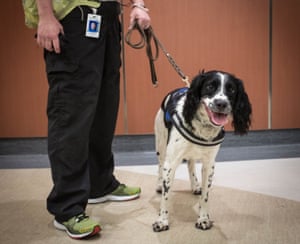
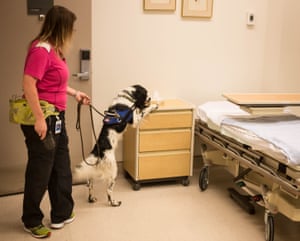
Hospital ID badge dangling from his neck, Angus considered the empty bed in front of him. After a few strong sniffs, he moved on.


Nearing the next bed, his floppy ears perked up before he stopped dead in his tracks, tapping his paw and eyeing his handler expectantly.


The two-year-old English springer spaniel is believed to be the only canine hospital employee in the world trained to sniff out the notorious superbug Clostridium difficile, or C difficile.


The seeds of Angus’ unlikely career were planted three years ago, after Teresa Zurberg, a Vancouver resident, suffered a C difficile infection. Her bout with the bacteria – which attacks people whose immune systems have been weakened by antibiotics – left her in the hospital for five days and she lost 20 pounds.


“It was awful. I almost died,” Zurberg said.


Her husband, Markus, a nurse who works in patient safety and quality care, stumbled across an article on a beagle in the Netherlands who had been specially trained to check patients for C difficile.


Could Zurberg – a canine handler who trains bomb- and drug-detecting dogs – do the same thing in Vancouver? he wondered. “I told him, ‘If it’s got a smell, I can teach a dog to find it,’” Zurberg said. Their new beagle pup might be perfect for the job, she suggested.


The pair approached Vancouver Coastal Health, the health authority that oversees the city’s general hospital – and were surprised by the enthusiastic reaction they received. “I was expecting them to laugh at us but they were like: ‘Hey, that’s really cool.’”


Once Angus detects the bacteria, the area is cleaned with a robot that uses ultraviolet light to disinfect 99.9% of the C difficile spores.


Once Angus detects the bacteria, the area is cleaned with a robot that uses ultraviolet light to disinfect 99.9% of the C difficile spores. Photograph: Vancouver Coastal Health

Working with the health authority, Zurberg and Angus became part of a one-of-a-kind pilot program. The hope, said Nancy Desrosiers of Vancouver Coastal Health, was to find an innovative approach to address what has become a global concern.


“It really is one of those vicious cycles,” she said, pointing to a steadily rising number of infections that result in longer hospital stays and increase the likelihood of further infections. “In Canada, 64% of all of our C difficile cases are hospital-acquired.”


Unlike the patient-sniffing beagle in the Netherlands – who is now retired – Angus, it was decided, would focus exclusively on searching for C difficile in the hospital environment.


Hospitals normally use ultraviolet light to find the bacteria, but Angus can move much more quickly and efficiently through rooms. Once he detects the bacteria, the area is cleaned with a robot that uses ultraviolet light to disinfect 99.9% of the C difficile spores.


The decision to have him work on environments rather than patients minimised the chances of Angus triggering patients who may have allergies or sensitivities to dogs.


With the dog’s role in the hospital now clearly laid out, Zurberg began training Angus, mimicking the techniques used to train dogs to detect bombs or drugs.


“All of the detection work for the dogs, it’s just a game. To them, it’s just a way to get what they really want, which is their toy or their food, depending on what they’re rewarded with.”


As she taught him to associate the scent with a food reward, researchers from the hospital kept her stocked with a steady supply of the scent of C difficile – isolated from the bug – on cotton swabs.


Angus, the C difficile sniffing dog.


Angus, the C difficile-sniffing dog. Photograph: Vancouver Coastal Health

The training took about 10 months. After passing a series of detection tests in a local nursing college with mock patient wards, Angus was brought into the hospital this summer.


Easily excitable when he’s not focused on work, Angus is accompanied by Zurberg at all times during the four days a week he spends at the hospital.


“It’s a very multi-ethnic health authority and I have to be really conscious of who’s around me and what issues they may have with dogs,” she said. “That’s part of the reason we chose a floppy-eared dog as opposed to a pointy-eared dog, because he’s not so intimidating-looking.”


Like any other member of the hospital staff, Angus faces a slight risk that he could be infected by C difficile. “He’s young and he’s not autoimmune compromised, so his risks are extremely low,” Zurberg said. His health is carefully monitored through regular veterinarian visits, she added.


His stint at the hospital has attracted global attention, and health authorities from Finland to Chile have contacted Zurberg with questions about replicating the idea. The aim, said Zurberg, is to develop a program that would train other dogs to sniff out C difficile and make them available to hospitals around the world.


Zurberg’s voice raises with excitement as she contemplates the possibility that Angus might hold the key to regaining control over a superbug that has affected so many people around the world.


“So many people come up to me and say: ‘My dad died of C diff,’ or ‘This person in my family has C diff,’ and they thank me for what we’re doing,” she said. “It opens the doors to other possibilities – what else can we have a dog detect? We’re only really limited by our imagination.”


Man"s best friend, bacteria"s worst enemy: dog sniffs out superbug in Canada hospital

10 Aralık 2015 Perşembe

Canada reaffirms their efforts to legalize marijuana in 2016!

A recent Gallup poll suggests that 58 % of American’s feel that marijuana use ought to be created legal in the United States. (one)  For U.S. citizens the battle continues although Canada is creating headlines in their hard work to legalize marijuana.


Fifty-eight percent of U.S. citizen’s think marijuana must be created legal!


New Canadian Prime Minister, Justin Trudeau, has affirmed that the administration continues to make movement to legalize marijuana given that the parliament resumed.  In a speech offered on December 4th , Governor Basic, David Johnston, mentioned that the new liberal government would make recreational use of marijuana legal but it would also regulate and restrict accessibility.  (2)
Johnston reported that getting rid of the “criminal element” of marijuana would assist repair a broken method.  (two)


Canada could turn out to be very first nation in G7 group to legalize marijuana!


Due to these efforts, Canada could turn into the very first country in the G7 group to legalize marijuana.  The Prime Minister manufactured globe information due to his place on marijuana and has not wavered from this place given that turning into the leader of the Liberal celebration.  Trudeau’s position on marijuana is influenced by the fate of his late brother, who was charged with drug possession for getting “a tiny amount” of marijuana.  His brother died in 1998 due to an avalanche. (3)


Trudeau’s stance on marijuna is influenced by his late brother who was charged with drug possession for having a “tiny amount” of marijuana on his man or woman


Currently healthcare marijuana is legal to use in Canada in dried and edible varieties as long as it is not smoked.  Growing cannabis at property is also legal.  (three)
The government is also planning to reduce taxes for citizens with middle earnings and supply higher child positive aspects to those in need.  They also prepare to reduce military paying and restrict the spending budget deficit to ten billion Canadian dollars per 12 months and decrease greenhouse fuel emissions.  (three)


Sources integrated:


(one) http://www.gallup.com/poll/186260/back-legal-marijuana.aspx


(two)http://time.com/4137644/canadian-prime-minister-reaffirms-prepare-to-legalize-marijuana/


(three) https://www.rt.com/news/324870-canada-government-legalize-marijuana/


Canada reaffirms their efforts to legalize marijuana in 2016!