friend etiketine sahip kayıtlar gösteriliyor. Tüm kayıtları göster

19 Mart 2017 Pazar

My friend told me not to freeze my eggs and now I"m childless

The dilemma At the age of 35, I was single and childless, so I considered egg freezing. I found a clinic, sorted out transport and worked out costs. But before I went ahead I spoke to a close friend who strongly warned me against the idea. She stated removing eggs from your body and storing them in a freezer was silly. I respected my friend as she had been through many fertility treatments and so I cancelled my appointment.


I am now 40 and after meeting a very special man am struggling to conceive. My gynaecologist asked me why I had not frozen my eggs and I find myself furious with my friend. I am struggling to forgive her for her catastrophic advice.


I am sure she was not deliberately malicious, but I feel she has ruined my chances of ever being a parent. I have not said anything to her yet. How can I move on?


Mariella replies Stop the blame game. I appreciate that you are angry and frustrated. The vagaries of female fertility and its curtailment long before many of us are ready or in need of saying goodbye to the possibility of parenting is an evolutionary frustration.


Once upon a time we were unlikely to live much beyond 50. Today it’s double that and we are better prepared for parenting in our middle years. We mature more slowly, committed relationships start later, careers are rarely consolidated in our 20s – all of which knocks parenthood down the touchline.


Yet here you are suffering a similar fate to many women of our generation – finding the right relationship, but potentially too late to make it a family affair. Dumping responsibility for past choices on to someone else’s shoulders is not the way to solve your problem or your complex feelings around the baby-making issue. I’m startled that not freezing your eggs should be seen by your gynaecologist as a slip-up on your part. I suspect the majority of women, unless experiencing a relatable medical condition, would not have freezing their eggs high on their “to do” list in their mid-30s. Maybe we should. It’s one of a host of options we need to be discussing as our bodies struggle to keep pace with seismic shifts in society.


Your friend may not have displayed great foresight, but that’s easy to judge in hindsight


Blaming your friend for delivering an opinion, based on her own experience, is the last thing you should be focused on. Your anger would be better channelled in tackling your possibilities for conception. There’s a long and ever-increasing list to choose from – IVF, donor eggs, surrogate mothers – if having a baby is your priority. Getting your gynaecologist to show more imagination and make fewer unhelpful comments about choices long past would be a much more constructive occupation.


Then again, friction among friends seems a staple of long-held relationships. Some days I find myself longing for the innocent friendships of yore. In adulthood, refraining from manslaughter let alone maintaining civility with those you’ve “matured” alongside, gets ever harder. Over the decades, girlfriends develop opinions that are intractable, habits that are increasingly annoying and foibles, long suffered, become ever more insufferable. Where once all I asked for in a buddy was the potential for fun, a companion to share the late-night taxi fare with and an open phone line in times of emotional turmoil, now I demand sensitivity, compliance, flexibility, intuition, blind loyalty, political compatibility, back-up when required and free rein when not.


In short the older we get the less tolerant we become of anything less than perfection in those who’ve accompanied us through the years. The better we get to know ourselves the less flexible we are about stepping beyond established boundaries. It’s surely the reason so many of us get stuck in our ways, paused at a particular point, with no hunger to develop, seek new adventures or push ourselves. I’d go so far as to say it’s what makes us old!


I’m wondering how much credit your pal would have been given had she pushed you into egg freezing. Would your life have taken this same turn or a different swerve? It’s illogical to separate the choices we’re happy with from the ones we’d like to retake because they are intrinsically connected. Your imperative to have a baby may have pushed you faster into finding a relationship. The insurance of frozen eggs might have made you dawdle along the way and blinded you to the possibilities of the man you’ve met. That’s why gratitude for the things that turn out right is so much more important than raging against perceived losses.


Your friend may not have displayed great foresight, but that’s easy to judge in hindsight. Here in the present I suggest you take responsibility for your choices, channel anger into positive action and be grateful that you’ve met a great man.


If you have a dilemma, send a brief email to mariella.frostrup@observer.co.uk. Follow her on Twitter @mariellaf1


My friend told me not to freeze my eggs and now I"m childless

12 Ocak 2017 Perşembe

Man"s best friend, bacteria"s worst enemy: dog sniffs out superbug in Canada hospital

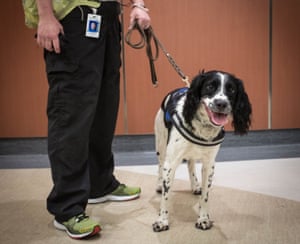
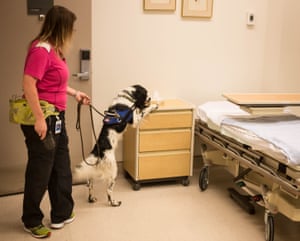
Hospital ID badge dangling from his neck, Angus considered the empty bed in front of him. After a few strong sniffs, he moved on.


Nearing the next bed, his floppy ears perked up before he stopped dead in his tracks, tapping his paw and eyeing his handler expectantly.


The two-year-old English springer spaniel is believed to be the only canine hospital employee in the world trained to sniff out the notorious superbug Clostridium difficile, or C difficile.


The seeds of Angus’ unlikely career were planted three years ago, after Teresa Zurberg, a Vancouver resident, suffered a C difficile infection. Her bout with the bacteria – which attacks people whose immune systems have been weakened by antibiotics – left her in the hospital for five days and she lost 20 pounds.


“It was awful. I almost died,” Zurberg said.


Her husband, Markus, a nurse who works in patient safety and quality care, stumbled across an article on a beagle in the Netherlands who had been specially trained to check patients for C difficile.


Could Zurberg – a canine handler who trains bomb- and drug-detecting dogs – do the same thing in Vancouver? he wondered. “I told him, ‘If it’s got a smell, I can teach a dog to find it,’” Zurberg said. Their new beagle pup might be perfect for the job, she suggested.


The pair approached Vancouver Coastal Health, the health authority that oversees the city’s general hospital – and were surprised by the enthusiastic reaction they received. “I was expecting them to laugh at us but they were like: ‘Hey, that’s really cool.’”


Once Angus detects the bacteria, the area is cleaned with a robot that uses ultraviolet light to disinfect 99.9% of the C difficile spores.


Once Angus detects the bacteria, the area is cleaned with a robot that uses ultraviolet light to disinfect 99.9% of the C difficile spores. Photograph: Vancouver Coastal Health

Working with the health authority, Zurberg and Angus became part of a one-of-a-kind pilot program. The hope, said Nancy Desrosiers of Vancouver Coastal Health, was to find an innovative approach to address what has become a global concern.


“It really is one of those vicious cycles,” she said, pointing to a steadily rising number of infections that result in longer hospital stays and increase the likelihood of further infections. “In Canada, 64% of all of our C difficile cases are hospital-acquired.”


Unlike the patient-sniffing beagle in the Netherlands – who is now retired – Angus, it was decided, would focus exclusively on searching for C difficile in the hospital environment.


Hospitals normally use ultraviolet light to find the bacteria, but Angus can move much more quickly and efficiently through rooms. Once he detects the bacteria, the area is cleaned with a robot that uses ultraviolet light to disinfect 99.9% of the C difficile spores.


The decision to have him work on environments rather than patients minimised the chances of Angus triggering patients who may have allergies or sensitivities to dogs.


With the dog’s role in the hospital now clearly laid out, Zurberg began training Angus, mimicking the techniques used to train dogs to detect bombs or drugs.


“All of the detection work for the dogs, it’s just a game. To them, it’s just a way to get what they really want, which is their toy or their food, depending on what they’re rewarded with.”


As she taught him to associate the scent with a food reward, researchers from the hospital kept her stocked with a steady supply of the scent of C difficile – isolated from the bug – on cotton swabs.


Angus, the C difficile sniffing dog.


Angus, the C difficile-sniffing dog. Photograph: Vancouver Coastal Health

The training took about 10 months. After passing a series of detection tests in a local nursing college with mock patient wards, Angus was brought into the hospital this summer.


Easily excitable when he’s not focused on work, Angus is accompanied by Zurberg at all times during the four days a week he spends at the hospital.


“It’s a very multi-ethnic health authority and I have to be really conscious of who’s around me and what issues they may have with dogs,” she said. “That’s part of the reason we chose a floppy-eared dog as opposed to a pointy-eared dog, because he’s not so intimidating-looking.”


Like any other member of the hospital staff, Angus faces a slight risk that he could be infected by C difficile. “He’s young and he’s not autoimmune compromised, so his risks are extremely low,” Zurberg said. His health is carefully monitored through regular veterinarian visits, she added.


His stint at the hospital has attracted global attention, and health authorities from Finland to Chile have contacted Zurberg with questions about replicating the idea. The aim, said Zurberg, is to develop a program that would train other dogs to sniff out C difficile and make them available to hospitals around the world.


Zurberg’s voice raises with excitement as she contemplates the possibility that Angus might hold the key to regaining control over a superbug that has affected so many people around the world.


“So many people come up to me and say: ‘My dad died of C diff,’ or ‘This person in my family has C diff,’ and they thank me for what we’re doing,” she said. “It opens the doors to other possibilities – what else can we have a dog detect? We’re only really limited by our imagination.”


Man"s best friend, bacteria"s worst enemy: dog sniffs out superbug in Canada hospital

5 Temmuz 2014 Cumartesi

Marriage in recovery: A text from an old friend who thinks I"m single

rehab column family

‘I’d like to do something a little risque, a tad secret, a bit daring and very dishonest.’


An old friend whom I saw last year has sent me a text asking if I would like to go out for a drink. I can’t remember if, when we met at the party, I told him I was newly single. All the same, he was more handsome, cleverer and funnier than I remembered him to be in our teens. All of the things I might put in the “looking for” section of online dating blurb.


The text is a year too late. But last year it was a few months too early because all I could think of was R.


A few weeks after we split, out of a vain sense of curiosity over how many enquiries I might receive, I signed up to a dating website. Within minutes I had created a profile and sat back satisfied that I’d avoided cliche in the “About” section, and uploaded a photograph that actually resembled me.


As I clicked on to the website I saw, to my horror, that my photograph appeared in a sidebar alongside the main news page of a very popular website. I had also, in error, used my real name as my username and it appeared in leering capital letters next to my picture.


With all the words fused together, the suffix 34F (age, gender; terrible box-filling error) made it seem like I was flaunting my chest size like a glamour model. After a flustered 10 minutes trying to find the “delete my account” section on the site, I disappeared. Possibly the quickest debut and end to the search for new relationships the world has ever seen.


But now – to this old friend who essentially might be a good suitor if I wasn’t otherwise married – I wonder what I should reply? I’ve always been far more comfortable with receiving rejection rather than handing it out. He is only asking me out for a drink, and yet I still do the thing that marks me out as a coward: I tell him I’m working abroad for two months.


Part of me knows that this is because I find it hard to be honest. Most people might say: “Would have been great but I’m actually back with someone now.” But I keep it vague, perhaps because part of me thinks that if R were to royally mess up and become the impossible drunken husband again, then the chances of finding a sure-fire happy date to get over the heartache of not being with him any more would be hard to stumble upon, and oh, wouldn’t a drink with a nice, funny, handsome, clever old friend, be a rather lovely antidote to post-relationship misery?


Then there’s the awful admission somewhere in my mind that I’d like to go for a drink with my old friend and tell no one. That I’d like to do something a little risque, a tad secret, a bit daring and very dishonest, with the forethought that it was morally OK because we would only be chatting and at the end of the evening I would turn to him and say, “That was lovely but I probably forgot to mention that I am still married.”


Which is far madder than anything you could think up, I know.


The truth is, I miss doing bad things. Most of the time it feels good being good: I like to wake up with a relatively clear head; I’m able to move from one day to the next without always catastrophising a situation; I mostly manage to avoid the self-admonishment that results in me eating half a cake or telling the children to bugger off.


R admitted last week that he found being sober tiresome. What followed was a series of lugubrious days of us trying to avoid each other because we realised that we’d reached some sort of recovery zenith, and it was pretty bloody boring. There was no peak at which to feel jubilant. Early days it is, but I sometimes feel in 20 years we will have to mark whatever progress has been made with a less than remarkable “This is it, folks!” plaque.


Optimism is a hard one for anybody in recovery. In the slow days, it’s like reminiscing about a long-term relationship with someone you once loved passionately, who was not good for you in the end, and who you decided to stop seeing but still adored. The aching heart won’t abate. Sometimes a song or a smell or a city will remind you of all that you had. And you will feel the intense loss over and over, every time the memory is reignited. I know R feels this. And I feel it too.


We both miss being free, and sometimes we miss being bad. While a drink or a kiss with somebody new won’t make us feel any better in the long term, there’s no denying that it could be fun.


Marriage in recovery: A text from an old friend who thinks I"m single

2 Şubat 2014 Pazar

Stem cell donation: make a friend, save a existence

Mick Davidson

Pen pals … Mick Davidson has corresponded with the recipient of his stem cells for twenty many years. Photograph: Christopher Thomond for the Guardian


Someplace in London is my best match. He is effectively-developed, a 12 months older than me, well-known with my friends and family members – a real hero. We have in no way met.


He is my stem cell donor, a 10/10 fit for my blood tissue sort, according to our human leukocyte antigen (HLA) – the unique “barcode” we each and every have on our immune system’s cells – which makes it possible for the physique to distinguish itself from foreign bodies so it can fight invading organisms.


When I was diagnosed with large-danger leukaemia last February, I was informed that I would want a stem cell transplant. My bone marrow could not be trusted to create cells on its personal – the total system required to be wiped out, deleted with high-dose chemotherapy and radiation, and essentially replaced with a new hard drive. With no a transplant of a person else’s cells, my medical doctor explained, there was a 60% possibility that the leukaemia would return, and possibly kill me.


Following my sister was tested and found incompatible (siblings are a match in only about thirty% of cases), the hospital commenced browsing the Anthony Nolan charity’s bone marrow register for a donor. I was lucky – a month later, I was advised that a match had been discovered: a 24-12 months-old “chunky lad”.


Apart from his age and robust physique, I do not know anything at all about him. In two years’ time, as lengthy as I am nonetheless in remission, I’ll be permitted to meet him – if he agrees. Till then, donors and recipients can only exchange quick, anonymous messages. But in the meantime, I can’t aid feeling curious about this total stranger whose blood is now flowing through my veins, whose DNA and blood group I now share (along with his Y chromosomes).


Hannah Watterson, 31, originally from County Armagh in Northern Ireland, has been questioning about her donor for many years – and she is about to meet him for the initial time. “I’m nervous,” she says. “I feel like I must know him, since he’s a part of me.” Diagnosed with Hodgkin’s lymphoma in 2003, Watterson underwent several years of chemotherapy. But right after a relapse in 2007, medical doctors warned her that a stem cell transplant was her only opportunity of survival. “I’d presently had as significantly chemo as they could give me. If I didn’t have the transplant, I would die.”


Her brother was not a match, but luckily a person else was – Gil Lewis, now 43, a warehouse supervisor in Coventry. Lewis had been on the register for 20 many years, right after signing up when a buddy was diagnosed with blood cancer. When he acquired a contact one particular day from Anthony Nolan, inviting him to a clinic in Harley Street, London, he did not hesitate. The process of drilling into his bone to harvest the stem cells from his marrow was, he says, “entirely painless” – the only side impact was some small backache. He even ran the London Marathon six months later, in support of Anthony Nolan.


Stem cells are frequently in the headlines, hailed as a miracle remedy of the potential. For numerous, they exist in a faraway land of test tubes and laboratories – but they are already employed in hospitals, and are very easily obtained from donors by means of a basic method, similar to providing blood.


It is one thing Mick Davidson, 58, from Northumberland, is aware of all about. As a taxi driver, he tends to make frequent hospital trips, carrying precious cargo: some of his passengers are volunteer couriers for Anthony Nolan, delivering bags of stem cells. Making certain they arrive on time is crucial, as they should be administered inside of 72 hrs of donation. But then, Mick has acknowledged about the lifestyle-conserving effect of stem cells for a long time, obtaining donated his very own 20 years ago to somebody on the other side of the globe.


“At the time, all we knew was that he was a youthful man from North America,” says Davidson, who signed up to the register soon after his aunt died of leukaemia. The recipient of his cells was Rob Kaufman, then a 23-12 months-old from Ohio who had from aplastic anaemia. 1 day Davidson received a letter thanking him for his act of generosity, to which he replied, starting an anonymous correspondence. “It snowballed from there, actually.” He 1st met Kaufman a couple of years later on, and the pair have been close pals ever because, sharing family holidays and celebrating milestones with each other – Davidson attended Kaufman’s wedding in 1999, and final summer their families met in Florida to celebrate the 20th anniversary of the transplant.


For approximately 1,800 men and women in the United kingdom each yr struggling from aggressive blood cancers and other haematological illnesses, a stem cell transplant is their only hope of a cure. But regardless of increases in donors on bone marrow registers, the NHS Stem Cell Strategic Forum reports that much more than 400 individuals a year are denied remedy merely since there is no match.


Anthony Nolan, which is this year celebrating forty years given that its basis, is calling for more people to sign up in the hope that a single day they can give matches for all. There is a specifically urgent need for far more donors from ethnic minorities, who are seriously beneath-represented on the register, that means that patients from these backgrounds only have a 40% possibility of finding a match.


Davidson says that donating his stem cells was the most rewarding choice he has ever manufactured, and he would encourage other individuals to signal up to be likely donors. “It could save someone’s life. And it could even change your daily life as properly. It truly is undoubtedly altered ours.”


• Uncover out more at anthonynolan.org/bethecure.


Stem cell donation: make a friend, save a existence