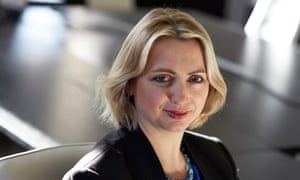
Your leading article (1 March) was wrong to suggest the government has not prioritised patient safety in the handling of a serious failure by NHS Shared Business Services to deliver patient correspondence. We set up a national incident team immediately, reviewed every piece of correspondence and have nearly completed a second clinical review of all the higher-risk cases. So far no patient harm has been identified. I was advised last March not to make the issue public because it could have led to GP surgeries being deluged with queries by patients, slowing down the vital work of going through the higher-risk cases. I then chose, against advice, to highlight the issue in a statement to parliament before summer recess as I felt it was important that MPs were informed – and far from minimising the issue, it was described as a serious incident in my department’s annual report and accounts.
But where your article was right was in saying that improving patient safety cannot be a matter of rhetoric alone. The NHS deserves credit for making huge progress on patient safety over recent years. Since Mid Staffs, 31 trusts have been put into special measures, and 16 have come out – seven of them now with “good” ratings. MRSA rates have halved since 2010 – and are now lower than France, Germany or Spain. Stillbirths are down 10% and neonatal deaths down 14%. Your leader urged ministers to learn the lessons on safety taught by the airline industry – and we are. Next month, we will launch the Healthcare Safety Investigations Branch to give the NHS independent safety reports modelled on the way air crashes are investigated. And today we are publishing plans to reform the litigation process when children suffer a brain injury at birth so we get earlier compensation to families and avoid legal processes which prevent appropriate lessons being learned.
My ambition as health secretary is simple: I want our NHS to be the safest and highest-quality healthcare system in the world. That this progress is happening despite significant pressures on the frontline is a tribute to NHS staff working very hard in exceptionally tough circumstances. Jeremy Hunt MP Health secretary
Billions of dollars in US aid to groups combating diseases worldwide could be at risk from Donald’s Trump’s “unprecedented and far-reaching” reversal of abortion-related policy, campaigners warned on Tuesday.
Trump signed an executive order on Monday reinstating the “global gag rule”, which bans funding for groups that offer abortions or abortion advocacy, even if they use their own funds to do so.
Campaigners fear the move could affect a wide range of groups providing life-saving treatment, such as those working to combat HIV and Zika, as well as those helping prevent child and maternal deaths and unwanted pregnancies worldwide.
What is the ‘global gag rule’, and why does Trump support it?
The policy has been repealed and reinstated several times in the past, but women’s reproductive rights groups said Trump had signed the “most extreme” and sweeping order of its kind.
The policy has been expanded to affect “all global health assistance furnished by all departments or agencies”, according to a White House statement published on Monday.
The US is the most generous bilateral donor to reproductive rights causes worldwide – with current funding at $ 575m. What is still unclear is to what extent the gag rule will affect the US’s wider global health funding, which the reproductive rights campaigners PAI estimate to be more than $ 9bn.
Groups are still unpicking what funding “global health assistance” refers to. For example, humanitarian assistance may be exempt because it is funded in a different way.
Suzanne Ehlers, president and CEO of PAI, described the expanded version of the law as “irrational and backward”.
“Our preliminary analysis,” Ehlers said, “based on the presidential memorandum yesterday, is that [the global gag rule] is not only more severe and sweeping, but it’s more expansive than that introduced by previous presidents.
“Family planning assistance funding by USAid is a budget of around $ 610m. But if our reading of this memorandum is accurate, it will cover all global health assistance. That is in the ball park of $ 9.4bn.”
The global gag rule, also called the Mexico City policy, denies foreign organisations US family planning funding if they provide abortion information, referrals or services, or if they engage in any abortion rights advocacy with their own funds.
Projects on the ground are faced with a stark choice – to refuse US funding or to take the funding and end abortion advice. First introduced by the Reagan administration, the measure was repealed by Bill Clinton, reinstated by George W Bush and repealed again by Barack Obama.
But Monday’s White House memorandum suggests the rule will apply not just to family planning funding but to “all global health assistance”.
Ehlers said: “We are talking about work on HIV, tuberculosis, malaria, public and child health.
“So let’s say I’m a US organisation involved in global health assistance in Malawi worth $ 1m. I’m working with 12 or 15 different NGO partners in a malaria programme. All of those partners have to sign a Mexico City policy to say they are not doing anything at all with any of their own private funds to do with abortion.
“What business is it of the US government to determine what groups across the world, working in what might very well be legal in their own countries, do with their own money?
“This is not a pro-life policy,” said Ehlers. “There is already no US-taxpayer assistance going to pay for abortion. This is a policy denying women life-saving services. It will cut off funding for groups providing HIV testing kits to teenagers, it will cut malaria programmes. We are imperilling and endangering global health programmes.”
A spokeswoman for Planned Parenthood said: “This is the most extreme executive order that we have ever seen, in the global health space, under any Republican administration.
“It will not just affect family planning services, but organisations that are working to combat Zika, to combat HIV/Aids. We at Planned Parenthood are very concerned and astonished, coming after a weekend when one in 10 Americans took to the streets in a historic show of strength, that this administration would target the world’s most vulnerable women in this way.”
Caroline Crosbie, acting CEO of Pathfinder, a health programme which works globally, said the policy “risks the lives of millions of people around the world”.
“This vastly expanded gag rule jeopardises millions of lives, and will only serve to undercut decades of American global health leadership.
“While we examine what the precise negative effects the expanded policy will have on our partners in the countries where we work, we do know that it will do more than silence organisations from talking about abortion – it will mean these organisations will not be able to provide HIV prevention, care and treatment services, integrated maternal health care and contraceptive services or counselling on the potential risks of Zika infection, among others, if they intend to receive US government funds.”
Amanda Klasing, a senior researcher in women’s rights at Human Rights Watch, said the expanded rule introduced by the Trump administration would have a chilling impact on freedom of speech and would “dramatically increase” the number of groups affected.
“One of our concerns is that it is a dramatic expansion of the US trying to govern free speech abroad,” said Klasing. “What they are trying to do is hold funding captive.”
Klasing said the effect of the rule would be that organisations that operate in countries that restrict women’s rights and women’s access to services, if in receipt of US funding, would no longer be able to speak out.
“They can’t advocate around loosening those restrictions if they want to continue to receive US funding. How far does this go? Can the groups participate in harm reduction models?”
Anu Kumar, chief strategist of Ipas, an organisation working to combat deaths from unsafe abortion, said: “We are not entirely certain what pot of money will be affected. But it if is global, then even HIV funding could be jeopardised.
“We already know is the gag rule results in cuts to services and clinics are forced to close. Every day there are 840 women who die from pregnancy related cases. We know there are 225 million women in developing countries who don’t want to be pregnant.
“The scale of the problem is enormous.”
Analysis by the Guttmacher Institute found that last year’s US aid budget for family planning gave 27 million women and couples access to contraceptives, prevented more than 2m unsafe abortions and 6 million unintended pregnancies, and helped prevent 11,000 maternal deaths worldwide.
Britain’s top GP has said surgeries will have to stop seeing patients during the week unless ministers abandon their drive to guarantee access to family doctors at weekends.
Dr Helen Stokes-Lampard condemned the policy, a key Conservative pledge, as unrealistic and said it was ignoring the lack of demand among patients to see GPs at weekends and a serious shortage of family doctors.
The government has promised to ensure that people in every part of England will be able to see a GP from 8am to 8pm every day of the week by 2020 as a key element of its push to create a “truly seven-day NHS” by the end of the current parliament.
“It’s unrealistic in the current climate. We haven’t got the people, we haven’t got the resources. If you give people access on a Sunday afternoon they’re not going to have access on a Tuesday morning. They can’t have it all”, the chair of the Royal College of GPs said in an interview.
Calling for surgeries weekend opening to be restricted to Saturday mornings, Stokes-Lampard said: “We should be responding to what is needed in an area, and balance that realistically by what can be provided safely. Because quite frankly if you open on a Sunday afternoon but you’re closed on a Tuesday morning, who’s going to benefit?.
There is so little demand from patients to see a GP on Sundays that plans to compel at least one surgery in each area to open on that day by 2020 should be dropped, she said. Nor do many people want to attend a surgery on a Saturday afternoon, she added.
David Cameron pledged access to GPs from 8am to 8pm seven days a week at the Conservative party conference in 2014, and established a £50m “challenge fund” to deliver it. Some surgeries that have begun opening at weekends, however, have scrapped their experiment because of the small numbers of patients seeking appointments on Saturdays and Sundays.
The chair of the Royal College of GPs, Dr Helen Stokes-Lampard. Photograph: Andy Hall for the Observer
A relentless rise in the need for care is prompting more GPs to retire early or move abroad, leaving the profession facing a growing workforce crisis and patients facing long waits for appointments, Stokes-Lampard said. As a result “we’re layered too thin at the moment, we’re spread too thin. We can’t sustain a good five-day service at the moment, a seven-day service is unrealistic. If we can’t provide eight to six Monday to Friday because we’re stretched to breaking point, we’re certainly not going to be able to provide seven days a week.”
She said general practice was “closer to the edge than it has ever been in living memory”, and cast serious doubt on ministers being able to fulfil another key NHS pledge – to increase the number of GPs in England by 5,000 by 2020 compared with 2015. It will be very hard to deliver that number without many GPs coming from overseas or former doctors being persuaded back into work, she said.
The Liberal Democrat MP Norman Lamb, who was a coalition health minister until May 2015, denounced the pledge of access to GPs all day and every day as a “superficially attractive gimmick”.
“This target is driven by seductive headlines, not sound policy. It will distort priorities and resources away from action which could make a real difference to people’s lives, such as ensuring that people have both their physical and mental health needs effectively met in primary care,” he said.
“No one believes that there will be sufficient resources to deliver this plan. The risk is that it will leave dangerous gaps in provision during the week.
“Pursuing superficially attractive gimmicks like this amounts to a smokescreen for the dire threat the NHS and care system now faces as it is starved of the resources it needs to provide effective, prompt and safe care.”
The shadow health secretary, Jonathan Ashworth, said: “These serious doubts about a flagship government pledge will raise widespread concerns. It’s yet another warning about the scale of the underfunding and understaffing now impacting our NHS.
“In her six months as prime minister Theresa May has shown no regard for the state of the NHS, so it’s no surprise it now looks like her own manifesto commitments will be broken.
“But in 2017 the government simply must not carry on ignoring the warnings. Instead they need to come forward with a genuine plan to give the NHS and social care the resources they need to deliver the very best care every patient deserves.”
The Department of Health insisted the government would achieve its ambition of seven-day opening, and that the policy was popular. “This is a common sense reform with wide public support, and one we will deliver”, a spokeswoman said.
“People don’t just get ill Monday to Friday, nine to five, and 18 million patients now have weekend and extended access to a GP, which has already shown evidence of relieving pressure on other parts of the NHS.
“To deliver our pledge, we are putting an extra £2.4bn into GP services, which will help expand the workforce.”
Elderly people have been living in “grim, shoddy and unsafe” conditions in four care homes run by a private company in Cornwall, the health and social care watchdog has found.
Residents of the Morleigh Group homes lay in urine-soaked bedclothes, sat in chairs for hours with plates of unfinished food in front of them and waited weeks to receive medical attention, the Care Quality Commission said.
Publishing reports on the four homes on Friday, the CQC said all the homes had been rated inadequate and placed into special measures after separate inspections.
Andrea Sutcliffe, the chief inspector of adult social care, said:“These reports make horrifying reading – people in distress being ignored by staff; a person lying in a urine-soaked bed for two hours; people sat in the same chair all day with uneaten meals in front of them, and no help to eat or drink; someone needing medical attention waiting weeks to be referred to their GP.
“These and so many other examples show why we have rated each of these homes as inadequate and are taking further action to protect the safety and welfare of the people living there.”
Clinton House nursing home, in St Austell, closed earlier this month after an undercover investigation by BBC’s Panorama.
The CQC reports concluded:
At Clinton House, there were not always enough staff on duty. Inspectors noticed one person in distress and crying for 90 minutes while staff walked by three times without speaking to the person to find out if they needed anything or to comfort them. The management of medicines was not robust. One person had not been given one of their prescribed medicines for three days. Inspectors had to intervene when one person – who had previously been assessed as being at risk of falls – was left unattended and nearly fell out of their wheelchair.
At Elmsleigh care home, in Par, inspectors found one person who suffered from incontinence and was at risk of pressure sores, but was not routinely turned or checked by staff. Records showed that for several days the person often received no personal care – exposing them to the risk of urine burns to their skin. People sitting in the same seat all day, with their meals left in front of them uneaten, even though most needed encouragement to eat. Some appeared not to realise it was mealtime. Some people had sustained substantial weight loss but it was not clear what action had been taken to help them maintain a healthy weight.
At Collamere nursing home, in Lostwithiel, inspectors witnessed people with dementia calling out repeatedly for some time with no response. One person shouted throughout the day and night. It was only after the inspection that their GP was asked to review their pain relief – and then they appeared to sleep without signs of distress.
At St Theresa’s nursing home, in Callington, inspectors identified one person who had pressure sores, but had not been repositioned for eight hours. There had been a delay of five days in seeking appropriate specialist advice. Medicines were not being managed safely, the premises and equipment were not being maintained, and the collection of soiled laundry from bedrooms and cleaning procedures did not ensure suitable standards of cleanliness.
Sutcliffe added: “These services were providing grim, shoddy and unsafe care – the sort that no one should ever have to put up with. I am sorry that people have had to endure this poor level of care.”
The CQC said the Morleigh Group, which is family owned, had been supported by Cornwall council and the NHS Kernow clinical commissioning group to make improvements. But it said the company had failed to listen.
CQC inspectors visited Collamere on 10 October in response to concerns about the service. They visited Elmsleigh on 25 October to follow up on improvements required by a previous inspection. Planned inspections of Clinton House and St Theresa’s were brought forward following information received from Panorama.
The BBBC investigation included undercover filming showing one nurse threatening to give morphine to a resident “to shut her up”.
A week before Russia’s Daldykan river was turned red by a leak from a metals plant, the UN issued a warning as chilling as it was overlooked: 323 million people are at risk from life-threatening diseases caused by the pollution of rivers and lakes.
Cholera, typhoid and other deadly pathogens are increasing in more than half of the rivers in Africa, Asia and Latin America, according to a UN environment programme (Unep) report. Salinity levels have also risen in nearly a third of waterways.
Asia has been worst hit, with up to 50% of all rivers now affected by severe pathogen pollution caused by a cocktail of untreated waste water disposal, agricultural pesticides run-off and industrial pollution.
In a telling footnote to the Russian Norilsk disaster, Nasa released satellite images on 15 September showing that far from being a one-off, the Daldykan river had turned red on multiple occasions in the past 20 years.
The Daldykan river in Krasnoyarsk region, Russia. Photograph: Yelizaveta Udilova/Courtesy of Greenpeace Russia/Reuters
“There is often no incentive for companies and players high up in a river basin not to pollute,” says Paul Reig, an associate for the World Resources Institute. “The impacts are often not noticed until they are carried to water users downstream, especially when there are no regulatory requirements and no implementation or monitoring of water quality downstream to track it back.”
Global water demand from the manufacturing industry is projected to increase 400% by 2050, adding to pressure on river networks.
Reig argues that increased regulatory action is vital to tackle the 80% of waste water worldwide that is returned to rivers untreated. Incentives to recycle waste water are also needed to stimulate market demand for clean water technologies, he says.
But farming and raw sewage discharges also share responsibility for the 2m tonnes of untreated waste water that gushes into the world’s water supplies daily.
While industry, particularly in the developed world, is constrained by laws such as the EU’s water framework waste directive, pesticides and fertilisers can easily slide into water bodies unnoticed.
“The regulation of pollutants in agriculture is much less stringent, compared to industry and municipal waste water,” says Dietrich Borchardt, the lead author of the latest Unep report.
Borchardt points to the clean up of the river Rhine, which was one of the most heavily polluted rivers in the world, as well as effective waste water strategies by companies such as BASF and Bayer as examples of what can be done.
Regulation is pushing businesses across sectors to reduce their water footprint and environmental impact. The Japanese car company Toyota produces cars in China to a higher environmental standard than at home, he argues. And “no mining company is killing thousands of people in accidents. They would lose their licence and existence if they did. It is in their very basic interest not to,” Borchardt says.
There is also a strong public interest involved. An estimated 3.4 million people die each year from diseases associated with water-borne pathogens, nearly half of them children under five.
In the scheme of things, that awful statistic belies another: around 1.2 billion of the world’s people face water scarcity.
With water sources dwindling – Unesco predicts a 40% shortfall in supplies by 2030 – the global population spiralling towards 9 billion and water demand projected to increase exponentially, water management is becoming a vital issue for the 21st century.
Novel nature-based solutions that are cheaper and more effective than hi-tech approaches are gaining interest.
“These can involve leaving rivers intact from channelling, construction work or irrigation that disturbs their natural attenuation capacities,” Borchardt said. “A natural environment can degrade pollutants. Other solutions, especially in agriculture, can involve the preservation and construction of wetlands which are particularly efficient at removing nutrients from water.”
Paludiculture – which can be as simple as as planting water reeds to absorb excess nutrients from water bodies – is a win-win for environmentalists, maintaining a robust carbon sink and threatened peatlands in countries such as Malaysia and Indonesia.
Tackling waste water discharges at source is seen as a crucial first step, to avoid the devastating environmental damage that spillages can cause and the sky-rocketing costs of clean-up operations.
Reig said the “best interventions” to prevent water contamination were legal tools: “The drivers of untreated waste water discharges are poor governance of resources and water quality standards that are often non-existent (in the developing world) and not enforced, if they are there.”
Unep, though, puts greater emphasis on increased monitoring of water balances – knowing how much water there is, where is comes from and where pollutants travel from and to – to counter the scarcity of basic information about the inputs and outputs for waste water discharges into vulnerable water resources.
Borchardt said industry should be seen as a potential ally in the prevention of river pollution. “Business is a part of the solution and must be, because their products will find it more and more difficult to be sold on a huge global scale when there is a huge environmental bill attached,” he said.
Very good morning Britain, it’s time for your wake-up contact. So place down the doughnut and step away from the super-sized triple chocolate mocha. We need to speak.
Correct now, far more than three.three million men and women are residing with some type of the situation, up from two.one million in 2005, whilst hundreds of 1000′s far more have diabetes but just really don’t know about it but.
This rise is of epidemic proportions. And it is very, really critical. The problems of uncontrolled blood sugar levels can end result in nerve harm, loss of eyesight and organ harm. Diabetes is also the reason why 135 people in Britain have a foot amputated every single week.
The value of treating diabetes is really serious as well. Medicine now charges the NHS £869m a yr – 10 per cent of the complete NHS medication bill – and that is just a fraction of the total £10bn in dealing with diabetes.
So what are we performing about it? Er, not much really.
Due to the fact in spite of the truth that diabetes is on the rise, and regardless of the reality that we know WHY diabetes is on the rise, no one desires to tell diabetes sufferers the truth.
That truth is very basic and it also has the added advantage of getting really cheap: end eating so considerably. Yep, that is the remedy for most people with diabetes in a nutshell.
Just before we go any additional, let’s be clear who we are speaking about right here. There are two kinds of diabetes. 1 in ten folks with diabetes have Type 1 and are unable to generate the hormone insulin to handle their blood sugar levels. This has nothing to do with their weight. The other three million have Sort two diabetes and, for about two.four million of them, their issue is most likely the result of consuming as well significantly.
And but no one particular seems prepared to tell these diabetes patients what they do not want to hear: “This illness is entirely YOUR fault! You did this to by yourself! And brief of locking you in a area and limiting your meals consumption for the rest of your daily life, you are the only 1 who can assist by yourself. So get on with it ahead of the nation goes bankrupt.”
Rather, government ministers and the health-related occupation all skirt close to the situation, speaking about people’s “lifestyle choices”, as if eating a family members-sized pack of Doritos for a mid-morning snack is somehow akin to picking to reside in the Outer Hebrides.
Diabetic patient measuring glucose with glucometer and test strips Photograph: ALAMY
Even the admirable charities in this area skirt around the problem. Diabetes Uk claims to “work for people with diabetes” and, on its site, provides assist on “living with diabetes” and even an “informal online course to support individuals with Kind 2 diabetes recognize and manage their problem effectively.”
This, with all due respect to the charity’s good intentions, is codswallop. The vast majority of people with diabetes really do not need to have to “learn how to live with it” or to “manage” it, they want to stop possessing diabetes.
That is not possible – but it is attainable, with challenging work and dedication, to control the problem so properly that it properly disappears.
However the NHS spends billions of lbs each year assisting sufferers “manage” their diabetes. By handing out medication to support alleviate the signs and symptoms of this condition, they send out two dangerous messages to sufferers: this is a medical concern and it is not something you require to do anything about.
Medical professionals ought to rather be sincere with their sufferers. For most, diabetes is not a health-related issue, it is a “put down the fork” problem.
This is what they ought to say – and with out sugar-coating it with wonderful euphemisms: “Here’s the thing, fatty, you have diabetes since you are disgustingly obese. That is not since of your thyroid gland or the Government or a conspiracy between the supermarkets and your local chip store. You are unwanted fat since you consume also significantly. Way too significantly. And way too a lot of rubbish meals.
“The decision is yours: you can carry on eating and you will probably go blind and have your foot amputated prior to you die a horrible unpleasant death from organ failure. Or you can get healthful and dwell. Your selection.”
Photograph: PA
The a single decision they need to not get is to hold on eating while taking taxpayer-funded drugs to enable them to do that. NHS money are not a bottomless pit and that income is essential to deal with men and women who really don’t have any decision about whether they are ill or not, like young children with leukaemia.
So let’s cease pretending we are dealing with this situation. We’re not. We’re simply “managing” it. The diabetes epidemic won’t be over right up until the excess fat lady sings. And puts down her super-sized family members pack of biscuits.
BMA conference will hear that a real-terms reduction in funding of £450m more than the previous 3 many years has been coupled with a 40m improve in annual demand for appointments over the past five. Photograph: Burger/Phanie/REX/Rex Functions
Patients are being put at chance by “brutal disinvestment” in general practice and are now often waiting two weeks for appointments, the chair of the British Health-related Association’s GPs’ committee will warn on Wednesday.
In a speech at the yearly BMA conference, Chaand Nagpaul will warn that basic practice is “imploding”. He will say that a reduction of £450m in funding, in real terms, above the previous three years, coupled with a 40m boost in yearly demand for appointments above the past five years has place the potential of numerous surgeries, and that of the total NHS, at danger.
“The straightforward truth is that demand has far outstripped our impoverished capacity, denying patients the care and access they deserve. We’re forced into providing a conveyor belt of care at breakneck velocity, up to 60 instances in a day, extra to by an open-ended volume of mobile phone calls, property visits, repeat prescriptions, outcomes, reviews and hospital correspondence. This is unmanageable, exhausting and unsustainable, and puts safety and quality at threat.”
Nagpaul will say waiting instances for appointments are getting longer as the end result of rising pressures. “Waiting occasions are inevitably acquiring longer since the enhanced demand has not been matched with elevated capacity,” he will say. “GPs will rightly prioritise urgent difficulties. What is getting squeezed are patients with schedule issues.
“This is paining GPs. We want to give prompt and great care but it really is just proving impossible. It truly is frequent that sufferers wait over a week, some two weeks. The Royal College of GPs has accomplished a survey which exhibits that waits will enhance to two weeks in a big amount of practices in the coming year.”
Speaking before the address, he mentioned thousands could be left with no a readily available local GP altogether due to the fact of the abolition of the minimal practice cash flow guarantee (MPIG). The MPIG supports surgeries facing tough circumstances that demand added funding but is getting phased out more than a 7-year time period that began in April. Some practices have misplaced a third of their funding as a consequence of its abolition, jeopardising their quite survival, mentioned Nagpaul, who is calling for the decision to scrap the MPIG to be put on hold.
He accused the government of getting gone back on a guarantee to help 98 practices recognized by the NHS as at threat of closure. “They said final year they would supply support and now these practices are obtaining they have no assistance,” he said. “They have reneged on their guarantee.”
He explained that surgeries particularly at chance had been people that typically delivered care to vulnerable communities, be they in rural regions, inner cities or universities with massive, transient populations. Though there may be perceived to be more choices for these living in urban areas, no practices have spare capacity, according to Nagpaul, who said the closure of surgeries would place even much more pressure on individuals left to select up the pieces.
The BMA is launching a campaign known as Your GP Cares to strain the government into supplying far more GPs, practice nurses and buildings. The amount of GPs as a proportion of all medical doctors in England has fallen from from 34% to 26% in two decades and numerous current GPs are producing ideas to retire early, Nagpaul says, whilst junior physicians are increasingly shunning the profession, with 451 training areas unfilled final 12 months, since of the workload and anxiety related with the task.
He will say in his speech that the fight for the survival of common practice is the fight for the survival of the NHS itself, as just a six% reduction in GPs seeing individuals would double the numbers attending presently overstretched A&E departments if they went there instead.
Katherine Murphy, chief executive of the Individuals Association, mentioned she recognised the picture painted by Nagpaul and that the risk of surgery closures was “extremely worrying. It could take place, especially in rural regions. We regularly hear from sufferers, and members of the public tell us how lengthy they have to wait, especially if they want to see a named GP, familiar with their situation. They frequently have to wait two to 3 weeks, which you cannot do if you’re unwell.”
A Department of Well being spokeswoman accused Nagpaul of “scaremongering”. She explained: “The quantity of GPs has gone up by one,000 given that 2010 and we have taken difficult choices to safeguard the NHS spending budget so we can strengthen family doctoring, reform out-of-hospital care and enhance GP entry for 7.five million men and women.
“GPs agreed to be at the heart of our radical strategies for more personalised neighborhood care in return for cutting their targets by more than a third to cost-free up more time with individuals. GPs’ premises must be fit to aid supply a single, seamless service for the elderly and the most vulnerable.”
The UN’s secretary general, Ban Ki-moon, has mentioned he will use the scope and influence of the United Nations to advertise a Guardian-backed campaign which aims to increase international efforts to carry an finish to FGM.
In a meeting with the 17-12 months-old Bristol student Fahma Mohamed, the face of a campaign to place education at the heart of tackling FGM in the Uk, Ban explained he would back the Guardian’s move to support similar grassroots campaigns led by neighborhood media in other nations.
Praising the Guardian’s “inventive and courageous” campaigning journalism, he mentioned: “For me this is the way journalism can make a distinction. Whatever the UN can do to support the campaign we will spare no efforts.”
Final week the training secretary, Michael Gove, met Fahma and other members of the anti-FGM charity Integrate Bristol at the Division of Education and agreed to write to every single major and secondary headteacher in the nation, drawing their focus to safeguarding recommendations and providing distinct information about FGM. The campaign is now set to move on to the global stage, with hopes that its profitable campaigning model, which harnessed classic and social media and activism, can be replicated in other countries.
On the slopes in Davos: delegates will be offered wise devices to measure how a lot exeercise they are acquiring. Photograph: Arno Balzarini/AP
Participants at the Globe Economic Forum’s Annual Meeting in Davos count on to talk about pressing social and financial concerns. They might not anticipate to be handed wearable gadgets that inform their smartphones if they are walking far enough or obtaining adequate restful sleep.
But that’s occurring at this year’s meeting. We want to persuade the world’s corporate, political and civil society leaders that very good mental and bodily well being is one particular of the most pressing social and financial problems of the day.
Our concept of healthcare has turn into too narrow. Also typically we see the occupation of health programs as mending folks when they get unwell, instead of giving them the tools to remain wholesome. We delegate the dilemma to ministries of well being, rather than creatively engaging other public and private organisations to promote well being. From regulating particulate emissions to encouraging cutting down on sugar and salt to addressing anxiety in the workplace, the choices are endless.
It may possibly look evident that a healthier population can make for a happier society and a far more productive economy nevertheless, the insight is typically overlooked. We require to commit less energy worrying about funding institutional care for an ageing population, and more asking how to minimise these expenses by assisting every person stay healthful longer. Young children born right now should hope not only to live a long lifestyle, but to still be wholesome and content in old age.
If that’s to occur, we require to elevate overall health to a high-level, cross-sectoral conversation that informs each and every selection a society makes. How to design and style our cities? How to transport ourselves? How to create, label and marketplace our foods? How to generate power with no polluting our air? These decisions should be guided by a wellness point of view, just as a lot as selections about how to fund our hospitals.
What are the most effective formal and informal techniques of educating our young children to make healthier way of life alternatives? What incentive structures for grownups make the healthful alternatives the straightforward ones? Individuals are the type of queries we’ll be exploring in the inaugural overall health summit and 25 other sessions at this year’s Davos.
The time is proper to elevate the conversation on overall health. For the last number of many years, economic crisis management has understandably absorbed considerably of Davos delegates’ interest. This yr, there is a sense that the international economic climate is out of intensive care and embarking on rehabilitation. As we inquire how metaphorically to improve the economy’s well being, actually strengthening the population’s overall health need to be component of the solution.
Recent years have likewise seen breakthroughs in personalised medication, which will increasingly allow the repersonalisation of healthcare. Typically, falling unwell feels like losing one’s individuality – being lowered to a patient identification number and a definition in the health-related textbooks.
As genomic knowing turns into more nuanced and testing more accessible, we will get far more personalised tips on how each and every of us can greatest maximise our health.
Importantly, that goes for mental well being as nicely as bodily. We are comprehending far more and much more about how the wiring of our brains can go amiss, and how it can be put right. But that information is useless if not acted upon. In low- and middle-revenue nations, it is estimated that far more than 3-quarters of severe mental wellness issues go untreated. Even in larger-earnings nations, untold numbers of folks endure in silence from their psychological health problems from concern of currently being stigmatised if they look for therapy.
A single in 4 of us will endure from psychological wellness concerns at some point in our lives. Past the human costs – not only on individuals struggling with mental ailments, but on their families and close friends – there is a significant economic burden. Mental sick-well being has turn into the leading result in of absenteeism in a lot of firms. Its cumulative cost is estimated at £10 trillion over the up coming 20 many years.
We need to have to uncover techniques to develop a culture in which nobody fears moral judgment in mentioning that they are suffering from depression, any more than in describing how they broke an ankle.
Rehumanising well being is 1 of the fantastic possibilities of our time. We want to consider healthcare choices out of institutions and empower folks to optimise their own health. Personalising the problem of well being for the world’s financial leaders at Davos is a great way to begin.
Robert Greenhill is managing director, chief enterprise officer and a member of the managing board of Planet Financial Forum
In 2007, Jane Gauntlett was preparing for a job in theatre when she was violently mugged and fell into a coma for 3 weeks. She suffered a traumatic brain damage (TBI), the lengthy phrase legacy of which includes epileptic seizures and brief phrase memory and communication difficulties.
“When I woke from the coma I had no notion how serious the damage was. I was adamant that I was to become a freelance theatre producer,” says Gauntlett, who had completed the Royal Court Theatre’s Youthful Writers Programme even though doing work previously for mental well being charities. At first, she stayed on track, gaining encounter with interactive theatre makers at Battersea Arts Centre and making demonstrates in Edinburgh, London and Margate.
However, work was disrupted by epilepsy. Worse than the seizures themselves was the alarmed reaction of colleagues, and this was compounded by the humiliation of not being in a position to remember and talk as freely as she as soon as had in the course of the inventive approach.
Daily life will in no way be the same
The very first step toward accepting her lifestyle post-damage was to volunteer as a mentor for youthful folks with related concerns. She worked to facilitate understanding in between people she mentored and these who could in no way relate to the daily knowledge of TBI, which can be frustrating and scary. People whose injuries leave no physical trace face the biggest challenge, given that their difficulties are so effortless for other folks to overlook. Gauntlett says the young folks had to accept that existence would in no way be the very same because “communication with families, friends and strangers was frequently challenging.”
It was this imperative for empathy in between people with and with no brain injuries that gave Gauntlett her route back into theatre. But to achieve her goal, she had to look past the spacial and relational conventions of functionality. The outcome was a piece called In My Shoes which lacks anything a single may recognise as actors or an audience and is also non-website distinct. In fact, the immersive and single-consumer knowledge relies mainly on technological innovation.
Daily life becomes theatre with the help of technology
The piece recreates the producer’s own disorientating knowledge of waking up in Slough right after a seizure, with no notion how she received there. The audience – or rather the a single person encountering the display – is put “into Gauntlett’s shoes by wearing Vuzix 920 Eyewear, wrap-all around video glasses, and earbuds connected to an iPod Touch which deprive them of their personal, familiar senses. Virtual reality takes more than and is augmented more by the manipulation of touch, taste and smell, even though exactly what transpires should probably be saved for the efficiency itself.
“We have our eyes peeled for technology that will improve our experiences – we want to keep up to date,” says Gauntlett. “In My Sneakers experiments with substitute strategies of communication. My aim is to place audiences as near to becoming in the sneakers of a stranger as I can, I use virtual actuality computer software, touch, taste, sound & smell to make it as real to lifestyle as attainable.”
The achievement of the 1st incarnation – reactions run the gamut of emotion but are by no means underwhelmed – led to the evolution of the piece. Gauntlett formed a collective called Sublime and Ridiculous, to share the perform of exploring a assortment of complicated, delicate or controversial subjective realities. They have so far put hundreds of inclined participants into the shoes of a folks with post-traumatic pressure disorder, bi-polar disorder and stroke, as nicely as these of a paramedic and a trans-gender person. They have strategies to adapt the piece and its technology to investigate the perspectives of an astronaut, a politician, a dominatrix and a murderer.
Though Gauntlett had no prior knowledge in the discipline, engineering is now integral to her function: “I am fascinated by how rapidly factors are evolving and have my eyes peeled for new inventions. In My Footwear is an ever-expanding collection of audio and audio-visual experiences and I am keen to expand it, and for it to evolve utilizing cutting edge technologies as it gets to be available.”
Different versions of My Shoes have been carried out by the Sublime and Ridiculous collective in New York and London. Photograph: Amy Hart
Technological innovation is part of theatre’s long term
In spite of this kind of a unique genesis and manufacturing, she is quick to stage out that the symbiosis of theatre and tech is frequent in contemporary functionality. “Interactive theatre plays a big part in the fringe scene,” she says, even though elsewhere, engineering is employed to deepen knowing in other distinct contexts: “Large tech Kabuki theatre in Japan uses transportable monitors [for the audience to study] subtitles in order to better understand an artform that is frequently hard to comprehend.”
As effectively as illuminating intensely private experiences, Gauntlett hopes this kind of advances will lead to more international collaboration and theatre that is accessible to a lot broader demographics. Nevertheless, she says: “I don’t feel theatre’s survival and relevance depends on embracing technological advances.” The point is there is space for every thing, and technological innovation-driven theatre will acquire momentum as technological innovation turns into ever a lot more integral to people’s day-to-day lives.
Such innovation, she says, “is at times frowned upon by critics. However, if the operate is excellent it should not matter.”
Sublime and Ridiculous will carry out In My Shoes at Battersea Arts Centre, London on eight February 2014, as component of Freshly Scratched