Sends etiketine sahip kayıtlar gösteriliyor. Tüm kayıtları göster

22 Şubat 2017 Çarşamba

"Risk-averse" NHS 111 sends more callers to A&E than previous service

The NHS 111 telephone advice service is sending growing numbers of people to A&E or calling an ambulance because its staff are too risk-averse when dealing with illness, a study has claimed.


Critics claim the trend is adding to the huge strain on hospitals and ambulances that have left them struggling to keep up with rising demand for care.


NHS 111 now either sends an ambulance or recommends someone goes to A&E in about one in five (20%-22%) cases of the 1.1 million people a month who ring seeking help, according to the Nuffield Trust.


That is up from an average of 18%-19% over the three years since the service was introduced, research by the health thinktank has found.


NHS 111 replaced NHS Direct across England in late 2013 as part of the coalition’s shake-up of the NHS.


Nuffield Trust’s analysis of the health service’s performance statistics shows that during the course of 2016 a total of 1.46 million of the 11.8 million people who rang 111 seeking help were sent a blue light ambulance. Another 1 million were advised to go to A&E. Taken together, that meant that almost 21% of calls overall were disposed of in one of those two ways.


“This report is further evidence that the NHS crisis this winter, and in particular the record A&E attendances, are the result of a catalogue of bad choices by the government,” said shadow health secretary Jonathan Ashworth.


“The decision to scrap NHS Direct and replace it with the NHS 111 was strongly criticised by health professionals, and today we have learned that NHS 111 is sending more callers, and a higher proportion, to A&E than in previous years, with great variations in performance across different regions.”


The thinktank has also uncovered “great variability between different areas in how likely NHS 111 is to send people to A&E or to the ambulance service”. The report says: “This might suggest that some areas are to likely, or not likely enough, to send people to emergency services.”


For example, while 12.4% of callers in east London and the City were sent to an emergency department, the 111 covering Cornwall did that with just 5.7%.


“These numbers are yet another sign of the unbearable pressure our health system is under,” said Norman Lamb, the Liberal Democrat health spokesman. “Whichever part of the system you look at it’s now at breaking point.


“But it also appears the overly cautious algorithm used by 111 call handlers is increasing pressure on already overstretched ambulance services and A&Es.”


The Nuffield Trust points out that “NHS 111 is more likely to despatch an ambulance than to simply send people to A&E, which is the reverse of the usual pattern of NHS use”, adding: “This lends credence to claims that the service is too risk-averse in some cases.”


That echoes concerns raised privately by many of the 10 NHS regional ambulance services that NHS 111 services too often practise “defensive medicine” and order an ambulance to take someone to hospital unnecessarily, which increases the pressure on them.


The 42 regional NHS 111 services are run by NHS ambulance trusts, groups of GPs and private firms such as Care UK, which has recently won more contracts. It uses far fewer nurses and many more call handlers than NHS did until then health secretary Andrew Lansley scrapped it.


However, the study also found that, paradoxically, NHS 111 is also reducing the pressure on A&E and ambulance services and successfully redirecting callers to GP surgeries and other services outside hospitals. While 45% of callers say they would have gone to A&E or dialled 999 if 111 had not been an option, call handlers send only around 20% of patients to them. Likewise, while a third of users said they would have gone to community-based services if 111 had not existed, the service itself sends about 60% to them.


NHS England said that NHS 111 is performing well amid rising demand for its advice. “The increased number of people referred to emergency care is proportionate to the higher number of calls being handled,” a spokesman said. “111 continues to do an important job helping patients to get the right care, at the right place and at the right time, and in protecting both A&E and ambulance services from unnecessary attendances and callouts.”


"Risk-averse" NHS 111 sends more callers to A&E than previous service

2 Kasım 2016 Çarşamba

Going blind in your 20s: "when life sends lemons, make lemonade"

What would you do if you were told you were going to lose your eyesight in three months? It happened to Steph Cutler, who was a successful fashion designer working for brands such Ted Baker and Marks & Spencer when, in her late 20s, she was told she would lose most of her vision within three months.


As Cutler’s sight started to deteriorate as a result of the rare condition Leber’s hereditary optic neuropathy, a friend took her on the London Eye for a last look at the cityscape. Cutler also threw an “I’m going blind” party as a way of “getting it out there” and telling all her friends at once. She then travelled for three months, visiting the US, South America and New Zealand, to see the world while she still could.


The lowest point was on her return, when her sight loss got worse and she found herself without a job – fashion design relies so much on the visual it was no longer viable – living back with her parents and struggling even to get a job interview, let alone a new job.
Blasting out U2’s Beautiful Day each morning to get herself out of bed, Cutler set two goals: “In the short term, to become employable again and in the longer term, to get my independence back. Working to achieve those goals has been the hardest thing I have ever done.”


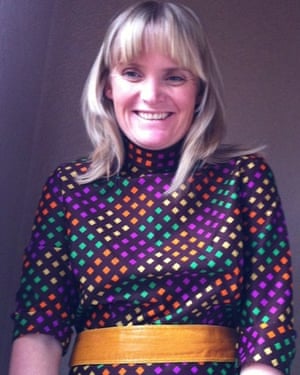
Steph Cutler launched disability consultancy, Making Lemonade.

Steph Cutler launched disability consultancy, Making Lemonade.

The first step was to learn to use computers, phones and read printed information with assistive technology. Then, using her own experience of feeling unemployable as a result of acquiring a disability, Cutler spotted a gap in the market. There was a need, she felt, for disability and equality training on raising awareness of making recruitment and services open to disabled people.


Few people were doing this at the time, but it was still a difficult business model to build. Although organisations knew they should be doing more, they often didn’t prioritise it or want to pay for it, Cutler said.


And so, with the help of a government business startup scheme and funding, Making Lemonade was born. The name came from a mantra Cutler adopted while adapting to living with sight loss: “If life deals you lemons … get out there and make lemonade.” The yellow and green lemonade branding and theme runs across all marketing material, blogposts and even a recipe to ”make successful lemonade”, a free personal development guide offered on her website.


“The main challenges when I started out were that nobody knew me and I also had a steep learning curve to get up to speed about other disabilities, history and equality law. I did a lot of networking, going along to events and talking and listening to people to find out what they actually needed. This could feel like a thankless task, as there was rarely any instant business, but meeting face to face could result in proposals even three years later,” says Cutler.
She is now a trustee for charity Action for Blind People, a fellow of the Clore Social Leadership programme, represents disabled people on various national committees and has been recognised in high profile business awards including national finalist in Enterprising Young Brit 2006 and Disabled Entrepreneur of the Year in 2008.


Customer feedback led Cutler to train in new areas and add new strands to Making Lemonade, including motivational speaking, coaching and self-employment workshops. “People kept asking me to speak about my story at events but I turned them down as I didn’t ‘do’ public speaking. Eventually I realised there was no basis, apart from fear, for this. So I joined the Professional Speaking Association and worked at improving my skills, then started accepting invitations to speak. For once, being blind was an advantage – it’s a lot easier to stand up and speak to an audience when you can’t see them,” she says.


Having an interesting personal story to tell can provide a big advantage for small businesses, Cutler says. “Many SMEs are about the person behind them and if you’re comfortable telling your story, it can help you to stand out from the crowd and inspire others too. This can be great for all sorts of marketing including social media, your website, blogposts and pieces in the media.”


Now in her eleventh year of trading, Cutler is proud of what she has achieved. “I’ve worked with some amazing clients in the public, private and charity sector and have made a difference along the way,” she says.


Plans for developing her business include providing more coaching for “non-disabled” people and expanding her use of the “design thinking” approach in her consultancy work. This is a creative and hands-on approach to solving problems and developing strategies, adopted by companies such as Apple, Google and Samsung, based on the way that designers work.


Now Cutler has marked 10 years since losing her sight, by writing an ebook of memoirs and thoughts, Living with More Vision and Less Sight. She says the biggest lesson she has learned along the way is that whatever life deals you, it’s your choice how to view those circumstances. She recounts a family game over Sunday lunch which involved created six-word memoirs. Hers is: “Everything changed, all for the better.”


Sign up to become a member of the Guardian Small Business Network here for more advice, insight and best practice direct to your inbox.


Going blind in your 20s: "when life sends lemons, make lemonade"

4 Şubat 2014 Salı

The hounding of Ian Thorpe sends a catastrophic message | Van Vadham

In the outpouring of cultural grief that followed the death of actor Philip Seymour Hoffman, a lot has been written about the tragic nature of his seemingly drug-associated death. Some beautiful writing has eulogised the guy and his achievements with a sensitive deal with to his struggle with his known disease – that of addiction.


Addiction is an sickness that both kills most of these who have it, and traumatises any who really like or reside with its sufferers. To say it’s a harsh expertise doesn’t even get started to cover it, for its signs are not constrained to its physical horrors – sweats, shits, insomnia, vomits, nausea, embolisms, oedemas, instability and consistent infections – but also its mutilations of character. The narcissism of people in thrall to the obsession of chemical need to have – so overpowering that it recruits absolutely everyone close to the addict into supplying the drug or facilitating its use – comes at a price of each class in the human experience social, emotional, sexual, economic.


I use the word “drug” as a catch-all for the several any different substances that feed addiction, of program there are addicts of all sorts, all close to us. The food addict, the gambling addict, the intercourse addict, the debt addict – all are caught in a equivalent chemical cycle of want, pursuit and withdrawal, as well as the psychological torture of shame and remorse that, in addiction’s sickest twist, create the psychological justification to excuse, just one much more time, the use of the drug for relief.


Merely put, addiction is unsightly. However what the evolution of the huge fellowships of the recovery community that began with Alcoholics Anonymous have taught us is that the cruel behaviour of the addict is the syndrome of the ailment, not the instinct of the human getting underneath it.


Even so, media discussion of addiction so often falls into the old tropes of addiction: that it is an individual’s personal weakness, or a failure of willpower or self-control. Combine this stigmatising judgment with observable anti-social behaviour and the character of any suffering addict emerges in the popular consciousness as a hate-worthy monster.


Now that Philip Seymour Hoffman is dead, the protocol of eulogy pities his illness. The residing are not so fortunate. Witness what happened this week to Australian swimmer Ian Thorpe.


Now, contrary to reviews, Ian Thorpe did not enter rehab this week for alcohol addiction but for depression. The swimmer – whose attempted sporting comeback was prevented by a shoulder damage – is recovering from surgical procedure, and taking a blend of painkillers and anti-depressants. The presumption that Thorpe was being taken care of for alcohol abuse is derived from his trustworthy admission in an autobiography last yr of “drinking too much” to fight depression, and also that he was found by police this week in a disoriented state, attempting to enter a vehicle that wasn’t his.


The incident has been splashed across the media for days, but none of it exposes Thorpe has an alcoholic. Most importantly, it truly is also none of anyone’s business what his certain overall health concerns are. The stage is, Thorpe is clearly unwell and in search of remedy to turn into effectively.


What’s truly been exposed is that every single individual who is struggling with an addiction and who’s watched the character assassination of Thorpe at his most vulnerable now has legitimate factors to worry getting publicly demonised. The old tropes of character weakness and personal failure might be stale, but they are palpable and they are all over the place. Thorpe might not really be an addict, but his treatment method by a media who believed that he was a single is shameful.


What’s extraordinary is that it has been acknowledged by the broader neighborhood for decades that any addict who will take steps in direction of recovery have to do so with minimal interference in purchase to obtain the very best likelihood of overcoming their illness. The dead giveaway is that the word “Anonymous” appears as half of the name of all the fellowships that exist to nurture and help addicts in the direction of wellness.


Addicts go into the recovery communities so they can progress in the direction of wellness free of charge of judgment and stigma, unburdened by the shame and remorse that habitually inspires them to keep utilizing. By hounding Thorpe so invasively and publicly this week, the message sent to each suffering addict is that not only is their problem monstrous, their attempts at rehabilitation will be met with public dissection, comprehensive exposure and ongoing humiliation.


I only hope the focus does not ruin Thorpe, for it is guaranteed to ensure the destruction of many a lot more Philip Seymour Hoffmans.


The hounding of Ian Thorpe sends a catastrophic message | Van Vadham

8 Ocak 2014 Çarşamba

Swiss Daughter Sends Mom, 91 To Thailand For Elder Care

Elderly Woman with daughterA latest article in the BBC news, Exporting Grandma to care residences abroad , describes how a middle aged daughter in Switzerland chose to send her 91 year outdated mom with dementia to a care residence in Thailand, exactly where good quality care is a lot far more cost-effective.   Her factors integrated that her mother has dementia and does not genuinely know where she is and that she is pleased and well taken care of there. Her mom became too challenging for the daughter to carry on caring for her at residence.  She can get a good deal far more care for the money in Thailand than she can in Switzerland.


And from the description, the price of private elder care in Switzerland is as expensive as it is in the U.S.  The article highlights the difficulty the U.S. also faces, that we cannot afford to shell out for our ourselves, our very own kids and aging parents with dementia at the identical time. Several of us face this problem.   Is exporting our elders the response?


In my see, it is most likely not a great remedy for most individuals.  No matter where elder care requires area, it is up to family to guarantee that our elders are kept secure. There is no assure that just because caregivers are situated in Thailand, the Philippines or in any other nation that has a tradition of offering great care to its very own elders, that 1 of our family members would constantly receive suitable care there.  People are human wherever elder care will take spot.  That signifies that at some point the caregiver can get frustrated, angry, or exasperated with an aging individual who is tough to deal with. Neglect can take place in the greatest of assisted living homes and nursing homes right here, no matter what you pay for the care. If Mom is 8000 miles away, how would you know if she had been becoming improperly taken care of, or had bruises or a bedsore?


I spent a honest sum of my 10 year nursing job caring for aging folks at property and in nursing houses.  Some had dementia, some had other illnesses and conditions needing consideration.  The frequent ground amid all of them was the need to have for loving vigilance by family over what happened to them as they moved by way of the last phases of their lives.  I would not want to give up that obligation to caregivers so far away that I would seldom have a opportunity to see my loved a single.  With the individual encounter I have, I couldn’t trust anybody at this kind of a distance to preserve proper care.  I’ve observed too considerably of what goes incorrect.


I think that the greatest downside to sending a loved one particular, even with dementia to a care facility in a foreign nation is that care demands modify more than time.  We cannot expect grandma to be the identical following year as she is correct now.  It would make me very uncomfortable to lose touch with individuals modifications by being also far away to keep track of them.  There is no substitute for a encounter to encounter meeting.  It’s real for family as considerably as it is for organization.


What about electronic monitoring, you might ask?  Can’t you pay a visit to on Skype or an additional indicates of video imaging? The Swiss daughter talks to her mother practically every day on Skype. Yes, but you will see your loved one at a time the caregiver chooses and you will in no way see the whole picture. To me, that’s harmful.


There is no question that we have a serious and mounting dilemma all around the world with the care wants of aging individuals.  We are living longer than ever and our aging parents can effortlessly outlive their assets.  Longevity is excellent as extended as you are wholesome in thoughts and body.  But the older we get, the far more we are at danger for the well being concerns that accompany aging.  Dementia, and the underlying Alzheimer’s Illness of which it is most often a portion are forcing hundreds of thousands of families all over the place to grapple with the fiscal affect of an aging mother or father or other loved one particular shedding independence.  Someone has to care for the vulnerable elders between us. An individual has to bear the cost.  We are not prepared for this as a nation and our government is not most likely to be a source of aid for the majority of our aging loved ones till they run out of assets.


This scenario does make a situation for buying extended term care insurance coverage for oneself and your aging parents. But, since only about ten% of elders have this coverage, to at least aid defray a element of the higher costs of care, it is not going to support most folks.  Exporting an aging parent to a foreign nation is not going to appeal to most of us both.


There are no easy solutions.  We need to have to get operating on how to develop programs to assist these who are not wealthy enough to spend for elder care, nor minimal income adequate to qualify for Medicaid.  Does this suggest government involvement and taxpayer burden? It just might.  Otherwise, much more families may well discover that the greatest way to deal with the issue is to export the ones they love to foreign countries the place care is inexpensive.


As for your own household, what are you undertaking to tackle the possible (or very likely) charges for an aging loved one’s long phrase care?  I would like to hear from you.  We’re in this together.  My mother in law is 91. She’s nonetheless independent, but we never ever know for how prolonged.


Until up coming time,
Carolyn Rosenblatt
AgingParents.com


Swiss Daughter Sends Mom, 91 To Thailand For Elder Care