feminist etiketine sahip kayıtlar gösteriliyor. Tüm kayıtları göster

16 Mart 2017 Perşembe

Brexit, gun control and feminist science fiction on 2017 Orwell prize longlist

Naomi Alderman is the only novelist to make it on to the longlist for the 2017 Orwell prize for outstanding political writing, in a year when George Orwell’s Nineteen Eighty-Four is once again troubling the bestseller lists.


Alderman’s The Power heads a 14-strong list of books that span anthropology, politics, memoir and history for an accolade considered Britain’s most prestigious for political writing, which comes with a cash award of £3,000. Described as The Hunger Games crossed with The Handmaid’s Tale, Alderman’s dystopian novel examines the roots and impact of misogyny by reversing the gender roles in a future society ruled by women. The novel has also been longlisted for the 2017 Bailey’s prize for women’s fiction, and shortlisted for the Wellcome Trust science writing prize.


No overall theme emerges from the longlist, which includes four books by women. Helen Pearson, whose The Life Project is an account of the UK’s pioneering cohort studies run since 1946, is listed beside Somali FGM campaigner Hibo Wardere for her memoir Cut, co-written with Anna Wharton. Irish revisionist historian Ruth Dudley Edwards is longlisted for The Seven, one of four of history books on the list. It tells the story of the seven founding fathers of the Irish state.
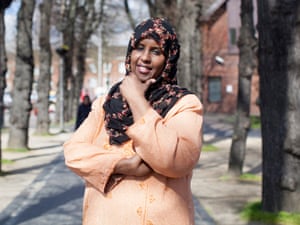


FGM campaigner … Hibo Wardere, co-author of Cut with Anna Wharton.


FGM campaigner … Hibo Wardere, co-author of Cut with Anna Wharton. Photograph: Alicia Canter for the Guardian

Other history books on the list are Easternisation, by the chief foreign affairs commentator of the Financial Times, Gideon Rachman – the winner of the Orwell prize for political journalism last year – who documents the shift of global power to Asia; John Bew’s biography of the postwar Labour prime minister Clement Attlee, Citizen Clem; along with And The Sun Shines Now, a vivid account by Hillsborough survivor Adrian Tempany of the football disaster’s impact on the game and wider society.


Joining them on the longlist is Black and British: A Forgotten History, David Olusoga’s landmark history of Britain’s black community, which has also been shortlisted for the inaugural Jhalak prize for writers of colour.


Fellow Jhalak nominee and Guardian editor-at-large Gary Younge is also longlisted for Another Day in the Death of America, which documents the lives of 10 people killed by guns in the US on 23 November 2013. Author Gillian Slovo described the book as “a gripping account of the conditions that turn so many of America’s powerless into victims”.


Hisham Matar, the Libyan writer who was shortlisted for the Baillie Gifford prize for non-fiction, is again nominated with The Return, his account of his father’s kidnapping at the hands of Muammar Gaddafi’s government.
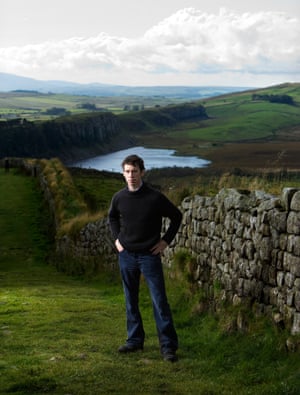


Tour de force … nominee Rory Stewart beside Hadrian’s Wall.


Tour de force … nominee Rory Stewart beside Hadrian’s Wall. Photograph: Murdo MacLeod for the Guardian

More recent politics is also documented in the books All Out War, Tim Shipman’s account of the 2016 EU referendum; Island Story, Londoner JD Taylor’s story of biking around Britain to discover other sides to UK identity; Enough Said, a look at the evolution of political language by the former BBC director-general Mark Thompson; and The Marches by Rory Stewart, Tory MP and son of a spy, who reflects on his relationship with his father and its political contexts as he walks along Hadrian’s Wall.


Announcing the longlist, the judges – Financial Times comment editor Jonathan Derbyshire, playwright and author Bonnie Greer, writer and broadcaster Mark Lawson and critic Erica Wagner – praised the list for offering “a clear and calm perspective on Britain and its place in the world”.


“The books reflect many aspects of Orwell’s literary character and interests: fiction, journalism, football, language and landscape,” the judges added.


The shortlist will be announced on 15 May, with a winner revealed at a ceremony during University College London’s festival of culture on 8 June.


The Orwell Prize for Books 2017 longlist


The Power by Naomi Alderman (Viking)


Citizen Clem by John Bew (Quercus)


The Seven by Ruth Dudley Edwards (Oneworld)


The Return by Hisham Matar (Viking)


Black and British by David Olusoga (Macmillan)


The Life Project by Helen Pearson (Allen Lane)


Easternisation by Gideon Rachman (The Bodley Head)


All Out War by Tim Shipman (HarperCollins UK)


The Marches by Rory Stewart (Vintage, Jonathan Cape)


Island Story by JD Taylor (Repeater)


And the Sun Shines Now by Adrian Tempany (Faber & Faber)


Enough Said by Mark Thompson (The Bodley Head)


Cut by Hibo Wardere, in collaboration with Anna Wharton (Simon & Schuster)


Another Day in the Death of America by Gary Younge (Guardian Faber)


Brexit, gun control and feminist science fiction on 2017 Orwell prize longlist

25 Temmuz 2016 Pazartesi

Spanking, caning and consent play: how feminist porn frees women from shame

Can a feminist have rape fantasies?


According to feminist pornography producer Pandora Blake, who runs the fetish porn site Dreams of Spanking and frequently portrays fantasies of “non-consent”, the answer is a no-brainer. “Absolutely.”


The general consensus in the feminist porn movement is that no fantasy, no matter how anti-feminist the subject matter appears to be, is off limits. To tell a woman what she is and is not allowed to be turned on by is just about as anti-feminist as it gets.


Related: What should you tell your kids about porn?


“Removing shame from hardcore BDSM desire and rape play and age play and all of the kinky taboos that women just have not been allowed to like ever, that’s the kind of stuff that really draws me into the feminist porn movement,” says Courtney Trouble, the producer behind Trouble Productions and a past Feminist Porn Conference keynote speaker.


“If we come out and say ‘I have a rape fantasy,’ it’s like, ‘Whoa, you are broken,’” Trouble says. “That’s the conversation, and it just needs to change.”


Feminists routinely fight for sexual agency – a woman’s right to make decisions about her own sexuality, including when and with whom to have sex, and when, if ever, to get pregnant. Feminists traditionally rebel against the forces that would hem in these rights: the puritanical voices that say that a woman who enjoys sex is a slut, that would restrict access to contraceptives, that claim that dressing provocatively is inviting rape.


Following that logic, feminists argue they shouldn’t invoke shame around the sexual fantasies of others – even if those fantasies include images of kink and domination, or even rape.


“There’s a clear distinction between fantasizing about being coerced, and actually being coerced,” Blake says, explaining that just because she has (and depicts) dark fantasies doesn’t in any way mean that she’s endorsing real-life nonconsensual sex acts.


“In some cases, people’s porn preferences contradict who they are in the world – as responsible people who are committed to justice and equality,” says Tristan Taormino, a feminist porn producer, sex educator, and organizer of the annual Feminist Porn Conference in Toronto. “And I’m OK with that.”


Taormino’s own porn focuses on female enjoyment, on diversity of bodies, and on the comfort and authentic expression of her performers. She often subverts the tropes viewers might expect to find in porn.


“Certainly there are things in mainstream porn that I think are stereotypical, or repetitive, boring, or even offensive,” Taormino told me, “but the answer is not to shut down porn. The answer is to make more porn.


“Most mainstream porn revolves around the ever-present erection,” she says, “which speaks volumes about how it really revolves around male pleasure, male desire, male fantasy. So I’ve shot scenes where a male partner will make a woman come with his hands, mouth or a toy without ever taking his pants off.”


She also includes scenes where women initiate sexual encounters, or where actors direct each other, rather than everyone seeming to know what they’re doing at all times. No pizza boys show up at the door only to mobbed by a gaggle of waiting co-eds. She makes a point to emphasize consent and mutual enjoyment.


Trouble’s porn also frequently focuses on subverting expectations set by mainstream porn. As a plus-sized performer who has been asked by mainstream producers to appear in porn with phrases like “chubby chaser” in the title, or asked to eat cake in porn scenes, Trouble delights in making porn where fat people are depicted as desirable. And while mainstream “lesbian porn” usually consists of scenes where stereotypical, feminine, straight female actors perform sex acts on each other for the enjoyment of straight male viewers, Trouble shoots girl-on-girl scenes with lesbian viewers in mind, and with butch actors as well as femme.


The feminism of Trouble and Taormino’s porn isn’t limited to the content – they are also strongly committed to a safe and comfortable work environment, fair pay, and a creative voice for their actors. This behind-the-scenes work is especially important for porn like Blake’s. While Blake doesn’t believe that the content of her work is at odds with her feminism, where it gets complicated, she says, is in portraying and sharing those fantasies without promoting actual violence toward women. In a world where porn is the de facto sex education for any teenager with an internet connection, socially responsible producers have to think not only about what will get people off, but what people will learn.


Blake says that making a big disclaimer about consent in the beginning of a film would break the spell of the fantasy, but the negotiation of boundaries that’s part of any healthy BDSM still needs to happen.


The Dreams of Spanking site includes tons of behind-the-scenes footage that shows what happens when someone calls cut (which she encourages her performers to do if they need or want to), or how the scene really does stop when someone uses a safe word. Rather than to-camera interviews where performers can feel like they’re on the spot to say the right thing (“I’ve lied in that situation,” she says), the Dreams of Spanking behind-the-scenes footage shows what really happens on her sets, so that viewers can see that everyone involved is a willing and enjoying participant.


Blake says she only casts people who are kinky in their real lives, whom she meets through the BDSM scene, to make sure that they know what they’re signing up for and that they’ll genuinely enjoy it.


“In a way,” she says, “I’m filming a live BDSM scene,” as opposed to actors depicting BDSM. “It’s about taking your authentic experience and turning it into a performance.”


Blake says that she’s always been kinky, since long before she knew what that meant. She remembers reading the descriptions of canings in Roald Dahl’s autobiography and being simultaneously fascinated and ashamed of her response.


“Even then I knew that it was not accepted to be fascinated by descriptions of other people’s pain,” she said. “All of us have to unlearn that received shame before we can enjoy ourselves and our sexuality, even if it’s the most pleasure-based sexuality, let alone when it’s anything outside of the norm.”


Related: Feminist pornographer wins right to reinstate sadomasochism website


She first discovered spanking as an erotic activity when she was a teen reading erotic fiction, but it wasn’t until she started exploring the world of online porn that she realized she wasn’t the only one who was turned on by the idea of spankings or canings more severe than playful smacks.


“What’s hot about spanking is the fear of it, the anxiety and anticipation of what’s coming,” Blake says. She likes to create scenes not where spanking just comes out of nowhere, but where a character anticipates it, “like a schoolgirl who knows she’s going to get a caning after school and can’t think about anything else and she’s asking her friends how bad it’s going to be, if it’s going to hurt.”


It’s not unfeminist to be a female submissive, Blake says, but it’s unfeminist to assume that someone in the BDSM scene is a submissive just because they’re a woman. She says that people in the BDSM scene, like people everywhere, have internalized ideas of gender norms, and that that’s part of what she’s trying to fight with Dreams of Spanking.


“The way to have sex in a feminist way is with consent, communication, and respect,” Blake says. “So if it’s possible to have sex that way, it’s possible to BDSM in that way, because they’re the same, really.”


Spanking, caning and consent play: how feminist porn frees women from shame