A groundbreaking tax on sugar-sweetened drinks recently passed in Mexico could offer the proof necessary to justify equivalent laws across reduced- and middle-cash flow nations and cities in the US, specialists feel.
Campaigners and public well being specialists are viewing closely to see what impact Mexico’s tax has on consumption. Mexico, exactly where 32.8% of the population is obese, is now the nation with the largest weight problem in the globe, in accordance to the UN’s Foods and Agricultural Organisation, overtaking the United States. The impact on health has been serious – 14% of the population has diabetes. Rates of high blood strain, which can lead to stroke and heart attacks, are also high.
So far, there is not conclusive evidence from any country in the world that raising the cost of sugar-sweetened drinks will have an effect on weight problems ranges, but the Mexico experiment is on an unprecedented scale. Despite the fact that the tax was set at 10% per litre rather than the twenty% campaigners wished, it will impact a huge quantity of people. Every yr, Mexico’s 118 million individuals drink 163 litres of soda every single, or practically half a litre a day. In accordance to the Nationwide Institute of Public Overall health, a 10% tax should lessen that to 141 litres per 12 months, preventing up to 630,000 cases of diabetes by 2030.
Other nations in Latin America, including Ecuador, Peru and Chile, are functioning on their own measures to decrease the advertising and marketing of soft drinks to youngsters, and to boost labelling so families can know how a lot sugar and calories they incorporate. “Mexico will have a domino result,” stated Dr Simon Barquera of the Institute. Public health academics, college students, client activists and politicians have been all following developments and sharing what they are doing in their personal nations on Twitter, he mentioned.
“One of the vice-presidents of the big companies advised me they had completed their scientific studies and the soda tax will not lessen consumption or remedy weight problems,” he explained. “We know that. My youngsters know that. But it is an educative tax. It sends a message from the government to the men and women that we consider this is undesirable for you.”
Tom Farley, wellness commissioner of New York City, where a proposed ban on large sugary drinks was struck down by the courts, is also viewing developments in Mexico. “I am hopeful that with the passage of that in Mexico, when men and women see the positive aspects, legislatures around the country [the US] will be supportive of it,” he stated.
The tax was passed in October, to the surprise even of numerous of its supporters, right after an unprecedented, tough-hitting promoting campaign from civil society organisations funded by Bloomberg Philanthropies, which has extended its public overall health perform on tobacco prevention into the places of street security and weight problems.
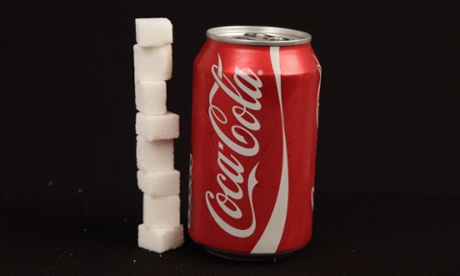
Billboards across Mexico City ran pictures of a man with elements of his feet missing as a consequence of diabetes. They warned that a 600ml litre bottle of Coca Cola contained 12 teaspoons of sugar, and asked no matter whether a mother or father would be satisfied providing that considerably to their youngster.
Soft drinks companies retaliated with their personal adverts, urging politicians to reject the tax, claiming that jobs would be misplaced in their business and in sugar production, which is essential in Mexico. They explained that tiny retailers, dependent on soft drinks income, would near and linked the campaign to former New York mayor Michael Bloomberg’s anti-obesity drive. “Michael Bloomberg, [former] mayor of New York, has financed with $ 10m a health campaign towards sweetened drinks. He would like to do in Mexico what he could not do in New York,” said the adverts.
Campaigners in the coalition, the Dietary Alliance for Wellness, tried to buy airtime on the 3 mainstream tv channels, Televisa, Television Azteca and Milenio Tv, but have been turned down with no explanation and suspect advertising contracts with market have been the situation. None of the channels responded to concerns from the Guardian. Cable Television later aired the campaign adverts.
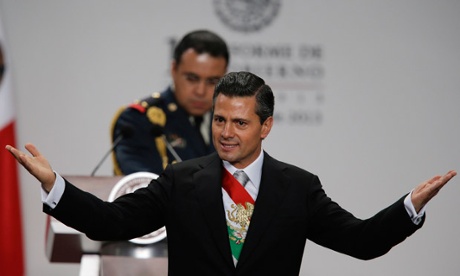
The tax, proposed by President Enrique Peña Nieto, was brought in as part of a fiscal reform package. The funds to be raised, estimated at 15bn pesos, is meant to be earmarked for drinking water in colleges – in some communities there is none, while in other individuals it is not potable and bottled soft drinks are safer. The earmarking of the tax has still to pass a ultimate stage in the senate.
Civil society groups say they will keep track of implementation closely, to make sure it does not become component of a general pool of government funding. “It is quite, quite essential not only for Mexico,” mentioned Alejandro Calvillo, director of El Poder del Consumidor (Client Electrical power). “It is an issue that has an international resonance. I was quite content [when it was passed] but at the same time with a expanding sense of obligation simply because we know the actuality of this country. We know that there are individuals who drink a good deal of sodas and they really don’t have accessibility to consuming water.”
Senator Marcela Torres Peimbert of the opposition PAN (Nationwide Action Celebration), who championed the tax in Congress ahead of the president took it forward, stated it was vital the money raised is used to provide consuming water in schools, as promised. “We have suspicions that they are tempted not to do what they are supposed to do, since in the paying budget not all the sum of funds anticipated to be raised was there,” she explained. “They say wellness, but it is not specific.”
She is supporting the setting up of “citizen observatories” to guarantee the funds goes to shell out for drinking water. The president at the moment has an approval rating of 42%, she stated. “People never trust him. Me neither. We have to make a massive effort to observe and press truly tough for the funds to go exactly where we want it to go.”
She agrees that there is an educational facet to the tax. “The principal worry of the sector wasn’t the cash, it was that these items will be marked as extremely hazardous. I feel we attained that. The worst component for them was that this special tax for well being is like that on tobacco or alcohol.” In the end, a tax of 8% was passed also on processed meals that includes a lot more than 275 calories per 100g.
Jorge Romo, spokesman for the Asociación Nacional de Productores de Refrescos y Aguas Carbonatadas (ANPRAC), the soft drinks manufacturers, explained the tax would just be a burden on the bad, who would end up having to pay a lot more than the 6% of revenue they devote now on their soft drinks. “They will not eat less. Perhaps in the very first three, 4 or 6 months but afterwards, it will turn out to be exactly the very same or perhaps a few percentage points distinction,” he said.
Whilst he agreed that obesity was a enormous problem, and stated that the organizations were engaging in social programmes to try to aid, soft drinks have been being unfairly blamed, he explained. He explained that the principal lead to was a Latin gene, followed by the consuming routines of Mexicans and the lack of physical exercise.
Coca Cola’s Latin American president, Brian Smith, appeared on the platform with President Peña Nieto at the launch of a nationwide weight problems approach on the day in October when the tax was passed. He pledged to target on revenue of minimal-calorie and no-calorie drinks, improve the transparency of labelling and not market place to youngsters beneath twelve.
Mexico enacts soda tax in work to combat world"s highest weight problems price

Hiç yorum yok:
Yorum Gönder