28 Nisan 2017 Cuma

Surrey students offered meningitis B jab after undergraduate"s death

Students living on campus at the University of Surrey are being offered the meningitis B vaccine after a student died and two others were taken to hospital with the bug.


John Igboanugo, a first-year physics undergraduate, died earlier this month following a sports trip to Rimini in Italy.


Two other Surrey students also fell ill with meningitis but have now been discharged from hospital.


Public Health England (PHE) said laboratory reports had confirmed two of the students had meningitis B while the third was thought to have contracted the B strain of the bug as well.


About 4,200 full-time students living in halls on the Guildford campus – around a third of the total student population – are now being offered the jab to protect against meningitis B.


The vaccine is normally only routinely given on the NHS to young babies.


Prof Max Lu, vice-chancellor of the University of Surrey, said: “We are greatly saddened by the death of our student, and our hearts go out to his family and friends during what continues to be a very difficult time.


“The health and wellbeing of everyone on campus is of the utmost importance.


“We are working closely with PHE on a targeted vaccination programme and are reassured that the risk to staff, students and visitors is still very low.”


Prof Kamila Hawthorne, associate dean for medicine at the University of Surrey, added: “We appreciate that when cases of meningitis B occur there is increased concern about the potential spread, but evidence shows that meningococcal infection is not highly contagious, comparatively rare and the risk to the wider community remains very low.


“Only people who have prolonged, close contact with an ill person are at a slightly increased risk of becoming unwell.


“If anyone is in any doubt or concerned about their health, or the health of others, please call NHS 111 urgently.”


The university said there was no direct link between the three cases.


The two students who were taken to hospital had not been on the sports trip to Italy.


PHE said passengers on the coach trip had been offered antibiotics as a precaution.


It said the wider population in the town and non-students who visited but did not live on the university campus were not considered to be within the at-risk group.


Dr Peter English, consultant in communicable disease control from PHE in the south-east of England, said: “Meningococcal infection is comparatively rare and the risk of transmission is relatively low.


“People who have prolonged, close contact with an ill person are at a slightly increased risk of becoming unwell in the following days.


“This is why immediate contacts of the cases have already been offered antibiotics as a precautionary measure.


“After considering the medical evidence, we have decided to offer vaccination to around 4,200 students living in halls of residence at the university to reduce risk of further cases next term.


“I would like to reassure other students, teachers, their families and the local community that the risk of catching this infection remains very low, and any higher risk is confined to those being offered the vaccine.”


Students are regularly offered a vaccine against other strains of meningitis, known as the Men ACWY jab.


Meningitis can develop rapidly and is sometimes mistaken for flu. Those who survive can be left with life-changing disabilities.


Symptoms include a high temperature, feeling or being sick, exhaustion and irritability, a headache and aching joints, stiff neck and dislike of bright lights, confusion and a rash.


Surrey students offered meningitis B jab after undergraduate"s death

NHS pays out millions to patients of surgeon convicted of needless breast operations

The NHS has been forced to pay out almost £10m in compensation to more than 250 patients of a rogue surgeon found guilty of carrying out needless breast operations on patients who were left traumatised and scarred.


Consultant surgeon Ian Stuart Paterson, 59, was convicted on 20 counts of wounding with intent and unlawful wounding against nine women and one man on Friday. But he could have more than 1,000 more victims, among them hundreds of private patients who may never be compensated for botched and needless operations.


Paterson had denied the charges, which related to procedures he carried out between 1997 and 2011. The jury at Nottingham crown court had heard claims that the surgeon – who saw hundreds of patients a year – carried out the operations for “obscure motives”, which may have included a desire to “earn extra money”.


He denied misrepresenting patients’ test results to dupe insurers into paying for surgery, but other former patients have told the Guardian that the surgeon exaggerated or simply invented the risk of cancer and – in some cases – claimed payments for more expensive procedures that those he had carried out.


Paterson was employed by Heart of England NHS trust in 1998 – despite having been previously suspended from the Good Hope hospital in Birmingham – and also practised at privately run Spire Healthcare hospitals in the Midlands over a 13-year period.


The NHS has so far paid out around £9.5m, settling 256 cases, with 25 outstanding, the Guardian has learned. But hundreds of Paterson’s private patients may never see a penny after Paterson’s insurance company – the Medical Defence Union (MDU) – said their cover was “discretionary” and had been withdrawn. Paterson had a limited separate insurance policy of £10m, which solicitors say will not nearly cover the compensation and costs of all private patients.


Spire Healthcare, which runs the Parkway and Little Aston hospitals where Paterson treated private patients, have settled some cases but argue that as Paterson was not technically their employee, they are not responsible for his actions. The company would not divulge any details about compensation.


Sarah Jane Downing, who set up a petition, demanding compensation for Paterson’s private victims, said she had been left “shocked and appalled” at the lack of redress.


Sarah Jane Downing.


Sarah Jane Downing. Photograph: Teri Pengilley for the Guardian

“Many of these people chose private healthcare because they bought into those promises in the glossy brochures. And now we have realised that those promises are not worth the paper they are printed on. It’s utterly devastating.”


At a recent coffee morning for former Paterson patients, many described the consultant’s “brilliant” bedside manner. “He was so lovely, I thought I was so lucky – I thought I was being looked after,” said Elaine Diskin, who had eight operations by Paterson over as many years.


Her husband, Mike, also had a deep respect for the surgeon – so much so that when he had a pain in his chest, he went to him and did not hesitate when the surgeon said he suspected lipoma and that they “had to get it out”.


“Sinister was the word he used,” Diskin said. “I had no reason to doubt him because he was looking after Elaine so well.”


They trusted Paterson so much they also recommended his care to a friend, who went on to have a lump removed. “We used to joke that we’d paid for his skiing holidays,” said Elaine Diskin.


After the Diskins were recalled for a review of their treatment in 2012 they discovered that at least seven of the eight operations Paterson had done on Elaine – along with both performed on her husband and their friend – were unnecessary.


A civil case with seven “test” cases – which will determine to what extent Spire can be held liable for Paterson’s work in their hospitals – is scheduled to be heard in October, but looks likely to be delayed. The outcome will affect all the private patients who have brought civil claims – and who fear they may get nothing.


Solicitors familiar with the case say Spire has made a handful of payments – the largest about £150,000 – to former patients in the private sector which include unnecessary removal of lumps and the received“cleavage-sparing mastectomies”, a controversial operation that left breast tissue behind after the removal of cancerous cells.


Concerns about Paterson were raised as far back as 2003. But despite several internal and external investigations and complaints from patients, GPs and other surgeons he was only suspended by the General Medical Council in 2011. “In every profession you get rogue operators – but there are checks and balances to stop terrible things happening,” said Mike Diskin. “Why were there not in this case, or why were they ignored?”


Timeline


1998: Paterson is hired as a consultant surgeon at the Heart of England NHS trust, despite being previously suspended from the Good Hope hospital, and also sees private patients at Spire Healthcare hospitals Little Aston and Parkway.


2003: Paterson is investigated because of concerns about “cleavage-sparing mastectomies”. Recommendations are not followed through.


2007: Breast surgeon Hemant Ingle is appointed and with others raises concerns. Further investigations are carried out and Paterson is told to stop performing “cleavage-sparing mastectomies”. Mark Goldman, chief executive of the Heart of England NHS trust, informs Spire that the trust is investigating Paterson.


2008: Two GPs complain about Paterson’s treatment of a patient, saying he gave misleading information about pathology reports, over-treated patients and disregarded the multidisciplinary team meeting process. Another report is critical.


2009: A Spire Parkway patient makes a formal complaint about Paterson. No action is taken. Heart of England NHS trust recalls 12 patients who have had “cleavage-sparing mastectomies”. West Midlands Cancer Intelligence Unit submits two further reports.


2010: The General Medical Council (GMC) tells Spire Parkway executives about a complaint from an NHS patient. .


2011: Parkway were informed Paterson had carried out a “cleavage-sparing mastectomy” in 2009 after being told to stop in January 2008. A month later the GMC informed Spire about another patient complaint. A total recall of all Paterson’s patients begins.


Paterson is suspended by the NHS in May 2011 but continues to perform breast surgery for Spire until 31 May and general surgery until 8 June 2011. He is paid until November 2012.


NHS pays out millions to patients of surgeon convicted of needless breast operations

Spice ruins lives and costs taxpayers a fortune. It doesn’t have to be this way | David Nutt

Last year I wrote to the health and home secretaries with suggestions on how antidotes for spice could be developed. Their replies revealed a complete lack of appreciation of the magnitude of the synthetic cannabinoid problem and lack of interest in the idea of an antidote.


Spice-induced “zombie” outbreaks in New York and in Manchester have hit the headlines in the past year. Use of these new damaging and powerful forms of synthetic cannabinoids is rife in our prisons and by homeless people, with estimates of up to 50 deaths last year. They can produce extremely strong psychotic states often with very violent behaviour. Sometimes a frozen unconscious state results. Either of these outcomes are health emergencies that consume vast amounts of police, prison officer and health professionals time, and so waste a huge amount of public money.


Spice is a generic term for the hundreds of synthetic versions of cannabis that are used instead of herbal cannabis. The first synthetic cannabinoids were made in the 1970s as potential medicines, but initial human testing found them to be so unpleasant and potent in their actions that none were marketed. Since then they have been sold as legal alternatives to cannabis, and called spice.


The problems with spice are multiple. The first is lack of any quality control: the amount of synthetic cannabinoid in each unit is not known. Second, these substances have little, if any, safety data. Third, many of them are much more potent than traditional cannabis, up to a hundred times more potent in the test tube and have never been tested in animals – let alone humans – so there is no data on real-world safety.


Most are not detectable by current testing processes which is why prisoners prefer them. This high potency means they are very profitable drugs. A spice solution costing a few pounds can be soaked into a single A4 sheet of paper, which, when dried, can be cut up into about 100 units, each of which will give a decent “hit” at £5 each.


The government’s response has been to ban these drugs in a series of amendments to the misuse of drugs act. So now all synthetic cannabinoids are illegal. But, as with other drugs, banning spice doesn’t stop its use. Heroin has been illegal for 50 years yet deaths reached an all-time peak in England and Wales last year.


So what should the government do about spice? First, it must recognise that this problem is not going to be dealt with by simplistic approaches such as more bans or more severe sentencing of users. We should understand that the authorities’ focus on herbal cannabis use is the main reason for spice emerging in the UK. So we should stop testing for cannabis in prisoners and others to encourage a move by users back to herbal cannabis.


The Manchester police commissioner has now publicly wondered if the problem has been exacerbated by the Psychoactive Substances Act which has taken synthetic cannabinoids out of “head shops” and into the underground marketplace. Perhaps we should develop a harm reduction strategy by allowing the sale of safer versions of synthetic cannabinoids, or even cannabis itself, back in head shops?


But to deal with the current epidemic of use we need urgently to develop cannabis antagonists as antidotes to spice for use by health professionals.


The success of naloxone as an antidote for heroin overdose is now well recognised to save lives, and is given to opioid users and their friends for this reason. Several antagonists at the cannabis receptor are known and one, rimonabant, has extensive safety data in humans. It was licensed in Europe a decade ago as a treatment to stop weight gain after people stopped smoking. However post-marketing surveillance found that in some people rimonabant was associated with an increase in depressive reactions, sometimes with suicidal thinking (though not suicides). This led to it being taken off the market for having too low a benefit-risk ratio for this medical indication. But for spice reversal these considerations do not apply – it would only be used once to reverse a bad reaction, and hopefully keep people from harming themselves or others.


The other approach is to develop the herbal antidote THCV. This is made in the cannabis plant alongside d9THC and many other cannabinoids. It has recently been shown to have antagonist actions against the psychosis produced by d9THC and so would almost certainly attenuate spice intoxication. Sadly, just a few months ago, the Advisory Council for the Misuse of Drugs refused to make it available for this purpose on the spurious grounds that a note in a 1974 paper said that when given intravenously in high doses it was a little like d9THC.


Surely it is time for government to push to develop such an antidote to spice if not for humane and health reasons then for economic ones?


Spice ruins lives and costs taxpayers a fortune. It doesn’t have to be this way | David Nutt

Britons could lose health cover in Europe after Brexit, report warns

Millions of Britons could have their access to free health insurance taken away after Brexit, a parliamentary report has said.


MPs on the health select committee urged the government to offer more guarantees for Britons visiting the continent after hearing evidence that without the right to receive treatment in countries that are part of the European Economic Area, people with cancer could find it too expensive to go to Europe.


In a strongly worded report on the effect of Brexit on health and social care, the committee said the challenges created by losing reciprocal health arrangements should not be underestimated.


British travellers can currently use the European health insurance card, which guarantees access to healthcare free or at a reduced cost in Europe. The EU member state providing treatment is able to claim back costs from the patient’s home country. Some estimates suggest that up to 27 million Britons have the cards.


The inquiry heard evidence that losing this agreement could create challenges for many travellers, including disabled people and those with mental or physical health conditions. Prof Martin McKee of the London School of Hygiene and Tropical Medicine said a week’s full private health insurance for a holiday in France for someone with diabetes or mild depression would cost between £800 and £2,500.


The report also noted that hundreds of thousands of expats living abroad could lose reciprocal healthcare rights, leaving some facing hardship. McKee, a professor of European public health, said many Britons in Spain have properties that are now worth little. “Many will come back in a state of poverty because they bought properties in Andalusia and other places … They will be throwing themselves on the mercy of the state when they come back,” he said.


Christopher Chantery, a British resident in France, told the committee many pensioners moved to the country “in good faith on the implicit promise that these arrangements would continue. Suddenly, something happens that brings those arrangements to an end. It is absolutely terrible for many people”.


British nationals living abroad have to get an S1 form, which gives them health cover, paid for by the UK, within Europe.


The committee, which includes Labour and Conservative MPs, called on the government to preserve the existing system as opposed to seeking a new arrangement. What was currently in place offered taxpayers good value for money, it said.


In the same report, the committee warned that the Brexit vote could lead to a brain drain, with morale among EU nationals in the NHS low due to uncertainty about their future. It called for more reassurances and said the government should continue to be able to recruit the “brightest and best from all parts of the globe” after Britain leaves the EU.


The Department of Health could not comment due to general election purdah rules. But when asked about reciprocal healthcare at the start of the year, the health secretary, Jeremy Hunt, said it was one of the rights of those who retired to Spain or France and he wanted to secure it early on in negotiations, but could not guarantee this.


Speaking to the Guardian, Prof Jean McHale, the director of the Centre for Health Law, Science and Policy at the University of Birmingham, said: “If questions of healthcare provision and patient mobility are not included in the negotiations, if there is not a transitional period and we move to hard Brexit, there will be major practical questions. What happens at midnight on Brexit D day to the person in hospital in another EU member state who has been in a car accident?”


Britons could lose health cover in Europe after Brexit, report warns

Thousands of cancer patients denied wish to die at home

Tens of thousands of people with cancer are dying in hospital every year even though they would rather spend their final days at home or in a hospice.


Although only 1% of cancer patients say they would prefer to die in hospital, 38% do, according to research by Macmillan Cancer Support, equating to 62,000 people a year across the UK.


A lack of health services outside hospitals, such as district nurses, to support people in their homes in their last days has been cited as a key reason behind the discovery.


But Macmillan said “a crisis of communication in the UK when it comes to death” and especially cancer patients’ reluctance to talk about their feelings, including their death, was preventing people achieving their own preferences. .


“There is a stark difference between a ‘good’ and a ‘bad’ death. We want everyone, where possible, to have a death that’s pain-free and in the place of their choosing. This is where the power of talking about death in advance is crucial,” said Adrienne Betteley, the charity’s head of health and social care.


Macmillan’s research, among 2,005 people who had been diagnosed with cancer, revealed that three in four had thought about the fact that they might die from the disease and one in five thought about it constantly or often.


However, 35% of those questioned had not spoken to anyone else about how they were feeling and just 8% had discussed matters with any of their health professionals.


Macmillan suggests people with cancer more readily relay how they are feeling, especially about where they want to die.


“The only certainty in life is that we will all die. What is less certain is where and what experience we will have when it happens. It’s only by talking about dying that we can agree what is really important to us, and put plans in place to make that happen,” said Lynda Thomas, Macmillan’s chief executive.


Amanda Cheesley, the Royal College of Nursing’s professional lead for long-term conditions and end-of-life care, said: “This country sadly still has serious work to do when it comes to end-of-life care. We must help patients to express their wishes, but we also need to make more options available in the first place. Declining numbers of community and district nurses and a lack of social care mean too many have to stay in hospital whether they want to or not.


“The nursing shortage is making a bad situation worse. With fewer nursing staff on wards, many are unable to facilitate discussions about death, and two-thirds of nurses say they don’t have the time to deliver the high-quality care that dying patients need.”


Thousands of cancer patients denied wish to die at home

A moment that changed me: the loss of my brother to alcohol-related illness | Eve Ainsworth

This year it will be 17 years since my brother died, aged 40. I have so many regrets – regret not only for Kev, who was finally killed by the addiction that overtook him, but regret that I didn’t try to understand him more when he was alive. It is only now that I have begun to appreciate the pain and entrapment inflicted by alcohol addiction and how the man I thought I knew became swamped by this misunderstood and deadly condition. My brother deserved so much more. For so long, I questioned why drink always won, without realising that for him it was never a question of winning or losing. It was just about surviving each day.


One of my earliest memories of Kev was when I was sitting miserable and uncomfortable with chicken pox. I was around five years old and stank of calamine lotion – my entire skin was cracked pink with it. I hated missing school and was bored silly at home. Then my older brother walked into the house, carrying a bag of books. My day suddenly lit up. In my early life, Kev’s long hours as a nurse meant he didn’t often visit, but when he did he brought a different energy to the house, and a kindness.


He was the one who’d take me out for surprise shopping trips, or for weekends away at his house where he and his wife would take me to amazing firework displays and other outings. Kev always seemed full of life – talking, laughing and coming up with ideas. He loved reading and talked about books. He made me appreciate the wonder of words. I didn’t know then that he was working long hours, that he was struggling, and drinking to cope. I just saw the mask he painted on. The happy Kev, rather than the cracks. But of course all cracks deepen in time and the mask begins to slip.


His marriage fell apart and soon his drinking meant Kev was signed off from a job he loved and excelled at. He was forced to move back to our house. That’s when I saw the true problem. I was 10 years old, and I had an older brother who now spent most of his days sitting in his bedroom. His appearance had changed. His face was more red, speech slurred, eyes swollen. We still talked though. He gave me his old computer to type on and encouraged me to write.


Kev didn’t think it was silly that I wanted to be a writer: he actively encouraged me. He talked about the importance of plot structure and leaving the reader wanting more. It was just sad that he didn’t read himself any more. He still listened to music though: to David Bowie, Leonard Cohen and the Clash. He taught me to listen to the words and hear the real meaning. He told me to sound words out loud and hear how they worked. Above all, he told me not to give up on my dreams. He always looked sad when he said that, like he’d already given up on his.


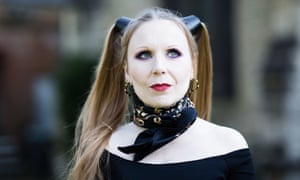
Eve Ainsworth


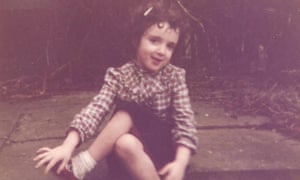
Eve Ainsworth aged 4, around 1982. Photograph: Eve Ainsworth

But as a teenager things changed. I’d changed. I’d become ashamed of him. He’d become bloated and sick and would often do or say things to embarrass or shock people. I’d look at his closed door and imagine a monster behind it, consumed by alcohol, no longer recognisable. I didn’t want to be in his company any more. He frustrated me, and I couldn’t understand why he had chosen this existence. Finally, he moved to a house of his own and I suppose I was relieved. At least now his drinking was contained somewhere else. I could kid myself he was OK really. But he wasn’t. The reality was that he was just getting sicker and sicker.


When I became ill myself, hospitalised with quinsy, I begged my brother not to visit. I didn’t want people to see how bad he was. When I came home, he phoned me. “I’m glad you’re better,” he said. “That should be me in hospital. Not you.”


He collapsed a week later; his liver had finally failed him. I was at work when they made the decision to turn off his life support. I tried to go and see him, but I couldn’t get there in time. Guilt raged through me. I’m not religious but I found myself in a small church, lighting a candle. Praying for forgiveness. Ashamed.


The guilt affected me for a long time afterwards. I resigned from my job. I spent most nights out drinking with friends. I felt like I was lost. One night I drank too much and found myself vomiting in a toilet wondering if this had been what his life was like. I woke up feeling wretched and ill and knew I could never drink to excess again. Even now I struggle being around people who are excessively drunk.


I wish we could have helped Kev. I wish we could have saved him. But we couldn’t


It took me a long time to get over his death and in many ways perhaps I never will. But it changed me because I knew I never wanted to feel like that again. I tried to remember Kev for the man he was, not what the drink made him. And I carried on writing, because I knew then that life was short and cruel, and I had to try and achieve my goals in the time I had. When my first book was published I remembered my brother’s early encouragement and belief in me, and knew how happy he would be.


Now I’m almost at the age my brother was when he died – and that seems wrong somehow. It makes me realise how young he was and how much life he had yet to live. He had so much talent, wisdom and kindness. I wish we could have helped him. I wish we could have saved him. But we couldn’t. And I’ll never stop regretting that. But regrets are wasted. So instead, I just have to be thankful for what he gave us instead.


A few days after he died I had a vivid dream in which my brother appeared in a beautiful, peaceful setting. In the background Bowie’s lyrics played on a loop, like a soothing lullaby – “I’m happy, hope you’re happy too.”


I am happy, Kev. And I’d like to think in some way you are too.


Comments on this story will be premoderated


A moment that changed me: the loss of my brother to alcohol-related illness | Eve Ainsworth

27 Nisan 2017 Perşembe

NHS needs £25bn in emergency cash, Theresa May told

NHS leaders are urging Theresa May to give the health service an emergency cash injection of £25bn before 2020 or risk a decline in the quality of care for patients and lengthening delays for treatment.


An influential group representing NHS Trusts says that the care provided by hospitals and GP surgeries will suffer over the next few years unless the prime minister provides an £5bn a year for the next three years – and a further £10bn of capital for modernising equipment and buildings.


NHS Providers is preparing to release its own manifesto next week, calling on the Conservatives and Labour to end what it calls the austerity funding of the health service. Saffron Cordery, the director of policy and strategy , said its analysis showed that there was a “revenue gap” of £4.5bn-£5bn a year in 2017-18 and “each of the subsequent two years as well.”


Hospitals needed that sum, said Cordery, to get rid of their deficits, which are running at £800m-£900m a year, deliver new NHS commitments on cancer and mental health and improve their performance against key waiting time targets.


The NHS also needed a further £10bn for capital spending on building and repairing premises, buying new equipment and moderning how care is provided, she added. That is the sum which a recent report commissioned by the Department of Health said the service needed for those purposes.


May inherited a pledge from David Cameron and George Osborne to provide a £10bn real-terms increase between April 2014 and April 2021. So far in the election campaign, the prime minister has refused to be drawn on how she might fund the health service, telling journalists that they would have to wait for the publication of the party’s manifesto.


A second group, the NHS Confederation, which represents hospitals and ambulance and mental health services, urged May to commit to giving the NHS £8bn-a-year annual budget increases after 2020-21, when the current funding settlement expires. The Department of Health’s budget is due to reach £133.1bn by March 2021.


Niall Dickson, its chief executive, said NHS services were so stretched that it would have to go back to getting at least the 4%-a-year budget increases it enjoyed historically between its creation in 1948 and 2010. After that, the coalition government limited rises to only 1% annually.


“It’s quite unsustainable for the shackles to remain on the health and care system and for society to expect the levels of need that will arrive over the next 10-15 years to be met unless it is willing to fund them,” Dickson said. “If we aren’t ready to put significant extra resources into the NHS then difficult choices will need to be made about things that we are going to do.”


Prof John Appleby, chief economist at the Nuffield Trust thinktank, said that returning to 4% a year rises, which the NHS used to receive regardless of which party was in power, “would require a cash increase of around £8bn in 2021-22.”


While Tory backing for such large sums was unlikely, “this could change if the NHS continues to miss its headline performance targets and the concern the public are starting to express about the NHS continues to rise”, he added.


The two interventions put pressure on May on an issue that some polls show is top of voters’ list of priorities in the general election, even ahead of Brexit.


Jeremy Hunt, the health secretary, has said several times that the NHS budget will need to rise by a significant amount after the current funding schedule ends in March 2021. For example, last October he told the Commons health select committee: “It is a given that over coming decades we will need to put more into the health and social care system … if we want a high quality healthcare service, yes, we need to continue investing more.”


Simon Stevens, the chief executive of NHS, England, has voiced concern that per capita health funding will decline in 2018-19 and 2019-20. It is due to fall from its current level of £2,223 per head this year by £16 next year and £7 in 2019.


Anita Charlesworth, the director of research at the Health Foundation thinktank, said the NHS could no longer make ends meet by holding down pay and reducing investment in equipment and facilities. “Cracks are evident – access to new drugs is being restricted, waiting times have increased and recruitment and retention are growing problems across the NHS. The health service can always be more efficient but it cannot bridge the gap between pressures rising at 4% and funding at 1% for much longer without quality and access suffering”, she said.


A Conservative spokesman said: “A strong NHS needs a strong economy. Only Theresa May and the Conservatives offer the strong and stable leadership we need to secure our growing economy in future and with it funding for the NHS and its dedicated staff.


“We’ve protected and increased the NHS budget and got thousands more staff in hospitals – but we know that progress is on the ballot paper at this election.”


NHS needs £25bn in emergency cash, Theresa May told