The NHS has been accused of letting down patients in pain by shutting London’s last community-based A&E-style service for people needing emergency dental treatment.
NHS England’s closure of the “urgent dental service” in Kentish Town will leave the capital’s 8.7 million residents with only two busy hospitals to go to with teeth problems. Dentists have warned that it will force more patients to seek help at overcrowded GP surgeries and A&E units. The disappearance is the latest loss of walk-in services across England for people with emergencies such as a broken tooth or abscess.
NHS England said the service would shut on 31 March, even though 5,451 people used it last year and patients come from all over London to get treatment. People should in future call the NHS111 helpline or seek an appointment with their regular dentist, they said.
“Access to emergency dental care is increasingly a postcode lottery. Inadequate provision is simply piling more pressure on GPs and A&Es that are not equipped to provide dental treatment”, said Henrik Overgaard-Nielsen of the British Dental Association.
“It’s absurd that NHS111 operators are asking patients to do ring-rounds [of dental surgeries looking for a free slot at short notice],” he said.
The association is urging the NHS to tackle the growing shortage of emergency dental services by arranging for high-street dentists to always have a certain number of emergency appointments available.
“It is irresponsible to shut a fantastic service that provides emergency dental care to patients without providing an alternative. Where do they think these patients are going to go?” said Dr Francesca Silman, a doctor whose practice is near the closing walk-in centre. “It is not acceptable to leave people in pain and in need of treatment, and this will only worsen the pressures already on GPs and A&E who can offer very little help to those that attend.”
Andrew Dismore, a Labour member of the London Assembly, has voiced concern about the service going, NHS England’s lack of public consultation, and the fact that it has been taken “against the wishes” of Whittington Health, the NHS trust that staffs it.
The dental association recently estimated that 135,000 dental patients a year end up attending A&E because they cannot easily gain access to care for a sudden problem. A further 600,000 seek treatment from a GP, adding to the pressure on family doctor services, it believes.
Guy’s limits emergency dental treatment to 55 patients a day. Photograph: Frank Baron for the Guardian
From April, Londoners needing urgent dental care will have only two options: specialist clinics at King’s College Hospital and Guy’s Hospital, both in south London, though the Guy’s service limits treatment to 55 patients a day and those needing care must be there as early as 7.30am to secure an appointment. The Royal London Hospital in east London recently shut its clinic.
An NHS England spokeswoman said: “We recently reviewed the service and found that there is sufficient capacity for patients who need urgent dental care at existing dental practices and so the closure of the service would not negatively impact patients in the area.
“There are more than 1,250 high-street dentists across London where patients can access dental care when they need it. Londoners in need of urgent dental care should call NHS111, who can then signpost them to the most appropriate service for their treatment.”
When Bruce Springsteen’s memoir Born To Run was published last month, fans expecting the standard rock biography ticking off the milestones in the Boss’s life and analysing his albums got something of a shock. Threaded through the tale of how a blue-collar boy from New Jersey became a global rock star was a searing account of depression – both his father’s, which governed his childhood, and his own.
Admitting that he had struggled with depression for much of his adult life, Springsteen wrote hauntingly: “You don’t know the illness’s parameters. Can I get sick enough to where I become a lot more like my father than I thought I might?”
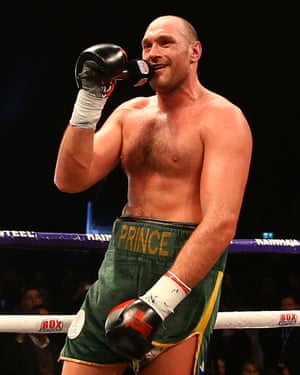
He is not the only public figure opening up about the effect depression can have on your life. Boxer Tyson Fury told Rolling Stone magazine that he self-medicated with cocaine and alcohol. “I can’t deal with it and the only thing that helps me is when I get drunk out of my mind,” he said.
Novelist Matt Haig detailed his longstanding relationship with anxiety and depression in last year’s Reasons to Stay Alive, noting that “to be calm becomes almost a revolutionary act”, while American comedian Paul Gilmartin has run a hugely successful podcast on the subject, The Mental Illness Happy Hour, since March 2011.
Musicians Kendrick Lamar and Frank Ocean have also tackled the illness, in interviews and in their work. Ocean told the Guardian in 2012: “My art [is] the one thing that I know will outlive me and outlive my feelings. It will outlive my depressive seasons.”
Meanwhile, Lamar tackles the illness on his latest album, To Pimp A Butterfly, singing: “I know your secrets … I know depression is restin’ on your heart for two reasons.” He later told MTV that he saw To Pimp A Butterfly as a form of therapy.
Martin Daubney, the former editor of Loaded, now campaigns on issues affecting men and boys. “We’re definitely turning a corner at the moment where talking about men and depression is concerned, and I really do think that’s been facilitated by celebrities leading the way,” he says.
“When Professor Green made the documentary about his father’s suicide there was a huge response. When Bruce Springsteen, someone so macho that his nickname is the Boss, talks about depression it’s another leap forward. It gives ordinary average Joes like me the permission we need to be vulnerable. The message sticks.”
This sense that the conversation about male depression is changing intensified last Wednesday when US rapper Kid Cudi released a bleak and emotional letter noting that he was checking himself into rehab for depression and suicidal thoughts. “It’s been difficult for me to find the words to what I’m about to share with you because I feel so ashamed,” he wrote. “Ashamed to be a leader and hero to so many while admitting I’ve been living a lie … My anxiety and depression have ruled my life for as long as I can remember.” An outpouring of support culminated in a new Twitter hashtag, #YouGoodMan.
“I’m shocked at the response to the hashtag, but it is a testament to how many black men are suffering in silence, isolated and feeling afraid,” says Dayna Lynn Nuckolls, a songwriter and artist from Chicago who started the hashtag with fellow Twitter user @TheCosby after reading Cudi’s letter. “It broke my heart that he was apologetic for being unwell … but I knew that his vulnerability and authenticity had the potential to open the door for other men.”
Alex Lewis, a 22-year-old digital marketing specialist and founder of the art project Car Window Poetry, was one of those to respond. “I felt it was a conversation that hasn’t happened much because black men aren’t open about their struggles with mental health,” he says. “As someone who wants to talk more about these things it was great to see.”
Yet what is striking about both these statements and the responses to them is the way in which they highlight how little previous conversation there has been around male depression.
Tyson Fury says he self-medicates with cocaine and alcohol as the only way to cope with his illness. Photograph: Richard Heathcote/Getty Images
In 2016 the charity Men’s Health Forum reported that 12.5% of men in the UK are affected by mental health disorders and men are nearly three times more likely to self-medicate with alcohol or drugs. They are also less likely to seek therapy than women, Men’s Health said, with fewer than one in five being prepared to see a doctor.
That failure to seek help can have terrible consequences. “Suicide is the single biggest killer of men under 45 in the UK – 76% of all suicides are men,” says Jane Powell, CEO of suicide prevention charity Calm (Campaign against Living Miserably). “It’s taken a long time to get the issue of male suicide talked about properly because we have some very fixed opinions of men. There’s an unspoken discomfort around male suicide, a sense that he clearly wasn’t up to it.”
Former rugby league player Paul Highton agrees. “When my career ended in rugby league I set up a business and it was doing well but I still felt low and underfulfilled,” he says. “I masked it by drinking more than I’d ever done before and taking painkillers, which I’d been prescribed for an old injury. It got to the point where I was on my knees, which is when I knew something had to change.”
Highton, who now works for the RFL as a transition mentor for players about to retire and for the charity Sporting Chance, says that men find it particularly hard to open up because of an unstated sense of machismo. “Especially in sport there’s a sense that because you’re physically strong you should be mentally strong too,” he says. “You don’t want the coach thinking that your head’s not in it so it becomes this stigma you can’t talk about.”
There is an unspoken taboo surrounding male depression, a feeling that if you were to admit that you felt anxious or blue you would be judged and found wanting. This is particularly exacerbated in certain sections of the black community.
“Black men are stuck between the rock of toxic masculinity and the hard place of systematic racial bias that often prevents them from getting effective help even if they tried. It’s a vicious cycle,” says Nuckolls.
Last week BBC3 aired Being Black, Going Crazy, a documentary about black people’s experiences of mental health issues. Presenter Keith Dube has himself had depression and says the environment he grew up in exacerbated his illness. “If you showed weakness you’d get eaten alive,” he says. “I think men in general grow up being told that you have to be tough, that to show emotion is a sign of weakness.”
Dube adds that the feeling of shame is particularly pronounced in immigrant communities where people struggle with a sense of failure and of letting their families down. “Lots of us grow up with parents who just got on with things. They came over to the UK, worked crazy long hours and didn’t complain, so to say ‘I feel this way and I don’t know why’ just feels wrong.”
For Daubney, the key to breaking long-entrenched attitudes lies in acknowledging them. “There’s no point in trying to help by telling men to talk more like women,” he says. “You have to acknowledge that men will take longer to let their guard down. You have to challenge the generations of notions about having a stiff upper lip and promote the message that strong men talk, they don’t suffer in silence.”
In these circumstances the openness of those in the spotlight such as Springsteen and Cudi is a gift. “Absolutely,” says Lewis. “The more conversations that occur about this subject, both public and personal, the more it helps people to speak out.”
For help with male depression, go to: ■ Time To Change, www.time-to-change.org.uk ■ Calm, www.thecalmzone.net.gridhosted.co.uk ■ The Samaritans, telephone 116 123