community etiketine sahip kayıtlar gösteriliyor. Tüm kayıtları göster

3 Mayıs 2017 Çarşamba

A supportive, loving community can help heal neglected children | Emma Colyer

Our childhood stays with us throughout our lives. We know this intuitively, from the shiver that can accompany memories of an upsetting event from our early years even into adulthood. But it is also true in a much deeper way.


The Adverse Childhood Experience (Ace) study, carried out in the US in the 1990s, found that children exposed to serious neglect, abuse or household dysfunction were at significantly greater risk of a litany of poor health and social outcomes, ranging from heart disease, liver disease and sexually transmitted diseases to depression, suicide attempts and intimate partner violence. Most starkly, people with a high score on the Ace scale died on average nearly 20 years earlier [pdf] than their counterparts who reported no childhood adversity.


This is not just a case of traumatic events leading to unhealthy behaviours leading to poor health outcomes. There is a growing body of evidence that suggests the impact of toxic stress on the developing brain has the potential to transform the way we view health problems.


Toxic stress is the term used to describe the prolonged physiological arousal that occurs when people find themselves in a threatening situation for an extended period of time. When that threatening situation is an abusive or neglectful home, and when the period of time coincides with a person’s formative years, the effects can change how the body’s organs function and drastically alter the course of a life. It has even been suggested that many poor health and social outcomes in adulthood are really developmental disorders with their roots in childhood, not simply the result of poor health choices in adulthood.


If the right questions are not being asked, we cannot expect to find the right answers


This represents a radical shift in the way we see and treat health and social issues. Our healthcare system tends to treat presenting symptoms rather than root causes. Clinicians tend to ask: what is wrong with this person? Now there is an emerging movement that advocates a “trauma-informed” approach, asking instead: what happened to this person?


Take attention deficit hyperactivity disorder (ADHD). The symptoms of ADHD can bear a remarkable similarity to the effects of childhood trauma, which include hypervigilance and an inability to focus, and could be caused by the heightened physiological arousal associated with toxic stress. Yet there is concerning evidence that children who have experienced trauma are more likely to receive a diagnosis of ADHD than post-traumatic stress disorder. If the right questions are not being asked, we cannot expect to find the right answers.


So what is the solution? Resilience has been shown to mitigate the lifetime impact of childhood adversity, but resilience relies on connection with others – nobody can be resilient without support. Early neglect, abuse and family disruption are about lack of connection, broken connection or loss of connection. At Body & Soul we aim to build the resilience of people of all ages by fostering a restorative, healing connection within a supportive and loving community of members, volunteers, staff and professionals.


Our approach is designed to mirror the holistic care that, in an ideal world, everyone would receive in childhood. When our members come to the centre, we provide them with a nutritious, home-cooked meal, which they share in a warm, social environment. They have access to one-to-one and group psychotherapy. They can book in for massages, shiatsu and reflexology. They can see a casework team if they are having practical difficulties with things like housing or benefits. They are encouraged to attend workshops on the importance of physical health and nutrition, as well as training courses on employability. They are invited to explore their feelings through music, dance and poetry. Nurturing these connections mitigates some of the physical, emotional and psychological effects of a childhood spent in a state of uncertainty, fear and physiological arousal. Over time, our members develop the resilience they need to withstand life’s challenges.


Screening for adverse childhood experiences in primary care is feasible, but ultimately primary care clinicians can only refer patients to services that exist. If money continues to be channelled into the treatment of symptoms at the expense of investigating root causes, people’s lives will continue to be defined by their childhood experiences.


What we need is for funders, both statutory and independent, to see beyond the symptoms, and recognise the healing power of human connection, particularly when that connection was missing in childhood. Failure to do so risks consigning those who have experienced adversity in childhood to a future of psychological hardship, relentless medication and an early death.


Would you like to write for the Social Life Blog? Email socialcare@theguardian.com with your ideas.


Join the Social Care Network to read more pieces like this. Follow us on Twitter (@GdnSocialCare) and like us on Facebook to keep up with the latest social care news and views.


A supportive, loving community can help heal neglected children | Emma Colyer

27 Ocak 2017 Cuma

Donor pledges C$380,000 for suicide prevention in First Nations community

A private donor is being lauded by aboriginal leaders for stepping in “where the government of Canada has failed” after anonymously pledging C$ 380,000 to provide mental health workers for a suicide-stricken First Nations community in northern Ontario.


One week ago, Wapekeka First Nation – reeling from the recent suicides of Jolynn Winter and Chantel Fox, both 12 years old – declared a state of emergency. Suicide had tightened its grip on the remote community of 430 people, forcing officials to fly out four young girls to be placed on 24-hour suicide watch and label another 26 students as high risk for suicide.


“Our community is in crisis,” said Joshua Frogg, the spokesman for Wapekeka First Nation. Months earlier the community had approached federal officials, detailing a spike in drug use and suicide attempts. Noting concerns about a potential suicide pact among young women, the community requested C$ 376,706 to hire and train four mental health workers.


The request was denied by Health Canada, who later said the request arrived at an “awkward” time in the federal funding cycle. As the community grieved the loss of two girls, leaders drew a direct link between their deaths and the denied funds. “Our community plan was turned down by government and now two are dead,” said Frogg.


Others saw the denied request as part of a larger pattern, one that has left basic health and mental health services on reserves chronically underfunded, with deadly consequences. Across Canada, indigenous youth are five to six times more likely to die by suicide than their non-indigenous counterparts.


“The healthcare system on reserves is far inferior to what other people get,” said Mike Kirlew, a physician who works in Wapekeka First Nation. “The cost of our complacency will be paid for, in full, in the cost of children’s lives.”


This week the community said an anonymous donor had pledged to fund the full amount of the denied request. “Words cannot express how grateful we are that this donor has committed to helping our young people with their mental health struggles,” Chief Brennan Sainnawap said in a statement.


The donor contacted the community last week, moved by reports of the suicide crisis, said Grand Chief Alvin Fiddler of the Nishnawbe Aski Nation, which represents First Nations in northern Ontario. “The continued loss of First Nation youth to suicide is unacceptable to the Canadian public.”


An initial installment of C$ 30,000 was wired to the community on Monday and the community has already begun hiring mental health workers. “We are grateful that a private donor has stepped in where the government of Canada has failed,” added Fiddler.


Health Canada said it was aware of the donation. After news of the suicides broke, the government reversed its decision and said it would be able to provide the funding. Government officials are in talks with Sainnawap but have yet to confirm the exact amount that will be provided, the agency said in a statement.


Donor pledges C$380,000 for suicide prevention in First Nations community

22 Ocak 2017 Pazar

Fury as last London community dental clinic shuts

The NHS has been accused of letting down patients in pain by shutting London’s last community-based A&E-style service for people needing emergency dental treatment.


NHS England’s closure of the “urgent dental service” in Kentish Town will leave the capital’s 8.7 million residents with only two busy hospitals to go to with teeth problems. Dentists have warned that it will force more patients to seek help at overcrowded GP surgeries and A&E units. The disappearance is the latest loss of walk-in services across England for people with emergencies such as a broken tooth or abscess.


NHS England said the service would shut on 31 March, even though 5,451 people used it last year and patients come from all over London to get treatment. People should in future call the NHS111 helpline or seek an appointment with their regular dentist, they said.


“Access to emergency dental care is increasingly a postcode lottery. Inadequate provision is simply piling more pressure on GPs and A&Es that are not equipped to provide dental treatment”, said Henrik Overgaard-Nielsen of the British Dental Association.


“It’s absurd that NHS111 operators are asking patients to do ring-rounds [of dental surgeries looking for a free slot at short notice],” he said.


The association is urging the NHS to tackle the growing shortage of emergency dental services by arranging for high-street dentists to always have a certain number of emergency appointments available.


“It is irresponsible to shut a fantastic service that provides emergency dental care to patients without providing an alternative. Where do they think these patients are going to go?” said Dr Francesca Silman, a doctor whose practice is near the closing walk-in centre. “It is not acceptable to leave people in pain and in need of treatment, and this will only worsen the pressures already on GPs and A&E who can offer very little help to those that attend.”


Andrew Dismore, a Labour member of the London Assembly, has voiced concern about the service going, NHS England’s lack of public consultation, and the fact that it has been taken “against the wishes” of Whittington Health, the NHS trust that staffs it.


The dental association recently estimated that 135,000 dental patients a year end up attending A&E because they cannot easily gain access to care for a sudden problem. A further 600,000 seek treatment from a GP, adding to the pressure on family doctor services, it believes.


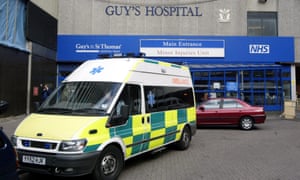
Guy’s limits emergency dental treatment to 55 patients a day.


Guy’s limits emergency dental treatment to 55 patients a day. Photograph: Frank Baron for the Guardian

From April, Londoners needing urgent dental care will have only two options: specialist clinics at King’s College Hospital and Guy’s Hospital, both in south London, though the Guy’s service limits treatment to 55 patients a day and those needing care must be there as early as 7.30am to secure an appointment. The Royal London Hospital in east London recently shut its clinic.


An NHS England spokeswoman said: “We recently reviewed the service and found that there is sufficient capacity for patients who need urgent dental care at existing dental practices and so the closure of the service would not negatively impact patients in the area.


“There are more than 1,250 high-street dentists across London where patients can access dental care when they need it. Londoners in need of urgent dental care should call NHS111, who can then signpost them to the most appropriate service for their treatment.”


Fury as last London community dental clinic shuts

28 Ekim 2016 Cuma

Disharmony in British yoga community over moves to regulate teachers

Last year, while attempting an advanced yoga move, Chris Flack ruptured a muscle in his back and slipped a disc in his neck. He had set himself a challenge – to achieve the scorpion pose, an advanced position that involves balancing on your hands or forearms, then arching your back and legs over until your toes touch your head, scorpion-like.


“I wasn’t listening to my body. It was a good lesson to me, to slow down. I had come out of some inversions [headstands and handstands] quite badly a few times, and came crashing down on to my neck. It was just irresponsible practice.”


For six months, Flack was in and out of hospital with pain management appointments, and taking morphine. The eventual cure happened shortly before he was due to have a guided cortisone injection, and was less orthodox. After staying off alcohol for months because of the injury, he got a little tipsy at a wedding, and was on the dancefloor at 2am when an elderly woman – “a drunk auntie,” he says with a laugh – jumped on his back and all but fixed him.


He still has to manage the injury, which involves daily physiotherapy and a fortnightly deep tissue massage. As for his yoga practice: “I don’t practice inversions any more. Here in the west we want to push ourselves. It’s a competitive culture where we want to win, to achieve, to be the gold medal winner of the yoga Olympics. I think for me yoga’s a lot more about letting go and being comfortable with just being. It’s quite hard to get that balance. I think it’s dangerous if you’re not really aware.” As a yoga instructor, he says, “I teach very carefully, I don’t want to push people, but the odd thing was I was pushing myself.”


Which goes to show even conscientious yoga teachers can get it wrong when it comes to their own practice. But it’s the ones who encourage their students to go too far who are currently under scrutiny. Now the British Wheel of Yoga has begun a year-long consultation with a view to regulating yoga teachers and introducing National Occupational Standards. Is there really a problem with bad, even dangerous, teachers? “We think so,” says Paul Fox, the organisation’s chair, which won’t be a surprise to anyone who has ever taken a dodgy yoga class (in my first class in a south London leisure centre, the teacher encouraged me to do a headstand).


In a now infamous (among the yoga community) excerpt from science journalist William J Broad’s book The Science of Yoga: the risks and rewards, he highlighted how yoga had been linked to knee, back and shoulder injuries and even strokes. Others have reported repetitive strain injury, torn ligaments, and damaged wrists and hips caused by yoga.


But there isn’t really any evidence to suggest yoga is more dangerous than any other physical activity.


Fox concedes most of the evidence is anecdotal, but says good teaching will minimise any risks. “If you’re going to take members of the public through a set of yoga poses, you do have a duty of care towards them. You do have to do a risk assessment, and know how to modify postures and how to deal with people who have lower back pain, arthritis, high blood pressure or any number of common ailments. Many good yoga teacher training courses will cover that.”


In gyms and leisure centres, yoga teachers have to join the Register of Exercise Professionals (REPs), in the same way spin and aerobics instructors do, but privately anyone can set themselves up as a yoga teacher. And the problem with REPs, say many within the yoga community, including Yoga Alliance, which represents and accredits instructors, is that its standards are so low. The new proposal is to improve standards, but it has been criticised as needless bureaucracy and financially beneficial for the bodies involved, the BWY among them. Yoga Alliance describes it as “a cosy little arrangement”.


Is it a money-making scheme? “I think it’s the opposite,” says Fox. The BWY trains teachers, which takes a minimum of 18 months; some courses take three years. “Because it’s unregulated, a lot of people run [sub-standard] teacher training courses and charge pretty much what we charge. They’re the ones making a lot of money out of it.” But people within the yoga community are not happy. At the recent first meeting, says Fox, the mood was “rather un-yogic”.


The problem is that it’s not entirely clear what yoga is. For a start, there are a variety of disciplines. Then there are some who believe it’s a spiritual or religious practice (and probably one that should not be taught by western instructors to white people in designer gymwear) and as such shouldn’t be regulated. Or that it’s a creative art and can’t be controlled.


“The other school of thought,” says Sarah Shone, a chartered physiotherapist who is also a yoga teacher, “is that yoga is more of a physical practice and physical practices do run the risk of having a negative effect on the body. There is a risk of injury with any physical activity that any of us undertake.”


In yoga, she says, the most common injuries are often to do with overstretching and that can apply to any joint of the body. “People who are put into poor alignment can overstretch ligaments and tendons and can flare up problems that are already there. Yoga is a very safe form of physical activity for the vast majority of people, and as long as they are sensible and take responsibility for their own practice and always make sure the yoga instructor is aware of any pains and injuries so they can take that into consideration.” She is undecided on whether it needs more regulation.


“Anybody can call themselves a yoga teacher because there isn’t a central governing body. But then is there a governing body for every other form of exercise? And there isn’t.”


Disharmony in British yoga community over moves to regulate teachers

21 Ağustos 2016 Pazar

Women and BME community markedly under-represented in top NHS roles

The NHS has been accused of a “disgraceful” failure to use the talents of women and people from ethnic minorities after new research revealed that they are badly under-represented in senior positions.


Despite a two-year drive to rectify the problem, far fewer people from both groups chair an NHS acute hospital trust or ambulance trust in England than would be proportionate to their numbers in the population, freedom of information responses show. They are also much less likely to be non-executive directors of them than white men.


Only 2% of NHS trusts, which decide how health services are run, are chaired by people from a black and minority ethnic (BME) background, even though 15% of England’s population is of BME heritage. While 80% of NHS staff are women, they make up just 28% of trust chairs, outnumbered three to one by men – prompting the claim that white, male NHS leaders are simply appointing people like them.


Related: Inequality rife among black and minority ethnic staff in the NHS


“The lack of women chairs is bad enough. But the BME proportions are disgraceful,” said Lord Philip Hunt, the Labour shadow health minister in the House of Lords, who was the chair of the Heart of England hospital trust in Birmingham for four years until 2014. There are 156 acute hospital trusts and ten regional ambulance service trusts, which between them receive over £40bn a year of the NHS budget for caring for patients.


Hunt accused the mainly white male chairs of trusts of perpetuating the acknowledged problem of too few women and non-white faces in positions of authority by ignoring suitably qualified people from the local area who would change the mix. “Too many chairmen want to appoint executives who are in their own image,” he said.


Hunt said the findings, based on data from about 1,450 board members at 114 trusts, showed that despite repeated pledges and a range of initiatives to improve gender and BME representation, the NHS has had limited success in tackling huge under-representation in top jobs, which it called its “snowy white peaks”.


They appear to indicate that Simon Stevens, NHS England’s chief executive, has achieved little in his drive over the last two years to improve the number of BME people moving into top jobs. “The barriers for people from a BME background in getting top executive positions have been well-documented and there is little sign of much progress,” added Hunt.


The report, called Action not words – Making NHS boards more representative says: “It is clear that the NHS has a long way to go before the boards of acute and ambulance trusts are anywhere near reflecting the ethnic and gender balance of the population. This is a serious weakness which needs to be rectified as a matter of priority.” The study suggests that the NHS may not easily meet its ambition of having a 50/50 gender split on boards by 2020.


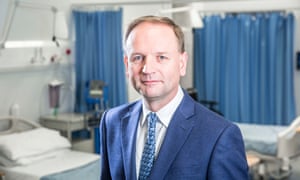
Simon Stevens, chief executive of NHS England


Simon Stevens, chief executive of NHS England, has been on a two-year drive to improve the number of BME people in top jobs. Photograph: Felix Clay for the Guardian

Noting the apparent failure of schemes to improve things, it adds: “Good intentions and platitudes are not sufficient. There is a clear need for the government to step in and insist that NHS trust boards undertake a radical transformation to reflect the communities they serve.”


The data supplied by trusts also shows that:


  • People from a BME background make up just 4% of the executive directors and 7% of non-executive directors on trust boards

  • While 47% of trusts’ executive directors are female, women comprise just 38% of the non-executive roles on boards

  • Three-quarters (75%) of NHS trust chairs are aged 60 or over, while just under half (46%) of non-executive directors are in the same age bracket

Stevens recently reiterated that the NHS had to become much better at appointing those from a BME background to senior roles because research shows it leads to better care. “We know that care is far more likely to meet the needs of all patients we’re here to service when NHS leadership is drawn from diverse communities across the country, and when our frontline staff are themselves free from discrimination.”


NHS England last year appointed two new senior staff to boost BME representation. They included Roger Kline, who undertook seminal research at Middlesex University in 2014 that lamented NHS leadership in London as overwhelmingly white. It has also introduced an NHS workforce race equality standard, which requires trust to increase the number of people of a BME background in senior positions.


An NHS England spokesperson said: “This is an issue that the NHS must address. That’s why in June this year we published the first NHS workforce race equality standard (WRES), report which gave feedback to every hospital and trust across the NHS about the experiences of their BME staff. While some employers have got it right, we know there’s a long way to go, and this first annual survey provides a transparent baseline from which we expect to see improvement.


“We’re investing £2m over two years (2015-17) in the WRES programme to improve equality in recruitment, board membership and career opportunities. This includes training and developing 75 champions based in trusts who will help reduce inequality and spread best practice,” the spokesperson added.


Women and BME community markedly under-represented in top NHS roles

25 Temmuz 2016 Pazartesi

The global community is failing to address mental health

When it comes to mental health, the global health community has failed.


Mental, neurological, and substance-use disorders are among the leading causes of the global burden of disease. By 2020, depression will be the second leading cause of disability. Suicide is a leading cause of death among adolescents. People with severe mental disorders die decades earlier than others in their community and face grievous forms of discrimination and abuse.


Most governments spend less than 1% of their health budget on mental health.


Our failure in the global health community is that we have left large proportions of those affected, up to 90% in some low-income countries, without access to even basic mental health care from which they can greatly benefit. Most governments spend less than 1% of their health budget on mental health, a figure also reflected in international development assistance for health. The consequences are grave, not only for the mental health of the individuals affected, but also for their physical health and the wellbeing of families and society at large.


This unmet need for mental health services is greatest among populations affected by conflict and displacement. Our world is currently in the midst of the worst humanitarian crisis since the second world war. But the violence does not end even when people flee the conflict zones. In refugee camps in Greece last month, we saw hundreds of Syrian children too afraid to leave their tents to play, frail elders on a hunger strike to protest abominable living conditions, and suicides that could have been prevented. Similar conditions can be found in refugee camps set up by the Australian government in small Pacific island nations. Millions who have faced some of the worst imaginable adversities and atrocities are exposed to further adversities, including denial of freedom and hope – conditions that undermine mental health among even the most resilient.


Related: The diaspora groups bringing aid to Syria: ‘This isn’t a job, it’s now our life’


Facing an acute shortage of funding and resources, we must act creatively to ensure better mental health outcomes. The most important first step is ensuring that refugees are getting sufficient access to basics such as food. Actively working to normalise the appalling situations experienced by these populations – for example, by ensuring schooling for children and enabling work for adults – is a good strategy to promoting mental health.


But we can also look at some more creative approaches. Turning to community-based, non-professional providers to deliver psychosocial interventions can address the acute shortages of mental health professionals. This has been effective in low-resource settings such as Uganda, Pakistan, and India and recently proven more cost-effective than standard treatment.


Through short skills-focused trainings, simplifying complex treatments, peer supervision, and using models of illness which are consistent with the experiences of refugees, we can empower lay people in refugee communities to provide frontline psychosocial interventions. Those specialists who are available can design and oversee mental health programmes, as well as train, supervise, and support refugees in using evidence-based techniques to promote resilience and alleviate mental health distress in their own communities. This not only enables greater access to mental health services but, importantly, calls for the harnessing of personal and community resources, thereby giving refugees a sense of empowerment at a time of severe disempowerment.


Related: Unaccompanied child refugees: ‘These children aren’t seen as children’


Ultimately, however, there needs to be a structural revision in how those fleeing violence and conflict are welcomed and integrated in safe countries. The cost of doing nothing is immense. Untreated, the impact of conflict on mental health can endure for years, and over generations, at great cost to society. With more than 60 million people displaced by war, conflict, or persecution, now is the time for the global health community to wake up and realise what’s at stake if we keep ignoring mental health.


Laila Soudi is a researcher at Stanford University School of Medicine and director of mental health at the Syrian American Medical Society. Vikram Patel is Wellcome Trust principal research fellow at the London School of Hygiene and Tropical Medicine and co-founder of Sangath.


Join our community of development professionals and humanitarians. Follow @GuardianGDP on Twitter.


The global community is failing to address mental health

3 Haziran 2014 Salı

Is Simon Stevens appropriate to back local community hospitals?

Surgical Ward

There will not be a return to an era exactly where hospitals were staffed by matrons who ruled with a rod of iron, writes Malcolm Prowle. Photograph: George Freston/Getty Photographs


In a current interview, Simon Stevens, the head of the NHS in England, appeared to mark a change in policy by calling for a shift away from large centralised hospitals and in the direction of community hospitals with new models of care created all around smaller local hospitals. In some methods this sounds radical but closer examination may suggest that it is just a phase on an evolutionary pathway.


For 60 many years, the bedrock of the NHS was the district standard hospital (DGH), which delivered a variety of hospital companies, other than specialised tertiary providers at university hospitals, to a regional population of possibly half a million folks. However, in recent many years this procedure has started to change with a far more varied pattern of providers developing, incorporating DGHs specialising in particular facets of healthcare, expanded major care centres, walk in centres and community hospitals.


Community hospitals are properly positioned to help patients on their complicated journeys of care through the health and care technique. They can be noticed as a nearby hub for a variety of easily accessible wellness providers and may well also offer signposting to other solutions such as individuals provided locally by the third sector. Community teams can also assist to prevent emergency admissions to acute hospitals and can play a significant role in supporting the reduction of hospital delayed discharges.


Nonetheless, this does not imply a return to an era where hospitals had been often staffed by matrons who ruled with a rod of iron and exactly where general practitioners popped in to do a bit of schedule surgery. Neither does it indicate that many existing, and a lot loved, community-based hospitals will not be closed the place they are identified to be obsolescent, inappropriate or just plain outmoded. This will undoubtedly make a great deal of local opposition but, personally, I have observed scenarios in which the public opposed the closure of a hospital which was not just unsuitable but unsafe.


However, new local community hospitals will carry on to be built. All through the nation it is possible to discover examples of exactly where an outdated community hospital has been closed and replaced, a few years later, by a new one particular nearby.


Complicated health care and surgical care will nonetheless be offered at large hospitals, in which doctors can specialise in particular elements of medicine and can have better clinical outcomes than in hospitals the place no such specialisation requires location. Nevertheless, other services this kind of as care of older folks, lengthy-term care and patient rehabilitation may be far better undertaken in the significantly calmer atmosphere of a community hospital. In some instances, diagnostic and some therapy actions for acute patients may well also be presented at a spot far more hassle-free to the patient.


Some will argue that smaller community hospitals are inherently significantly less productive due to the fact of their dimension but this might not be the situation. Usually larger organisations (this kind of as a DGH) can have inefficiencies that are identified in several largeish bureaucracies and tiny hospitals can have higher scale and flexibility. It is, consequently, a debateable point as to whether local community hospitals will cost more to run and will need added funding.


There will be strong barriers to the notion of more local community hospitals. Not all healthcare experts will be pleased to operate in such units and could see them as boring considering that they are not functioning at the cutting edge of healthcare. Consequently, they might see this as a block to their individual profession prospective customers.


Several individuals, including myself, will look on neighborhood hospitals favourably as a area for elderly family members to invest the final years of their lifestyle. The calmer setting and the higher degree of familiarity with nursing and other staff will be a welcome alter from the hustle and bustle of the huge hospital.


A single may wonder why Simon Stevens has selected this controversial topic to mark one particular of his earliest interviews as head of the NHS. Could it be that community hospitals are extremely popular with the public and that this will generate good news for the NHS even however, as currently observed, the variety of local community hospital being proposed is very various from that of the romantic past? Alternatively, is it just a signifies of distancing himself from the previous NHS regime by a substantial change in policy? Time will tell how far the configuration of the NHS will alter as a consequence.


Malcolm Prowle is professor of business efficiency and co-director of the Wellness and Social Care Finance Study Unit at Nottingham Business School


What do you consider of Simon Stevens’s programs to finish centralisation in the NHS and back neighborhood companies? Have your say.


Are you a member of our online neighborhood? Join the Guardian healthcare network to get regular emails and exclusive offers.


Is Simon Stevens appropriate to back local community hospitals?

30 Mayıs 2014 Cuma

We know community hospitals work. And at last, so does the NHS | Helen Tucker

‘When small hospitals are threatened with closure, this passion translates into protest.’ Photograph: Rex Features


The message from the new NHS chief executive, Simon Stevens, that small hospitals have a big role to play, is important for local people who are passionate about theirs – and may be in the nick of time for some of them.


In practice, plans for the future of community hospitals vary considerably across the country, presenting a confusing picture for patients, staff and communities.


For instance, in Gloucestershire, there has been considerable investment in community hospital services and facilities, including the new hospital in Tewkesbury. In Oxfordshire, Bicester community hospital is opening this summer after two decades of public campaigning. By contrast, in Somerset, there are proposals for closing services in community hospitals, and just last week there was an announcement that Ashby hospital in Leicestershire will close.


Poltair hospital in Cornwall no longer has inpatient beds, while a “pause” on proposals to withdraw beds was successfully negotiated by the community in Swanage, Dorset and in Ashburton, Devon. Too many community hospitals have been losing their beds and services over the past few years.


Community hospitals have needed advice and a voice, and that’s what the Community Hospitals Association (CHA) tries to provide. We know that local people are passionate about their local services, and see them as a vital community asset.


They are often closely involved with their service, such as through volunteering and donations, in a way that they are less so with the bigger hospitals. The financial support through a hospital’s League of Friends can be considerable, funding buildings and equipment.


Local people witness the benefit of the service through their own experience or those of family and friends, and often contrast the very personal care in a small hospital with the care in larger acute hospitals. When small hospitals are threatened with closure, this passion translates into protest marches of thousands of local people, as there were recently in Millom in Cumbria, and in packed public meetings, such as in Clevedon, North Somerset.


The local community in Rye, East Sussex decided that they would take this into their own hands. They felt so strongly about safeguarding their service that they bought the hospital and land, extended it and have been managing it successfully for over 15 years. Their view was that it really mattered to local people, and that they would look after the service. Other communities have followed suit, such as in Odiham, Hampshire and Wells, Norfolk.


What makes the difference is the strong tradition of care in local community hospitals over 150 years, and the access to health and care services they provide in more remote and rural areas. The whole community benefits from services such as clinic appointments, treatment for minor injuries, physiotherapy and x-ray. Inpatient beds are predominantly used to support older people who need rehabilitation and support before going home, which is organised by local teams of staff including GPs, social workers, nurses and therapists.


It is this sensitive and appropriate local service that is so appreciated by patients and families. Patients who need palliative and end-of-life care can also be offered a local service close to their home and family. A number of hospitals carry out operations, and others have maternity units and dementia care centres. New clinical and technological developments mean that services such as kidney dialysis, ultrasound and MRI scanning can be offered in small hospitals.


A number of hospitals incorporate GP surgeries, social services and complementary therapies. The variation and diversity of service is often a response to local need, showing how far they have developed from the original cottage hospital concept. This range of service is achieved by working in partnership with the larger, more specialist hospitals and many other providers of health and social care.


When making the case for small hospitals, patients and their families often talk about the access to services in rural areas, the continuity of care by local GPs and staff, and the familiarity of the service. It is less daunting to go to your local hospital than to travel to a large district general hospital, and more manageable in terms of transport and parking. These are important considerations for frail older people and young families alike.


The community hospital network has been gearing up, and Simon Stevens’s announcement has given a real boost to those who work in small hospitals. They know from their patients that their service is appreciated and is effective.


We at the CHA know that communities are engaged and enlivened by community hospital care. We know the 300 community hospitals across the country provide a different kind of care to the highly centralised care in acute hospitals. We can feel the NHS shifting in our direction, and since the announcement I have had a number of unexpectedly positive calls from commissioners. Not enough account has been taken of the community hospital sector until now. I believe, and hope, that is now changing.


We know community hospitals work. And at last, so does the NHS | Helen Tucker

10 Nisan 2014 Perşembe

Repairing Healthcare Can Be As Near As Your Community Pharmacy

The clinical emergency is medication itself


Demand for major care services is projected to improve by means of 2020, due to the growing aging and population as effectively as the expanded insurance coverage implemented underneath the Reasonably priced Care Act (ACA). In other words, the demand for principal care doctors will expand a lot more quickly than the provide, resulting in a projected shortage of more than 20,00 total-time doctors.


The value of your community pharmacy


Nearly 70% of Americans are on at least one prescription drug and in excess of 50% of Americans are on at least two prescription medication. Given the shaky assumption that these individuals are actually taking their medicines, it’s fair to say that past the doctor, the pharmacist plays a crucial position in the overall health dynamic. Currently pharmacists can give several solutions to their patients–from information to specific medicines.  In fact, the pharmacy is usually a first source of medical information for several.  Pharmacy companies have evolved from strictly dispensing medicines to giving providers this kind of as medication treatment management, medication training, enhancing medication adherence, administering immunizations, and wellness/wellness. In addition, pharmacists can now be identified in specialty places such as oncology, organ transplant and even psychiatry. RxWiki–an on-line patient info service–now extends the pharmacy experience into the digital landscape, offering sufferers on demand accessibility to medicine info, pharmacy transactions, and medication adherence. RxNetwork is yet another emerging company with a distinctive methodology to link the pharmacy and patient–providing real-time assistance from compliance to education.  RxNetwork’s patient romantic relationship management solution bridges the pharmacy-patient communication gap and supplies an productive, non-disruptive solution for the pharmacies with a practical, rewarding, motivating solution to their connected individuals.


Expanding the role of the pharmacist


Nonetheless, the actuality is, for most, the pharmacist merely is not considered a healthcare provider but a dispenser of medication. This truth certainly impedes utilizing pharmacists to the fullest degree.Although there have been some developments in the pharmacy occupation this kind of as prescriptive authority and administering immunizations, there is even now a tremendous possible to investigate and potentially tap. A survey conducted in 2013, revealed 70% of buyers mentioned they would go to a pharmacist for overall health solutions if their insurance covered them. Twenty one % of that 70% say they’d nevertheless go to a pharmacist even if they would have to pay $ 75 out of pocket. These percentages recommend that patients would each believe in and engage pharmacists for medial care.  This becomes critical, especially in rural places where access is restricted. A central level is that pharmacists can play a beneficial position functioning with physicians and other providers to optimize medicine therapy, supply patient-centered care, and help in managing acute and continual problems.


A champion of medication adherence


1 extremely critical function a pharmacist can have a enormous influence is bettering medication adherence. Healthcare care costs of folks with persistent conditions account for more than 75% of the nation’s $ 2 trillion health care bill.  Interesting practically 50% of folks prescribed prescription drugs for continual ailments do not take their drugs accurately. Adherence plays a excellent role in a patient’s management of chronic problems and delivering a value to the expense of medicines. This romantic relationship really fees the United States 300 billion yearly in medicine related troubles.  The data propose that the pharmacist can perform a essential position in adherence and a  systematic evaluation of the adherence literature found that 5 of 6 pharmacist-directed interventions in local community pharmacies have been efficient in improving adherence by seven% to 27%.


At the front line and potential of care


Pharmacists are at the front line of healthcare, so why are we seeing this disconnect? Pharmacists are in a place to make a significant influence on health efforts, which positively impacts a lot of the healthcare system. One solution to the complexities and value of healthcare undoubtedly seem to be to include a reevaluation of the function of pharmacy and the likely for an expanded part as a essential member of the healthcare group.  Further, the opportunity to leverage new patient and pharmacist digital platforms can help drive connections and care.


It is surely a new era of digital well being.  And it quite nicely may possibly be the new era for the pharmacist also!


Keep Critical! Adhere to me on Twitter, LinkedIn and Google+!


Repairing Healthcare Can Be As Near As Your Community Pharmacy

14 Şubat 2014 Cuma

A day in the daily life of ... a local community pharmacist

Reena Barai

Reena Barai owns a pharmacy in a small residential community in which men and women can walk in and get professional guidance and remedy.


I’m a community pharmacist and personal a pharmacy. We open at 9am and I consider to arrive early to catch up on admin tasks just before then. The pharmacy is in a little residential local community, and I usually bump into my sufferers on my walk in. It provides me a wonderful sense of belonging when I can greet folks on the street.


Mornings are usually the busiest element of the day as I have numerous patients coming in to acquire their prescriptions. As a neighborhood pharmacist, I do not just dispense medicines, I also dispense guidance and solutions relevant to healthier residing. Nowadays, while dispensing some antibiotics for a younger kid, I was talking with the mother about how her little one usually seems to get chest infections. I asked the mom if any person in her family smokes and she admitted to me that she did but that she genuinely wished to give up. As a trained NHS cease smoking adviser, I am able to supply assistance and advocate providers to aid her, and other folks, quit smoking.


Much more and far more people enjoy the truth they never need an appointment to see me and they can just stroll in, and get professional tips and treatment for their symptoms more than the counter. Since I have worked in my pharmacy for a lot more than ten many years, I have built up believe in and rapport with my patients. It helps make my work come to feel worthwhile when I can offer help and assistance to folks I see in the community on a weekly basis. These days, a lady came in to thank me for my guidance when she came in to get some antacid (a substance that neutralises abdomen acidity) last week. She imagined she was struggling from heartburn but I was concerned that it may well be something far more significant. She decided to consider my suggestions and had it checked out it turned out she was getting a heart attack.


Afternoons are typically invested carrying out Medicine Use Reviews (MURs), and I have a private consultation area in my pharmacy exactly where these consider place. These days, I saw a woman whose GP had referred her since she had turn into confused about her medicine. I was capable to evaluation and simplify her medicines regime, and she really appreciated the time I invested with her.


I have a excellent doing work romantic relationship with my neighborhood GP practices. On a day-to-day basis, I obtain calls from receptionists, nurses, carers and GPs asking for assist with their individuals or for advice on medication. I also attend the neighborhood clinical commissioning group meetings in which I signify all the pharmacies in my spot. I usually run neighborhood health promotion campaigns and try out to collaborate with other nearby organizations.


As soon as, I ran a wellness MOT initiative with the garage across the road from my pharmacy. I gave out flyers to people bringing their vehicle in for an MOT and I encouraged them to have a overall health ceck-up while they waited. I performed mini-overall health checks and answered general well being concerns, giving men and women advice on how to adopt a healthier way of life.


The end of my day usually entails delivering medicine to housebound or sick individuals, several of whom dwell alone and rely on my deliveries. Many of my evenings are spent attending meetings and lectures. I’m a nearby pharmacy tutor in my location and arrange workshops to assist other pharmacists develop their capabilities and companies.


Operating six days a week indicates I will not have much spare time to loosen up, although I do switch off from my day job when I get property. I really like being a mum reading through with my youngsters, cooking dinner and watching period dramas on Television. Before I drift off to rest I normally program my timetable for the up coming day in my head.


Reena is supporting Pharmacy Voice’s Dispensing Overall health campaign, to raise awareness of neighborhood pharmacy companies


If you would like to characteristic in our Day in the Daily life series, or know an individual who would, electronic mail healthcare@theguardian.com


This report is published by Guardian Expert. Join the Healthcare Pros Network to get regular emails and exclusive gives.


A day in the daily life of ... a local community pharmacist