neglected etiketine sahip kayıtlar gösteriliyor. Tüm kayıtları göster

3 Mayıs 2017 Çarşamba

A supportive, loving community can help heal neglected children | Emma Colyer

Our childhood stays with us throughout our lives. We know this intuitively, from the shiver that can accompany memories of an upsetting event from our early years even into adulthood. But it is also true in a much deeper way.


The Adverse Childhood Experience (Ace) study, carried out in the US in the 1990s, found that children exposed to serious neglect, abuse or household dysfunction were at significantly greater risk of a litany of poor health and social outcomes, ranging from heart disease, liver disease and sexually transmitted diseases to depression, suicide attempts and intimate partner violence. Most starkly, people with a high score on the Ace scale died on average nearly 20 years earlier [pdf] than their counterparts who reported no childhood adversity.


This is not just a case of traumatic events leading to unhealthy behaviours leading to poor health outcomes. There is a growing body of evidence that suggests the impact of toxic stress on the developing brain has the potential to transform the way we view health problems.


Toxic stress is the term used to describe the prolonged physiological arousal that occurs when people find themselves in a threatening situation for an extended period of time. When that threatening situation is an abusive or neglectful home, and when the period of time coincides with a person’s formative years, the effects can change how the body’s organs function and drastically alter the course of a life. It has even been suggested that many poor health and social outcomes in adulthood are really developmental disorders with their roots in childhood, not simply the result of poor health choices in adulthood.


If the right questions are not being asked, we cannot expect to find the right answers


This represents a radical shift in the way we see and treat health and social issues. Our healthcare system tends to treat presenting symptoms rather than root causes. Clinicians tend to ask: what is wrong with this person? Now there is an emerging movement that advocates a “trauma-informed” approach, asking instead: what happened to this person?


Take attention deficit hyperactivity disorder (ADHD). The symptoms of ADHD can bear a remarkable similarity to the effects of childhood trauma, which include hypervigilance and an inability to focus, and could be caused by the heightened physiological arousal associated with toxic stress. Yet there is concerning evidence that children who have experienced trauma are more likely to receive a diagnosis of ADHD than post-traumatic stress disorder. If the right questions are not being asked, we cannot expect to find the right answers.


So what is the solution? Resilience has been shown to mitigate the lifetime impact of childhood adversity, but resilience relies on connection with others – nobody can be resilient without support. Early neglect, abuse and family disruption are about lack of connection, broken connection or loss of connection. At Body & Soul we aim to build the resilience of people of all ages by fostering a restorative, healing connection within a supportive and loving community of members, volunteers, staff and professionals.


Our approach is designed to mirror the holistic care that, in an ideal world, everyone would receive in childhood. When our members come to the centre, we provide them with a nutritious, home-cooked meal, which they share in a warm, social environment. They have access to one-to-one and group psychotherapy. They can book in for massages, shiatsu and reflexology. They can see a casework team if they are having practical difficulties with things like housing or benefits. They are encouraged to attend workshops on the importance of physical health and nutrition, as well as training courses on employability. They are invited to explore their feelings through music, dance and poetry. Nurturing these connections mitigates some of the physical, emotional and psychological effects of a childhood spent in a state of uncertainty, fear and physiological arousal. Over time, our members develop the resilience they need to withstand life’s challenges.


Screening for adverse childhood experiences in primary care is feasible, but ultimately primary care clinicians can only refer patients to services that exist. If money continues to be channelled into the treatment of symptoms at the expense of investigating root causes, people’s lives will continue to be defined by their childhood experiences.


What we need is for funders, both statutory and independent, to see beyond the symptoms, and recognise the healing power of human connection, particularly when that connection was missing in childhood. Failure to do so risks consigning those who have experienced adversity in childhood to a future of psychological hardship, relentless medication and an early death.


Would you like to write for the Social Life Blog? Email socialcare@theguardian.com with your ideas.


Join the Social Care Network to read more pieces like this. Follow us on Twitter (@GdnSocialCare) and like us on Facebook to keep up with the latest social care news and views.


A supportive, loving community can help heal neglected children | Emma Colyer

24 Nisan 2017 Pazartesi

Neglected no more: ending trachoma, an infectious eye disease rooted in poverty

In proportion to their collective contribution to human suffering, neglected tropical diseases (NTDs) have received insufficient attention. Today, thanks to incremental progress in the science of public health, growing programmatic experience and commitment from endemic country governments, donors and other partners, we are better equipped than ever before to recognise, prevent, control, eliminate and eradicate them.


Trachoma is one of many NTDs that are rooted in poverty. It is an infectious disease of the eye caused by a bacterium, and marked in its early stages by inflammation of the inner surface of the eyelid. Infection is spread by the transfer of discharges from the eyes or nose of an infected person.


More severe manifestations, such as trichiasis, typically occur in adulthood after multiple untreated infections. Trichiasis is present when turned-in eyelashes scratch the eyeball – a debilitatingly painful condition that may lead to progressive and irreversible visual impairment.


At present, about 0.45 million people are blind and 1.4 million people are severely visually impaired as a result of trachoma. Very basic interventions – simple eyelid surgery, the antibiotic azithromycin to clear infection and facial cleanliness, water and sanitation – can significantly reduce the impact of the disease. These interventions (surgery, antibiotics, facial cleanliness, environmental improvement) are represented by the acronym Safe: the strategy recommended by the World Health Organisation (WHO) to eliminate trachoma as a public health problem globally by 2020.


Morocco succeeds with Safe


Morocco adopted Safe in the early 1990s, becoming the first country to implement the strategy at national scale and one of the first to benefit from Pfizer’s now long-running donation of azithromycin to trachoma elimination programmes.


In November 2016, Morocco was validated by the WHO as having eliminated trachoma as a public health problem, joining Oman and Mexico as the only countries documented to date as having beaten the disease. Other countries have made similar progress, and further official validations are likely to follow later in 2017.


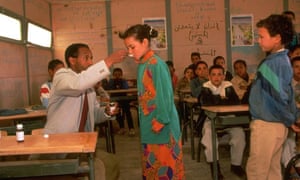
Azithromycin being used to treat trachoma in Morocco, 2016


Azithromycin being used to treat trachoma in Morocco, 2016 Photograph: Dr Jaouad Hammou/Ministère de la Santé, Maroc

Mapping trachoma


Trachoma’s natural home is among populations who live furthest from services, and so, until recently, data on where to intervene were grossly incomplete. The Global Trachoma Mapping Project (GTMP) sought to remedy this with surveys covering more than 1,500 districts in 29 countries. The project was completed in just over three years – running from December 2012 to January 2016 – and involved the training and deployment of more than 600 field teams, who collectively examined more than 2.6 million people. Its successful implementation now provides health ministries with the information they need to plan interventions, where required, for worldwide trachoma elimination.


Visionary backing


The success of the mapping project is attributable to a number of factors. First, it had financial backing from the UK’s Department for International Development and the United States Agency for International Development. Second, in each of the countries in which the GTMP operated, it benefited from high-level political commitment and strong health ministry leadership. Third, a worldwide partnership of NGOs and academic institutions, spearheaded by Sightsavers, the International Trachoma Initiative and the London School of Hygiene and Tropical Medicine, fostered synergies rather than inter-organisational competition. Fourth, the mapping project was held to strict quality standards, despite operating in some of the most difficult environments in the world. And fifth, the mapping was innovative in its use of technology, which kindled the interest of partners on all sides.


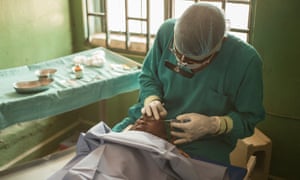
A surgeon operates on a young boy with trachoma in Nigeria.


A surgeon operates on a young boy with trachoma in Nigeria. Photograph: Graeme Robertson/the Guardian

Field teams collected all data into a purpose-built app running on Android smartphones. Those data, including geospatial information, were uploaded to a secure cloud-based server as soon as the phones were within range of a suitable network. Raw data were then cleaned, reviewed by the health ministry, and once approved, automatically displayed on the online Trachoma Atlas. This system was far more rapid and reliable than previous paper-based survey tools – and saved approximately 4.2m sheets of paper.


Work is ramping up in the 42 countries where trachoma remains a public health problem. In the next few years, with continued political support, collaboration and donor investment, we will finally be able to write the closing chapters in the long history of this devastating disease.


Victor Florea is an intern and Anthony Solomon is a medical officer for trachoma in the Department of Control of Neglected Tropical Diseases, World Health Organisation.


Join our community of development professionals and humanitarians. Follow @GuardianGDP on Twitter.


Neglected no more: ending trachoma, an infectious eye disease rooted in poverty

25 Ağustos 2015 Salı

Has Obama Neglected America"s Developing Opioid, Heroin Epidemic?

[unable to retrieve full-text articles]


1 grassroots group believes so –&nbspand its members say they are not “politely and patiently” remaining quiet as the president’s administration continues to disregard the country’s ever-expanding difficulty of opioid abuse, misuse and overdose. The FED UP! Coalition, formed in 2012&nbspwhen a number of organizations from across the country joined forces, will be holding&nbspa [...]


Has Obama Neglected America"s Developing Opioid, Heroin Epidemic?

24 Haziran 2014 Salı

seven factors why Sierra Leone is winning towards neglected tropical illnesses

Children in Sierra Leone

Young children relax in a lobby in Aberdeen street of Freetown, Sierra Leone. The country has made important progress in eliminating NTDs. Photograph: Alamy


The Lancet just lately published a report on gains created towards reaching the 2020 neglected tropical ailment (NTD) elimination ambitions set by the 2012 London declaration. Despite being one particular of the world’s poorest countries, Sierra Leone, in particular, has produced amazing strides.


Ahead of the existing NTD manage programme, about half of the districts noticed in excess of 50% of their youngsters contaminated with schistosomiasis (snail fever) just before they reached 14. By 2010 mass drug administration had reached, and has since maintained, 100% geographic coverage of people at chance of NTDs, outperforming neighbouring countries.


This quick progress has been sudden in the submit-conflict setting. By the finish of the rebel war in 2002, most wellness services were broken, ill-equipped and their personnel and communities traumatised. Many overall health pros had been evacuated during the war and had tiny chance or incentives to return.


Although sustained funding from USAid is 1 explanation behind the country’s success, other nations like Nigeria, with robust funding and better resourced overall health sectors and public communications programs, have not created the very same degree of progress. So why has progress in NTD control in Sierra Leone been so swift? Right here are some crucial lessons behind Sierra Leone’s achievement.


one. Dimension matters


Although infrastructure remains a challenge, especially during the rainy season, Sierra Leone is tiny and most communities can be reached in a sturdy 4-wheel drive inside of a day’s travel from Freetown. This can make implementing, and evaluating a nationwide NTD programme considerably a lot more manageable.


2. Invest in nation-particular investigation


There has been a long-standing academic interest in tropical conditions in Sierra Leone. This can be traced back nearly a century to what is now recognized as the Liverpool School of Tropical Medicine, exactly where research commenced in diseases contracted by sailors returning from the country.


In addition, Glasgow University has contributed to developing human resource and investigation capability since the 1980s with two local universities and a neighborhood NGO. These have all supplied broad foundations of knowing and operational encounter which have been utilized in the advancement of post-war management programmes.


3. Decentralise healthcare to attain marginal populations


The Regional Government Act in 2004 known as for the lively participation of communities in public policy discourse and selection generating to boost the delivery of basic providers. The adoption of neighborhood-based approaches, and the decentralisation of wellness care delivery solutions, has had a important affect. This is notably evident in vulnerable and resource-constrained settings in rural communities where the NTD burden is most prevalent.


four. Offer sufficient training to wellness leaders


Typically in Sierra Leone healthcare was delivered by people without formal training. After the war, health care officers that lead the district teams have been sponsored by WHO for a public well being masters degree at Leeds University, giving rise to a new generation of well being leaders much better positioned to give service with accountability.


five. Never underestimate the energy of neighborhood


The higher NTD burden has been a key motivating issue. Neighborhood neighborhood drug distributors volunteer to go from residence to house to conduct village censuses, offer details and administer NTD drugs. The inspiration of the 29,000 volunteers and that of the one,500 wellness staff that train and supervise them come from the clear improvement they see in the overall health and wellbeing of their communities.


6. Harness the power of technology


In 2010 mobile technology and independent monitors have been introduced to facilitate the tracking of mass drug administrations in genuine time, enabling the NTD programme crew to see progress and issues immediately, as well as to validate results. This has been critical in the post-conflict setting in which speedy internal migrations and urbanisation takes place.


seven. Tailor communication to regional demands


Tailoring messages for viewpoint leaders, overall health staff, volunteers and the public in the context of local culture and conventional beliefs has been important to controlling the illnesses. Frequently asked questions must be extensively pre-examined, routinely revised, and aired on radio programmes that encourage listener participation. Public mobile phone-in and SMS messages aid maintain the dialogue pertinent and the considerations of the public swiftly addressed. Facebook and other net sources have significantly assisted make sure messages get to even the most difficult-to-reach communities in remote spots.


There is nevertheless a lot to be accomplished if we are to reach the 2020 global elimination targets, but learning from countries like Sierra Leone, who have succeeded towards all odds, is a phase in direction of conserving and bettering the lives of millions.


Dr Mary Hodges is the Sierra Leone country director for Helen Keller Worldwide. Comply with @HelenKellerIntl on Twitter.


Read through much more stories like this:


• Football followers warned about dengue fever risk at Fifa Globe Cup in Brazil


• Man v mosquito: who is the most unsafe carrier of malaria?


• How one particular Ghanaian town sprayed away 74% of malaria instances in two years


Join the community of worldwide growth experts and professionals. Turn out to be a GDPN member to get more stories like this direct to your inbox


seven factors why Sierra Leone is winning towards neglected tropical illnesses

3 Nisan 2014 Perşembe

Bill Gates: world need to stage up battle towards neglected tropical illnesses

Bill Gates believes the globe can and need to step up the fight towards a group of tiny-known and prolonged-neglected tropical diseases, that collectively do as significantly harm as HIV, malaria or tuberculosis.


In an unique interview with the Guardian, the founder and former boss of Microsoft explained the funds has to be discovered, even in the existing difficult economic climate, for very efficient programmes, such as the mass delivery of drugs that can avert diseases such as schistosomiasis and trachoma.


“I think we’ll be capable to increase the funds. It’s variety of like vaccines – you’d really feel awful if you didn’t increase the cash,” he stated. But, “it may take us a couple of many years to get up to where we are carrying out all these mass drug administration programmes at the intensity we’d like to.”


Everyone recognises the damage done by HIV, but few realise the burden of sickness and disability induced by the group of illnesses recognized by the billionaire philanthropist, which are transmitted mainly by parasites, flies and worms. One particular in 6 men and women globally is at threat. And by contrast with the huge 3, significant strides in direction of controlling some of the illnesses are taking location.


“If this was a single illness and the entire burden was attributed to one particular disease, it would be correct up there with the big conditions,” stated Gates. “As a group … the human burden [in terms of disability] is pretty gigantic. I place this entire programme up there with what’s going on with malaria, what’s going on with TB, what’s going on with HIV – it is some thing that folks ought to be quite fired up about the progress which is been made.”


Gates was speaking from Paris, where he was taking portion in a meeting to search at the progress manufactured against ten neglected tropical ailments in the final two years. In January 2012, Gates convened an unprecedented meeting of the CEOs of 13 key drug businesses – usually rivals – as effectively as international wellness organisations and governments in London, who all signed a declaration, pledging to do what they can to control or remove them.


Gates mentioned he was “super-content” with the progress so far. The pharmaceutical organizations have increased their donations of existing medicines that can avoid some of the illnesses and are helping to investigate potential new medicines for diseases exactly where there are inadequate therapies.


“We’re super-pleased with what they’ve carried out on two fronts – the drug donation front, where they’re ramping up the capability and helping with the logistics, to get this things delivered, and the second is on the diagnostic and drug front to search at in which we even now have gaps.


“The best information story we have here is that we have a new diagnostic for sleeping sickness and we have a drug that, though it is in a phase two [trial], seems to be quite promising as an oral treatment for this.”


Sleeping sickness, or African trypanosomiasis, spread by the bite of the tsetse fly, is fatal with no remedy. A quarter of these contaminated are kids. Diagnosis at the moment requires a lumbar puncture, and if the patient is lucky enough to get a single, they will require intravenous medication for days. In some locations, there is nothing at all greater than an arsenic-derivative, which kills 5% of these taken care of. But with the new diagnostic test and probably a pill, the prospects are transformed. Authorities are now for the very first time talking about getting rid of the disease by 2020, rather than just controlling it.


There is a clear elimination purpose for just one of the illnesses – guinea worm, which the Carter Foundation has targeted on for numerous many years. “We’re down I feel to 148 circumstances final year and it truly is in Mali and there were a few cases in Chad and south Sudan. So we’re very close on that. It truly is turned out with the unrest in Mali and South Sudan they are not going to make the unique date for it and so we’re possessing to put much more into that,” stated Gates.


But real eradication is difficult and not usually appropriate. “For most illnesses you never want to try out and do eradications, due to the fact eradications are really difficult and you end up investing a whole lot on the last tiny variety of circumstances and only if you genuinely think you can do well and you are stopping it from coming back, then it gets very worthwhile, as it is in the situation of polio,” explained Gates, who has put substantial money and hard work into the attempt to rid the planet of polio. “So we’re quite mindful about when we get individuals riled up to think correct, true eradication.”


Greater drugs could modify the outlook for young children contaminated by roundworm, hookworm and whipworm – the 3 most widespread of the soil transmitted helminths – and also for onchocerciasis. Current medication only destroy the juvenile type of the worm.


“It signifies you have to maintain coming back and catching the hatched worms again and yet again and once again for a great deal of many years. If you can destroy the grownup worm, which is the human reservoir and it would assist a whole lot,” explained Gates.


There are now R&ampD agreements with drug firms to investigate. In the meantime, country programmes have in the last couple of many years been created to dose kids and adults with medicines not for a single ailment, but for all people lively in their area. That expenses thirty cents a particular person, said Gates – not thirty cents per man or woman, per disease.


A lot more funds was announced in Paris, like $ 50m (£30m) more from the Bill and Melinda Gates Foundation, $ 50m from the Children’s Investment Fund Foundation and $ 120m from the Planet Financial institution.


The Planet Health Organisation’s director-common, Margaret Chan, explained: “The great progress we have seen in excess of the previous two years is proof of the electrical power of partnerships and the generosity of companies that created commitments below the London Declaration.


“Together with the governments of endemic nations, we are quick approaching the aim of controlling or eliminating numerous of these ancient causes of human misery. This is a professional-bad initiative that is improving the lives of a lot more than a billion folks.”


Nonetheless, Julien Potet, neglected ailments adviser of the Médecins Sans Frontières access campaign, said that whilst they have been glad the campaign was attracting interest to some neglected conditions, others were still forgotten – such as yaws, which can lead to disfigurement and disability, however can be cured with a single dose of the antibiotic azithromycin.


WHO had struggled to get donations from a significant drug firm. Potet stated: “An additional illustration is snake bite, which is listed as quite neglected by WHO. [The drug organization] Sanofi has accomplished a excellent task of donations for sleeping sickness but have told us they have been seeking at stopping production of anti-venom for Africa.”


Donations, in MSF’s view, are not often the greatest way forward, he added, especially as small drug organizations can not often afford to make them.


Bill Gates: world need to stage up battle towards neglected tropical illnesses